The ideas here run from a slim console tucked behind a sofa to a full sectional anchored by an ottoman, and from a round coffee table that clears the path to mirrors that double the light, so the cost and effort stay low across most of them.
What decides which one fits is the walking path: if the room has a tight route from the door to the sofa, pick the pieces with no corners and thin profiles, like the round coffee table or slim side table.
If the path is clear but the floor is crowded, a storage ottoman and a corner-filling sectional win.
1. Storage Ottoman
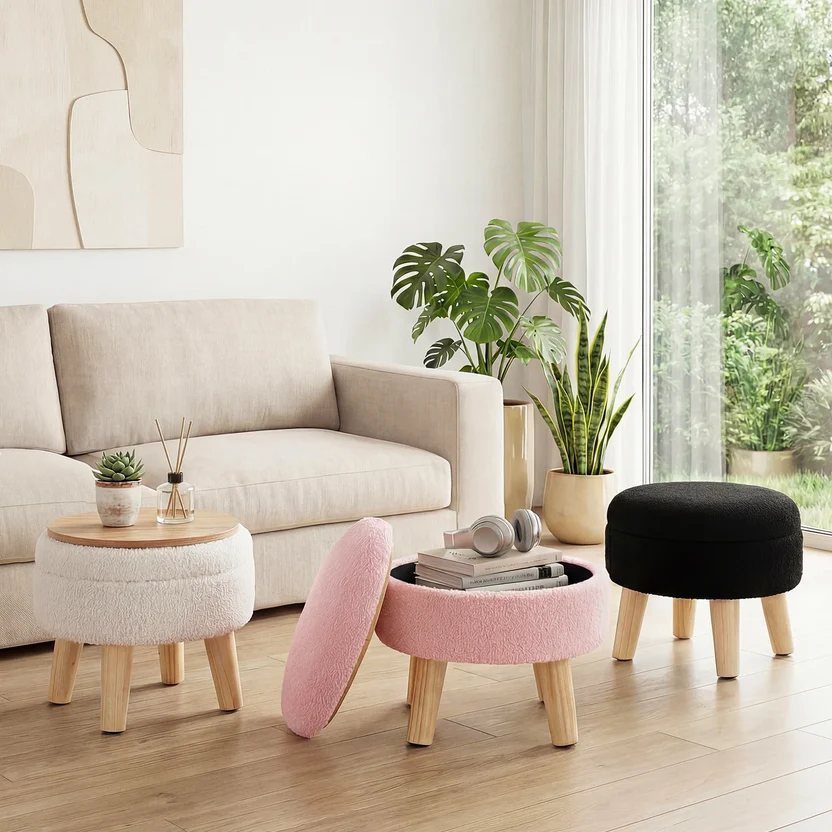
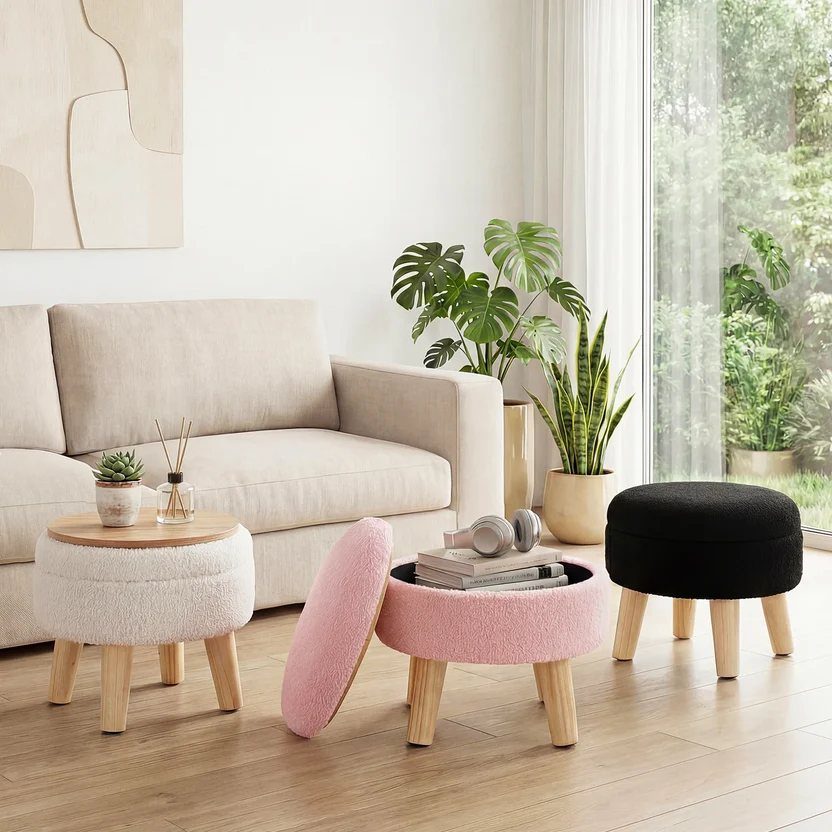
A storage ottoman earns its floor space twice: it’s a footrest or extra seat, and it swallows the clutter that would otherwise sit on your shelves. Books, headphones and throw blankets all disappear under the lid.
Pick one with a lid that lifts off or hinges fully open, so you aren’t digging around the edges. Pairing a few in different sizes lets you tuck them next to the sofa and pull them out when guests arrive.
Keep the contents to things you reach for weekly. Anything you never touch doesn’t need prime living room storage.
2. Choose a Slim Coffee Table
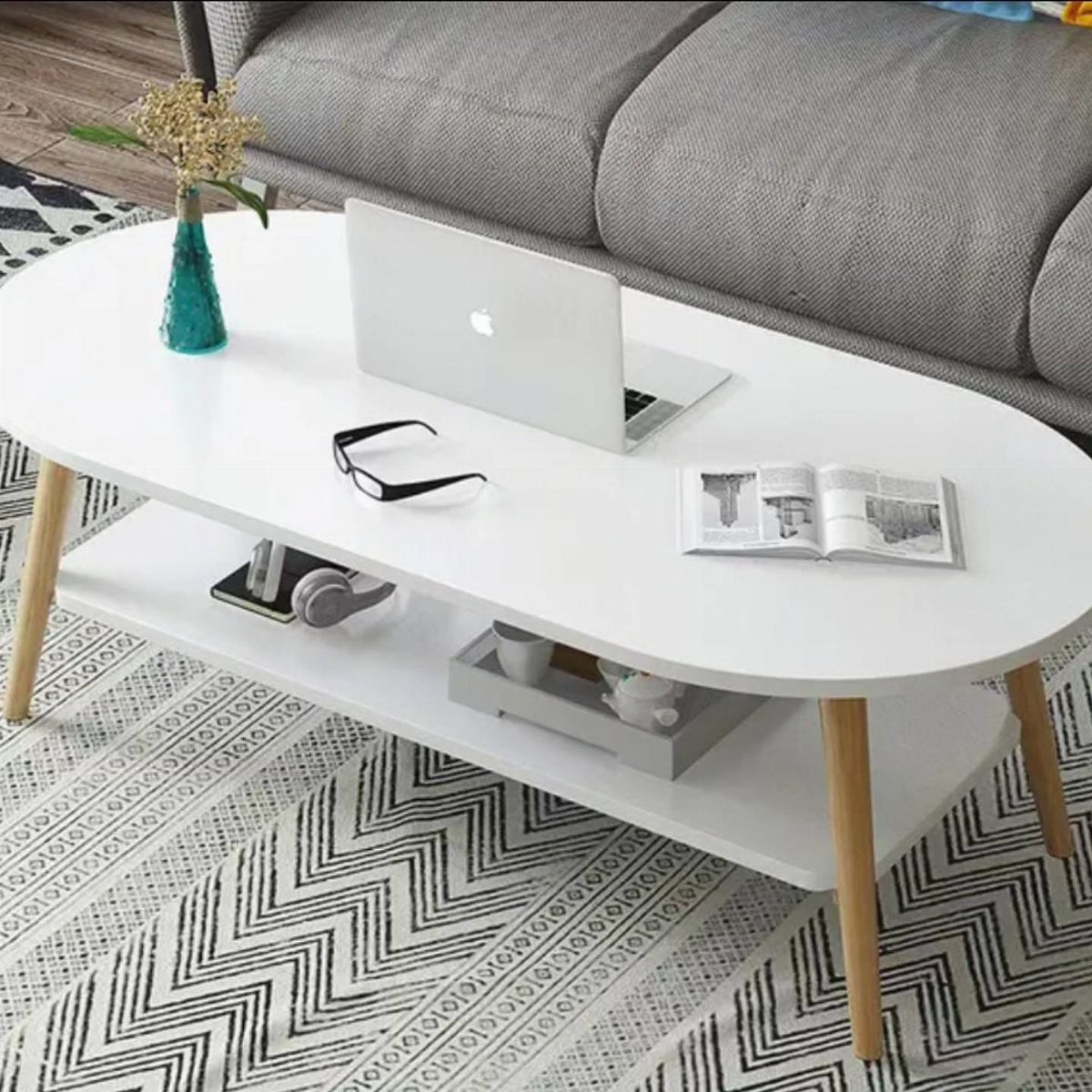
Visual weight is what makes a coffee table feel big, and an oval with thin wooden legs has very little of it. You can see the rug pattern under the white top, so the floor still reads as open.
Oval shapes also soften the corners you’d otherwise bump on a walk to the sofa. I like a light top because it stays quiet next to a busy rug.
Before buying, tape the outline down and leave a clear walking path around it. A slim table only helps if you can actually pass it.
3. Use Tiered Coffee Tables
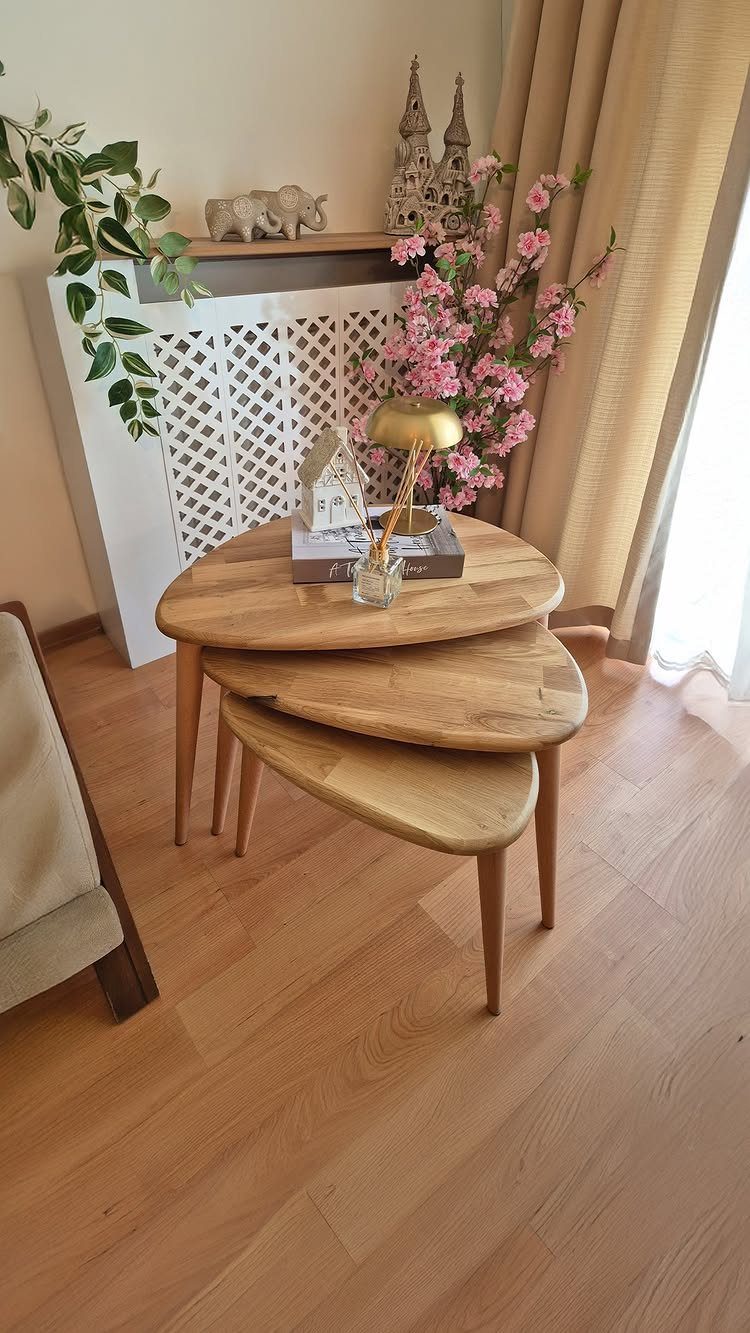
Nested tables give you a coffee table that changes size on demand. Stacked, the three light-wood tiers act as one compact piece; pulled apart, they become separate surfaces for drinks, a lamp or a plant.
The rounded edges are a practical bonus in tight rooms, where hips and shins meet furniture often.
Put books or a basket on the lower tier for storage, and keep the top tier for what you use daily. Slide the smallest one beside the sofa as a side table when you need it.
4. Use a Slim Console Table
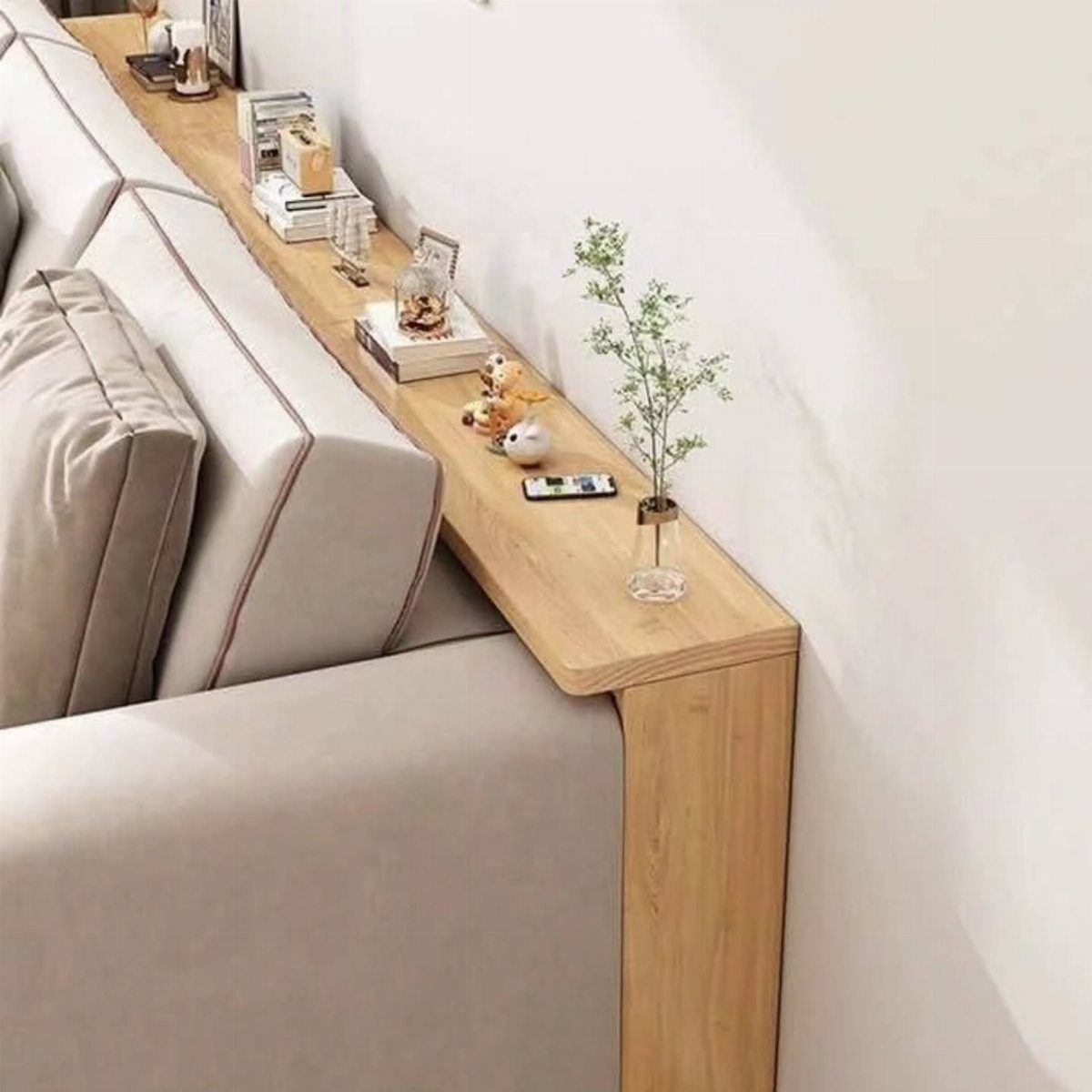
Behind the sofa is dead space in most small rooms, and a narrow console puts it to work. A shelf-depth table there holds books, a plant and a few decorative pieces without pushing into the walkway.
Choose a console that sits slightly lower than the sofa back, so it looks tucked in rather than crowding it. Light wood against a white wall keeps the line clean.
It also works as a soft divider if the sofa floats in an open plan. Measure the gap first, and leave enough room to slip past comfortably.
5. Use a Round Coffee Table
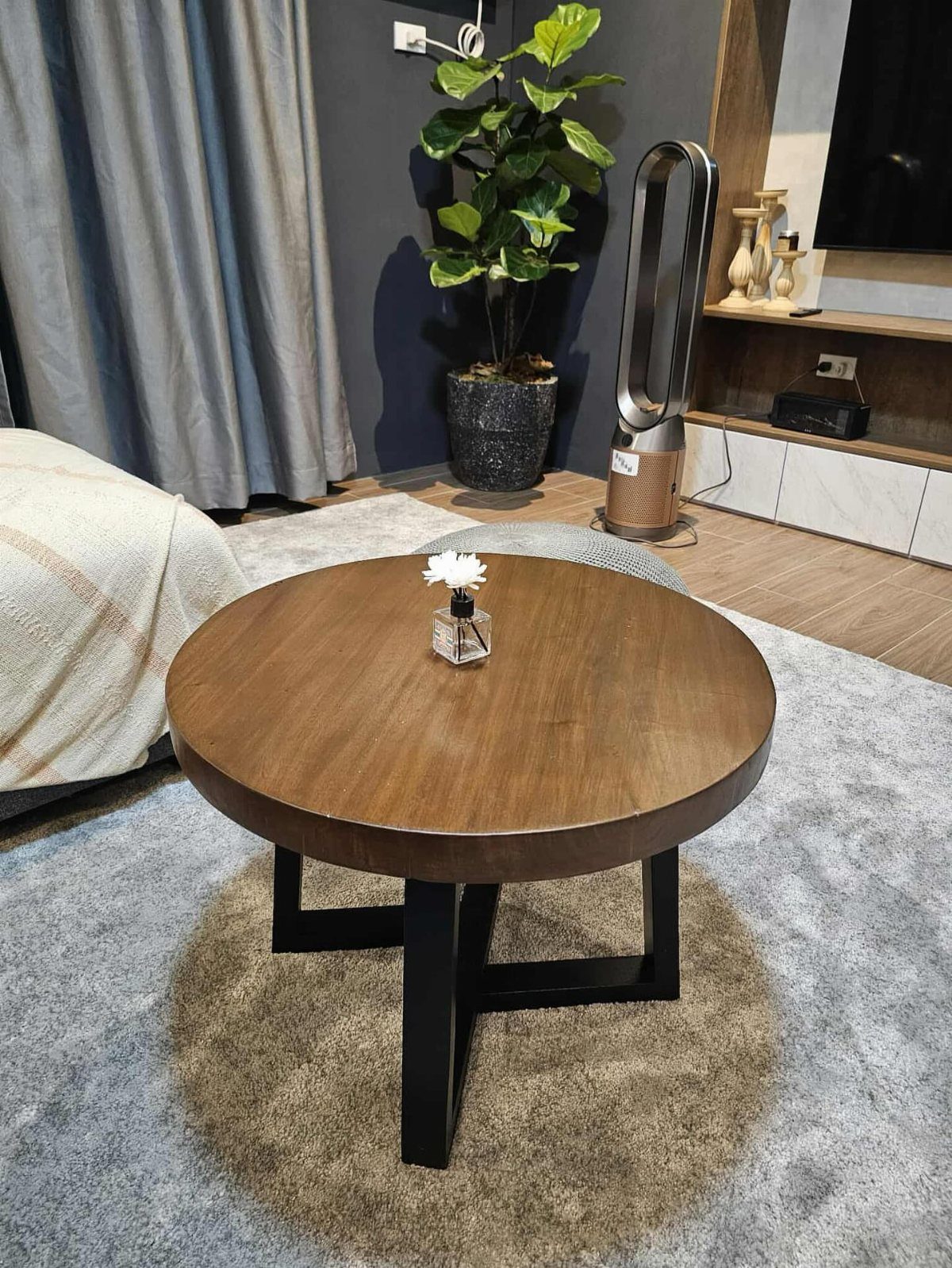
Round tables have no corners, so you can walk past one at an angle without turning sideways. That alone makes a round coffee table my pick for tight traffic paths.
A round top also seats several people evenly, since nobody gets the far end.
Look for a diameter that stays well short of the sofa’s length, so the table reads as an accent and not a barrier.
6. Use a Slim Side Table
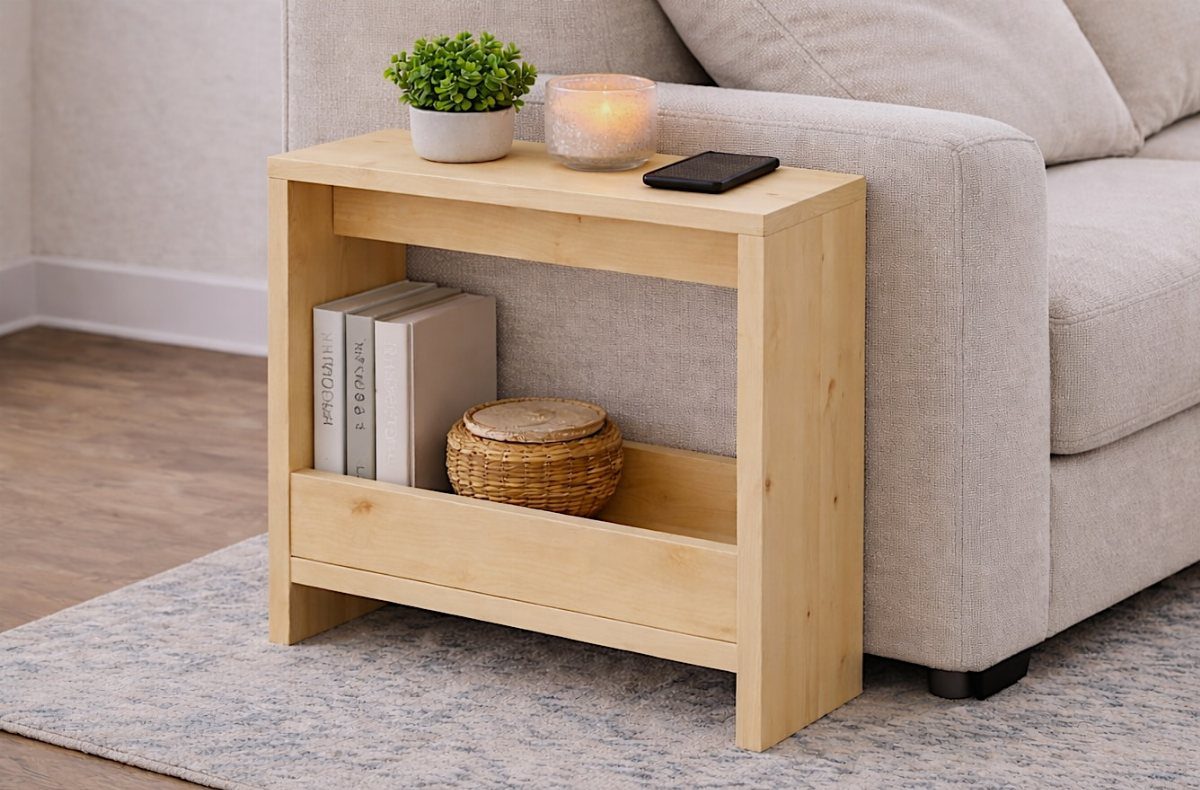
A slim side table fits where a normal one won’t: that thin gap between sofa arm and wall.
This light wooden version adds a lower shelf, which is the detail I’d look for, because it doubles your storage without widening the footprint.
Keep the height close to the sofa arm so a mug is easy to set down. Narrow, shelved and light in color is a solid formula.
7. Incorporate Mirrors
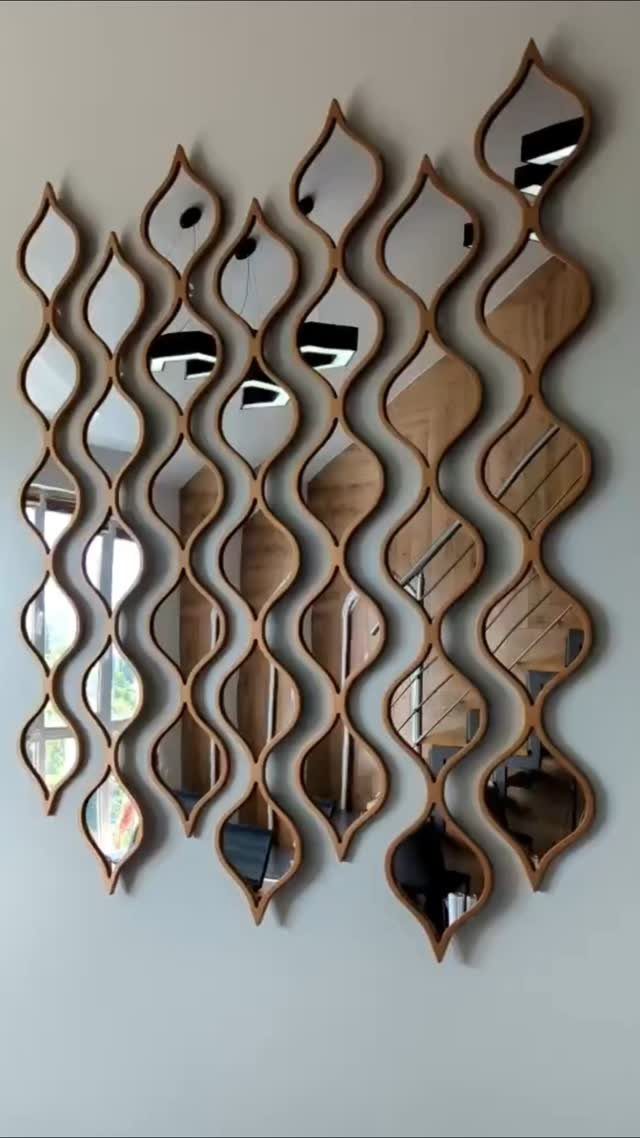
Mirrors work by bouncing light and doubling the depth of a wall, and a cluster of wavy, wood-framed panels does it with more personality than a single flat rectangle.
Hung in vertical columns, they pull your sight line up and make a low ceiling read taller.
Place them where they catch a window’s light or face a view you like, not a pile of clutter. Wood frames keep the look warm instead of cold and glassy.
8. Use Poufs for Seating
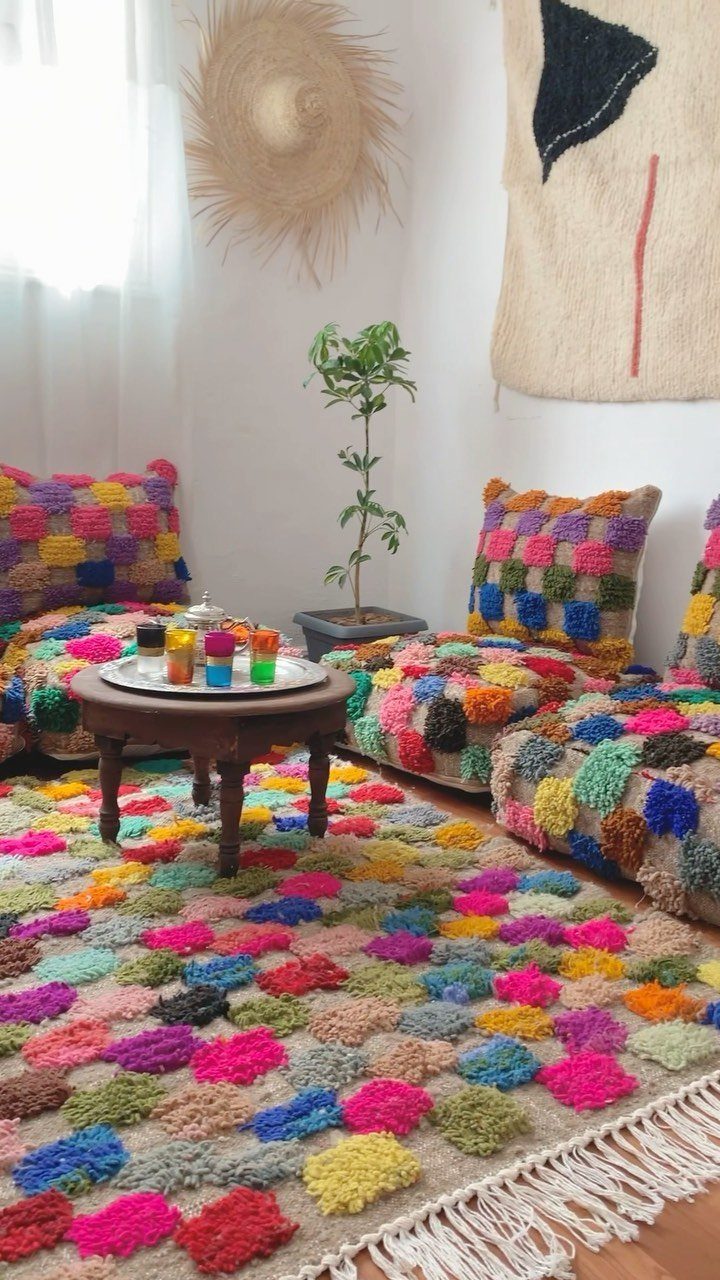
Poufs sit tucked away until someone pulls one out to sit. Around a small wooden coffee table, a few of them replace the bulk of an extra armchair and tuck away when the room needs space.
I’d pick poufs that match the rug or pillows, since a matched set reads as a plan rather than leftovers. Choose a height close to the table’s so a cup stays within easy reach.
9. Small Living Room Layout
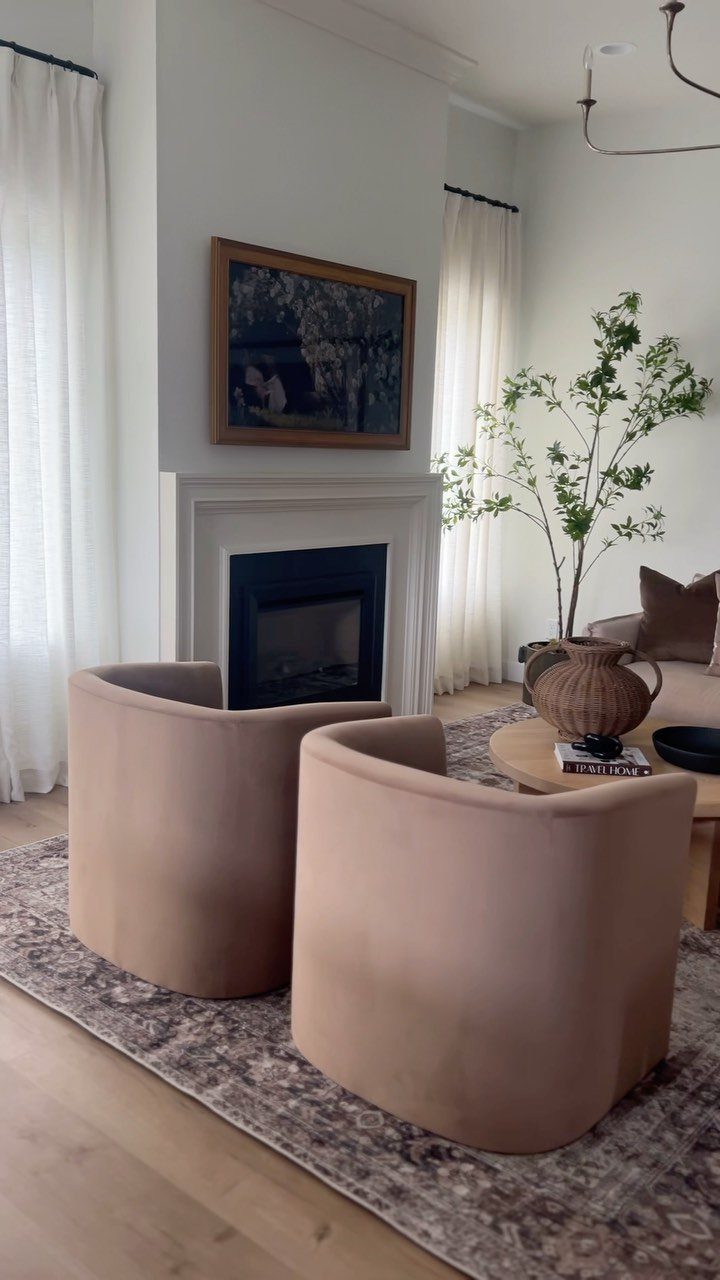
2 armchairs facing each other across a coffee table make a layout that needs no sofa at all. Here they sit in front of the fireplace, so the room has an obvious focal point and the seating points toward it.
Swivel chairs are my pick for small rooms: they turn toward the fireplace, the table or a guest without being dragged around. Keep the table low and modest so the chairs can turn freely.
Painting the chairs and walls in nearby neutrals holds the room steady.
10. Use a Sectional Sofa
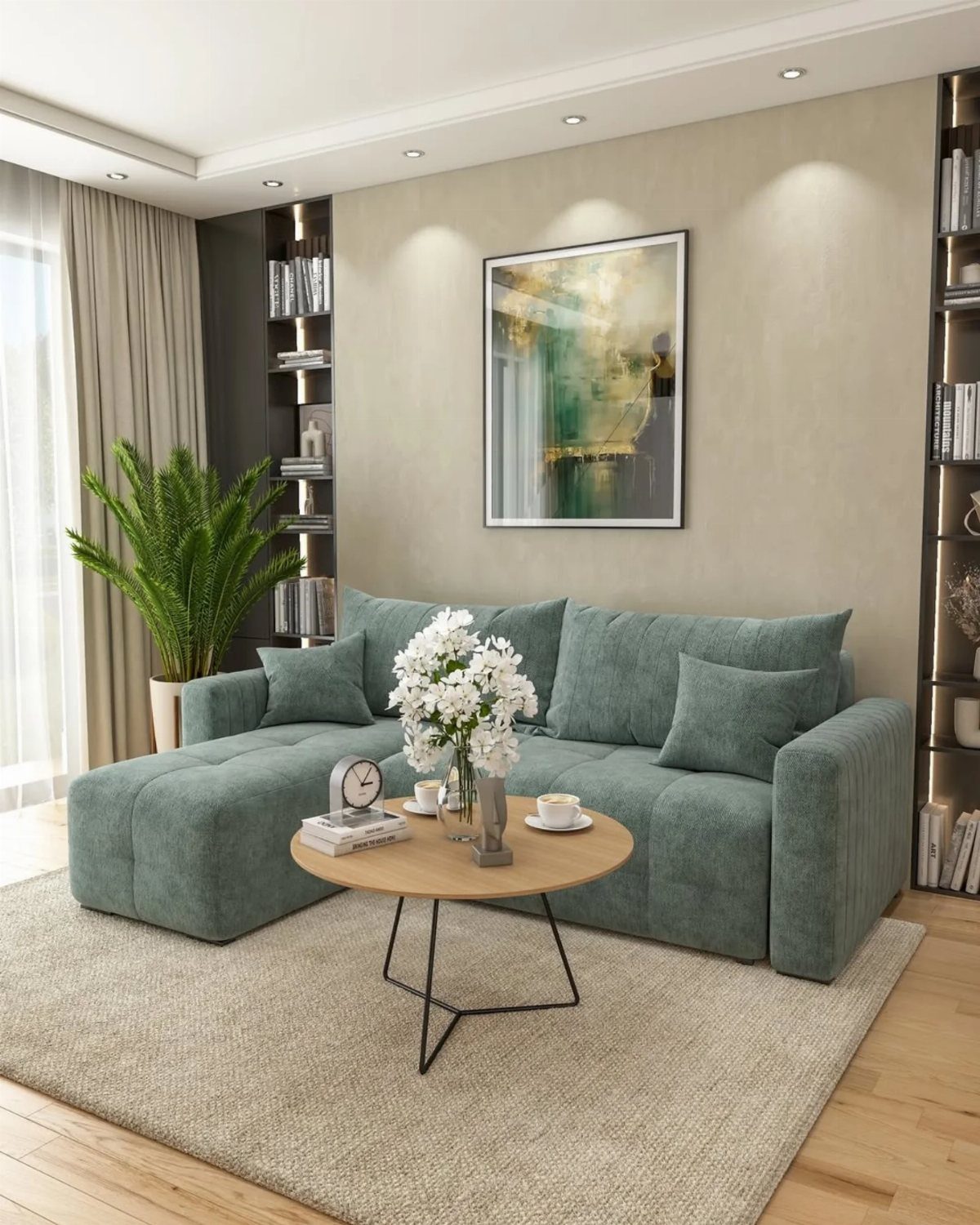
One sectional fills a corner and seats more people than a sofa plus chairs, and it leaves a single clear floor area instead of several small gaps.
A round wooden coffee table beside it keeps the open side easy to walk around.
Pick a sectional with a modest depth and low arms so it doesn’t swallow the room. Measure the corner and tape the outline down before ordering.
A soft green or teal also reads as color without making the room feel crowded.
Color and Texture Choices
Pale neutrals bounce light around and stretch a room visually; darker walls absorb it and shrink the space. If you want depth, keep the darker tones low, at or below eye level, and let the walls stay pale.
A ceiling painted one step lighter than the walls lifts the room.
Keep the palette neutral and add color through accessories. Vary the materials so the room doesn’t go flat: linen, wool, wood and woven baskets all read differently in the same pale tone.
Use pattern sparingly. Vertical stripes suggest height, and one oversized print, like a big framed poster or a large piece of fabric, does more than a shelf of small knickknacks, which only create clutter.
Lighting Strategies
Layer your lighting instead of relying on one overhead fixture. The categories are general, ambient, task, mood and accent, and natural light counts too.
Start with how you use the room. Place a focused lamp where you read, and use accent light on any architectural feature worth showing off.
Upward-facing lamps spread ambient light more evenly than downward ones, which pool it on surfaces. Several sources at different heights also create small, private-feeling zones.
Wall sconces clear the floor, though renters need permission before mounting anything permanent. Command hooks and adhesive mounting tape hold a plug-in sconce securely if the fixture itself is lightweight.
Frequently Asked Questions
How to decorate a living room with simple things?
Start with a pale, neutral palette and add color through accessories like pillows and a throw.
Mix textures instead of multiplying objects: linen on the sofa, a wool throw, wood furniture and a woven basket give the room layers without crowding it.
One large piece of art draws the eye more than a collection of small objects, which fill a shelf but don’t anchor the wall.
What should I use instead of a coffee table?
A storage ottoman, a set of nesting tables or a few poufs around a small table all work.
An ottoman doubles as a footrest and hides clutter under the lid, while nesting tables can be pulled apart for drinks or tucked beside the sofa as a side table.
Pick based on how you use the room: movable pieces suit a space that changes often.
Can a sectional work in a small living room?
Yes, if you choose one with modest depth and low arms and set it in a corner.
A sectional gives you more seats in less footprint than separate pieces would, and it opens up one continuous area for moving around instead of leaving small wedges of floor between furniture.
Tape the outline on the floor before ordering to confirm you can still walk around it.
How do I keep a small living room flexible?
Use pieces that move or change roles. Nesting tables, storage ottoman seats and poufs can be pulled out for guests and tucked away afterward.
Swivel chairs let you change where the room faces without moving furniture, whether you’re turning toward a guest, angling toward the TV, or opening up to face the window.





