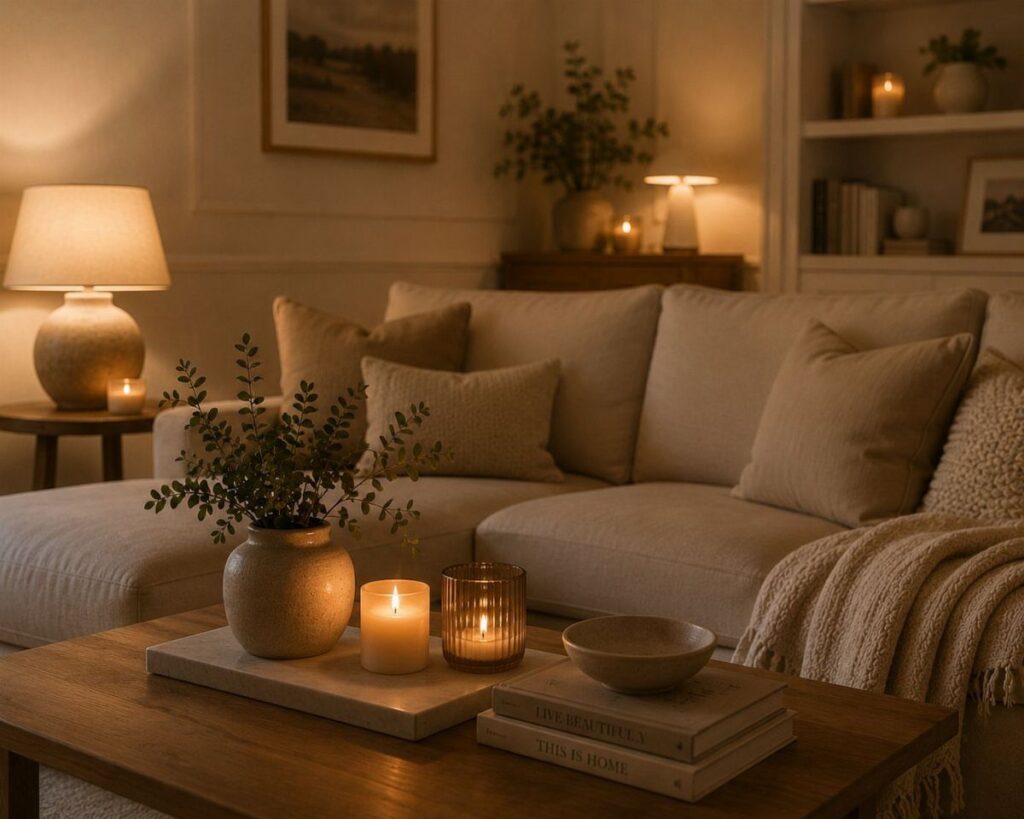
Cozy here ranges from a candle tray you can set out in a minute to built-in shelves, dark walls or a sectional with throws and pillows.
Which one is yours depends on whether you rent: a rental limits you to what moves with you, like lamps, baskets, throws and sheer curtains, while built-in shelves belong to people who can change the structure.
1. Table Lamps and Candles
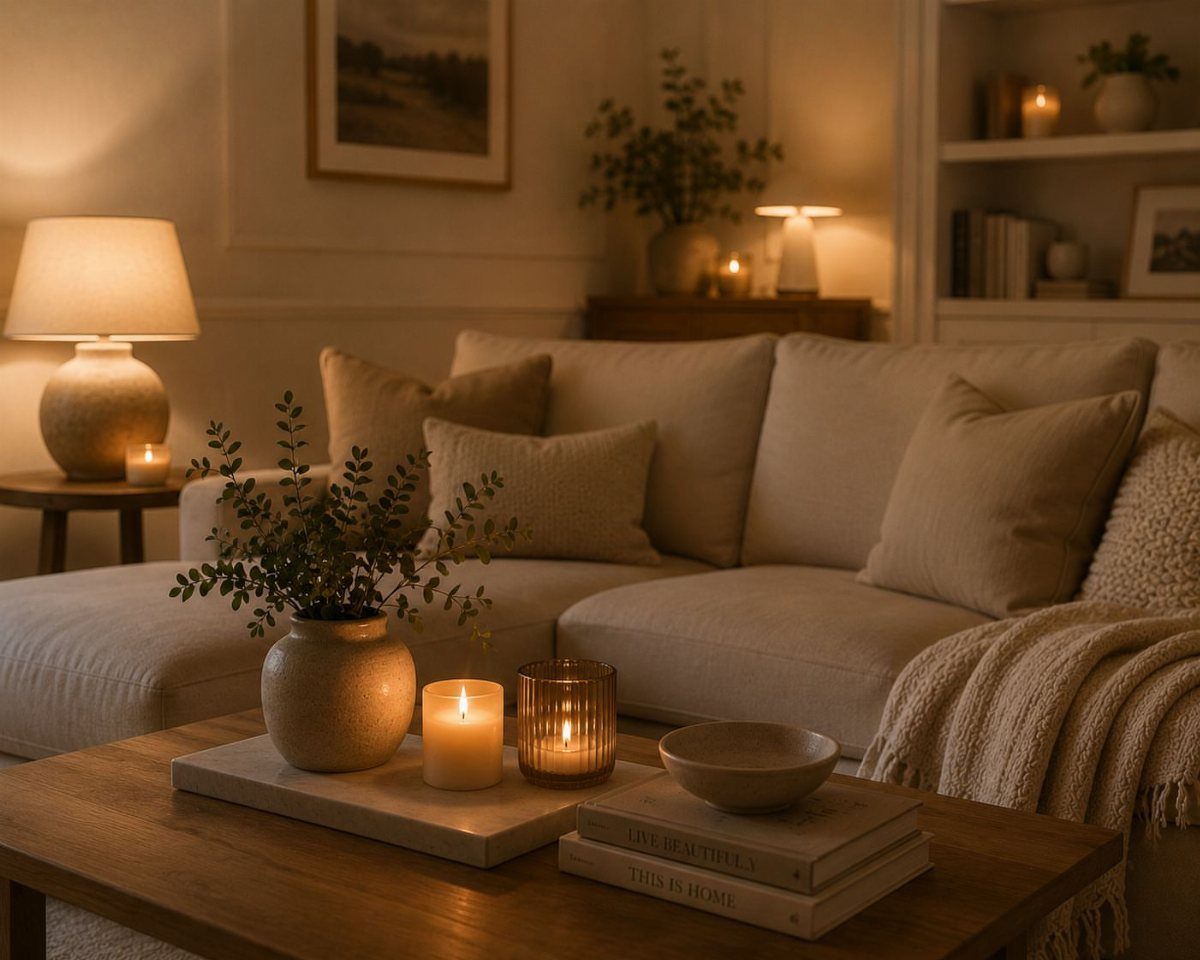
Warm light does more for a living room than any pillow can. Several table lamps at different heights, placed on side tables and a console, give you pools of glow that a single overhead fixture never will.
Group candles on the coffee table in odd numbers and vary their heights. Keep them on a tray or beside a stack of books so they read as one arrangement, not scattered dots.
Switch the ceiling light off in the evening and let the lamps carry the room.
2. Wicker Baskets
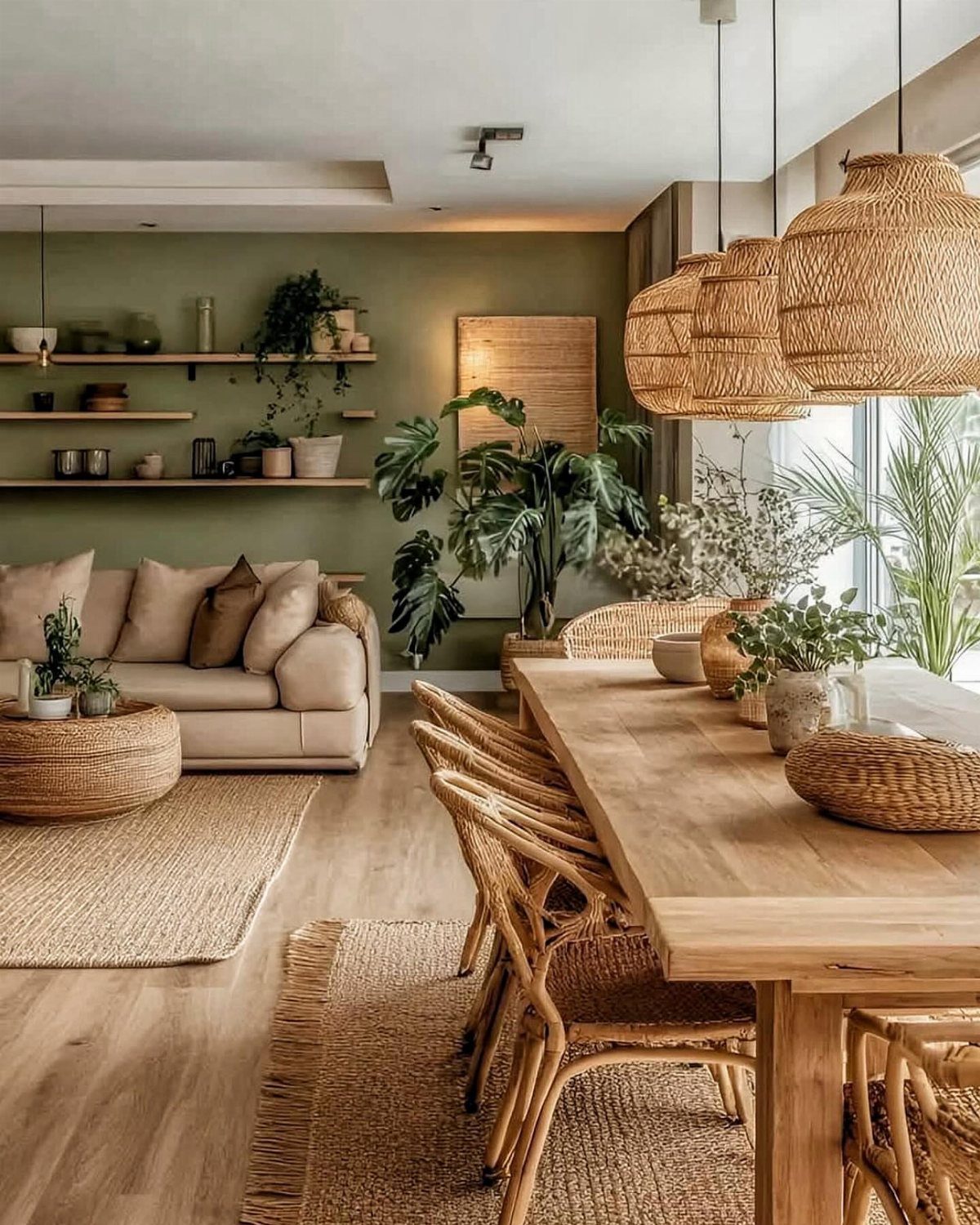
Baskets earn their place by working twice: they hold something and add texture.
A large wicker basket makes a good plant holder, and a sturdy one with a flat top can stand in as a small side table beside the sofa.
Pick a couple in different sizes but the same warm tone, so they look gathered rather than random. Woven pieces also sit well next to a jute rug and rattan chairs, since the materials share a color range.
Baskets are cheap to add, and you can move them around freely.
3. Pillows and Chunky-knit Throws
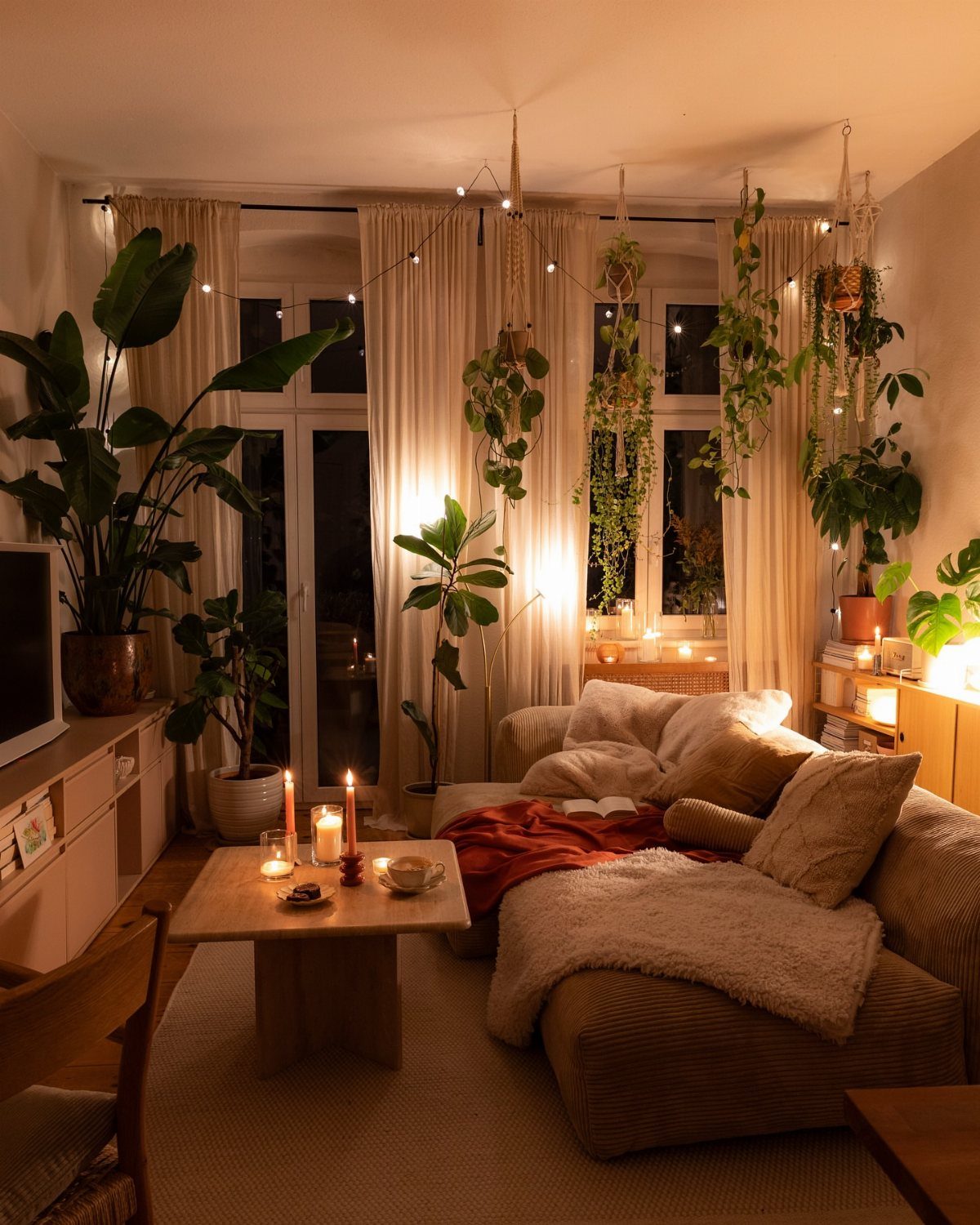
Pillows and a chunky-knit throw are the fastest change you can make to a sofa, and they run cheaper than new upholstery.
I like mixing sizes and textures on a tan sofa: a few plush pillows, one in a bolder color, and a thick white knit throw draped over an arm instead of folded flat.
A red blanket adds a warm accent against the neutral base.
Leave the throw loose and slightly rumpled. It looks inviting and gets used.
4. Soft, Tactile Fabrics
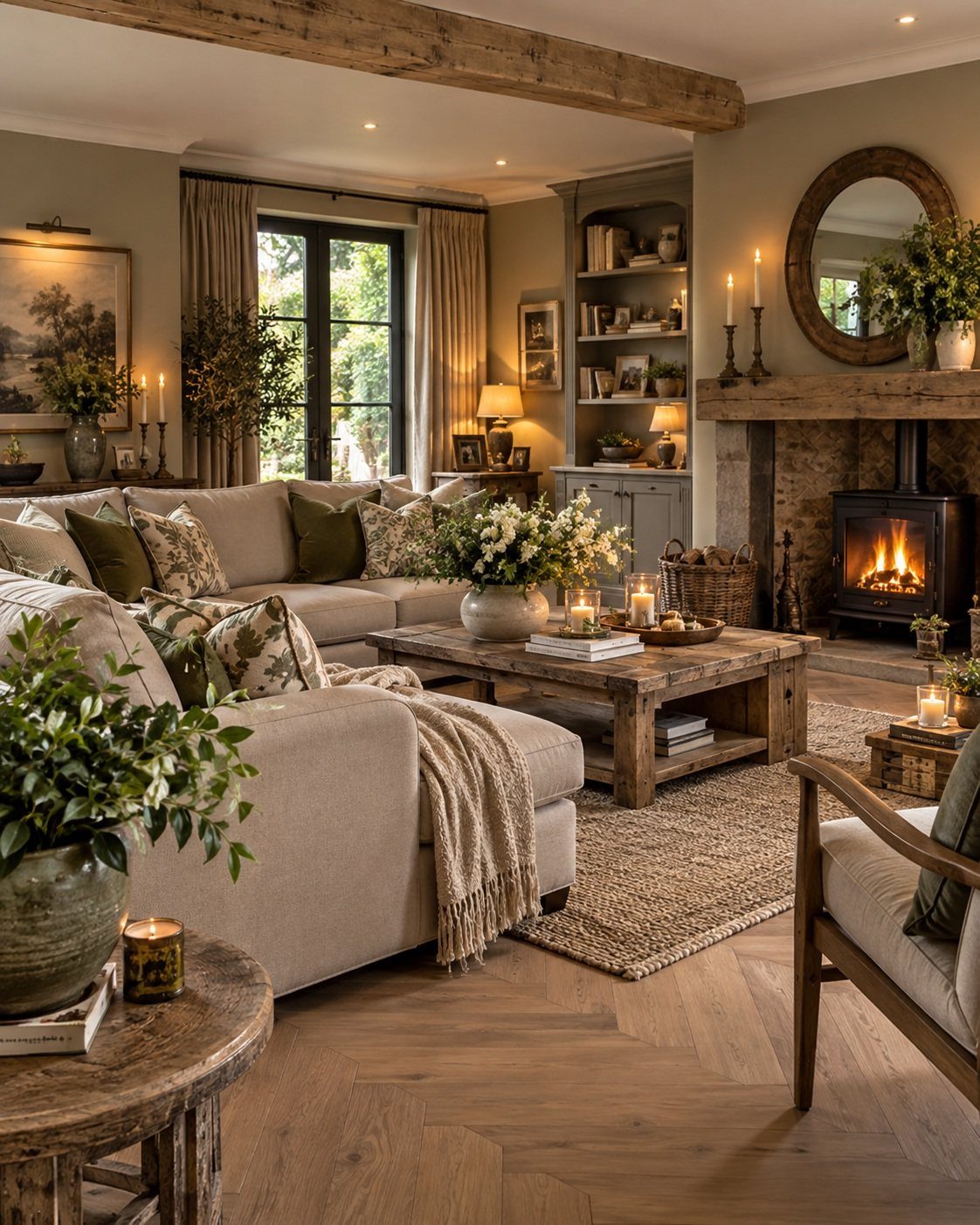
Fabric decides how a room feels when you sit in it.
Layer multiple textures in the same color family, such as a knit, a nubby weave and something plush. Keeping the palette quiet lets the textures do the work instead of competing.
Touch matters here, so choose throws you actually want to pull over your lap.
5. Wood Furniture
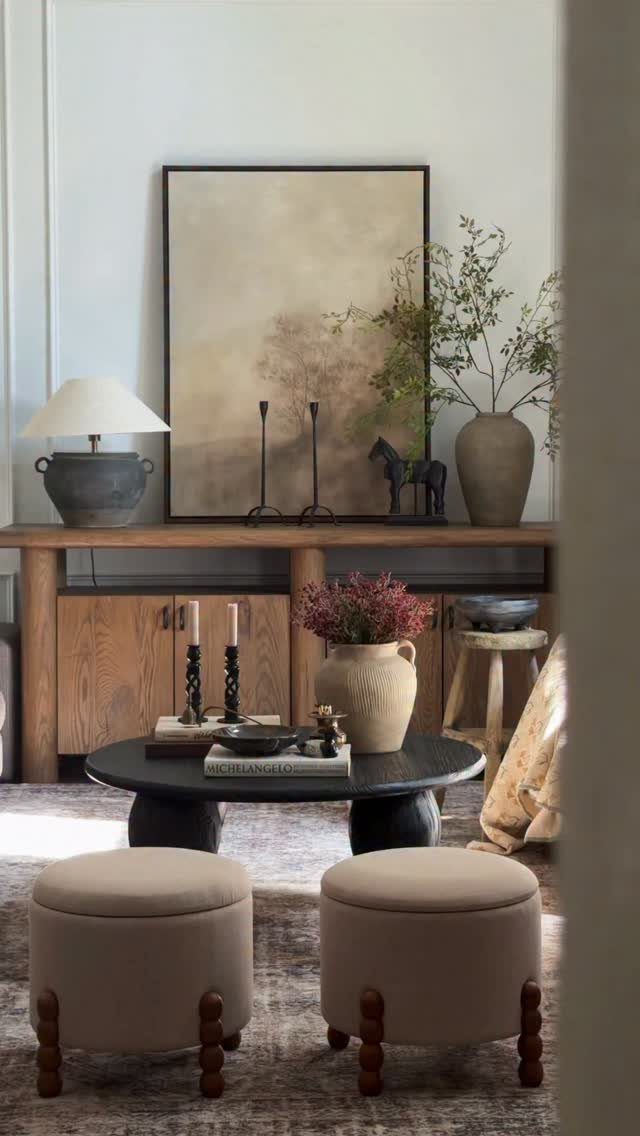
A wooden sideboard anchors a living room with warmth that painted or metal pieces lack. Pair it with a black coffee table for contrast, so the wood doesn’t dominate.
Two beige upholstered ottomans work well beside it: they soften the hard edges and can be pushed aside or pulled up for extra seating.
I prefer one strong wood piece over matching several, since a single sideboard in a visible grain reads as chosen, not bought as a set.
Stack a large art book on the table to finish it.
6. An Oversized Coffee Table
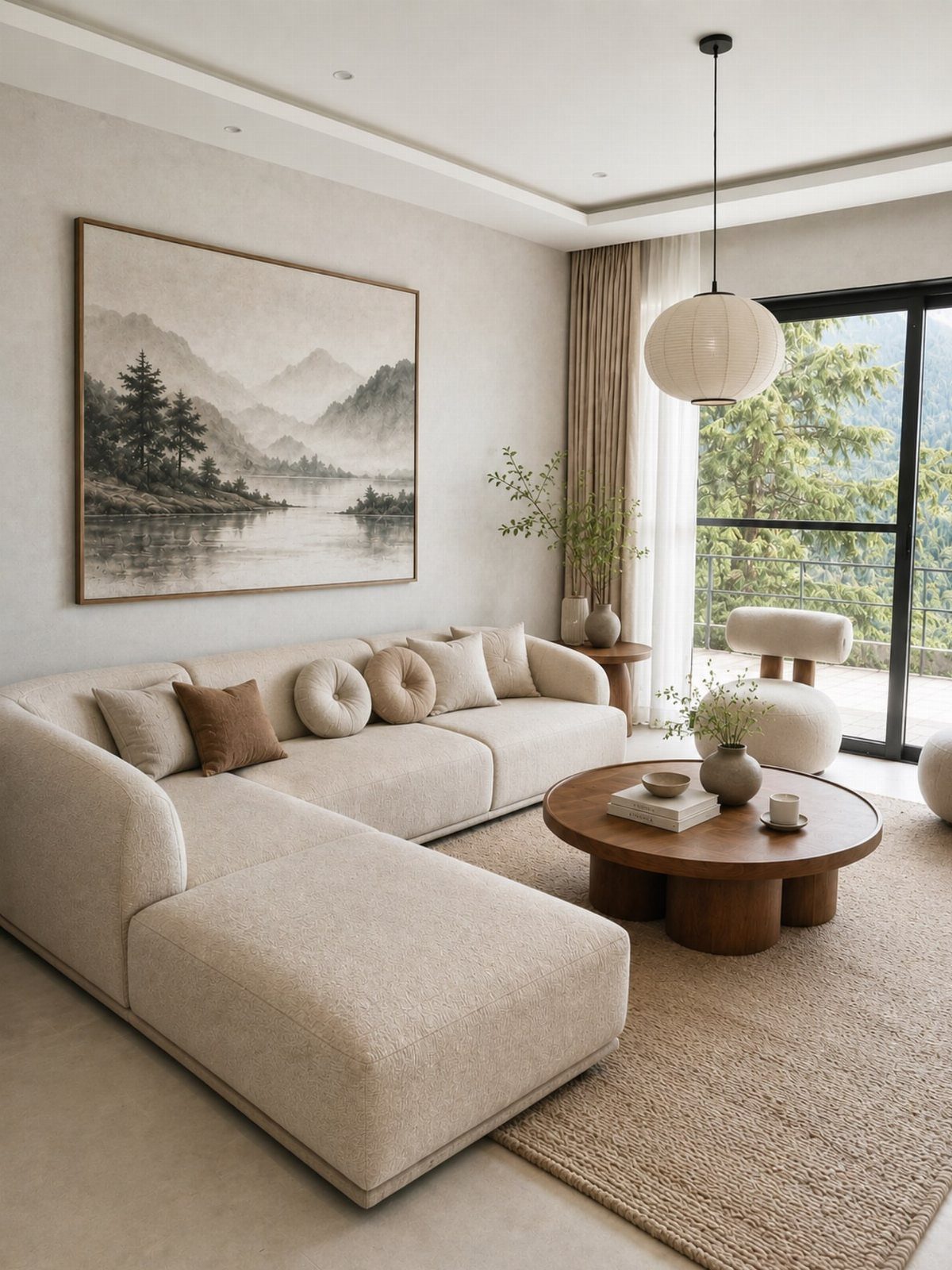
A round wooden coffee table at oversized scale does the work of several small pieces. Next to a beige sectional, its wide top gives you room for a tray, a stack of books and drinks without crowding.
Pick a round shape for a room this size of seating. With no corners, you can walk around it freely, and it softens the straight lines of the sectional.
Leave a path of clear floor around the table so it reads as generous, not bulky.
7. Display Books on Shelves
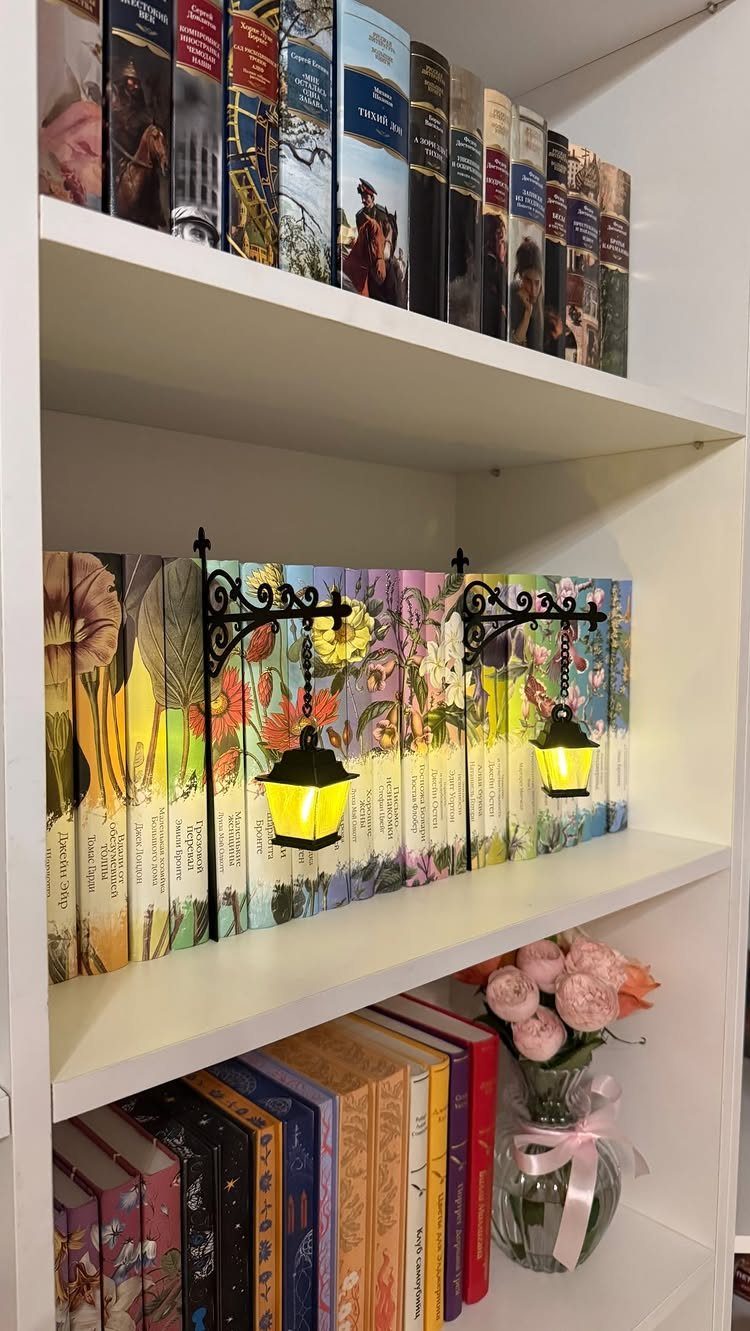
Books with soft, patterned spines do real decorating work on a white shelf. Group them by color and leave a gap or two so the shelf reads as styled, not stocked.
A pair of small lanterns hung in front of the spines adds a glow after dark, and a vase of fresh flowers on the shelf below breaks up the wall of spines.
Pull a few books forward by an inch so the spines catch the light.
8. Potted Plants
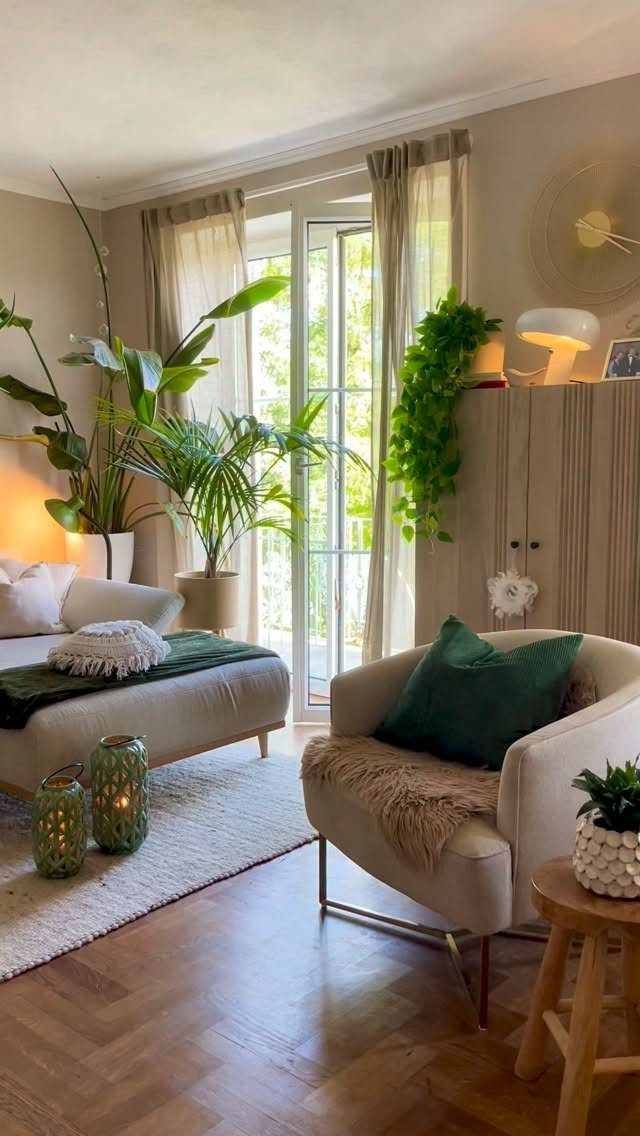
Big green plants near a window bring a living room the one thing furniture can’t: something alive. In a space of white upholstery and wood floors, they supply nearly all the color.
Set the tallest by the glass door and a smaller pot on a cabinet, so the greenery steps down in height. Putting them where daylight lands is my pick, since a plant in a dim corner just sits there.
A few large pots look calmer than many small ones.
9. A Sectional Sofa
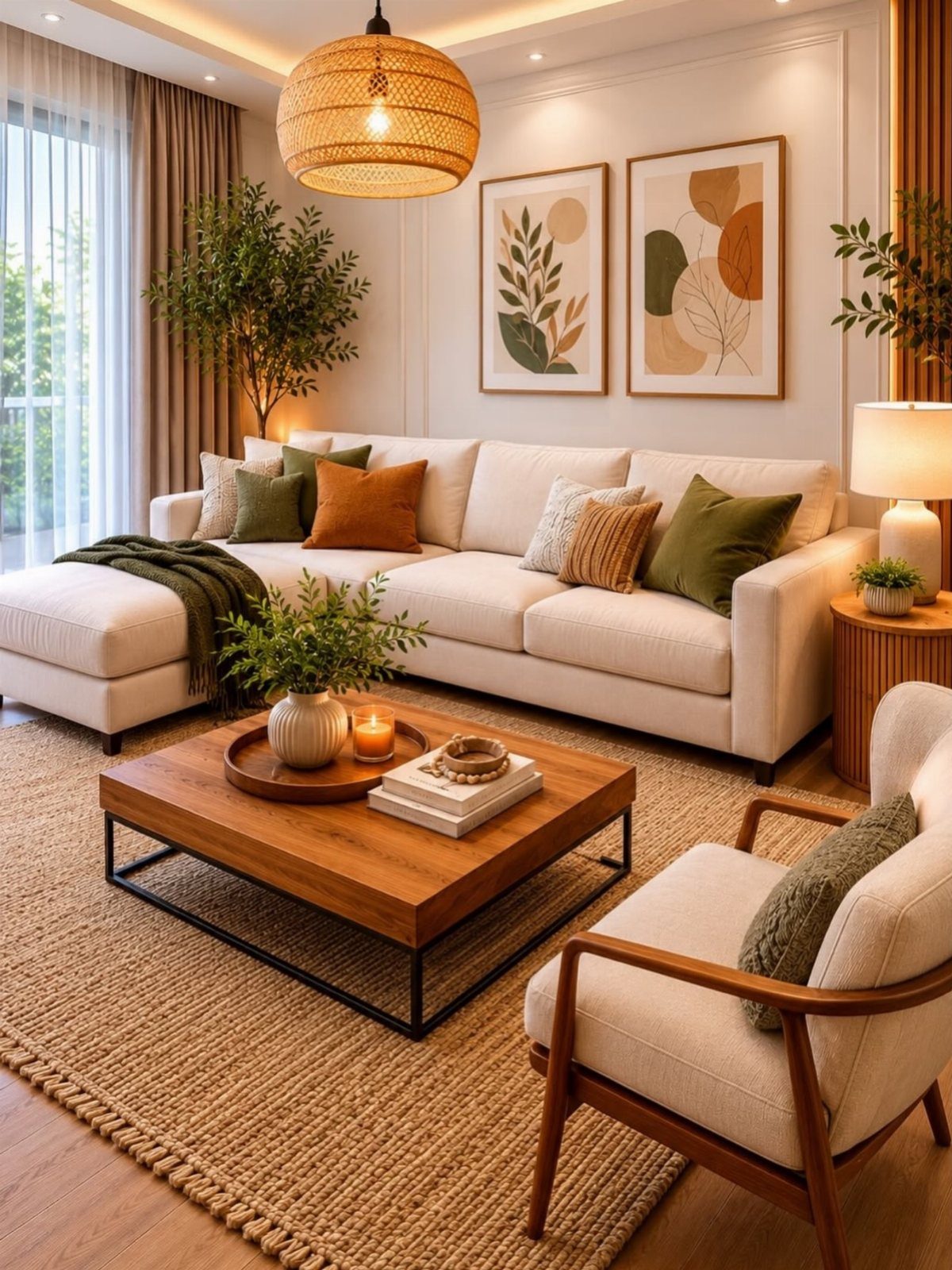
A sectional seats everyone on the same piece of furniture without anyone claiming the corner spot or getting stuck on the short end. Nobody has to claim the floor or drag in a chair.
I would pair it with a woven rug under the wooden coffee table so the seating area feels defined.
Add one armchair across from the sectional and the room gets a second place to sit.
10. Modern Rustic Design
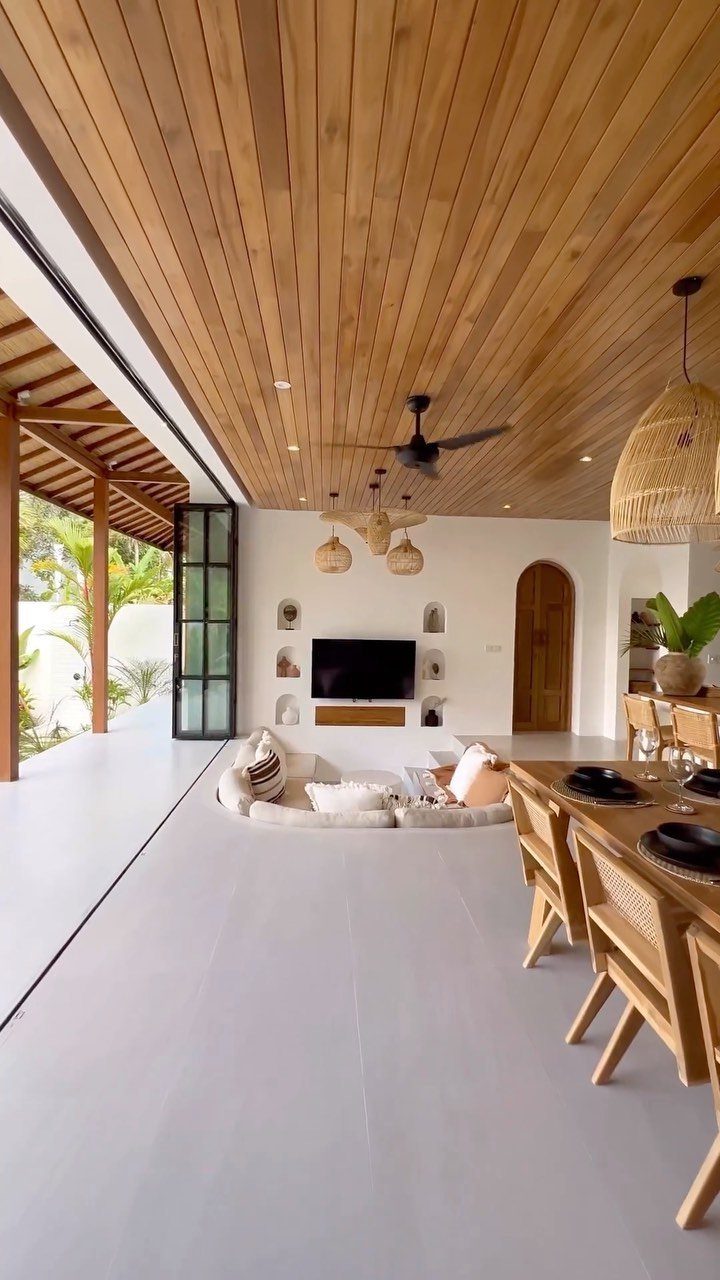
Modern rustic means natural materials with clean lines: wood overhead, woven shades and chairs, and a plain white floor to keep it crisp. The wicker pendants and dining chairs bring in texture without clutter.
For a rental, skip the ceiling and copy the mix on a smaller scale. Hang a woven pendant, choose rattan or wicker seating, and keep everything else simple and pale.
One strong wood element is enough; let the rest stay quiet.
"For more historic living rooms like this one from the late 1800s, resist the urge to buy all from one era. Instead, an eclectic mix of design styles and furnishings will keep it fresh and updated," says designer Krista Shugars of KD Designs Custom Interiors.
11. Create a Cozy Nook
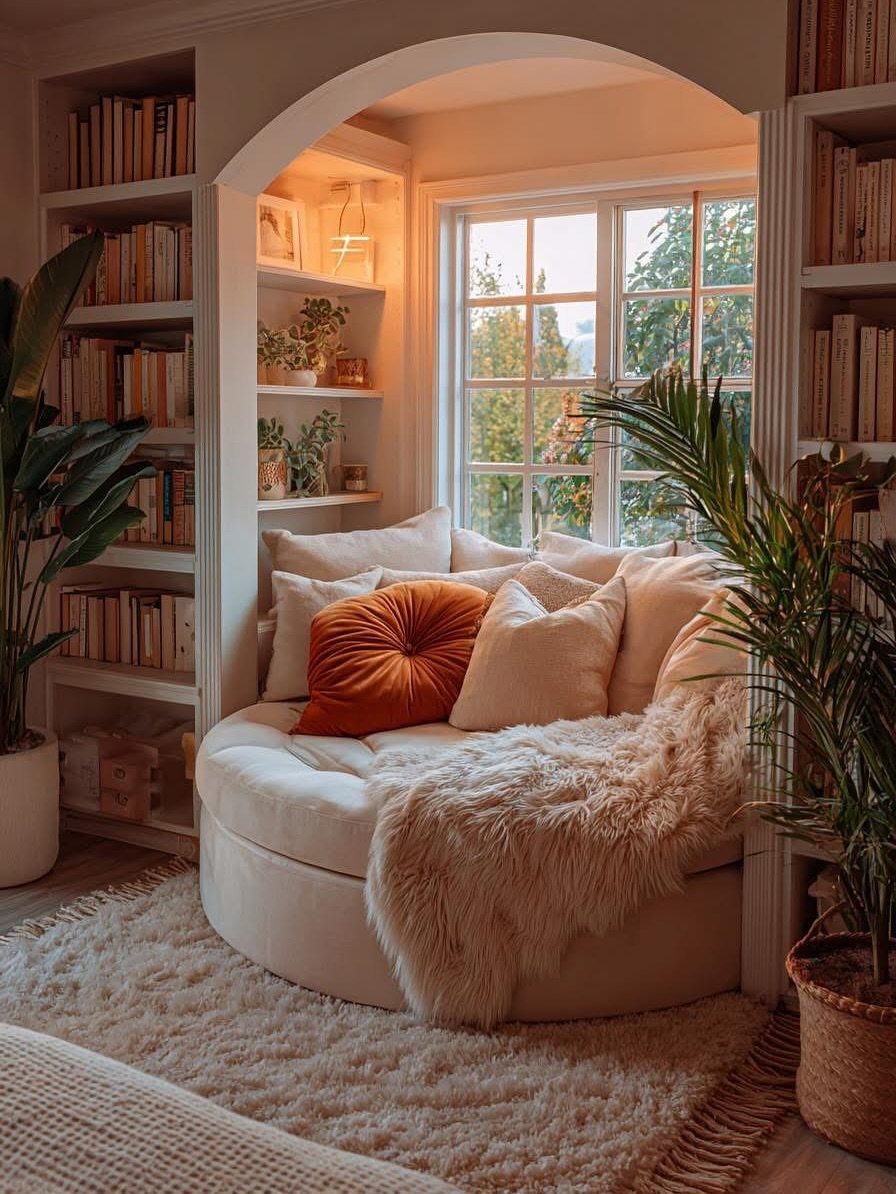
A nook gives one corner a single job: sitting still. A curved cushioned seat tucked beside a window, flanked by shelves, does that well.
Pile on a few pillows and drape a faux-fur throw over the seat so it invites you to stay. A firm cushion matters more than extra pillows, because a seat you sink into won’t get used for reading.
Keep a couple of books within arm’s reach on the shelves.
12. Furniture to Define Areas
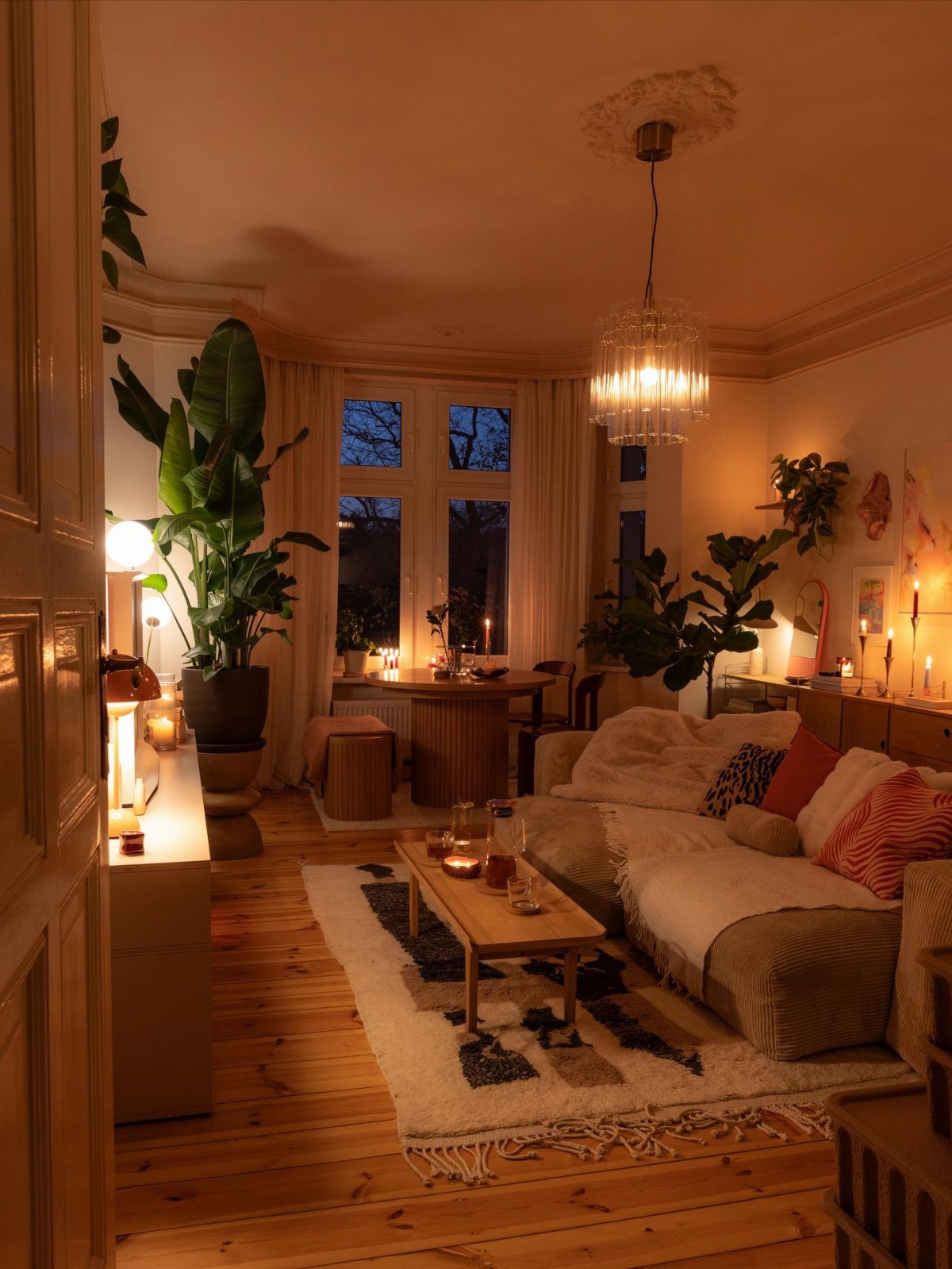
When living and dining share one room, furniture can draw the border.
Warm lamps on each side help too: one glowing zone for sitting, another for meals. A few plants along the edge soften the line between them.
Rugs do the heavy lifting here, so size the rug to fit the seating group.
13. Sheer Curtains
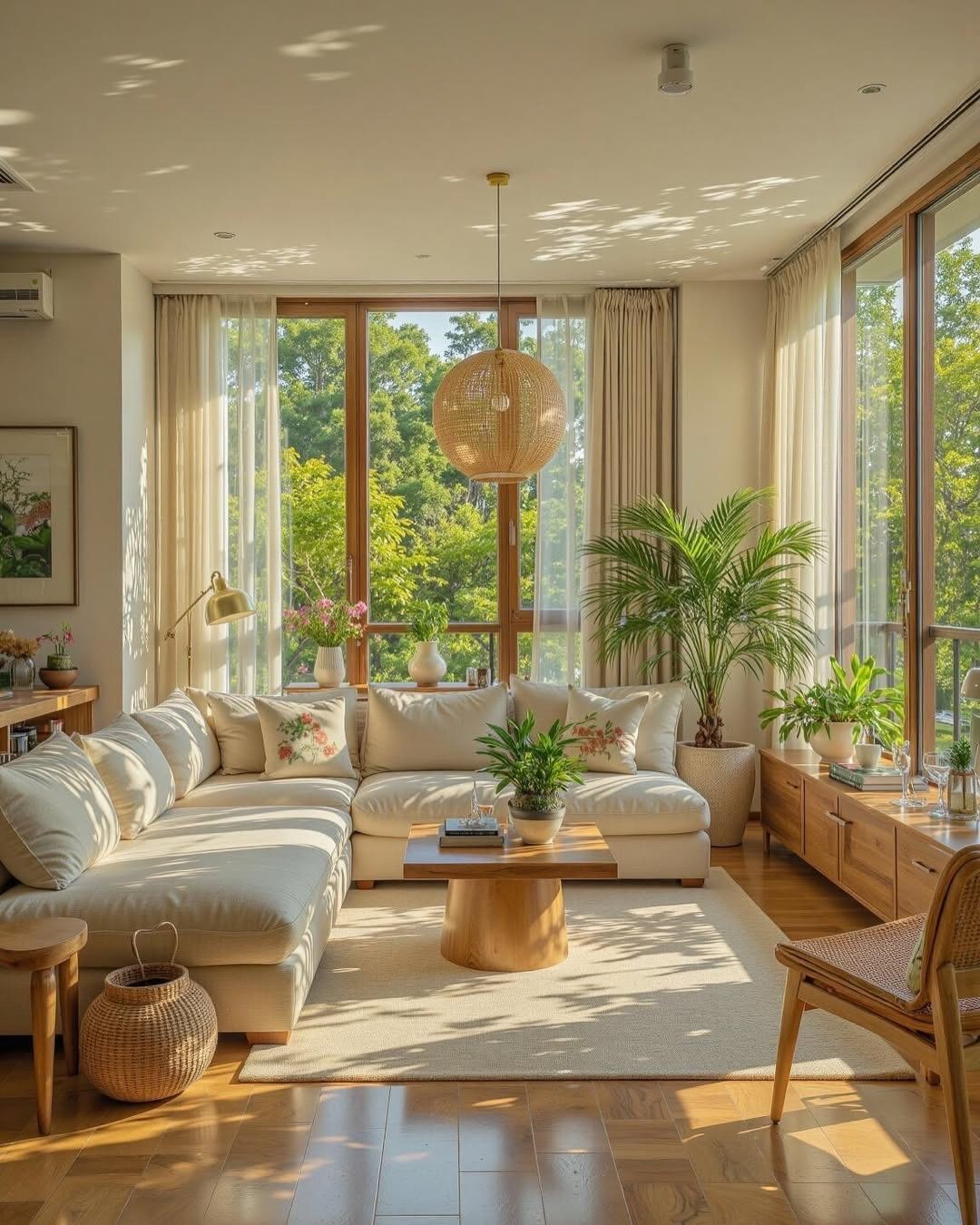
Sheer curtains let daylight through while softening the glare, so a room with big windows stays bright without feeling exposed. Against a white sectional and wood furniture, they keep the light airy and the view of the trees intact.
Hang the rod close to the ceiling and let the panels reach the floor, which makes large windows look even taller. Choose a pale fabric that matches the sofa.
If you need privacy at night, add a second rod behind them for heavier panels.
14. Dark Walls
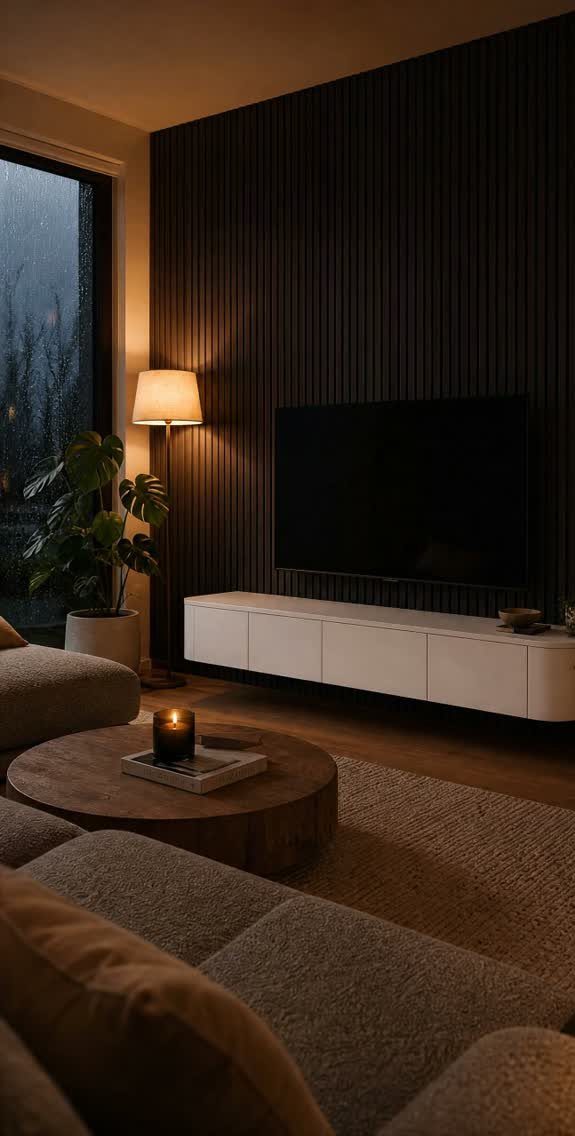
Dark color holds a room in, and a wood-slatted wall does it with texture as well as shade. Putting it behind the TV gives the screen a backdrop that blends in instead of glaring.
Balance it with light pieces, like the white floating console, so the wall doesn’t swallow the room.
In a rental, pick one wall, not all four.
15. Dark Furniture with Light Decor
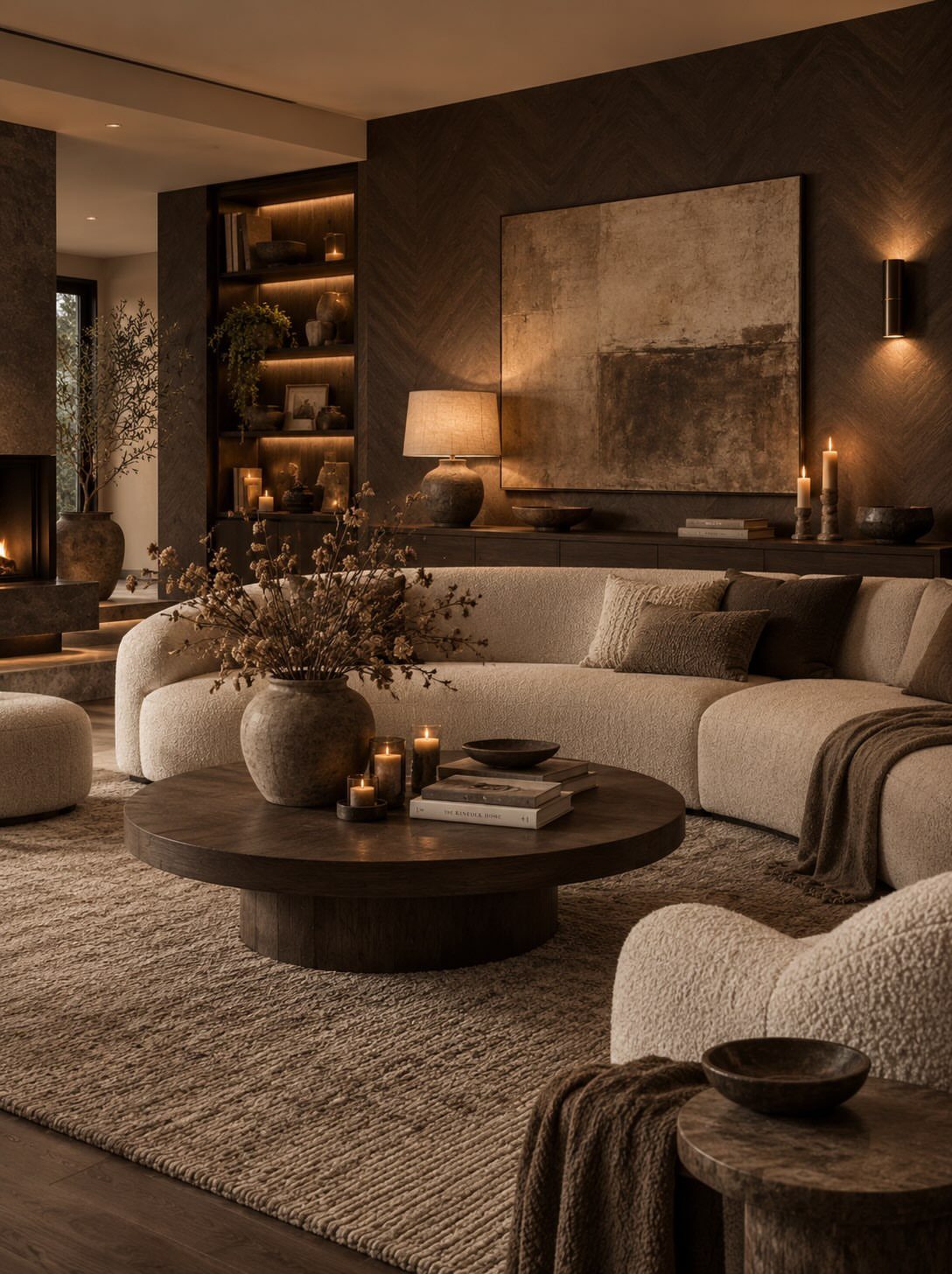
A dark wooden coffee table against a cream bouclé sofa gives the room contrast without adding a single extra object. Pale curves and a deep tone sit well together, and dark textured walls make the cream look brighter.
I would go light and sparse everywhere else, with one large abstract painting doing the talking. Warm ambient lighting matters more here than in a pale room, since dark surfaces soak up light.
Choose a round table to echo the curved sofa.
16. Use Built-in Shelves
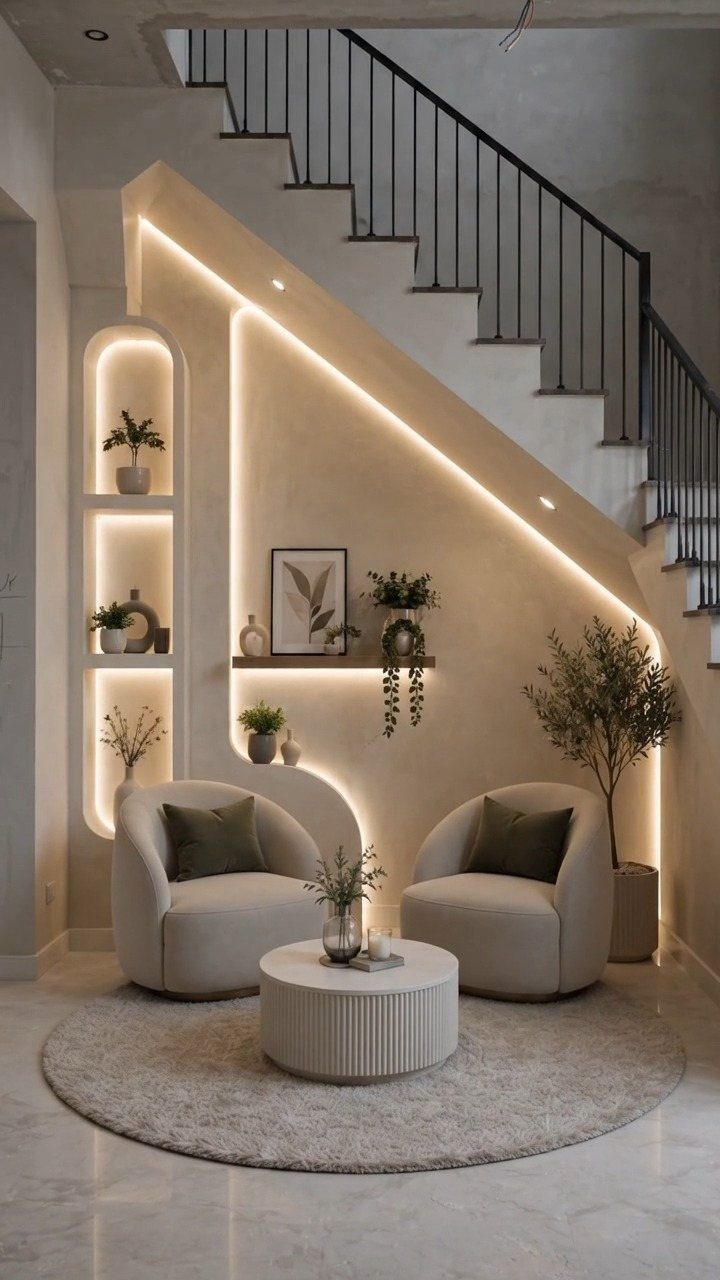
Built-in shelves turn dead wall space into storage, and the space under a stairs is a good place for them. Arched and straight shelves mixed together look custom without feeling stiff.
Add LED lighting inside the shelves so the seating area glows at night. Keep a few plants among the objects, and leave some shelf bare so it stays organized rather than crowded.
Two cream swivel chairs and a round coffee table fit neatly in front, with a rug underneath to mark the spot.
Importance of Lighting
Daylight deserves as much attention as lamps.
After dark, I use lamps instead of the overhead. One bright ceiling fixture turns a space into a waiting room, and lamps scattered around fix that.
A fireplace you don’t use can hold candles instead.
Moving screens out or off center pushes furniture toward conversation, and that’s where warmth starts.
Role of Color
Neutral palettes and dark palettes both work, and the choice depends on how you use the room. Cream, beige, gray and soft pink keep a room open and uncluttered.
If movie marathons and candlelit takeout are the priority, go dark instead. Chocolate-brown leather, navy or gray pillows and soft materials like flannel and velvet make a rustic, snug palette.
A vintage-inspired viscose rug adds a soft place for bare feet. Dark rooms need dimmer, warmer light to feel cozy rather than heavy.
Furniture Arrangement
In a narrow room, resist lining sofas and armchairs up on opposite walls. That formal setup feels like a waiting room.
Angle the seating toward a shared focal point instead, such as a fireplace, a table or a view. The relaxed geometry pulls people into conversation.
In a larger room, divide the floor into zones for reading, watching TV and playing games. A chaise, a tête-à-tête or swivel chairs give you flexibility, and they connect one zone to the next.
Frequently Asked Questions
How to set up a cozy living room?
I start with lamps on dimmers, a handful of textures that feel soft, and paint or fabric in colors that stay low-key.
What are some ideas for decorating a cottage-style living room?
Lean on natural materials, warm tones and soft textures. A woven jute rug, wicker baskets in a matching warm tone and rattan chairs share a color range, so they look gathered.





