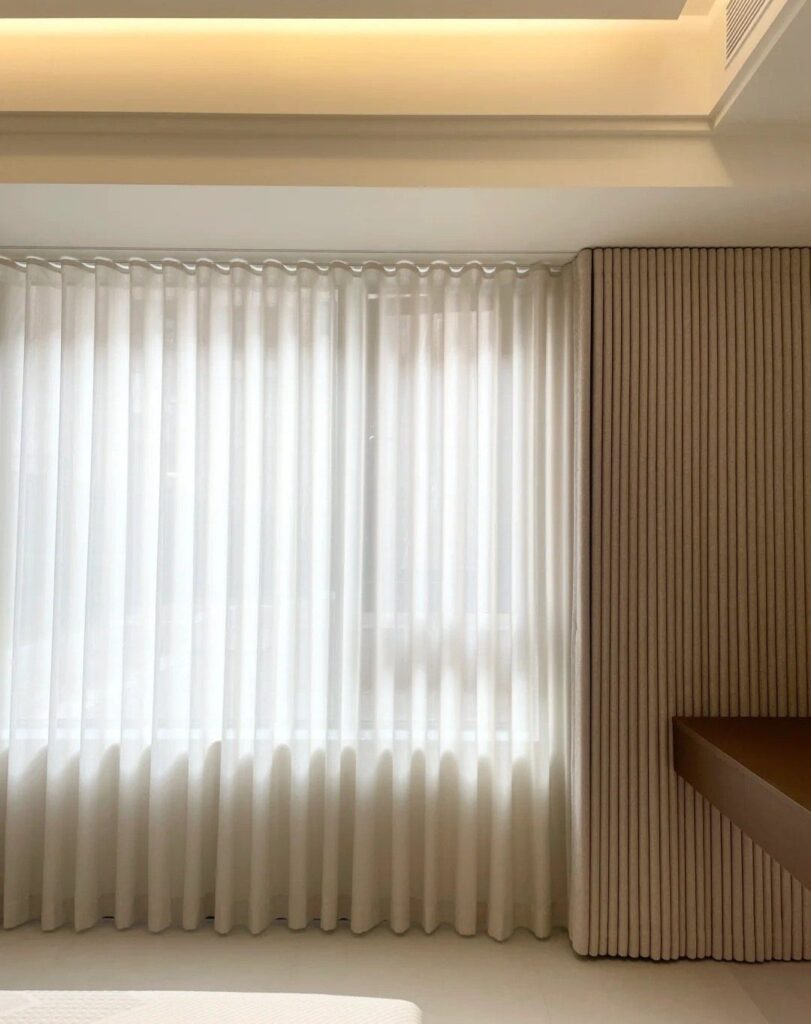
These 11 ideas run from a swap of two panels or a pair of tie-back straps cut from leftover fabric to a ceiling track with ripple-fold panels that costs more than a rod and clip rings.
The curtains that fit best depend on how much light the window gets and whether you need to open and close them often: panels that move daily need smooth gliding hardware, and west-facing glass needs the sun blocked before the fabric gets picked.
1. Layered Sheers and Drapes
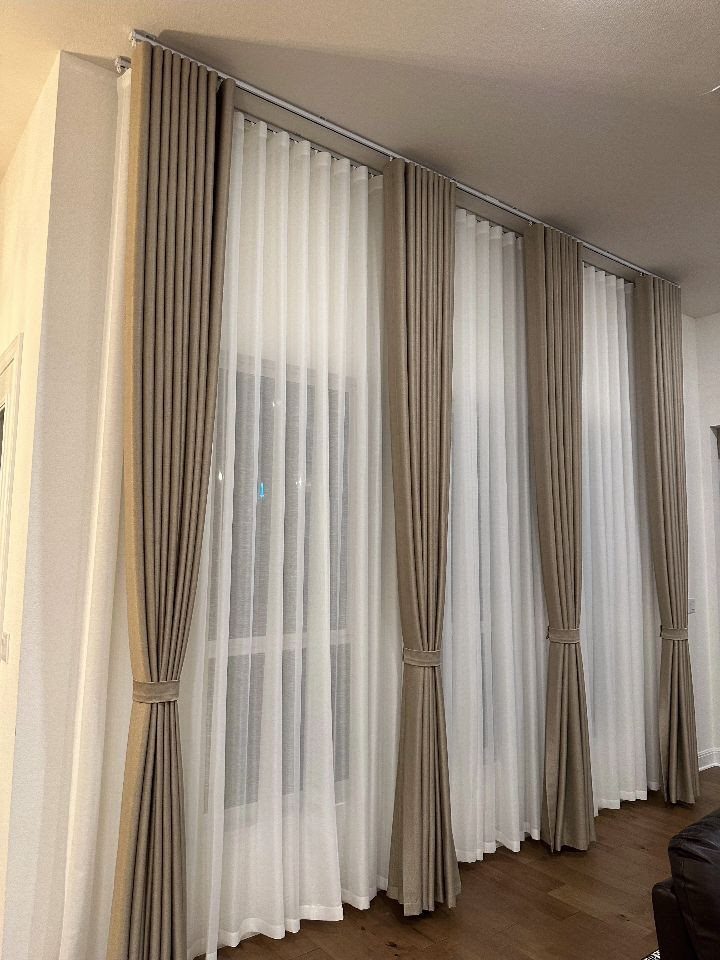
A sheer panel on the inside and a heavy drape on the outside gives one window two settings.
Pulled shut, the sheer softens daylight while the drape stays out of the way; swing the drape across and the room closes down for evening.
Tie the drapes back during the day so the sheer layer stays visible. Hang both on a double rod, with the sheer nearest the glass.
I like a pale sheer behind a deeper drape like taupe, since the contrast keeps the layers from blurring together.
2. Natural Fabrics
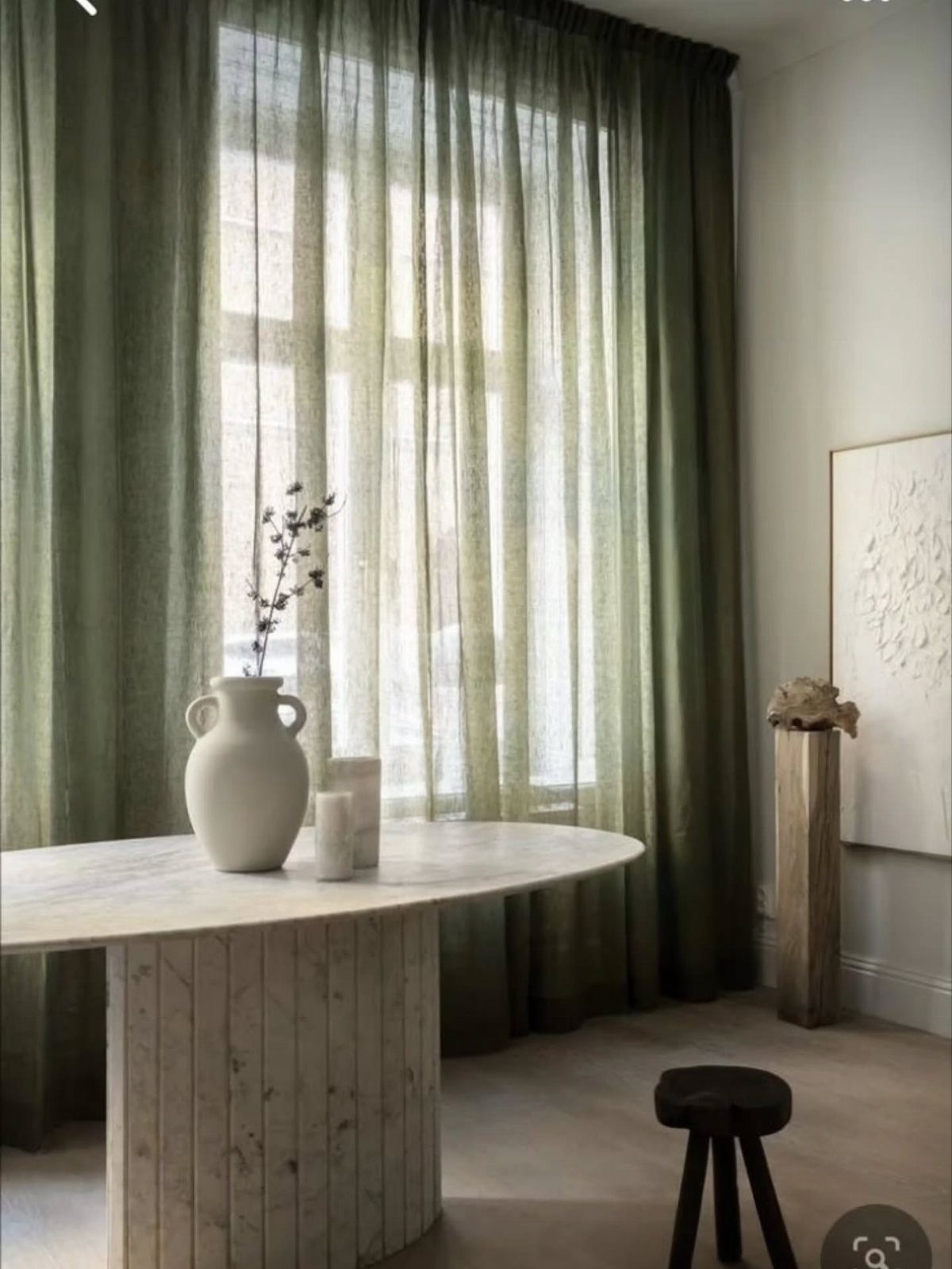
Linen, cotton and wool all bring a modern look because they read as material first and decoration second. A sheer linen in a soft green lets light through and gives a plain wall a color without a pattern.
Wool suits a room that needs more weight; cotton is the easiest to live with and the friendliest to a tight budget. Linen’s natural crinkle is part of its look, so skip the ironing and let it hang.
Pick one fabric and let the furniture do the rest. A single natural curtain beside a stone table and a plain stool is enough.
3. Ripple-Fold Panels
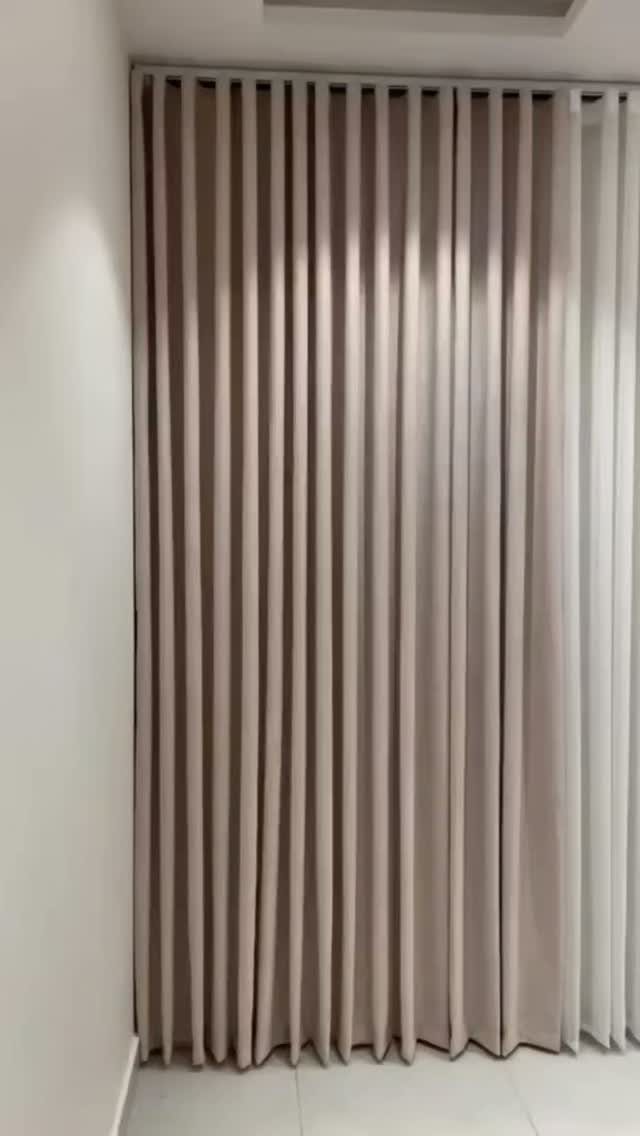
Ripple-fold curtains hang from a ceiling track, so there is no visible rod and no rings, only evenly spaced soft curves running the width of the wall. Hung from the ceiling to the floor, they make a room look taller.
The look is clean and tailored, which suits a plain room with white walls and light flooring. Beige keeps it calm.
Expect to pay more than for a rod and clip-ring setup, because of the track and the heading. Measure the full wall width, not just the window, so the panels stack neatly when open.
4. Patterned Curtains
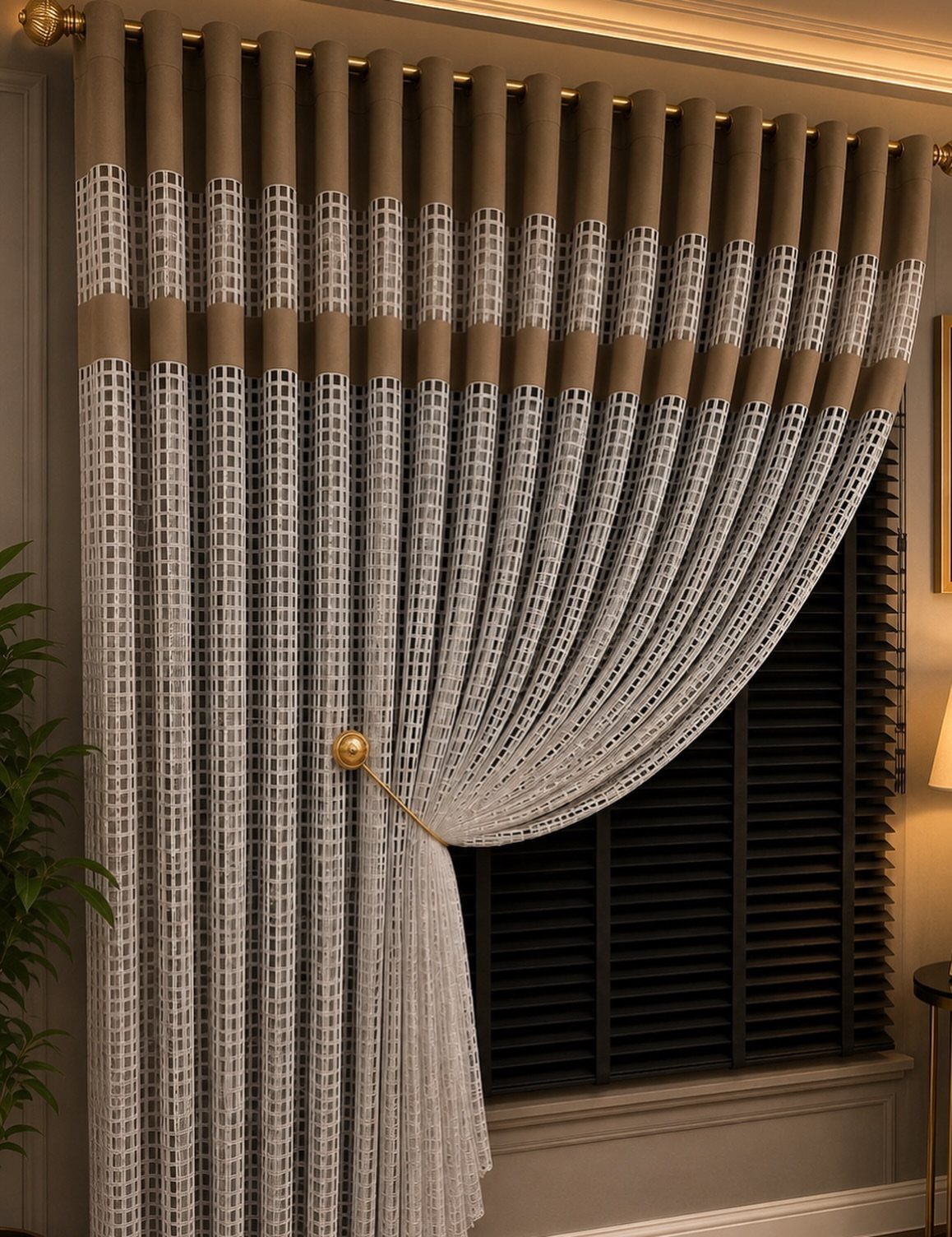
Pattern is the fastest way to give a sitting room a personality, and curtains give you a lot of it at eye level.
Keep the rest of the room quiet so the print leads. If the pattern is busy, choose a gold rod and a simple tie-back, since hardware that stays modest lets the fabric do the talking.
Patterned panels also cover an unattractive window treatment. Black blinds behind them stay hidden when the curtains are closed and still work on their own.
5. Neutral Curtains with One Strong Color Accent
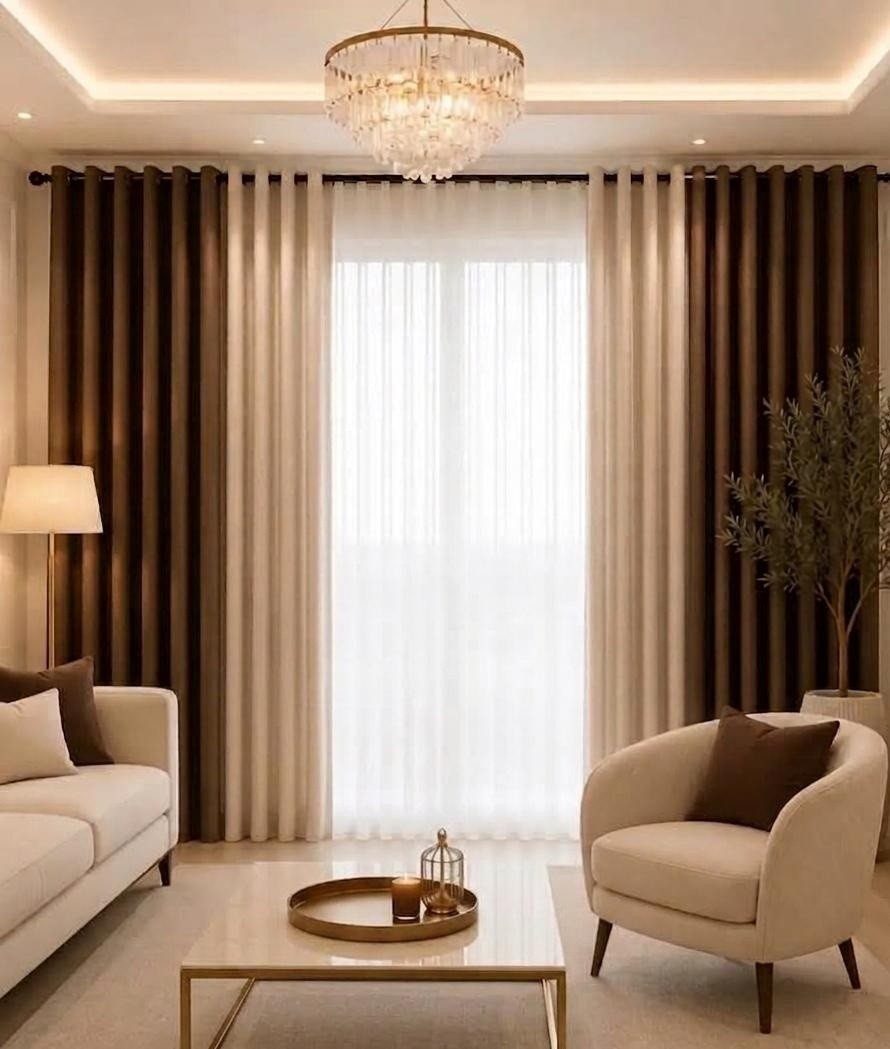
Neutral furniture can carry one strong color, and curtains are a smart place to put it. Here, brown panels alternate with cream ones, so the room stays warm and the color shows up in rhythm.
Choose the accent once and stick to it.
I prefer alternating panels over a solid block of color: it feels intentional without taking over. If you tire of the accent, swapping 2 panels is far cheaper than redoing a sofa.
6. Textured Solids
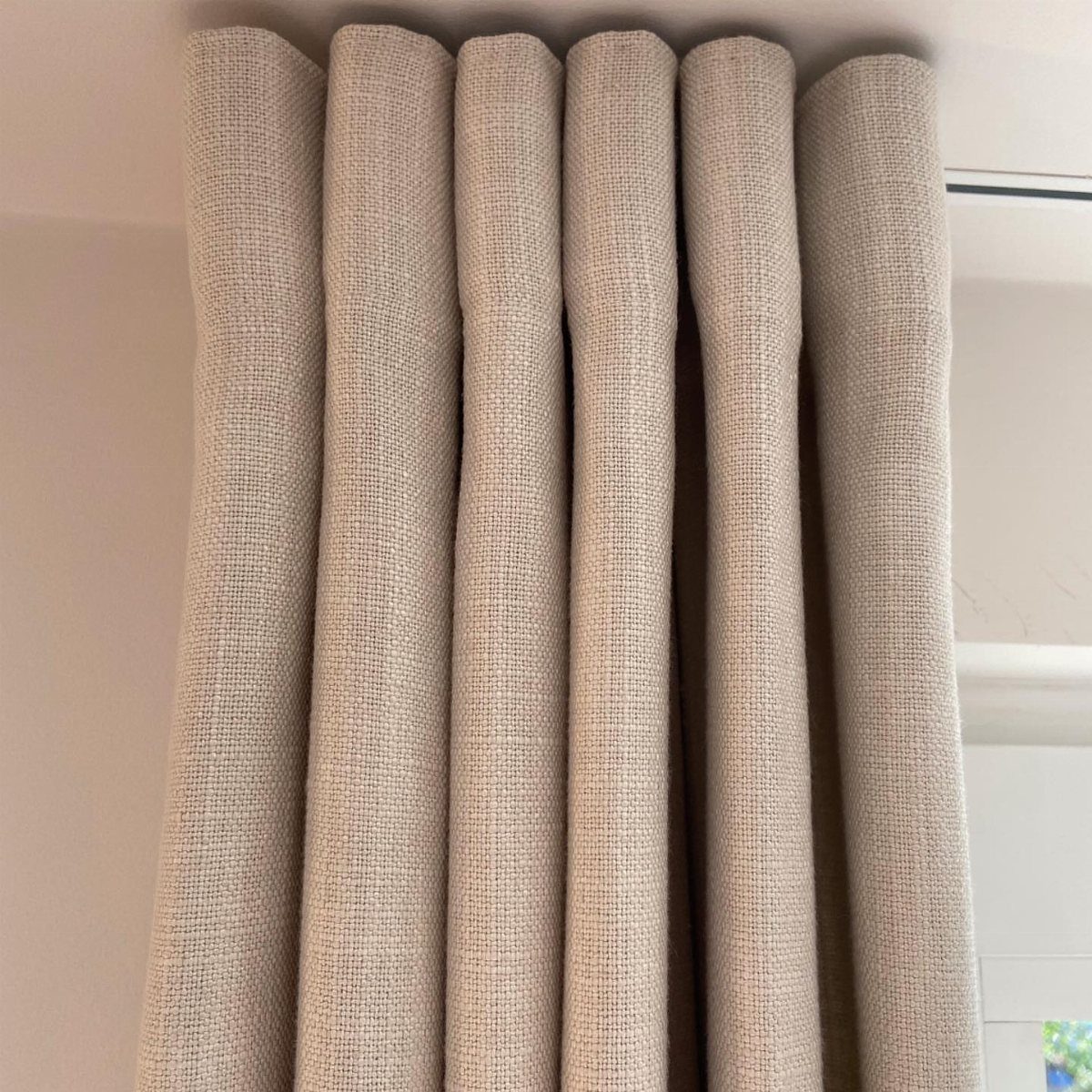
Textured solids add depth without adding a print. Bouclé and basketweave catch light unevenly, so a single beige reads richer than a flat one.
Because the surface does the work, stay with one color. Hang the panels full and generous so the folds fall deep and vertical, as they do against a white wall; a fabric that is stretched flat loses its texture.
Order a swatch and look at it near the window, since daylight shows the weave far better than store lighting does.
7. Floor-Grazing Curtains
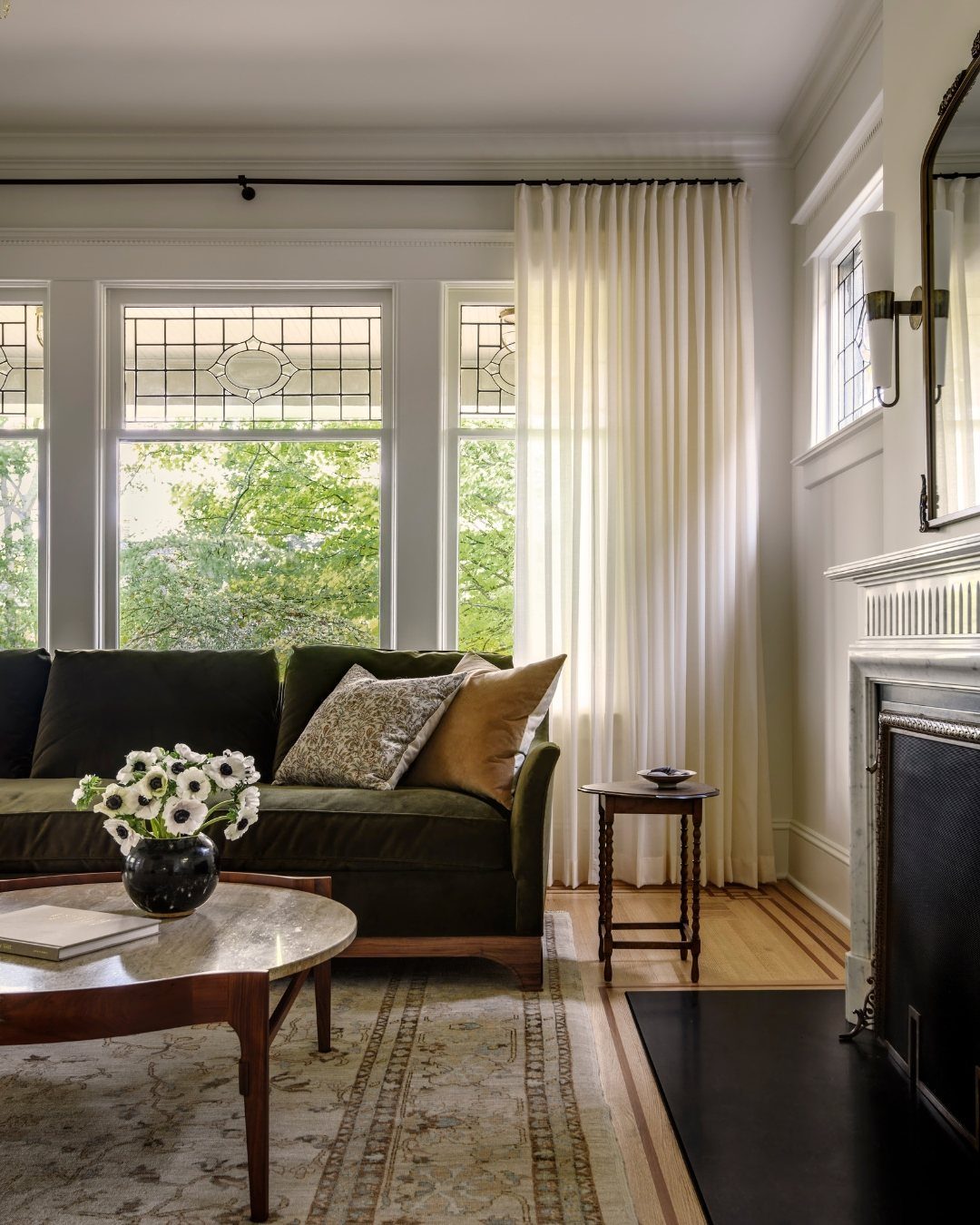
A hem that just skims the floor is the line that makes a curtain look tailored. Too short and it reads like a mistake; too long and it pools into a dust trap.
Measure from the rod to the floor once the rod is up, not before. Hang the rod high and wide so the white panels frame the glass and run in one long, clean drop.
If the floor is uneven, check the measurement at both ends of the window before ordering or taking them to be hemmed.
8. Curtains Paired with Roller Shades
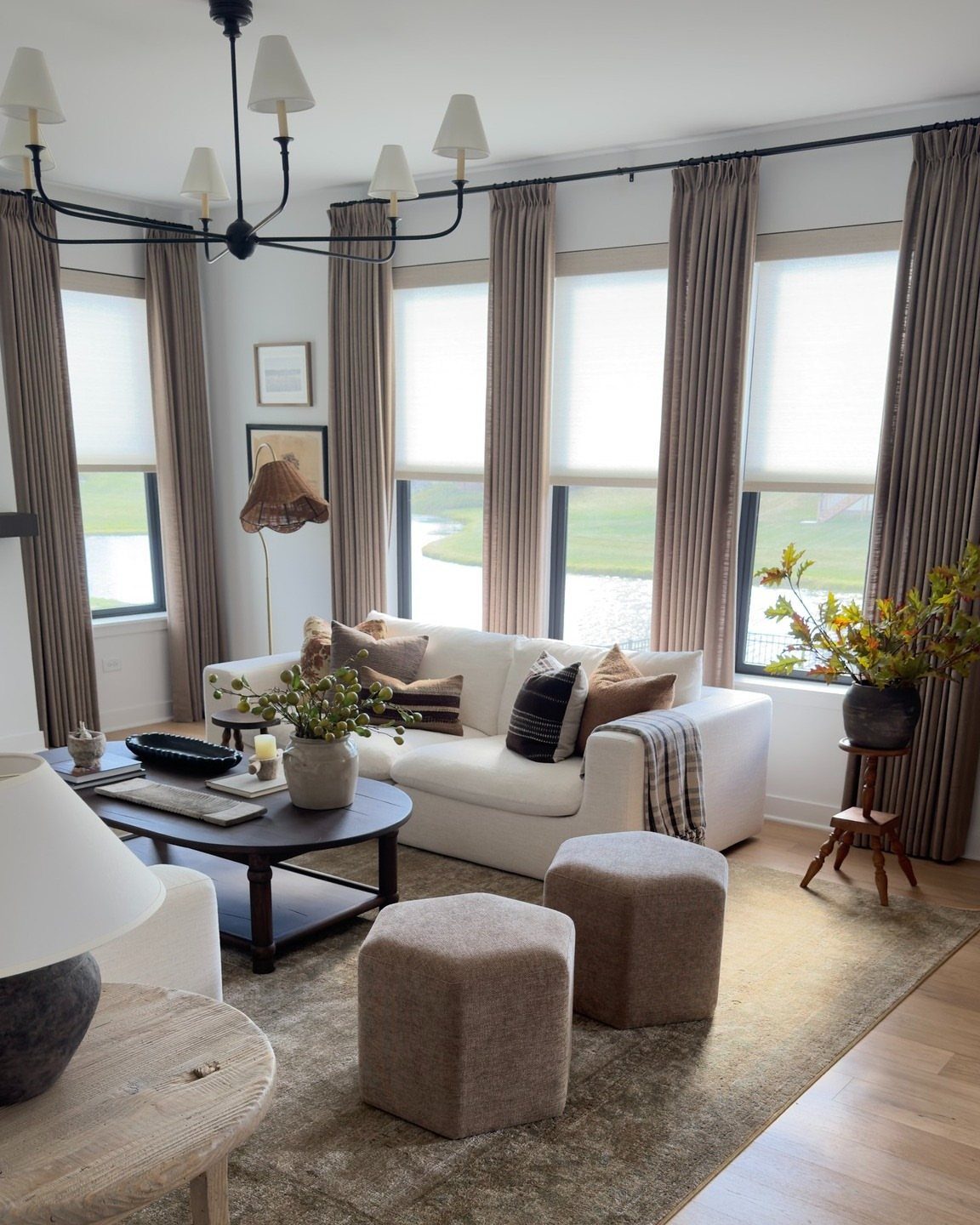
Long drapes handle the look of a room while a roller shade handles the light, and that division of labor is why I like this pairing.
Taupe panels stay open most of the day, and the white shade drops when glare hits the sofa.
White shades disappear against a bright frame, so the curtains carry the color.
Keep the two in related tones: taupe against white stays quiet and adds no clutter. It costs more than one treatment alone, but each layer can be bought separately over time.
9. Floor-to-Ceiling Pleated Drapes
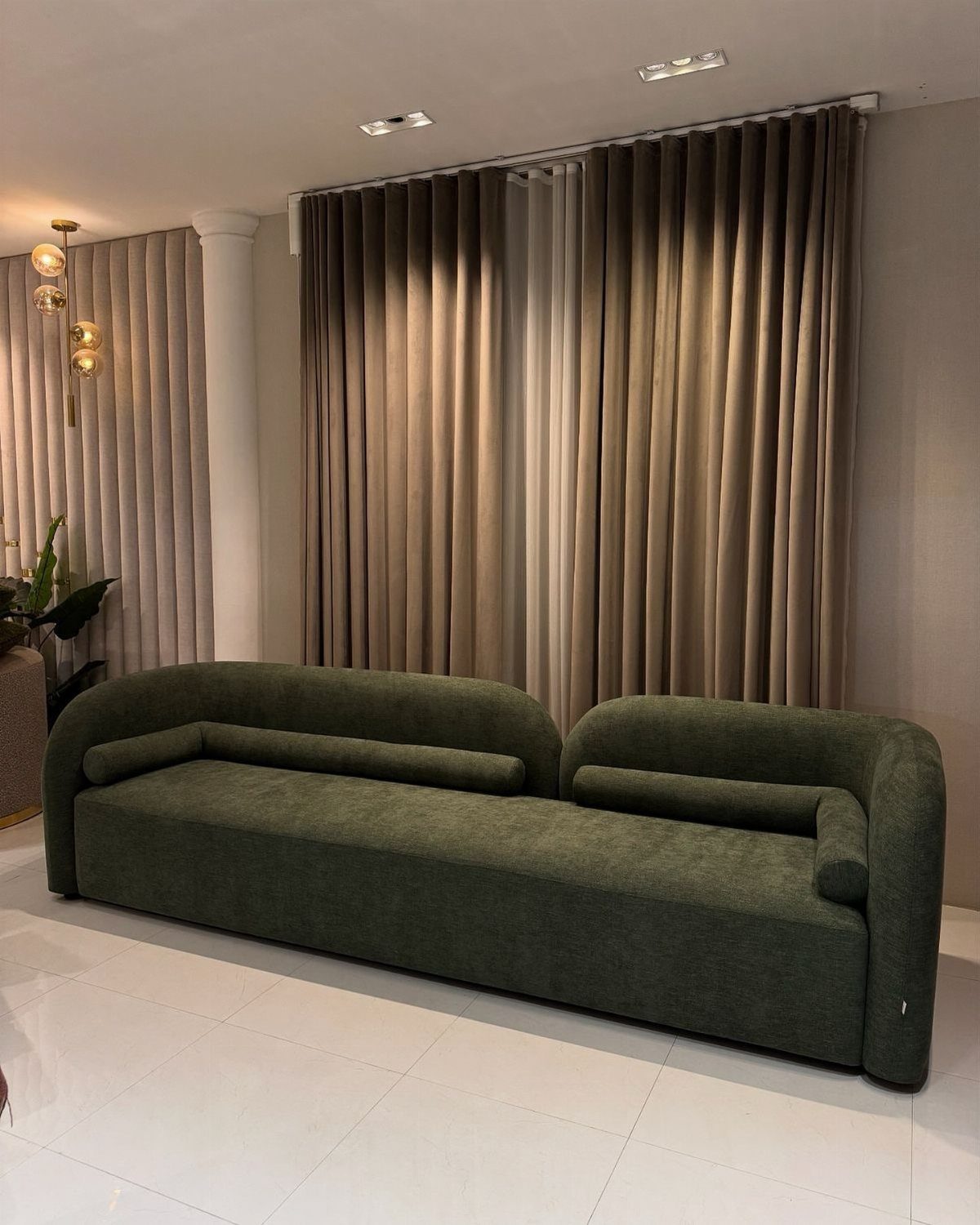
Run pleated drapes from ceiling to floor and the window wall becomes a single tall surface, with the pleats adding vertical lines that draw the eye up. Beige keeps that height soft instead of heavy.
Mount the rod or track close to the ceiling, not just above the window frame. Order generous width so the pleats stay full when the panels are closed; flat, stretched pleats look cheap.
Fabric this long takes a lot of yardage, so expect it to cost more than standard-length panels. A neutral shade lets a strong sofa and gold lighting stand out without competing.
10. Curtains with Tailored Tie-Backs
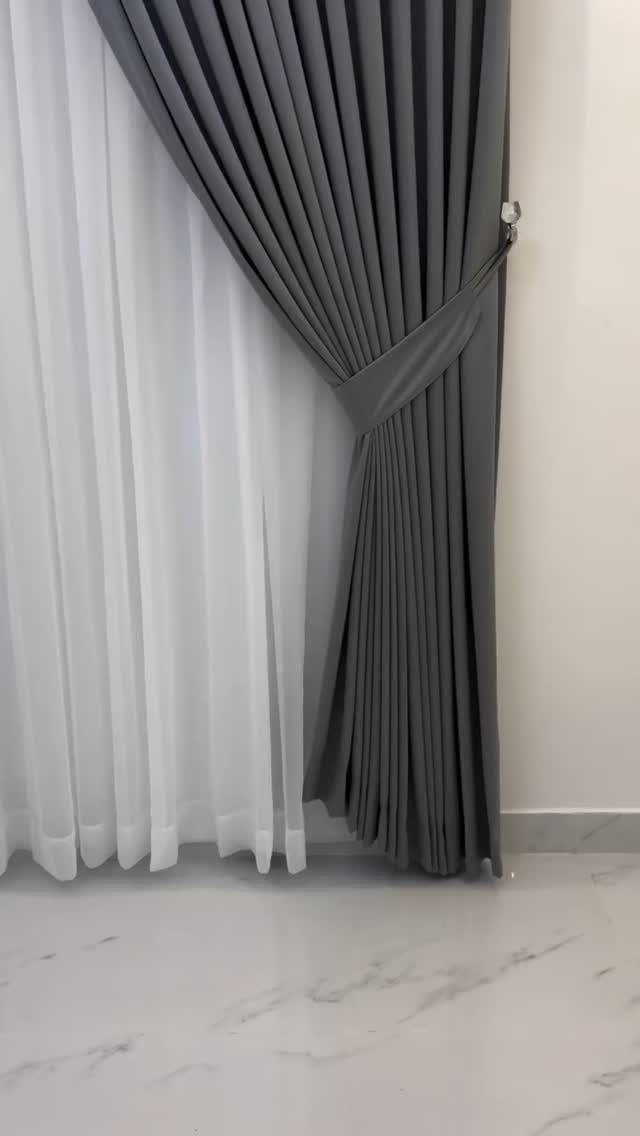
Tie-backs turn a plain panel into a deliberate shape. Here, grey drapes are gathered to the side with straps cut from the same fabric, which leaves a white sheer in view behind them.
Matching fabric is my pick over rope or metal holders, since it reads as part of the curtain. Set the strap at roughly the middle of the drop, and keep it snug enough that the fold stays soft and even.
Tie them back by day to show the sheer, and release them at night for privacy. Making the straps yourself is an easy weekend job with leftover fabric.
11. Bold Jewel-Tone Curtains
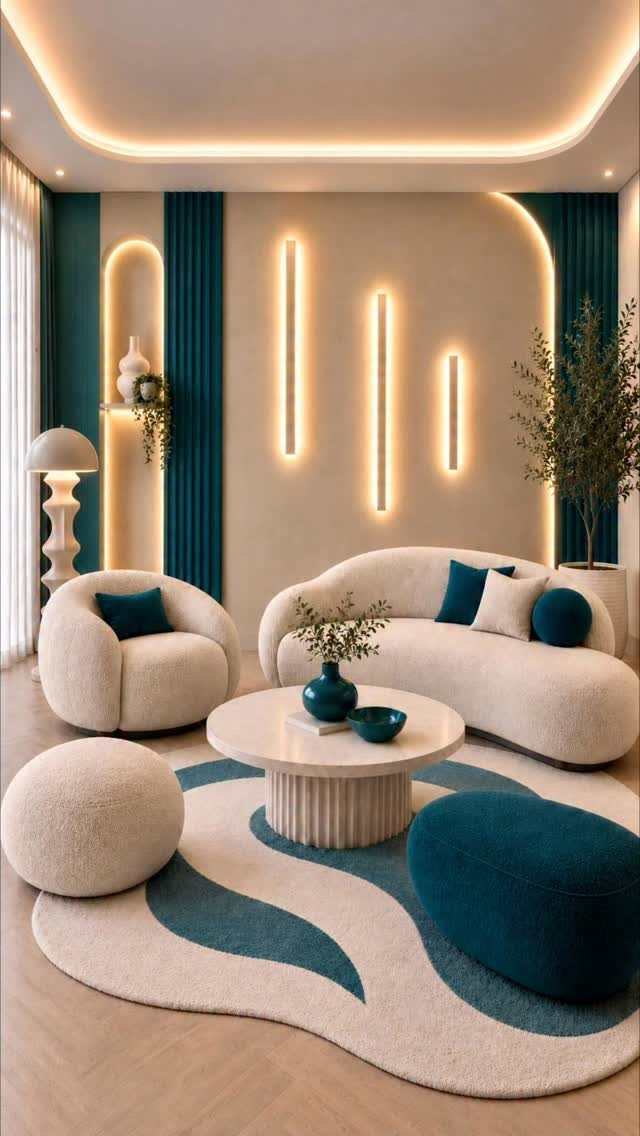
Teal curtains work because the color is rich enough to act as the main statement in a room of white. Curved white furniture and a teal-and-white rug give it somewhere to repeat, so the drapes feel planned.
Pick a deep tone and keep the other big pieces pale. One saturated color against white looks bold; several compete.
Pull a rug or a pillow in the same family to tie the window to the floor.
Color shifts under daylight, so check a swatch near the glass first. If teal feels like too much, a single pair of panels is a smaller commitment than repainting.
Choosing the Right Curtains
Start with how often the curtains will actually move. Panels you open and close daily need a smooth track or rings that glide, while panels that stay put can be chosen purely for looks.
Match the fabric to your existing palette, patterns and textures unless a full redesign is coming. A curtain that fights the sofa and rug will bother you every day.
Next, figure out whether privacy or light control matters more in this room. The right fabric softens light, adds privacy and helps insulate the window, so a heavier weave earns its place on a drafty wall.
For a room with strong afternoon sun, I would settle the light question first and the color second, since color is the easier thing to change later.
If you’re sitting in your living room sensing something isn’t right—maybe there’s not enough color, personality, privacy, or coziness—the problem might be your living room curtains.
Common Mistakes to Avoid
3 cheap mistakes wreck the look, and all of them are fixable while you’re still shopping.
Hanging too low is the first. Mount it 6–10 inches above the trim, or go higher if the ceiling allows, pulling the eye upward.
Wrong length is second. Panels that stop above the floor look cheap, so aim for a hem that skims or lightly kisses the floor.
Skimpy width is third.
If standard lengths come up 2 inches short, made-to-measure panels are worth the extra cost.
Curtain Layering Techniques
Layering gives you depth when one fabric is noticeably lighter or heavier than the other: a weightless sheer behind something with body. White or ivory sheers match almost any drape color, so I start there when I’m unsure.
A sheer is not the only inner layer. A flat Roman shade or a solar shade behind curtains adds texture and lets you adjust light and privacy separately.
Pick which layer takes the lead, the drape or the shade, then let that choice guide the rest.
Keep the color temperature consistent: warm beige linen drapes go with a warm, sandy-toned shade, and wood tones in the room will agree with both.
Frequently Asked Questions
What is the current trend for living room curtains?
Right now, living room curtains are simple and straight, made from linen or cotton or wool, hung on track hardware you don’t see. Ripple-fold drapery on a ceiling-mounted track does this, and so do layered sheer panels.
What is the curtain trend for 2026?
Minimalism, natural fabrics and functional layering lead the trend.
That means panels hung high from the ceiling, simple hardware or a hidden track, and a sheer paired with a heavier drape or a roller shade. The pairing gives you separate control over light and privacy.
Should modern curtains be sheer or opaque?
Layering both is the best answer. Hang a sheer nearest the glass to soften daylight, with a heavier drape outside it that closes the room down at night.
If you can only have one layer, choose a sheer for brightness or an opaque panel for stronger light control and privacy.





