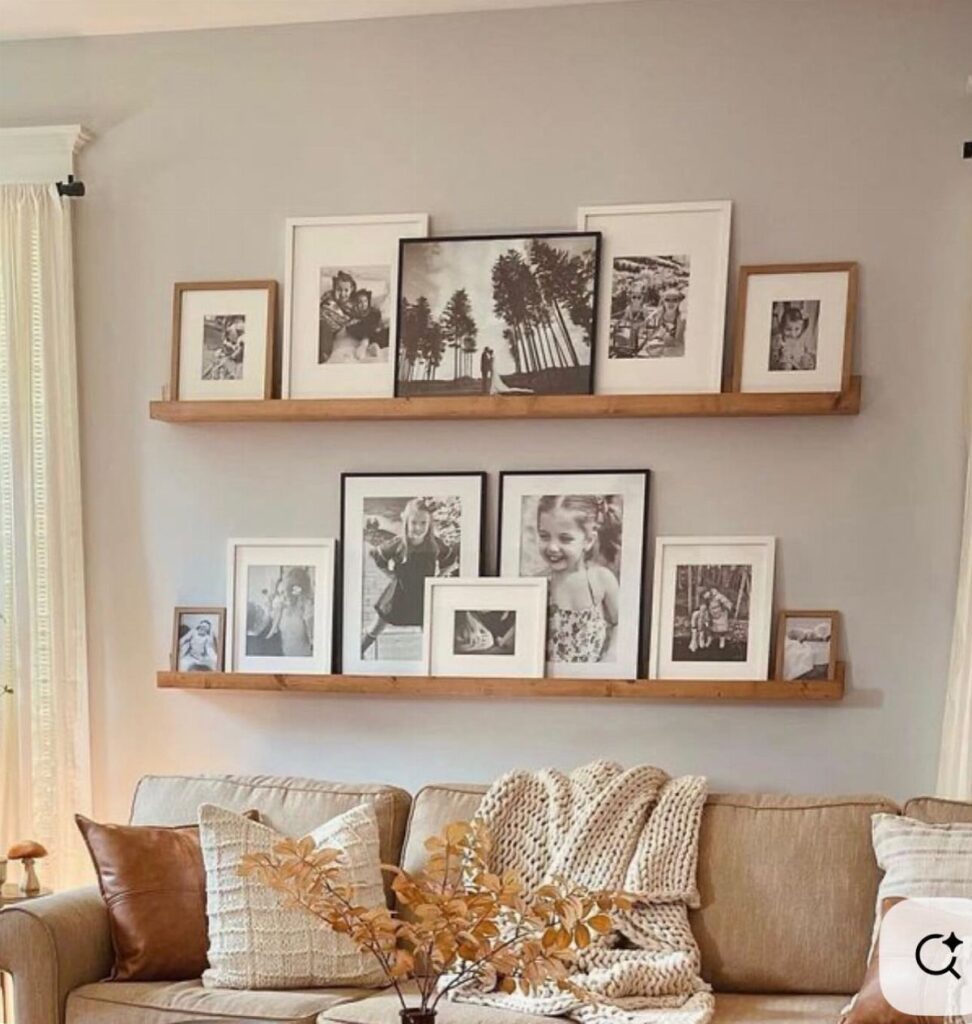
All 6 ideas rest on the same shelf-and-lean method, and they differ in ledge finish and in what sits on it: black frames on a black ledge, small plants and sculptures, or one natural wood line.
Whichever you pick, mount it a hand’s width above the couch back.
1. Largest Pieces Above Couch
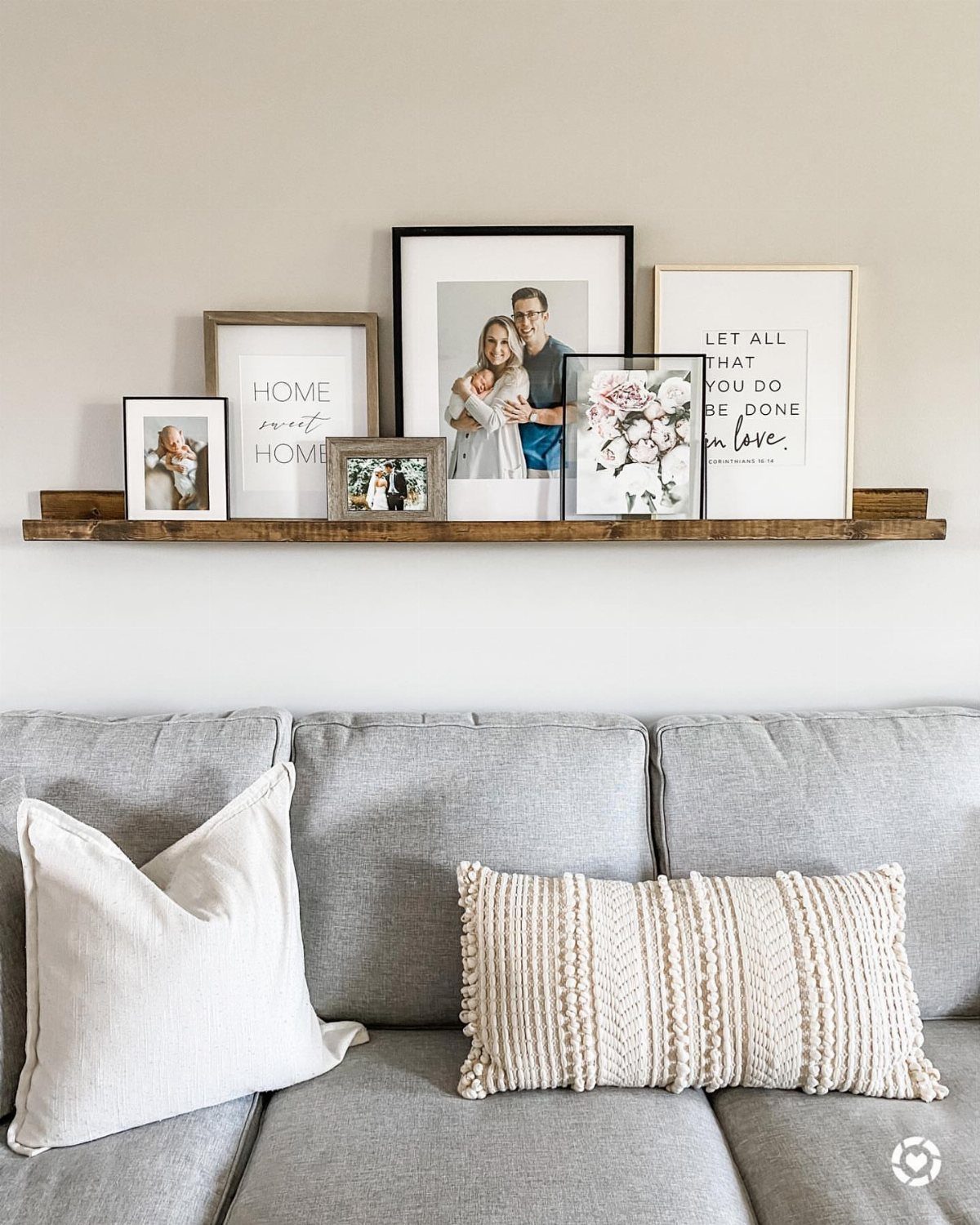
Start with the biggest frame and let it set the pace. On a ledge like this one, the largest pieces go at the ends or anchor the middle, and the smaller frames fill in around them.
Mixing wood with a grey couch works because the 2 tones sit quietly together. Keep the frame finishes close to each other so the different pieces still read as one group.
Lean each frame rather than hanging it, which means swapping a print costs nothing and leaves no new nail holes. That matters if you rent.
2. Overlap Pieces on Picture Ledge
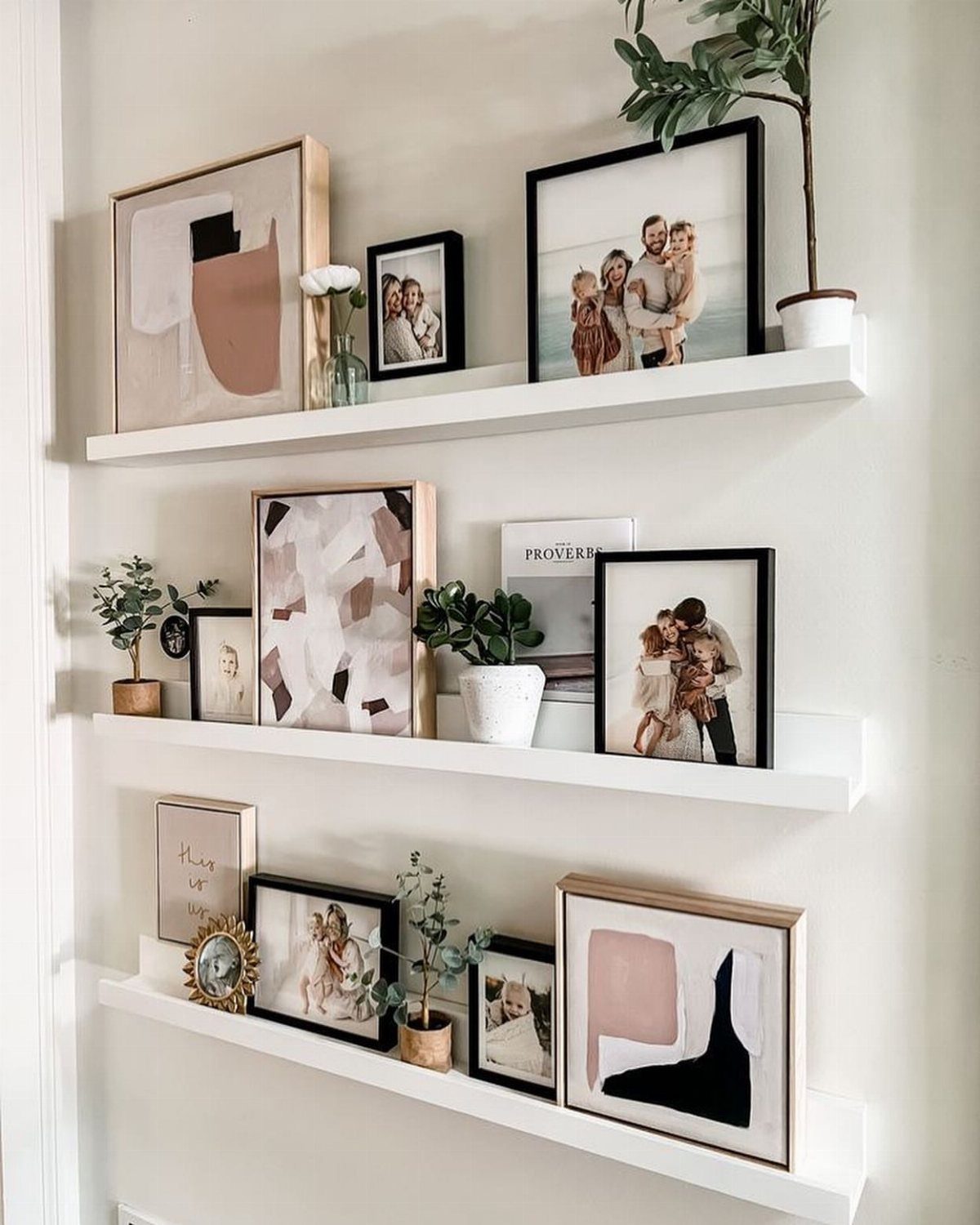
Overlapping is what makes 3 white ledges look collected instead of lined up. Let one frame cover the corner of the next, and set a small potted plant or a stacked book in front of a larger print.
White ledges on a neutral wall keep the focus on the pictures. I like to vary heights within each shelf so the eye zigzags across the wall.
Place the tallest frames at the back and the shortest in front. Leave a little bare ledge at the ends so the arrangement has room to breathe.
3. Large and Small Pieces
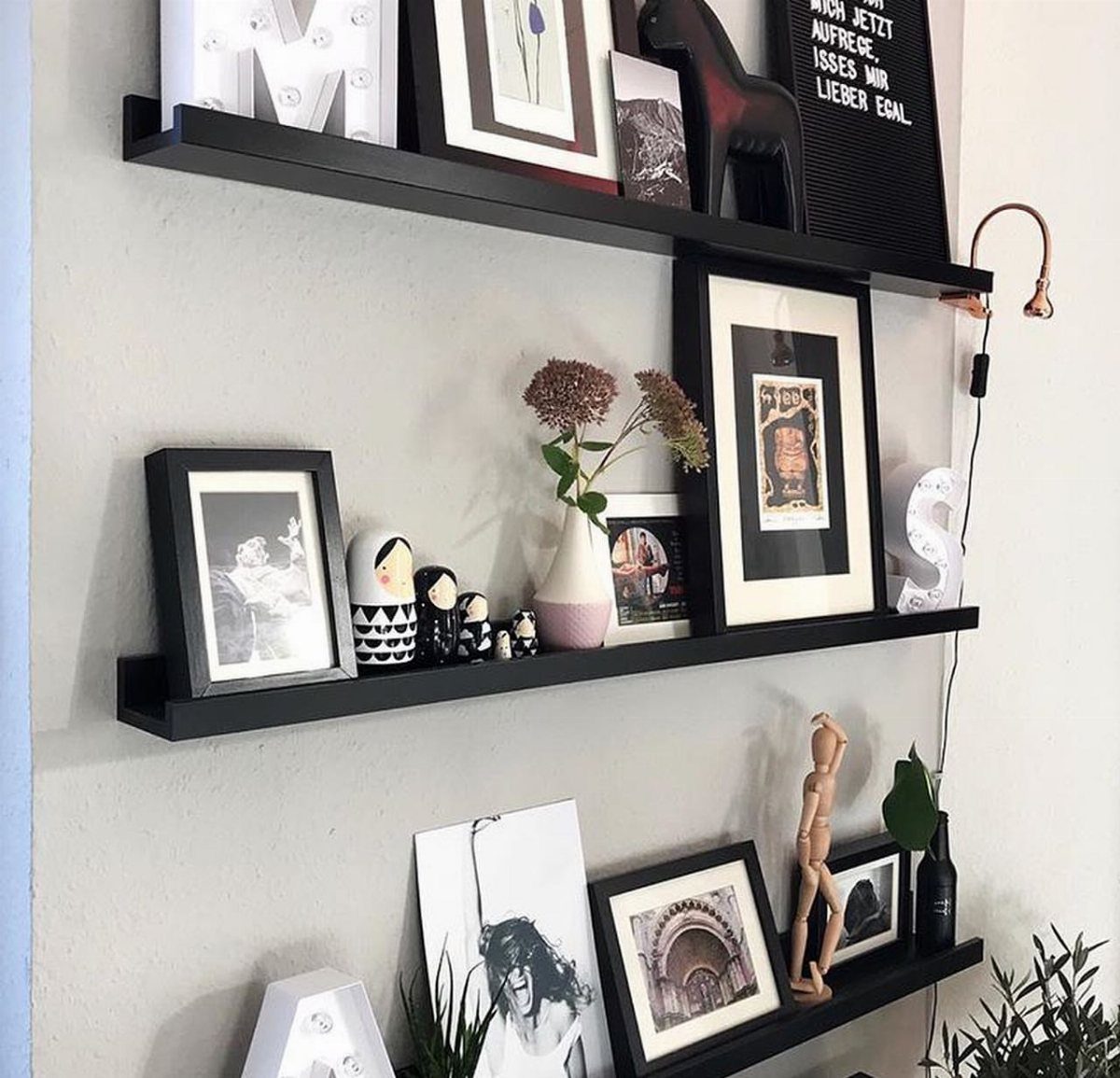
Black ledges on a white wall give you strong contrast, so the objects can be a mixed bunch without looking messy.
Pair a few big frames with small figurines, a vase of flowers, and one light-up piece, and the size difference does the work.
Spread the large items across all three ledges instead of stacking them on one. That keeps the weight even.
A letter board is a cheap way to add words you can change whenever you like. Keep it to one per wall.
4. Black Ledge with Black Frames
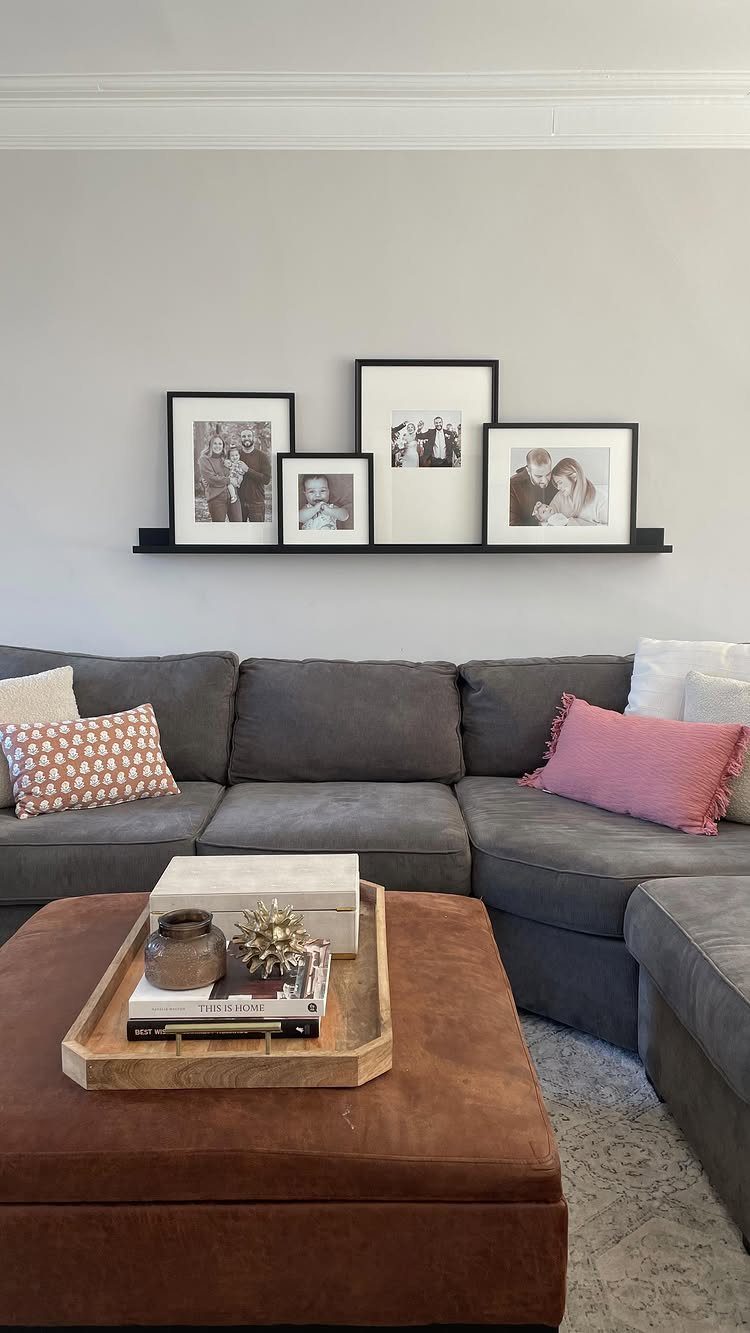
A black ledge holding matching black-and-white photos is the tidiest version of this idea. Identical frames and a single photo palette mean the group looks planned, even if the pictures themselves come from different years.
Above a grey sectional, the black line also adds a clean edge to the wall. Black-and-white printing is also forgiving, since mismatched color casts from different cameras disappear.
Space the frames evenly and center the row on the sofa, not the wall.
5. Add Small Plants and Sculptures
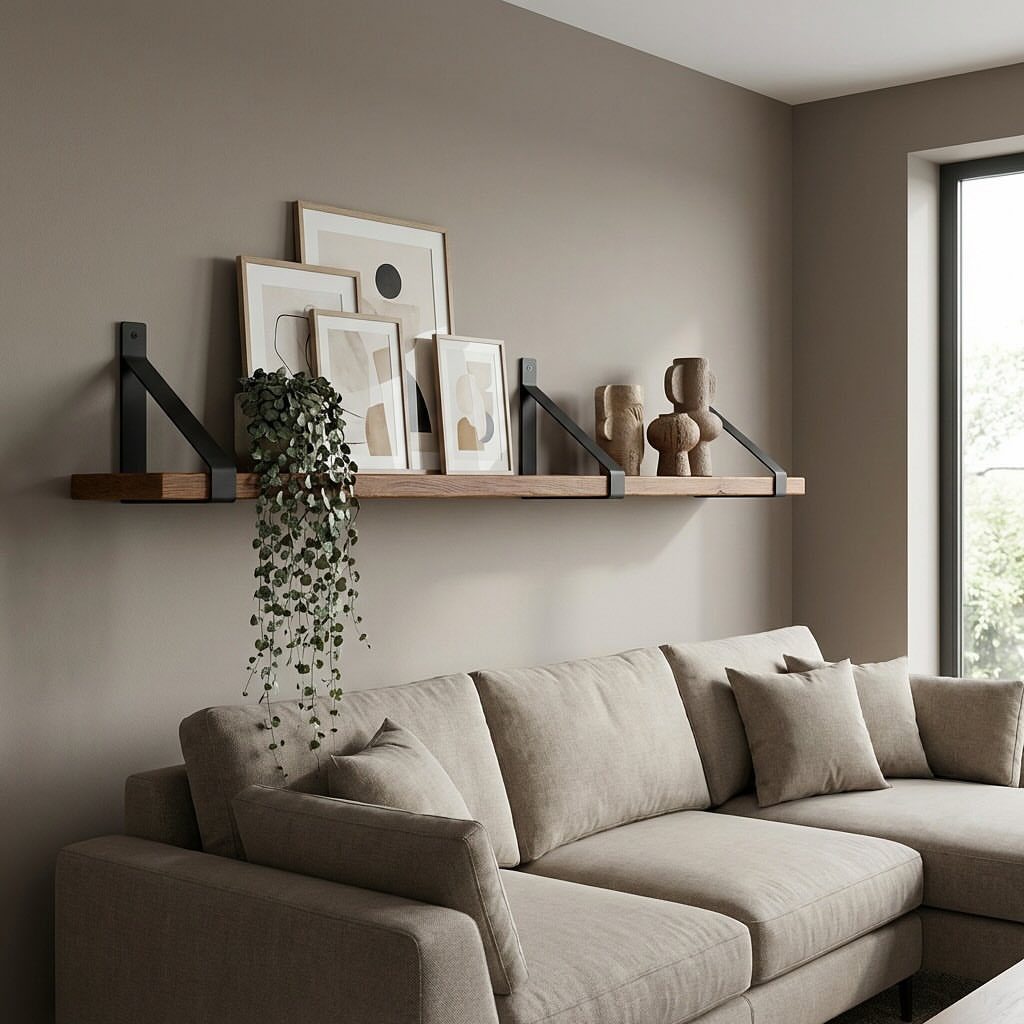
Abstract prints work best on a wooden ledge when small sculptures and a trailing plant break up the row of frames. The plant softens the hard edges, and its vines can spill down over the beige wall.
Choose a plant that tolerates your light, or a good faux one if the wall is dim. Keep sculptures small so they do not hide the art behind them.
I would use 3 object types at most: art, sculpture, plant. More than that and the ledge starts to feel like clutter.
6. Single Natural Wood Ledge
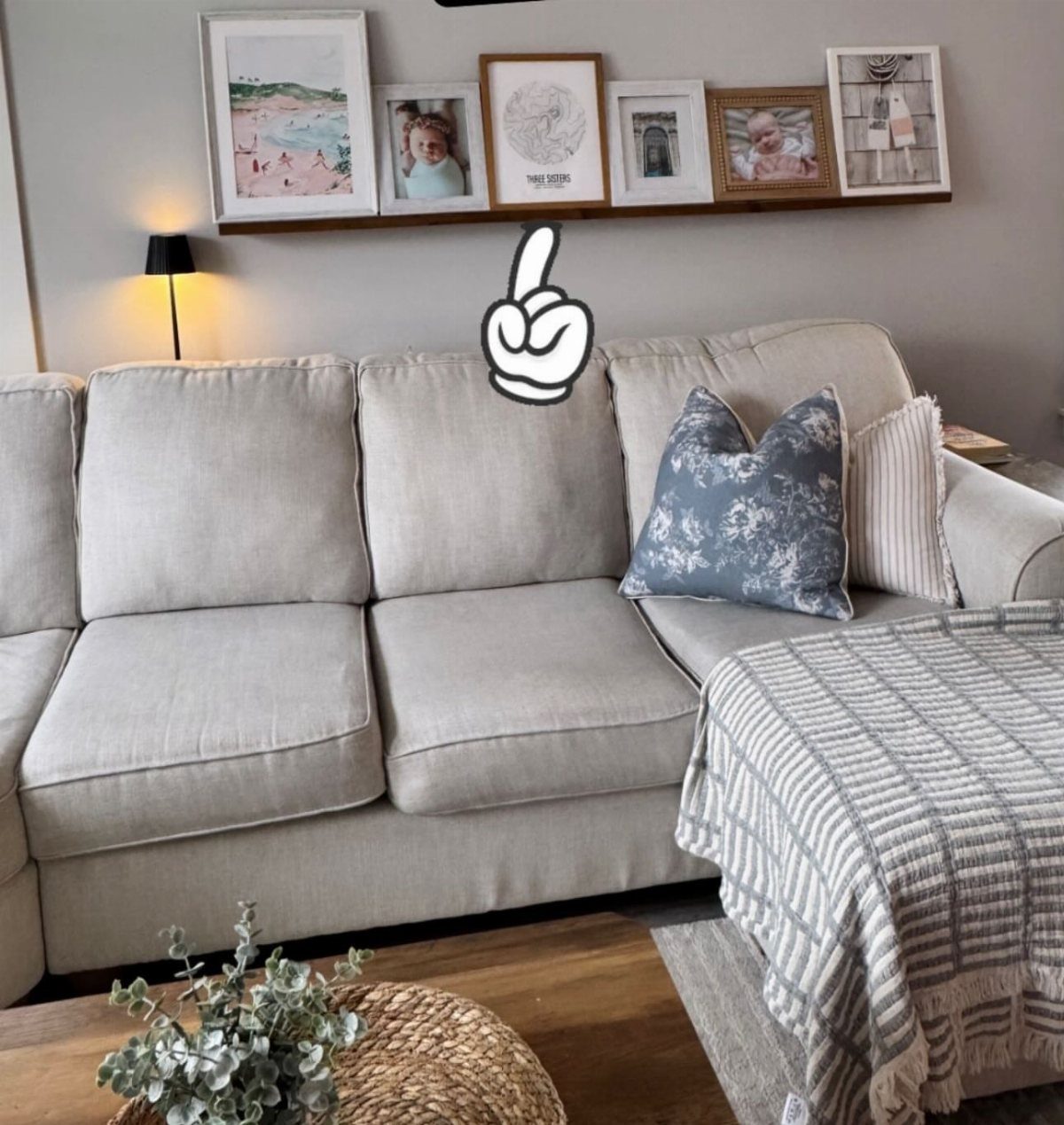
One long ledge in light wood is the simplest route, and I think the strongest for a first try. A single line keeps the wall calm, and the wood warms up a light couch.
Fill it with framed photos and prints at mixed heights, running the ledge nearly the width of the sofa. A lamp and plant nearby balance it.
Mount it at a height that leaves a hand’s width above the couch back, so no one bumps a frame when leaning.
Trial and Error in Styling
A picture ledge is the easiest kind of wall decor to revise, so treat the first setup as a draft. Nothing is nailed to the wall but the shelf itself, which means a swap takes a few minutes.
Many ledges sit untouched for months because the first arrangement was "good enough."
If yours has gone stagnant, change one thing: a new print, a different frame, or a swapped object. Small edits are often all it takes to make the wall feel new.
Art is personal, and people will disagree about what looks right. Choose pieces you like looking at every day, and ignore rules that make you second-guess them.
When an arrangement feels off, pull everything down, set it on the floor or the couch, and rebuild from scratch. Move one piece at a time and step back after each change.
Expect to rearrange several times before it settles, and that’s normal. Practice is how you learn what your wall wants.
Frequently Asked Questions
How to decorate the wall above your couch?
A picture ledge is one of the easiest ways.
A single ledge about 2 inches shy of the sofa’s width on each side works best, with framed prints propped at staggered heights and one small plant or object breaking up the row of frames.
Nothing hangs from nails except the shelf, so you can swap pieces in minutes and leave no extra holes, which helps if you rent.
How high to hang a picture ledge above a couch?
Mount it so 8–12 inches of space sits between the couch back and the bottom of the ledge.
That gap keeps frames out of the way when someone leans back. Line the ledge up with the center of the couch, even if that leaves it a little off from the middle of the wall.
What is the recommended height to hang pictures above a sofa?
Leave 8–12 inches of clearance above the couch back, and hang or lean the art from there.
I like a ledge for this because the frames sit low and can be moved up or down in height without touching the wall. Center the group on the sofa so it reads as one piece.





