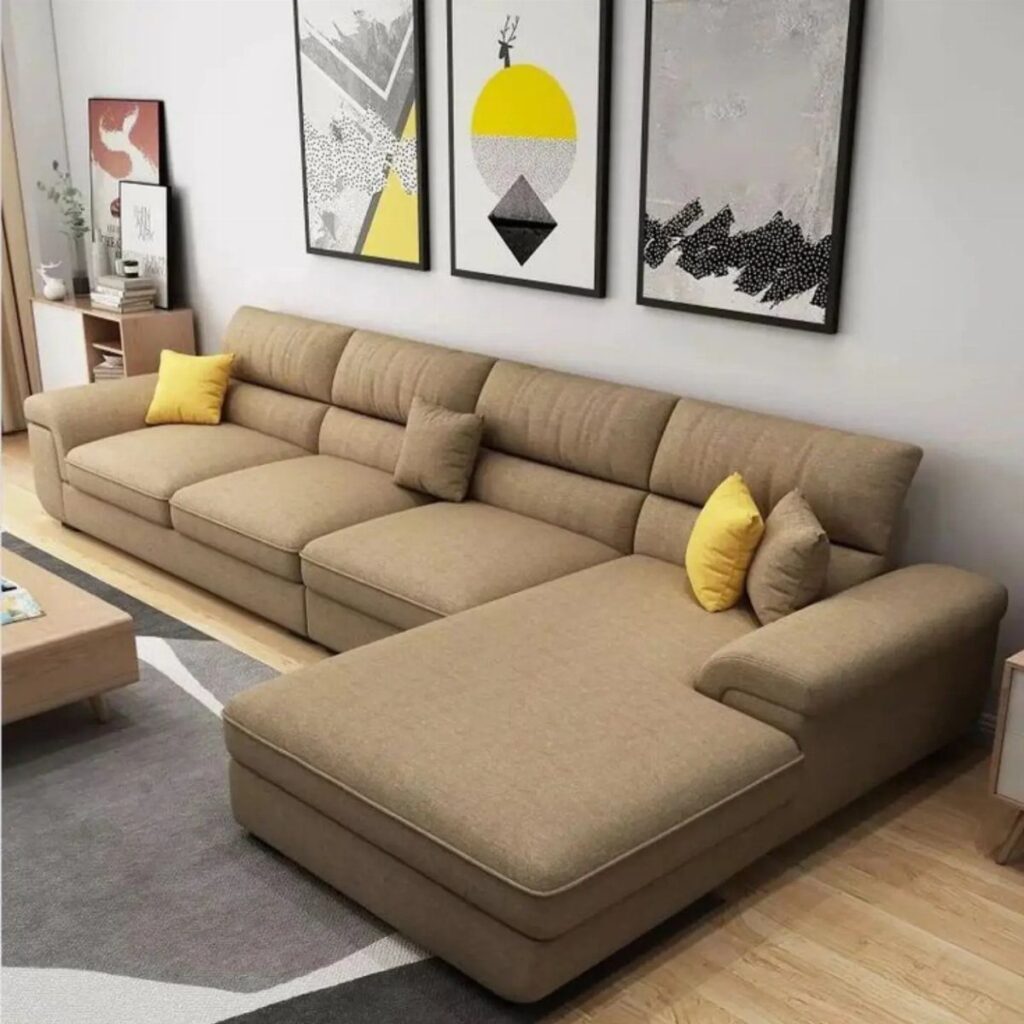
Your couch’s shade and finish decide which of these pillows work: a deep brown sectional can carry cream covers or a single bright yellow, while a textured sofa wants calmer, close-toned pillows in neutral or earthy tones.
The ideas run from cream and brown covers to buffalo plaid, sage green, embroidered florals, a single faux fur piece and gold and cream accents.
Most come down to the same move: choose two or three colors, repeat each at least twice, and let one pillow in a different size, pattern or texture carry the contrast.
1. Textured Earthy Tone Throw Pillows
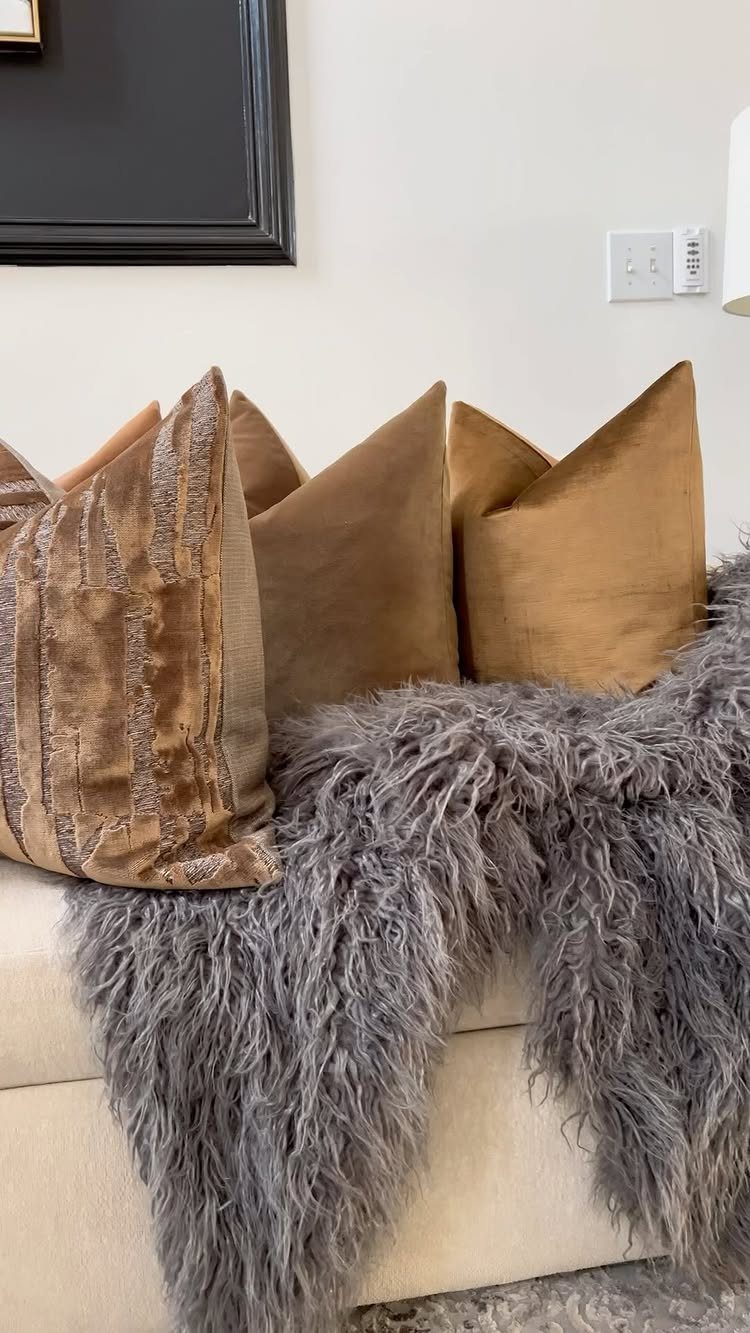
Mixing weaves is what makes this pairing work: a nubby knit next to a ribbed or woven cover gives a plain sofa depth that one flat color never will.
Stay inside brown, tan and gold so the texture does the talking instead of the color.
Cover pillows in different fabrics, such as linen, bouclé, wool and velvet, and stay within a step or two of each other in shade.
A grey faux-fur throw draped over the arm cools the warm tones and adds one more surface to look at.
2. Bright Yellow Throw Pillows
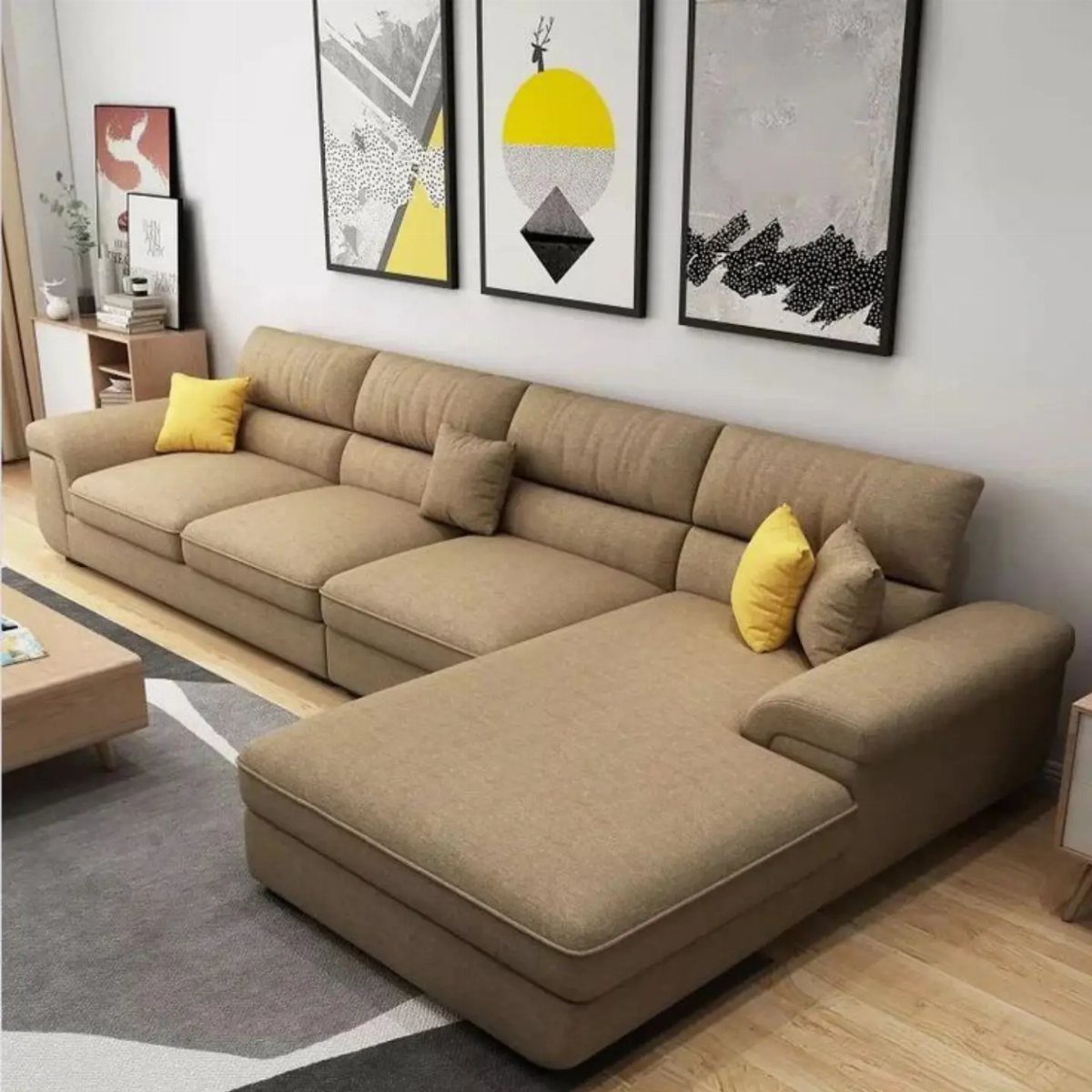
Yellow is the fastest way to wake up a big brown sectional, and a few pillows are a cheap way to test it.
Pick one bright yellow and repeat it in two or three pillows, then mix in brown covers so the yellow reads as an accent and not a takeover.
Odd numbers tend to look best on a long sectional. If the room has abstract art, pull one of its colors into a pillow so the yellow looks planned.
3. Vibrant Colored Throw Pillows
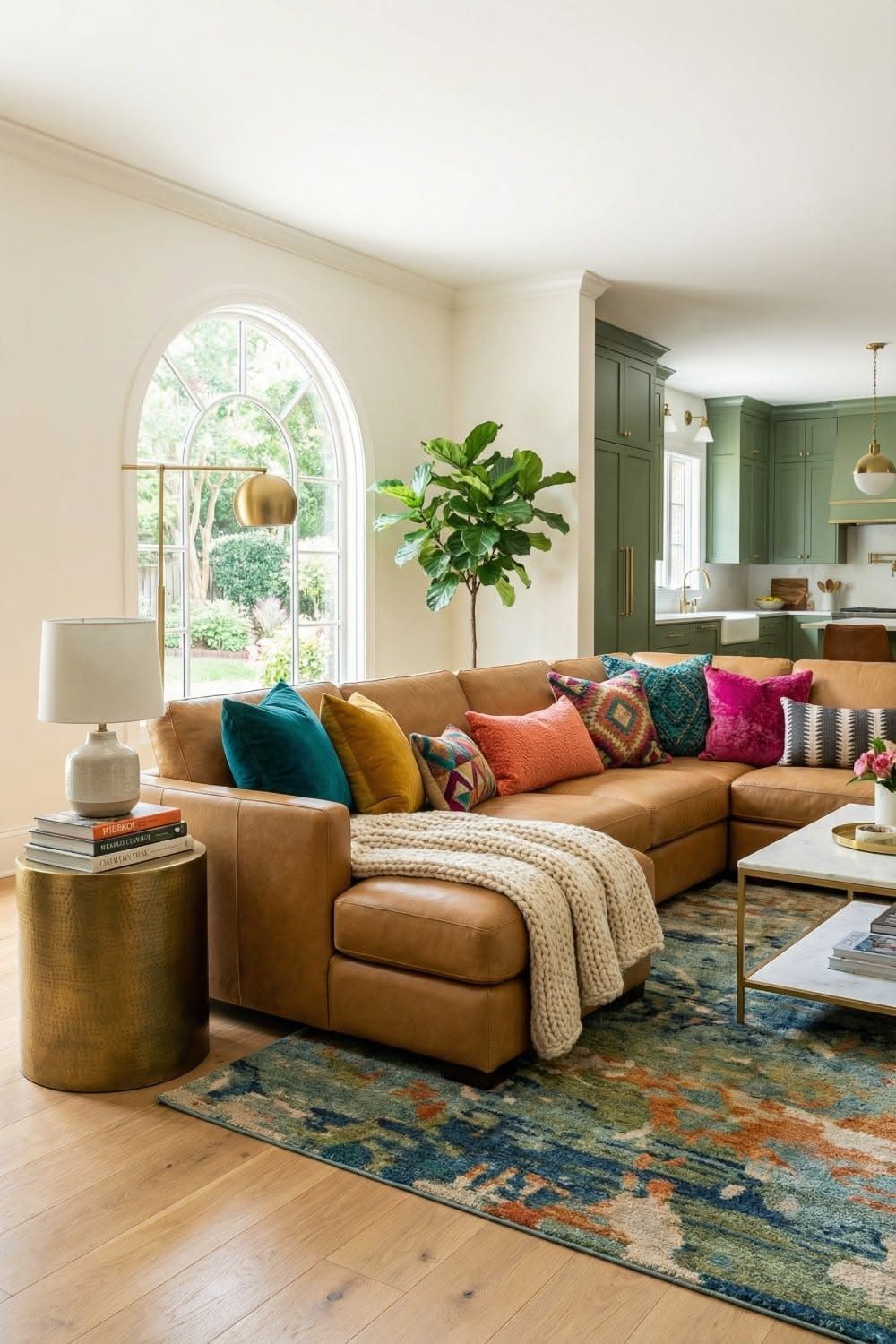
Brown acts as the neutral here, so the pillows can be as saturated as you like.
I would limit the palette to a handful of colors and vary the pillow patterns so no two compete.
Pull one shade from the rug to tie the pillows into the room, then let the rest of the decor stay quieter.
4. Neutral Textured Throw Pillows
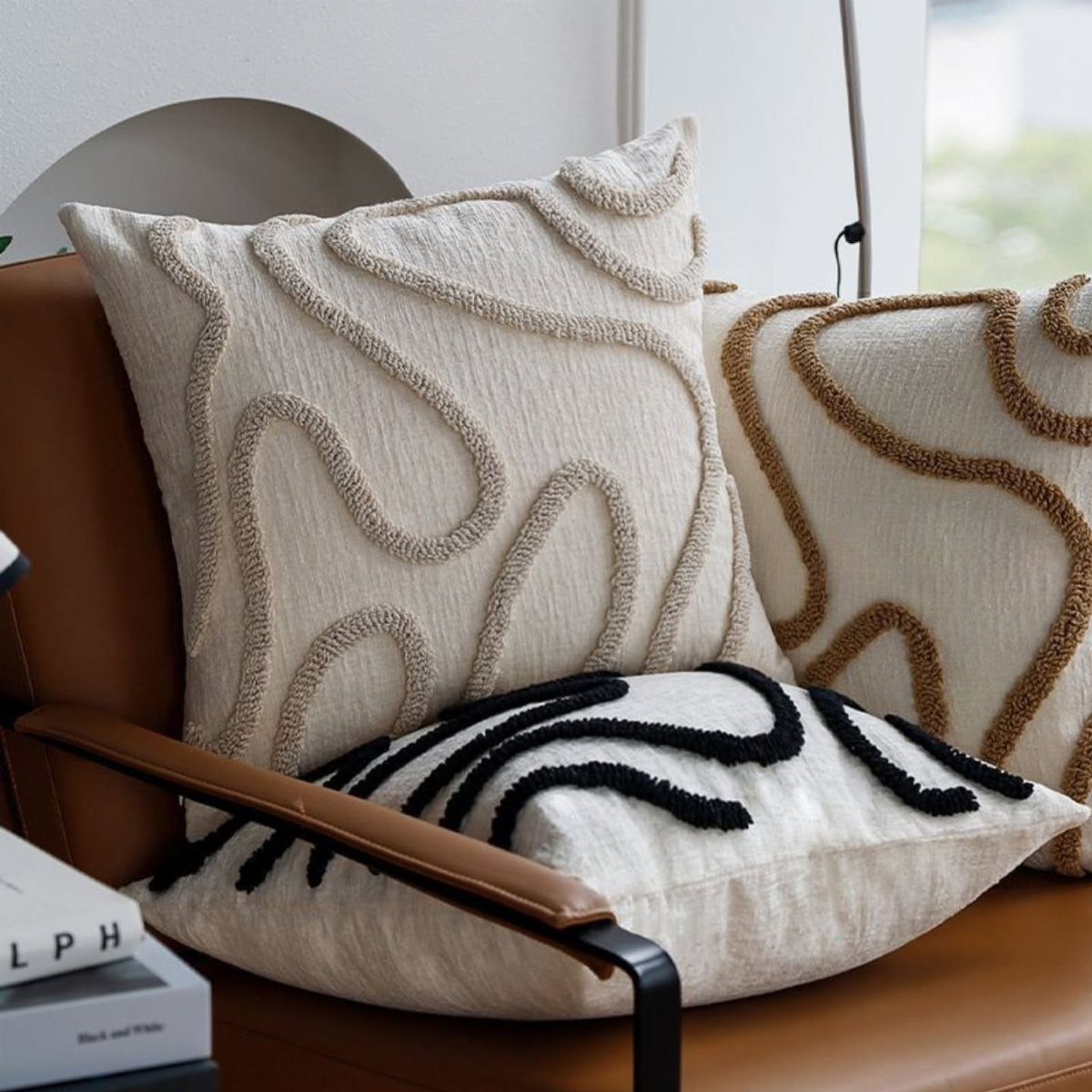
Cream, tan and a black-and-white pattern make a calm trio for a leather couch. Because the colors are so close, texture carries the look: swirled, woven or raised designs read as richer than flat covers.
Start with two pillows in cream and tan, then add the patterned one as the single point of contrast. Slip covers are an easy way to try this without buying full pillows.
5. Geometric Pattern Throw Pillows
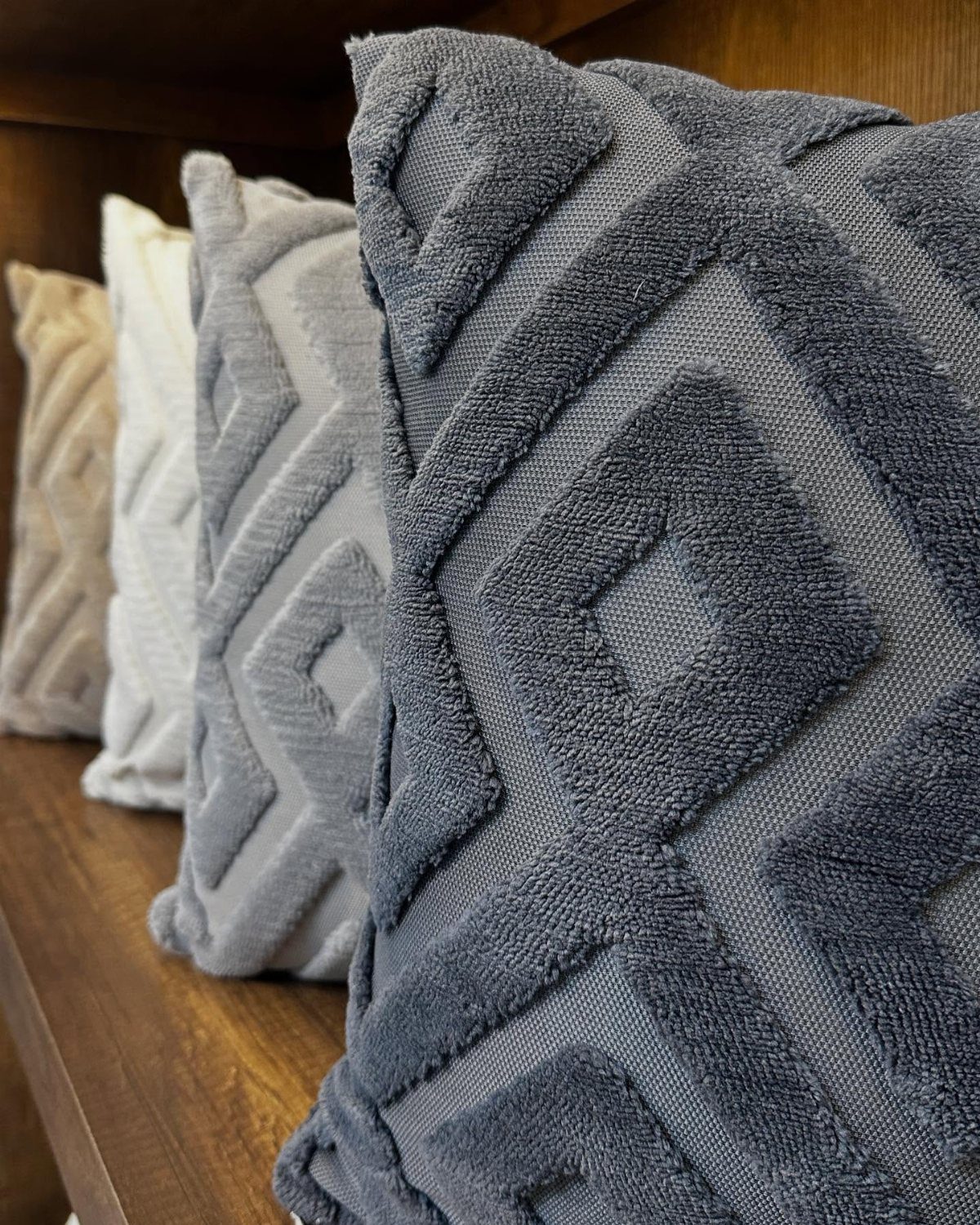
Diamond patterns in grey, cream and beige bring a clean, modern edge to a brown room without adding loud color.
Keep the pattern scale the same across pillows and vary only the shade, so the set looks collected and not busy.
Textured weaves help here, since the pattern is felt as well as seen.
6. Buffalo Plaid Throw Pillows
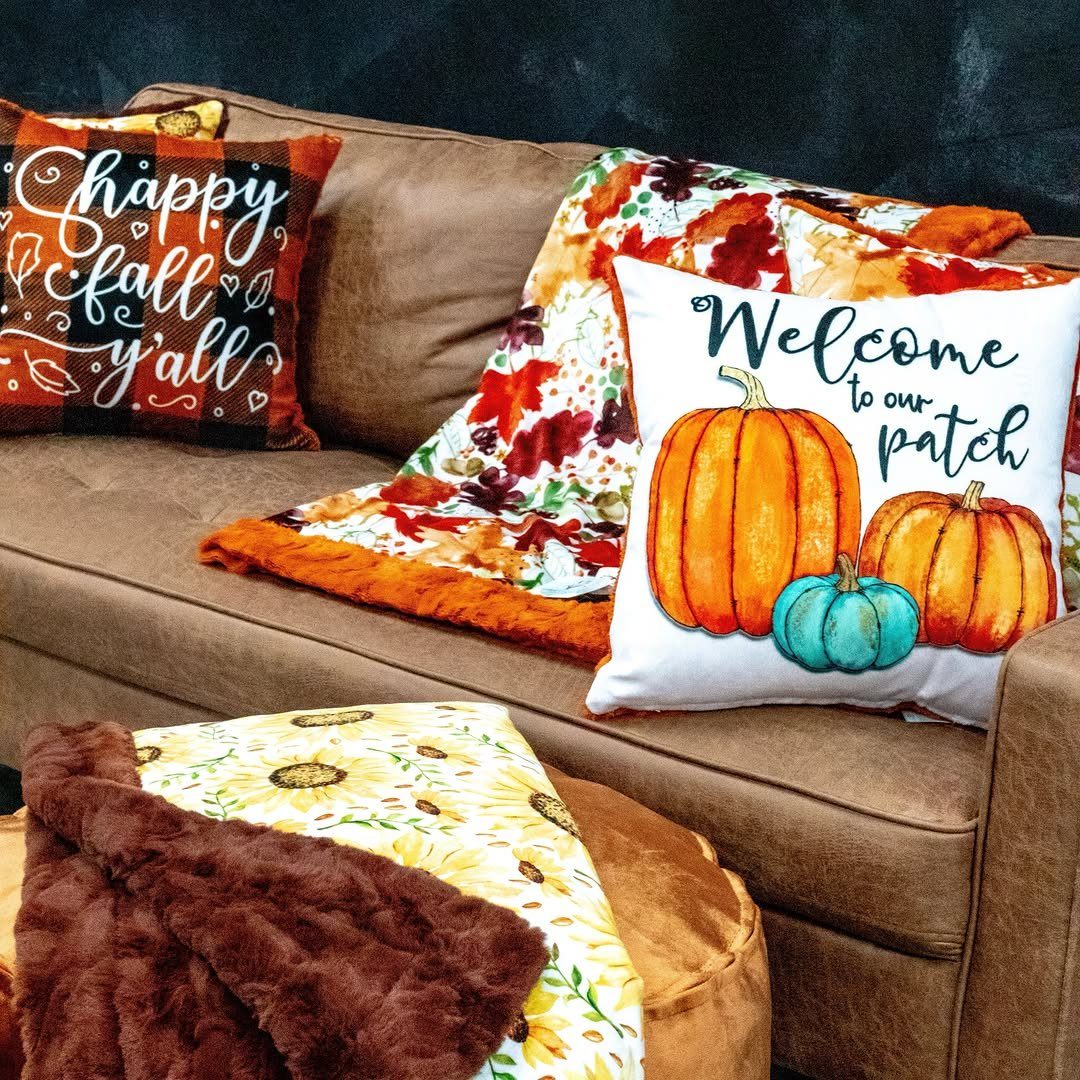
Buffalo plaid is the easiest way to give a brown couch a cabin feel, and the black-and-white check also works with the red version for fall.
Add one plaid pillow, then a white pillow with a seasonal print to break up the pattern.
Pillow covers cost far less than new pillows and store flat, so swapping them each season is realistic on a small budget.
Slogan covers are fun, but they date quickly, so I would keep them to a minimum and let the plaid and solid pillows carry most of the look.
7. Faux Fur Throw Pillows
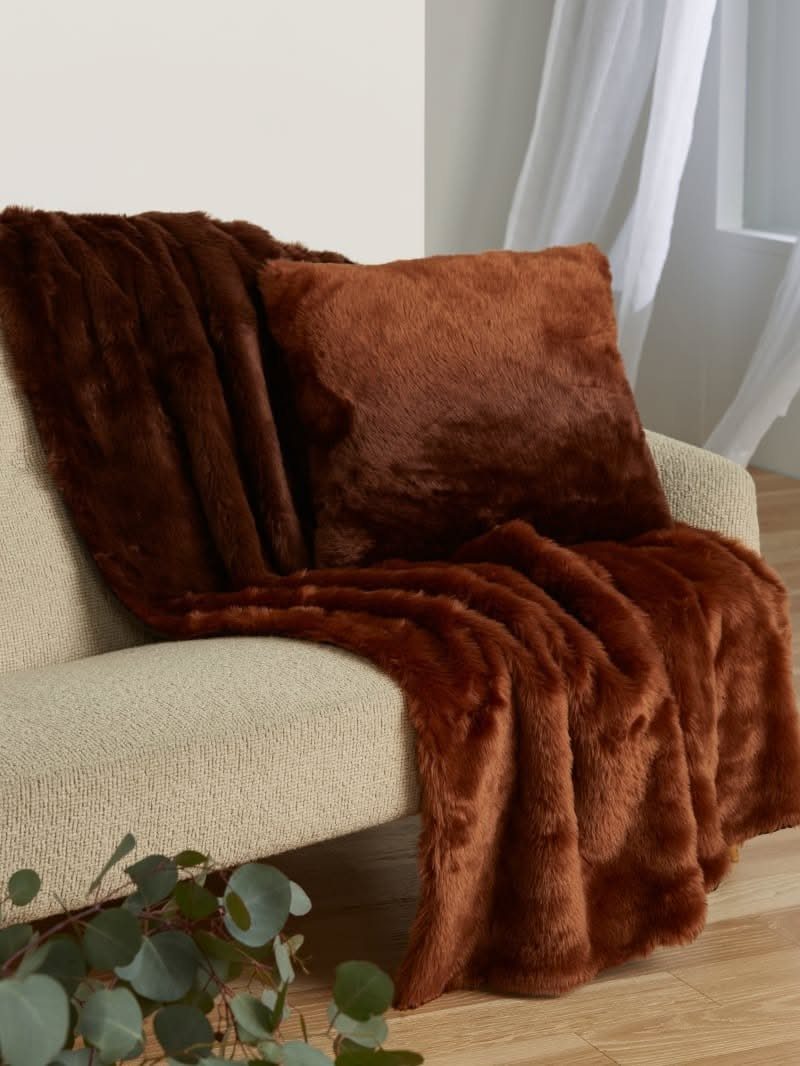
Brown fur on a beige-brown textured sofa stays quiet in color and loud in touch. One faux fur pillow with a matching blanket over the arm looks like a set, and it costs far less than reupholstering anything.
I would keep it to one fur piece per sofa. A second one starts to crowd the seat, and the plain cushions around it let the fur stand out.
8. Sage Green Throw Pillows
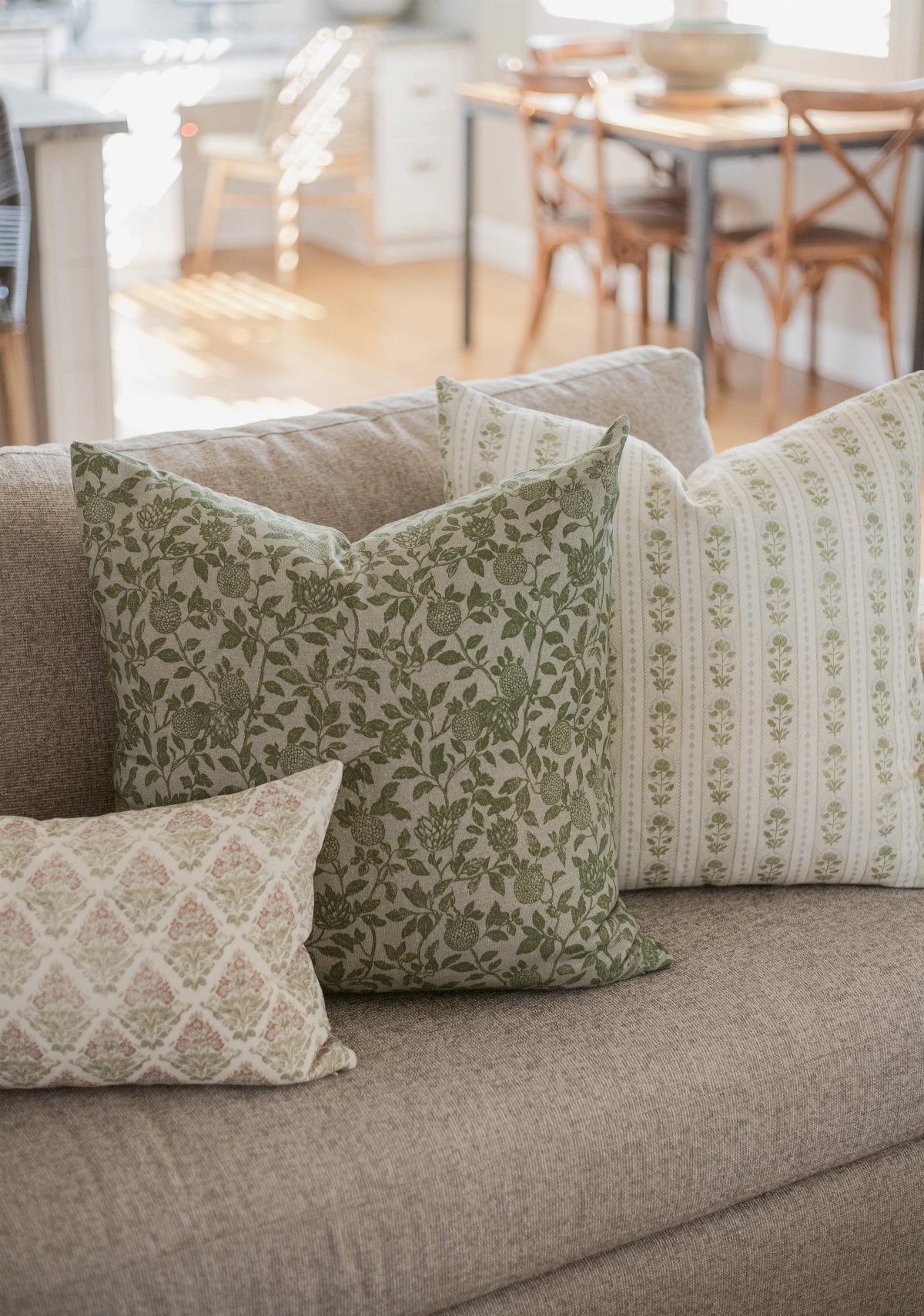
Sage green and cream cover a brown couch in a soft, low-contrast palette. Floral prints in those two shades read gently, so a group of three sits comfortably without fighting the wood floor or the table nearby.
Choose pillows that share the same sage, then let the print scale vary a little. A bright room helps, since sage can look gray in dim light.
9. Solid and Patterned Throw Pillows
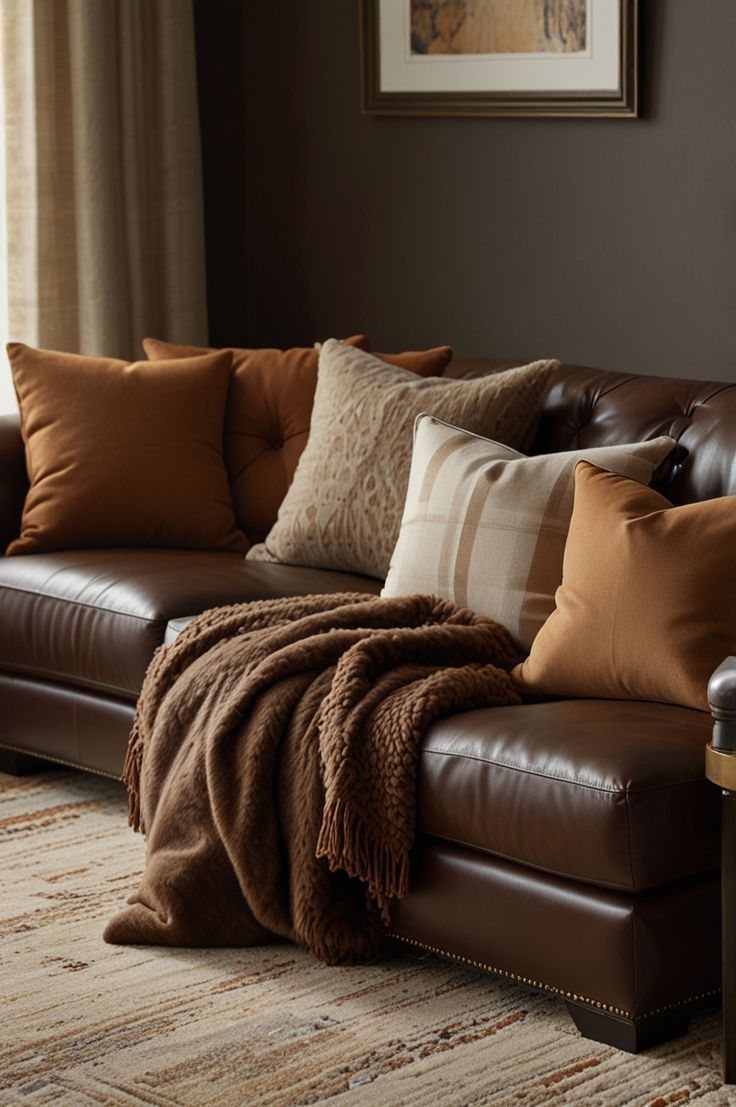
Solid covers give the eye a place to rest, and a patterned one gives it something to land on.
On a brown leather couch, I would use two or three solids in brown and cream, then add one textured or patterned pillow.
A knit blanket in the same family ties the group together. Keep every color within the brown and cream range so the mix looks chosen.
10. Various Sized Throw Pillows
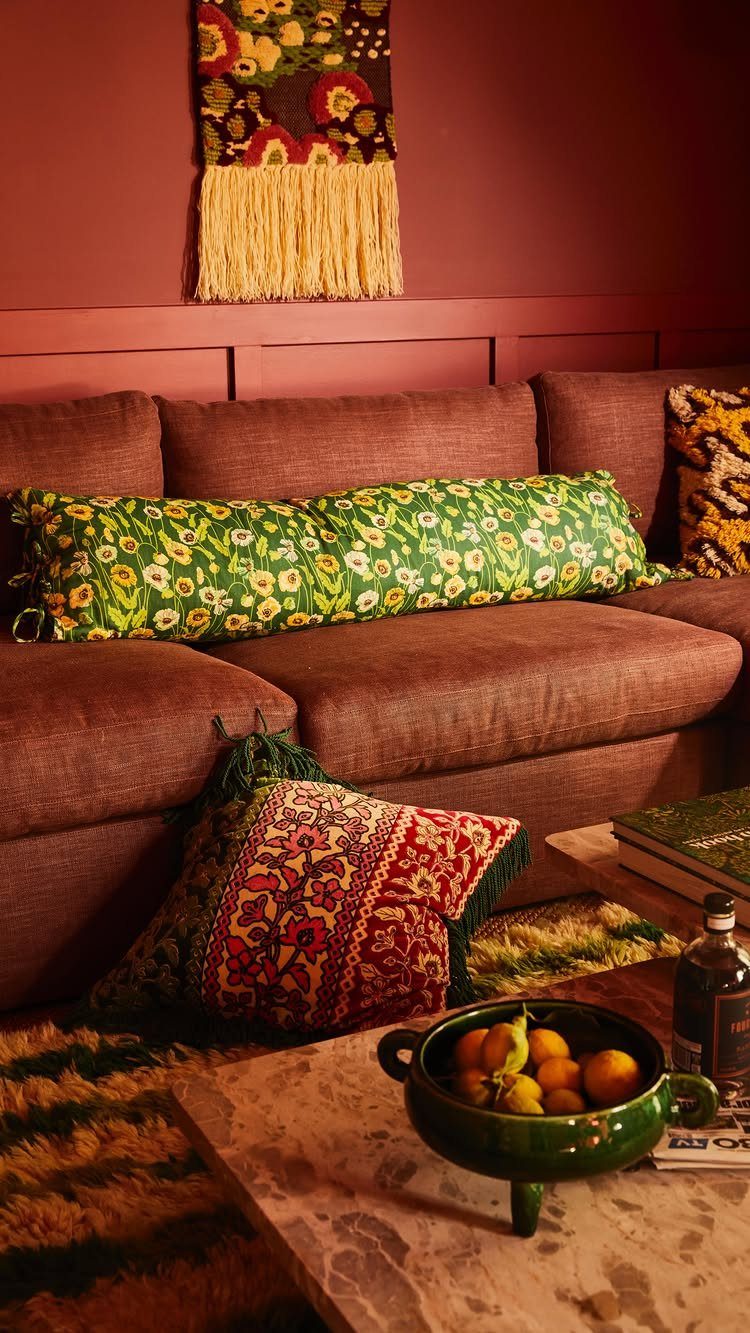
A long bolster beside a square pillow breaks the row of matching squares that most couches get.
Pick one bolster and one or two squares so the sizes stay obvious. Put the busier pattern on the larger piece; the smaller one stays simpler.
11. Embroidered Floral Throw Pillow
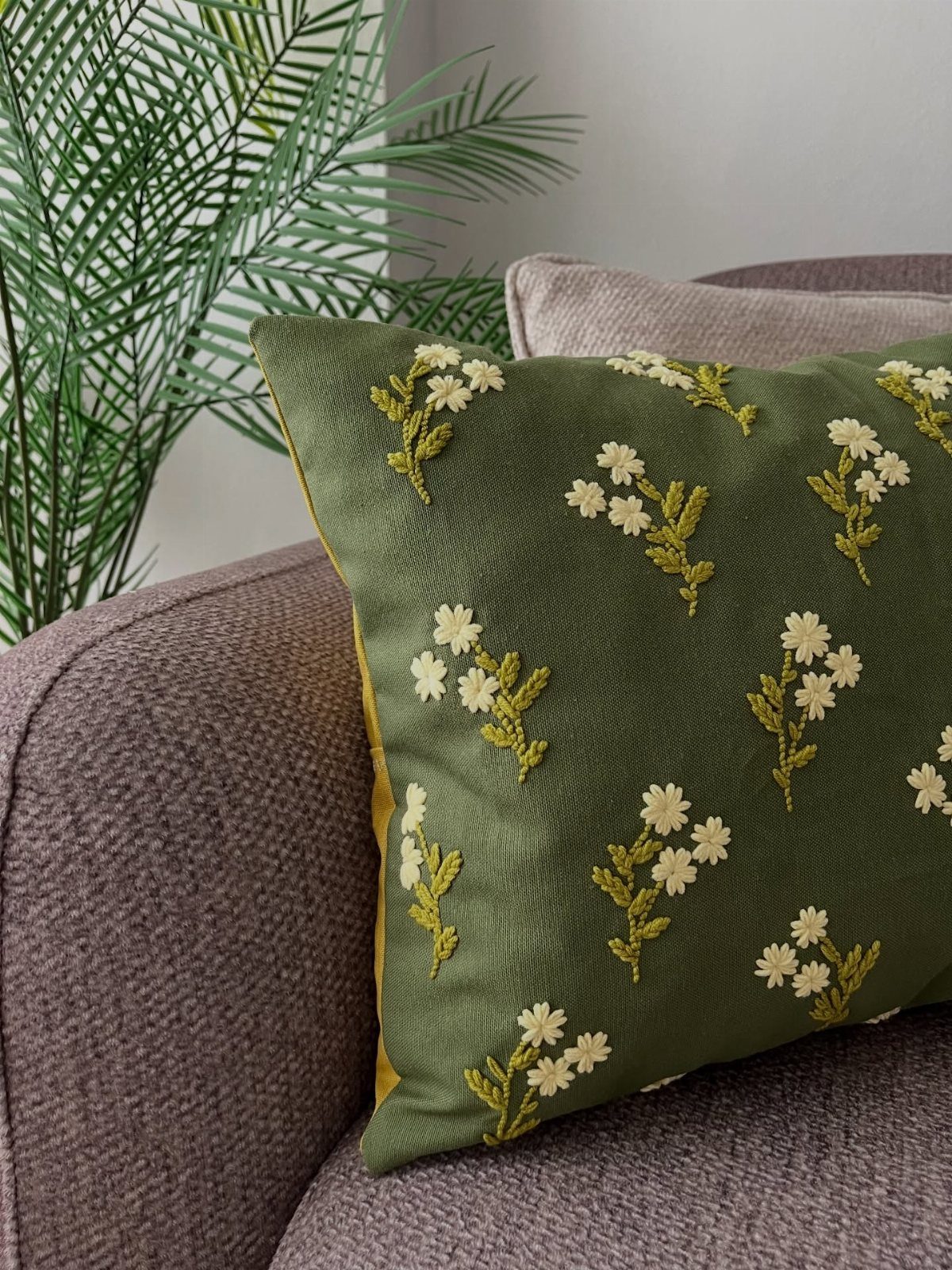
A green pillow with white and yellow embroidered flowers is a single piece that does the work of a whole color scheme.
Against a brown textured sofa, the green reads fresh, and the raised stitching adds texture without needing more pillows.
I would place it at one end of the sofa, near a leafy plant if you have one, so the greens echo each other. Hand-wash or spot-clean embroidery rather than machine-washing it, unless the tag allows otherwise.
12. Gold and Cream Throw Pillows
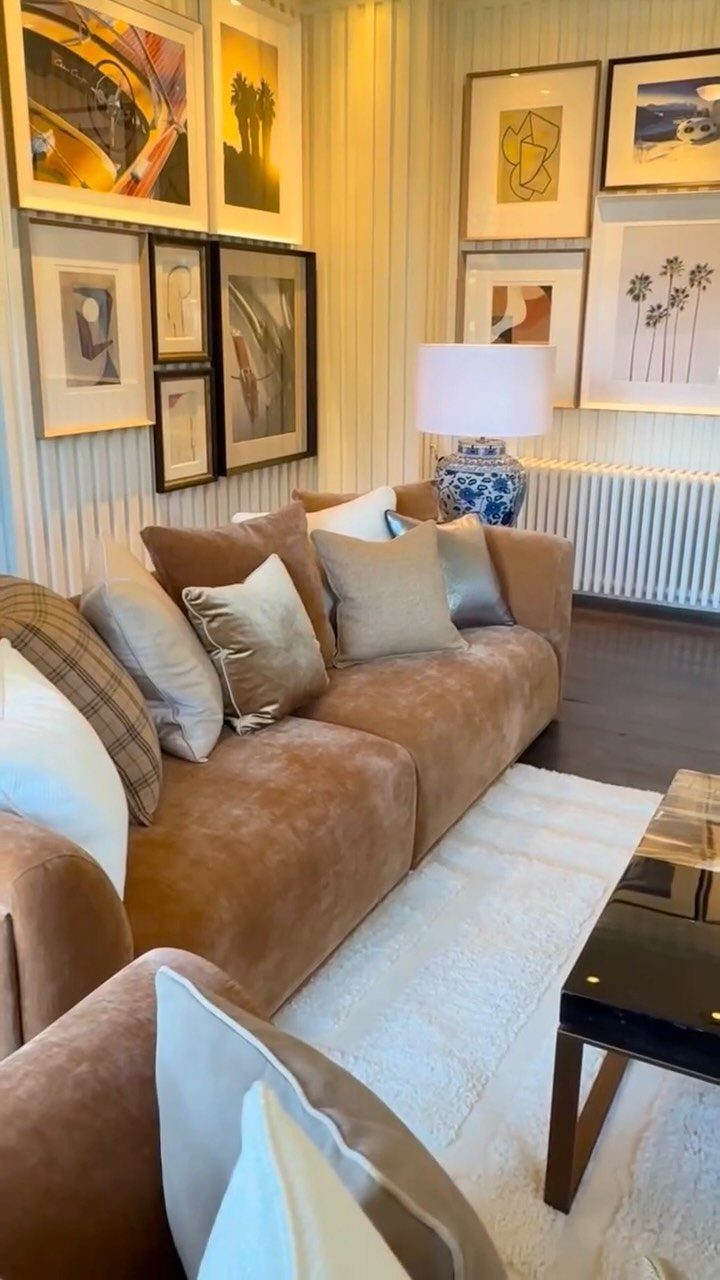
Beige, cream and shimmering gold give a brown suede couch a plush, glowing look. The gold catches light while the cream keeps it from feeling heavy, and a white rug underneath makes the whole group read brighter.
Use gold as the accent, one or two pillows at most, and let beige and cream fill the rest. Metallic threads or sheen fabrics both work, so check the cover feels soft before buying.
13. Cream and Brown Throw Pillows
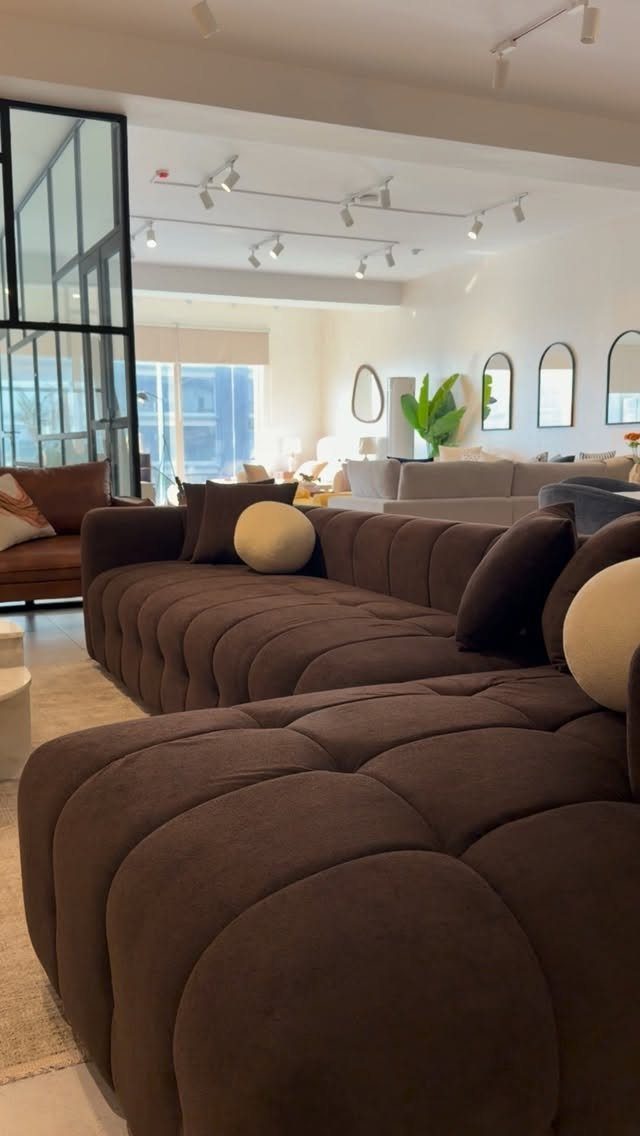
Tufting already gives a brown sectional plenty of shape, so the pillows can stay calm: cream and brown only, with no third color to compete with the buttons and folds.
I would use more cream than brown on a deep brown sofa, since the light covers show up against the dark seat and stop the corner from looking heavy.
Repeat each shade at least twice across the sectional so the set reads as planned.
Cream covers show wear sooner than brown ones, so pick zippered covers you can wash.
Best Colors for Brown Couch
Cream, olive, warm taupe, dusty blue, rust and beige all sit well against brown. Charcoal works too, as a neutral that gives a brown sofa a cooler, deeper edge.
Pick two or three from that group and stop there. Cream with rust is warm and cozy, while olive with dusty blue reads calmer and more grown up.
Solids, stripes and florals all work in these colors, so choose the pattern by how busy the rest of the room is. A plain rug and bare walls can handle a floral; a layered room usually wants solids and stripes.
Dark brown leather looks more modern with light, low-key covers than with matching earth tones.
Mixing Textures and Patterns
Pair patterns with textures from the same color family. Cream, beige and grey covers in linen or knit can carry a subtle plaid or stripe without any single pillow shouting.
Fabric does as much as print. Velvet gives a sheen, cotton stays matte and flat, and linen or knit adds a rougher surface, so a velvet next to a cotton already looks layered.
Use only one pattern per size of motif. If one pillow has a wide stripe, the plaid should be finer, and the rest should be solid.
Before buying, set the covers side by side in daylight, since colors that match in a store can drift apart at home.
Choosing Pillow Sizes
Start with the largest pillows at the back corners and work toward smaller ones in front. That keeps the sofa back covered and gives the arrangement natural layers.
Mixed sizes let you use color and pattern more freely. A bold orange or blue can sit on a smaller pillow, while larger pillows stay in cream or another quiet neutral.
Keep the sizes distinct. 2 pillows that are almost the same size look like a mistake, while a clear step between them looks chosen.
Check seat depth first. On a smaller couch, 3 pillows per end is usually plenty, and anything more crowds out the person sitting there.





