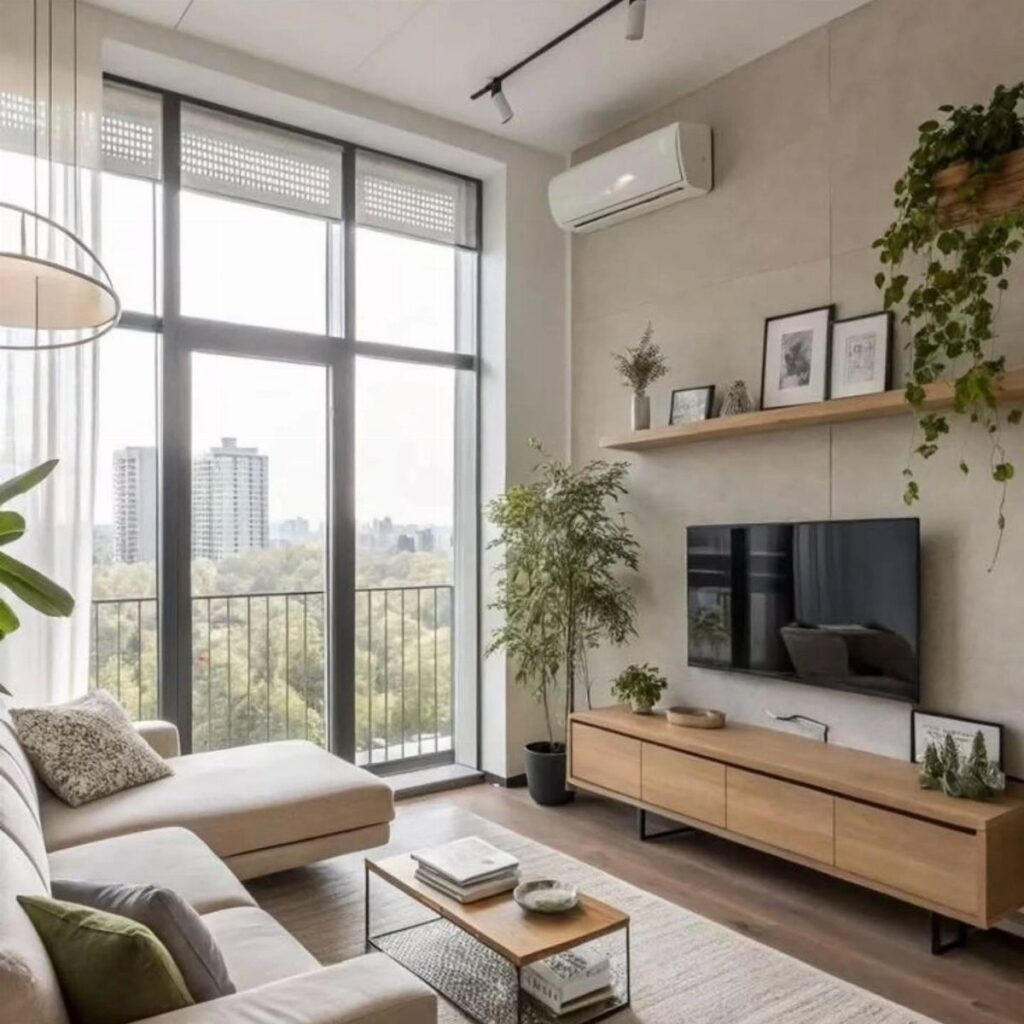
Most apartments allow drilling for curtain rods and picture hooks, which opens up half this list; the rest (rugs, ottomans, furniture with legs that show floor) works anywhere.
The range runs from free changes like a sectional that anchors the room, down to artwork and plants that pack up when you move.
1. See-through Bookcases to Separate Living and Dining
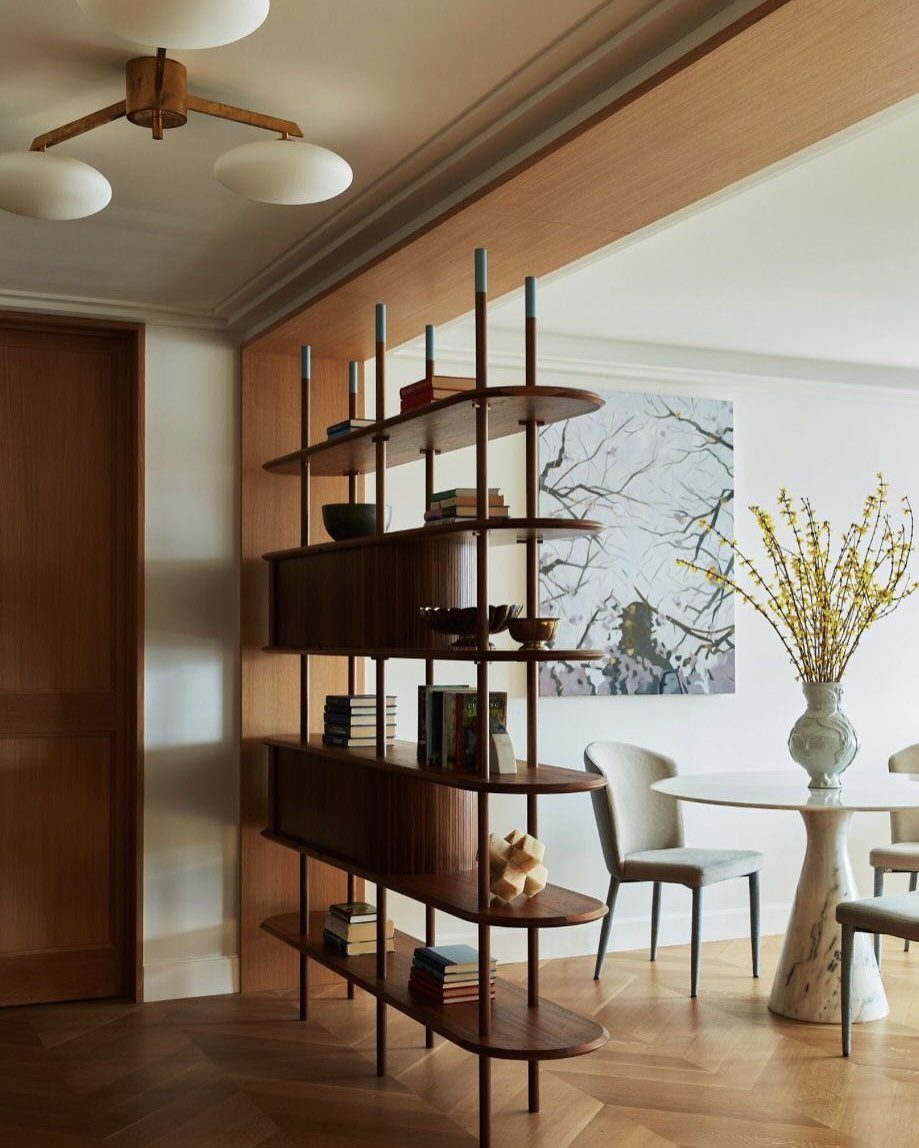
An open wooden bookcase marks where the dining area starts without closing off light or sightlines. Shelves with gaps let a room feel like one space while still giving the table its own zone.
Keep the shelves loosely filled, with a few books, a vase, and some bare wood between them, so you can still see through. A solid wall of stuff defeats the purpose.
Place the bookcase so the dining chairs can pull out without bumping it.
2. Colorful Artwork
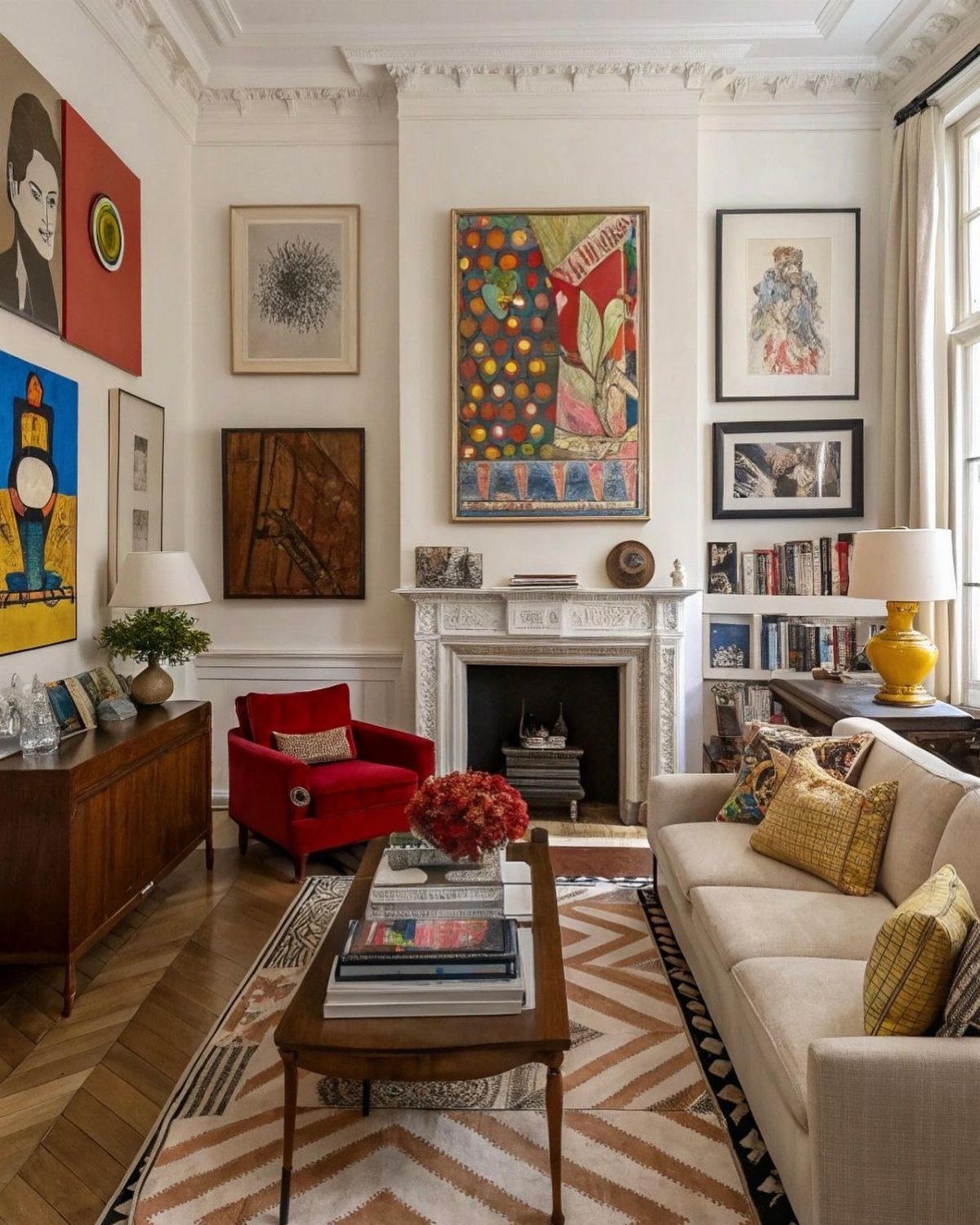
White walls make the best backdrop for a mix of paintings, and a fireplace wall gives that mix a natural center. Frames of different sizes and colors read as one collection when they hang close together.
Lay the pieces on the floor first and move them around until the spacing looks even.
Then hang them. A neutral sofa lets the art carry the color, and one bold armchair can echo it.
Thrift stores and prints in cheap frames keep this affordable.
3. Modern Sectional
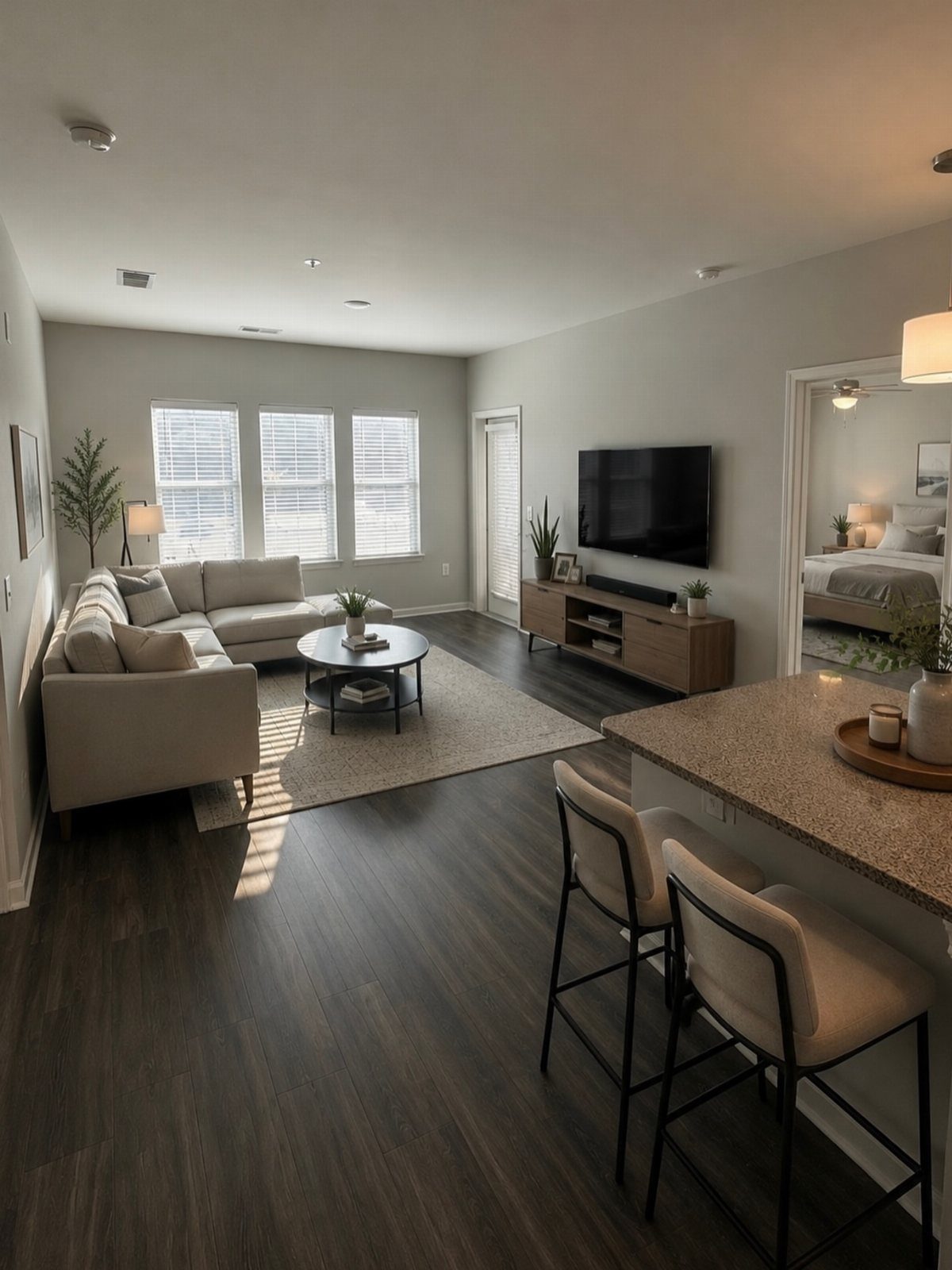
A sectional can define the living area by itself, especially in an open apartment where the sofa has to mark the line between living room and sleeping nook.
A light, neutral fabric keeps a large piece from feeling heavy. Pair it with a round coffee table, since curves are easier to walk around than corners when the seating takes up one side of the room.
Measure the wall and the doorway before ordering. Tape the footprint on the floor and live with it for a day.
4. Patterned Living Room
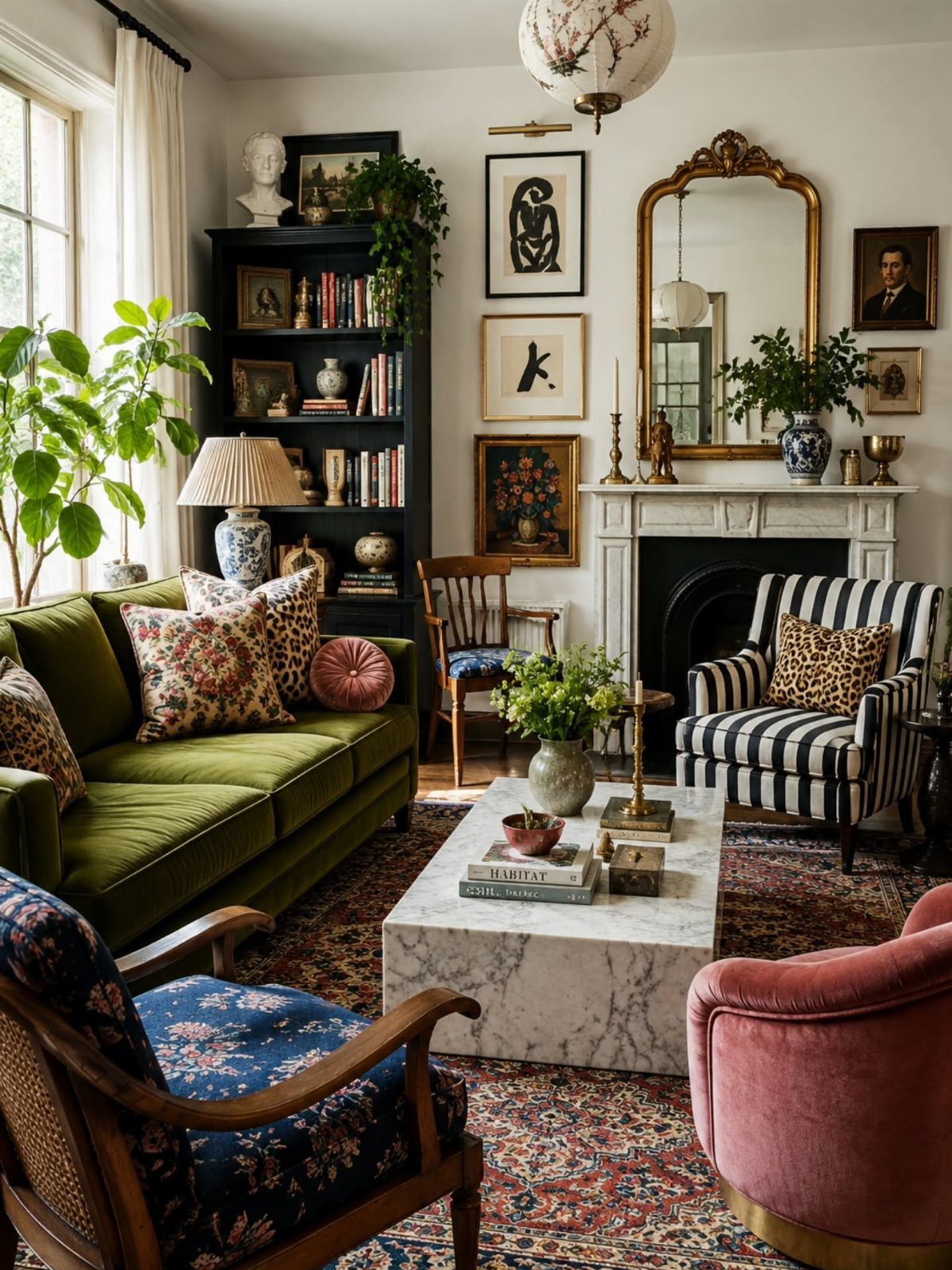
Mixing patterns works when the materials differ as much as the prints do. Velvet, stripes, florals, and a hard marble tabletop give the eye different textures to settle on, which adds depth.
Anchor the room with one calm piece, like a solid green sofa, then let the chairs play. A patterned rug ties the mix together.
I would keep one color repeating across the prints so the room looks planned, not accidental.
5. Eclectic Flair
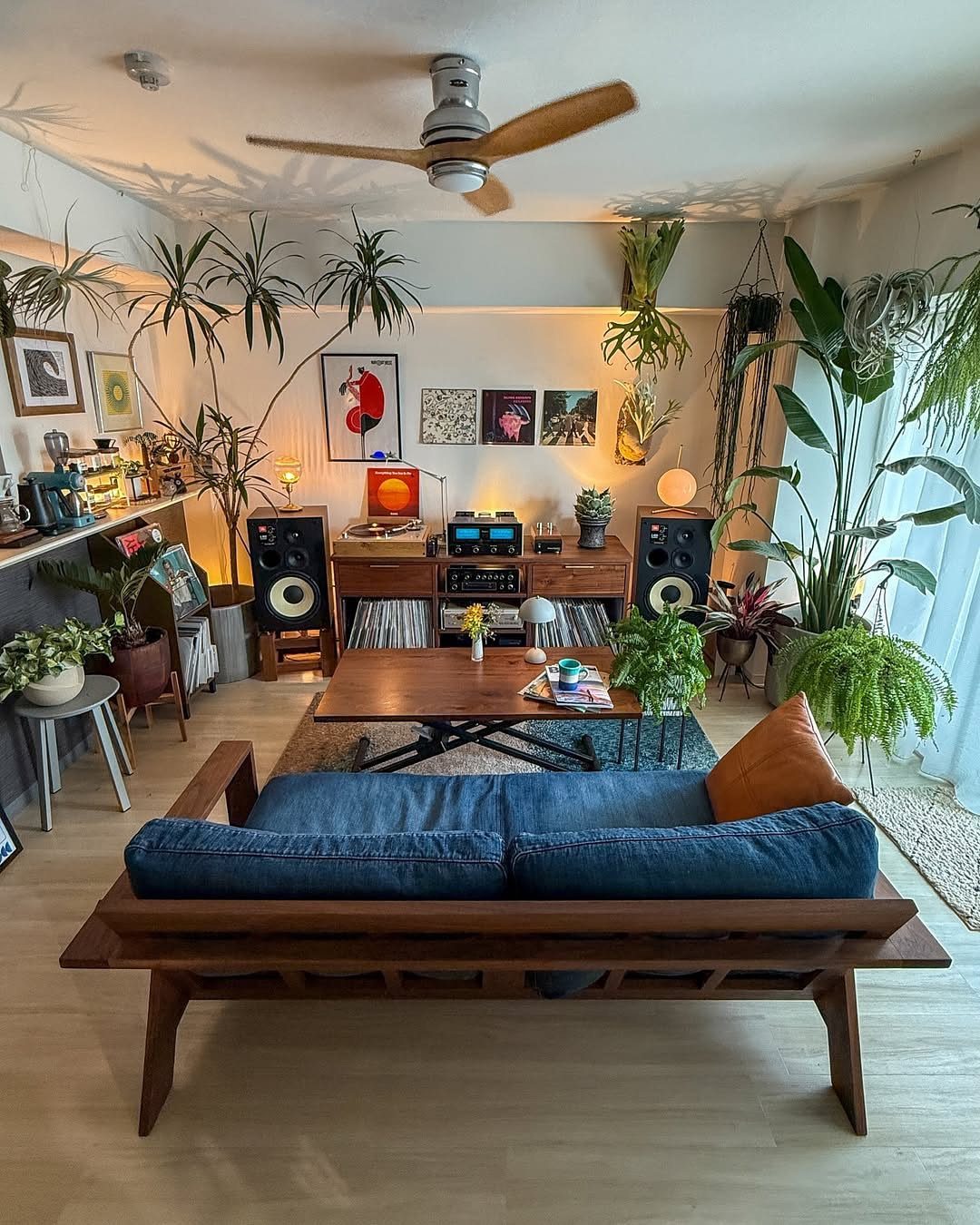
Nothing here looks bought in one trip. A denim-blue sofa, wood furniture, vintage audio gear, and plenty of houseplants build a room that feels lived in and relaxed instead of styled.
The way to get there is slowly: add pieces you like, and let a gallery wall grow one frame at a time. Secondhand shops and hand-me-downs suit this look and keep costs low.
Wood tones repeated across the room keep a crowded layout from turning messy.
6. Mid-century Modern Furniture with Long Tapered Legs
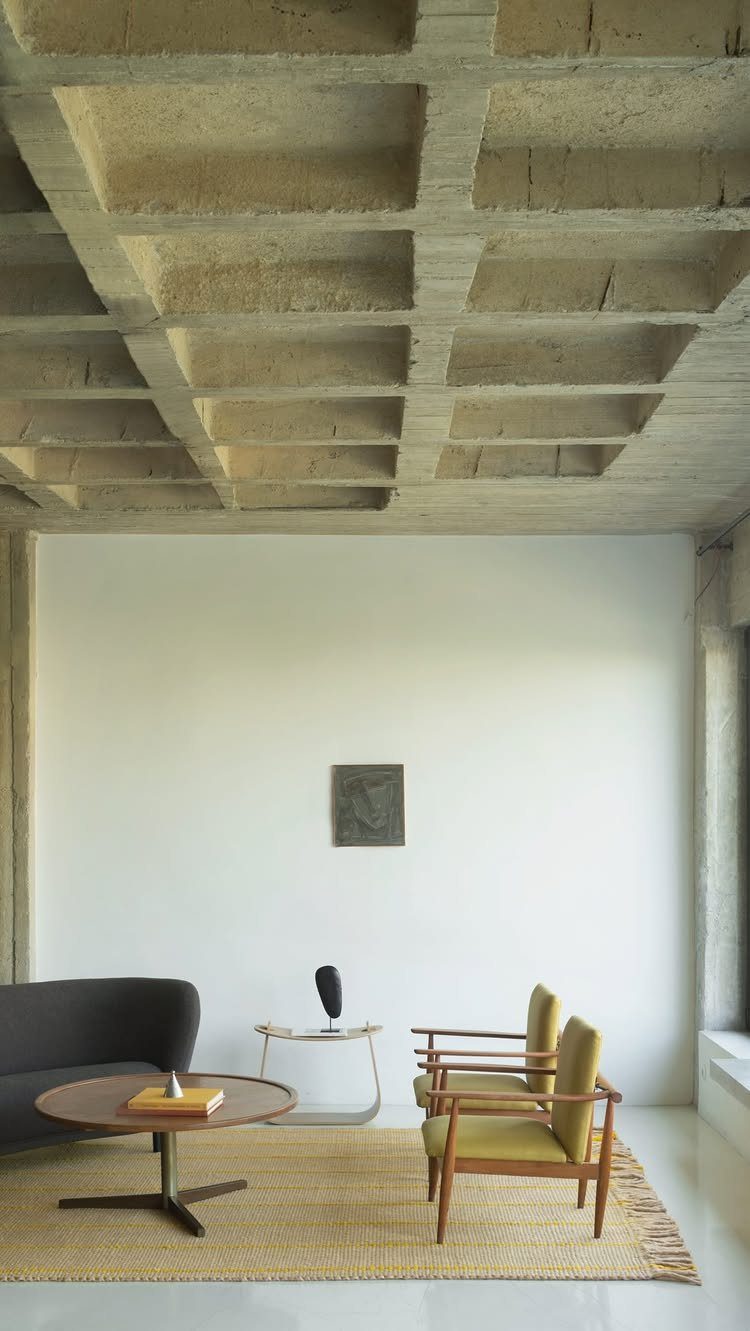
Long tapered legs lift furniture off the floor, so you see more of the floor underneath, and a small room reads as roomier.
Armchairs in a bright color feel lighter in a small room when they sit on slim tapered legs rather than a solid base.
Choose pieces where the legs are visibly slender and splayed, not chunky. Put a dark sofa beside them for contrast, and a small side table keeps the arrangement useful.
Used mid-century pieces often cost less than new ones, though you should check the legs for wobble.
7. Stylish Rug
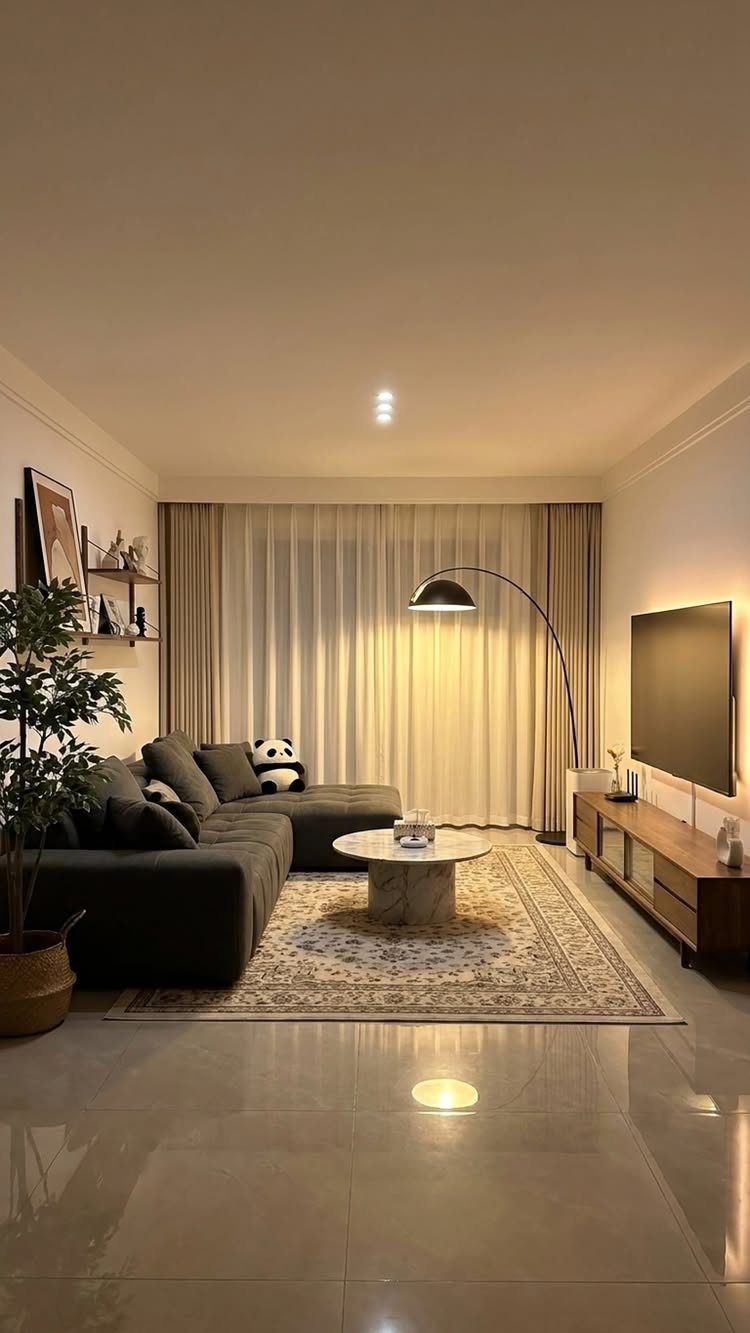
A patterned rug under the coffee table gives a gray sectional and a marble top something to sit on, and the pattern breaks up all that solid color.
Choose one that stays visible around the table, so the sectional’s feet and the table both land on it.
Pick a pattern with a few tones that already appear in the room. Rugs cost real money, so I would spend here before spending on small accessories.
Measure the seating area first, then tape the rug’s outline on the floor to check the size.
8. Decorate with Greenery
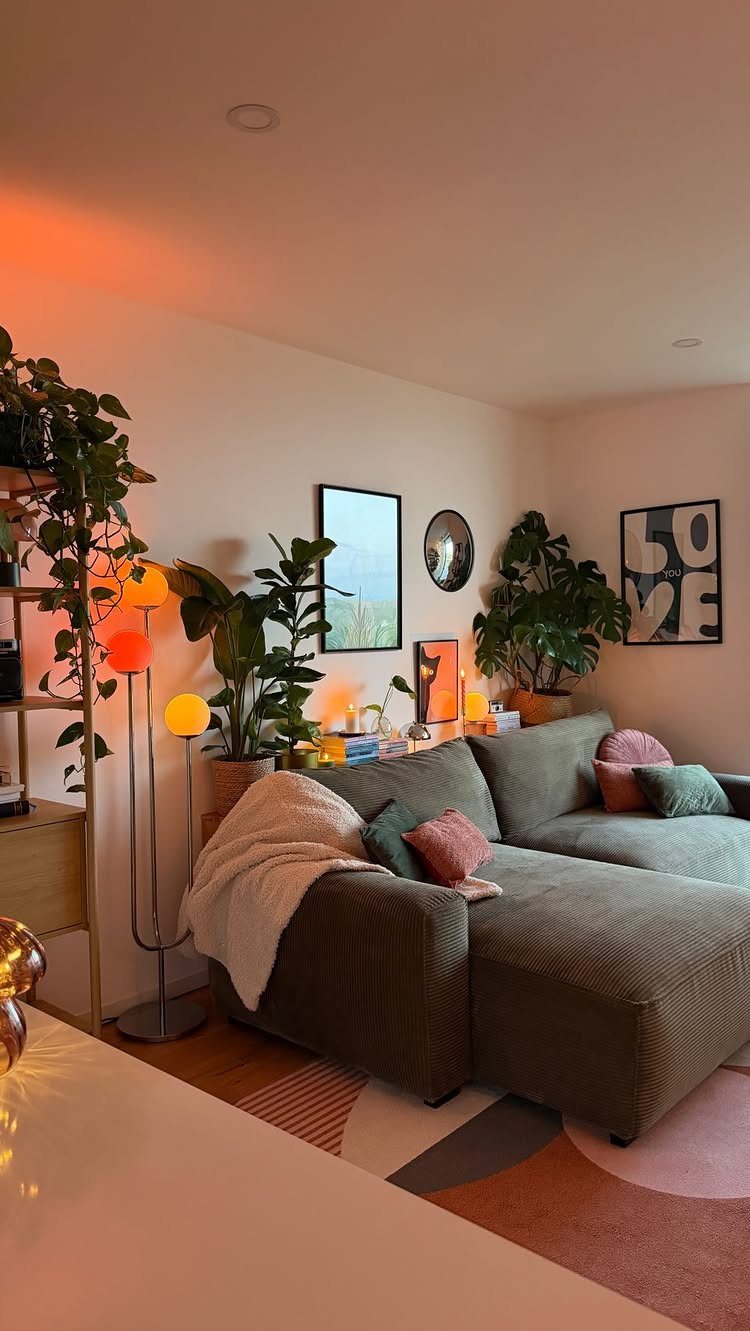
Houseplants do the work of a color scheme in a room with a green corduroy sofa: they repeat the sofa’s shade at different heights and make the space feel alive. Group several together instead of scattering one per corner.
Mix tall plants with small ones so the eye moves up and down. Warm lamplight suits the leaves better than a bare overhead bulb.
I like a plant beside the sofa arm best, since it frames the seat. Pick plants you will actually water, because dead ones cost you the whole effect.
9. Curtains a Foot Above Windows
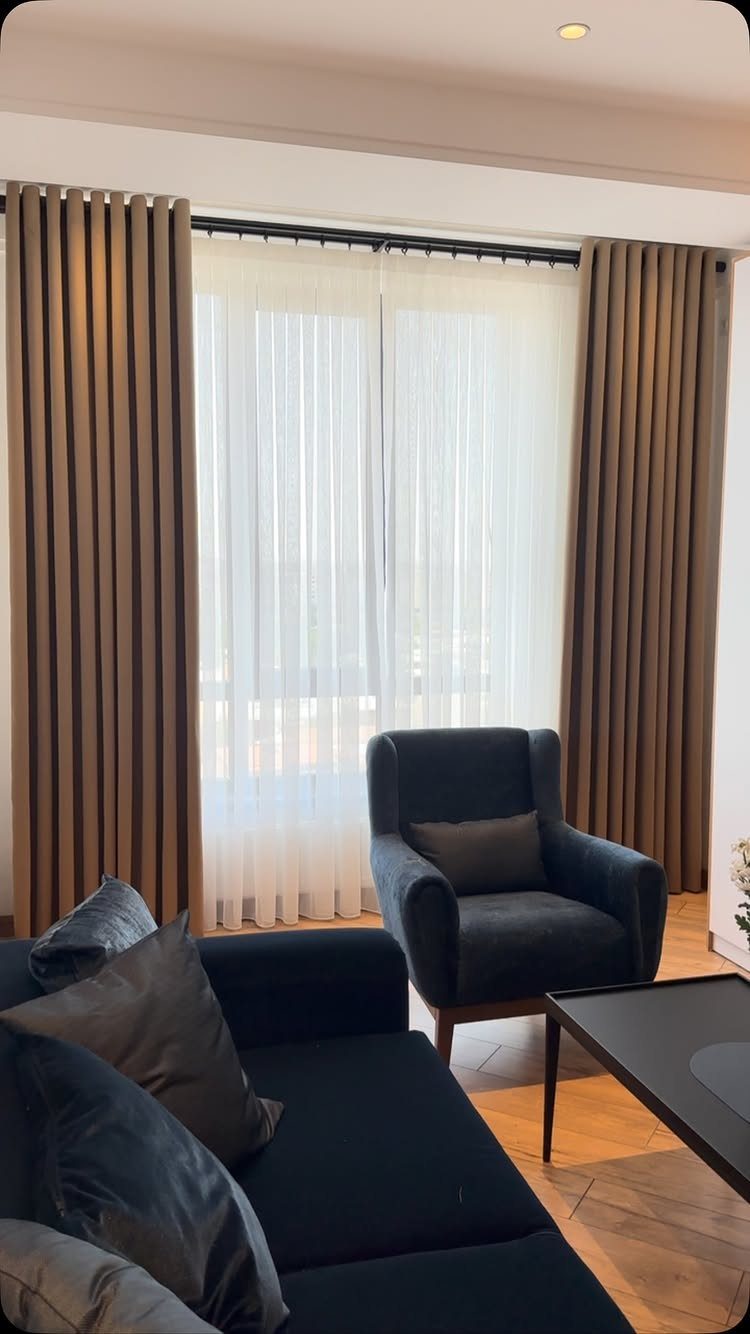
Hanging curtains a foot above the window frame stretches the wall upward, so the ceiling seems higher than it is. Brown panels over sheer white ones do this well, with the sheers softening daylight and the heavier layer adding color.
Mount the rod well above the frame and let the panels fall to the floor. Set the rod wide enough that the fabric clears the glass when open.
This costs little, needs only a drill and a level, and fits in a weekend.
10. Stylish Ottoman Coffee Table
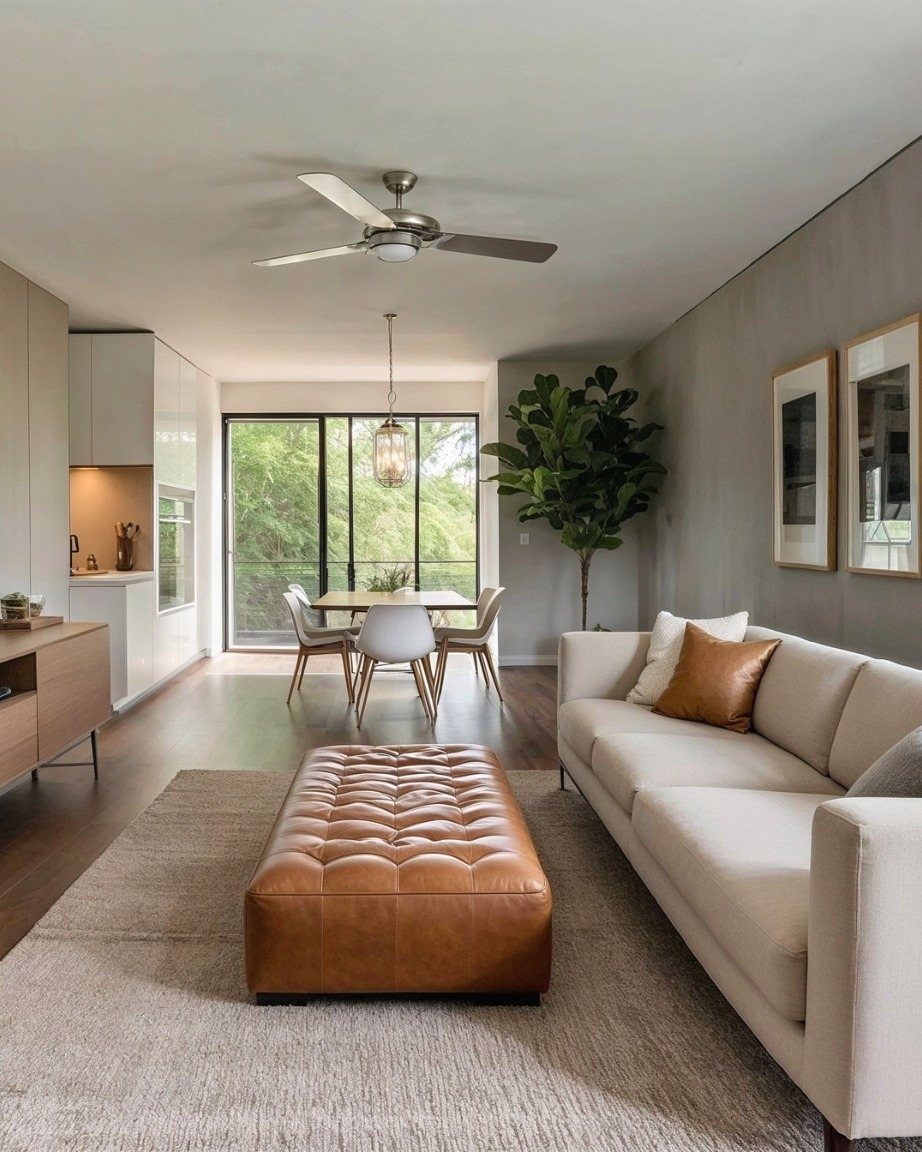
Swap the usual coffee table for a tufted leather ottoman, and the same piece holds a tray of drinks, takes a pair of feet, and seats extra guests.
In a small apartment, one item doing three jobs beats a table plus a pouf.
Set a flat tray on top so cups stay steady on the tufting. A tan leather top reads warm against a cream sofa, and a rug underneath anchors it.
I would pick leather over fabric here, since spills wipe off. Match the height to your sofa seat or go an inch lower.
Budget-friendly Design Tips
Clear furniture is the cheapest way to make a small room look bigger.
A glass or acrylic coffee table, or a glass dining table, lets the eye see straight through to the floor, so the piece takes up less visual space.
Thrifted finds and DIY projects stretch a budget, and mixing price points stretches it further. Spend on the pieces you use every day, then fill in around them with secondhand or handmade items.
In a small apartment, a piece with one purpose is hard to justify.
A coffee table with hidden storage or a side table that doubles as a floor lamp does more for each dollar, and it frees up floor space too.
“Scale and proportion are essential to living well in small spaces. Every piece of furniture should serve a purpose, if not several,” says Ellie Christopher of Ellie Christopher Interior Design.
Functional Furniture
In a compact apartment, start with the sofa. A compact seat with slim arms and a sleek form takes up less room than a bulky one and leaves more space for walking around it.
A cube ottoman works better than a chaise in a tight room.
It can sit by the sofa as a footrest, slide over as extra seating, or serve as a coffee table, and it moves out of the way when you need a clear path.
If the living room also has to work as a guest room or office, a sofa bed with a minimalist design keeps it looking like a workspace.
Pull a dining chair into the living room when you need one more seat.
Personalizing Your Space
Renters can’t make permanent changes, so personality has to come from things you can pack up and take along. Artwork, throw pillows, rugs, and small decorative items all do this job without touching the walls or the lease.
Choose pieces that reflect your own taste, even if the apartment is only temporary. A boho mix of colorful textiles and whimsical accents is one way to do it, and the room starts to feel like home quickly.
Plants and personal objects add the same effect. Begin with a few things you already own and love, then add as you find more.
Frequently Asked Questions
How do you style a living room in an apartment?
Start with furniture that does more than one job, like a cube ottoman that works as a footrest, extra seat, or coffee table. Arms that stay narrow add 4 to 6 inches of usable seat width compared to rolled or overstuffed styles.
Add personality through art, pillows, rugs, and plants, which you can pack up when you move, and hang curtains a foot above the window frame to make the ceiling look taller.
What is the 60-30-10 rule for decorating living rooms?
The rule splits a room’s color into 60% a dominant shade, 30% a secondary one, and 10% an accent.
It keeps a palette from feeling random. A calm sofa or wall can carry the 60, chairs or curtains the 30, and pillows or a single bold armchair the 10.





