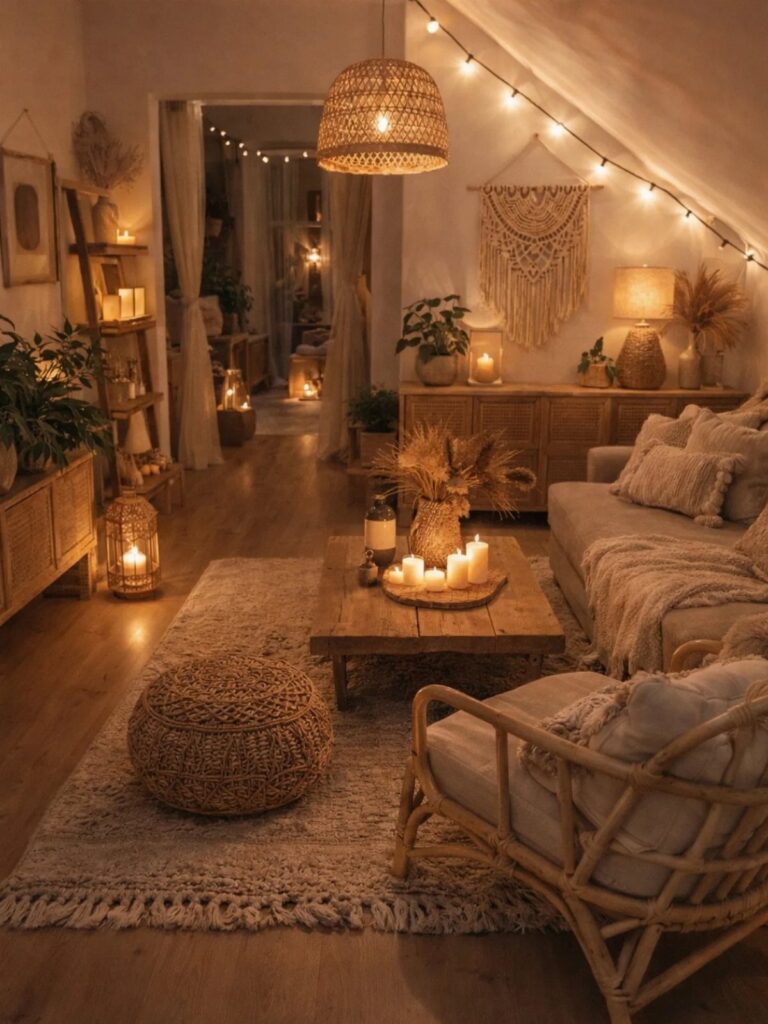
Boho here runs from textile hangings you can switch out in an hour to shelving that needs anchors and a drill, so the choice comes down to whether you own the walls or only arrange what sits in front of them.
Renters can get most of the look from rugs, textile hangings, plants and floor cushions, while owners can add shelving and commit to paint. Whatever you choose, repeating 3 colors across the room holds the look together.
1. Vintage Armchairs
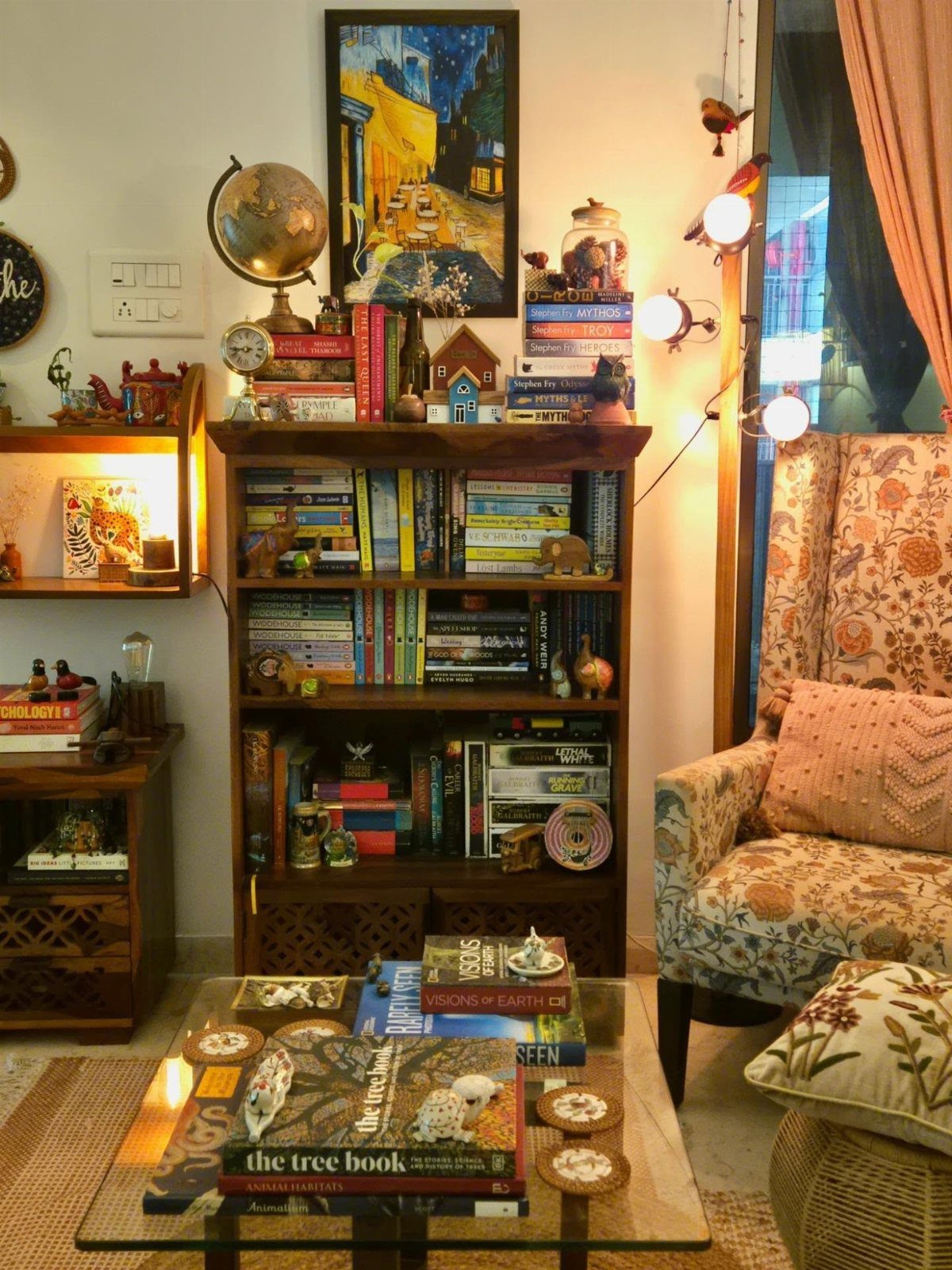
A vintage armchair with a bold pattern can carry a whole corner. Set it beside a tall bookshelf, as here, and the chair turns that spot into a reading nook.
I’d pick a pattern with some color in it over a solid, since a pink cushion or throw can pull the shades together. Secondhand shops and online marketplaces are the budget route, and a weekend is enough to find one.
Sit in it first, because comfort matters more than the fabric.
2. Textile Wall Hangings
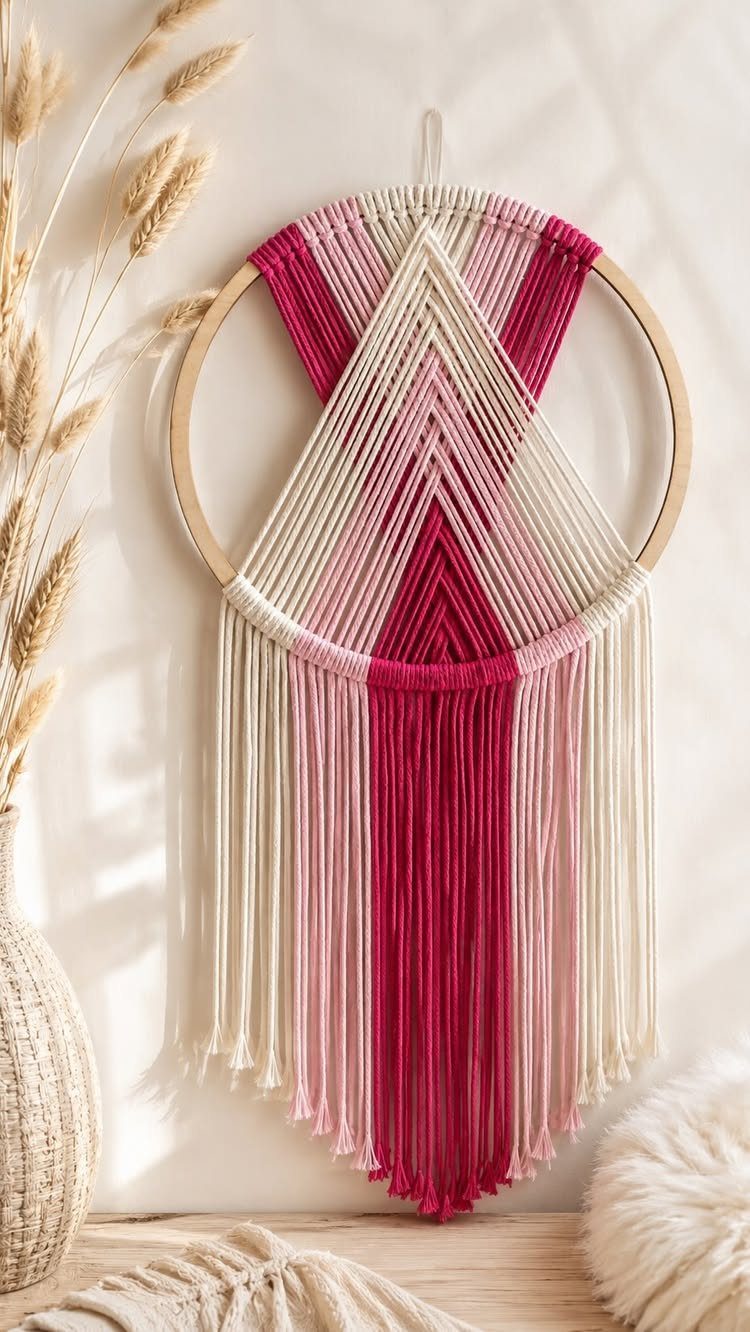
Fabric art is the cheapest way to soften a flat white wall. A macramé piece on a wooden hoop, in pink and cream, adds texture without taking any floor space, which helps in a small room.
Hang it where the wall is bare, ideally beside something with height, like the dried pampas grass in a vase here. Keeping the palette to a few tones keeps it calm.
Renters can use a single removable hook, so there is no patching when the lease ends.
3. Rich Wood Tones in Furniture
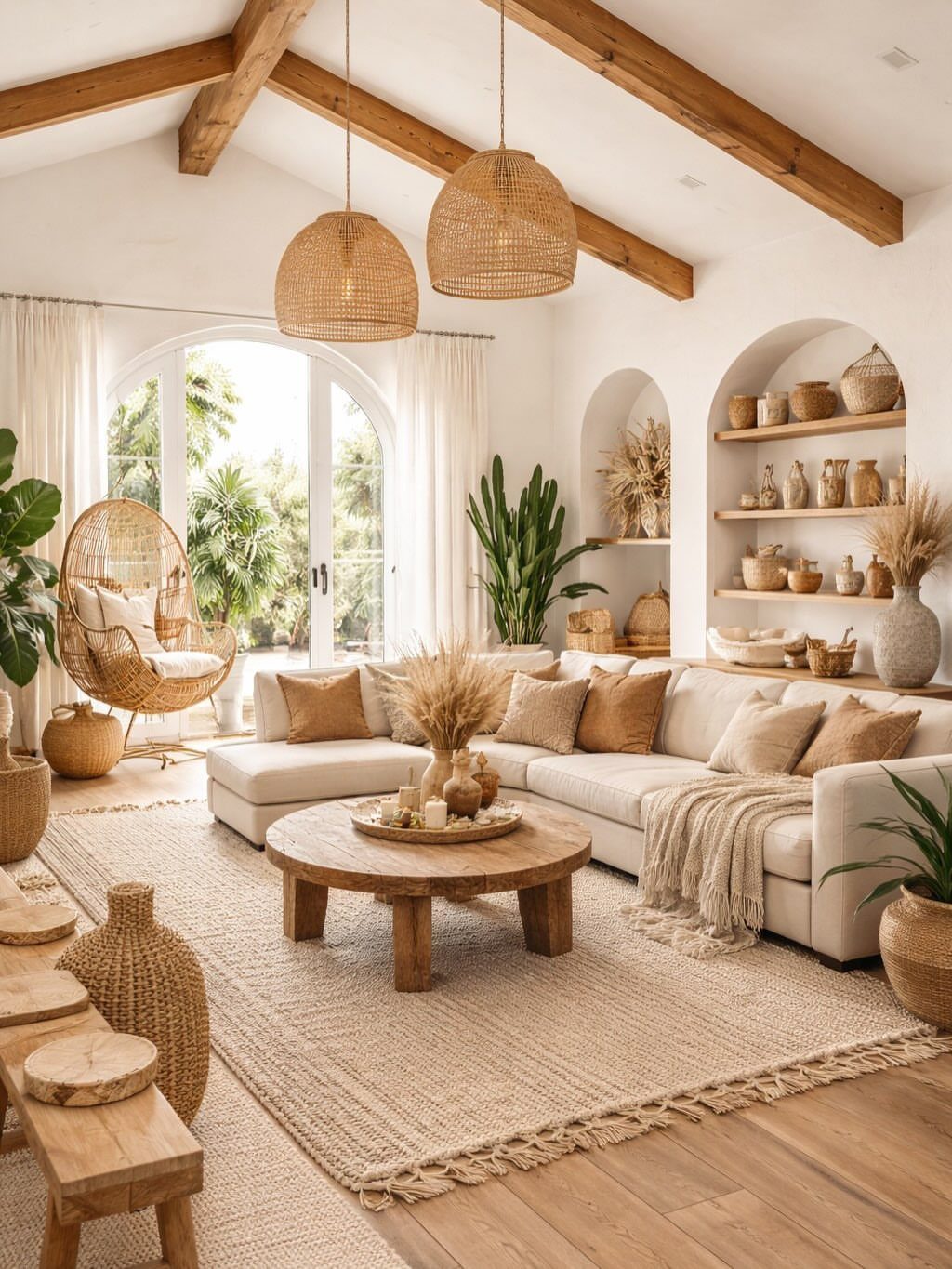
Wood does the grounding in a boho room, especially next to a white sectional. A round wood coffee table, plus exposed beams overhead, gives the pale upholstery and woven light fixtures something solid to sit against.
If beams aren’t part of your place, the table is the piece to buy.
I’d keep the wood tones close to each other rather than matching exactly, because slight variation looks collected, not bought as a set.
4. Pastels and Jewel Tones
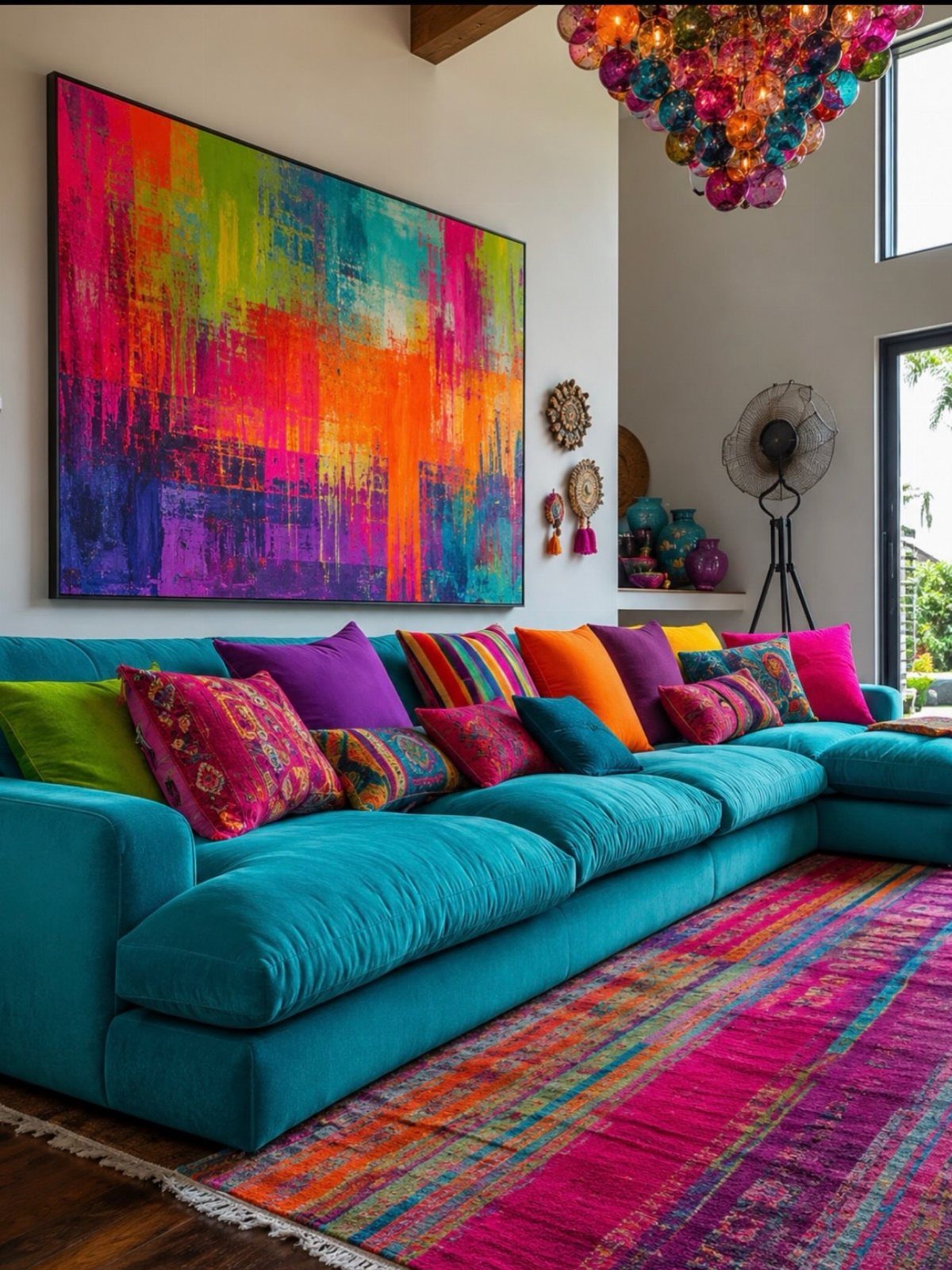
A turquoise sectional is a strong move, and it works because everything else is allowed to be loud too. Colorful pillows, a big abstract painting and a multi-colored rug all repeat shades from the sofa.
Start with one saturated piece, then pull colors from it into pillows and art. That keeps a bright room from feeling random.
Pastels are the gentler path: the same method, softer shades.
5. Macramé Hangers for Plants
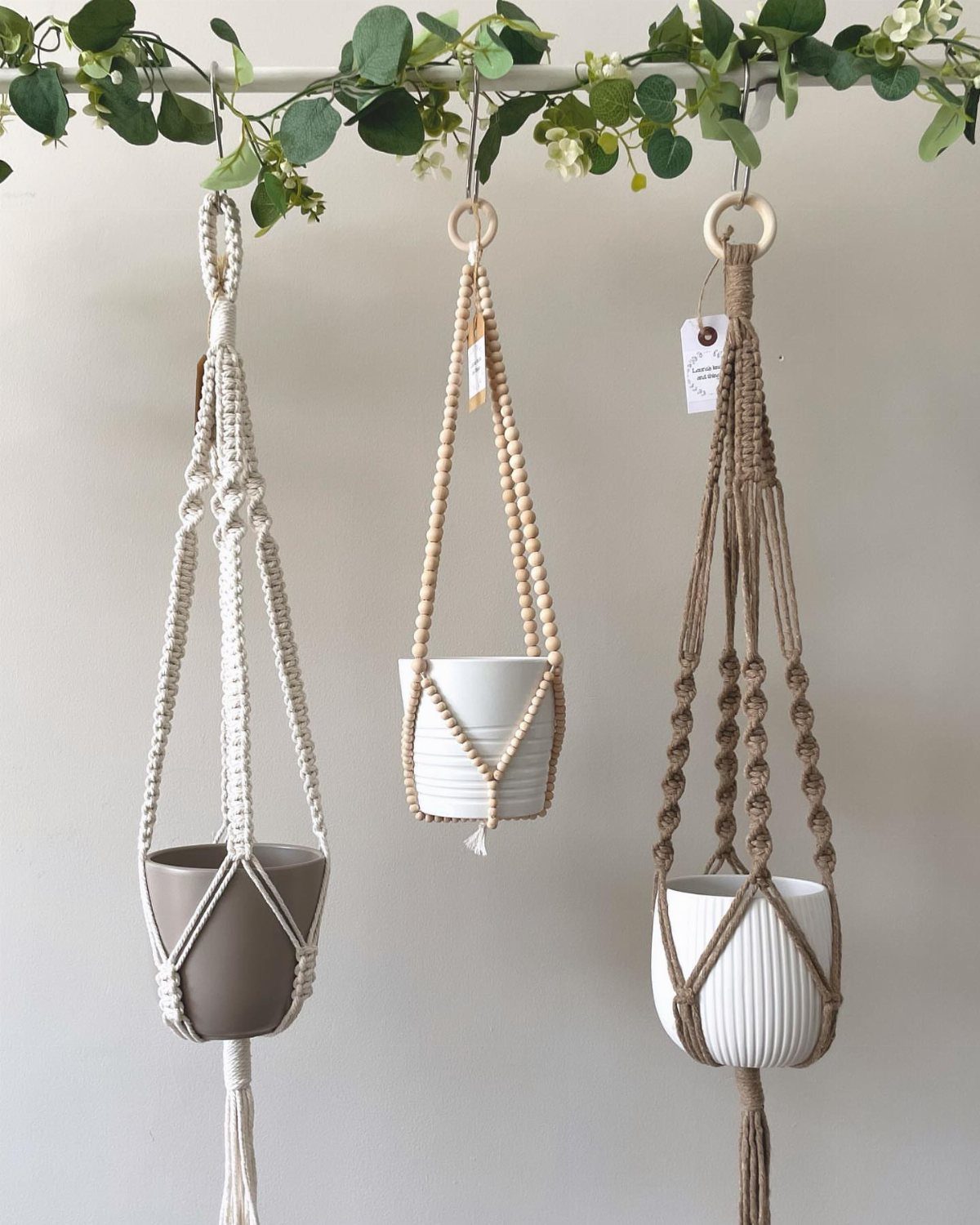
Hanging plants free up shelves and tables, and macramé hangers do it with a handmade look. Three at different heights, each holding a ceramic pot, make a small cluster that draws the eye up.
Vary the drop lengths so the pots don’t line up in a row. Hang them from a rod or a ceiling hook near a window, where the foliage gets light.
Check the weight of a watered pot before choosing your hook.
6. Printed Rug
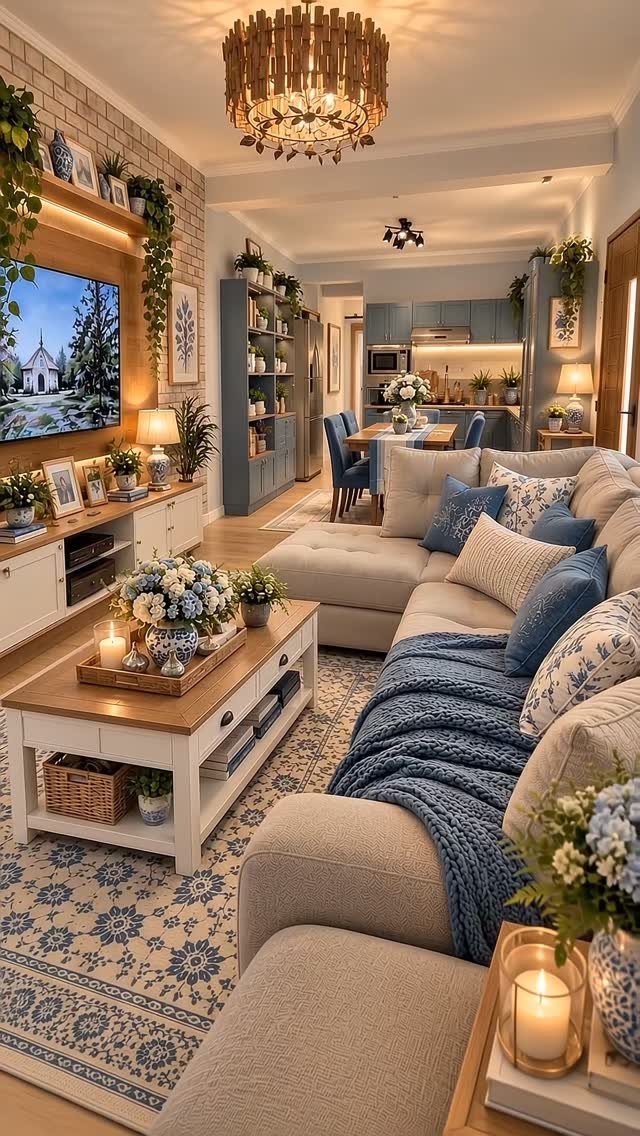
A printed rug lets a neutral room carry pattern without repainting a thing. With a beige sectional and blue accents, a patterned rug ties the seating to the blue cabinets in the kitchen beyond.
Choose a rug that repeats one of your existing accent colors, so it reads as part of the plan. A busy print also hides everyday wear better than a plain weave.
Rugs are one of the easiest swaps on a renter’s budget.
7. Boho Lighting
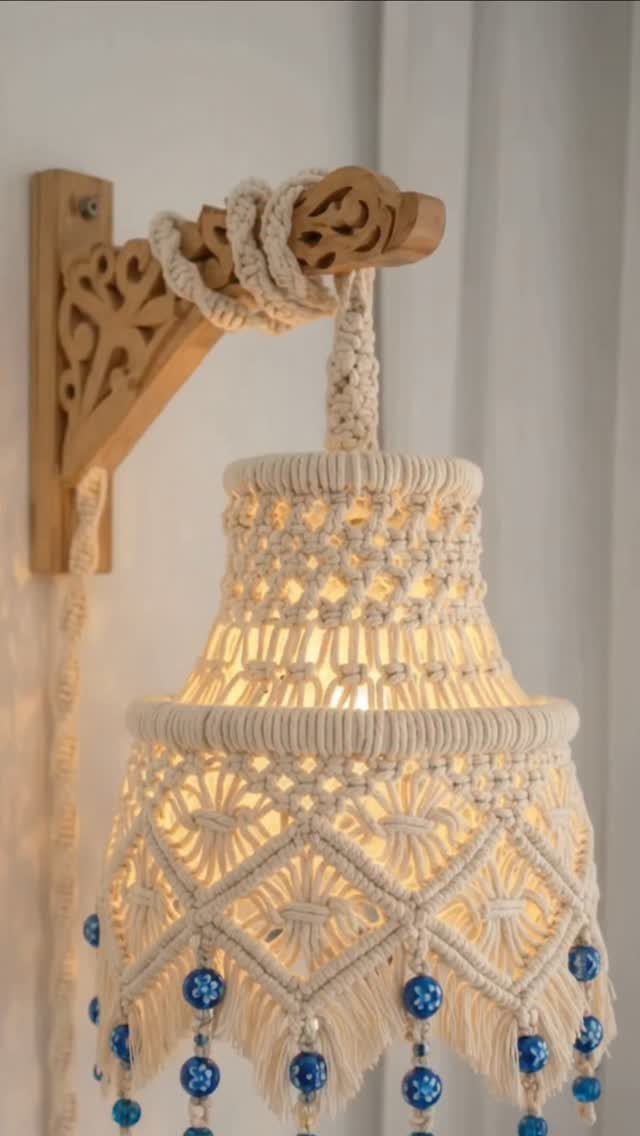
Warm light is what makes a boho room feel lived in, and a macramé shade with beads does half the work by breaking the glow into soft patches.
Pair it with a bulb labeled warm white so the cord and wood read golden instead of harsh.
A wall bracket keeps the lamp off the floor and tables, which suits a small room. Renters can look for a plug-in version and skip the wiring.
8. Open Shelving
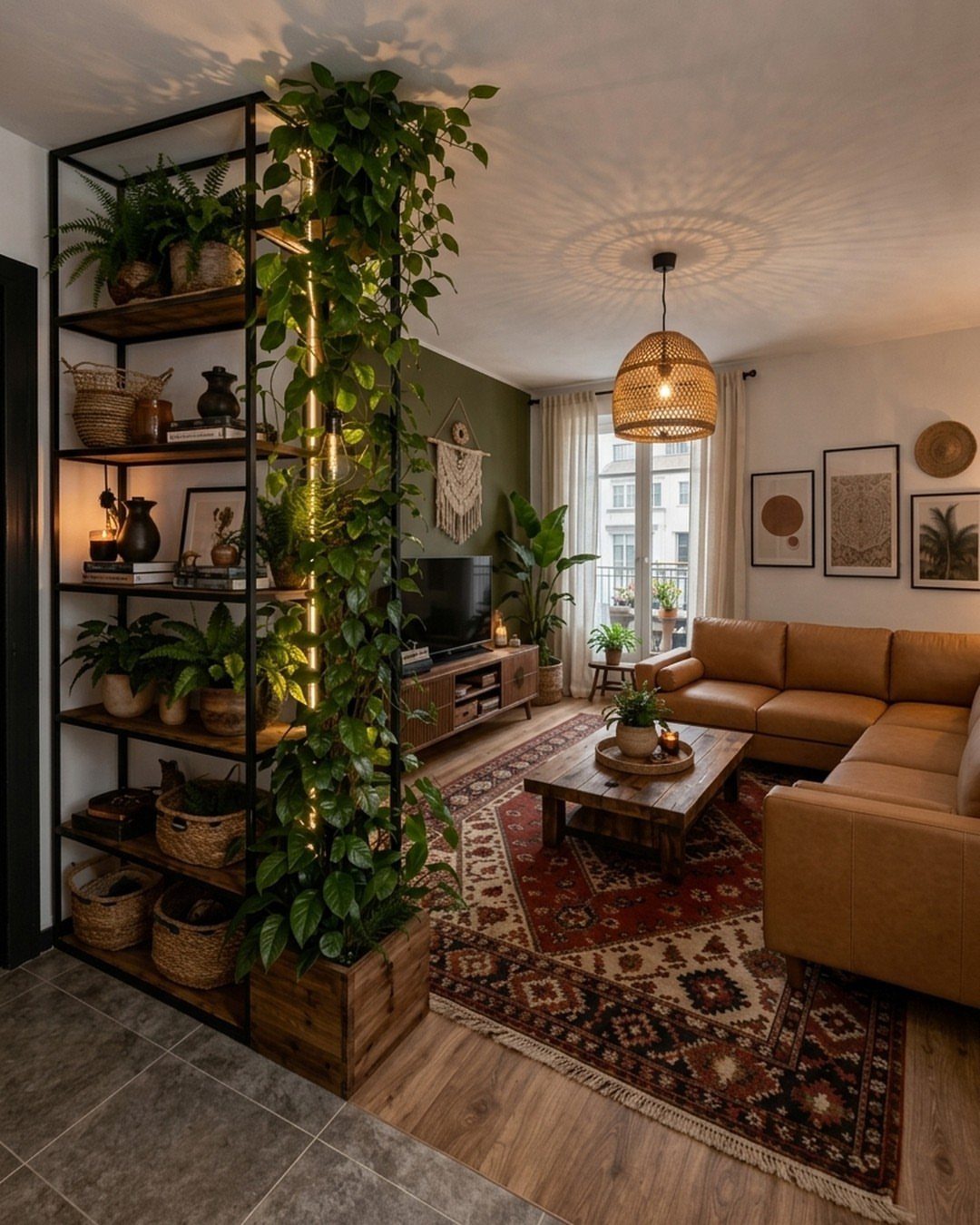
Open shelving works best when it holds things you actually use and love: a few plants, woven baskets, a stack of books. Black metal shelves stay open and light enough that they won’t make a furnished room feel packed.
Mix heights and leave gaps. Baskets can hide the clutter you don’t want on display.
Fill it with personal pieces, not store-bought sets, and the shelf looks lived in.
9. Comfy Chair and Bookshelves
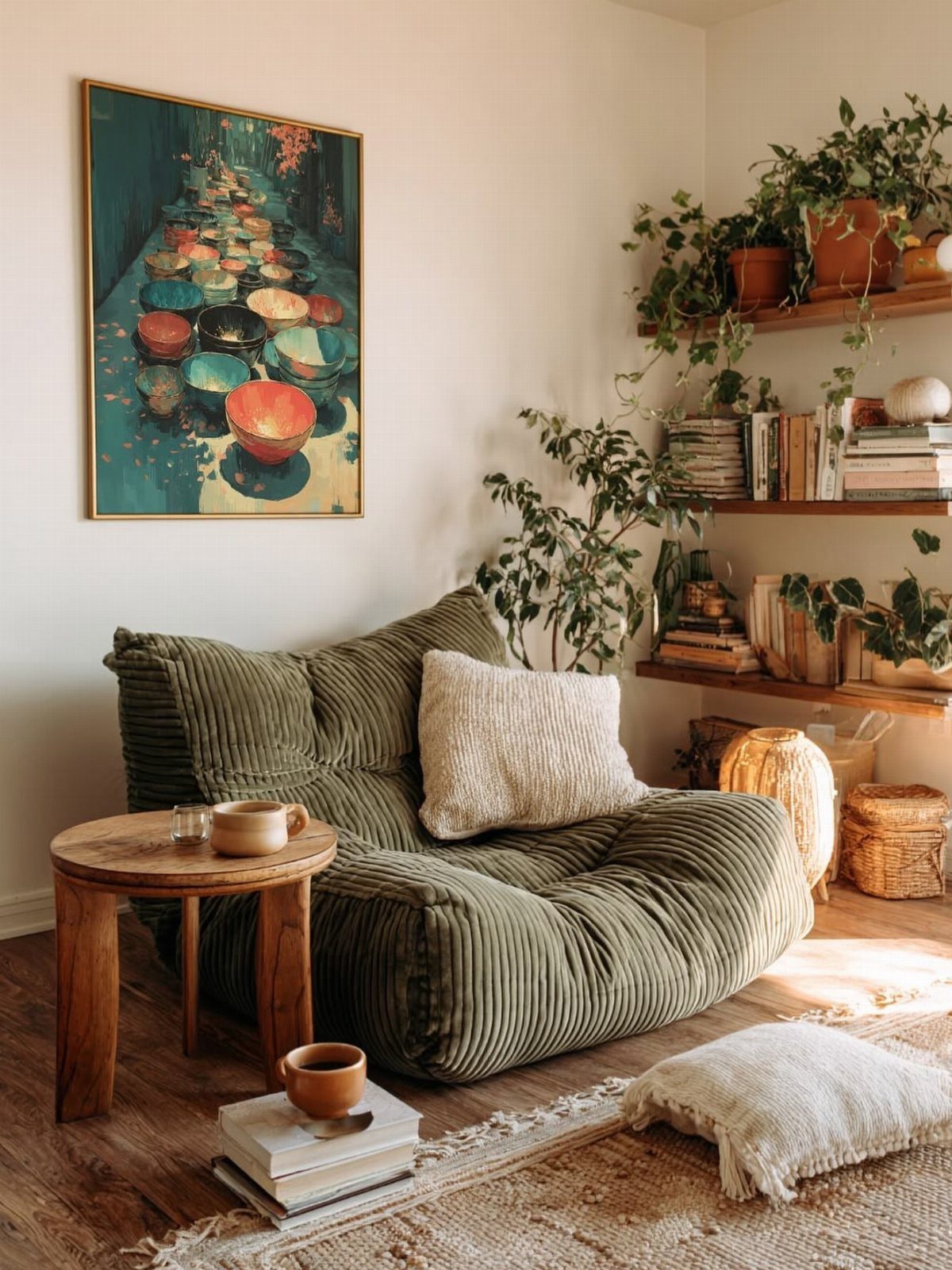
A slouchy corduroy floor chair does something an armchair can’t: it tucks away and moves wherever you want to read.
Keep a side table next to the chair for coffee. Wall-mounted shelves above keep the floor clear, so the whole corner stays small.
I’d pick corduroy over slick fabric for the texture alone.
10. Neutral Interior with Accent Hues
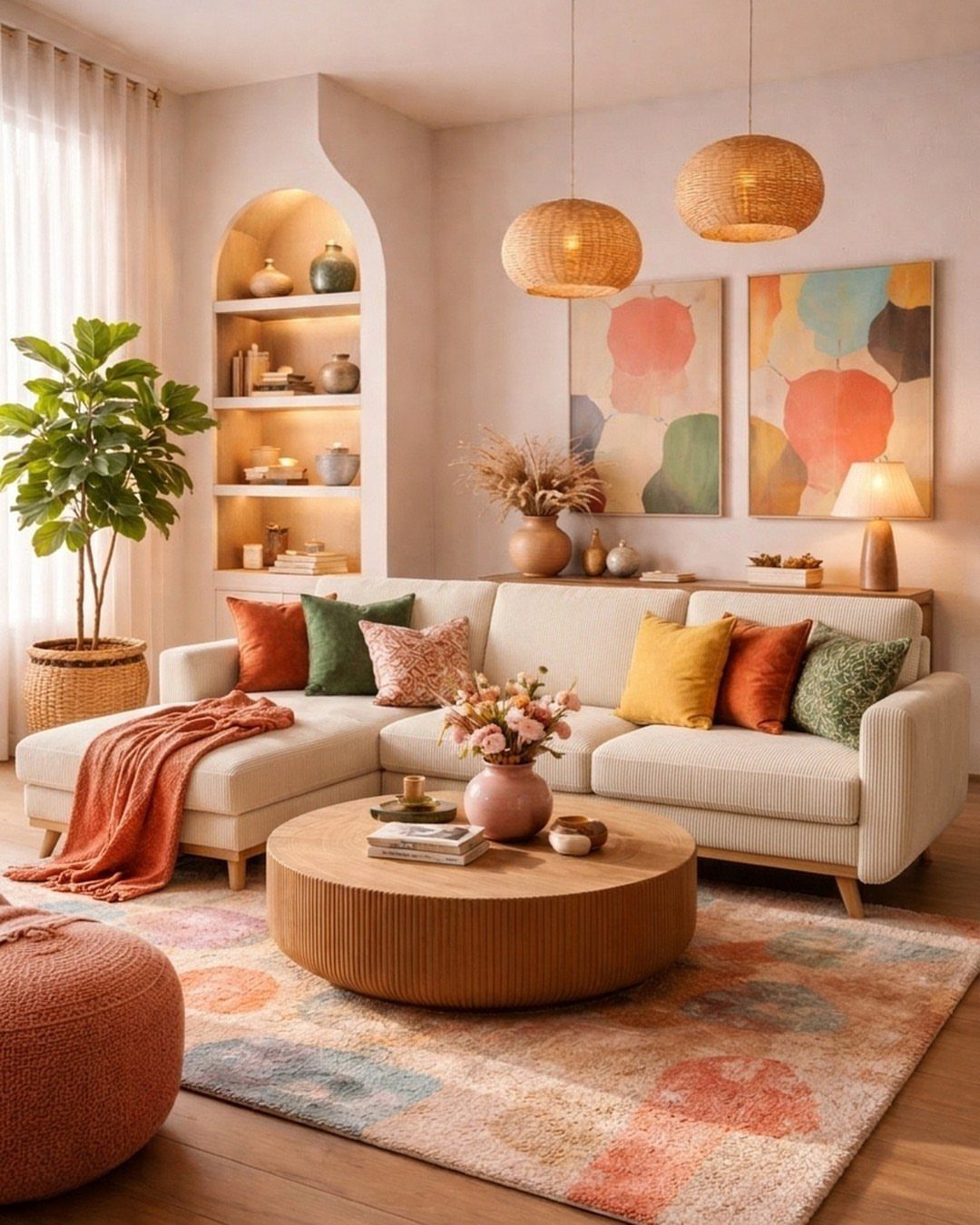
Cream upholstery gives you a quiet base, and the color comes from things you can swap in an afternoon. Colorful pillows are the cheapest lever, and a patterned rug can echo the same shades.
Pick a few accent colors and use each one at least twice so the room reads as intentional. Keep the big pieces neutral.
When you tire of a color, change the pillow covers instead of the sofa.
11. Decorate with Global Accents
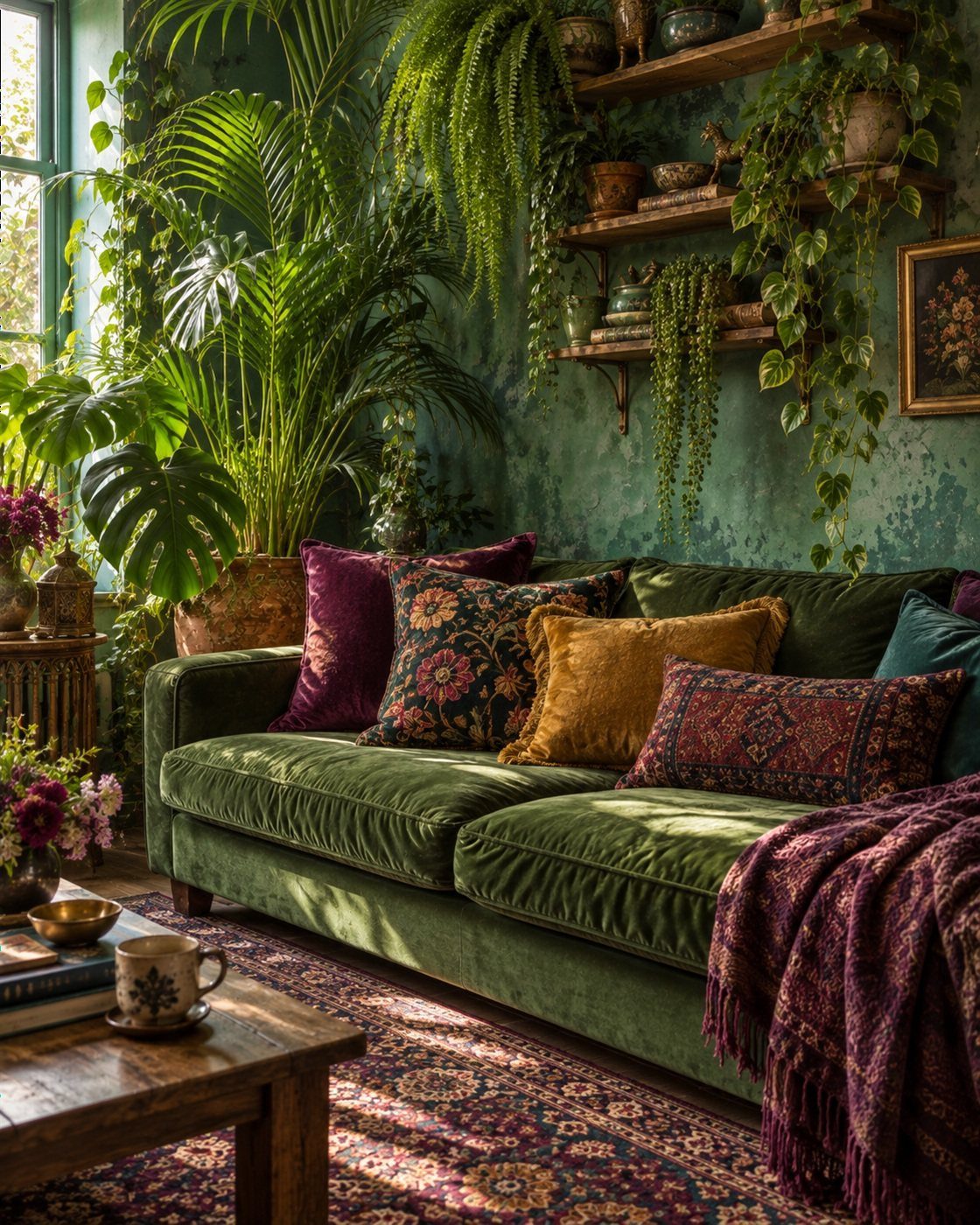
Global accents work best as a few patterned pieces layered on a calm base. Layered prints on the pillows and rug, plus velvet upholstery, prove how far pattern can go when the palette holds it together.
I’d limit it to two or three patterns that share a color, here the purple throw picking up the pillows. Buy pieces you genuinely like, since a mix looks collected only when each item earns its place.
Secondhand rugs and textiles are the budget route.
12. Boho Living Room: Lean Mid-century
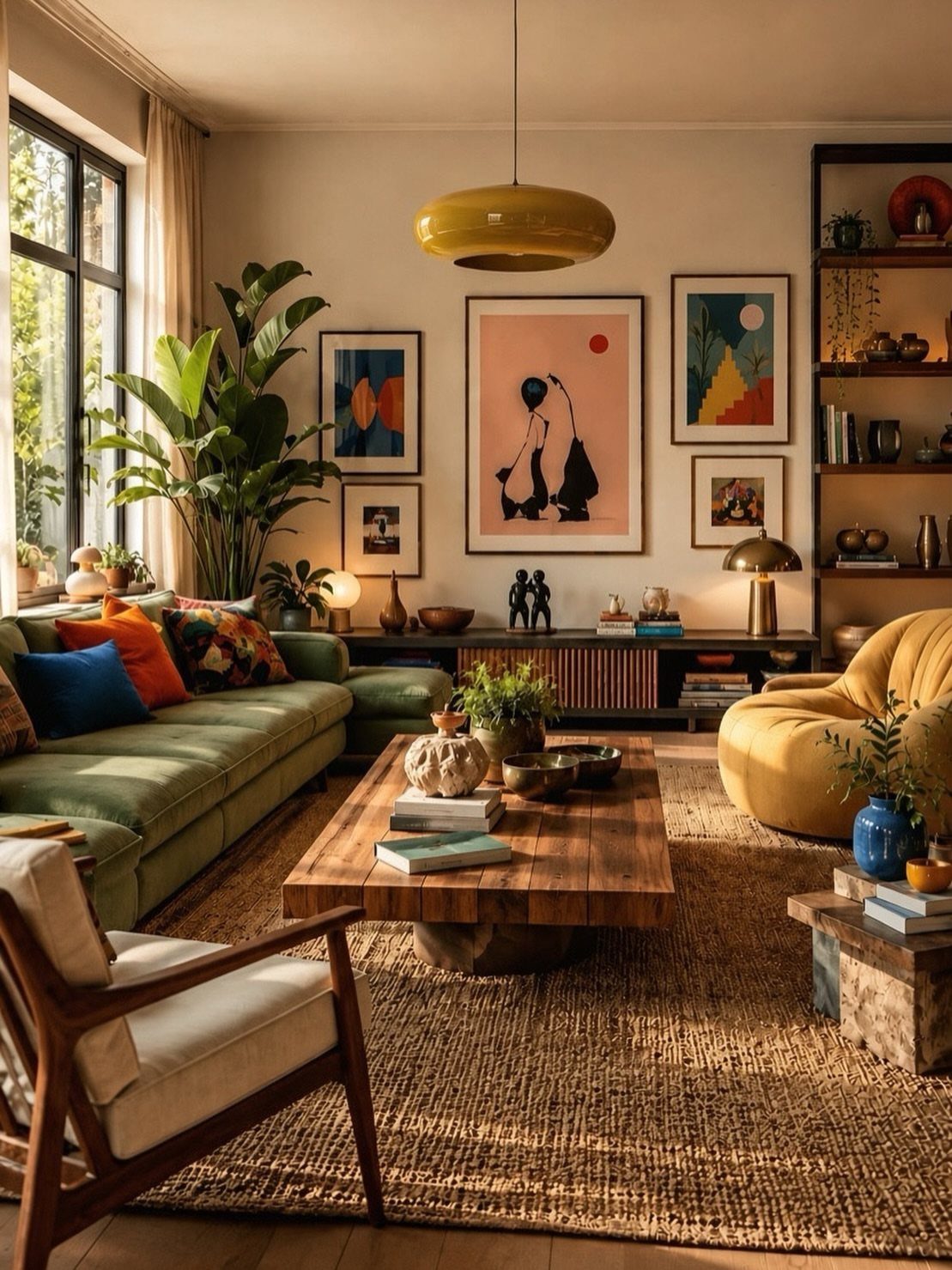
Mid-century boho keeps the warmth of wood and jute but trims the fuss. A wooden coffee table with slim lines, a jute rug and a bold yellow chair give the room structure, while abstract art adds color without clutter.
To push it further, look for sleek cylinder lamps, straight-arm accent chairs and simple marble bookends. Each adds a clean edge against softer textiles.
Keep the boho side to one or two textured pieces so the lines stay crisp.
13. Eclectic Gallery Wall
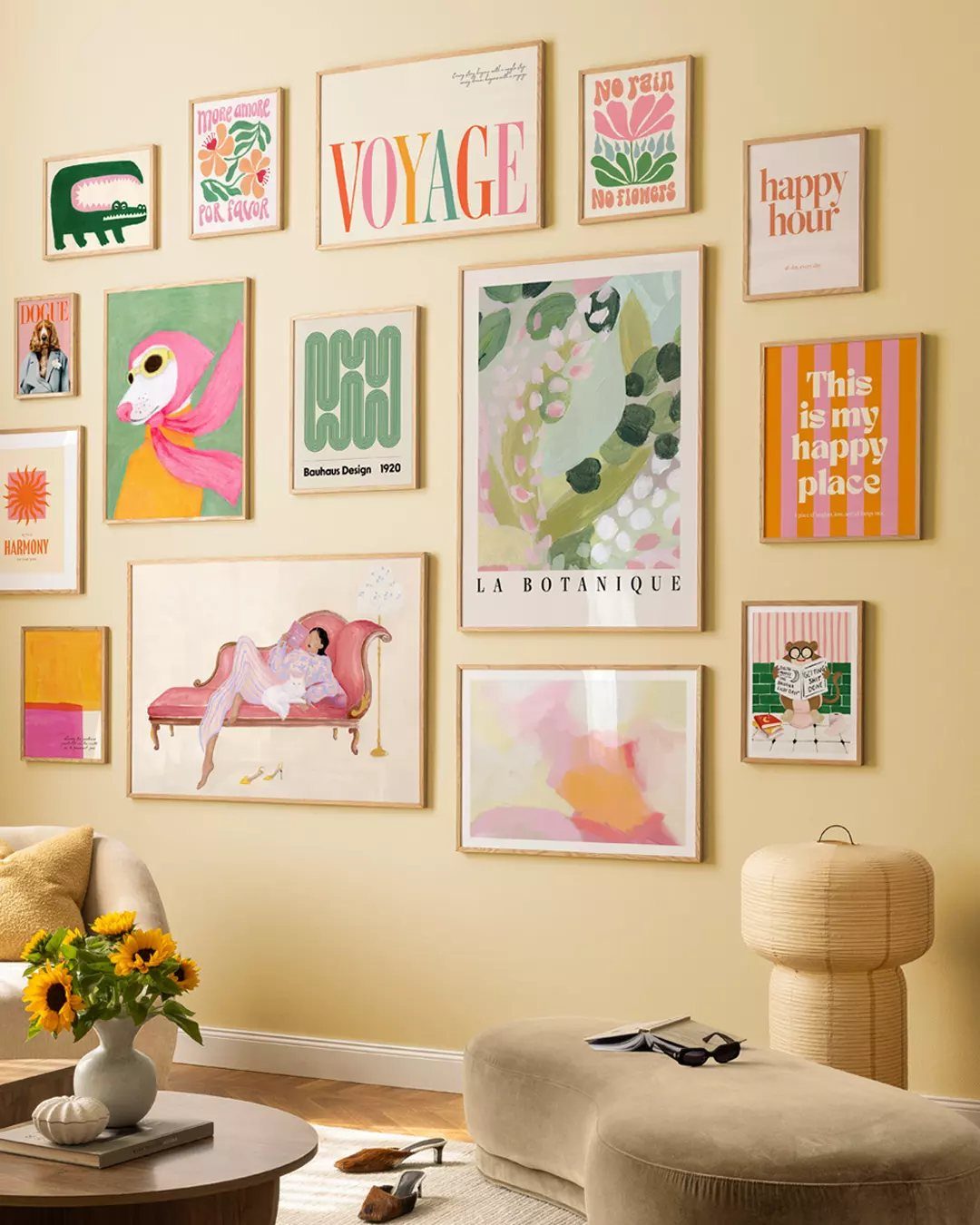
Art prints in mixed colors and styles are the cheapest way to build a gallery wall, and a pale yellow wall gives them a warm backdrop. Frames that don’t match help, since the wall should look gathered over time.
Lay the prints out and shuffle them until the spacing feels even. Then trace each frame on paper, tape the paper templates to the wall, and adjust before you drill.
Renters can use adhesive strips and skip the nail holes.
14. Floor Cushions
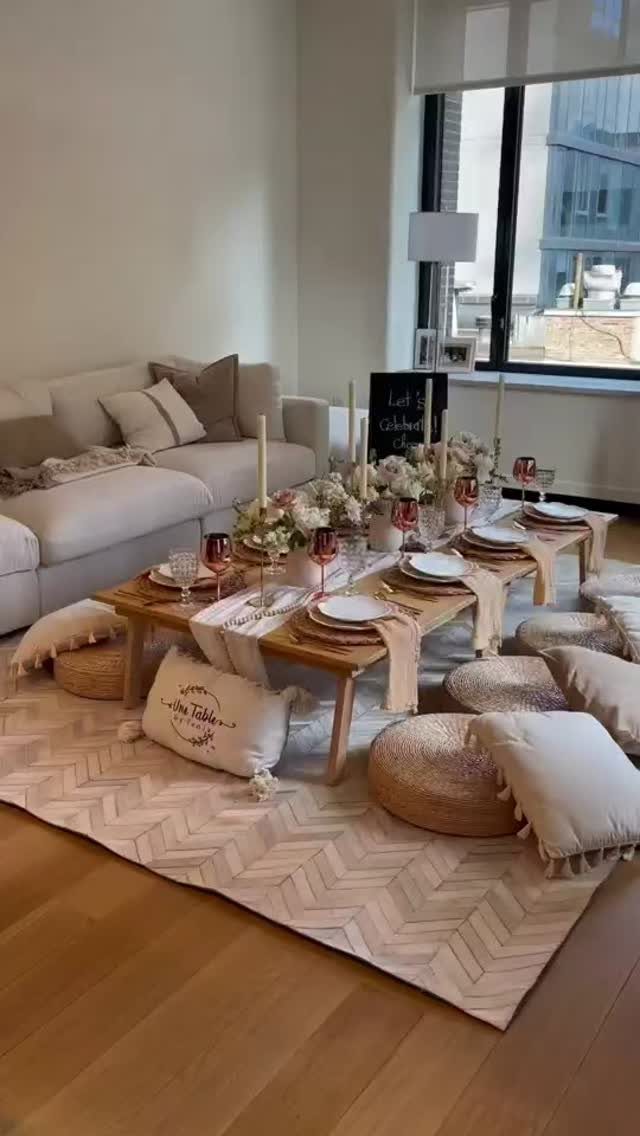
Floor cushions turn a low table into a dining spot, and they take up almost no room once you stack them.
I’d buy a mix of both. Jute looks great but sits firmer, so put the fabric cushions where people will linger longest.
Tuck extras beside the sofa for guests, and the room seats more people without another piece of furniture.
15. Mirrors to Reflect Light
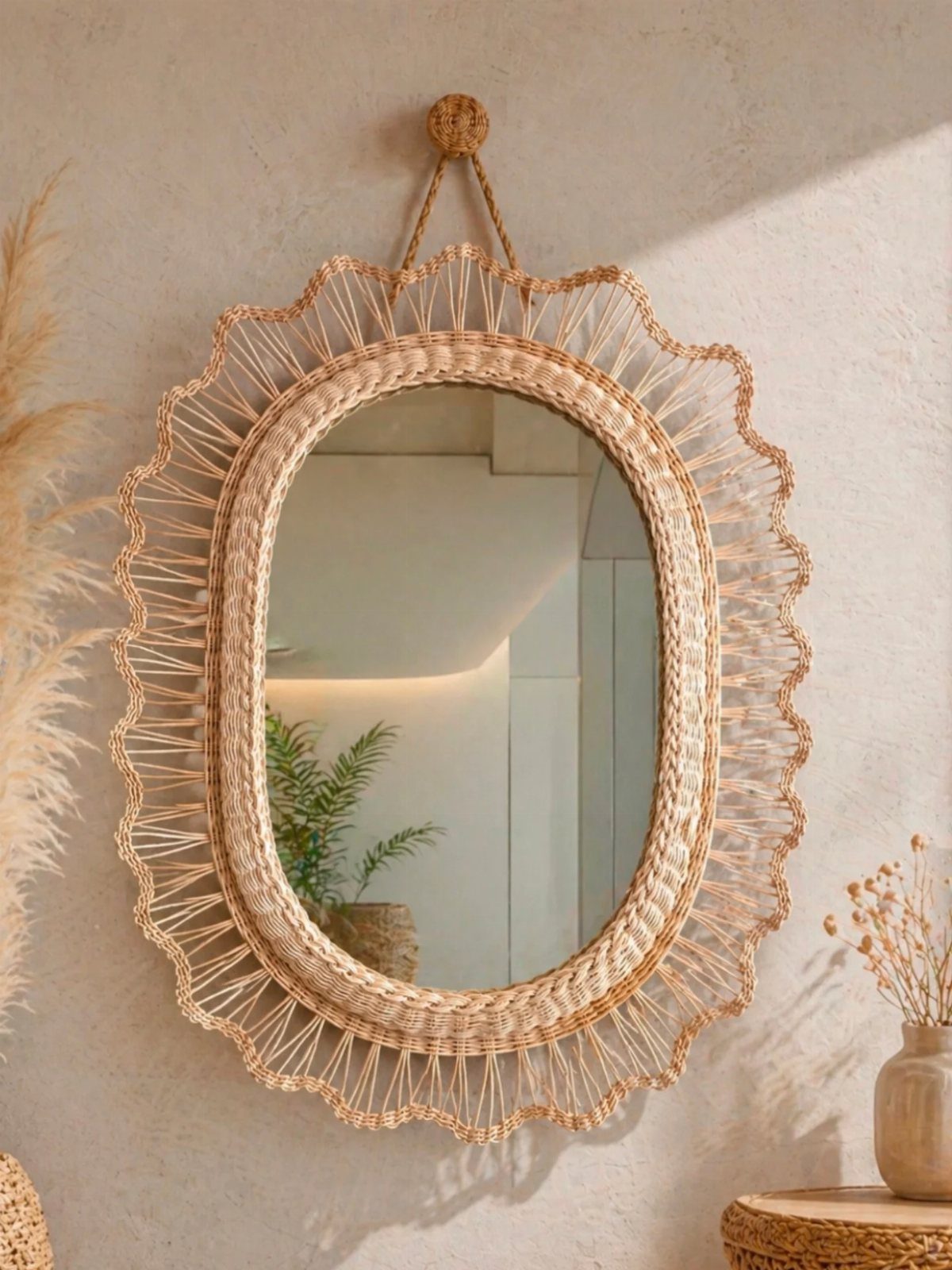
A mirror with a woven rattan frame and scalloped edges brings in warmth while it bounces light around the room. Hang it where it can catch a window’s light or face a plant, so the reflection adds something worth seeing.
An oval shape softens a wall of straight lines, and a neutral wall lets the frame stand out. Skip placing it opposite clutter, since the mirror will repeat what it sees.
Check the mirror’s weight before you pick a hook or anchor.
16. Lush Tropical Plants and Greenery
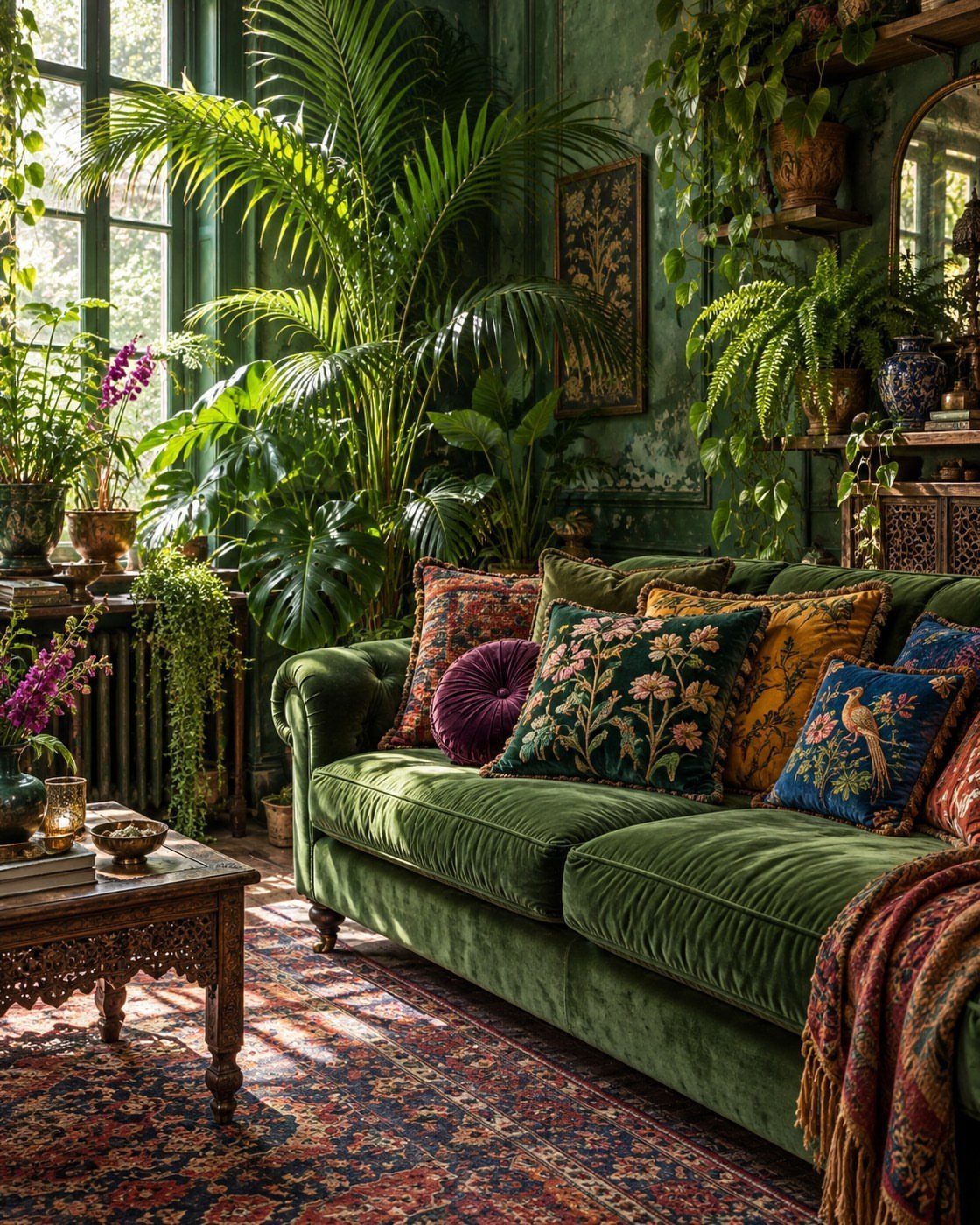
Deep green walls make a green velvet sofa look intentional, and tropical plants fill in the rest. Embroidered pillows add color so the room doesn’t turn into one flat shade.
I’d cluster plants with some on the floor and some on stands, rather than lining them up.
Dark paint is a commitment, so test a sample patch first. Renters can get the same feel from plants and velvet alone.
Creating a Cozy Atmosphere
Find a spot by a window or near the fireplace and set it up for nothing but sitting down with a book or a drink.
Keep the TV and the work laptop out of it, or the spot stops feeling restful.
Oversized chairs, plush benches, and rattan or wicker seats all work. Add a soft rug underfoot, then layer velvet or chunky knits on top of the seat.
Skip harsh overhead light in the evening. Lamps with soft, warm bulbs on a dimmer let you set the mood by the hour, and fairy lights or a rattan chandelier add a bohemian note.
A small side table holds a drink or a book, so you never have to leave the nook.
Mixing Styles
A clean-lined sofa next to a carved wood coffee table or a ceramic floor lamp with texture gets the mix started without overthinking it. The contrast is what makes the room feel like yours.
Vintage pieces do a second job: they calm things down.
Modern pieces can read cold when there’s too many of them, and boho can turn into clutter fast. An older rug, artwork, or textile settles both.
Aim for old and new in roughly equal measure.
If everything is sleek, the room reads cold; if everything is secondhand, it can feel busy. Swap one piece at a time until the balance feels right.
Choosing a Color Palette
Build the palette around the rule of 3: choose three main colors and let them repeat across the room. That keeps a boho space balanced instead of scattered.
Earthy tones make a warm base. Terracotta, olive green, and mustard yellow all feel grounded and relaxed, and beige, brown, and ivory work as calmer neutrals.
A jewel tone like emerald or sapphire pulls the contrast up when the rest stays neutral or warm. Colorful wall art is a cheap way to bring those shades in and give neutral furniture some character.
Pick your three before you shop, and check each purchase against them.
Frequently Asked Questions
What colors are best for a boho living room?
Terracotta, olive and mustard are the warmest starting points, while beige and ivory pull back when you want something calmer.
Emerald or sapphire gives you contrast without leaving the palette entirely. Pick 3 main colors and repeat them around the room so it feels balanced instead of scattered.
What is the 2/3 rule for living rooms?
The rule of 3 is the one I know: pick three colors and carry them through the room in fabric, paint and objects. Repetition keeps a boho space balanced instead of random.
What are the essential elements of boho decor?
Warm earthy colors, layered textures, vintage pieces and plenty of greenery cover the basics.
Woven baskets, plush throws, rattan and velvet add the texture, while soft, warm lighting from lamps or woven fixtures sets the mood. Personal art and handmade pieces keep the room from looking like a store set.
How do I mix vintage and modern pieces in a boho room?
Split the room about evenly between old pieces and new ones.
Too much sleek furniture reads cold, and too much secondhand can feel busy. One vintage rug or textile can settle a modern room, so swap pieces one at a time and stop when it feels balanced.





