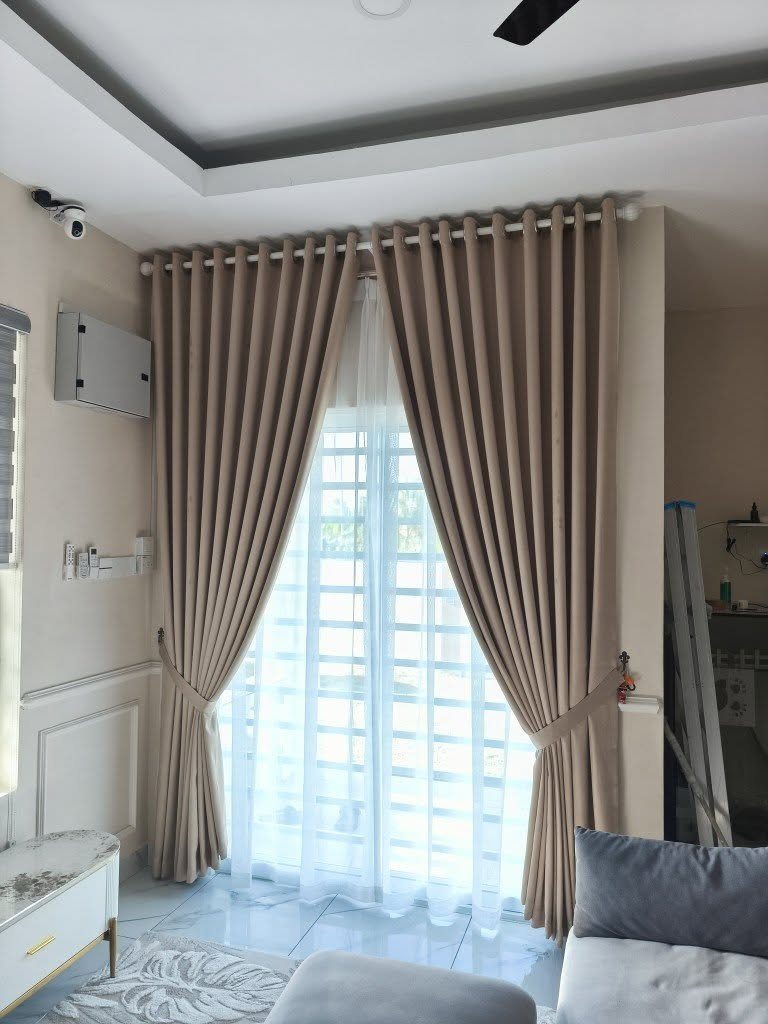
Which curtain fits a neutral living room depends on how much light you need to control, how long the panels should hang, and whether the hardware itself becomes part of the look.
The ideas run from a single solid beige panel hung long to layered sheers with Roman shades, which roughly doubles the cost because you buy 2 window treatments.
1. Linen Curtains
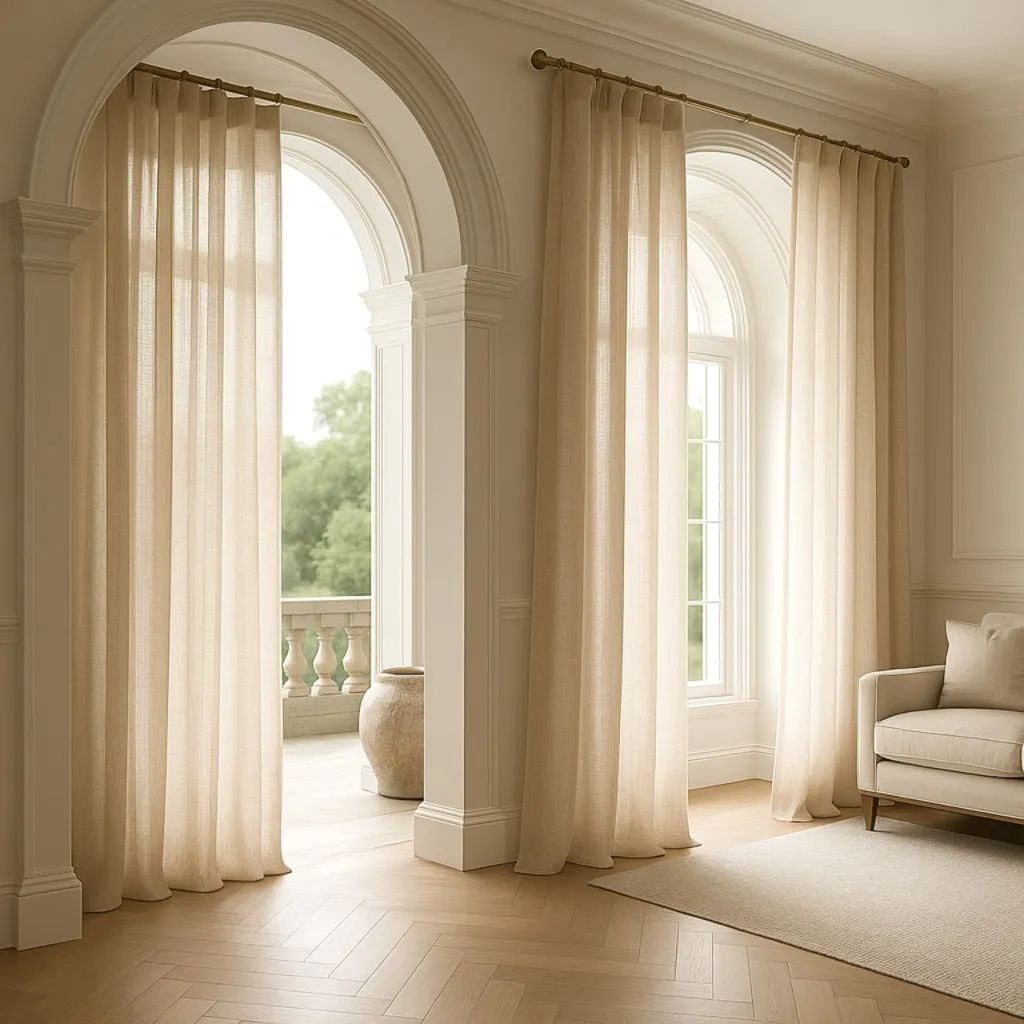
Cotton-linen blends give you the look of linen without the full wrinkle. This 55% cotton and 45% linen front panel has a 100% cotton lining behind it, which adds weight and body so the panels hang straight instead of floating.
Panels come in 48×84, 48×96, 48×108 and 48×120 inches, plus 96-inch-wide versions in the same four lengths. Measure from rod to floor first, then pick the length that just skims or touches it.
Beige suits a room with arched windows because it stays quiet and lets the shape do the talking.
2. Layer Sheer Curtains with Heavier Drapes
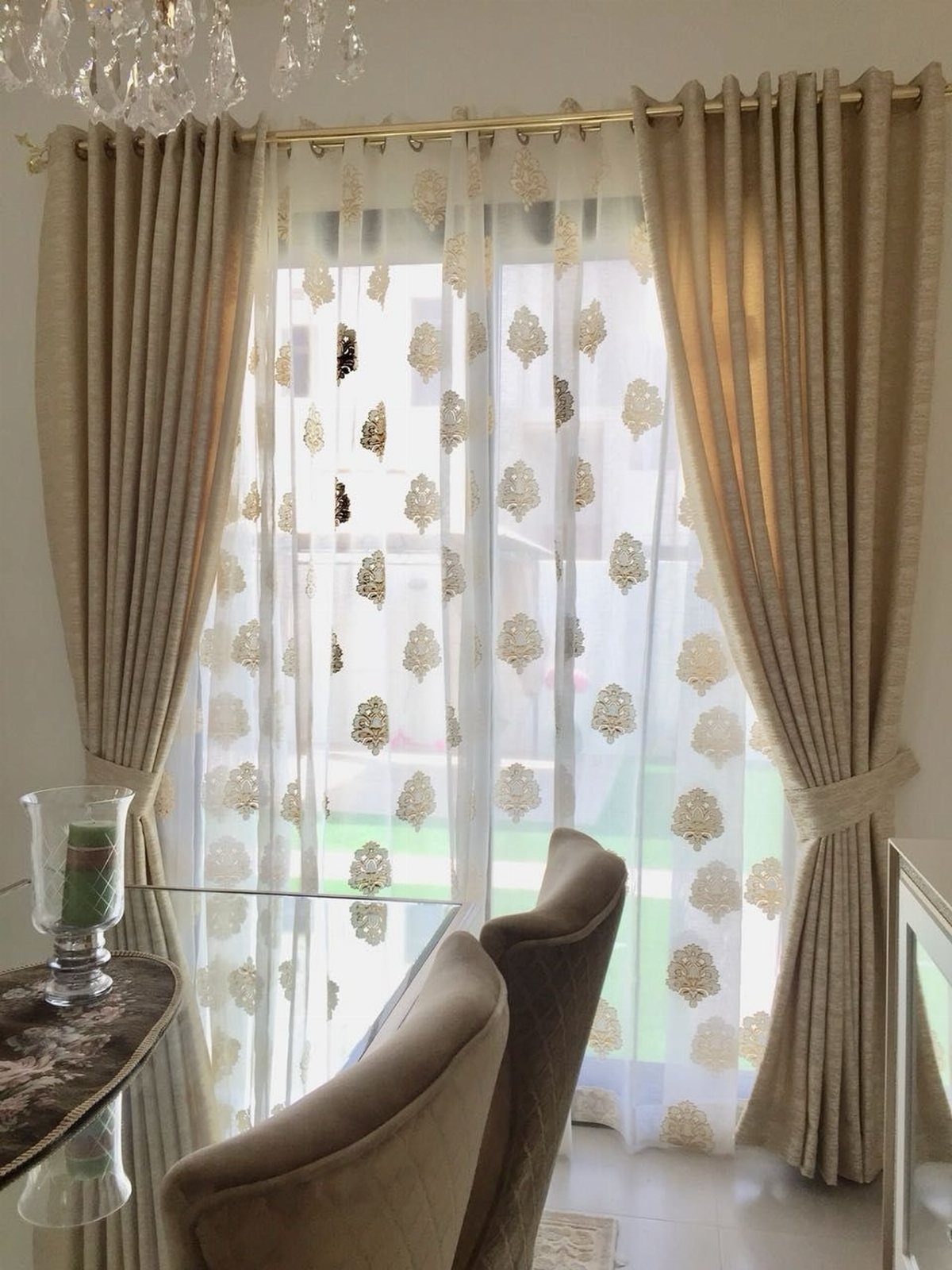
Two layers on one window give you a choice that a single panel never does. Sheers soften daylight, and heavier drapes close the room off when you want that.
A patterned sheer, like the white and gold one here, adds interest while the beige drape keeps the palette calm.
Expect to buy 2 sets of panels, so the cost roughly doubles. For a weekend budget, I would put the money into the drapes and keep the sheers simple.
3. Neutral Curtains
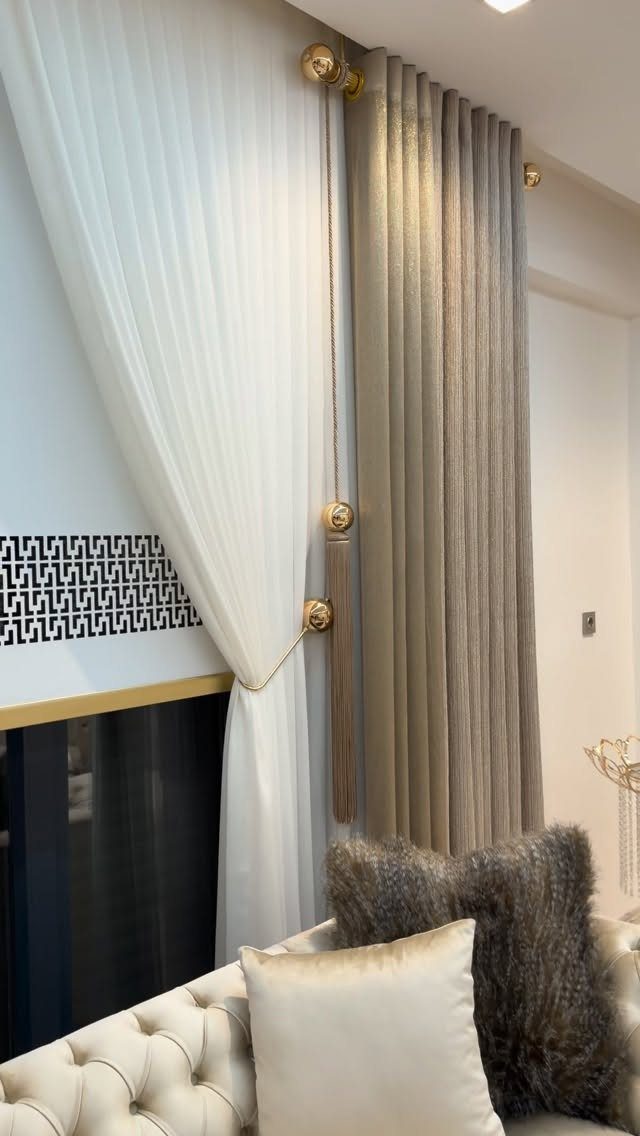
A white sheer paired with a beige panel is about as safe as a neutral room gets, and I like it for that reason. Nothing competes with the sofa or the wall panel.
Gold hardware does the work of an accent without adding a color. Match the metal across the rod and finials so the whole window looks planned.
Keep the sheer and the drape within a shade or two of each other. If they drift too far apart, the layers start to look like 2 different decisions.
4. Curtains for Neutral Living Room
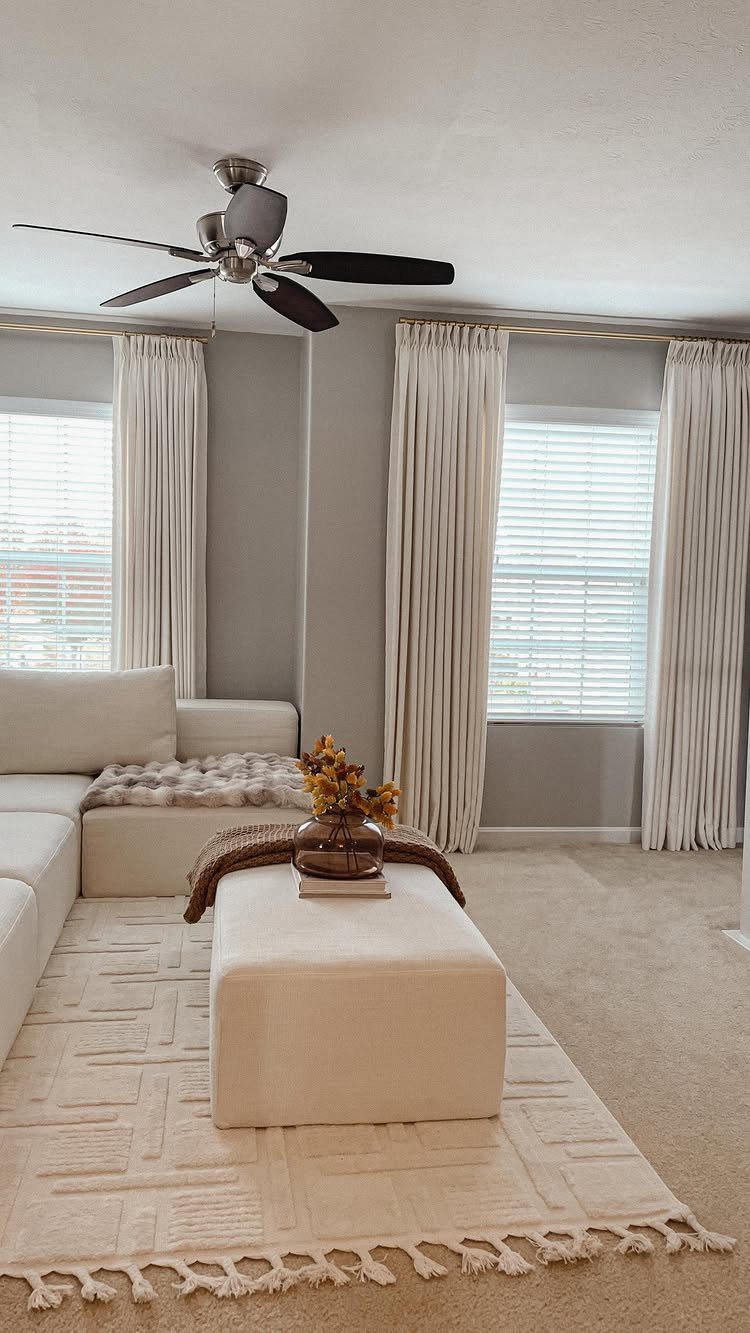
White curtains in a room already full of white furniture melt into the walls, and that is the whole appeal. The window stops being a feature and becomes part of the room’s calm.
The risk is flatness. A textured rug, as in this room, keeps all that white from reading as a single block.
Pick a fabric with a little weave to it rather than a flat sheet. Plain white shows its seams and wrinkles more, so steam the panels before hanging.
If you’re sitting in your living room sensing something isn’t right—maybe there’s not enough color, personality, privacy, or coziness—the problem might be your living room curtains.
5. Texture in Curtains
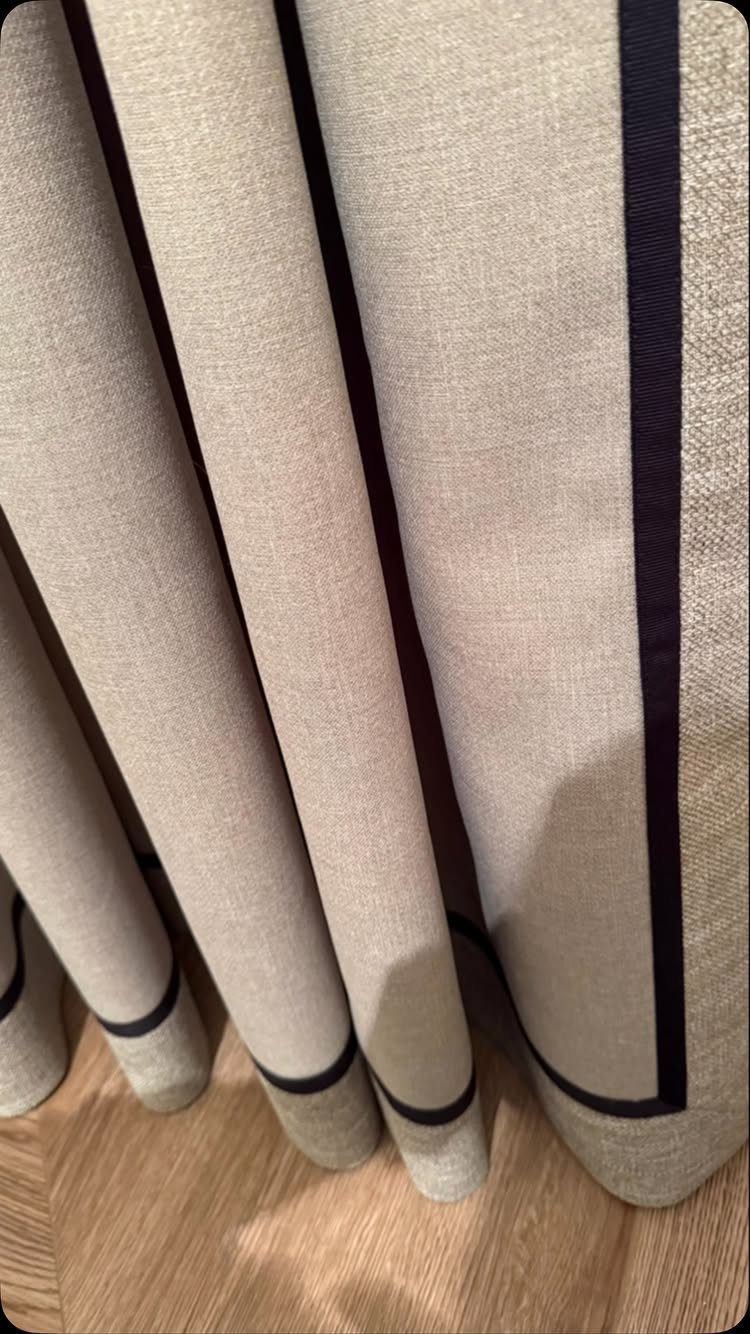
Texture does what pattern usually does, with less noise. A beige weave with a dark navy border trim gives a neutral room one line of contrast, and the eye follows it down the edge of the panel.
If you are comfortable with a needle, or a roll of iron-on hem tape, you can add a contrast band to plain panels yourself. Keep the band narrow so it reads as trim, not stripes.
Navy is the bold choice here. Choose a deeper neutral like charcoal if you want it subtler.
6. Curtain Hardware Importance
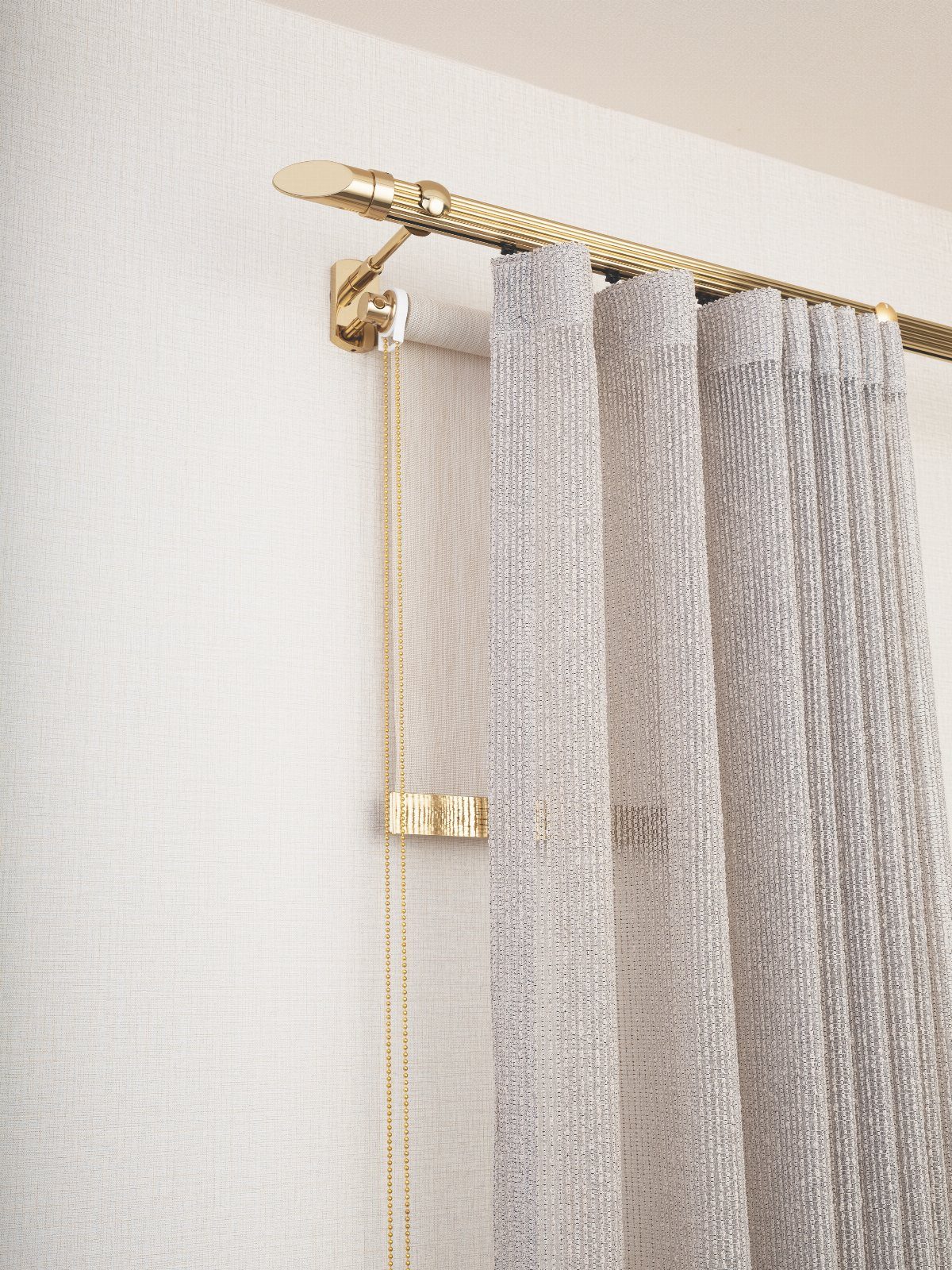
Hardware is the part of a curtain people notice without knowing why. A gold rod with a decorative finial makes plain textured panels look finished, and it costs far less than upgrading the fabric.
Choose a rod thick enough to carry the weight of lined panels without sagging in the middle. Match the metal to other fixtures in the room, such as a lamp base or picture frame.
Cheap, thin rods are the one place I would not save money. Spend there first.
7. Solid Beige Curtains
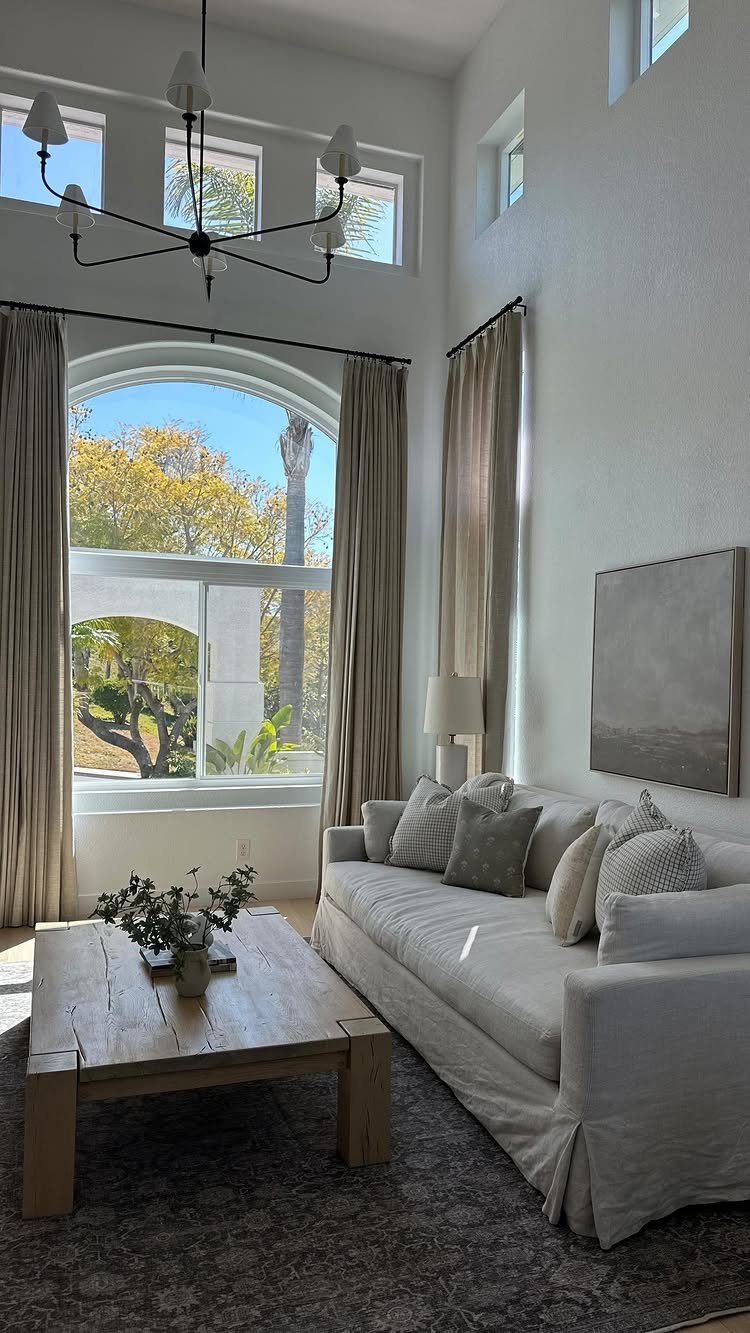
Solid beige, hung long, lets an arched window be the feature. With no pattern to compete, the curve of the glass does the talking.
Let the fabric fall to the floor for a clean vertical line that suits a tall ceiling.
Beige is forgiving beside a white sofa and wood table, so I would pick it over stark white if the room gets strong light.
8. Sage Green Curtains
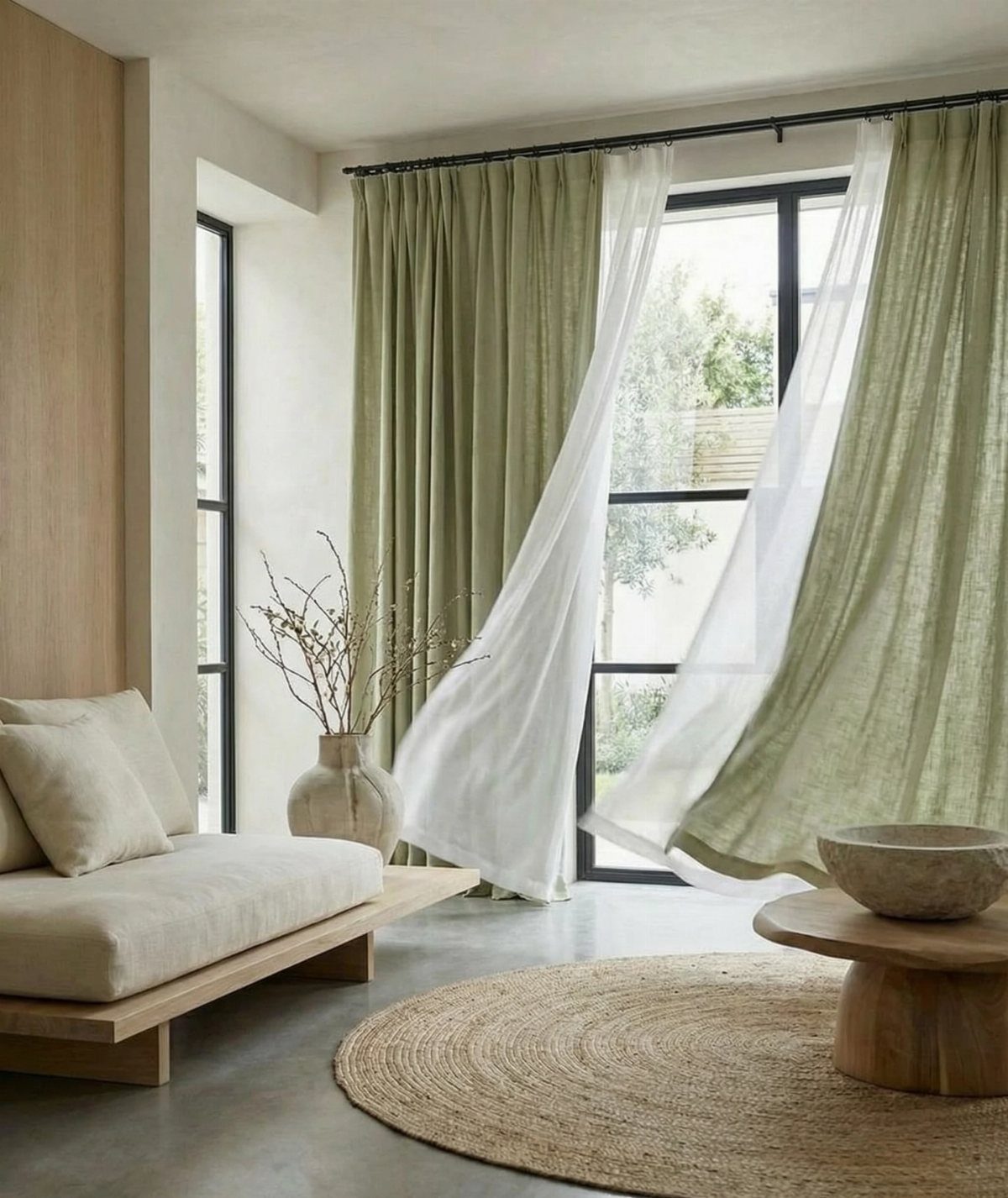
Sage green is the easiest way I know to add color to a neutral room without raising the volume. Against beige upholstery, jute and wood, it reads as one more natural material.
White sheers behind the green panels soften the shade and keep daylight moving through the room. Choose a gray-leaning, muted sage; a brighter green will fight the earthy tones.
Buy a fabric swatch first and hold it next to the sofa in daylight.
9. Cream Curtains

Cream sits a half step warmer than white, and that small shift makes a window feel softer. Beside a white sofa and beige furniture, it ties the room together without drawing attention.
Hang panels wide enough to look full when closed, so the fabric folds instead of stretching flat. I would pick cream over stark white if you want warmth.
Hold a swatch next to your sofa before you order, because cream can lean yellow or pink under lamplight.
10. Curtains with Roman Shades
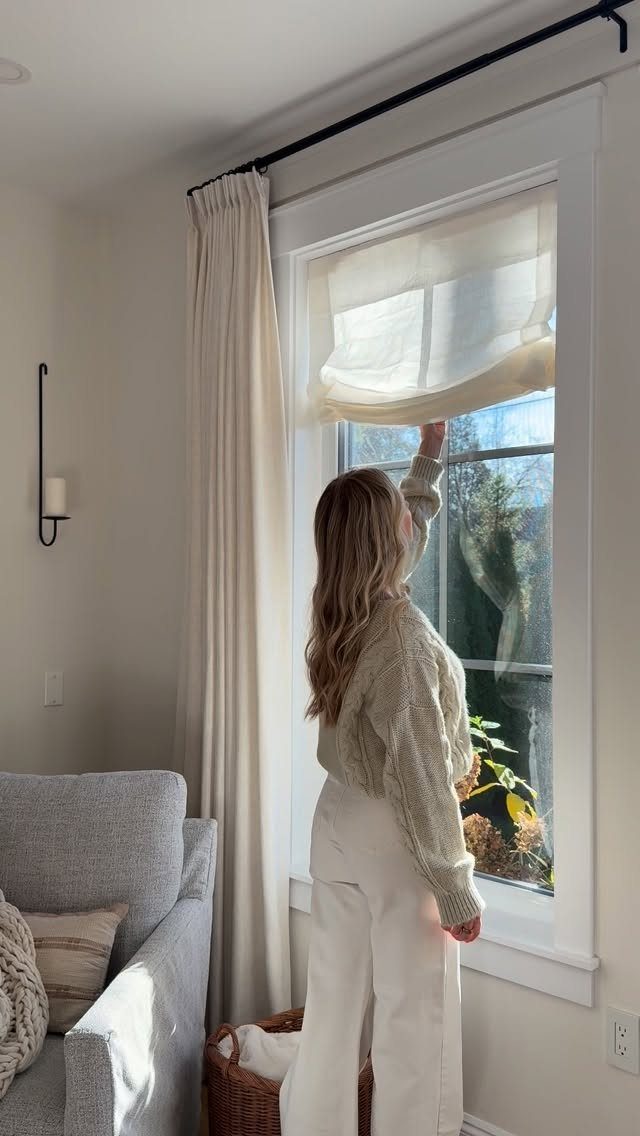
A Roman shade under a pair of drapes gives one window two jobs. The shade handles daily light, and the curtains add softness and frame the window.
Keep both in the same family of neutrals, as with cream and white here, so the layers read as one design. Mount the shade inside the window frame and hang the curtain rod above it.
Expect to pay for two window treatments instead of one. If the budget is tight, I would buy the shade first and add the curtains later.
Curtain Measurement Tips
Start the tape at the bottom of the ring where the fabric hangs, and run it down to the floor. Cut half an inch off that number so the fabric stops just short of the surface.
Mount the rod closer to the ceiling than the window frame if you want the room to look taller.
Push the rod out past the frame far enough that the fabric pulls completely clear of the glass when you draw it back.
Finials are where you can add a little personality. Sleek geometric shapes or subtle organic forms both suit a neutral room without pulling focus.
Light and Space Considerations
Pale fabric bounces light around and makes a tight room read larger. Darker tones add depth and warmth, so they suit a larger room better.
Windows that take direct sun most of the day call for fabric rated to resist fading, in soft color or washed-out tone. Strong light wears down saturated colors fast.
I switch panels twice a year: sheers or pale linen in spring and summer, deeper warm tones when it turns cold. A single neutral holds up through every season if you prefer to hang it once and forget it.
One caution: a room where everything is white and matching can feel flat and clinical. A single darker panel gives the eye some depth and a place to rest.
Choosing Curtain Lengths
Aim for curtains that touch the floor without pooling. That clean line adds height and a more polished look than panels that stop short or puddle.
Length follows rod height, so mount the hardware first. A rod mounted closer to the ceiling makes the room appear taller, but it also means you need longer panels.
Layering 2 fabrics gives you texture: a sheer like voile behind, something with body like cotton or velvet in front.
Frequently Asked Questions
What are the best quality curtains for a living room?
Linen, cotton and velvet are the fabrics to look for. A cotton-linen blend, such as 55% cotton and 45% linen with a 100% cotton lining, gives the linen look with less wrinkling.
Are patterned curtains in style?
Yes, as long as the pattern stays subtle in a neutral room.
Pairing a patterned sheer with a solid panel in the same color family gives you texture without disruption. Texture, like a beige weave with a narrow navy border, gives a similar lift with less visual noise.
What curtains let light in but provide privacy?
Sheer or semi-sheer curtains do both, softening daylight while keeping the room from being seen into. For more control, hang a heavier drape behind the sheer so you can close the room off when you want to.





