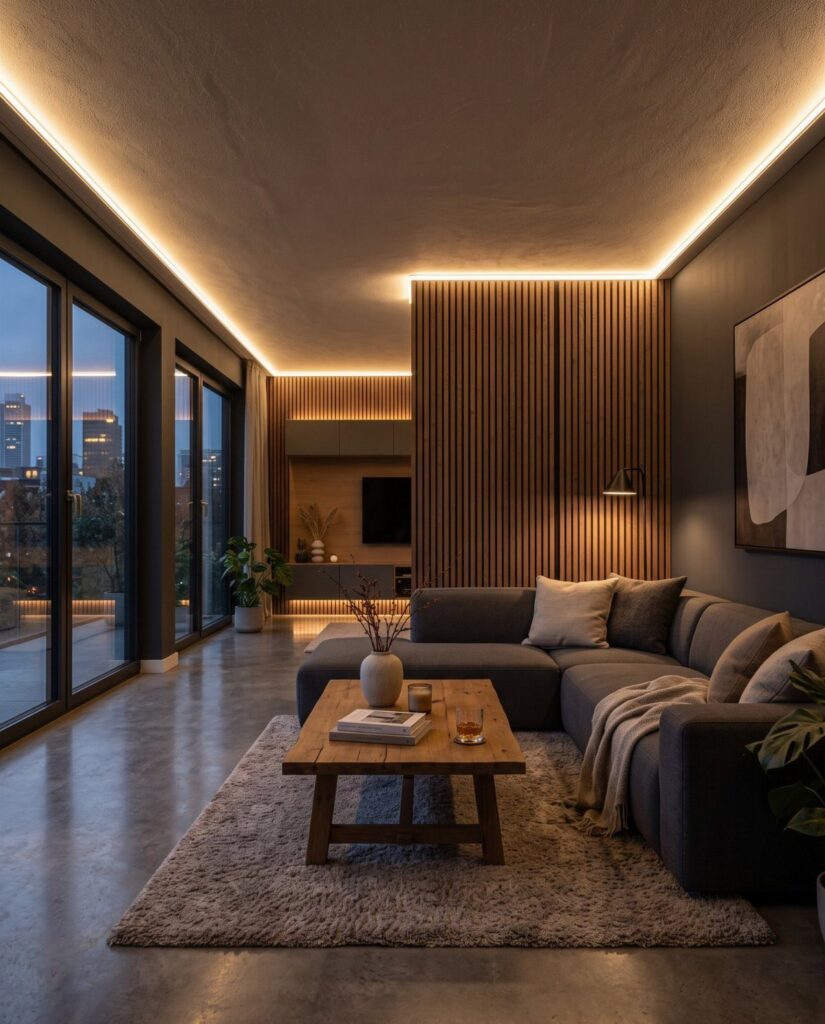
Renting or owning decides which of these lights are realistic for you, since floor lamps, table lamps and candle lighting need nothing but an outlet, while recessed cove lighting and a starry ceiling mean working on the ceiling.
Wall sconces that plug in, smart lighting options and LED strips tucked into a cove ledge need no electrician, while hardwired pendant lights, recessed cove lighting and the fiber optic starry ceiling mean ceiling work or a landlord’s permission.
The span runs from a bulb you screw into a lamp you already own to a build project planned before the ceiling is finished, and a dimmer with warm bulbs, around 2700K–3000K, shows up in nearly every version.
1. Ceiling Fixtures
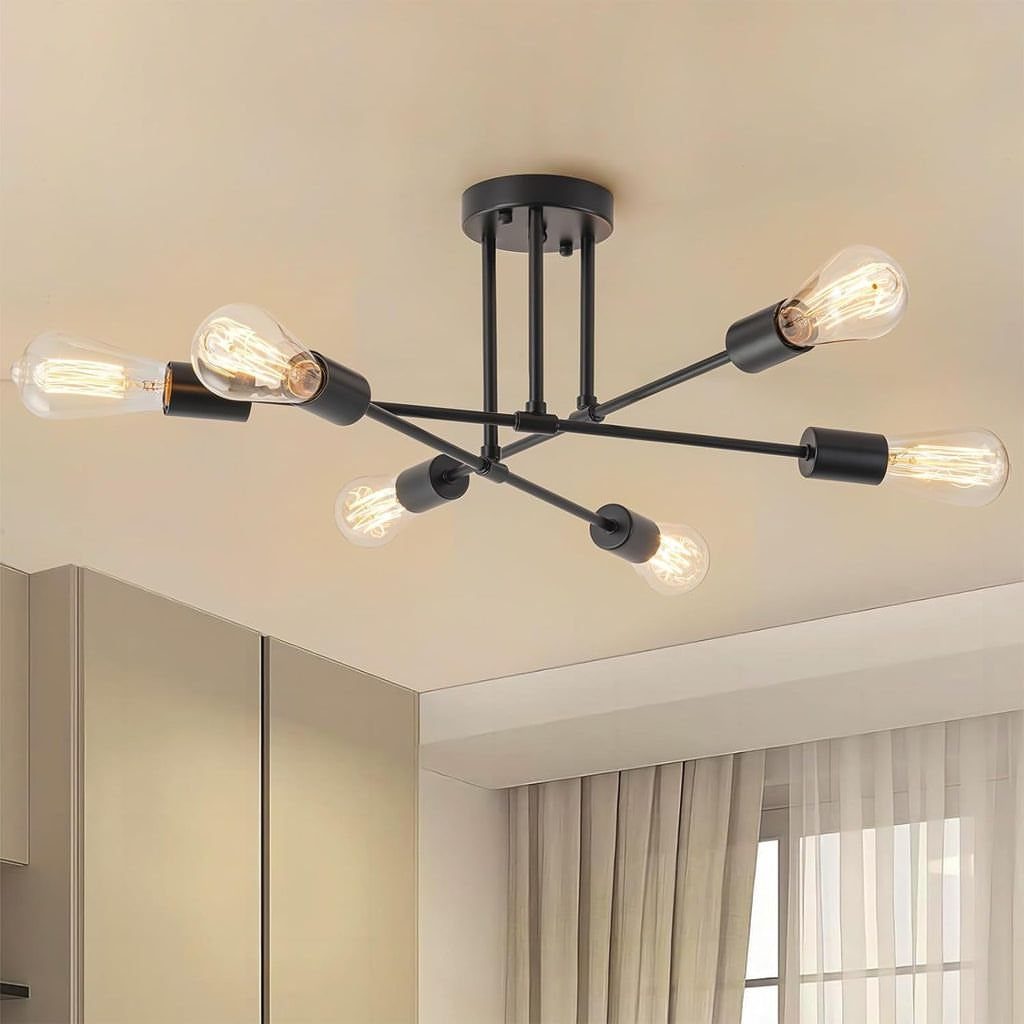
A semi-flush mount sits close to the ceiling, which makes it the practical pick for rooms with low ceilings where a hanging fixture would crowd your head.
Six exposed Edison bulbs in a black metal frame give plenty of ambient light without a shade to soften it.
Bare filament bulbs can glare, so I’d choose warm, lower-output bulbs and put the fixture on a dimmer. Swapping a fixture is a one-evening job for most renters with permission, and the wiring stays the same.
2. Chandeliers
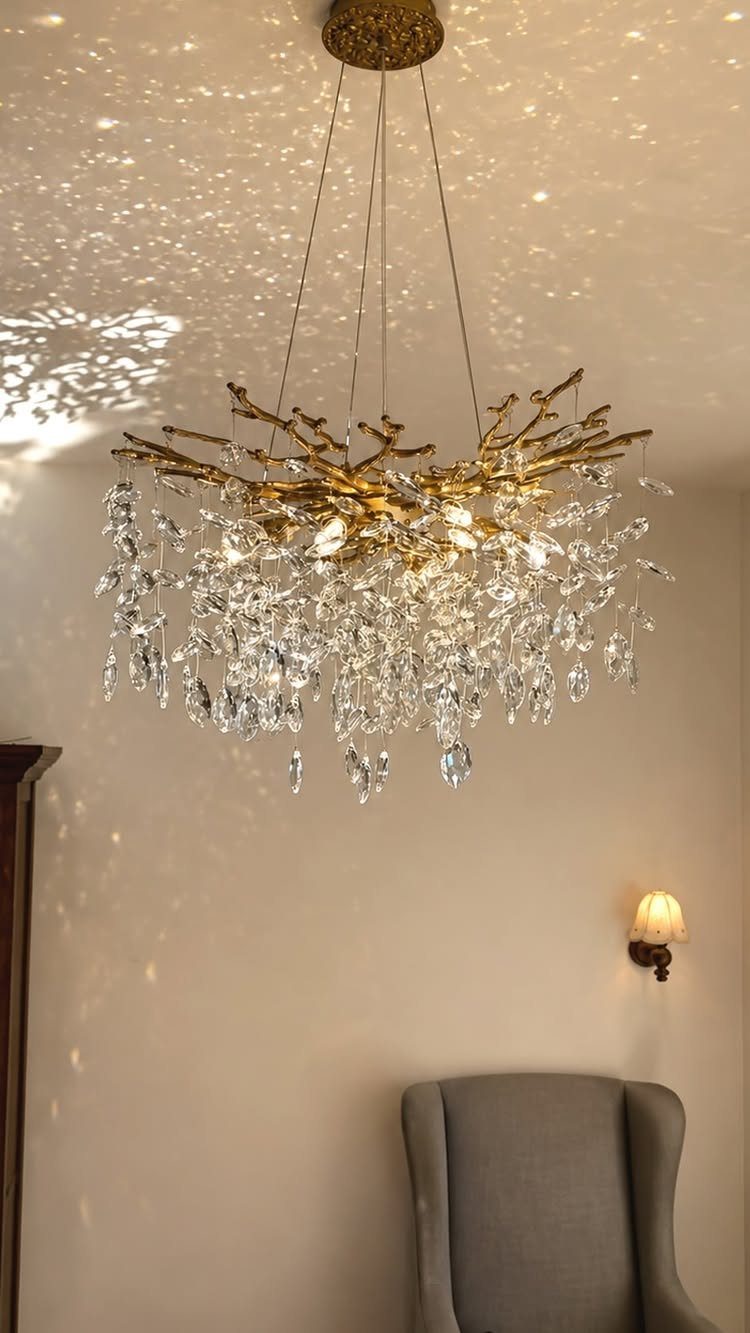
Gold branches hung with crystals turn a chandelier into the first thing anyone sees in a room, and that is the reason to buy one.
In a living room with neutral walls, a single fixture like this carries the decoration so the rest can stay quiet.
Pick a branch style over a tiered one if you want the look to stay modern, since the open frame feels lighter.
Hang it over the sofa and chairs, not the room’s center by default, and add a dimmer so the crystals sparkle without glaring.
One maker described a ceiling covered in star-shaped lights, a fun alternative if you want something bolder.
3. Floor Lamps
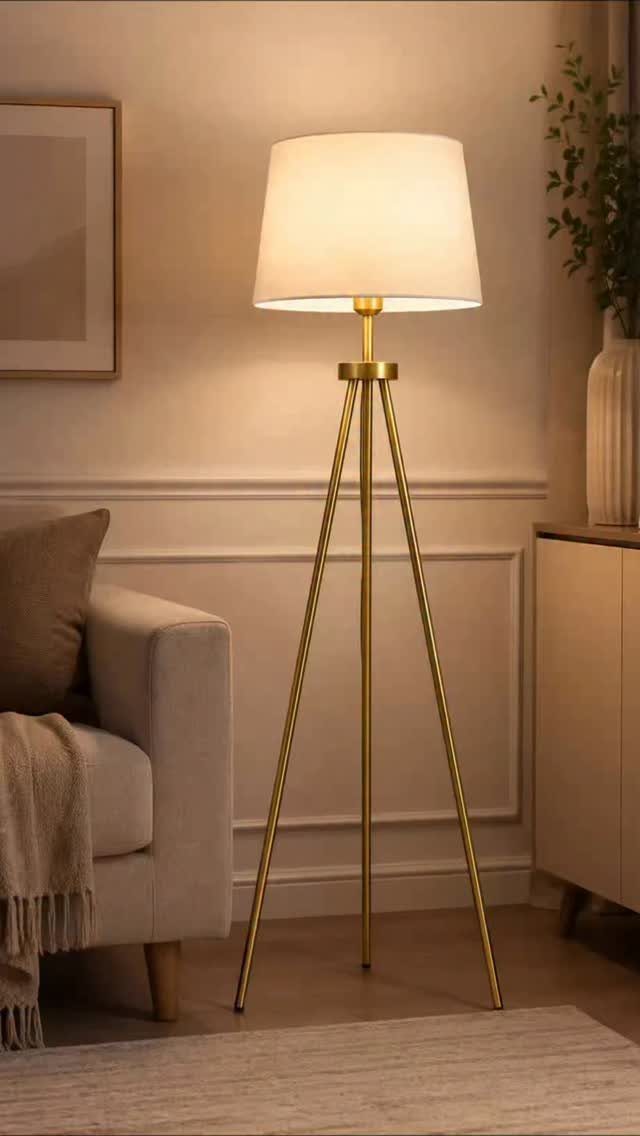
Reading corners are where a floor lamp earns its spot.
Set it beside the sofa arm so the bulb sits roughly at shoulder height when you are seated.
Gold legs warm up a beige sofa nicely. Tripods take more floor space than a single pole, so measure the corner first.
4. Table Lamps
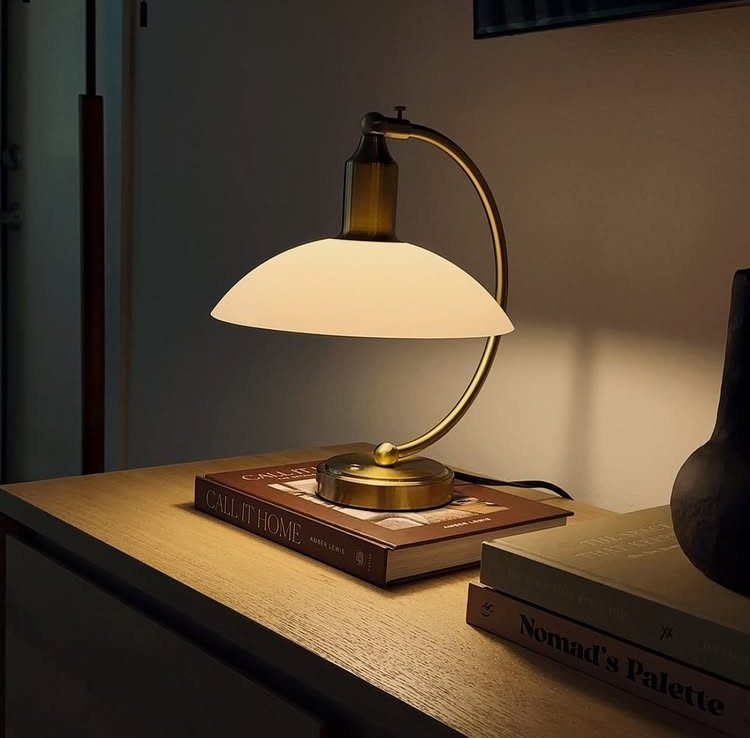
Stacked on a pair of books, a table lamp gets the extra height it needs to light a shelf or side table properly.
A white dome shade pushes light down onto the surface and keeps the glow warm in a dim room.
I like using a stack of art books as a riser, since it costs nothing and adds a layer of styling. Keep the shade bottom near eye level when seated, so the bulb never shines straight into your eyes.
5. Dimmers
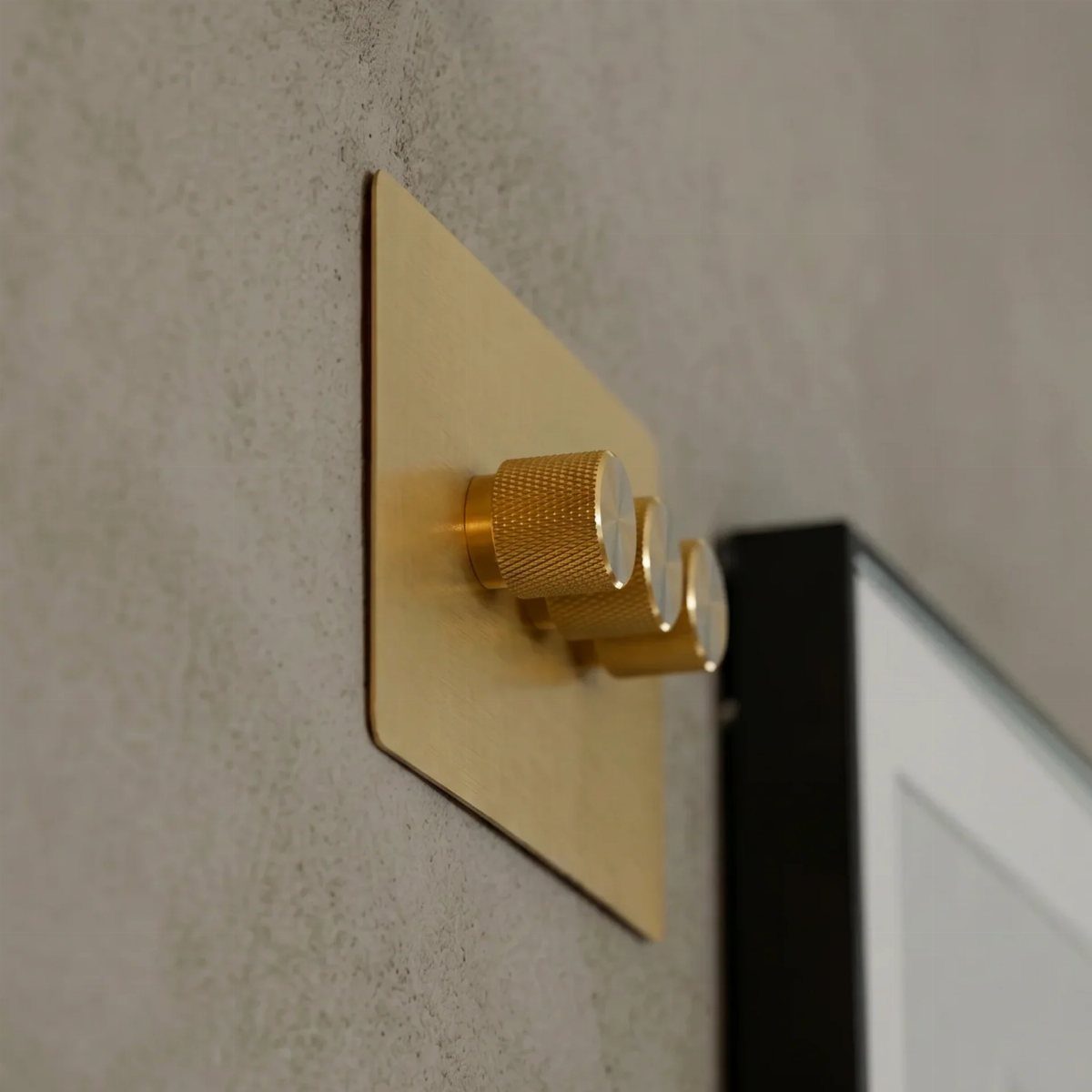
Three rotary knobs on one plate let you set three circuits separately, say overhead, lamp outlet and accent lights. Turning a knob is quicker to learn than a slider, and gold hardware reads as a design detail.
Check that your bulbs are labeled dimmable, or the lights will flicker or buzz. A switch swap is a reasonable weekend project, but turn off the breaker first, and ask your landlord if you rent.
6. Wall Sconces
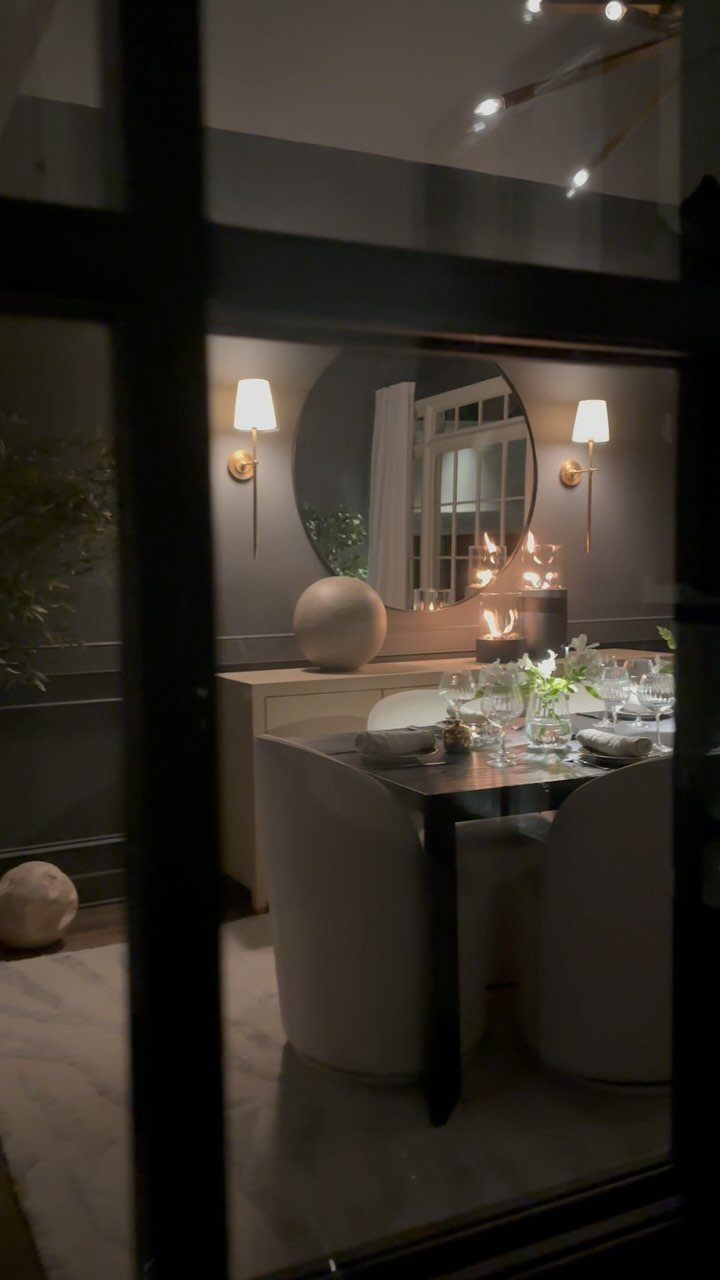
Flanking a round mirror, a pair of sconces frames the console below and frees up table space. White shades keep the light soft, and the mirror bounces it back into the room.
Hang each one at about the same height, level with each other, and center the pair on the mirror.
Hardwired sconces need an electrician, so renters should look at plug-in versions with a cord cover. A matching pair always looks more deliberate than a single one.
7. Pendant Lights
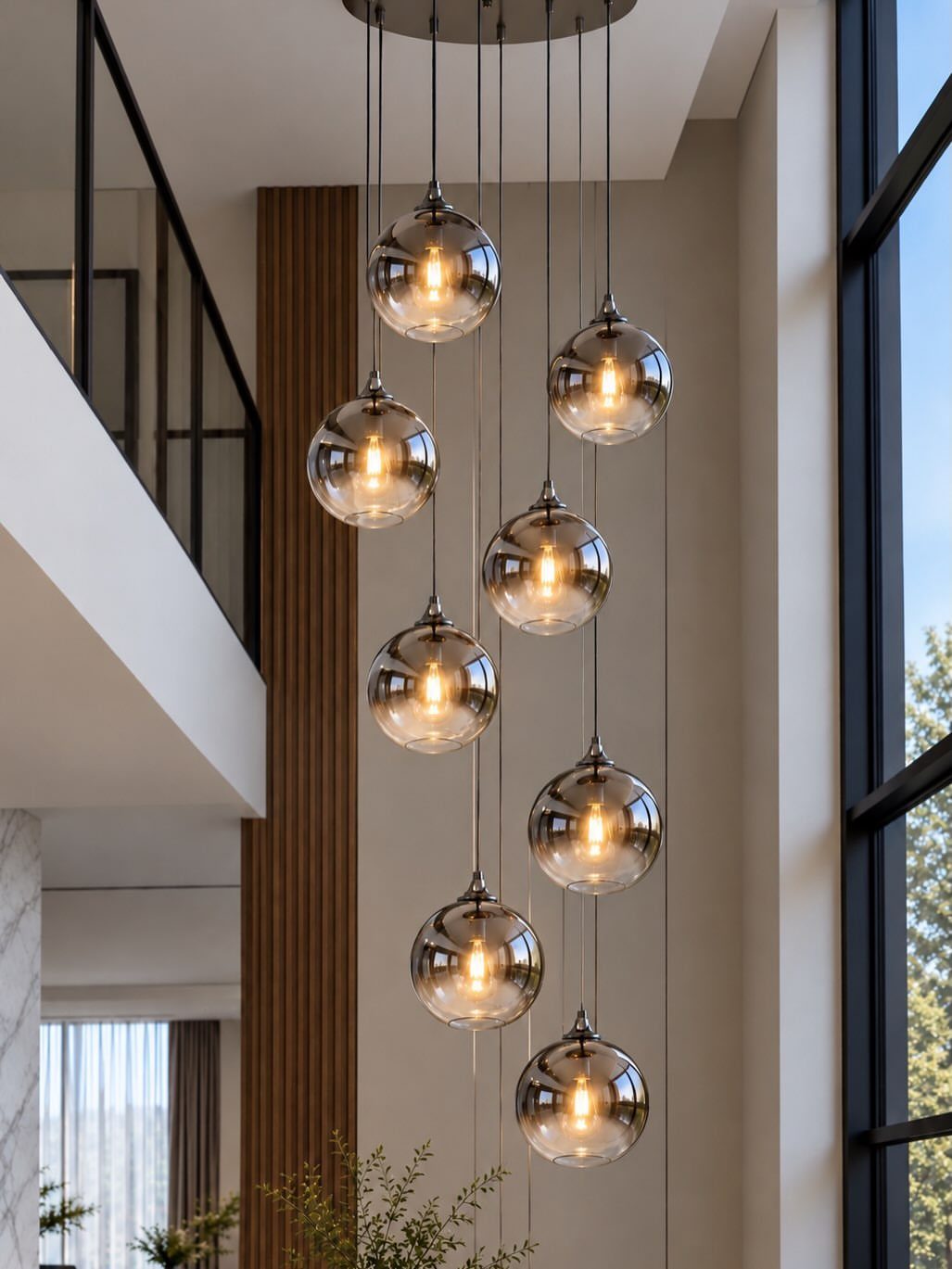
Hung at staggered heights, glass globe pendants fill a tall room with light at several levels, so the cluster works as both accent and task lighting. Clear glass keeps the fixture airy against a wood slat wall.
Vary the drops by several inches so the globes don’t line up like a row of ornaments.
Choose warm, dimmable bulbs, since clear glass shows the filament and can glare. Hardwiring a pendant means hiring an electrician, but renters can get a similar look from a plug-in pendant hung on a swag hook from the ceiling.
8. Candle Lighting
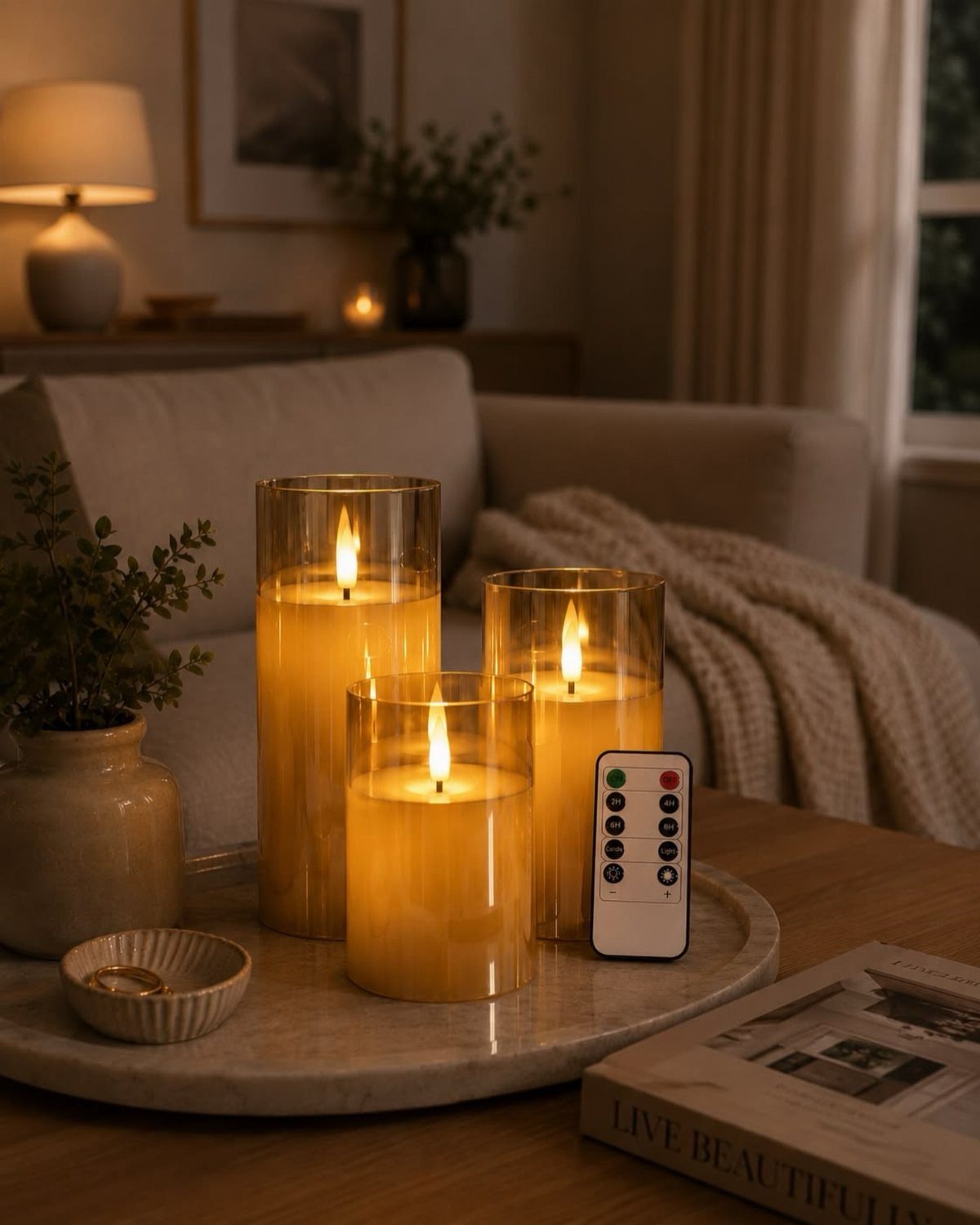
Grouping them in odd numbers on a tray keeps the arrangement tidy and easy to move.
LED versions suit renters and anyone with pets or kids, and a remote lets you switch them off from the sofa.
Pick a warm white flicker setting over cool white. A small plant and a book beside the tray finish the vignette.
9. Sculptural Lighting
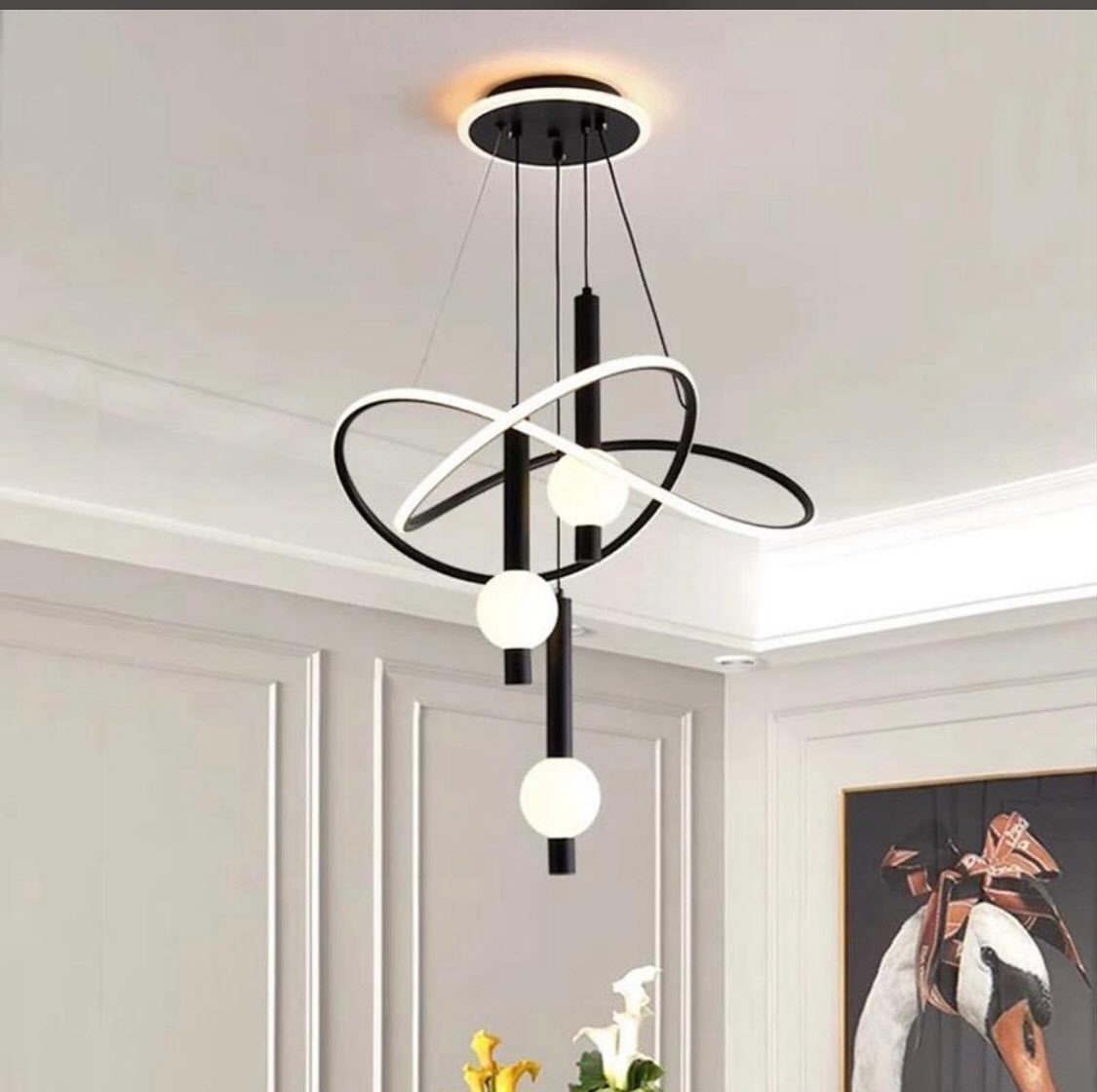
Against white paneled walls, black and white keeps the shape graphic and clean.
Give a piece like this room to breathe: skip crowded shelves nearby, and let it hang where the eye lands first.
Sculptural fixtures usually cost more than plain ones, so spend there and keep the other lights simple. Add a dimmer so the spheres glow softly at night.
10. Layered Lighting
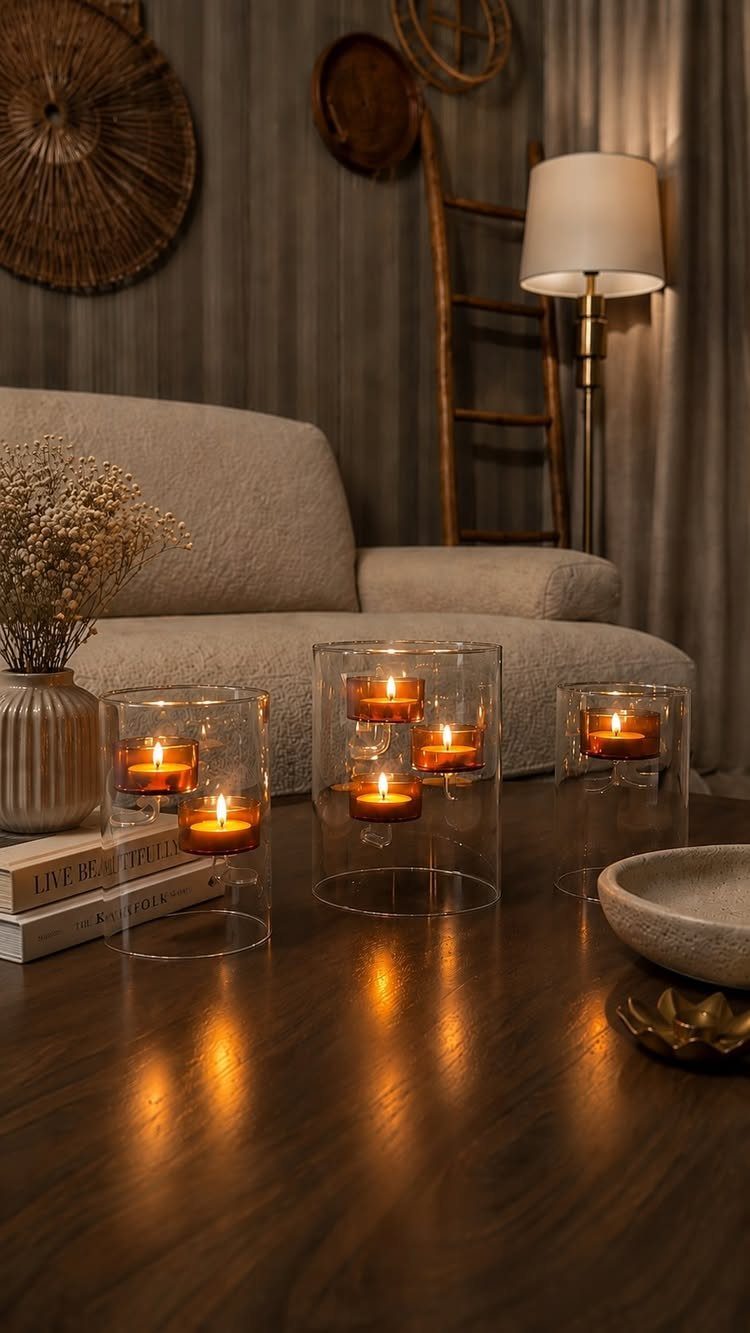
Pair a low light, like tea lights floating in glass cylinders on the coffee table, with a floor lamp beside the sofa, and the room gets light at 2 different heights. That pairing is layering at its simplest.
A lamp covers reading, and candles add low, warm accent light at table level.
Start with the lamp, then add candles at the end of the evening. Use flameless tea lights if you want to leave them unattended.
11. Natural Materials
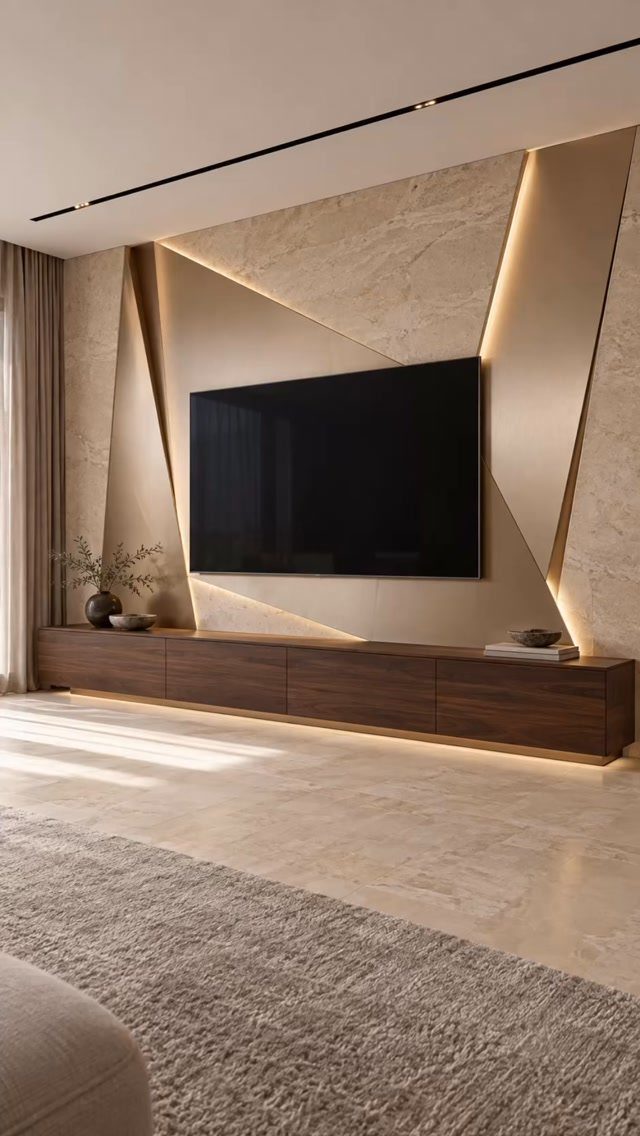
Stone behind the TV, a long wooden console below, and a neutral rug: natural materials soften a room full of screens and straight lines.
Warm LED strips set into a stone wall pick out its texture; choose 2700K so the stone stays warm instead of looking gray.
Rough stone catches light well, so aim the strips along the surface and keep the color warm.
Peel-and-stick stone panels give a similar look on a renter’s budget and a weekend timeline, though real stone costs far more. A wood console adds warmth even without a feature wall.
12. Minimalist Lighting
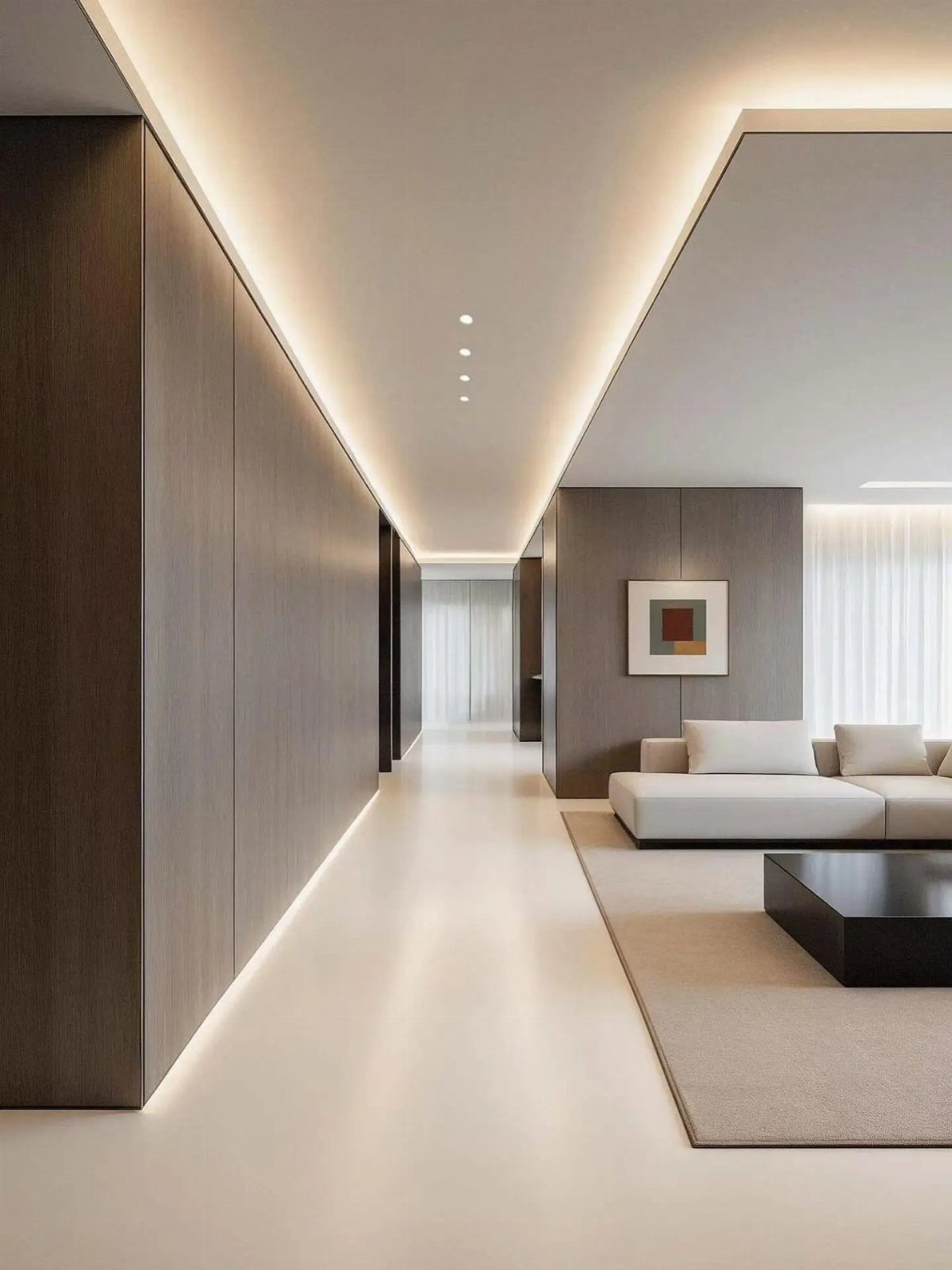
Tuck the light into the ceiling and floor edges and no fixture shows, only a soft wash along the wall. Pair it with a white sofa and black coffee table, and the room reads as calm and simple.
LED strips in a channel are the easiest version to try, and many are plug-in.
Choose a warm white and add a dimmer. Hidden light is gentle but not bright enough to read by, so keep one lamp nearby.
13. Recessed Cove Lighting
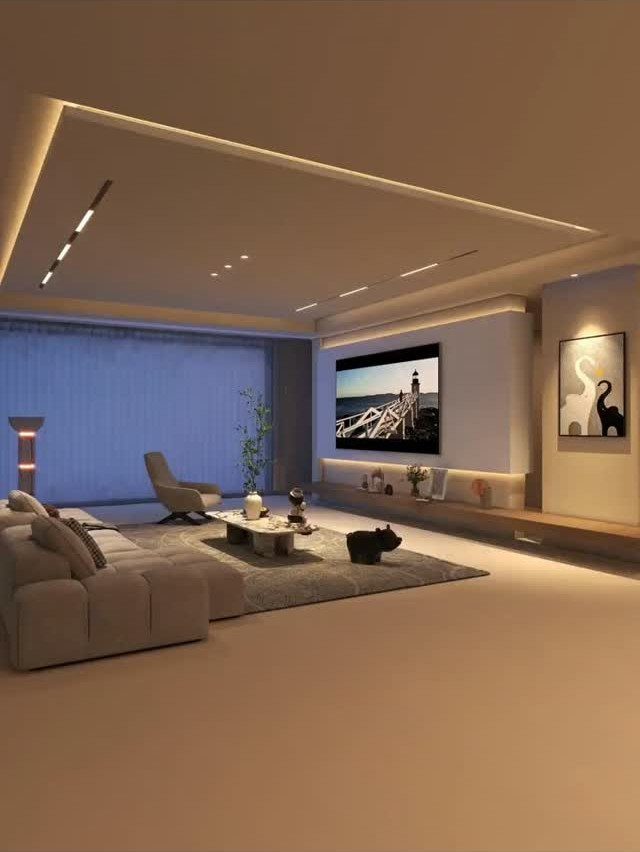
Hidden cove lighting washes the ceiling with an even glow, so the room gets brightness with no fixture in view.
Linear strips add a second line of light, and that suits a wall-mounted TV: a glow behind the screen softens the contrast between a bright picture and a dark wall, which is easier on the eyes at night.
Pick a warm white, around 2700K–3000K, and wire the cove to its own dimmer so you can set it separately from the other lights.
Built-in recessed channels mean ceiling work, so renters should look at plug-in strips tucked into a ledge or crown molding. Keep a lamp nearby for reading.
14. Fiber Optic Starry Ceiling
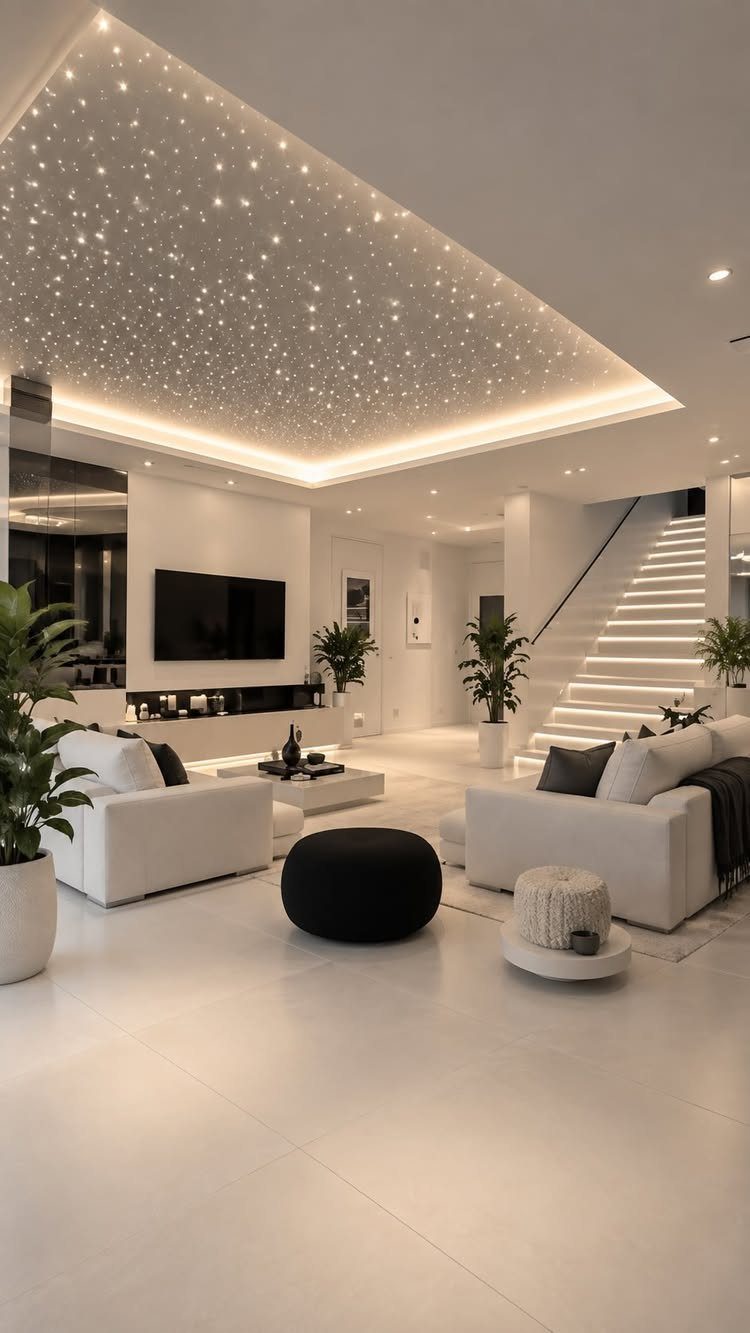
Tiny fiber optic points scattered across a white ceiling read as a night sky, and the effect is strongest when the rest of the room stays plain.
A starry ceiling is a build project, not a weekend swap.
Hidden in a recessed ceiling, it needs planning before the ceiling is finished, so it suits owners more than renters. Put it on a dimmer so the glow feels calm, and run it alongside ordinary lamps for everyday use.
15. Picture Spotlights
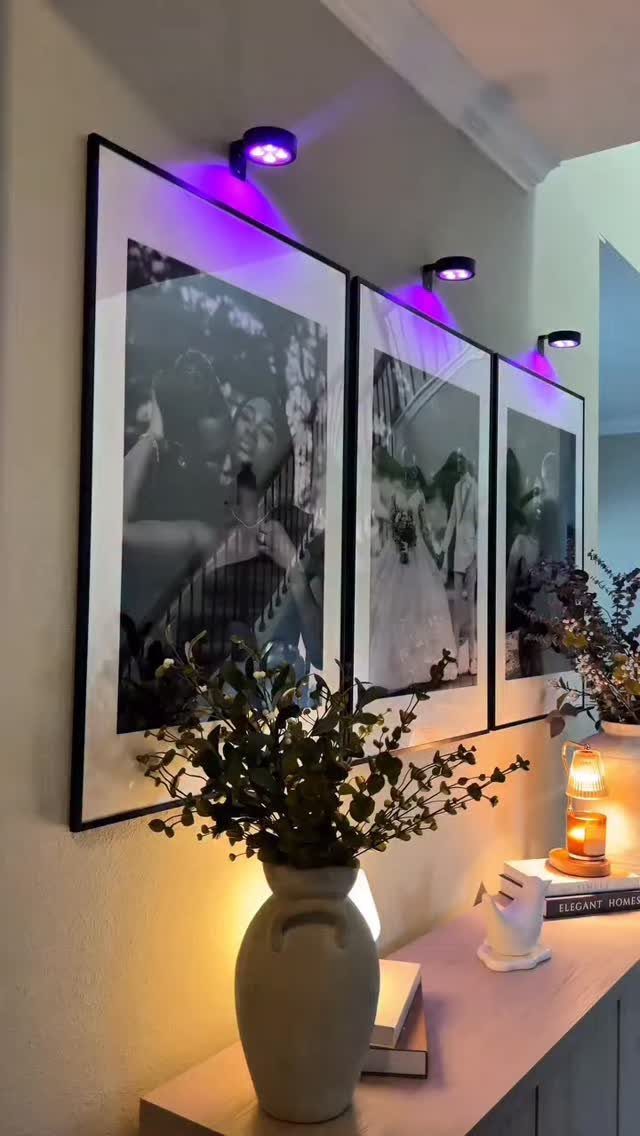
Small spotlights above framed prints make each one glow against the wall and turn a plain row of photos into a gallery.
Three matching frames in black and white keep the group tidy, and one light per frame keeps the pools of light distinct.
Aim each spotlight at the center of its print so the light doesn’t wash out the edges. Plug-in or battery versions work for renters.
Importance of Lighting
Start with how the room gets used. A living room that handles TV nights, reading and guests needs softer, ambient light as its base, and brighter, more direct light only where a task demands it.
A fixture that looks right but sits in the wrong spot or runs too large will fail the room in daily use.
LED lighting also uses less energy and lasts longer than older bulbs, which matters when a living room lamp runs several hours every evening.
When it comes to designing a living room, the old saying rings true, lighting is everything. It sets the mood, defines the space, and has the transformative power to turn even the simplest seating arrangement into something cinematic.
Fixture Finish Matching
Pick the metals already in the room, such as cabinet pulls, curtain rods and picture frames, and choose fixtures that echo at least one of them.
Matte black, brushed brass and natural wood each read differently, so choose by what the room already has.
Mixing metals is fine, and I’d encourage it. An iron chandelier paired with bronze floor lamps feels collected, not like everything came from the same catalog page.
Repetition helps a long room: a pair of bold fixtures of the same style, even in a modern shape, ties the space together.
Smart Lighting Options
Smart bulbs are the easiest upgrade for a renter. Screw them into lamps you already own, and you can control brightness and color temperature from an app or by voice, set schedules, and adjust the lights when you’re away.
Philips Hue, LIFX and Wyze are the popular names. Wyze is the one I’d check first if budget is tight.
Variety in the lamp itself also helps. A fixed sconce or ceiling fixture lights one spot, while a lamp with multiple arms and bulbs gives you control over where the light goes.
Frequently Asked Questions
What are the latest trends in living room lighting?
Layering light at different heights is the main one: a floor lamp for reading, low candles or tea lights at table level, and a dimmer on the overhead.
Mixing metals is also popular, such as an iron chandelier with bronze floor lamps, and so are hidden cove or strip lights that wash a wall or ceiling with no fixture in view.
Each of these gives a room softer, more flexible light than a single ceiling fixture.
What color temperature is best for modern living room lighting?
I stick with 2700K to 3000K, the warm white range that reads as actual light instead of the blue-white glow of an office. It keeps materials like stone and wood looking warm instead of gray, and it suits evening relaxing.
Add a dimmer so you can lower the brightness at night, and check that the bulbs are labeled dimmable to avoid flicker or buzzing.





