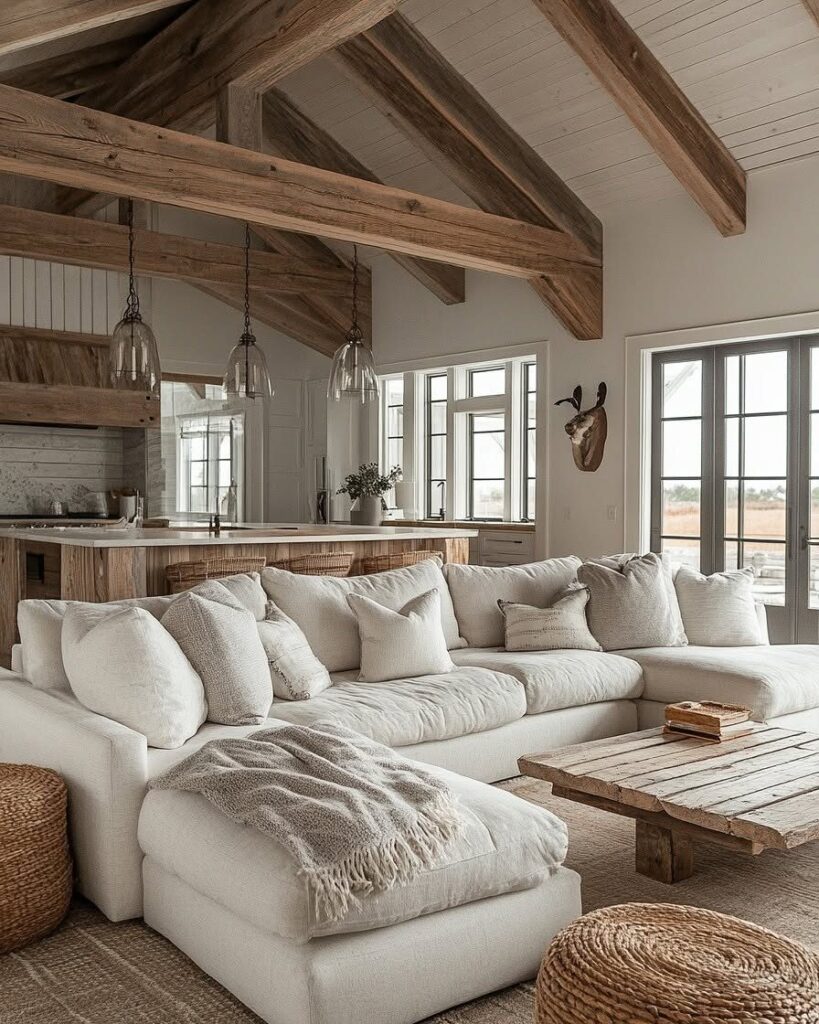
A lease rules out exposed beams, stone fireplaces and brick archways, while an owner can add reclaimed shelves or hang an antler chandelier.
The ideas run from a wooden accent wall and a chunky knit pouf to a stone-base live-edge table that needs help to move.
Weight is the other filter, so check the floor, studs and ceiling joists before you pick anything with stone, concrete or potted plants. A travel photo display is about as light as this gets.
1. Wooden Accent Walls
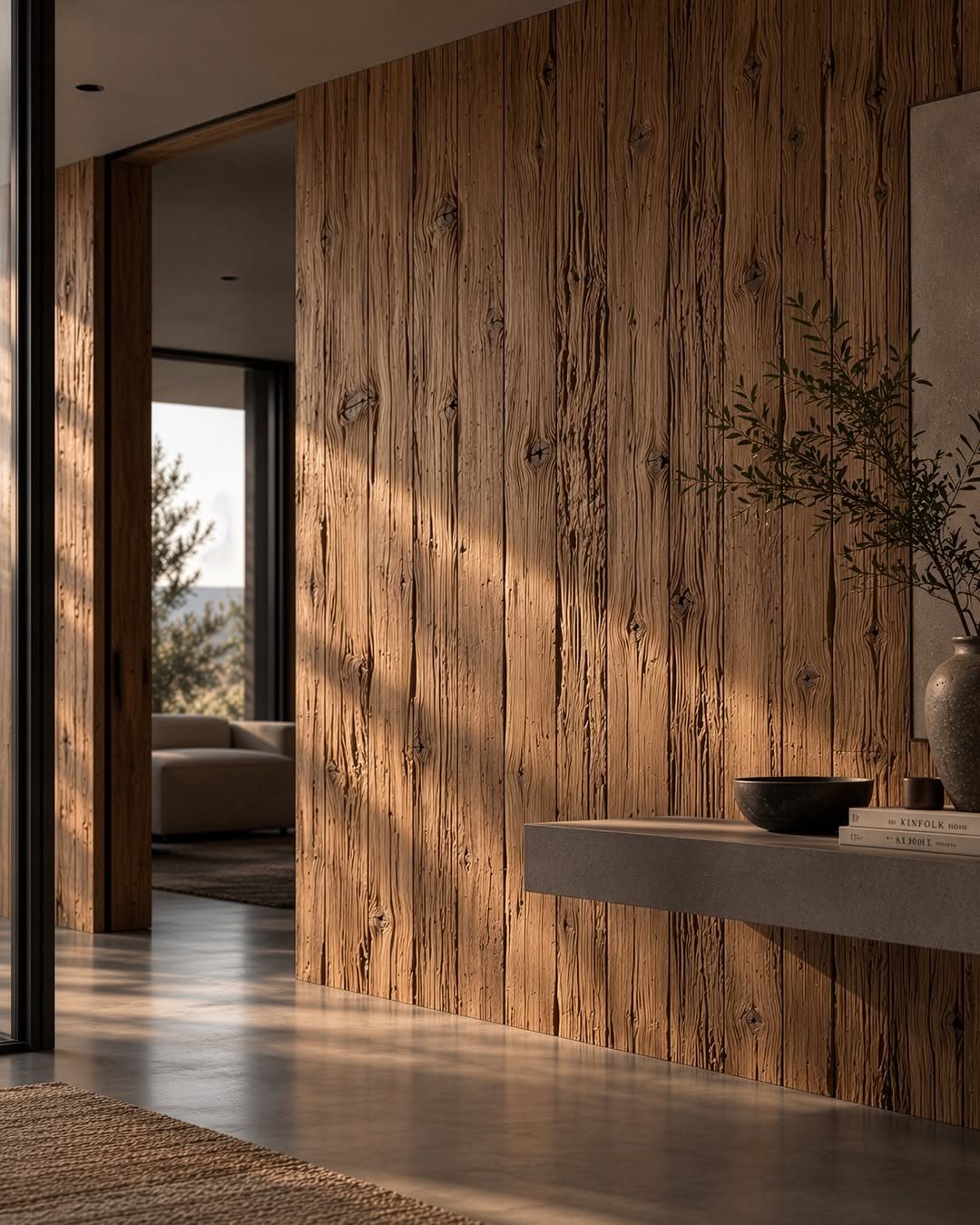
A single plank wall behind the sofa does more for a rental-sized room than any paint color. Running the boards vertically makes a standard ceiling read taller.
Keep the rest of the wall quiet.
Peel-and-stick planks are the gentler route on a budget and a lease. Real boards cost more but look deeper.
2. Reclaimed Wood Shelves
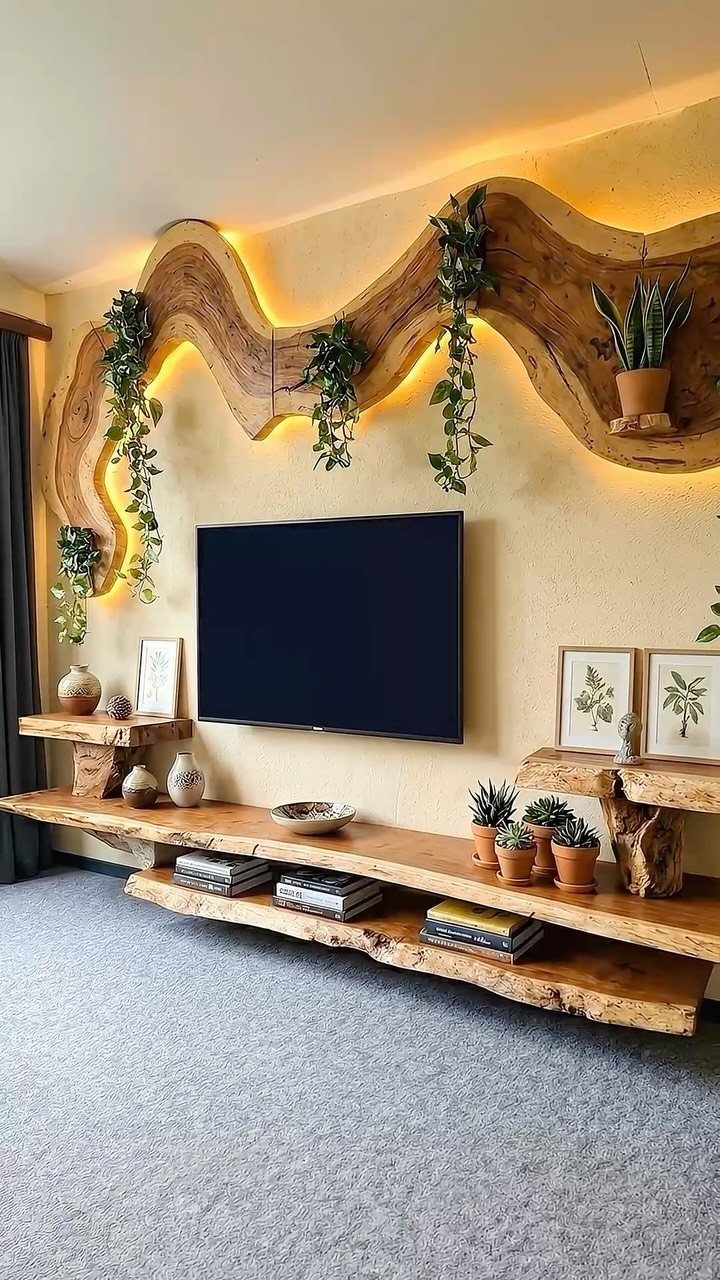
Shelving cut from one slab, with a wavy live-edge front, can double as a TV surround. Backlighting behind it softens the screen’s glare at night, and trailing plants hide the cable gap on top.
Pick a console in the same wood so the 2 read as a set. Mismatched tones next to a TV look accidental.
One fact from the maker: this panel is built from reclaimed wood, which gives each piece its own grain and color. Expect no two to match.
3. Stone Fireplaces
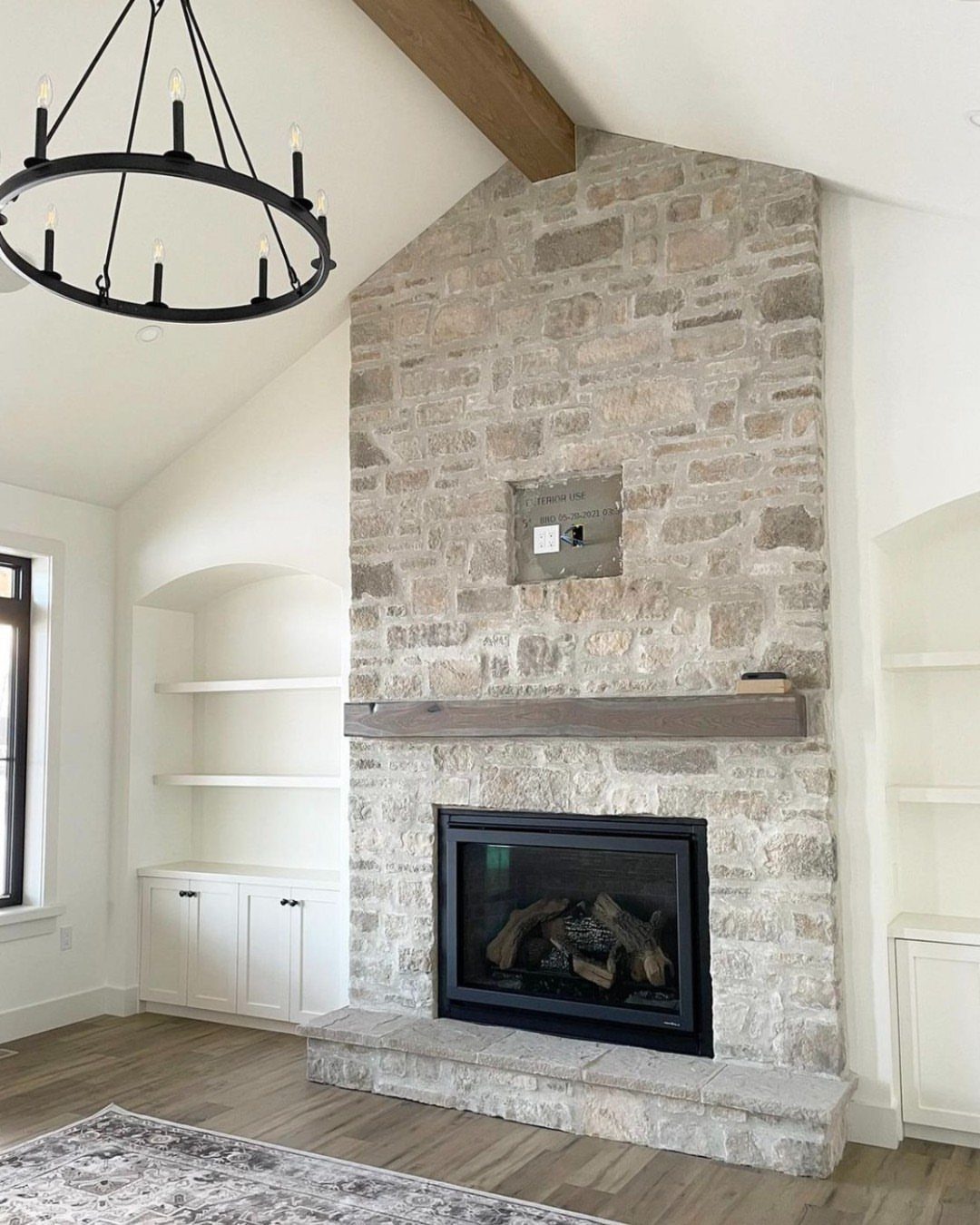
Stone running floor to ceiling gives a room a weight that drywall never will.
Most renters can’t build one, and I wouldn’t try without a mason. A faux stone panel or a freestanding black stove-style unit gets close for far less.
If you own the house and already have a plain fireplace, veneering the surround is the cheaper upgrade.
4. Natural Wood Furniture
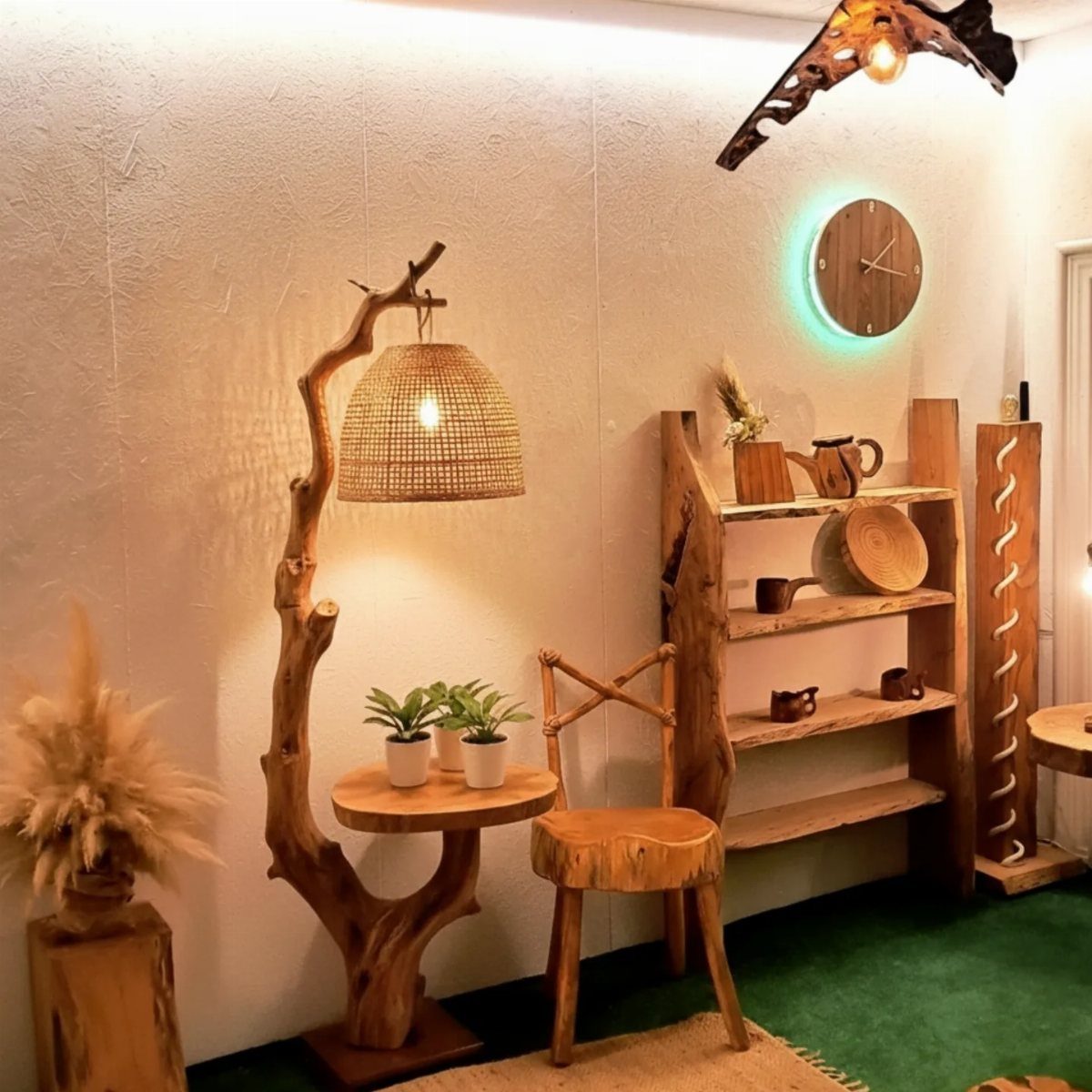
Furniture with organic shapes, like a branch-style lamp, a chair and a shelving unit that keep their natural edges, lets the room feel rustic without a single log wall.
Choose one piece that carries the room and keep the rest simple. Three heavily shaped items together start to look like a lodge.
Secondhand listings are the budget route, since solid wood furniture sands and refinishes well over a weekend. Match the wood tones within a shade or two.
5. Exposed Beams
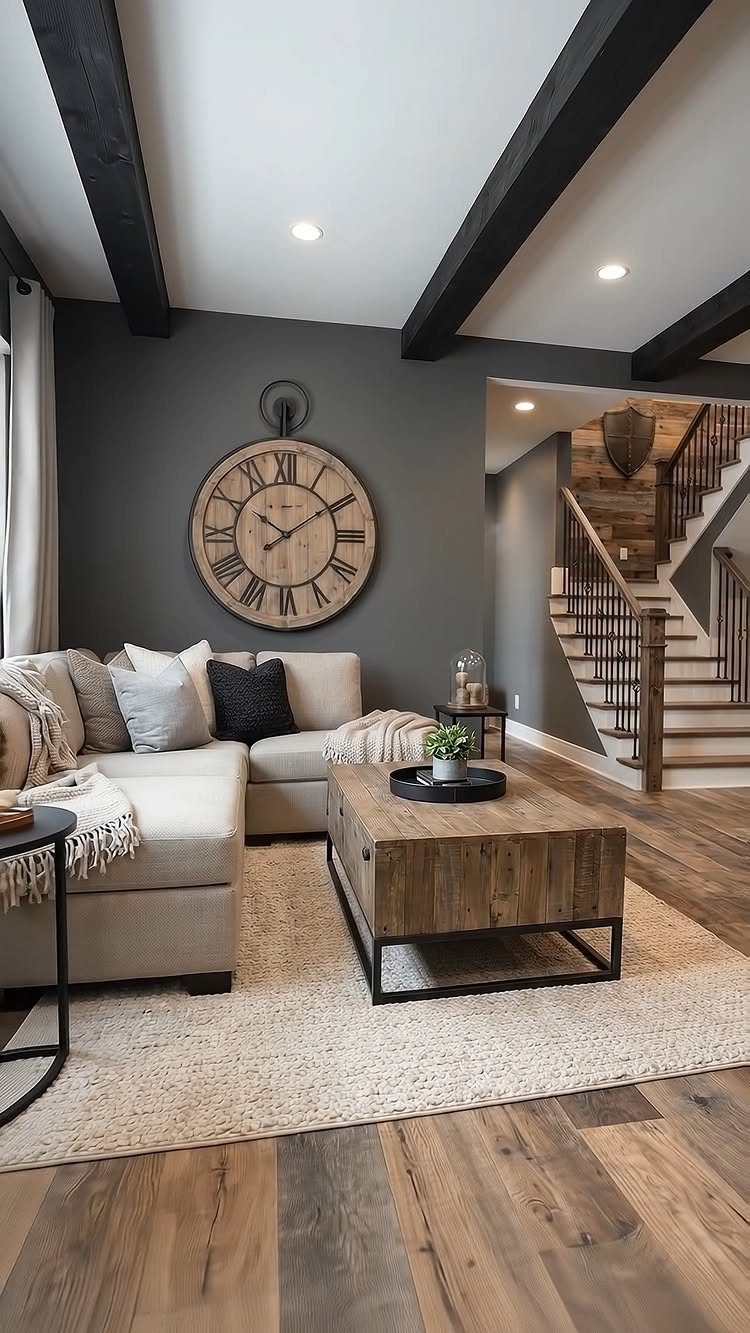
Dark beams make a ceiling feel built rather than painted. Black ones, as here, pair well with a light sectional and a pale wall, because the contrast does the styling for you.
If your ceiling has no real beams, hollow faux beams are the practical fix. They are lightweight, and you can stain or paint them to match.
Keep furniture low under them. A big wall clock and a modest coffee table leave the beams as the main event.
6. Woven Rugs
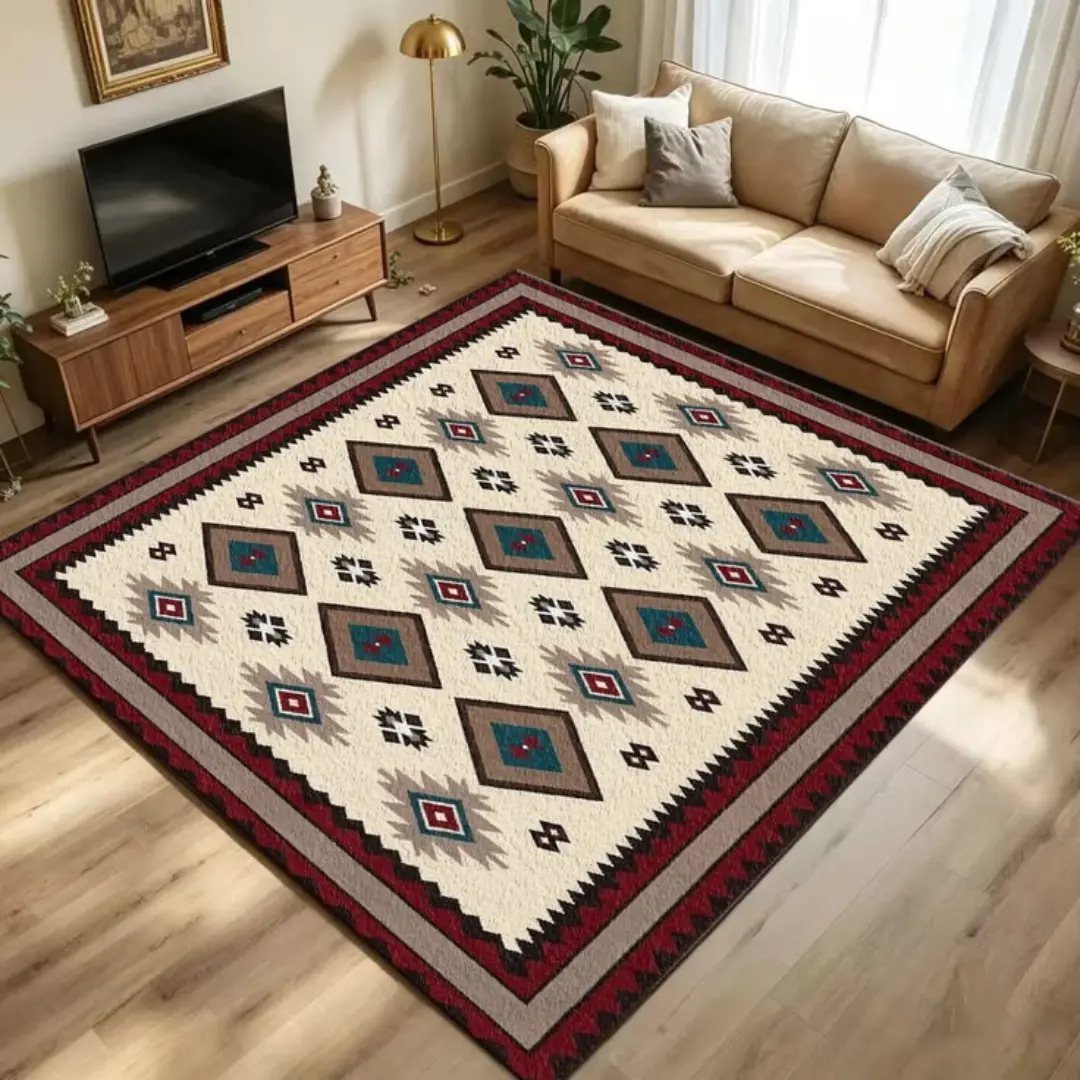
A geometric woven rug brings pattern and color to a room of plain wood and neutral upholstery. Red and cream on a light floor gives contrast without feeling busy.
Size matters more than the design. Aim for front sofa legs to sit on the rug, so the seating group looks anchored rather than floating.
Flat-woven styles lie better under a coffee table than thick piles. Add a rug pad underneath so the edges don’t curl.
7. Vintage Finds
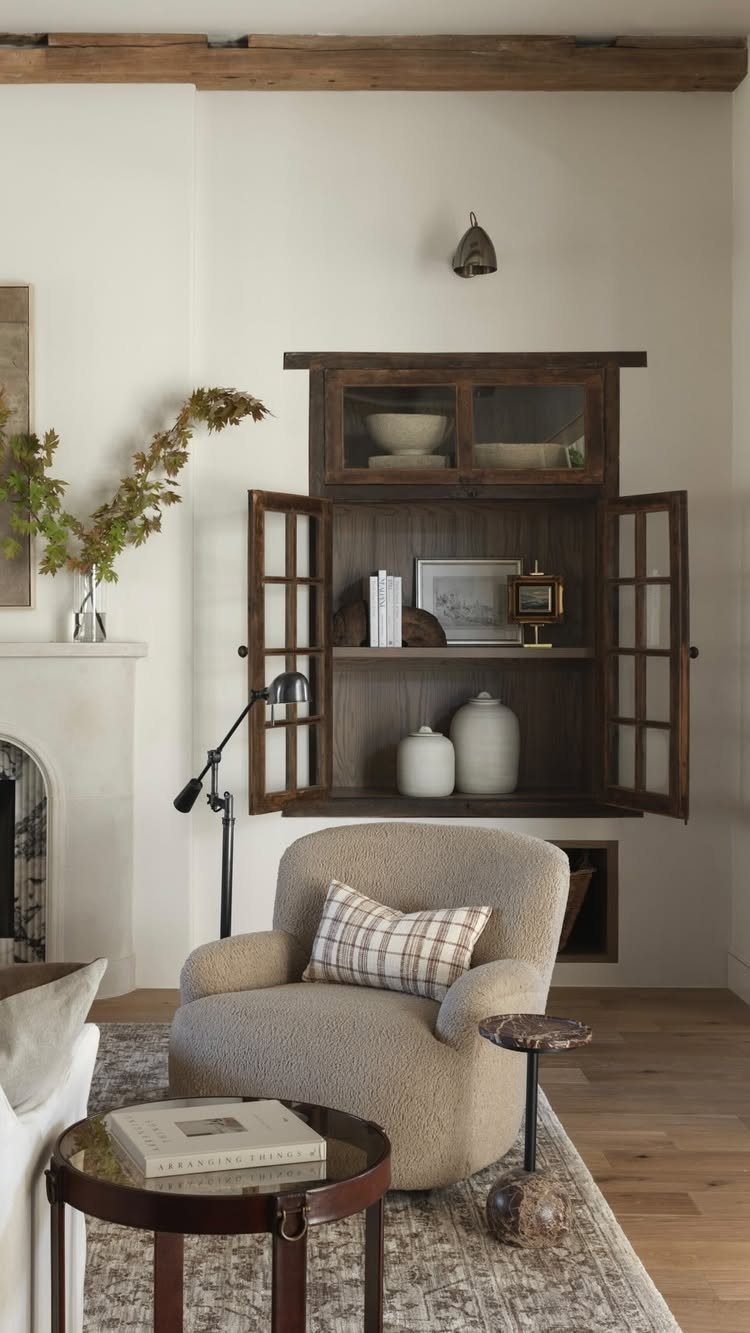
A single old cabinet in dark wood gives a room a history that new furniture can’t fake. Here it sits against a pale wall beside a beige bouclé chair, and the soft texture and heavy grain balance each other.
Secondhand listings and thrift stores are the budget route. Look for solid wood and sturdy drawers, then leave the patina alone.
One vintage piece is enough. Let the rest of the room stay plain around it.
8. Decorative Wood Ladder
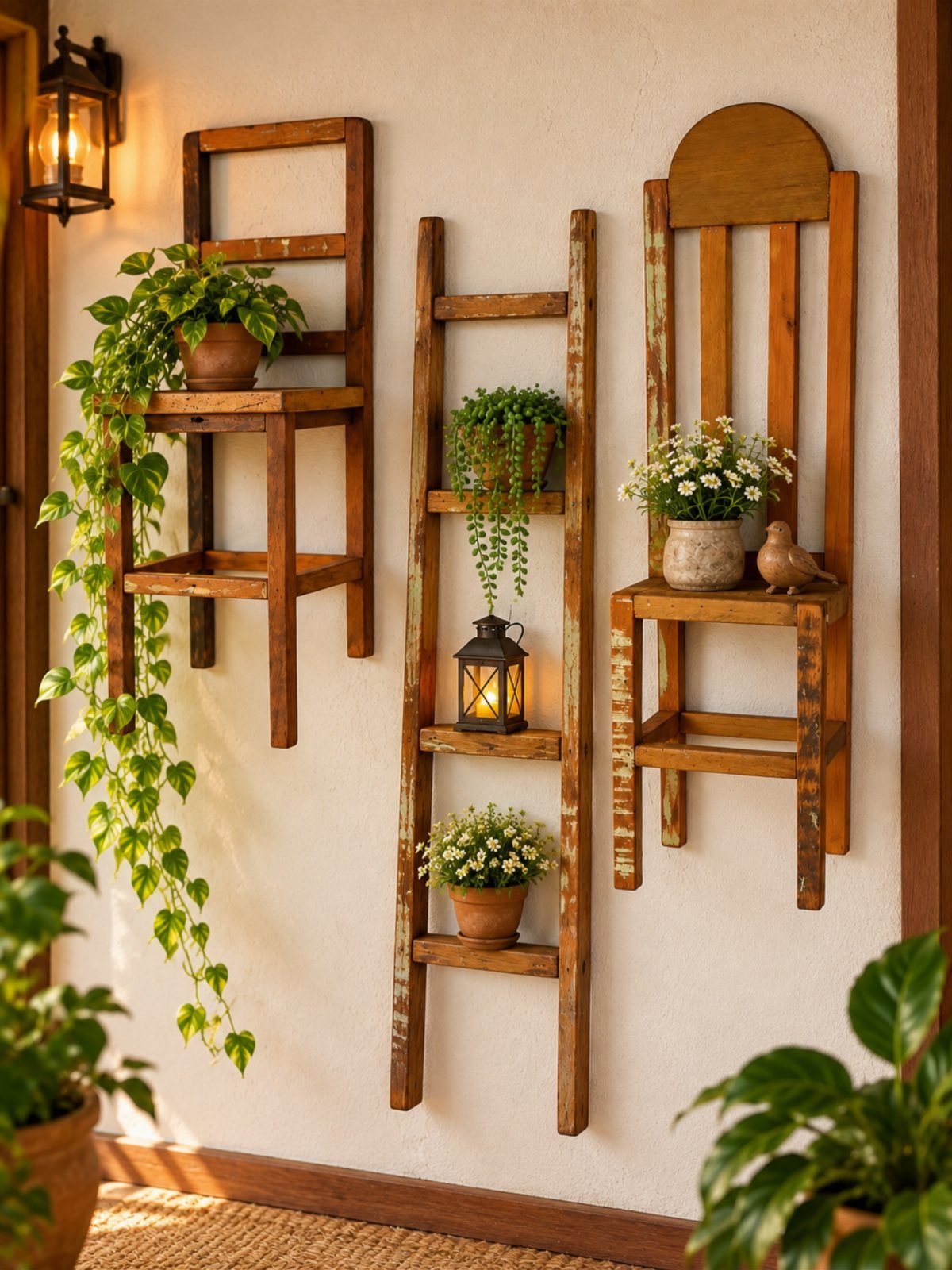
Ladder-style shelves lean on the practical side of rustic: they hold plants and a small lantern without a bulky bookcase. Mount three in a row on a light wall and they read as one unit instead of scattered accents.
Hang them level, and anchor into studs or use wall anchors rated for the weight of potted plants. Wet soil adds up fast.
Keep the wall around them bare. Lanterns and small pots look best with room to breathe.
9. Industrial Lighting
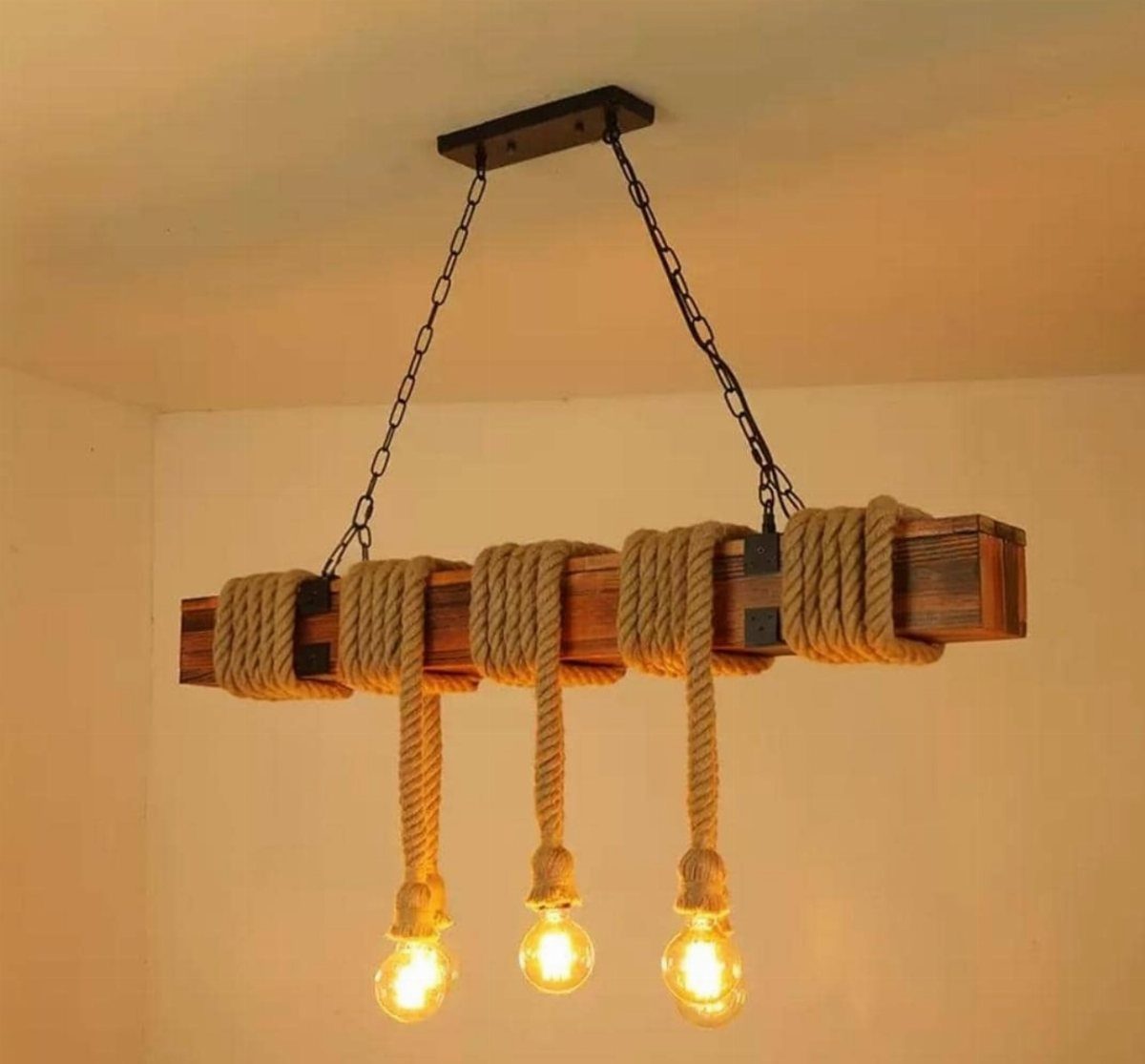
The raw wood softens the industrial edge, and I prefer that mix to all-metal versions.
Hang it where it reads as a focal point, not in a corner.
Warm, low-wattage filament bulbs keep the glow cozy.
10. Driftwood Decor
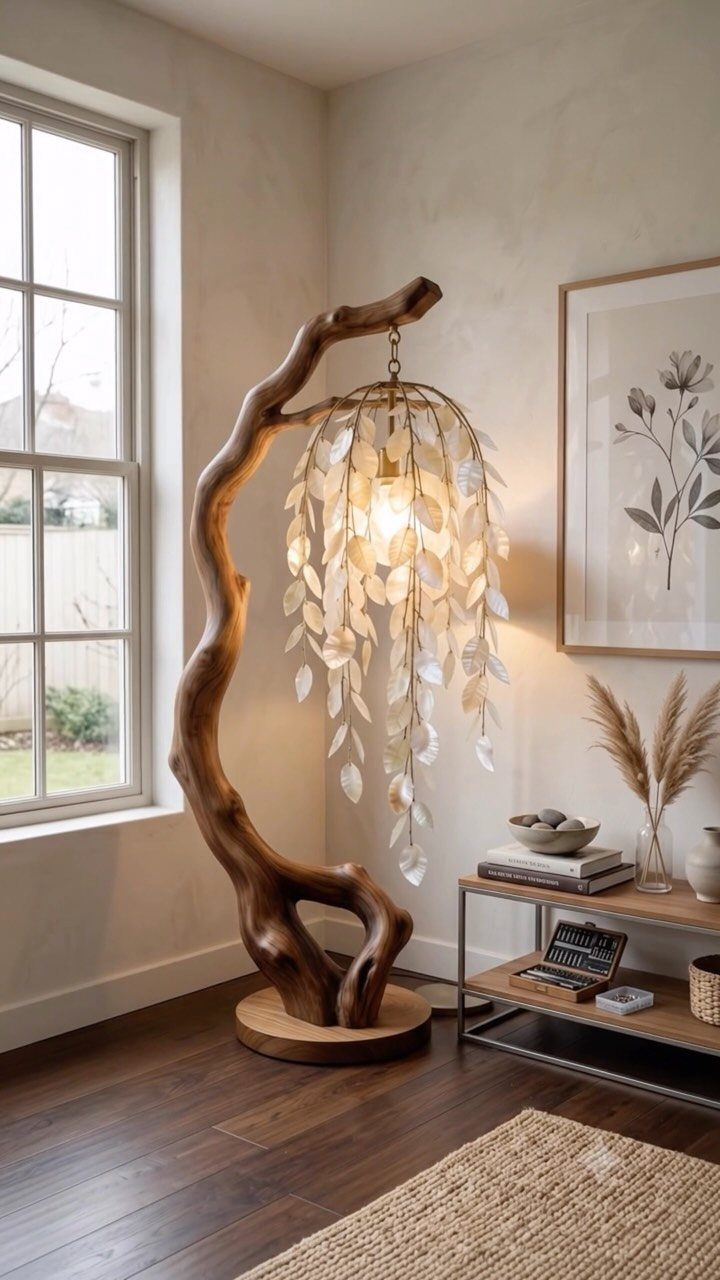
A curved driftwood lamp with hanging shell discs adds sculpture and light in one piece, and it takes up almost no table space. Because the wood bends, it works well in a corner beside a low bookshelf.
Place it where the curve has empty wall behind it. A framed botanical print nearby suits it.
Natural branch shapes vary, so judge the lamp’s balance in person before buying.
11. Oversized Windows
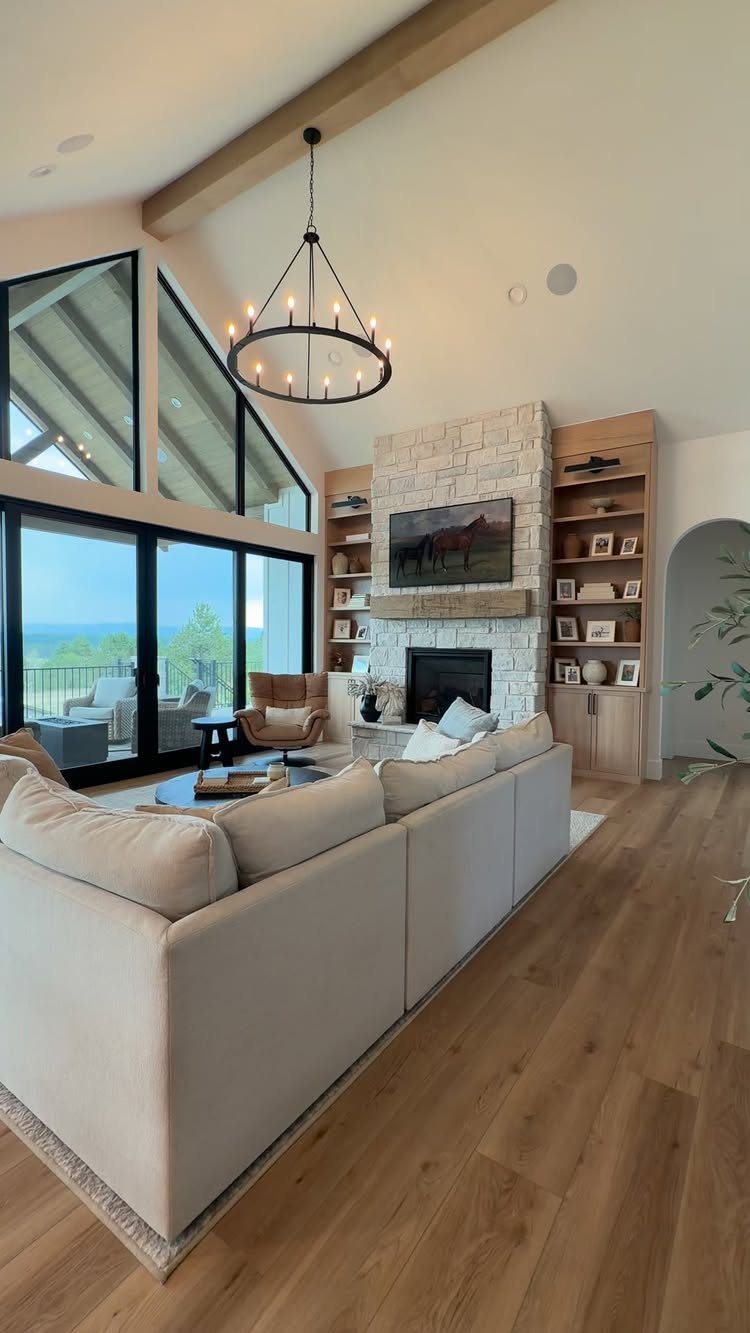
Big black-framed windows pull the outdoors into the room, so the view works as the decor. With a stone fireplace and a beige sectional inside, the greenery outside completes the palette.
Renters can’t swap windows, but they can get close. Keep curtains sheer or mounted wide so the glass stays clear, and skip heavy valances.
Arrange seating to face the view, not the TV.
12. Antler Chandeliers
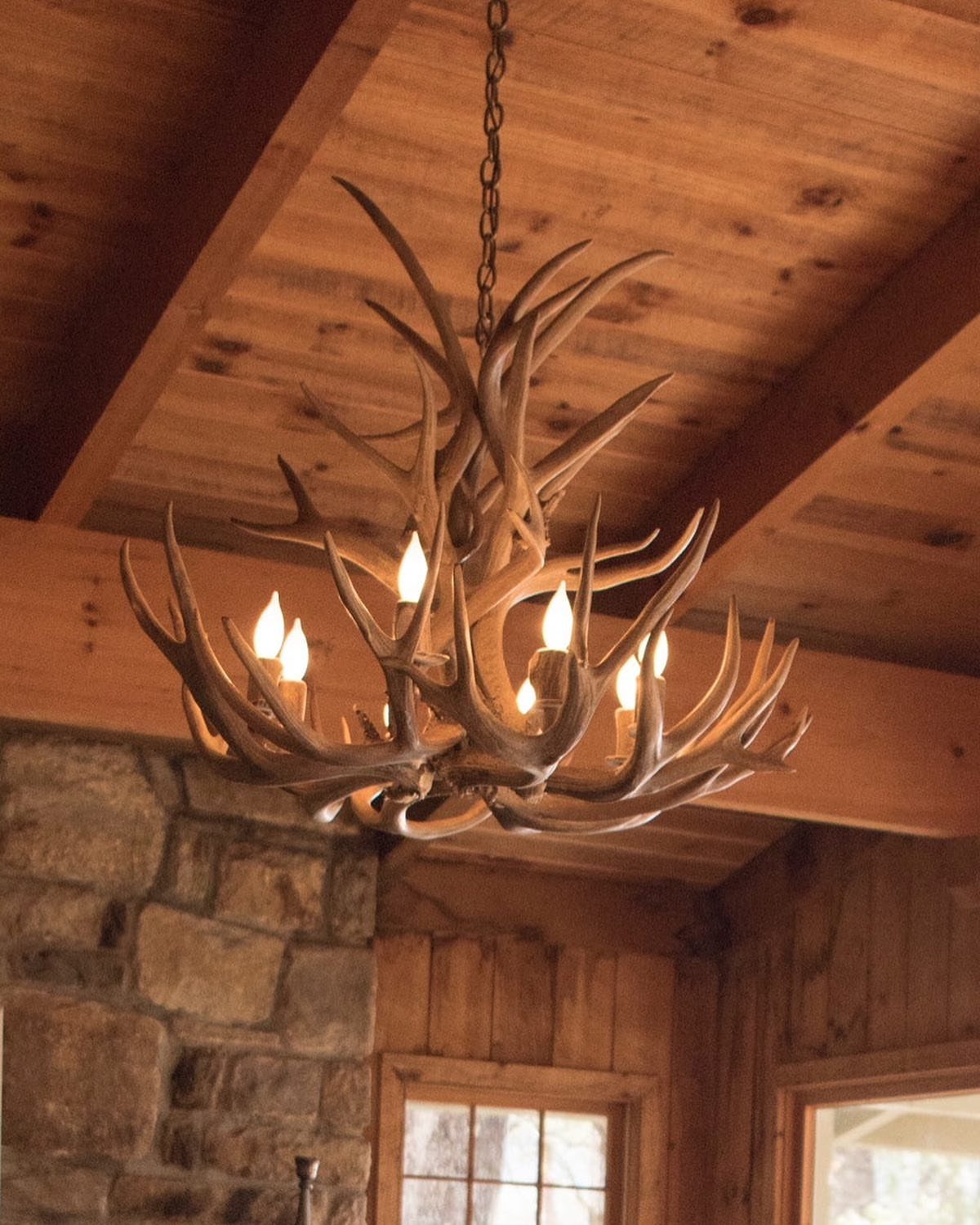
An antler chandelier is the loudest rustic move here, and I’d save it for a room big enough to carry it.
Faux resin versions cost less and weigh less, which matters for a ceiling mount. Choose one with warm bulbs.
Keep everything else under it simple.
13. Drum-Style Coffee Table
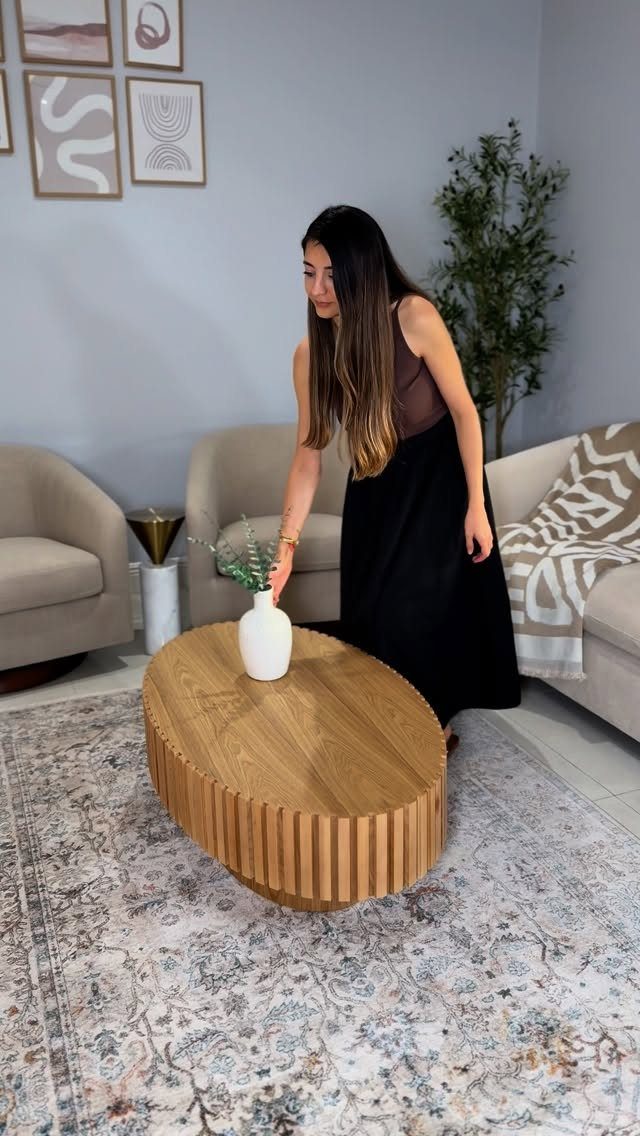
An oval coffee table with slatted sides softens a room full of straight lines, and there are no corners to catch a hip or a shin when you walk past the sofa.
That matters when the room itself is tight on square footage.
Choose a wood tone close to your floor so the fluting gets the attention. A low vase or a stack of books is plenty on top.
14. Travel Photo Display
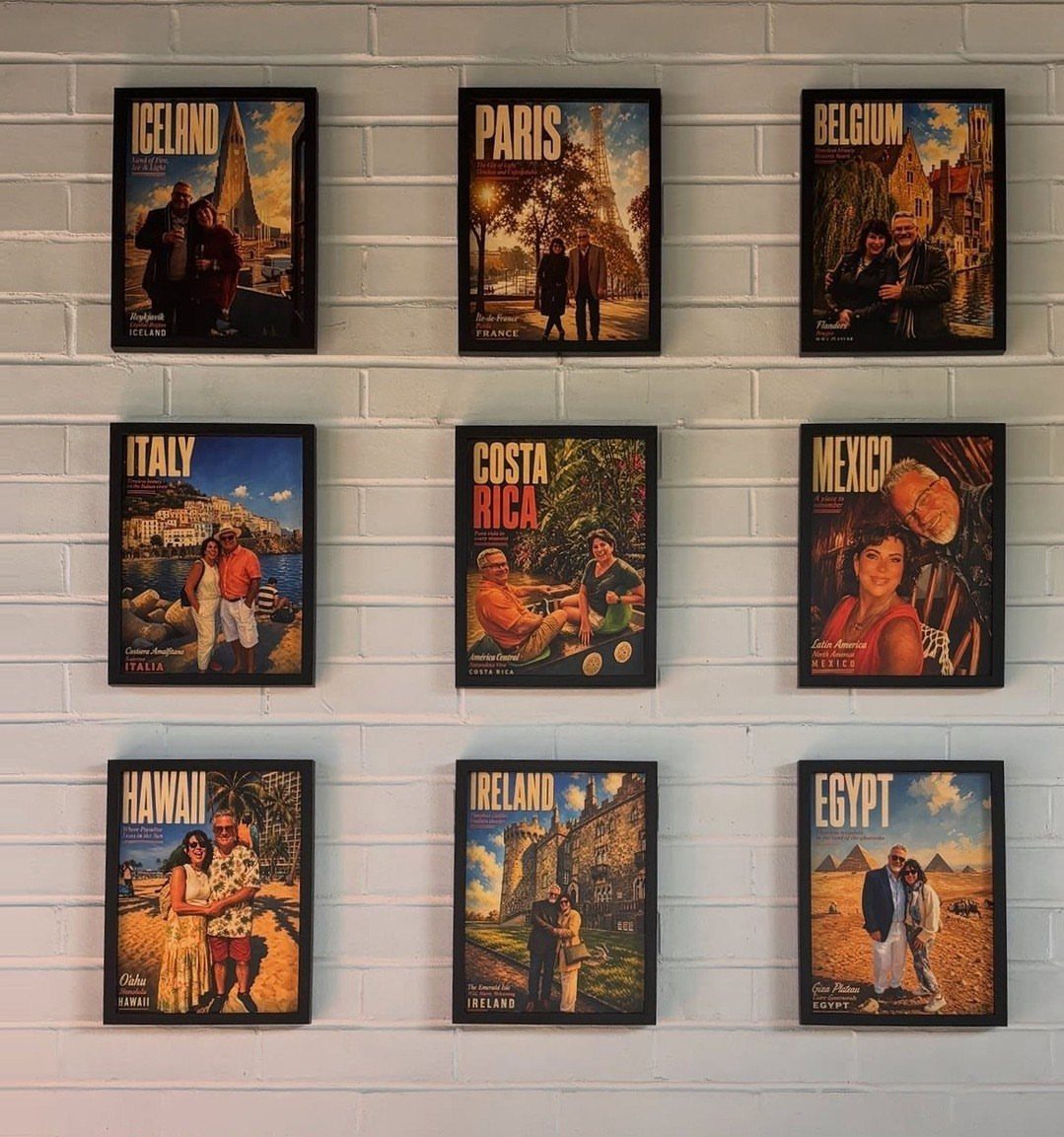
Nine matching frames on one wall turn vacation snapshots into a single piece of art. White painted brick keeps the grid calm, so the photos do the talking.
Print every photo at the same size, use identical frames, and lay the grid out on the floor before you drill.
Keep the gaps even. Renters can hang the frames from removable strips or small nails, whichever the lease allows.
15. Caramel Leather Sofa
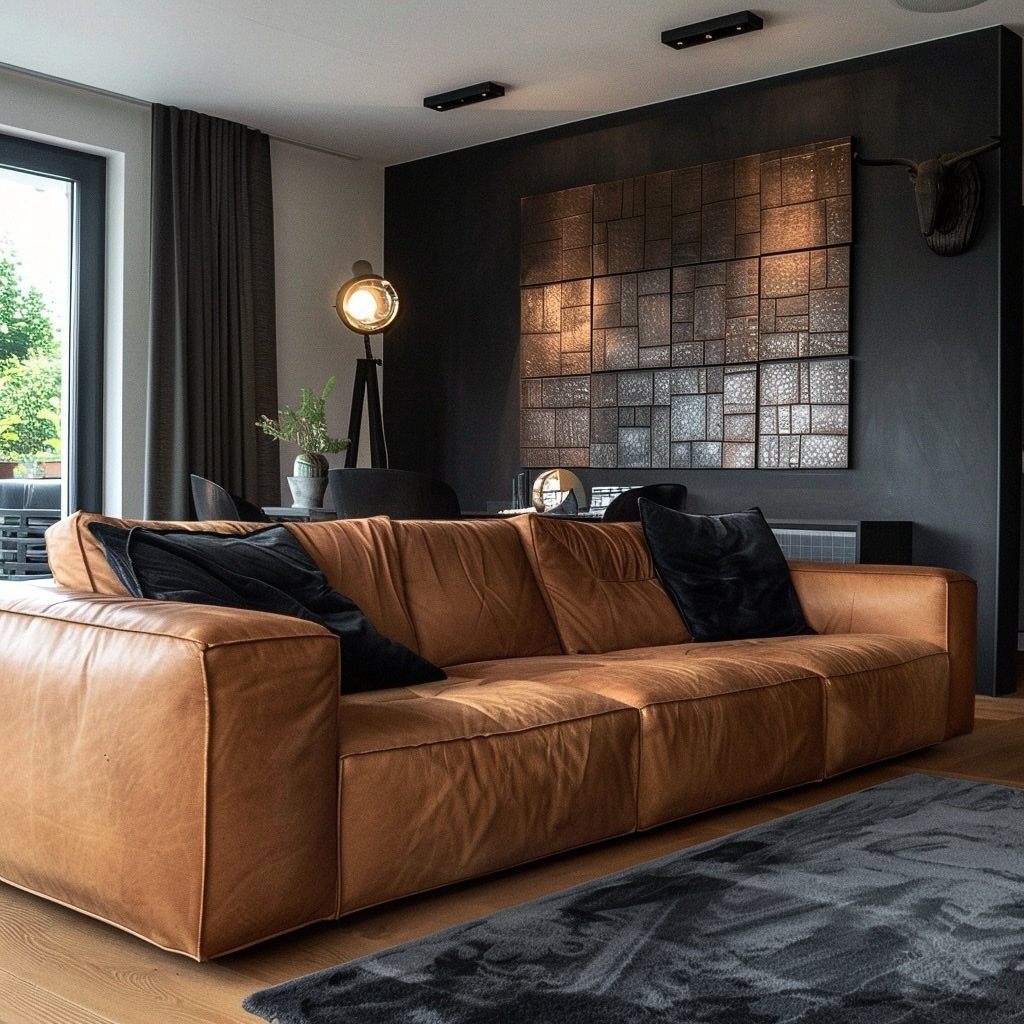
A caramel leather sofa is the piece I would spend the budget on, because it warms a dark wall and a dark rug without any other decoration. Black pillows, as here, sharpen it.
Soften the leather with a wool or linen throw so it feels inviting rather than stiff.
Hold the rest of the palette to two or three colors with the sofa carrying the lead.
16. Tall Plants
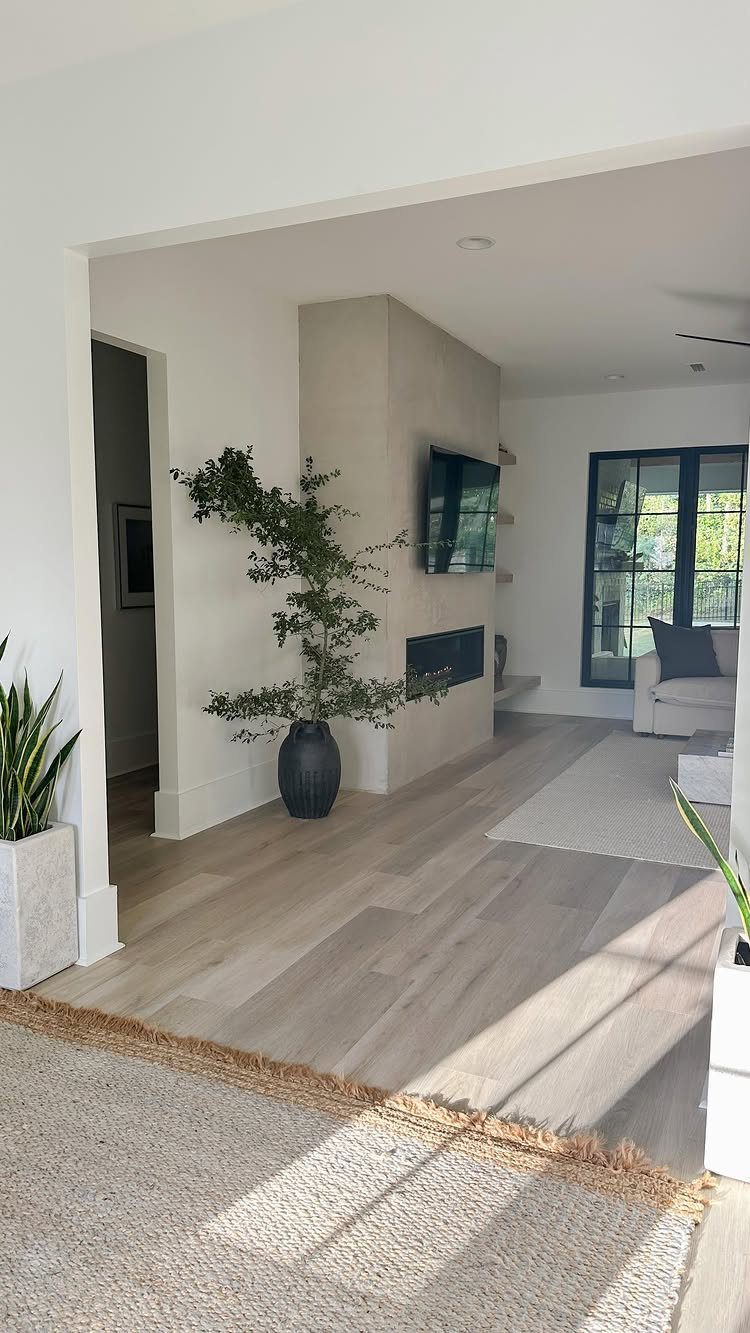
One tall plant in a black vase fills the empty corner beside a TV or fireplace wall, and the green stands out against concrete and white upholstery.
Pick a plant that suits the light in that spot before you pick the vase. A dark, heavy vase also keeps a tall plant from tipping.
One large plant beats three small ones here. The clean line stays intact.
17. Concrete and Wood Combinations
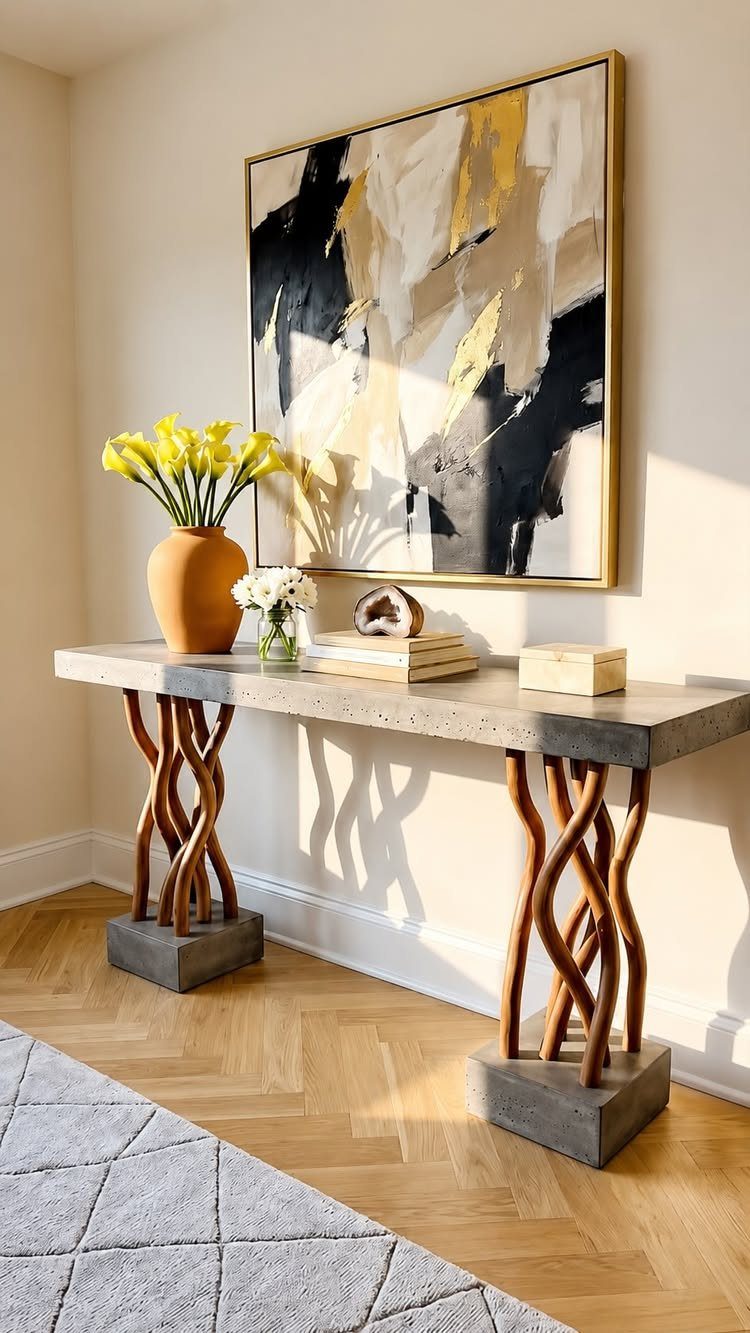
A concrete top on twisting wooden legs pairs cold, heavy material with warm, organic curves, and neither one wins.
Hang a large abstract painting above it, as here, and keep the tabletop decor to a few items. Concrete is heavy, so check that your floor and wall can take the weight.
18. Oversized Knit Poufs
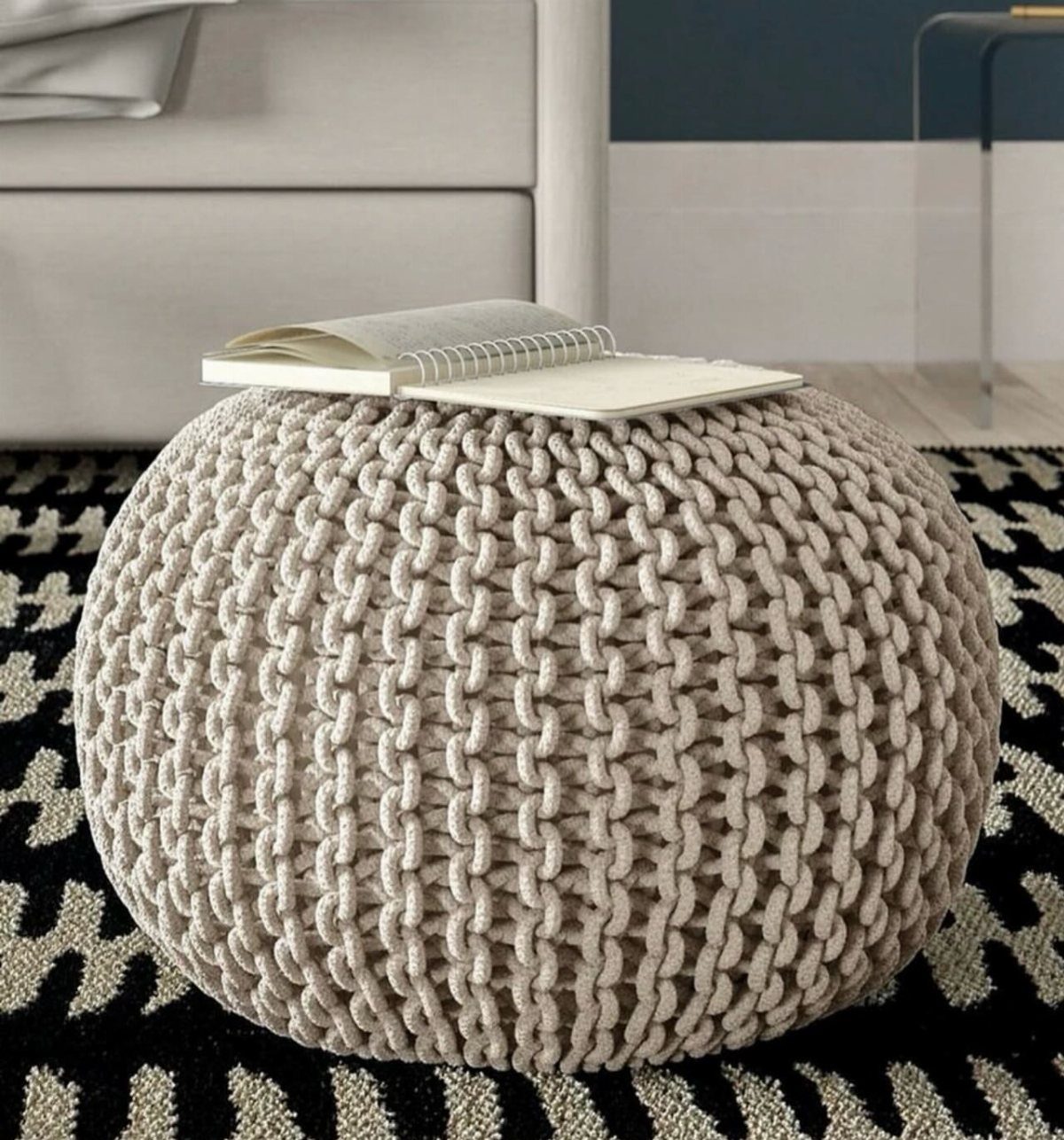
A chunky knit pouf works as a footrest, an extra seat, or a spot to set a notebook or a tray. Move it wherever the room needs it.
Beige knit sits well on a bold patterned rug, since the texture adds interest while the color stays quiet. Pick a firm fill that holds its shape when someone sits.
It costs far less than another chair, which makes it an easy weekend upgrade.
19. Live-Edge Stone-Base Table
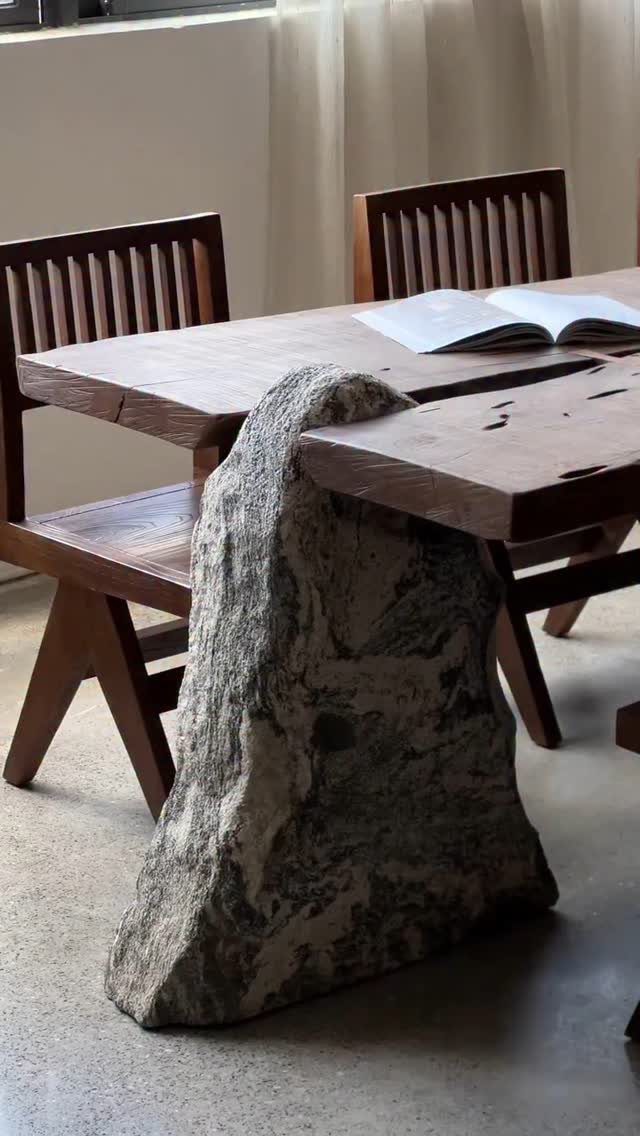
A slab of natural stone standing on its end as a table base gives a live-edge top a solid anchor, and the rough rock against the smooth wood is the whole design.
Pick a stone with a flat top edge so the wood sits level. Two plain wooden chairs, as here, keep the table the main piece.
Weight is the limit: stone and a thick slab are heavy, so check your floor and plan on help to move it.
20. Overhead Hanging Plant Shelves
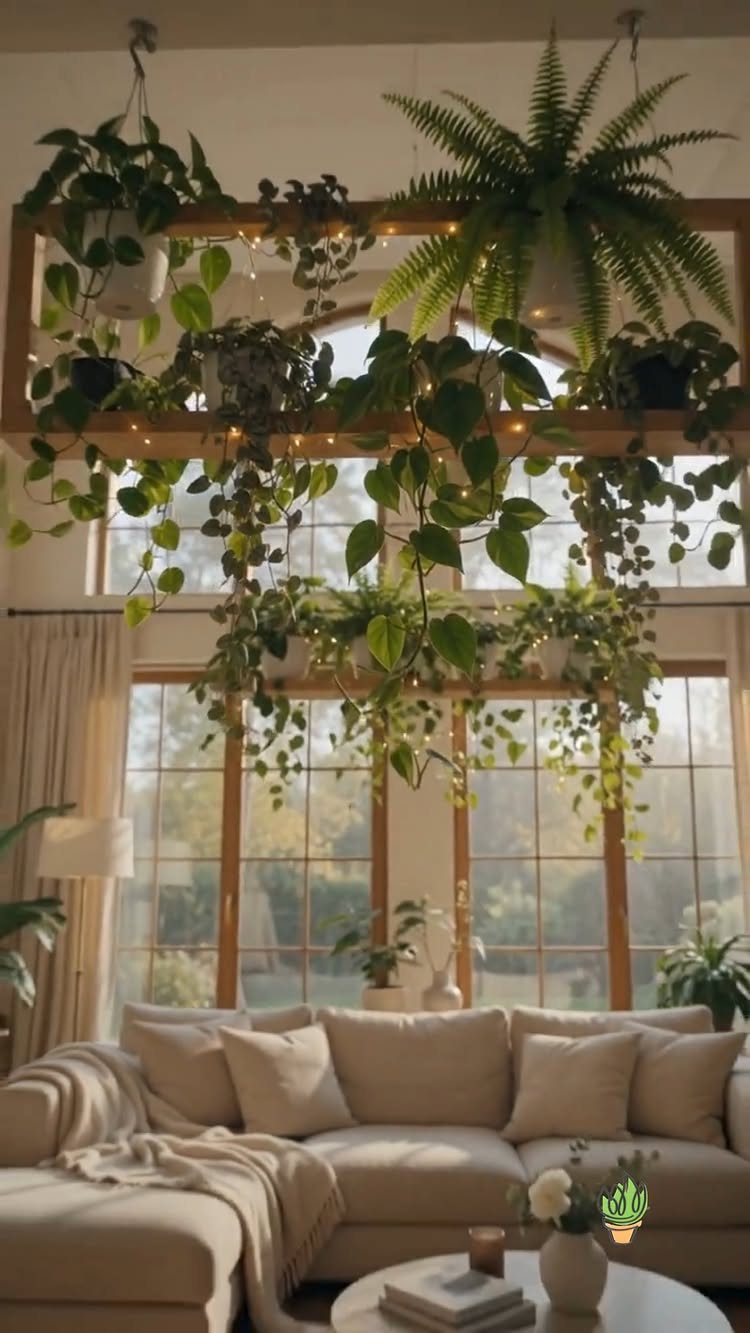
Plants hung from a wooden trellis above the sofa fill the empty space overhead and leave the walls free. Plants that hang or trail down work better than upright ones on overhead shelves.
Anchor it into ceiling joists, not drywall alone, since pots and wet soil add real weight. Choose plants that tolerate the light near that window.
Small fairy lights woven through the frame give an evening glow. Renters should ask the landlord before drilling into a ceiling.
21. Natural Branch Ceiling Chandelier
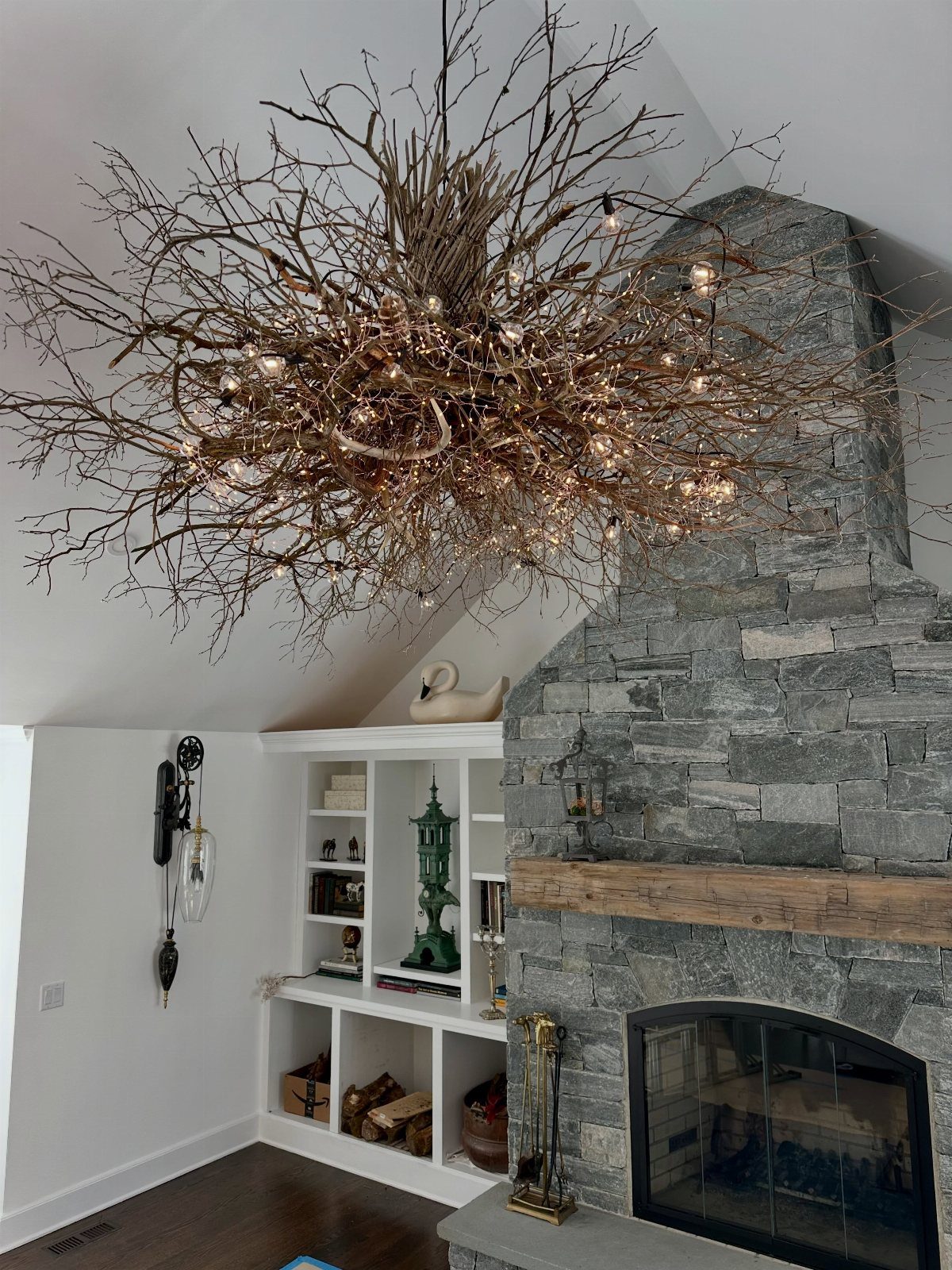
Intertwined branches with small bulbs tucked inside make a chandelier that looks grown rather than bought, and it suits a tall ceiling best.
The branches read as texture rather than a new color when the rest of the palette stays neutral.
Hang it where the room is open, away from walls, so the branch shape reads from every side.
A smaller room needs a smaller fixture.
22. Brick Archway Room Transition
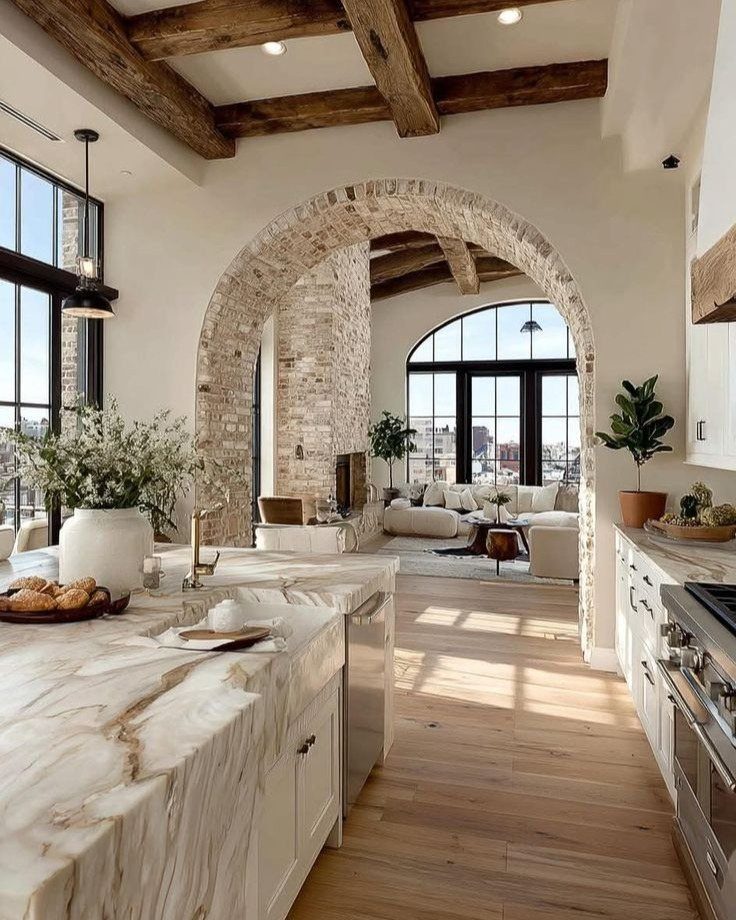
Red brick left bare around a doorway turns a plain opening into an arch worth looking through. It ties a kitchen to the living room by repeating warm, rough material on both sides.
Real brick work needs a mason, and I would not cut a wall opening myself. Thin brick veneer around an existing opening costs less and is a weekend job for a careful DIYer.
Keep the surrounding walls white so the arch stays the focus.
23. Natural Branch Floating Shelves
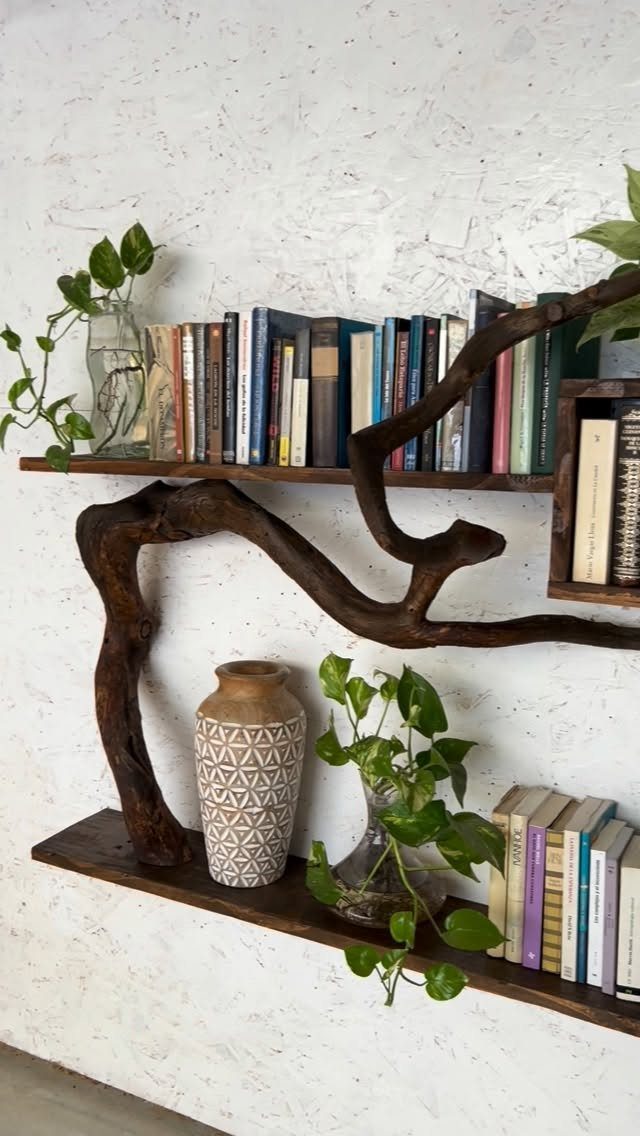
Two dark floating shelves joined by a curved branch read as one sculptural piece instead of two boards.
Mount the shelves into studs or use anchors rated for the load, since books are heavier than they look. Fix the branch securely at both ends.
A white textured wall makes the dark wood stand out. Leave gaps between the objects so the branch curve stays visible.
24. Black Walls with Wood Ceilings
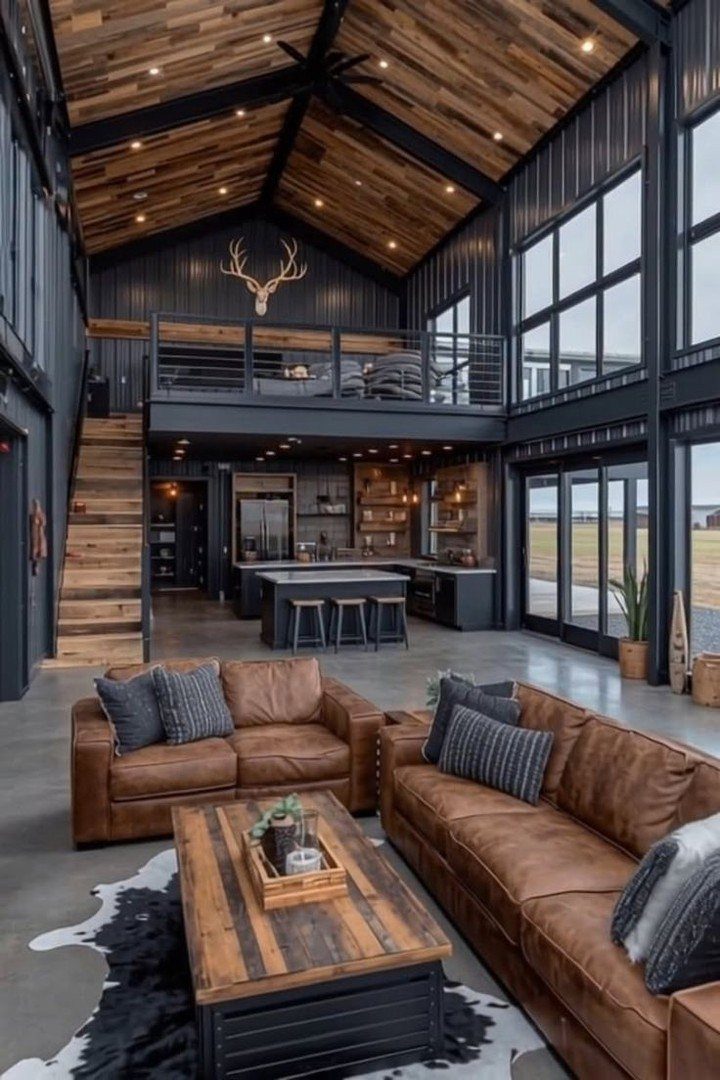
Matte black walls under a wood-plank ceiling make a big room feel cozy, because the dark surfaces pull the walls in and the wood warms the top. Brown leather sofas fit the mood.
I like this best in a room with high ceilings and plenty of daylight. Dark paint in a small, dim room can feel heavy.
Renters should check the lease first, since covering black later takes primer and extra coats.
Mixing Rustic and Modern Decor
Pair one heavy rustic piece with one clean-lined modern one, and let each sit beside the other rather than competing. A reclaimed wood coffee table next to a leather sofa with simple lines is the easiest version of that pairing.
Metal helps the 2 styles meet. Polished lamps against raw stone or wood give the eye a sharp edge next to the rough grain.
Mixed materials work too: wood, metal and glass in one room. A glass coffee table on a metal base softens a rustic space, while a wooden table with metal chairs roughs up a modern one.
Keep the palette neutral so the mix reads as a plan. When the colors agree, the materials can disagree.
Creating a Cozy Atmosphere
Cozy comes from layers, and texture does most of the work. Stack leather, linen, wicker and wood in one room, then add a soft rug underfoot so no surface feels hard.
Stay with warm, earthy tones such as browns, creams and grays. Save color for small accents, since a few pops go further than a bold wall.
Velvet next to cane gives contrast that feels both plush and natural. A terracotta wall or exposed brick behind it adds warmth with a slight industrial edge.
Light the room in layers, with several low sources instead of one overhead fixture. Warm bulbs at different heights make the textures look deeper after dark.
Choosing the Right Materials
Start with 3 natural materials: wood, leather and stone. They carry the rustic side of the room, and two or three are plenty.
Then add something sleek to keep it modern. Polished metal or glass beside rough grain makes both look better.
To push a rustic room toward modern, choose furniture with simple lines and use fewer decorative accessories. Put a neutral backdrop behind it all.
Black or brass metal accents finish the look. Pick one finish and repeat it in a lamp, a frame and a table leg so it reads as intentional.
Frequently Asked Questions
How to style a rustic living room?
Pick 2 or 3 natural materials like reclaimed wood, leather or stacked stone and hold the color to warm browns, grays and rust.
What is rustic modern?
Rustic modern means pairing raw wood beams, stone and worn leather with furniture that sits low and keeps its edges straight.
The result feels warm and cozy but stays uncluttered. A neutral palette and a few well-chosen rough pieces keep it from tipping into lodge or farmhouse territory.
How to decorate a modern living room?
Keep furniture shapes plain, pull back on the number of objects you set out, and let the walls stay quiet.





