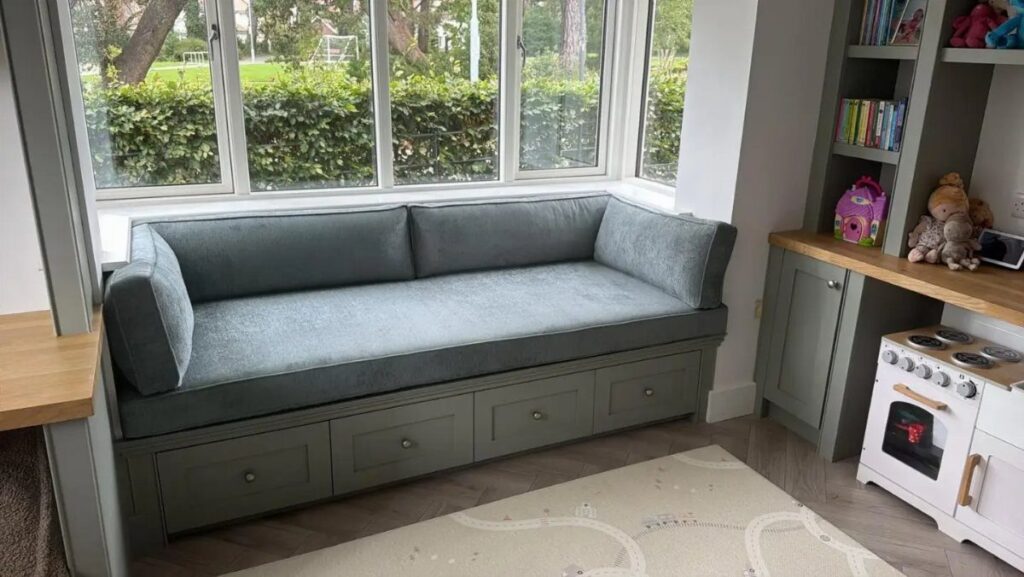
How much floor the room has decides which of these couches fits, and the post covers the full range: a built-in window seat with drawers underneath for a small office, a daybed that doubles as a guest bed, and a bold colorful statement piece that needs a wall of its own.
A bigger room can take a bold statement sofa or a full seating area, while a tight one gets a built-in seat or a daybed along one wall.
1. Built-In Window Seat Couch
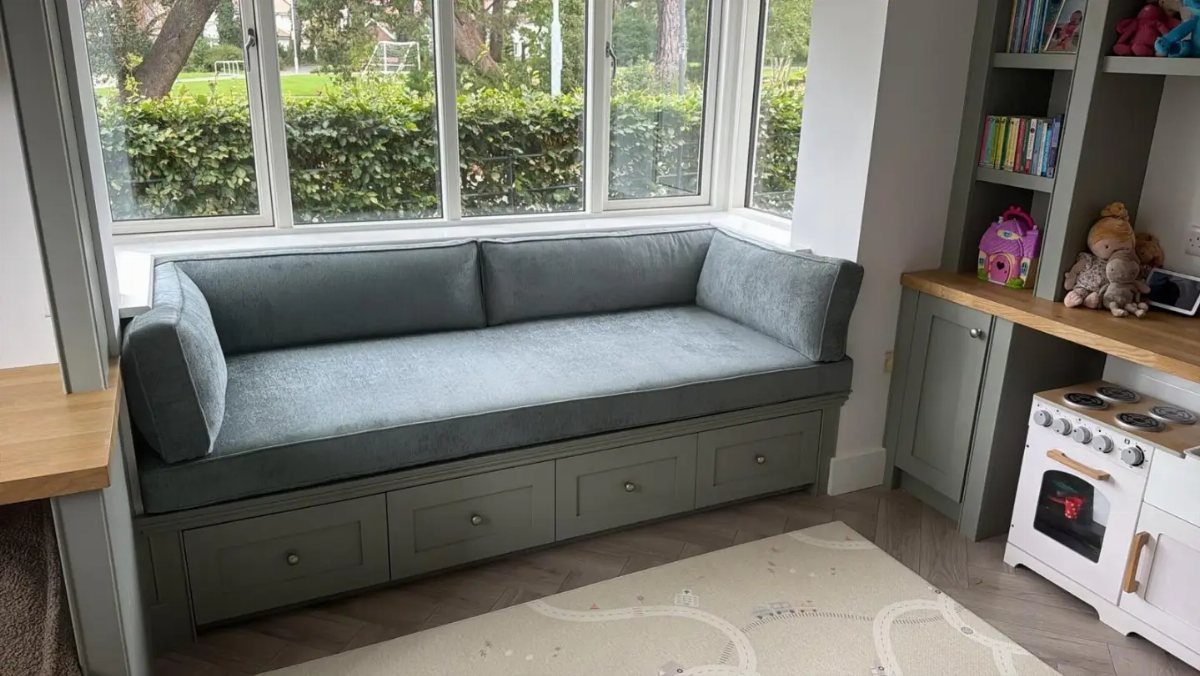
Drawers under a window seat give a small office somewhere to put the things that usually pile up on a desk: paper, cables, supplies.
The seat also sits right at the glass, so the best daylight in the room goes to the spot where you read or take calls.
I would build the seat deep enough to sit on comfortably and keep the cushion firm, since a soft one turns into a nap spot. A grey tone like this one stays calm next to bookshelves and toys.
Check that the drawers clear the floor and the desk chair before you commit.
2. Daybed for Dual Functionality
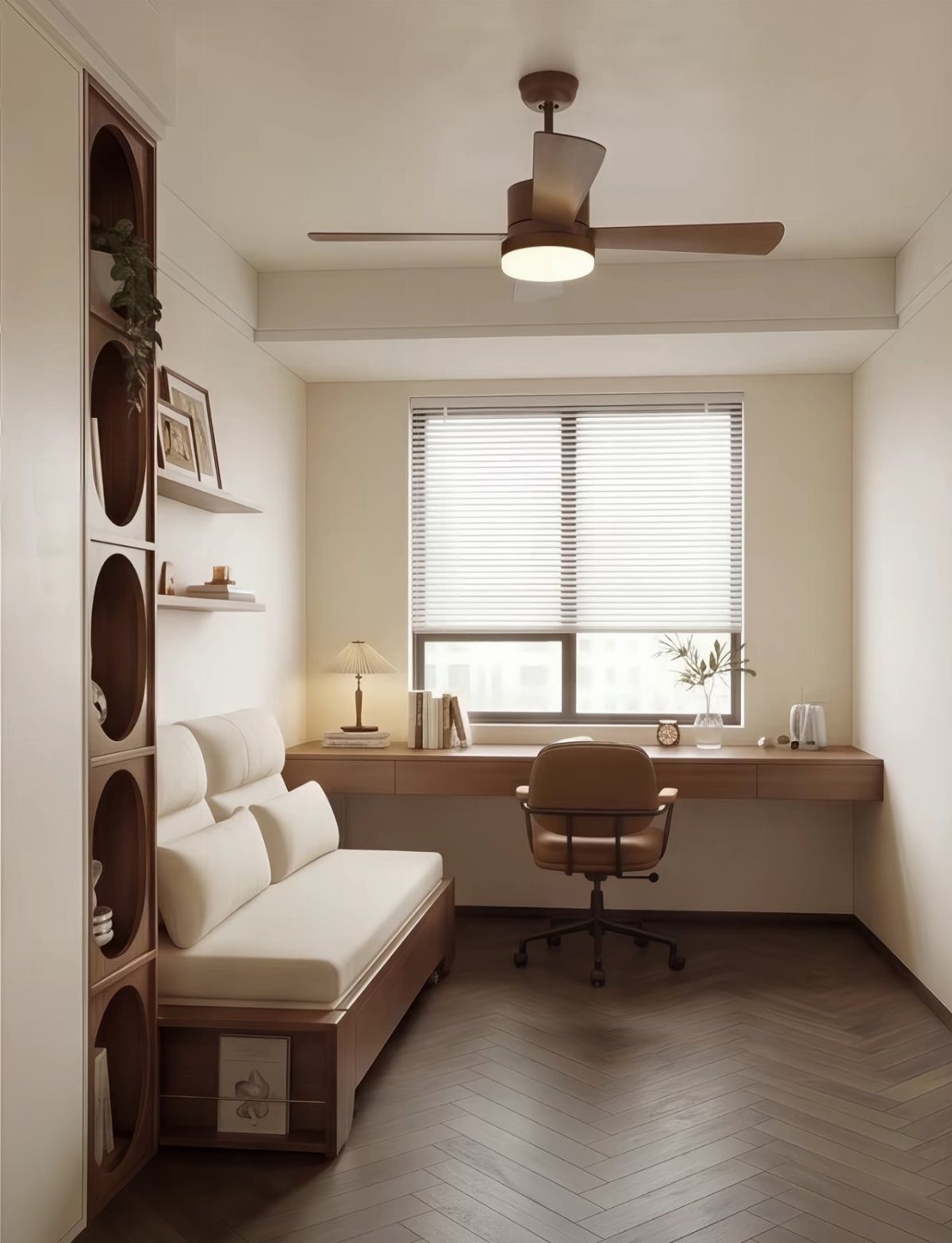
A white daybed lets one room be an office on Tuesday and a guest room on Saturday, with no sofa bed mechanism to wrestle open.
Because it reads as seating, it fits a workspace without looking like a bedroom has crept in.
Park it along the wall opposite the desk, so you can turn your chair toward it for a break.
I like pairing it with a few pillows that lean against the wall for daytime sitting, then stacking them on a shelf when someone stays over.
A built-in desk beside it keeps the footprint tidy.
3. Classic Leather Sofa
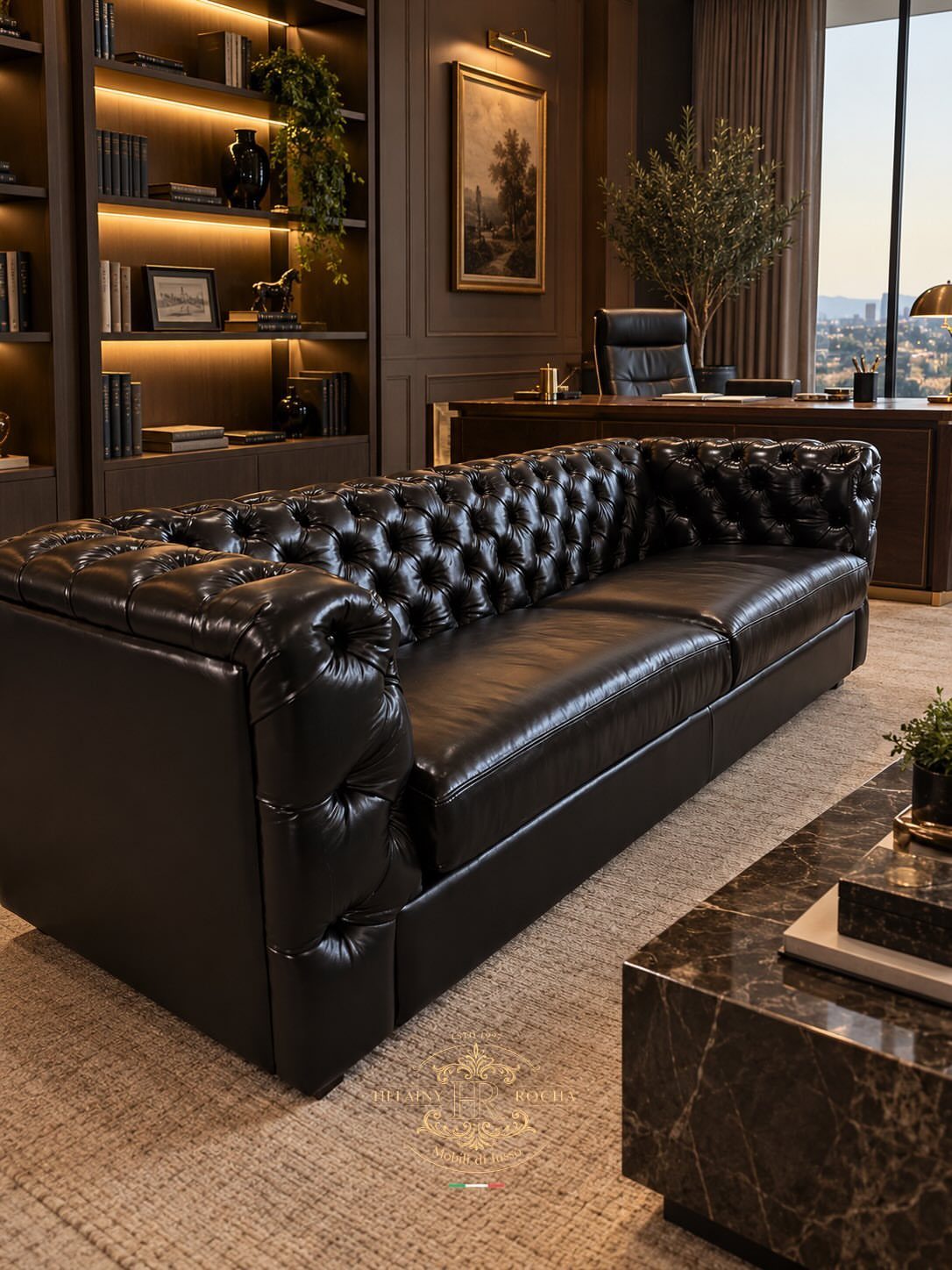
Black tufted leather makes an office feel settled, and it pairs well with dark wood paneling and shelves of books.
A Chesterfield is a heavy, formal piece, so give it a wall of its own rather than squeezing it next to the desk.
Leather also wipes clean, which suits a room where coffee travels. I would choose it for a larger office, since the rolled arms and deep tufting take up real space.
Add a plant nearby to soften all that dark tone.
4. Neutral Fabric Couch Seating Area
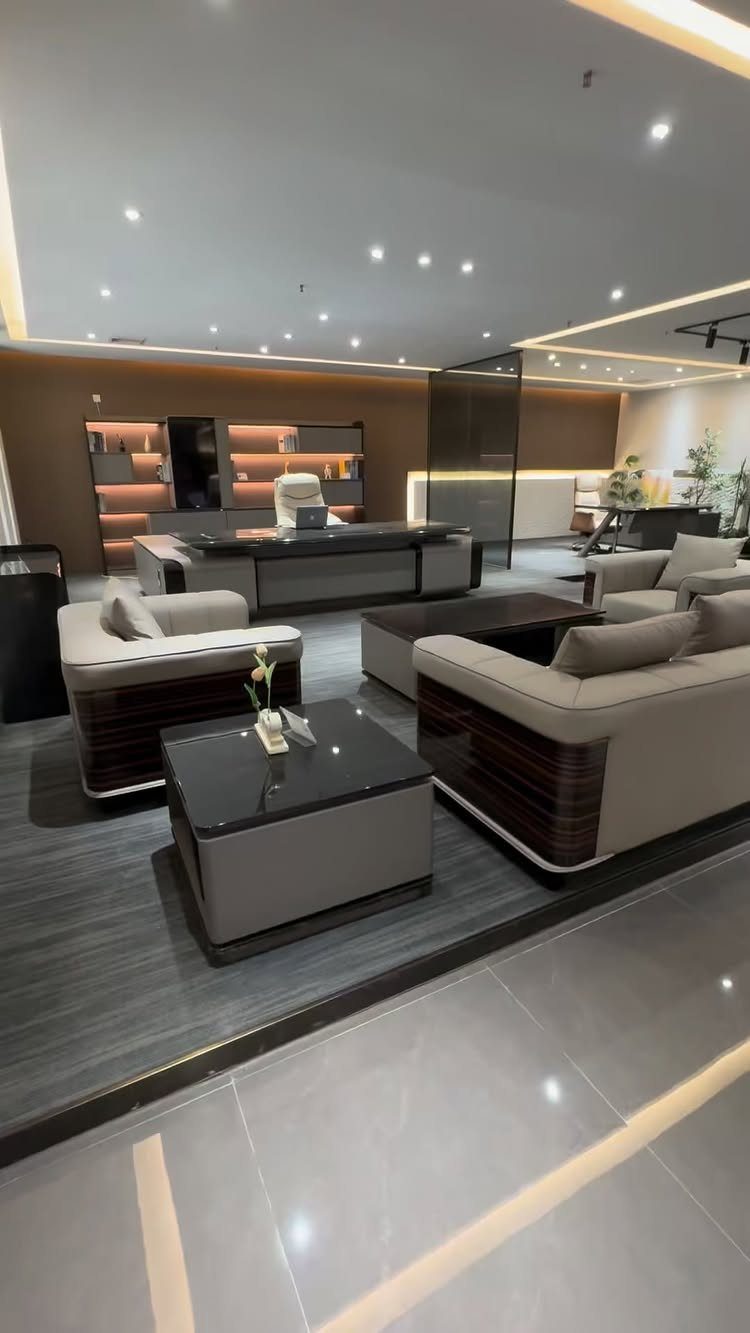
Two armchairs, a beige sofa and a pair of coffee tables turn one end of a big office into a meeting corner. Matching upholstery keeps it quiet, so the desk stays the focus.
Set the group on a rug, as a grey one does here, so the seating reads as one zone. Dark coffee tables give the beige some contrast and keep it from fading into the floor.
This takes real square footage. If the room is tight on space, I would drop the armchairs and keep just the sofa and one table.
5. Desk Placed Behind Couch
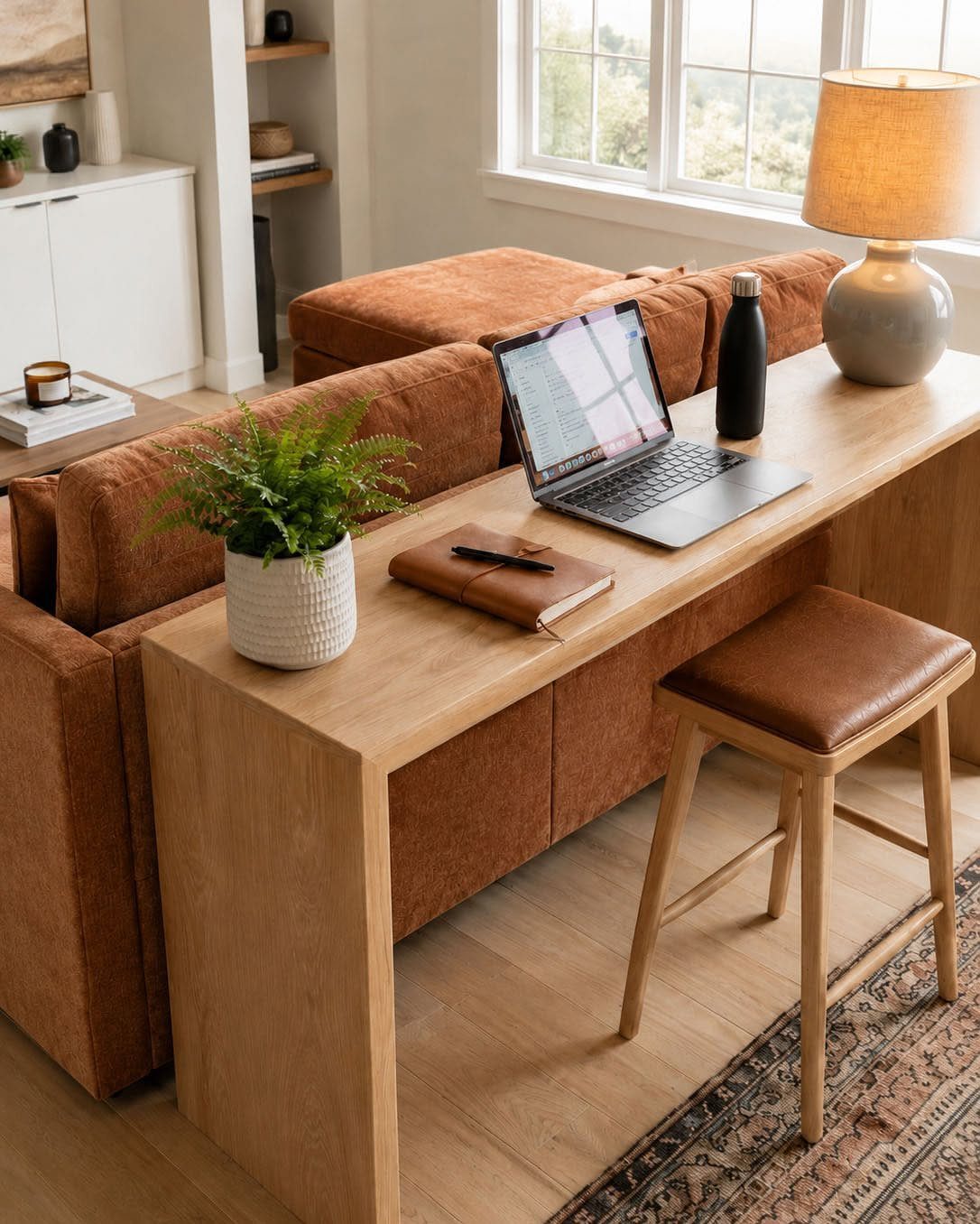
Putting the desk right at the sofa’s back uses the couch as a divider, which is a smart move in a single room that has to be both lounge and workspace.
The sofa faces one way, you face the other, and the two zones separate without a wall.
Pick a desk in a light wood to keep the setup airy, and a leather stool if you want something easy to slide away. Face the window if you can.
Leave a walking gap behind the chair so you are not trapped.
6. Bold Colorful Statement Couch
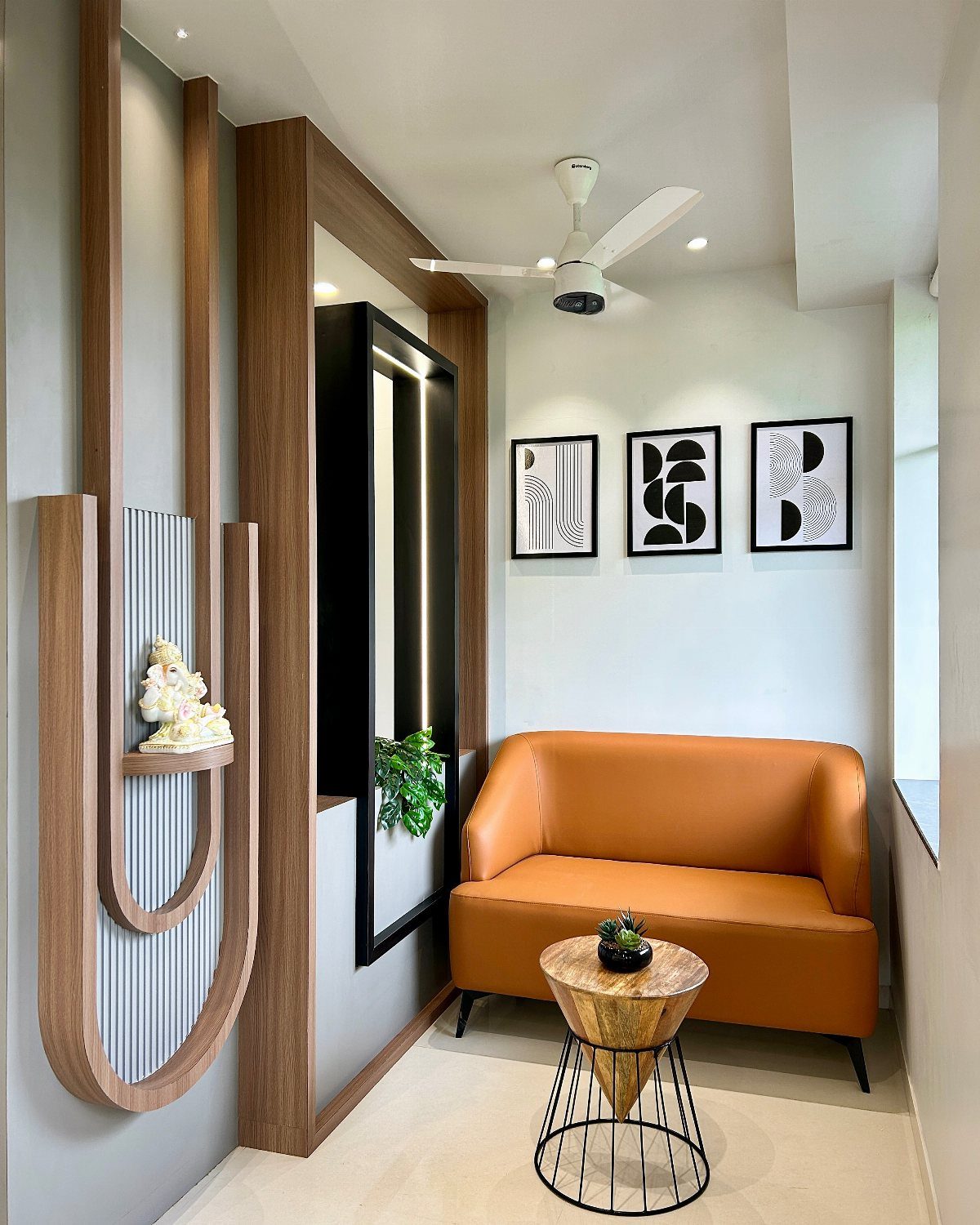
An orange couch is the one loud piece that lets everything else stay simple. Wood wall paneling, a few black-and-white prints and a small gold table give the color room to stand out without clashing.
Keep the rest of the palette to neutrals and wood tones, and the couch does all the talking. I would hang the prints in a tight row above it so the art and sofa read as a single unit.
Leather in a bold shade wipes clean, which helps in a room people actually use.
7. Industrial Loft Couch Setup
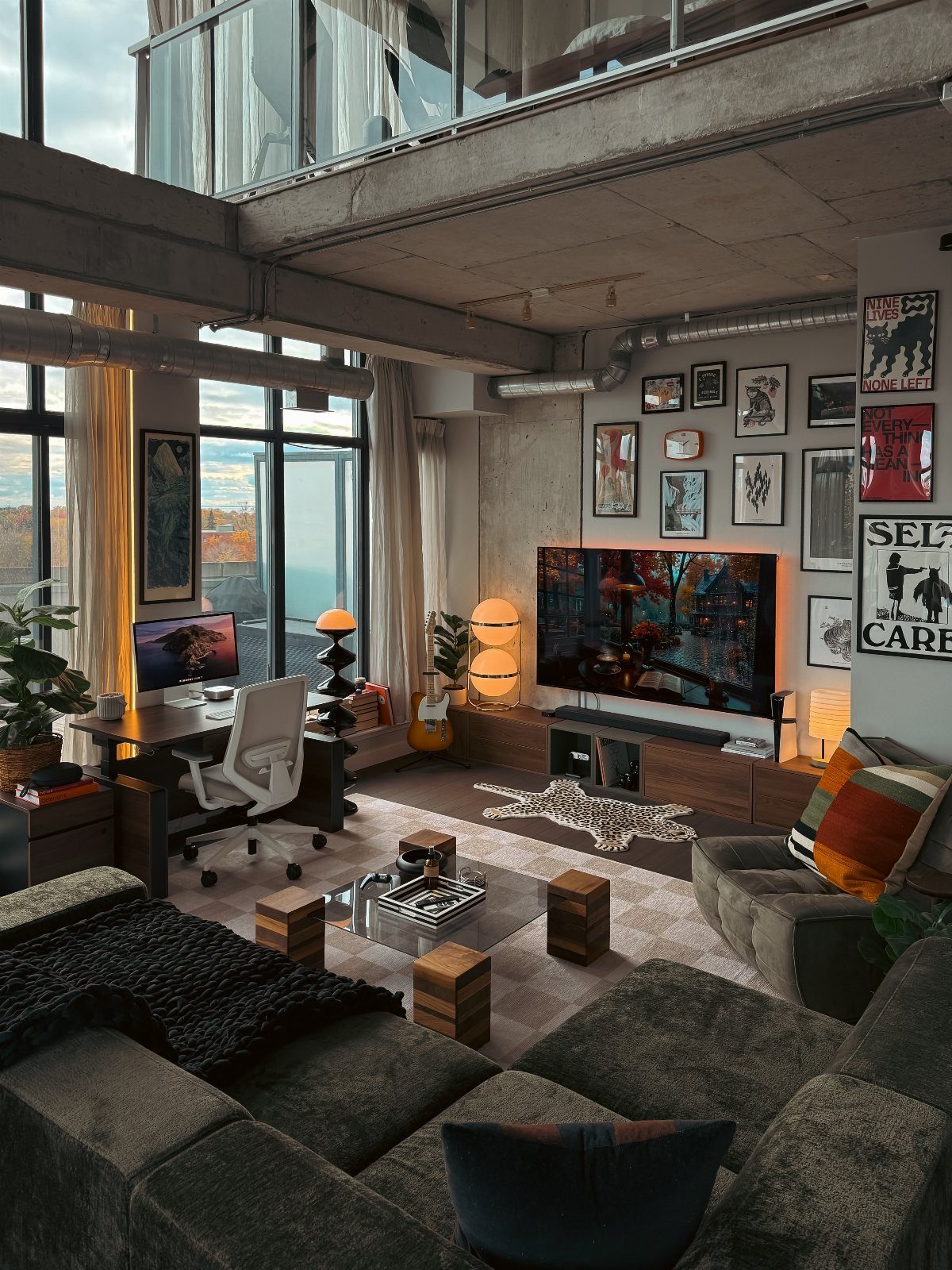
Exposed concrete overhead gives a room a hard, raw edge, and a grey couch is the right softener: it matches the ceiling’s tone without adding another loud color. Wood on the desk warms the whole corner.
Set the couch within a few steps of the desk, so a chair swivel gets you from spreadsheet to sofa. Fabric also helps with sound when most surfaces around it are hard.
A gallery wall of framed prints keeps all that grey from feeling cold. I would hang them in one block rather than scattered, so the wall holds together visually.
Benefits of Office Couches
Some ideas arrive in a quick chat or a loose brainstorm, not hunched over a keyboard, and a soft seat makes people relax enough to talk that way.
That is why a couch can stand in for a meeting table. If clients, a partner or a coworker drop by, you have somewhere to sit side by side instead of across a desk.
Even working alone, moving to the couch for a call or a rough outline changes your head space. Keep a notebook and a small side surface within reach so the move doesn’t cost you momentum.
Choosing the Right Sofa
Material decides how long an office couch lasts. This piece usually has to look tidy with little upkeep, so it is held to a stricter standard than a family room sofa.
Leather and performance fabric are the two I would shortlist.
Leather is durable and wipes clean; fabric gives you more color choices. Pick leather if cleanup matters most, fabric if color does.
A loveseat or compact settee under 60 inches wide fits most layouts without crowding the desk.
Classic shapes in neutral colors keep the room looking professional, and a clear floor around the couch helps just as much. Comfort and style are not a forced choice, since many modern designs deliver both.
Space Planning Tips
Leave 30 inches or more clear on the walkways between the couch and the desk, so you can pass without turning sideways.
The 24-inch minimum is workable in a pinch, but 30 lets you pull a chair out and still pass behind it.
Scale the couch to the room. Where floor space is tight, a loveseat or settee wins over a full-size sofa, since a bulky one eats the room and makes it feel boxed in rather than cozy.
Pulling the desk away from the wall toward the middle of the room works well, with the couch sitting just behind your chair.
That splits work from lounging, and it can make the room look more spacious than pushing everything to the walls. Mark the footprints on the floor with painter’s tape and walk the routes a few times, then order.
Frequently Asked Questions
Is leather or fabric better for an office couch?
Leather is the better pick if easy cleanup matters most, since it is durable and wipes clean after a spilled coffee.
Performance fabric wins if you want more color choices. I would shortlist those two and nothing else for an office.
How can you separate a lounge area from a work area in one room?
Put the desk directly behind it so the couch becomes a divider, with the sofa facing one direction and your chair facing the opposite wall.





