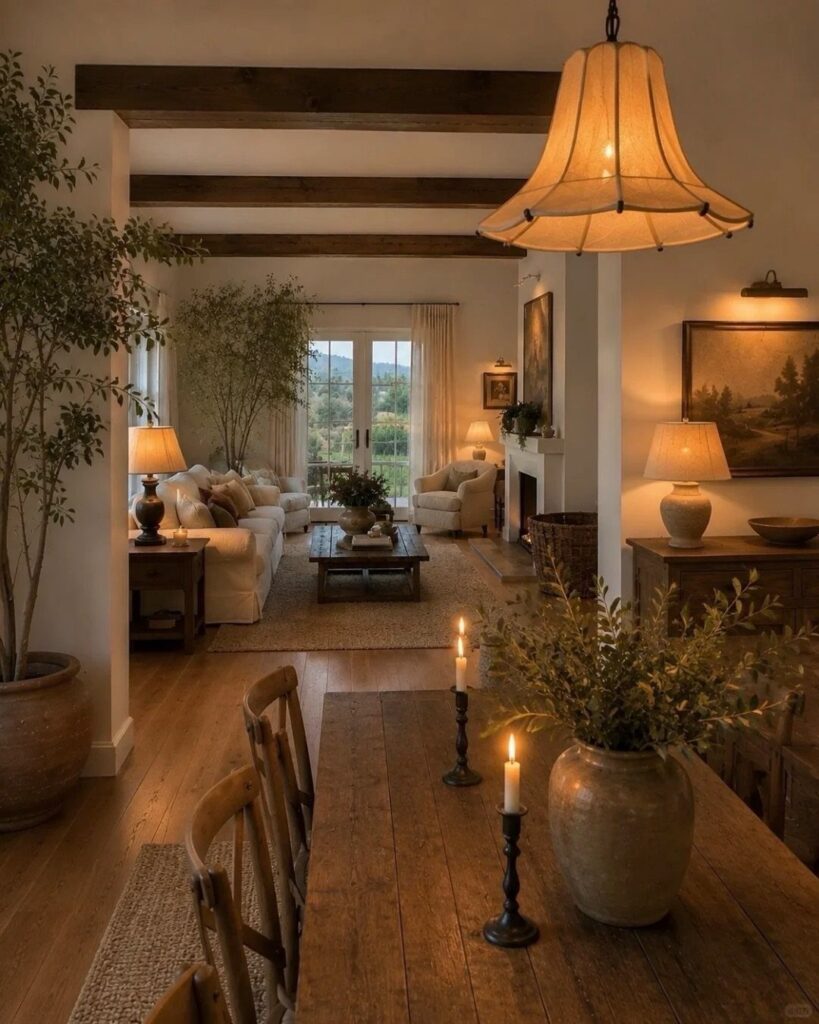
Whether you own or rent decides which of these ideas you can actually use.
Owners can hang real structural beams, lay stone tile, or hire out a marble fireplace, while renters get much of the same look from hollow faux beams, peel-and-stick planks, stone-look vinyl, and Edison bulbs that screw into any socket.
The ideas run from a $5 horseshoe on a shelf to full stone flooring, and the room holds together at roughly 60–70% natural texture with 30–40% black steel and matte metal.
1. Natural Wood Furniture
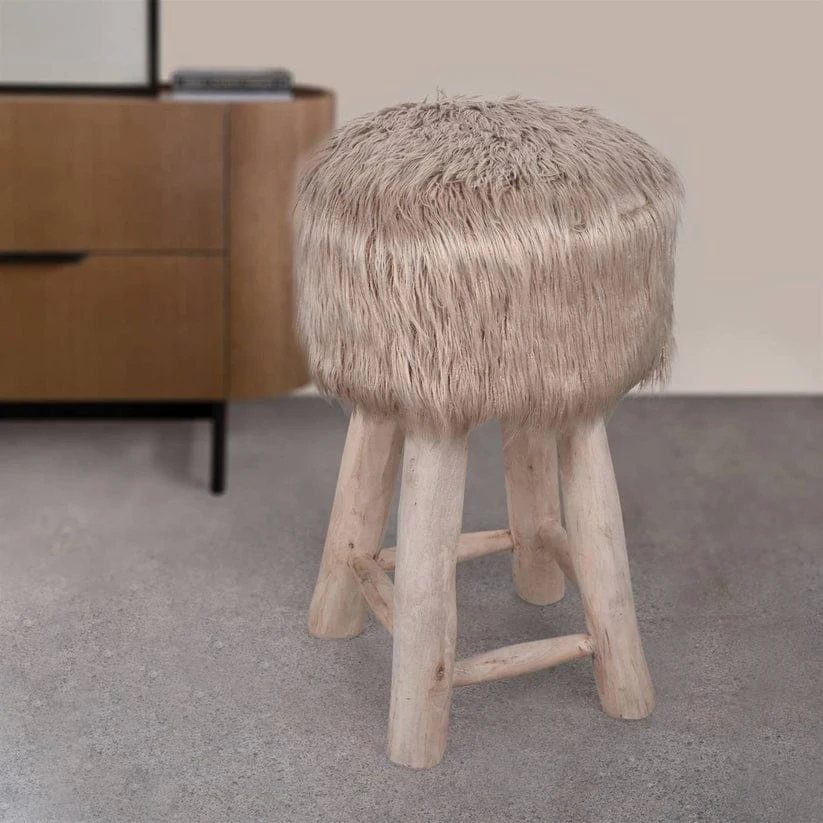
One piece with bark-edge or trunk-style legs will do more than a full matching suite, especially against a cool grey floor.
I would start with a stool, side table, or small cabinet, since each costs far less than a sofa or dining set. Pick wood with visible grain and a matte finish so it reads as raw rather than glossy.
Pair wood with something soft, like faux fur, so it doesn’t feel heavy.
2. Stone Fireplace
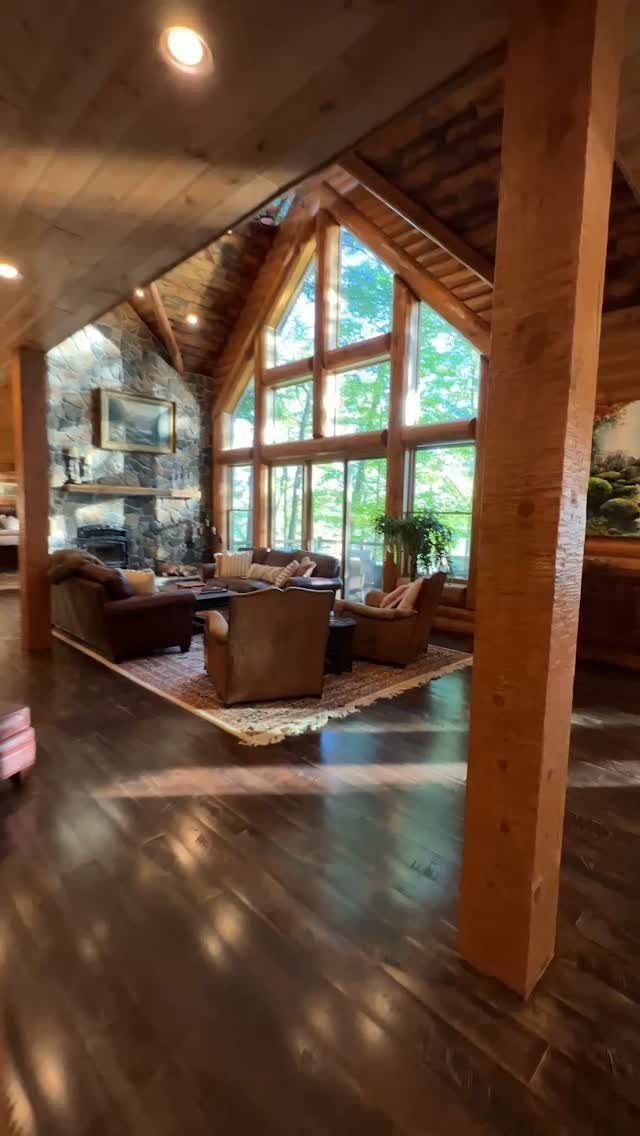
A stone fireplace works best when it gets the room’s full height, and a vaulted ceiling gives it that. The stone becomes the anchor everything else sits around.
If you rent or can’t build masonry, a stone-look veneer panel on the wall behind a freestanding stove or electric insert gets close to the effect for far less money and work.
Real stone costs much more and needs a structural plan.
Keep the furniture simple, like a plain brown sofa, so the stone stays the star. Choose a texture with some variation in tone; uniform stone looks flat.
3. Exposed Beams
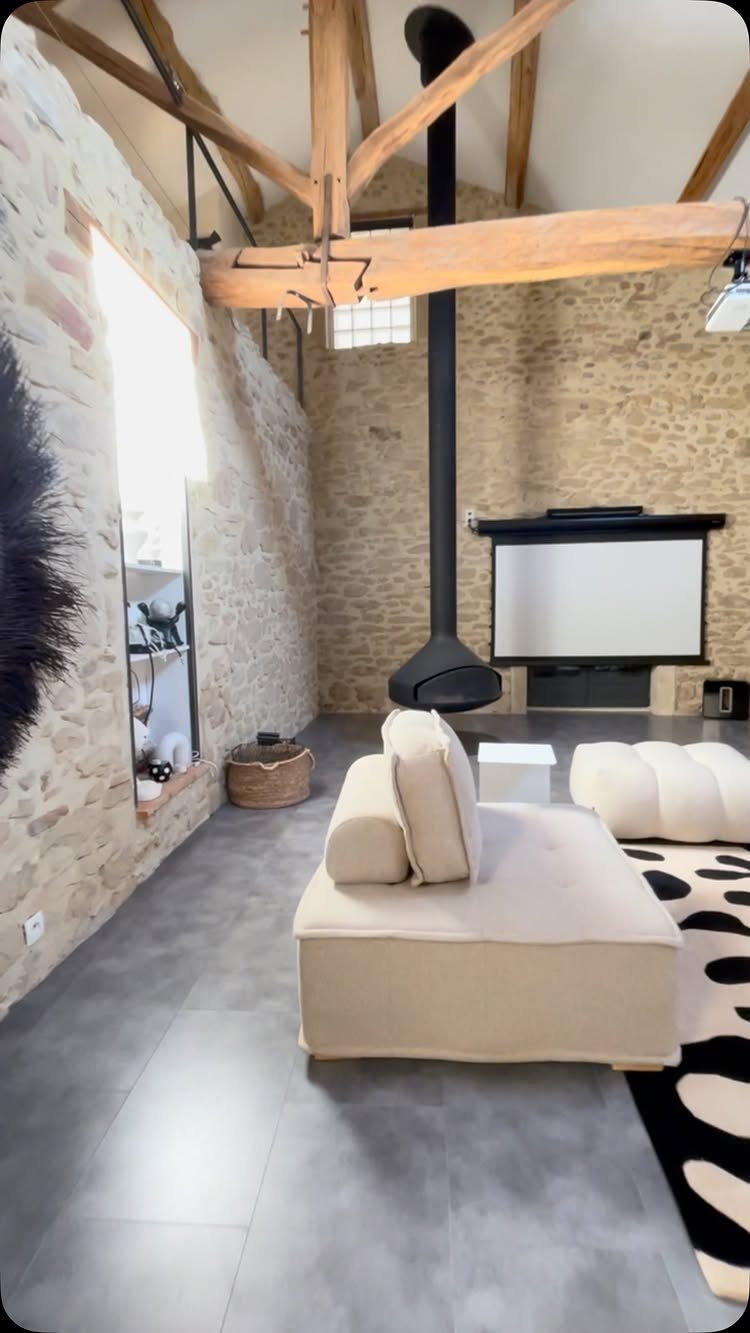
Wood beams overhead make a ceiling feel built, not just painted.
Real structural beams are a construction job, so most renters and first-time owners should look at hollow faux beams.
They are lightweight, usually glued and screwed to the ceiling, and a weekend is realistic. Choose a stain that matches your wood furniture, or the beams will look like an afterthought.
I prefer a few thick beams spaced widely over many thin ones, which can make a ceiling feel crowded.
4. Reclaimed Wood Accent Wall
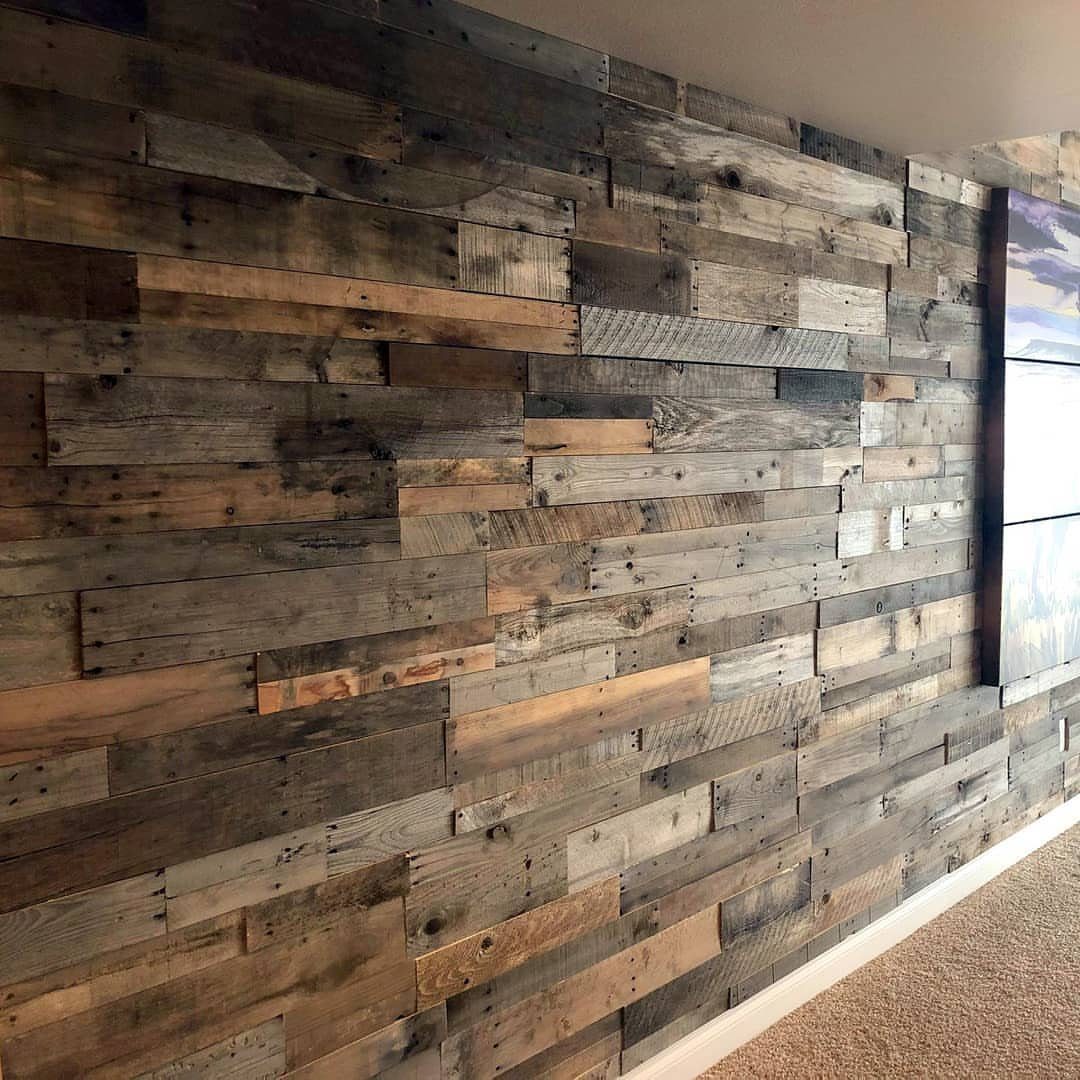
Horizontal planks in mixed grey and brown tones give a wall more depth than paint ever will, because every board differs. That variation is why reclaimed wood looks lived in rather than new.
Put it on one wall only, ideally behind the sofa or TV, and leave the other walls plain.
Peel-and-stick planks are the budget route and suit renters. Real reclaimed boards cost more but look better up close.
Run the boards horizontally to make a narrow room feel wider.
5. Earthy Tones
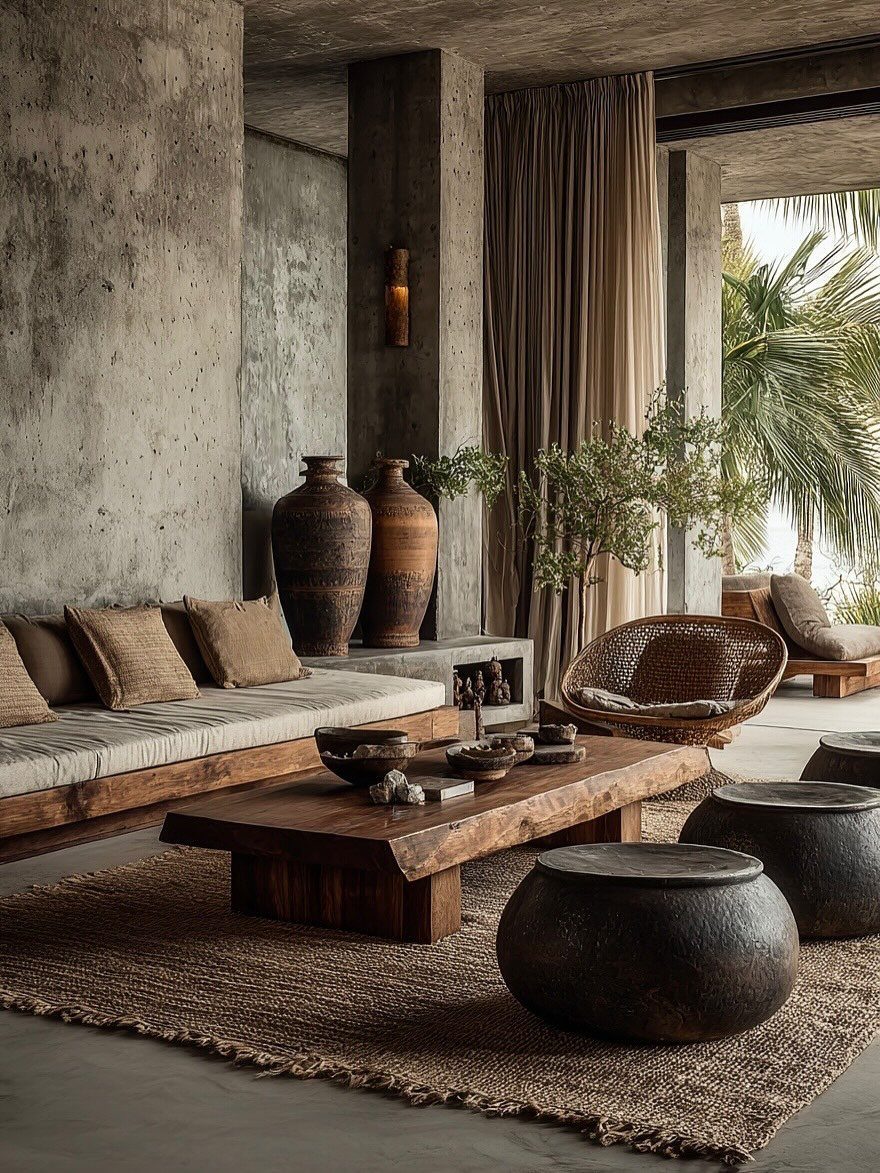
Concrete, clay, jute, and wood share one trait: they are all muted and matte. That is why this palette holds together without any bright accent.
Start with the largest surface, the sofa or rug, in a neutral, then layer in wood and clay.
Large clay vases are an inexpensive way to add warm color, and one big vase beats three small ones. Woven chairs add texture without adding another color.
Keep to three or four tones. If the room feels flat, add texture, not color.
6. Oversized Windows
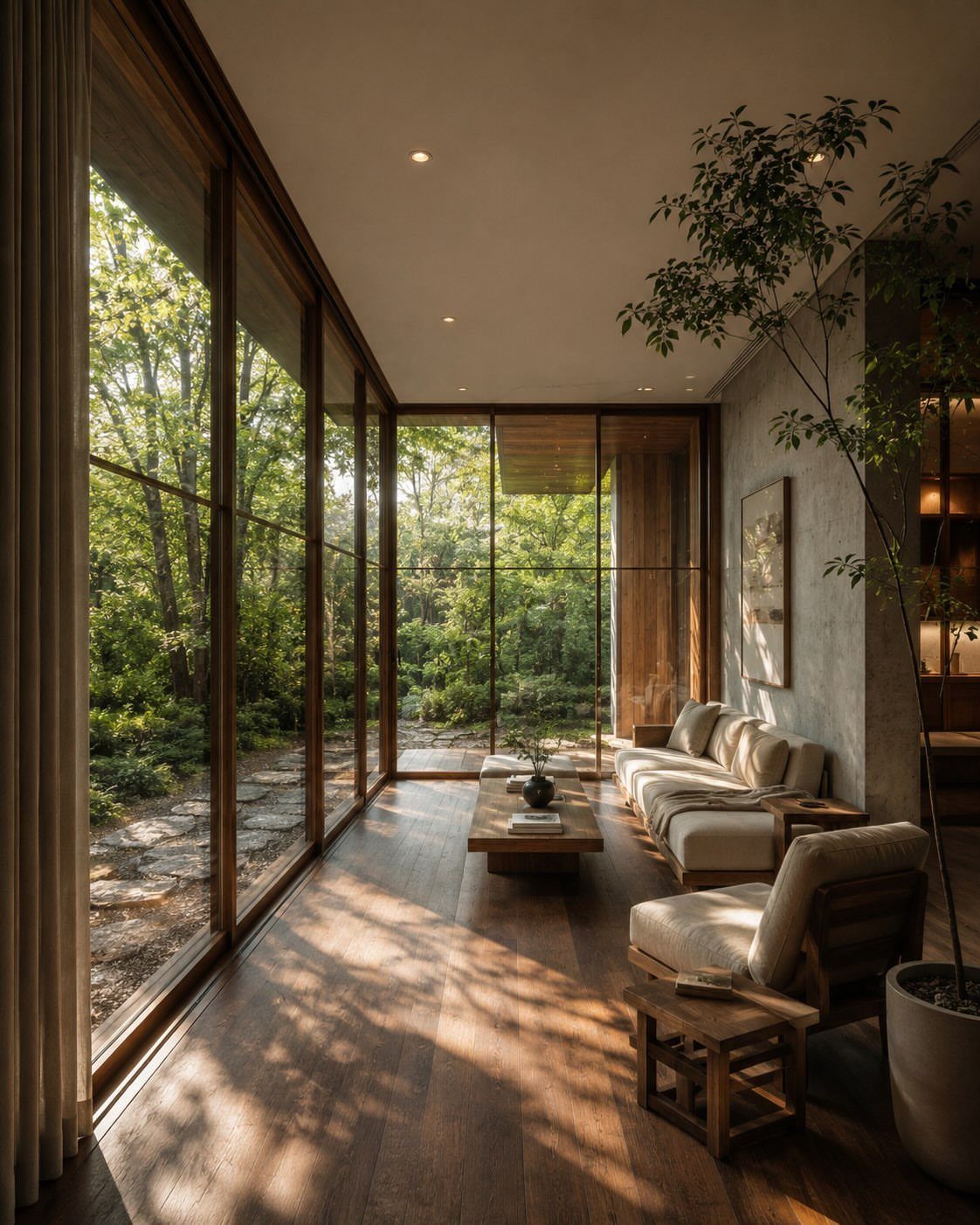
With wood frames, the glass feels connected to the furniture instead of cold.
Most renters can’t change windows, but you can respond to them. A white sofa reflects daylight, and a potted indoor tree echoes the trees outside.
Skip heavy drapes on a wall like this. If privacy matters, sheer panels on a track let the view stay.
7. Jute, Sisal
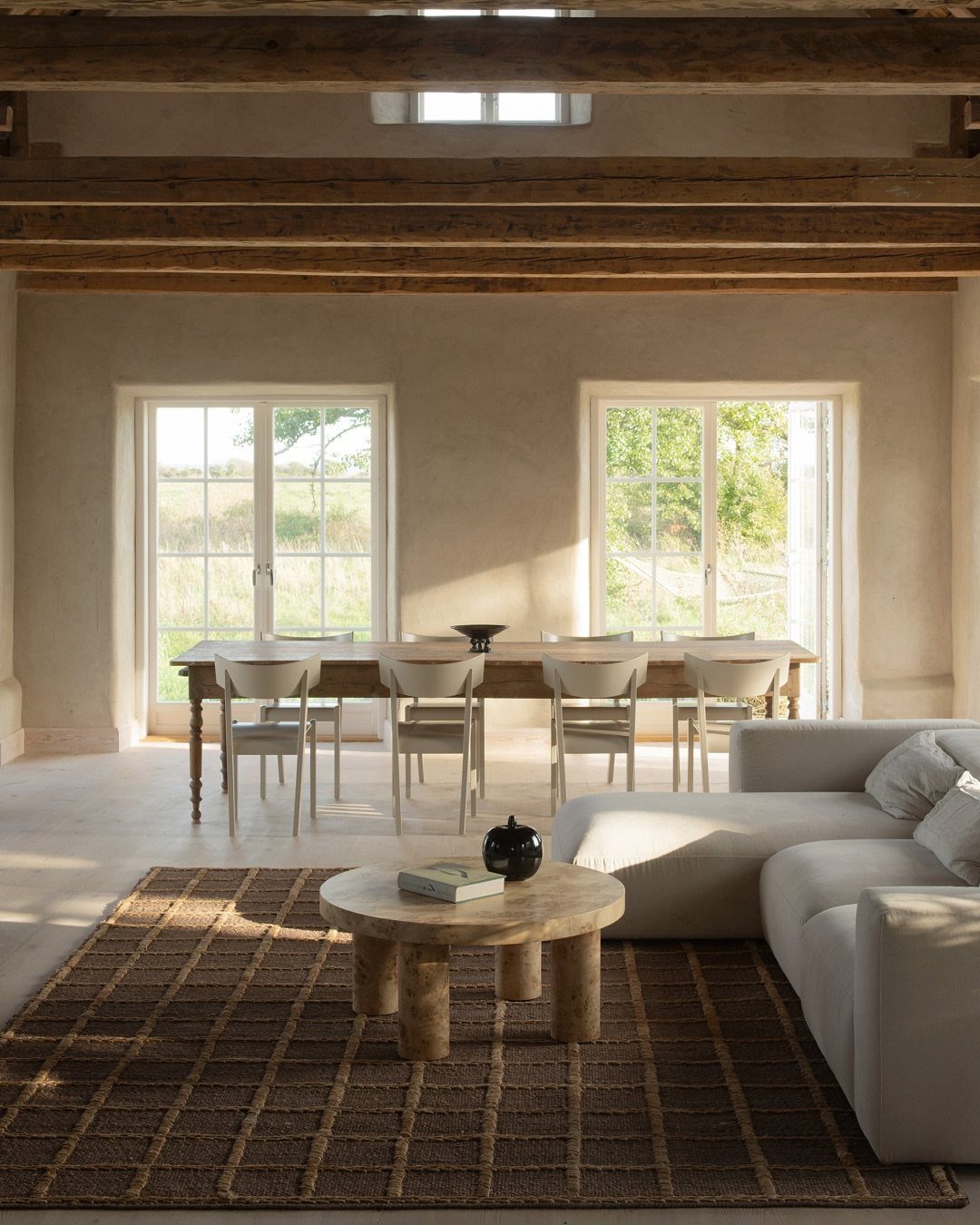
A jute rug gives a living room its texture from the floor up, and the coarse, golden-brown weave pairs well with a round wood coffee table and a white sectional.
Jute is the softer of the 2 fibers, so it suits a room where people sit on the floor.
Sisal is stiffer and tighter. Pick a rug large enough that the front legs of the sofa sit on it.
Neither is cheap to replace, so test a swatch before buying.
8. Edison Bulb Chandeliers
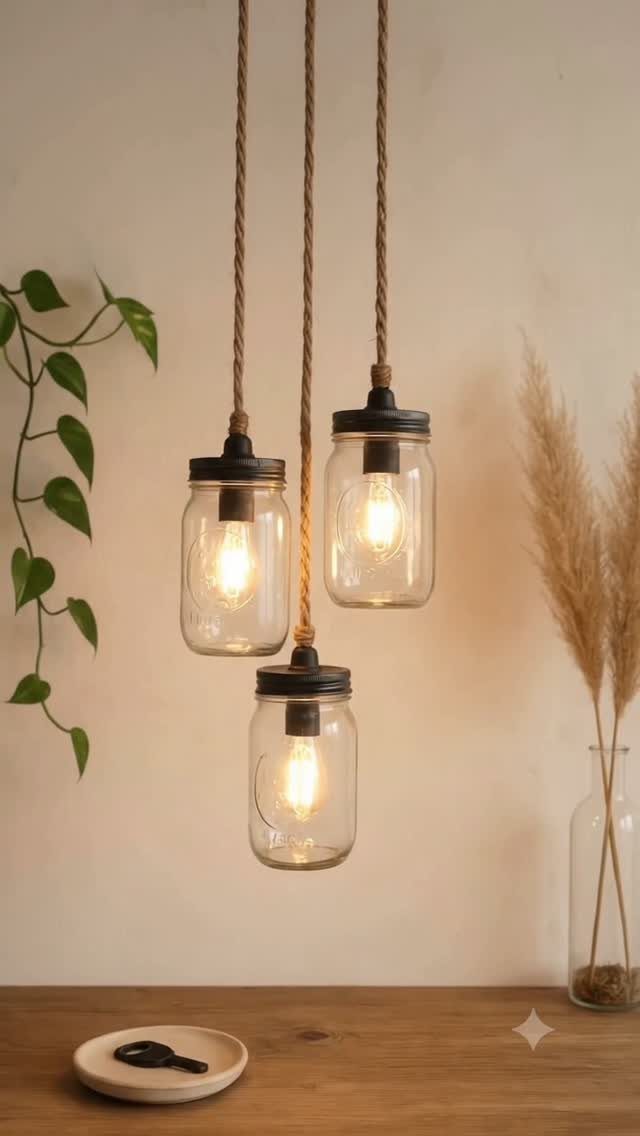
Hung in a row of three, they read as one fixture instead of three small lights.
Rope gives a rustic look that metal chain can’t, and the bare filament bulbs add warmth without a shade. Space them evenly along the length of the table.
Renters should look for plug-in swag kits, which hang from ceiling hooks and need no wiring. Hardwiring is a job for an electrician.
9. Rustic Shelving
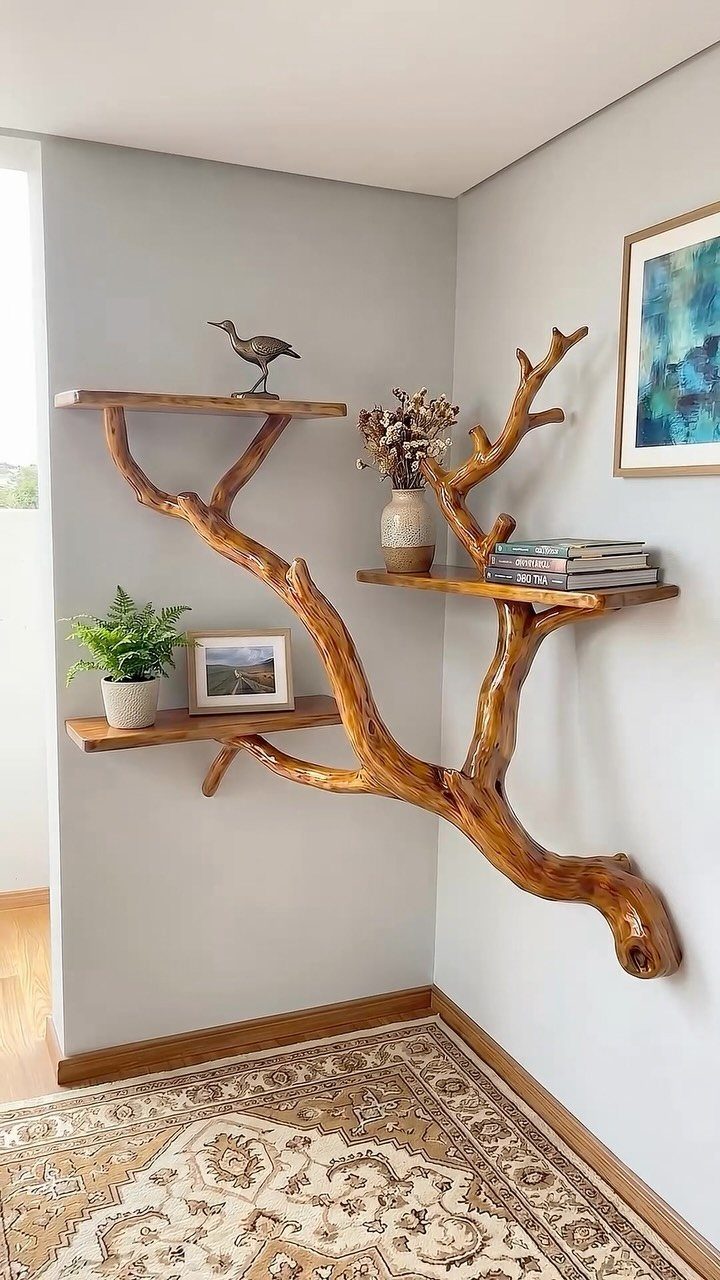
A shelf cut from a polished tree branch looks sculptural even when it is empty, and I like it more than a plain plank. Setting a few flat boards on the branch gives books and small objects a level surface.
Keep the load light: a plant, a framed photo, a figurine, and a short stack of books. Against a grey wall, the warm wood stands out.
Anchor into studs or use rated wall anchors, since branches hang unevenly.
10. Natural Stone Flooring
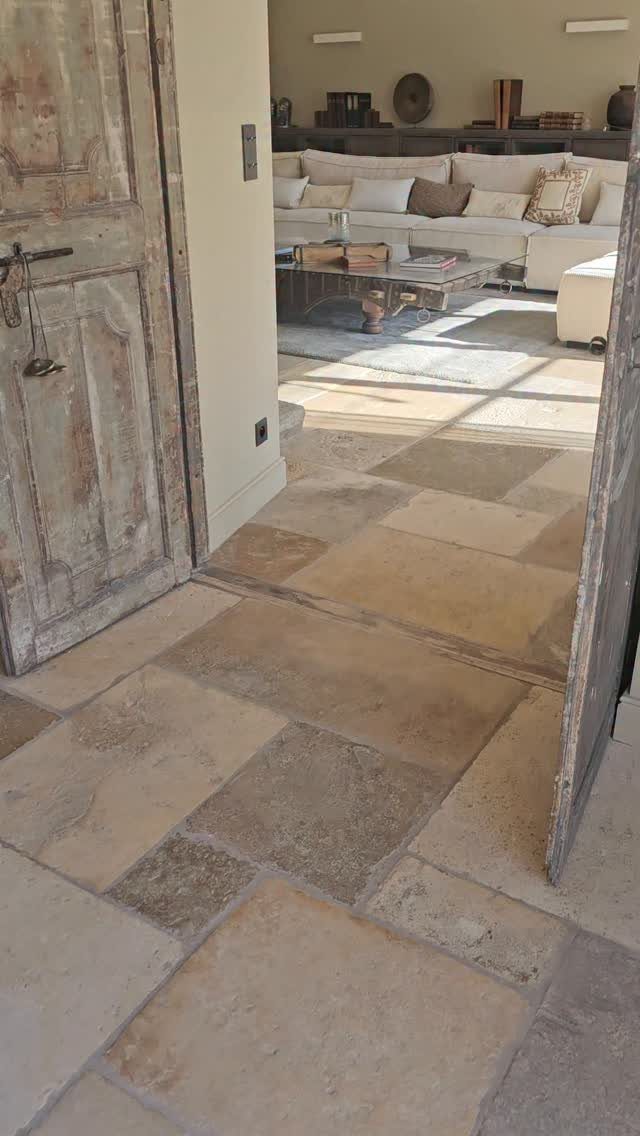
Natural stone tile in beige and tan makes a floor that looks the same age as the house. The color variation between tiles does the work, so choose a mix instead of one uniform shade.
Stone is a big job and a big cost, and it is hard underfoot. Renters can get the look from stone-look vinyl planks or peel-and-stick tiles.
Add a rug in the seating area to soften the surface and take the chill off.
11. Woodsy Decorative Pieces
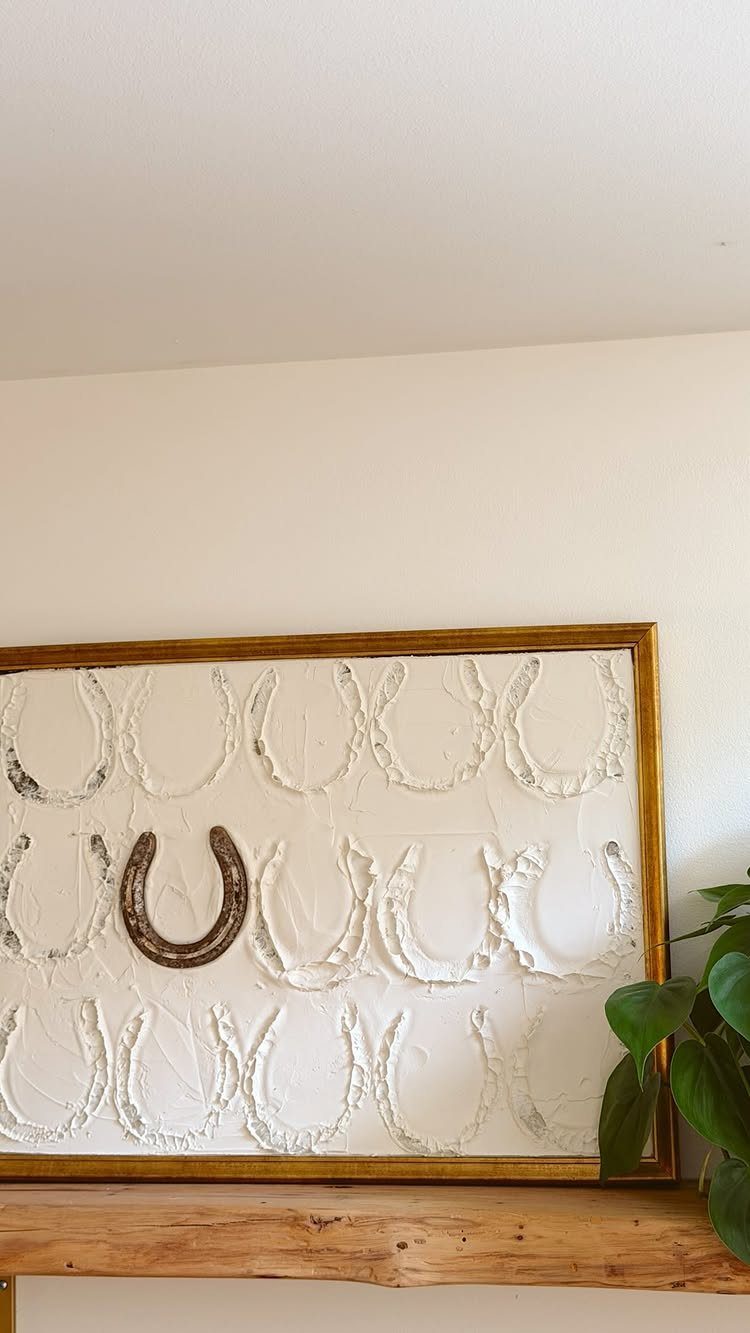
Horseshoe art is a small, cheap piece that suits a wood shelf. The maker of this one paid $10 for a frame at Facebook Marketplace and $5 for a horseshoe at an antique mall.
Paint or texture the backing white so the metal stands out, then mount the horseshoe on it. Prop the frame on a shelf next to a plant instead of hanging it.
It works as a weekend project.
12. Rustic Window Treatments
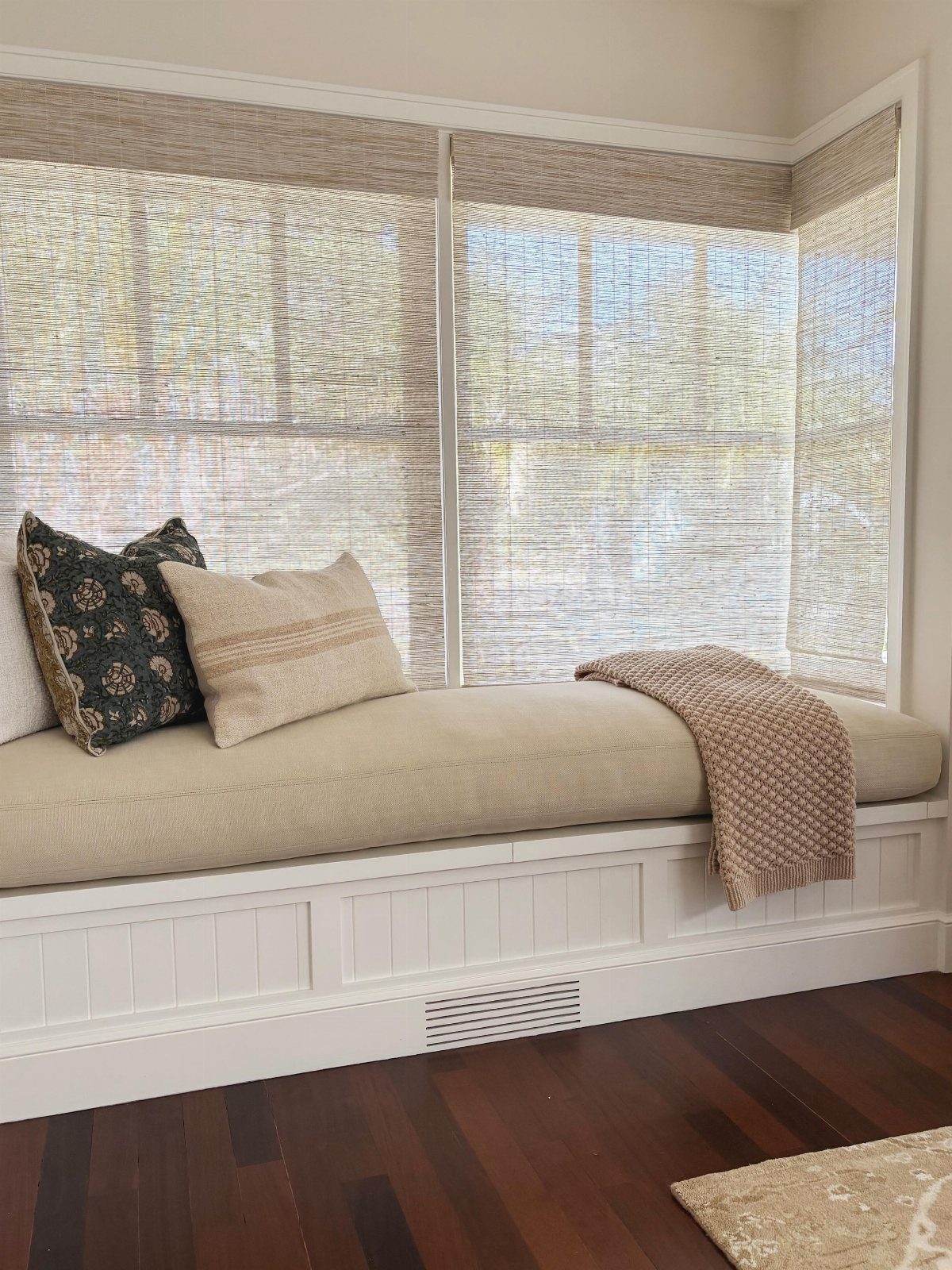
Woven bamboo-style blinds filter light and add texture without the weight of drapes. Over a window seat, they keep the nook bright, and the natural fiber matches dark wood floors.
Measure the window frame carefully, and decide whether the blind sits inside the frame or covers it. A wider blind makes the window look larger.
For privacy at night, layer a liner behind the blind.
13. Personalize with Thoughtful Decor
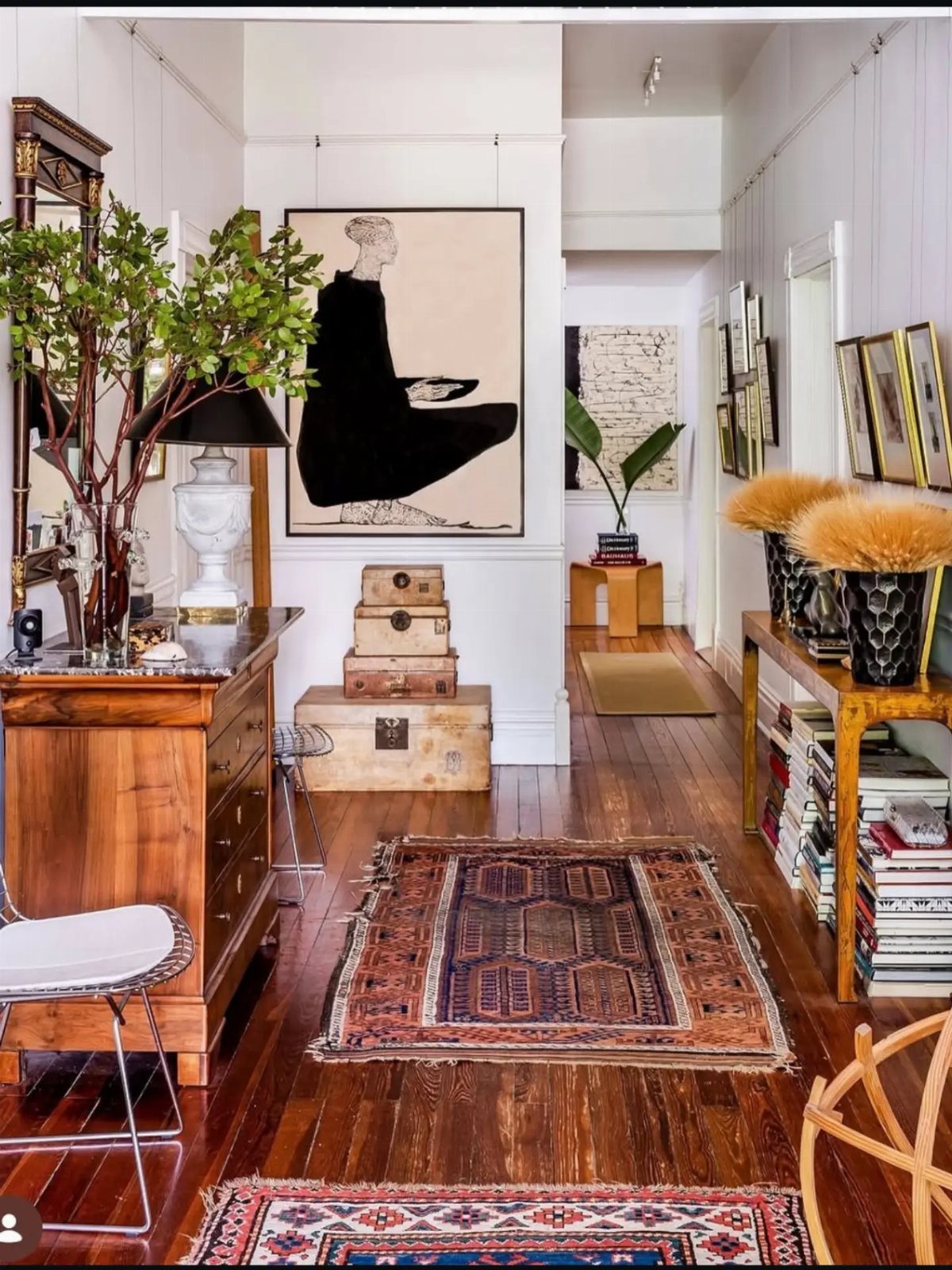
A large painting does the most work in a hallway or living room, because one big piece reads as intentional where several small ones read as clutter.
Layer a mirror and a few objects on a wooden dresser, and vary their heights. Mismatched rugs can overlap if one color repeats between them.
Accent pillows are the cheapest place to start personalizing.
14. Cozy Textiles and Blankets
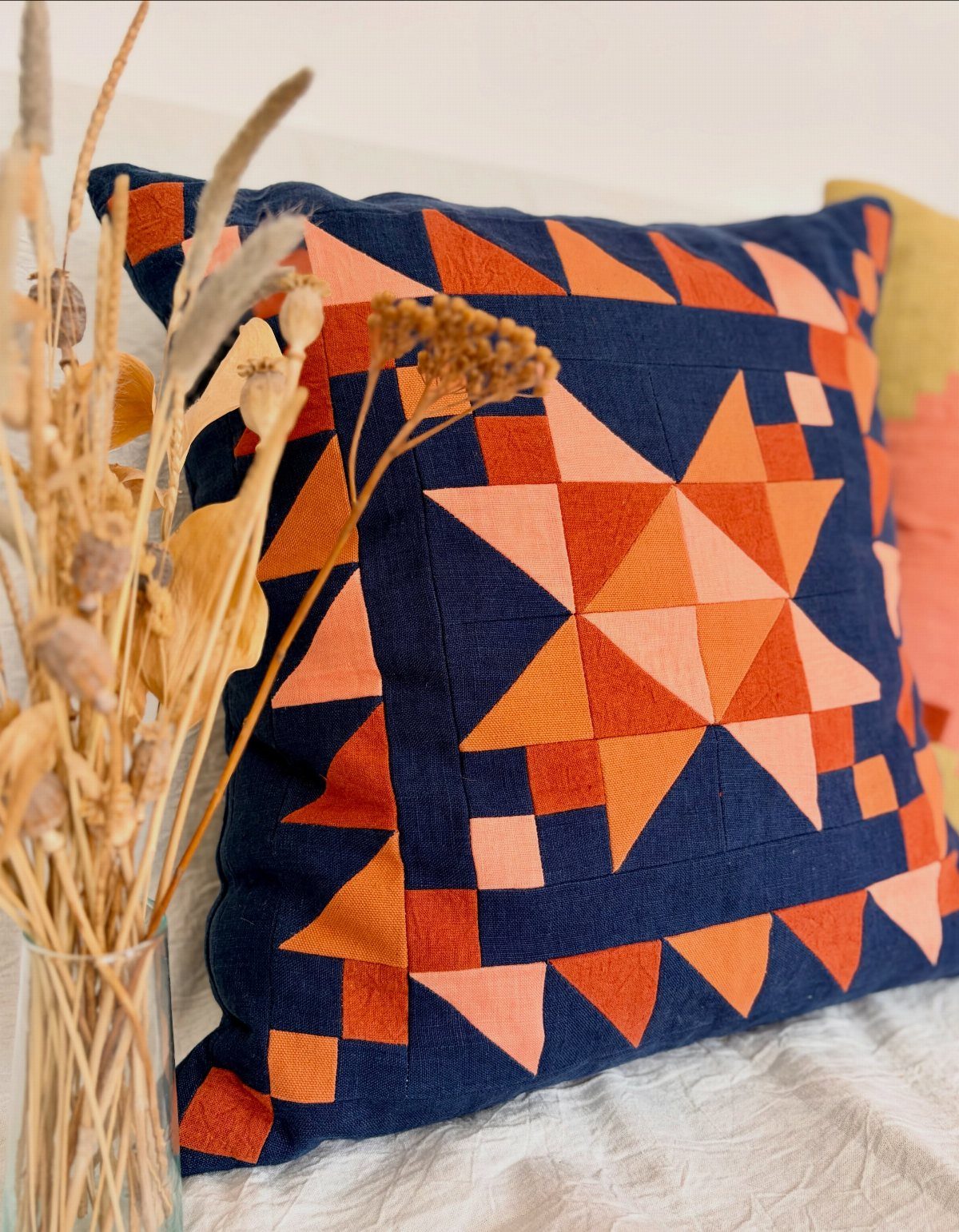
A quilted pillow in a bold geometric pattern gives a plain light sofa a focal point for a few dollars, and navy with orange is a strong pairing against neutral fabric.
I would use one pattern pillow and let solid throws carry the rest, so the room stays calm. Dried flowers in a vase nearby add a soft, dry texture that suits the rustic side.
Wool and chunky knit throws add warmth in winter.
15. Gallery Walls
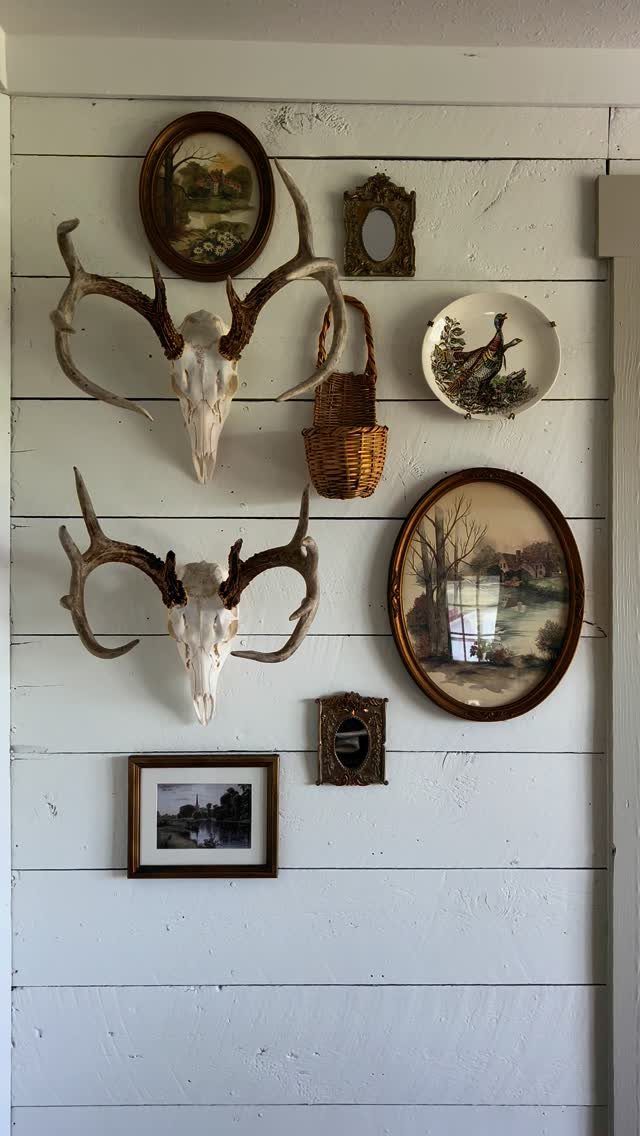
Objects add depth that flat art cannot.
Lay everything on the floor first and rearrange until the spacing feels even, then trace each piece onto paper and tape the paper to the wall. That way you hang once and avoid extra holes, which matters for renters.
White shiplap lets the dark pieces stand out, so keep the frames simple.
16. Sliding Barn Doors
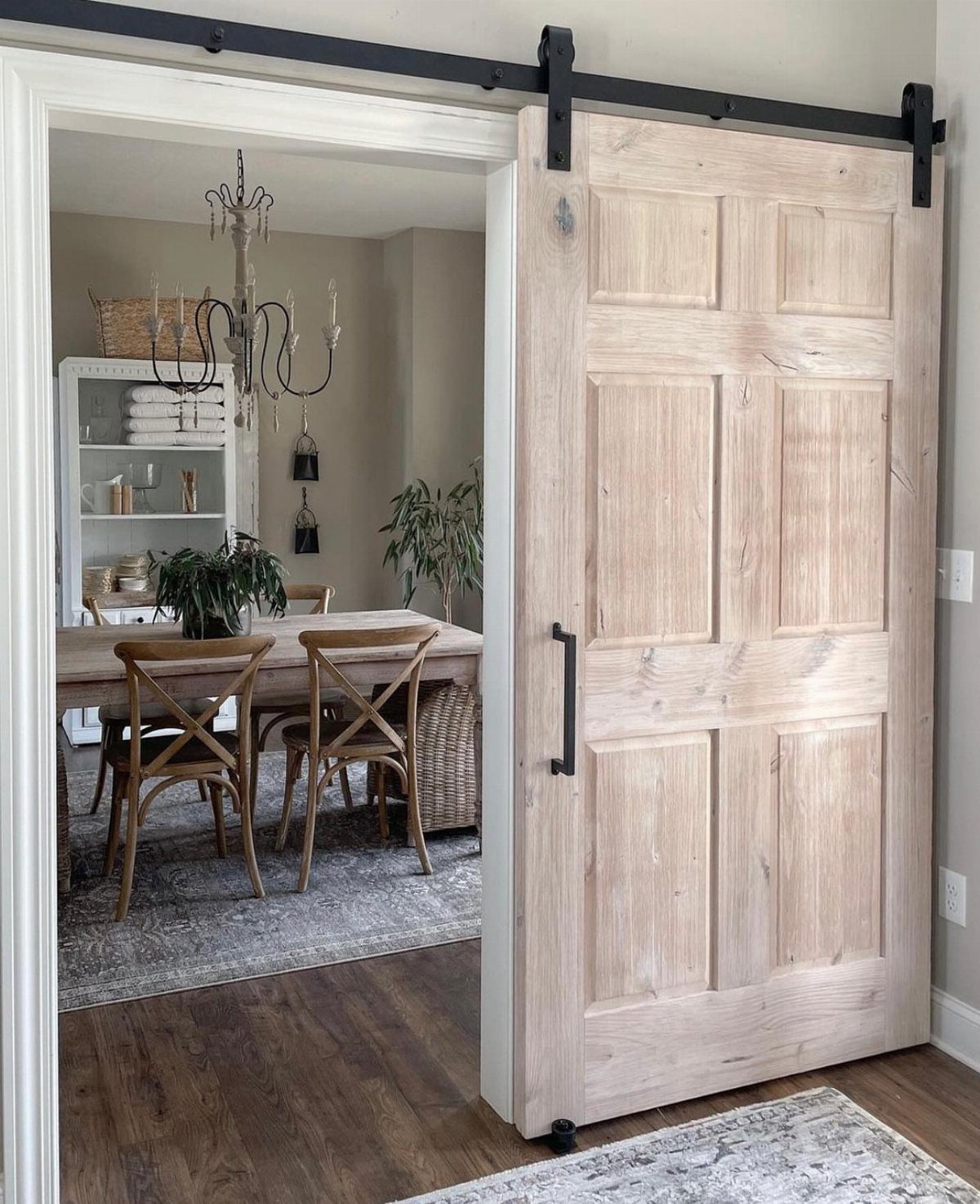
A sliding barn door in light wood with a black track gives a doorway a clear rustic look, and it needs no swing space, so it suits tight dining rooms and hallways.
Mount the track on a solid header or into studs, since the door is heavy.
A barn door won’t seal sound or light as tightly as a hinged door does.
17. Woven Pendant Lighting
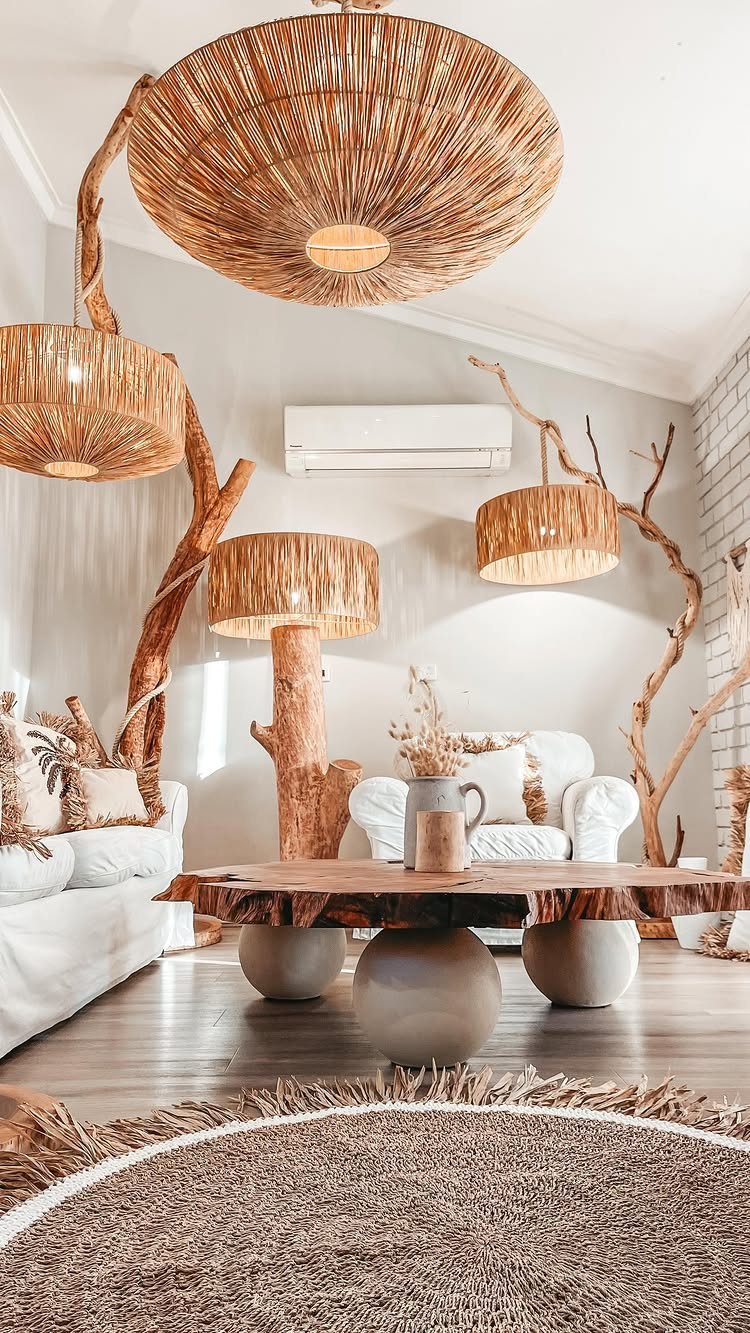
Three large woven pendants over a seating area work more like furniture than ceiling fixtures. Hung together, they add texture overhead and balance a heavy live-edge coffee table below.
Choose shades with an open weave so light casts soft patterns on white walls. Hang them at different heights if you want a looser, more organic look.
Renters can use plug-in swag cords instead of hardwiring. Branches in a tall vase repeat the natural theme without adding clutter.
18. Backlit Rustic Mirror
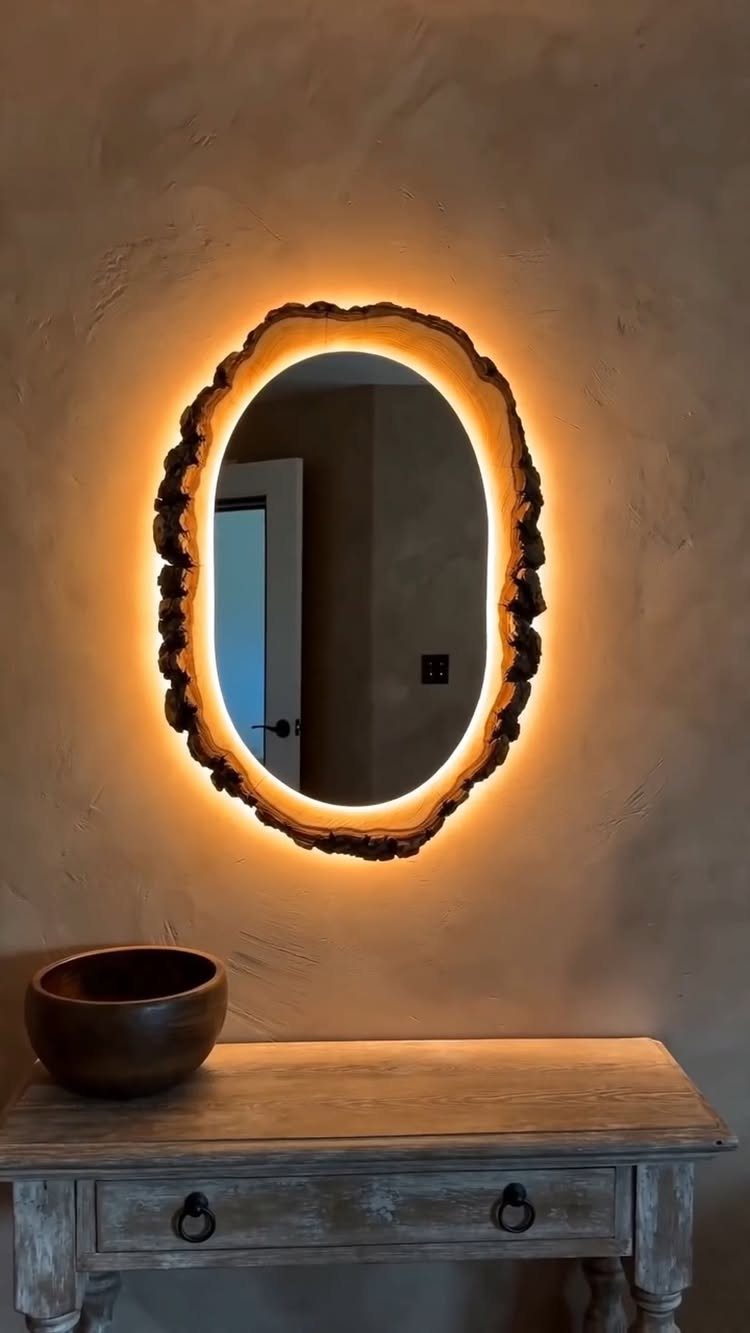
Warm backlighting behind a rough wooden mirror turns a plain console into a glowing focal point, and it works as a night light too.
Look for a mirror with a built-in LED strip, or add a warm-white strip behind the frame yourself. Choose a warm tone so the wood grain stays rich.
Keep the console styling sparse: one dark wooden bowl is enough. The weathered table and rough frame should look related, so match the wood tones.
19. Modern Marble Fireplace
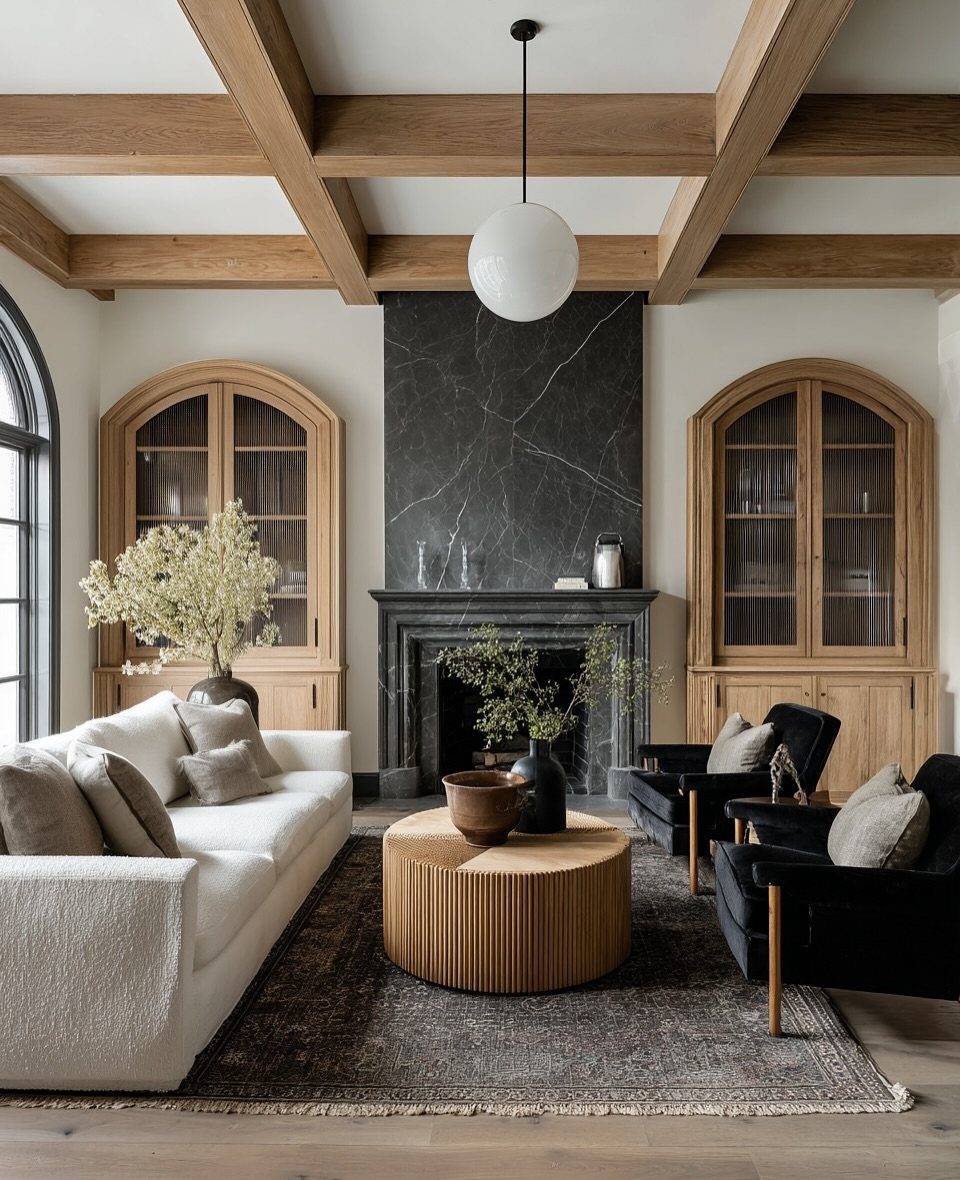
Black marble gives a fireplace more drama than paint or stone veneer can, and the dark surface calms the busy grain of wood beams and cabinets around it.
Keep the sofa white and the coffee table plain, so the marble stays the one polished surface among rough ones. I would choose a honed finish over high gloss, since gloss competes with the beams.
Real marble slab is a hired-out job and costs a lot. Renters can try a marble-look contact paper on a freestanding surround.
20. Circular Black Chandeliers
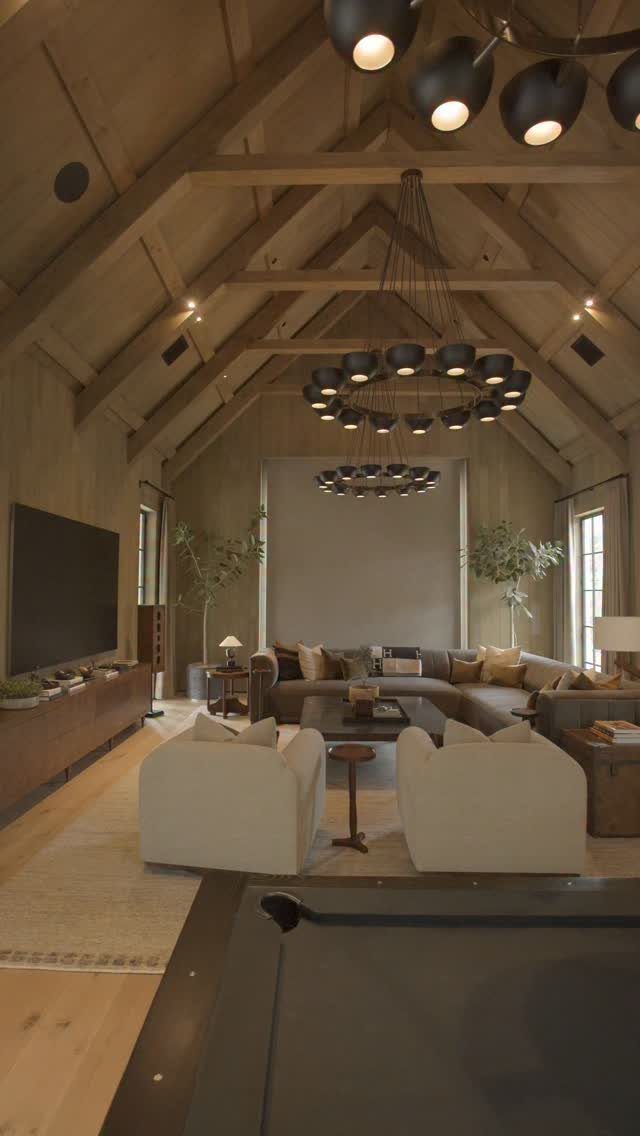
Two large black rings hung low over the seating tie a tall room together. Against a vaulted wood ceiling, their thin outline reads as graphic and light, not heavy.
Black is the contrast the warm wood needs, and a round shape softens all those angled boards. I like a pair over one big fixture because it fills a wide ceiling evenly.
Hang them high enough to clear sightlines to the TV.
21. Wood Pallet Base Seating
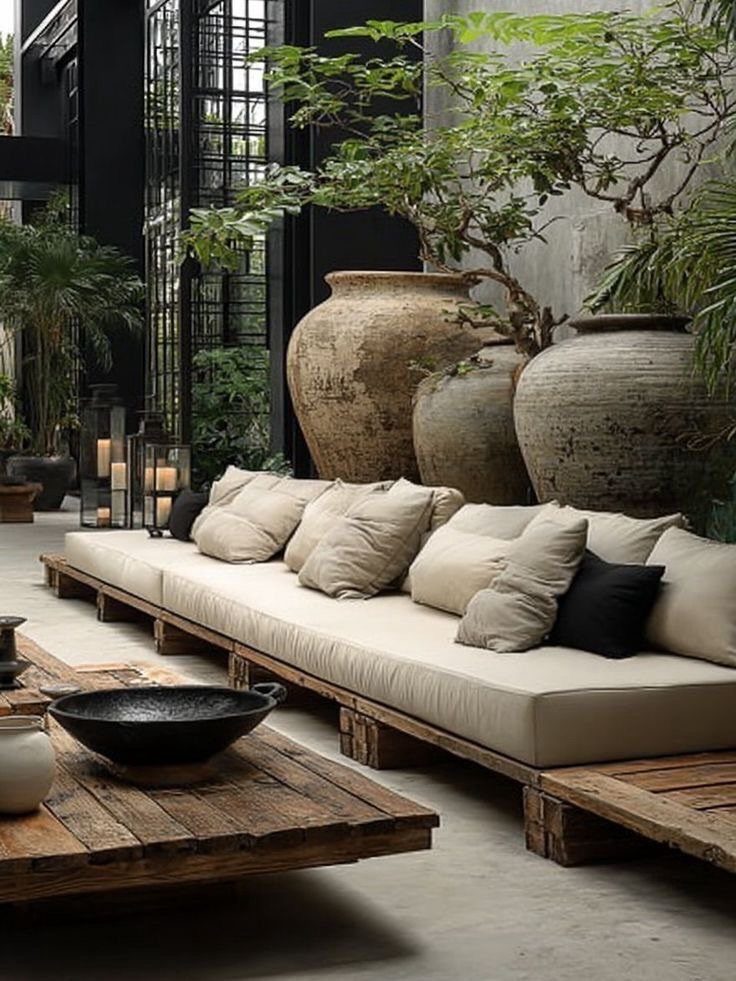
A sofa set directly on pallets sits low and casual, and it costs far less than a finished frame. That is the whole appeal for a small budget.
Sand the boards well so no splinters catch fabric or skin, then add a seat cushion that matches the sofa’s cream tone. Stacking two pallets raises the seat height if one feels too low.
Large clay pots on the floor beside it repeat the earthy look. Pallets are heavy and rough, so test the fit before moving everything around.
Mixing Rustic and Modern Decor
For balance, I aim for about 60–70% natural texture (reclaimed wood, stone) and let black steel hardware and matte metal fixtures fill the other 30–40%.
Too much metal and concrete reads as industrial; too much distressed wood and antique finish turns heavy fast.
Pair one rustic piece with one clean-lined piece. A reclaimed wood coffee table beside a leather sofa with simple lines is the easiest version to copy.
Put the metal where it is easy to swap: lamps, cabinet pulls, table bases, or shelf brackets. Polished metal next to raw wood or stone gives the contrast, and it costs little to change if the balance feels off.
Keep the base palette neutral, then add one or two pops of color for warmth.
Choosing the Right Materials
Build the foundation from oak, reclaimed pine, linen, wool, stone, and leather. These carry the rustic half of the room, and I would spend the most money on the pieces you touch daily, like the sofa and the coffee table.
For the modern half, choose polished metal or glass. A glass-top side table or a polished metal lamp adds sleekness without much visual weight.
Aim for roughly 60–70% natural material and 30–40% industrial accent, so the room stays grounded but not heavy.
When choosing furniture, favor strong shapes over fussy detail. Ornate pieces age badly next to rough and sleek surfaces alike, while visible grain, plain construction, and slim profiles hold up beside both.
Creating a Cozy Atmosphere
A room feels warm when textures play against each other, such as nubby wool against smooth leather, and piling on more objects does little for it.
Lay the base first: warm white or soft taupe walls, one or two wood tones, matte black or aged metal, and upholstered pieces chosen for their shape instead of a busy pattern.
Then layer in boucle, linen, velvet, leather, and woven fibers like cane or wicker.
Keep colors earthy and muted.
Warm gray, cream, beige, clay, mushroom, olive, tobacco, charcoal, and deep brown all support texture instead of competing with it. A terracotta wall can add depth if you want more color.
Add personal touches last, a few at a time, and stop when each one still has room to be seen.
Frequently Asked Questions
How to style a rustic living room?
I typically start with a warm neutral on the walls, then bring in one or two wood finishes, something metal in black or bronze, and a handful of different textures: a wool throw, linen on the sofa, leather on an accent chair, maybe a jute rug.
The palette stays close to what you’d find outside: cream, terracotta, sage, chocolate brown. Texture is what makes the room feel warm, so layer it before adding more objects, and add personal touches last.
What is modern rustic style?
This style takes the wood and warmth of rustic rooms and pairs it with the spare lines and edited look that define modern design.
Think reclaimed wood or stone paired with black steel, glass, or polished metal. The mix keeps the room warm without making it feel heavy or dated.





