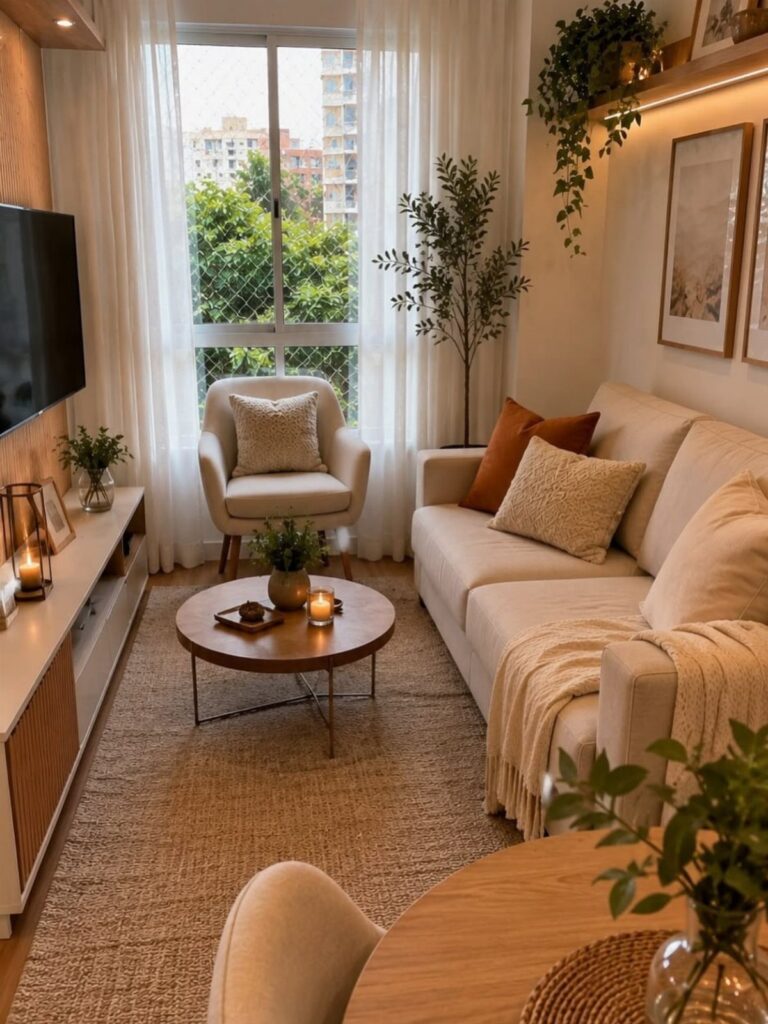
In a small flat, the idea that fits is the one that solves for the constraint you face: not enough floor space, not enough wall space, or not enough light.
Ideas here range from a statement rug or sheer curtains to wall-mounted pieces like floating shelves and a fold-down workspace, so renters can choose between options that need no holes and ones that require drilling into studs.
If your lease rules out holes, look at rugs, storage ottomans and floor lamps first, and save the wall-mounted TV and floating shelves for when you can anchor into studs.
1. Floating Shelves
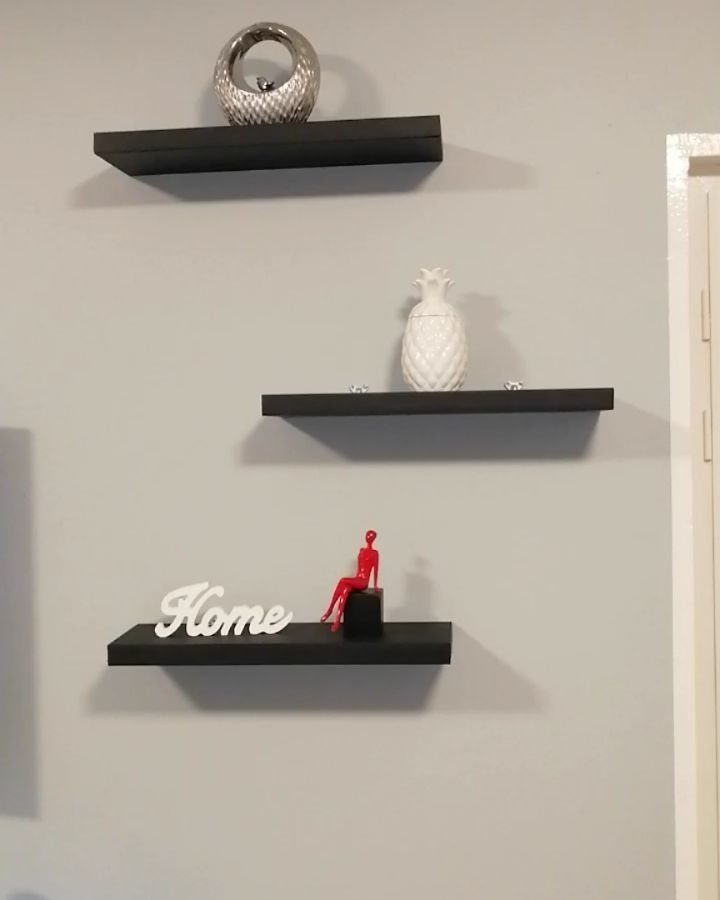
3 black shelves on a grey wall give you a display spot without using any floor. Keep the styling to a few objects per shelf, mixing heights and finishes, so the wall reads as arranged and not crowded.
Black against grey is a strong contrast, which makes a sparse row look deliberate. Hanging them at a staggered or even spacing matters more than the items themselves.
2. Tiny Workspace
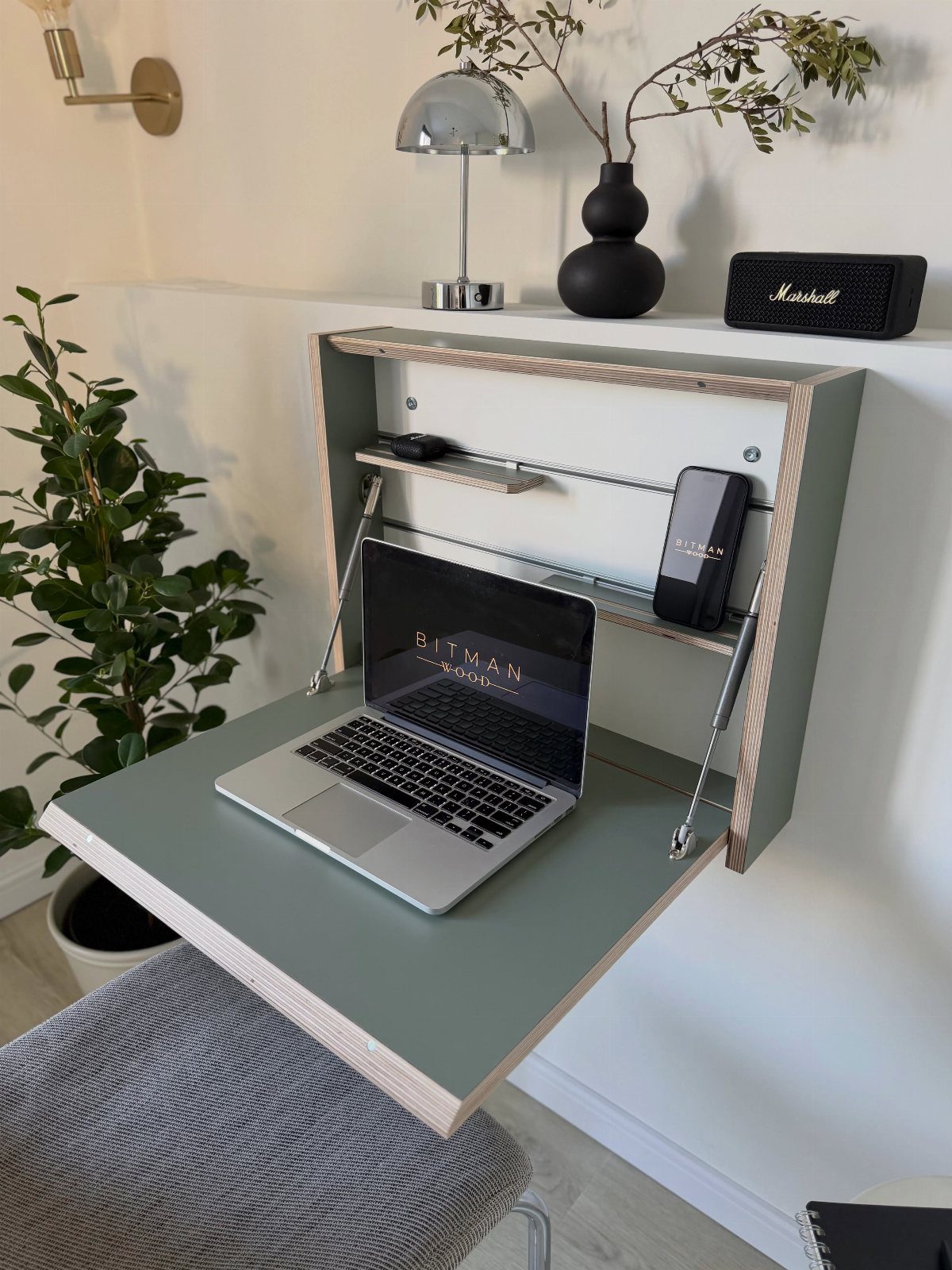
A fold-down desk mounted on the wall turns a spare stretch of living room into a workspace, then disappears when the laptop closes.
For a renter with no spare room, that is the right trade: it costs wall space, not floor space.
Sage green keeps it soft against a plain wall.
Small shelves beside or above the desk hold a phone, notebooks and chargers, so the surface clears fast. Mount it into studs, since a laptop and your forearms add real load.
3. Storage Ottomans
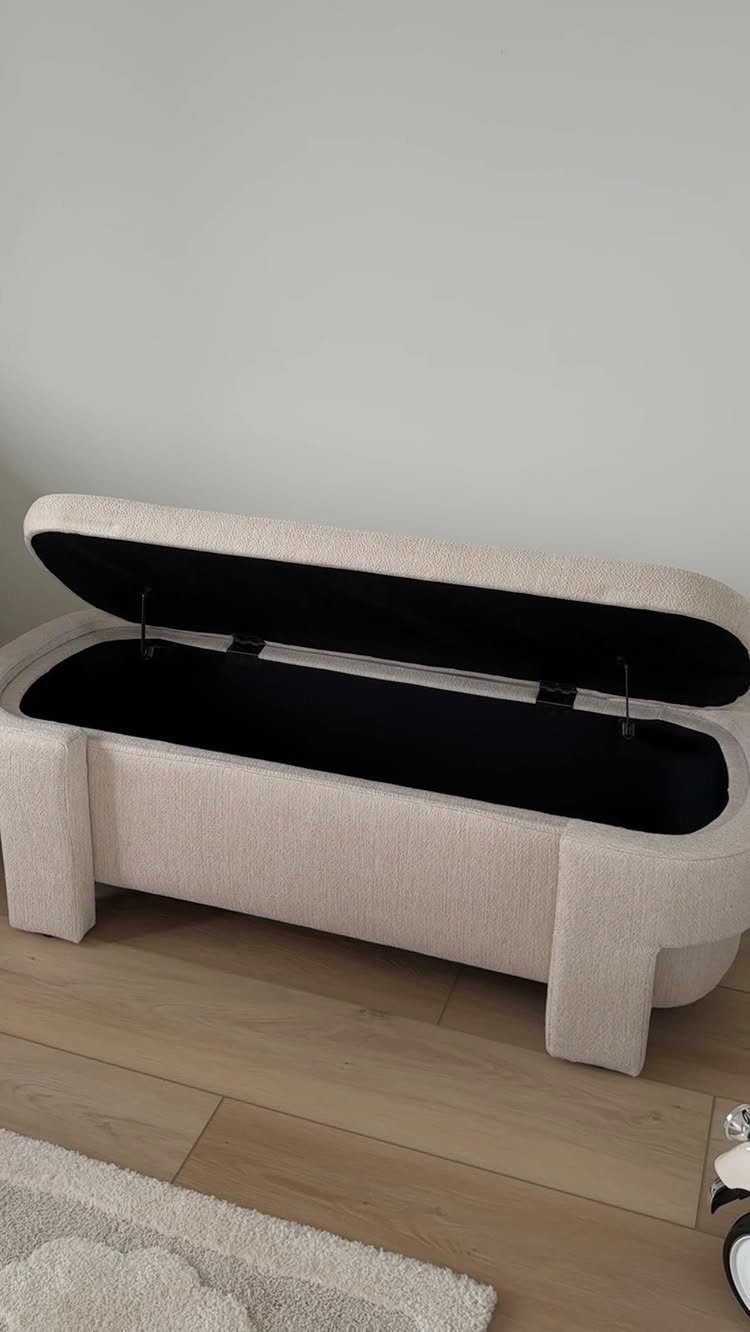
Lift the lid on a cream fabric ottoman and you get a hiding place for throws, remotes and board games, which is what rooms this size lack.
Check that the lid sits flat and holds weight if you plan to rest feet or a tray on it. A dark lining hides scuffs inside.
4. Soft Beige Color Palette
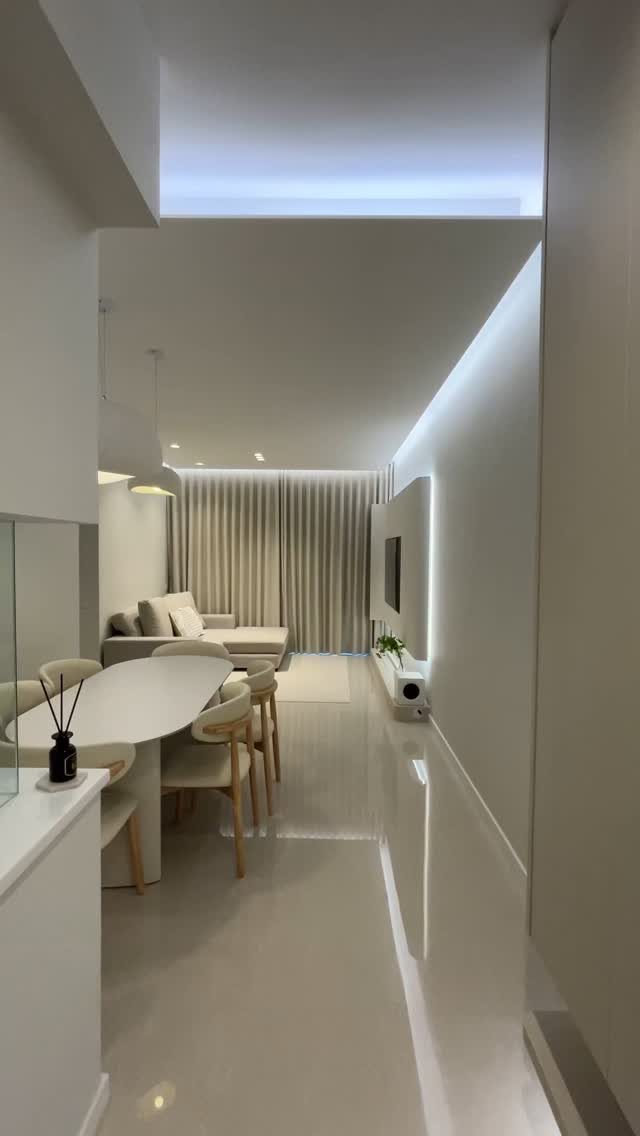
Light walls and a beige sofa make a narrow room feel wider, because few contrasts break up the sightlines. White and beige also let a dining area and seating area read as one space instead of two cramped ones.
Stay within a few close shades and vary texture for interest: a nubby sofa fabric against smooth painted walls.
Indirect cove lighting, as in this room, adds glow without a lamp taking up a surface. Paint costs less to try than fabric or furniture, if your lease allows it.
5. Glass Coffee Tables
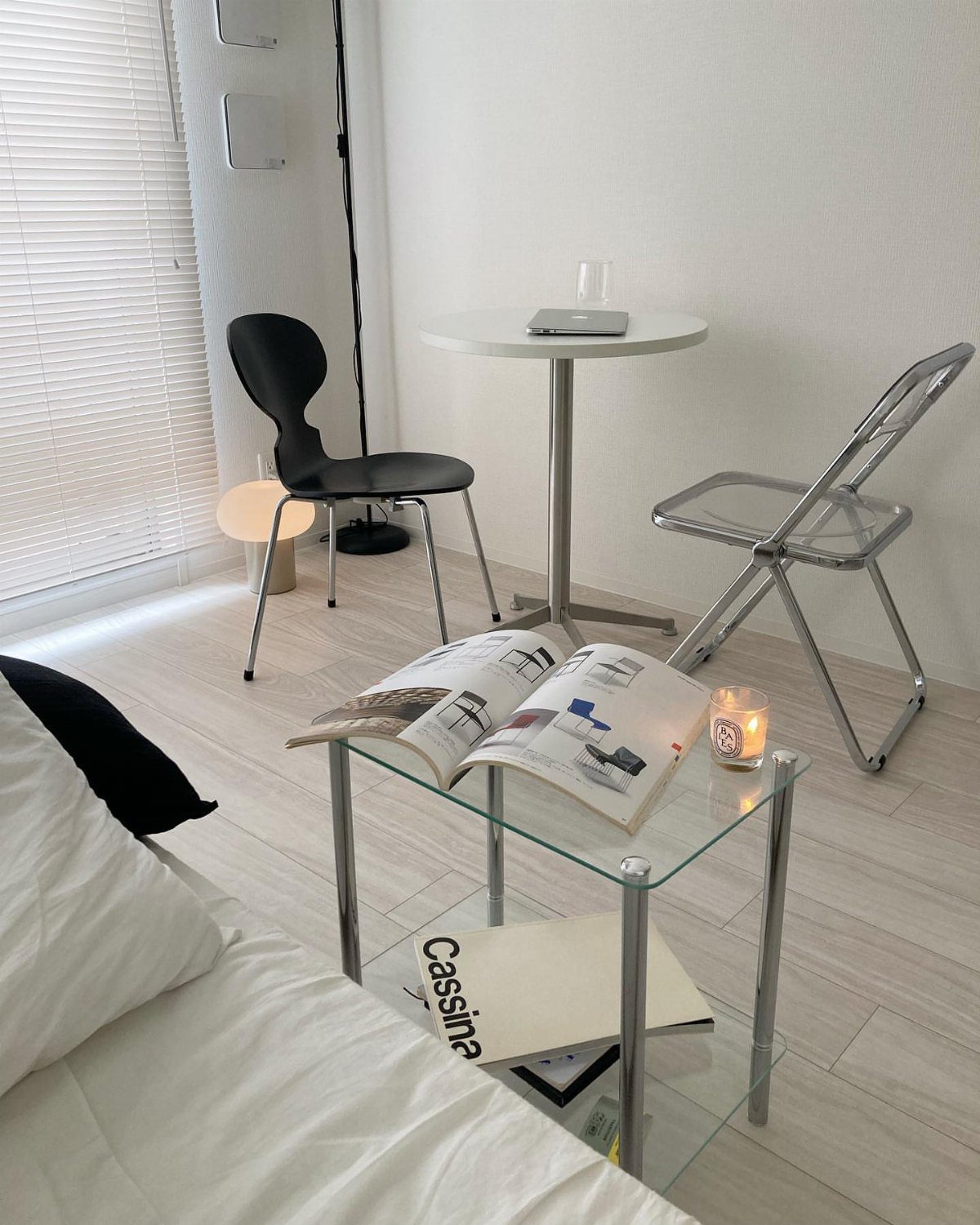
Glass lets the floor and rug show through, so a coffee table barely registers as furniture in a tight room. That is why I like it beside a small bistro table and chairs: nothing blocks the view.
The cost is upkeep.
Fingerprints and dust show, so keep a microfiber cloth nearby. Styling stays simple: one book and one candle are plenty, since everything on the top is visible from every side.
6. Low Sofas
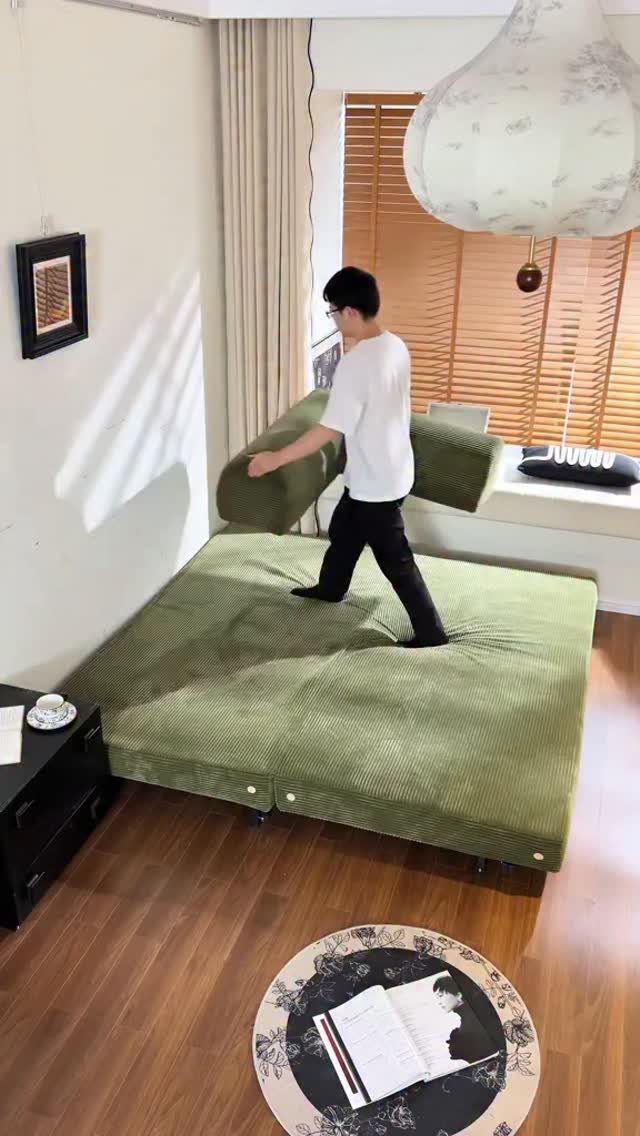
A sofa with a low back and seat keeps the eye line down, which makes walls and windows look taller above it. An olive corduroy version adds texture and color without feeling heavy.
Measure your seat height before buying and sit on one if you can, because very low seats are harder to stand up from.
A round coffee table pairs well, with no corners to bump when floor space is tight. Low sofas suit rooms with a lot of wall to show off.
7. Statement Rugs
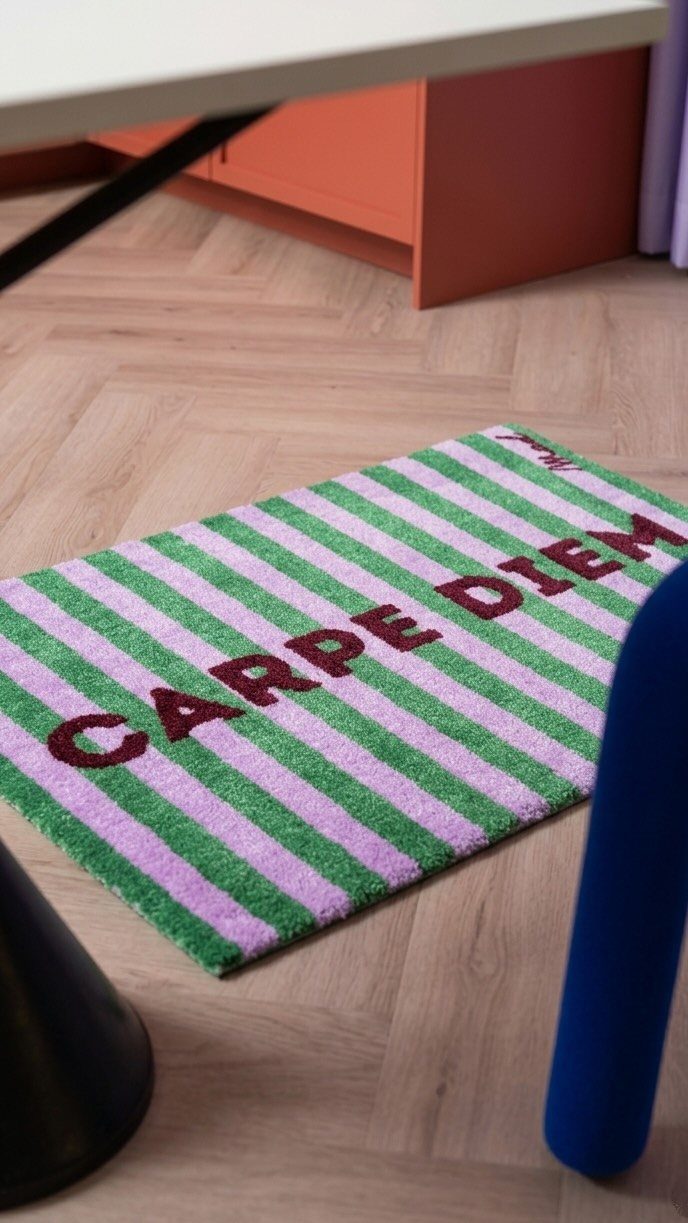
A rug with a bold stripe and a word across it does the job of art on the floor, which suits a flat where the walls are already busy or the budget is tight.
Let it be the loudest piece and bring everything else down a notch.
Herringbone wood is busy on its own, so I would hold the other pieces to a narrow palette. Pick the rug first, then match accents to it.
8. Corner Sofa
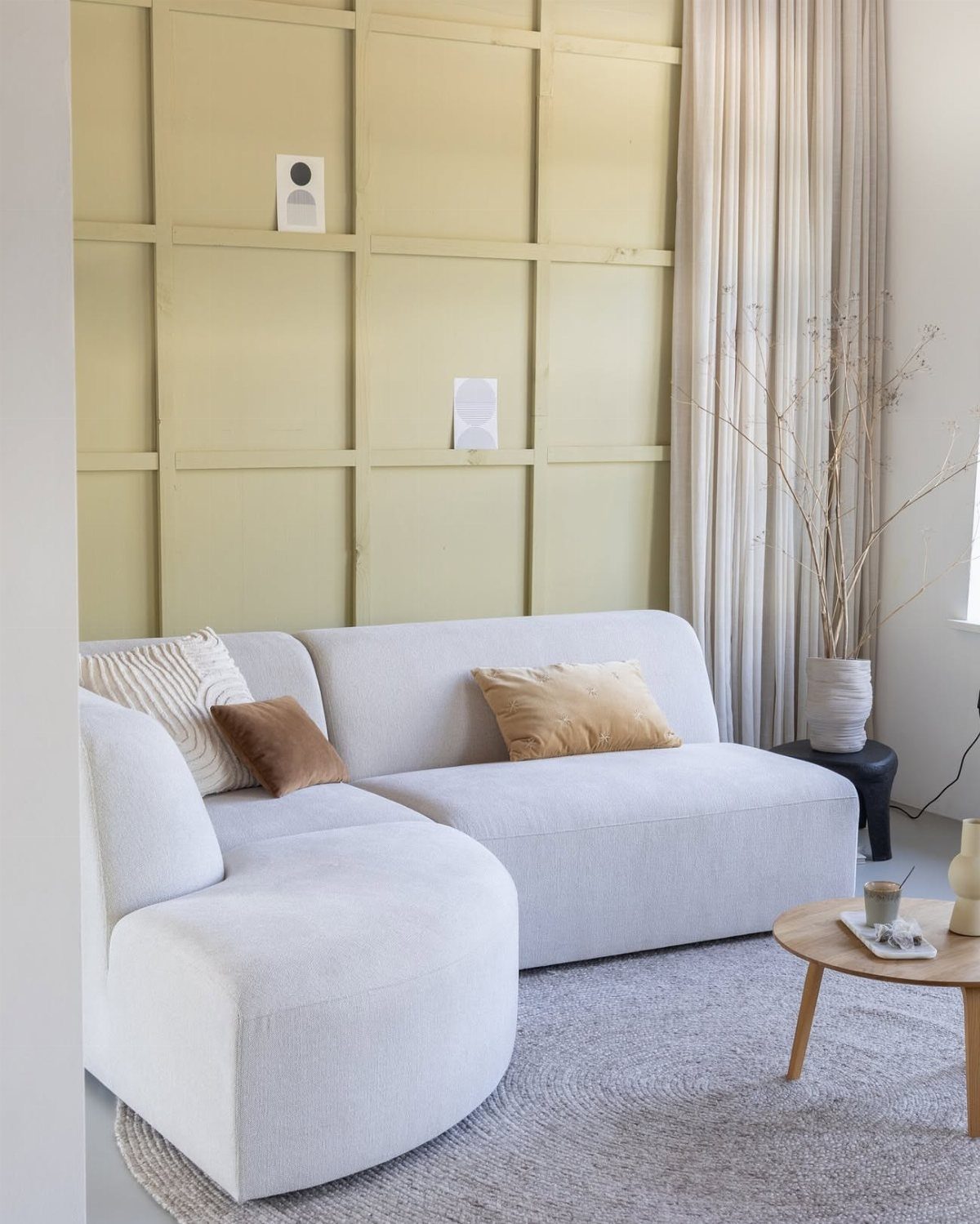
A curved light grey corner sofa gathers seating into one footprint, so the middle of a small room stays open. Pair it with a rug under the front legs to tie the shape together.
Measure both walls before ordering, plus the doorway the sofa has to pass through. Neutral pillows keep it calm against a strong wall color.
9. Cover Dark Floors
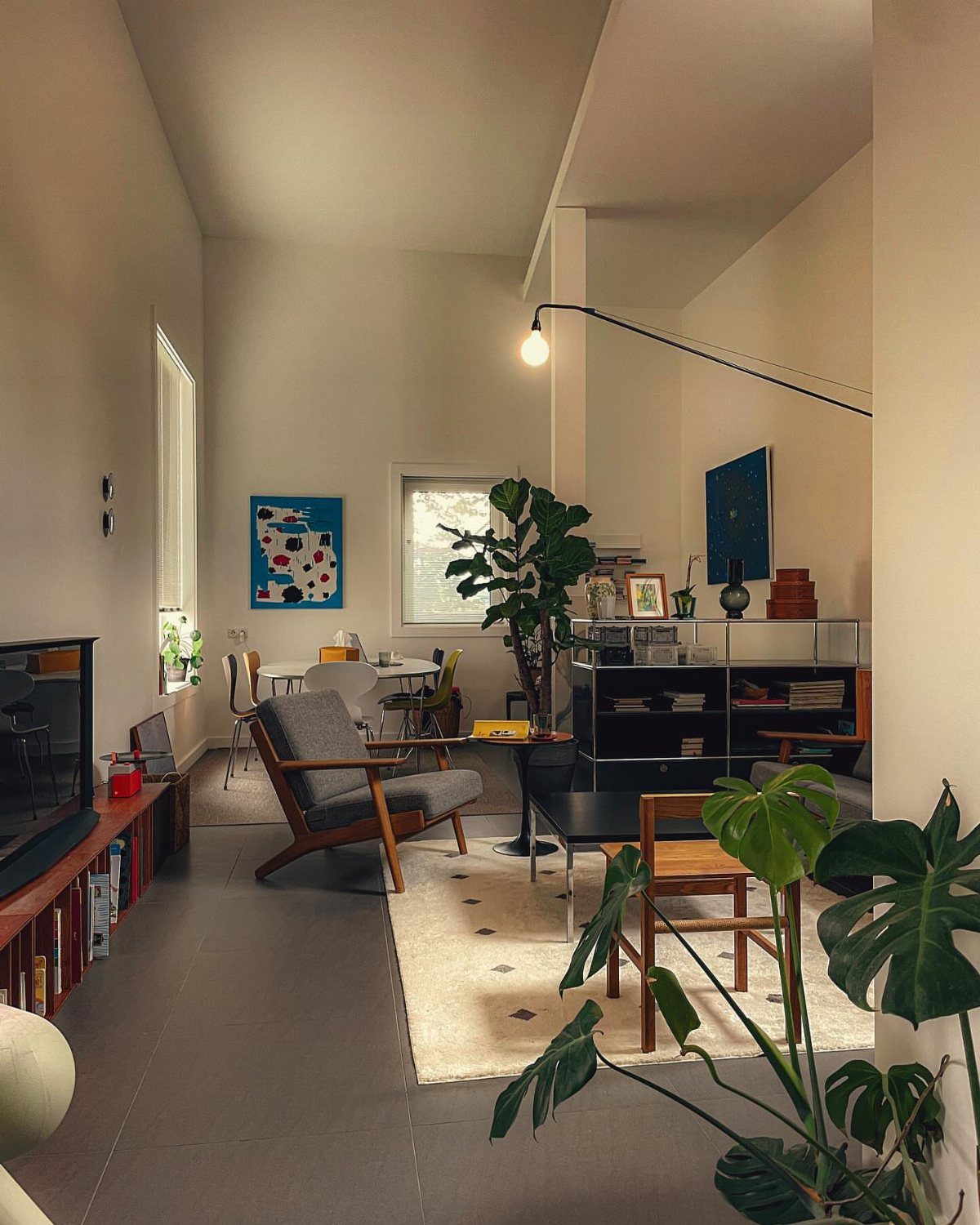
A cream rug laid over dark grey floors lightens the whole room and gives the eye a bright base to work from. In a flat, that contrast makes the floor read larger.
Choose a size that reaches under the front legs of the sofa and chairs, not a small square floating in the middle.
Too small a rug chops the room into pieces. Rugs cost far less than replacing a floor, which matters if you rent.
10. Sheer Curtains

Sheer white curtains soften a window without shutting out daylight, which is what a small room needs. Subtle pattern adds interest without weight.
Hang the rod closer to the ceiling than the window frame, so the panels draw the eye up. Panels cost little, and they are easy to swap.
11. Wall Sconces
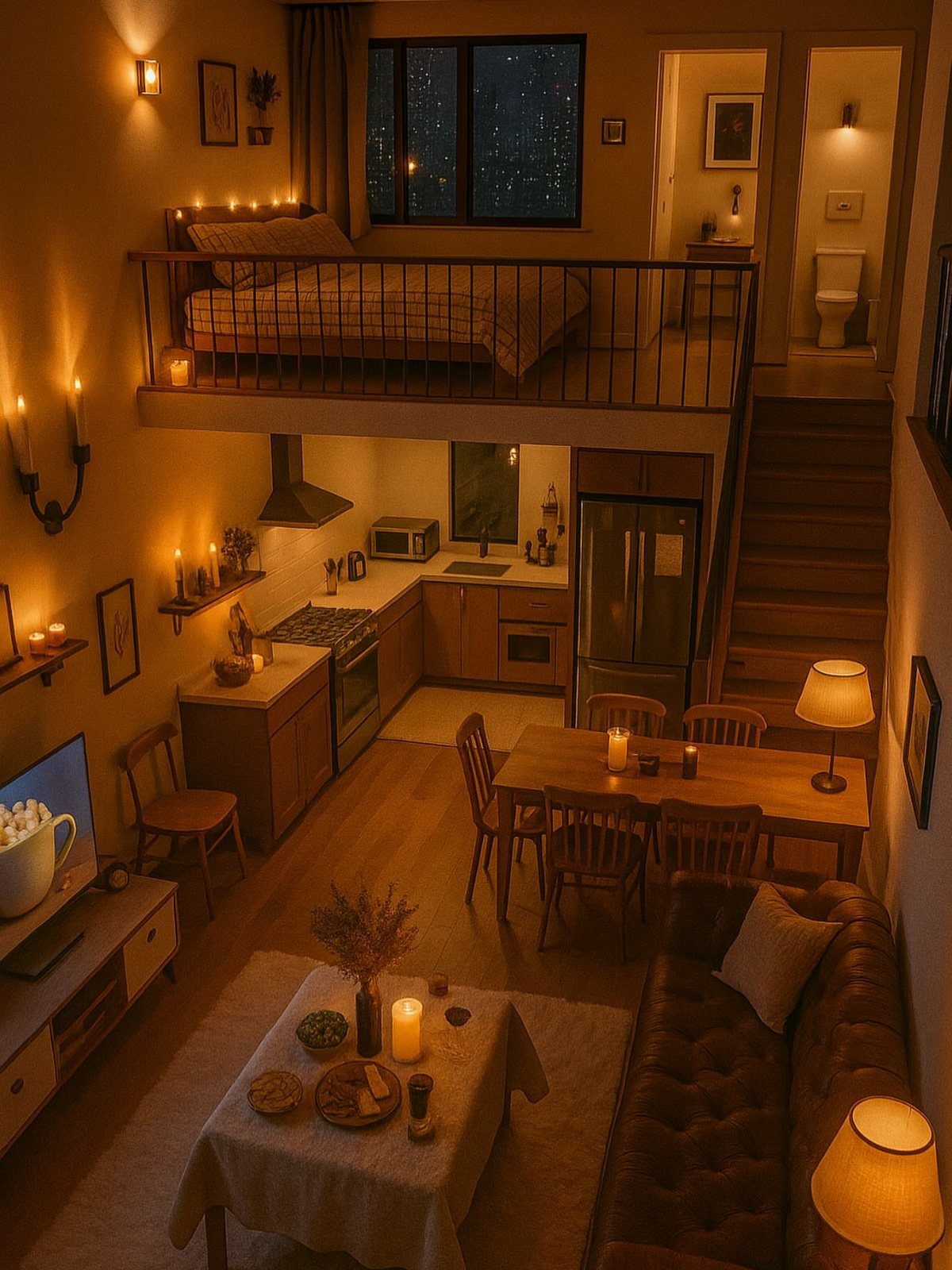
Wall sconces put light at eye level without taking up a table or floor, so a studio that has to serve as bedroom, kitchen and living room can still glow warmly in the evening.
Plug-in models with a cord cover suit renters, since no wiring is needed. Choose warm bulbs, and place two at different spots so the light layers instead of landing in one place.
12. Foldable Tables
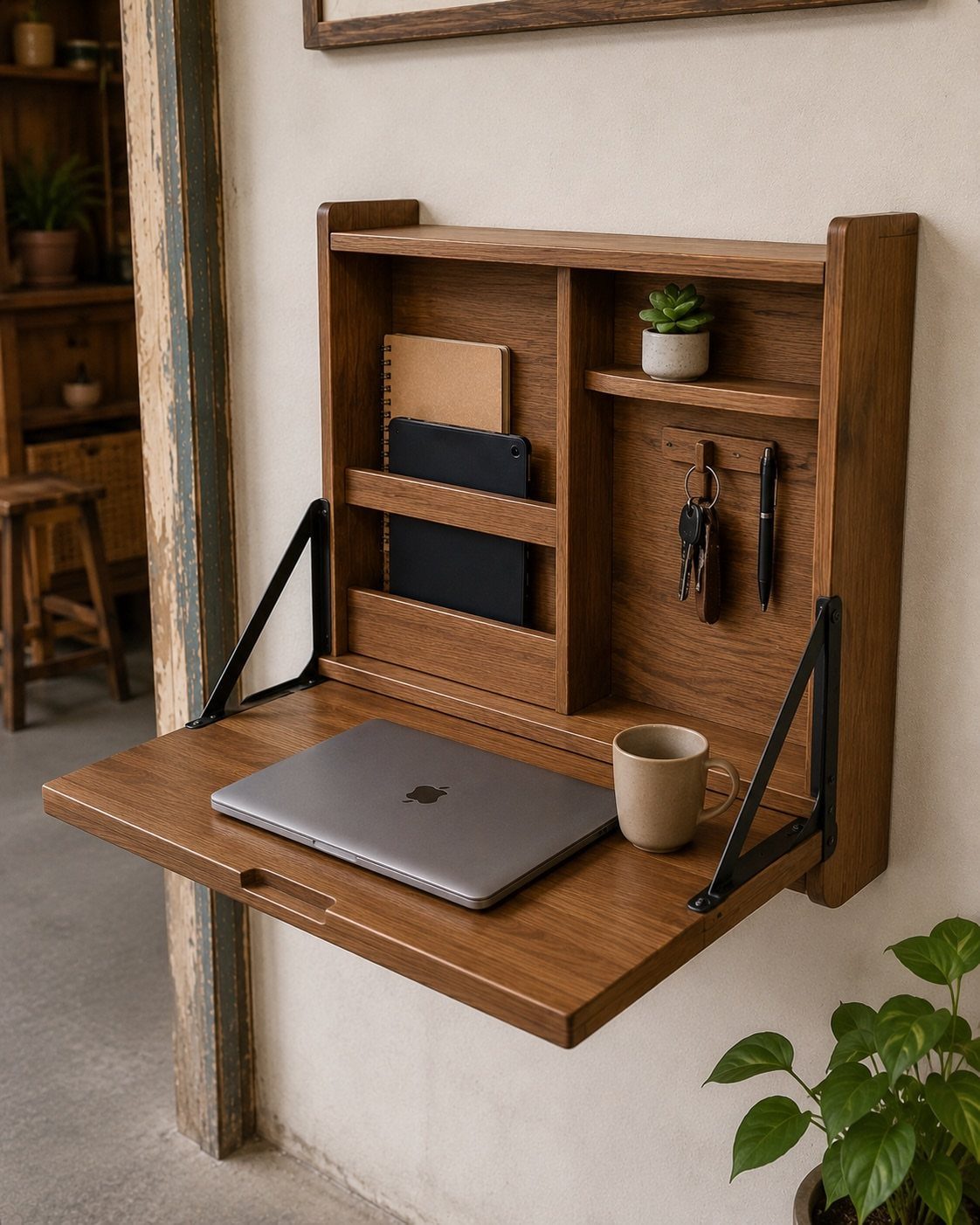
A wall-mounted foldable table gives you a laptop desk in the evening and a clear wall the rest of the time. Built-in shelving, like the version here, keeps small things off the surface.
I would favor a wood finish against white walls, which looks warm and stays simple. Anchor it into studs, because the hinge takes the load every time you lean on it.
13. Indoor Plants
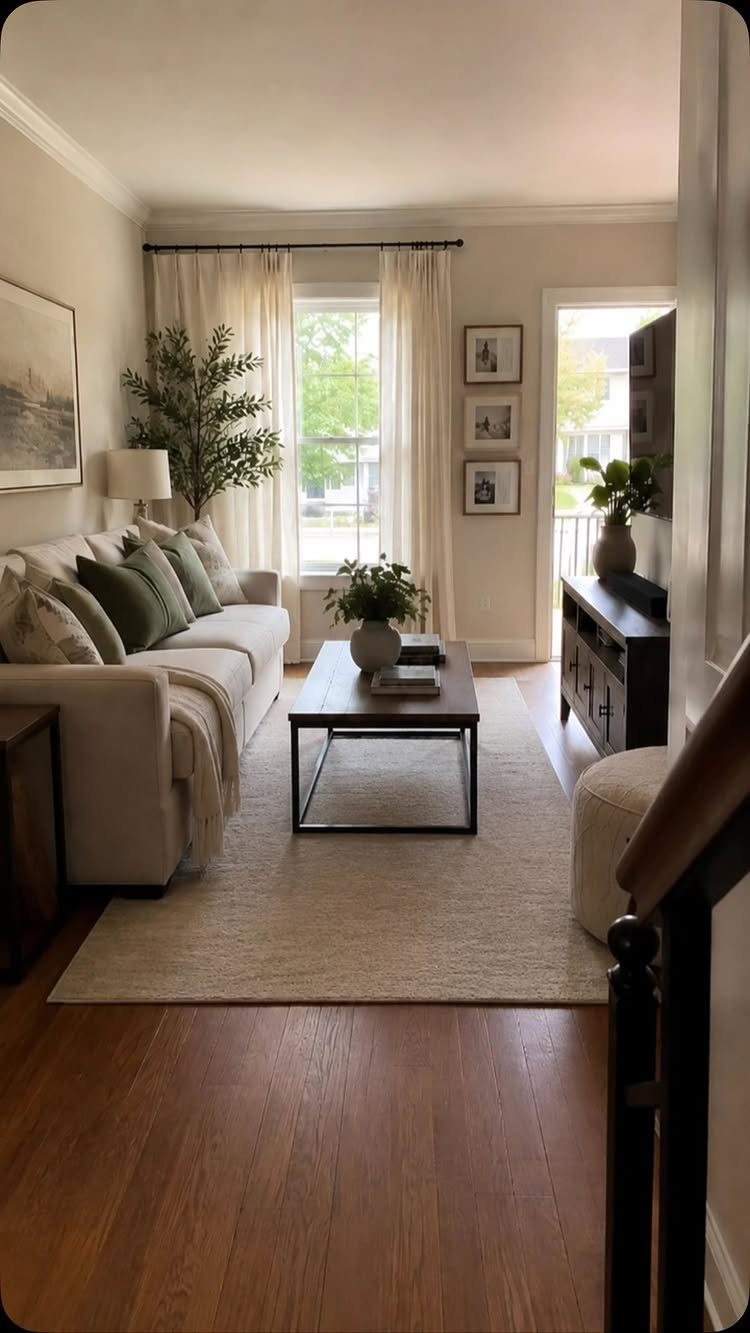
Three plants spread around a room do more than one big pot in a corner, because the green repeats at different heights and the eye keeps moving.
Here it picks up the green pillows on the white sofa, and a plant near the doorway pulls the outdoor view inward.
Place one tall plant on the floor beside the sofa, a smaller one on a side surface, and keep the coffee table clear.
Plants cost far less than art, and a pot on the floor takes up almost no walking space.
14. Wall-Mounted TV
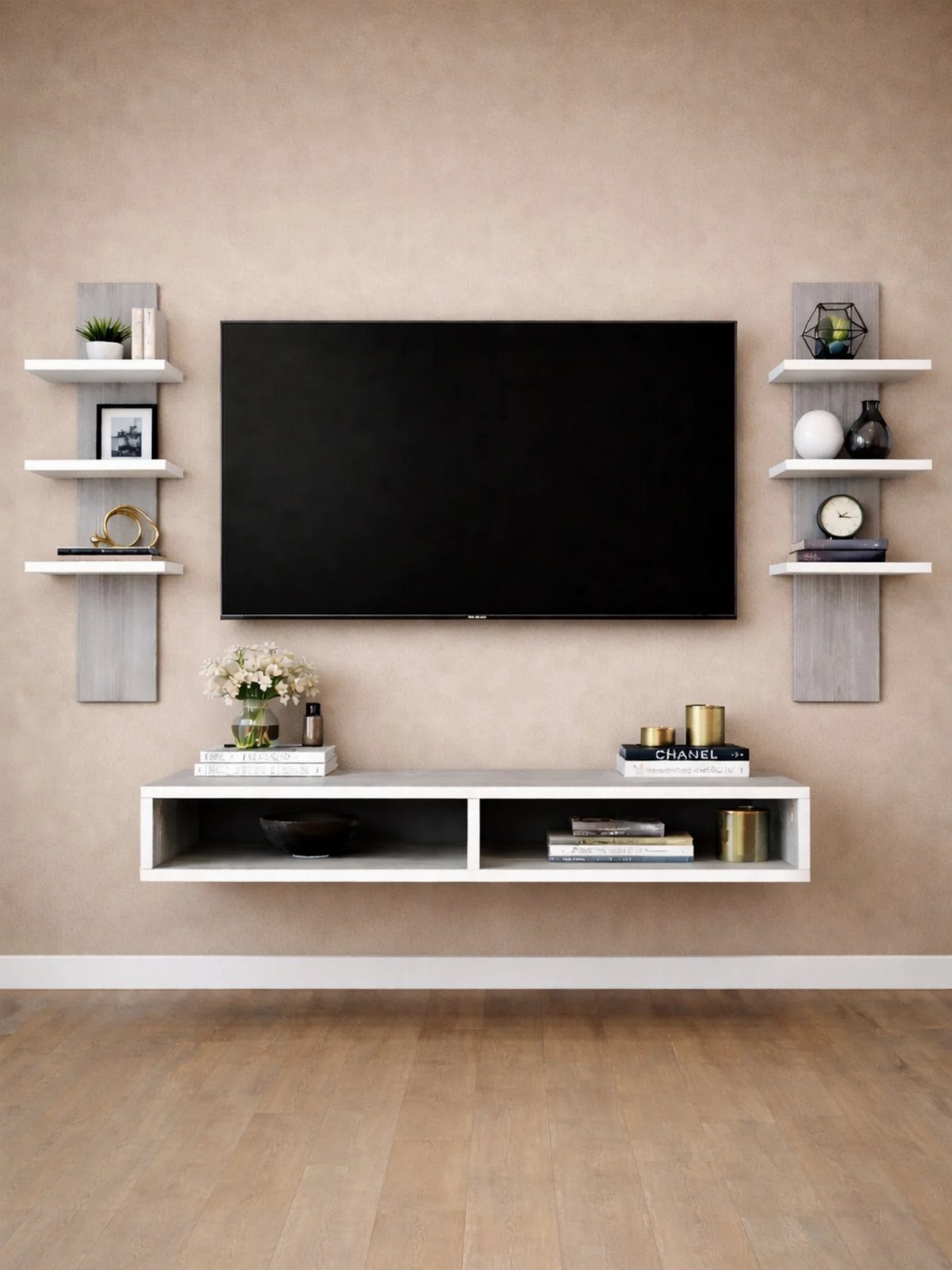
Mounting the TV on the wall frees the entire stand footprint, and a floating console beneath it keeps the floor visible all the way to the wall. In a small room that visible floor makes the space read bigger.
A low console below the mount holds remotes and a few books without blocking the screen.
Hide the cords behind the screen before you hang it, and mount into studs.
Importance of Natural Light
Start with where the furniture sits. A bookcase or tall cabinet in front of a window blocks more daylight than any curtain does, so move big pieces off the glass and keep the window wall as open as you can.
A low piece under a window is fine; a bulky one is not.
If you want something over the glass, choose streamlined blinds or light, airy fabric over heavy drapes.
Furniture Arrangement Tips
Float the furniture a foot or two off the walls and leave a lane for traffic between the groupings. A visible route from the door to the seating keeps people from feeling boxed in as they enter.
In a narrow room, resist lining sofas and armchairs up on opposite walls. That formal setup can feel like a waiting room.
Aim the chairs and sofa at one thing: the fireplace, a console table, the window.
Creating a Cozy Atmosphere
Cozy comes from layers, not from more stuff.
Layer in a few materials: a cotton throw, a wool rug, something woven. That adds warmth and depth without cluttering the room.
Scale works in your favor here. Furniture in a compact room sits close together, so the space feels gathered around you instead of stripped back.
Make each piece earn its place. Let color build depth rather than distraction, and check proportion and layout before you buy anything else.
Small living rooms are often treated as spaces to disguise, strip back and simplify until they lose the intimacy that makes them special. But scale can be an asset – furniture sits in easy conversation and creates a sense of a room gathered cosily around you.
Frequently Asked Questions
How to set up a small living room?
Floating the sofa and leaving open floor space between the door and seating makes a small room feel less cramped.
Point the sofa and chairs at one focus, such as a window or console, instead of lining them up on opposite walls.
Keep big pieces off the window wall so daylight reaches the room, and choose storage like an ottoman with a lid to keep clutter hidden.
How to decorate a living room with simple things?
Start with a rug, plants and a few textiles. A bold rug can act as the art, and you then keep everything else in a narrow palette.
A small collection of plants at varied heights paired with mixed textures like cotton, wool and natural fiber brings dimension without filling every surface. All of these cost far less than art or new furniture.
What are some good interior design ideas for small spaces?
Use the walls and light colors before you spend on floor space. A wall-mounted fold-down desk or table gives you a workspace that disappears, and wall sconces add light without using a surface.
Pale paint and a neutral sofa open up tight dimensions, and floor-to-ceiling sheers bring in natural light while drawing the eye upward.





