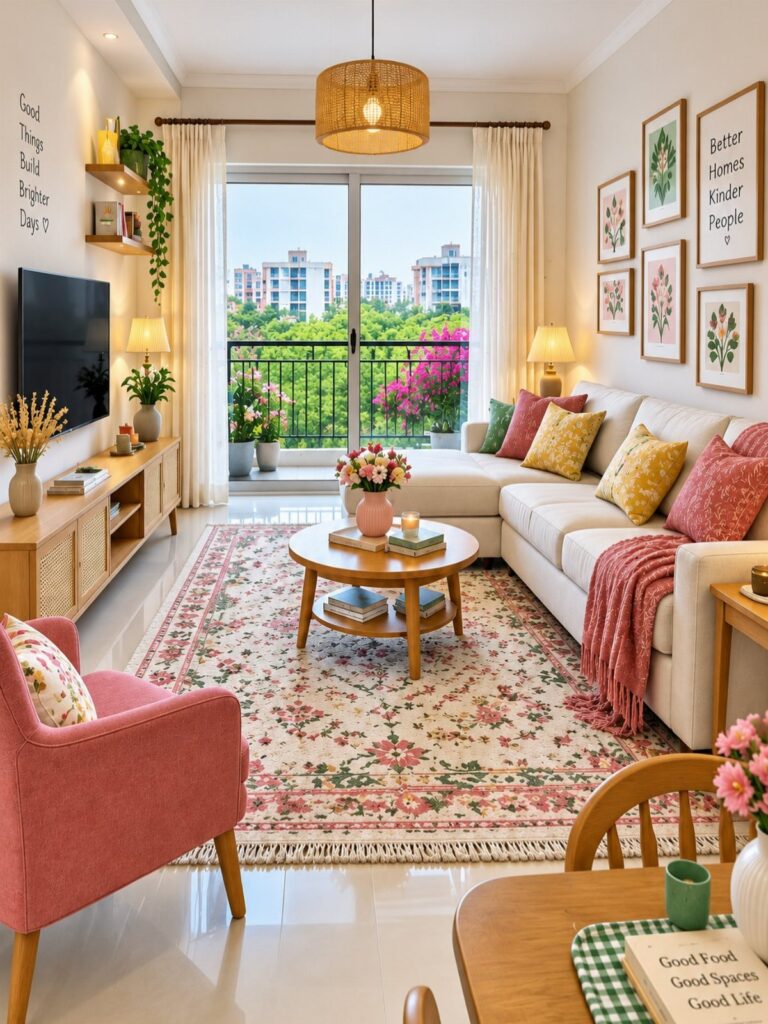
Built-ins with drawers and window seats mean carpentry that outruns a weekend and a small budget, while a peel-and-stick mural or a gallery wall hung on removable strips leave the wall as you found it.
Between those sit a low coffee table, a statement rug that rolls up, and a floating console. Whatever the lease allows, tape the footprint of any big piece on the floor before buying.
1. Gallery Wall
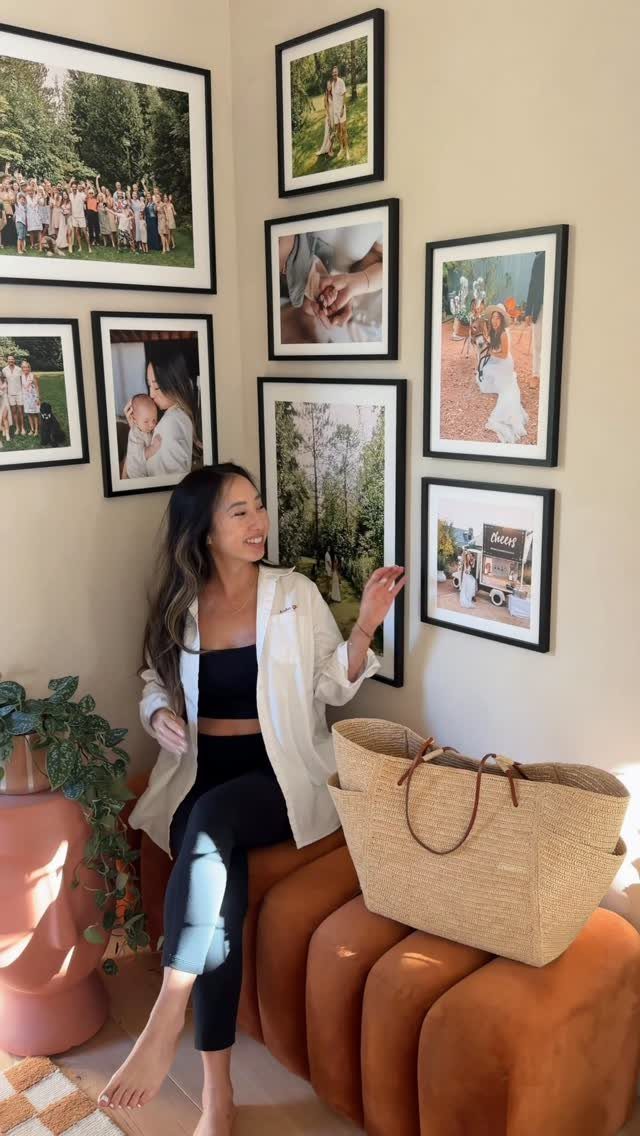
Frames do the work of making a plain wall feel like yours, and they use height instead of floor space, which a small living room rarely has to spare. Family photos suit this best, since personal pictures never look random.
Keep the group tied together with one or two frame finishes and a consistent mat color. Cut paper templates, tape them up, and shuffle before hammering a single nail; renters can use removable hanging strips to protect the wall.
2. Built-in Shelves
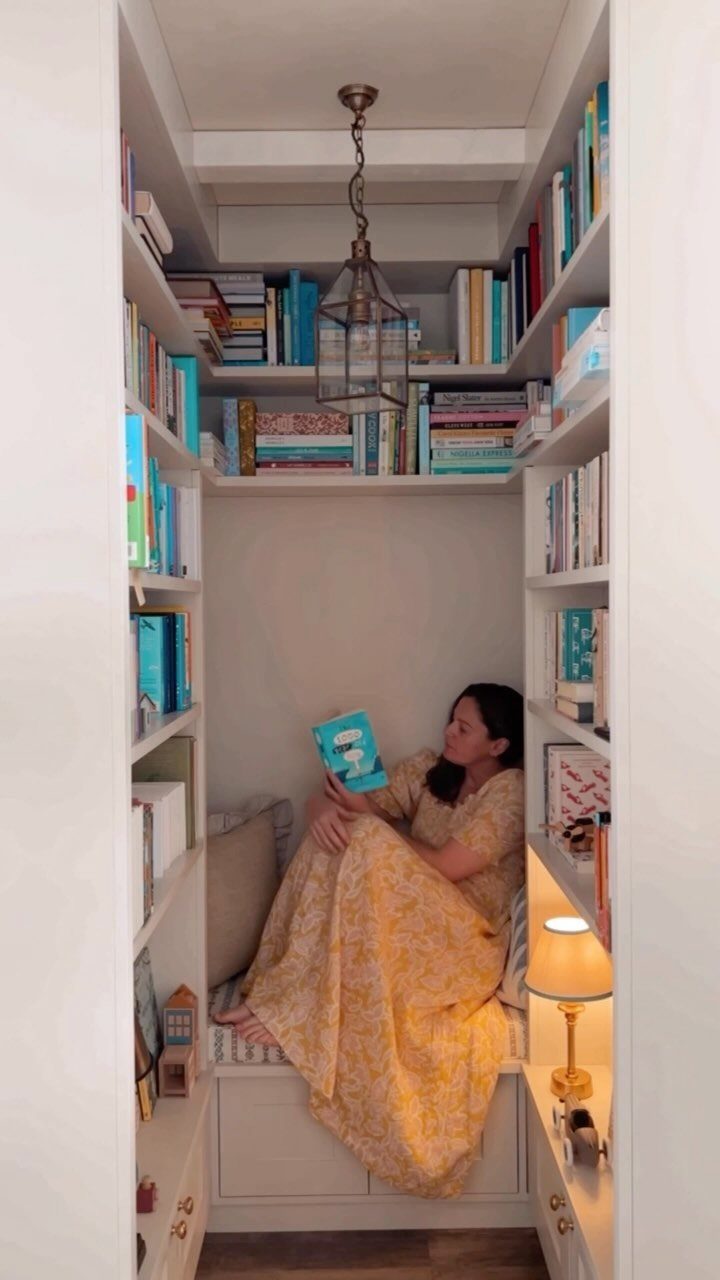
A wall of shelving with a seat or reading corner built in turns dead wall into storage and a place to sit. Painting the shelves the same white as the walls keeps the bulk from weighing down a small room.
Real built-ins cost more than a weekend and a budget allow, so many renters get a similar look by lining up freestanding bookcases and adding trim.
3. Large Art Piece Focal Point

One oversized painting can do more for a small room than a dozen little frames. Hung over the sofa, a single big piece gives the eye a place to land and makes the wall feel planned.
Pick a canvas that spans most of the sofa’s width, and pull one or two of its colors into pillows so the art feels connected to the seating.
Large originals get expensive, so consider a big print or a thrift-store find.
4. Monochrome Palette Living Room
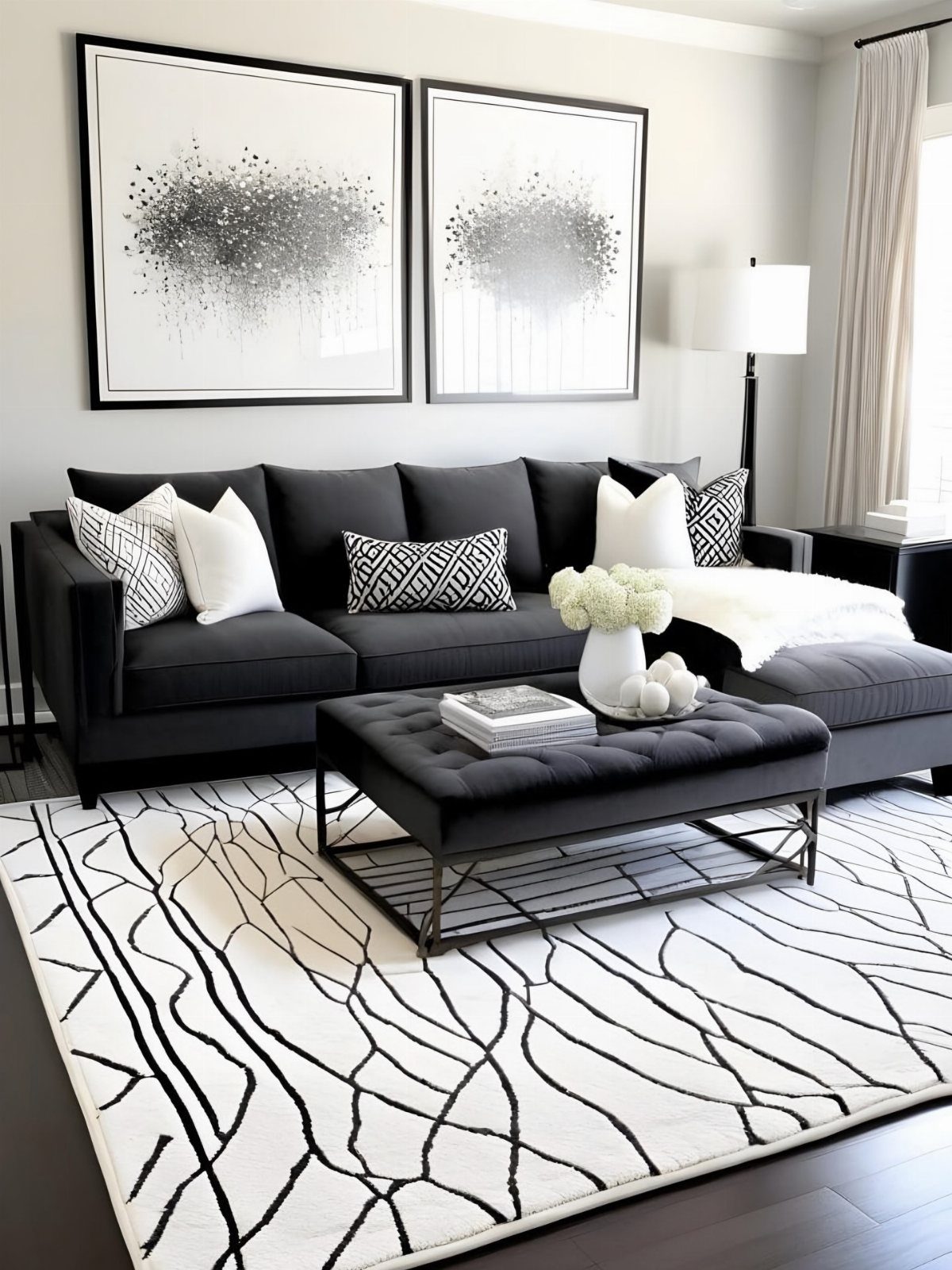
Black and white only, with gray as the bridge, gives a small room a clean, graphic look. Repeating the 2 colors in different shapes keeps it from feeling flat: a patterned rug, a tufted ottoman, large abstract art.
I would choose one dark anchor, like the sofa, and let the rug and walls stay light. Too much black closes a room in, so give the dark pieces plenty of light surface around them.
5. Window Seat with Storage
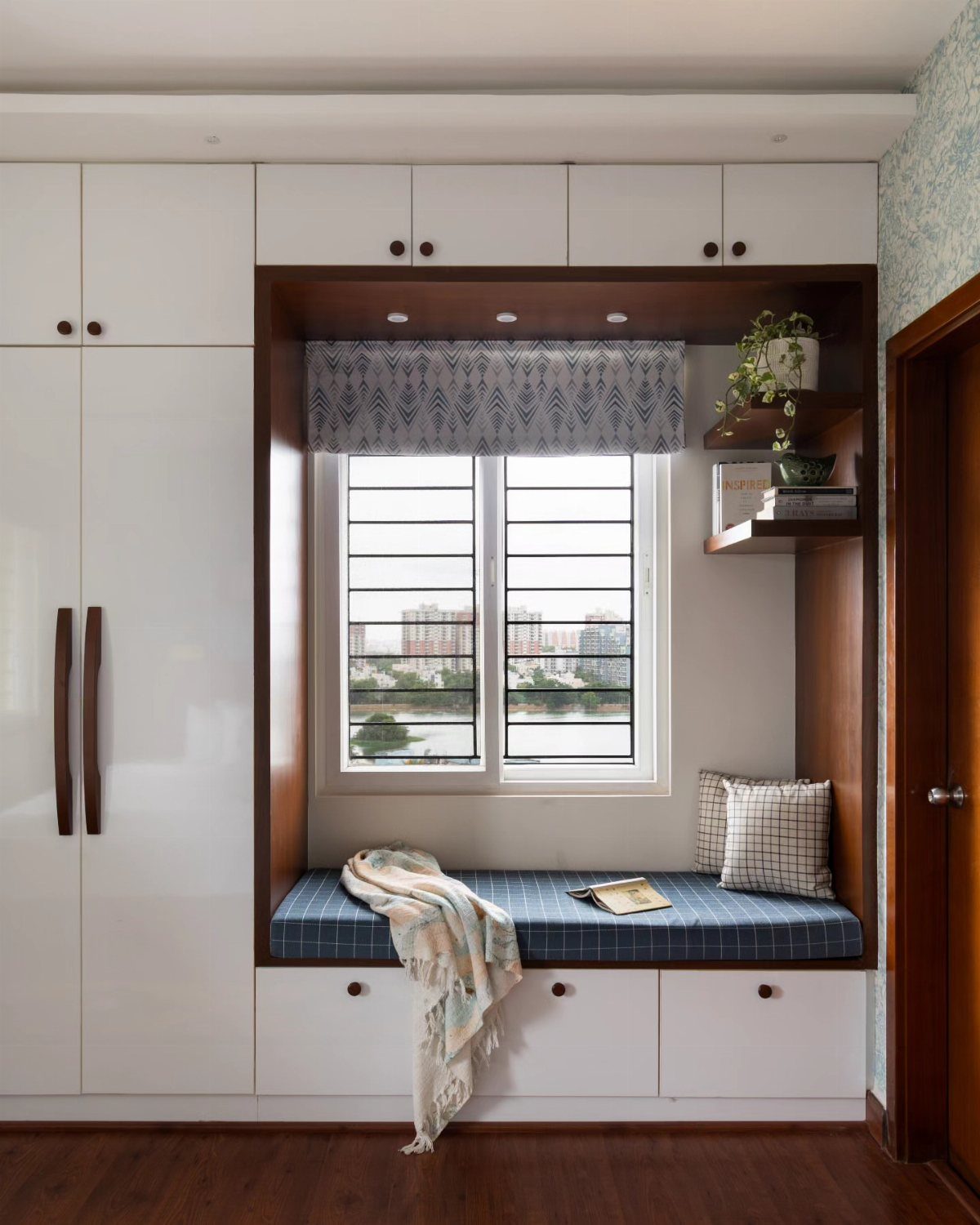
Drawers under a window cushion give you seating and hidden storage in the same footprint. Blankets, board games and extra pillows disappear into them, which clears the clutter a small room collects.
A cushion in a color you love, like blue against white cabinetry, makes the seat a feature. This is real carpentry, so budget time and money accordingly; a bench with a lift-up lid is an easier route for a weekend.
6. Light Colors
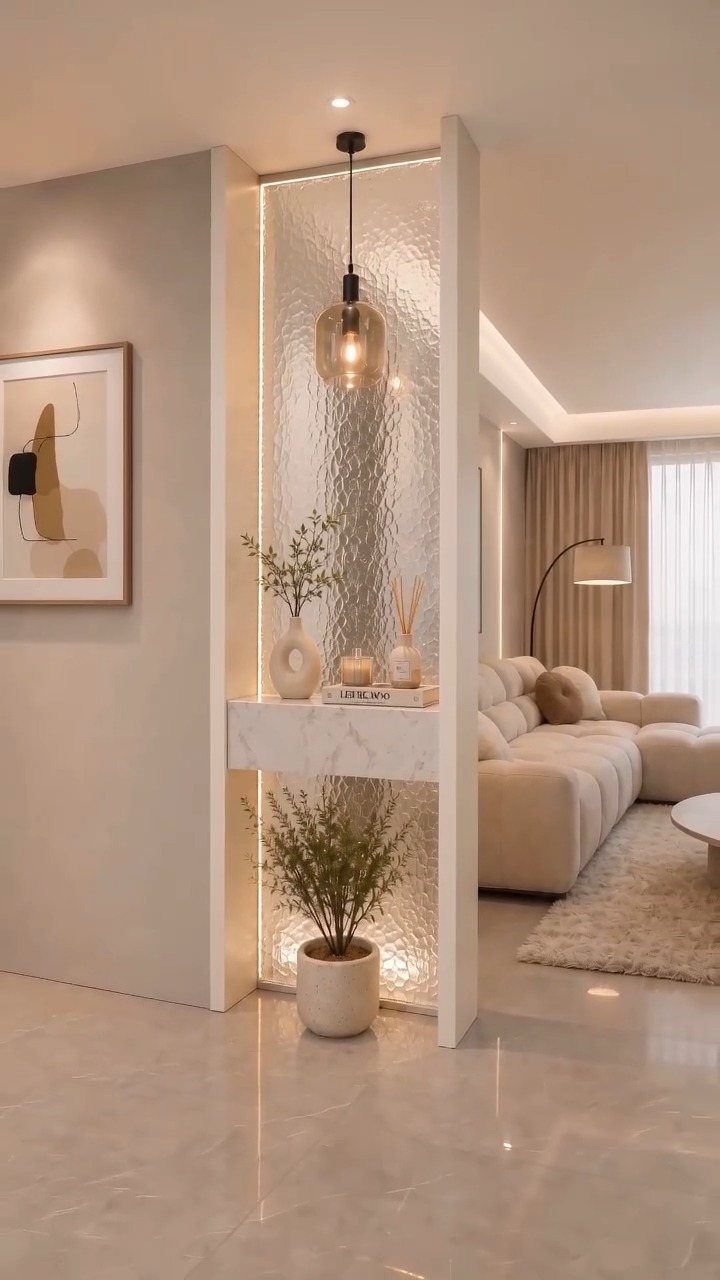
Pale walls, a light sofa and neutral flooring make a room look larger because less visual weight breaks up the space. Keep every surface in the same soft family of tones, then add interest through texture instead of color.
A fluted glass divider is a good example: it separates zones while letting light through. Light colors show stains faster, so I favor washable slipcovers on the sofa.
7. Mix of Lighting
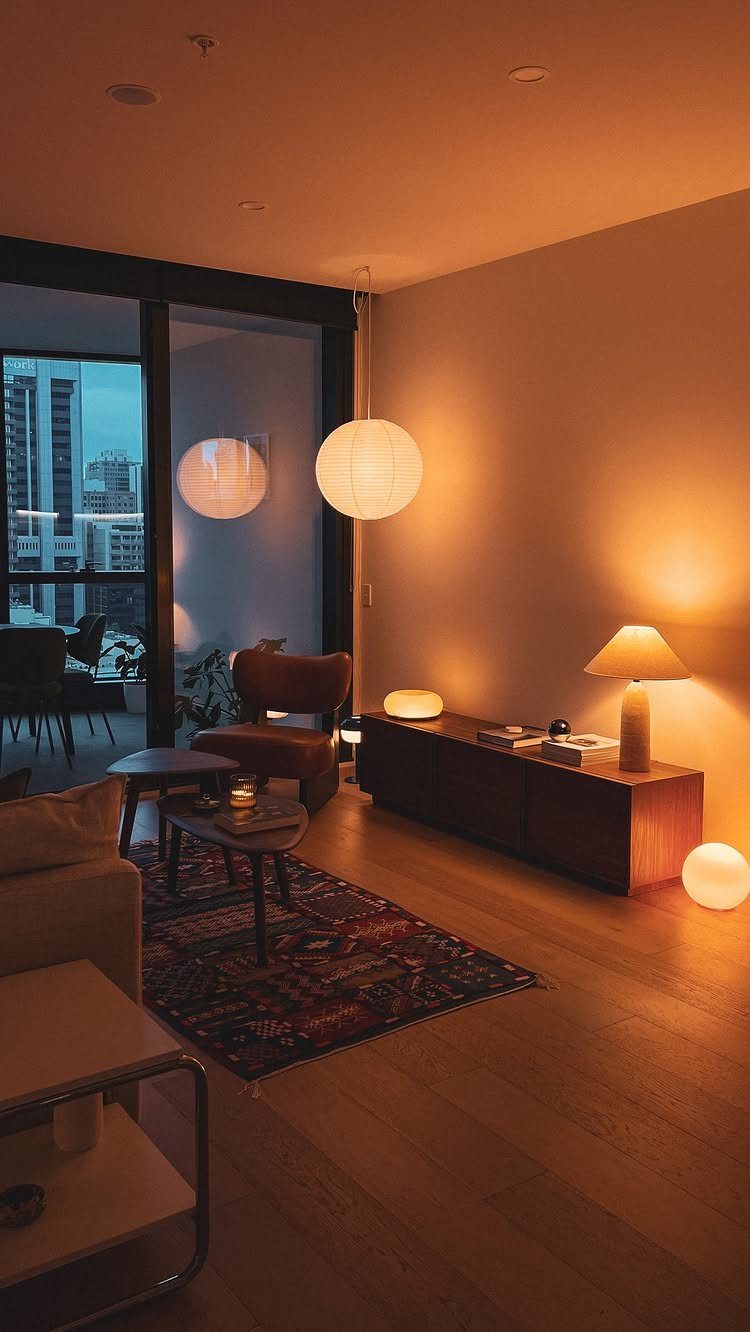
Several low, warm sources beat one overhead fixture in a small room.
A table lamp on the sideboard, a paper lantern and a globe pendant each light a different level, so no corner goes dark and the ceiling stops doing all the work.
Keep every bulb in the same warm white so the pieces read as one scheme. Lamps and a plug-in lantern need no wiring, which suits renters and a weekend budget.
8. Mix of Plants
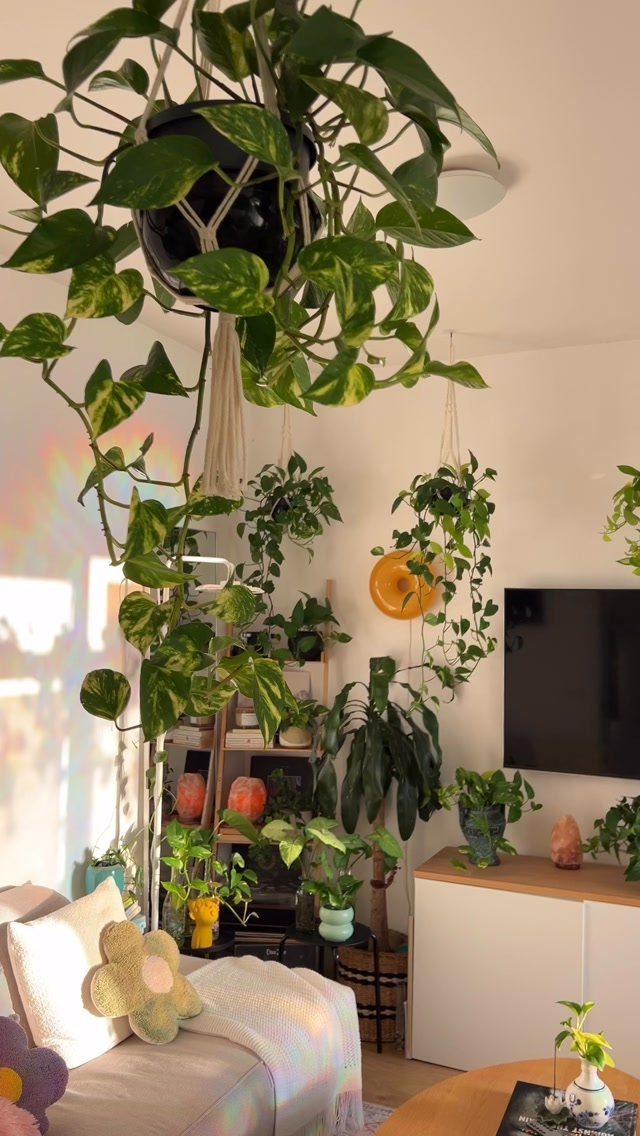
Plants at several heights fill a small living room, and one large floor plant anchors a corner beside the sofa.
Hanging pots use the air, shelves hold the mid-size ones, and one large floor plant anchors a corner beside the sofa.
Mixing leaf shapes keeps the group from looking like a single repeated pattern. Against a white sofa, the green does the work of color, so I would skip extra accent pillows.
Hooks and shelves can be renter-friendly if you use removable ones.
9. Low Coffee Table
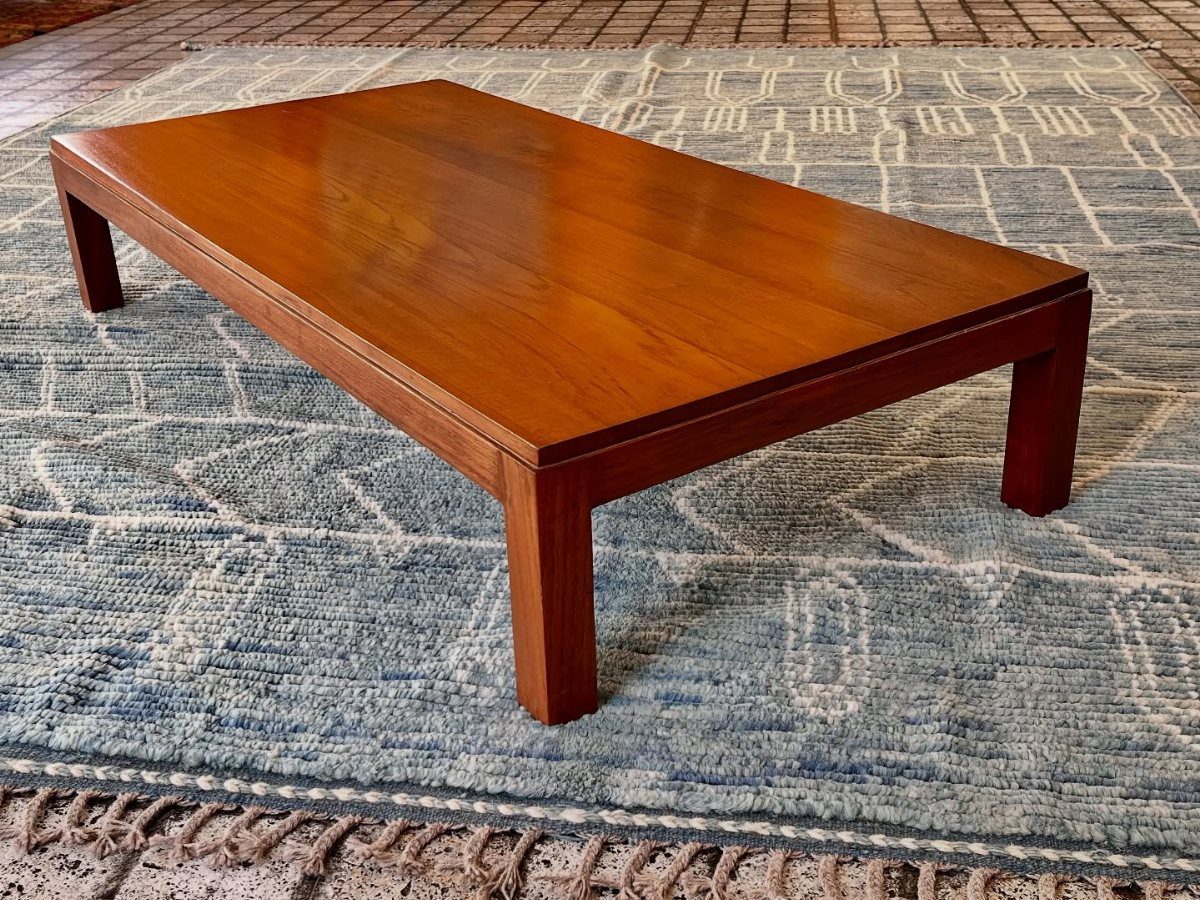
A coffee table set low keeps sightlines open across the room, so the space reads wider than the same footprint with a tall piece.
Wood in a simple rectangle sits well on a patterned rug, which is what makes this pairing work.
Choose a table that sits below the sofa seat height. I prefer a plain top over a busy one when the rug has pattern, so the two do not compete.
10. Small Fireplace
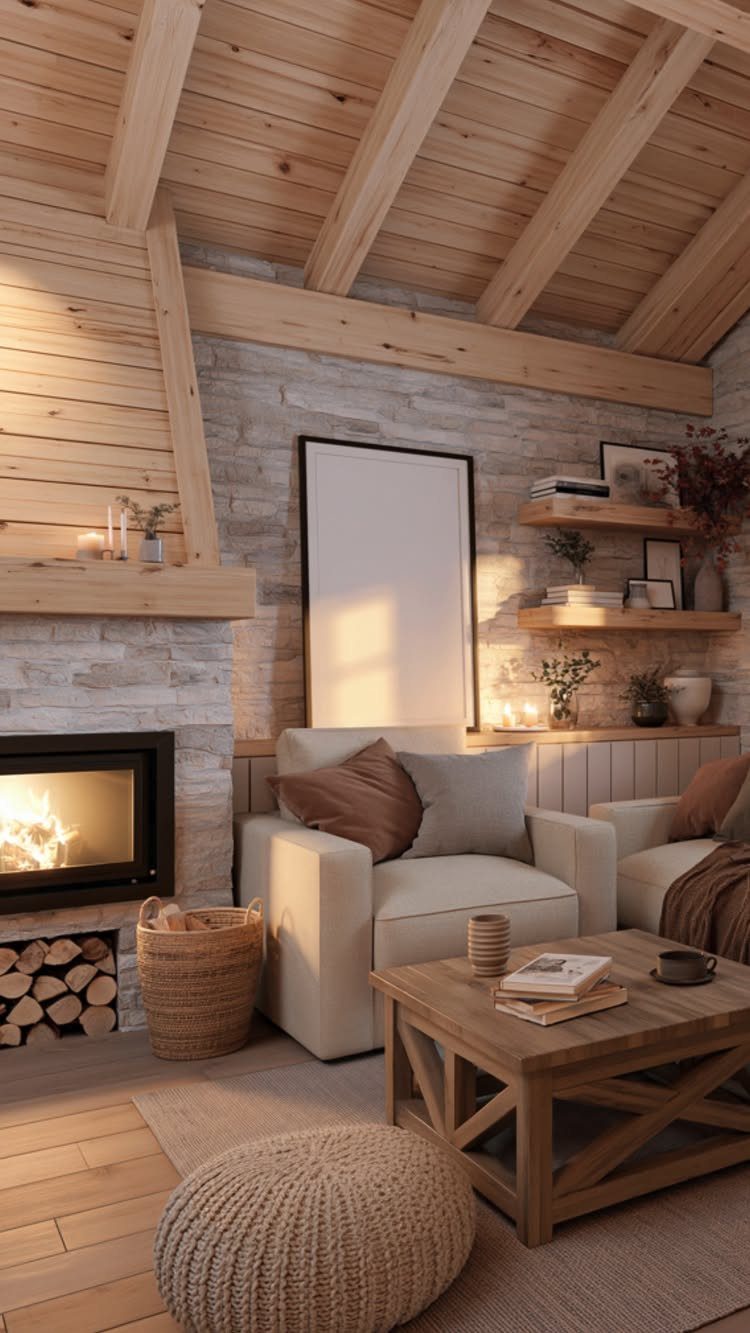
A small fireplace gives a room one clear place to gather, and it does not need much wall. Set into a white brick wall, it adds texture and warmth without crowding the seating.
Arrange the chairs and a pouf around it so the hearth anchors the room.
If a real one is out of reach for a rental, a faux brick treatment and an electric insert can borrow the same look at far lower cost than masonry.
11. Curved Furniture
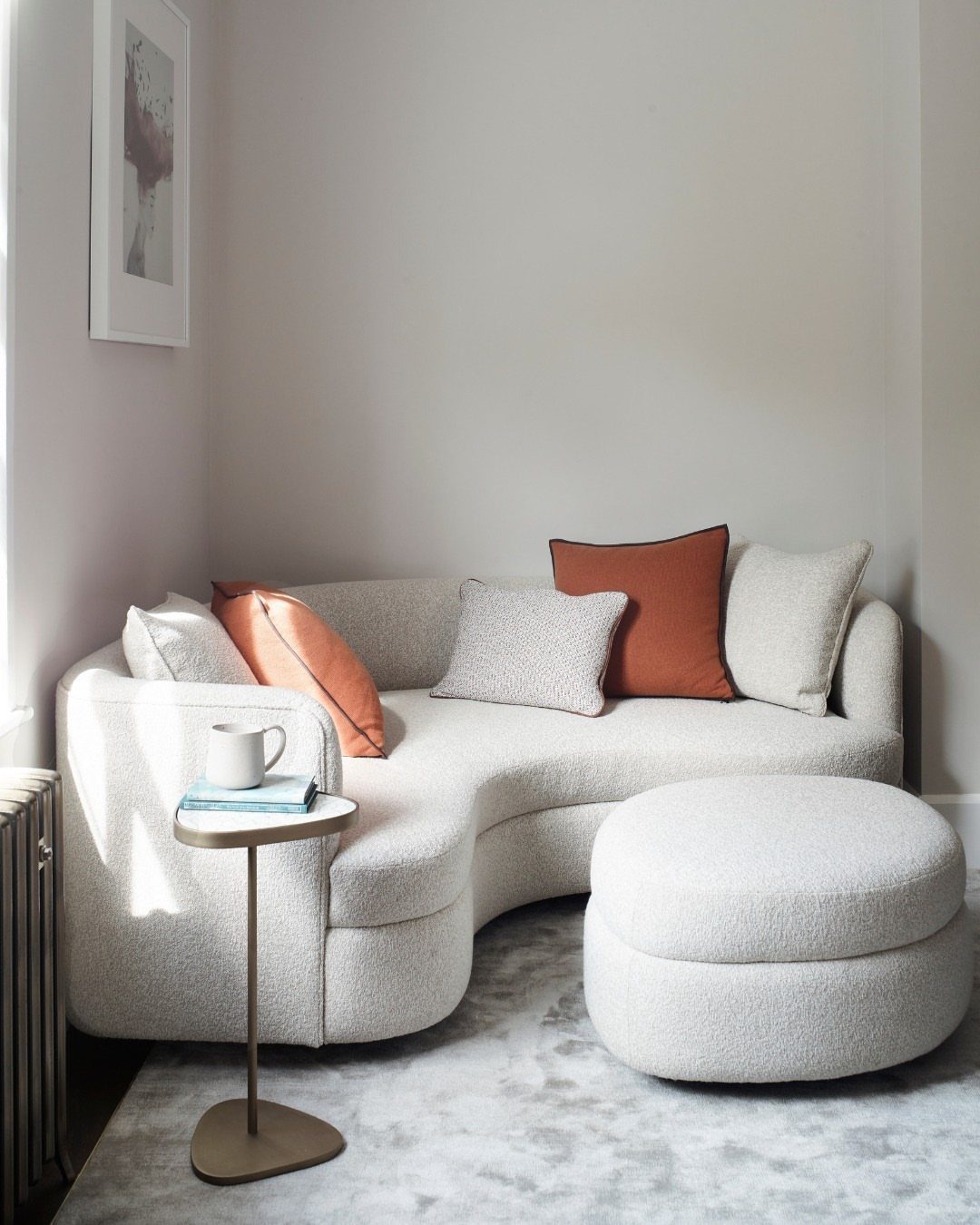
Round shapes soften a small room, and they help in practice too: no sharp corners to bump when the walkway is tight. A curved bouclé sofa paired with a round ottoman does both jobs.
Pick one curved statement piece and repeat the shape in a smaller one.
I like the ottoman because it moves where needed, serving as a seat or a table. White bouclé shows spills, so a stain-resistant fabric is worth checking before buying.
12. Tall Vertical Wall Mural
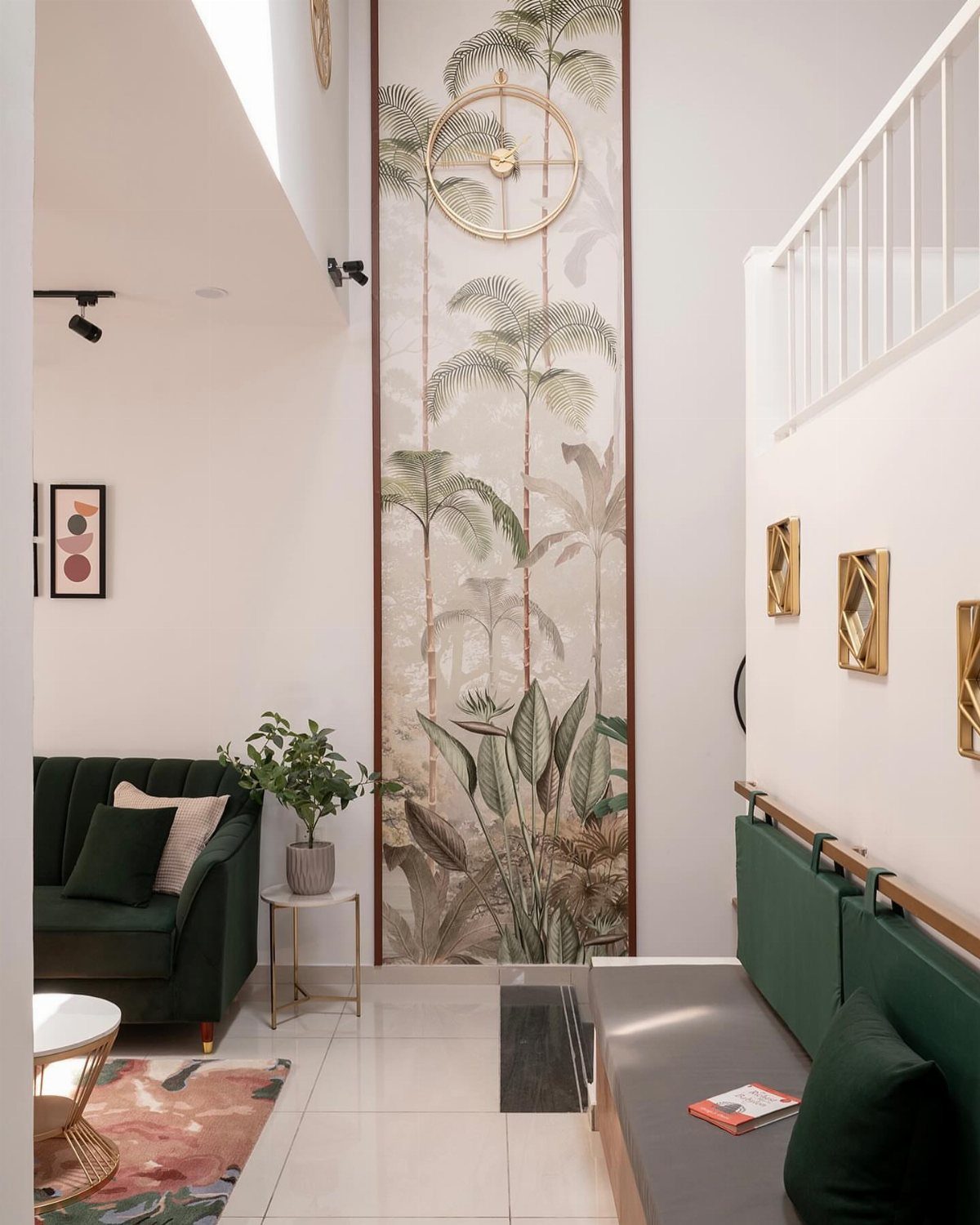
A tall mural makes a narrow wall feel taller, because the eye follows a palm trunk straight up to the ceiling. Placing it behind a sofa turns a skinny nook into the room’s focal point.
Leave the rest of the wall plain.
A gold clock and one small plant are plenty beside a bold image, and a green sofa picks up the leaf color. Peel-and-stick panels are my pick for renters, since they come off again.
13. Floating TV Console
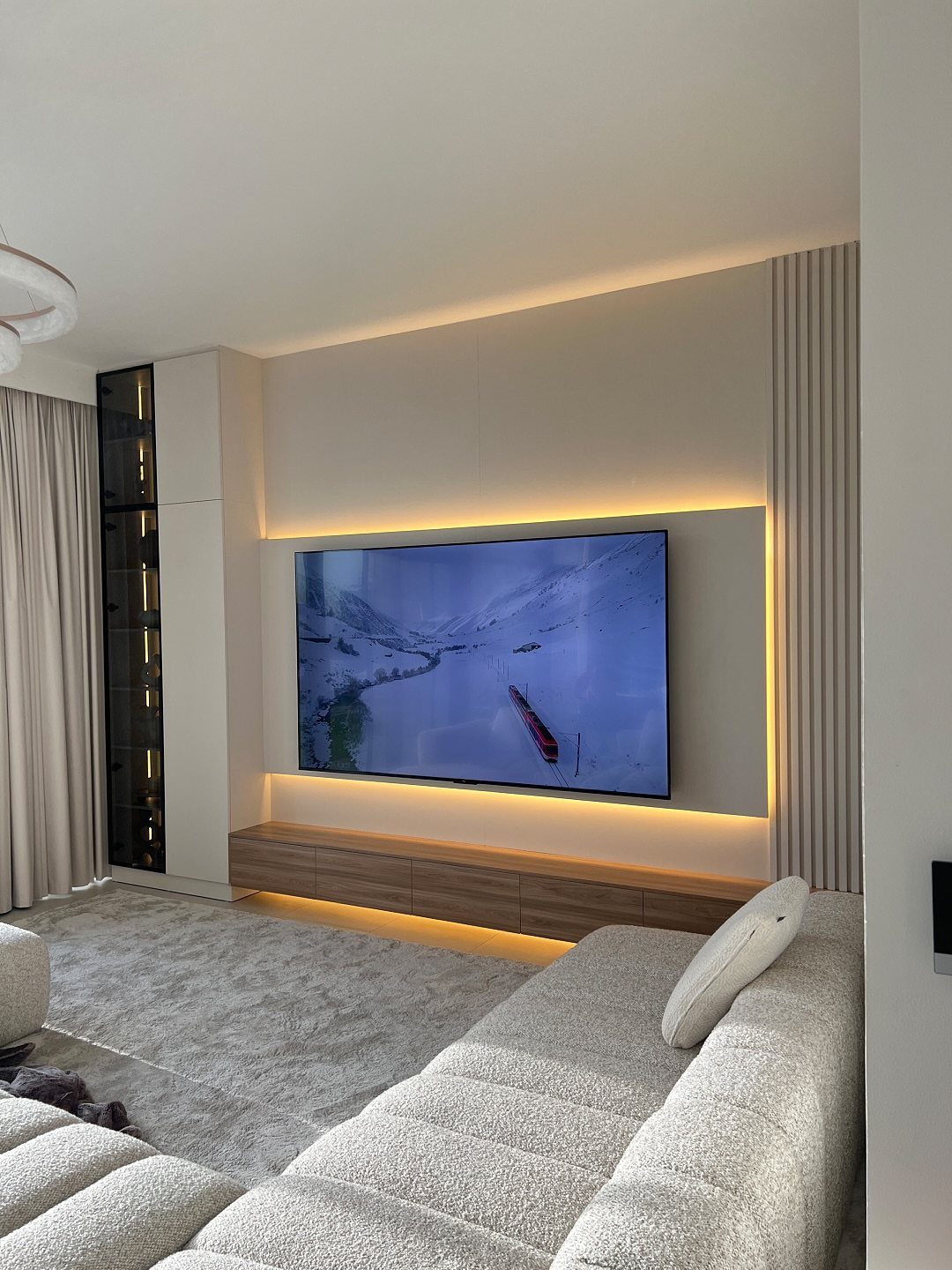
A console hung off the wall leaves the floor beneath it clear, and in a small room that visible strip of floor makes the whole wall read lighter.
Wood warms up a TV wall that could otherwise feel like all screen and black glass.
Mount the console first, then the TV above it, so the two line up.
Cables are the weak point: run them behind the unit or inside it, since dangling cords undo the clean look. Wall-mounted pieces need studs or proper anchors, so check what your wall is made of before buying.
14. Vibrant Statement Area Rug
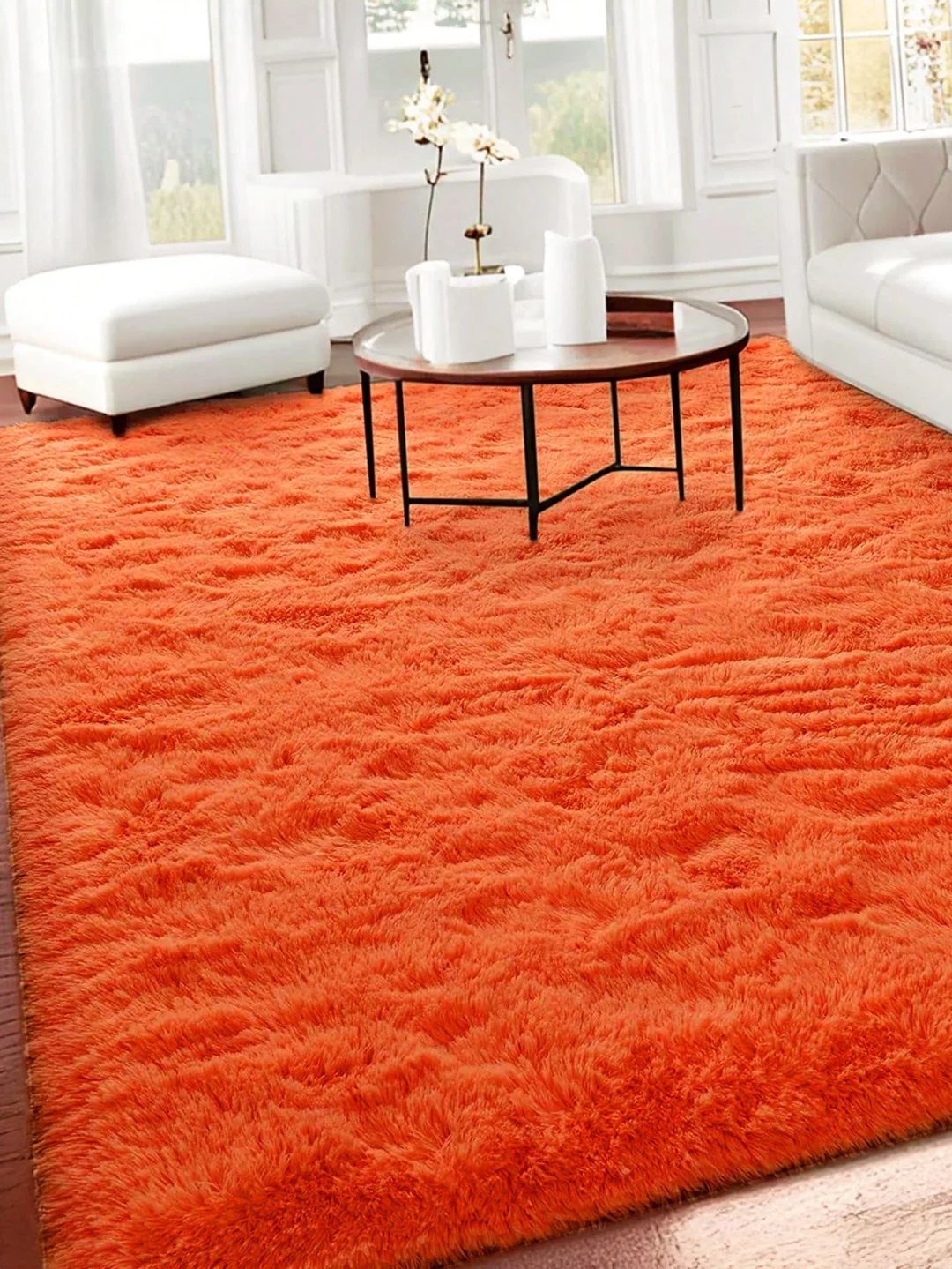
A shaggy orange rug can carry a white living room by itself. The sofa, ottoman and coffee table stay quiet, and the floor becomes the one loud thing in the room.
I would keep everything else neutral and let the rug have the color.
Shag feels great underfoot but traps crumbs and dust, so plan on regular vacuuming, and a round coffee table with slim legs sits on it more steadily than a heavy base.
A rug is also the cheapest way to try a bold color, and it rolls up if you tire of it.
15. Bobbin Accent Shelf
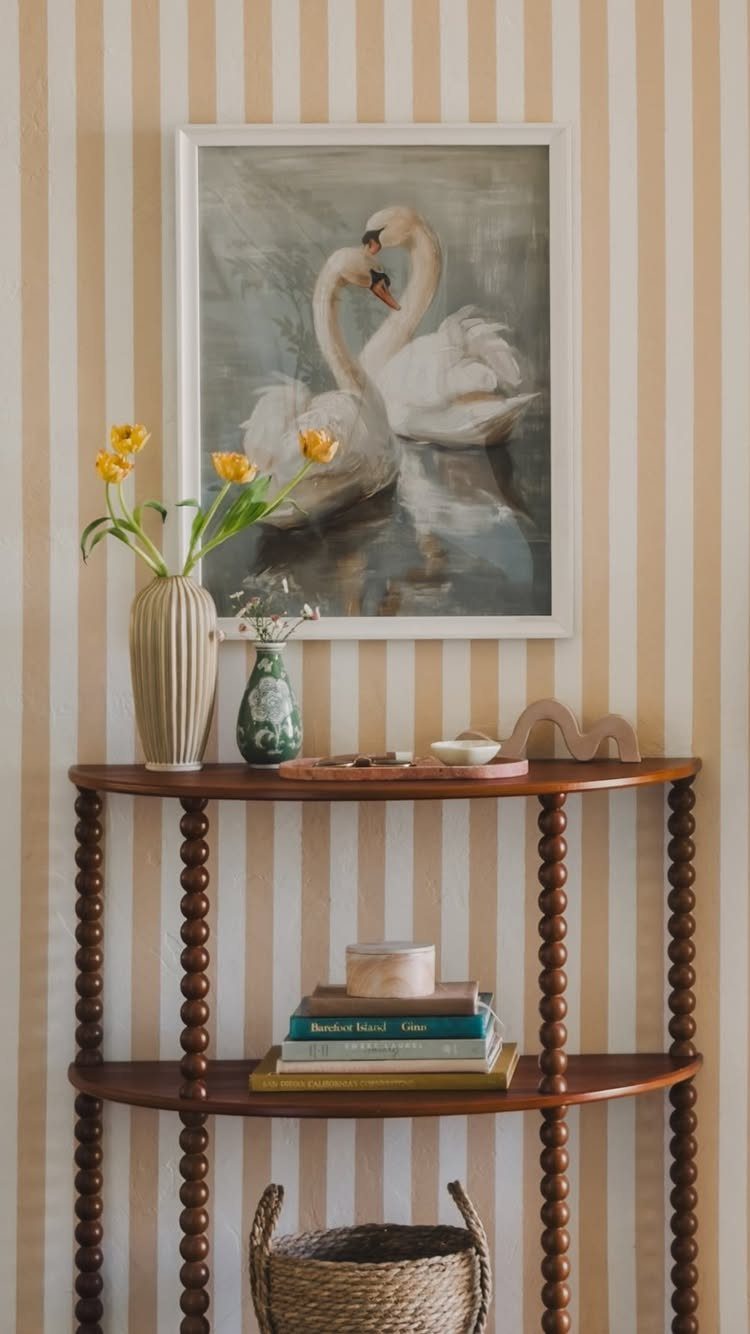
Turned wooden bobbin legs give a slim shelf the look of an antique, and striped wallpaper behind it makes the pairing feel deliberate. A freestanding unit like this takes no drilling, which suits renters.
Style it in small groups: a few books stacked flat, a candle, one vase of fresh flowers like tulips.
Leave some shelf bare so it doesn’t turn into clutter. A painting leaned on top adds height without more hardware, and I like the yellow tulips against stripes.
Importance of Natural Light
Windows pull more weight than any lamp, so start by checking what stands in front of them. A bookcase, a TV or the back of a tall chair can cut off daylight without you noticing.
Swap heavy drapes for sheer curtains or minimal blinds, and keep the sills clear of clutter. Sheers still give privacy in a rental, and a tension rod costs little and leaves no holes.
Pull sofas and chairs a bit away from the glass so light travels across the room instead of stopping at the furniture. Light, neutral fabric on the seating then bounces that daylight back into the room.
Furniture Proportions
A piece that is too big for the room makes the whole space look smaller than it is. I’ve found that swapping a sectional for a compact sofa often reclaims enough floor space to make the room feel balanced again.
If a sectional stays in the plan, I’d choose a modular design that breaks into pieces you can shift around when the layout needs to change.
Legs that lift the sofa off the floor help too, since that strip of visible floor reads as extra space.
For sofas, look for slim arms and a lower profile. Before buying, tape the footprint on the floor and walk around it.
Going too small has a cost too: a seat that is cramped to sit in will go unused, so comfort should stay on the checklist.
If your main living space has tight square footage, keep in mind that scale is an important factor to consider. An oversized sofa or flat-screen TV can quickly make a small room feel crowded and cramped.
Avoiding Common Mistakes
Pushing every piece against the wall looks like the safe move, but it often leaves a dead hole in the middle of the room. Pull the sofa out a few inches and let the room breathe.
Accessories are the other trap. Too many small objects read as clutter, so edit down until each one has a reason to be there.
An oversized sectional is the mistake that does the most damage, since it dominates everything else. Choose scaled furniture that leaves walking paths open, and the room will feel cozy and still work.
Frequently Asked Questions
How to decorate a living room with simple things?
Start with a few low, warm light sources, such as a table lamp and a plug-in paper lantern, instead of relying on one ceiling fixture.
Add plants at different heights, and one large piece of art over the sofa that spans most of its width.
What are some creative ways to decorate a small living room with a TV?
Hang a wood console off the wall and mount the TV above it. The clear strip of floor underneath makes the wall look lighter, and the wood softens all that black glass.
Run the cables behind or inside the unit so dangling cords don’t spoil the look, and check your wall for studs or proper anchors first.
Can I use a sectional in a small living room?
Sometimes, but a compact sofa usually works better, since swapping out a sectional often frees enough floor to balance the room.
Tape its footprint on the floor first, and don’t go so small that the seat is cramped, because an uncomfortable seat goes unused.





