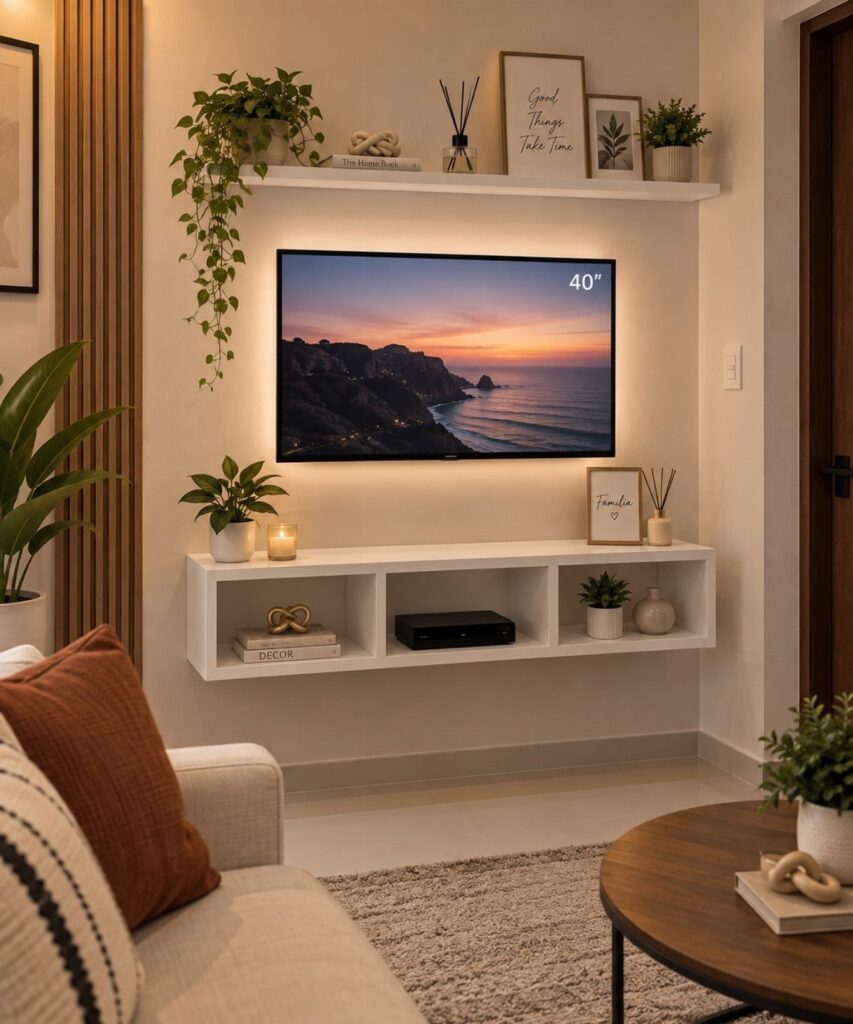
Small living room TV fixes run from a $20 LED strip behind the screen to floating shelves that mount into studs, so the first thing that decides your pick is whether you can drill into the walls or only add pieces that stand on the floor.
Renters get the most from LED strips, rugs and paint, which leave the walls alone, while owners can justify swivel mounts, floating shelves, sliding panels and gallery walls that need screws into studs or holes in the drywall.
1. Corner TV Stand
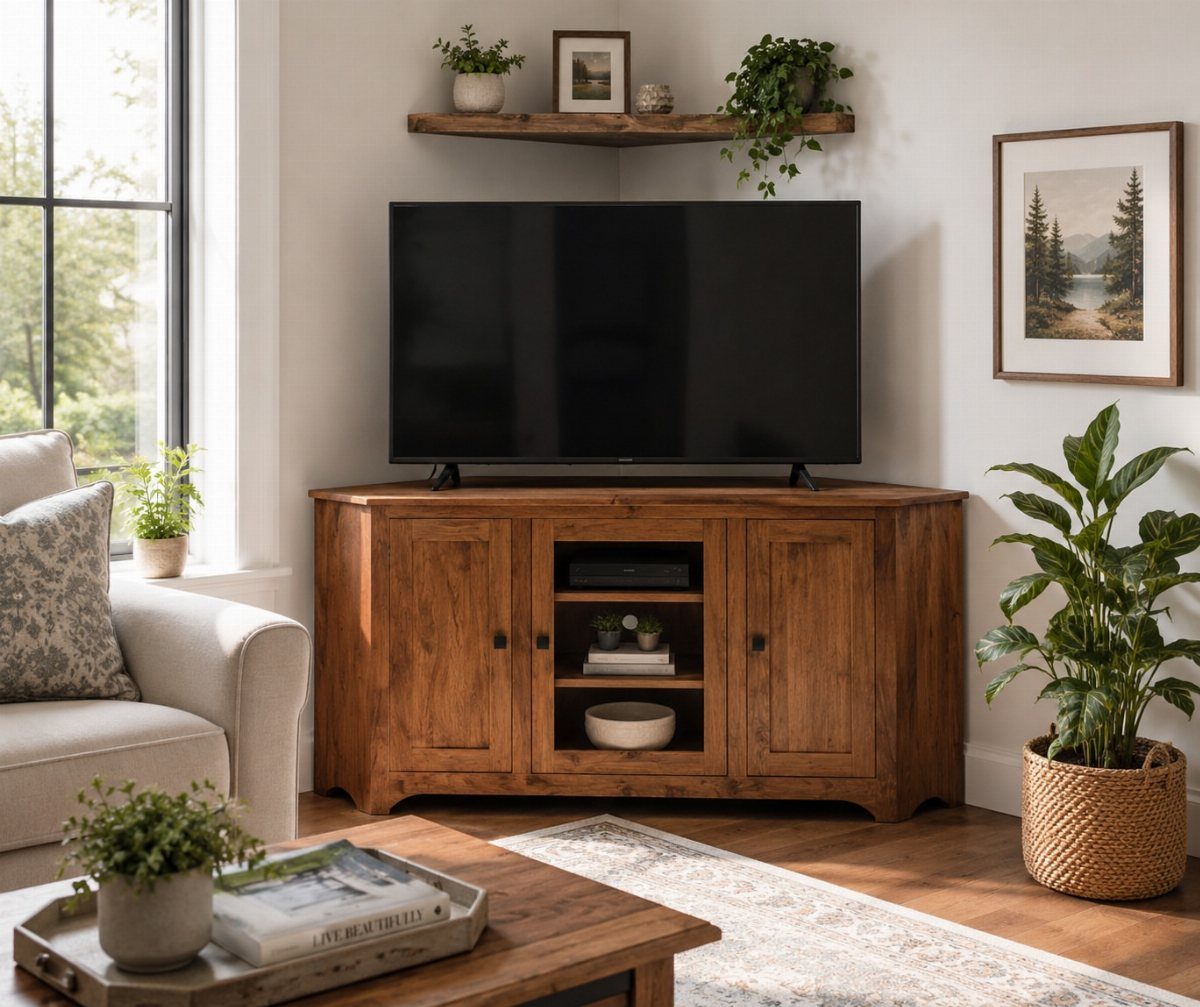
A corner stand puts the TV in the one spot most small rooms leave empty, which frees the long walls for the sofa and a walkway.
Pick one with a flat top wide enough for the screen’s feet, and let a matching corner shelf above it carry books or a plant so the corner reads as one unit.
I prefer wood here, since it softens a big black screen. Angle the stand slightly toward the seating so nobody watches from the side.
2. Rugs to Define the TV Area
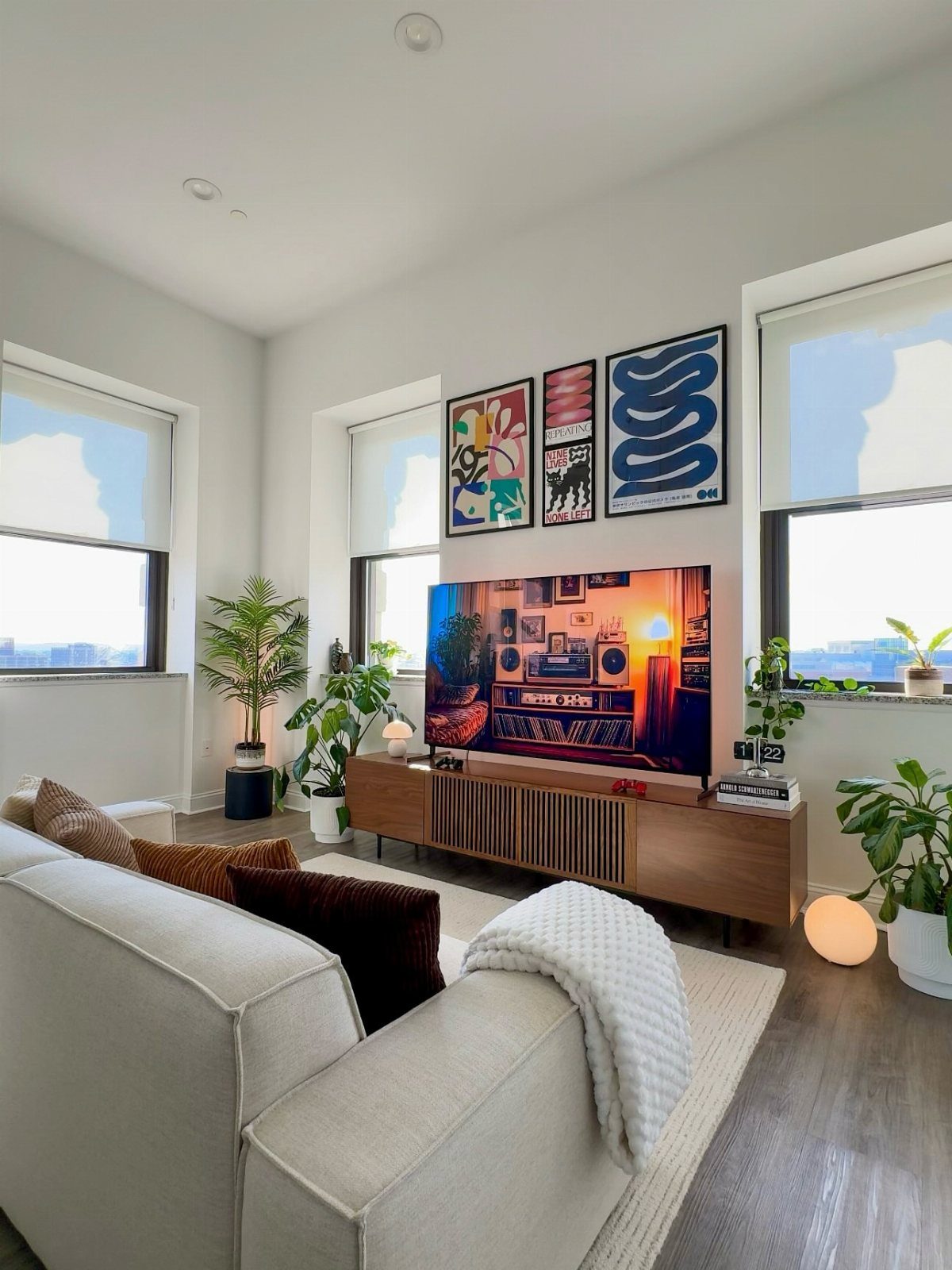
A rug sets the TV zone apart without a single wall going up. Keep the sofa and TV stand both on it, or at least the front legs of each, so the pieces read as one group instead of floating.
Light colors keep a small room open, and a low-pile rug stays easier to vacuum around furniture legs. Buy the largest size the floor allows; a rug that is too small makes the room look smaller.
3. Light-Colored Walls and Furniture
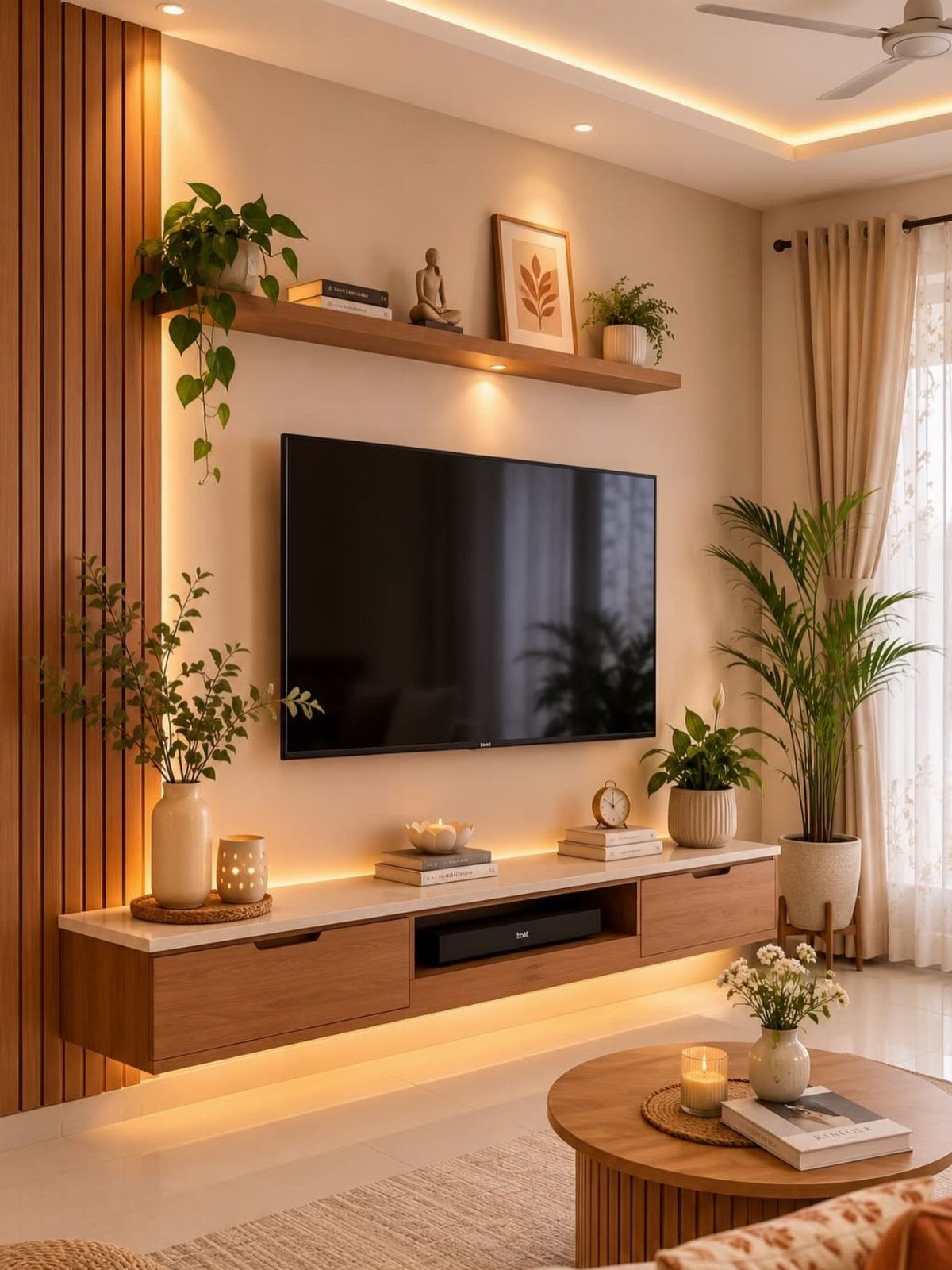
Pale walls, a pale console and a floating shelf keep the TV from becoming the heaviest thing in the room.
Hanging the console off the floor shows more floorboard, and that extra visible floor is what makes the space feel bigger.
I would paint before buying anything new: one weekend and a gallon or two of light beige covers most walls. Wood tones and a few plants then add warmth, so the light palette doesn’t go flat.
4. TV Stand in the Recessed Space
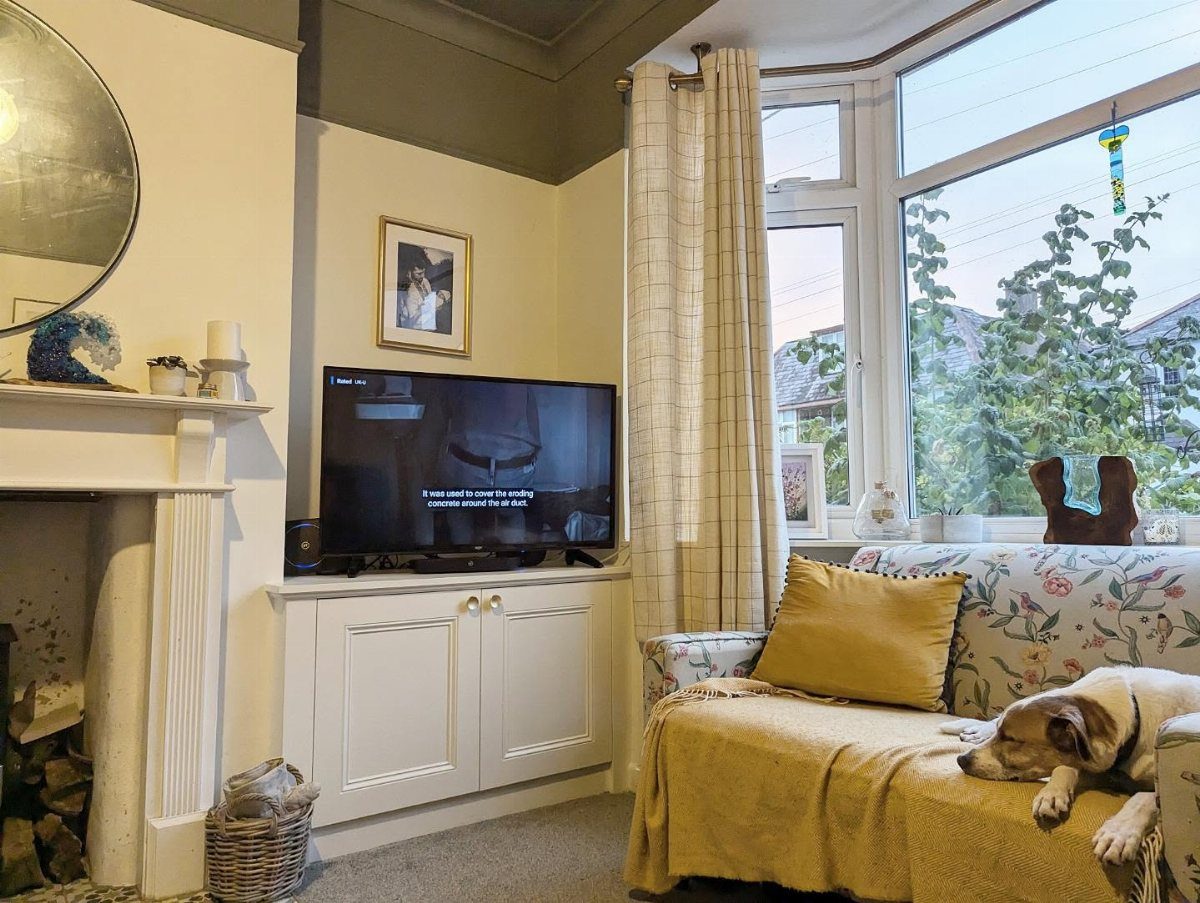
An alcove or chimney breast gives the TV a built-in home, so the stand sits flush and nothing sticks out into the room.
Measure the width, height and depth of the recess before shopping, and leave a few inches around the cabinet for cables and airflow.
A white cabinet blends into the wall and keeps the TV quiet visually. A fireplace beside it, as here, stays the focal point while the screen takes a back seat.
5. Sliding Panels to Conceal the TV
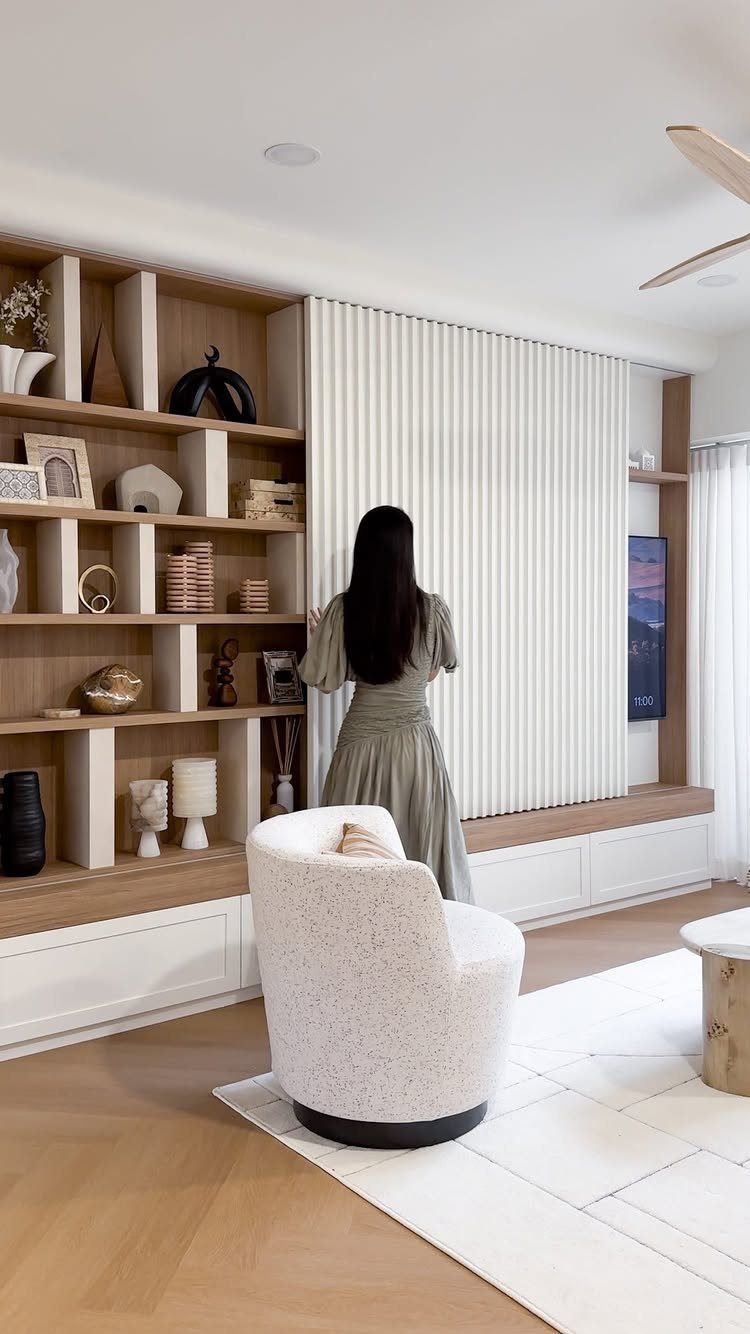
Sliding panels turn the TV into part of a shelving wall, and when the screen is off you see only slats and books. Panels on a track need almost no clearance, which beats swing-out doors in a tight room.
A slatted white panel looks lighter than a solid one and breaks up a big built-in. This is the priciest idea on the list, since it usually means carpentry, so a renter could try a single curtain-style panel instead.
6. Accent Colors Through Decor
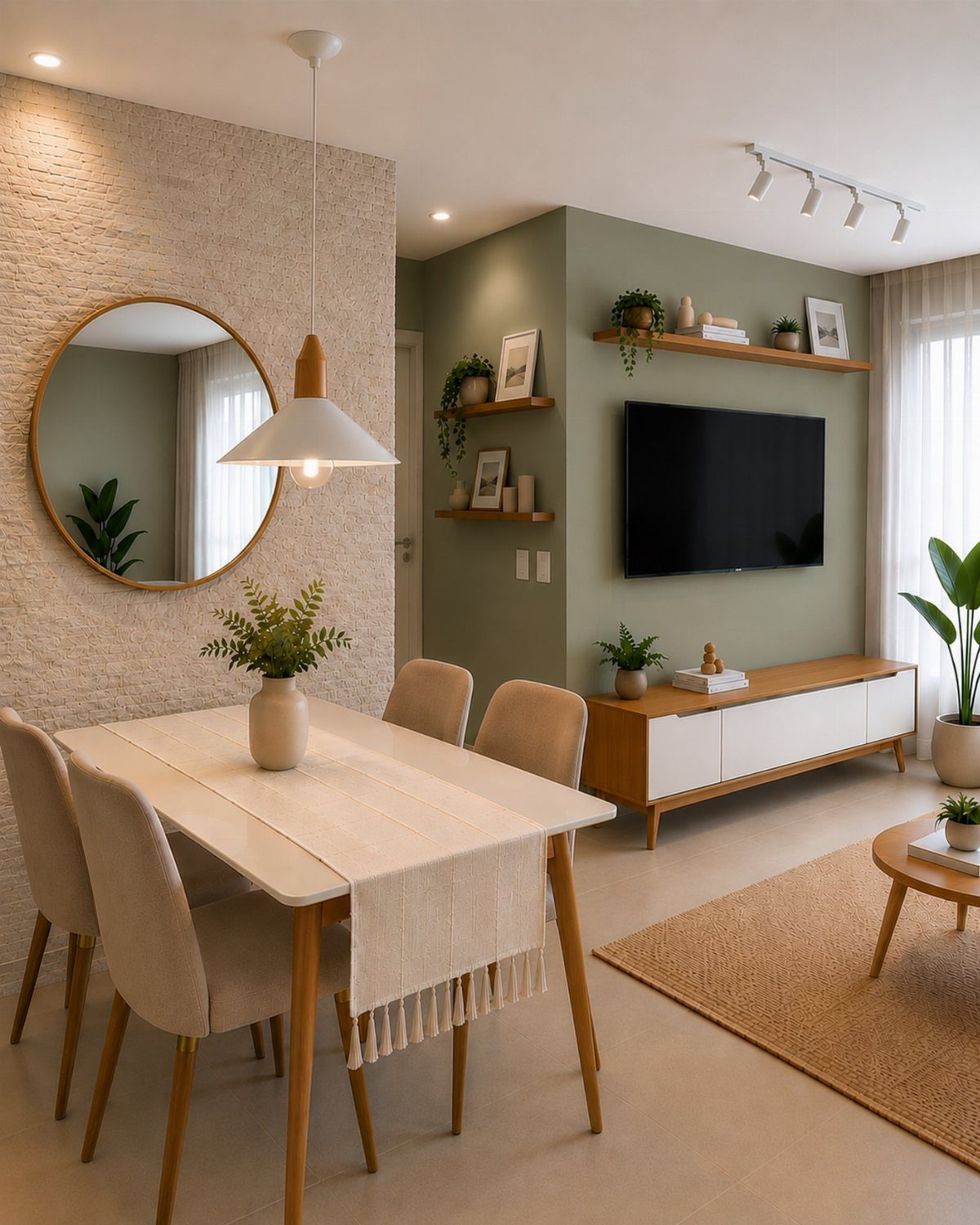
Painting one wall deep green gives the TV a backdrop that makes the screen look intentional instead of like a black hole. Choose the wall the TV sits on, then repeat the green in small touches elsewhere.
Wood shelving and a round mirror warm it up, and the mirror breaks the straight lines of the screen.
A quart of paint covers a small accent wall, which makes this one of the cheapest changes you can make in a weekend.
7. Swivel Mount
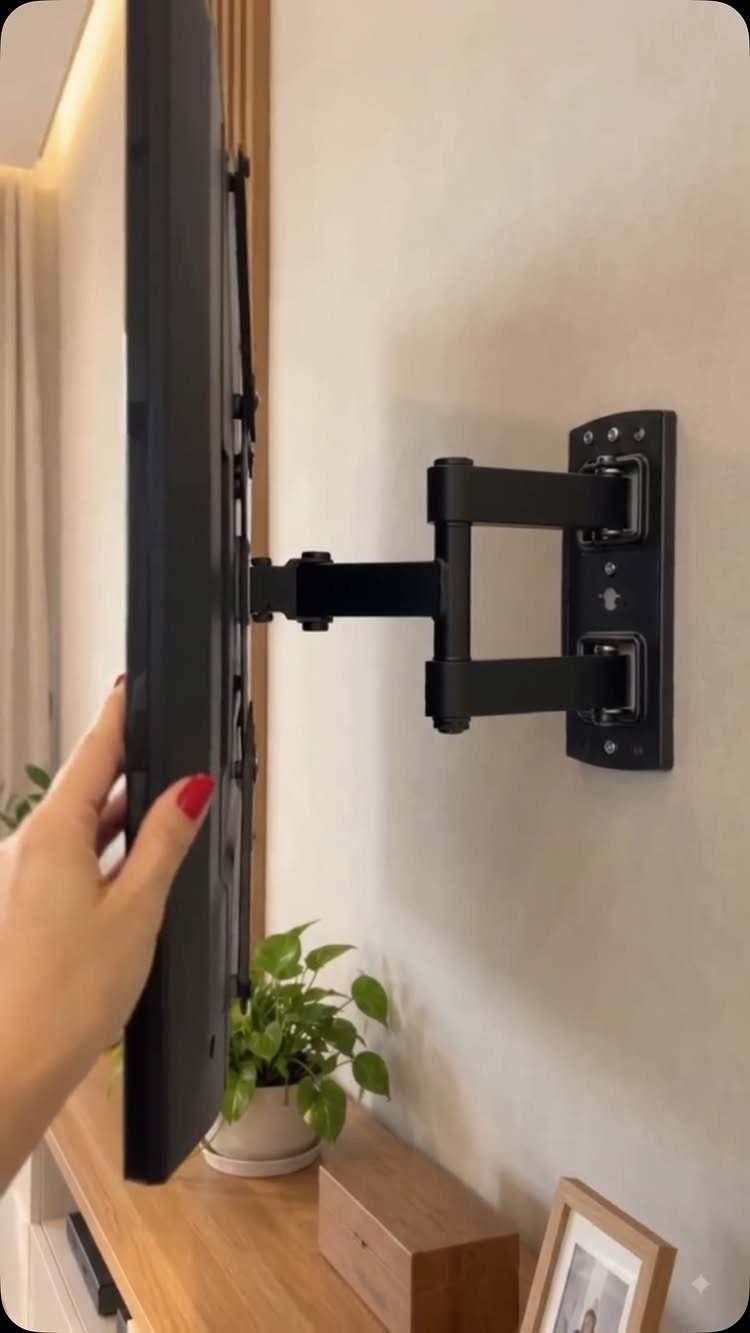
A swivel mount lets the screen turn toward whichever seat you’re in, which matters in a small room where the sofa and the TV can’t always face each other.
The arm folds flat when you’re not using it, so it takes up little space.
I like a black arm on a wall with a wood console below; it nearly disappears behind the screen. Check that the mount’s weight rating covers your TV, and screw into studs, not drywall alone.
8. LED Strips Behind the TV
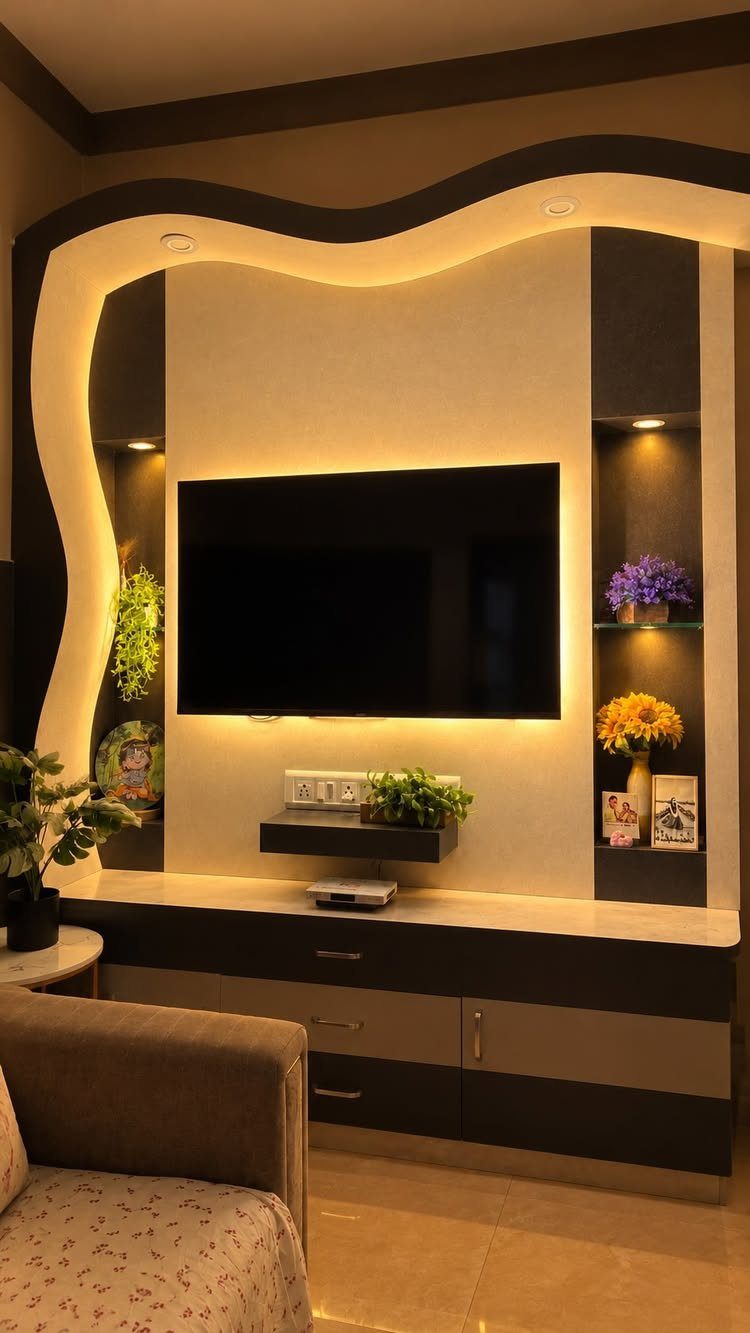
A yellow tone feels cozy and pairs well with a dark brown console and a few plants.
Stick the strip to the back edge of the TV so the light bounces off the wall and the diodes stay hidden.
Strips are cheap, and most peel-and-stick versions suit renters. Pick a warm white or yellow over cool blue, which looks harsh in a living room.
9. Gallery Wall
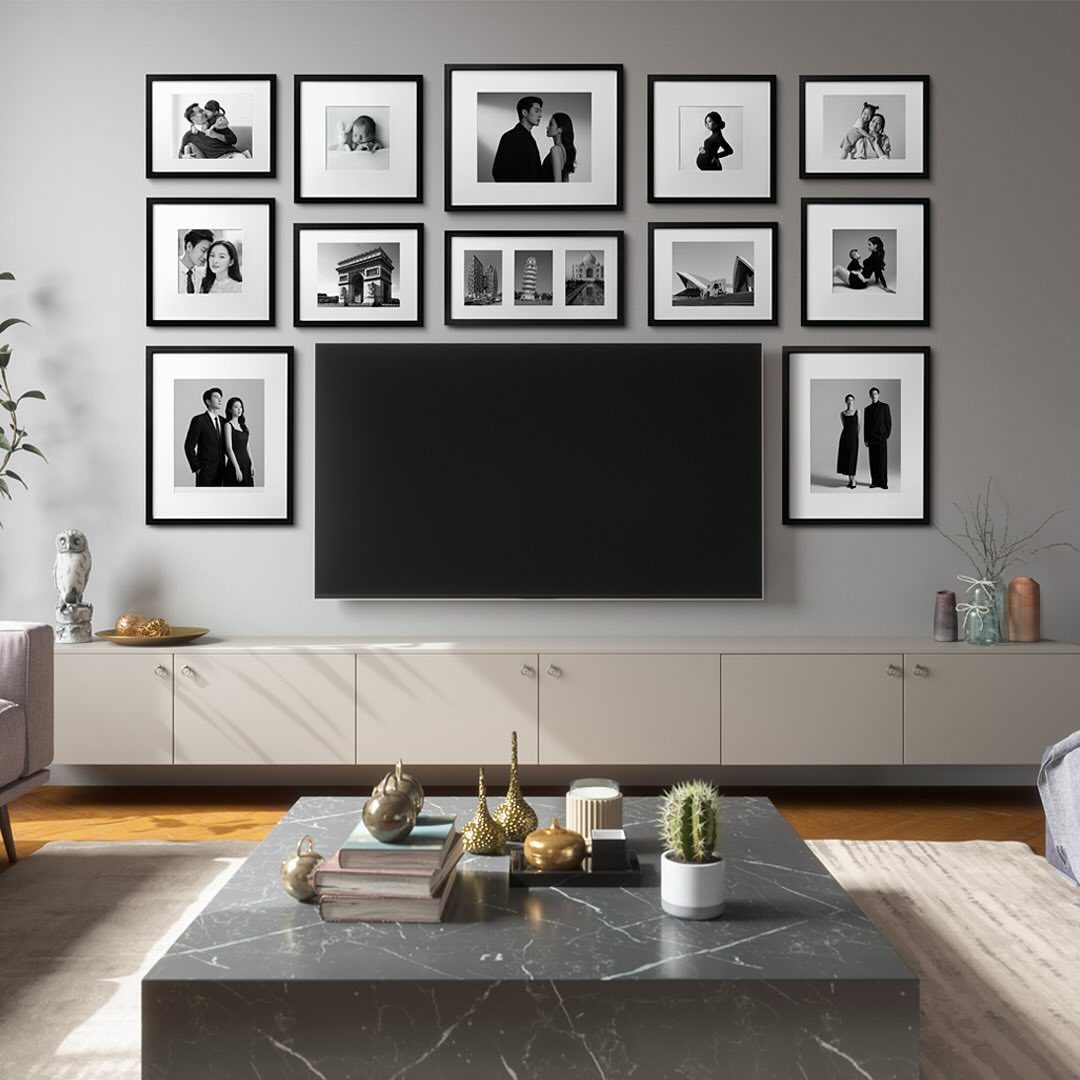
Surrounding the TV with framed photos makes the screen one piece of a larger display, so it stops dominating the wall.
Black frames and black-and-white prints on a grey wall echo the TV’s dark tone and keep the whole group cohesive.
Lay the frames on the floor first and arrange them around the screen’s outline.
Then trace each one on paper, tape the templates to the wall and adjust before you drive any nails. Keep the spacing between frames even.
10. TV Mounted Above the Fireplace
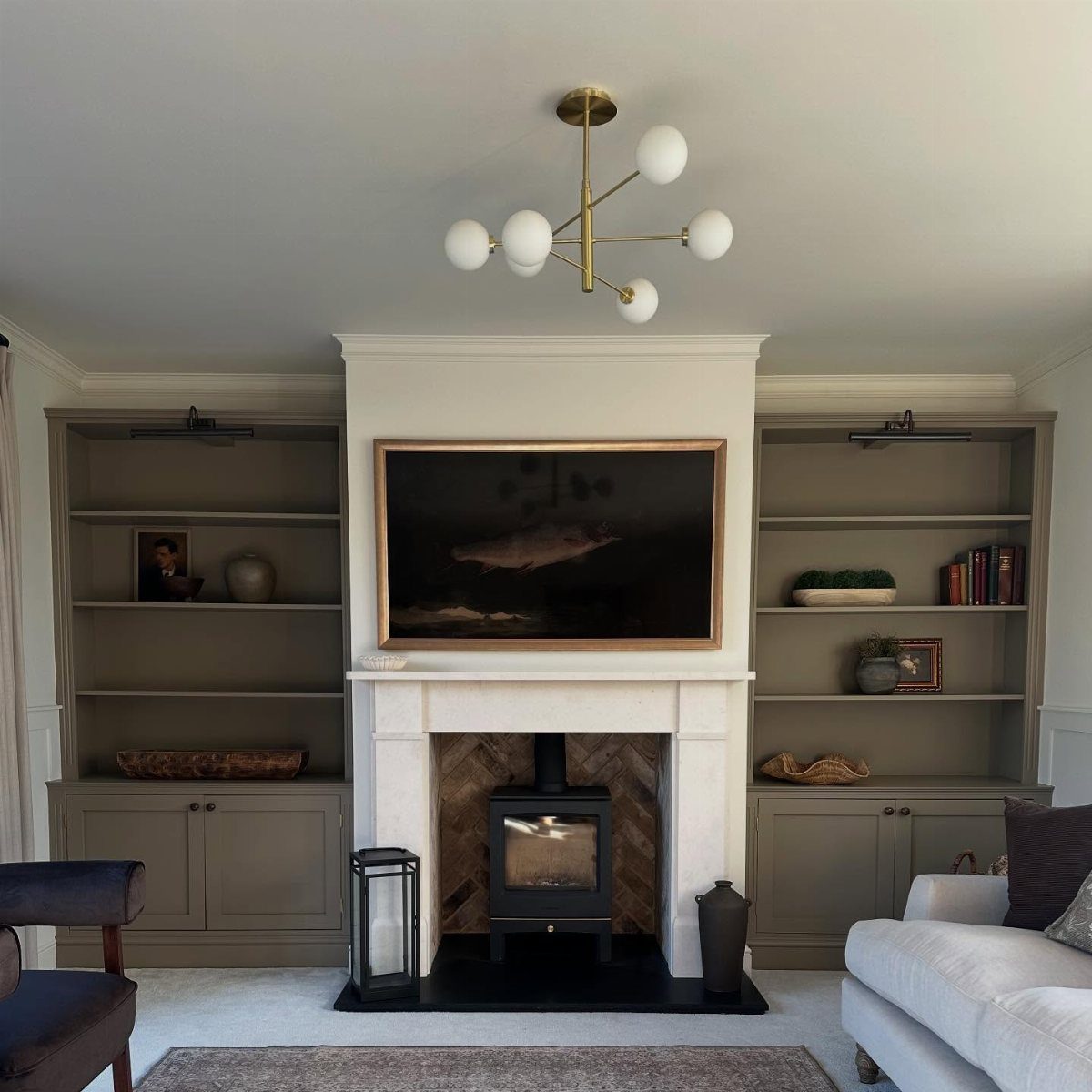
Above a fireplace is a natural spot for a TV, and a frame-style art TV makes it read as a picture when the screen is off. Built-in shelves on either side give the wall a balanced, finished look.
Mantel height matters: a screen hung too high strains the neck, so measure from your seated eye level before drilling.
11. Floating Shelves Around the TV
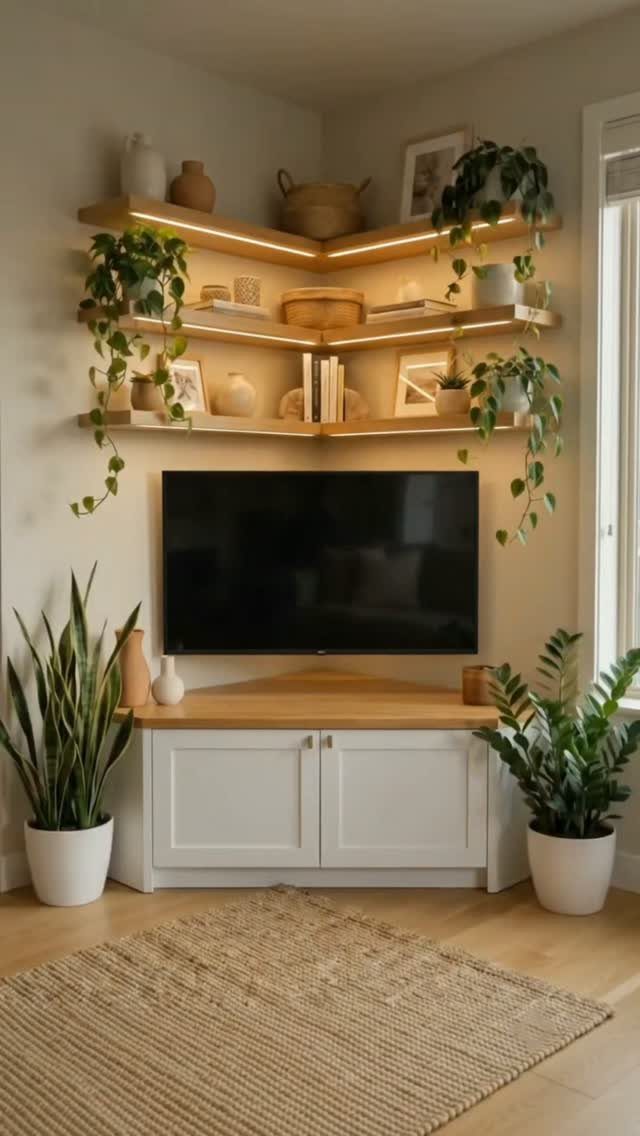
L-shaped shelves wrapped around a corner turn the space above a low cabinet into display storage. Books and plants soften the screen, and a light under each shelf adds a glow in the evening.
I’d keep the cabinet white so the wall stays bright, and let the greenery supply the color.
Mount each shelf into studs or with rated anchors, since books are heavy. Running the light cord along the shelf’s back edge keeps it out of sight.
12. Wall-Mounted Floating Media Shelf
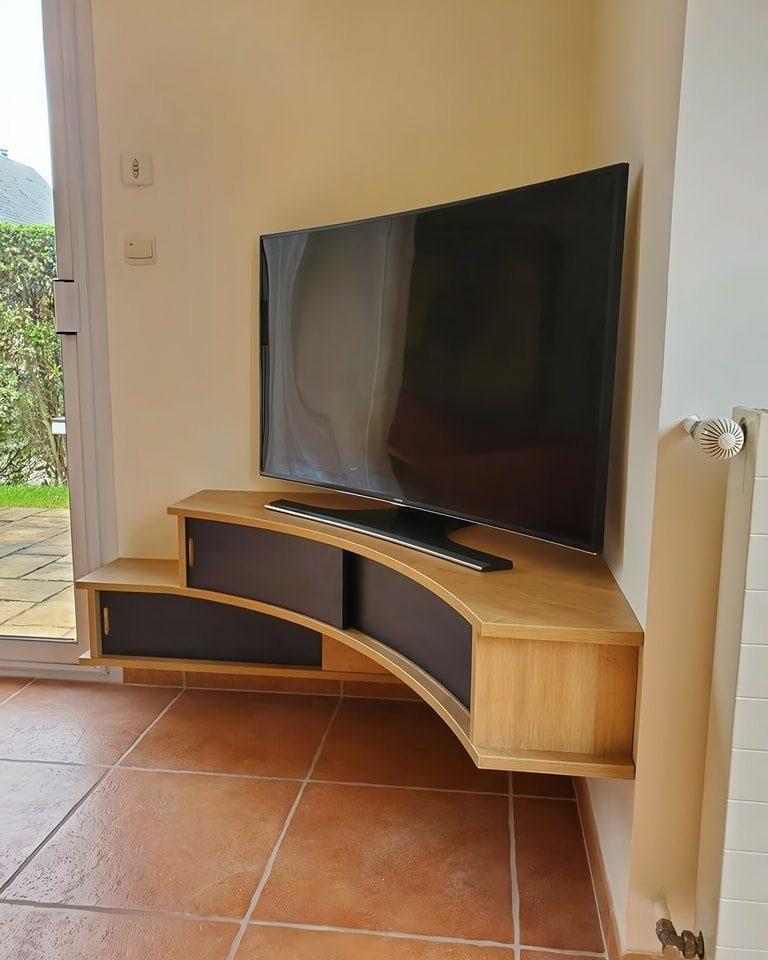
A floating shelf holding the TV keeps the floor clear, which makes a small room feel larger. A curved light-wood shelf also softens the screen’s hard rectangle, and against a beige wall it looks calm.
Choose a shelf rated for your TV’s weight, and anchor it into studs.
Leave room beneath for a cleaning pass, since a clear floor shows dust fast. Terracotta tile and light wood make a good pair; the warm tones agree.
13. Wall-Mounted TV Over Low Console
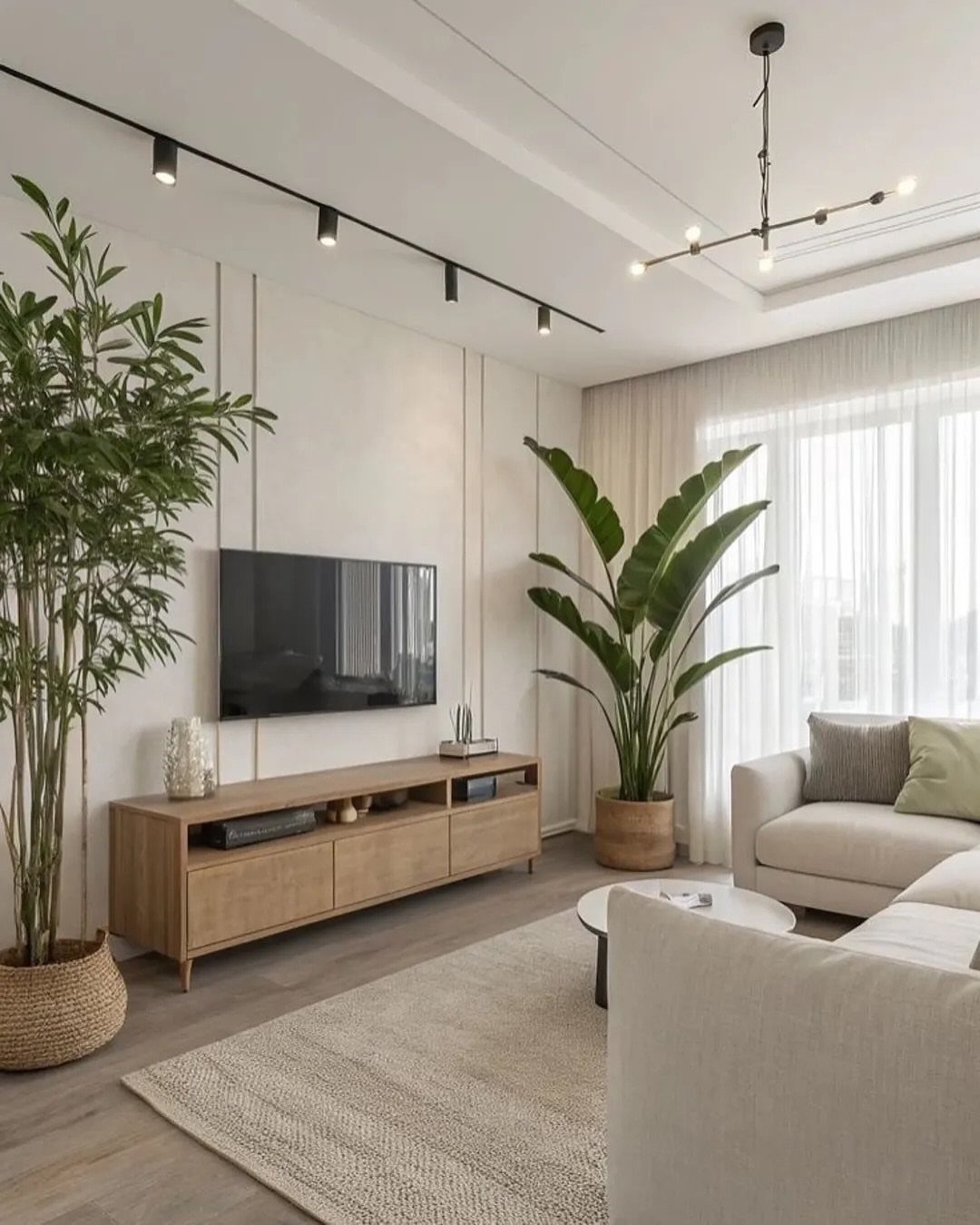
Mounting the TV flush to the wall above a slim wooden console keeps the screen close to the wall and leaves the floor clear for the sofa and a rug.
A low console also keeps the whole group below eye level, which makes a compact room feel calmer.
Screw the bracket into studs, and check that its weight rating covers your TV. Choose a console about as wide as the screen or a little wider, so the two read as one unit.
Wood is my pick for the console. Next to a beige sofa it warms up the black screen, and a large plant on each side finishes the wall.
Best TV Size for Small Rooms
For a small living room, a 42–55" screen is the range to shop in.
A wall-mounted set takes up no floor space, so you can go a size up from what you would pick for a stand.
Measure the distance from your sofa to the wall before you order, and mark the screen’s width on the wall with painter’s tape. Living with the tape for a day tells you more than any chart.
How to Hide a TV
Digital art modes are the easiest way to hide a TV, and they need no carpentry. A set that shows artwork when it is off reads as a framed picture, so the black rectangle is gone.
If you want the screen fully out of sight, a TV stand with motorized sliding doors tucks it into the furniture at the push of a button. Folding doors work the same way for less money.
Open shelving is a softer option: set the TV among books and objects so it competes with them instead of ruling the wall. I think this suits renters best, since nothing gets built into the wall.
Lighting Tips
Lighting does more for a TV than most people expect. A screen glowing in a dark room strains the eyes, and bias lighting behind it, usually an LED strip, narrows the contrast between the bright picture and the dark wall.
If you get headaches after evening viewing, try a $20 strip before you think about replacing the TV.
Layer the rest of the room as well. Turn them up for gaming and down for movie nights.
Daytime glare is a separate problem.
Frequently Asked Questions
How to layout a small living room with TV?
Mount it on the wall opposite your sofa so the floor stays clear. A corner stand pulls the TV into a spot most layouts ignore and leaves the long walls free.
Turn it a few degrees toward the seating and run a rug under both the stand’s front legs and the sofa’s so the arrangement looks anchored.
What are some good TV options for small spaces?
A wall-mounted TV is the best fit, because it takes no floor space, and a slim wooden console below keeps everything low and calm.
A 42–55" screen suits a small living room, and a mounted set lets you go a size up from what you would pick for a stand. Match the bracket’s rating to your TV’s weight and drive the screws into studs.





