Renting or owning settles most of this list: a lease rules out the nails and wiring that sconces and molding call for, while a hung textile or one oversized piece of art leaves a single hole or none.
1. Gallery Wall
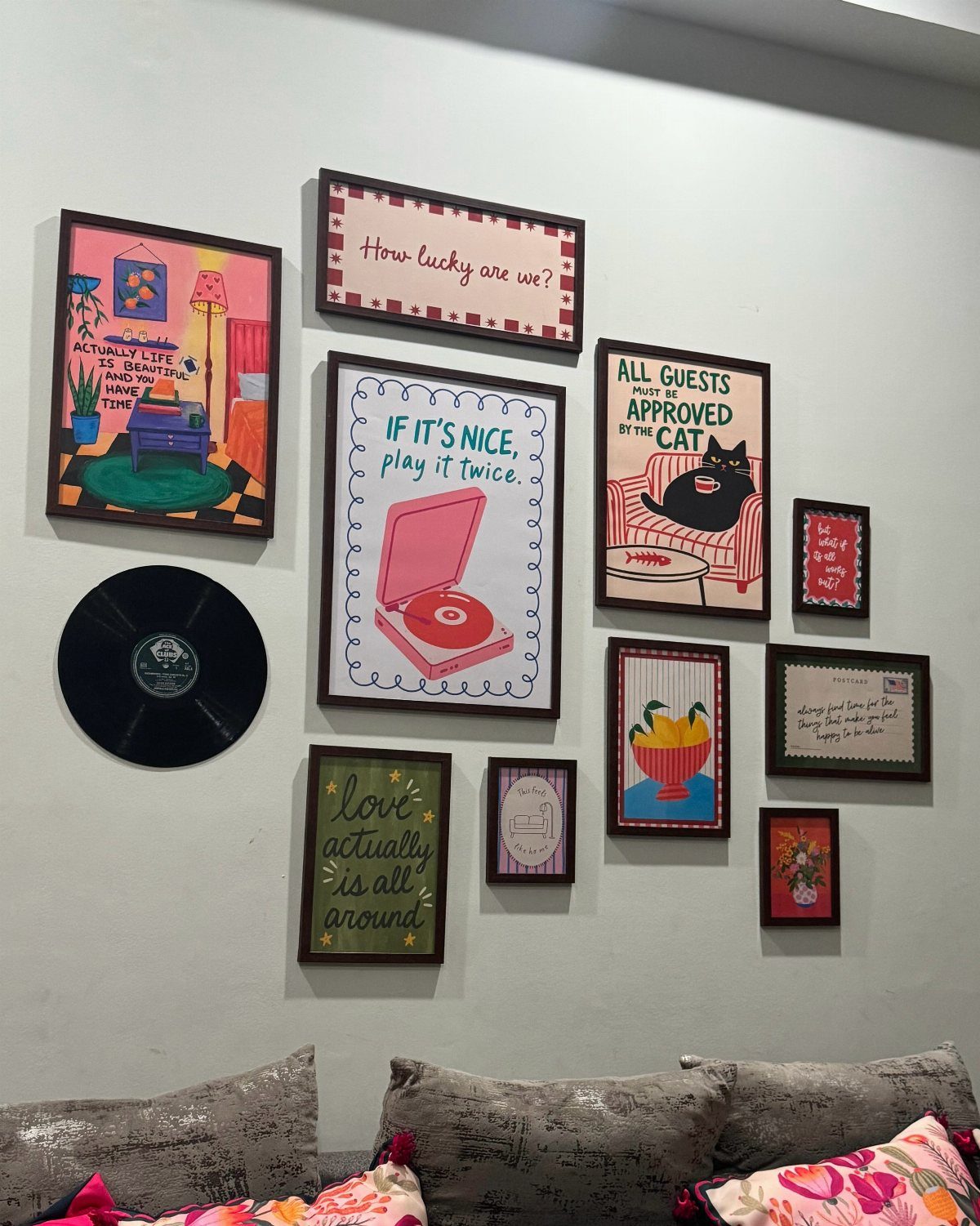
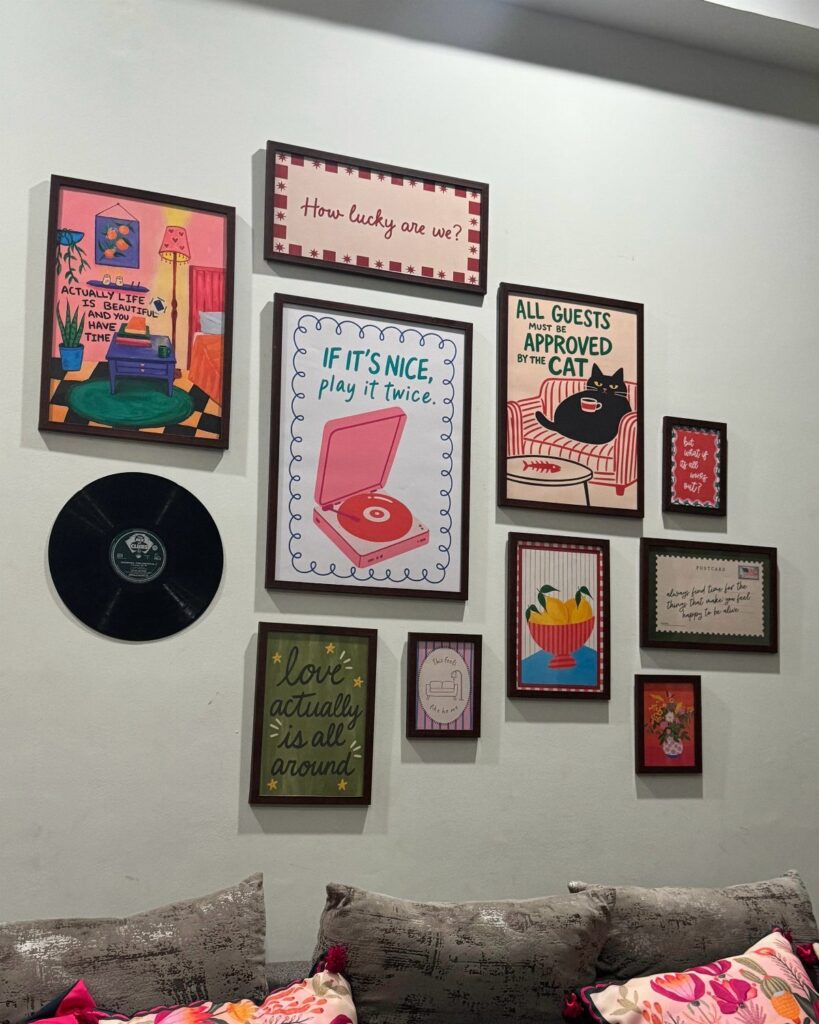
Small frames suit a budget well, because a gallery wall can grow one piece at a time. Mixing prints, a record and a few text pieces keeps it personal instead of matched.
Cut paper templates for each frame and tape them to the wall first.
Shuffle them until the cluster looks balanced, then drill. Keeping the whole group narrower than the sofa makes it read as one unit, not scattered extras.
I like a funny print or two among the serious ones.
2. Oversized Artwork
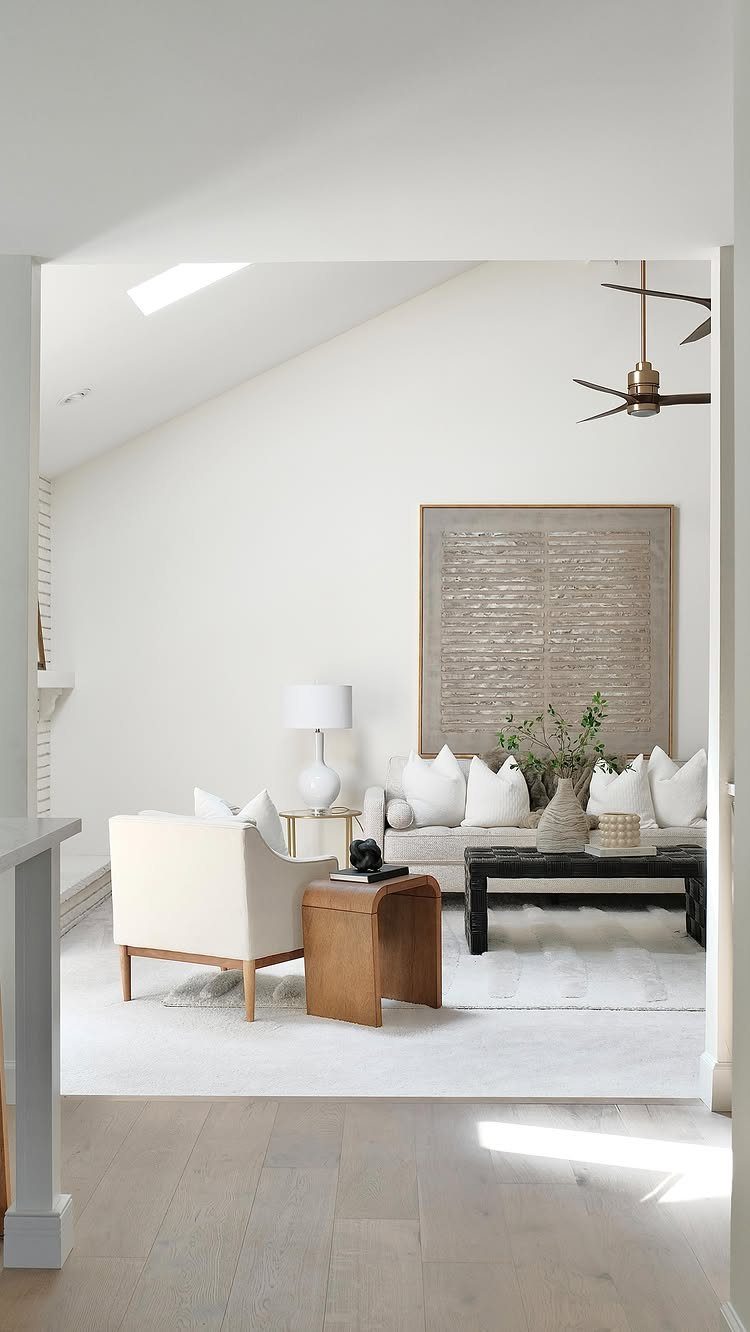
One big piece does the work of a dozen small ones, and it means only one hole to patch when a lease ends. Texture matters here: a heavily built-up surface gives a plain wall depth without adding color.
A homemade canvas with joint compound or plaster spread over it is a weekend project and costs far less than buying one.
Large originals can get pricey, so I would make one before buying.
3. Woven Tapestry or Textile
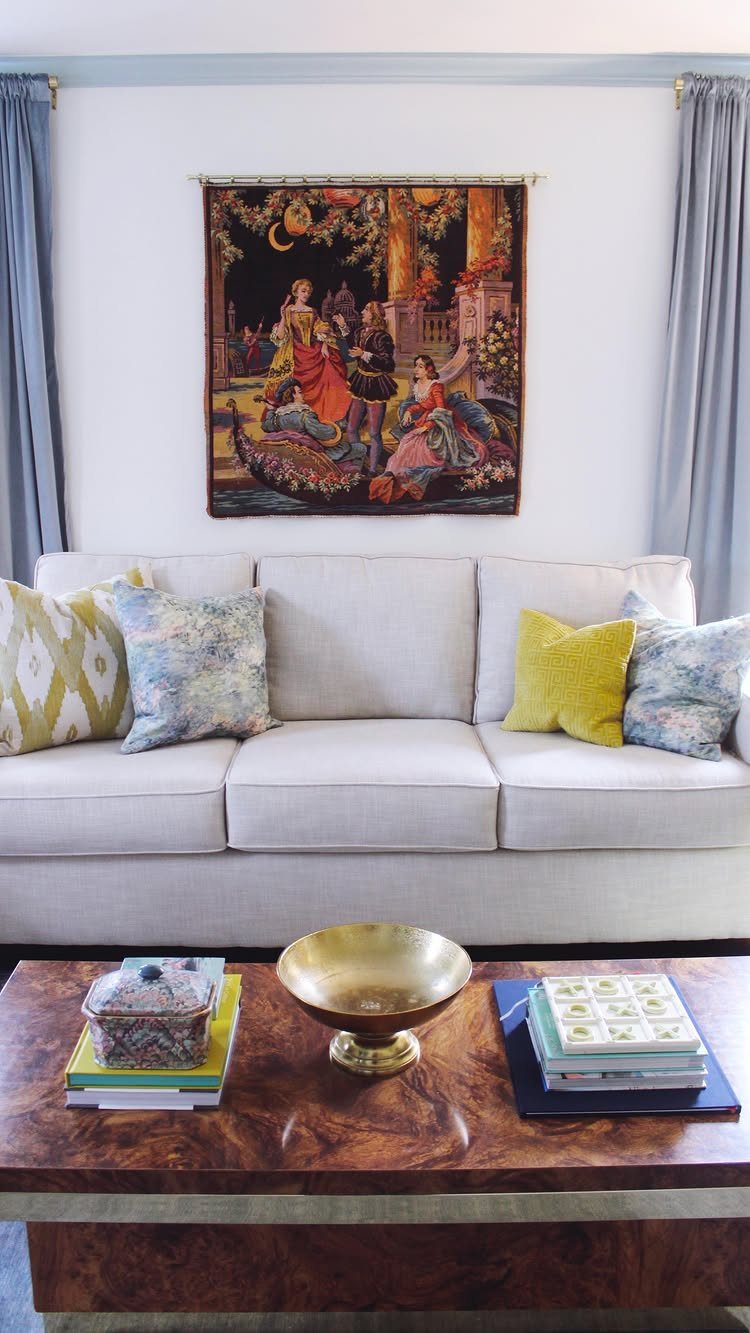
Fabric softens a wall in a way paint and frames cannot, and it also dulls echo in a room with hard floors. A large woven piece can be had secondhand for much less than comparable framed art.
Hang it from a wooden dowel or a curtain rod with clip rings, so no nails touch the textile itself. Center it over the sofa and let it run nearly the sofa’s full width.
An ornate pattern is busy, so I would keep the pillows plain and let the weaving carry the room.
4. Molding and Wall Sconces
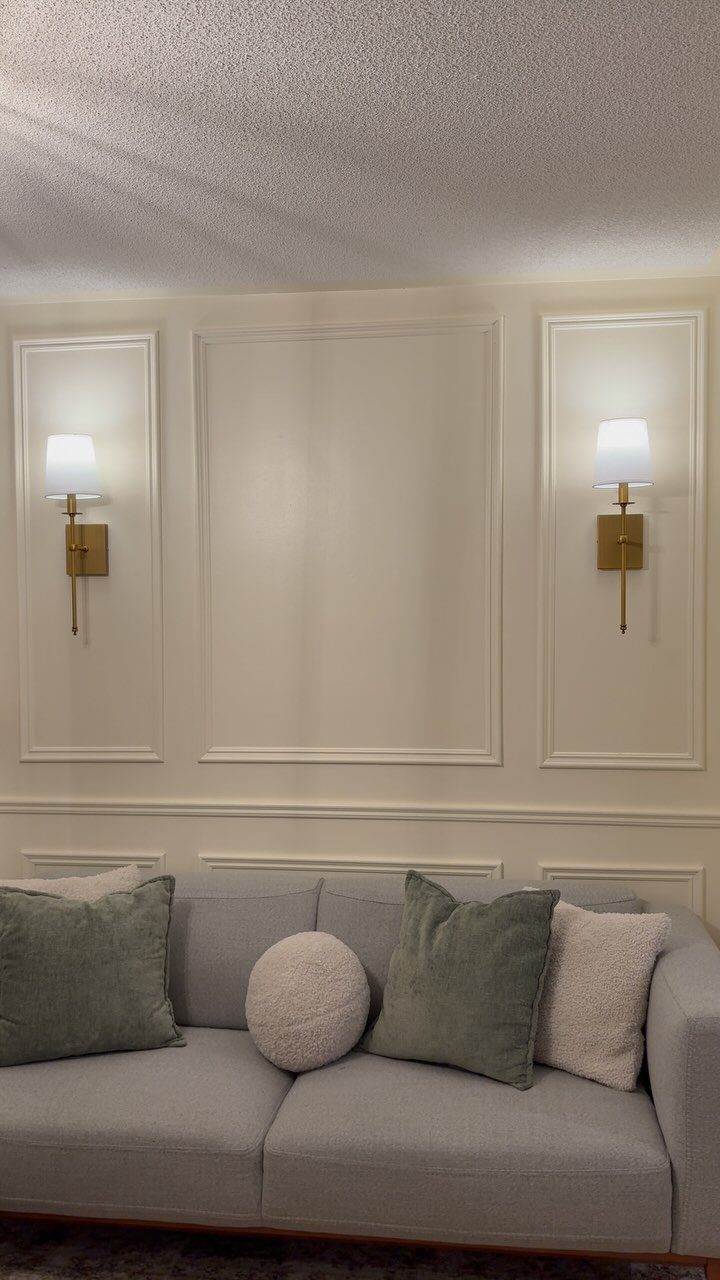
Molding panels and sconces give a flat wall architecture, and the sconces free up table space for lamps. Picture-frame molding can be built from thin trim, glued and nailed up, then painted the wall color for a quiet look.
Mount each sconce at the same height, centered on either side of the sofa, and mind the wiring. Use a cord cover painted to match the wall.
Gold stands out against a pale wall, so I would keep everything else restrained.
Sizing and Placement Rules
I size art to cover about two-thirds of the sofa width.
A tall backrest can justify a slightly larger gap, and a low one a slightly smaller gap.
A sectional changes the math. Measure only the longest stretch facing the wall and apply the two-thirds rule to that, not to the whole L. Sectionals take up more wall than they seem to, so go bigger than feels natural.
Centering Art
Line the art up with the sofa, not the wall. If the sofa sits off-center on its wall, art centered on the wall will look like a mistake.
The exception is a sofa floating in the middle of a large open room. There, centering on the wall can work, so stand back and judge the whole picture.
For height, aim to put the center of the art at eye level, roughly 57 to 60 inches from the floor. Check that number against the 6–8 inch gap above the sofa, and let the sofa back decide if they clash.
Creating Cohesion
A plain sofa takes color and pattern; a busy one calls for something calmer above it.
I pull a color from the rug or the curtains and let it show up again in the art.
If the walls carry a pattern, coordinate with the sofa instead of matching it. An exact match is too busy and gives the eye nowhere to rest.
Same palette, different scale: big pattern on the wall, small pattern on the sofa, or the reverse. A few solid pillows also break up the pattern.
Sofa styling becomes far less daunting once you understand the rules, and accessories, designers rely on time and again.
Frequently Asked Questions
How do I hang art above a sectional?
Pick the longest side that faces the wall, apply the 2/3 math to that run alone, and center the art over it rather than over the full L. A sectional covers more wall than it looks like it will, so size up past what feels comfortable, often 80 inches wide or more.
What is the 3-5-7 rule in decorating?
Odd-numbered groups of 3, 5 or 7 pieces tend to look more settled than pairs or sets of 4.
Shelves, mantels and coffee table vignettes all follow the same pattern. For a gallery wall, let it set your starting piece count, then adjust once the frames are laid out on the floor.





