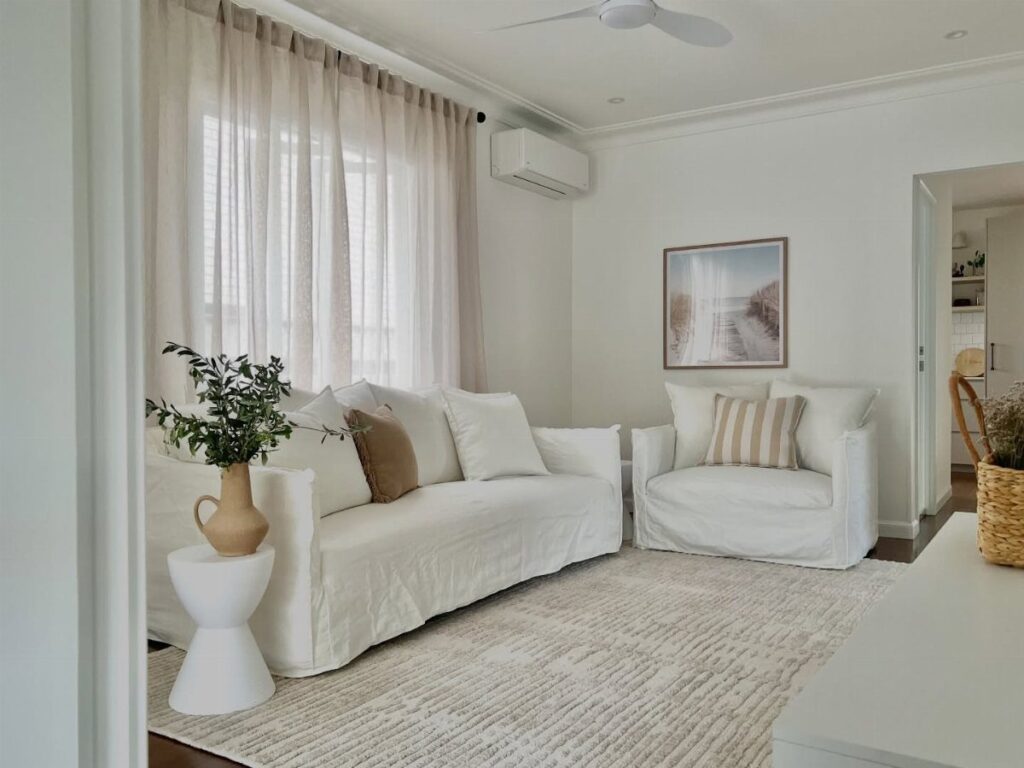
The right rug placement depends on the size of your room and what shape fits your layout, and the ideas here run from layering a small rug over a larger one to centering a round rug under a coffee table.
Measure the footprint of the sofa and chairs first, not the whole room, because that rectangle sets the size and the size sets the placement.
A strip of painter’s tape on the floor will show you how much room you have between the sofa and the wall, and whether an 8 x 10 or a 9 x 12 fits the space.
1. Front Legs of Sofas on the Rug
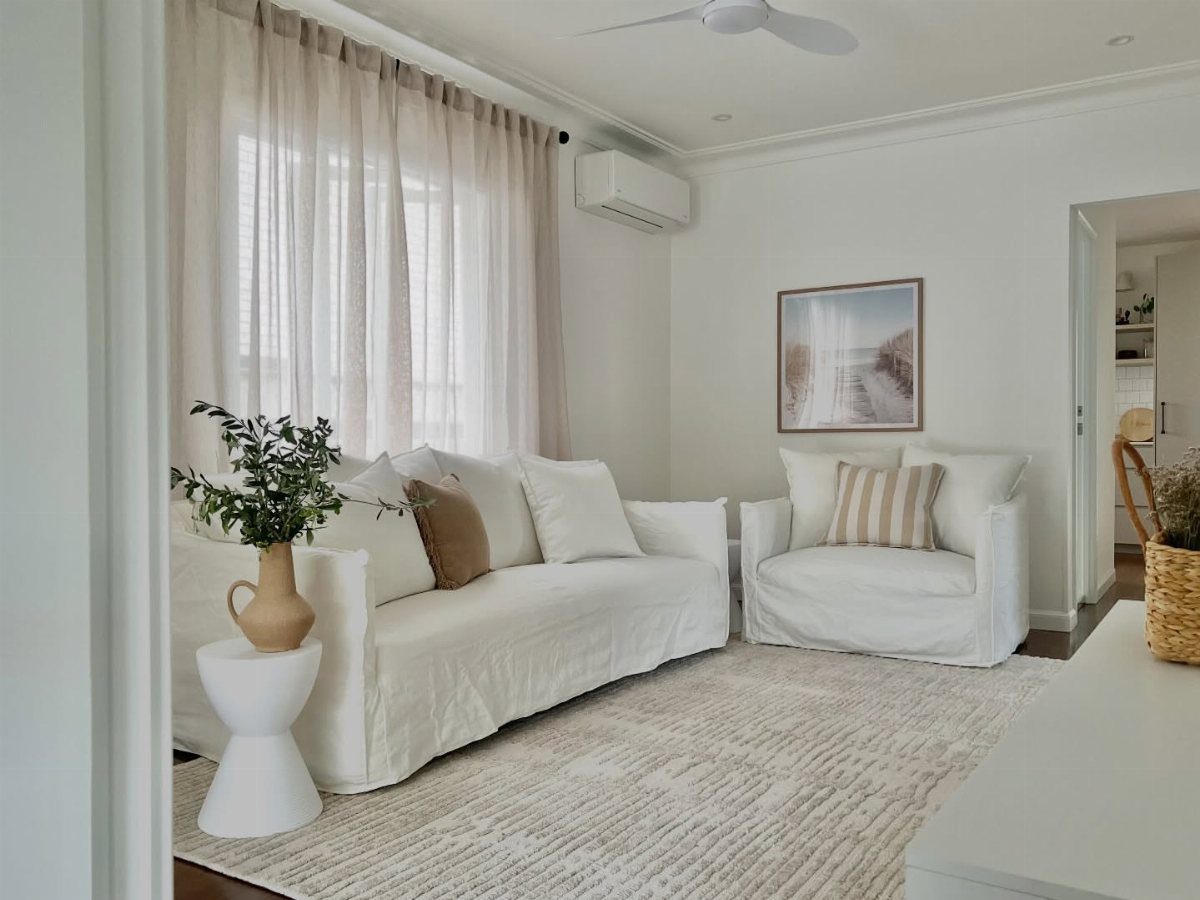
Front legs on the rug is the placement I reach for first. It ties the sofa to the rug so the two read as one seating group instead of a rug floating in front of furniture.
Slide the rug forward so the front legs land on it and the rear legs stay on the floor.
A slipcovered sofa like this one sits a little differently than a rigid frame, so check that the skirt clears the rug’s edge and nothing gets pinched.
2. Rug Placement in Open Spaces
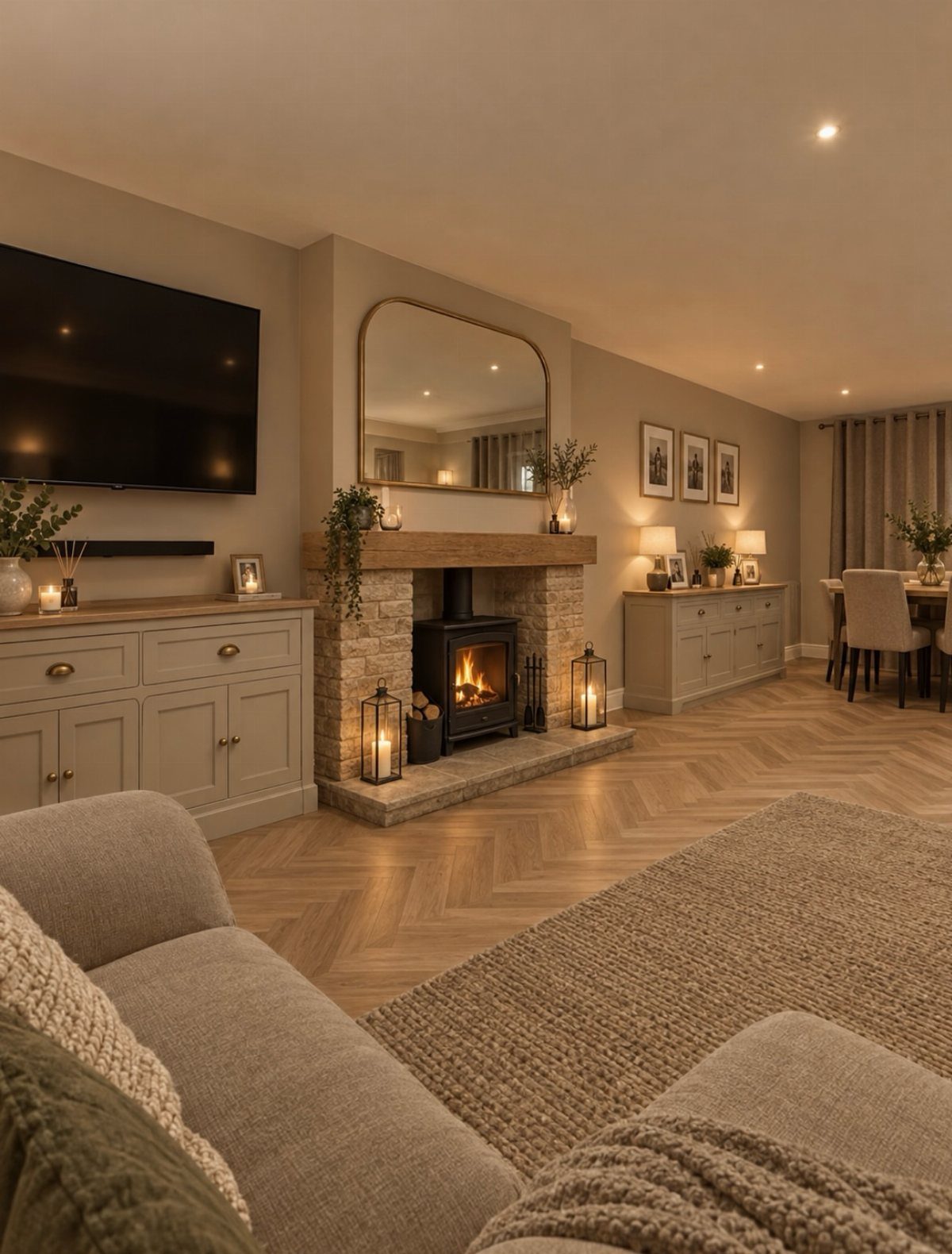
Open-concept rooms need a boundary, and a rug draws one without a wall, shelf or divider. Here the sofa sits on the rug while the dining area stays off it, so the living zone reads as its own space.
Size the rug to hold the seating group, and keep it clear of the dining chairs so they don’t snag on the edge.
I like a textured tan or neutral weave for this job: it defines the zone without fighting the other furniture.
3. Layering Rugs
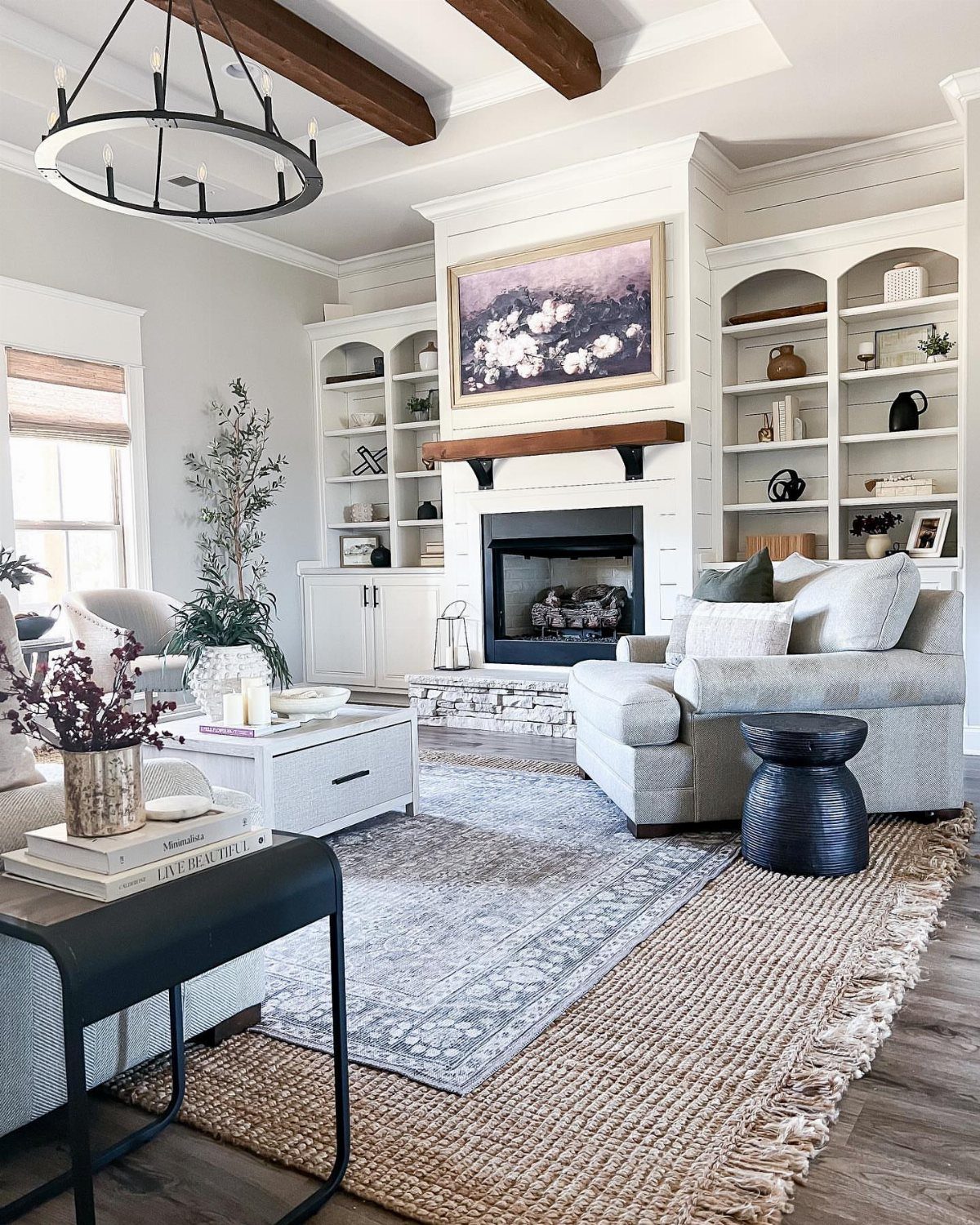
Two rugs stacked give a room more depth than any single one can. A flat, neutral rug goes down as the base, and a smaller one with more pattern or texture sits on top.
Keep the base larger so a clear border shows on every side.
Offset the top rug slightly, or set it straight, but choose one and commit. On a wood floor like this, the layers also soften a lot of bare surface.
4. Rug Colors and Patterns
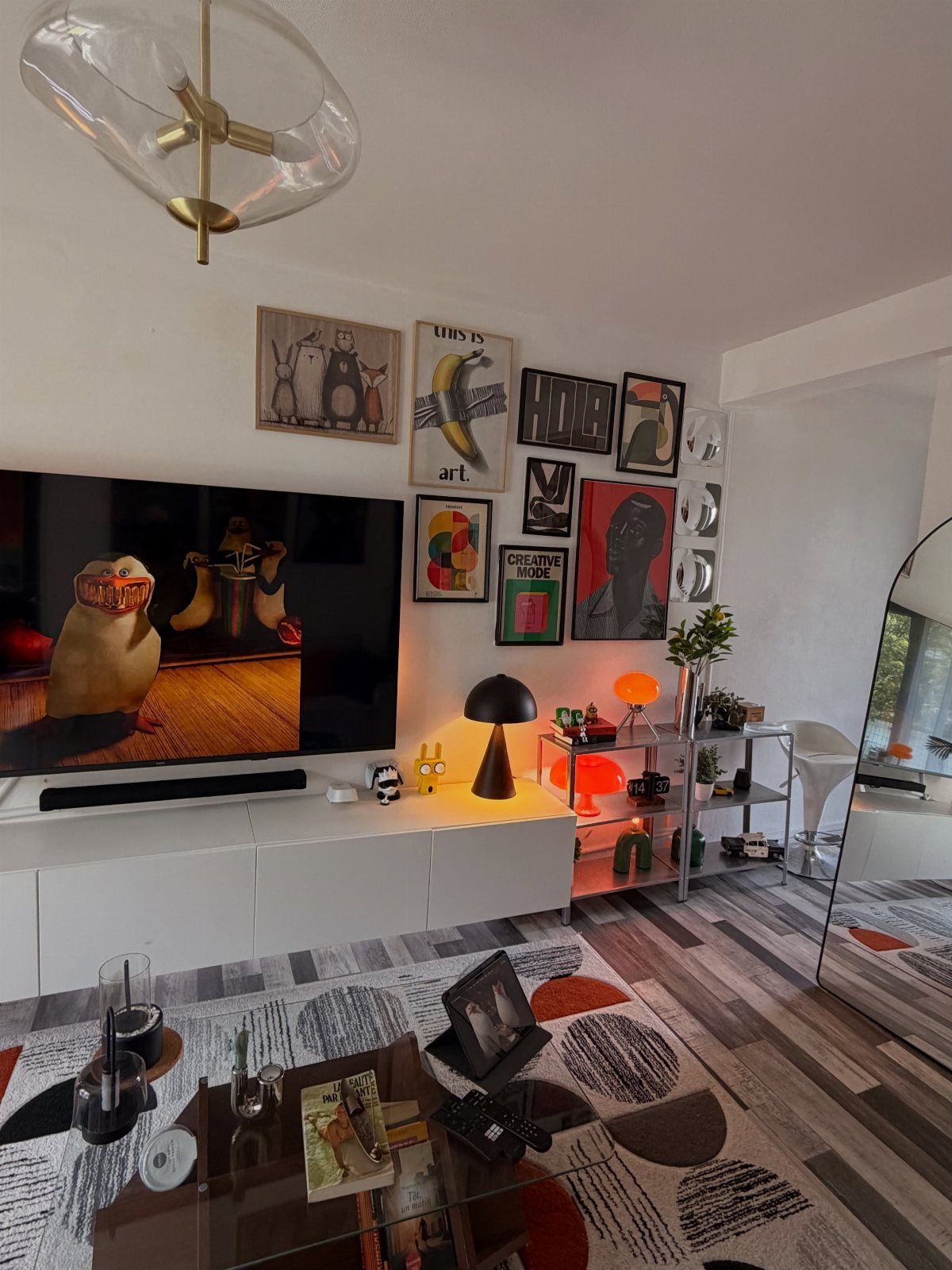
A geometric rug in grey, orange and white carries the color scheme for the whole room. Pick one or two shades from it and repeat them in a lamp, a pillow or the art on the wall.
Busy pattern works best when the furniture around it stays plain, as the white TV stand does here. If the walls already carry a gallery of art, a pattern with a limited palette keeps the room from feeling crowded.
5. Small Living Rooms
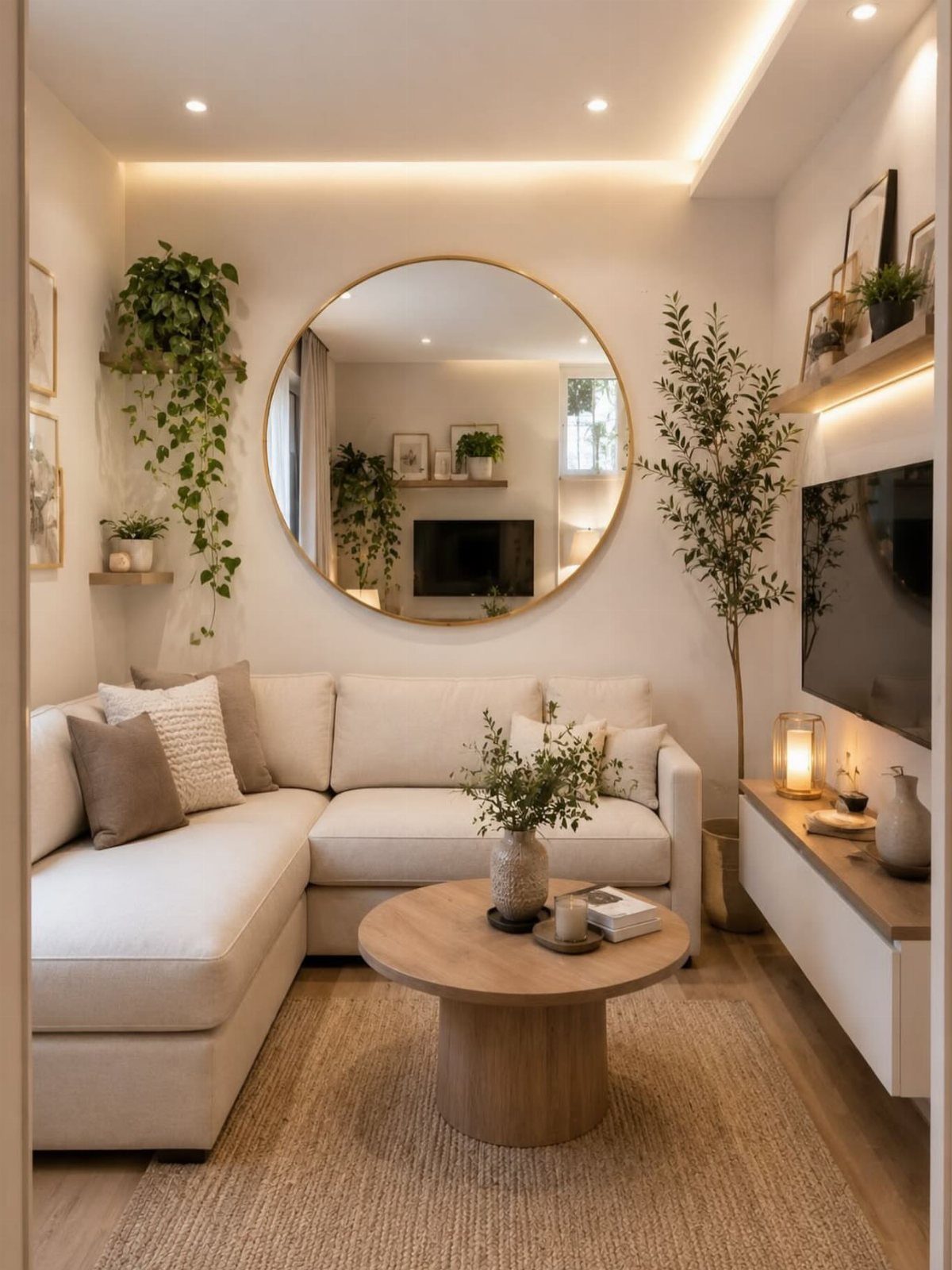
In a small room with an L-shaped sectional, center the rug within the L so there is an even amount of space on each side. That balance makes the layout look planned rather than squeezed in.
A jute rug in a tan, textured weave keeps the floor light and neutral. A round coffee table on top softens the sectional’s hard corner, and I’d choose it over a square one in a tight room.
6. Large Living Rooms
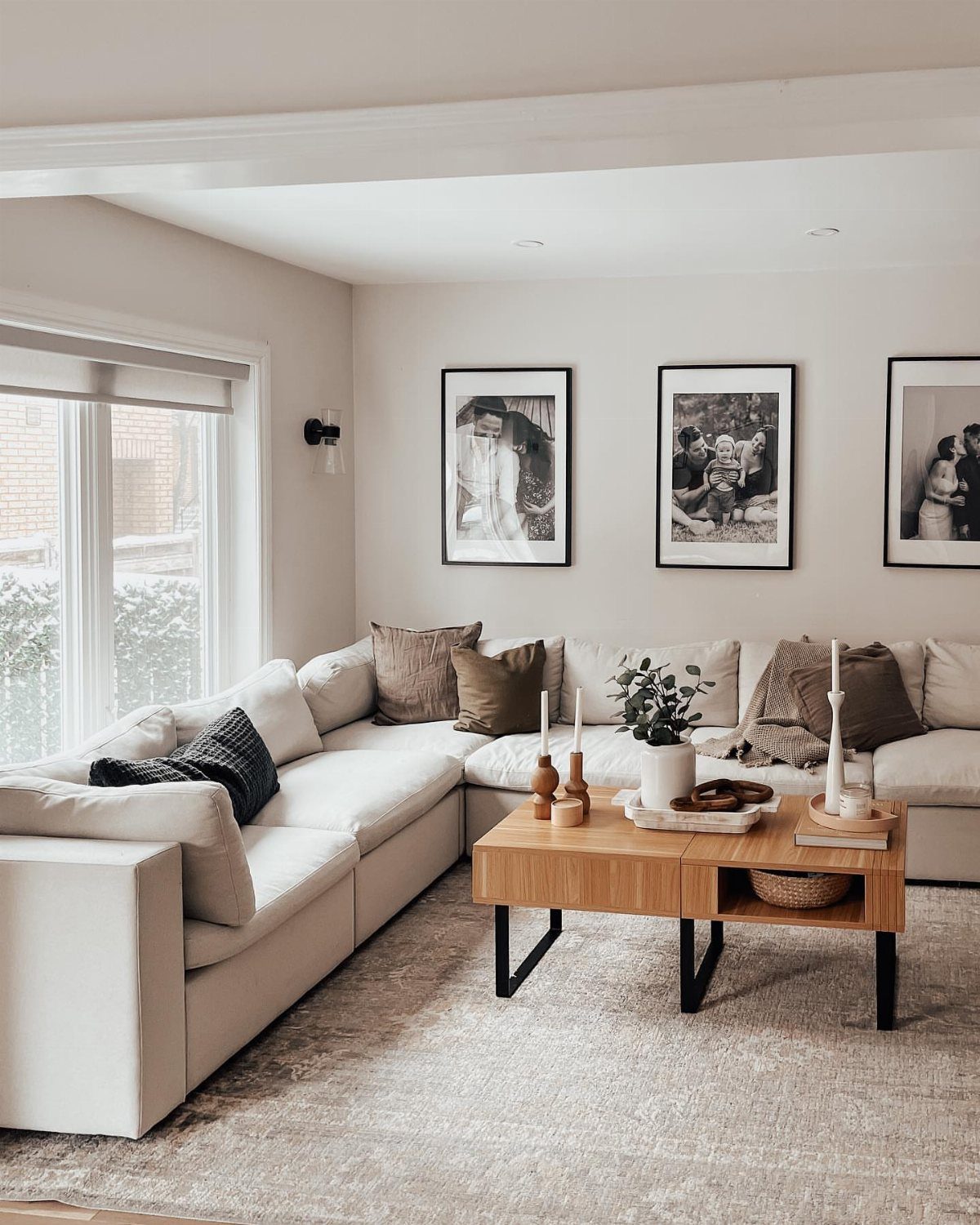
Big rooms can take big rugs, and 9 x 12 is a good place to start. Anything smaller tends to look like a postage stamp in all that floor.
Set the sectional and coffee table entirely on the rug, and let a neutral grey hold that much surface area in check. If the room allows more than 9 x 12, go bigger rather than smaller.
7. Rectangular Rugs
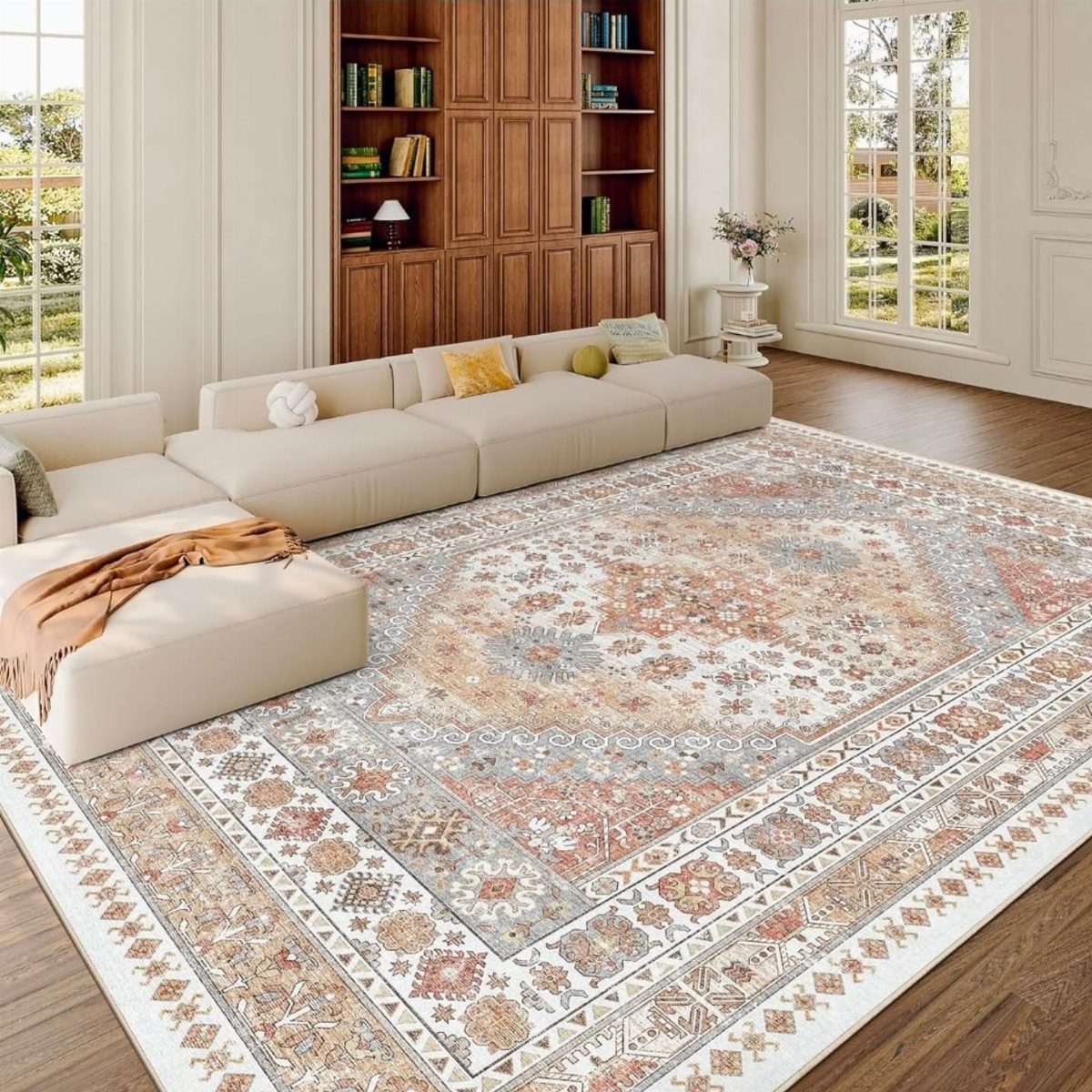
A rectangle echoes the lines of a sofa, a window and a bookshelf, which is why it works in most living rooms. The pattern here does the quiet work of adding warmth under a cream sectional.
Pick a size that fits the whole seating group, and run it parallel to the longest wall. A patterned rug also hides daily wear better than a solid one, a plus on a renter’s budget.
8. Round Rugs
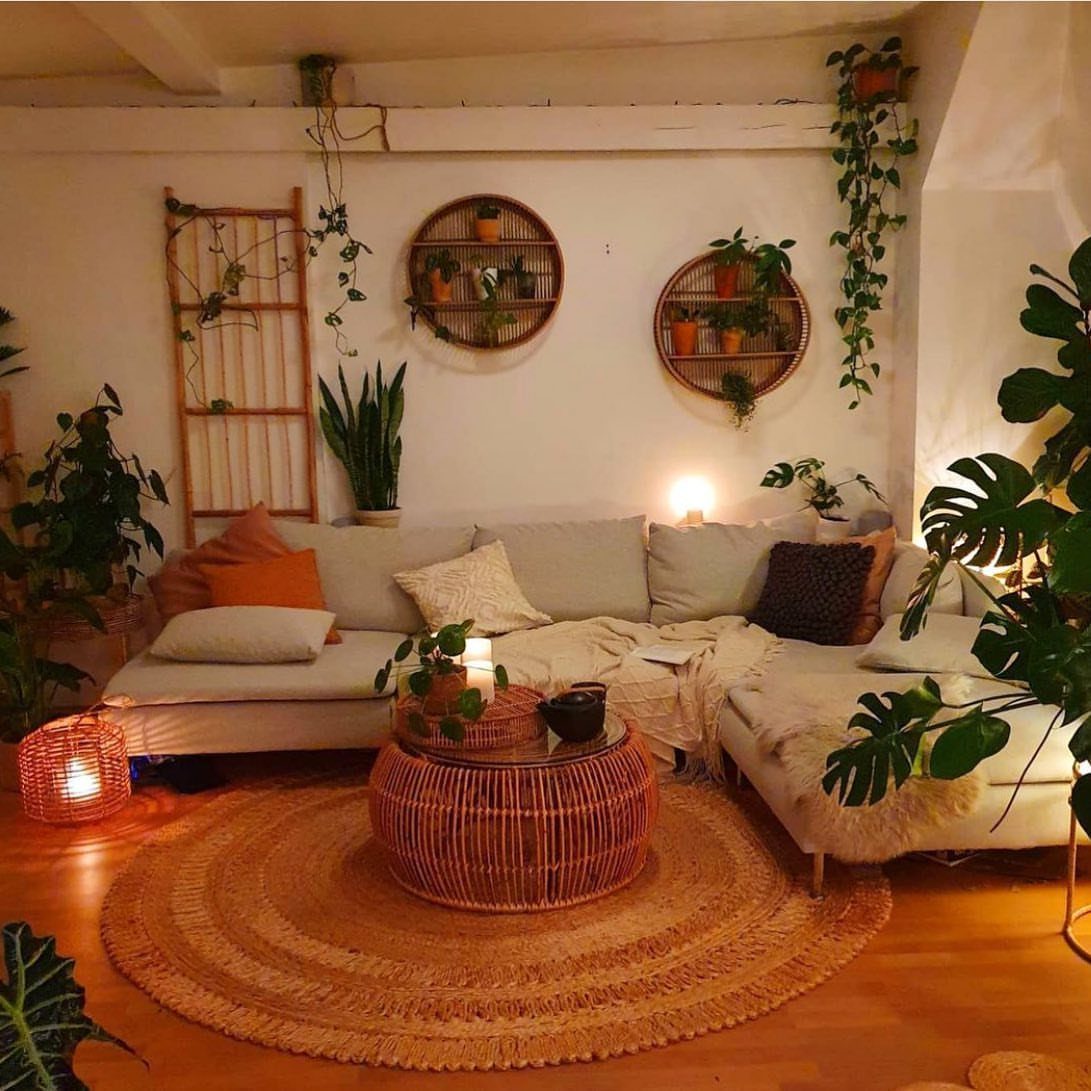
A round rug turns one corner into a soft landing spot. The jute weave under a woven coffee table keeps the floor warm and natural, and its curve breaks up all the straight lines of the sectional and shelves.
Center the table on the circle and leave a visible ring of rug around it. Round works best as an accent for a single zone, and I’d skip it if the sofa needs to sit on it.
9. Runner Rugs
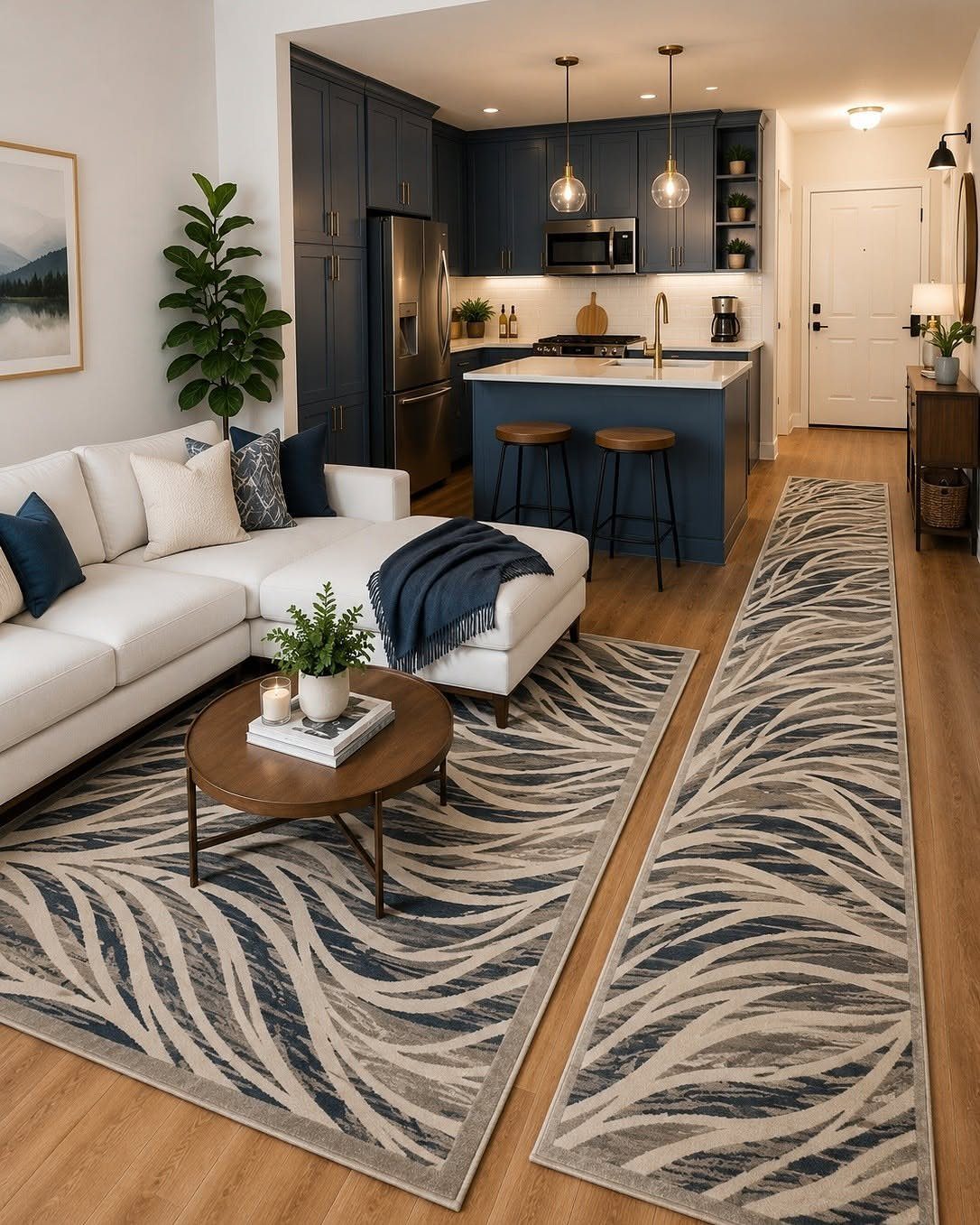
A runner draws a path through a room. In an open living and kitchen space, it marks the walkway between zones so people know where to step, while the larger rug stays with the sofa.
Matching the runner to the area rug’s palette, as in blue and beige here, keeps the two from competing. Center it in the walkway and leave a strip of bare floor on each side.
10. Irregular or Wavy Rug Placement
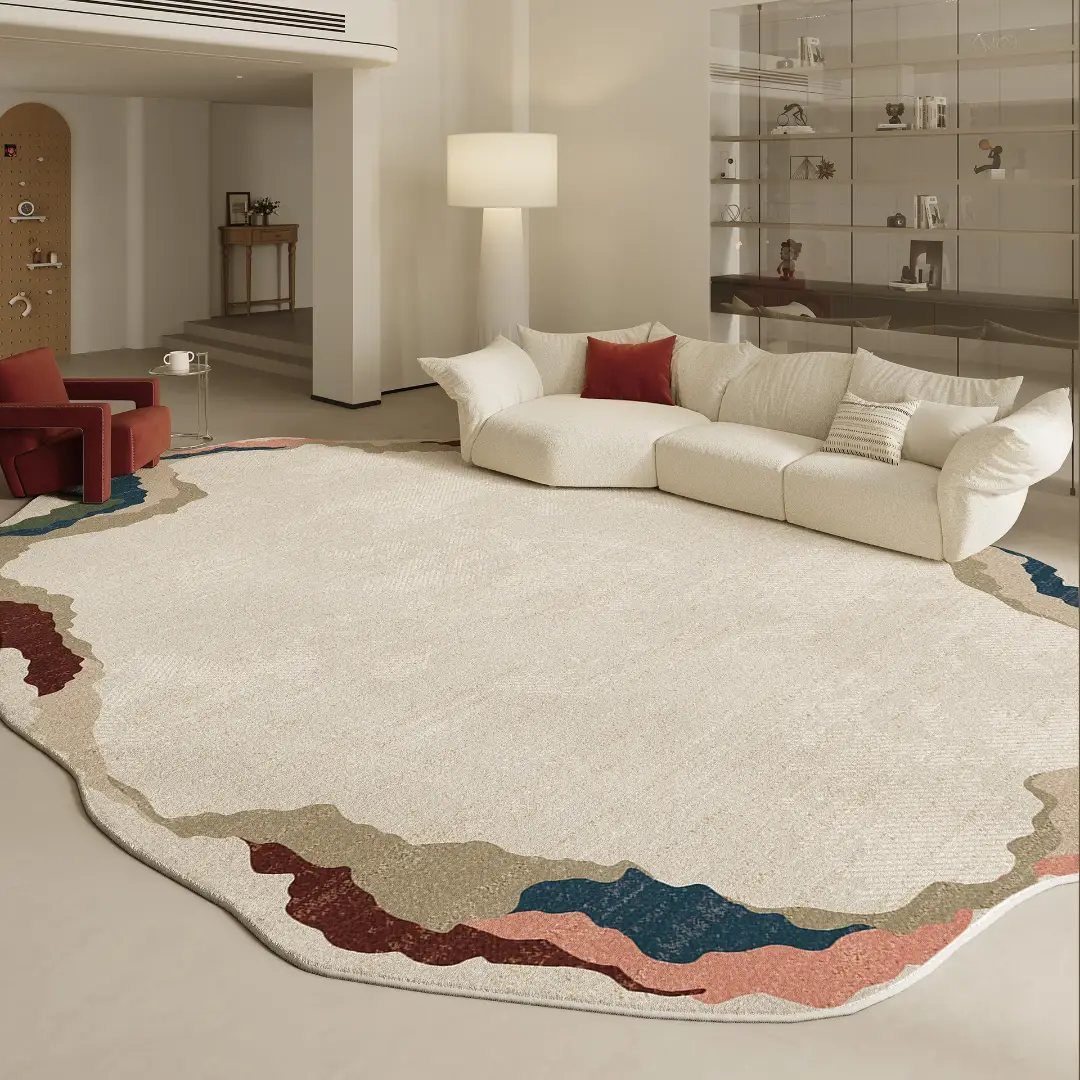
Wavy edges loosen a room full of straight lines. A cream rug with colorful borders gives the white sectional and glass shelving a softer base, and the color ties in the red armchair.
Because the shape has no obvious front, place it by eye: set the seating partly on it and step back before you commit. I’d keep the other furniture plain so the borders stay the star.
Importance of Rug Placement
A rug does more than fill floor. It marks off zones in an open layout, protects wood or tile where people walk most, softens sound, and adds warmth underfoot.
Size is where placement goes wrong.
A rug that is too small floats in the middle of the room without anchoring any furniture, and a rug that is too large can swamp the layout and shrink the visual space. Look at your room’s proportions first.
Measuring for Rug Size
Start by measuring the area the seating group will occupy, not the whole room. Lay painter’s tape on the floor in the rectangle you have in mind, live with it for a day, and adjust before you order.
- 3 x 5 or 4 x 6 feet: small spaces, accent areas, under a coffee table.
- 5 x 8 or 6 x 9 feet: smaller living rooms, partly under the furniture.
- 10 x 14 feet and larger: combined living and dining areas, or very large rooms.
In larger rooms, leave a border of bare floor at the edges so the space stays open and balanced.
Treat the numbers as guides. Your sofa’s dimensions and the shape of the room count as much as the tape measure.
Choosing Rug Materials
Wool is the durable pick.
It bounces back from foot traffic, feels plush, and suits high-traffic rooms. Hand-tufted wool is a common form of it.
Synthetic fibers cost less and resist stains, and they handle heavy foot traffic well. For a renter on a tight budget, that combination is hard to beat.
Jute and sisal bring an organic texture if you want something less polished. Decide how much wear and spilling the room really gets, then match the fiber to that rather than to the look alone.
Frequently Asked Questions
Is a 9×12 rug too big for a living room?
Not in a large room. In a big room, 9 x 12 is where I start, because a 6 x 9 can look stranded in the middle of all that floor.
It can hold a whole sectional and coffee table, and if the room allows more, going bigger beats going smaller. In a small room it would swamp the layout.
What size rug should I use for a living room?
Size it to the seating group, not the room. Tape the outline on the floor with painter’s tape, walk around it for a day or two, and see if you want it bigger or smaller before you buy.
For a sectional, an 8 x 10 with the front legs on the rug is a common fit.
Can I use multiple rugs in one living room?
Yes, as long as they get along. Layering works with a larger flat, neutral rug underneath and a smaller patterned or textured one on top, with a border of the base showing on every side.
In an open space, a runner in the same palette as the main rug can mark the walkway between zones.
How to choose a rug?
Start with size, then match the material to how much wear the room gets. Wool is durable and bounces back from foot traffic.
Synthetics cost less and resist stains, which suits a tight budget. Jute and sisal read rougher and more casual than wool.





