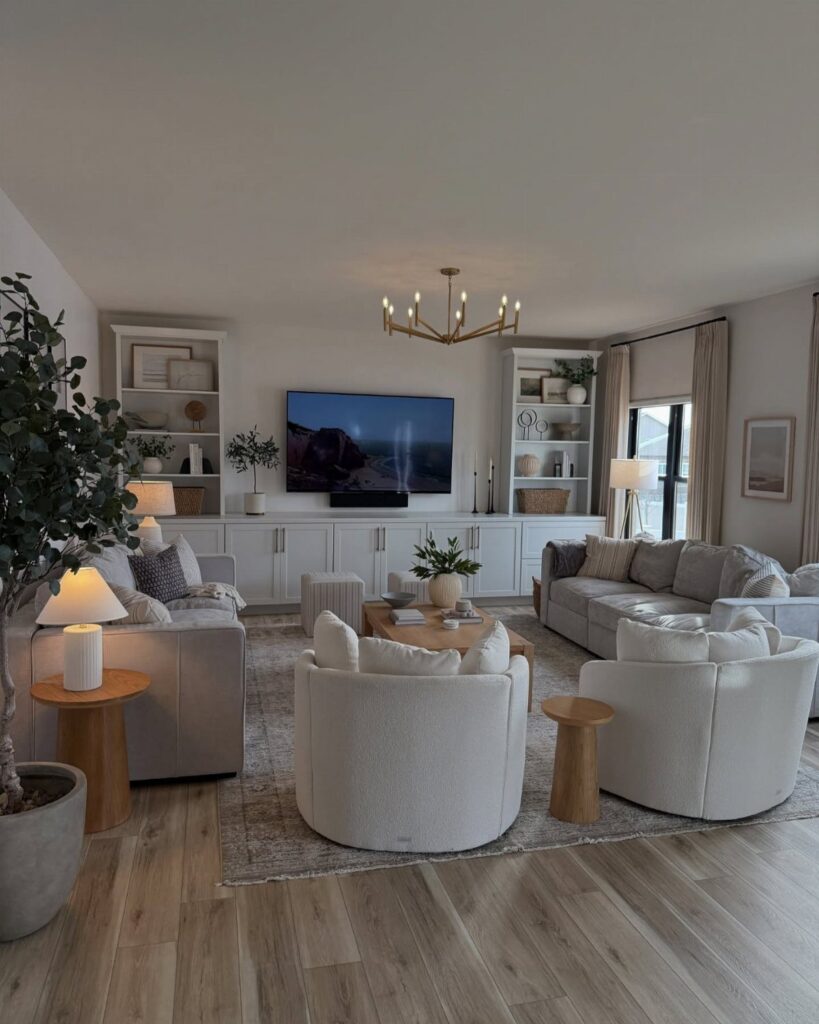
The ideas here run from a sectional and an oversized coffee table to a built-in bar and an office nook, and the cost climbs with how much carpentry is involved: stock cabinets with a plank or countertop on top get close to custom work for much less.
What decides which idea is yours is who uses the room daily. Small kids call for rounded corners and performance fabric on that sectional, and storage solutions that keep toys and clutter contained.
Pieces that need no wiring or mounting, like table and floor lamps in your lighting layers and textured pillows as accent pieces, stay open to renters.
1. Kids’ Zone
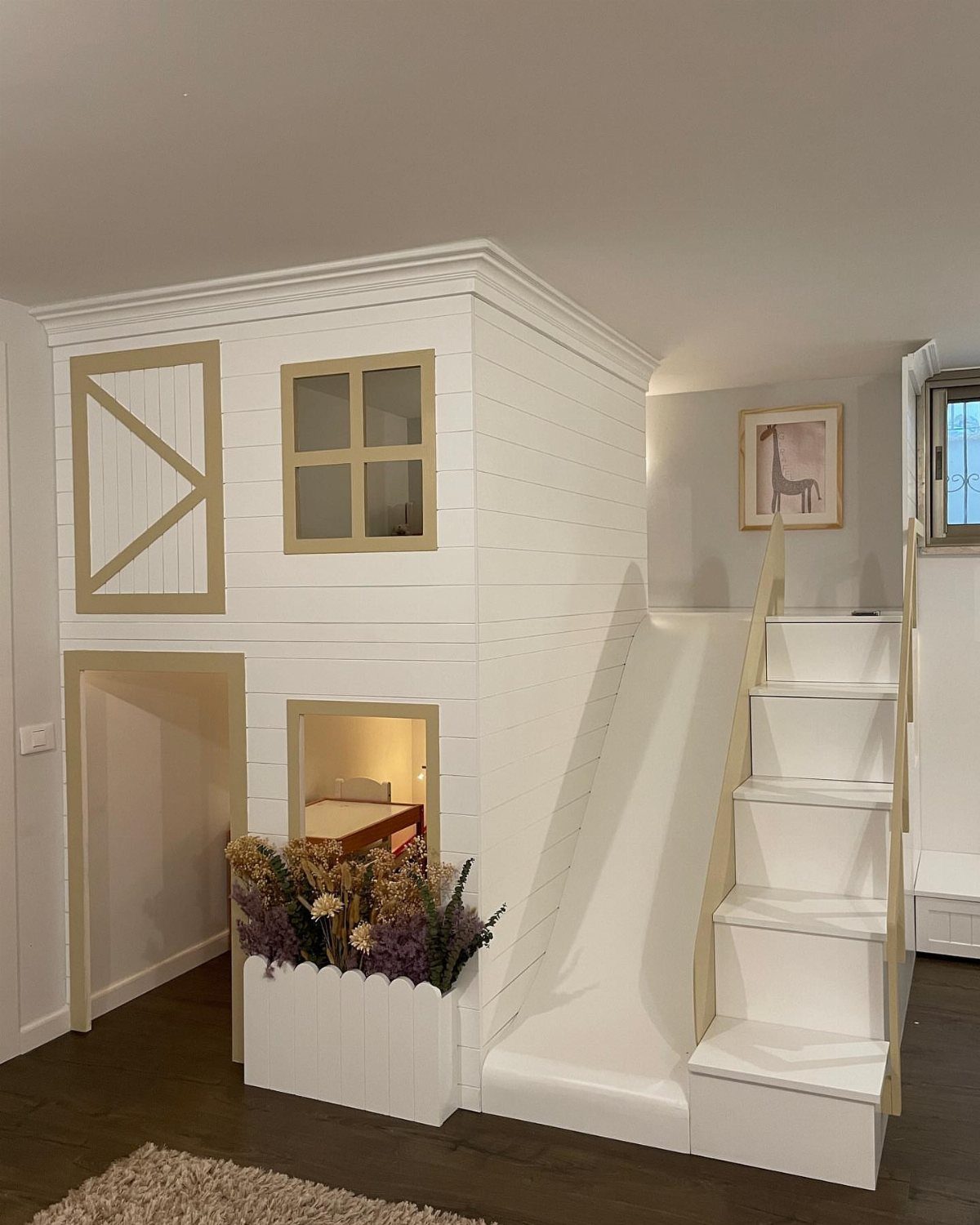
The white finish keeps it from fighting with dark wood floors, and a small flower box under the window makes it read as part of the decor rather than a plastic intrusion.
Pick a corner and keep the play structure there. A defined footprint means cleanup is a matter of sweeping everything back toward one place.
2. Define Zones
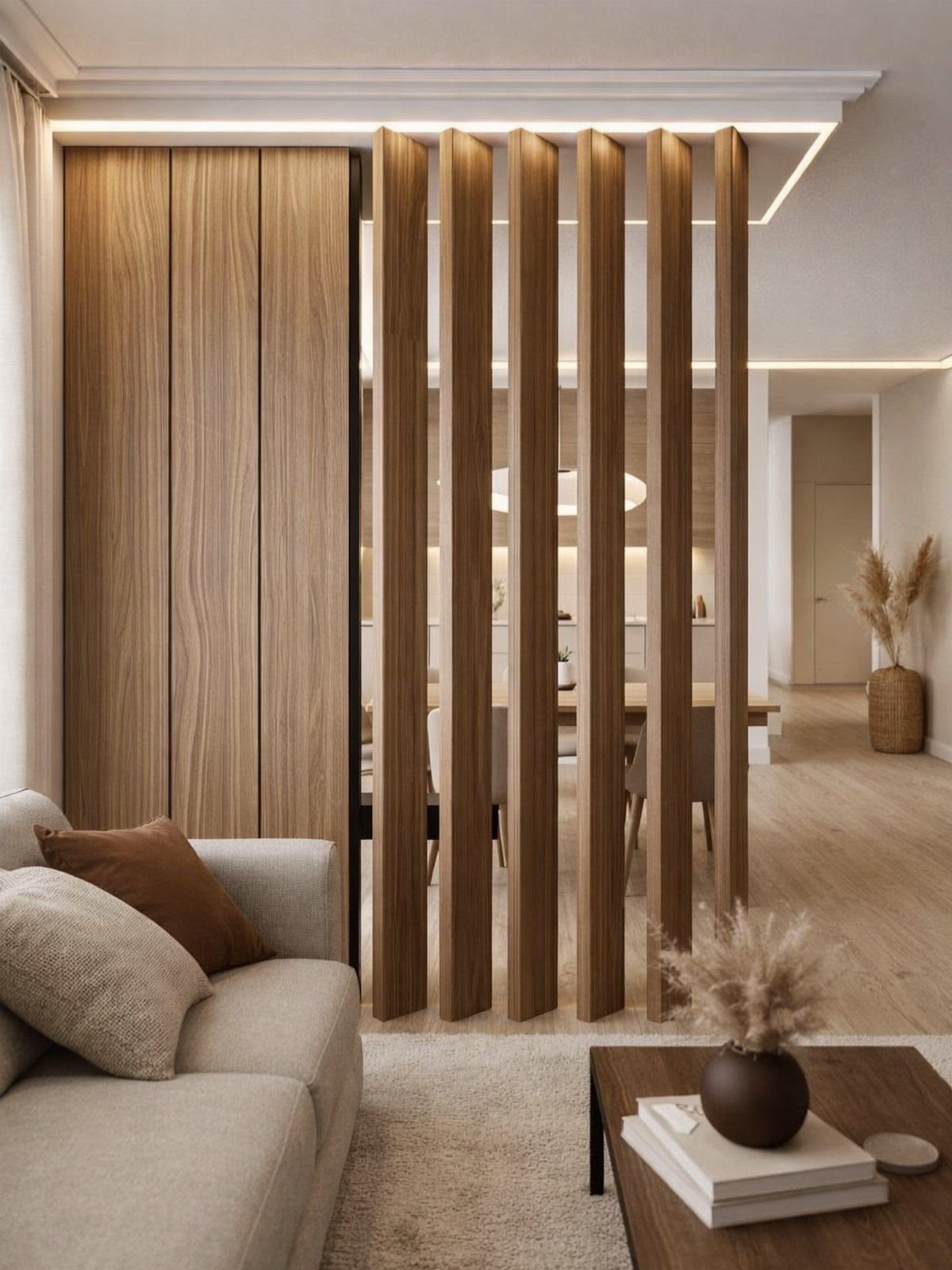
Light still passes through the gaps, which matters in a small family room where a solid wall would make both sides feel cramped.
I like this approach better than a bookcase divider because nothing on it needs styling or dusting. Set the divider so the sofa’s back faces the dining table, and the sofa itself becomes part of the boundary.
3. Comfortable Sectional Sofa
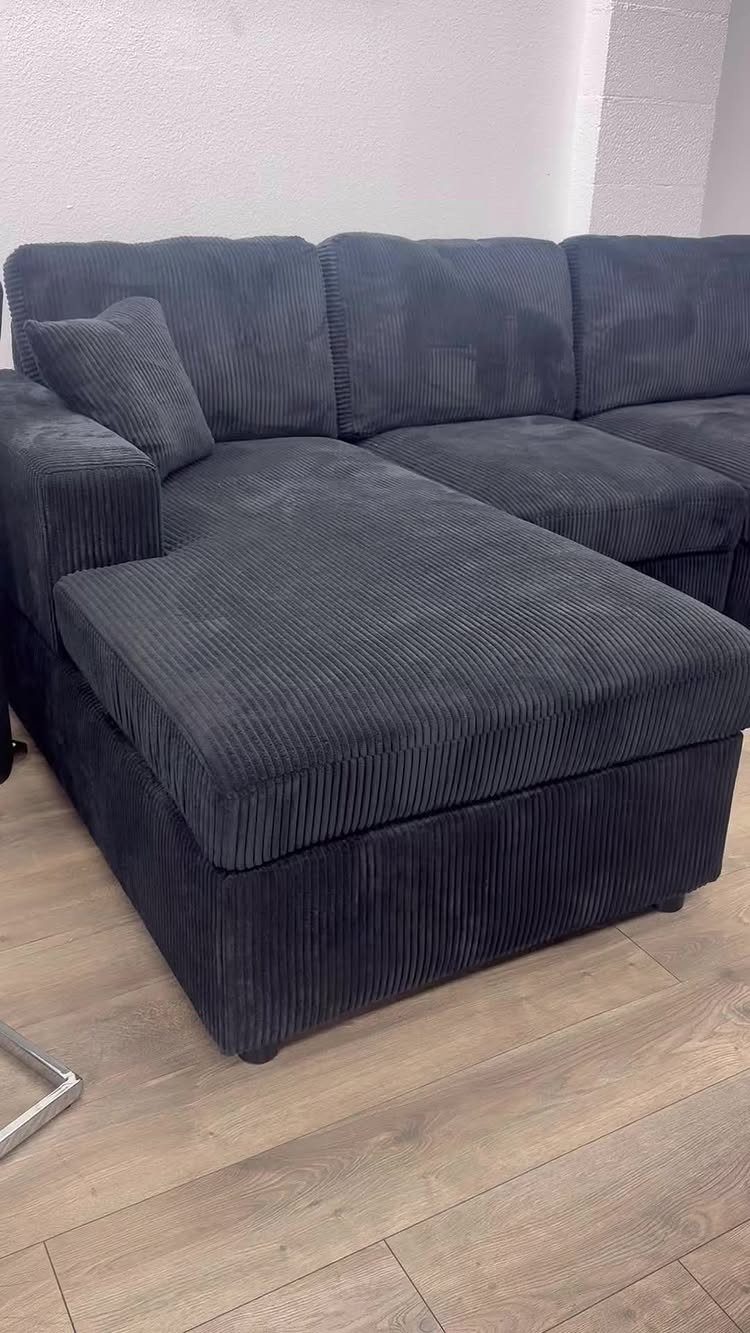
Corduroy is the detail that sold me on this sectional. The ribbed texture hides small marks better than a smooth weave and feels softer, which suits a room that gets used daily.
A chaise end gives one person a place to stretch out, so the sofa seats a crowd and still allows a nap.
Dark grey also reads as forgiving on a family room’s heaviest-use piece. Set on light wood floors and backed by white, a sectional anchors the room without needing a lot of extra furniture around it.
4. Oversized Coffee Table
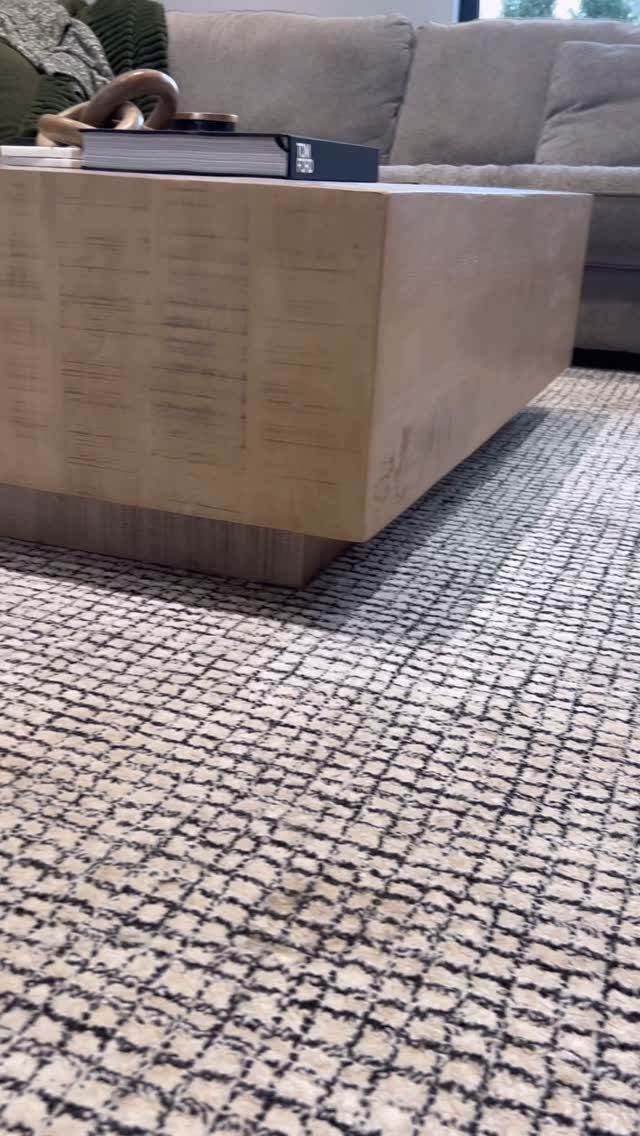
Go chunky with the coffee table and let it carry the room.
The wide surface works hard in a family room: books, a tray of drinks, a game board.
Choose rounded or softened corners if small kids are around, and leave a clear walkway on each side so the size helps instead of blocking traffic.
5. Side Tables
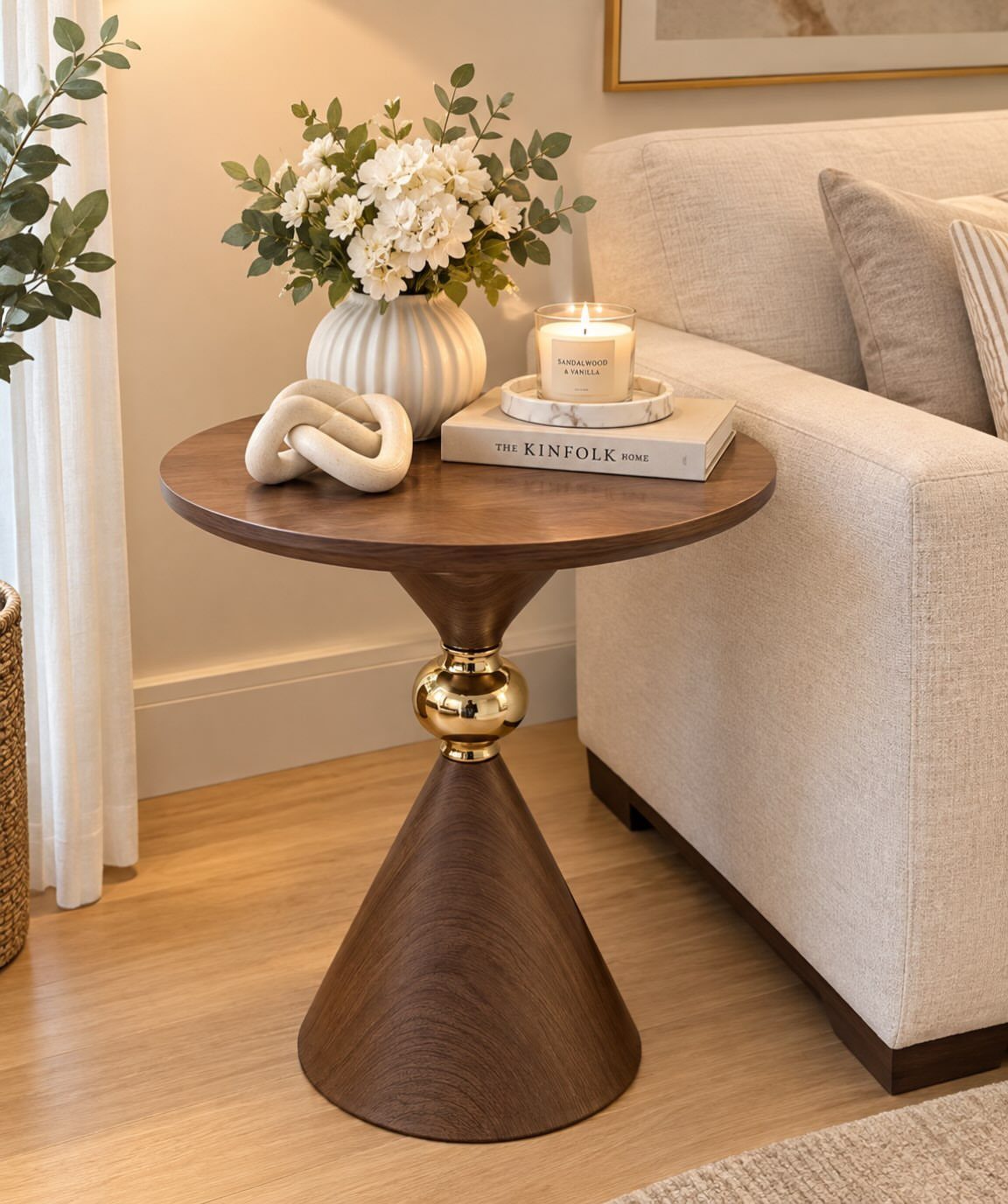
Round beats square for a side table beside the sofa, because there are no corners to catch a hip or a small head.
Keep the surface to 3 things: something living like flowers, a candle, and a book you actually enjoy.
That leaves room for a mug. Choose a table close to the sofa arm’s height so a cup is easy to set down.
6. Lighting Layers
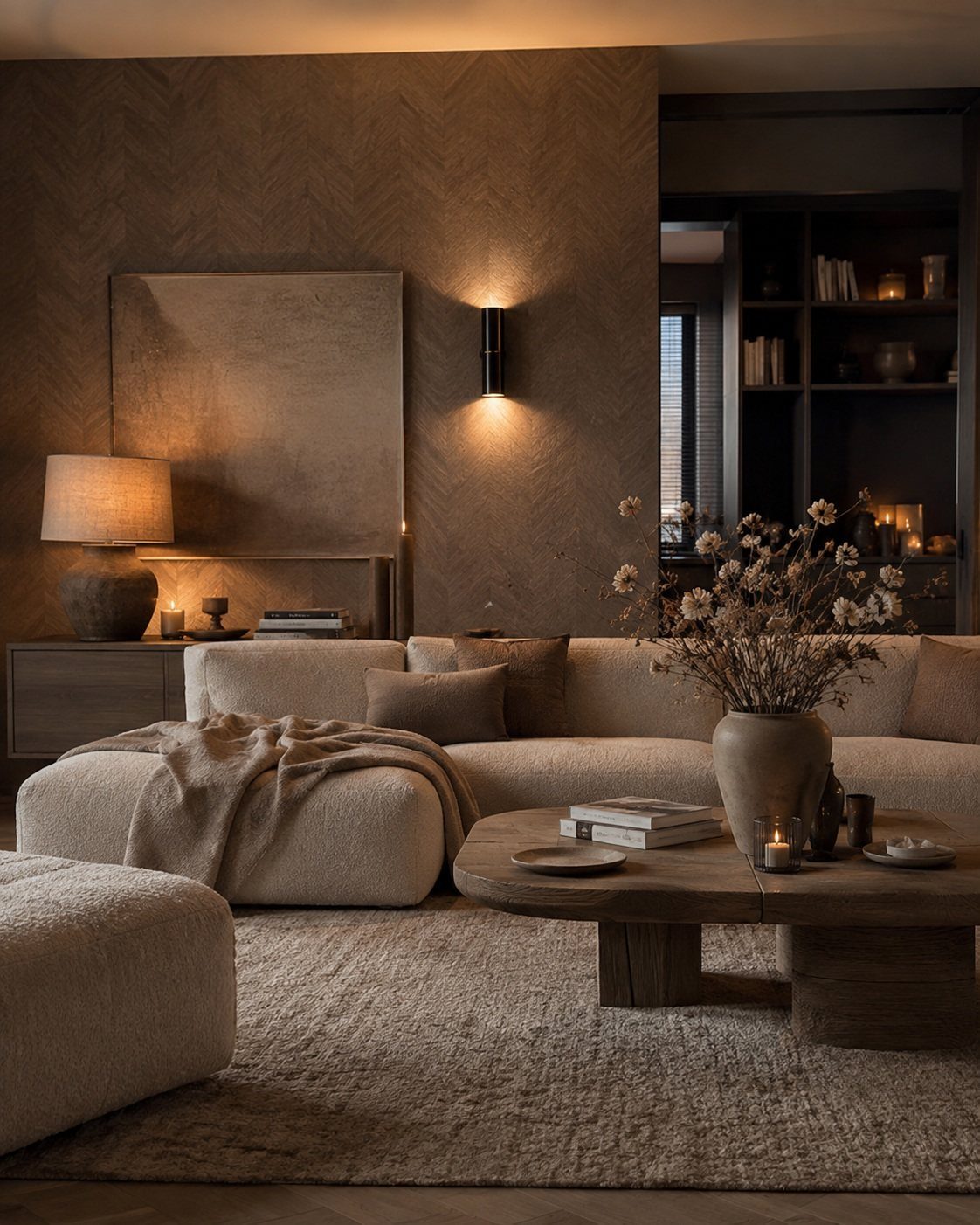
Lighting works best in layers: a table lamp for reading, a wall sconce for soft glow at eye level, and candles for the evening. Put them at different heights and the room stops depending on one harsh overhead fixture.
Sconces are my pick for renters and small rooms, since they free up table space.
Plug-in versions need no wiring. A textured wall catches that sideways light and gains depth after dark.
7. Color Scheme
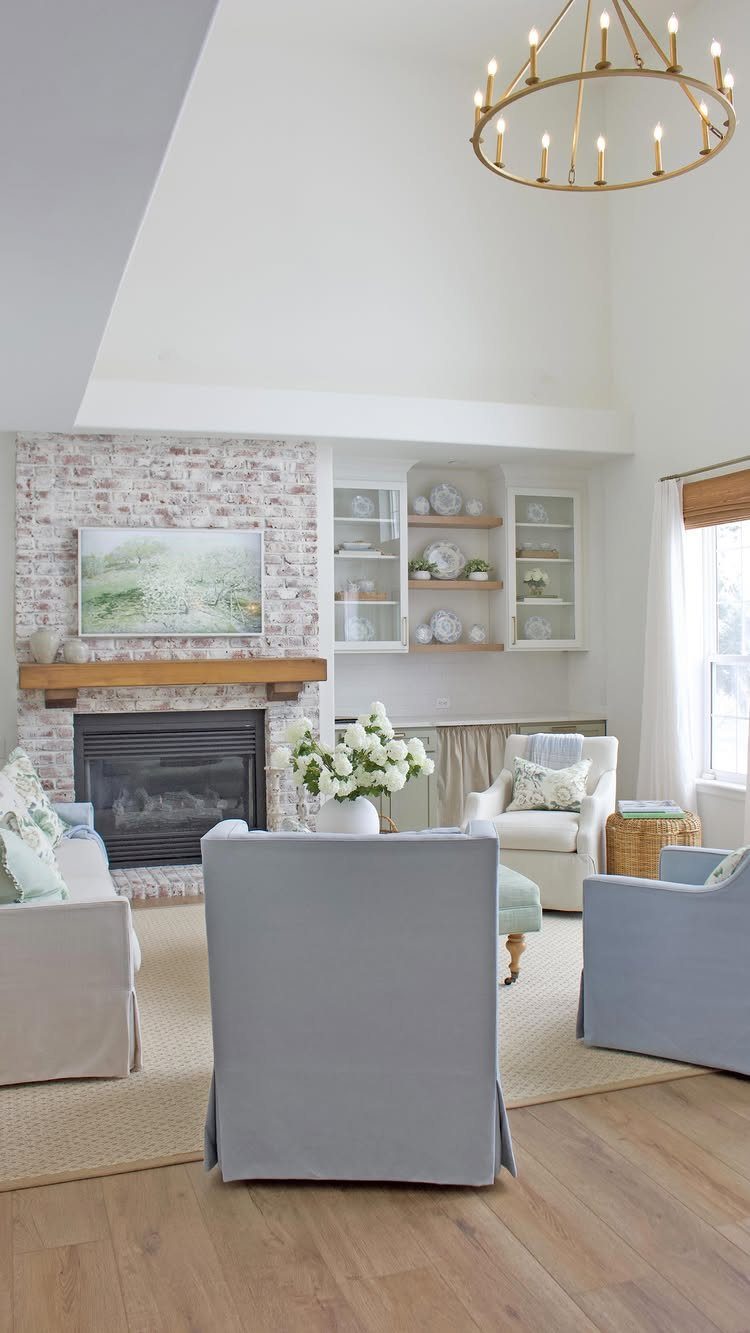
Paint, upholstery and rugs all pull from the same few colors, and that decides whether a family room feels calm or busy.
Light blue and cream armchairs against white brick is a restrained trio, and the gold chandelier adds one warm accent.
Pick two soft colors and one metallic, then repeat each at least twice around the room. Armchairs are an easy place to try a color, since swapping a pair costs far less than repainting.
8. Floating Furniture Layout
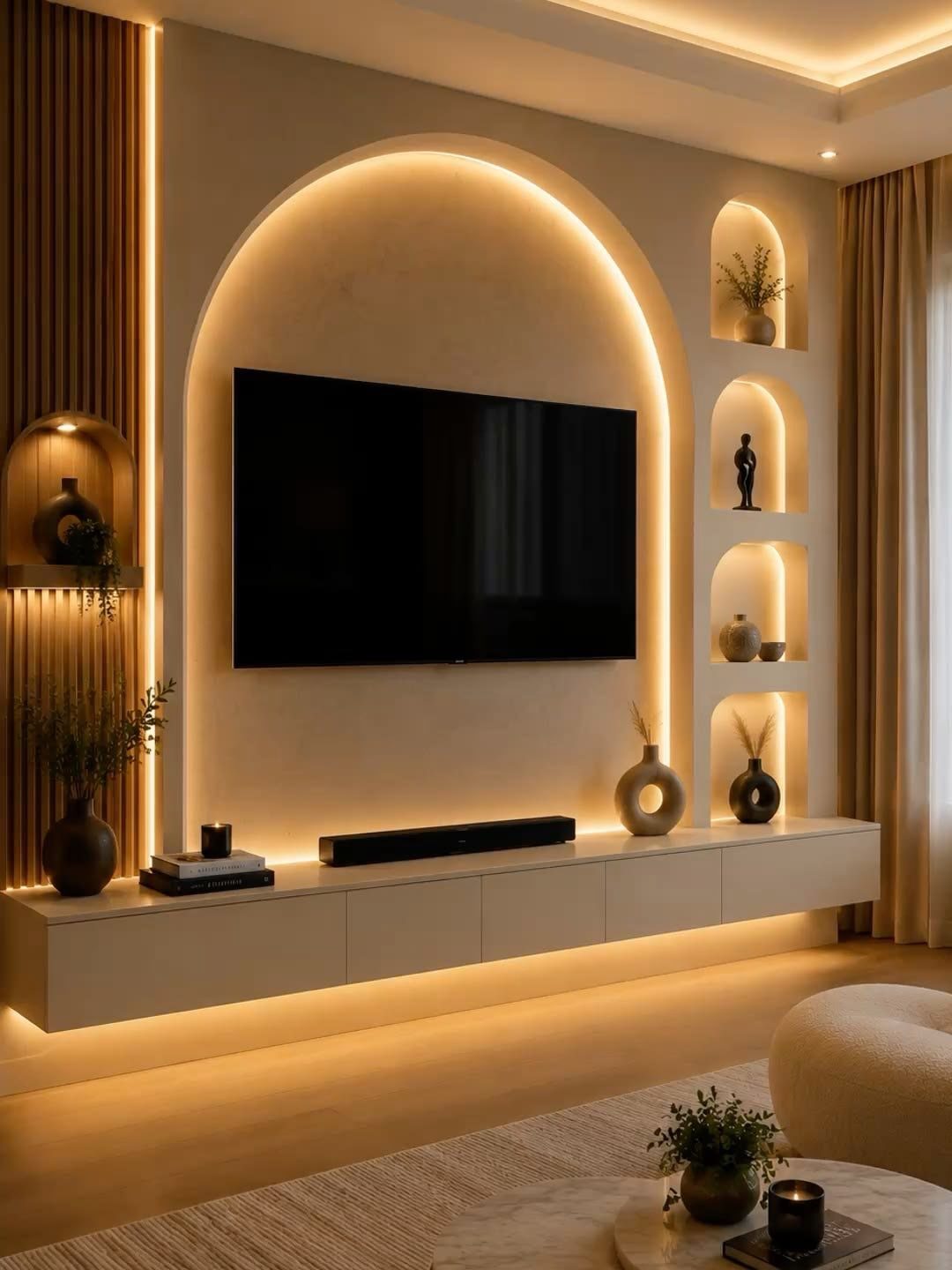
A wall-mounted console keeps the floor visible beneath the TV, and that open strip of floor makes a room read wider than it is. White also blends into the wall, so the piece looks lighter than a cabinet on legs.
Mount it into studs or use anchors rated for the load, since a console with a TV above and media gear on top carries real weight. Renters should check the lease first, because this means drilling.
Run cords behind the unit so the clean line holds.
9. Use of Textures
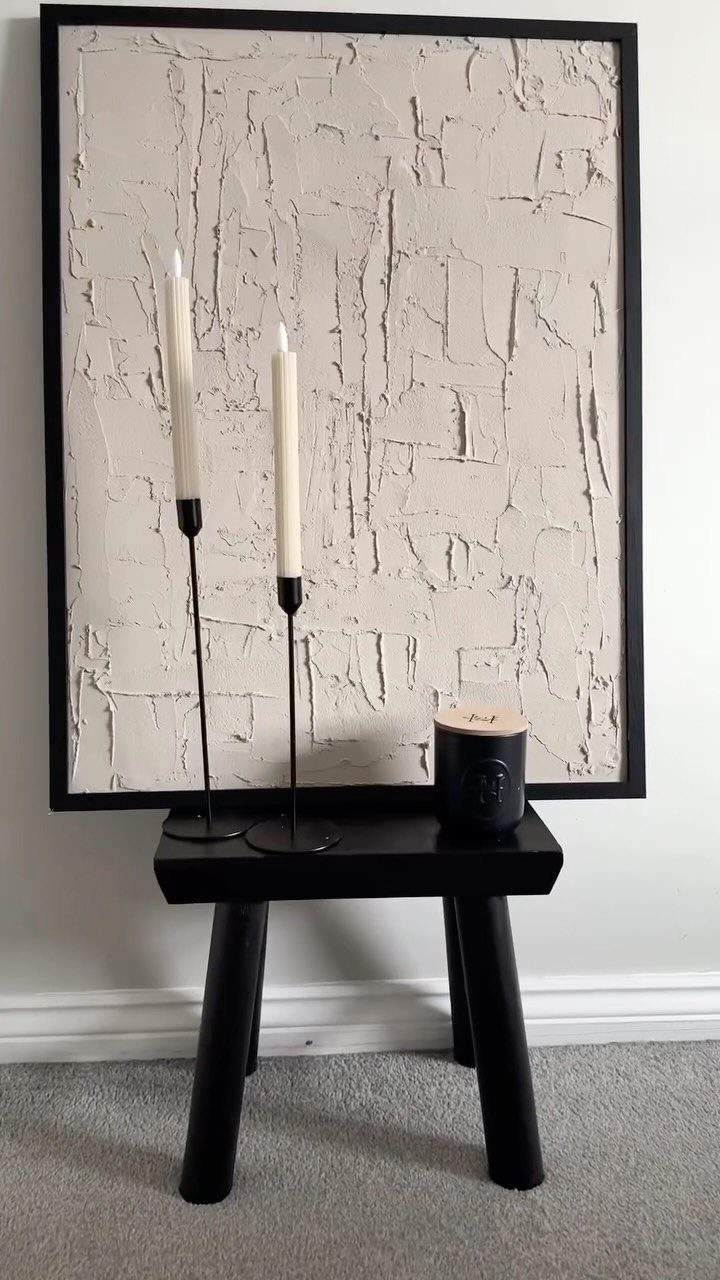
Texture does the work of a second color. A thick, plaster-like white canvas next to smooth black holders and a glass candle jar gives the eye something to read without adding another hue.
Mix at least three surfaces: one rough, one smooth, one glossy. Leaning a large piece on a bench instead of hanging it saves wall damage, which suits renters, and lets you restyle in a minute.
Keep the palette tight so the texture, not the clutter, gets the attention.
10. Accent Pieces
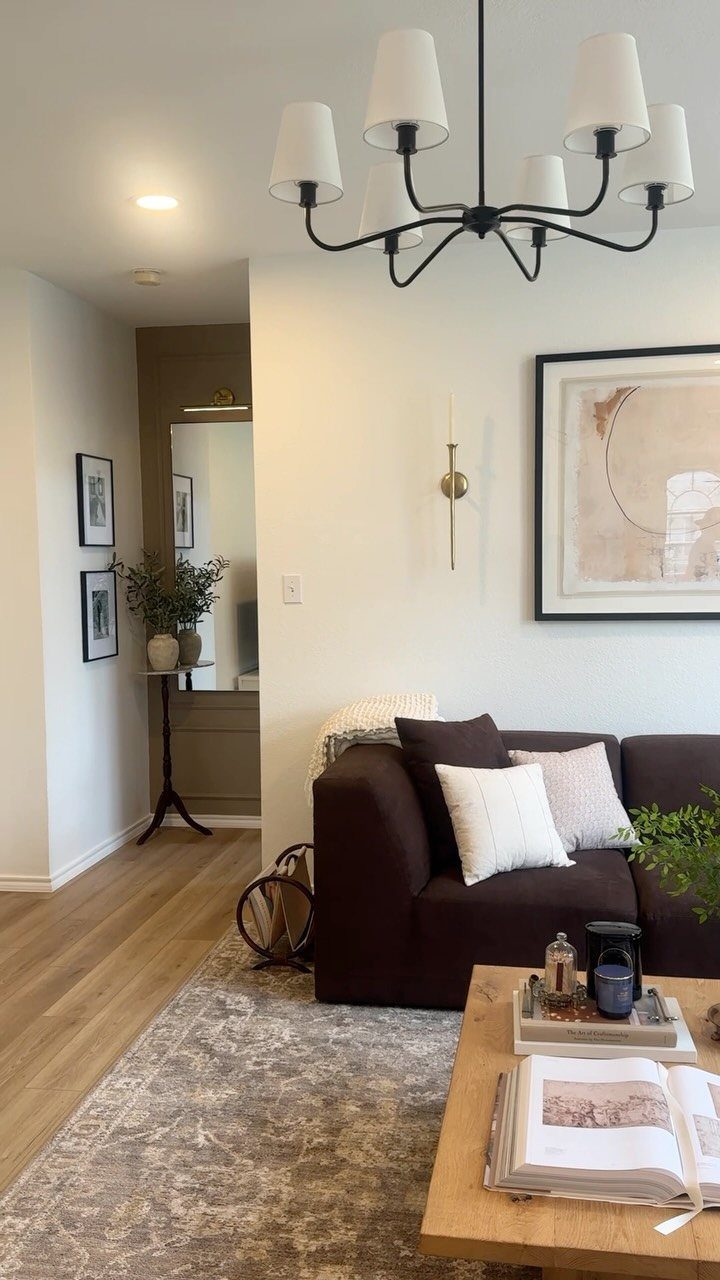
Accent pieces are where a family room starts to look like yours.
A plant on a small side table, a stack of books on the coffee table and framed wall art above the sofa each add personality without the cost of new furniture.
Add them one at a time and stop when the surfaces still have breathing room. White pillows against a dark brown sofa give contrast cheaply, and pillows are the easiest accent to swap when you tire of them.
11. Built-in Home Bar Area
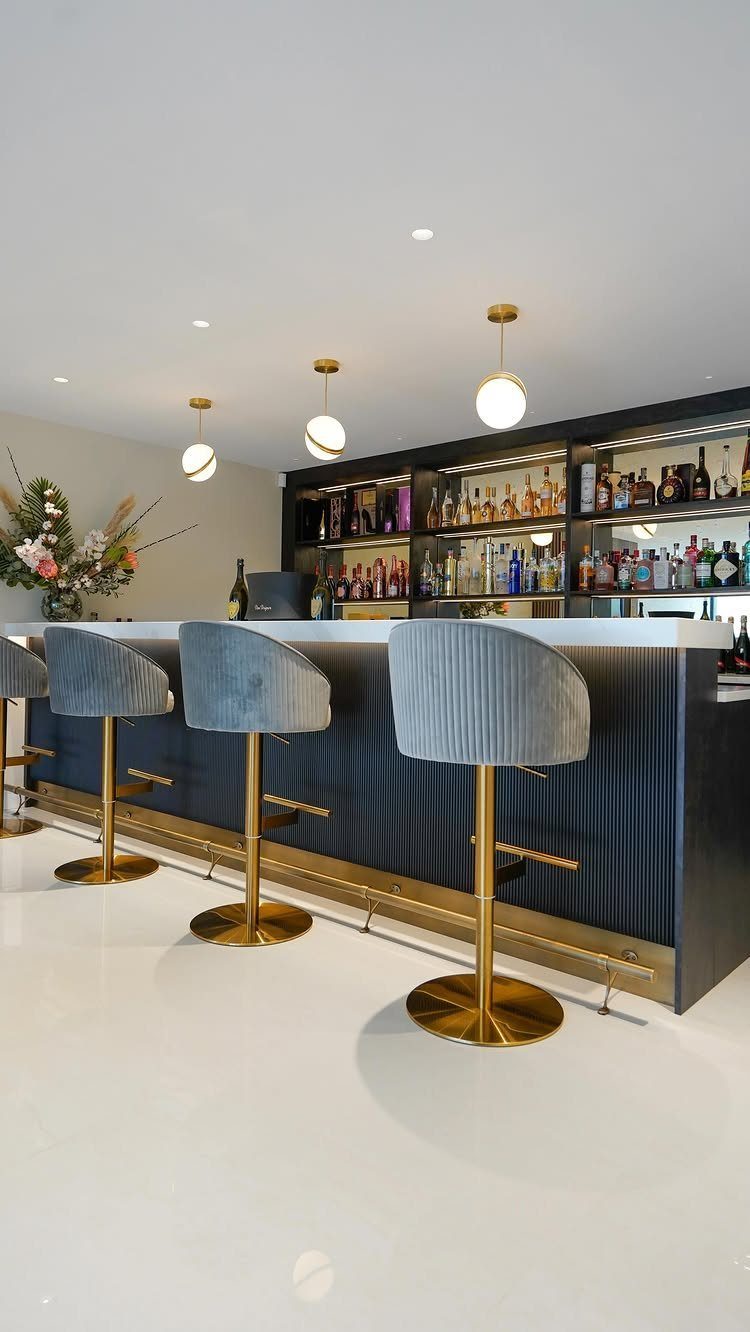
A bar counter with two or three stools turns a spare wall into the spot where people gather. Dark cabinetry below hides glassware and mixers, while open shelves above keep bottles in reach and on display.
Velvet stools feel good but show wear, so a performance fabric is the safer pick with kids around. Hanging globe pendants over the counter gives the bar its own pool of light, separate from the rest of the room.
Budget is the limit here: custom cabinetry costs far more than stock cabinets with a countertop on top.
12. Integrated Home Office Nook
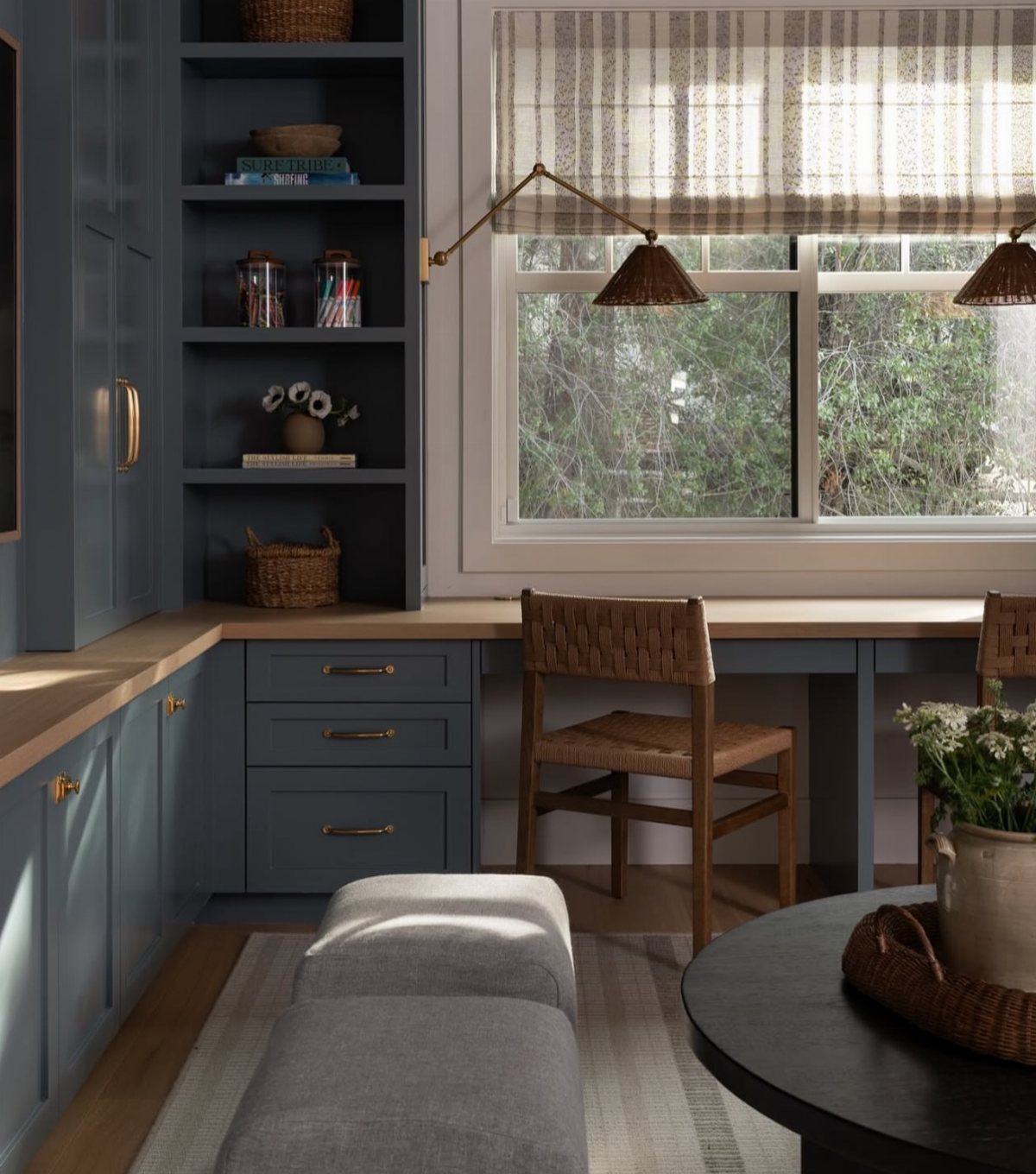
A built-in desk beside a window gives work a permanent home without a separate room. Drawers hide chargers and paperwork, and shelves and baskets hold books and supplies, so the area looks tidy when the laptop closes.
Blue paint on the unit makes it feel like furniture instead of an office corner. A woven chair keeps it light, and a grey ottoman tucks under the desk or pulls over as extra seating.
Custom carpentry is the costly route; stock cabinets with a plank across them get close for much less.
Importance of Storage Solutions
Storage matters even in a house with no small children, because remotes, chargers, blankets and books pile up in any room used daily.
Pieces that do 2 jobs keep the cost and the footprint down: an ottoman with a lift-off lid or a coffee table with drawers swallows toys and throws.
Shelves that mount to the wall or a freestanding bookcase clear media equipment, books and small objects up off the floor. Tuck baskets and bins into open shelving so a quick cleanup means dropping things in and walking away.
Small items need a home too. A shallow bowl on top of a few stacked books corrals remotes on the coffee table without bringing in another storage piece.
Creating a Cohesive Color Scheme
Start with the mood, then choose colors to match. For calm, use beige or soft white as the backdrop and bring in personality through pillows, rugs and accessories in softer shades.
For energy, deep blue, yellow or red works, but sparingly. Keep bold colors to throw pillows, artwork and similar decor so they don’t overpower the room.
In either case, I choose one color to carry through and limit myself to two accent colors. Hold the large elements, furniture and walls, to a consistent palette, and give the accents to smaller pieces.
Lighting Considerations
Plan lighting around how the room is used, since that tells you what kind of light goes where. A good setup has 3 types: ambient, task and accent.
Ambient light covers the whole room, usually from a chandelier or another overhead fixture. Task light sits near seating where people read or work, and floor lamps or table lamps do that job well.
Accent light highlights artwork or decorative pieces, and wall sconces suit it. Mixing all 3 sources makes a room warm and inviting while keeping it practical.
Frequently Asked Questions
What kind of furniture would you put in a family room?
Start with a comfortable sectional or sofa, since it takes the most daily use. Corduroy in a darker shade like grey hides small marks and feels soft.
What is the difference between a family room, a living room, and a great room?
A family room is the casual one, used for games, TV and time with immediate family.
A living room leans more formal and is saved for entertaining and holidays. A great room pulls the kitchen, the dining table and a seating area into one big continuous floor, no walls between them.





