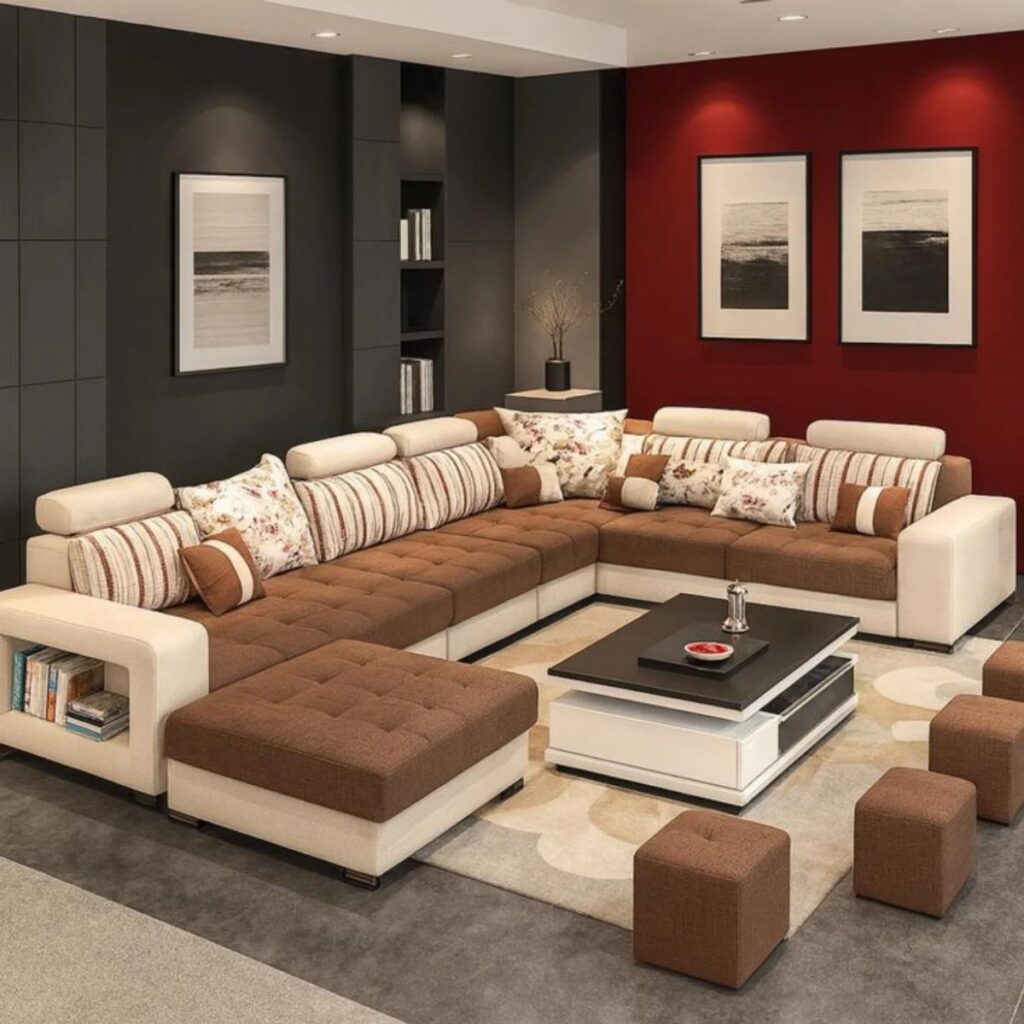
Which of these layouts fits comes down to the room itself: a small space wants the L-shaped arrangement tucked into a corner, while a wide room suits two sofas facing each other or two curved sofas that open up the center.
1. L-Shape Arrangement
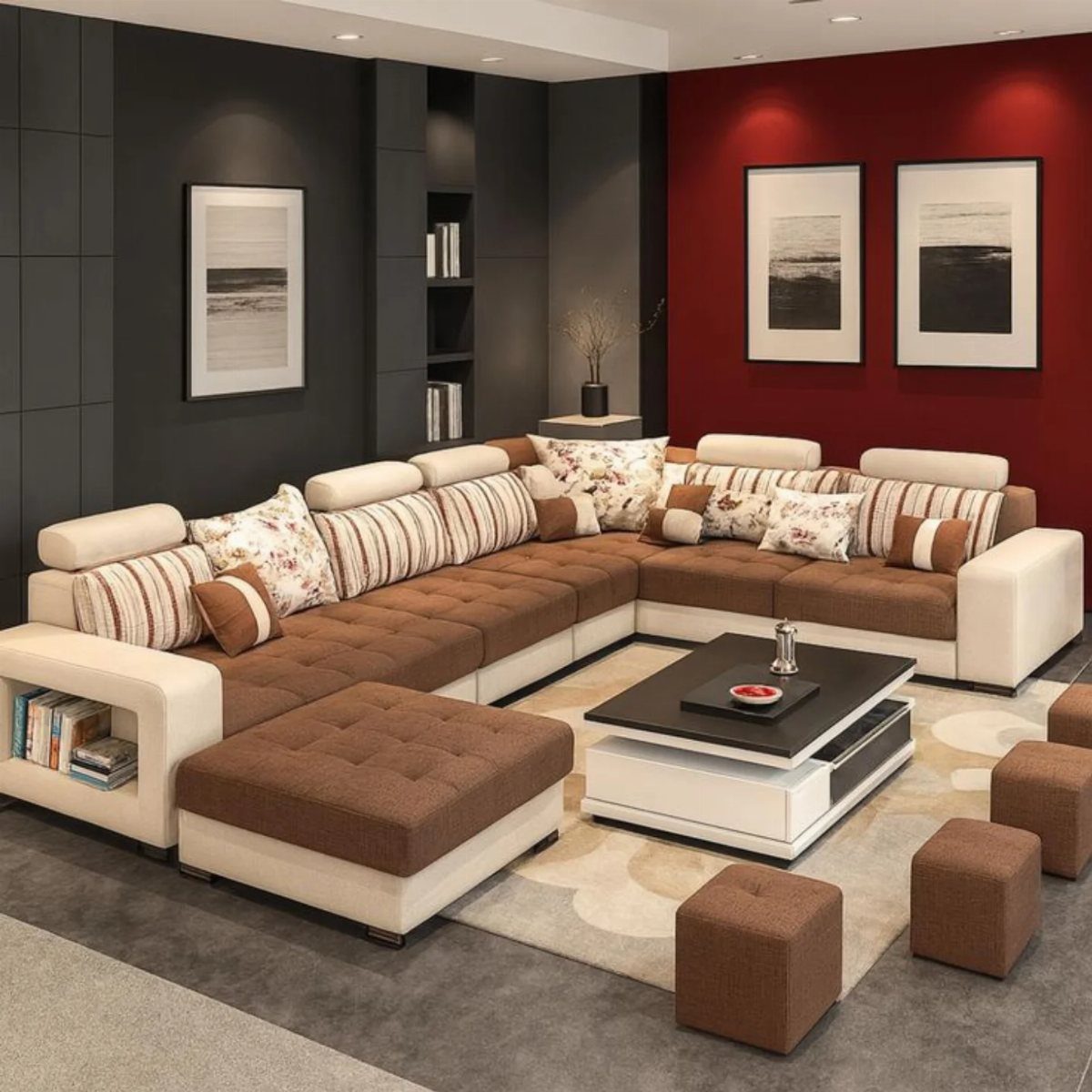
An L-shaped sectional tucks into a corner and leaves the opposite side of the room open, which makes it a good fit for a small living room.
The long arm becomes a lounging side, and the short one frames the seating area.
Pair it with a low coffee table and a couple of ottomans, so extra seats and a footrest are always in reach.
I like ottomans in a color that matches the sectional, since they read as one piece and slide away when you need floor space.
2. Facing Each Other
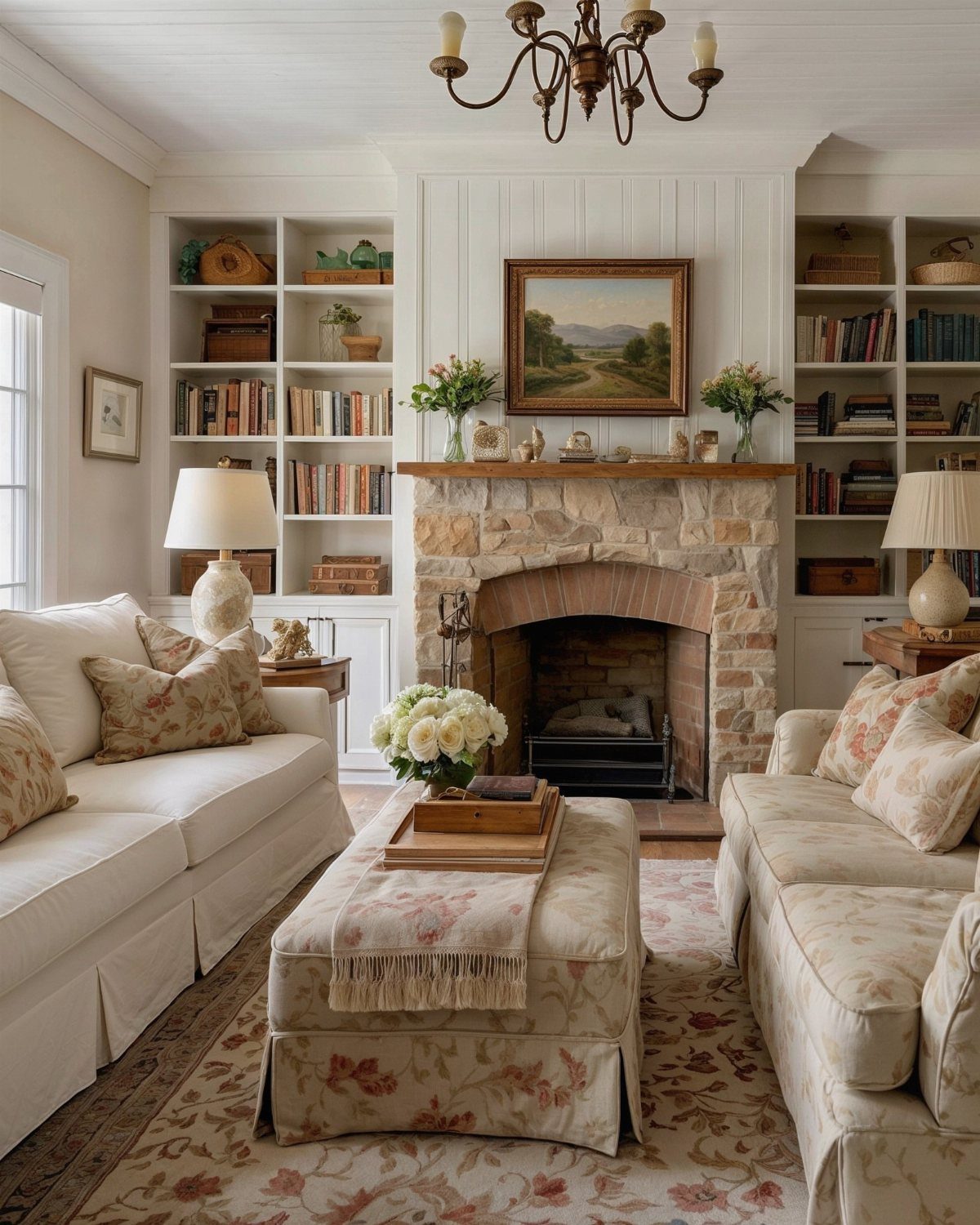
2 sofas facing each other turn a living room into a conversation pit, and a central ottoman gives both sides a shared surface for drinks and feet. Pick one with a flat top or add a tray.
Keep the sofas matched in size so neither side feels like the guest seat.
If the room has a fireplace, set the sofas perpendicular to it, one on each side of the hearth, so the fireplace stays the focal point and neither sofa has its back to it.
3. Modular Sofas
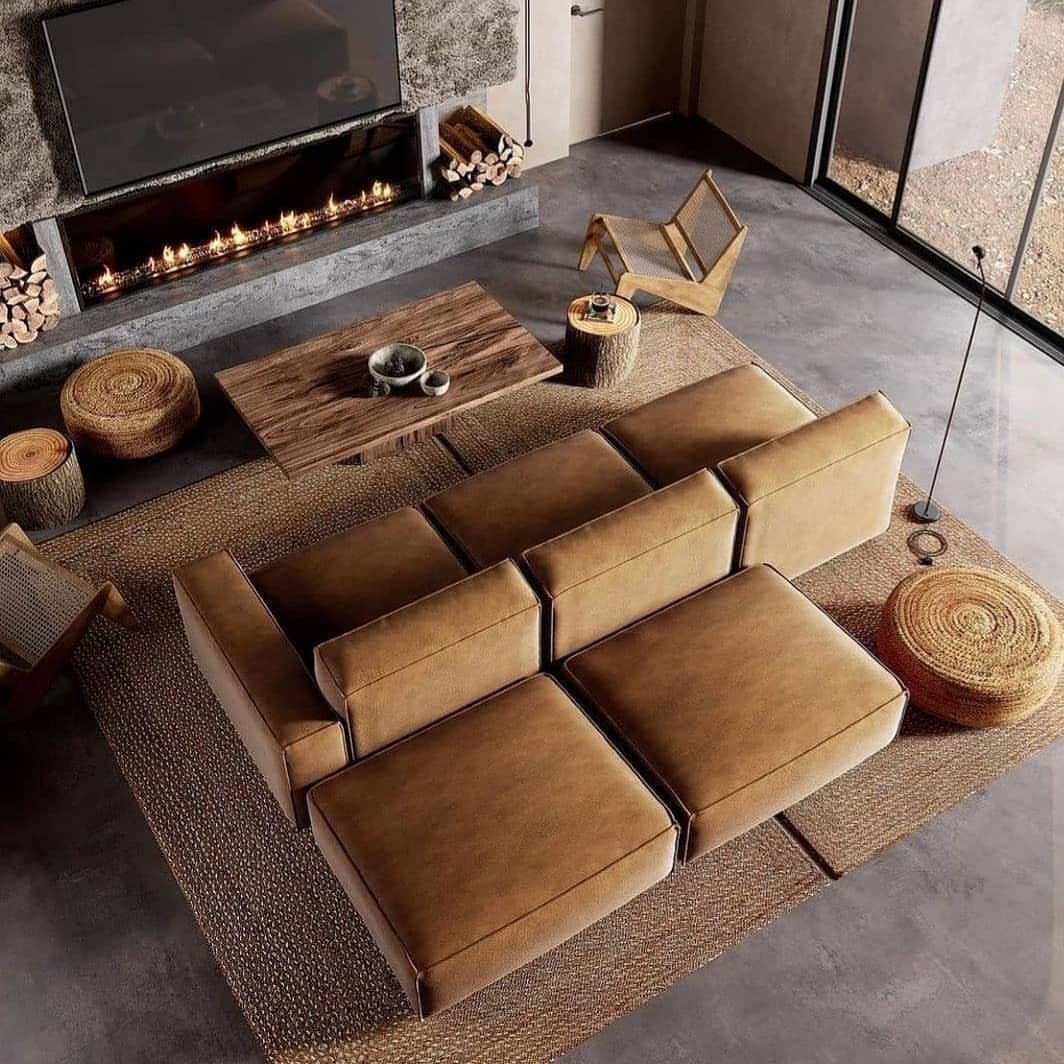
Modular sofas are the most forgiving option here: each piece is its own seat, so the layout can change when the room, the apartment or the occasion does.
Rent a new place with a different floor plan and you can rebuild the shape instead of replacing the couch.
I’d put the pieces on a large rug and add woven ottomans for flexible extra seating. Before buying, measure the doorways and hallway; smaller sections also make delivery easier than one bulky sofa.
4. Two Different Sofas
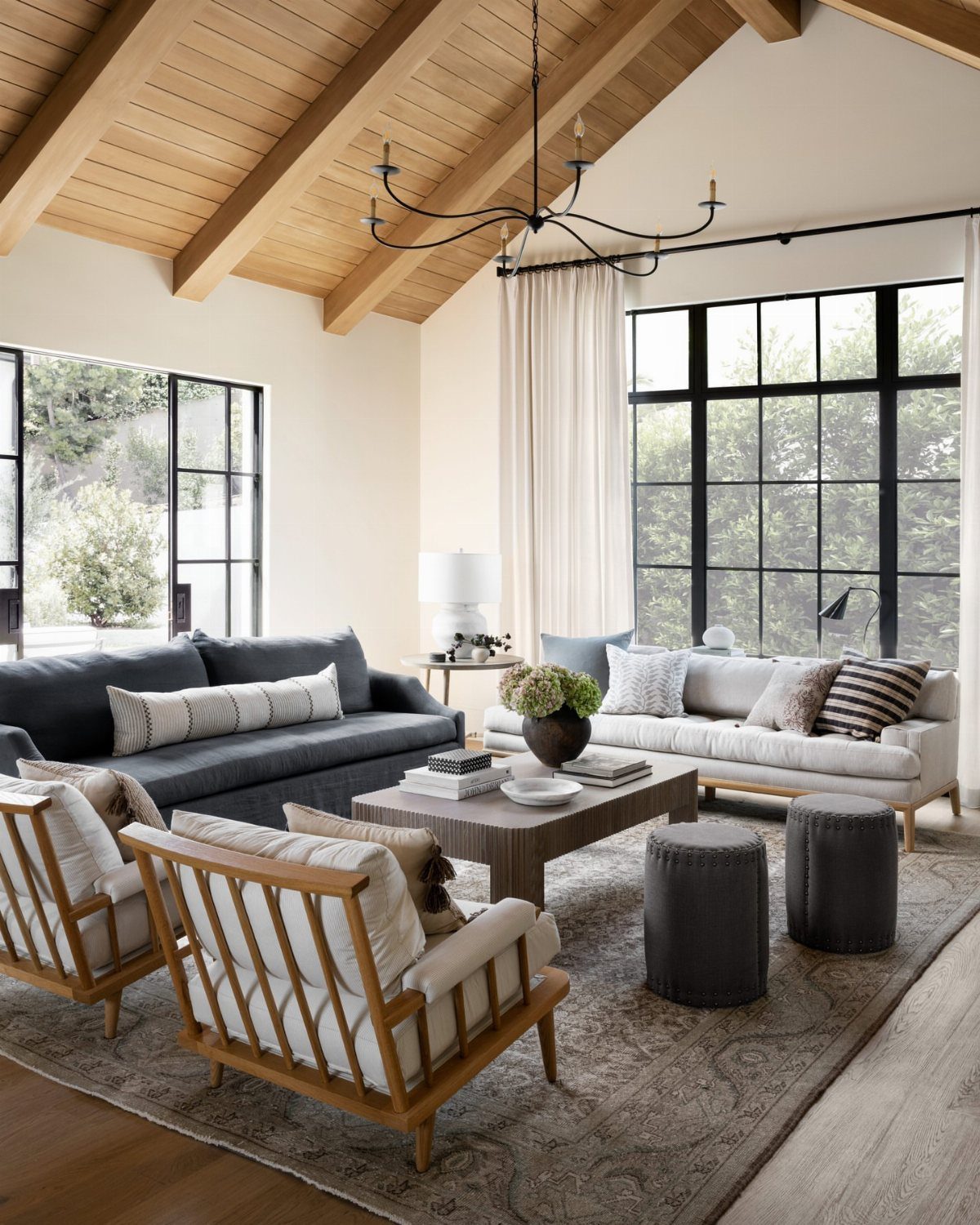
Mismatched sofas look intentional when they differ in color but share a scale. A dark grey sofa across from a light beige one balances the room, with weight on one side and brightness on the other.
Keep the heights and depths close, or the pair will look like a mistake. Tie them together with something repeated: wooden armchairs and a wood coffee table do that job well, and pillows in both sofa colors help too.
5. Large Area Rug
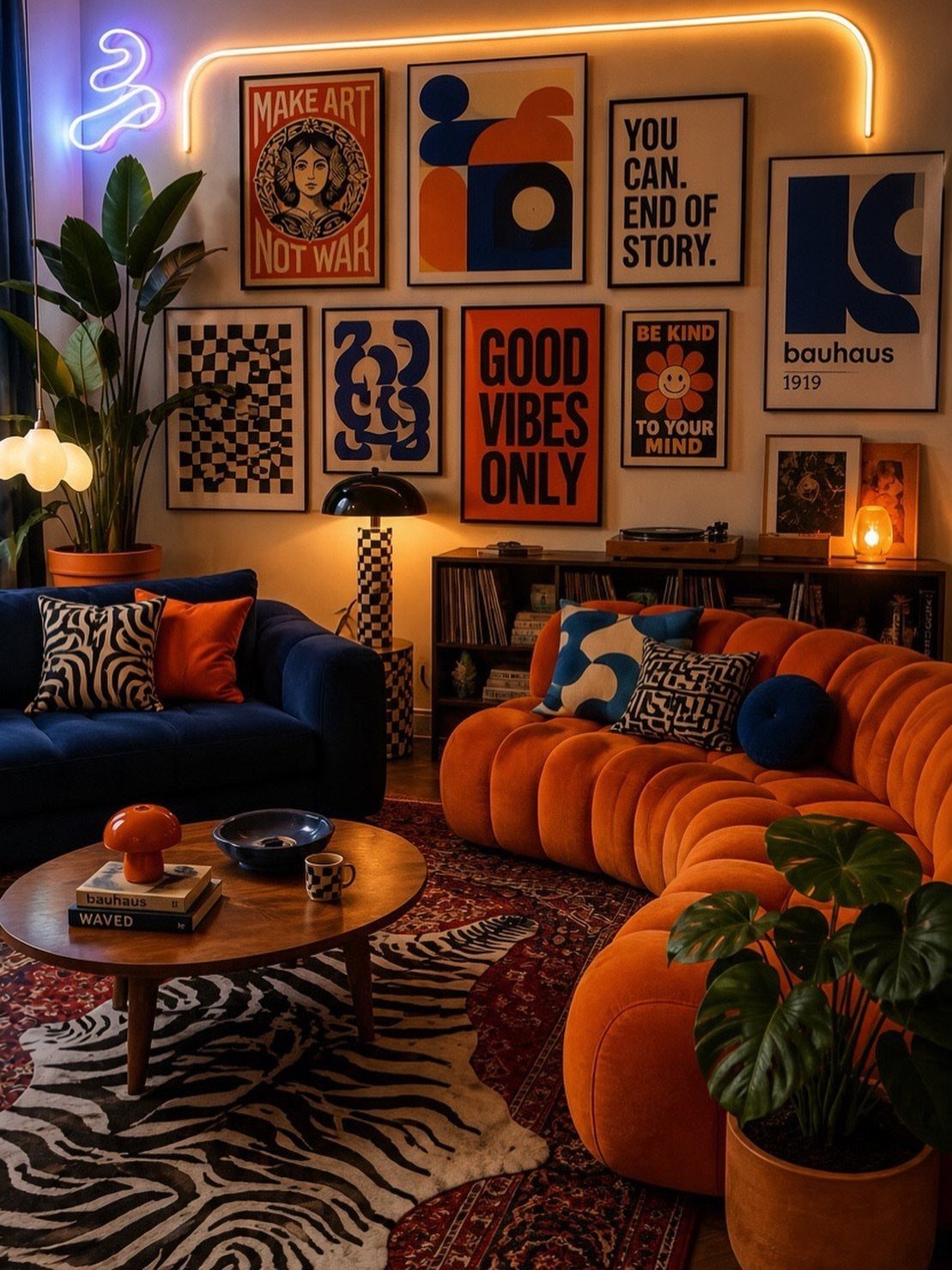
A large rug does the work of holding 2 sofas together. Without one, a pair of sofas can feel like separate islands; with one, they read as a single seating zone.
Choose a rug big enough that the front legs of both sofas sit on it. A bold pattern like zebra print can carry the room when the sofas are strong colors, so keep the coffee table simple.
If your sofas are quiet, a bold rug can do the talking, and a plain coffee table keeps the whole setup from getting busy.
6. Two Curved Sofas
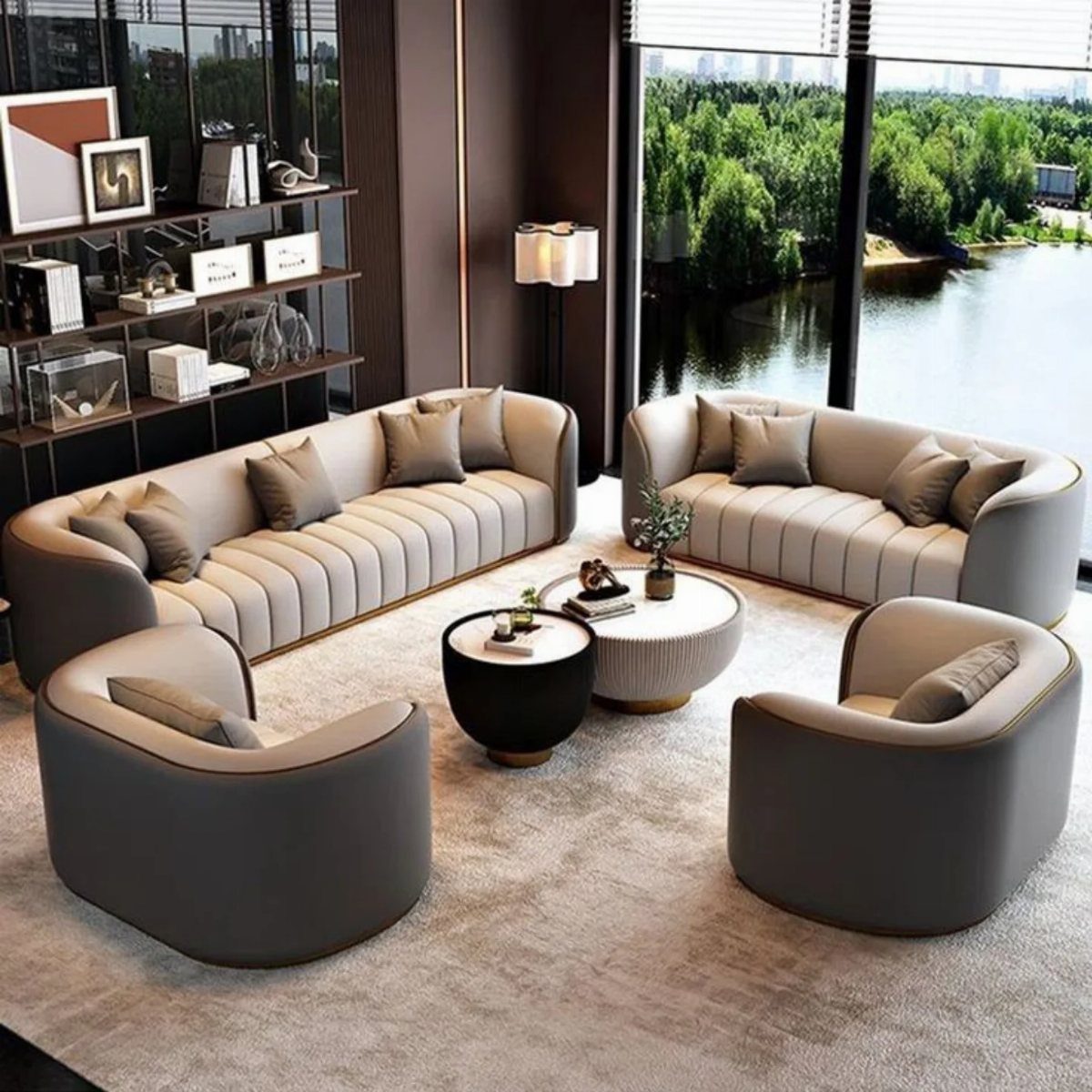
2 curved sofas soften a room full of straight lines, and they suit wide spaces with big windows because the curves open toward the view. Set them facing each other so the seating forms a loose oval.
Curves eat floor space, so allow more room than a straight sofa of the same length would need.
Add two armchairs at the ends to close the circle, and consider two small coffee tables instead of one large one, so every seat has something within reach.
Consider Room Functionality
Decide what the room does most before you pick a layout. A room built for movie nights wants seats angled toward the screen with a footrest in reach, while a room built for talking wants seats that face each other.
Check for a feature that should lead the room, such as a big window view or a bookshelf wall. Point at least one sofa toward it, and don’t block it with a sofa back.
If the room has to do several jobs, rank them. The top one decides where the sofas go, and the others get fitted around it.
Sofa Design Considerations
Decide first whether you want a matched pair or 2 different sofas.
A matched pair gives you a calm, uniform room with almost no risk. 2 different sofas give you a more playful room, but they take more care.
Different sofas need something shared to read as a pair: matching color, the same fabric, or a detail that repeats.
Pick a strict palette, such as two shades from one color family, or let the fabrics vary while the colors stay close.
I’d keep the textures in the same weight family too. A nubby bouclé next to a slick leather rarely settles into one room without help from pillows or a throw.
Furniture Arrangement Tips
Leave a walkway between the sofas and anything else in the room.
Main walkways need room to pass without turning sideways, and a coffee table that sits close enough to reach from the sofa without stretching forward saves you from setting a mug on the floor.
Test it before you buy. Mark the sofa footprints on the floor with painter’s tape, then walk the room with a laundry basket in your arms.
Add an accent chair only if the tape test leaves room. A small chair with open legs takes up less visual space than a closed, bulky one, and a nesting table can stand in for a large coffee table.
Frequently Asked Questions
How do you place a sofa in a living room?
Decide what activity the room serves most often, then face at least one sofa toward whatever anchors the space: the fireplace, a long window wall, or built-in shelving.
Avoid putting a sofa back in front of it. Tape out where each sofa will sit and move through the room with something bulky in hand to confirm the paths stay clear.
For a room with several jobs, rank them and let the top one decide where the sofas go.
When should you not use a sectional sofa?
Skip a sectional when the room is small and needs flexibility, since a fixed shape limits how you can move things around.
Separate modular pieces shift more easily than a locked sectional when you want a layout that adapts to how you actually use the space.
What are the different types of sofas for a living room?
The main options are sectionals, modular sofas, loveseats and traditional sofas. L-shaped sectionals anchor one corner; modular sofas split into separate seats that rearrange as the layout shifts.
A loveseat is smaller than a standard sofa, so it suits tighter spaces. Curved sofas are another choice for wide rooms with big windows.
Can you use two different sofas in one living room?
Yes, as long as they share a scale. Match the seat heights and depths roughly, then pull the pair together with repeated details: wood arms on both sides, a shared coffee table material, or pillows that carry both colors.
Charcoal grey across from pale beige holds its own. Fabrics should sit in the same weight range too, since textured bouclé against smooth leather reads as mismatched unless the rest of the room bridges them.





