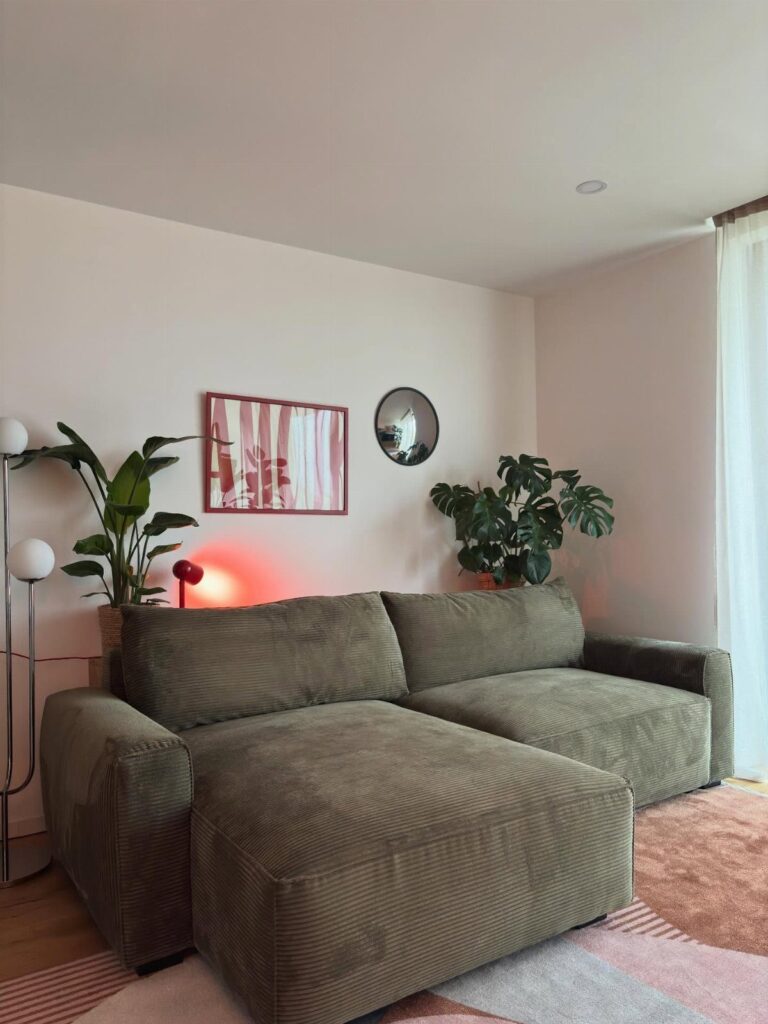
Sofa width decides which wall idea is yours: a standard 72-inch, 3-seater takes 48–54 inches of art, while a sectional of 96 inches or more wants 64–72 inches, so size the piece before you pick a style.
A leaning canvas swaps out in minutes, carved wooden panels need proper anchors, and the cost and effort climb with the weight.
A narrow ledge holds leaning art without drilling, while a grid mirror mounts to studs when you own the place.
1. Single Large Artwork
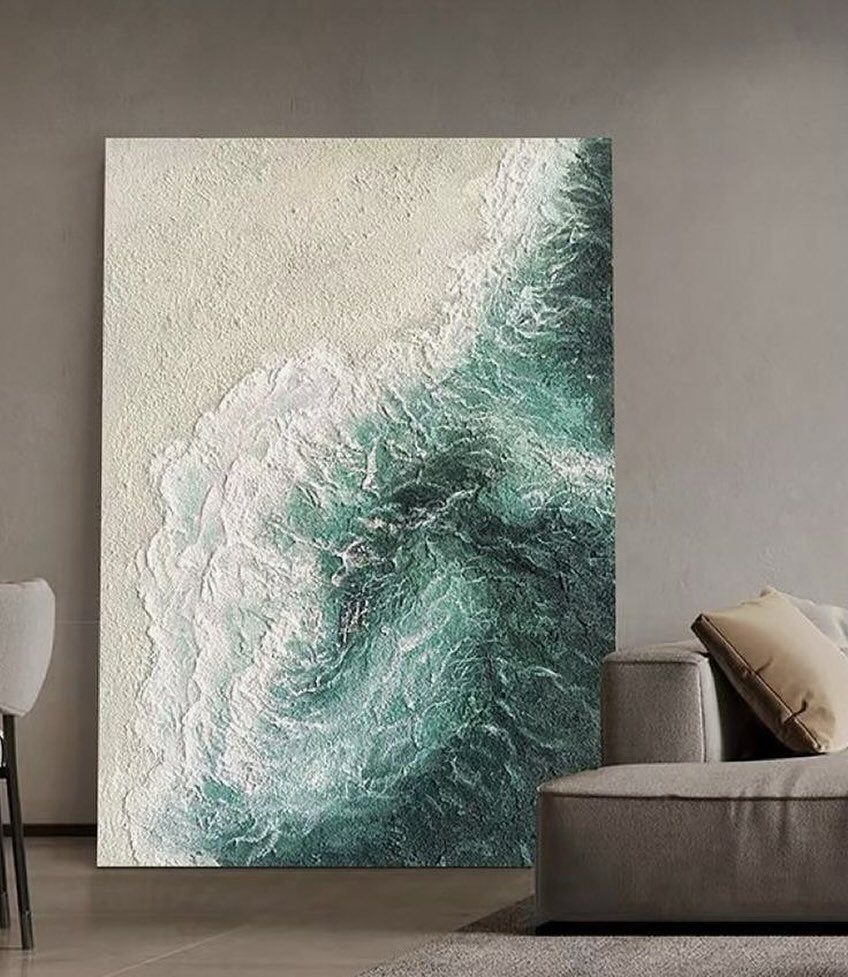
A canvas this tall does the work of a whole arrangement, and leaning it instead of hanging it keeps the cost low and the weekend free.
Rest it on the floor or a low console against the wall, and it can be swapped in minutes if you tire of it.
Pick a piece with real texture.
Wave ridges and the pull of color from deep blue to pale sand give a plain grey wall something to look at, and a single vertical shape draws the eye up in a way a row of small frames won’t.
The trade-off: a leaning canvas can get bumped, so keep it out of walkways.
2. Gallery Wall
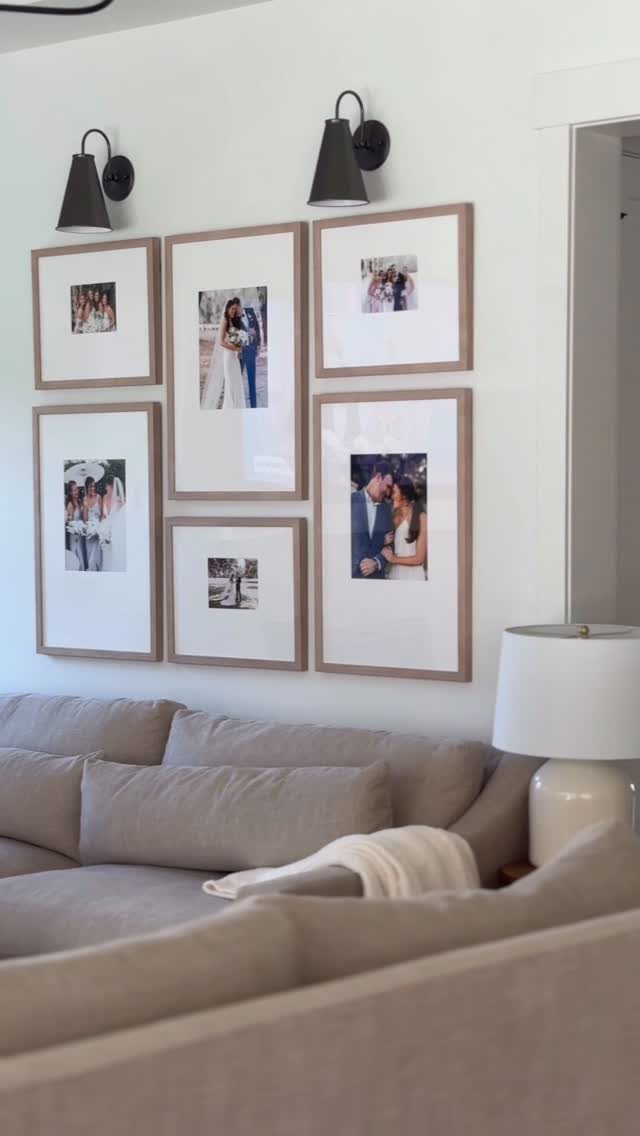
Six frames, one wall, and the whole thing reads as personal in a way store-bought art rarely does. Family photos are the cheapest material you can use, since printing costs very little compared with buying art.
Keep the frames in one color so the mix of images feels intentional. Lay the arrangement out on the floor first, then trace each frame on paper and tape the templates to the wall before you drive a single nail.
Wall sconces on either side, as long as you can wire or plug them in, add light to the group and frame it neatly.
3. Triptych
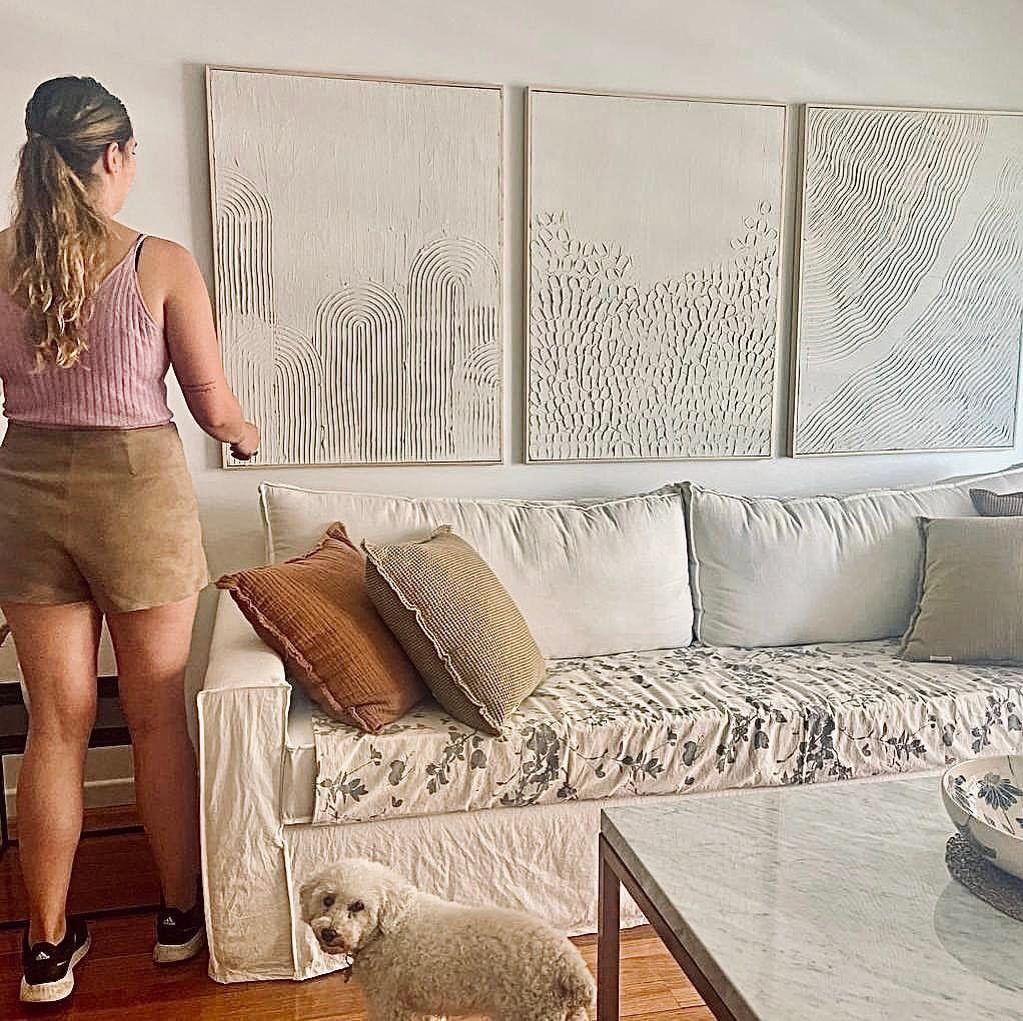
Three matching panels hung side by side give you the weight of one huge canvas at a size that is easier to find, carry and hang.
White textured panels suit a light room well, because the shadows in the texture do the decorating.
Space the gaps evenly and keep them narrow, so the trio reads as a single piece. Hang all three at one height, with the center panel lined up on the middle of the sofa.
I like this on a white or cream wall, where the art barely needs color at all.
4. Gallery Shelves
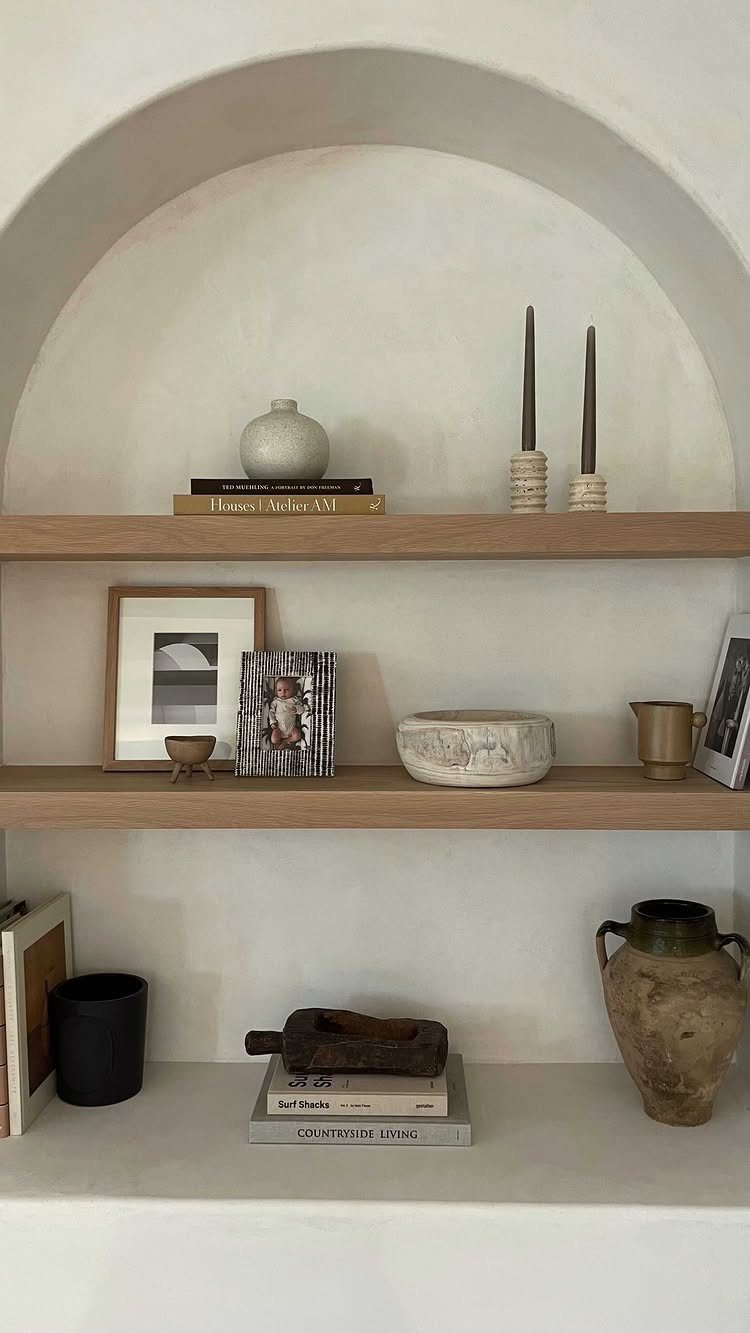
Shelves let you change the display whenever you like, which a hung print never does. Books, vases, candles and framed photos fill floating shelves without crowding them, and wooden shelves add warmth when the wall behind the couch runs white.
Mix heights and keep the palette neutral so the shelves feel calm rather than crowded. Stack some books flat, stand others upright, and leave gaps; empty space is part of the look.
An arched niche is lovely but rare in rentals. On a flat wall, the same 3 shelves stacked with even spacing give you a similar effect.
5. Neutral Textured Abstract Art
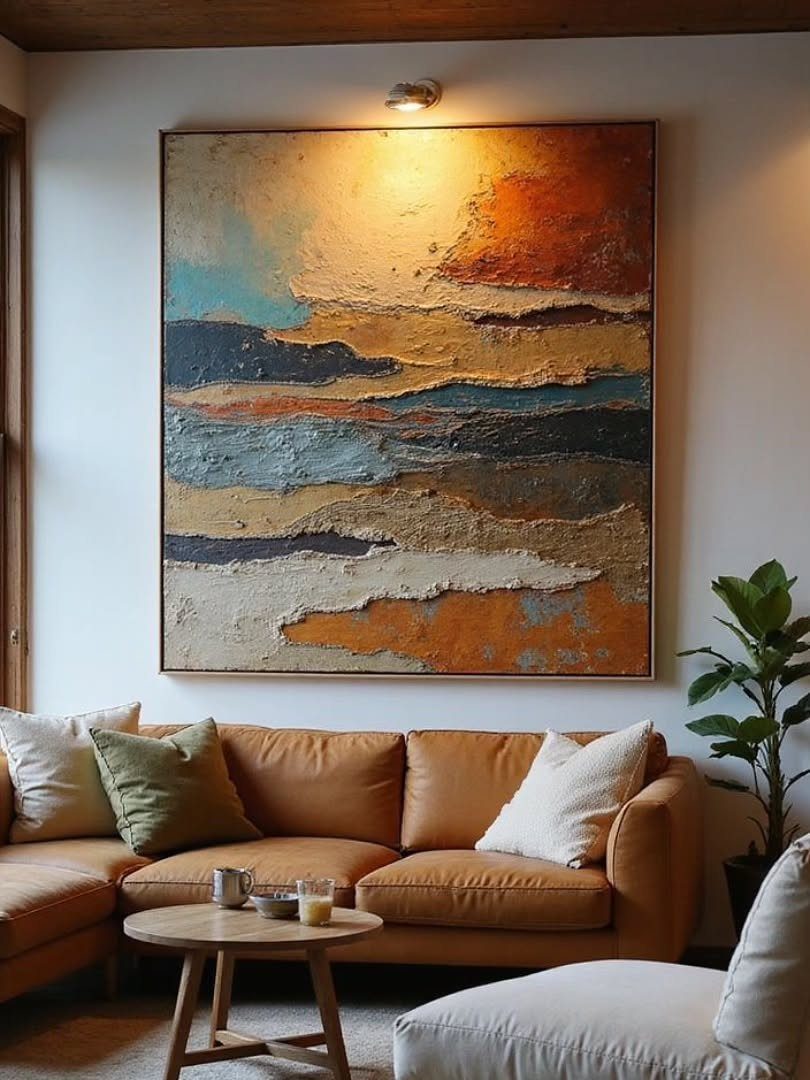
Earthy tones are the safest way I know to make a big painting feel calm. Sand, clay and soft brown sit comfortably above a tan leather sofa, because they echo the leather instead of competing with it.
Choose heavy texture over bright color. Thick plaster-like strokes catch light and give a plain white wall depth, so one piece is enough.
Size matters: aim for a canvas that spans most of the sofa’s width, so it doesn’t look lost above such a large sectional.
6. Botanical or Sage-green Set
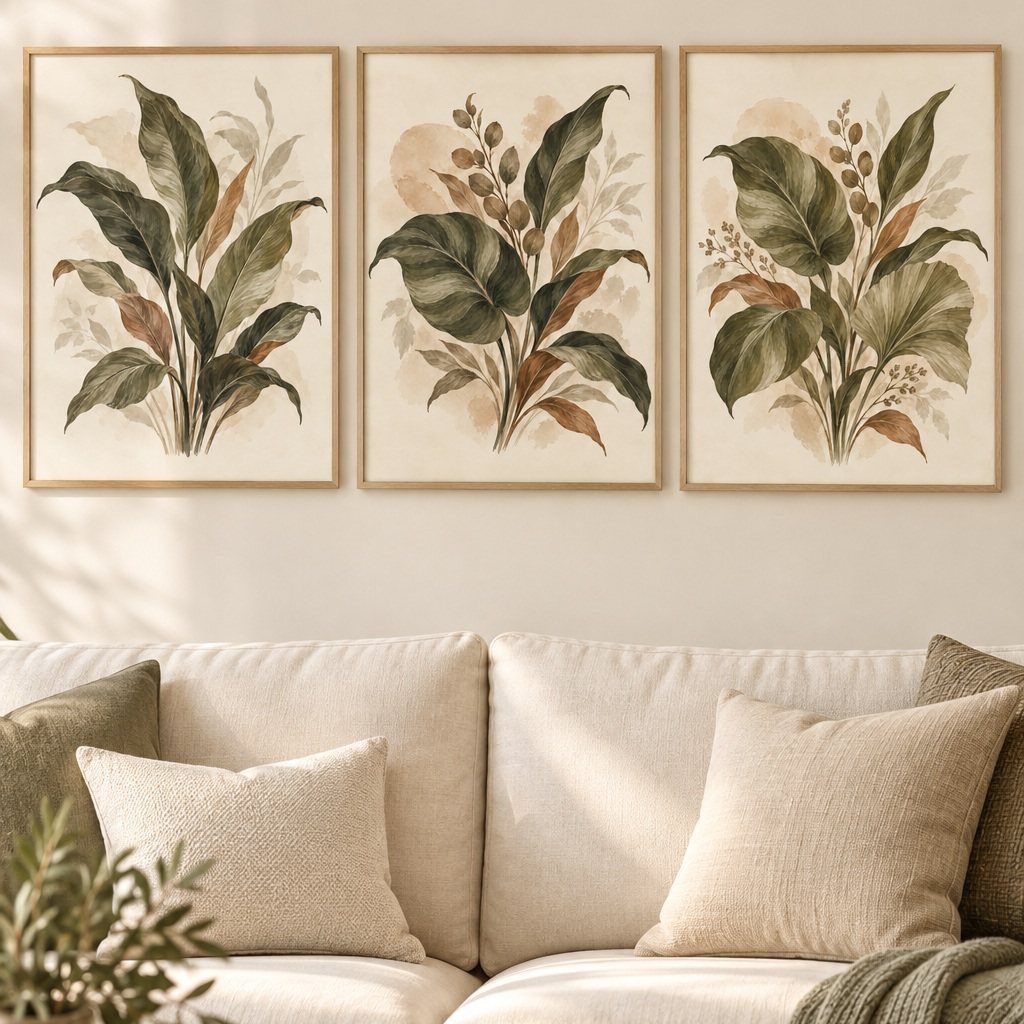
Leaf prints in wooden frames are a quiet choice, and I’d pick them for a room that has plenty going on already. Their muted green sits well against beige, with no loud contrast to tire the eye.
Buy a set in one style rather than mixing sources, so the line weight and green tones match. Hang three in a row with equal gaps, centered over the sofa.
Wood frames add warmth and hide easily among neutral pillows. Printable botanical art is a low-cost way to start if the budget is tight.
7. Narrow Ledge Behind Couch
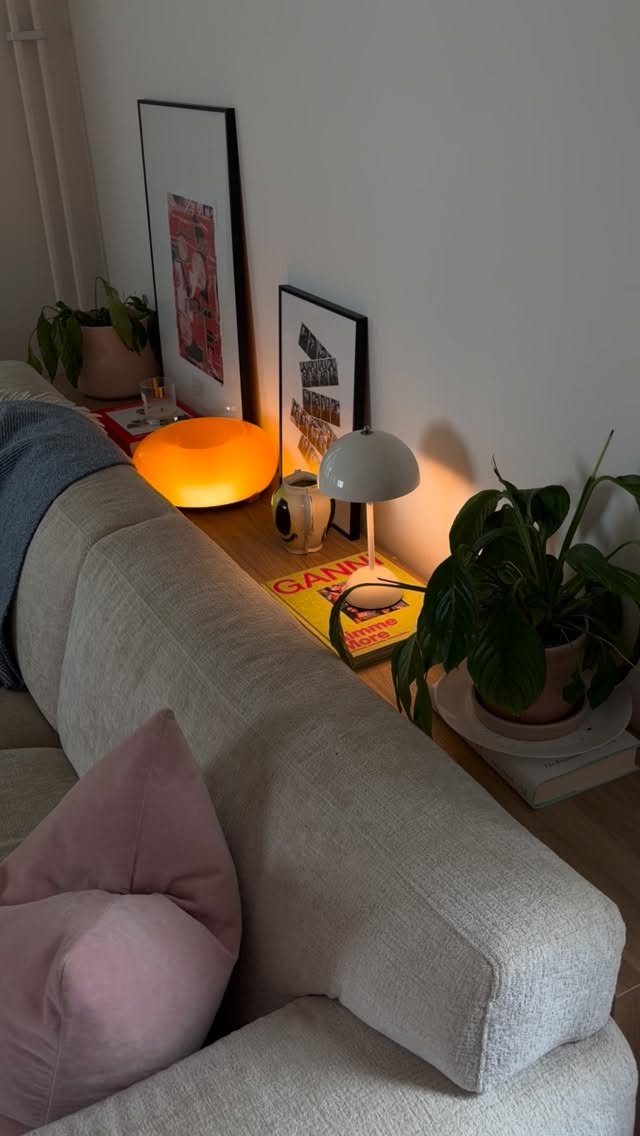
A slim wooden ledge right behind the sofa gives you a shelf without taking any floor space. Lamps, small art prints, a stack of books and a couple of potted plants all fit along it.
Keep the ledge narrow, and vary the heights: a tall lamp at each end, then low frames and plants between. Lean the art instead of hanging it so you can rearrange in minutes.
Lamps here also solve the lighting problem for sofas pushed against a wall. Run the cords down behind the ledge so they stay out of sight.
8. Grid Wall Mirror
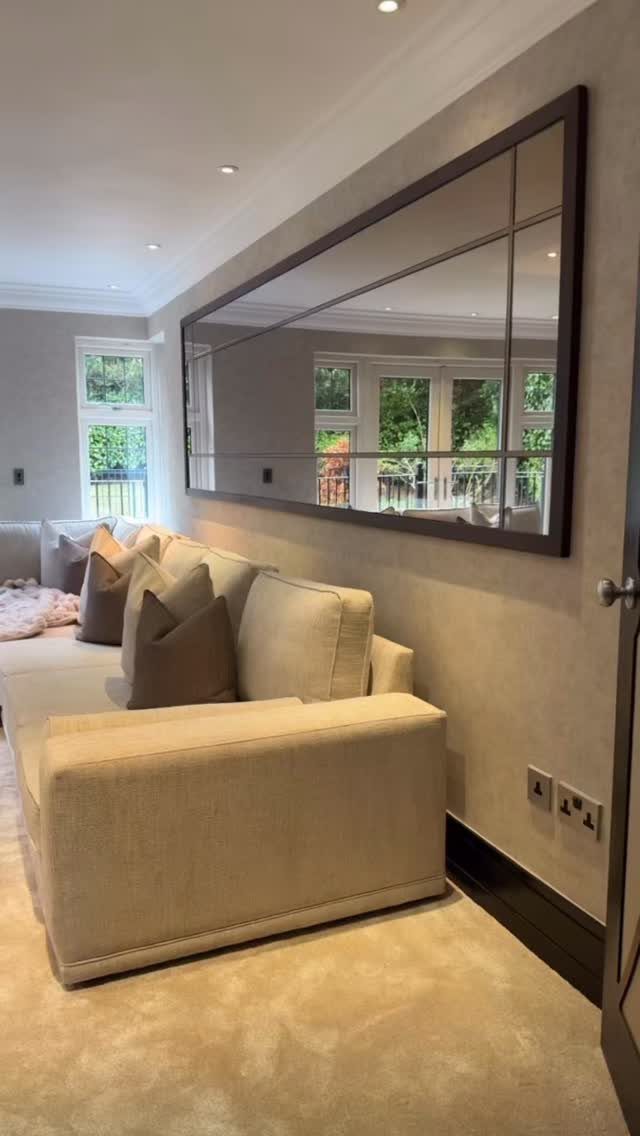
Mirrors with windowpane lines give a wall the look of an oversized window. A dark frame stands out against a beige wall, and the grid breaks up the reflection so the piece reads as architecture rather than a plain mirror.
Hang it horizontally, centered over the sofa, and choose one that spans most of the sofa’s width. A mirror this size is heavy, so anchor it into studs or use wall anchors rated well above its weight.
Place it across from a window if you can, so it bounces daylight around the room.
9. Carved Wooden Panels
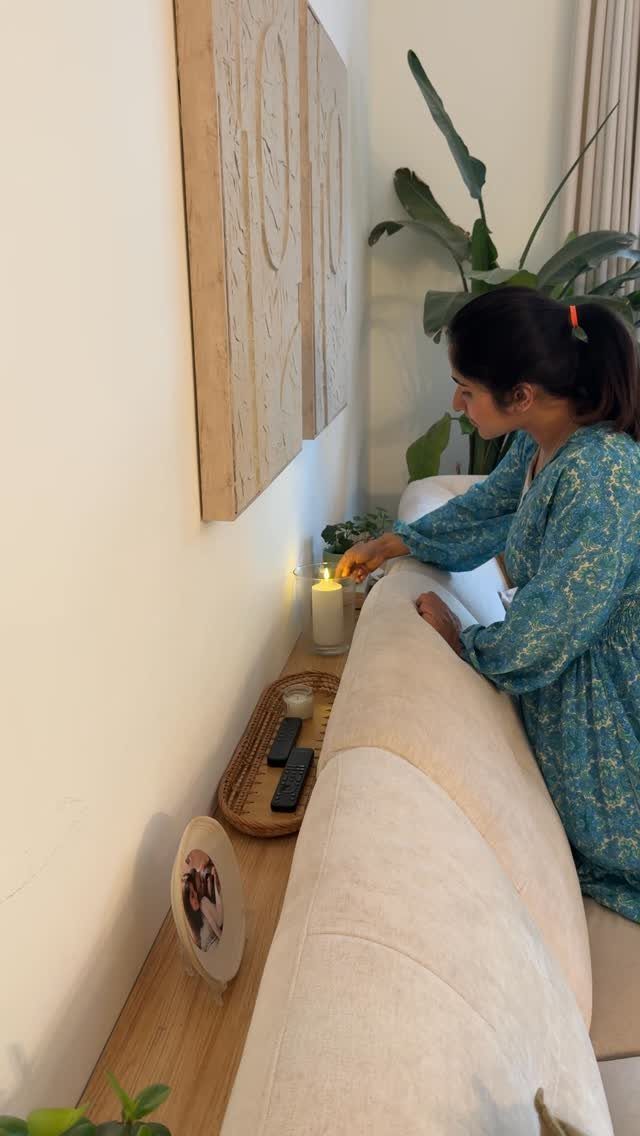
Two big carved wooden panels hung side by side bring pattern and warmth to a wall without any paint. The intricate cutwork casts shadows, so a light sofa and a plain wall let the carving be the main event.
Hang both at the same height with a narrow, even gap, and sit them just above a ledge or the sofa back. A ledge below, holding a candle and a framed photo, ties the panels to the seating.
Check the weight before buying; solid wood panels need proper anchors.
10. Duo of Textured Botanical Art
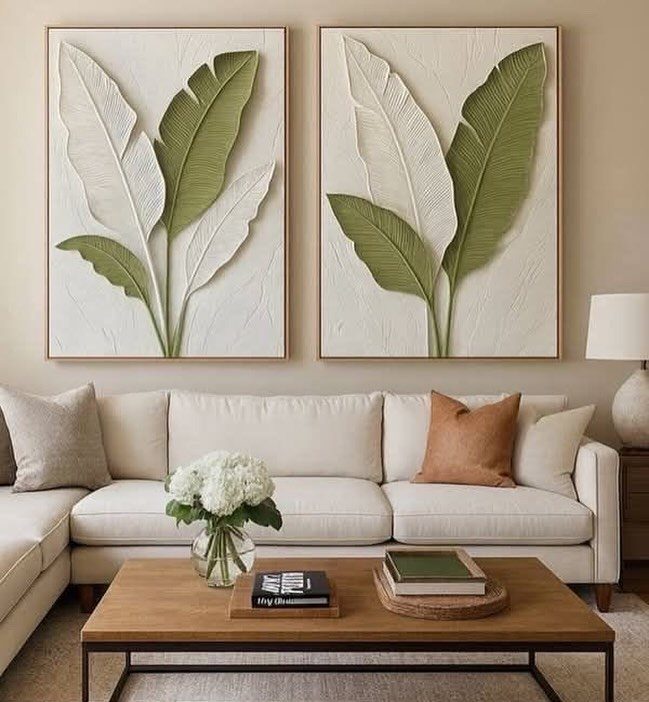
2 tall canvases with raised leaf shapes give a white sectional the visual weight of sculpture. The 3D texture catches light, so green and white alone carry plenty of depth.
I’d hang them vertically as a matched pair, with a gap of a few inches, centered over the sofa. Vertical canvases pull the eye up and make a ceiling feel higher.
Keep the rest of the wall bare. Texture this strong looks best when nothing else competes with it, and a wooden coffee table below adds a natural note.
11. Mounted Hanging Wall Planters
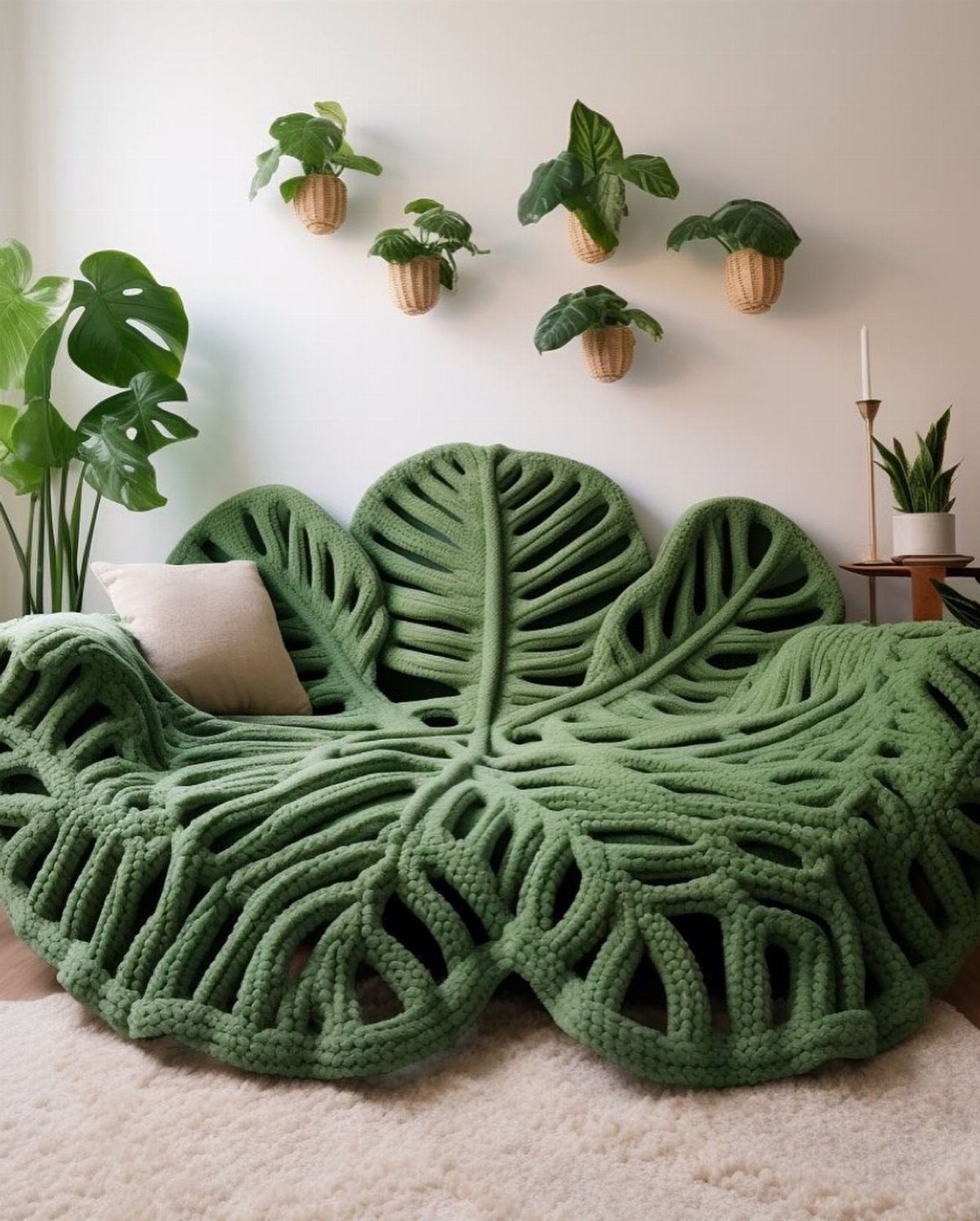
Woven baskets mounted on the wall turn a few small plants into a display, and they cost a fraction of what you’d pay for a large canvas.
5 small baskets spread across a white wall give a green sofa a leafy backdrop without eating floor space.
Arrange them in a loose cluster rather than a straight row, and mix plant shapes: trailing ones next to upright ones. Hang the baskets at different heights.
One caution: watering over a sofa is messy. Take each plant down to water it, or choose faux ones for easy care.
Placement and Sizing Rules
The gap between the back of the sofa and the wall ties the two together.
Here are the sizes I’d use.
A standard 72-inch, 3-seater sofa takes 48–54 inches of art, such as one 48×32-inch canvas or a triptych. A sectional of 96 inches or more wants 64–72 inches, so go with an oversized canvas or a gallery wall.
Center the art over the sofa, not the wall. The sofa anchors the room, and centered art on a sofa that sits off-center looks like a mistake.
If you can’t picture a size, cut paper or cardboard to the dimensions and tape it up for a day first.
Avoiding Clutter
Oversized art rarely looks like an error, while undersized art always does.
Hanging too high does the same kind of damage. Art that drifts toward the ceiling disconnects from the furniture, so hold to the 6–8 inch gap above the backrest.
When people call a wall cluttered, they mean mixed everything.
Don’t worry about matching the frame to the furniture. The frame should suit the artwork.
Creating a Focal Point
Pick one move for the wall and let it lead. Choose by the feeling you want in the room, then let the rest of the furnishings stay quieter.
Before buying, look at the room’s dominant colors and pull from them. Art that echoes the rug, the curtains or the sofa makes the wall part of the design instead of an add-on.
Frequently Asked Questions
What to put behind the back of a couch?
One large canvas, a triptych of three matching panels, or a gallery wall in a single frame color all work on the wall behind a sofa.
A narrow wooden ledge with lamps, small prints, books and plants suits a sofa pushed against the wall.
How to design a wall behind a sofa?
Start by choosing a single focal piece, then size it to the sofa. A 72-inch sofa fits art that runs 48–54 inches wide; a sectional 96 inches or longer calls for 64–72 inches.
Center the art on the sofa, not the wall, and pull colors from the rug, curtains or sofa so the wall feels part of the room.
What should I hang on the blank wall behind the sofa?
Oversized art, a gallery wall or a large mirror are the strongest choices. A grid mirror that covers most of the sofa’s width acts like an oversized window, but it needs stud anchors because the weight adds up.
Tape cardboard cutouts to the wall and live with them for a day if the measurements feel abstract.
How high do we hang it?
Mount the bottom edge 6–8 inches above the sofa back. Going higher pulls the piece away from the furniture, and it starts to float toward the ceiling instead of belonging to the seating.





