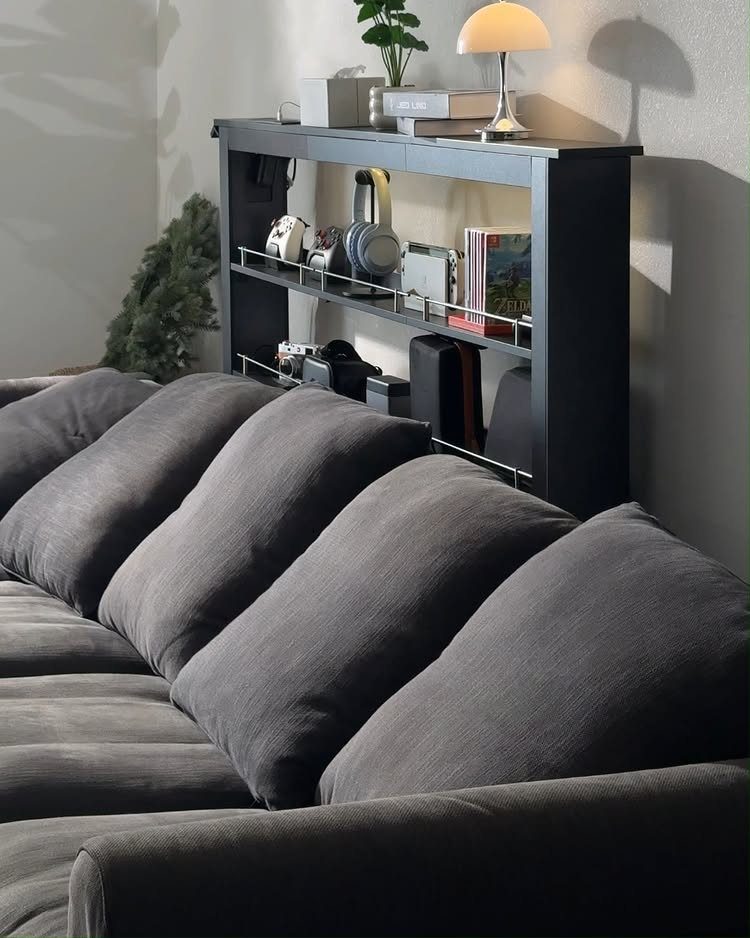
The gap width tells you whether a console table fits, or only wall art and a plug-in light strip will work.
The list covers backlight strips, wall art, console tables, bar tables with stools, benches, bar carts, and plants. Anything that eats into that clearance gets knocked, turns into a dumping surface, or sits unused.
1. Slim Console Table
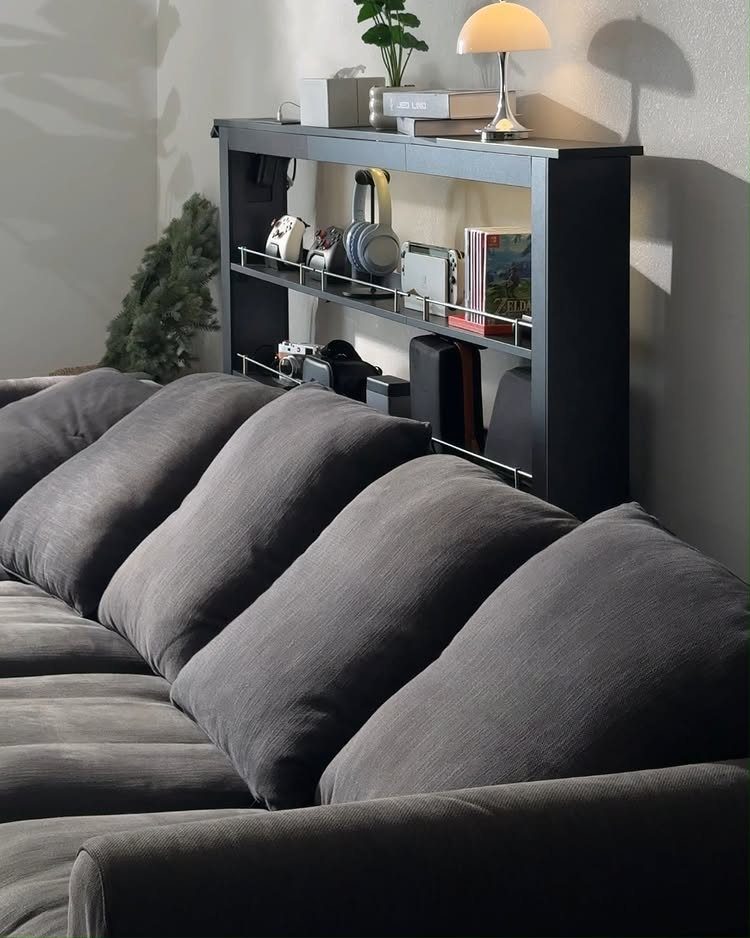
A console only as deep as the gap allows is what works here, and one with open shelves keeps the lower half from feeling heavy. Standard depths are commonly published in that range, so measure the gap before you shop.
Keep the top to a lamp, a plant and a short stack of books. Anything that sticks out past the edge gets knocked by whoever sits down.
2. Bar Table
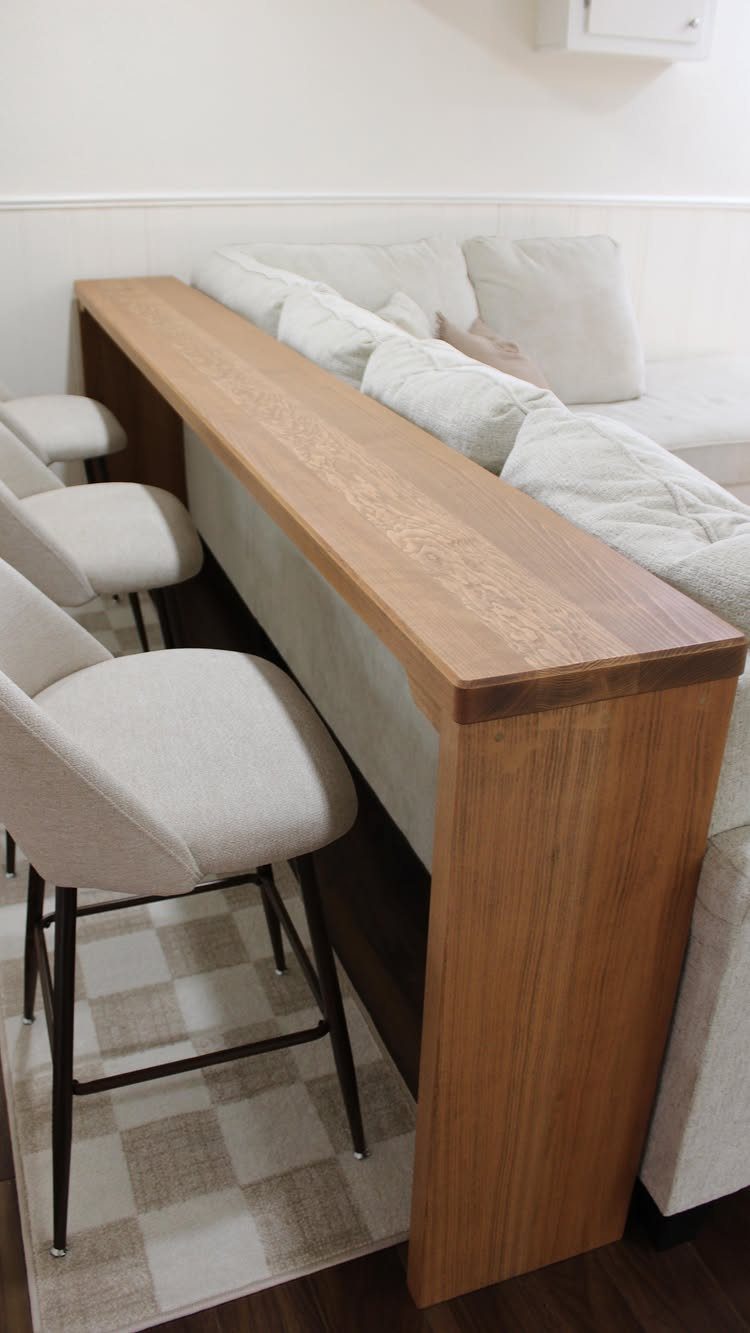
A long, narrow bar table turns the space behind a sofa into a spot for snacks, laptop work or a quick meal.
Stools that tuck fully under the top, as these white ones do, keep the walkway clear when nobody is sitting.
I would pick stools with backs if people will stay longer than a coffee. A rug under the stools also stops the legs from scraping the floor.
3. Large Artwork
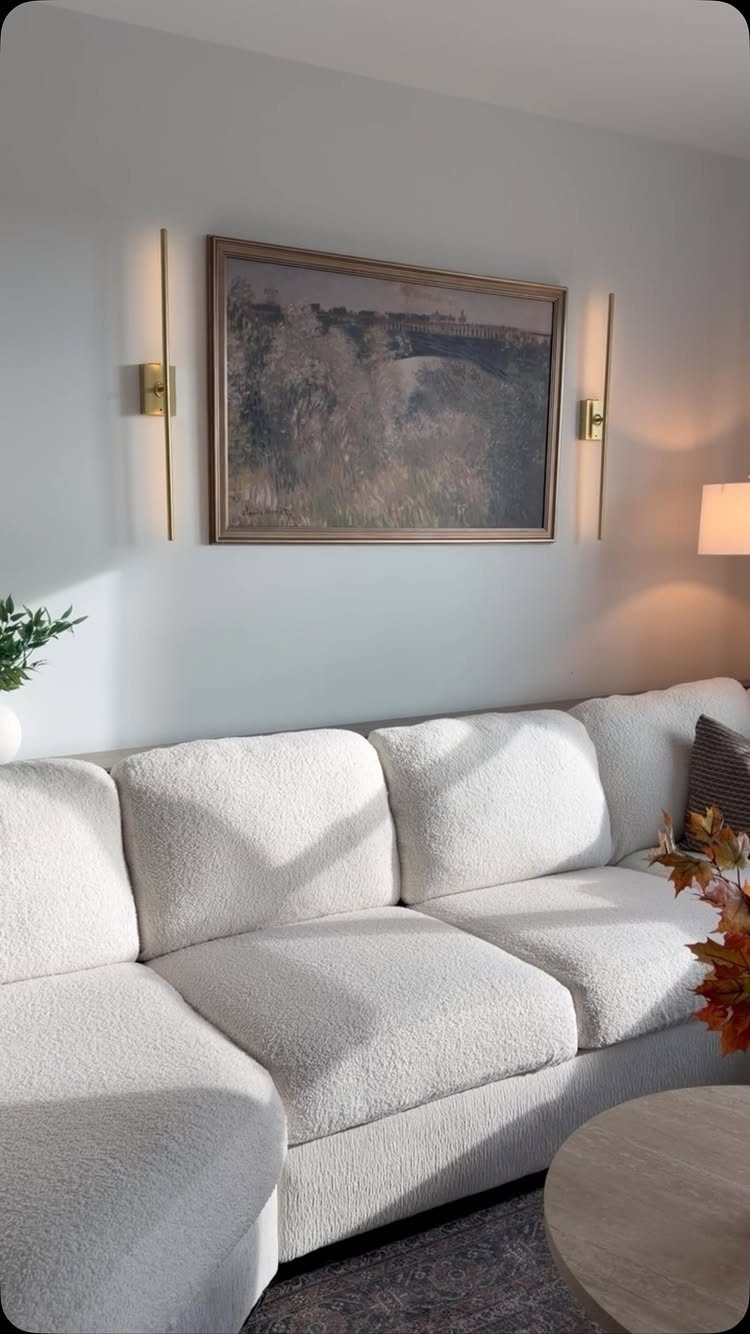
One oversized piece of art does the work of a whole wall of small frames, and it costs less effort to hang.
Sconces on either side add light without using any floor space. Plug-in versions suit renters.
4. Gallery Wall
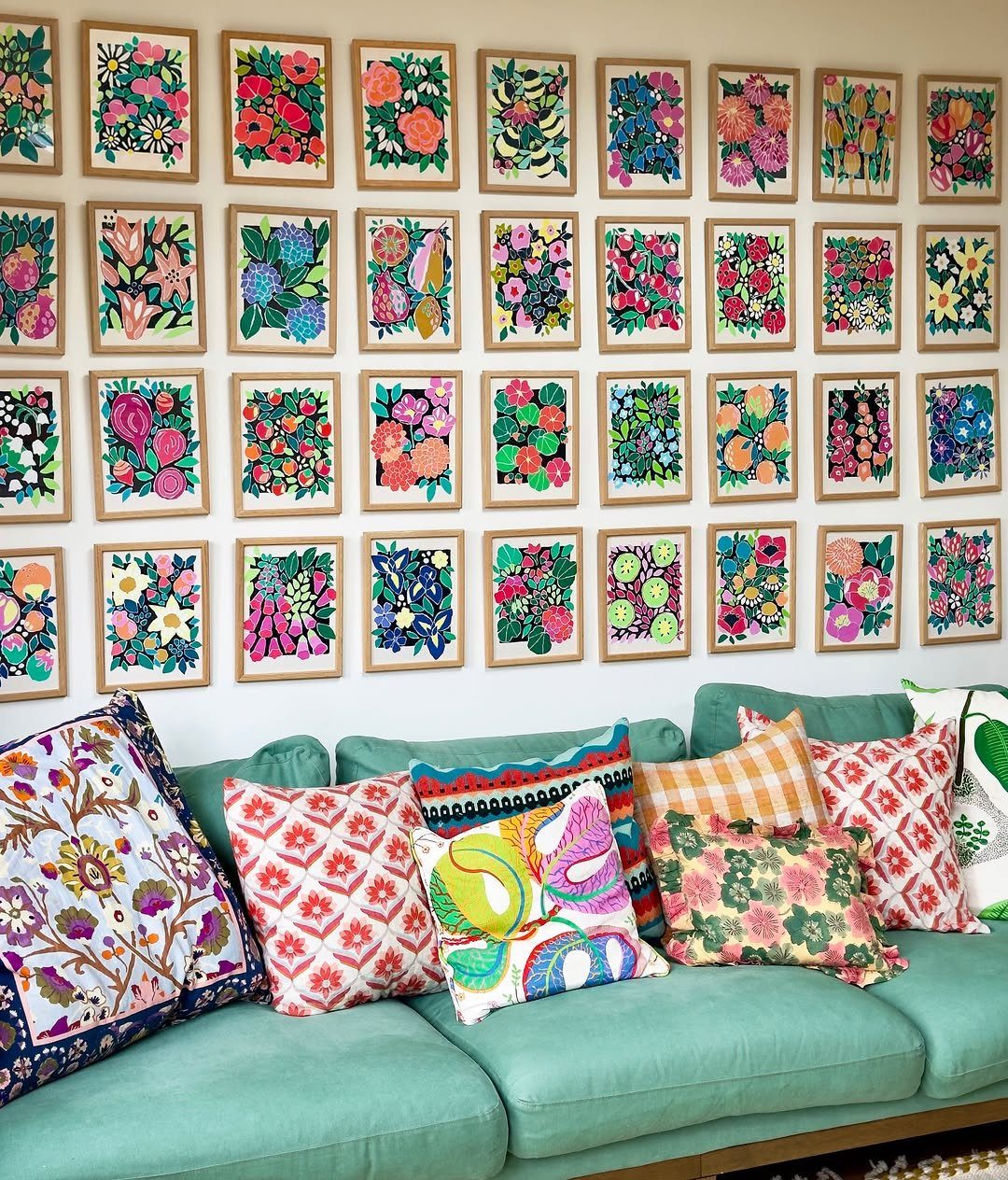
A strict grid is the easiest gallery wall to plan. Matching frame sizes and even spacing mean the wall looks deliberate, even when the prints themselves are all different.
Cut paper templates, tape them up first, and adjust before you put a single nail in the wall. I prefer this to hanging by eye; fewer holes to patch when you move out.
5. Bar Cart
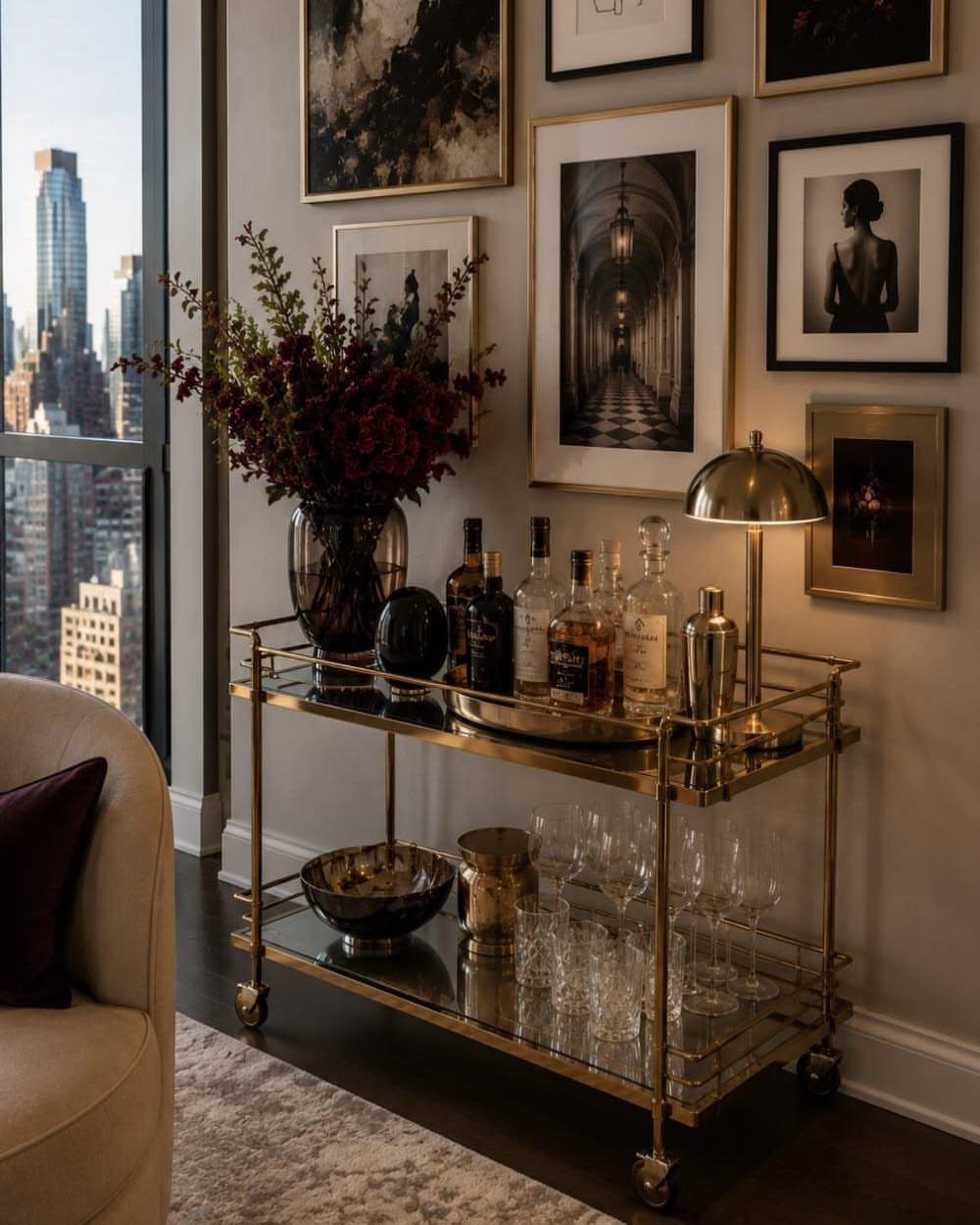
A bar cart in that gap gives you a serving spot and a display shelf in one. Glass and gold shelves, like this one, keep a small room feeling light, while a solid wood cart would add weight.
Leave enough room to roll it out when guests arrive.
6. Indoor Plants
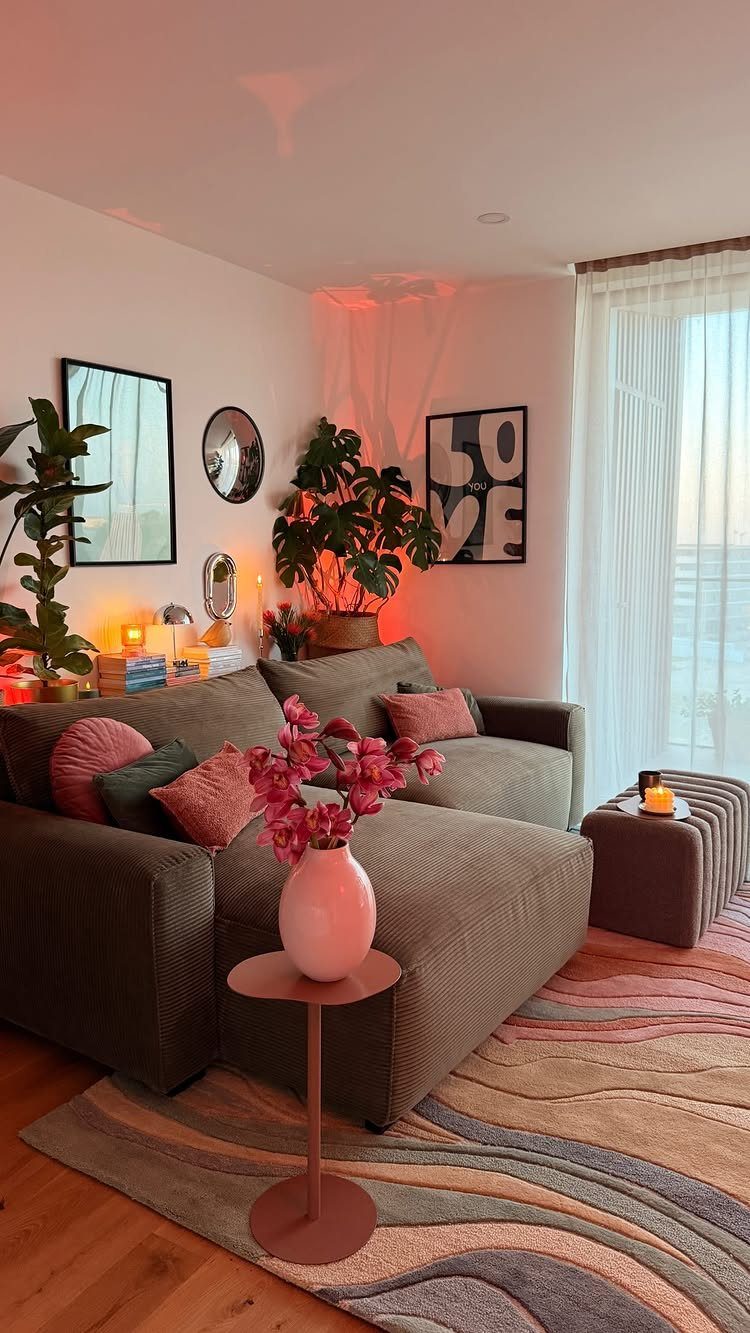
Tall, narrow plants suit a gap behind a sofa because they grow upward and take little floor space. A single pot standing at the end of the sofa, as it does here, softens the corner and draws the eye up.
Check how much light the spot gets before you buy, since a dim corner behind furniture can starve a plant. A small side table nearby can hold a second, shorter plant.
7. Bench Behind Couch
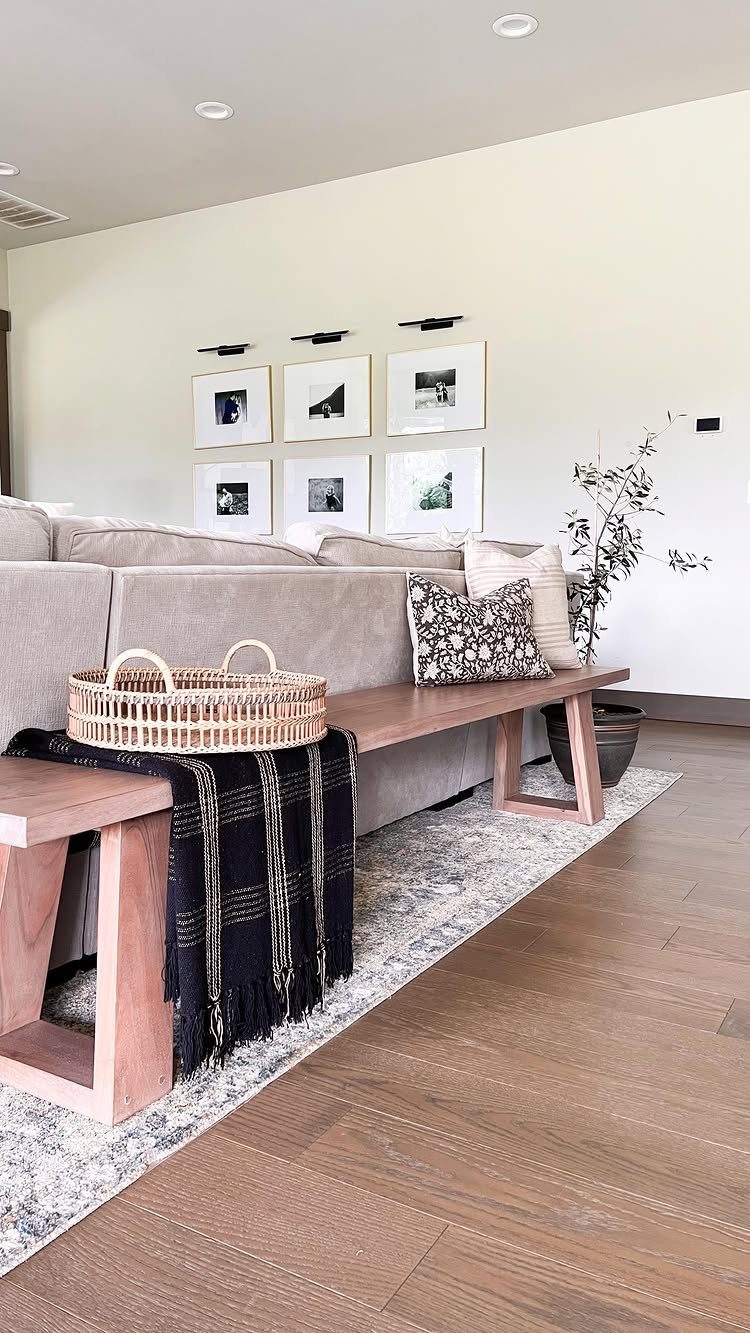
A bench along the back of the couch adds a seat without adding a chair. Pick one narrow enough that the walkway stays clear, and low enough that its top sits under the sofa back.
A basket under or beside it holds the throw blankets, so they stay close and off the cushions. I like a wood bench against a grey sofa because the warmth keeps the pairing from going flat.
Measure the gap before you buy, since a bench that crowds the sofa gets used as a shelf, not a seat.
8. Hidden Backlight Behind Couch
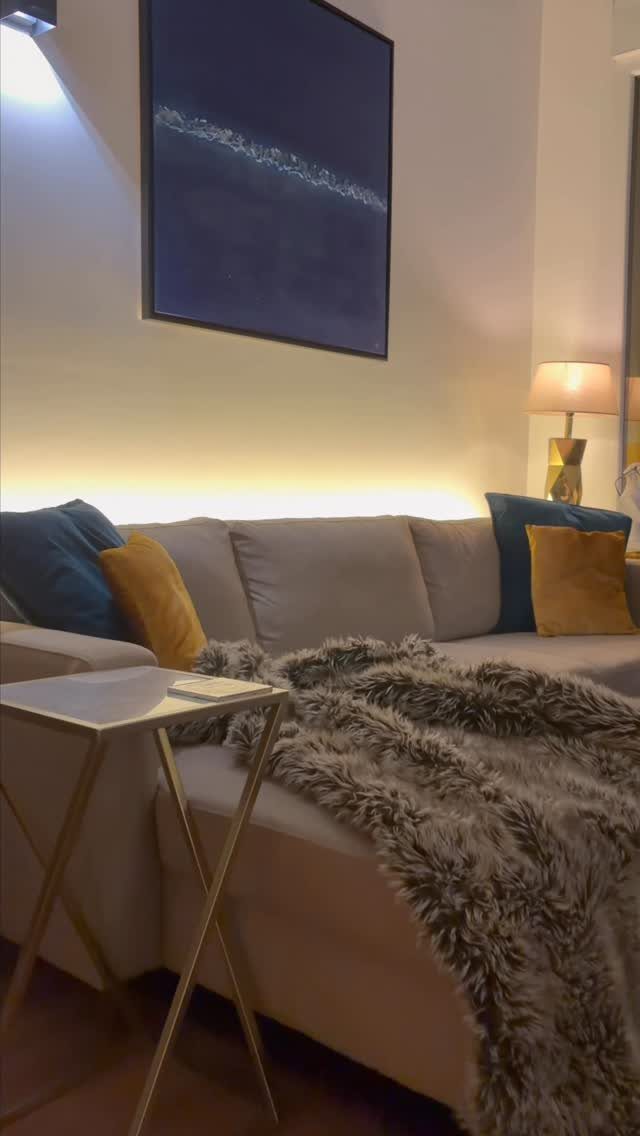
Warm light pointed up from the gap behind a sofa makes the wall glow and gives the room a soft second light source.
A plug-in LED strip or a small uplight tucked out of sight does the job, and both suit renters.
Choose a warm white bulb or strip, since cool white looks harsh against a wall. Stick the strip to the back of the sofa or the wall’s base only if the adhesive is rated for your surface.
Pair it with a table lamp, as here, and you can leave the overhead light off in the evening.
Space Clearance Guidelines
Plan on 30–36 inches of clear floor behind a sofa that floats in the room. That is the width of a normal walking path, and it is the number to hold onto before anything gets added back there.
Anything narrower than that should stay empty or hold something nearly flat. A bare strip of floor makes a tight room feel calmer than a squeezed-in piece of furniture.
Mark the gap with painter’s tape on the floor, or lay a tape measure along it, and walk through it with your arms full. Move the sofa forward or back an inch or two until the path feels easy.
Furniture Placement Advice
Start with room size. When floor space is tight, pushing the sofa to the wall is sometimes the only way to get enough seats in, and there’s nothing wrong with that choice.
In a large or open-plan room, floating the sofa marks off where the seating lives and gathers the furniture into a tighter, more usable cluster. Pushing everything to the walls leaves an empty middle.
Before you move anything, settle 2 questions: how many people need a seat, and where the TV goes.
Hosting often or watching movies as a family means more seating. A TV needs a wall that suits it, and that wall can limit where the sofa lands.
Designers often, in an act of courage, pull the sofa away from the wall and toward the center of the room. It creates intimacy in a larger living room and turns otherwise wasted space into something useful.
Decorating Tips
Mix textures, then tie them together with color. Wood, fabric and metal each add depth, and they look planned when they echo the colors already in the room.
Repetition also works. Group items that share a color, shape or material, such as a set of all white pottery, and the collection looks intentional rather than random.
Limit how many pieces you put out. Fewer items per surface keep the room open, and each one gets noticed.
Frequently Asked Questions
How much space should I leave between the wall and the couch?
In a small room, 2–4 inches is enough; medium rooms do well with 4–6 inches, and larger rooms can take 6–12 inches.
Even a narrow gap keeps the sofa from scuffing the wall and makes dusting easier. If the sofa floats in the room instead, leave 30–36 inches behind it for a walking path.
What can I use to fill the gap between my couch and the wall?
A console table no deeper than the gap is the safest pick, and open shelves keep it from looking heavy. A tall, narrow plant, a plug-in uplight or a bar cart also fit.
What to put behind a couch against a wall?
Hang one large piece of art, or a gallery wall laid out in an even grid, on the wall above the sofa. Tape paper templates to the wall first so you only drive nails once.





