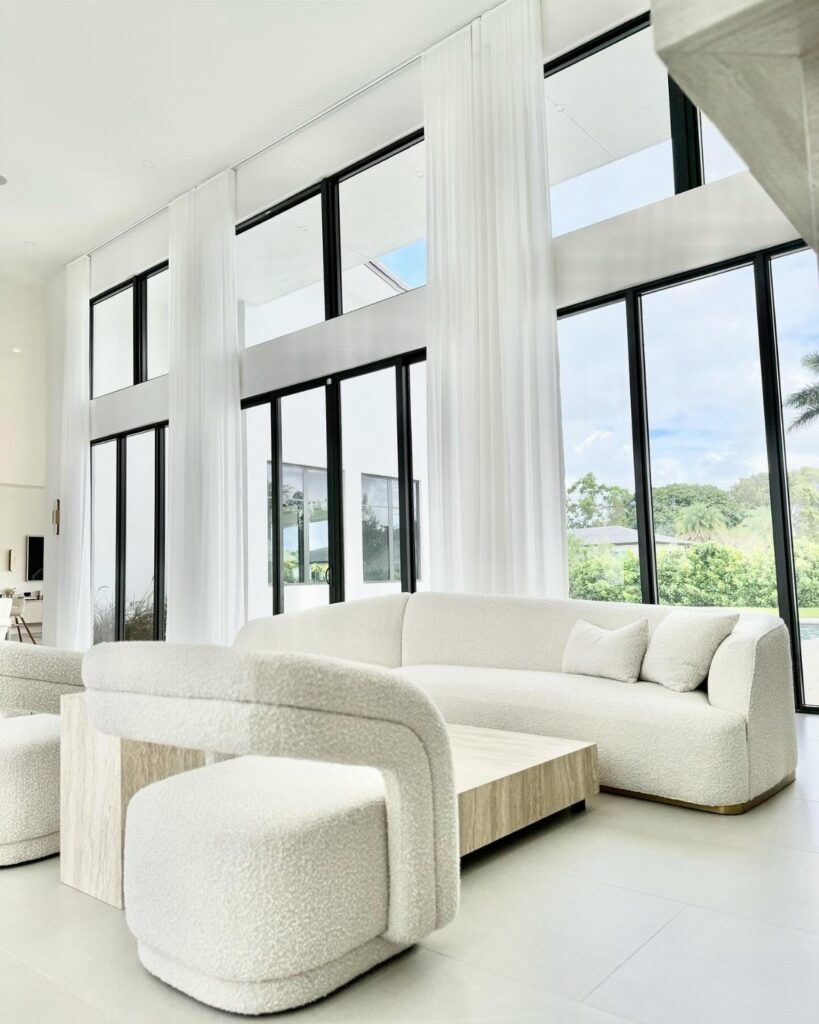
Your window’s location and how the room gets used settle whether you need privacy, light control or just a way to soften the space.
The 11 ideas run from grommet panels that slip straight onto a rod in a weekend to cellular and roller shades, woven woods, and the measuring and color choices that make any of them work.
1. Drapery Panels
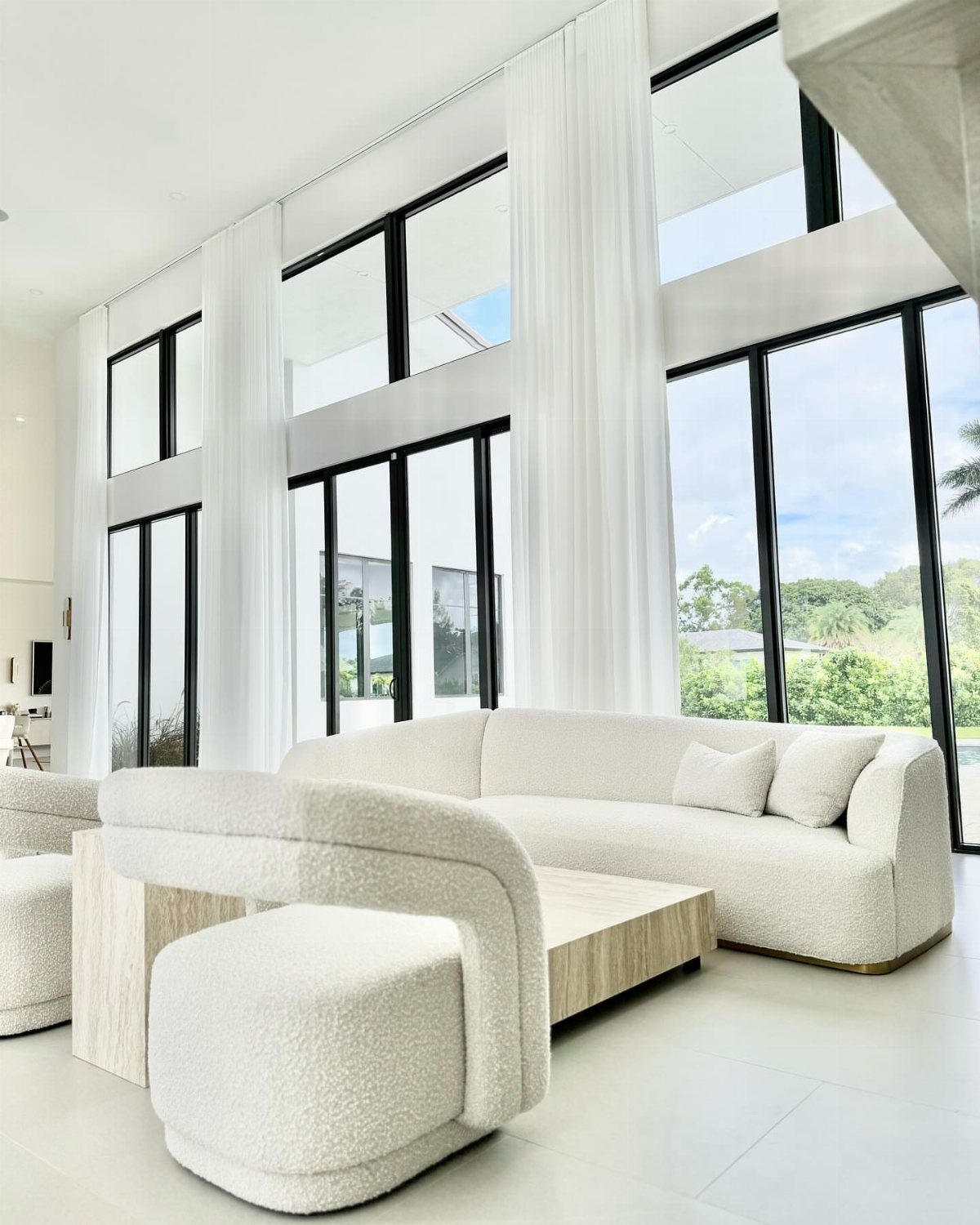
White drapery panels hung on a modern living room’s black-framed windows soften all that hard edge without hiding the glass. Black frames are graphic, and a plain white panel lets them stay the focus.
Hang the rod wider than the frame so the panels stack beside the window instead of over it. Keep the fabric light and the color close to the walls, and the room reads as larger.
For a more layered look, a second rod behind the panels can hold a shade for nights.
2. Sliding Panel Blinds
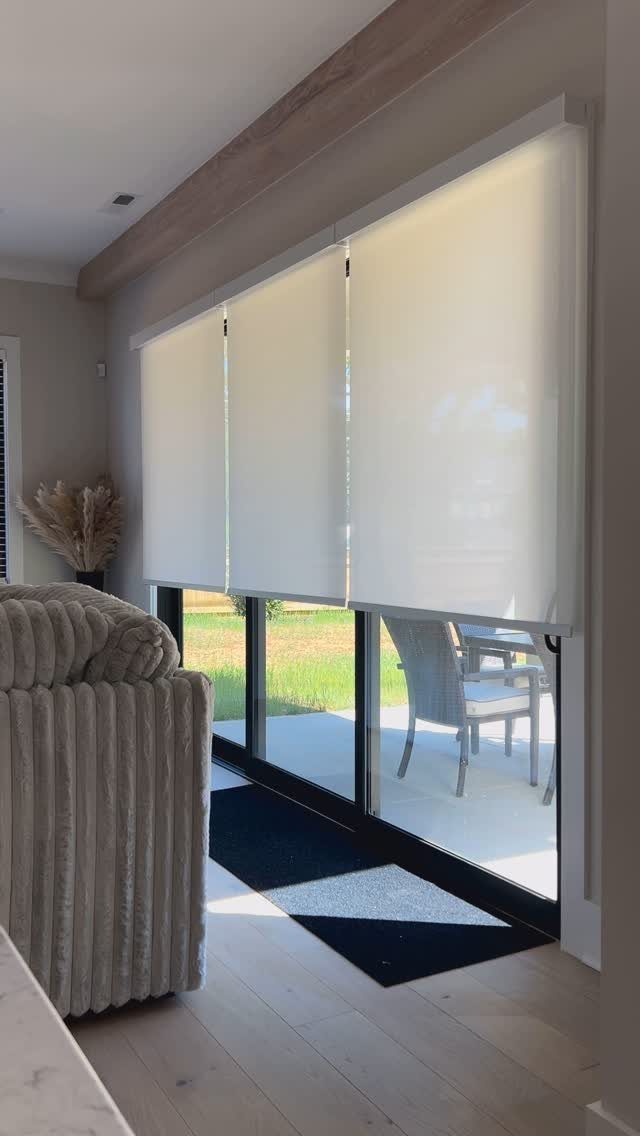
Sliding panel blinds are the tidy answer for a wide glass door, since each flat panel glides along a track instead of bunching up like a curtain. White keeps a door like this looking like part of the wall.
I like them most when the door is also the way outside: you slide one panel aside and walk through without wrestling fabric.
Stack the panels fully to one side for a clear view of the patio. Wide tracks cost more than a basic rod.
3. Vertical Blinds
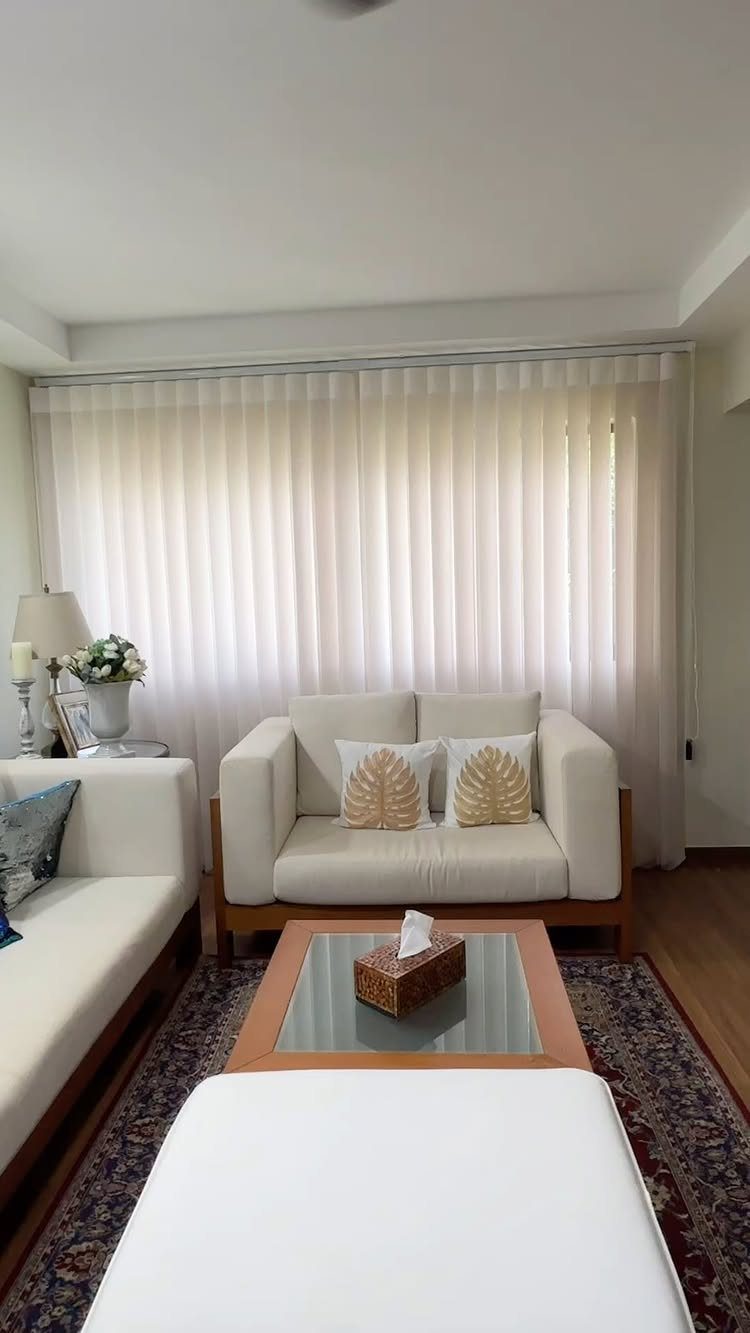
A wide window or door rarely gets covered more simply than with vertical blinds. Each slat rotates, so a quick twist lets in light or closes it off.
For a renter, I would pick them over heavy drapes on a big, awkward opening, because one track handles the whole width.
Skip them if you want a soft, cozy feel; they read more practical than warm.
4. Roman Shades
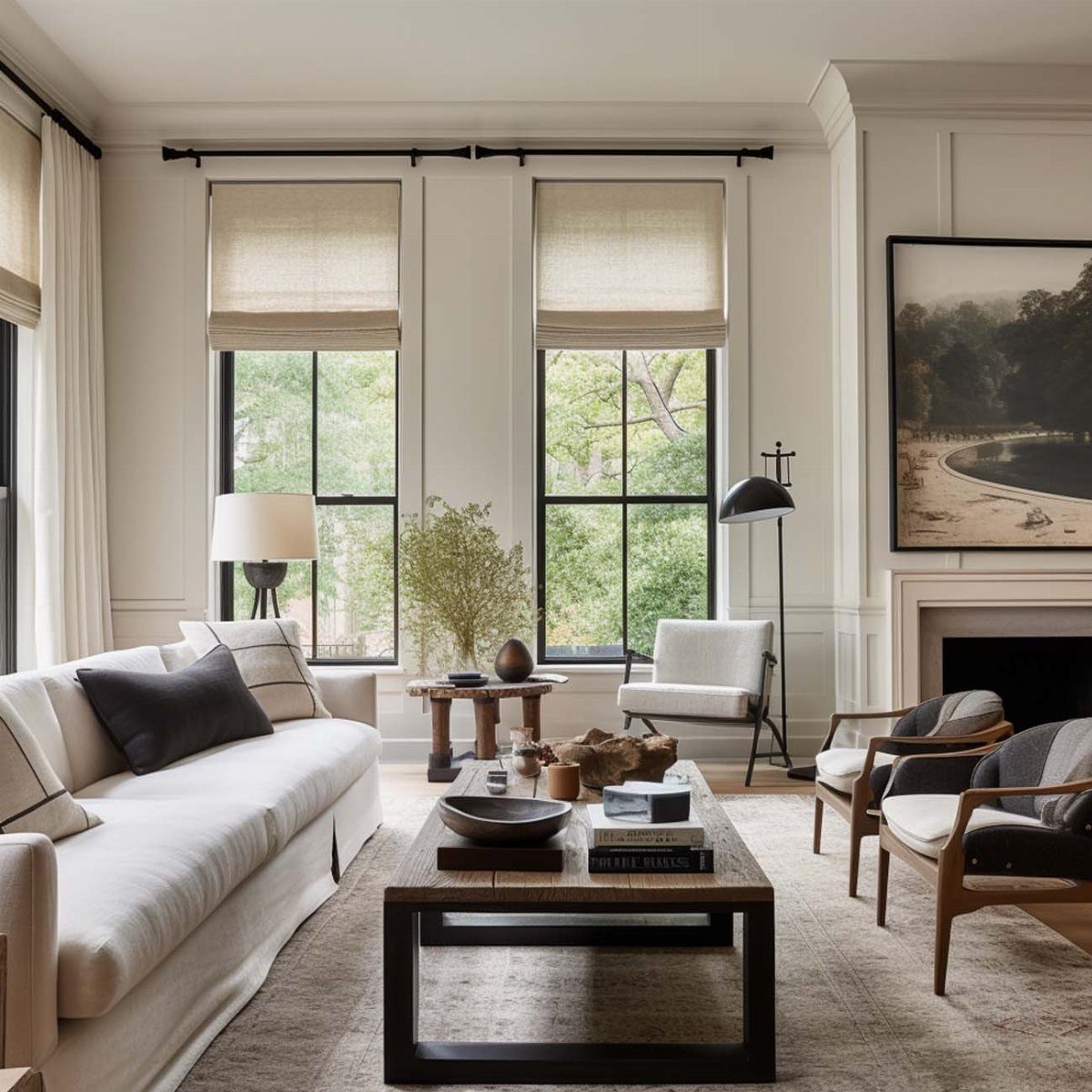
Soft folds are what set Roman shades apart from flat blinds: the fabric stacks into neat horizontal pleats as it rises.
Beige in a neutral room is an easy choice, and it fits windows that sit on either side of a fireplace, where you want the pair to match.
Measure each window separately before ordering, and decide whether the shade mounts inside the frame for a tailored look or outside it to make the window look larger.
Choose a fabric with some body. Thin cloth folds limp.
5. Roller Shades
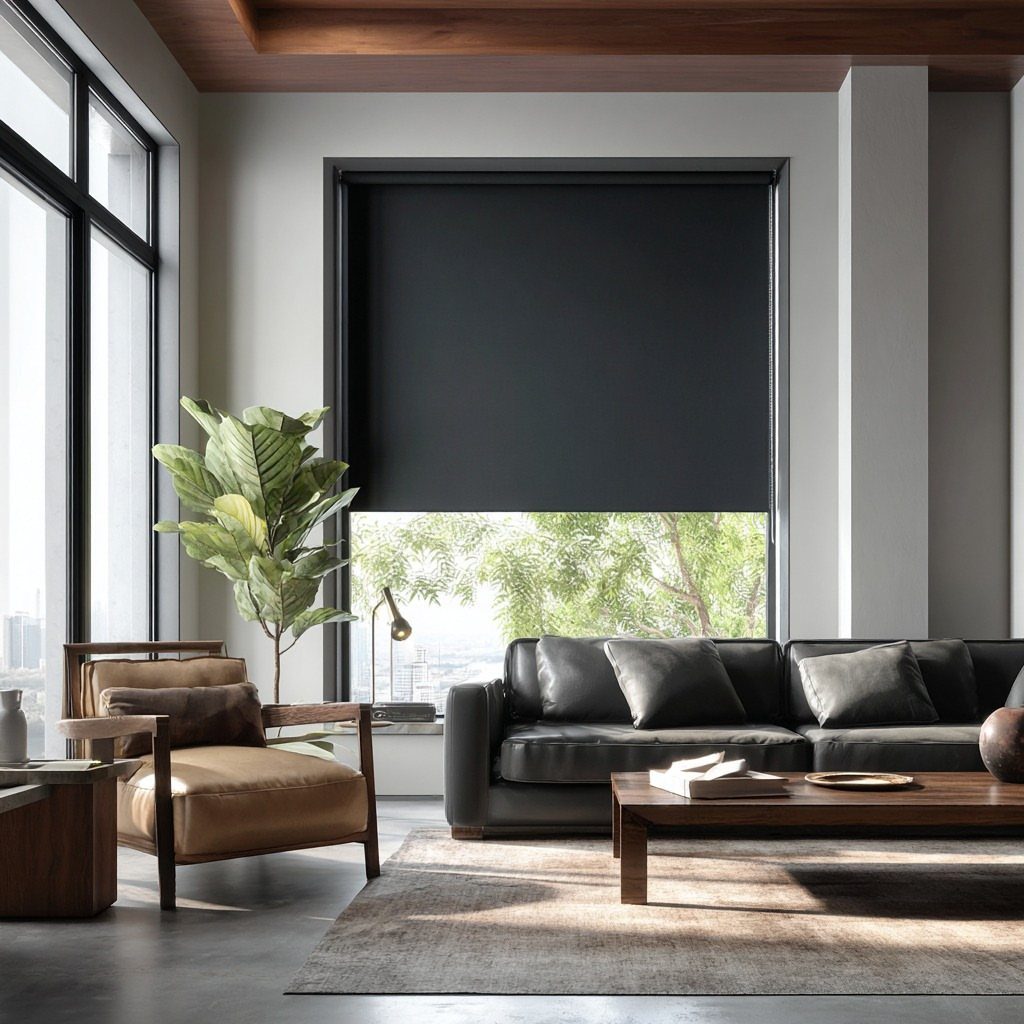
Nothing is plainer than a roller shade: one flat piece of fabric on a tube, pulled down or rolled up. A dark gray shade gives a room real contrast against leather furniture.
Because there are no folds or pleats, the shade stays out of the way when raised. I would choose it for a small window where you want a clean line and nothing fussy.
Pull it down part of the way to block the view in while still letting light through at the top.
6. Cellular Shades
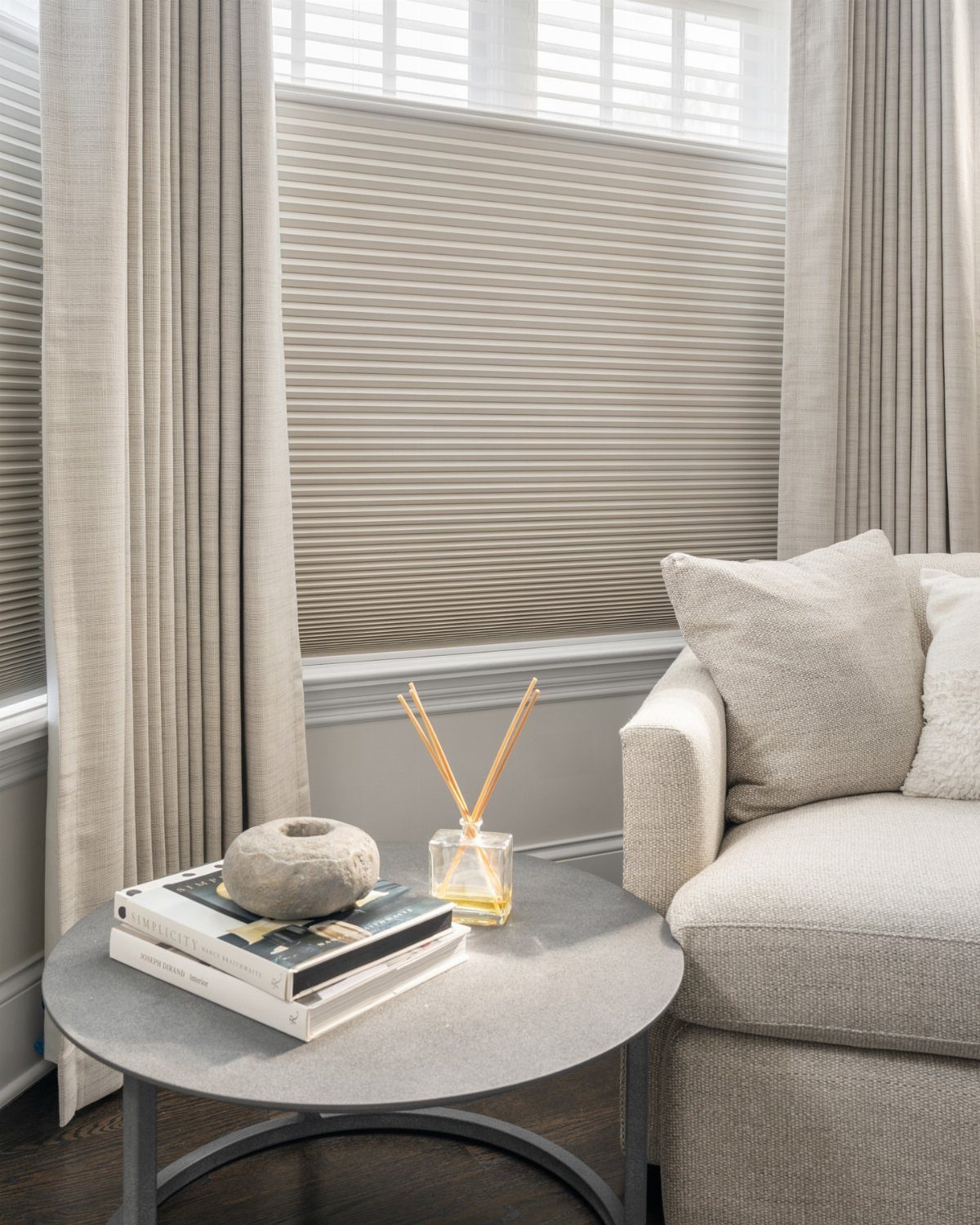
Cellular shades are built with honeycomb-shaped pockets, which is why they have a name for being energy-efficient. A beige one disappears into the window frame and gives a minimalist finish.
Pairing them with floor-to-ceiling curtains, as here, adds softness without giving up the clean shade underneath. Mount the shade inside the window frame and hang the curtains outside it.
If you want just one layer, the shade alone does the job. The curtains are an extra, not a requirement.
Cellular shades—The specially engineered honeycomb construction of these shades traps air in distinct pockets, creating an extra layer of insulation at the window—and making cellular shades one of the most energy-efficient styles available.
7. Woven Woods Window Treatments
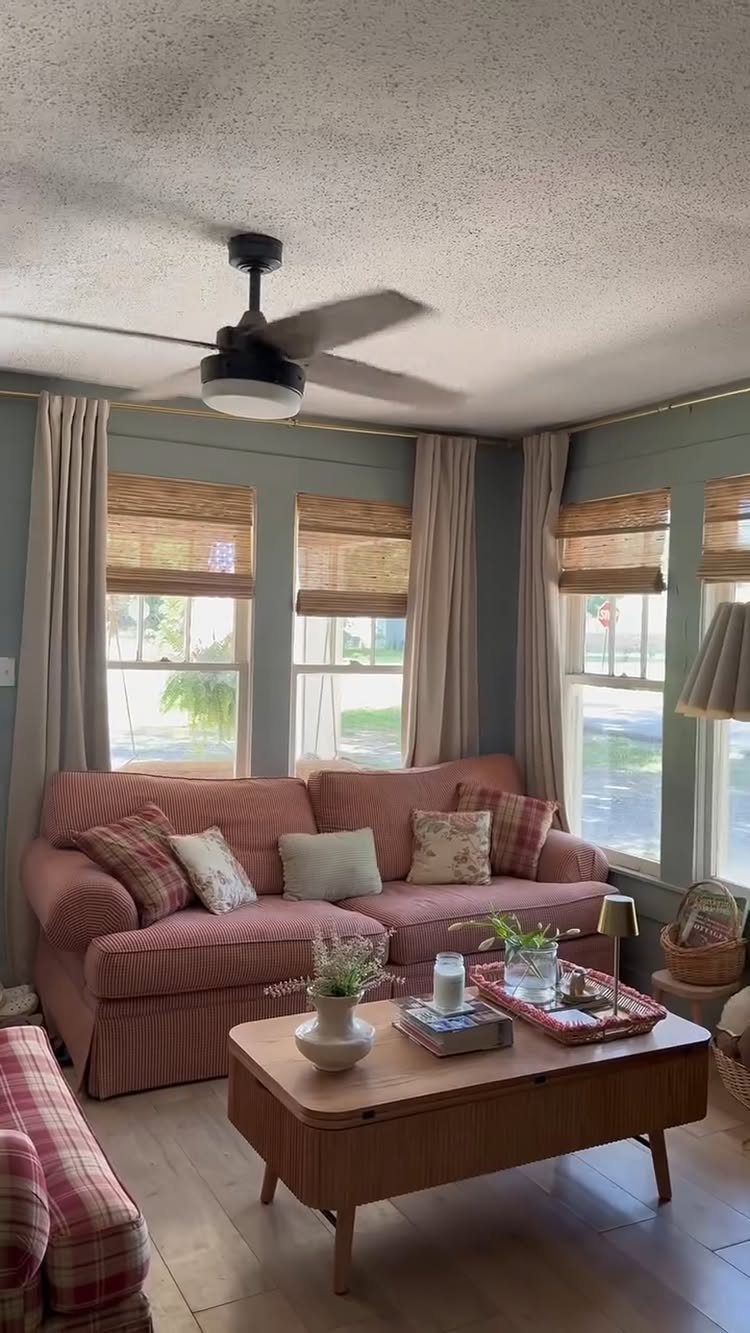
Natural woven wood shades bring texture that painted walls and plain fabric can’t. The grassy weave warms a room, and beige curtains hung beside them soften the edges.
Pair them with curtains in a color close to the weave so the two layers read as one. Hang the curtain rod wider than the window and the shade stays visible even when the panels are drawn.
Expect a more textured, casual look than a flat shade gives.
8. Floor-to-Ceiling Curtains
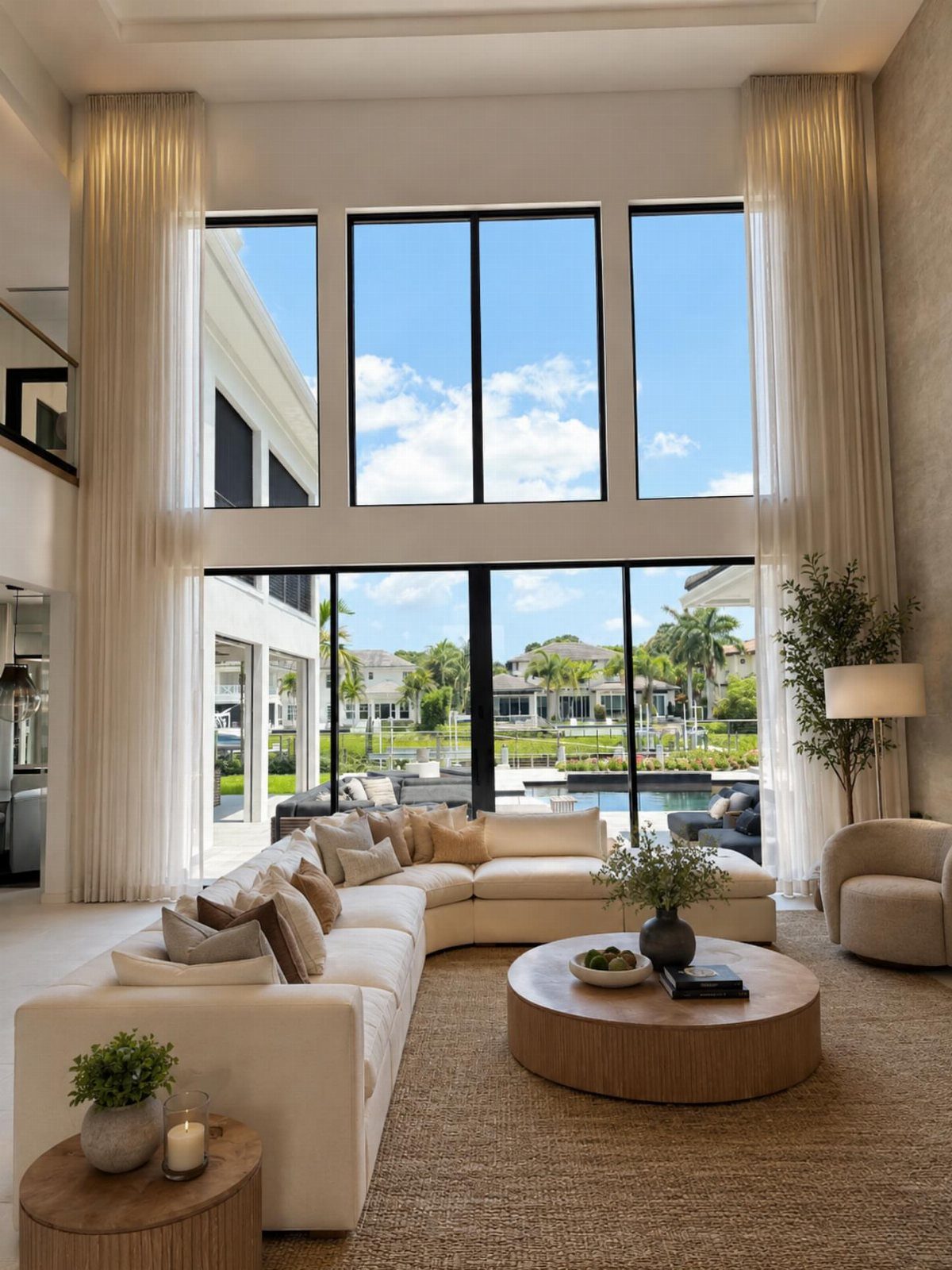
Curtains that run from ceiling to floor make a wall of glass feel taller and more deliberate. Sheer fabric keeps floor-to-ceiling panels from weighing down the room.
Let the fabric just brush the floor.
I would pick this for high ceilings and large windows, where a short curtain looks lost. Yardage adds up fast, so price the panels before you commit.
9. Zebra Blinds
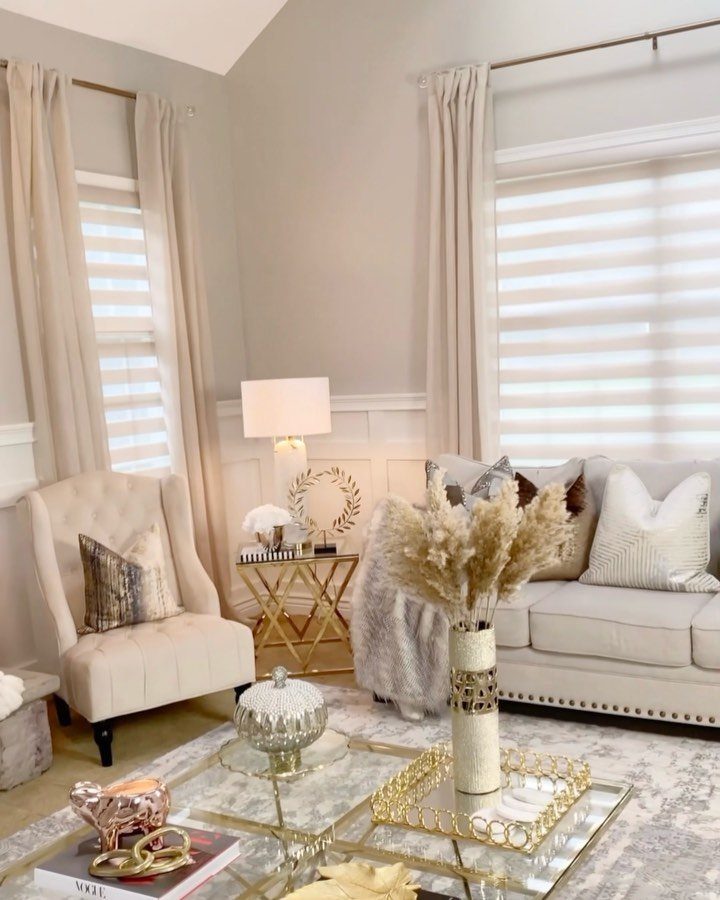
Zebra blinds alternate sheer and solid stripes on one continuous fabric, so you slide the bands to line up and you get light or privacy with a single cord.
Neutral stripes suit a beige room, and adding curtains on top, as here, brings in softness. Choose a color near your wall tone so the blinds blend in.
If you want a clean, modern look without much fuss, I would choose them over a plain shade, since the striped pattern gives some interest on its own.
10. Sheer Curtains
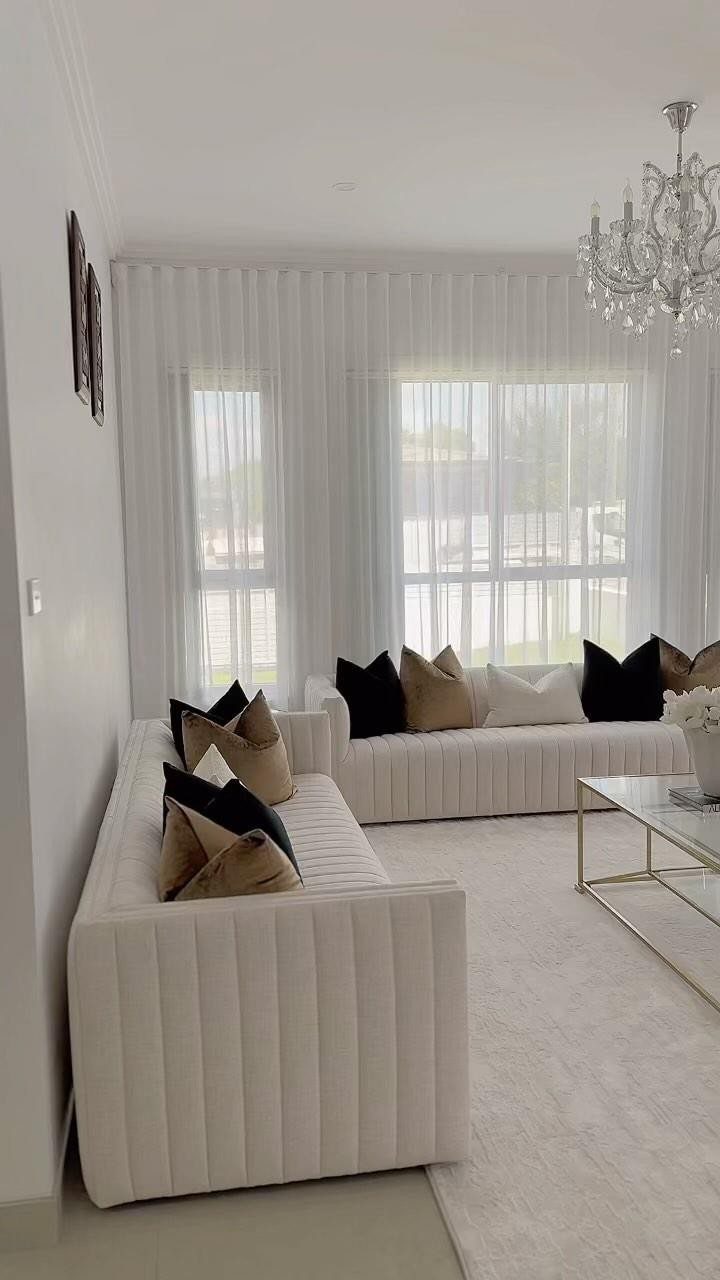
White sheer curtains let daylight through while taking the harsh edge off big windows. In a white room they barely register, which is exactly why they work.
Hang them full, with fabric about 2 times the width of the window, so they ripple instead of hanging flat. Mount the rod high and let the panels reach the floor.
Sheers give little privacy by day and almost none at night, so I would add a shade behind them if the windows face the street.
11. Grommet Curtains
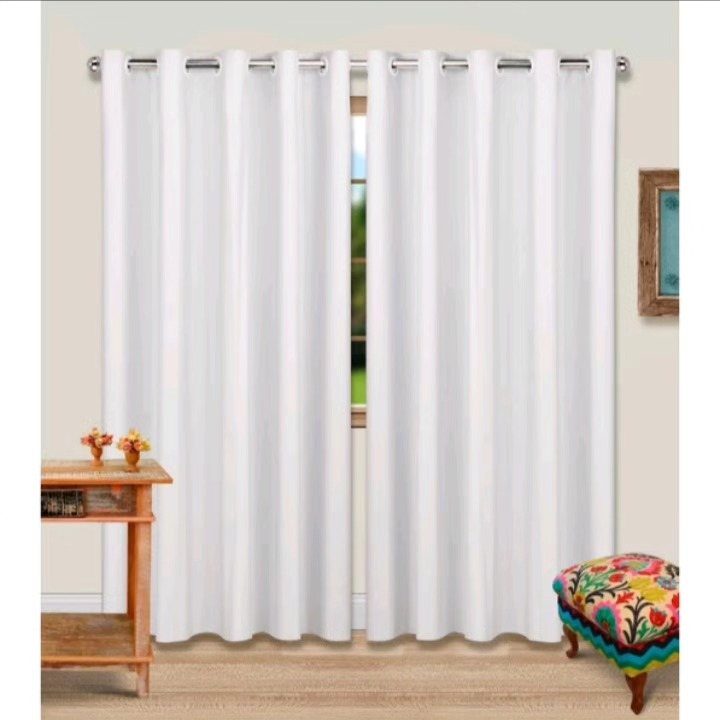
Grommet curtains slip straight onto the rod through metal-ringed holes, with no hooks or rings needed. That makes them the quickest panel to hang on a renter’s weekend.
A silver rod matches the silver grommets, so choose finishes that agree. The fabric falls in deep, even folds when you pull it open.
The trade-off: the panels glide less smoothly than ones on rings, because the rod passes through each hole. If you open and close them daily, expect a little tugging.
Assessing Natural Light and Privacy
Start by walking the room and noting which windows face the street or a neighbor’s driveway. Those are the ones that need real privacy, and the others can be left lighter.
Then decide how much light control you want. A room used for movie nights needs more darkening than one used mostly in daylight, and how you use the space decides the choice as much as the style does.
Think about entertaining too. If guests sit near a street-facing window in the evening, you want to feel comfortable and unseen without shutting out all the daylight.
Blinds and shutters both cut bright sun and reduce what people can see from outside, so judge each window by what it faces, not by what the rest of the room looks like.
Choosing Colors and Patterns
Window coverings are one of the cheapest places in a living room to add color or texture. A shade costs far less than a new sofa, and it changes the room just as visibly.
Try a light-filtering blind if you want softness and glow, or an opaque roller shade if you want a solid block of color and more privacy. Both come in many colors, fabrics and patterns.
Hold a fabric sample against your wall and sofa in daylight and again at night before you order. Colors shift a lot under lamps, and a sample costs little compared with a returned shade.
Measuring for Window Treatments
Poorly sized coverings end up too big, too small or just ill-fitting, and a shade that misses the window by a little looks worse than none. Measure before you shop, and write each number down.
Bay windows, arched windows and other specialty shapes are harder to measure. Custom shutters suit a bay, and honeycomb shades fit arched and tall windows well.
If a measuring mistake worries you, some custom makers include measuring and installation in the price. Ask about it before you order, since it takes the biggest risk out of the job.
Frequently Asked Questions
What is the current trend for window treatments?
Minimalist blinds are trending for their clean lines and easy use, and vertical styles suit sliding glass doors and other wide openings.
Layered drapery and motorized shades had their moment then and still work if the budget allows. A single track covers the whole width of a big window, and a slat twist handles light and privacy.
What window treatment is best for a living room?
It depends on 3 things: your style, how much light control you want, and how much privacy each window needs.
Should a living room have blinds or curtains?
Either works, and layering both is often the best result.
Blinds or shades give tidy light and privacy control, while curtains add softness. A cellular shade mounted inside the frame with curtains hung outside it gives you both, and the shade alone is fine if you want one layer.





