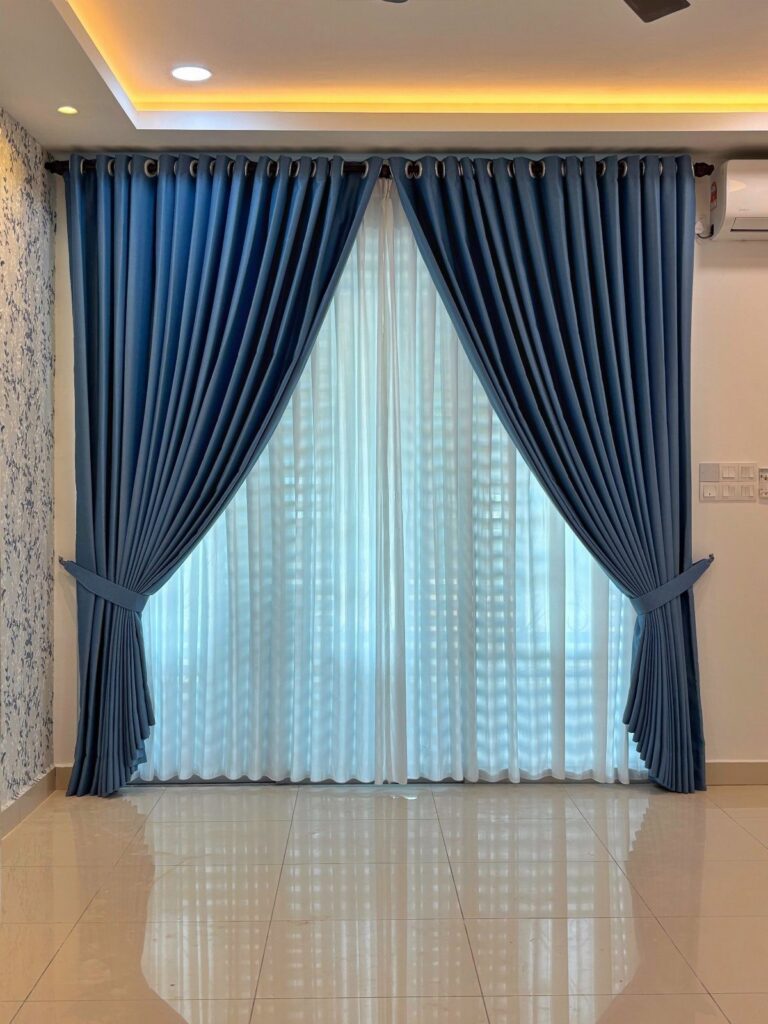
Your window and your ceiling height pick the curtain more than your taste does: low ceilings and small windows call for floor-to-ceiling drapery, a window with a view calls for a flat Roman blind, and a room that needs both privacy and daylight calls for a sheer layer under a heavier panel.
The list runs from plain white panels and a ceiling track to ornate swag valances in gold and beige, plus Roman blinds, bamboo shades, and patterns from florals to geometric prints.
1. Layered Sheer and Opaque Curtains
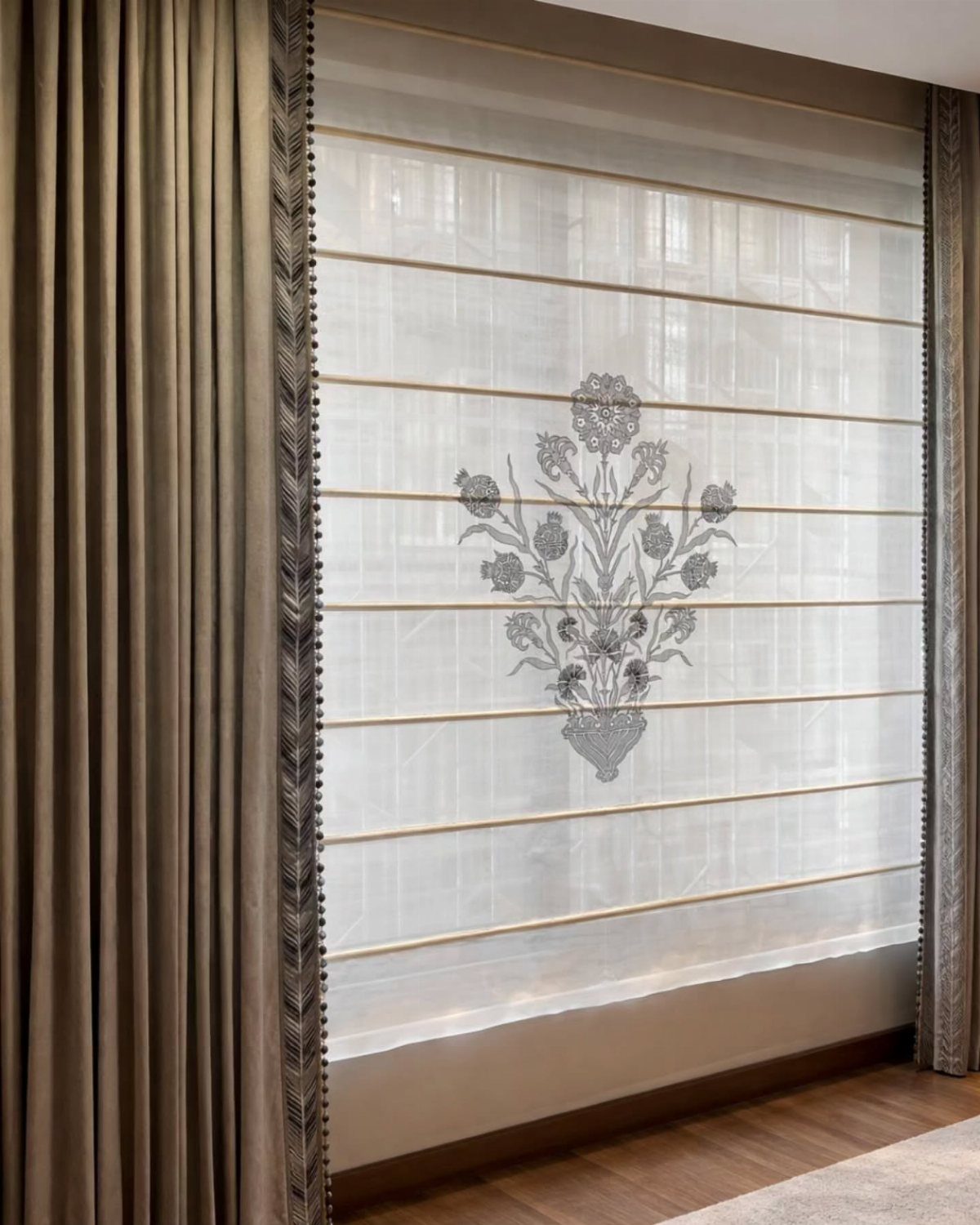
A sheer layer under a heavier panel gives one window two settings. Pull the opaque curtains closed for evening and privacy, or leave them parted and let the sheer Roman shade soften the daylight.
I like the version with a trim on the heavy panels, since it gives the plain taupe or beige some detail without adding a pattern.
Hang the opaque curtains on their own rod outside the shade so they can open fully and the sheer stays clear of the fabric folds.
Keep both layers in the same color family, and the pairing looks calm rather than busy.
2. Floor-to-Ceiling Drapery
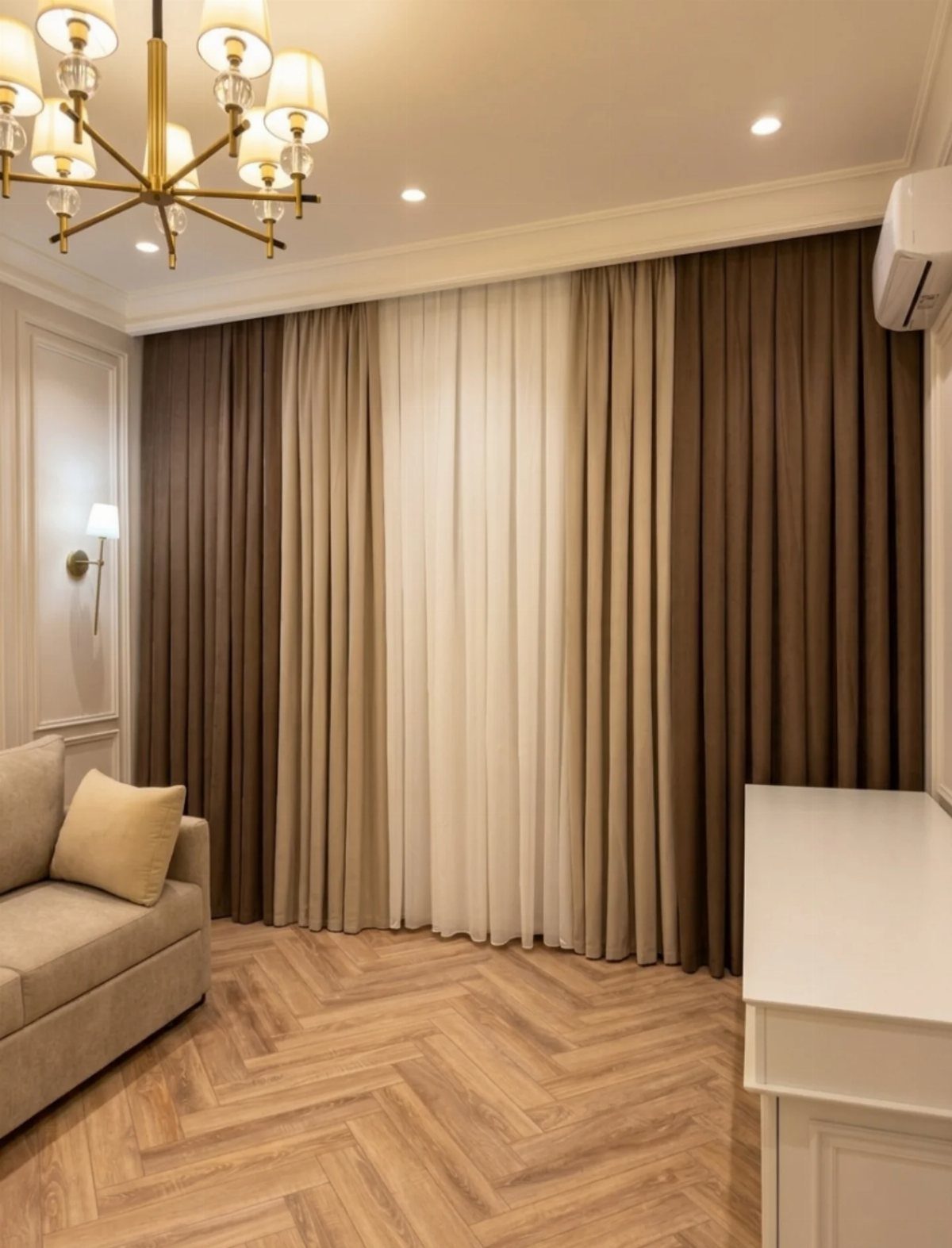
Hang the rod near the ceiling, not just above the window frame, and the curtains stretch the wall upward.
Let the fabric reach the floor, because a hem that stops short ruins the effect. Panels also need enough width to look full when closed, so buy more fabric than the window seems to call for.
This is the idea to pick if your ceilings feel low and your windows feel small.
3. Roman Blinds
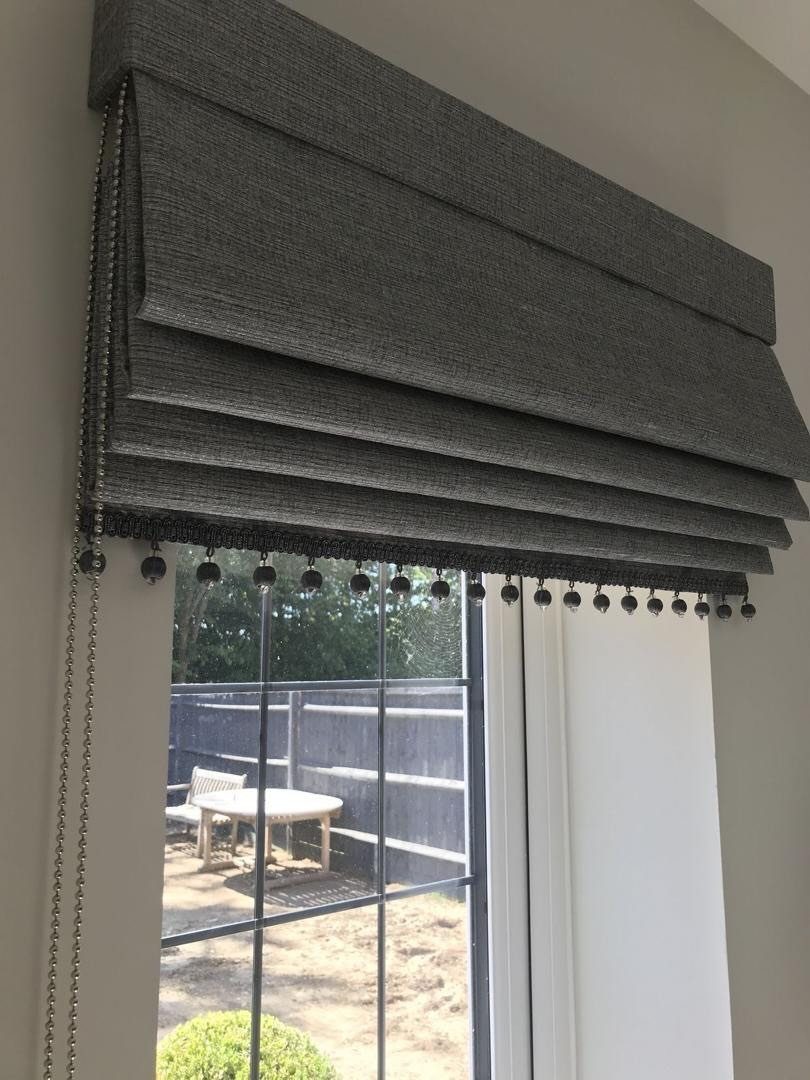
Neat and flat when raised, a Roman blind folds into tidy horizontal pleats, which makes it the tailored answer where full curtains would crowd a window.
A grey fabric version with pom-pom or beaded trim keeps the clean lines while adding a little play at the hem.
Mount it inside the window frame for the sharpest look. Pick a trim you like, since it’s the only decoration the blind has.
For a living room that looks onto a yard, a mid-tone grey also holds its own against the view without competing with it.
4. Pleated Curtains
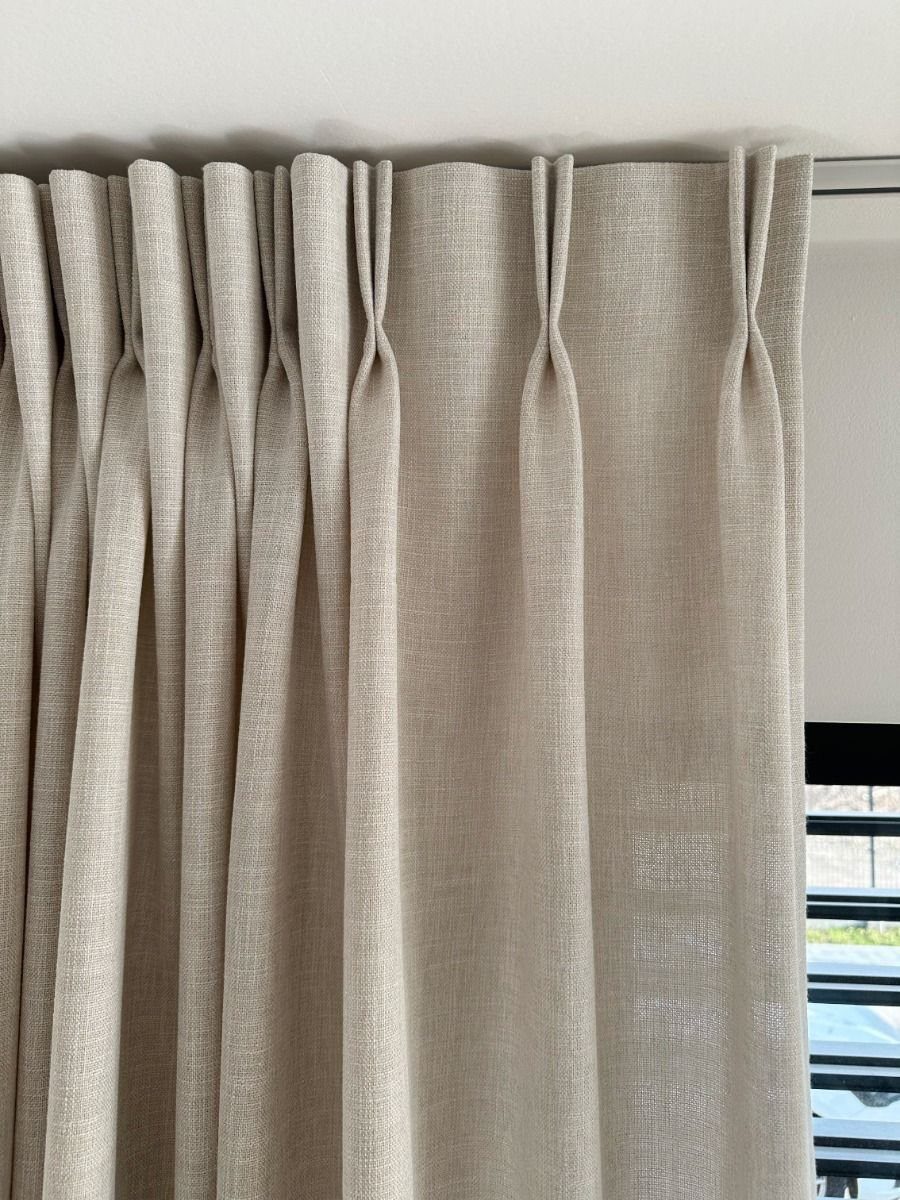
Pleated curtains in beige linen hang in even, structured folds, and a ceiling track suits them well.
The track lets the fabric run from the ceiling with no rod to interrupt it, and the panels glide open along the full width of the wall.
Linen in a neutral shade keeps a bright room feeling light. If your budget is tight, the track is a project you can handle yourself in a weekend with a drill and a level.
Choose pleats if you want a classic shape that stays polished without any pattern.
5. Floral Pattern Curtains
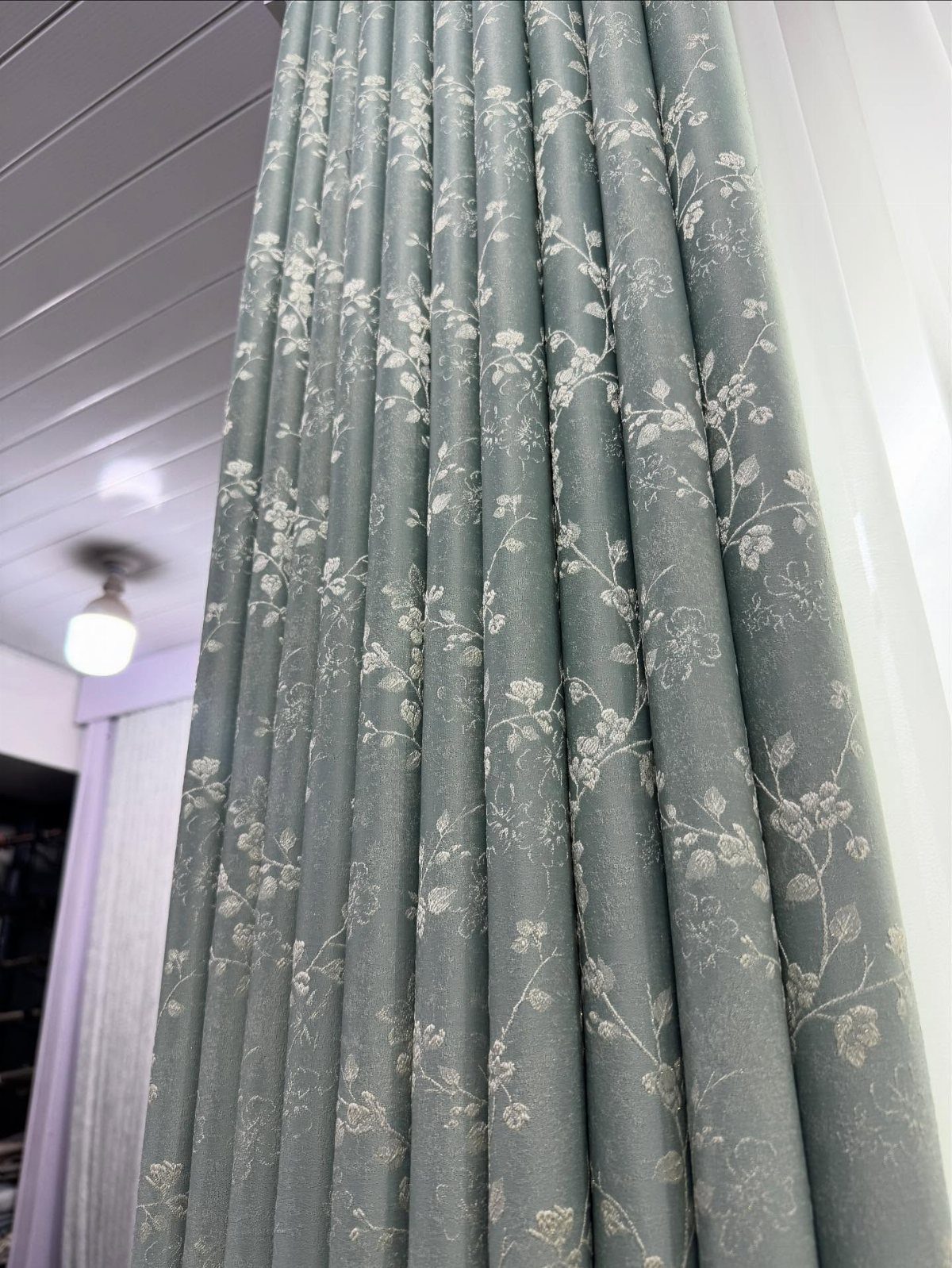
A light blue-grey curtain with a delicate white floral print gives a room color without shouting.
Because the flowers are small and pale, the pattern reads as a soft texture, which makes it easier to live with than a bold bloom.
Let the fabric hang in generous folds, since gathers show the print at its best. Let the sofa, rug and walls stay neutral so the pattern on the windows gets to be the detail that lands.
I would pick this over a large-scale floral for a small living room, where a big print can overwhelm.
6. Bamboo Shades
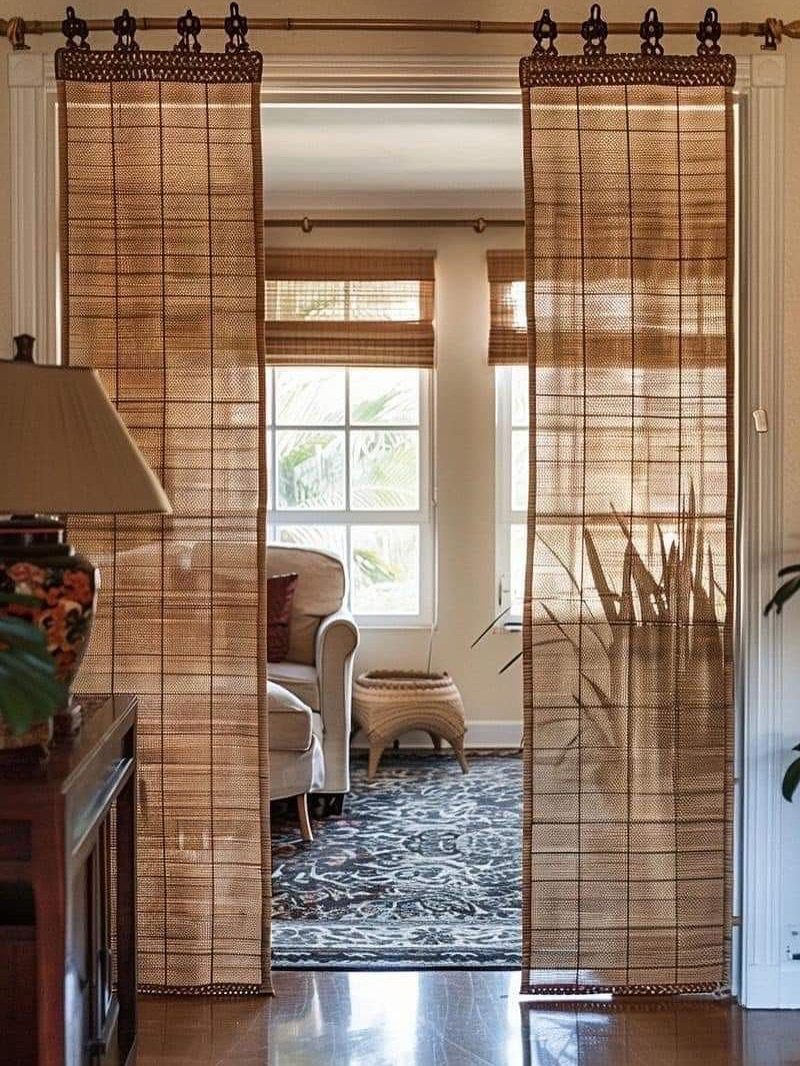
Woven bamboo adds a natural, textured layer that fabric alone can’t supply. Brown shades work well in a doorway or on a window where you want filtered light and a warm, earthy feel.
Pair them with a rug and a lamp in similar tones, and the whole corner looks planned.
They are a good pick if you like organic materials, though they lack the soft drape of fabric, so add curtains over them if you want that.
7. Crisp White Curtains
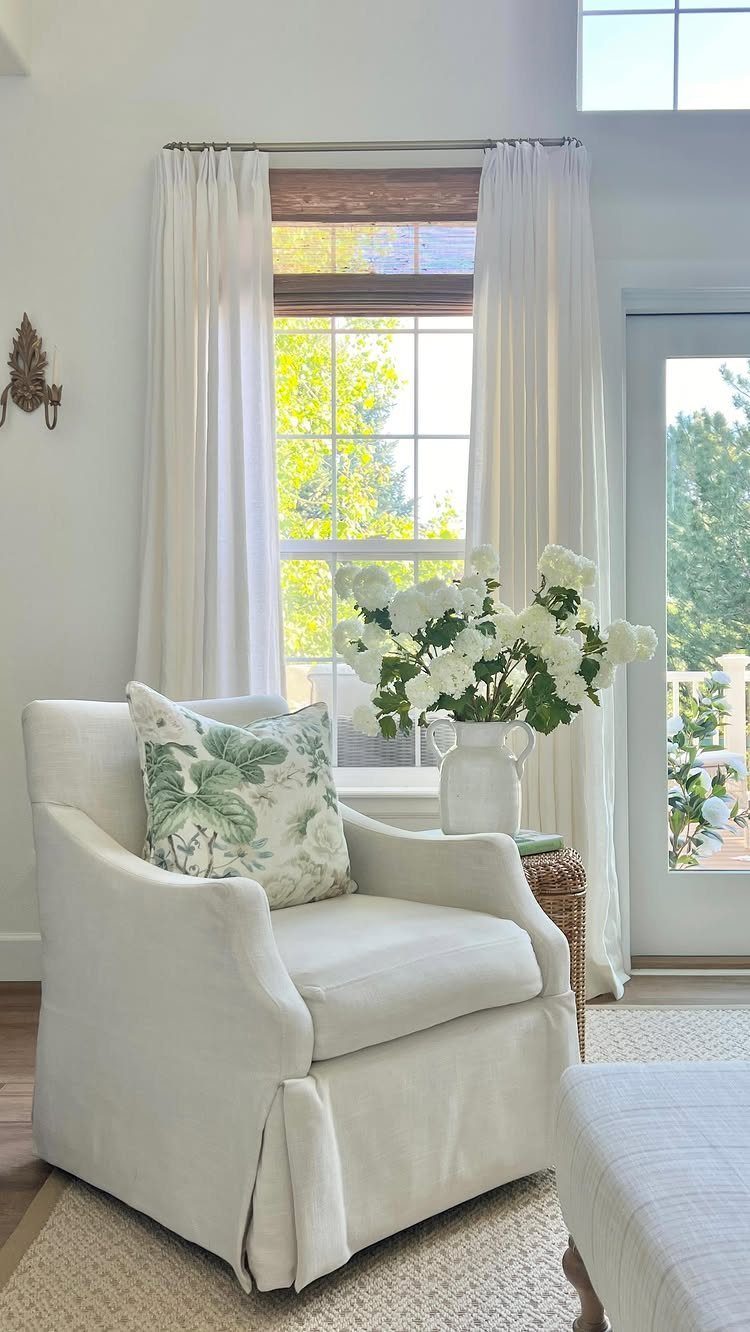
White curtains brighten a living room by doing very little: they frame the window, bounce daylight around, and leave the walls and furniture to carry the color. Against a white armchair and pale flowers, they keep the whole corner airy.
Hang them wide and full, since thin white fabric shows every gap and wrinkle. I’d steam them once after hanging and let the folds settle.
White is the easiest choice if you want a clean backdrop that works with any pillow or vase you swap in later. Expect to wash them more often than darker panels.
Juliette Thomas, director & founder, Juliettes Interiors, says: ‘Adding curtains to a modern living room immediately adds a level of luxury and softness – and is a great opportunity to make a statement in your interior design.
8. Geometric Pattern Curtains
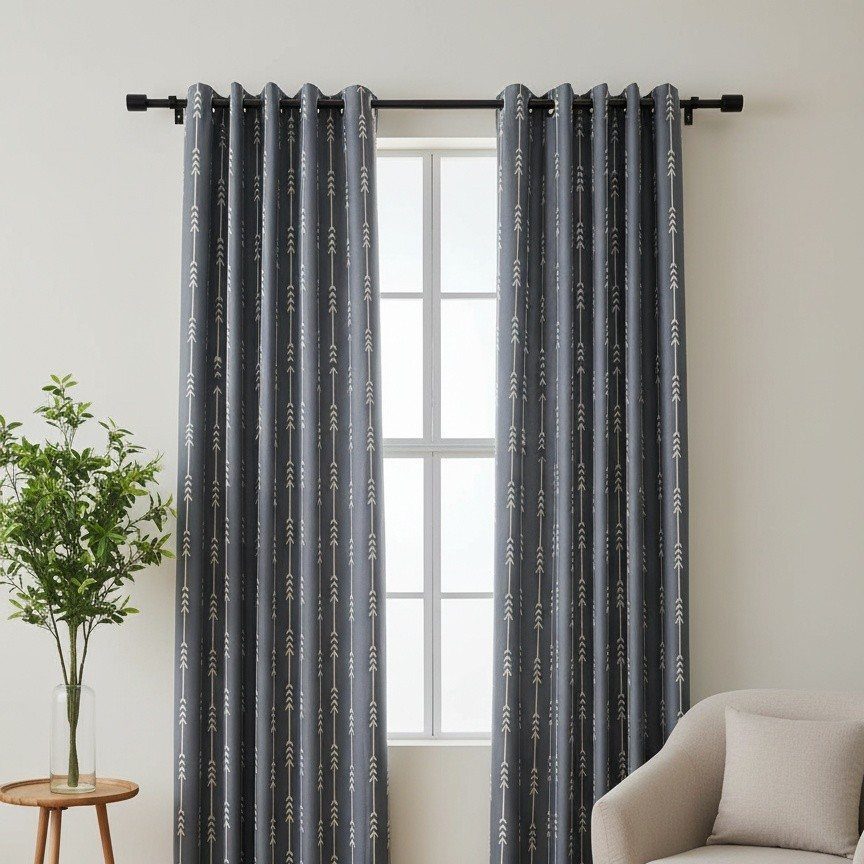
Dark grey fabric with an elongated white geometric pattern gives a window real presence, and it does so in a color that sits quietly next to a beige sofa.
The stretched shapes also pull the eye up and down, which suits a window that needs a little height.
The rest of the room should stay simple. A houseplant and a neutral sofa leave the pattern as the one bold thing in the room.
I would pick this over a bright print if you want drama that stays easy to live with. Hold a fabric sample against your wall before buying, since dark panels can look heavier on a small window.
9. Tassel Tie-Back Curtains
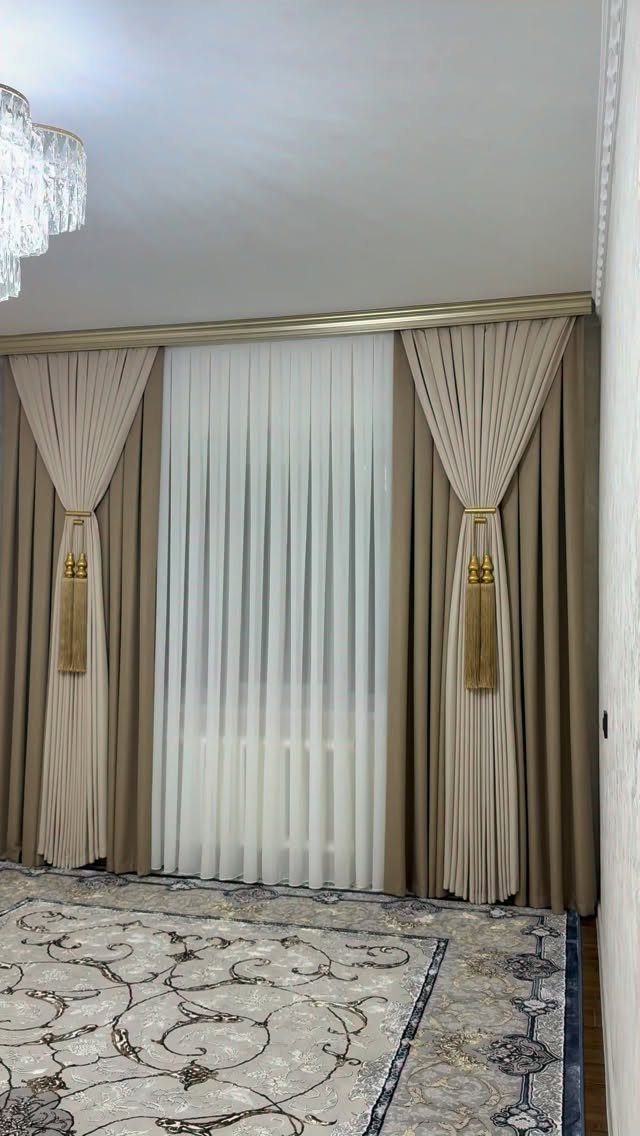
Beige drapes pulled back with gold tassel tie-backs hold the window open and show the white sheers behind them, so you get a formal frame without hiding the light.
Fix the tie-back hook into the wall at about the midpoint of the curtain’s height, and tie each panel at the same spot on both sides. Uneven tassels are the quickest way to spoil the look.
Tie-backs cost little, and they are an easy upgrade if you already own plain panels. They suit a room with a chandelier and a patterned rug, where the gold has company.
10. Ornate Swag Valance Drapes
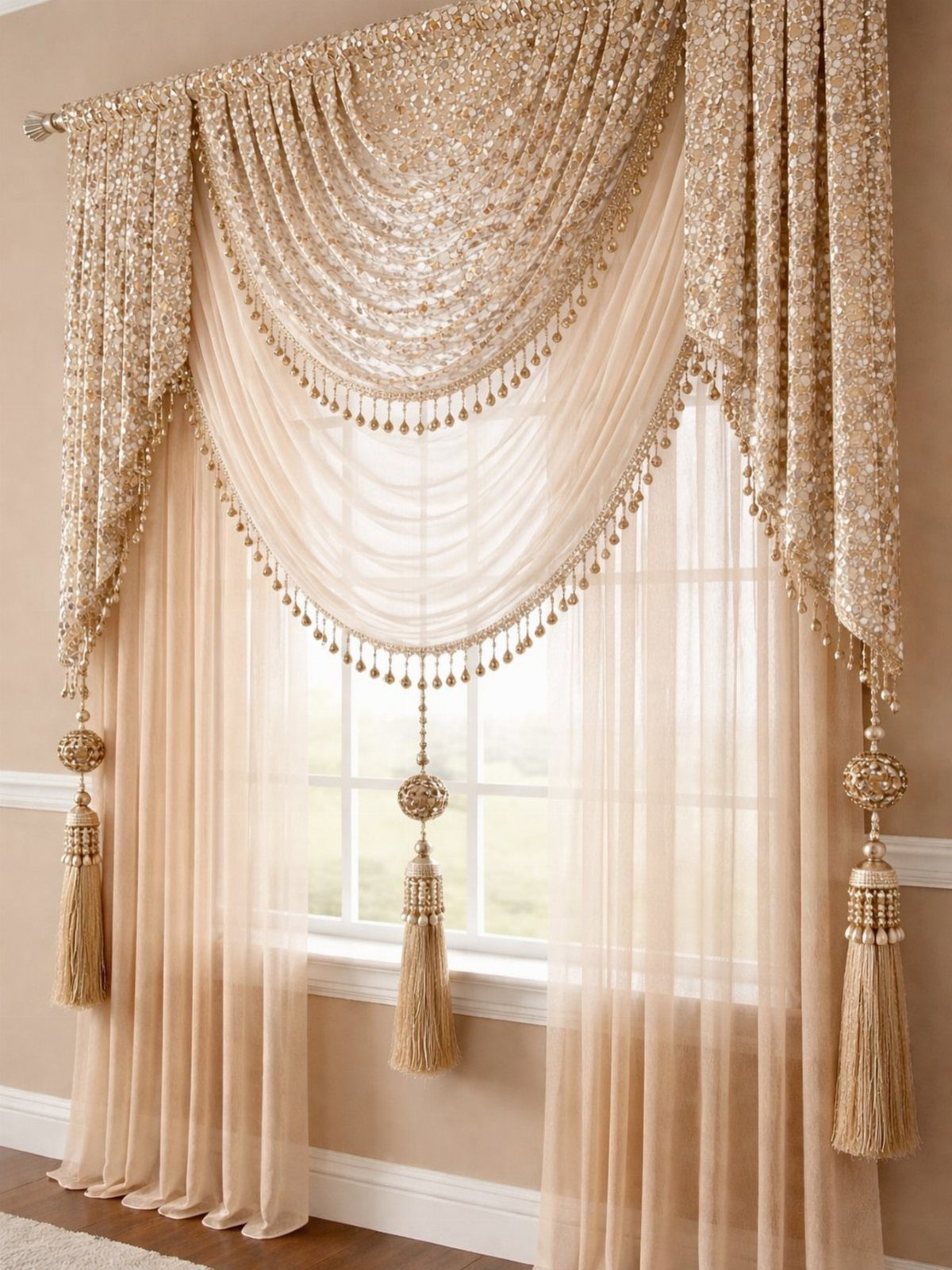
Swag valances are decorated: gold and beige fabric draped across the top of the window, finished with sequins and tassels. They add a formal, opulent crown to the glass.
Because the valance does the decorating, keep the walls plain, as beige walls do here. Anything busy nearby will fight it.
This style is a commitment, and it leans traditional, so it won’t suit a minimalist room. I would choose it only if you love the ornate look; a half-measure tends to read as dated rather than rich.
Choosing the Right Fabric
Weight does more than fabric type to decide how a curtain behaves in a room. Heavier fabric adds insulation and sound control, and it makes a living room feel cozy all year, not just in winter.
Cotton and linen breathe well and show texture, so they fit dry climates and casual rooms. Sheer fabric cuts glare in summer but still brings in light when the sky is overcast, which matters in a north-facing room.
Most living rooms need plenty of daylight and the option to dial it down. Medium-light-blocking panels handle that well: they keep the room bright and cut harsh glare while giving some privacy.
If you want more control, hang a translucent layer in front of a blackout layer. You can then change the light for morning, movie night or a nap.
Curtain Measurement Tips
Mount the rod 8–12 inches past the frame on each side so the fabric clears the glass when pulled back and blocks light from spilling in at the edges.
For height, mounting 2 inches above the casing is the common habit, and it is the weaker choice.
Check the hem before you cut anything.
Let the panels reach the floor or pool an inch past it; cutting them short is the mistake that shows and can’t be fixed later. Measure from the planned rod position to the floor, and measure it twice.
Curtain Maintenance
Easy care keeps curtains looking good, and it lowers the cost of owning them. Choose durable fabric that can handle regular cleaning, and check the care label before you buy, not after the panels are hung.
Machine-washable panels are the practical pick for a living room, where dust, cooking smells and sunlight build up over time. If a fabric is dry-clean only, count that expense in the price.
Layered setups add some work, since each layer may need different care. Read both labels so you don’t ruin one while washing the other.
Frequently Asked Questions
What are the best quality curtains for a living room?
Medium-light-blocking panels in a breathable fabric like cotton or linen are the best fit for most living rooms. They filter daylight without blocking it, soften the glare from a west-facing window, and screen the room from the street.
Check the care label before buying, and pick machine-washable panels if you can, since living rooms collect dust, cooking smells and sun.
What are valances for curtains?
A valance is a decorative fabric treatment across the top of a window. One version drapes fabric in loose folds across the top of the window, then finishes the edges with beading or fringe.
It does the decorating on its own, so keep the walls plain, and expect it to look traditional rather than minimalist.
Do curtains need to match?
No, they need to complement the room, not match it exactly. Layered setups work best when both layers stay in the same color family, such as a sheer under a taupe or beige panel.
Pattern at the window reads strongest when the rest of the room holds back: solid upholstery, a plain or geometric rug, walls in one color.
What is the best curtain length?
Floor length is the best choice. Panels should reach the floor or fall just past it, no more than an inch, because a hem that hangs short looks unfinished and you cannot fix it after you cut.





