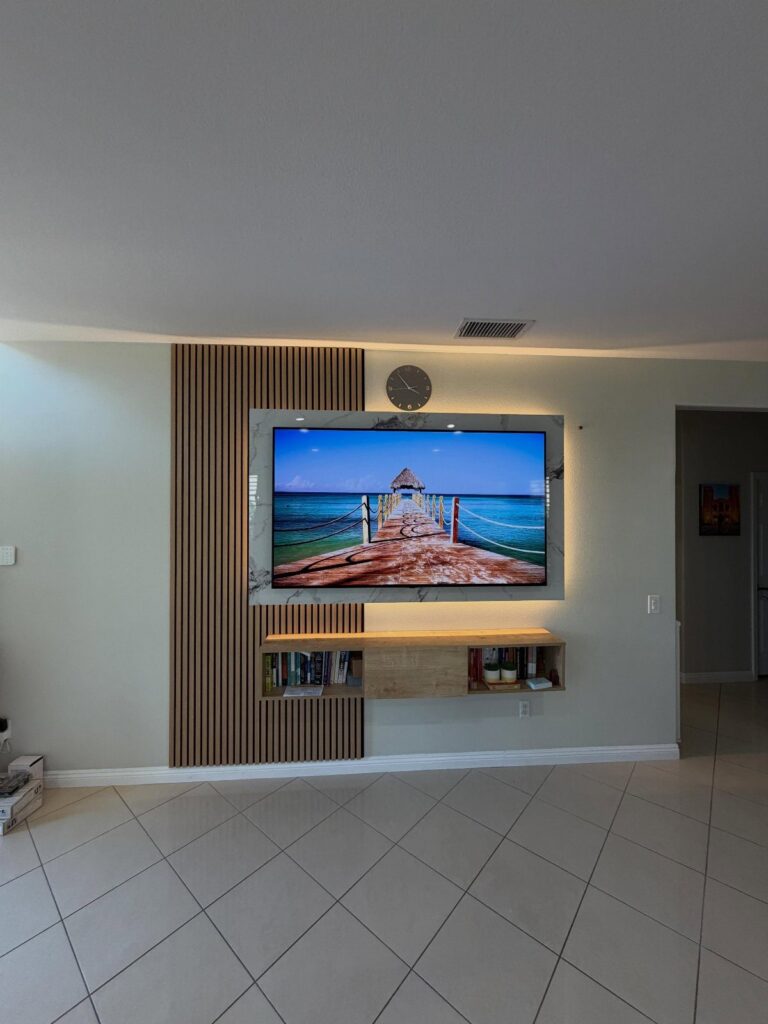
Which of these accent walls suits you depends mostly on whether you own or rent, because the ideas run from wallpaper, a chalkboard wall or a basket wall you can finish in a weekend to real stone, concrete and built-in shelves that are major projects.
Most of the heavy looks have a cheaper stand-in, such as peel-and-stick wallpaper cut to an arch, stone-textured panels, or thin molding strips marked out with a level.
1. Accent Wall Murals
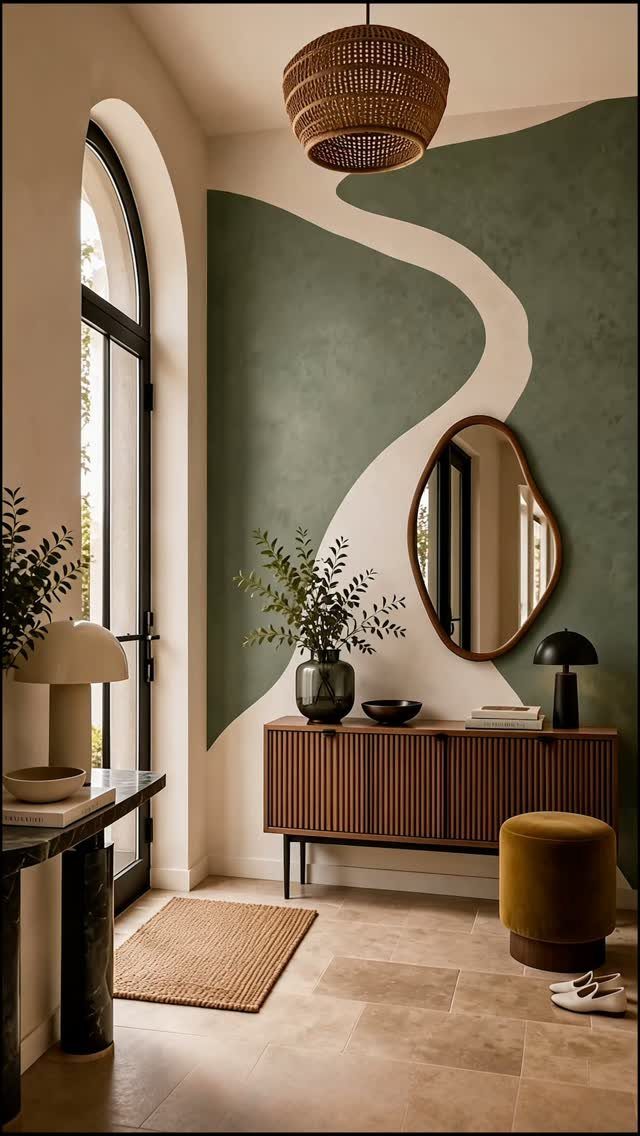
A mural gives a wall a single big picture in place of a pile of small decor, which is why I like it in a room with simple furniture.
Abstract shapes in two or three colors are the easiest version for a beginner to paint, since nothing has to look like anything.
Pull the colors from pieces already in the room, such as the wood tones and the ottoman, so the wall reads as planned. Tape off the edges and sketch the shapes in pencil before any paint goes on.
2. Stone Textured Wall
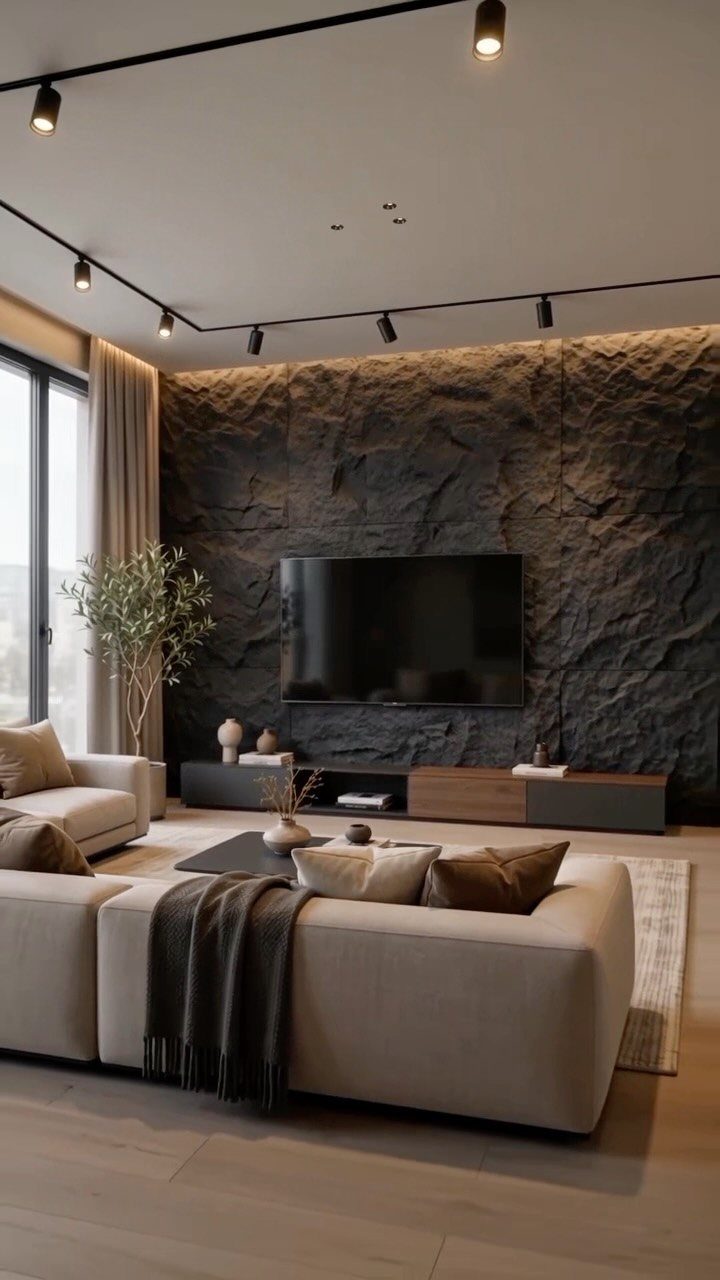
Dark stone texture does something paint can’t: it catches light and throws shadows across the wall. Track lighting aimed along the surface makes the most of that, so I would plan the lights and the wall together.
A deep gray also lets a TV sink into the background rather than stand out as a black rectangle.
Real stone is a big job and a big cost for a rental or a first home, so I would look at stone-look panels or a textured paint finish first.
3. Wallpaper Accent Wall
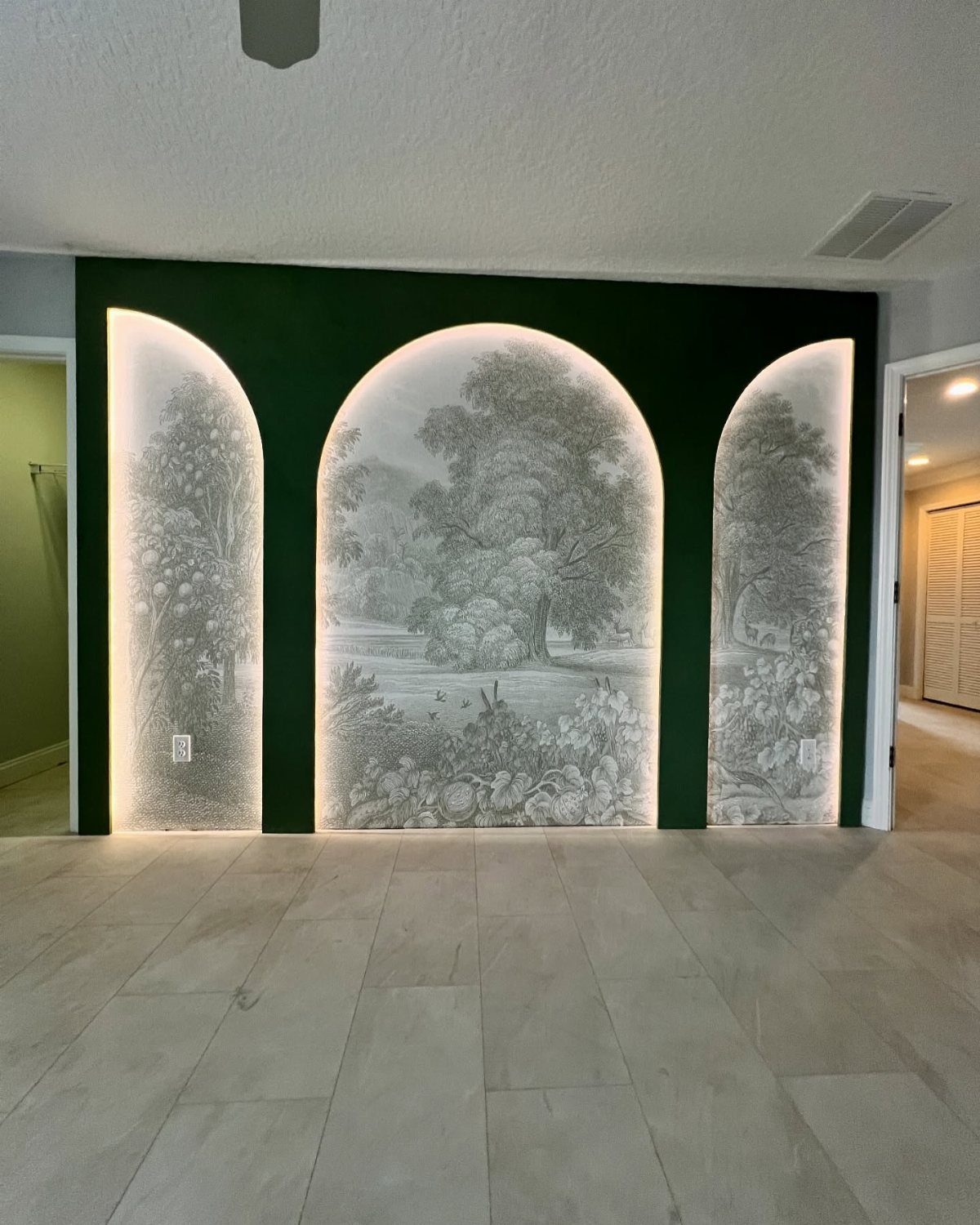
Wallpaper doesn’t have to cover a whole wall. Setting it inside 3 arched panels against dark green paint gives you a feature with edges, and a much smaller area to hang.
A monochrome landscape print keeps the look calm, because the pattern stays in one color family with the wall.
For a renter, I would choose peel-and-stick paper and cut it to the arch shape. Mistakes are cheap to fix, and a few rolls cover a small area.
4. Gallery Wall
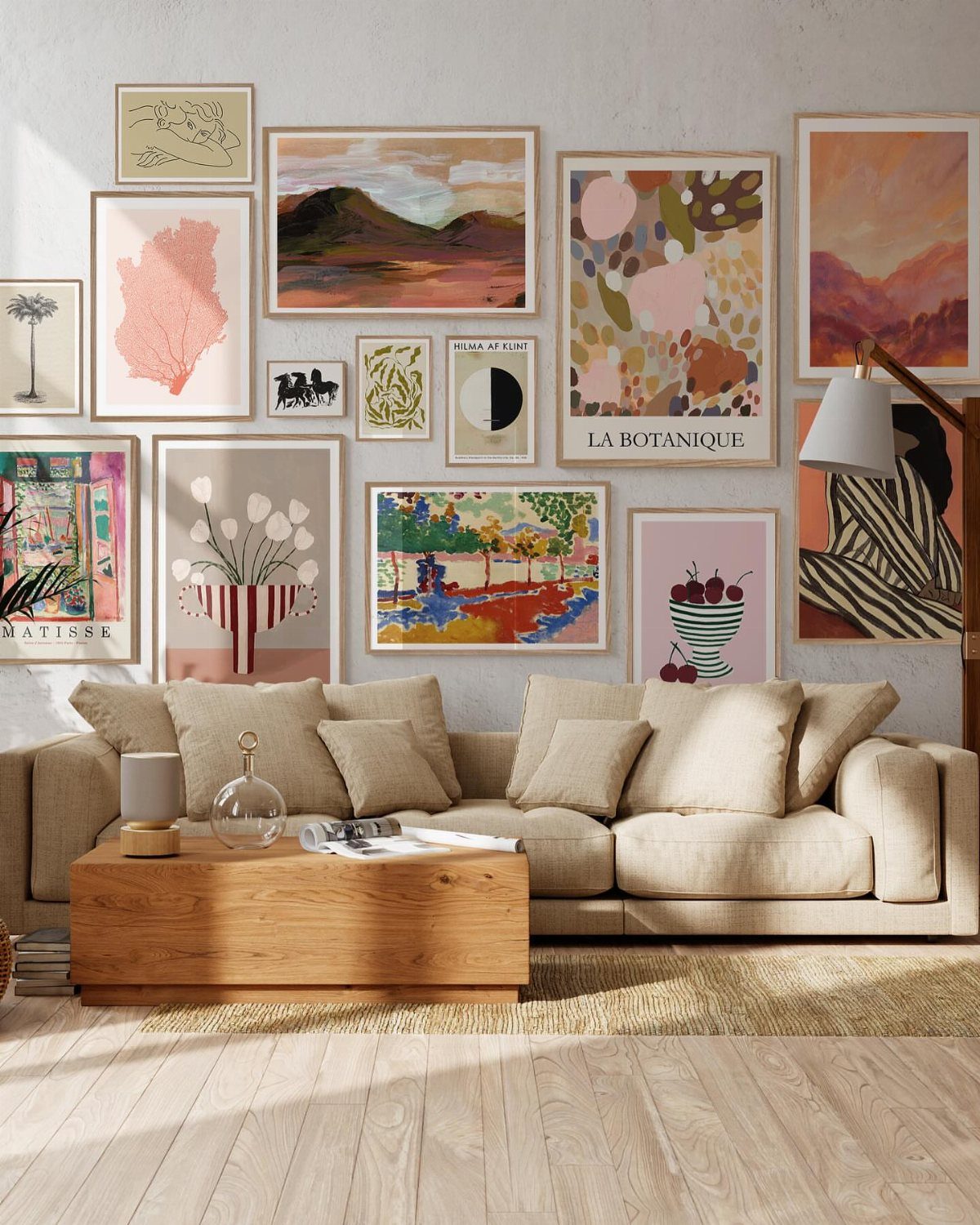
Start a gallery wall on the floor, not the wall. Lay the frames out on a rug, shuffle them until the spacing feels even, and trace each one onto paper to tape up as a template.
Mixing botanical prints with a few bold typographic ones, as above, holds together best when the frames share a color or the mats are all the same.
I would keep the whole group roughly the width of the sofa below it, so the wall and the furniture read as one unit.
5. Wood Accent Wall
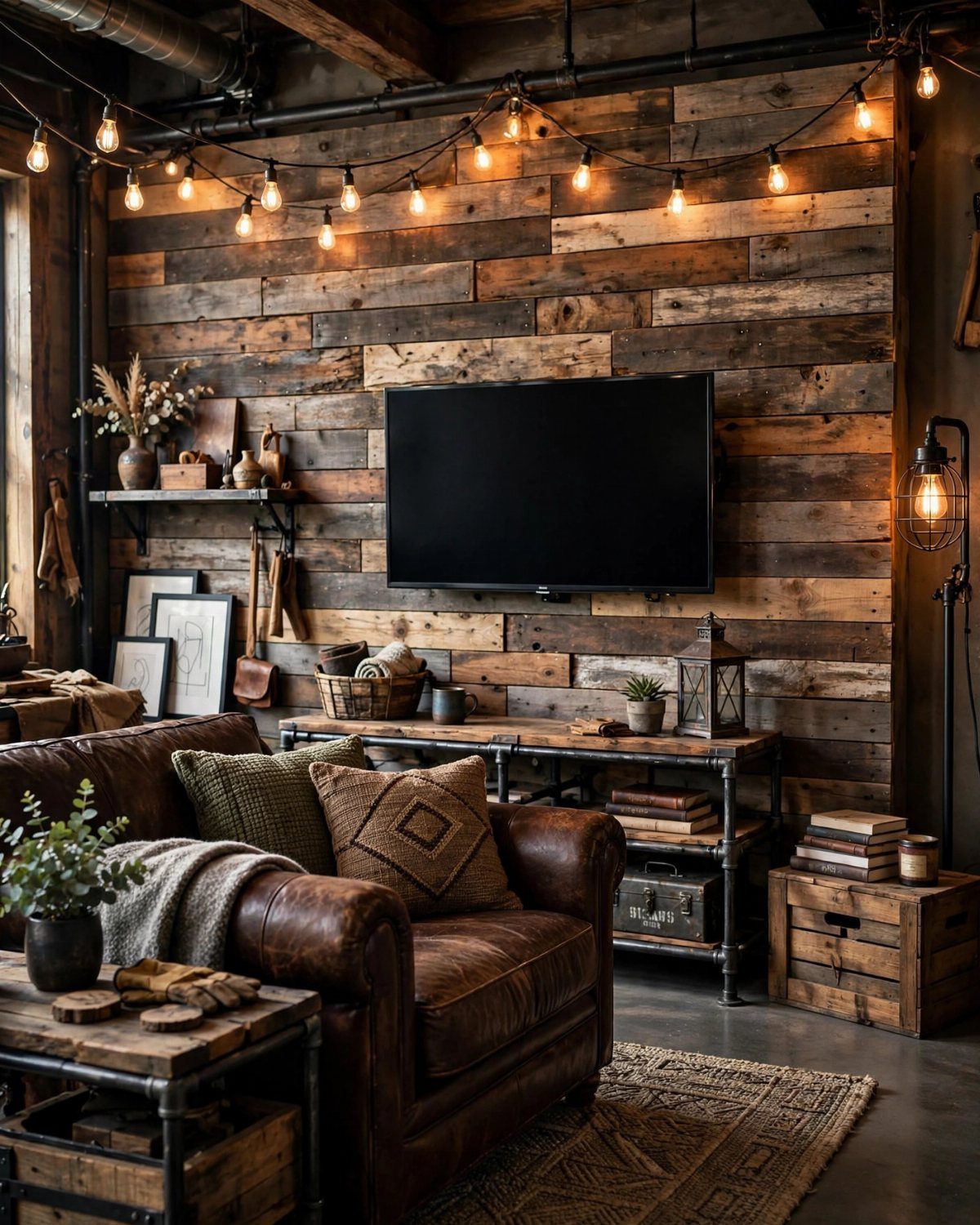
Reclaimed wood brings warmth that paint can’t match, and leather and industrial shelving sit comfortably beside it. The uneven grain and color variation are the whole appeal, so don’t sand it to a uniform look.
Planks go up fastest when you hit the studs, and a weekend is a realistic window for a single wall.
The cost is the main drawback: real reclaimed boards are pricey, so for a tight budget I would check out lighter peel-and-stick wood planks.
6. Exposed Brick Wall
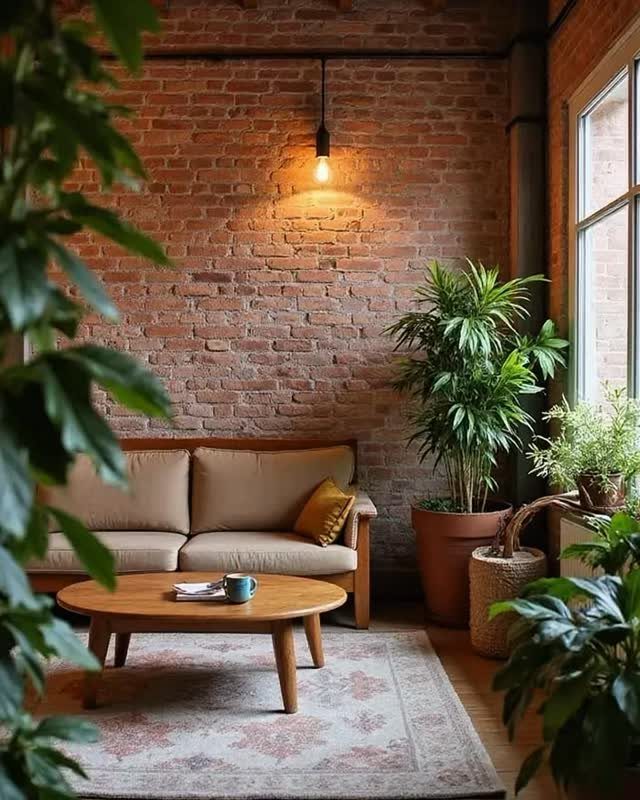
Exposed brick is the one accent wall you either already have or can’t really add, and that makes it a draw in an older apartment. If it’s there, I would leave it alone and build the room around it.
Plants look especially good against red brick, since the green stands out against the warm tone.
A rug with pattern and a sofa in a warm neutral give the rest of the room enough weight that the brick stays in balance instead of dominating.
No brick? Thin brick veneer or a brick-look panel gets the same feel without the demolition.
7. Built-In Shelves
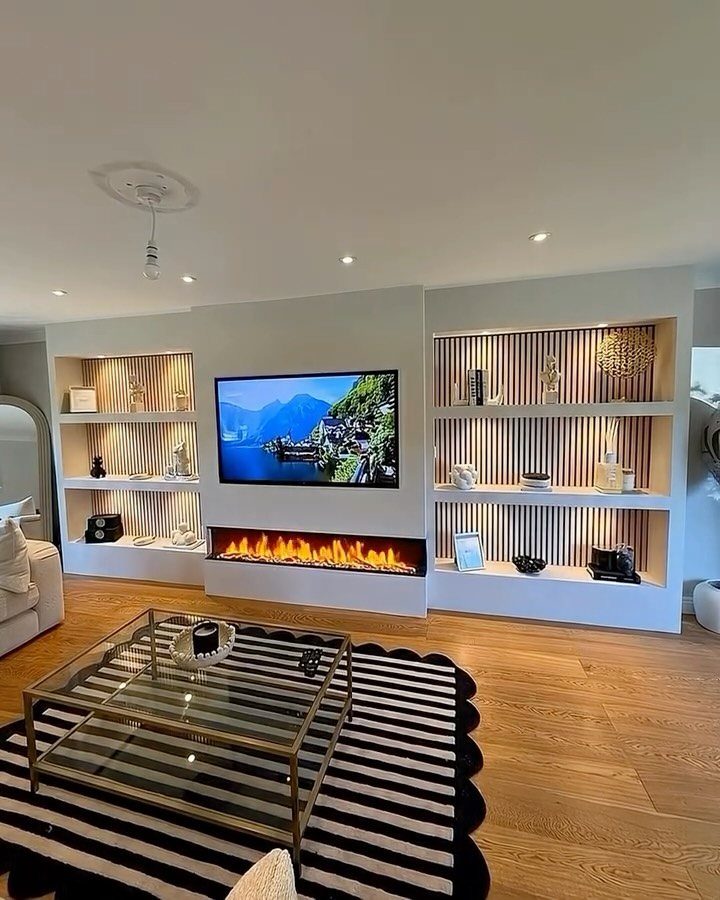
Recessed shelves that flank a wall-mounted TV turn the wall into storage, so the TV and the electric fireplace sit inside one framed unit.
White paint on the shelves keeps the unit light and lets books and decor do the talking.
Leave a few openings empty, because a shelf packed edge to edge reads as clutter.
A real built-in is a major project, so on a tight budget I would look at freestanding white units set on either side of the TV and trimmed to look fitted.
8. Painted Arches
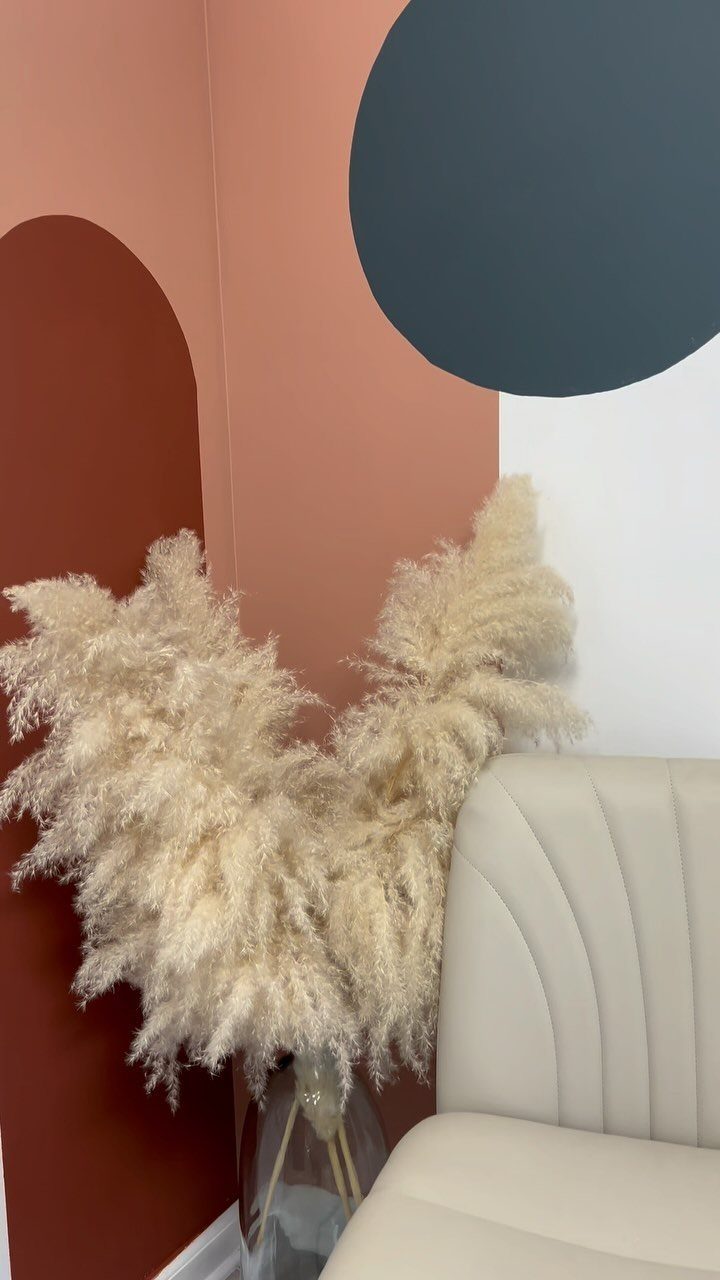
A painted arch gives a plain wall a focal shape with no more than a couple of paint colors. A terracotta arch with a dark red outline and a gray circle beside it makes a simple, balanced composition.
Trace the arch with a string and a pencil pinned at the center to get a clean curve, then tape the edge before painting.
A cream sofa and pampas grass suit the warm tones well. Sample pots cover a wall this size, and a mistake gets fixed with the base color.
9. Chalkboard Wall
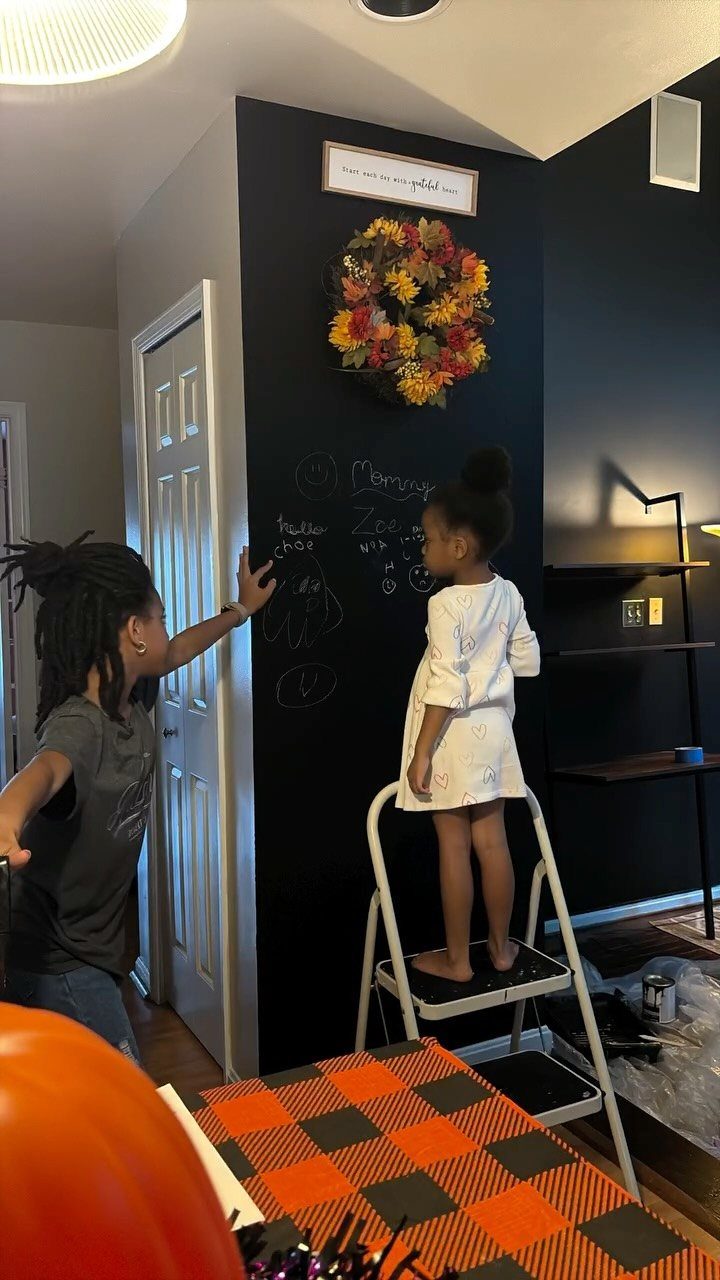
A chalkboard wall is the accent wall you use rather than just look at. Matte black gives the room a deep backdrop, and drawings, lists or a seasonal wreath change it whenever you like.
Chalkboard paint is cheap and a weekend is plenty of time to finish one wall.
I would keep it low enough for kids to reach, and set a step stool nearby. Dust from chalk is the trade-off, so keep a damp cloth close.
10. Concrete Wall
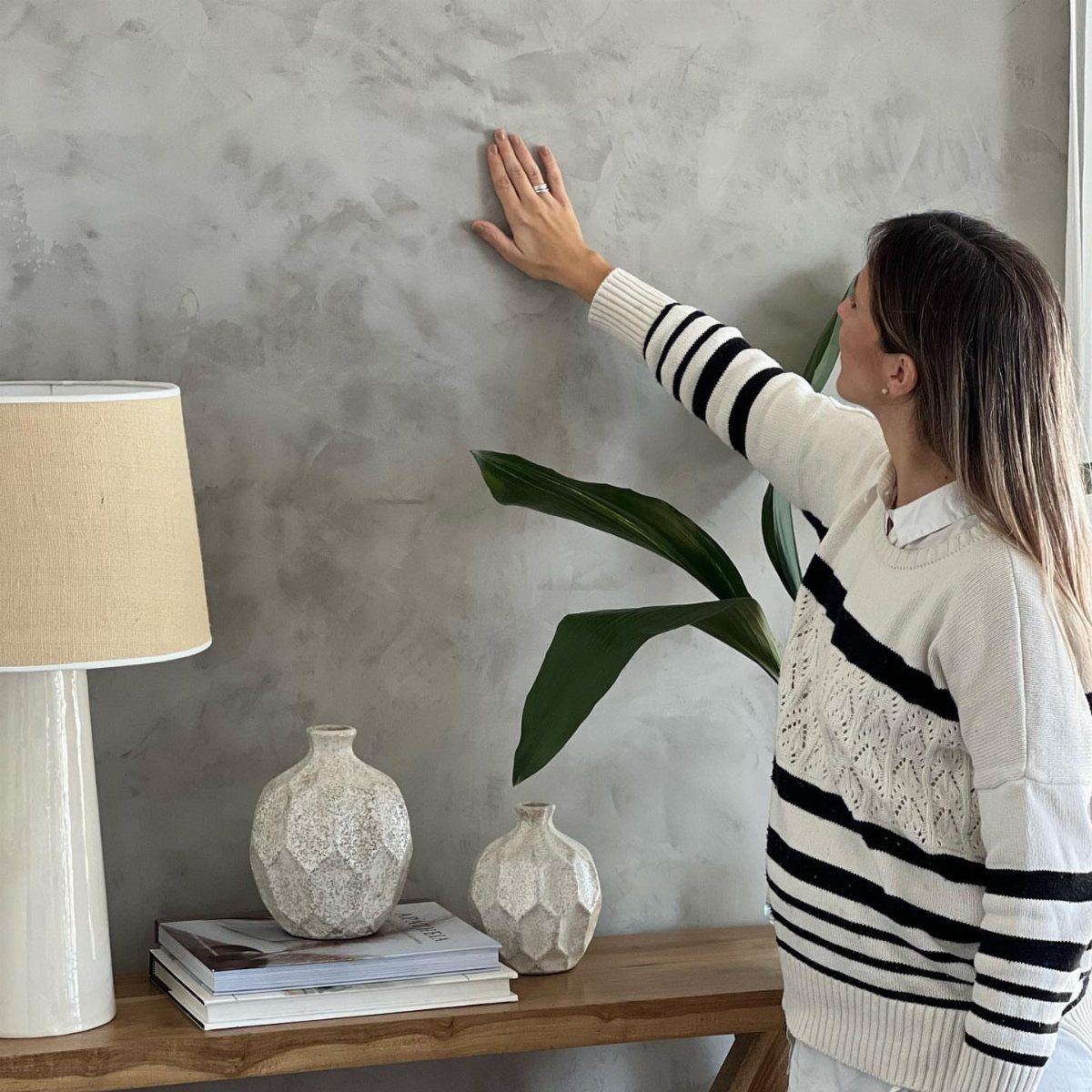
Concrete gives a living room a cool, matte gray surface that makes wood, lamps and ceramics look warmer by contrast.
Real concrete is heavy, costly work, so for a rental or first home I would use a concrete-look plaster or paint finish, applied in thin, uneven layers so it keeps the mottled depth.
Test a small patch first, since the look depends on how you work the tool.
11. Metal Walls
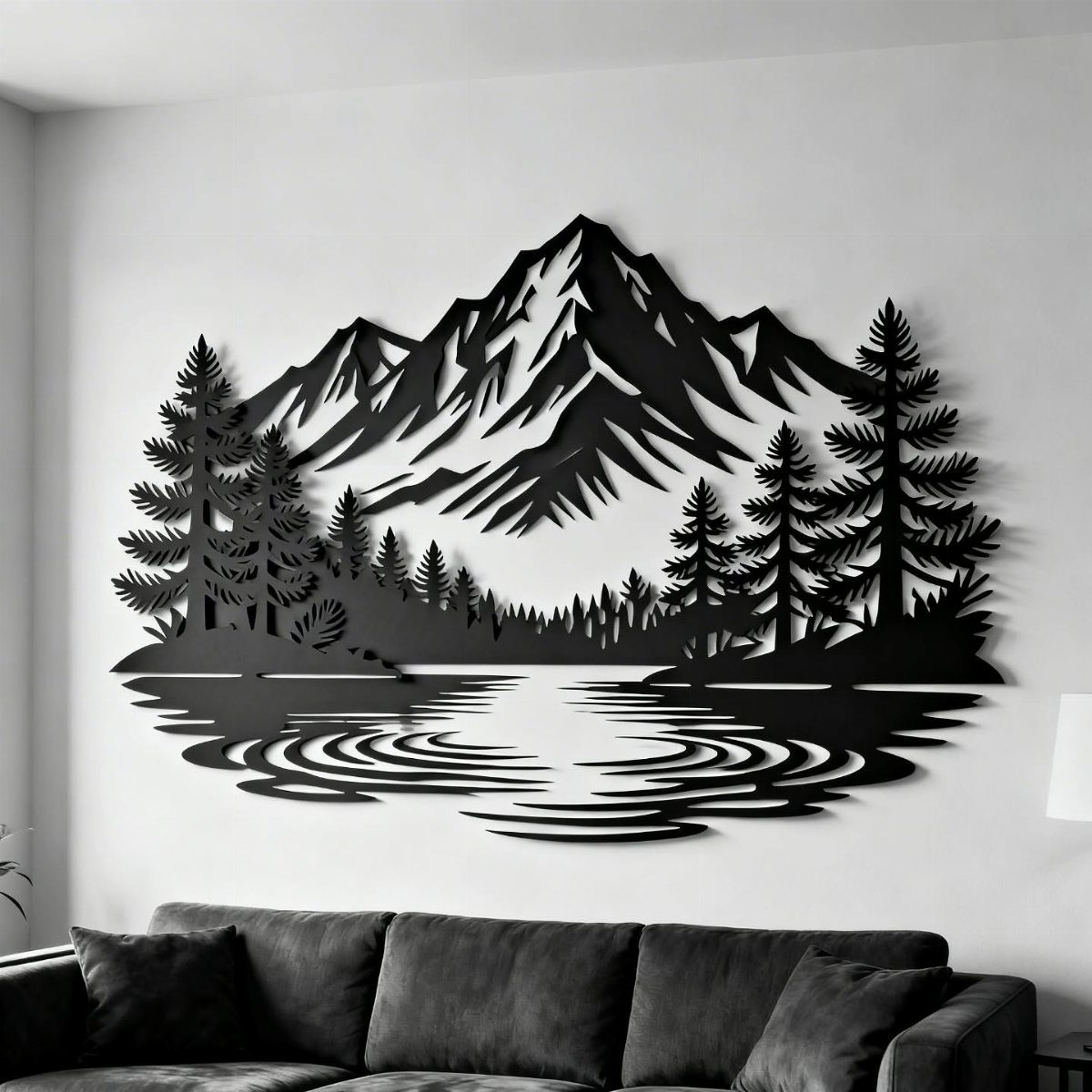
The contrast does the work, so the rest of the wall can stay minimal.
Minimalism isn’t everyone’s style, and this look is for people who like one strong piece over many small ones.
I would size the piece to about the width of the sofa, and hang it low enough that the two read together.
12. Fireplace Accent Wall
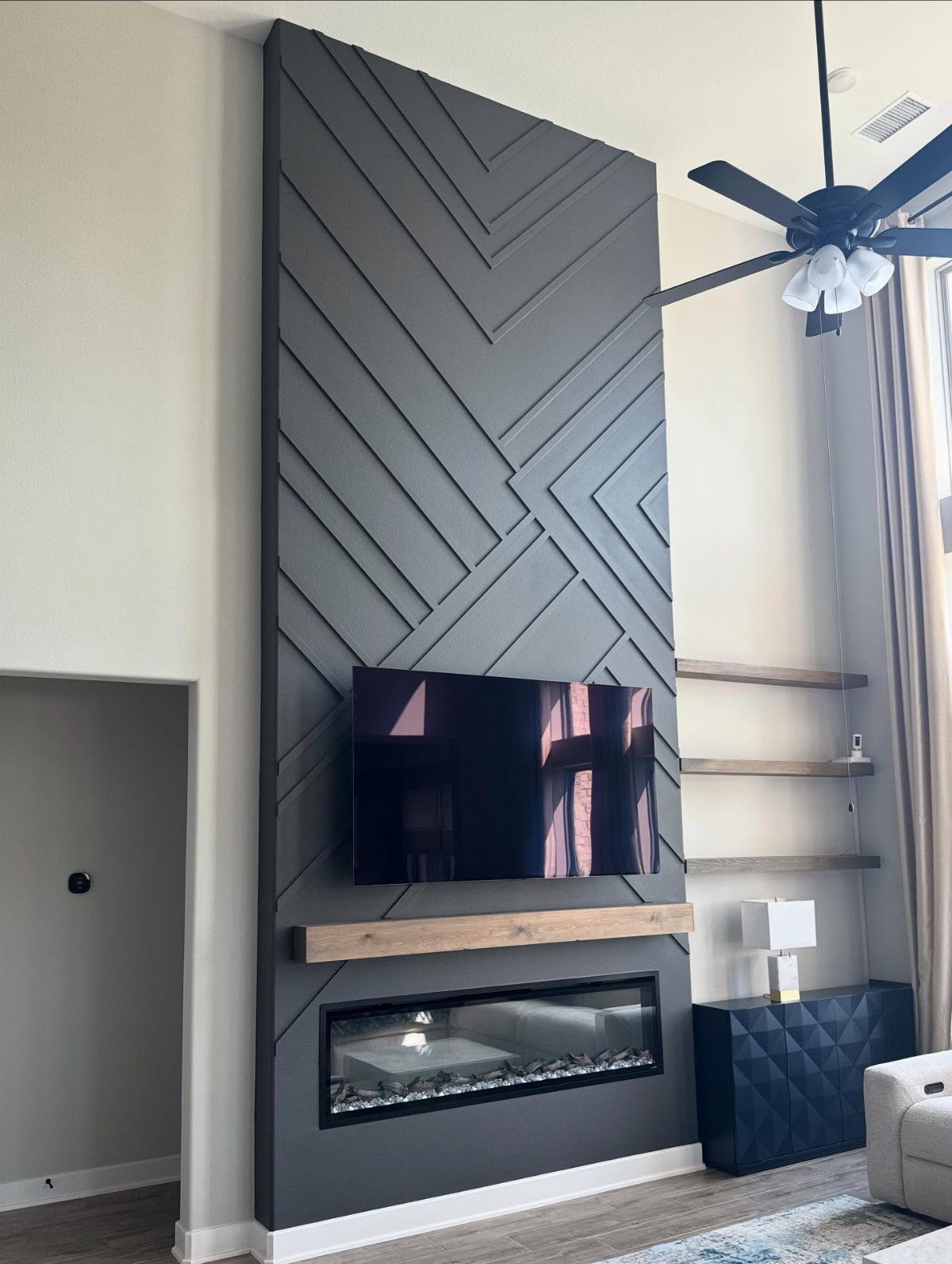
A fireplace already gives the room its focal point, so the wall around it should support it rather than compete. Dark gray paint in a geometric pattern frames a linear fireplace and a mounted TV in one calm block.
A wooden mantel and floating shelves add warmth and display space without crowding the wall. I would keep the shelf decor sparse, since the TV, fireplace and pattern already give the eye plenty to look at.
13. Hunter Green Accent Wall
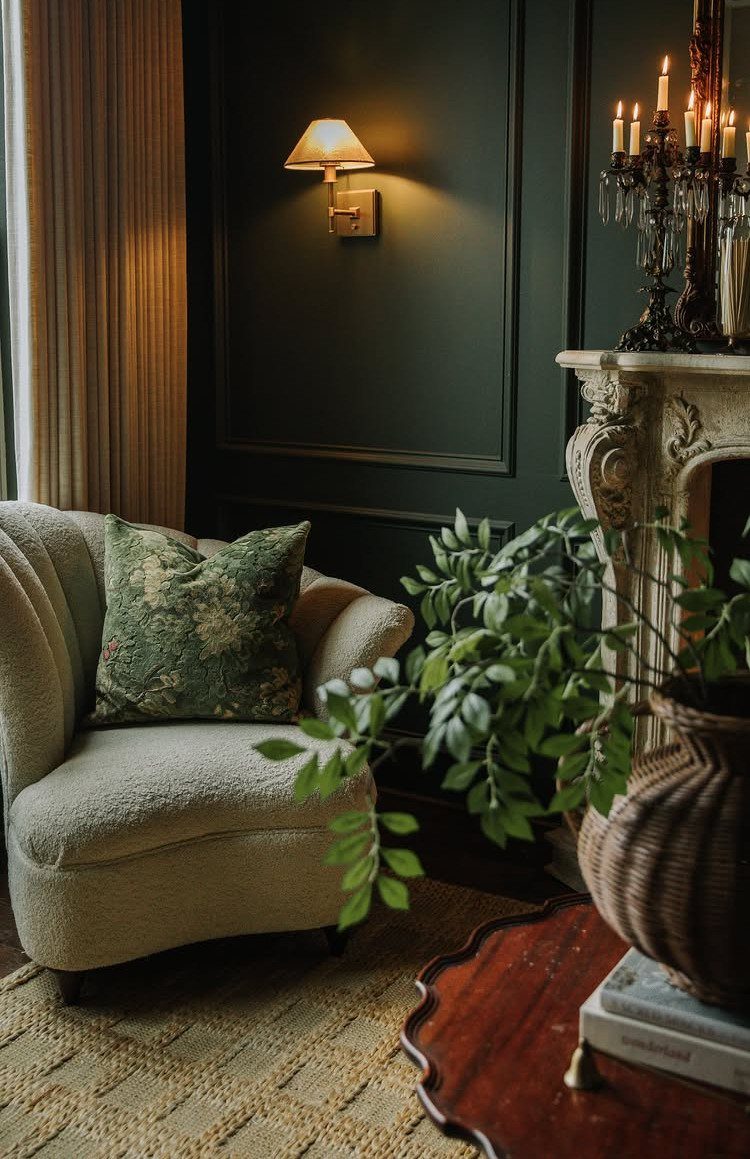
Hunter green is bold, and one wall of it gives a room depth without swallowing the space. Paneling or molding on the wall adds shadow lines, so the color looks richer than flat paint.
I would paint the one wall, leave the others light, and test a sample patch first, since dark colors shift through the day.
14. Accent Wall with Molding
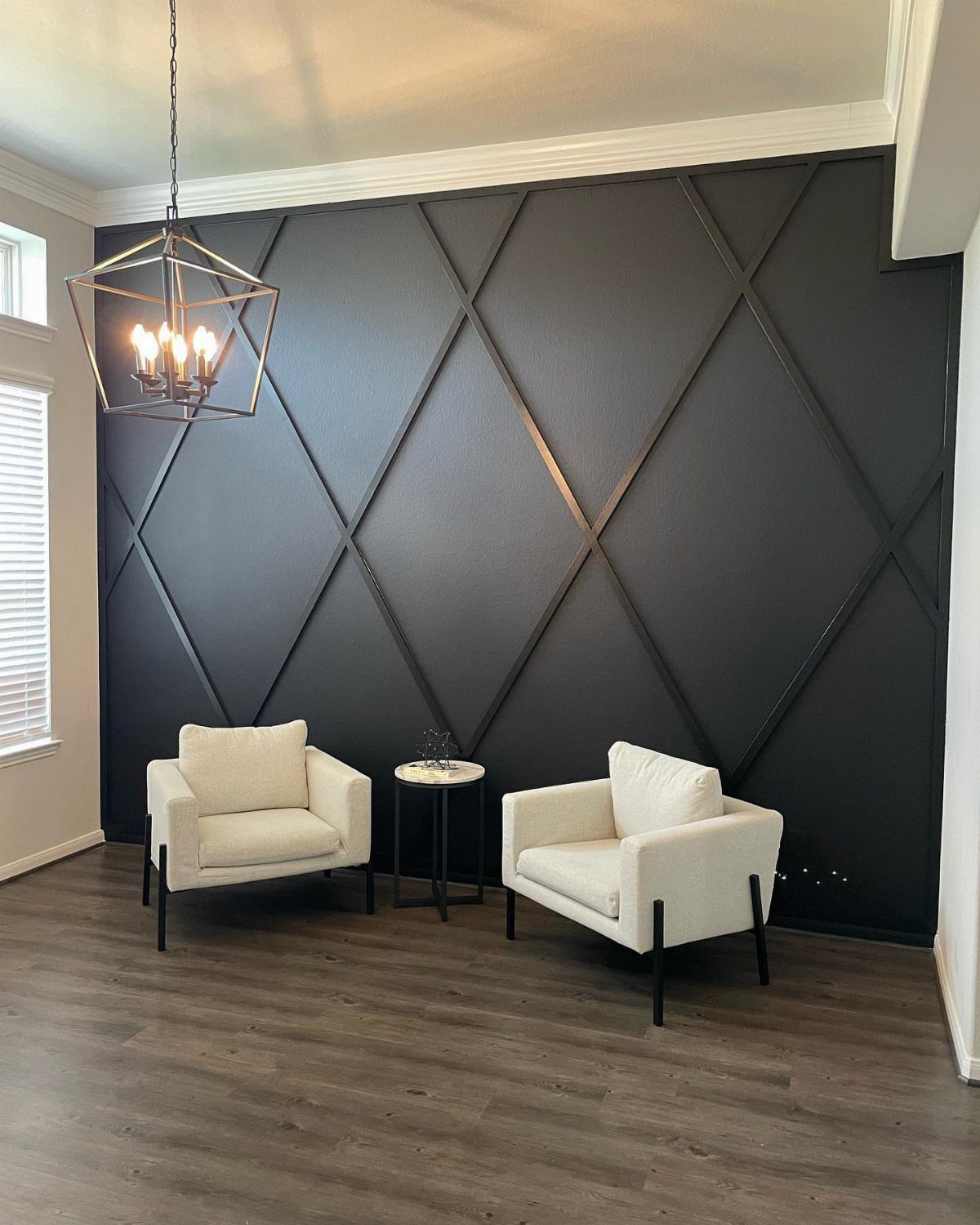
A diamond grid of molding gives a dark wall its own geometry instead of leaving it flat. Paint the molding and the wall the same color so the shadows make the pattern, not a contrast.
White armchairs stand out cleanly against black or deep gray.
Mark the diamonds with a level and painter’s tape before you fasten any strips. On a budget, I would pick thin, lightweight molding strips, which cut easily and are simple to attach.
15. Cork Wall
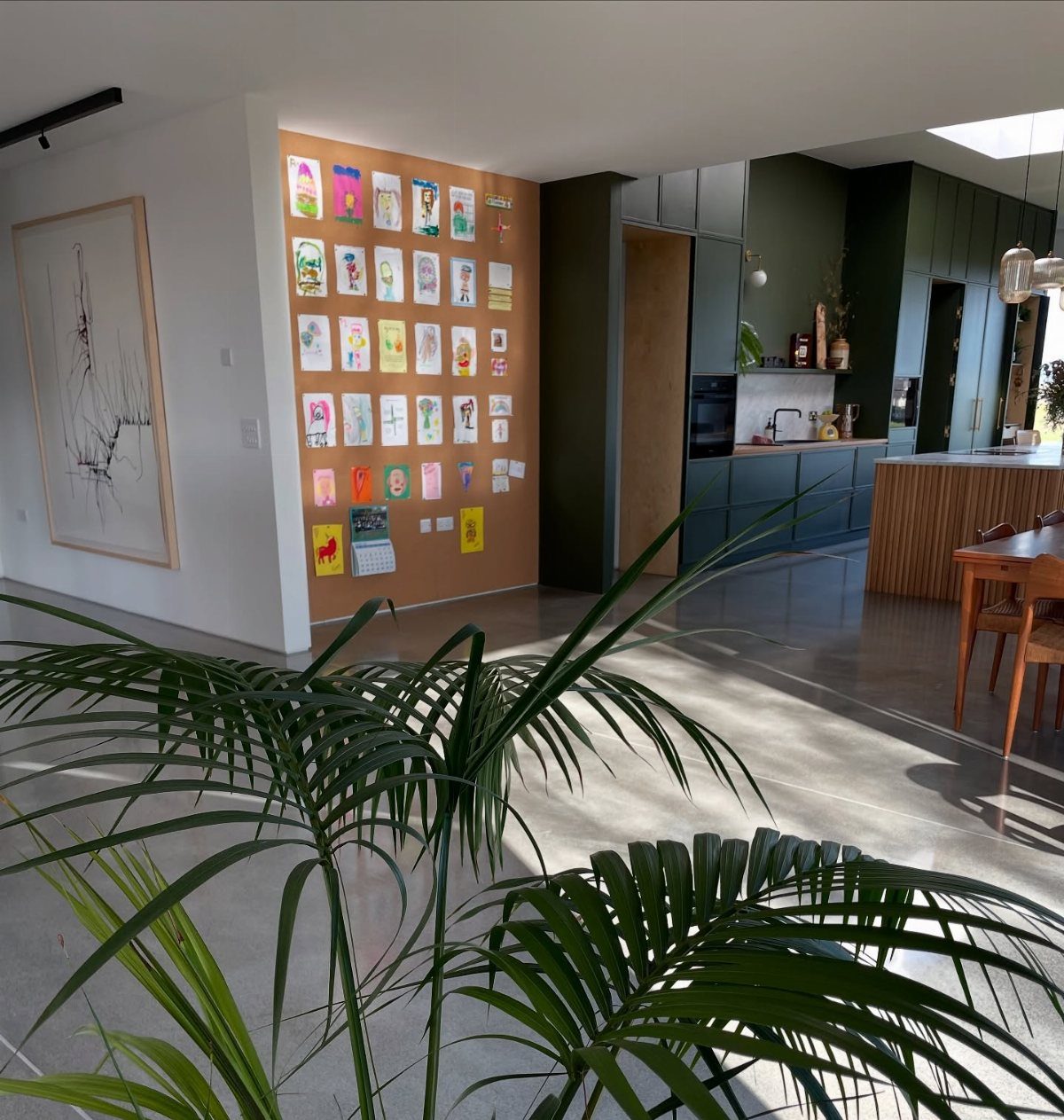
Cork is a pinboard you can live with: it hangs children’s drawings without a single hole in the paint. Cork brings in a warm tan that balances darker finishes like green paint or concrete floors.
Cork sheets or tiles are the easiest way to cover a wall, and I would choose them over a single large panel.
Pins leave tiny marks, so cork suits a wall you plan to use. Check a rental lease before gluing anything.
16. Basket Wall
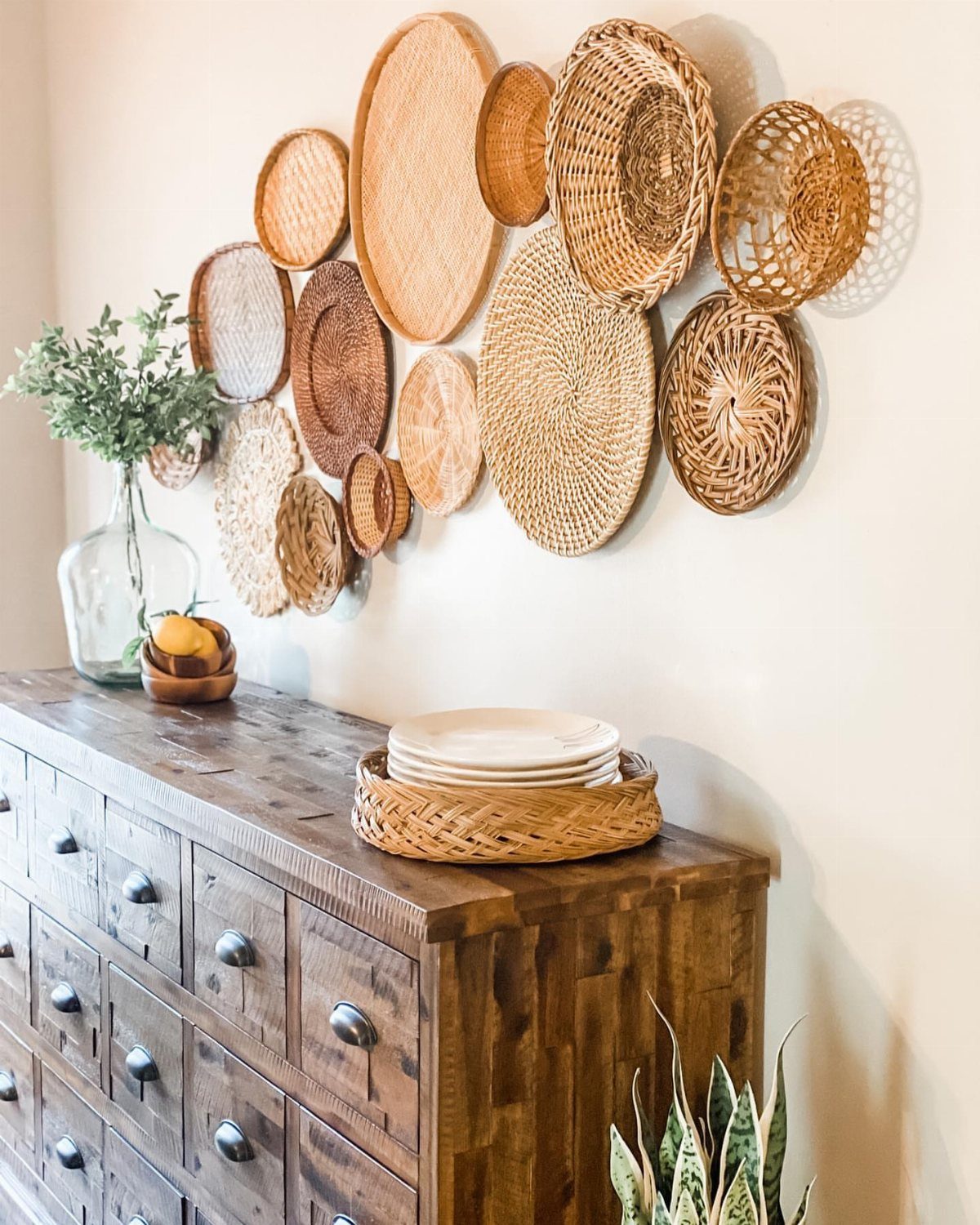
Woven baskets work as wall art that costs little and weighs little. Mixing sizes and shades of wicker keeps the group from looking like a set.
Lay them on the floor first and shuffle until the gaps look even, then hang the largest first.
A white wall lets the texture show, and a dresser below gives the display a base. Size the whole arrangement to roughly the width of the sofa or console underneath.
Choosing the Right Wall
Start with the wall your eye already goes to. In many living rooms that is the wall behind the TV, the fireplace wall, or the one you face when you walk through the entry.
If no wall stands out, look at the room’s shape.
In a long, narrow room, I go for one of the short walls at either end. Putting the accent on a long wall makes the room feel more crowded.
Stand in the doorway before you commit. The accent wall should be the first thing you see when you walk in, and it should also relate to the furniture and decor near it.
Testing Paint Samples
Paint a small patch on the wall before buying more than a sample.
Then check it in the morning, at midday and at night with the lamps on. The same color can look like 3 different colors, and a patch shows you that before the whole wall is done.
Wallpaper works the same way: tape up a large swatch and live with it for a few days.
Look at the patch next to your sofa, rug and curtains, not alone. If the color sits well with them, it will probably hold up on the full wall.
For painted shapes or murals, painter’s tape keeps the lines clean. Press the edge down firmly before you start painting.
Accent Wall Trends
Accent walls go in and out of favor with trend forecasters, but a single focal wall done with paint, wallpaper, brick, stone or wood stays a safe choice. I would not worry about whether it is "in" this year.
The real risk is a wall that looks disconnected.
The wall is also a place to show your own taste.
Bold color suits some people, and a quiet textured finish suits others. Pick the one you will still like when you sit down at night.
Accent walls are a surefire way to transform the look of a room. See how Dering Hall designers put their creativity to work with accents walls in bold paint colors, wallpaper designs, wood treatments, and more.





