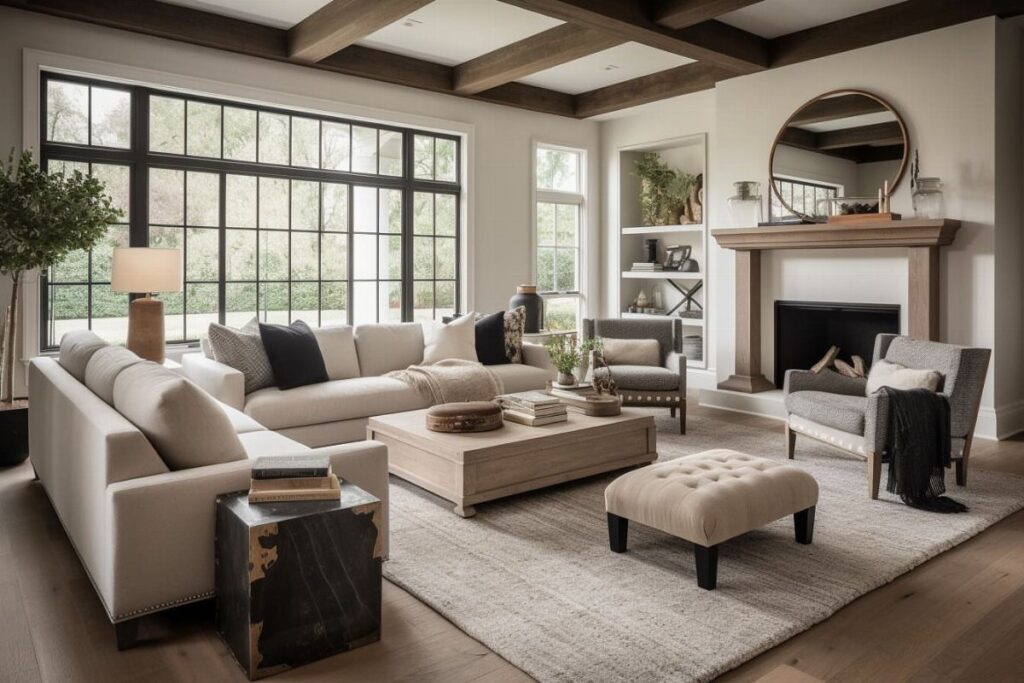
A quart of paint on one door and a jute rug sit in the same list, so the ideas range from a Saturday project to rebuilding the architecture with beams and shiplap.
What decides your pick is whether you rent or own: renters can get the look from pillows, a throw, a jute rug or a slipcovered sofa, while owners can add shiplap, paint doors, or install beams.
Sage green pillows on a beige sofa show how far a few covers go, since you swap them instead of repainting.
1. Shiplap Walls
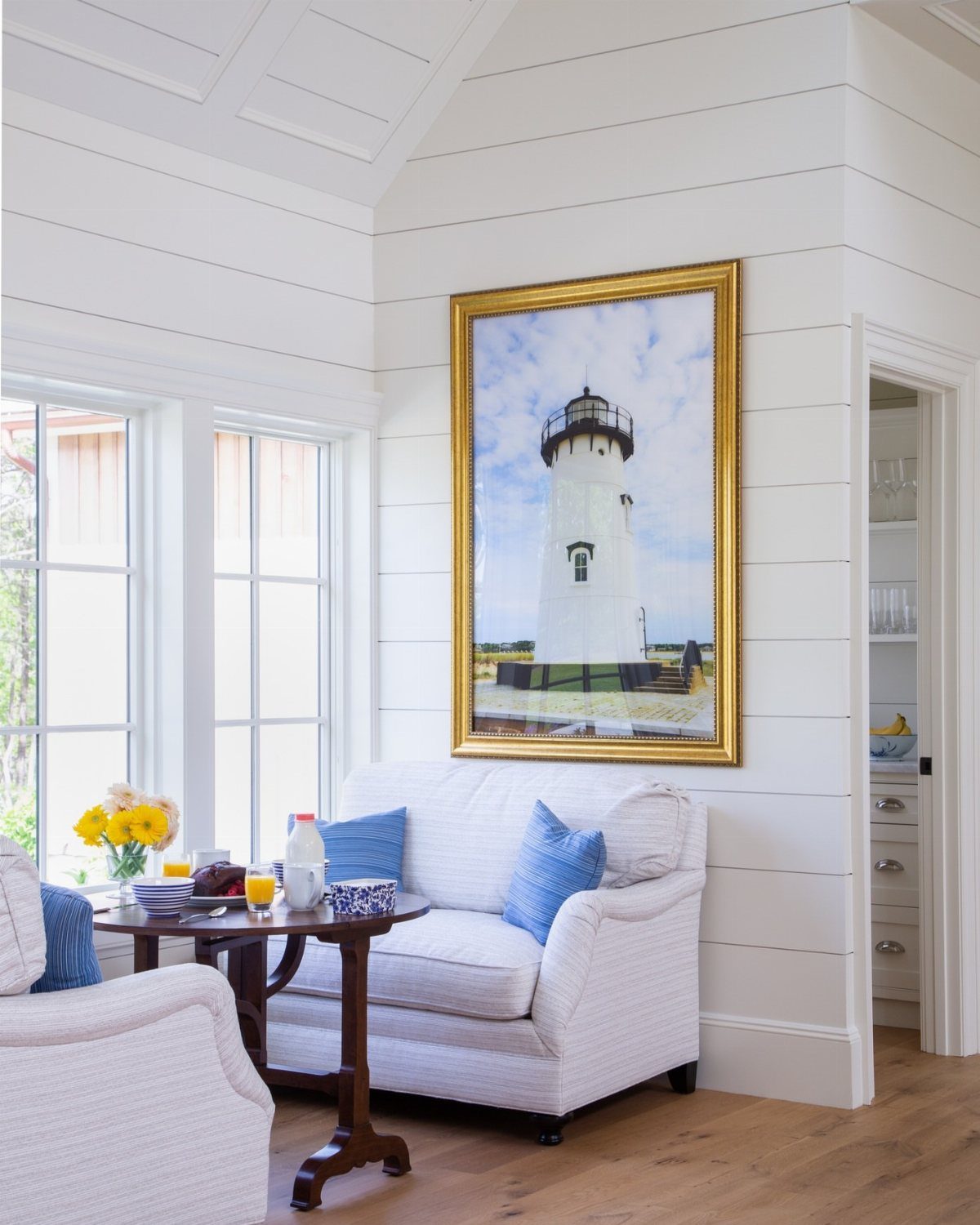
Shiplap does the heavy lifting in a farmhouse room because the horizontal lines add texture without adding color. Painted white, it makes a small living room read brighter and gives a slipcovered sofa and a framed painting a calm backdrop.
I’d pick it for one wall rather than all four. A single shiplap wall behind the sofa keeps the room from feeling like a cabin, and it keeps the material bill low enough for a weekend job.
2. Jute Rug
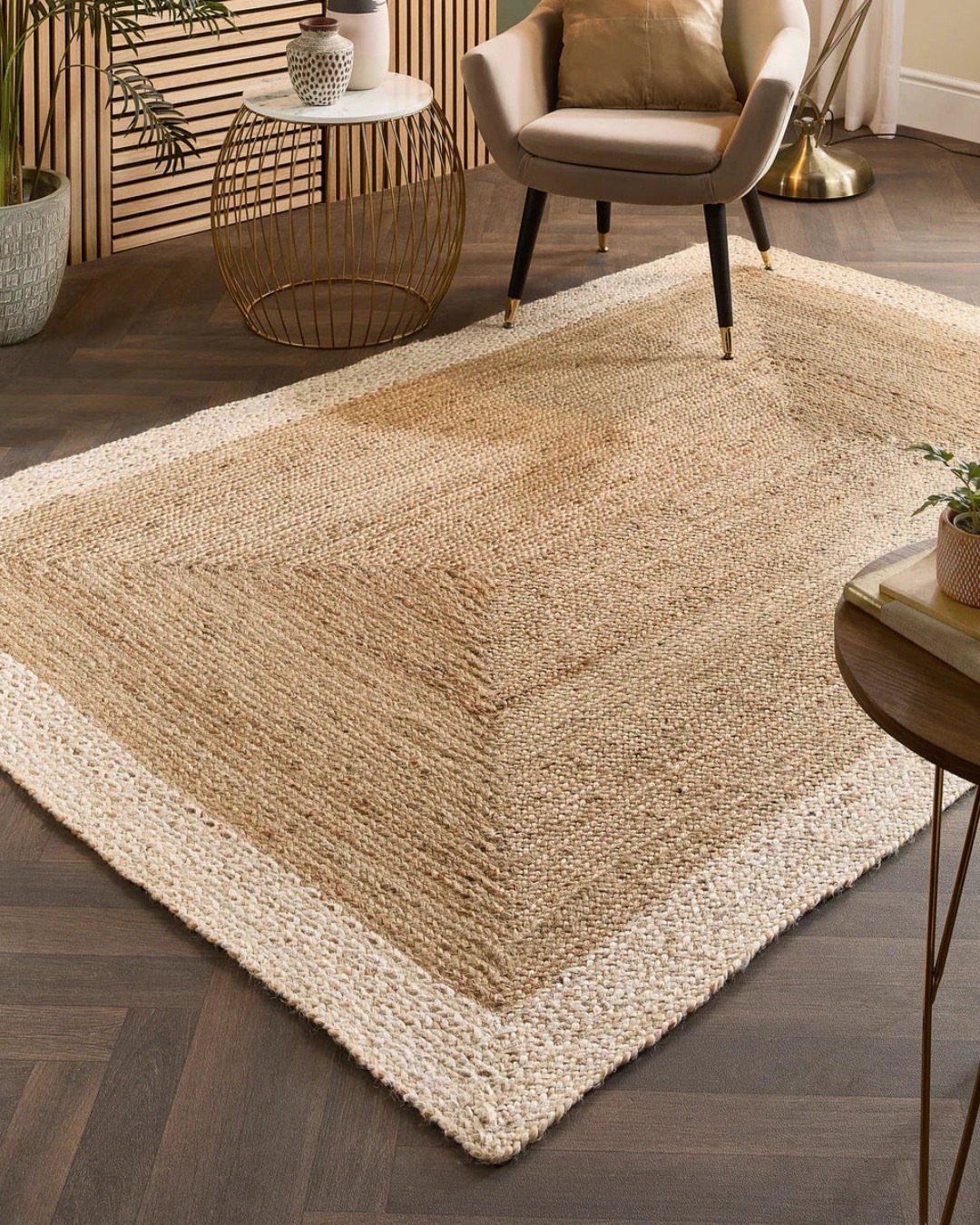
A jute rug with a pale border looks best on dark wood, where the lighter weave and edge frame the furniture and break up a lot of floor.
The rough, natural fiber also balances a sleek armchair and a gold side table, so the room feels collected instead of matched.
Choose a rug large enough that your sofa and chairs sit with their front feet on it. A small one floats and makes the room look smaller.
3. Sliding Barn Doors
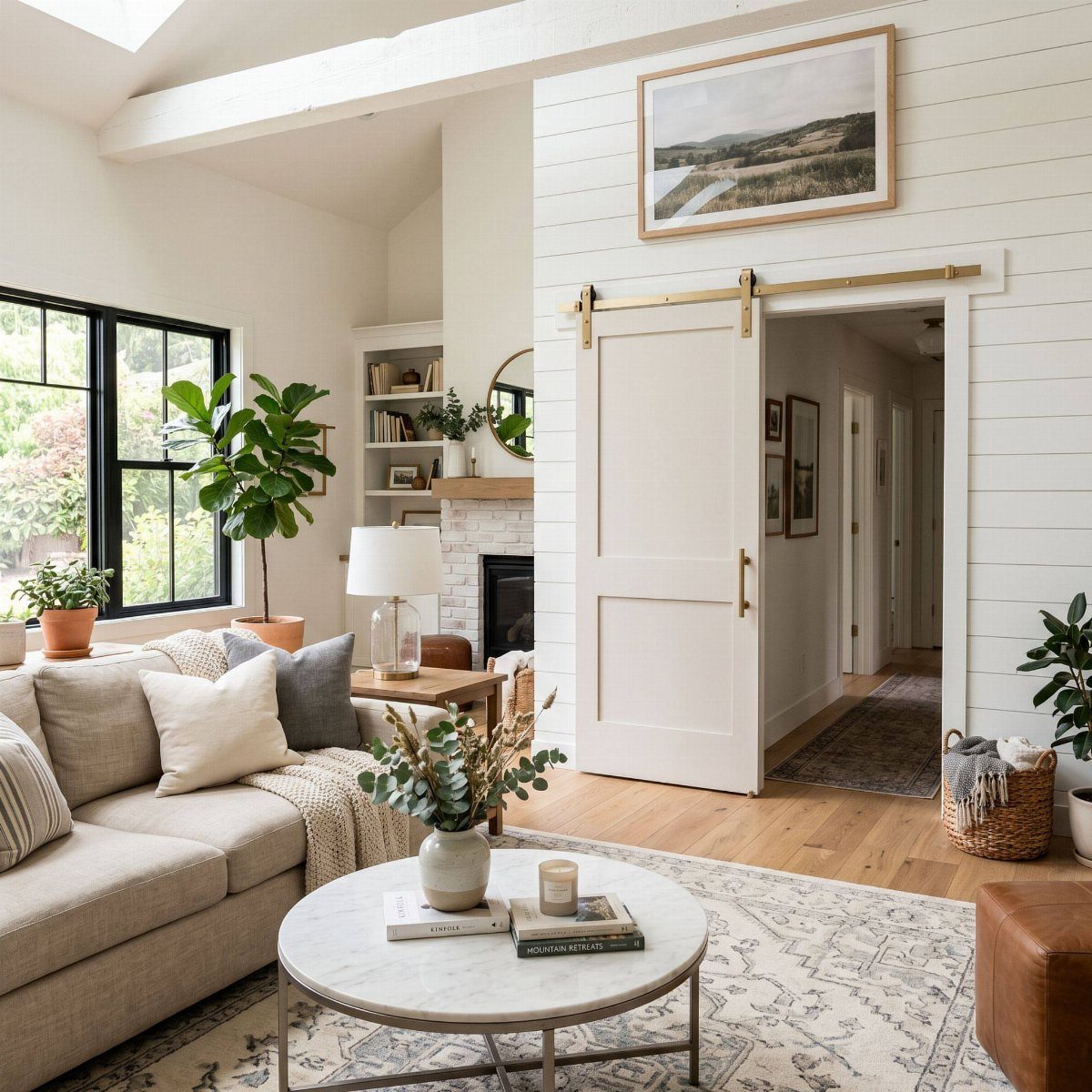
A sliding barn door hangs on a track along the wall, so it needs no swing space. In a living room, that means a clear path for furniture near a doorway.
White paint keeps the door quiet against shiplap, and I like that choice when space is tight.
Leave wall room beside the opening equal to the door’s width so it can slide fully clear. It’s a rustic detail that does a practical job, which is the contemporary farmhouse formula in one piece of hardware.
4. Gallery Wall
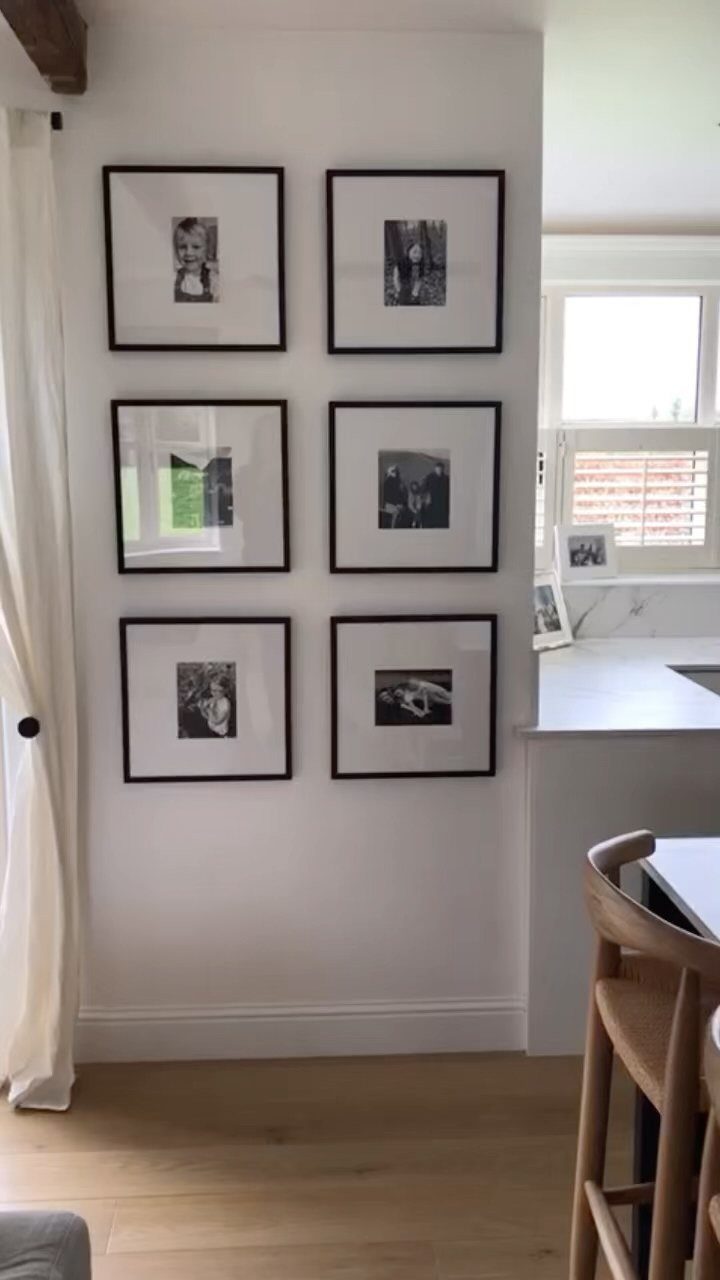
Six matching black frames in a tight grid turn a stretch of plain wall into a deliberate display. Keeping every photo black and white lets a family collection look cohesive even when the shots come from different years and cameras.
Cut paper templates, tape them up, and adjust the spacing before you touch a nail. Keep the gaps between frames even, and your grid will read as designed rather than scattered.
5. Pillows and Throws
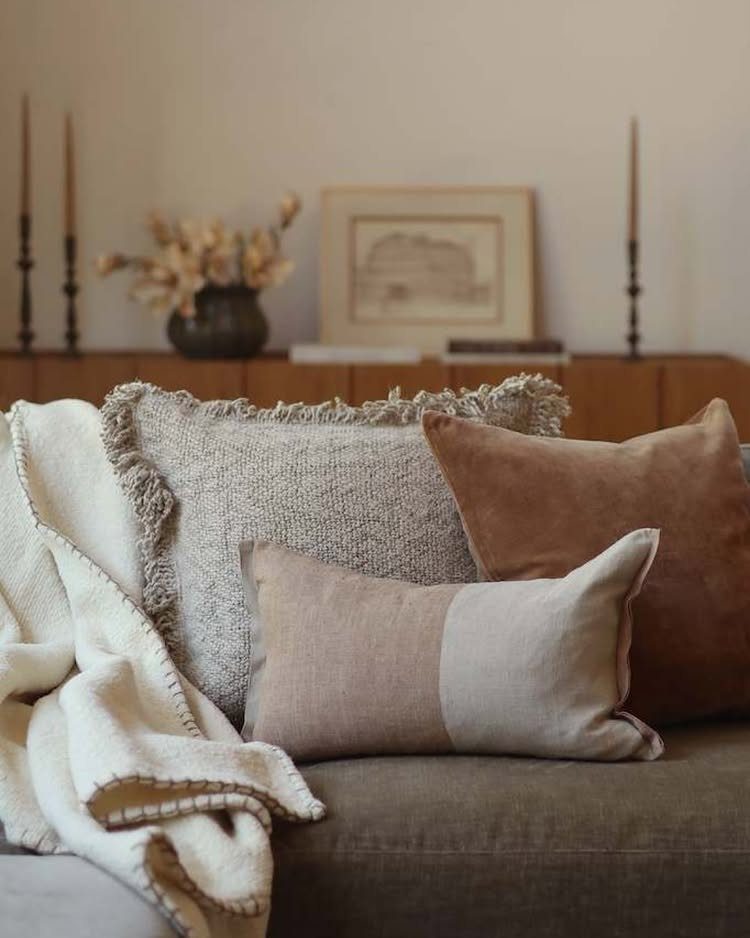
Pillows and a throw cost far less than a new sofa, and they change a room’s mood in minutes.
Mix textures instead of patterns: a nubby cream pillow, a smooth linen one, and a chunky throw all sit comfortably on a neutral couch.
Vary the sizes and keep the colors in one family. Drape the throw over an arm or fold it on the back cushion so it looks lived in, not staged.
6. Muted Accent Colors
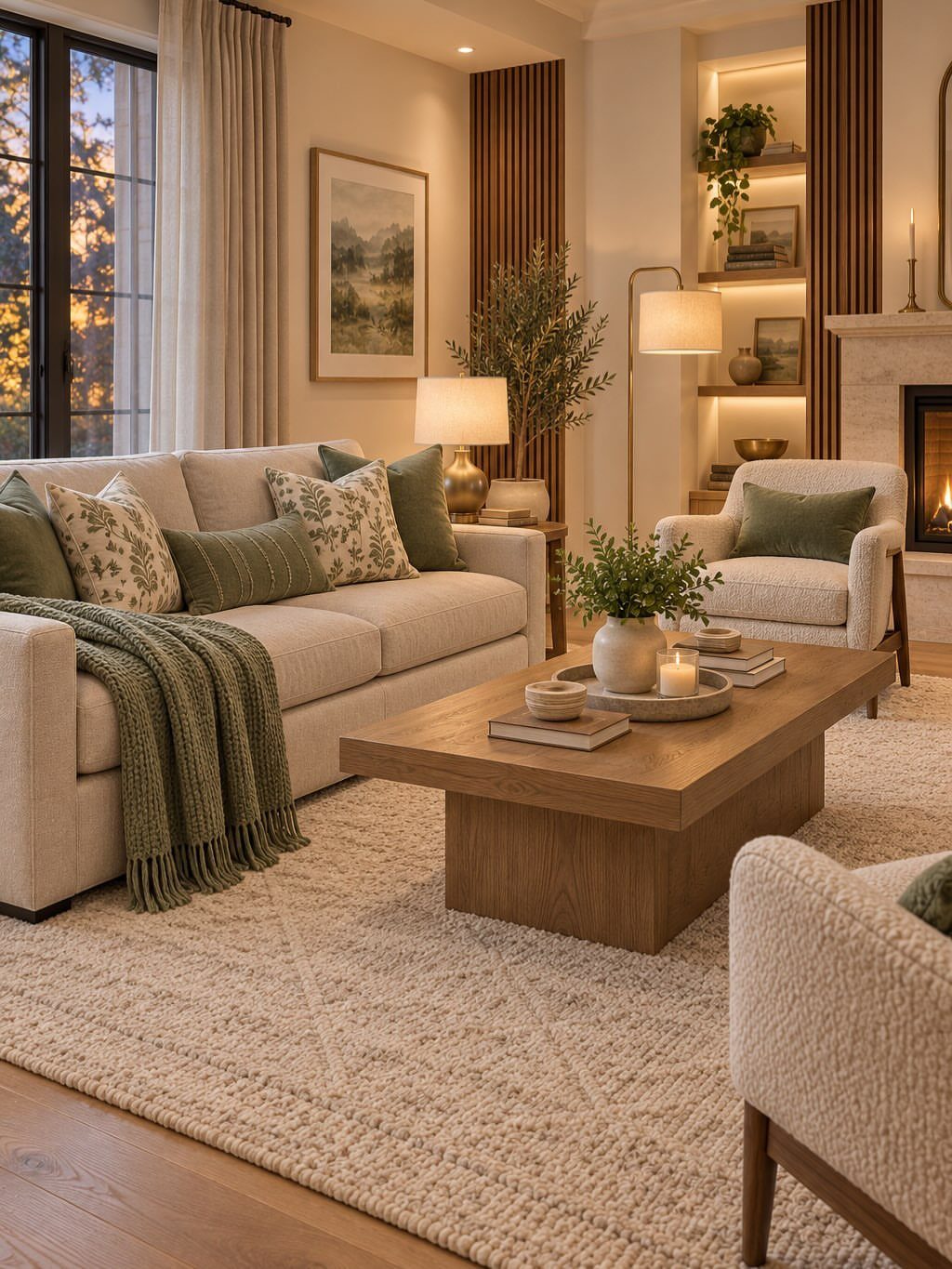
Sage green on a beige sofa is a gentle way to add color without painting anything. Swap in muted green pillows and a matching throw, and the wood tones and neutral walls suddenly look intentional.
Stay with dusty, grayed shades; bright ones fight the natural materials. Pillows and throws are the cheapest way to try a color, and if you tire of green, you replace a few covers instead of repainting.
7. Painted Doors
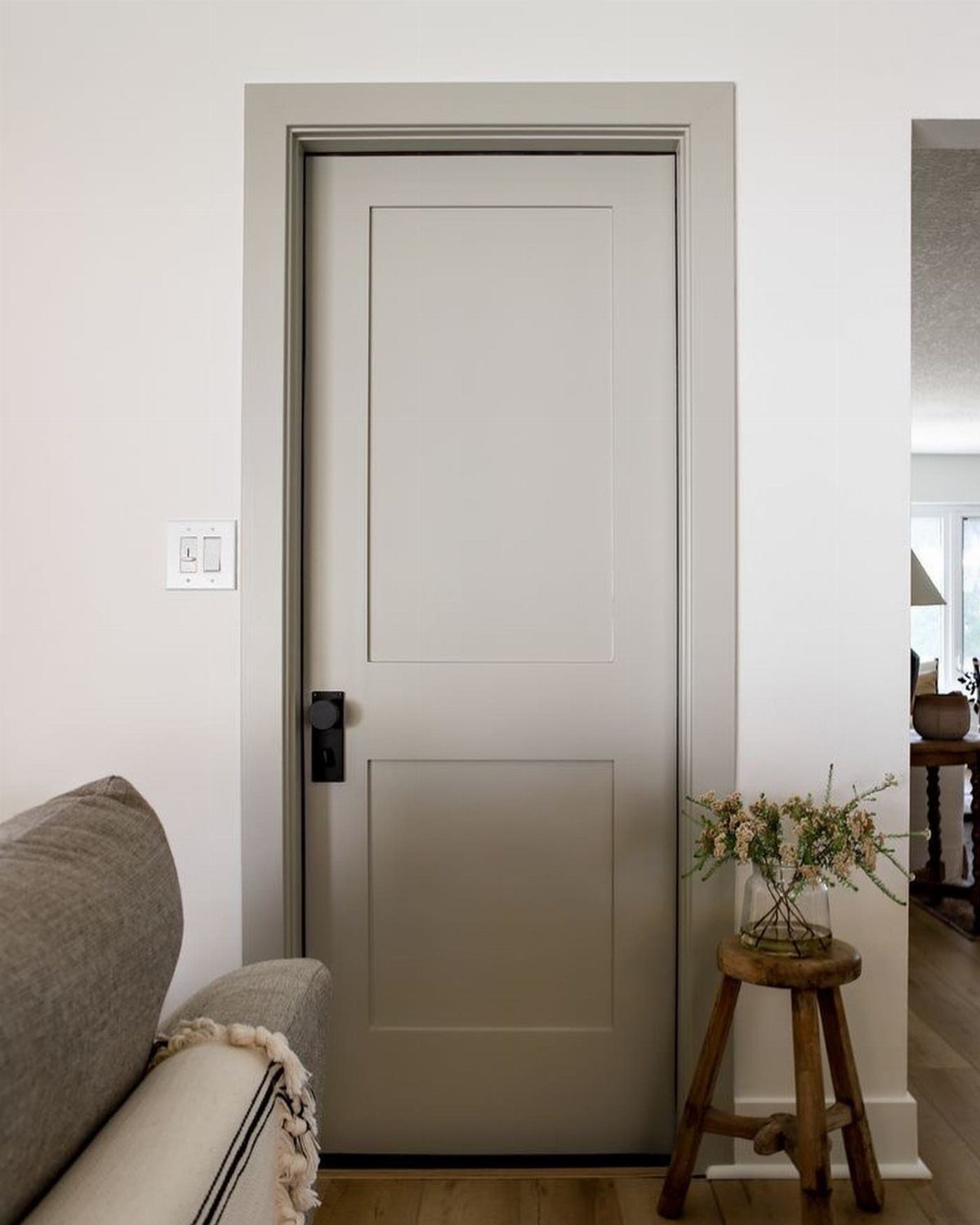
A grey door in a white room is the lowest-risk way I know to add color. It reads as a deliberate choice, and black hardware sharpens the edge so the door looks finished instead of just painted.
Pick a shade a step or two darker than your sofa so the two don’t compete. One door and a quart of paint is a Saturday project, and you can repaint it white if you change your mind.
8. Add Warmth with Beams
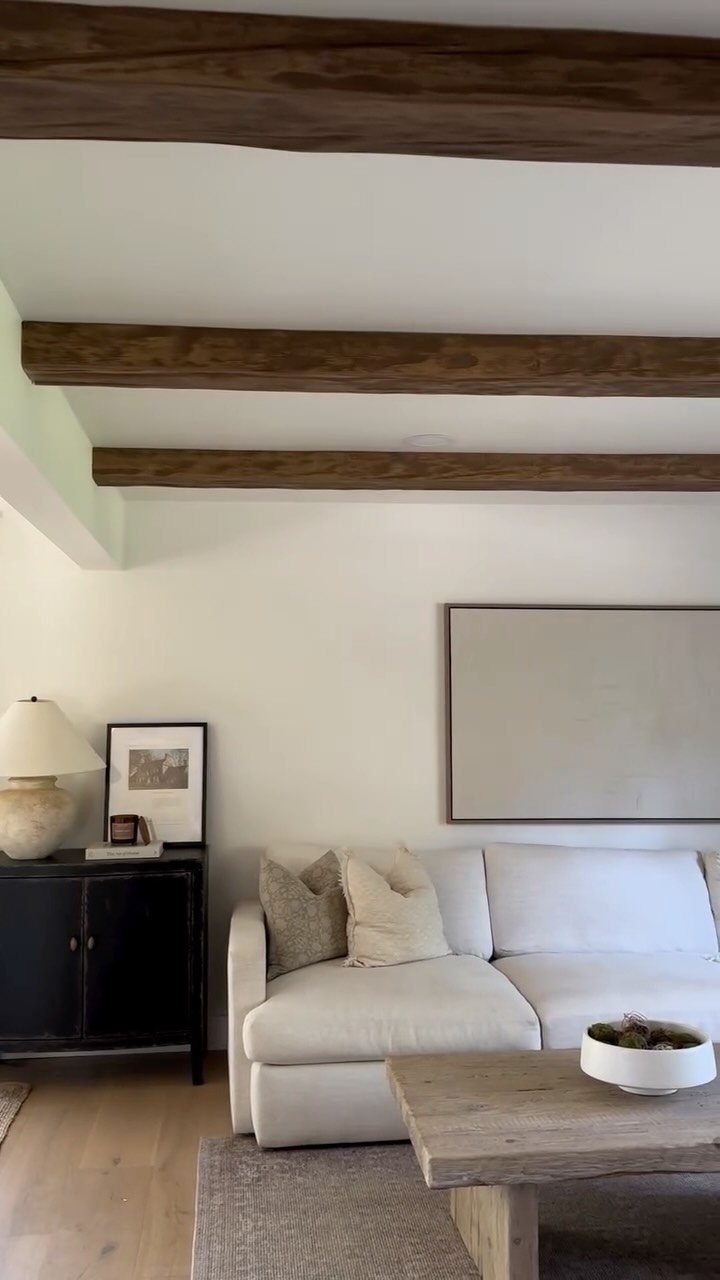
Dark wood beams give a white room its warmth overhead, and they do it without a single rustic light fixture. Keep the fixtures plain and slim instead, because beams already supply the farmhouse character.
I’d skip wagon wheels and lantern-style everything. Black metal or simple glass lets the wood stand out, and the white sofa and walls below keep the ceiling from feeling heavy.
9. Coffee Table
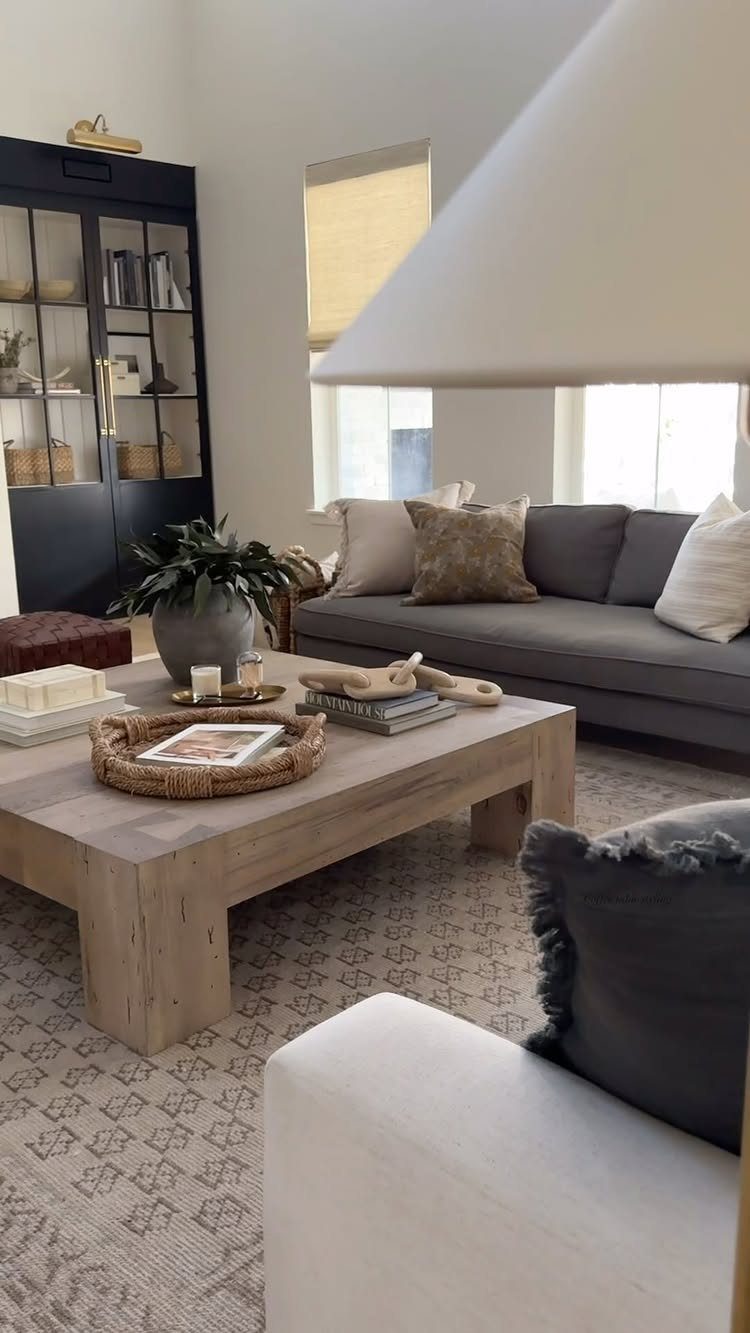
Choose one that works hard first: open space or a shelf below holds books and remotes, and the top stays clear for a tray or a small stack of decor.
Style comes second, but keep it simple. Plain lines and a natural finish suit contemporary farmhouse, and the rug can carry the pattern.
10. Sheer White Curtains
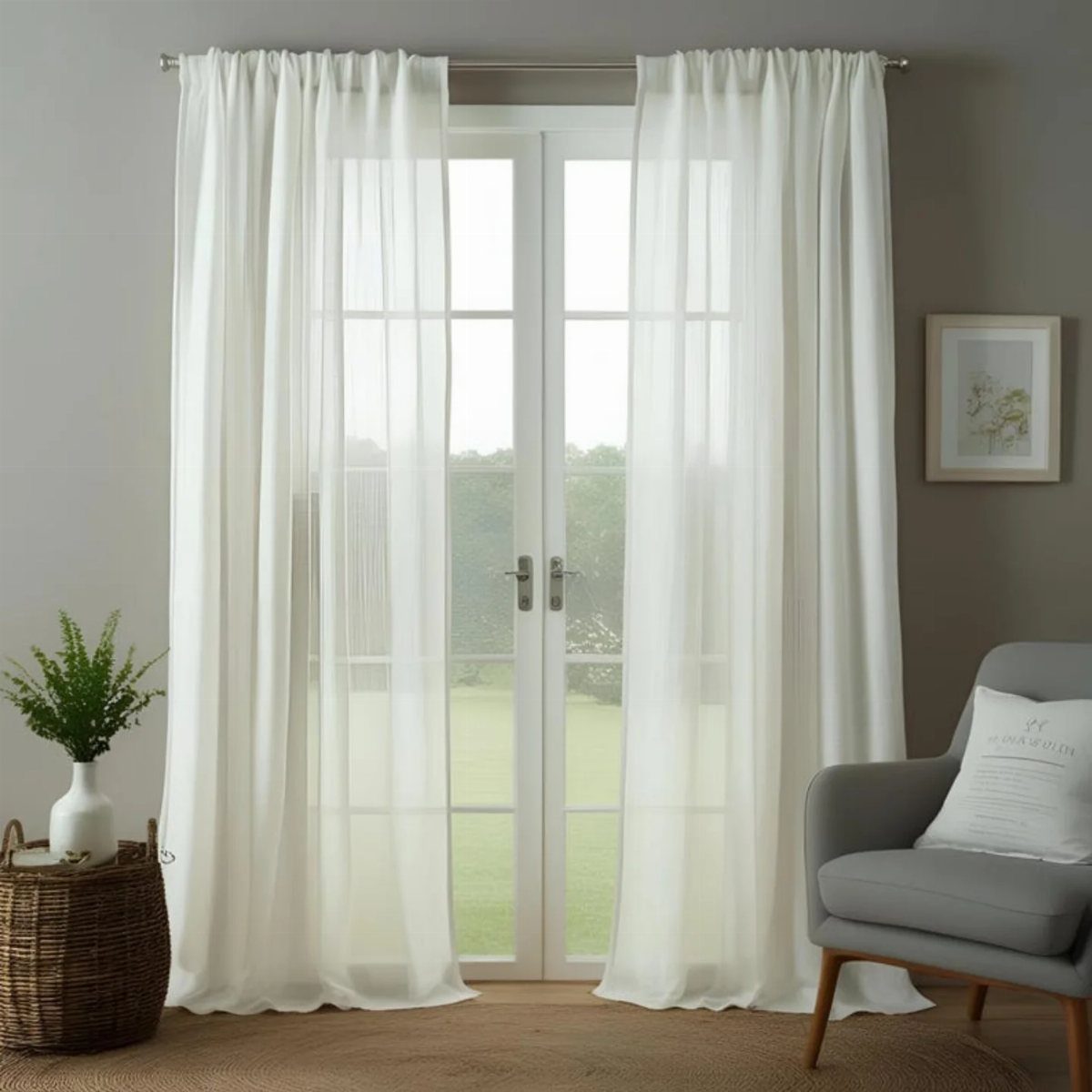
Sheer white curtains soften glass doors while letting daylight straight through, which keeps a grey-walled room crisp instead of dim. Hang them over white French doors and the frames and fabric blend into one clean line.
Choose a light, thin fabric; heavy cloth defeats the purpose. Mount the rod above the door frame and let the panels reach the floor, and they’ll make the whole wall look taller.
11. Neutral Colors
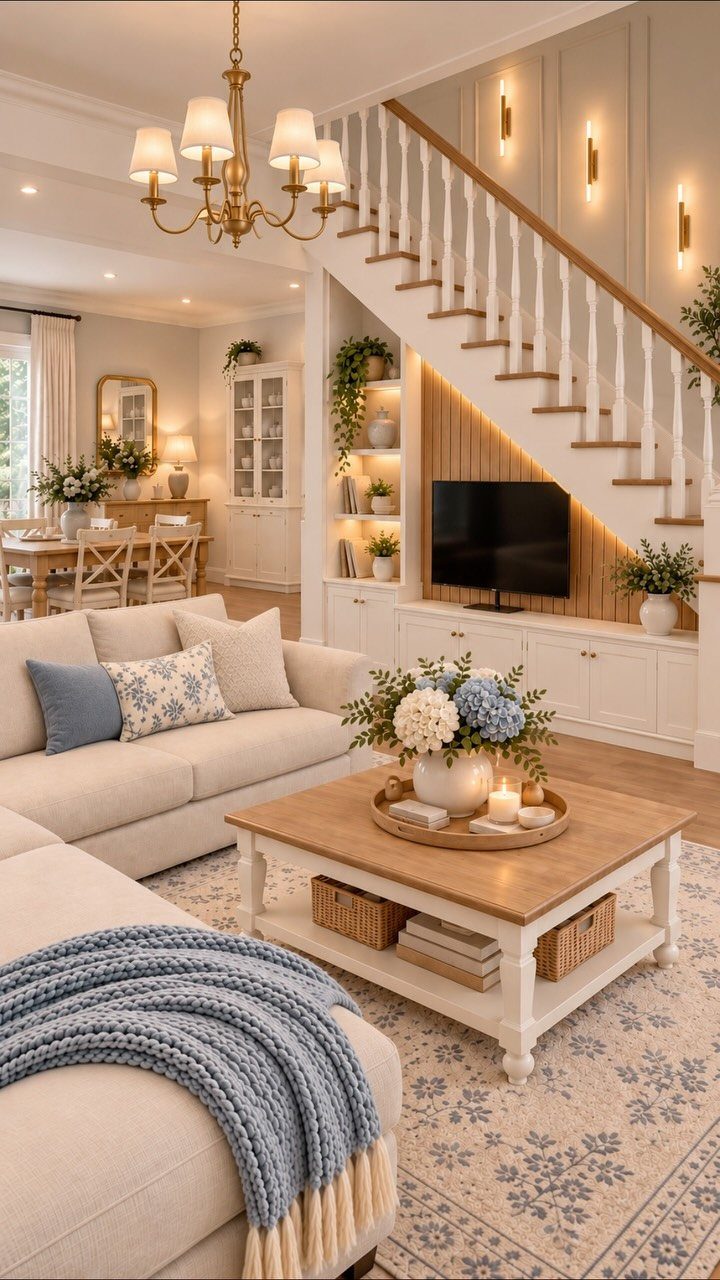
Warm neutrals like beige, cream and soft wood tones make a big room feel cozy without a lot of effort. One accent color is enough; the rest of the room can stay neutral and the look still reads as finished.
I’d keep the accent to pillows or a small decor piece. A gold fixture overhead adds a little shine, so you rarely need more than that.
12. Slipcovered Sofas
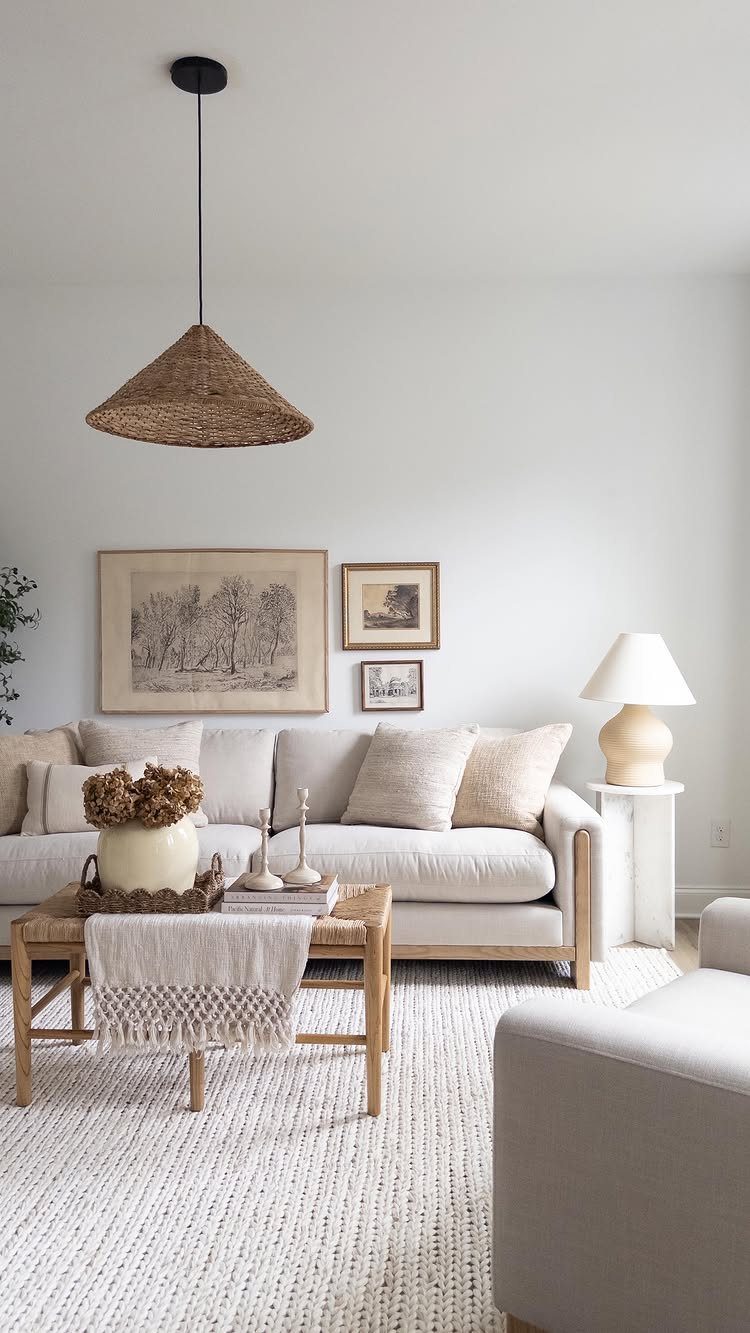
A slipcovered sofa is the practical farmhouse choice, because the cover comes off and the look stays relaxed. A wooden coffee table grounds a slipcovered sofa and stops the room from reading too light or soft.
I like the slightly rumpled fit; it suits an easygoing room better than a tailored one. Add a few pillows and the sofa becomes the anchor for the whole space.
13. Woven Baskets
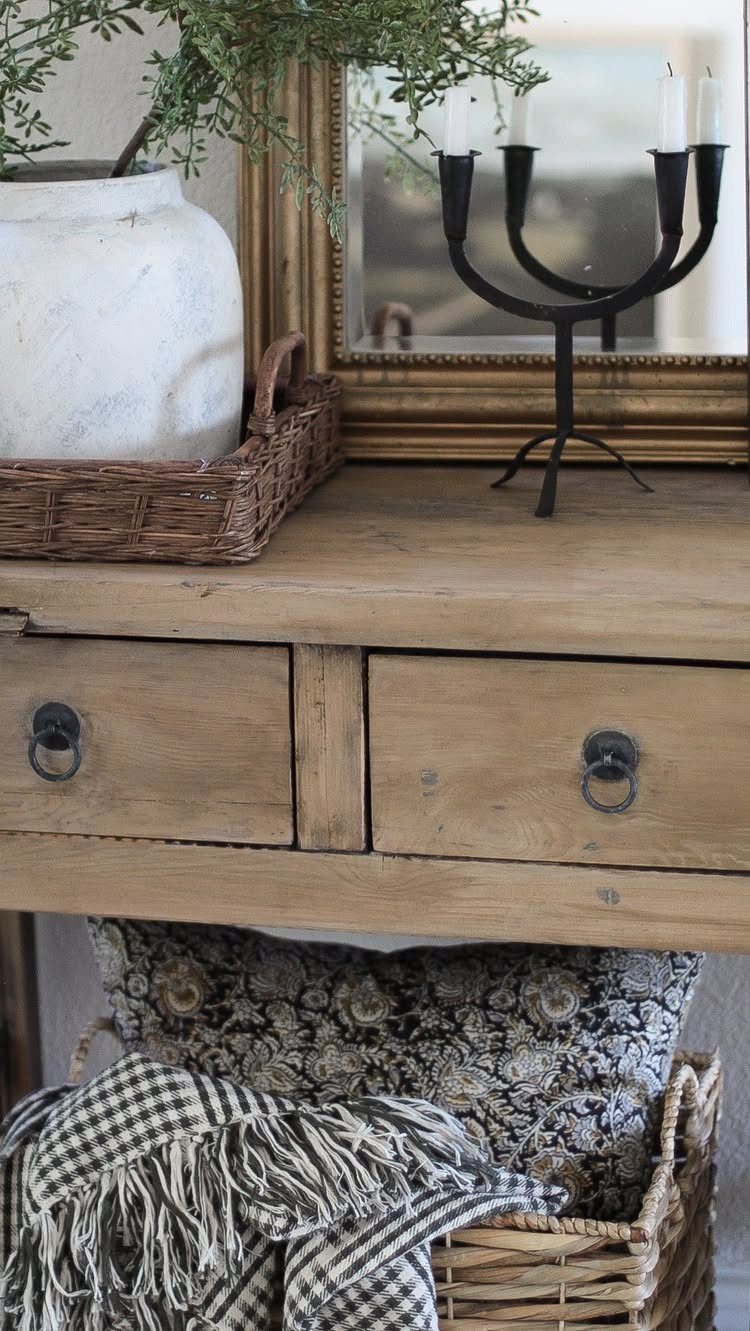
A basket tucked under a console table gives you closed-looking storage that still reads as decor. Folded blankets and a spare pillow fit inside, and the woven texture sits well against wood.
I’d add a woven tray on top to corral a vase, so the surface stays tidy. Match the basket and tray in tone and the console looks planned.
14. TV Above Mantel
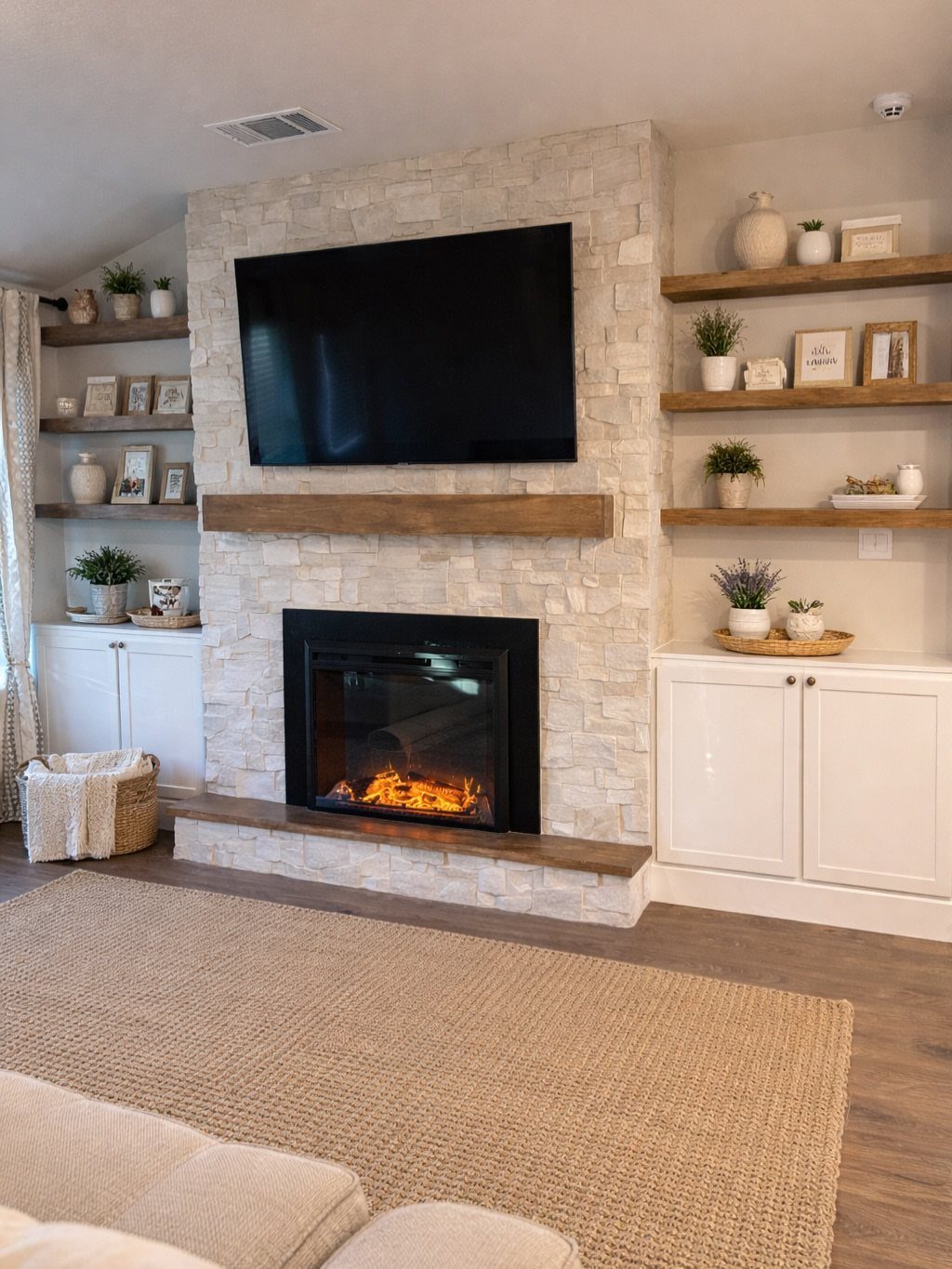
Mounting the TV above a wooden mantel keeps the screen at the room’s focal point and frees floor space for seating.
Surround it with built-in cabinets and floating shelves, and the screen becomes one piece of a larger wall instead of a black rectangle.
Keep the mantel decor sparse so it doesn’t compete with the screen. I’d pick a wood tone that matches the shelves, so the whole wall reads as one design.
15. Layered Lighting
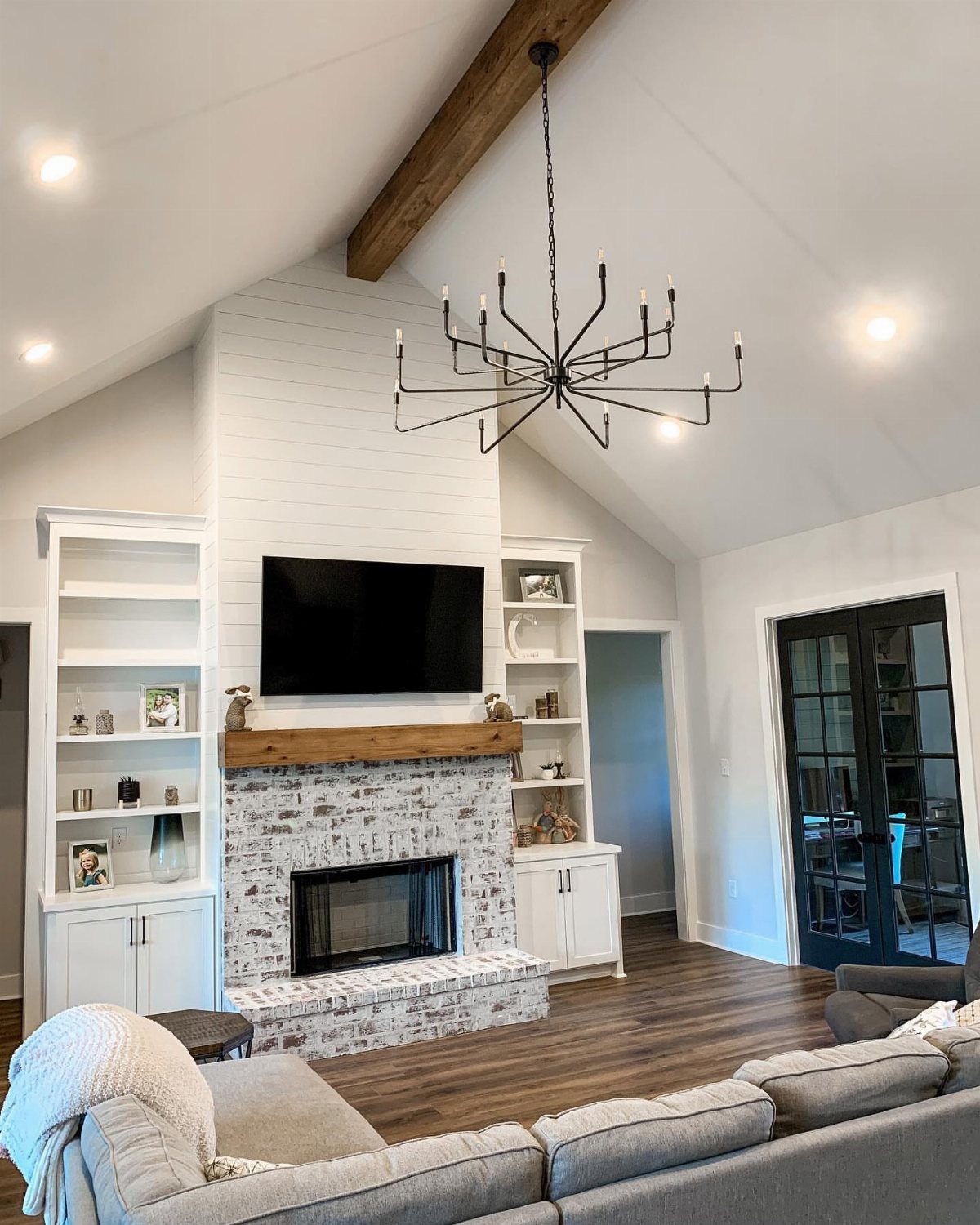
One overhead fixture can’t light a room well, so I’d mix sources. A large black chandelier sets the style, while recessed lights fill in the work and reading areas, and you can dim or switch them separately.
Put each layer on its own switch if you can. Lamps at sofa height add a third layer, and they cost far less than rewiring a ceiling.
16. Natural Branch Floor Lamp
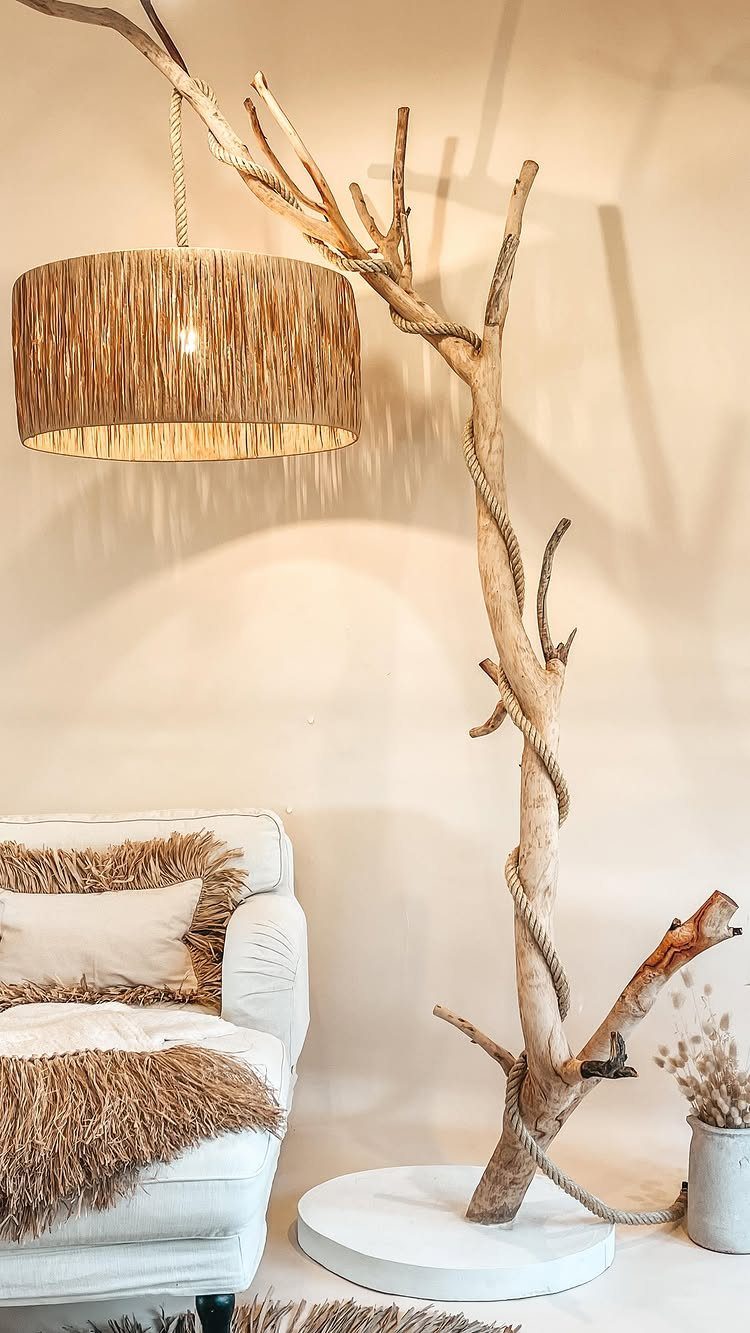
A floor lamp built from a natural branch brings an organic line into a room of straight furniture. The woven shade softens the light, and the whole piece looks right beside a white armchair and a shaggy throw.
Put it in a corner where the branch shape has room to show. I’d choose a shade in a similar tone to your textiles so the lamp blends in rather than stands out.
17. Leather Accent Chair
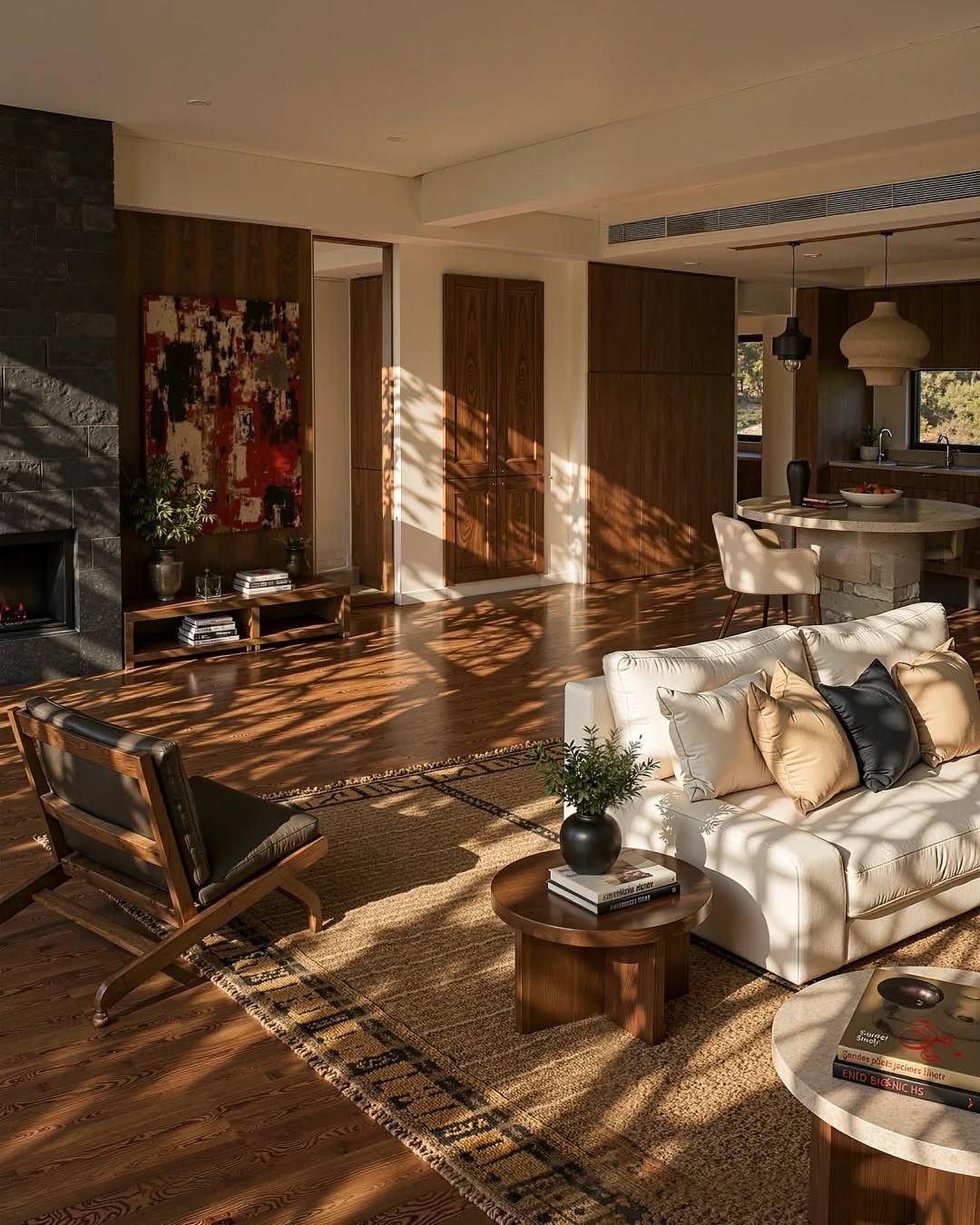
A leather lounge chair gives a white sofa a darker partner, and its warm brown picks up the wood paneling nearby. In an open plan, that contrast separates where you sit from the kitchen behind it.
Pick a chair with a relaxed shape, not a stiff one, so it suits the farmhouse mood. One leather piece is plenty; the sofa and stone fireplace already carry the rest.
Balancing Rustic and Modern
Contemporary farmhouse falls flat when every piece feels rustic. Pair a few items with real patina, like an aged wood table or worn metal, with a few that look polished and clean-lined.
Then add one unexpected detail to bring in a modern edge: a bold textile, a striking light, or an abstract painting. Any of the 3 keeps the room from reading as a theme.
If you’re renovating, start with the architecture: beams, paneling, molding and built-ins. That base layer sets up the story before a single piece of furniture arrives, and furnishings can then stay simple.
Caillier, who recently designed a quaint 1790s home in Bedford, New York, recommends incorporating unexpected details, like funky textiles, eye-catching lighting, or an abstract artwork to bring in a bit of contemporary edge.
Avoiding Clichés
Farmhouse looks tired when props do the explaining.
Too many signs make a room feel commercial, and a matched set of distressed furniture flattens it. Skip cotton stems and mini windmills too, since forced props rarely look collected.
Keep it personal instead. Framed family photos, collected pottery and one custom metal sign that means something will carry more character than a wall of generic phrases.
A single dark sofa or armoire does more than scattering black across every surface.
Mixing two or three wood tones is fine, and one vintage or handmade piece adds the character a showroom set can’t.
Creating a Focal Point
Decide where the eye should land before you buy anything. Without an anchor, the room drifts no matter how good the pieces are, and once you have one, it ranks every decision that follows.
Start with what the room already has.
A fireplace is the anchor, so keep nearby decor simple. A big window wants light linen or cotton, not pattern that fights the view.
In a room with no built-in features, a sculptural coffee table or a limewashed accent wall can serve as the anchor, or one oversized piece of art if the wall is bare enough.
Skip the shiplap or board-and-batten if the room already has a fireplace or a wall of windows doing that work.
Clashing wood tones mean the palette needs another pass. Oak, ash and salvaged wood should share a tone family without matching grain for grain, since perfect matching flattens the look.
Frequently Asked Questions
How do you style a rustic living room?
Pair a few pieces with real patina, like an aged wood table or worn metal, with a few that look polished and clean-lined.
One table with honest grain does more for farmhouse feeling than a roomful of pieces stamped with fake wear. Wood pulled from an old barn next to a white sofa, or black metal hung beside linen, holds the line.
What is the difference between farmhouse and modern farmhouse style?
Farmhouse tilts rustic and country with vintage pieces and ornament, while the modern version strips back to simpler lines and fewer finishes.
Both value comfort, practical furniture, wood and natural texture. The contemporary approach cuts the detail so the style works in newer construction and tighter spaces.
What makes a living room contemporary farmhouse?
It pairs rustic details with clean, polished ones, and keeps the palette warm and neutral. A slipcovered sofa, a wood coffee table, a jute rug and a shiplap wall supply the farmhouse side.





