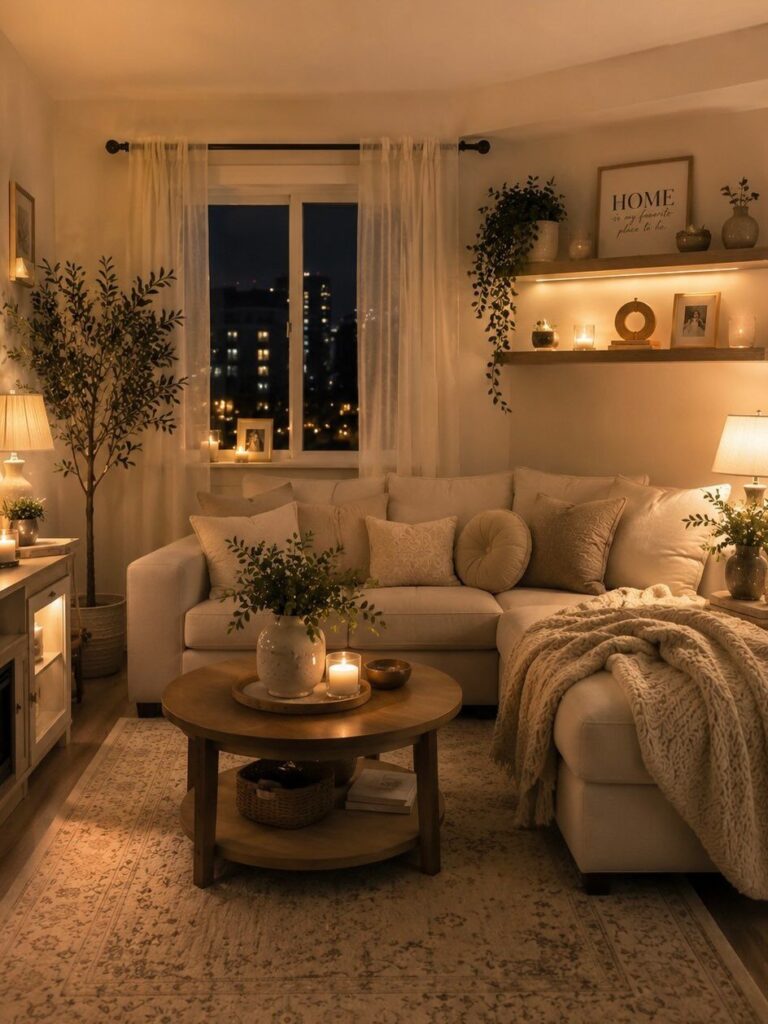
Room size decides which ideas work: a large space can layer different seating types and add side tables, while a small one needs furniture with built-in storage and wall sconces that free up surfaces.
The list runs from a cozy seating arrangement you can set up tonight to a large rug, built-in storage and a reading nook.
Renters get the easiest wins from plug-in sconces and a rug that can leave with them, and the walkway gap of 16–18 inches between sofa and coffee table holds in every layout.
1. Cozy Seating Arrangement
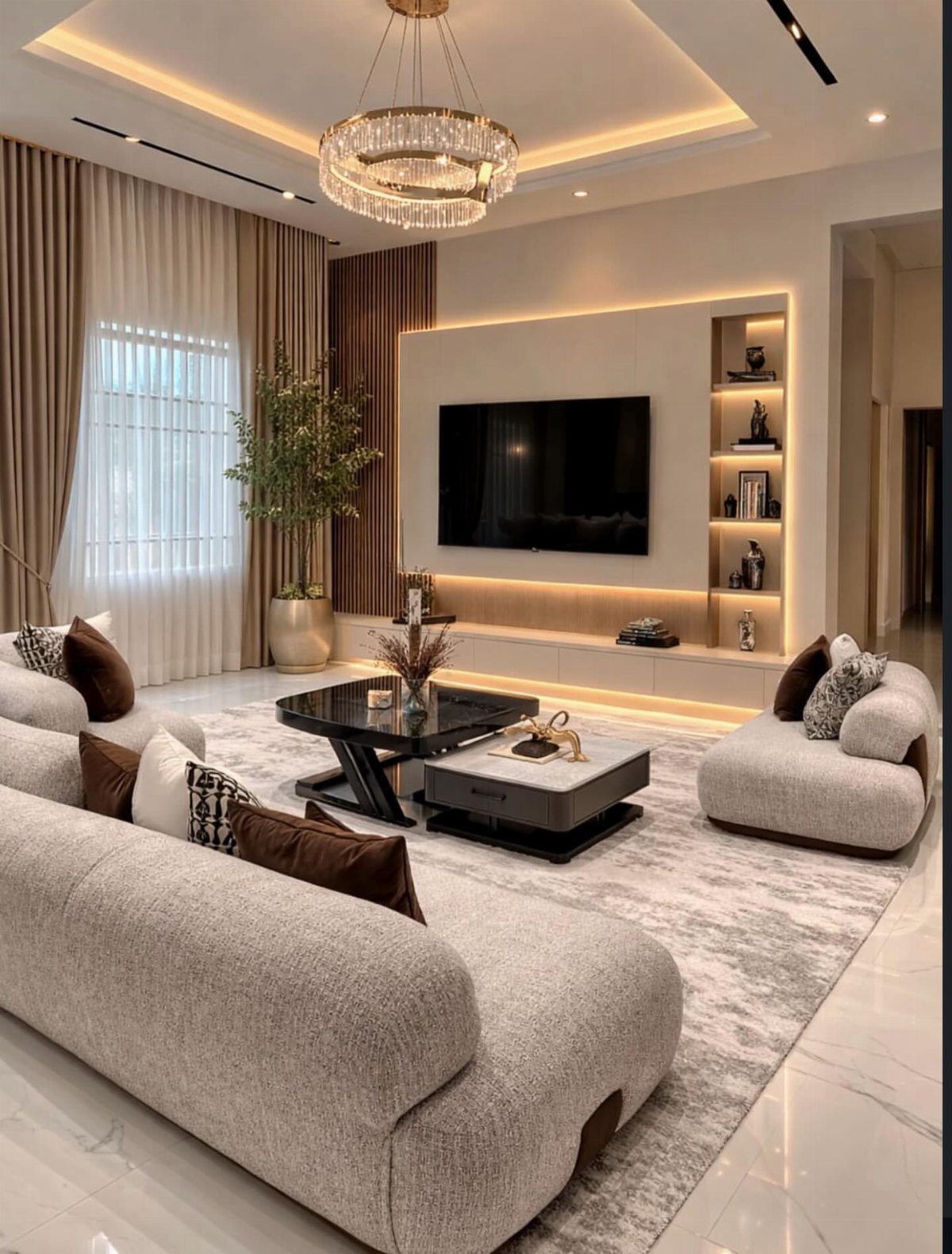
Seating that faces inward makes a room feel smaller in the best way. A sectional with a matching armchair set across from it forms a loose circle, and the coffee table in the middle becomes the shared center.
For a rental, I’d pull the pieces off the walls first.
Even a few inches of space behind the sofa lets the group sit closer together. Keep the TV as a side note to the arrangement, not the thing every seat points at.
2. Side Tables
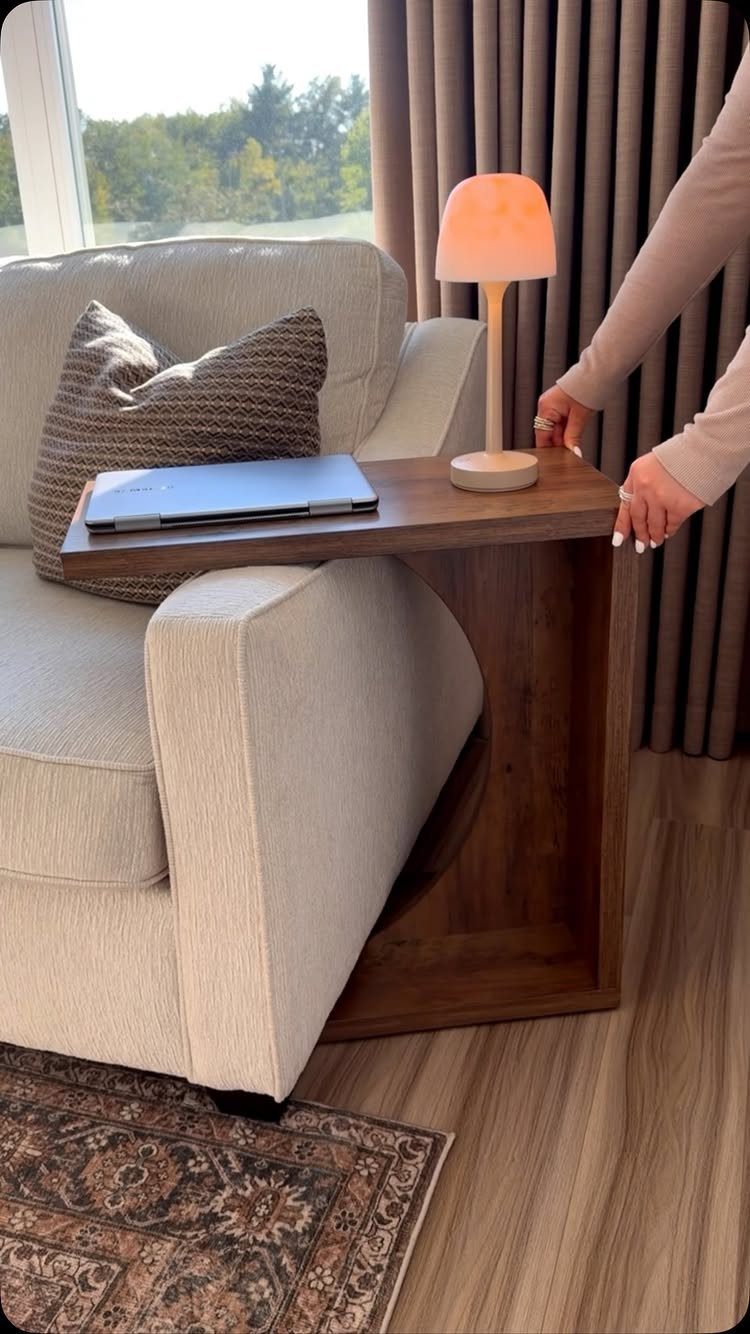
A C-shaped side table slides its base under the sofa or armchair, so the top sits right at your elbow.
That makes it a good fit for a lamp and a laptop, which is a working setup most living rooms need.
Wood suits a room with beige upholstery because it adds warmth without a competing color. I’d pick one with a slim base so it doesn’t fight the rug for floor space.
Measure the clearance under your seat first to know whether it will fit.
3. Incorporate a Large Rug
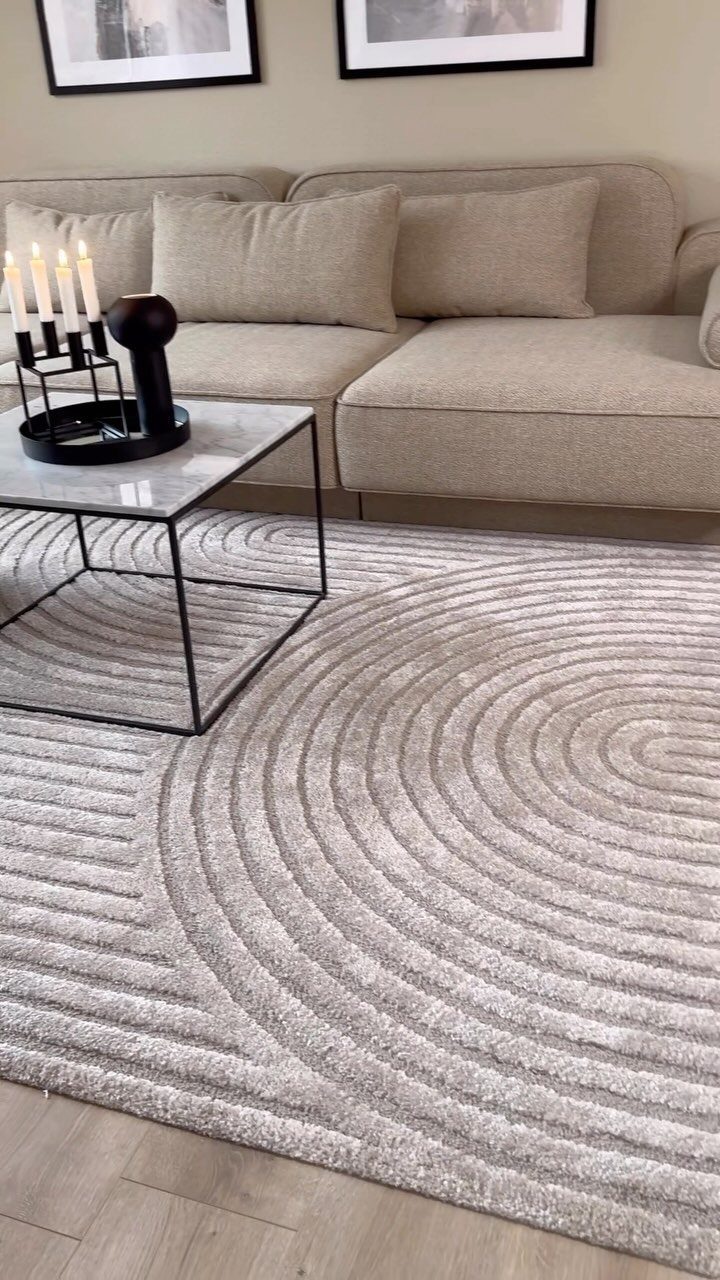
Size decides whether a rug works. A small one floats and makes the sofa look stranded, while a large one ties the sofa, coffee table and chairs into a single zone.
A round rug with concentric circles, in grey, gives a beige sofa a soft pattern to sit on and breaks up the straight lines of a rectangular room.
Rugs this big cost real money, so I’d shop floor models and sales before settling.
Anchor each piece by putting at least its front legs on the rug.
Whether your living room is small or expansive, your taste leans modern or traditional, your unique point of view should inform every design decision you make in your living room, from the style of your sofa to the fabric that covers it.
— Veranda
4. Lamps and Sconces
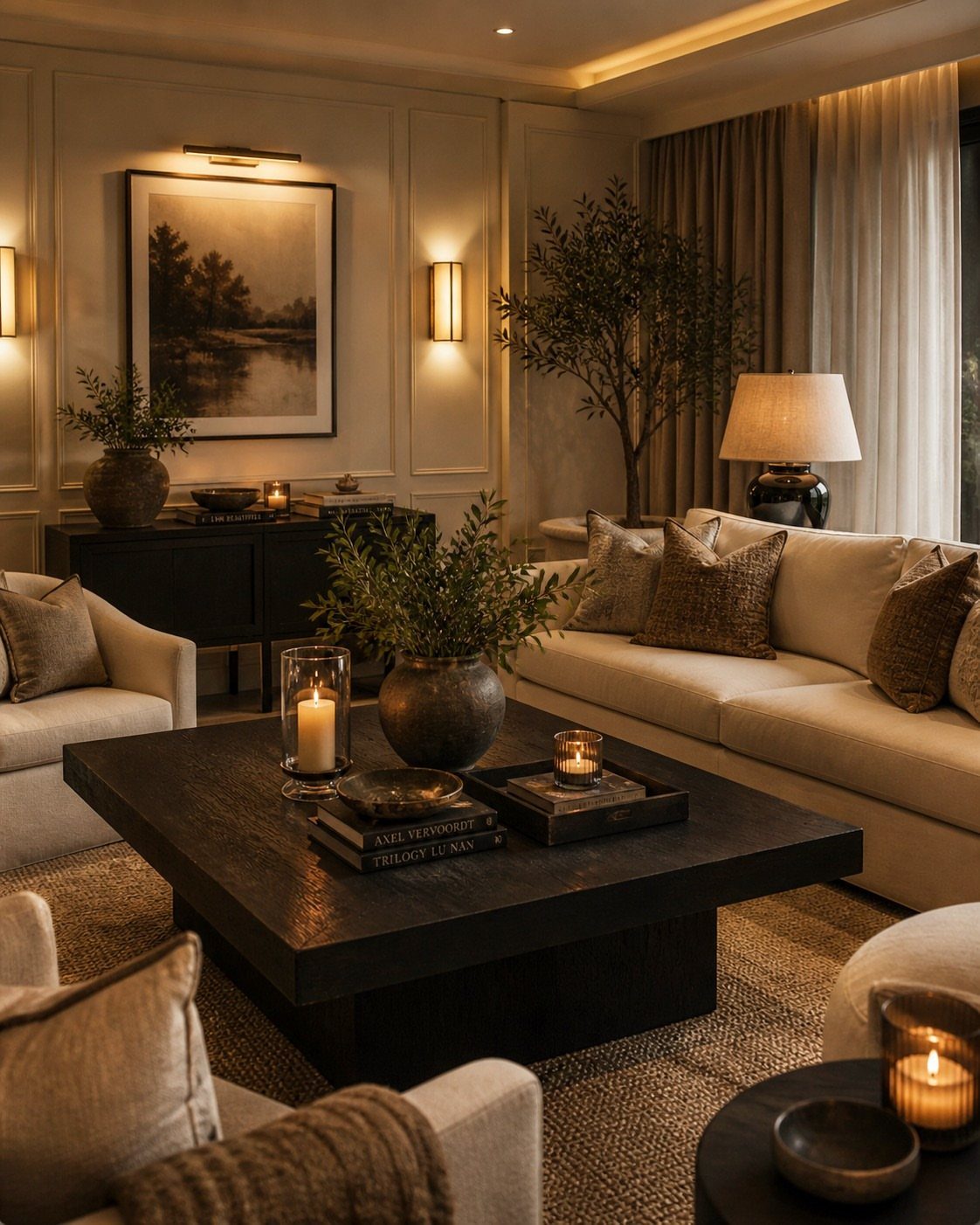
Wall sconces free up surfaces, and that is why I like them in small rooms. Pair one with a table lamp and you get light at two heights, which makes a living room feel warm in the evening, not flat.
Plug-in sconces with a cord cover suit renters, since they need no wiring and leave only small screw holes. Candles on the coffee table add a third, softer layer.
Aim for 3 light sources at different levels before you add a fourth.
5. Layer Different Seating Types
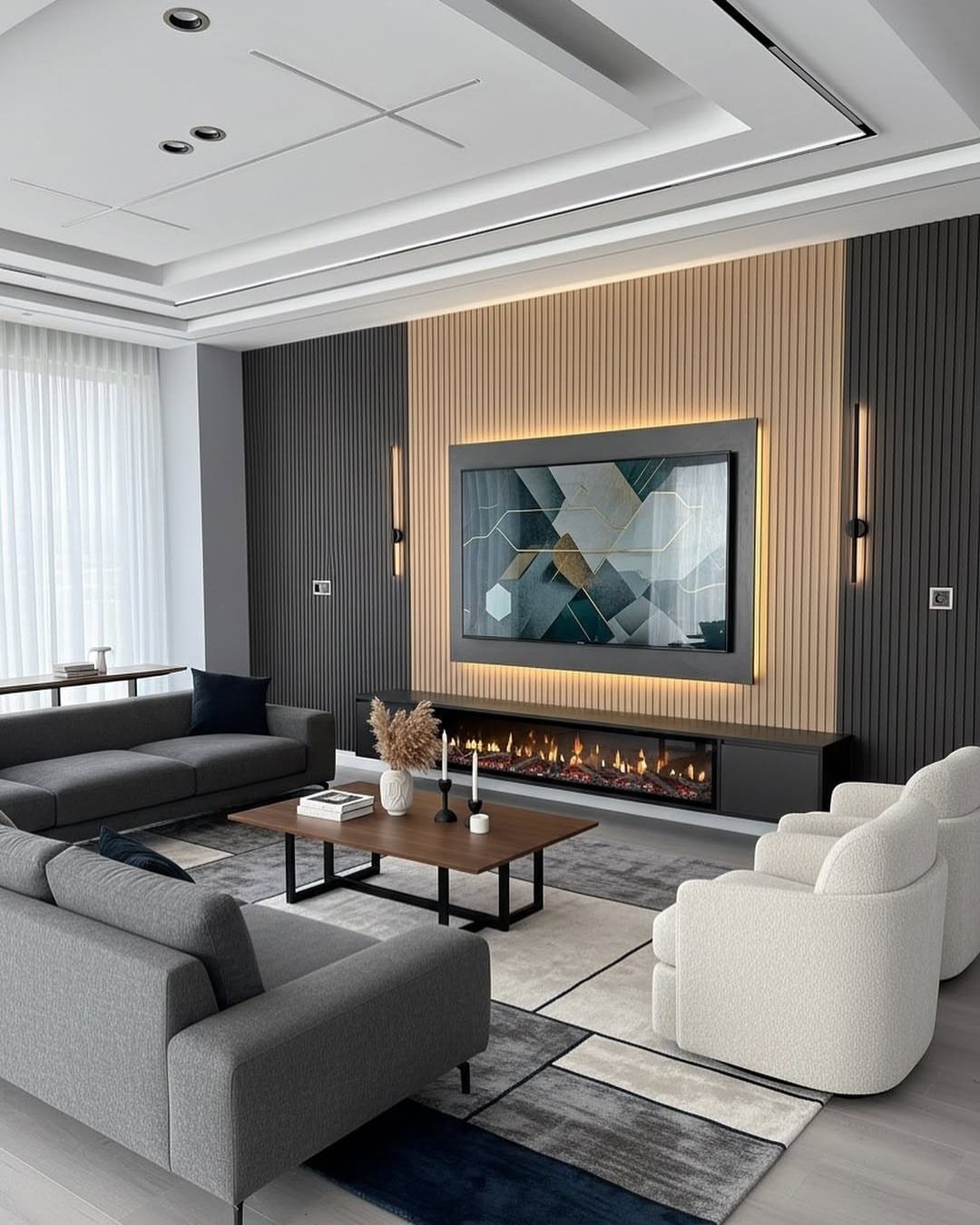
2 sofas facing each other, with a pair of curved white armchairs at the ends, makes a room that handles a crowd and a quiet night alike. The rounded chairs soften all those straight sofa edges.
Mixing shapes works best when the colors stay close. Grey and white keep the combination calm, so the silhouettes do the talking.
This takes floor space, so I’d save it for a larger room. In a small one, a sofa and two chairs is plenty.
6. Furniture with Built-in Storage
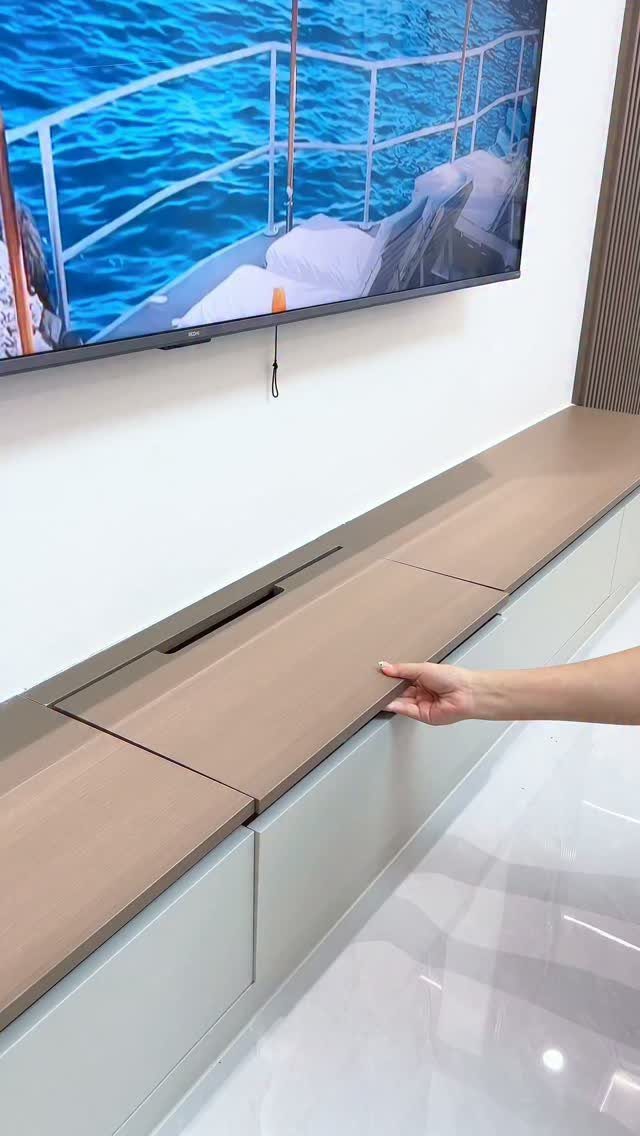
A TV console with a hidden compartment hides the clutter that otherwise sits on your shelves: remotes, controllers, chargers, cables. Pull the panel open and everything is within reach, shut it and the surface looks clean.
Wood paired with white panels reads lighter and keeps a small room from feeling closed in. I’d choose a long, low console over a tall cabinet so the wall stays open.
Check how far the compartment opens and confirm you have that much clear floor space in front of it.
7. Mix Patterns and Textures
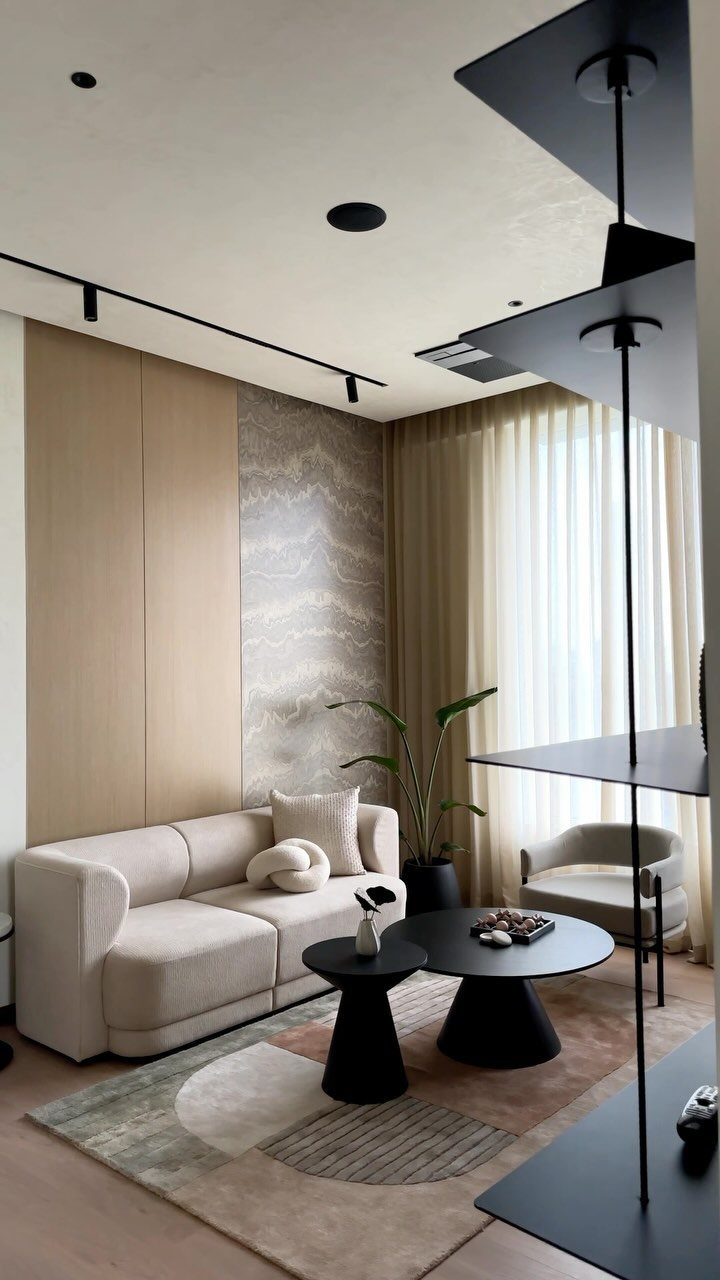
A white sofa gives patterns and textures a calm base to push against.
Keep the sofa and big surfaces quiet, then add pattern in one or two places. A rug is the easiest swap on a renter’s budget, since the textured wall stays put and the rug can leave with you.
Let each surface have its own scale: a bold rug pattern, a subtle wall, a soft curtain.
8. Create a Reading Nook
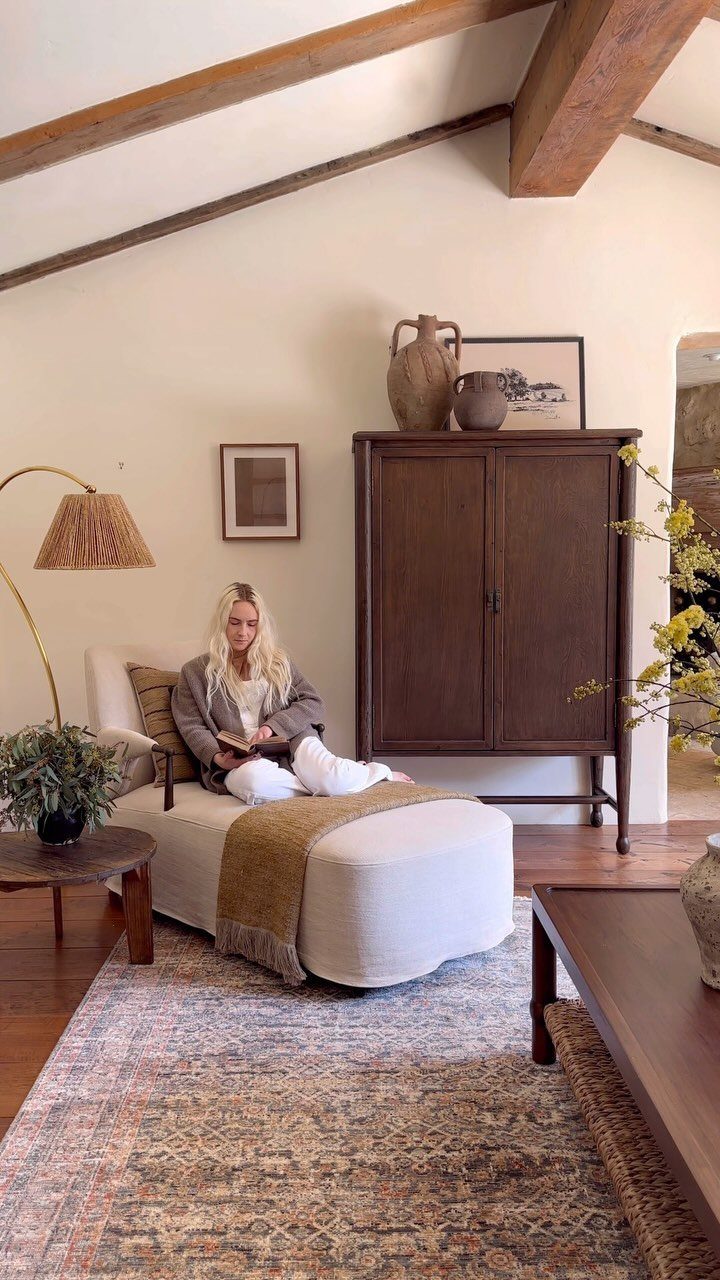
A chaise lounge, a lamp and a rug are enough to turn a corner of the living room into a reading spot.
Light decides whether the nook gets used. I’d put the lamp within arm’s reach of the chaise so you can adjust it without getting up.
The rug marks the nook as its own zone, so choose one that sits under the chaise’s front legs.
A white chaise shows wear, so a washable cover is worth a look.
9. Prioritize Conversation
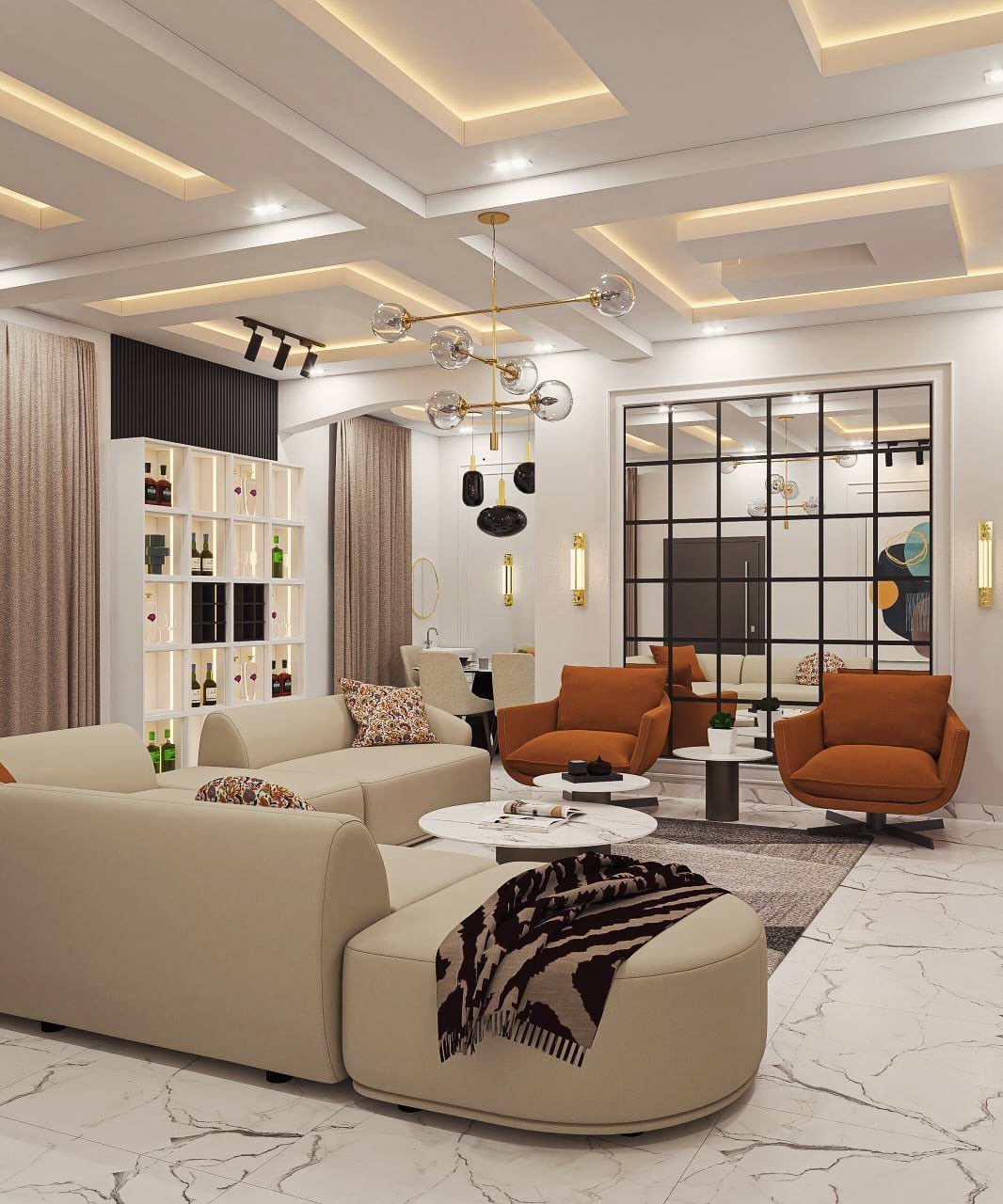
Seats that face one another do more for conversation than any decor. A curved cream sectional with 2 orange armchairs across from it makes an open U, so everyone sees everyone without turning their neck.
Keep the armchairs close enough to the sectional that you can talk at normal volume, and leave a clear path to walk through.
The orange chairs add a bold color against the neutral sofa, and I’d keep the rest of the palette quiet so they stay the focus.
Skip a TV as the focal point; let the seating be it.
Importance of Layout
Eye contact is what a layout is really built for. Angle a sofa and chairs toward each other, or set two sofas across from one another, and people end up facing the person they’re talking to instead of the wall.
A semicircle or U-shape around a central coffee table lets everyone see everyone, and floating the pieces away from the walls makes the arrangement look planned instead of parked.
Aim for intimacy without stiffness. Chairs turned slightly inward feel relaxed, while pieces lined up square to each other can start to feel formal.
Avoiding Common Mistakes
Walkways are the mistake I’d check first.
Leave about 16–18 inches between the sofa and the coffee table, which is enough to move through without bumping a shin. Pushing every piece against the wall is the other common error, and floating the seating eases that tight, boxed-in feeling.
Lighting gets neglected just as often. A single bright overhead fixture reads clinical, so I’d switch it off in the evening and rely on lamps or sconces for soft, diffused light.
Pick soft or warm white bulbs and skip cool white. The room feels warmer, and people tend to linger in it longer.
Frequently Asked Questions
What are some good ideas for decorating a family room?
Put seating in a U-shape or semicircle that faces toward the center, not the walls, with enough room to walk behind each piece.
A rug under all the main furniture ties the layout together, and a console with doors or drawers hides the remotes and charging cables. Together they give you a room that seats a crowd and still hides the clutter.
How do I design my lounge?
Begin with the layout. To finish styling your lounge room, add a large rug under the front legs of the furniture and light the room at 3 different heights with a table lamp, a sconce and candles.
Seating that is the focus, not the TV, keeps the room social.
What are some good home decor ideas on Pinterest?
A big round rug in grey under a beige sofa, wall sconces paired with a table lamp, and a curved cream sectional facing 2 orange armchairs all work well.
Each one adds a single clear feature, whether pattern, layered light or a bold color, against a neutral base. Rugs and plug-in sconces are the easiest to take with you if you rent.





