Whether you rent or own decides which of these drapery ideas is realistic, because the list runs from sheer panels and tie-backs you can swap in an afternoon to ceiling-mounted tracks and full-wall pleated treatments that need professional installation.
Owners can go further, up to pleated panels that run floor to ceiling across a whole wall.
1. Curtains with Shades
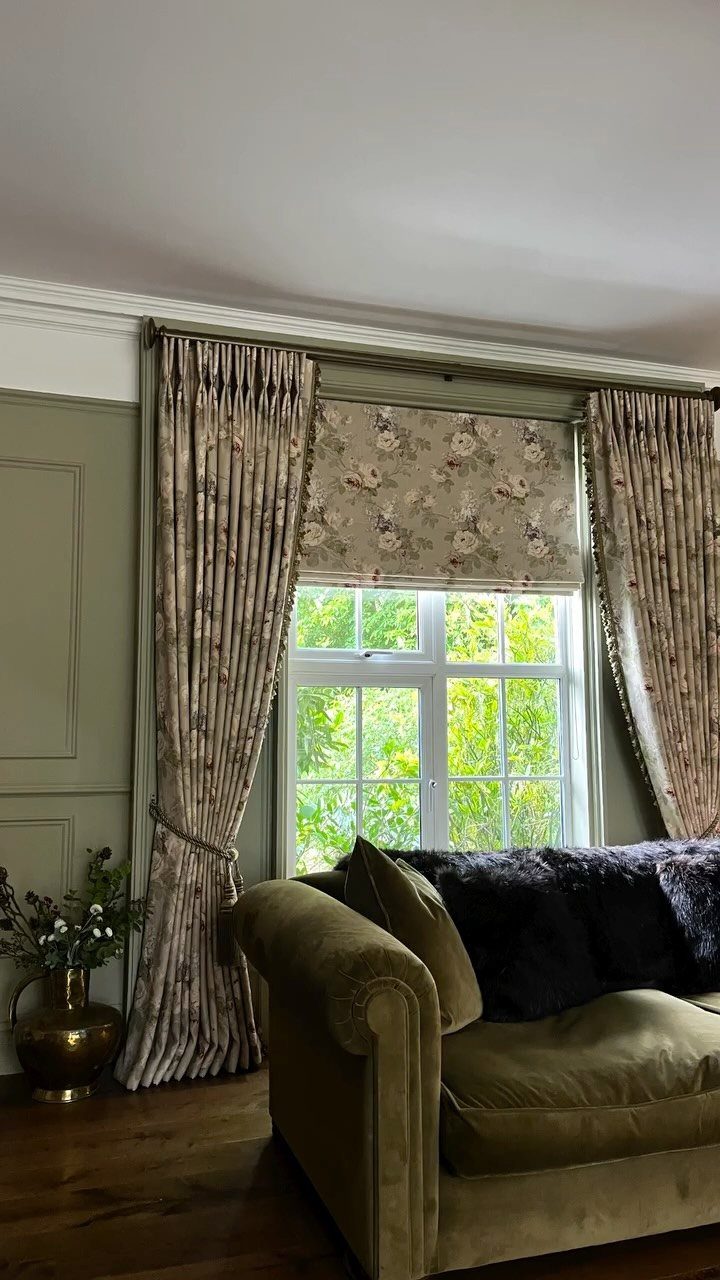
A curtain panel and a Roman shade cut from the same floral fabric make one clean statement at the window. The shade handles daily light and privacy on its own, and the panels stay open as frames.
Matching prints is the easiest route, since nothing has to be coordinated. A busy floral like this one reads best against a solid sofa, and green velvet is a good example of that.
If a full match feels like too much pattern, I would pair a patterned shade with solid panels in one of its colors. Shades also cost less than extra-wide panels, so the pairing can help a tight budget.
2. Sheer Curtains
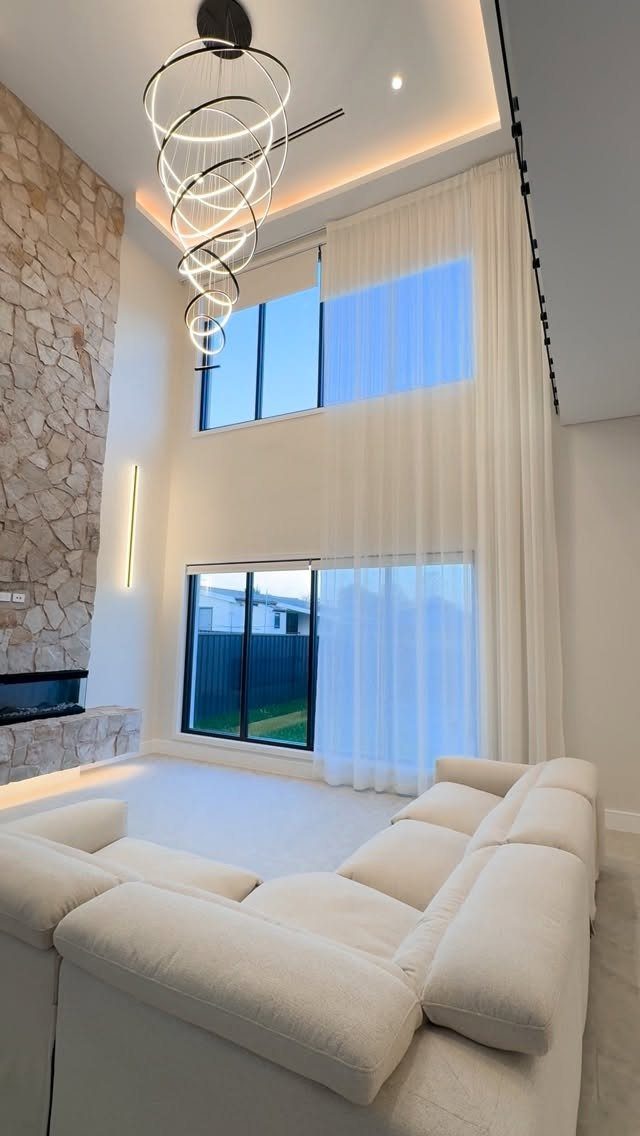
Sheer curtains pass daylight through while softening the view in from outside, which makes them a good fit when you want brightness and some privacy in the same window.
White sheers suit a room with a lot of white, since they stay quiet and let the fireplace and light fixture lead. On tall windows, I prefer panels that run floor to near-ceiling, because a short sheer looks unfinished.
Sheers will not block a clear view in at night, so add a second layer or a shade if the room faces the street.
3. Layered Curtains
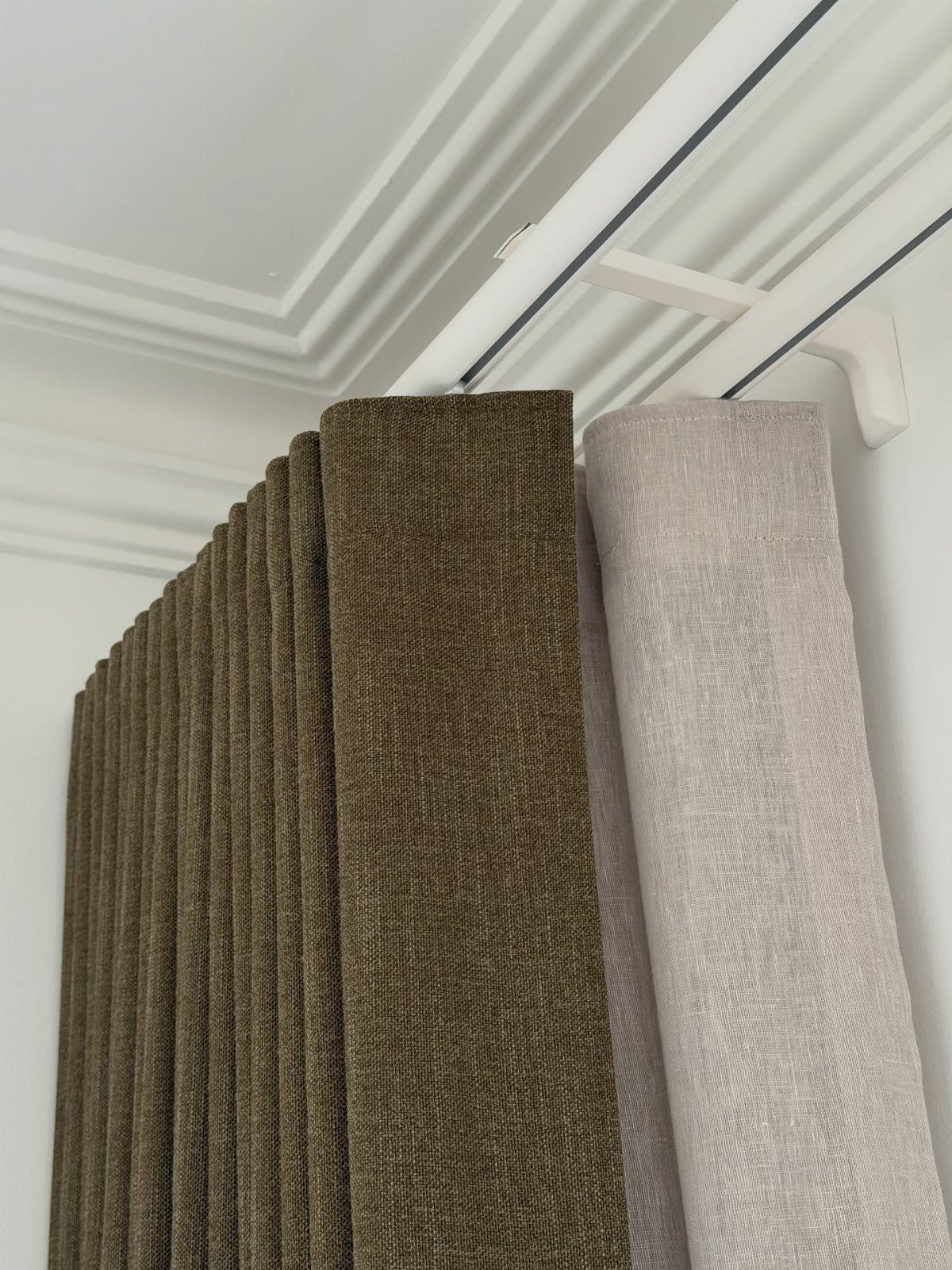
Two fabrics on a double track give a window depth that one panel cannot: a heavier textured layer in front, a lighter one behind.
Pick contrasting weights as well as colors. An olive green with real texture against a pale beige keeps the pair from looking flat, and the light layer can stay closed for daytime glow while the heavy one handles night.
A white double track against a white ceiling nearly disappears, so the fabric gets the attention. Each layer needs its own set of panels, so budget for twice the fabric.
4. Fun Finials
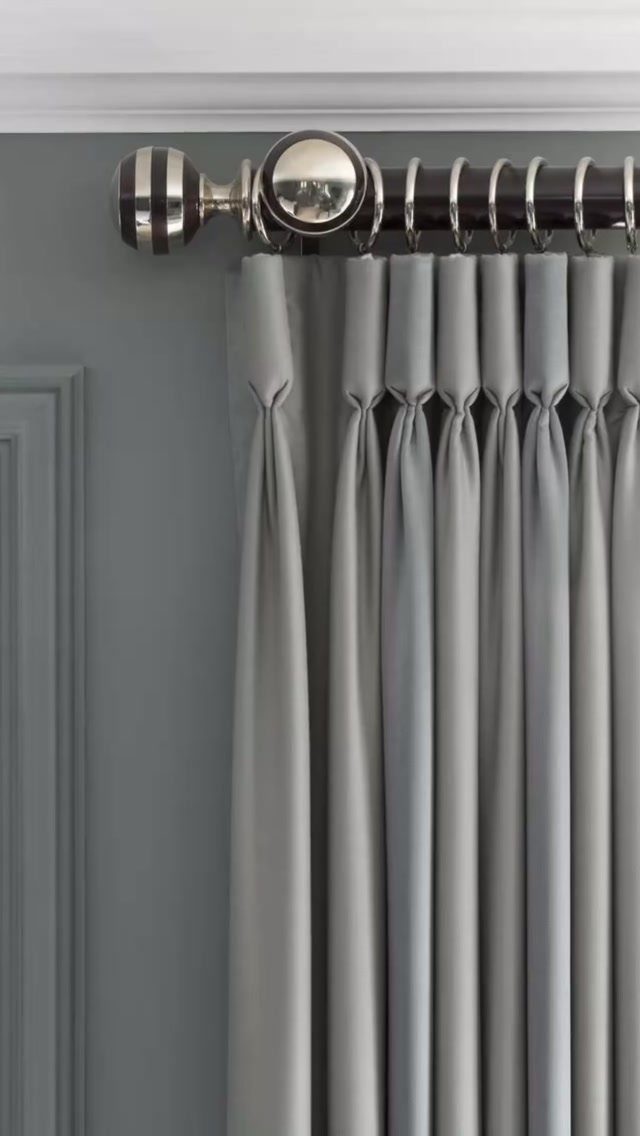
Finials are the cheapest upgrade in this list, because swapping the ends of a rod changes the whole look without replacing any curtains.
A dark metal rod with a rounded silver finial gives grey pleated panels a little contrast, and a grey wall with molding keeps the detail from fighting anything else.
I would choose one decorative element per window and keep the fabric plain, so the finial stays the accent.
Check that the finial screws onto your rod’s diameter before buying.
5. Make a Swanky Statement
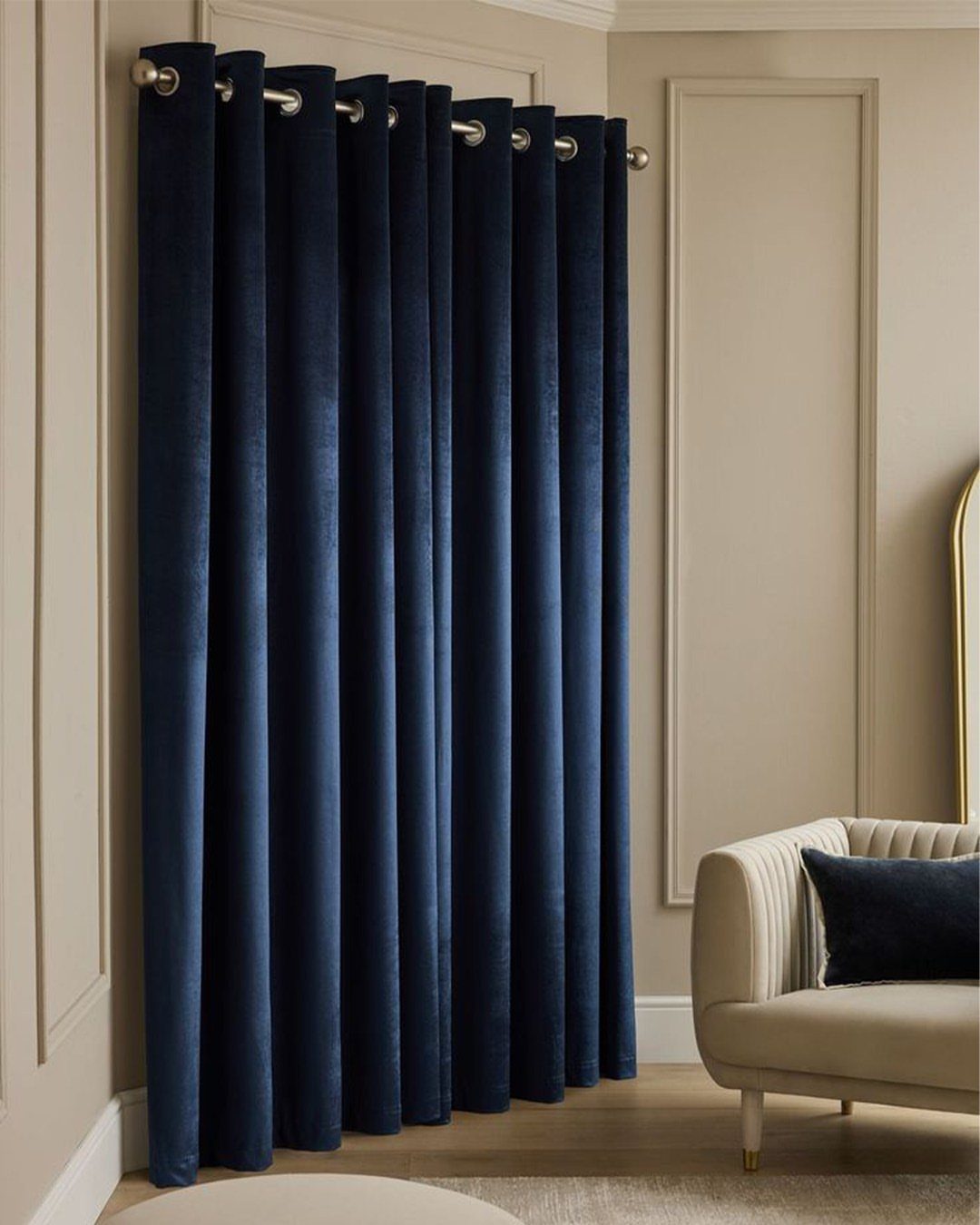
Velvet in a deep blue makes curtains the loudest thing in a room, and that pays off when everything around them stays neutral.
Velvet is heavy and blocks light well, so it suits a room where you want dim evenings. Expect it to cost more than basic polyester panels.
6. Curtains Close to the Ceiling

Hanging curtains close to the ceiling pulls the eye upward and makes the room look taller than the windows alone would.
Mount the rod or track well above the window frame, then buy panels long enough to reach the floor. Tall white panels with black bands add a graphic line that emphasizes the height.
Measure from the mounting point to the floor before ordering, since standard lengths often fall short. Taller panels cost more, so I would check lengths before falling for a style.
7. Traditional Pelmet
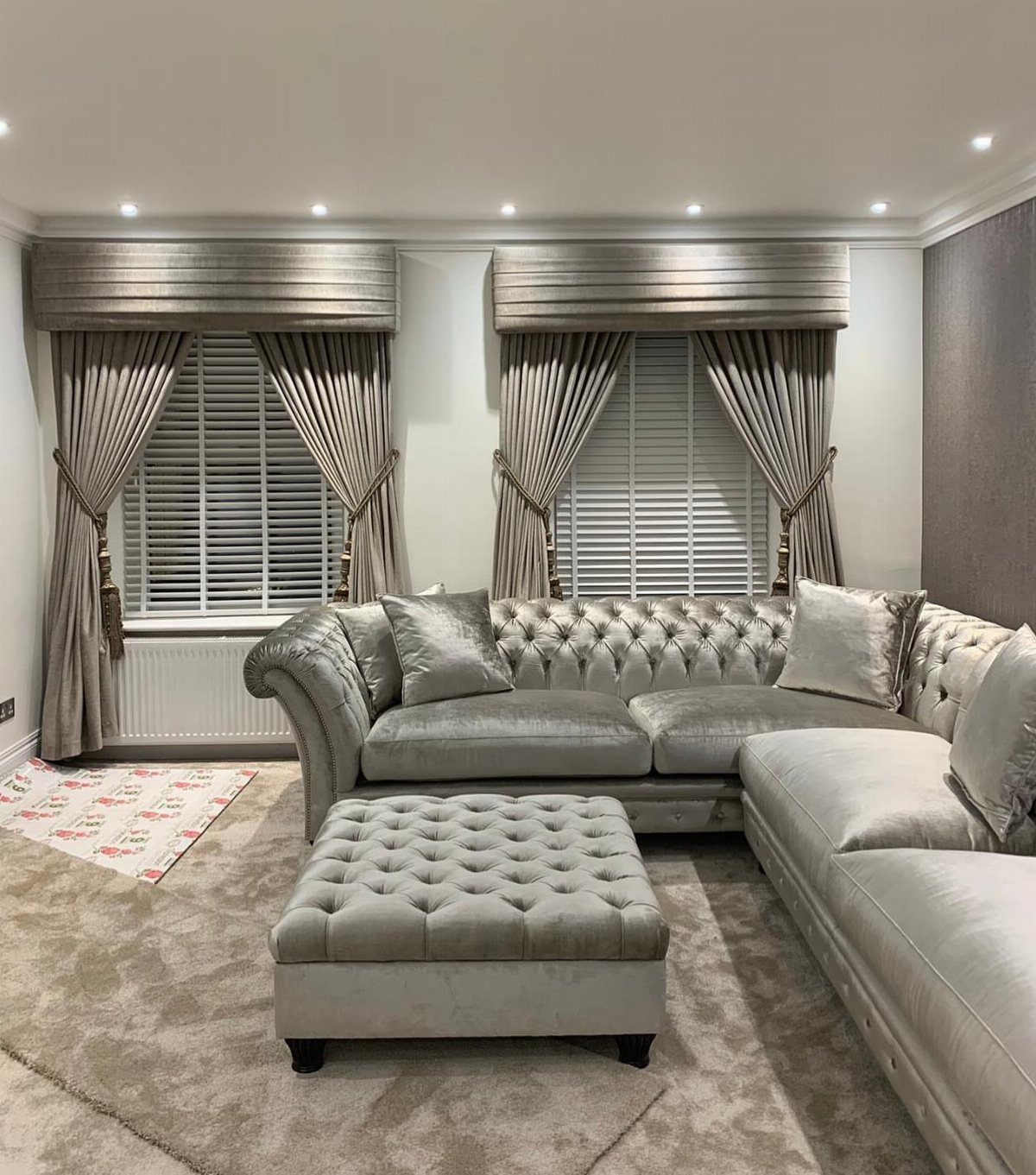
A pelmet is a fabric-covered box or valance across the top of the window, and its main job is hiding the rod, track and rings that sit behind it.
If your hardware is plain or mismatched, a pelmet hides it for less than buying new rods.
Grey pelmets over grey panels read as one tailored piece, so the curtain looks built in. I would match the pelmet fabric to the curtains rather than contrast it, since that keeps the top from feeling heavy.
Pelmets also pair easily with blinds underneath, which gives you light control without extra drapery.
8. Recessed Ceiling Track Curtains
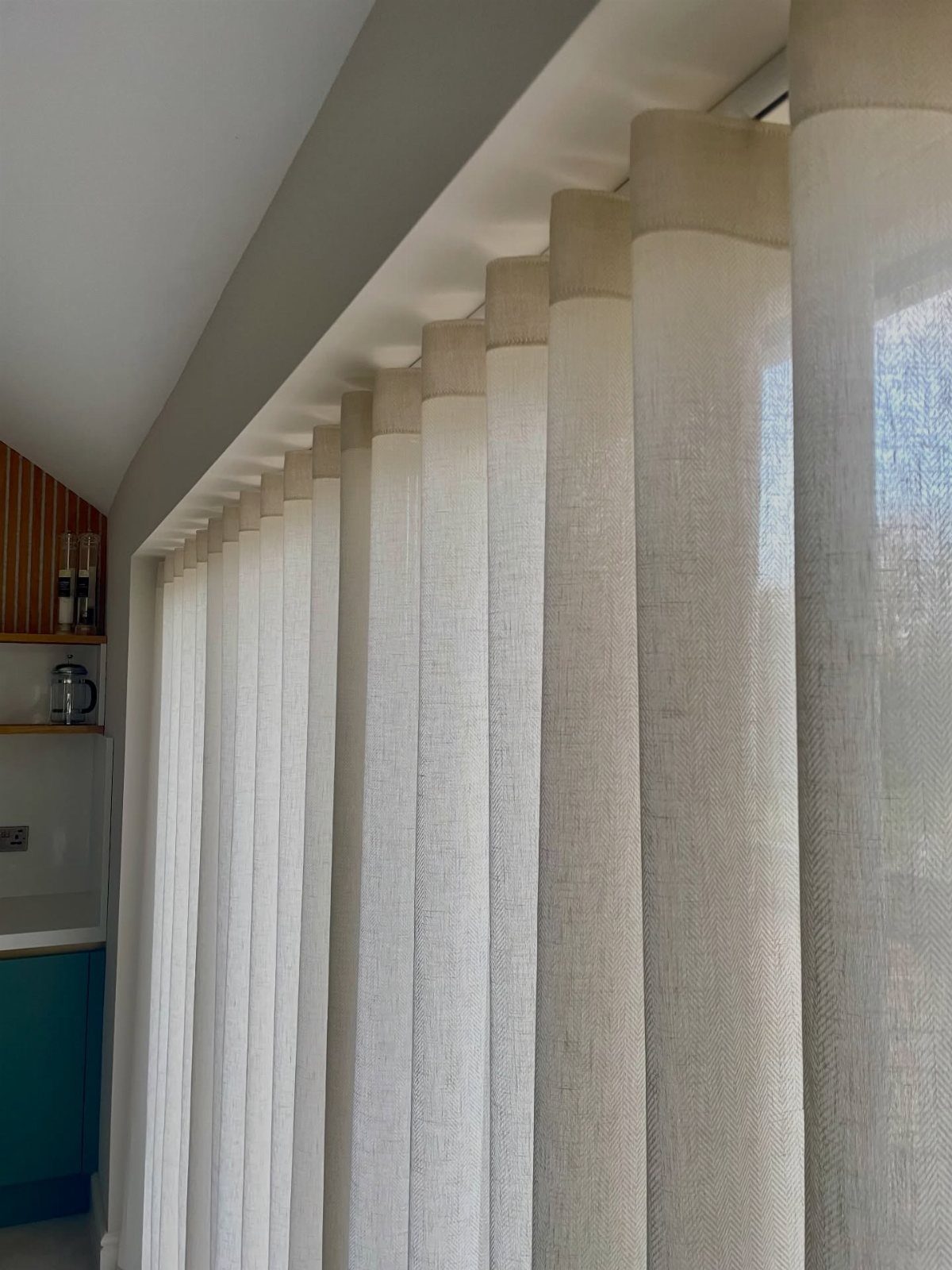
Ripple fold curtains hang from a track tucked inside a pocket cut into the ceiling, so no rod, rings or brackets show at all.
What the eye sees is fabric dropping straight from the ceiling line in soft, even S-shaped waves.
An off-white textured fabric suits this well, since the folds do the decorating.
Plan it before the ceiling is finished, because the pocket is built into the structure; as a renter, I would skip it and choose a surface-mounted track instead.
9. Tied-Back Drapery Panels
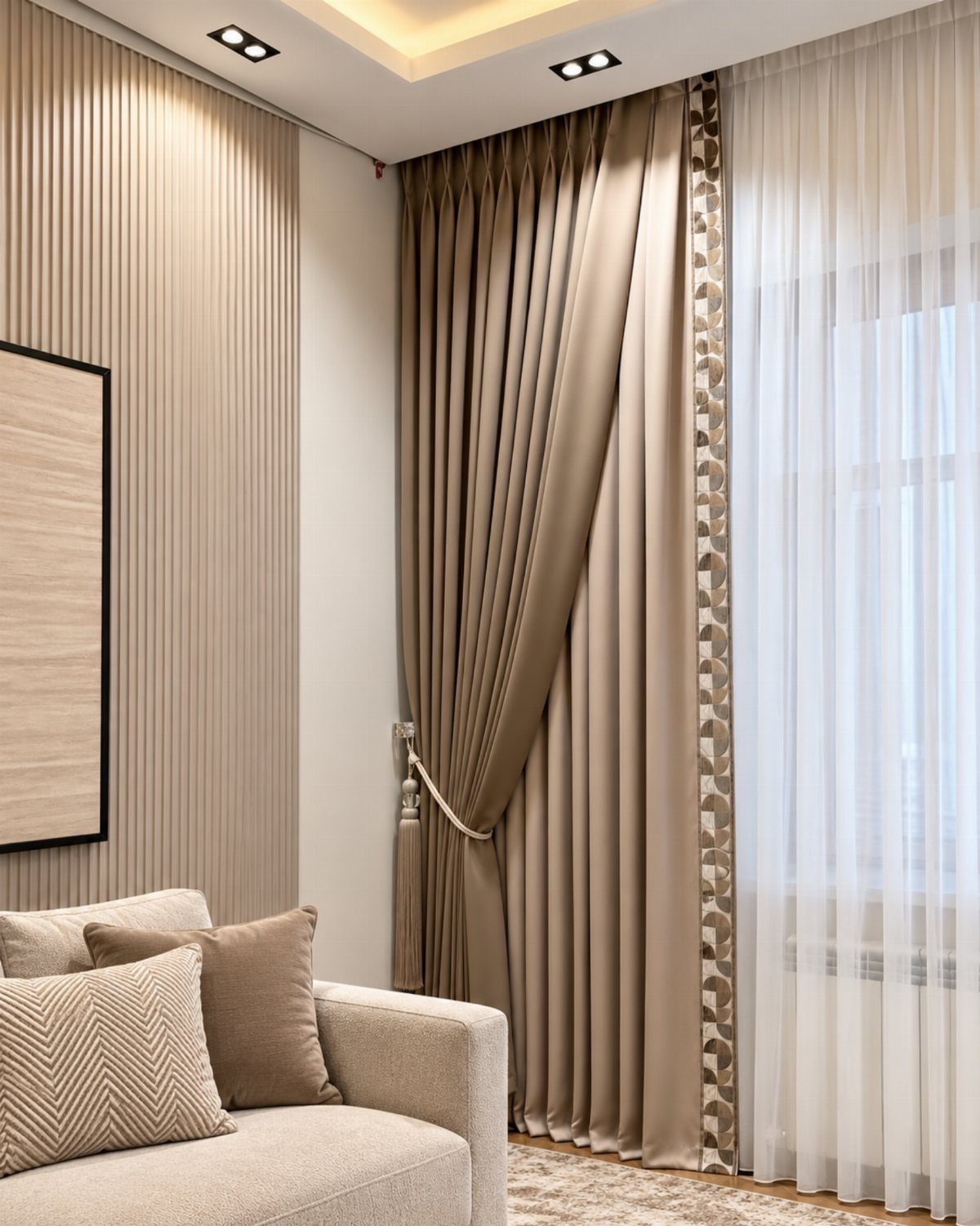
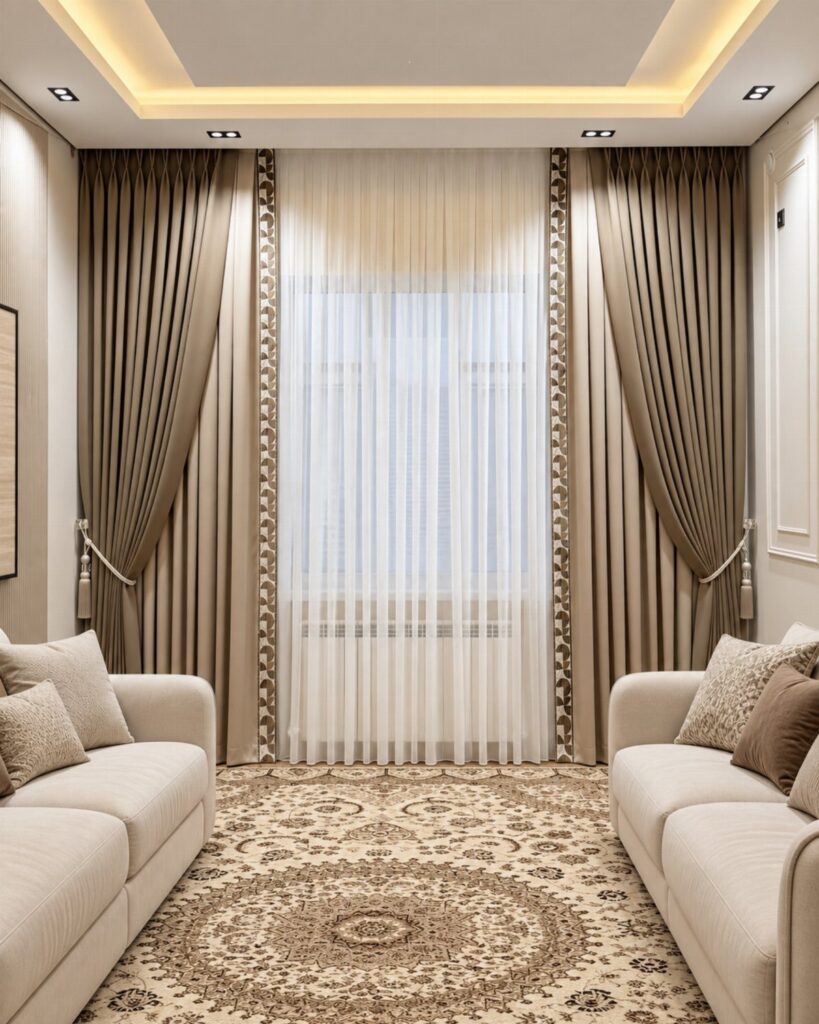
Tie-backs turn floor-length panels into a frame. Pulled to the sides with a cord and tassel, beige drapery keeps the window open to daylight while the fabric still looks full.
Hang the tie-back a little below the midpoint of the panel’s height so the drape gathers softly. Keep the cord color close to the fabric; a tassel is already detail enough.
I like pairing tied-back drapery with a sheer white layer behind it, so privacy is handled once the panels are open. Cord tie-backs are inexpensive, and you can swap them without touching the curtains.
10. Full Wall Pleated Drapery
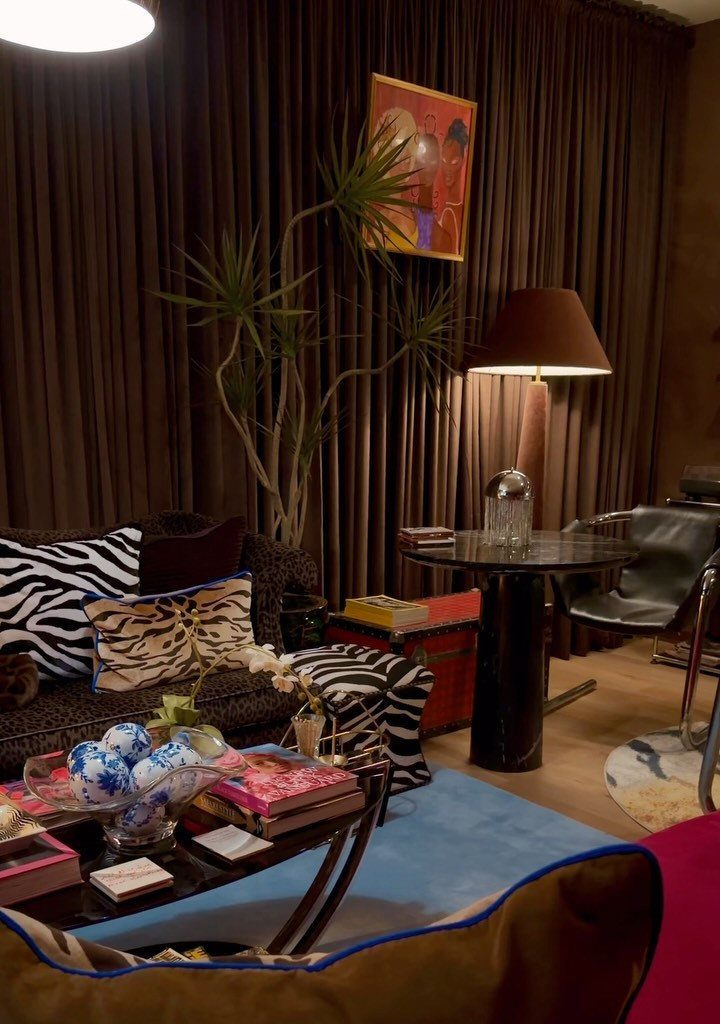
Running pleated drapery across an entire wall, floor to ceiling, makes the fabric the backdrop for the room instead of a window dressing. Dark brown pleats give the sofa wall depth and soften the room.
This works even when the windows are small, or when you want to hide a wall’s flaws. Buy enough panels that the pleats stay full when closed, since a stretched pleat looks flat.
Keep the furniture in front simple.
A busy pillow or 2 is plenty against that much dark fabric. Budget for a lot of yardage; this is the costliest way to hang curtains here.
11. Contrasting Black Rod Panels
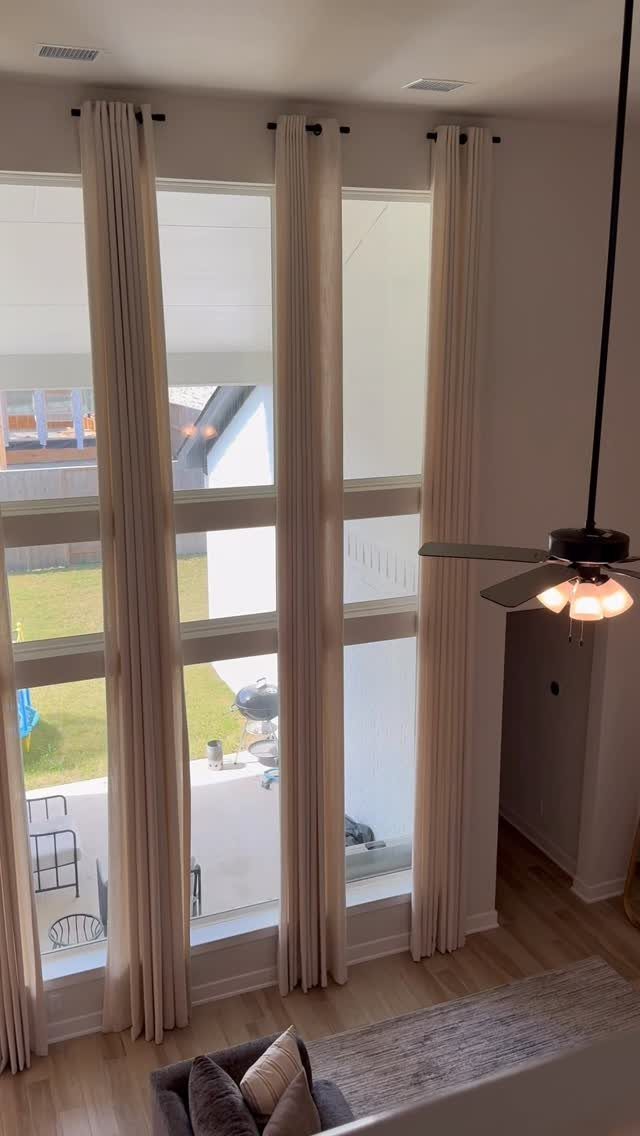
A black metal rod across cream panels is a simple contrast that costs little. The dark line sets off the pale fabric and frames wide windows, especially those that look out onto greenery.
Choose a rod that spans the full width of the window group, and hang 3 panels so the fabric covers the whole run rather than leaving gaps.
Cream stays soft against a grey sofa, and black hardware ties in with any dark accents nearby.
I would keep the finish matte, since glossy black rods show every fingerprint.
Choosing the Right Fabric
Fabric weight decides how a curtain works before color or pattern does. Wool and velvet block light and drafts, but their weight reads heavy in rooms under 150 square feet.
Lining or interlining a lighter fabric gives you the insulation and drape without the visual weight.
Lightweight fabrics let daylight filter in; if drafts are not a problem, an unlined sheer layered with a blackout blind gives you both brightness and dark evenings.
Formal drapery fabrics like silk, damask or velvet also block sound, but they usually need careful cleaning.
I would pick them only for windows you open and close rarely, and choose something easier to care for where the curtains get daily use.
Window treatment ideas are essential for most homes; practical as well as super versatile, your curtains can really make or break a scheme, so thinking carefully about the design, shape, and style of the curtains in your space is important.
Measuring for Curtains
Measure width, length and fullness separately, and write each number down before shopping. Curtains should sit higher and wider than the window, so the fabric clears the glass when open and the window looks larger.
Check at both ends and the middle, since floors and ceilings are rarely level, and use the shortest result if you want the hem clear of the floor.
Made-to-measure is worth considering for unusual window shapes. Many online retailers take your measurements and fabric choice and deliver in a matter of weeks, which is simpler than it sounds.
Installation Tips
Renters can skip the drill.
No-drill curtain rod brackets go in alongside the window trim with a tap of a hammer, and the ones I would look at hold up to 20 pounds. Check that weight against your panels before buying; lined velvet adds up fast.
Stick-on pleated shades are the other tool-free route.
Wipe the surface with alcohol on a lint-free cloth, let it dry completely, then press the adhesive for 30 seconds minimum. Leave the shade alone for 30 minutes so the adhesive sets before you pull it up or down.
Pleated shades can be cut down with a straight kitchen knife if the window falls between standard sizes. Ordering the exact size is easier, since then nothing needs cutting.
Frequently Asked Questions
What are the best quality curtains for a living room?
Velvet and silk are the usual picks for a rich look, but both need careful cleaning, so I would save them for windows you rarely open and close.
Cotton, linen or polyester work for most rooms and wash more easily, which suits spots with daily use, kids or pets. It holds up to sun and handles drafts better than polyester, but the price is steeper.
How do you match drapes to a room?
Pick colors and patterns that echo what is already in the room. Florals look calmer when the sofa is plain, neutrals soften next to grey upholstery, and dark rods pull in other black accents.
A patterned shade with plain drapes in a matching color splits the difference when you want some pattern but not wall-to-wall.
What can I use instead of curtains?
Shades and blinds are the simplest swaps.
Roman shades cover privacy and light on their own, and adhesive pleated versions go up without drilling. They also run cheaper than panels wide enough for large windows.
What are some simple curtain style ideas for a living room?
Sheer panels are the easiest start: they let daylight through and soften the view in from outside.
Layering a heavy textured fabric over a light one on a double track adds depth, and cream panels on a black rod give a clean contrast for little money.
Add a shade or blackout layer if the window faces foot traffic, since sheer fabric does nothing to block a sightline after dark.





