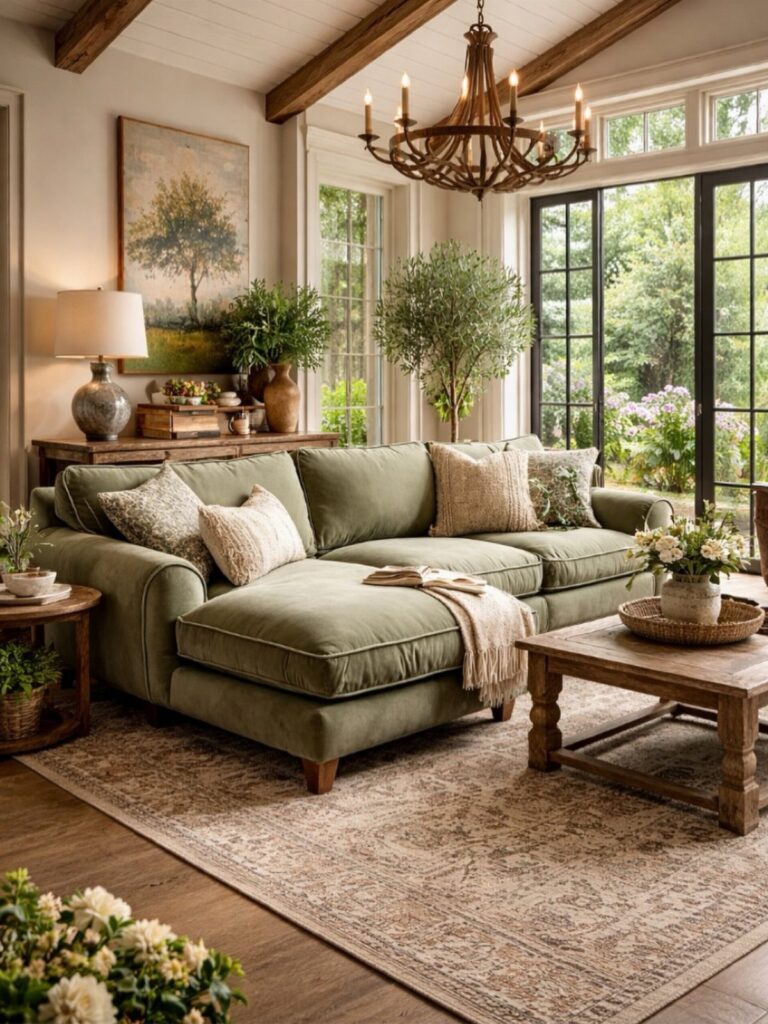
Whether you own or rent decides which of these farmhouse ideas are yours: beams, arched windows, shiplap and built-in window benches mean real construction, while throw pillows, woven baskets and a new slipcover change the room in an afternoon.
The range runs from a free weekend of distressing a plain table to installing a black metal track for a sliding barn door.
1. Natural Materials
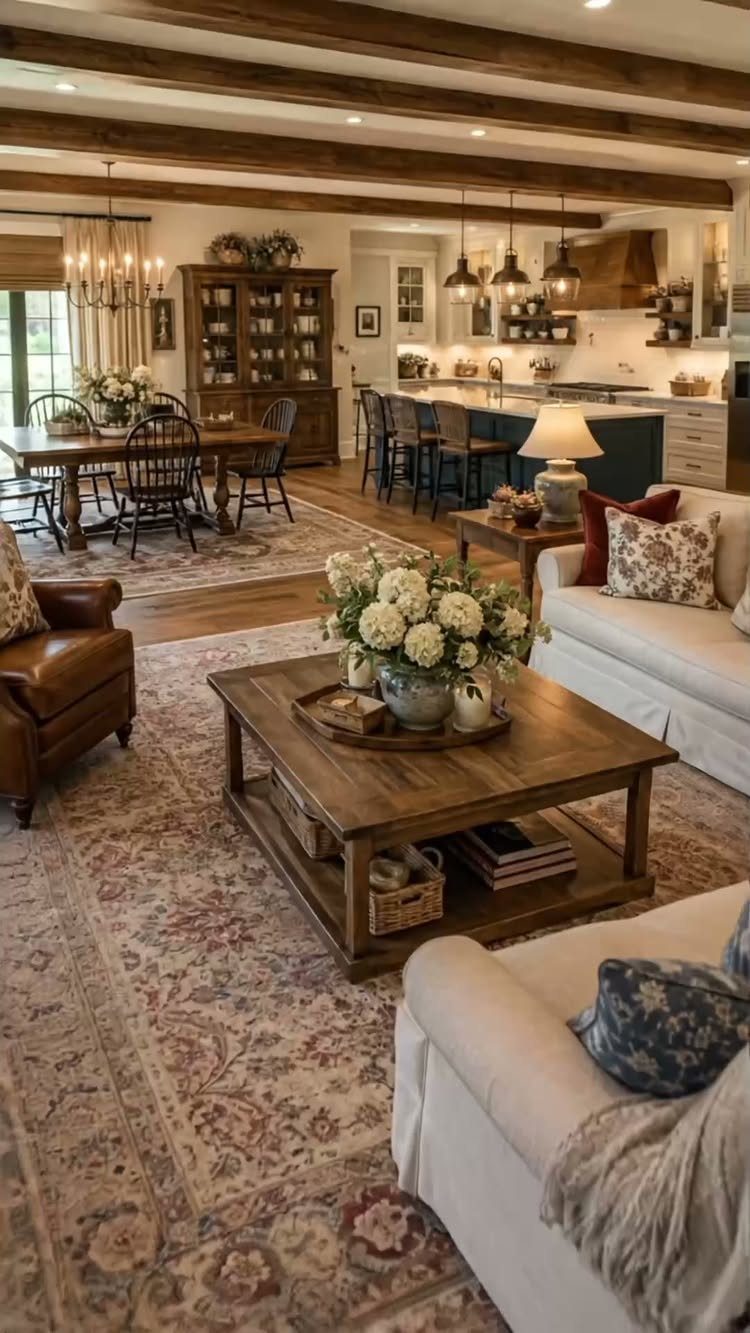
Wood, leather and linen do the warming in a room like this, and the exposed ceiling beams set the tone for everything below them. Echoing that wood in the coffee table and dining table ties the open space together.
For a renter, the easy version skips the beams: pick one wood piece and one leather or woven piece, and the room starts to read the same way.
2. Neutral Color Palette
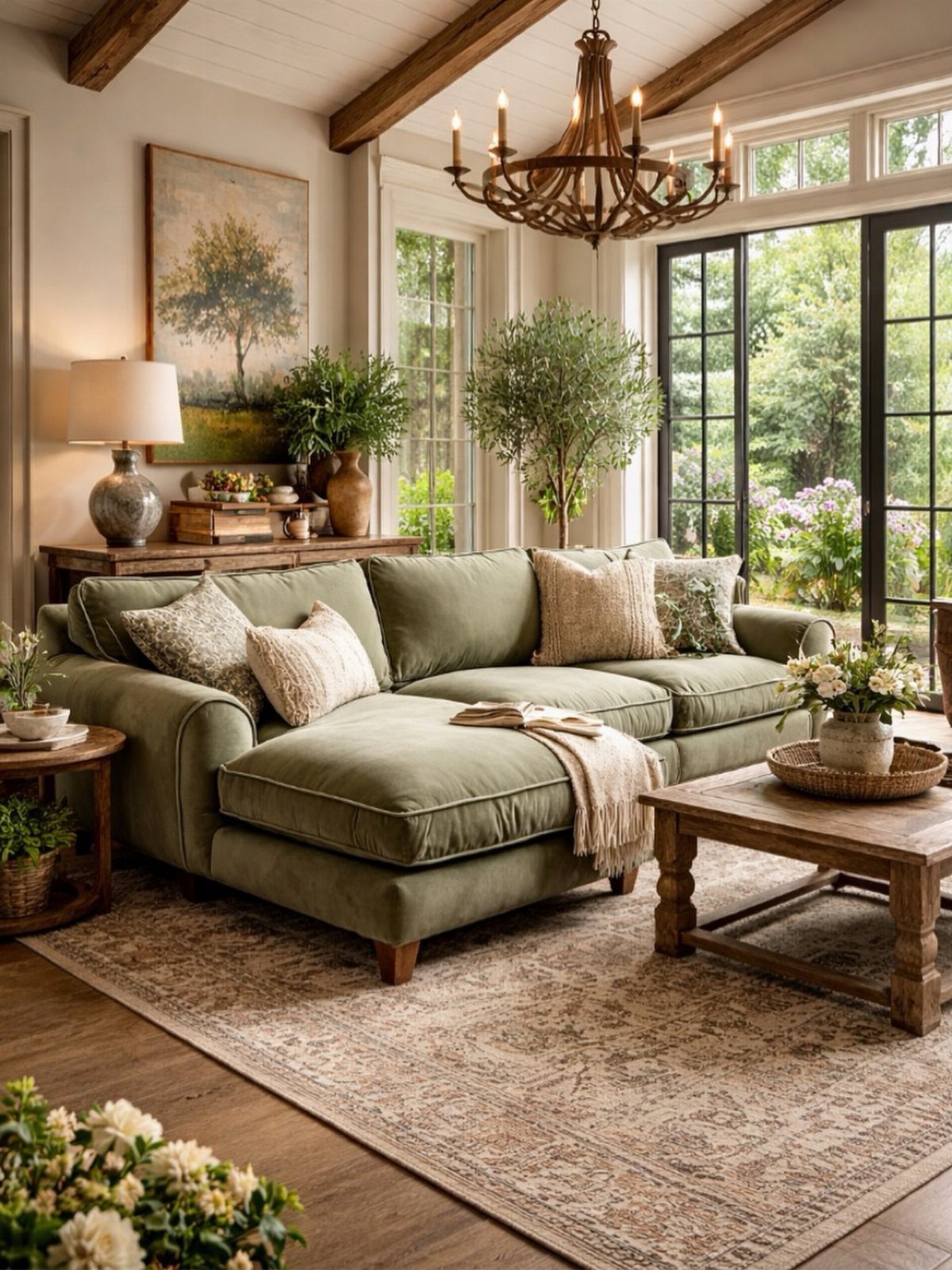
Sage green on a sectional proves a neutral palette can carry a little color. Soft, muted shades keep a room calm, and the rustic wood furniture and beams do the rest of the work.
If paint is off the table in a rental, put the muted color in the biggest piece, as here, and keep walls and the large painting quiet. I would choose one green-gray over three competing tints.
3. Rustic Mantels
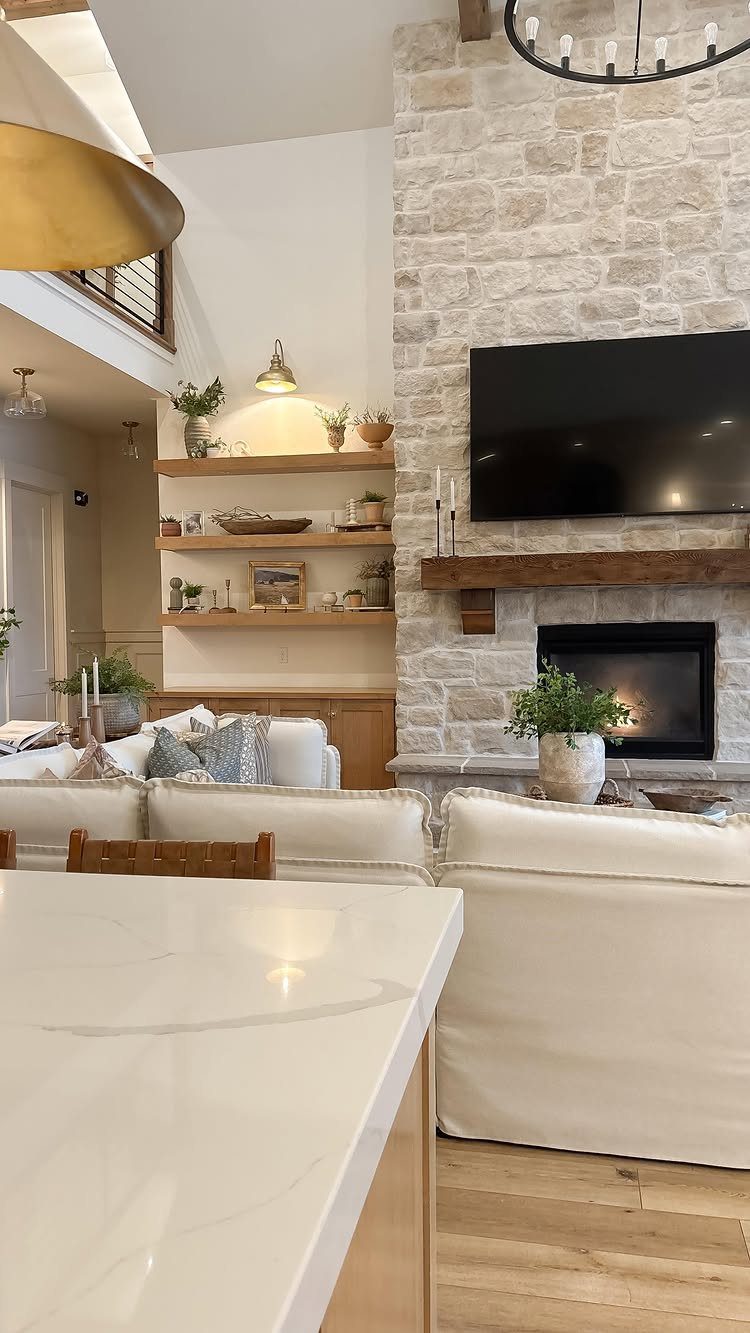
A wooden mantel gives a stone fireplace a warm top edge, and against white stone it reads as the focal point of the room.
With a TV mounted above it, the wood also breaks up all that flat screen and stone.
Choose a thick, rough-textured beam over a thin, smooth shelf if you want the rustic look. Keep what sits on top simple so the wood stays the star.
4. Distressed Furniture
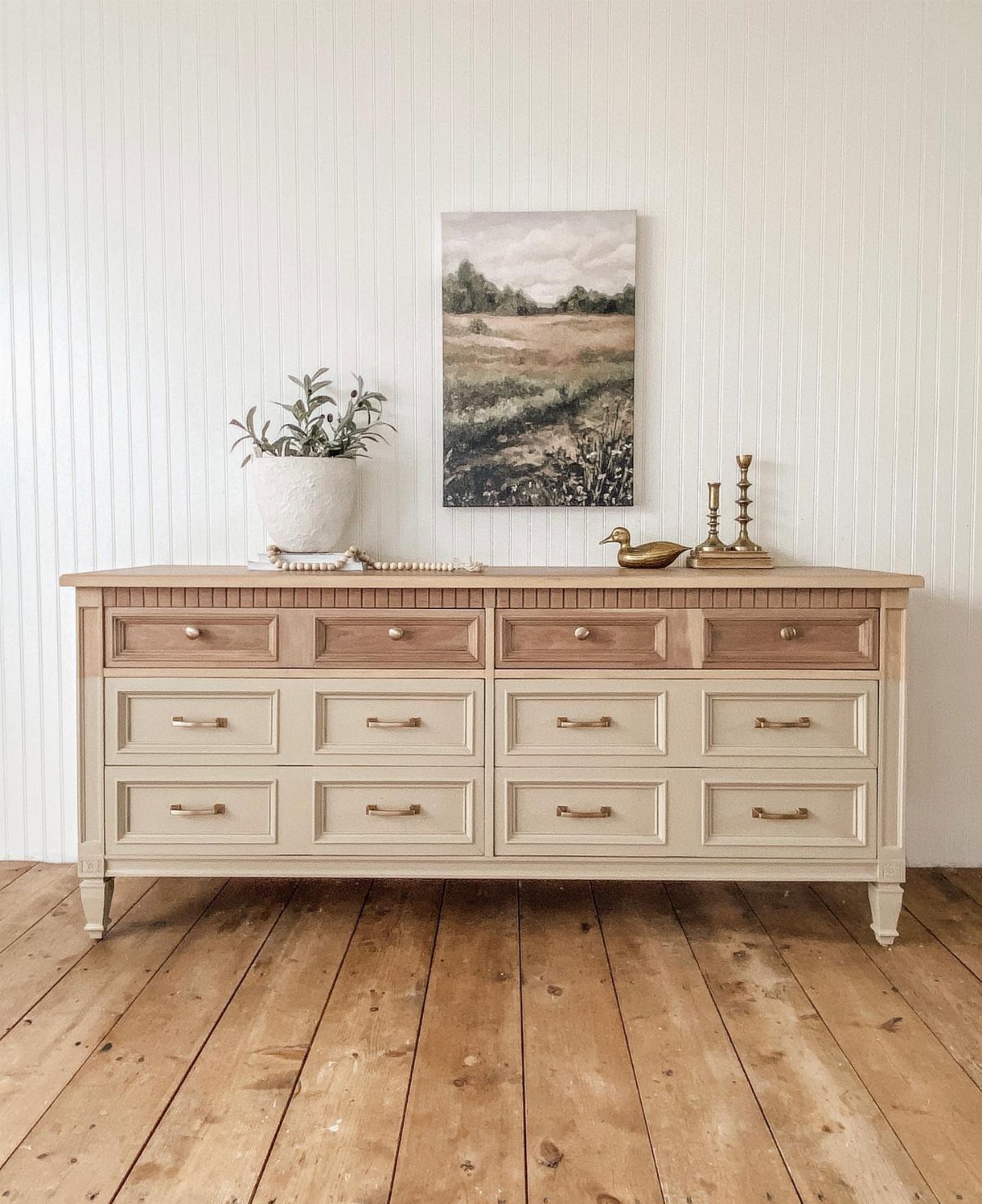
Weathered finishes make a dresser look lived-in, and a two-tone piece like this one, light paint with natural wood showing through, is easy to place.
It suits an entry or a living room wall, topped with a plant, a painting and a bit of brass.
Secondhand shops are the budget route, and a worn piece costs less than a new "distressed" one. I would pick the genuine wear over a factory finish.
5. Sliding Barn Doors
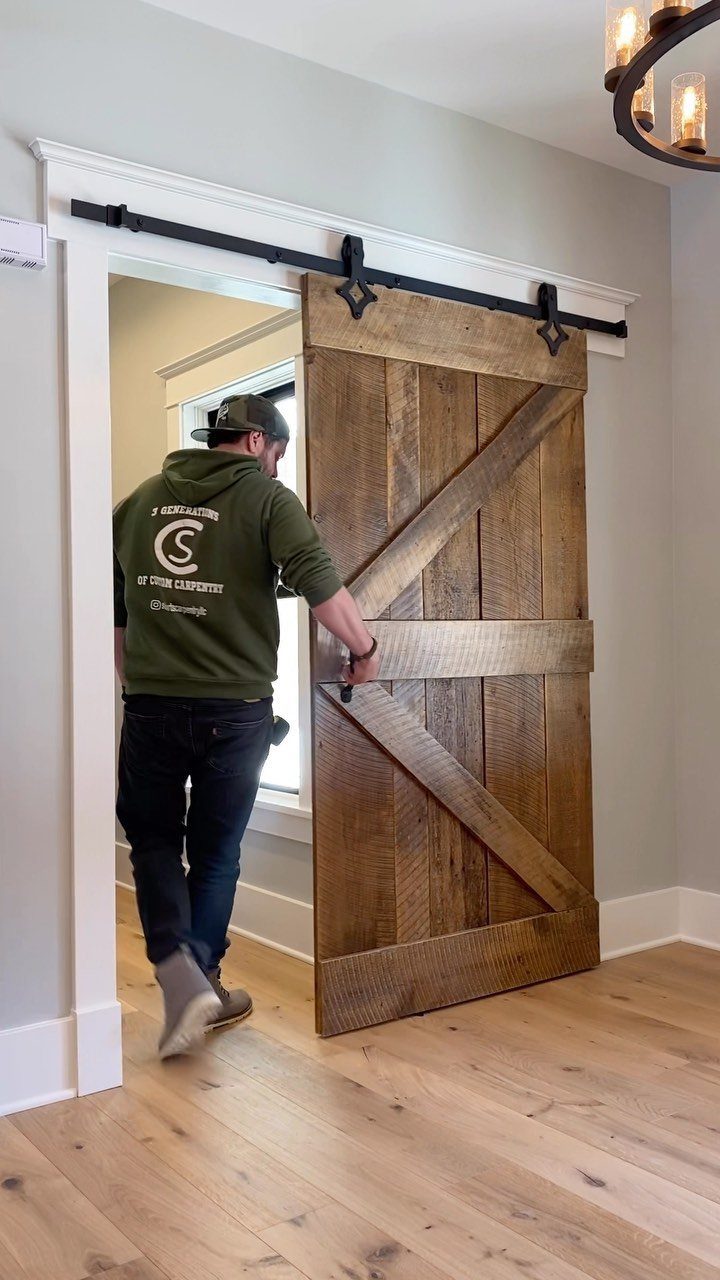
A sliding barn door on a black metal track saves the floor space a swinging door would need. That matters in small rooms where a door arc blocks the furniture.
The wood adds rustic character, and the dark track gives a clean contrast. Measure the wall beside the opening first, since the door needs clear wall space to slide into.
6. Throw Pillows and Blankets
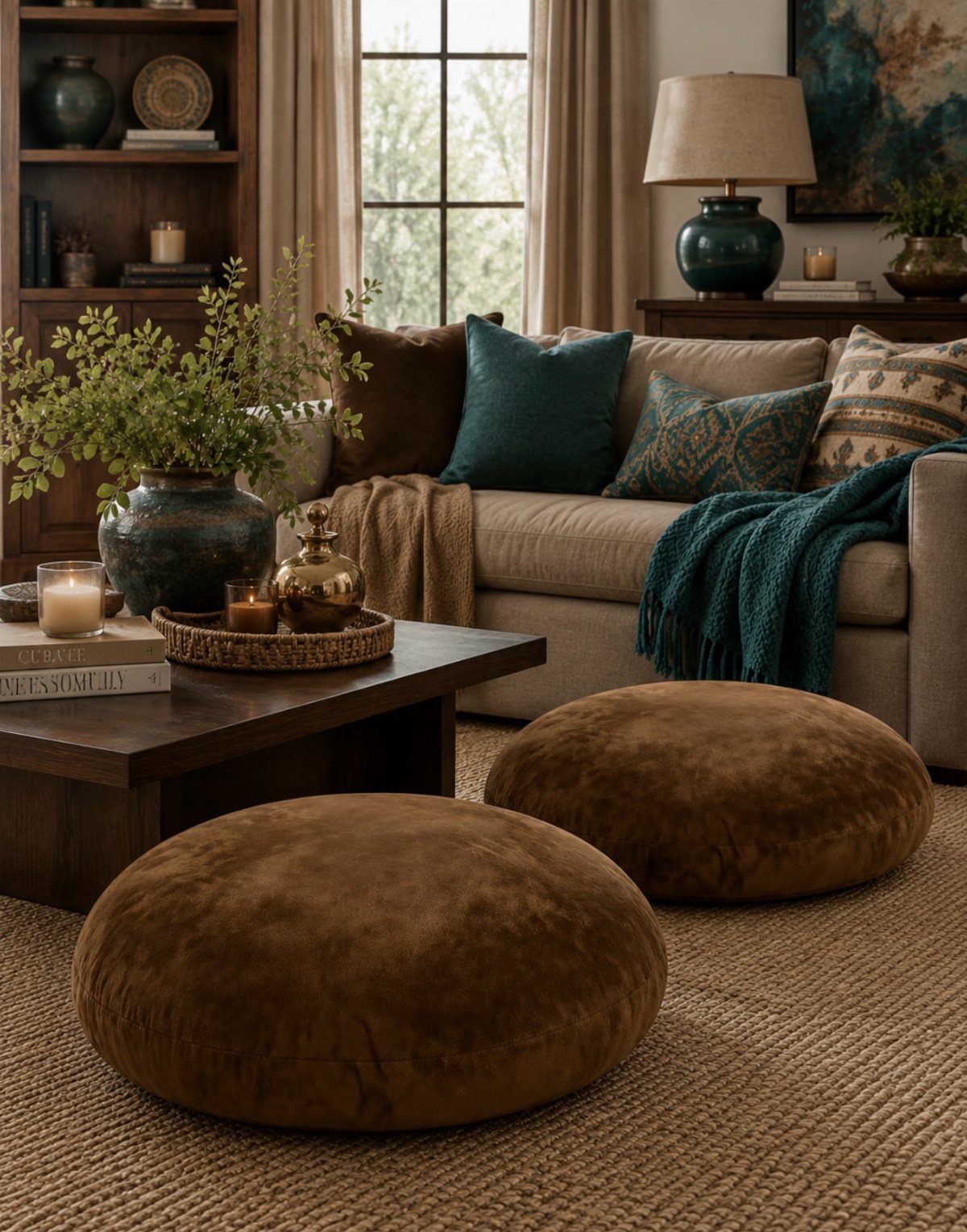
Pillows and a blanket bring color into a neutral room for less than any furniture swap would cost.
Teal and brown on a beige sofa show the formula: one main accent color, one earthy tone, and a throw that repeats the accent.
Floor poufs add seating that stores away. I would buy the covers rather than whole new pillows, so the color is easy to change.
7. Lighting Fixtures
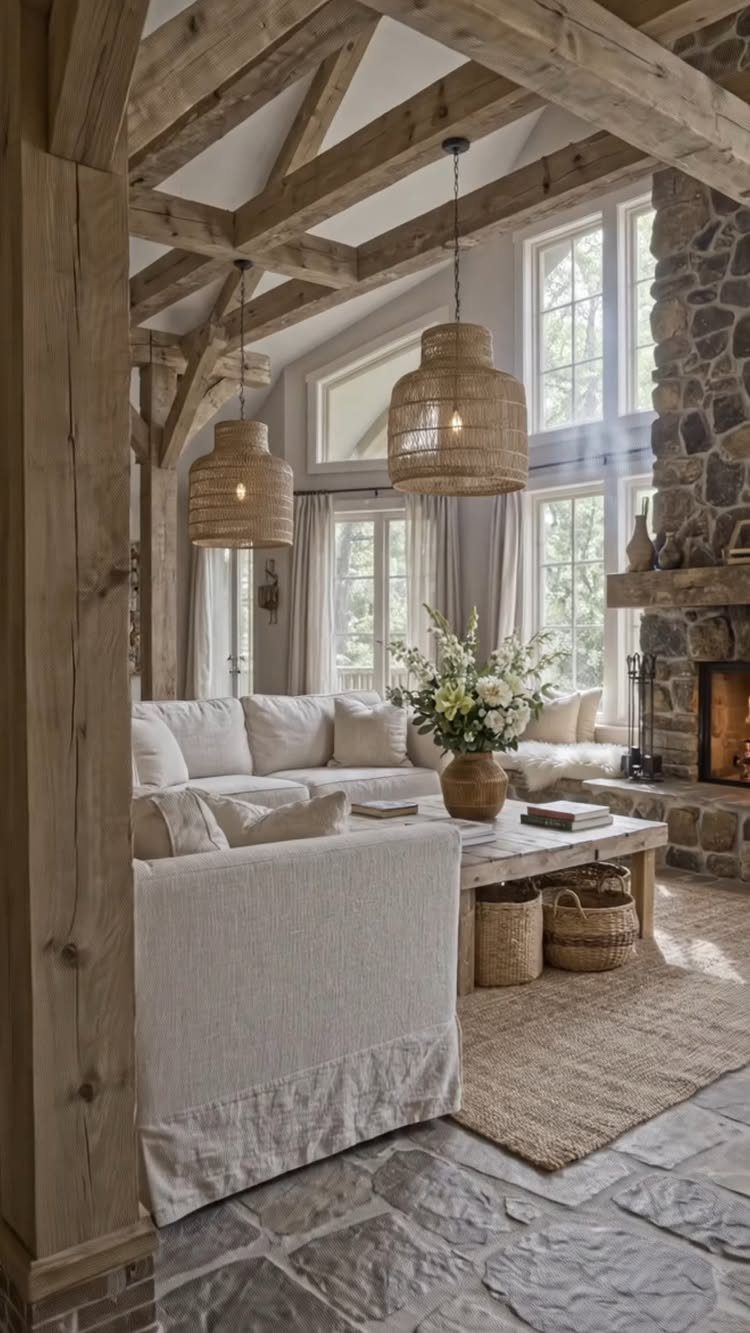
Two oversized woven pendants fill the space under a beamed ceiling and add soft texture where a plain fixture would disappear. Their open weave and natural fiber suit the stone and wood below.
Pick one or two large fixtures over several small ones, so the ceiling stays calm. I like a pair hung over the sofa, since big shapes read as part of the room’s design.
For a rental, a plug-in swag pendant or a woven shade that fits over the existing fixture keeps the look without rewiring.
8. Built-in Window Benches
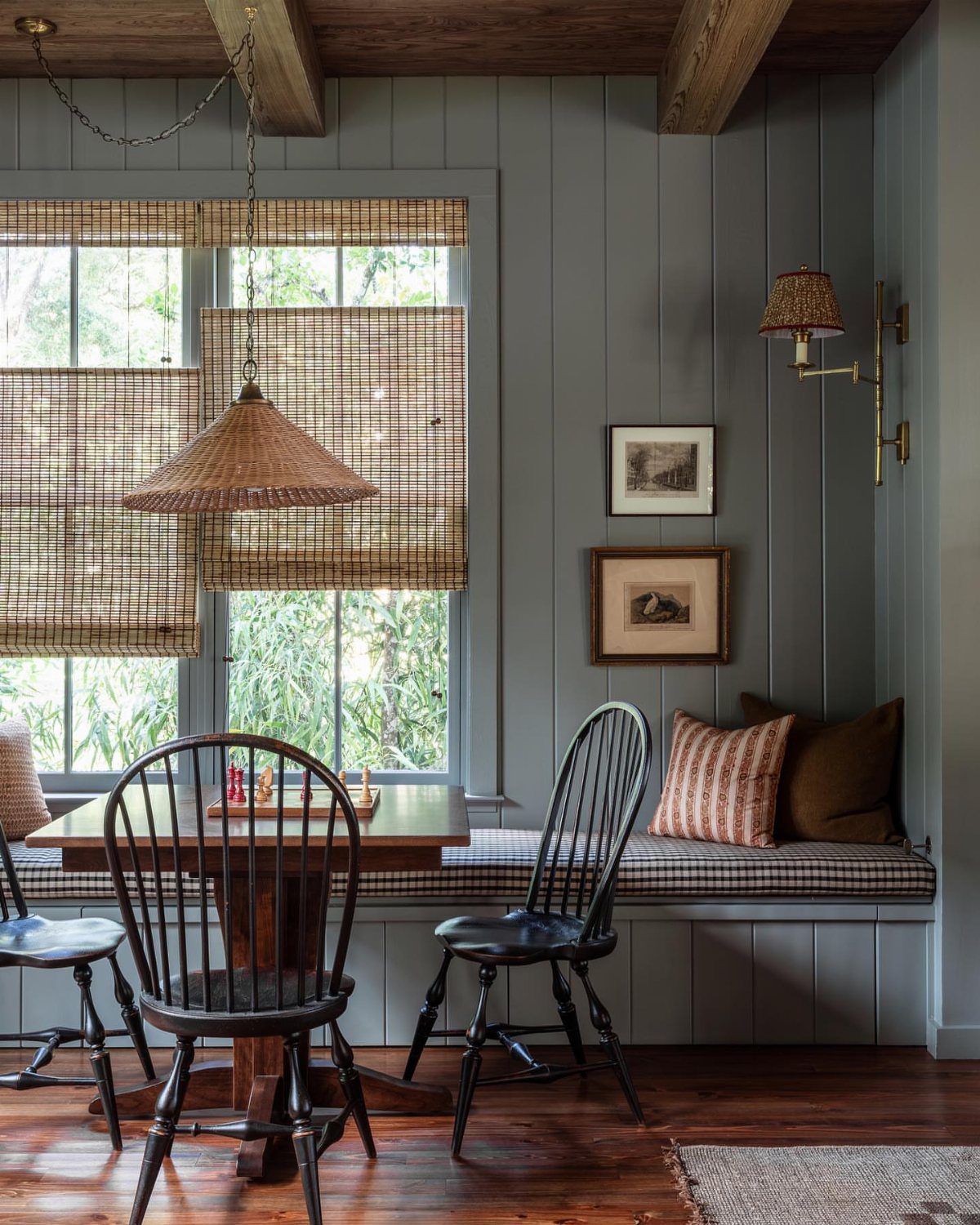
A bench built along a window gives a dining area seating that never has to be pulled out or pushed in. Checkered cushions soften the wood and add pattern to a room of solid shades.
Because the bench tucks against the wall, the table can sit closer to the window and leave more floor open. I would choose washable cushion covers, since a seat people eat on takes spills.
Storage inside the base is a good add-on if you build it yourself.
9. Shiplap
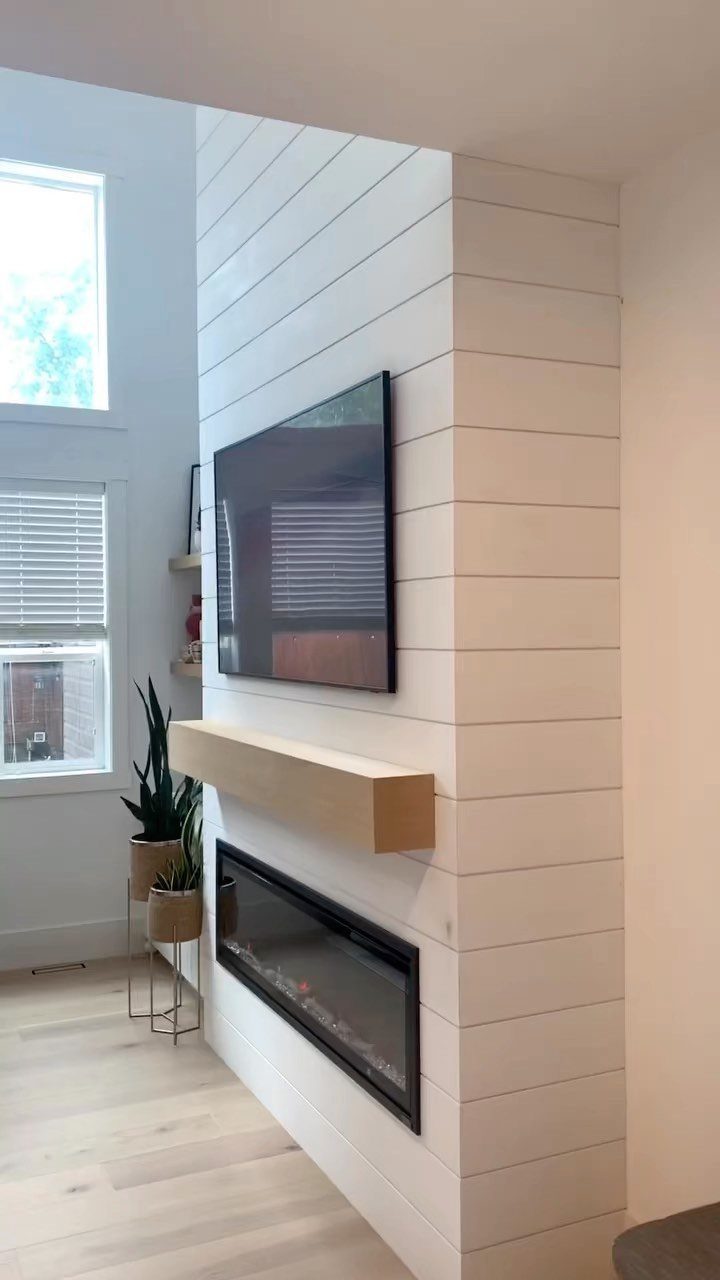
Horizontal planks on one wall bring texture through lines alone.
Limit it to the focal wall. Covering every wall flattens the effect, while one wall gives you a clear center.
Paint the planks the same white as the trim for a clean, matched finish.
10. Bold Beams and Dramatic Windows
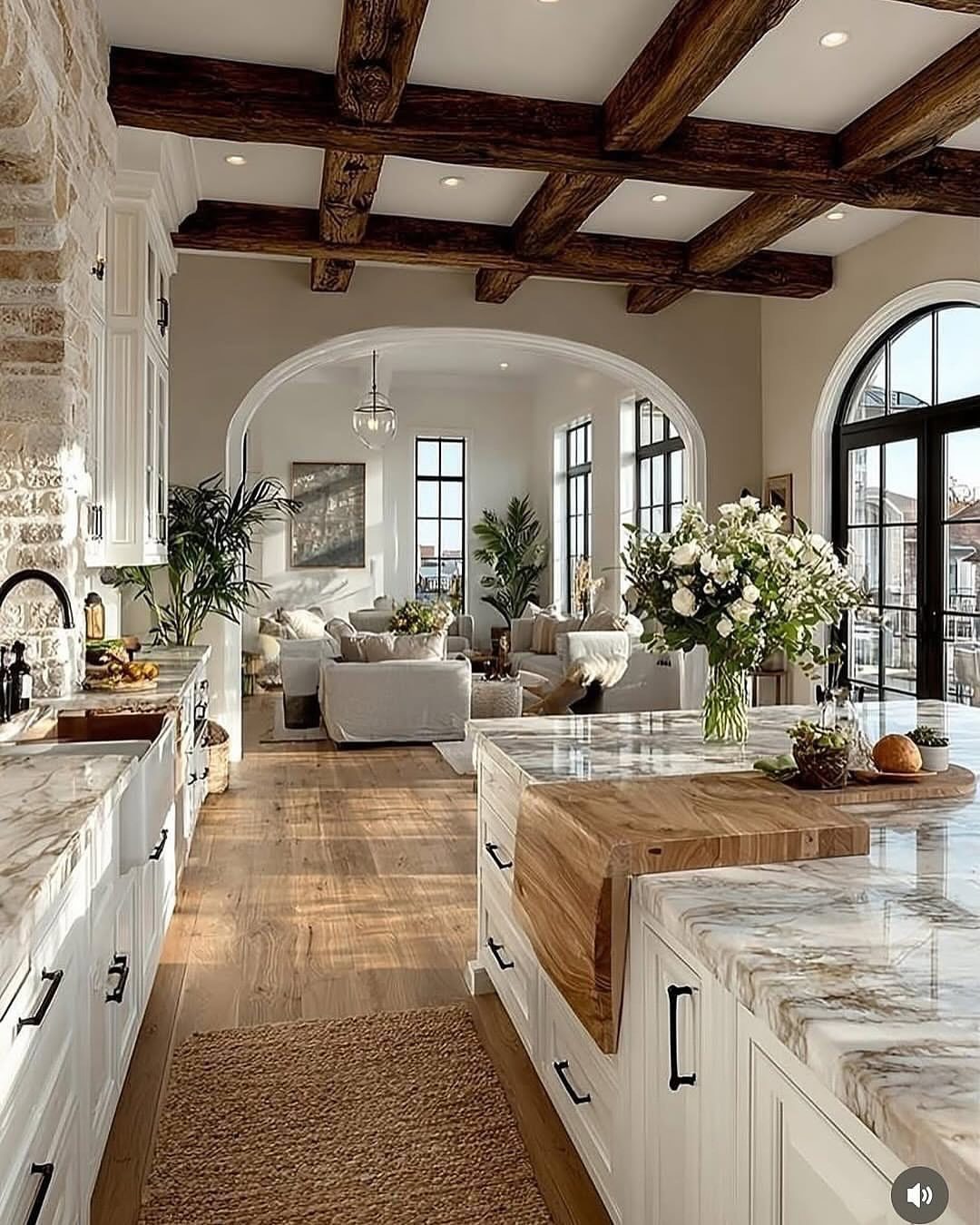
Dark ceiling beams and tall arched windows give a living room weight and height at once. The dark wood draws the eye up, and the arches soften the beams.
Both features are architecture, so they cost real money and rarely suit a rental. I would pick one: either beams in a deep stain, or one arched window shape as the room’s main feature.
Keep the furniture light so the room does not feel heavy.
11. Slipcovered Sofas
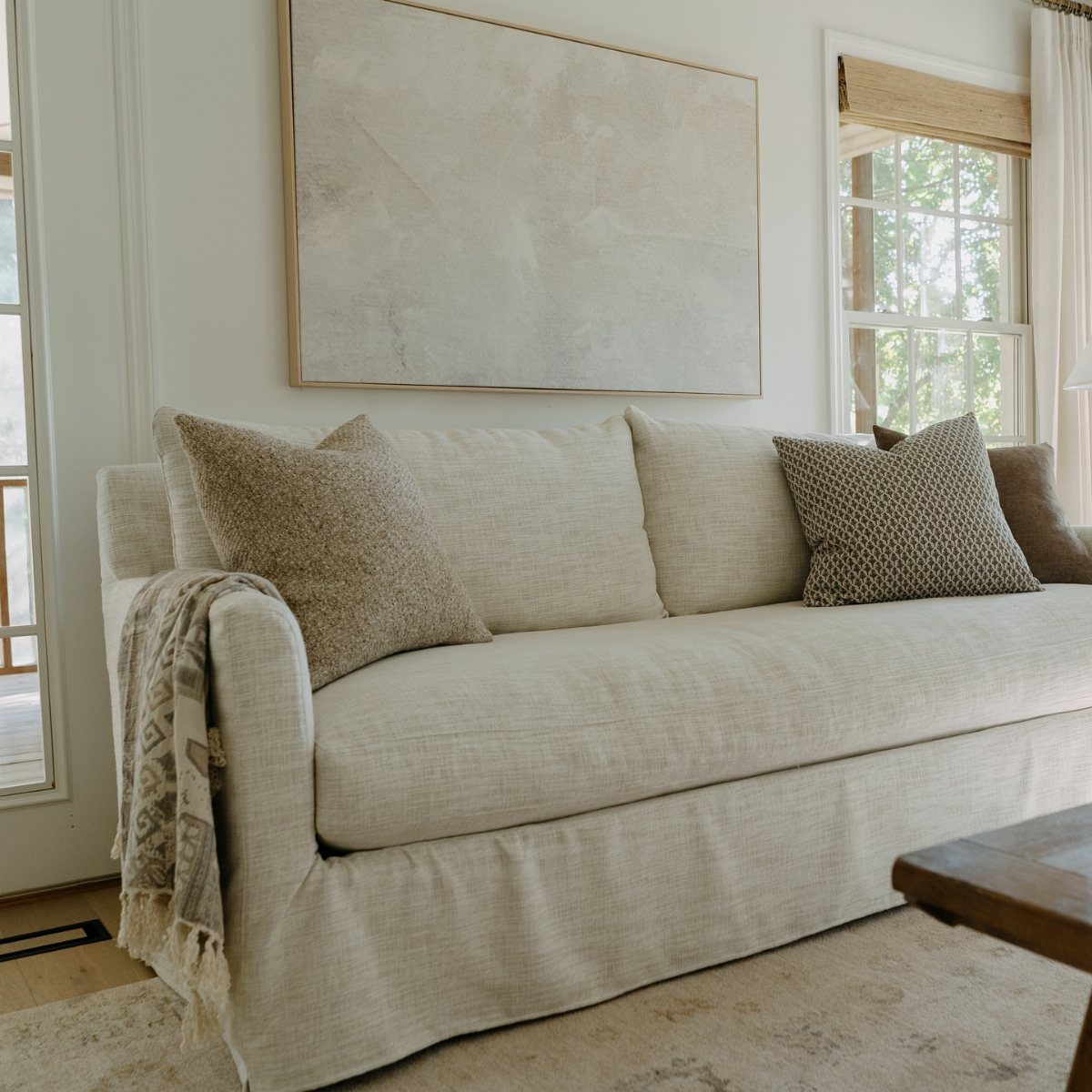
A slipcover makes a sofa easy to live with, because the cover can come off and be cleaned instead of the whole piece being replaced.
In cream, it also gives a room a relaxed, slightly rumpled look that fits the farmhouse style.
Layer textured pillows and a throw on top, and the soft cover reads as intentional rather than messy. I would choose a cover that comes off fully, not one sewn in place.
Check the care tag before buying, since washability matters most.
12. Farmhouse Accessories
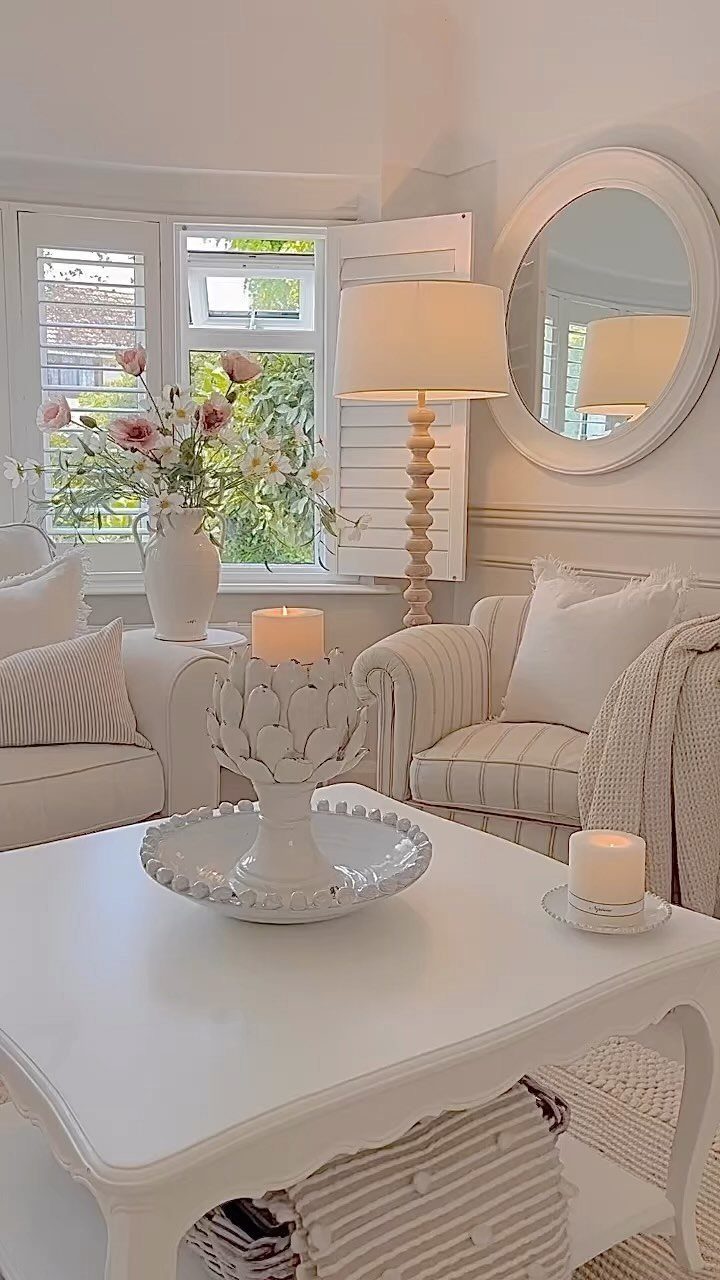
Small accessories carry a farmhouse room once the furniture is settled.
Fresh flowers do more than most items on this list for the price. I would group objects in threes on the table and leave open surface around them, so the tabletop does not look crowded.
Buy a few pieces first, live with them, and add only what the room still needs.
You don’t need a chicken coop out back to enter the timeless farmhouse decorating mode, just a sense of creativity and perhaps a thrill of a good (furnishings) hunt.
13. Gallery Walls
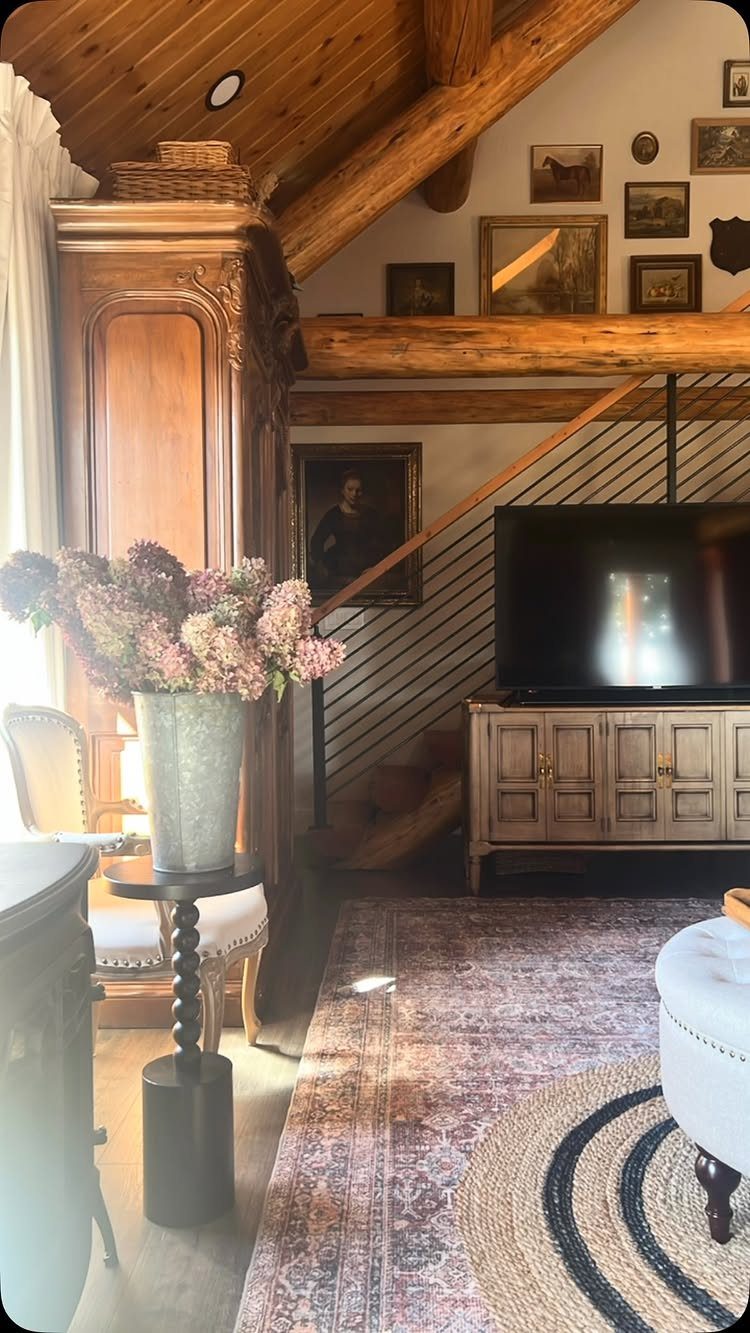
A gallery wall of small frames gives a plain stretch above a beam something to look at, and it pulls the eye toward the middle of the room. Keeping the frames small lets the log beam stay the larger shape.
Lay the frames out on the ground and shuffle them until the spacing feels even.
Then hang from the center out. I would stick to one or two frame finishes so the group reads as a set.
14. Open Shelving
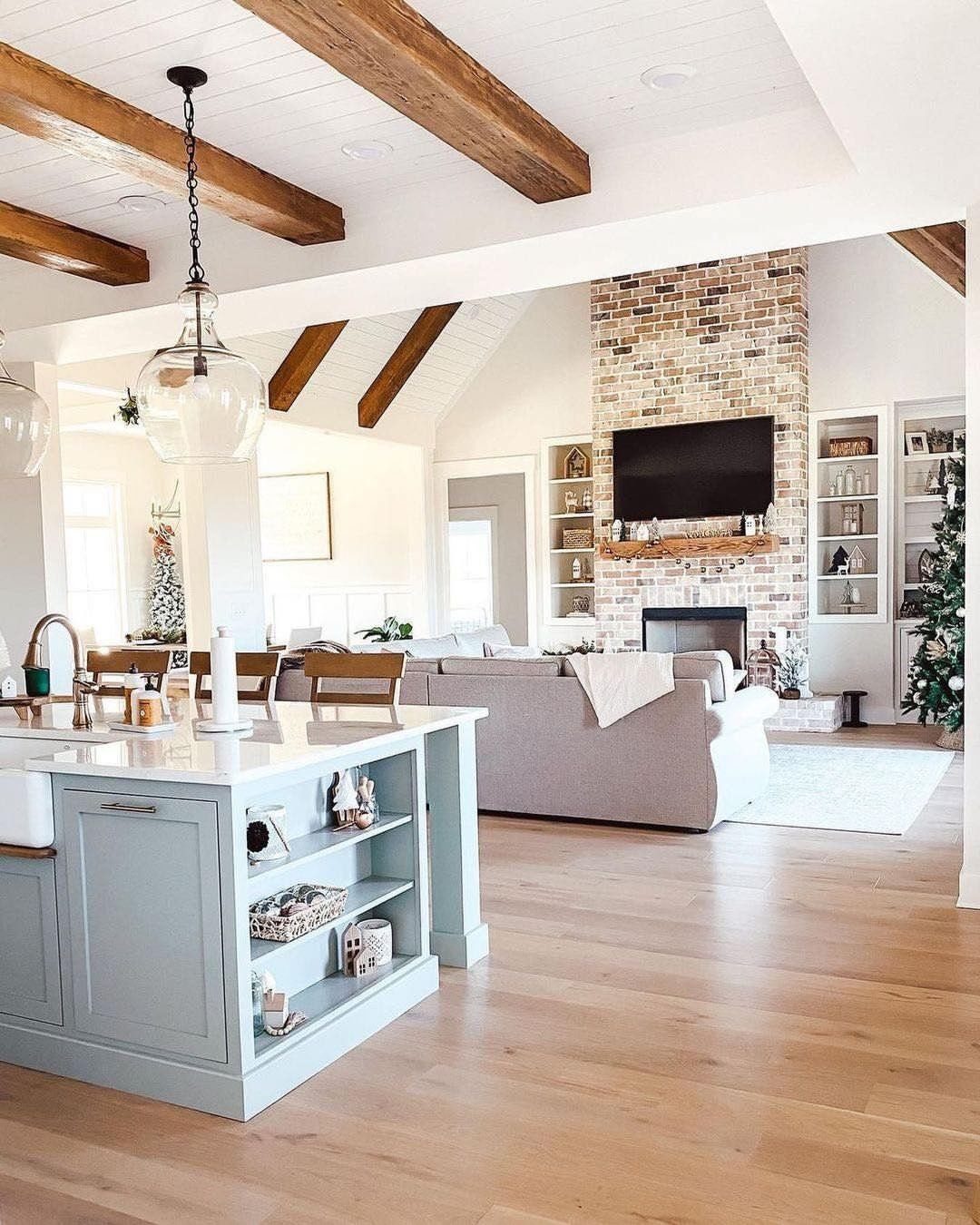
Open shelving on a kitchen island turns storage into display, and a light blue base makes the shelves feel like part of the furniture rather than an afterthought.
In an open-concept room, it also links the kitchen to the living area.
Keep to dishes and pieces you use daily, since everything shows. I would style one shelf at a time and leave a few gaps so it never looks stuffed.
15. Woven Baskets
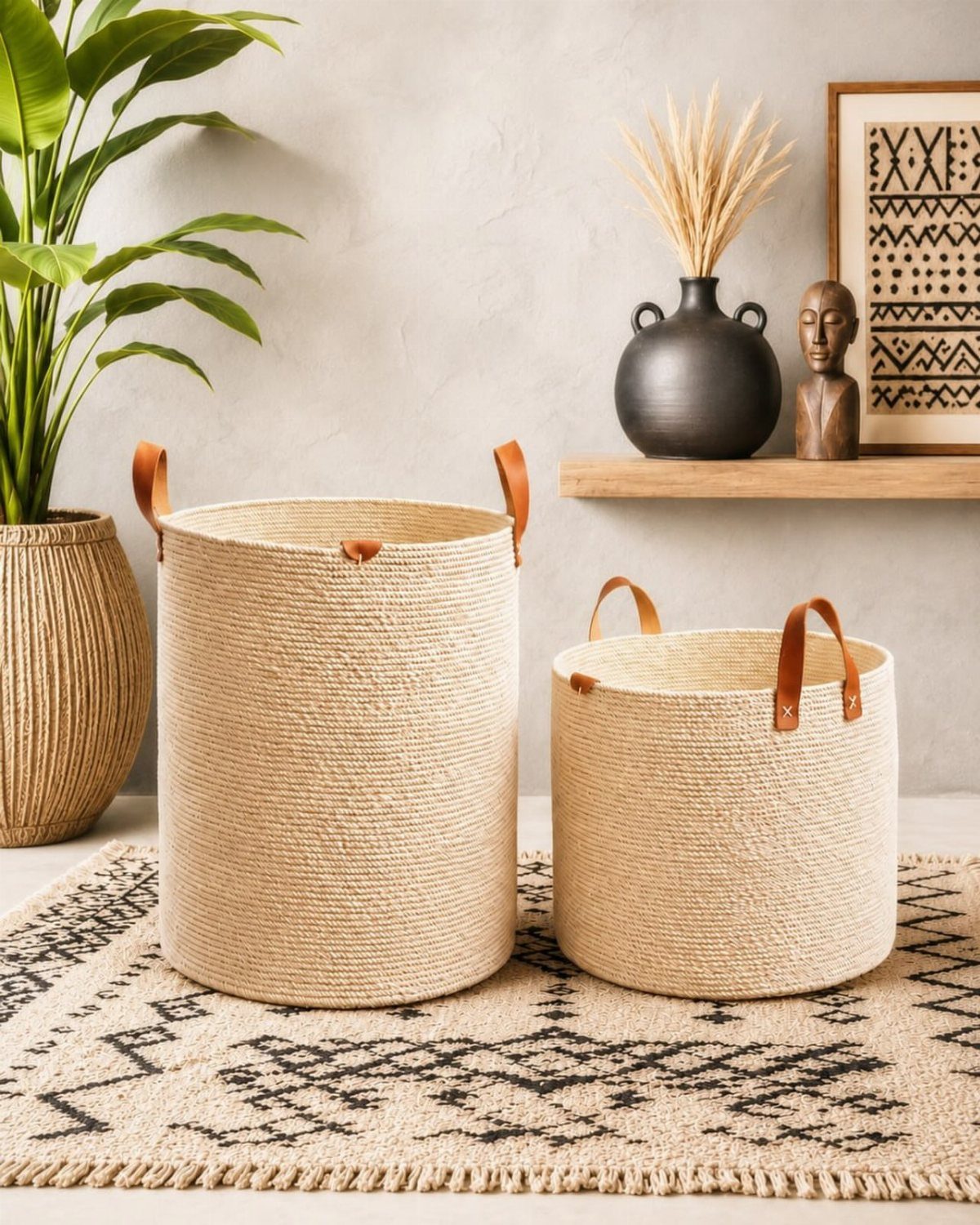
Woven baskets with leather handles hide clutter and look good while doing it. They suit a floor beside a shelf, where a throw or toys can disappear in seconds.
Pick baskets with sturdy handles so you can carry them room to room.
I would buy two in matching fiber and different sizes rather than a mismatched set. A basket with a lid is the better pick for small items.
16. Decorative Signs
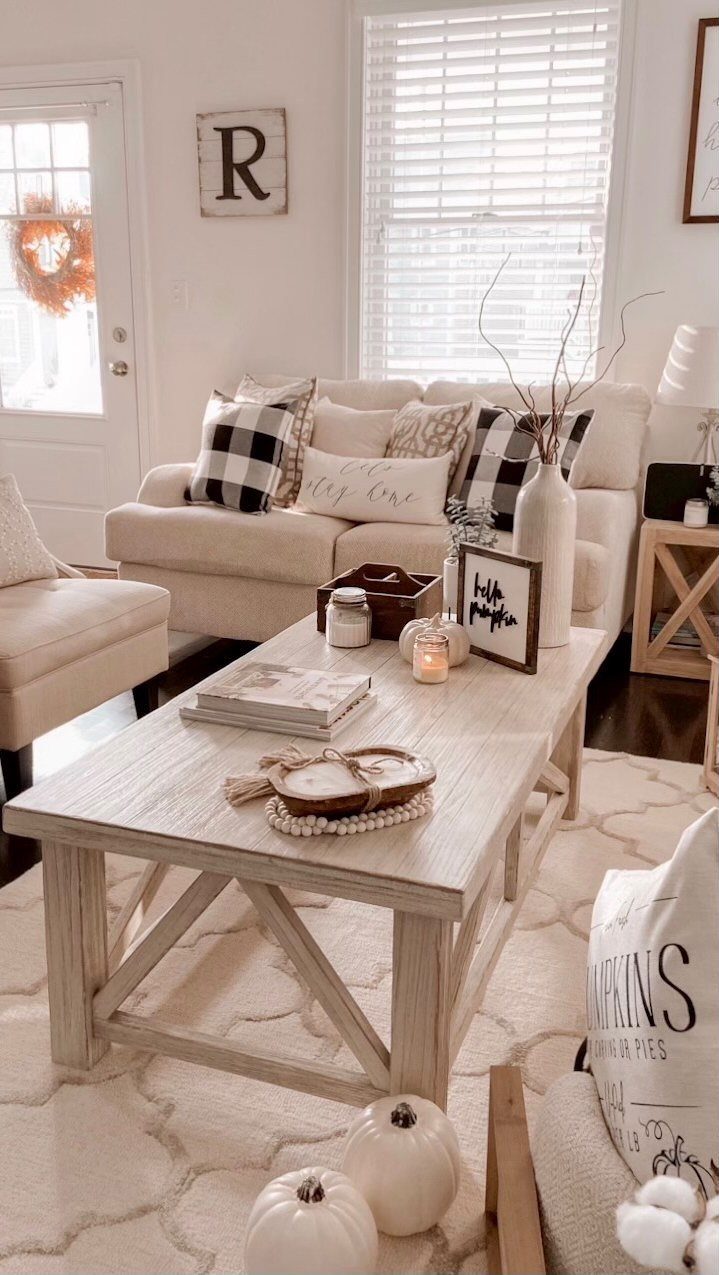
Signs bring words into a room, and a short phrase like "stay home" says its message without a lot of fuss. Hung in a small group, they work as quiet wall art over a sofa.
Choose wording you will still like in a year, not something tied to a single season. I would hang a couple at most, with plenty of blank wall between them, so the messages stay easy to read.
17. Accent Chairs
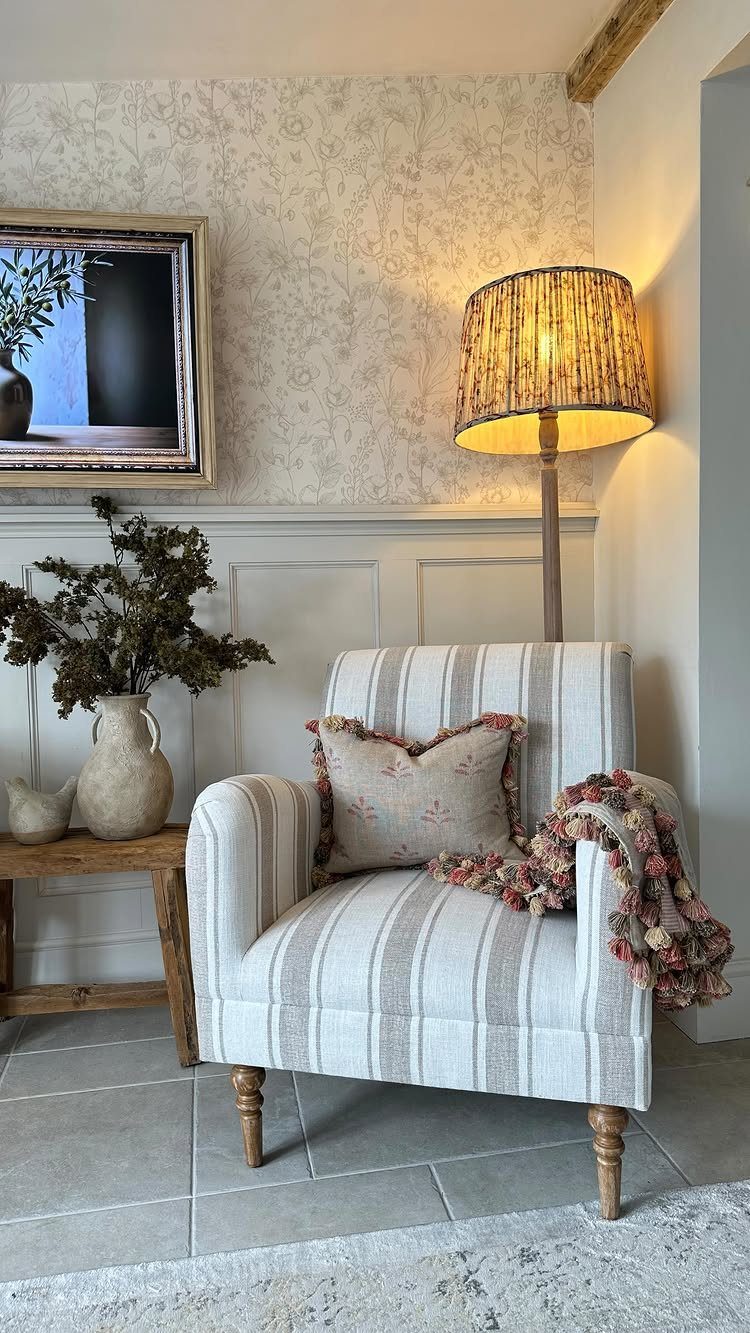
A striped accent chair adds pattern and a second seat without crowding the sofa.
Pick a chair that repeats a color already in the room, so the stripe feels planned. I would choose a stripe with a bold pattern over a busy one, especially against floral wallpaper, since two loud patterns compete.
18. Potted Plants
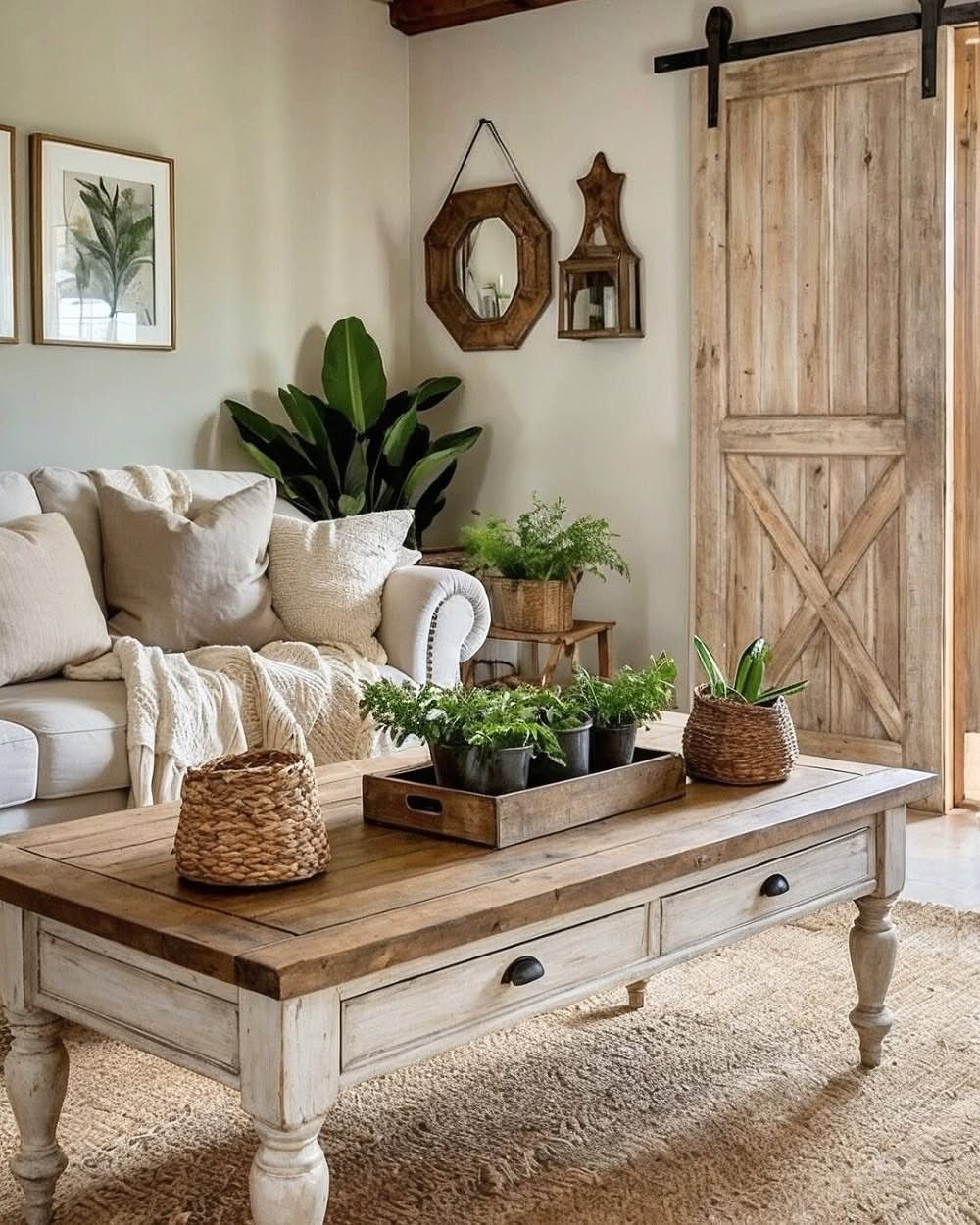
Potted plants on a wooden coffee table bring a living, green note to a room of white and wood.
Group a few pots on a tray or board to protect the wood and keep them tidy. I would pick plain terra-cotta or white pots, so the leaves are what you notice.
Incorporating Natural Textures
Texture does more work than color in this style, so build it in layers: one reclaimed wood piece, one soft textile, one woven accent.
Linen curtains, a thick wool rug and a cotton throw each add a different kind of surface, and the mix is what makes a room feel rich instead of flat.
Rattan lampshades and cane furniture bring the woven note in a lighter way than baskets do. A single cane chair or one rattan shade is enough to carry it.
Weathered pieces can be made at home. Distressing wood yourself is easier than it looks, and a sanded edge or two on a plain table gives you the worn look for the cost of sandpaper and a free afternoon.
Furniture and Layout Ideas
Choose furniture for how you live first, and for style second. A farmhouse room still has to hold movie nights, guests and a coffee mug that needs a surface.
A rustic coffee table pairs well with a soft sofa because the two contrast: heavy wood against a relaxed cover. Pick a table with a lower shelf if you lack storage, so magazines and remotes have a place.
Simple lines matter more than ornament. A clean-lined sofa in neutral linen lets rustic warmth and refined shapes sit together without competing for attention.
Before buying, tape the footprint of each piece on the floor and leave a clear walking path around it.
Frequently Asked Questions
How to decorate your home farmhouse style?
Begin with wood, a woven or leather accent, and one soft neutral like cream or sage. Add small accessories last, a few at a time, so the room never fills up with things it doesn’t need.
How to style a rustic living room?
Mix surface types: reclaimed wood against linen and woven fiber.
Different textures in each material prevent the room from reading flat. Pair a heavy wood coffee table with a clean-lined, relaxed sofa, and keep accessories limited and intentional.
What is a good living room layout?
Choose furniture for how you live first and style second, since the room still has to hold movie nights, guests and a coffee mug.
Mark the floor with tape first and confirm you can still walk through. Lower shelves on a coffee table hold everyday objects when closets are full.
What is the most popular home decor right now?
Farmhouse style stays popular because it mixes rustic warmth with simple, refined shapes.
Simple frames and straight lines ground the style, then weathered finishes and soft fabrics warm it. The look works on a budget too, since worn secondhand pieces and a few textiles do most of the work.





