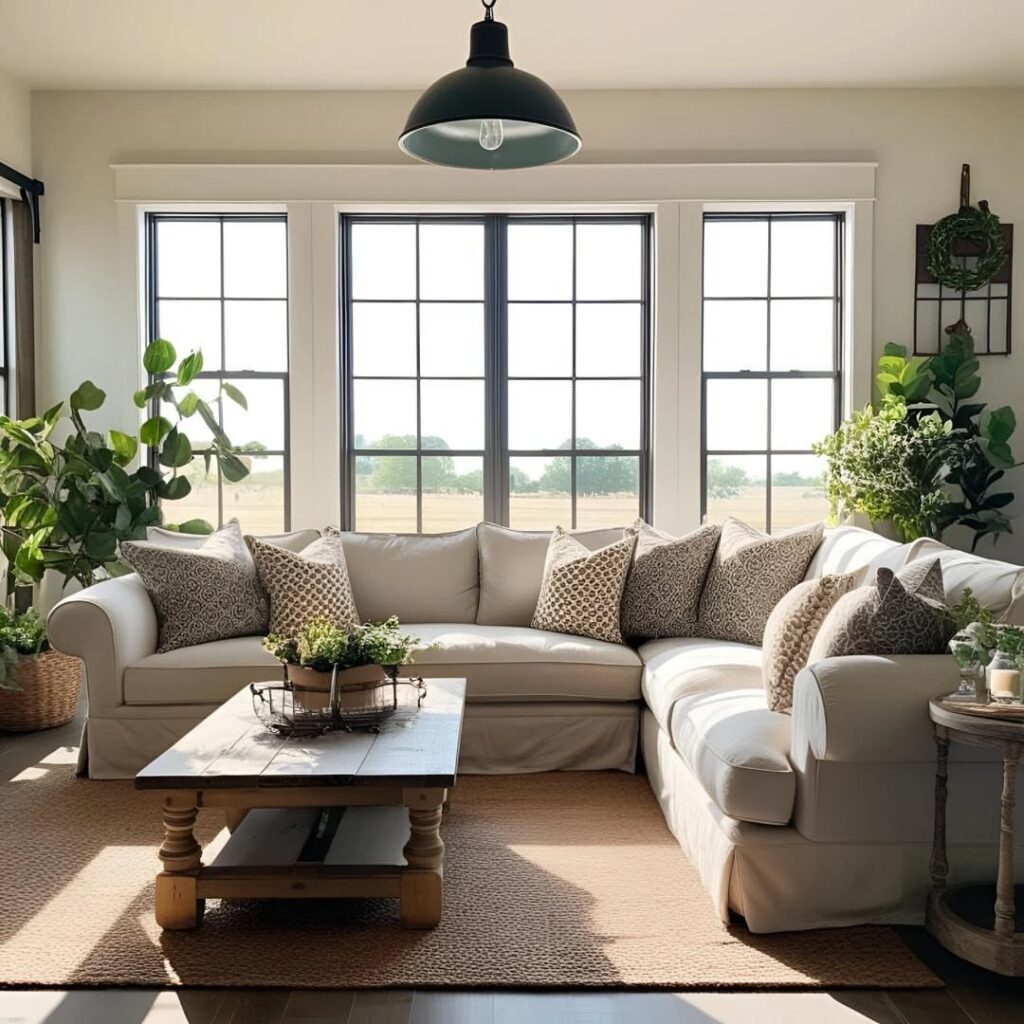
Renters and owners get different answers here: a pillow cover, a jute rug with scalloped edges or a brass light fixture costs little and comes off at move-out, while built-in shelving, a sliding barn door on a black metal track or a stone fireplace belongs to people who can change the structure.
If the walls stay as they are, slipcovers, natural fiber rugs, decorative trays and colorful pillows carry the style instead.
Renters work with slipcovers, jute or sisal rugs, chunky knit throws and wrought iron chandeliers, all of which pack up at move-out.
1. Stone Fireplace
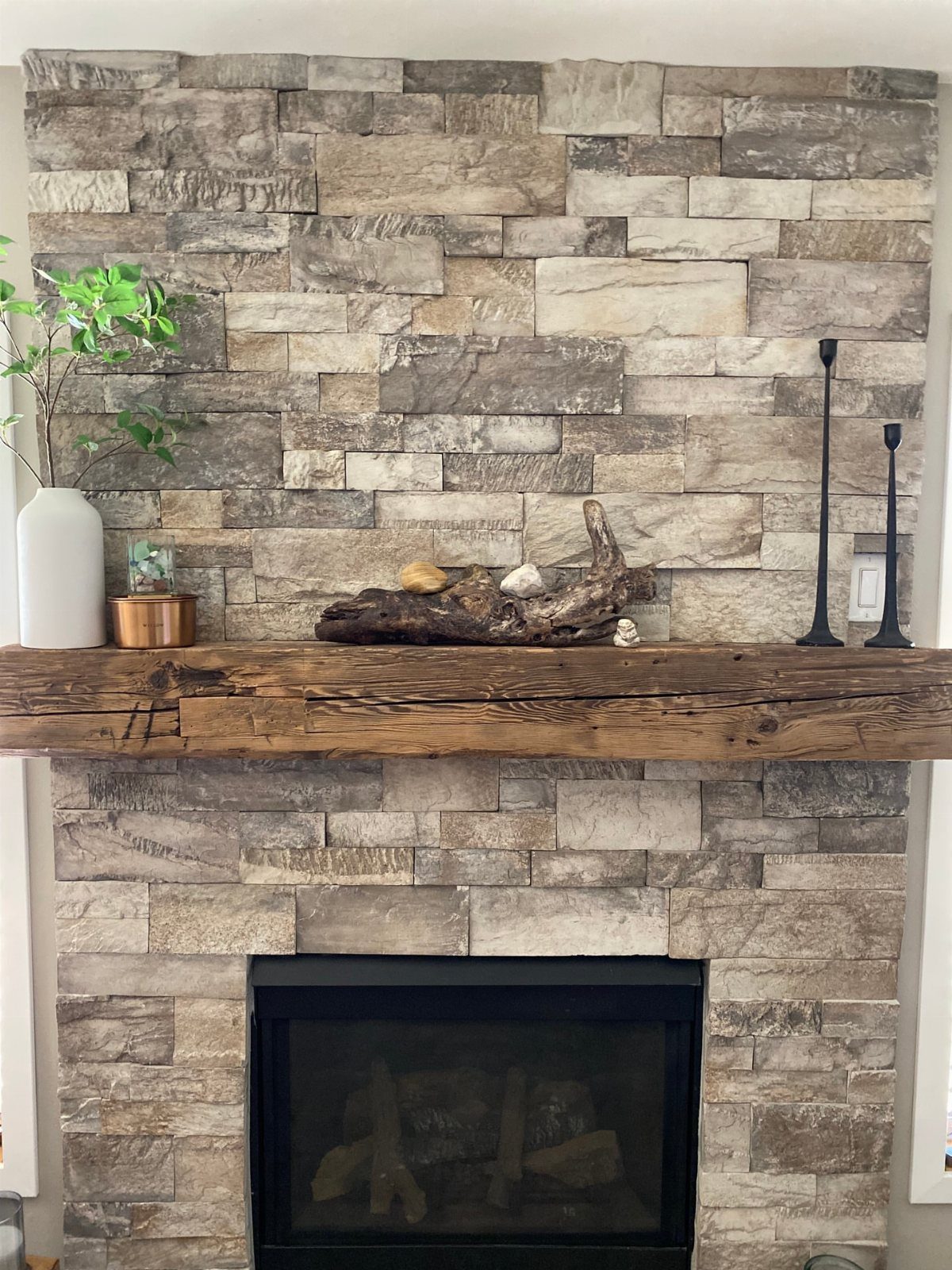
A thick reclaimed-look wood mantel over stacked stone gives a fireplace its weight, and the mantel is where the styling happens.
Keep it to a few pieces in different heights and materials: a white vase with greenery, a copper pot, a chunk of driftwood, two black candle holders.
Odd numbers read as relaxed, and leaving gaps between objects keeps the stone visible.
2. Slipcovered Furniture
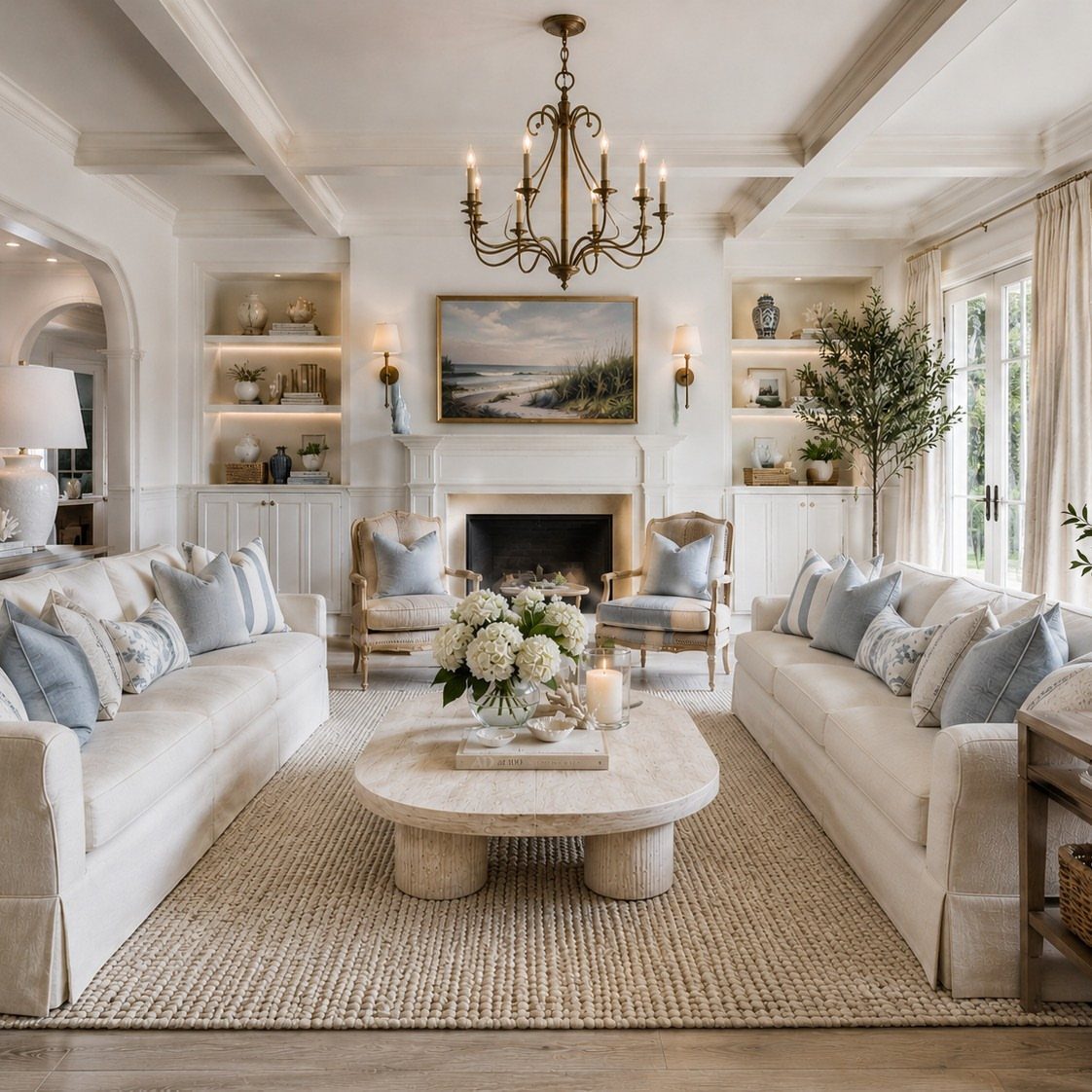
White slipcovered sofas pair well with a pair of armchairs and a round wooden coffee table, because the soft, slightly rumpled fabric keeps a room with a chandelier and fireplace from feeling formal.
If the room runs long enough, two sofas facing each other let everyone look at each other instead of craning around from one shared seat.
Removable covers are the practical draw for a household with kids or pets: you can take them off and clean them.
Check that the covers can come off before you buy.
3. Exposed Beams
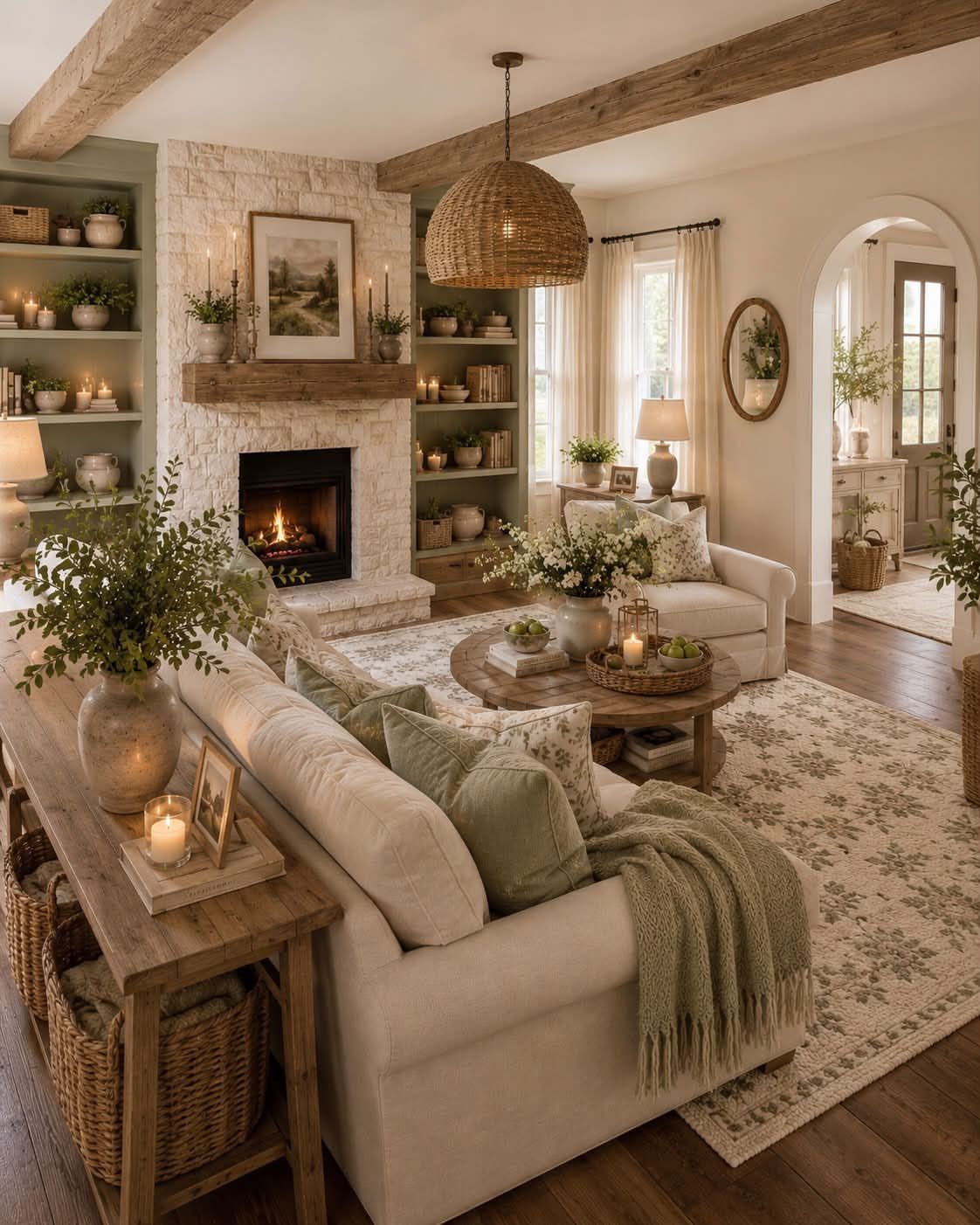
Wood beams overhead do the heavy lifting in a farmhouse room, so the furniture below can stay quiet. Cream upholstery against a stone fireplace lets the ceiling be the warm, textured feature.
Match the beam tone to the other wood in the room, such as the mantel or a table, so the whole space feels like one palette.
Renters can skip real timber. Hollow faux beams are the lighter option, though I would still choose real wood if the budget allows.
4. Shiplap Walls
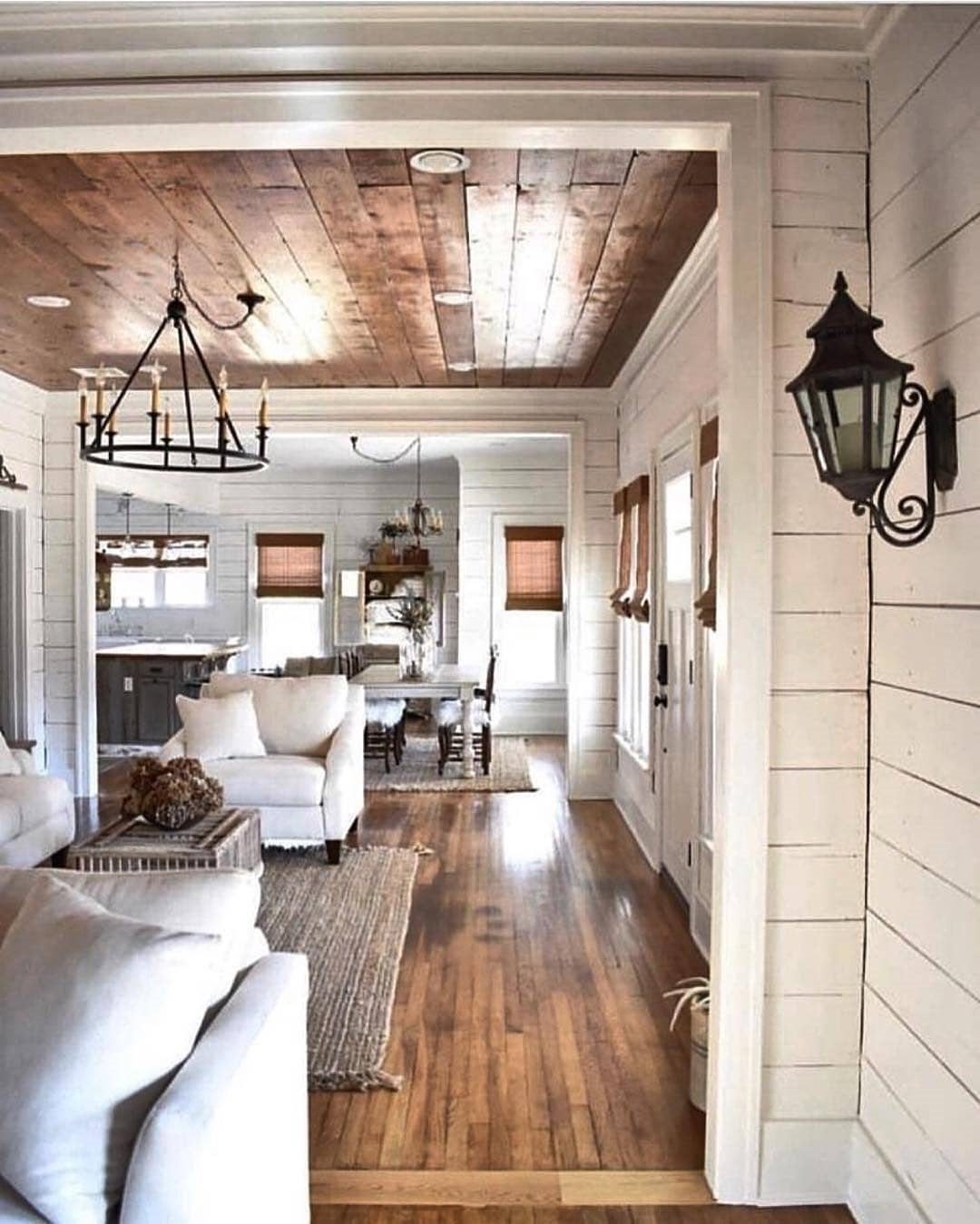
White shiplap on the walls, paired with a wood-plank ceiling, gives a room 2 textures that both come from the same plain, painted-board idea.
Keeping the walls white lets the ceiling’s wood grain stand out and makes a room that flows into a dining area and kitchen feel connected.
I would pick shiplap over a bolder wall treatment when the space is open, since the horizontal lines run through without clashing.
5. Natural Fiber Rugs
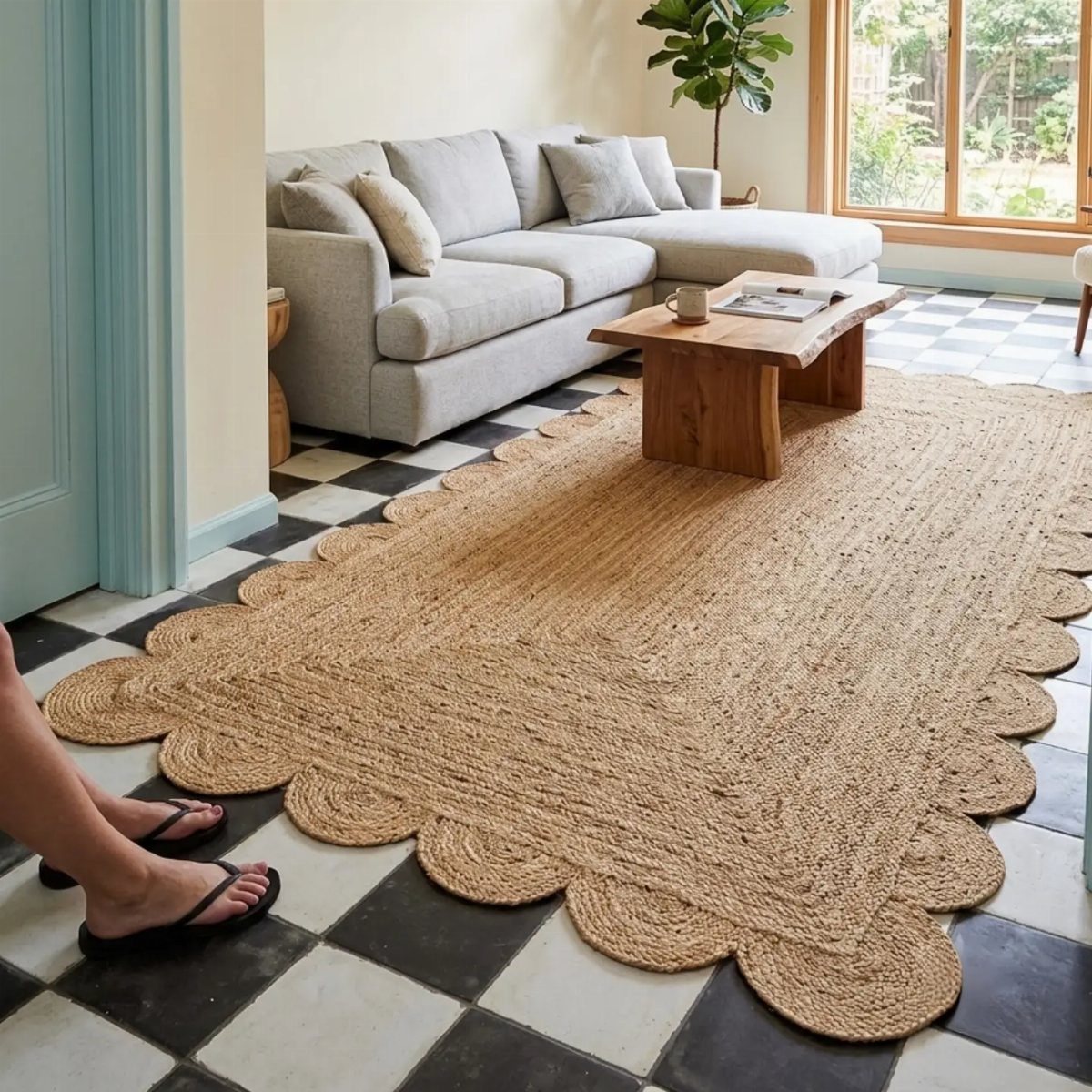
A jute rug with scalloped edges softens a busy floor.
Jute is a natural fiber and reads as casual, which suits farmhouse rooms. I like the scalloped edge because it adds a little shape without adding color.
Pick a size large enough that the front sofa legs sit on it.
6. Decorative Trays
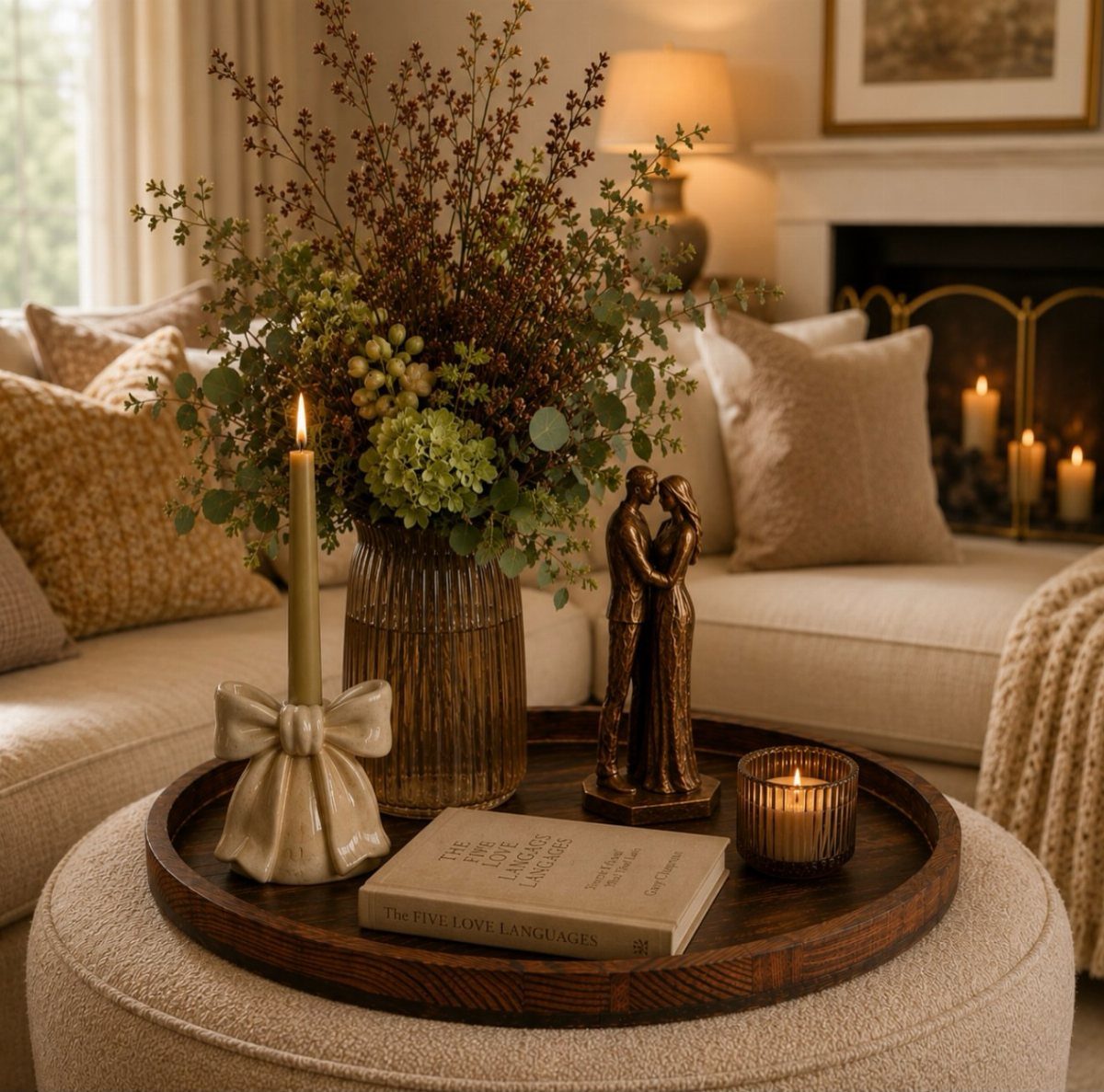
A round wooden tray turns an ottoman into a usable surface and gives loose decor a home.
A tray groups small objects into one unit: a candle next to a stem in a bud vase next to a book stays tidy where the same three things loose on the table read as clutter.
I would choose a round tray on a square or rectangular ottoman, since the curve breaks up the hard lines.
When you need space for a drink or a movie night, lift the whole tray off and set it aside.
7. Wood Floors
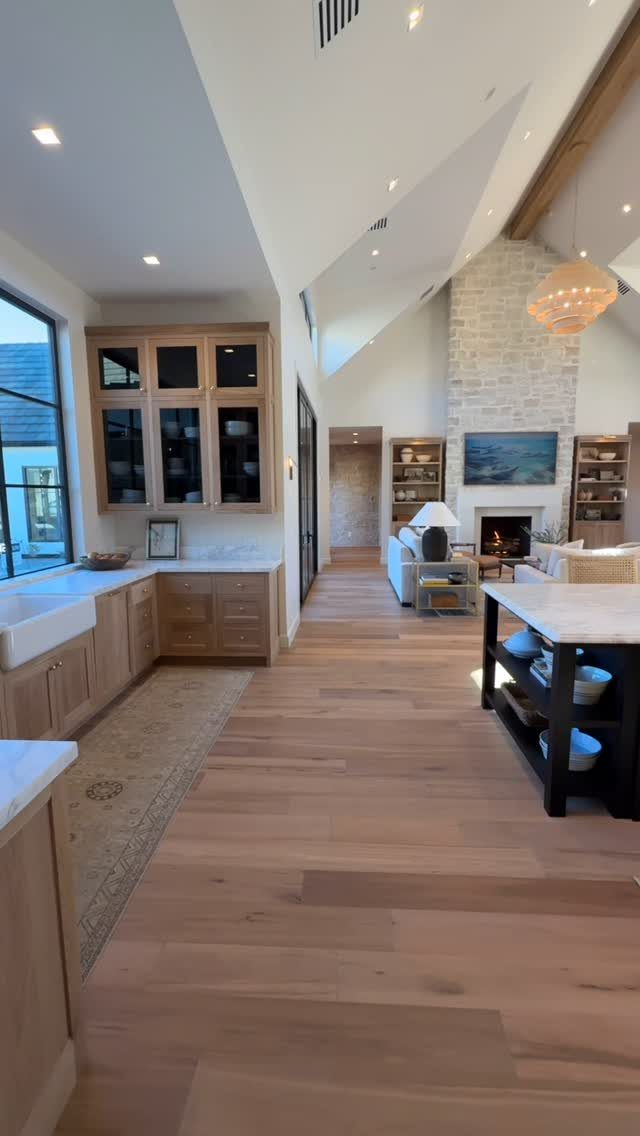
Light-toned wood planks running unbroken from the kitchen into the living area make an open room feel wider, because the eye never hits a threshold or a change in material.
I would keep the same wood throughout rather than switching to tile in the kitchen. One continuous floor is what gives the space its calm.
8. Sliding Barn Doors
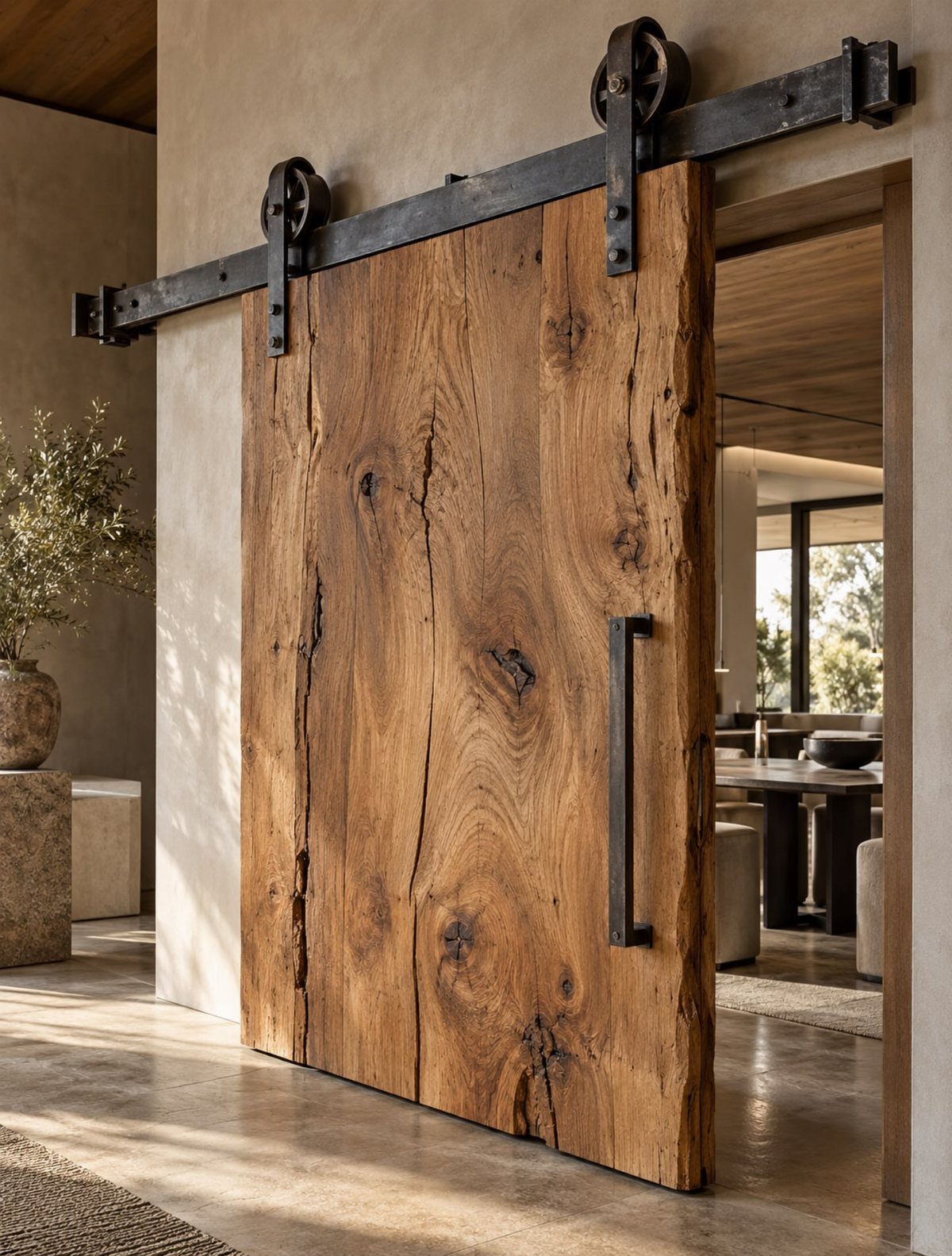
A wooden barn door on a black metal track divides a living room from a dining area without taking up swing space the way a hinged door does. The door slides along the wall instead.
Black hardware against rustic wood looks deliberate, and I like it most in a neutral room where the door is the only dark, heavy element.
Leave a clear stretch of wall beside the opening, since the door needs somewhere to rest when it is open.
9. Built-in Shelving
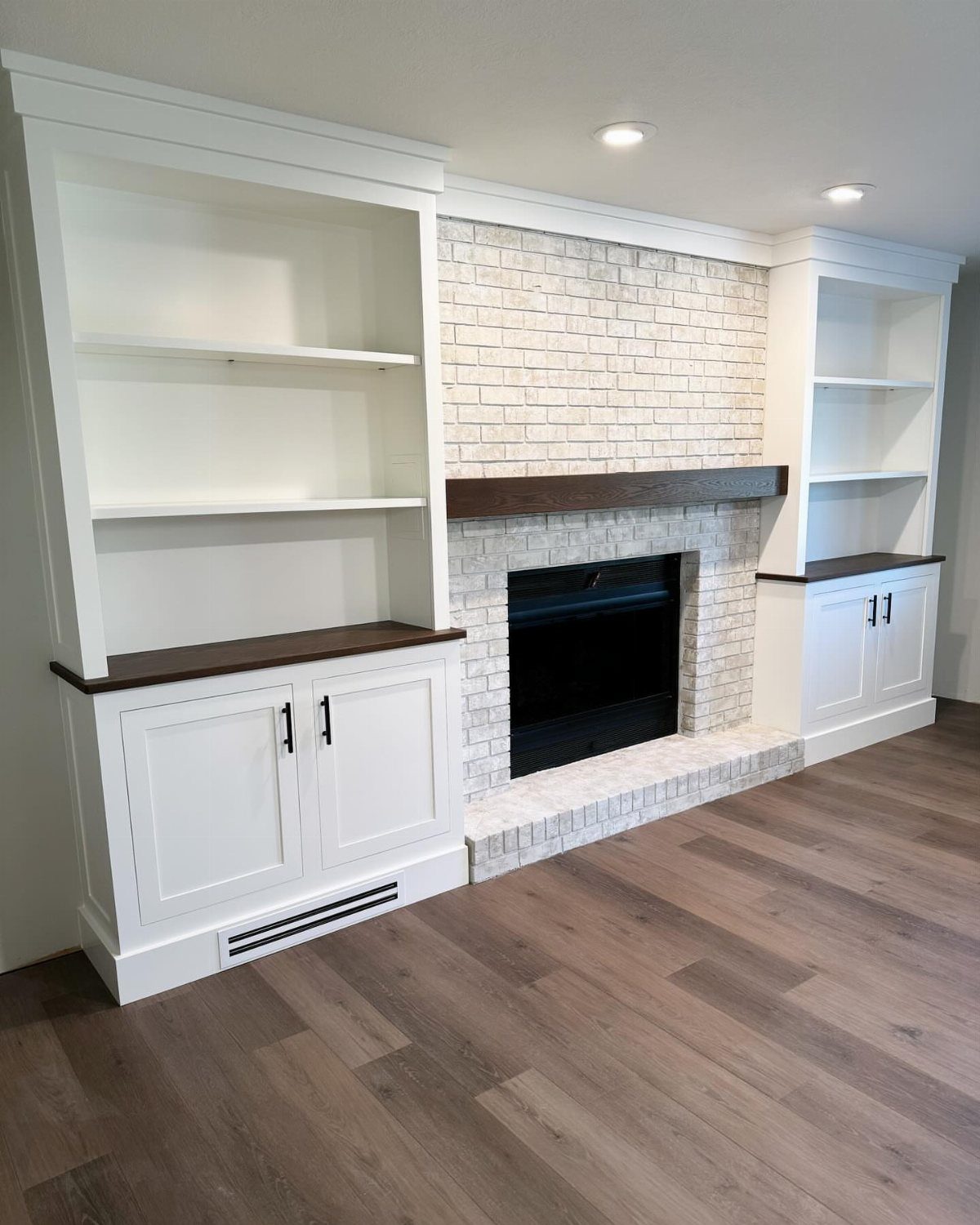
White built-ins on both sides of a fireplace give a room storage and display space in one move.
Painting them the same white as the brick keeps the whole wall reading as a single piece, and the dark wood countertops and mantel add contrast.
Use the lower cabinets for what you want hidden, like games and extra blankets, and keep the open shelves for a few books and objects.
I would leave some shelves half empty so the wall does not feel crowded.
10. Neutral Shades
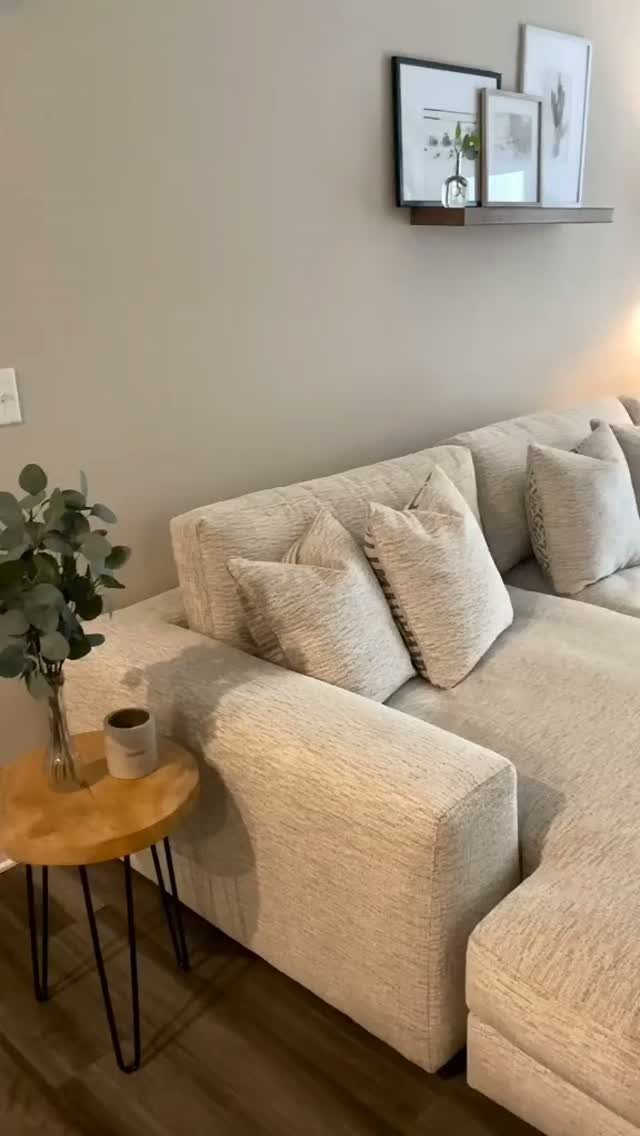
A beige sectional in a textured fabric asks for nothing from the rest of the room.
Matching pillows in the same tone hold the room calm, and a small wooden side table with a plant brings in warmth without adding color.
Texture does the work that color usually does, so choose a fabric with a visible weave.
The maker describes this sofa as a 6-seater, which is worth remembering if your room is small: count the seats against your floor space first.
11. Wrought Iron Chandeliers
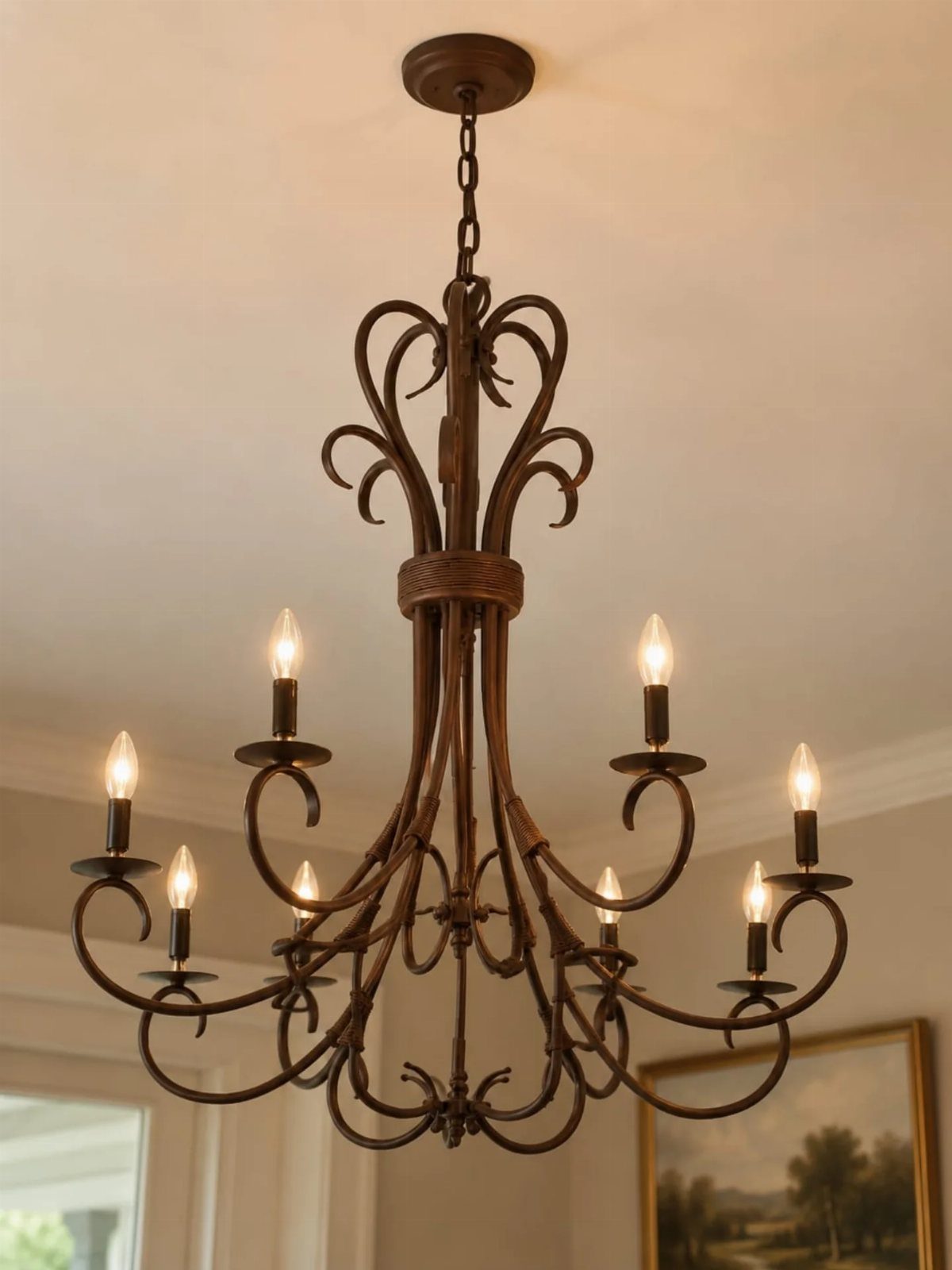
A round wrought iron chandelier with curved arms and candle-style bulbs hangs as a graphic shape on a white ceiling.
The black circle is the focal point, so I would let it carry the room’s lighting drama and keep everything else simple.
Hang it over the seating area, where people will look up at it, and let the plain ceiling frame it. A single large fixture beats several small ones for this look.
12. Subtle Plaster Finish
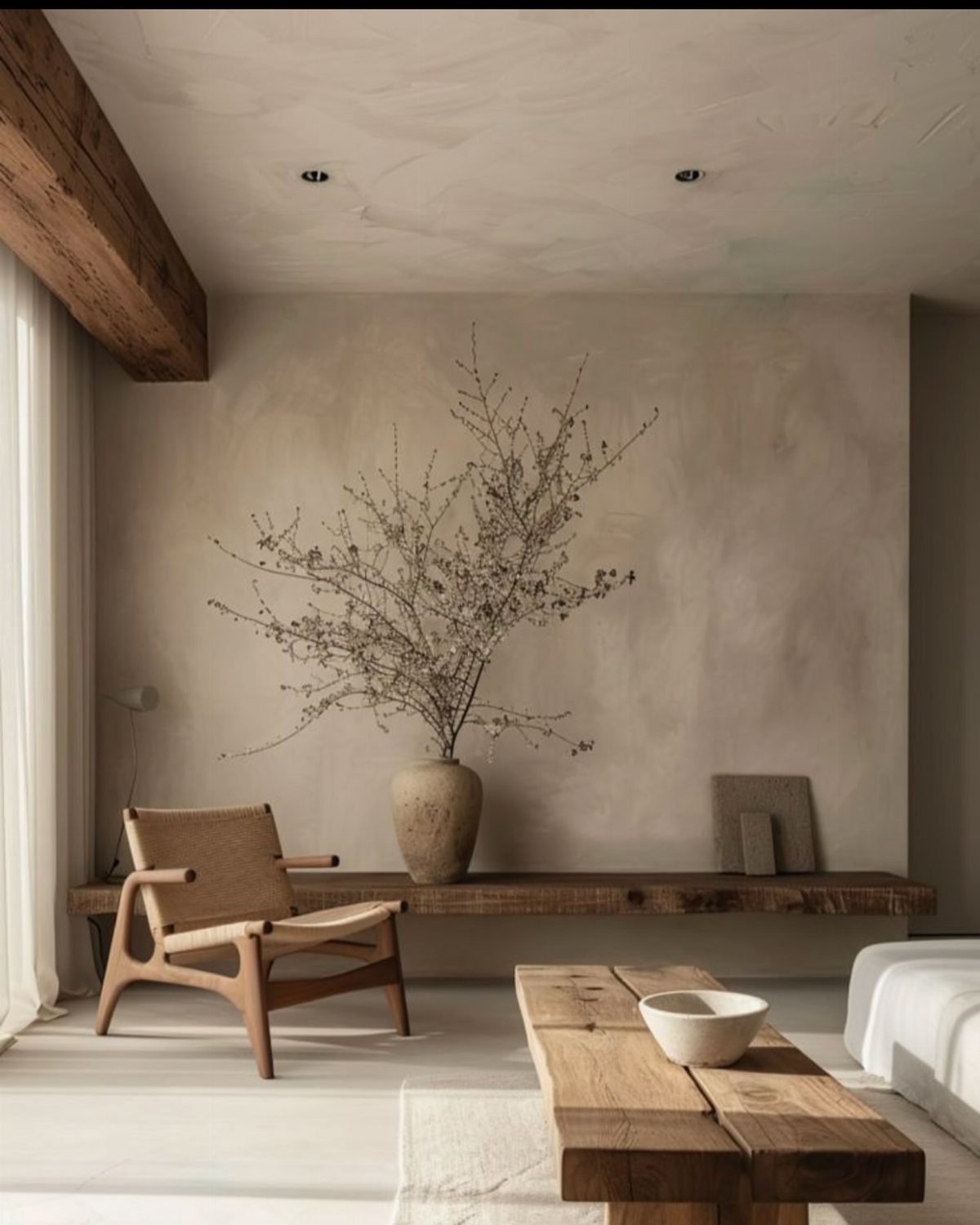
A soft plaster finish gives walls a suede-like texture in a quiet beige. It looks best when it stays subtle, with slight variation in tone rather than obvious trowel marks.
Pair it with plain wood: a beam, a low shelf, a bench.
A vase of dried branches is enough decoration, since the wall supplies the interest. I would pick plaster over paint when the room has little else on its walls, because the texture catches light and fills the space.
13. Colorful Pillows
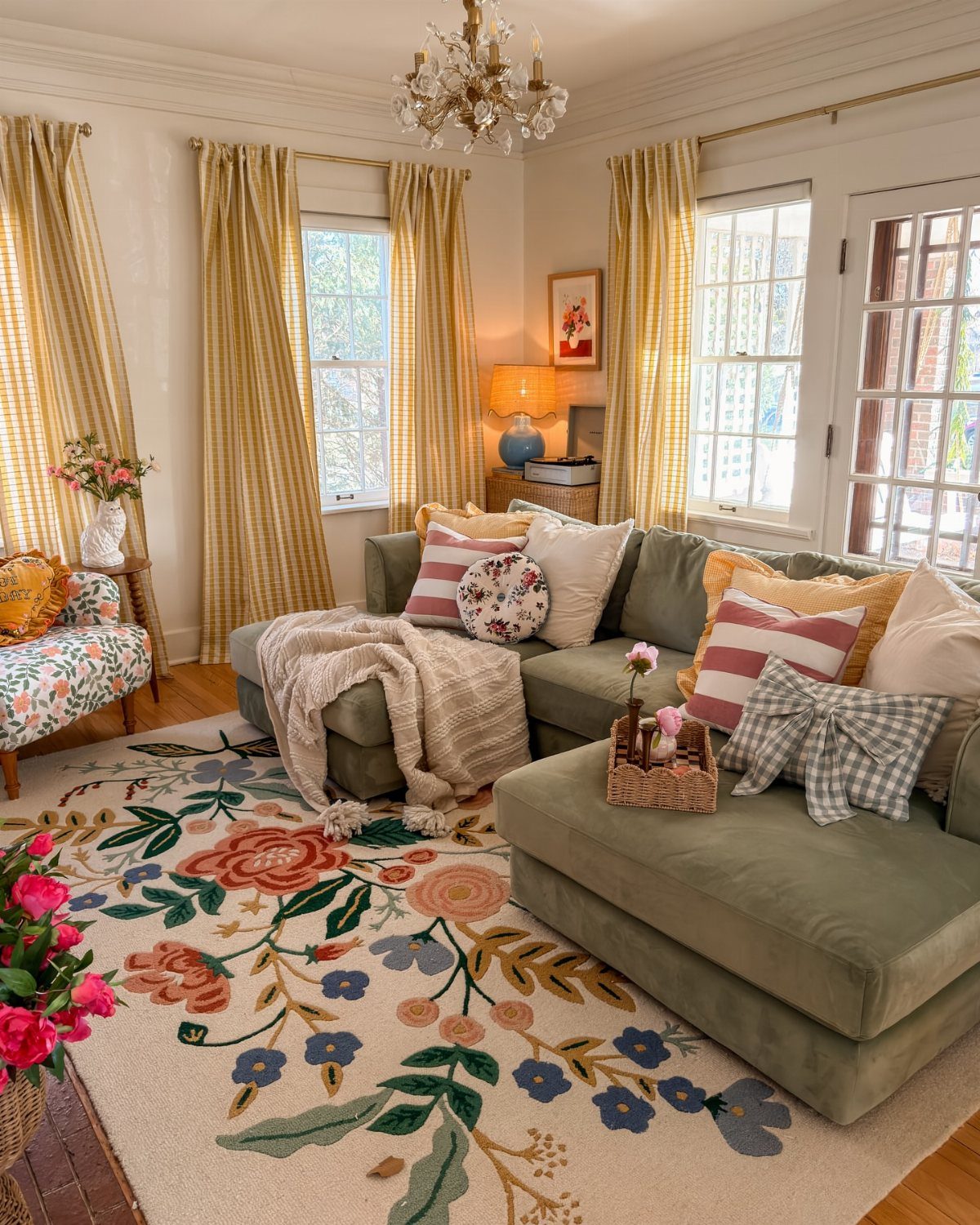
Pillows cost less than anything else when you want color in a farmhouse room, and a green sectional shows why.
Mixed patterns work when they share a few colors with the rug and curtains, so the room reads as chosen rather than random.
I would buy covers instead of whole pillows and keep the inserts. Swapping covers costs far less and changes the room in minutes.
Vary the scale: one large pattern, one small, one solid.
14. Large Windows
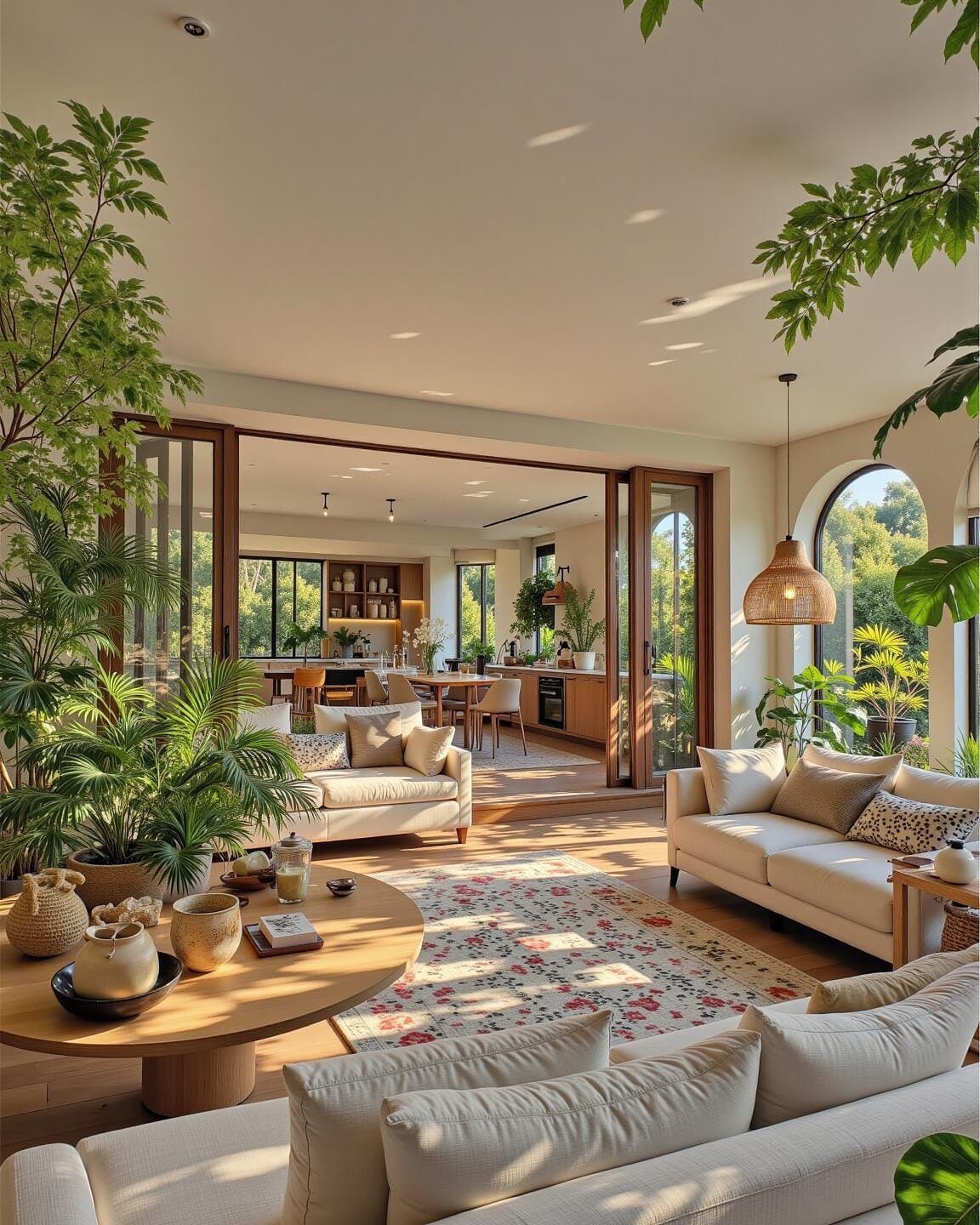
Big glass openings do the decorating for you. When sliding doors and an arched window bring in light and greenery, the furniture can stay plain, like white sofas and a round wooden coffee table.
I would keep window treatments minimal here, since covering the glass defeats the purpose.
Keep the sightlines clear. Push tall furniture away from the openings so the view reads from across the room.
15. Floor-to-Ceiling Drapes
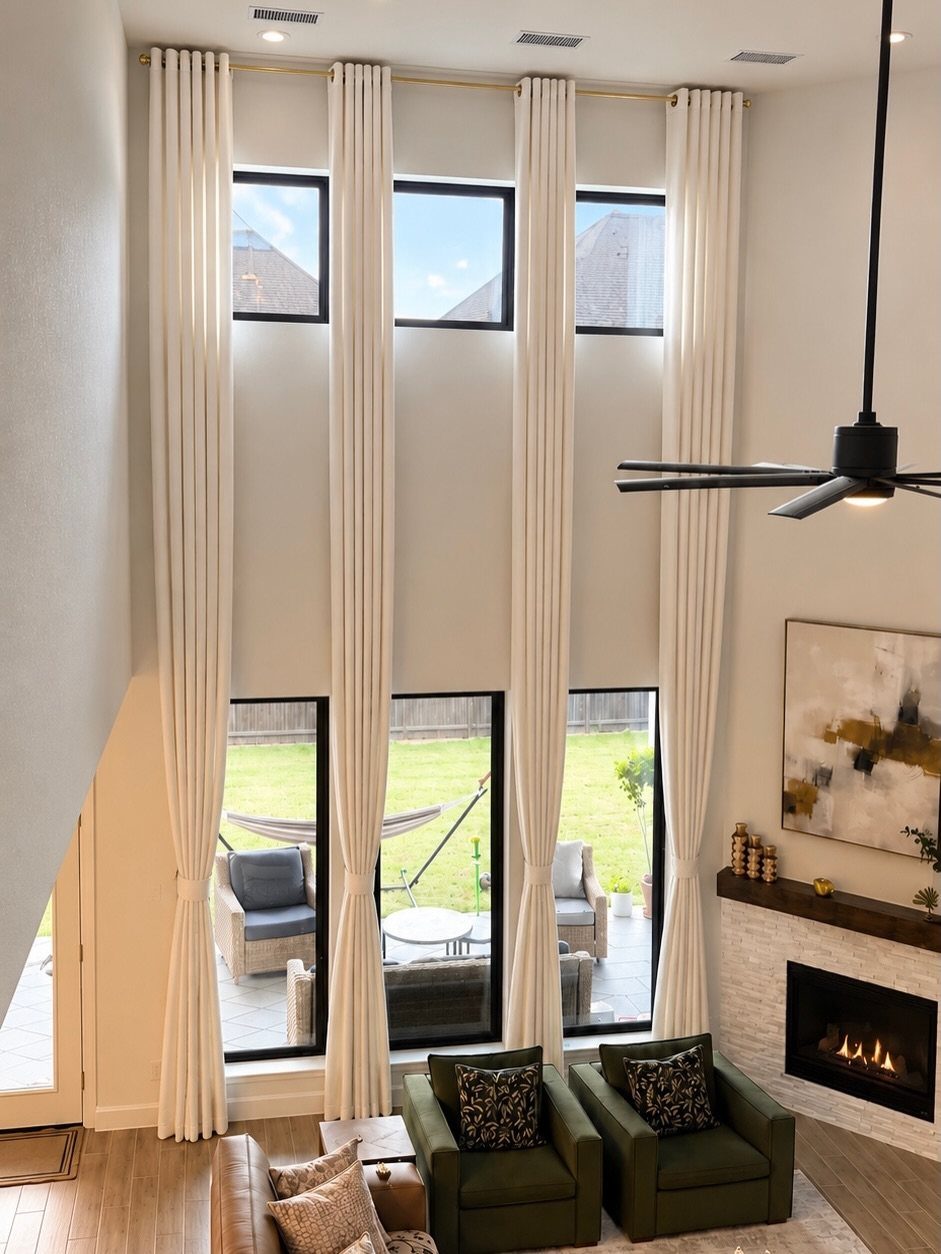
Curtain panels hung high and falling to the floor make a ceiling look taller than it is, and white fabric keeps the effect light. Mount the rod close to the ceiling rather than just above the window frame.
I would choose a simple white panel over a patterned one when the windows frame a yard, so the view stays the focus.
Let the panels hang wide of the glass when open, so they do not block the light.
16. Chunky Knit Blankets
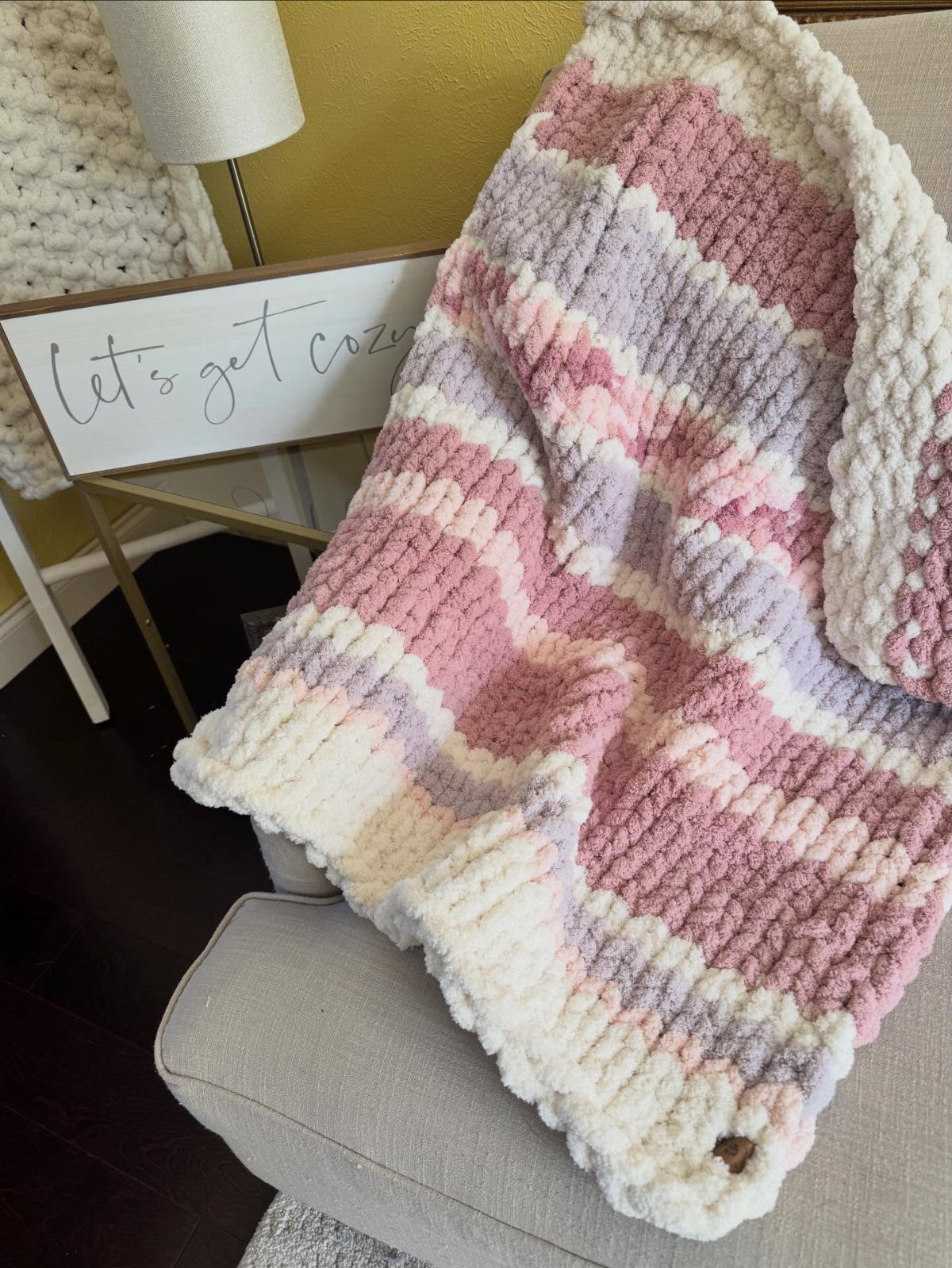
A chunky knit throw is the fastest way to make a plain chair feel warm. Stripes in soft pink and purple over a grey chair add color without needing a new piece of furniture.
Drape it loosely over one arm instead of folding it flat; the thick yarn looks best when it falls in a few relaxed folds.
I would keep one blanket per seat, so the room looks inviting rather than piled up.
17. Built-in Window Seats
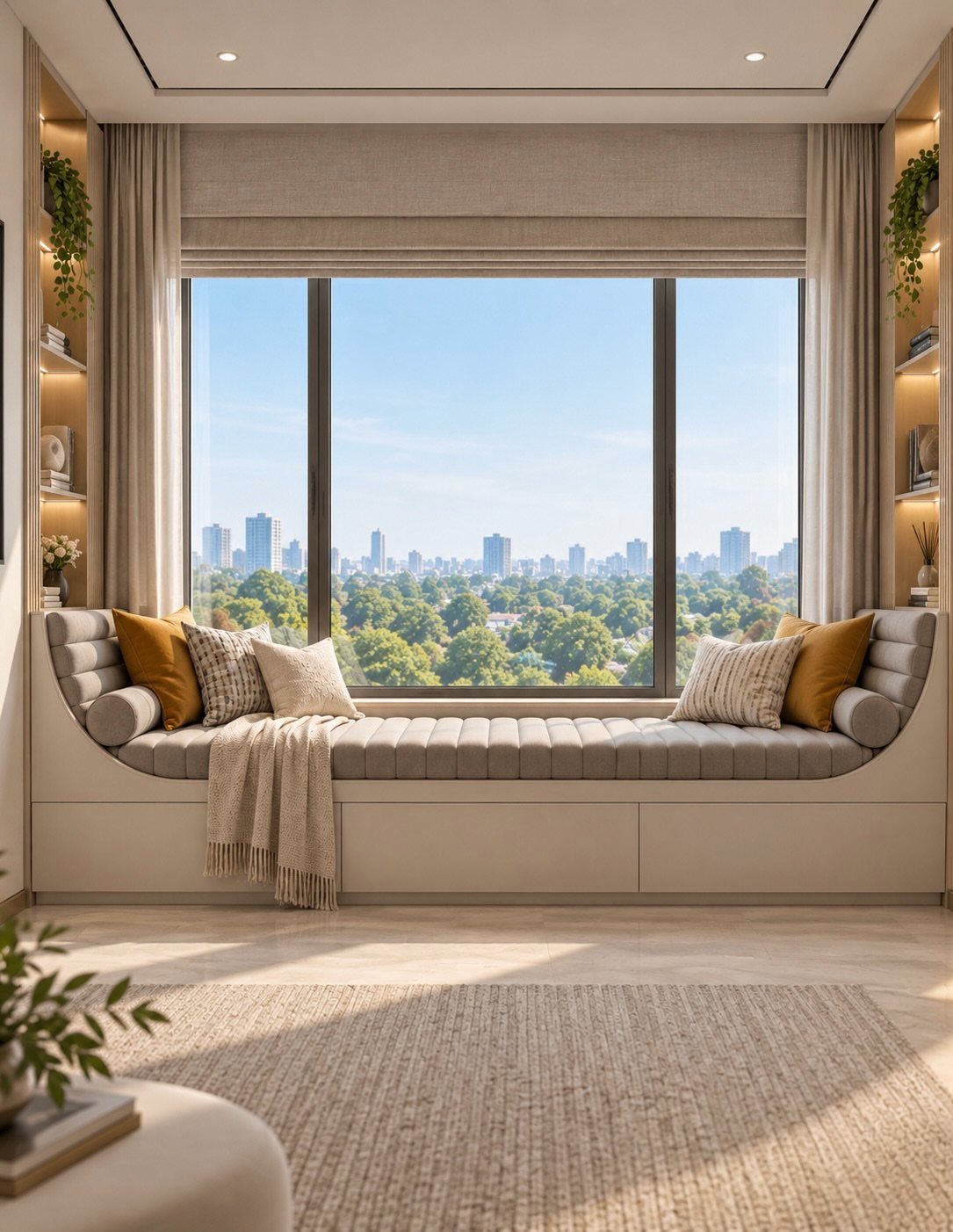
A window seat turns an unused wall into seating, and bookshelves on both sides make it a reading nook. Grey cushions with a few pillows keep it soft and quiet.
I would build the shelves tall enough to frame the window, so the seat feels tucked in. A thick cushion matters more than extra pillows, since you will sit here for a long time.
Storage under the seat is a useful add-on if your budget stretches that far.
18. Grey Sectional Sofa
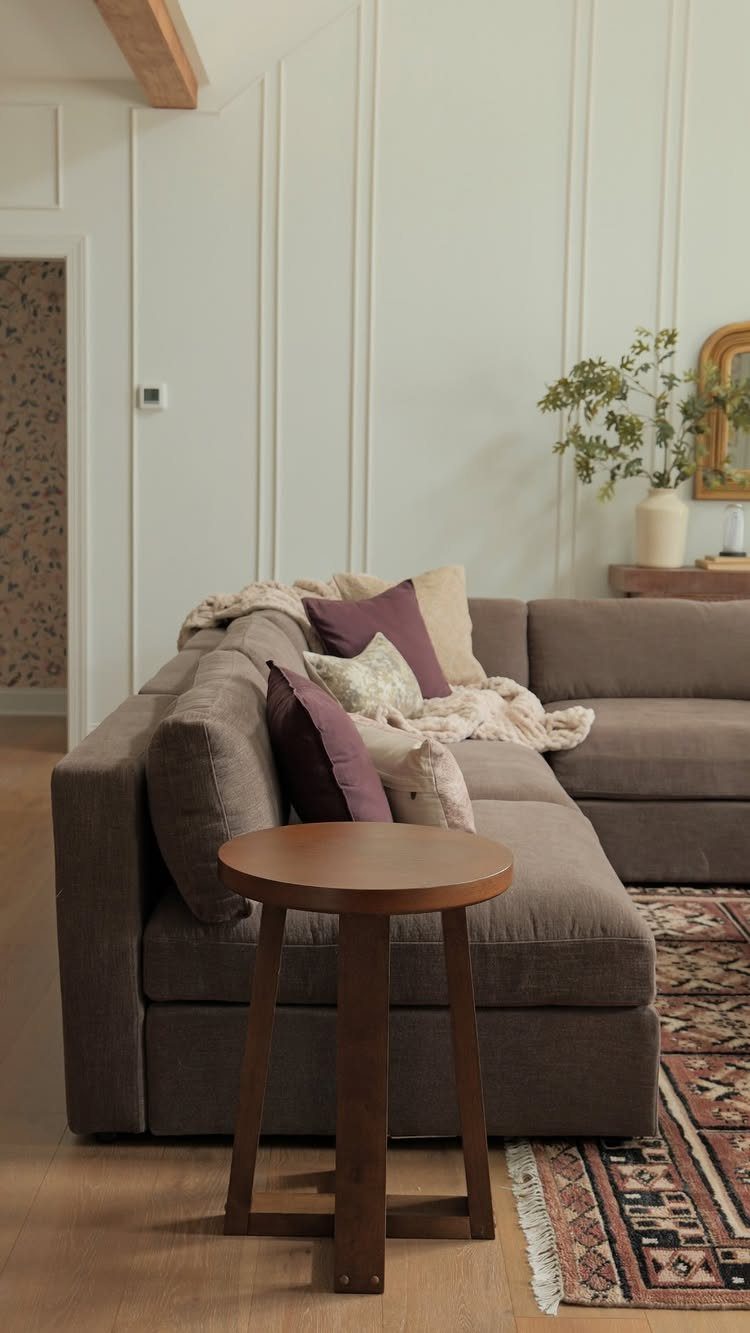
A grey sectional is a calm base, and purple and beige pillows give it personality without much cost. Against white wall paneling, the grey reads crisp and modern instead of heavy.
Add a round wooden side table beside it, since the curve softens the sectional’s long lines. A patterned rug underneath ties the pillow colors together.
I would choose pillows in two colors, not four, so the grey stays the star.
19. Rustic Clay Vase Accents
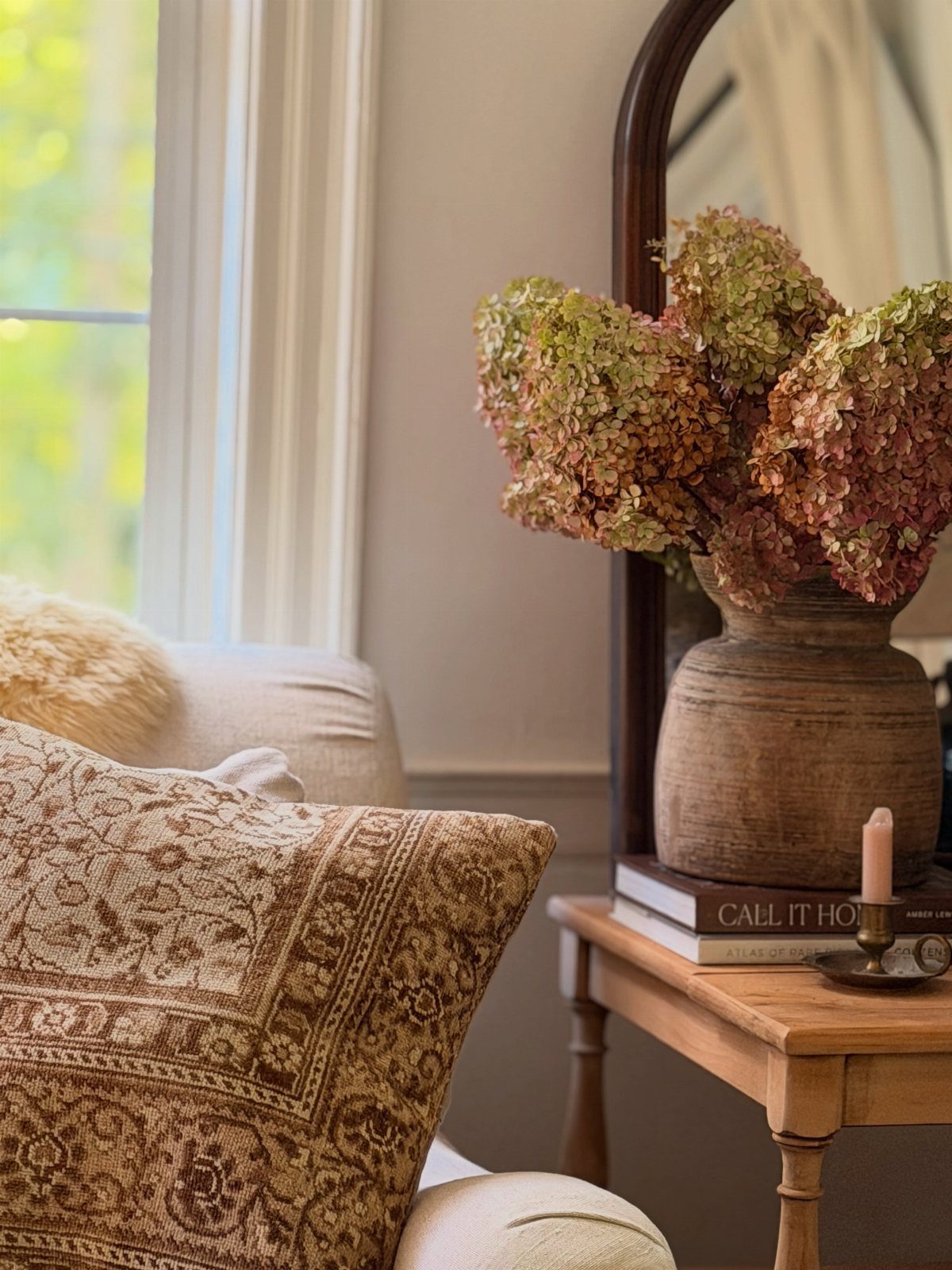
Dried hydrangeas in a rustic clay vase hold their shape without water, so the arrangement stays put for months. The matte, earthy clay sits well on a wooden side table next to a patterned pillow.
Stack a few books beside it and add a candle, then lean an arched mirror behind the group.
The curve of the mirror echoes the vase, and I would keep to one vase rather than several so the table does not turn busy.
20. White Sectional Sofa
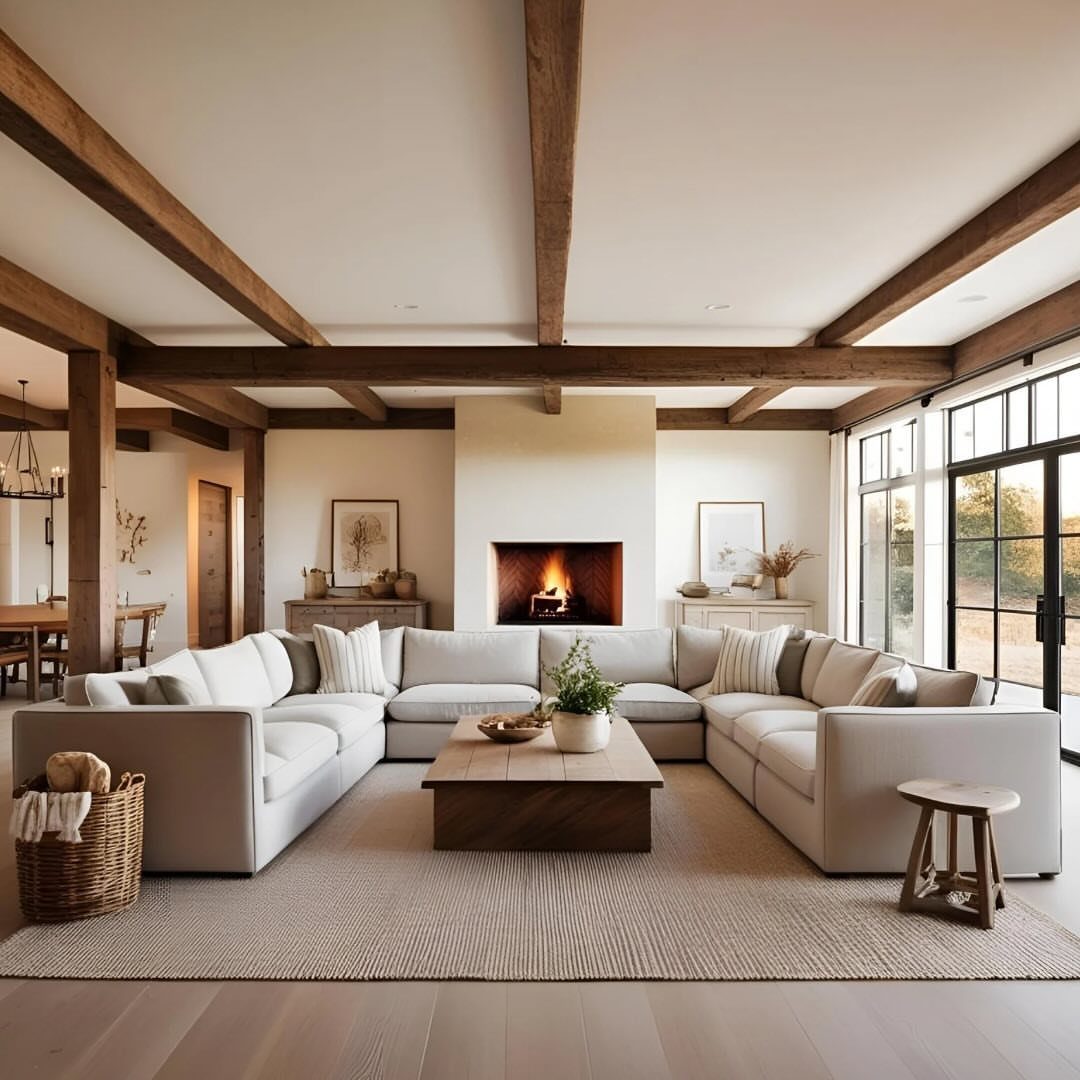
A wide white sectional gives a room with dark beams overhead something light to balance them. The contrast keeps the ceiling from feeling heavy.
Pair it with a wooden coffee table so the sofa’s bulk has a warm, solid partner. I would choose a sectional large enough to face the fireplace, since seating that points at the focal point makes the arrangement work.
Measure the floor before you order, and tape the sofa’s footprint on the floor first.
21. Brick Fireplace Surround
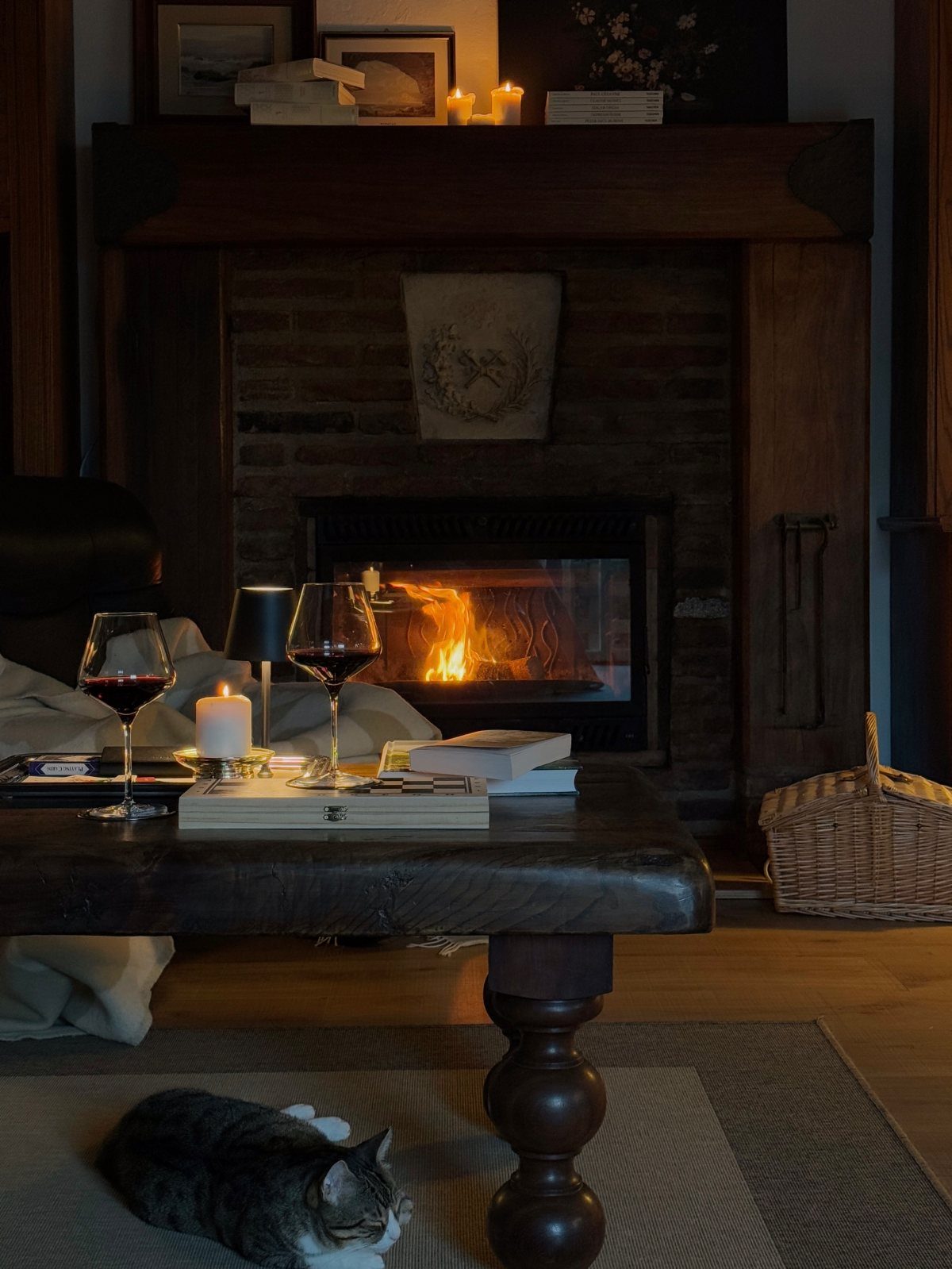
Brick around a fireplace carries its own texture and warmth, and a rustic wooden mantel on top finishes the look without much else. Real fire makes it the spot the room gathers around.
I would leave the brick in its natural color, since the variation in the bricks is what gives it character.
A wooden mantel is an easy weekend swap if yours is bare.
22. Modern Electric Fireplace
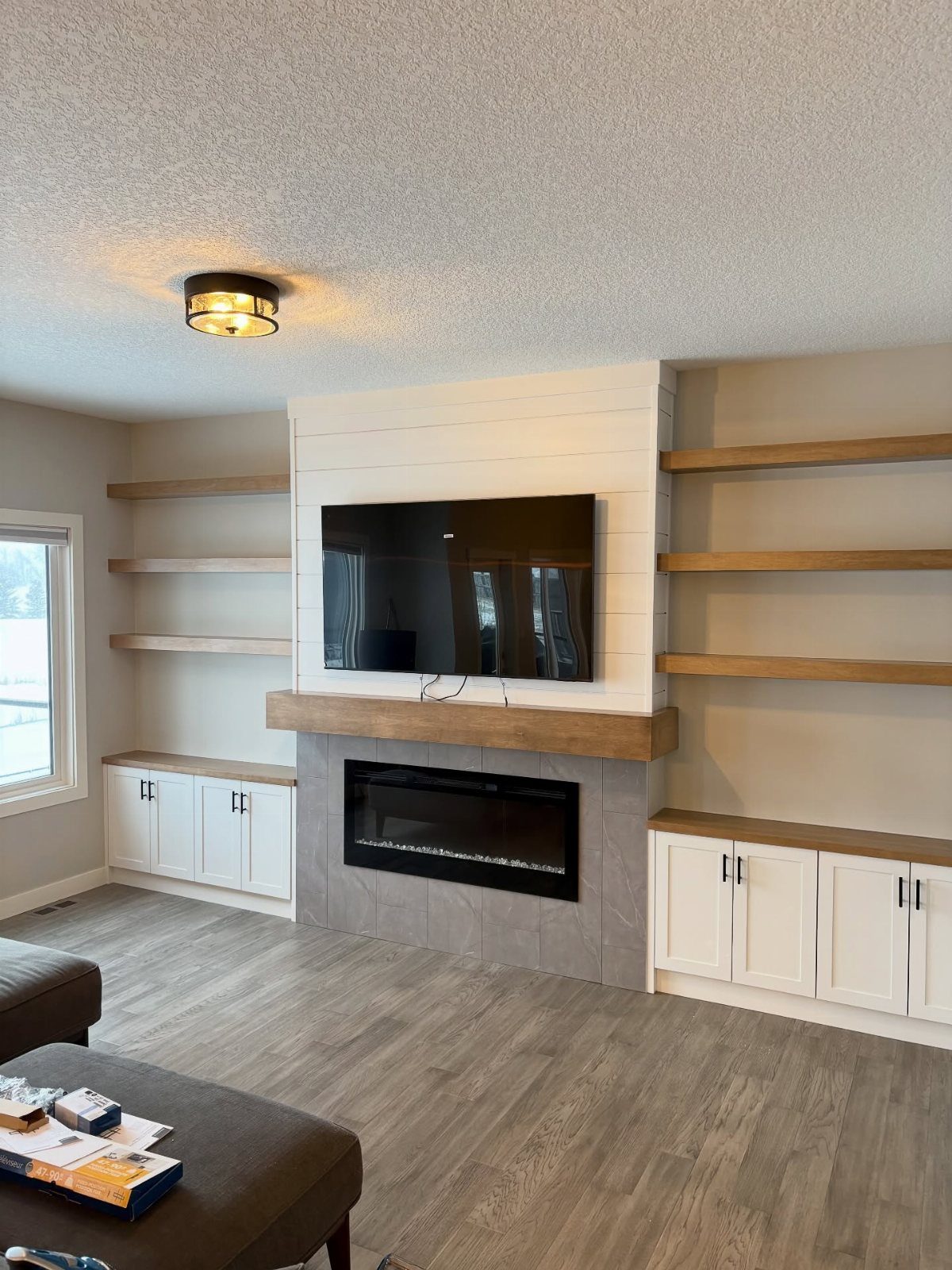
A linear electric fireplace slides in under a mounted television and a rustic wooden mantel, so the wall does 2 jobs at once.
The long, low shape suits white shiplap, and the wood mantel keeps the sleek unit from feeling cold.
Floating shelves on the side add display room without crowding the wall. I would choose a linear style over a boxy one here, since its horizontal line repeats the shiplap.
Plan where the TV and mantel meet before you drill.
23. White Tiled Fireplace
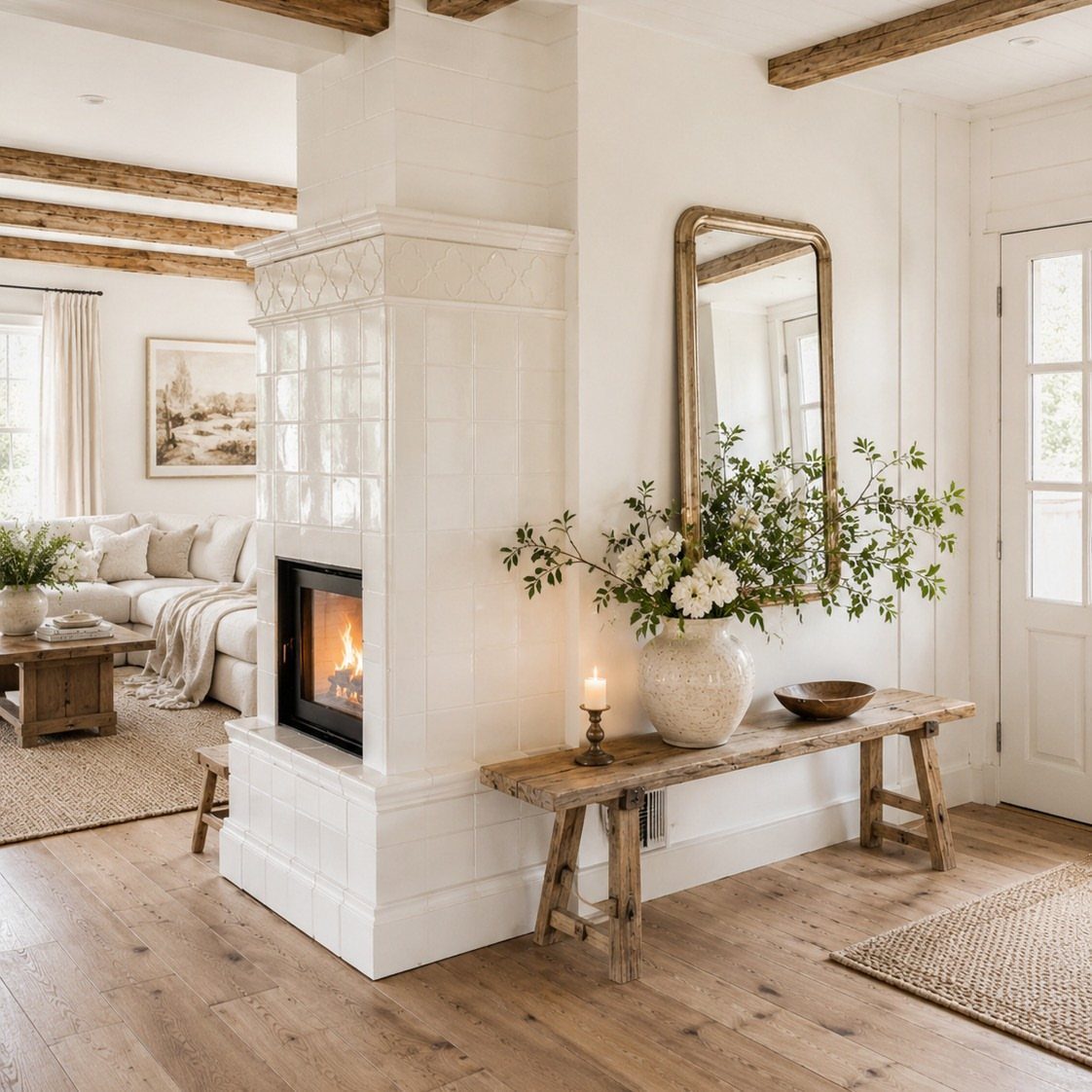
White tile turns a fireplace into a clean, bright block that lets the rest of the room stay warm and rough. Beside light wood floors and rustic beams, the tile reads as the quiet element.
I would pick a simple tile in a single white tone over a patterned one, so the beams and floor remain the texture in the room.
Farmhouse Style Characteristics
Farmhouse comes down to old materials set against clean, modern shapes. The materials that hold up and look right are reclaimed wood, linen, cotton and leather, all of which wear in instead of wearing out.
Add metal for contrast. Iron or brass hardware and light fixtures add definition against the softer textures, and swapping in a brass fixture costs little enough for a rental.
2 small patterns show up often: stripes and windowpane checks in textiles. A striped throw or a windowpane pillow cover brings in the look without a big purchase.
Keep the big furniture neutral so these details have room to stand out. A wooden coffee table is the other staple I would not skip.
Designing a Farmhouse Living Room
Start with the seating, because everything else is arranged around it.
An oversized sofa and plush armchairs suit this style, and comfort should win over looks when the two disagree. A room built for gathering needs pieces people want to sink into.
Next, mix old with new. Sand and repaint a vintage find or a hand-me-down piece, and don’t worry about a perfect finish; a lived-in look is part of the style.
Pick one element to build the room around: a stone fireplace, a brick wall, or one large piece of art. If you have no fireplace, the art can do the job, and it costs far less.
Choose a neutral couch first. It pairs with whatever accents you add later.
“Designing a farmhouse living room is about blending comfort with a sense of history,” says Laura Lubin, founder of Ellerslie Interiors in Nashville.
Popular Farmhouse Trends
Heavy beams and wood paneling can overpower a room, so balance them with refined, modern pieces. Mixing in antiques from different periods keeps the space from looking like a set.
Warm tones are the update to watch.
Start with light walls, bring in a brown leather sofa, and layer rust or terracotta pillows over linen upholstery. The contrast with the walls is what makes the brown look intentional.
A fully neutral scheme also works. Muted beige keeps the lines clean and lets statement pieces, like distressed vintage end tables, stand out.
If you can’t do either, pick one: warm contrast for depth, or all neutrals for calm.
Frequently Asked Questions
Is farmhouse decor still in?
Yes.
Farmhouse is still popular and flexible, and it has moved past shiplap and barn doors toward light, airy rooms with casual sofas and rich textures. Its mix of old materials and clean modern shapes is why it keeps working.
What are the hallmark features of a farmhouse living room?
Start with a wood coffee table, metal fixtures in brass or black iron, fabrics that show a stripe or grid, and furniture in cream or gray.
Wood with age on it, linen, cotton and leather all get better as they soften. Stone or brick fireplaces and exposed beams add the old-meets-new feel.
What is the new modern farmhouse style called?
Modern farmhouse is the name for the updated version.
It is sleeker and more pared back than classic farmhouse, pairing rustic materials with clean lines. Variations exist too, such as coastal farmhouse, which leans toward a nautical feel.





