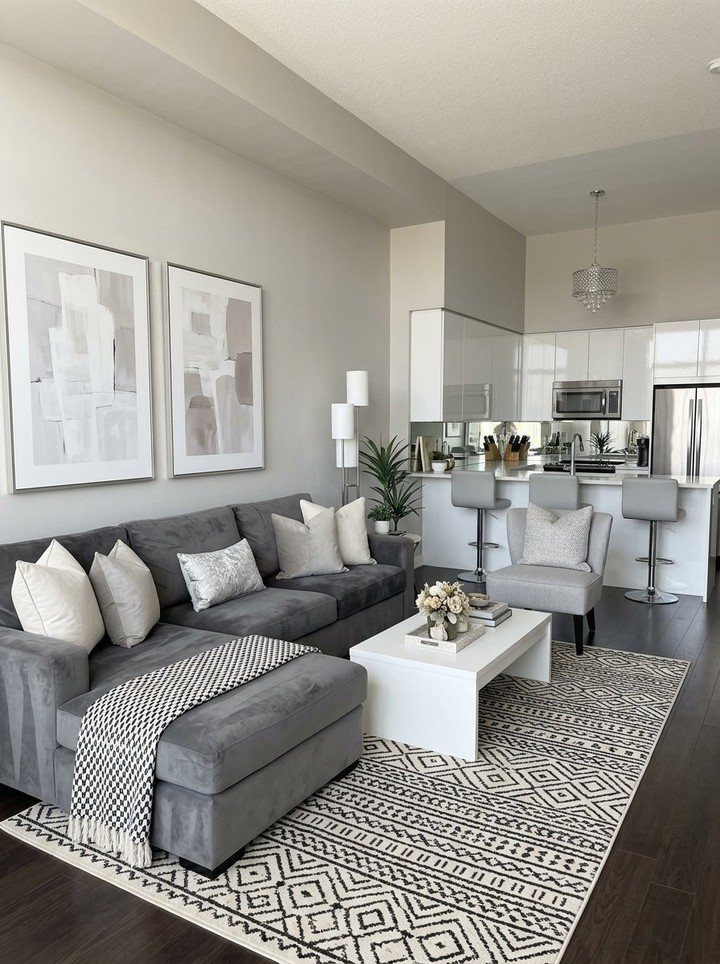
Which of these suits you depends on what the room already holds: if the walls, rug and nearby furniture lean cool (grey, white, black, blue-toned), warm wood or a warm rug goes in first, and if the room is already warm or neutral, you can stack lighter neutrals without looking washed out.
The ideas run from a woven jute rug to a handful of textured cushion covers you can swap in minutes at the cheap end, wooden side tables and potted plants in the middle, and paint or metal-legged furniture if the budget stretches.
1. Grey Sofa with Warm Wood Finishes
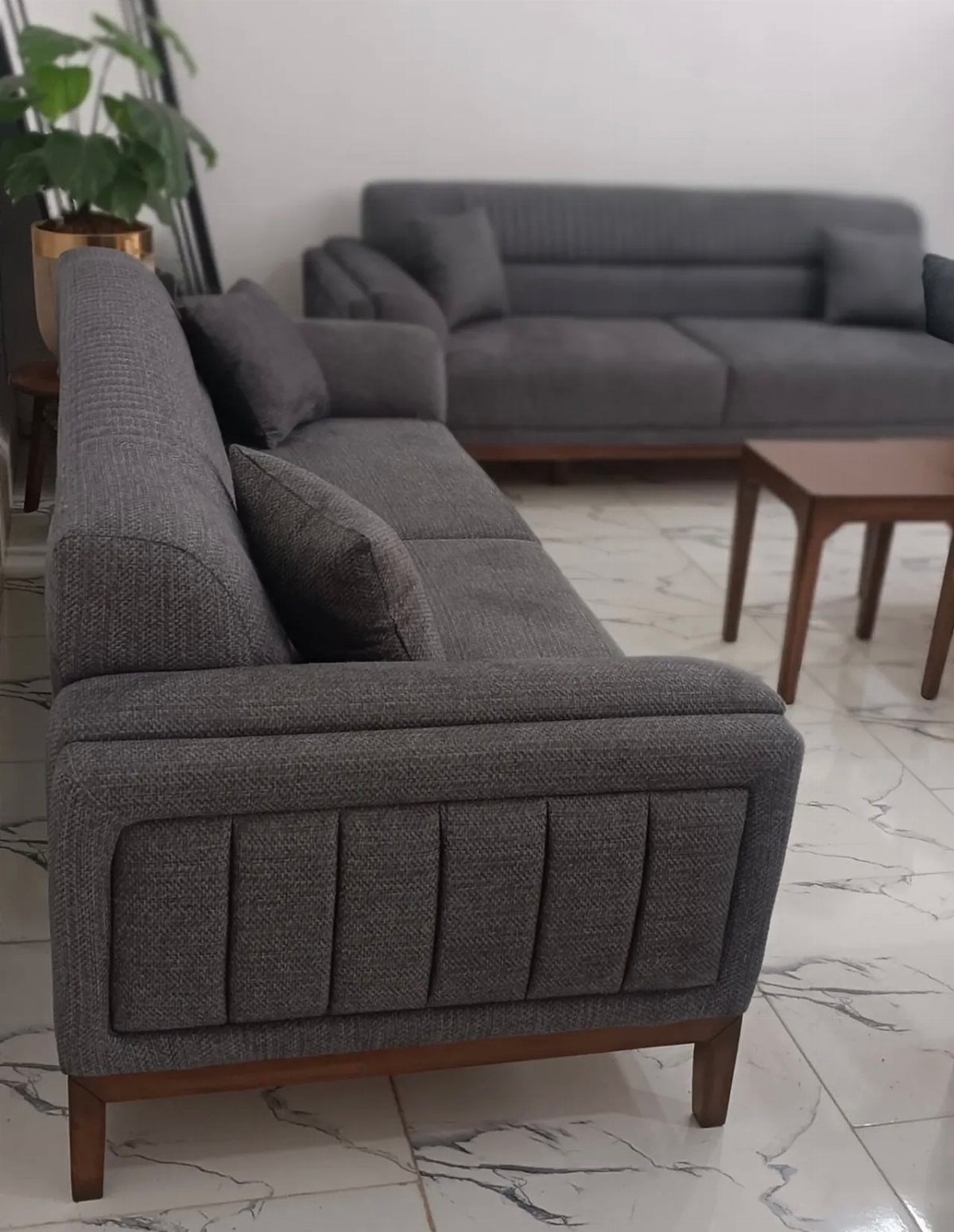
Grey reads cool, and wood is the quickest way to warm it up. Legs on the sofa and a coffee table in a matching wood tone tie grey upholstery to warm wood finishes without adding a single cushion.
Match the undertone of the wood across pieces so they look like a set. If your sofa legs are honey-colored, a honey side table will tie in better than a darker walnut one.
On a budget, a secondhand wooden coffee table is the easiest place to start.
2. Grey Sofa with Woven Rugs
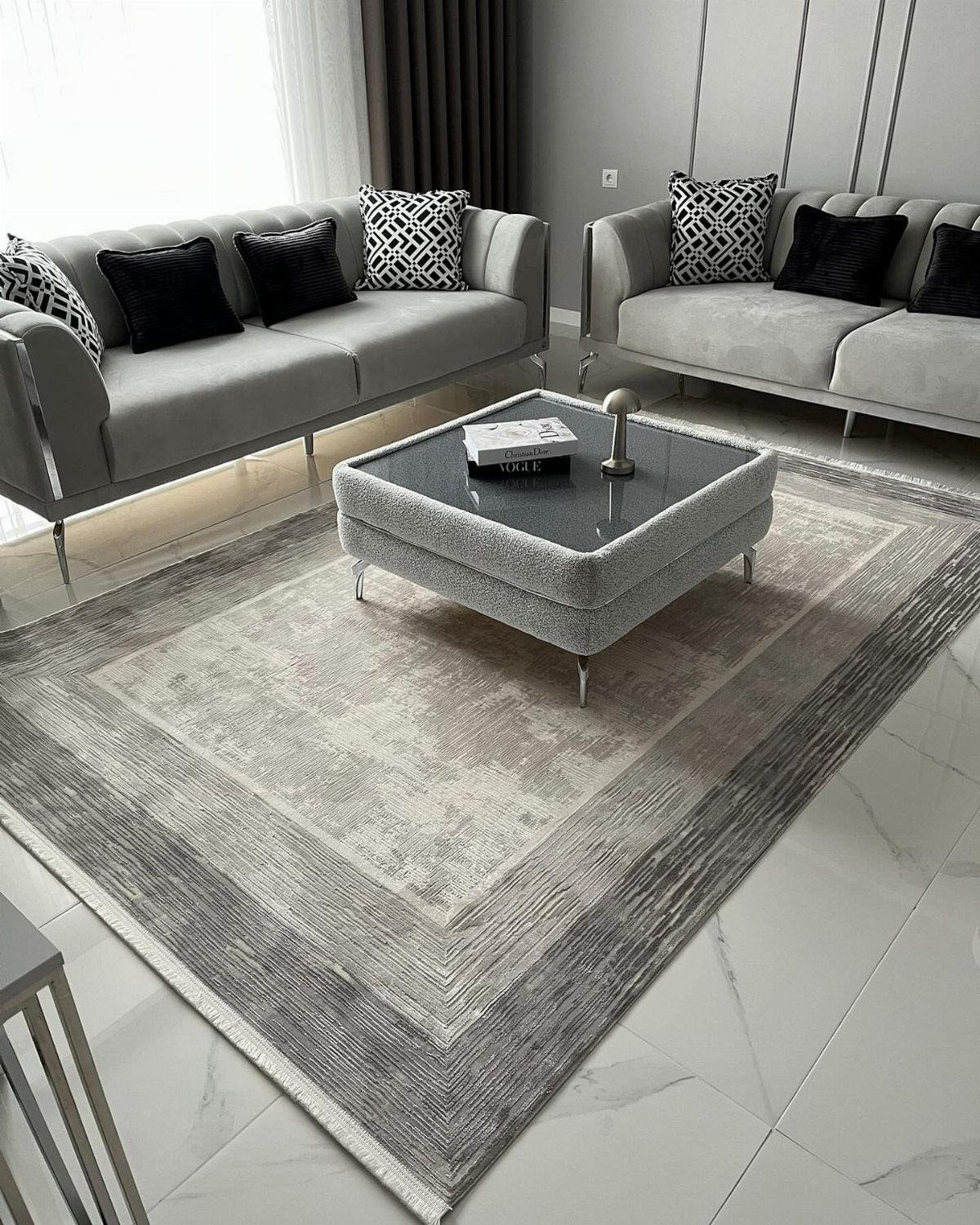
Light grey sofas can blur into a grey woven rug, and that is exactly why I like the pairing: the room stays calm, and the weave adds texture so it doesn’t go flat.
Keep the rug a shade or two apart from the sofa, so the legs and edges still read. Black and white pillows give the eye something crisp to land on against grey upholstery.
A flat weave is also easier to vacuum than a shaggy one.
3. Grey Sofa with Dark-coloured Furniture
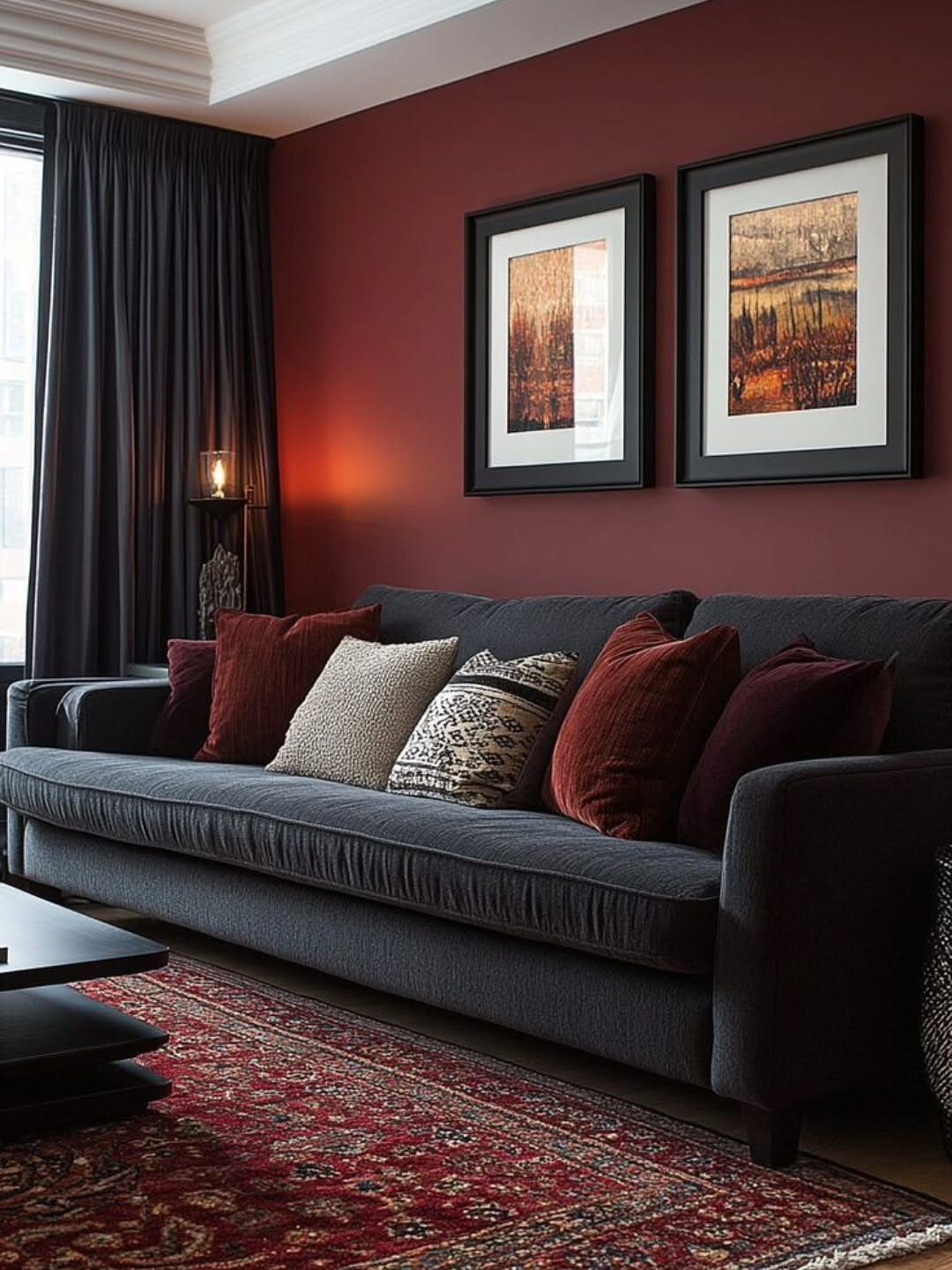
Dark grey holds its own against a deep wall color, which is why bold shades suit it better than pastels do. Red is a strong choice, but any saturated, dark tone works the same way.
Paint is the cheapest way in, and it fits a weekend. One wall is enough; dark curtains and black-framed art keep the look consistent.
Repeat the accent color in cushions and the rug, and let the sofa stay plain. A patterned rug carries more punch when the sofa is solid.
4. Grey Sofa with Metal Accents
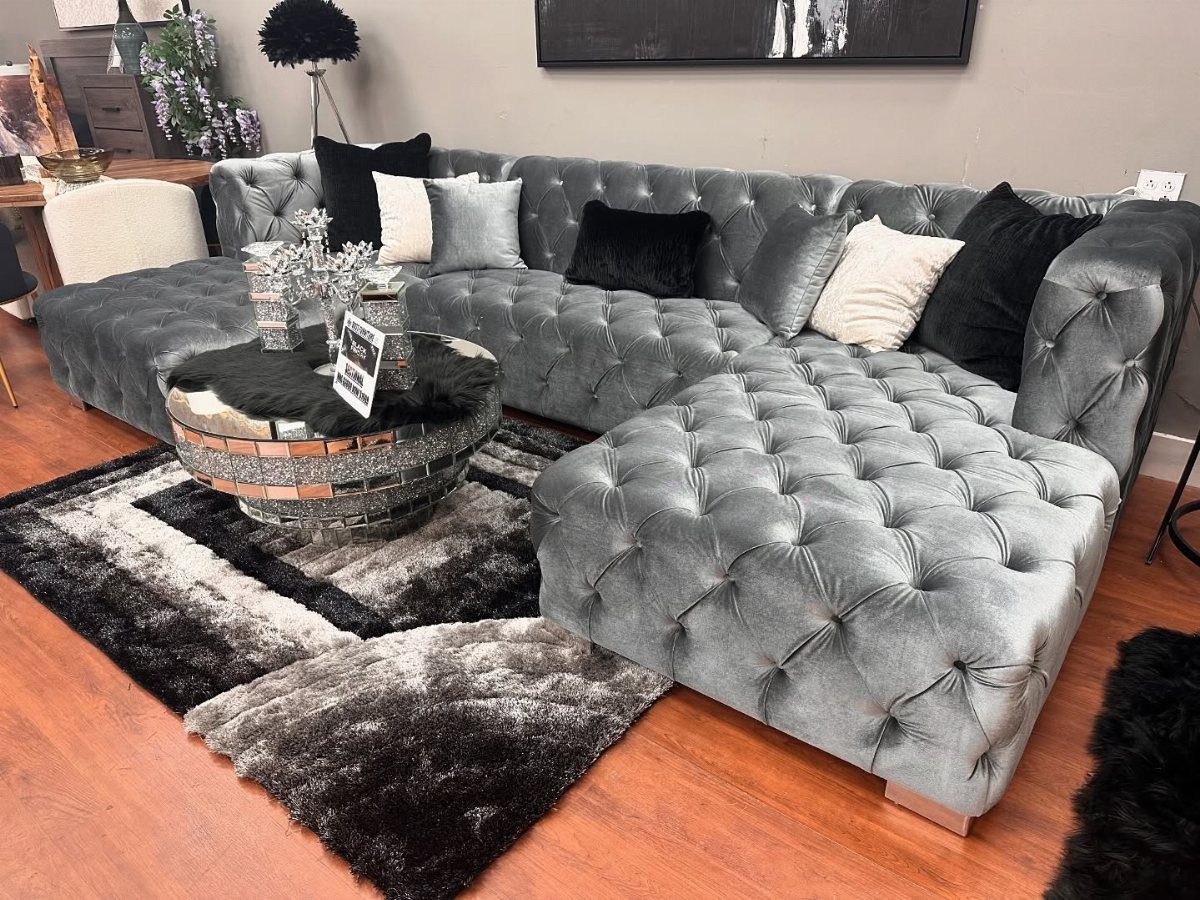
A mirrored coffee table brings shine next to grey velvet and shares the same formal mood. Velvet softens the reflective surface, so the room doesn’t turn cold.
Stick to one or two metal pieces. A mirrored table is plenty, and a shag rug underfoot keeps the whole setup from feeling hard.
Black and white pillows keep the palette tight, so the metal is the only thing that sparkles.
5. Textural Cushions and Patterned Cushions Enhance Your Grey Sofa
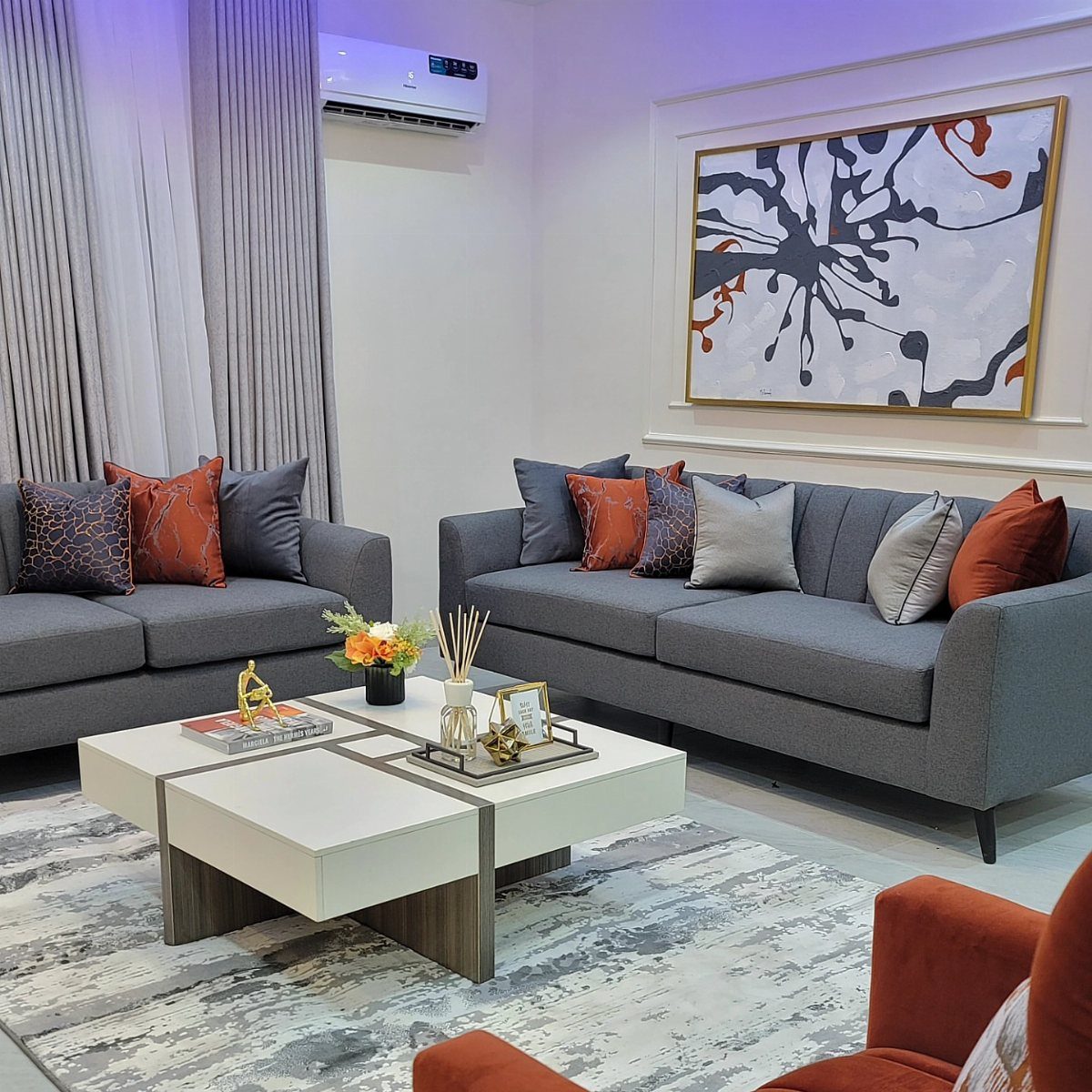
Mix at least 2 textures on a grey sofa, and the flat color suddenly has depth. One warm accent color in patterned cushions lifts a cool grey base without fighting it.
Pick a single accent color, then vary the fabrics: a chunky knit beside a smooth patterned cover works well. Keep the patterns related by color so they don’t compete.
Cushion covers are cheap to swap, so you can change the look in minutes.
6. Grey Couch with Plants
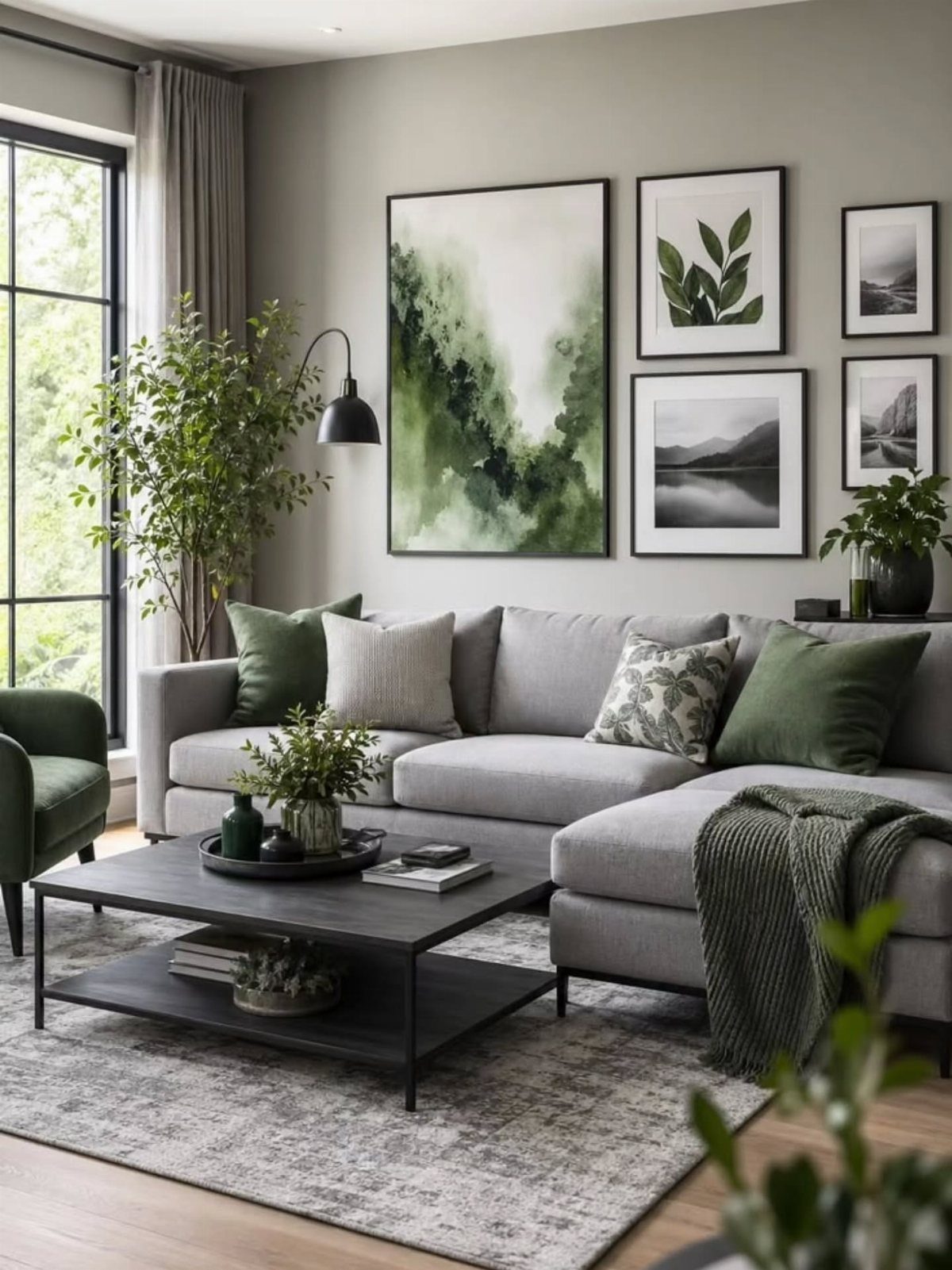
Green looks natural next to grey, so plants and green cushions suit a light grey sectional well. A big potted plant in a corner softens the sofa’s hard lines, and a black coffee table gives the greenery a strong backdrop.
Match the cushions to the leaves in your room, not to a catalog shade. Real plants need light, so place them near a window.
If you lack the light, fake leaves or green wall art give a similar effect.
7. Light Colours Will Keep Your Room Bright

Light grey on light grey works when the room around it is just as pale. White walls and a ribbed, light sectional bounce the light back, so a living room feels larger and brighter without any extra lamps.
Keep the neighbors light too: a white TV stand, pale curtains, and a cream or white rug. One dark piece is fine, but several will pull the room back down.
Ribbed upholstery helps here. The texture throws soft shadows, so all that pale color doesn’t look flat.
Light fabric shows wear, so pick a cover you can wash.
Why Grey Couches Can Feel Cold
The usual mistake is surrounding it with more grey, black and white only, or cool-toned decor alone. Each of those choices stacks cool on cool, and the room goes chilly.
Check your room for a warm counterweight.
I anchor the space with a rug that reads warm, and a coffee table in natural wood pulls the same weight. Even two or three pieces like that change how the sofa feels.
Before buying anything, look at what already surrounds the sofa. If every item is grey, black, white or blue-toned, add warmth first and more neutrals second.
How to Dress a Dark Grey Sofa
Start with natural wood in warm oak or walnut finishes. Wood gives contrast and life to a heavy dark sofa, and an accent chair or side table in that tone is an easy place to begin.
Then layer texture on top: a boucle pillow, a lumbar pillow, a rug with some warmth in it.
Boucle and a smooth sofa fabric feel different under your hand, and that difference is what keeps dark grey from looking like a solid block.
Choose a rug that anchors the seating area, since it grounds the sofa and adds warmth underfoot.
Frequently Asked Questions
What color sofa goes best with grey walls?
A sofa in a warm tone or a contrasting shade balances grey walls best. A grey sofa against grey walls doubles down on cool tones, and the space can start to feel cold.
A light grey sofa also works against pale walls, since white and light neutrals bounce light around and make a living room feel larger and brighter.
What is the 2/3 rule for couches?
The 2/3 rule says a sofa should fill about two-thirds of the wall it sits against. That leaves breathing room on each side for a side table or lamp, and the sofa still looks sized to the wall.





