The ideas here run from sheer curtains and area rugs that need no tools to built-in shelving and corner desks that require measuring, cutting and permanent changes to the walls.
What picks yours is whether you rent or own: a rental points you to removable options like peel-and-stick accent walls and tension-rod curtains, while an owner can commit to built-in shelving or a permanent desk nook.
1. Floating Shelves
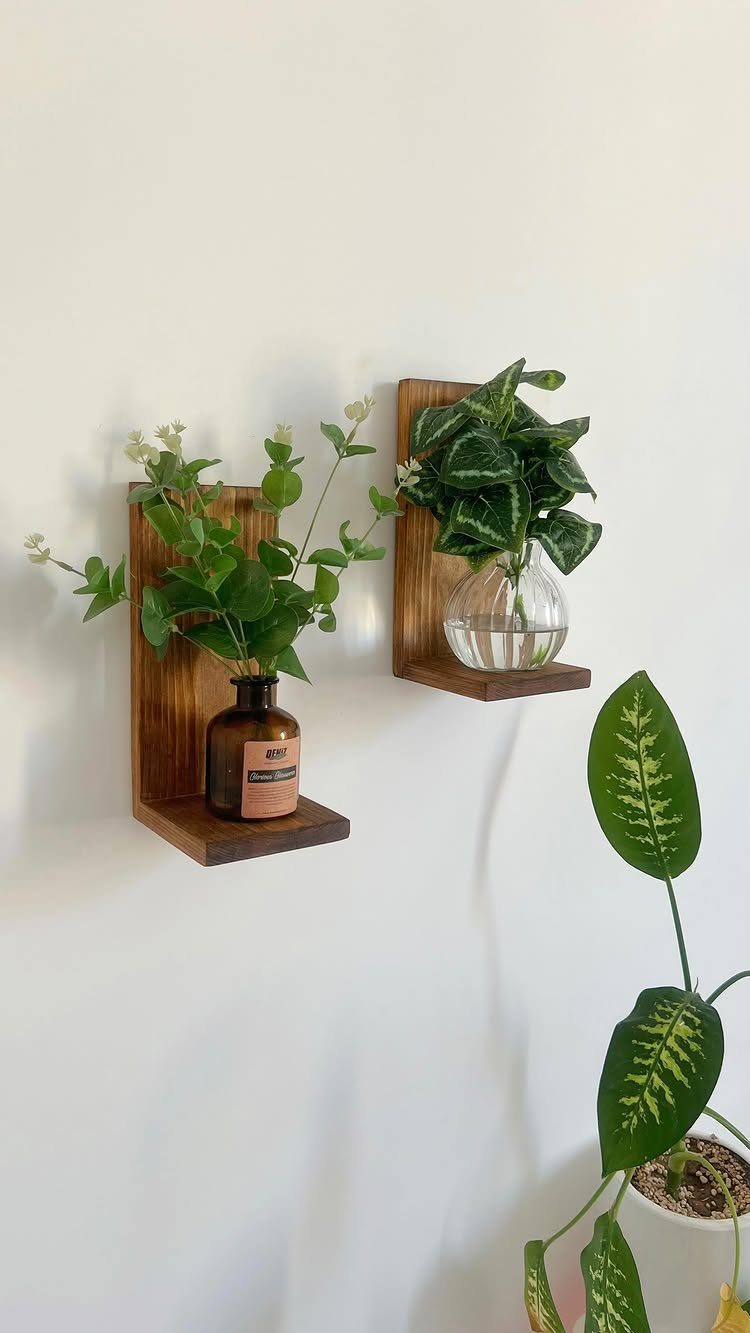
2 shelves in natural wood on a white wall hold a plant apiece, and that pairing is the version I would copy.
Wood against white stays calm, and a glass vase lets a cutting sit there with no pot or saucer to crowd the shelf.
Floating shelves take no floor space, which matters in a small front room. Keep the shelf depth shallow so it doesn’t jut into the walkway, and stop at two or three pieces so the wall still has breathing room.
2. Sheer Curtains
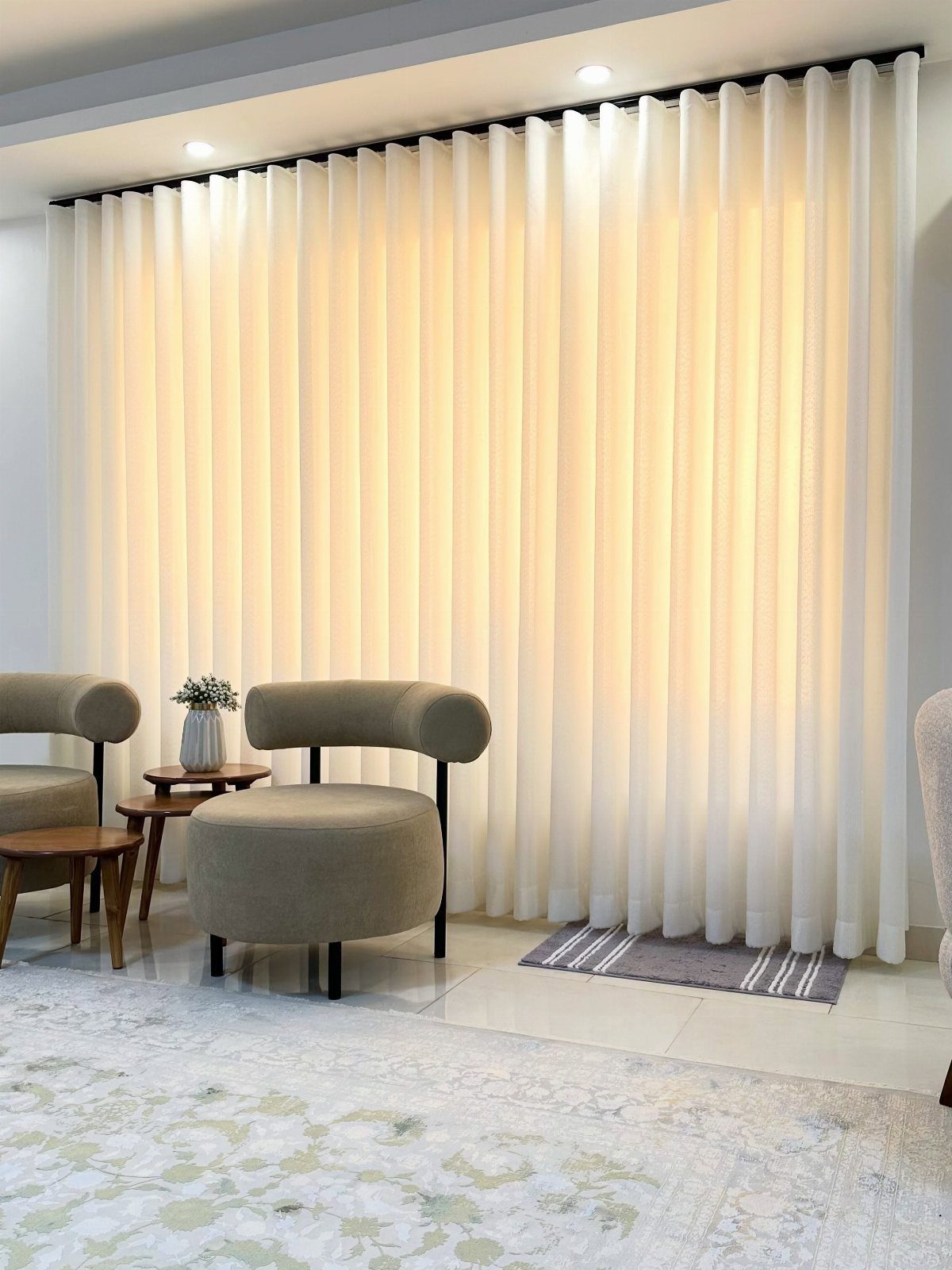
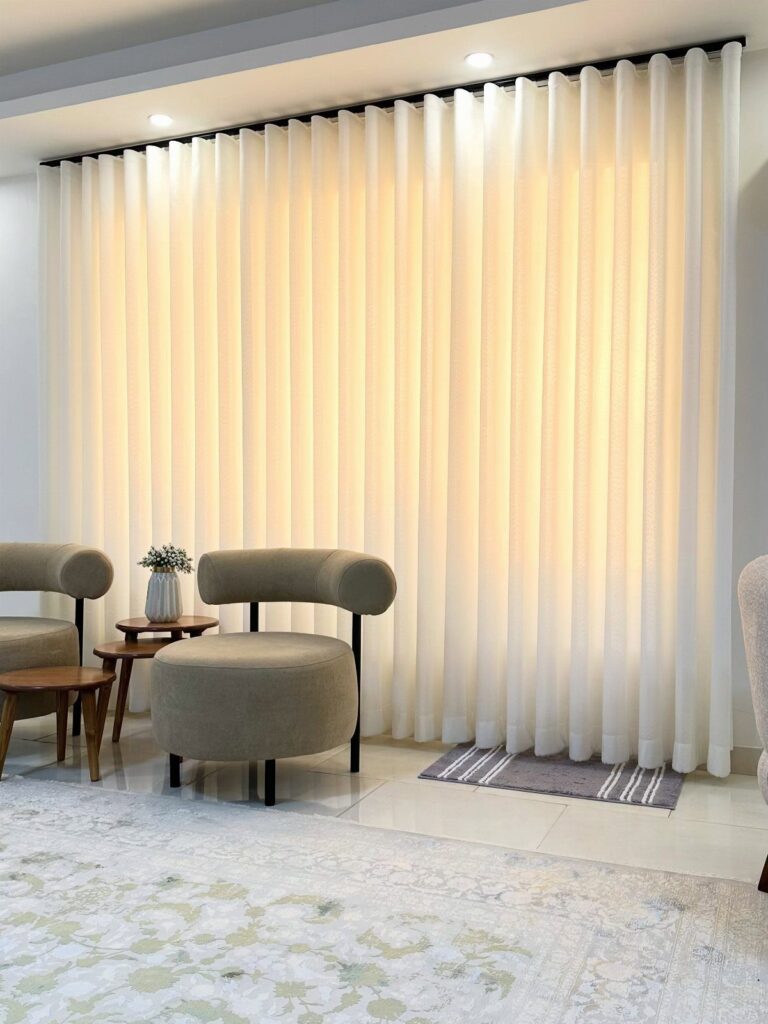
Hanging sheers from ceiling height, rather than just above the window frame, makes the wall read taller and softer at once. Floor-length white panels also keep a room bright, since daylight passes through the fabric instead of stopping at it.
For a rental, a tension rod or an adhesive-hook rail avoids drilling. Choose panels that graze the floor without pooling, and let them hang loose so the fabric stays light.
Sheers give little privacy at night, so layer a second curtain behind them if the window faces the street.
3. Pale Neutrals
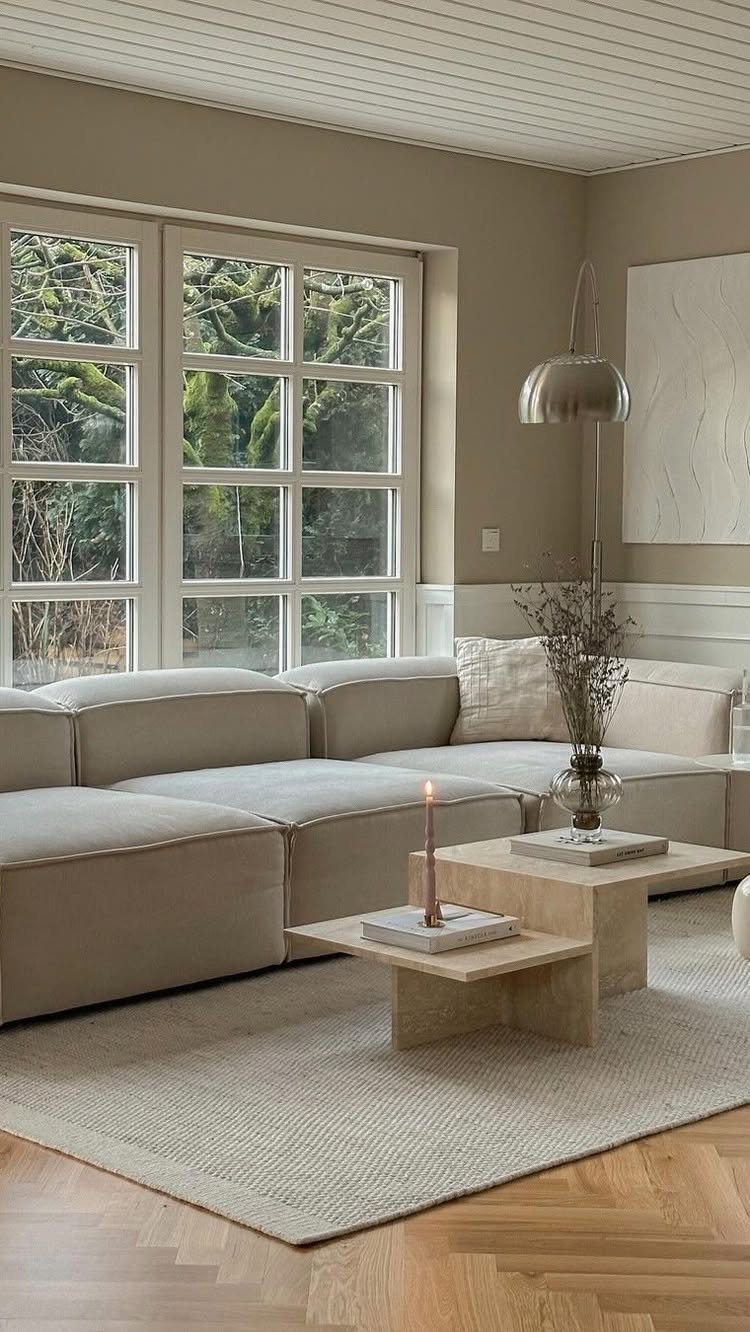
Pale neutrals work best when the shades differ slightly, and beige, cream and stone give you a range without any color fighting for attention.
Keeping the big pieces, like the sofa and rug, in that family makes the space read as larger and calmer.
Texture does the work that color would otherwise do. Mix a nubby upholstery with a smooth stone-look tabletop, and add one natural material, such as wood, so the room doesn’t go flat.
Light colors show spills, so pick washable covers if you have kids or pets.
4. Layered Lighting
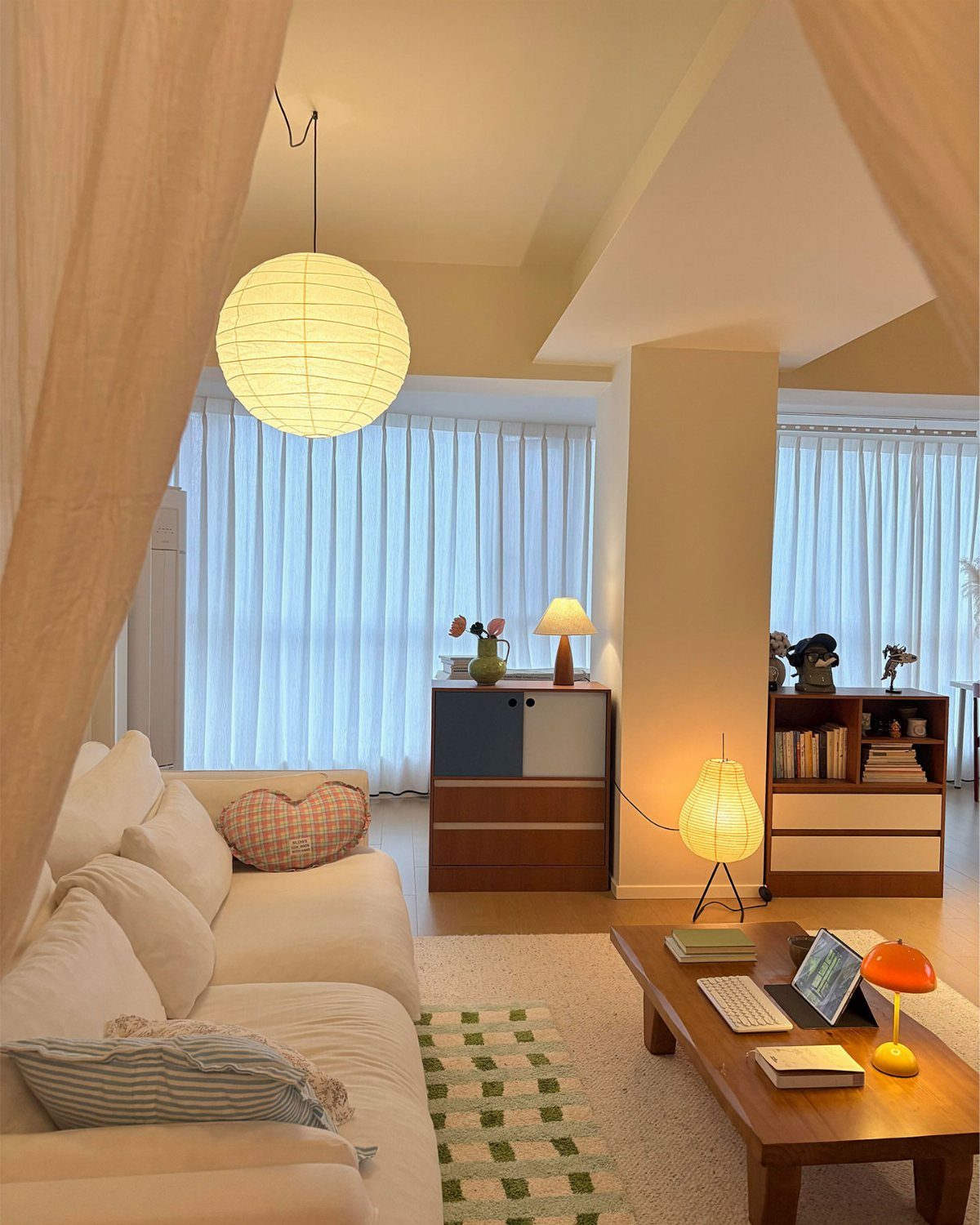
Three light sources at three heights make a small room feel warmer than one overhead fixture ever will.
A pendant covers the ceiling, a floor lamp fills a corner, and a small table lamp adds a low glow next to the sofa.
Use warm bulbs in all of them so the light matches. A paper shade is cheap, diffuses softly, and costs a fraction of what most glass fixtures do.
Put the lamps on separate switches or plugs, so you can dim down to just one when you want less light at night.
5. Gallery Wall
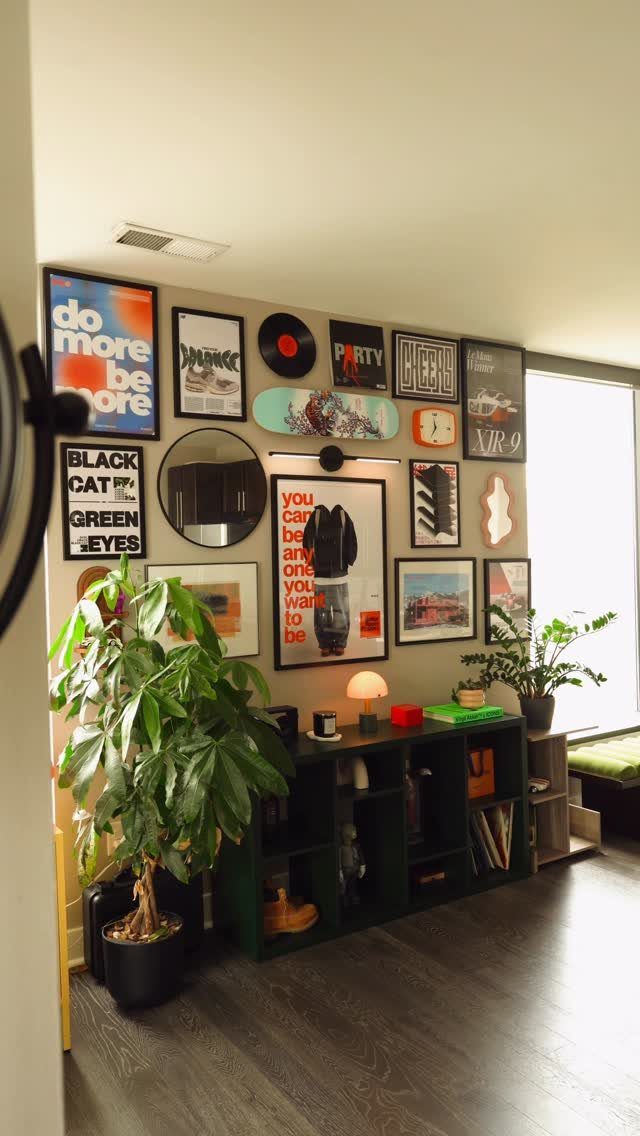
A gallery wall holds up best when the pieces share one loose rule, such as mixed posters with a single mirror, so the eclectic mix still looks planned.
Odd objects like a record or a skateboard add personality that framed prints alone can’t.
Lay everything on the floor first and shuffle until the gaps look even.
Then trace each piece on paper, tape the paper to the wall, and nail through it. That saves you from patching extra holes in a rental.
Hanging it above a low shelf keeps the wall and the storage working together.
6. Window Seats
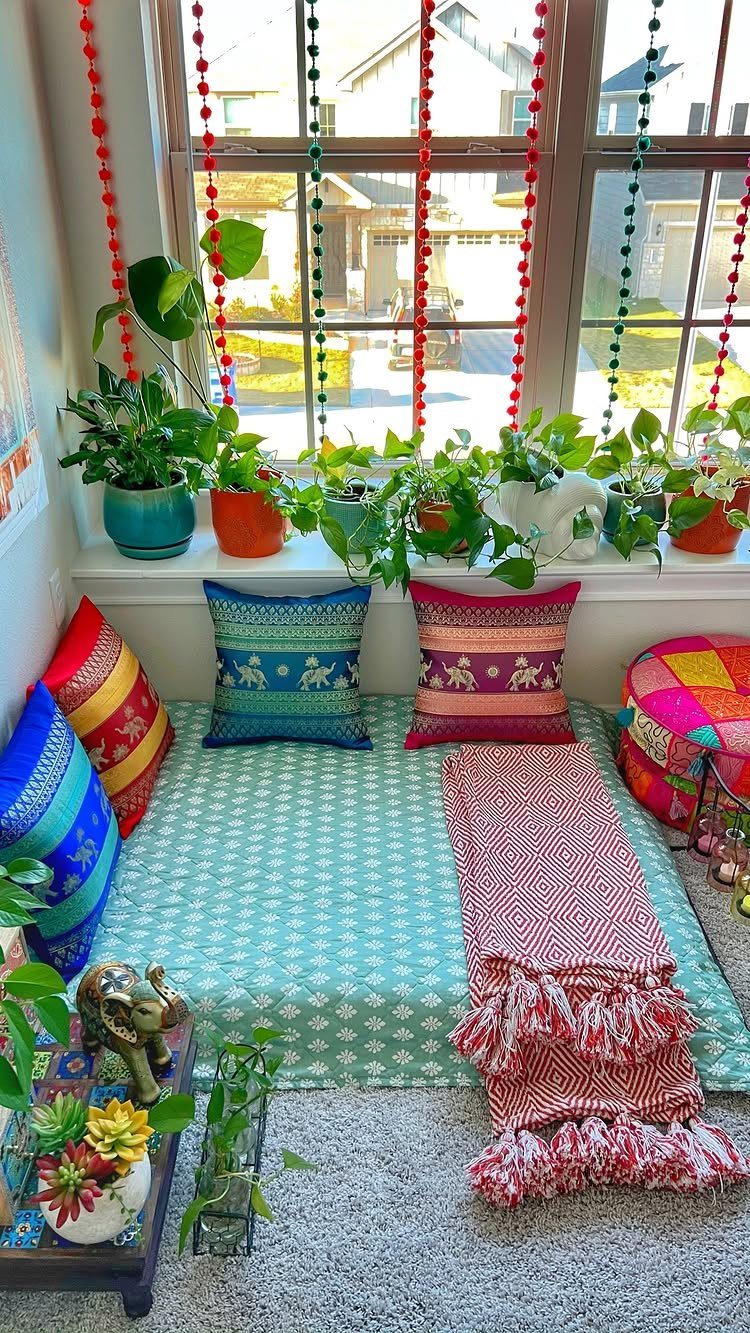
A window seat turns the dead zone under a window into a place to sit, and a thick mattress-style cushion is what makes it comfortable rather than decorative.
A low seat also keeps the window clear, so light still reaches the room.
For a weekend budget, a firm foam cushion cut to fit, in a patterned cover, gets you most of the look.
Choose a pattern that hides wear, since this will become the favorite seat.
7. Use Mirrors
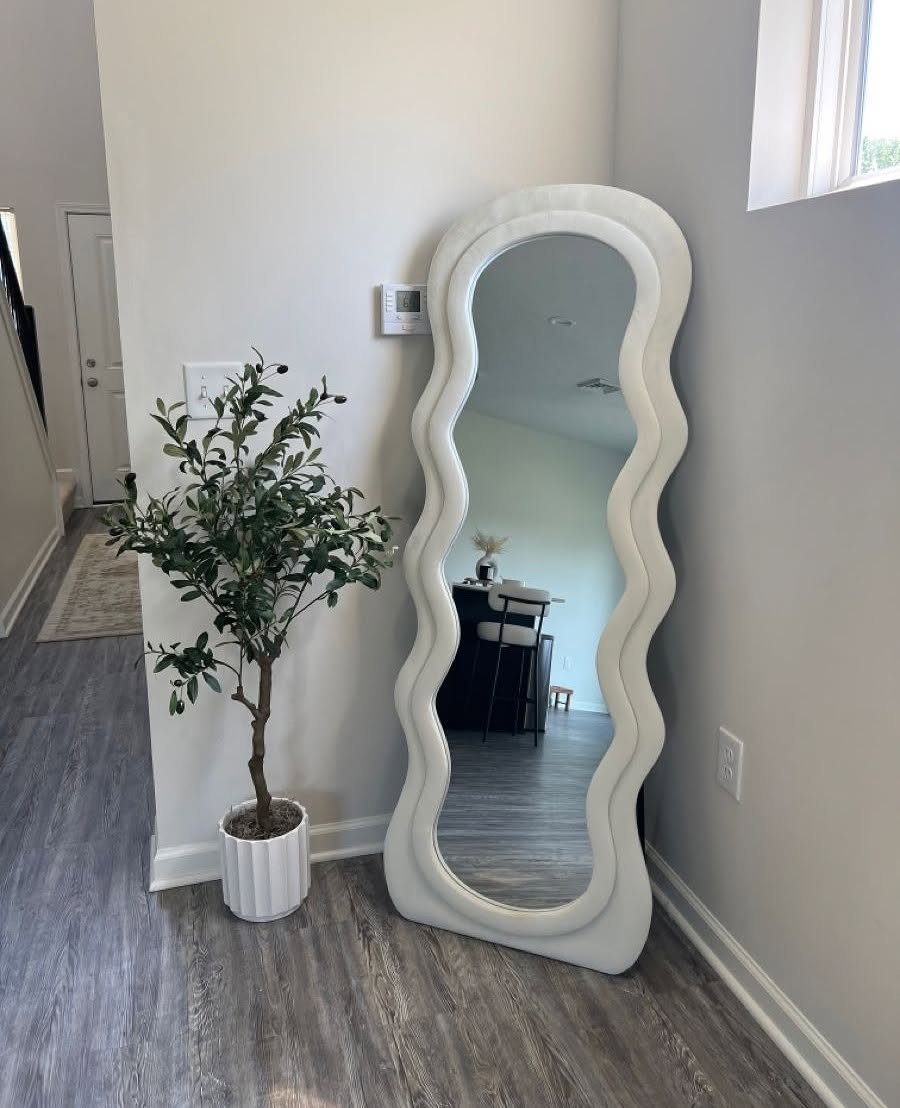
A full-length mirror leaned against the wall runs cheaper than one hung, and it needs no drilling, which suits a rental.
Placed opposite a window or beside it, it bounces daylight deeper into the room and makes the floor look longer.
The wavy white edge is my pick over a plain rectangle. It softens a straight-sided room and reads as decor, not as a dressing mirror.
Set it on a wall you see from the door.
8. Area Rugs
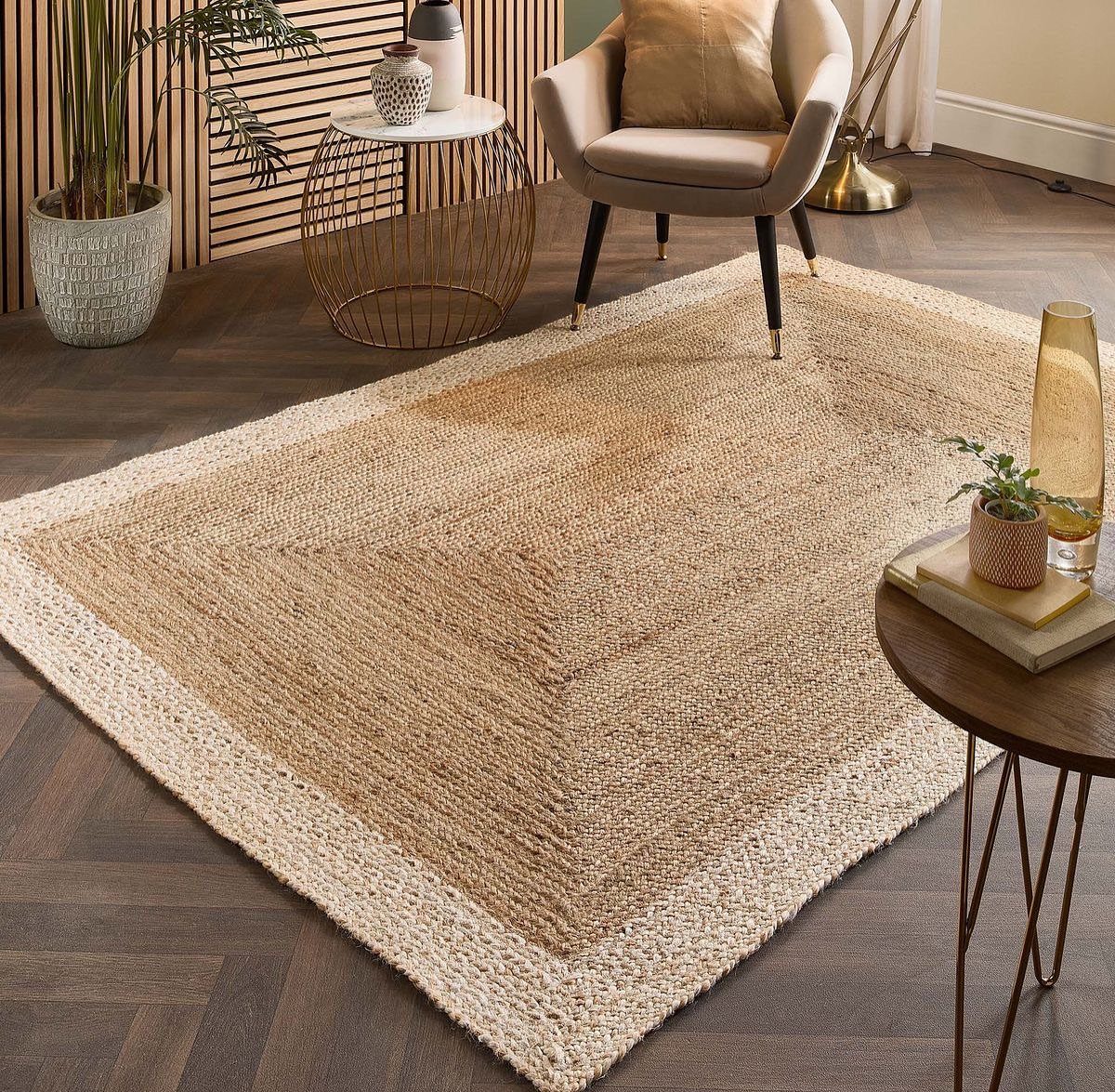
A natural fiber rug like jute pulls a seating group into one zone, and in a small room that zone is what keeps the furniture from looking scattered.
The woven texture and a simple geometric pattern add interest without bringing in more color.
Size matters more than the weave. Pick a rug large enough that at least the front legs of the chair and sofa sit on it, so the pieces read as a set.
9. Accent Walls
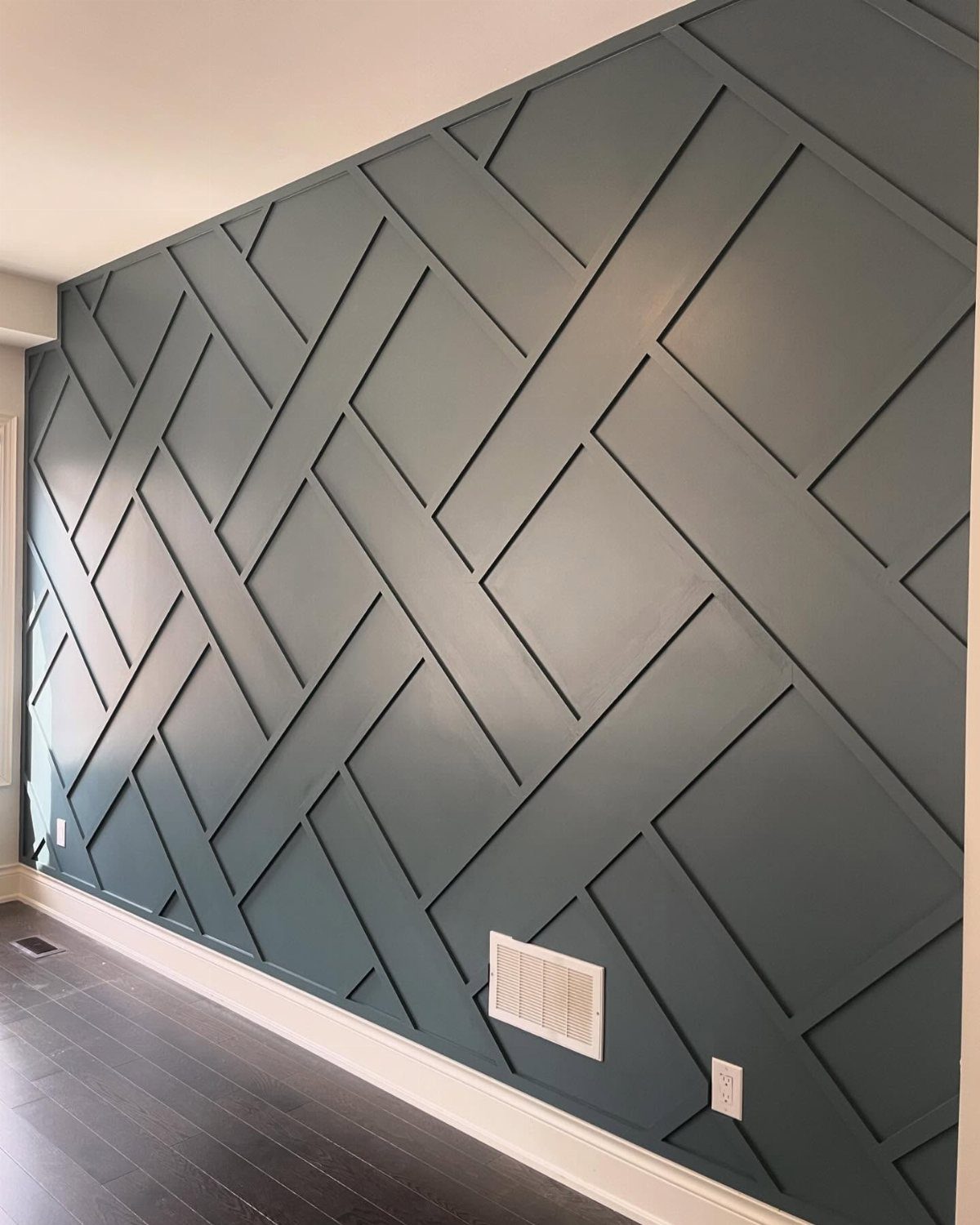
The slats catch shadow, so the wall has dimension even in flat daylight.
Paint the wall and the slats the same color. One shade keeps the pattern subtle and the work quick.
White baseboards stay crisp against deep color, so leave them alone. Choose the wall behind the sofa or the one you face when you walk in.
10. Built-In Sofa Shelving
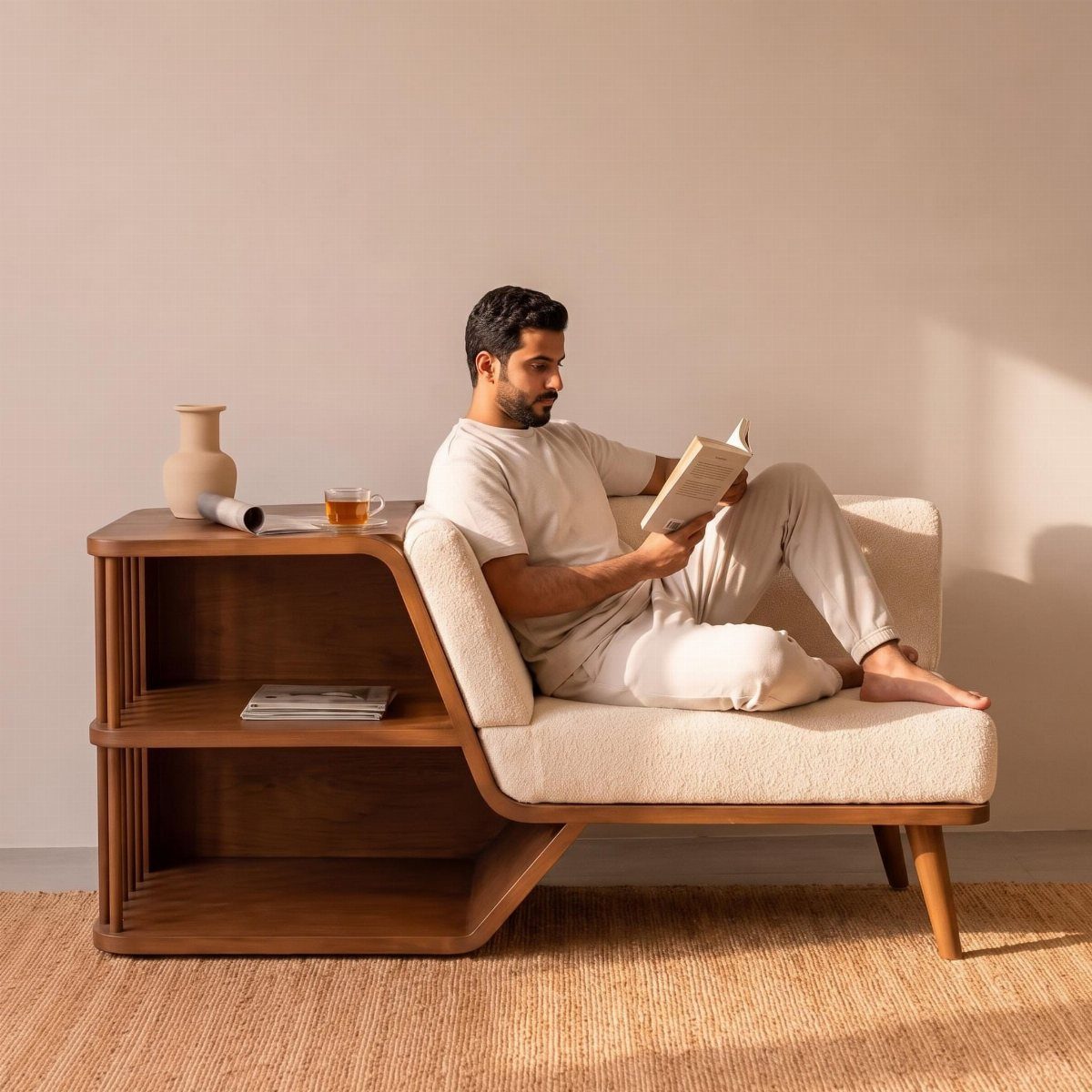
A wooden shelf built into the sofa arm does the job of an end table, and that frees floor space a small room can’t spare. It holds a book, a mug and a lamp-sized item within reach.
I’d choose this over a separate table in a tight room, since nothing sticks out into the walkway. The shelf stays on one side of the sofa, so you can’t move it around.
A cream sofa with light wood stays calm and quiet.
11. Corner Desk Nook
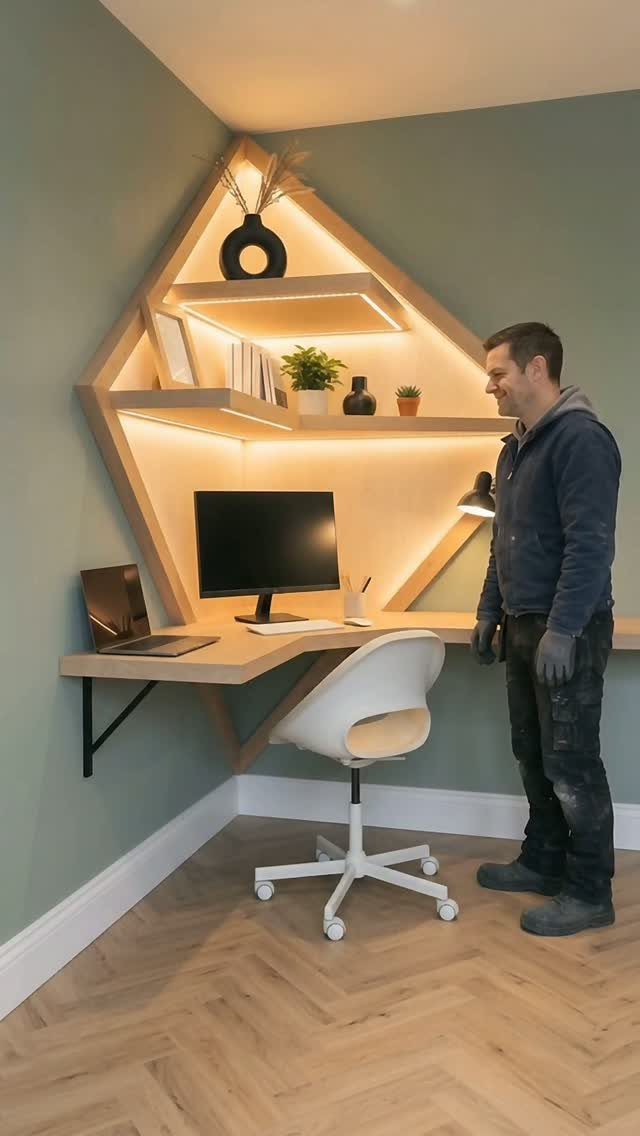
A custom corner desk with shelving above it turns the least-used spot in a room into a full workstation.
Building to the corner’s exact angles leaves no dead gap, and a geometric shape makes the unit look designed rather than squeezed in.
Integrated lighting is worth adding, since it lights the desk without taking up space for a lamp.
Custom work costs more than a ready-made desk, so a basic corner desk with a few wall shelves is the cheaper route. A white chair keeps the setup visually light.
12. Low-Profile Sliding Door Console
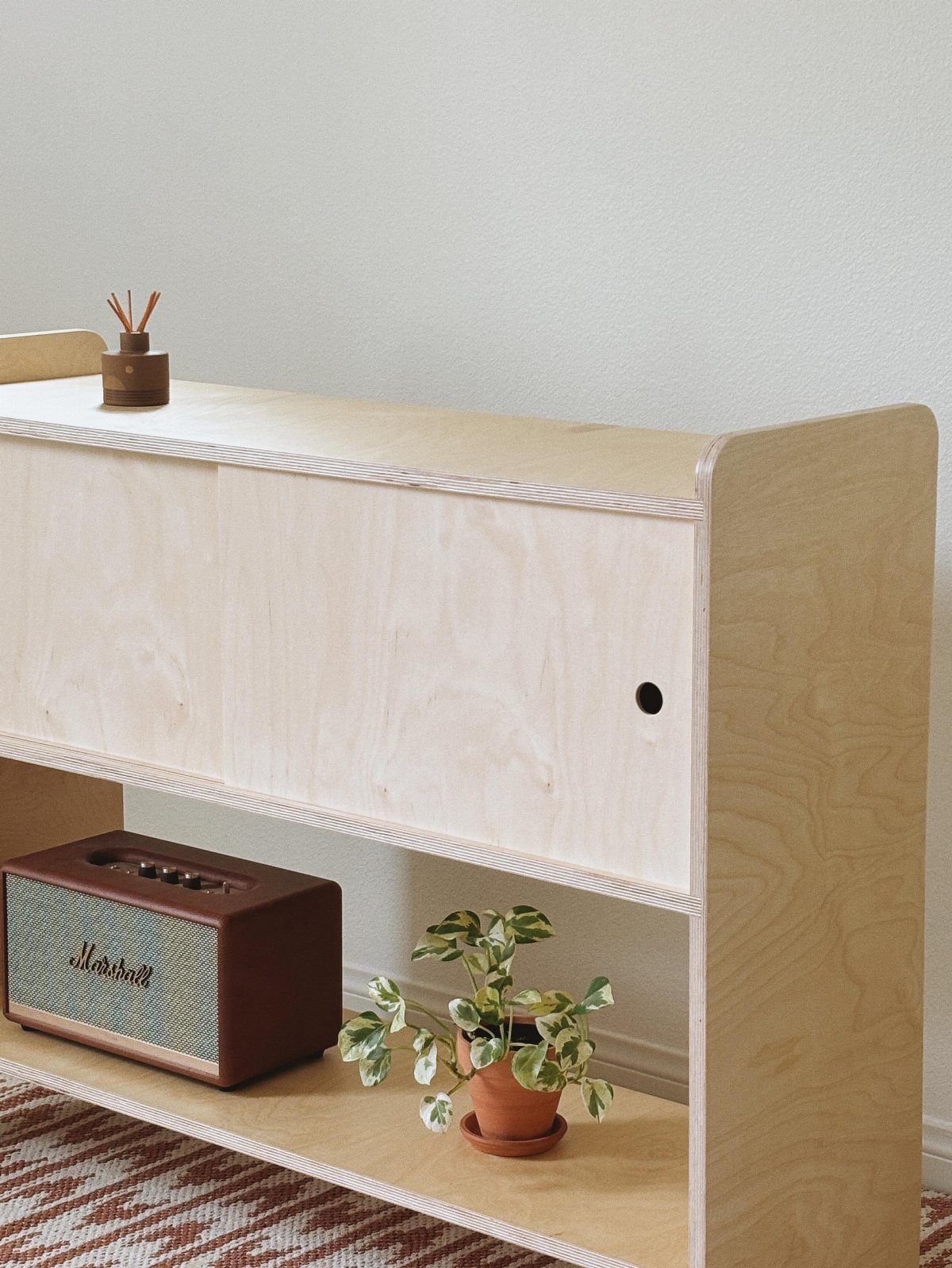
Sliding doors beat swing doors in a small front room because nothing needs clearance to open. A low plywood console keeps its storage hidden behind the doors and its top free for a speaker and a small plant.
Light plywood looks warm next to white walls, and it runs cheaper than most solid wood. Keep the top to two or three items so the piece stays streamlined.
A patterned rug underneath ties it to the rest of the room.
Importance of Natural Light
Furniture parked in front of a window costs a small room more light than almost any paint choice can win back. Keep the window itself clear, and don’t let a TV or a tall bookcase block the glass.
Pale walls help the daylight travel, since light bounces off them and the room reads bigger and less dim. Aim the furniture layout at the window so the brightest part of the room is also where the eye lands first.
If your room gets plenty of sun, you can afford one darker accent wall without losing the airy feel.
Furniture Arrangement Tips
Pushing everything against the wall feels like the safe move in a small room, but floating a key piece often works better.
Pull the sofa a little off the wall, or set it in the middle of the room with a console table behind it, and you split the seating area from the walkway.
That also makes the path through the room clearer.
In a narrow room, skip the matching pair of seats facing each other from opposite walls.
It can feel as stiff as a waiting room. Point each seat at the same thing, whether that’s a window, a fireplace or a low table, and conversation flows easier.
Color Choices for Small Rooms
As a rule of thumb, dark colors shrink a small room and light ones open it up.
For a hit of strong color, bring it in on pieces you can count: one accent chair, a pair of pillows, a single rug in rust or cobalt. Too much and the room turns chaotic and cramped.
A loveseat with arms and a back that sit low keeps sightlines open and gives you wall height for a mirror or a framed print.
See how designers used everything from brilliant layouts and bold colors to double-duty furniture and stylish accessories to craft small living rooms that are big on style.
Frequently Asked Questions
How to increase space in a small room?
Clear the floor and keep the window open. Floating shelves, a sofa-arm shelf in place of an end table, and sliding doors on a low console all free up floor space.
Pale walls and a full-length mirror set opposite or beside a window push daylight deeper into the room, so it reads larger.
What are some creative ways to decorate a small living room with a TV?
Keep the TV away from the window, because a screen or tall unit in front of the glass cuts daylight in a way paint can’t fix.
Cabinets with doors keep clutter out of sight while the top holds a soundbar or one small thing in a pot.
Aim the seating at the window or the TV so the layout has one clear focus. Two objects on the console look intentional; five start to look busy.
How do you arrange furniture in a small living room?
One piece away from the wall opens up more options than lining the perimeter. A sofa that sits 8 or 10 inches out, or one placed mid-room with a narrow table behind, creates a zone instead of a lineup.
2 chairs on opposite walls, face to face, read formal and make the room feel tighter. Angle everything toward one focal point, whether that’s the TV, the window or a coffee table.
What colors make a small living room look bigger?
Light colors open a small room, while dark ones shrink it. Mix surfaces so a linen sofa sits near a lacquered side table or a chunky knit throw lands on smooth leather.
One saturated piece, like a terracotta chair or a navy rug, gives the room a anchor without crowding the palette.





