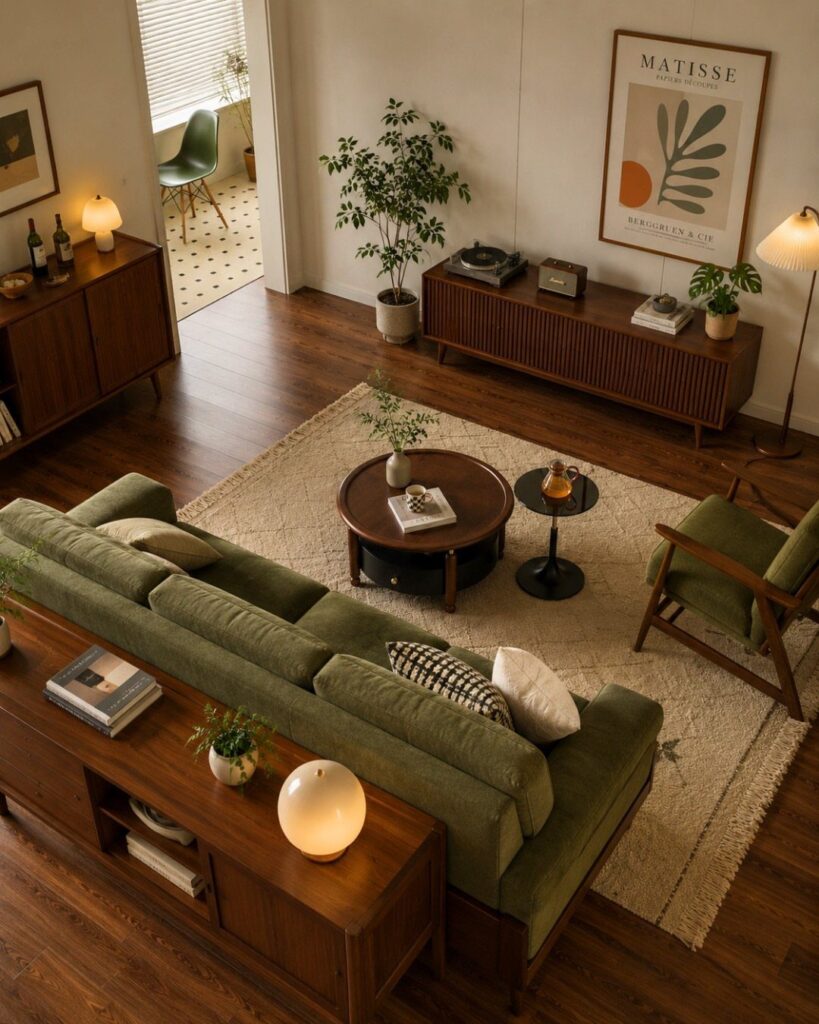
Ideas range from a free pass with sandpaper and wood oil on a table you already own to structural features like exposed beams and a brick fireplace that only owners can install.
Your lease decides which end makes sense: sofas, lighting, rugs and bar carts all move out with you, while paneling, glass and beams stay with the building.
Most of the list lands in territory any renter can handle, where one strong piece of furniture or one bold abstract print against a neutral backdrop carries the style.
1. Sofas and Chairs with Slim Legs
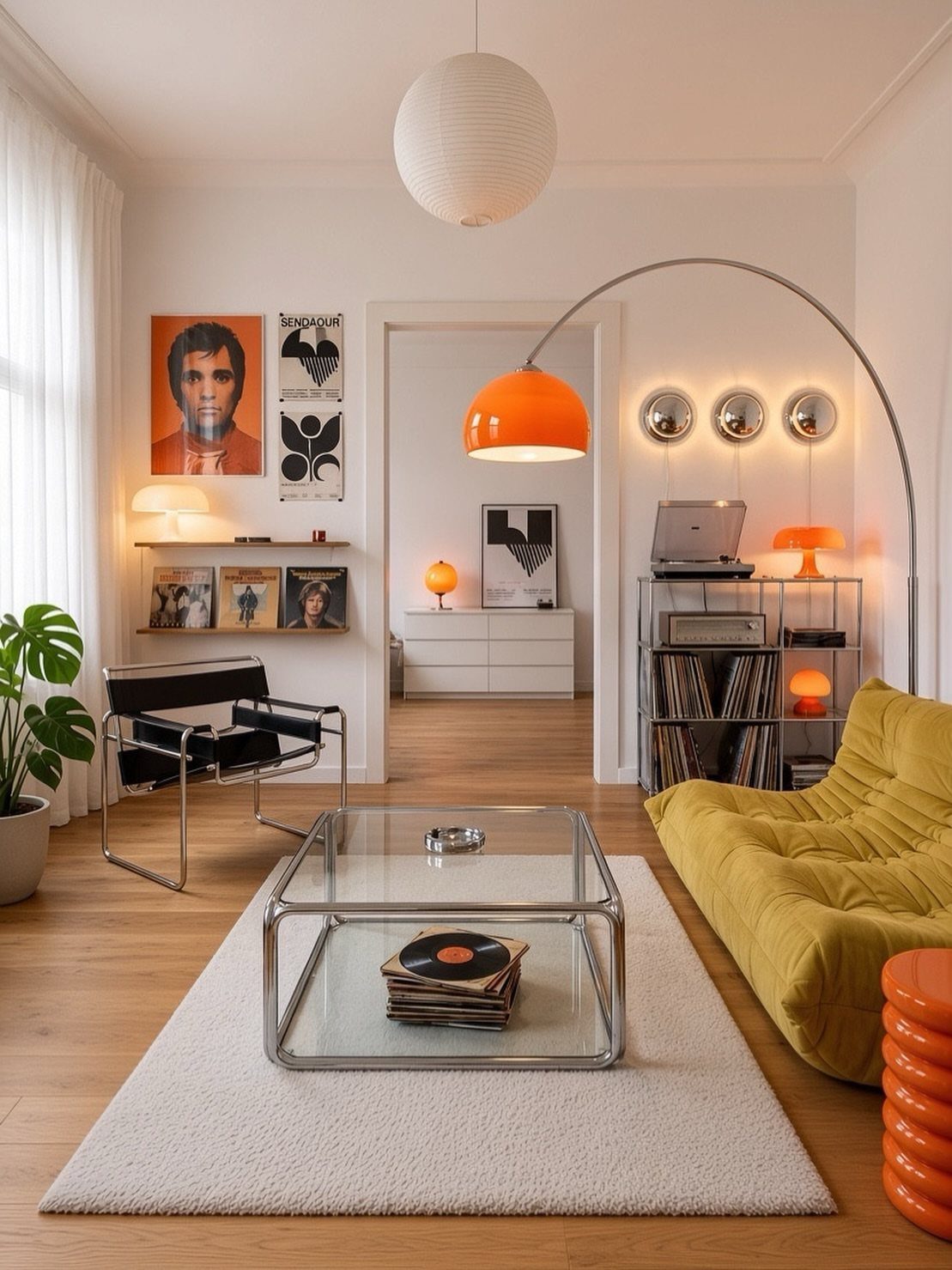
Sofas that sit low to the floor keep the sight line open, which makes a small room read as larger. Bold upholstery in a low-profile silhouette lets you use strong color or pattern without weighing down the room.
I would pick one loud piece and keep the other quiet, as the black chair does here. Two competing statement seats fight for attention.
2. Statement Lighting Fixtures
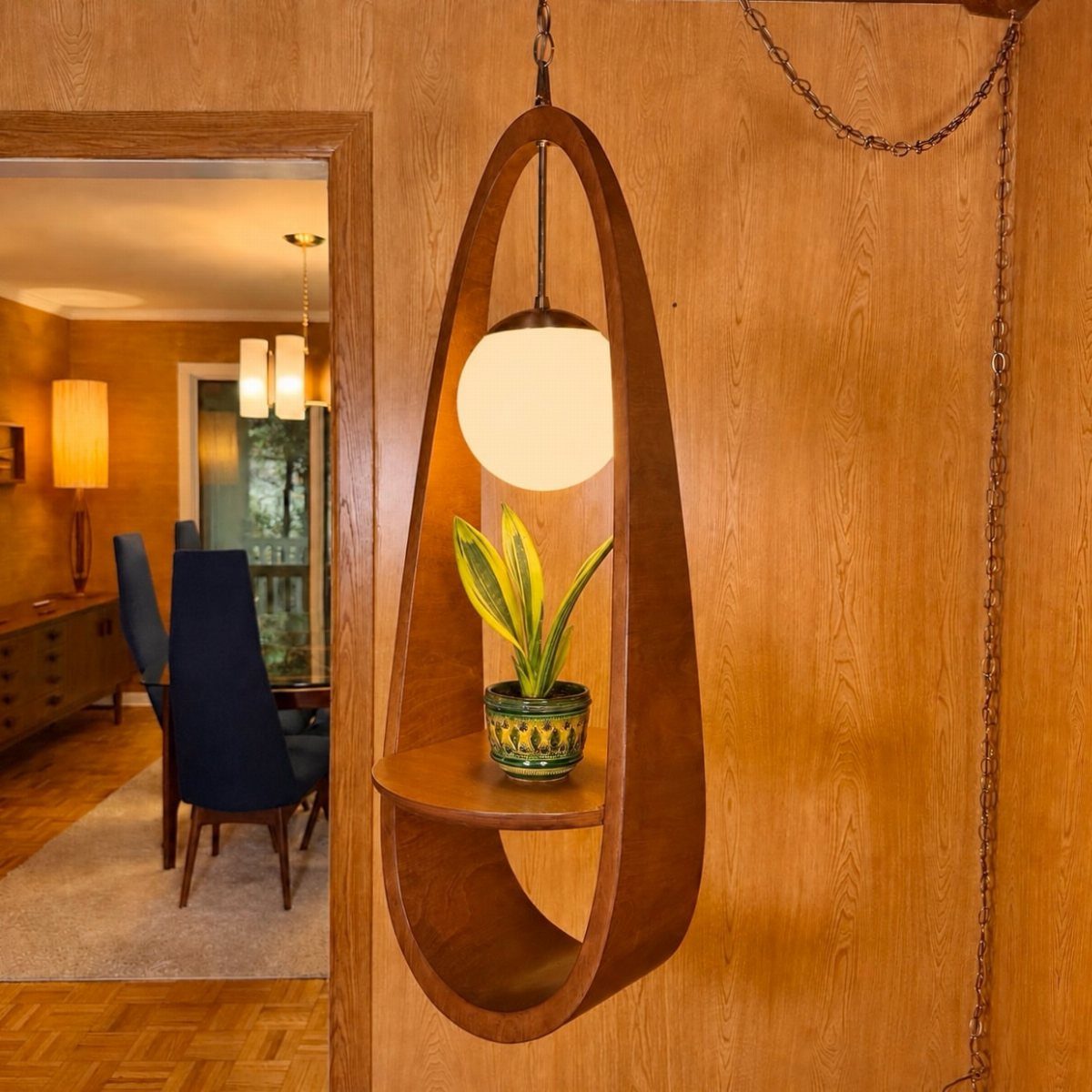
A fixture that doubles as a shelf or a wall piece with a light built in covers two needs in one spot. That suits a renter who has little floor space and no spot for a lamp.
A wall-mounted version like this keeps surfaces clear.
Choose a warm wood finish and a plain white globe so the fixture blends with paneling instead of fighting it. Check that your wall can take the fixture’s weight before you hang it.
3. Wood Paneling
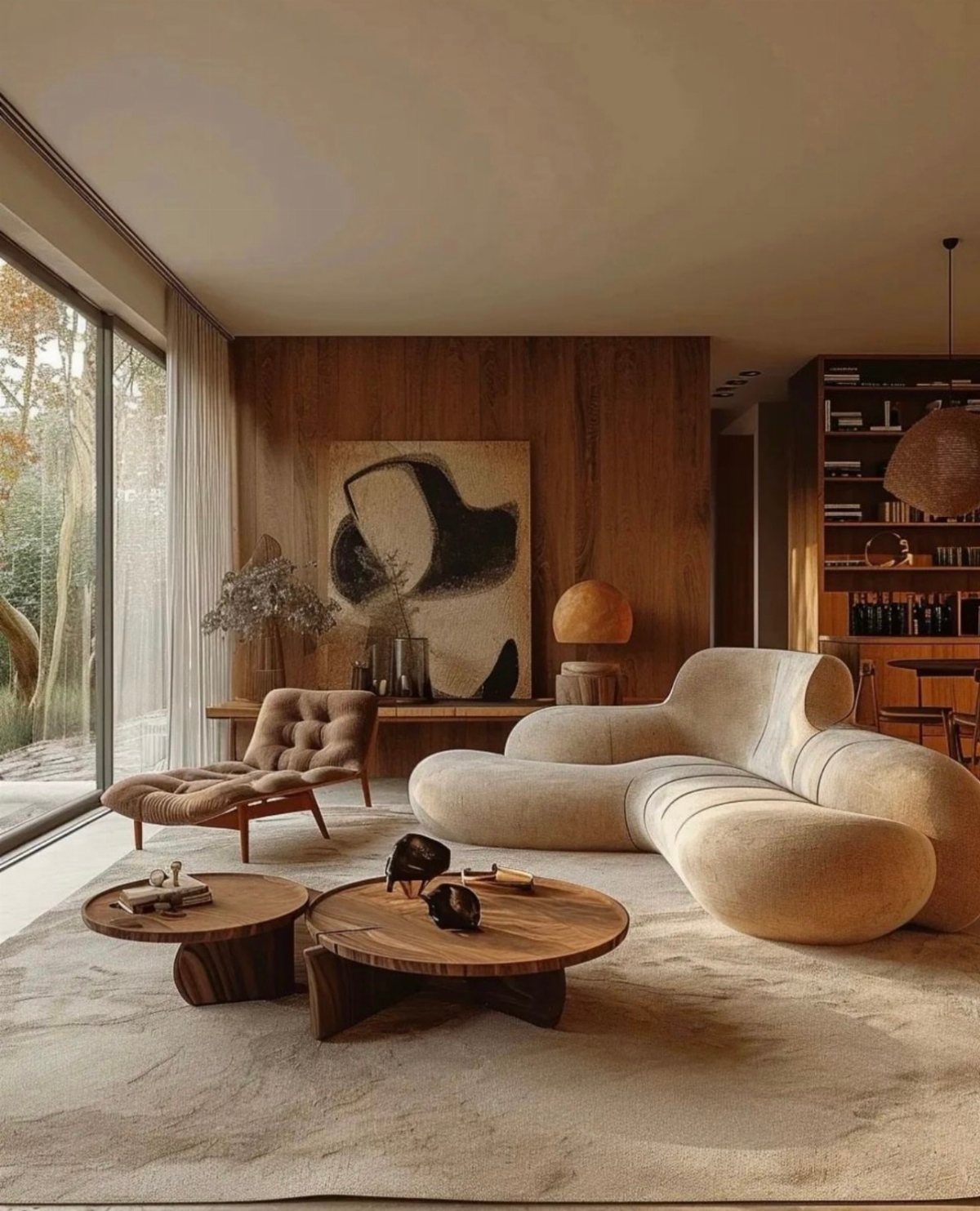
Vertical wood paneling gives a wall grain and warmth before you hang a single thing on it. Against a curved beige sofa, the straight lines of the boards make a pleasing contrast.
Keep the art large and simple, because paneling is already busy.
One big abstract painting beats a gallery of small frames here. If a full wall feels like too much, panel just one, the one behind the sofa.
4. Open Shelving
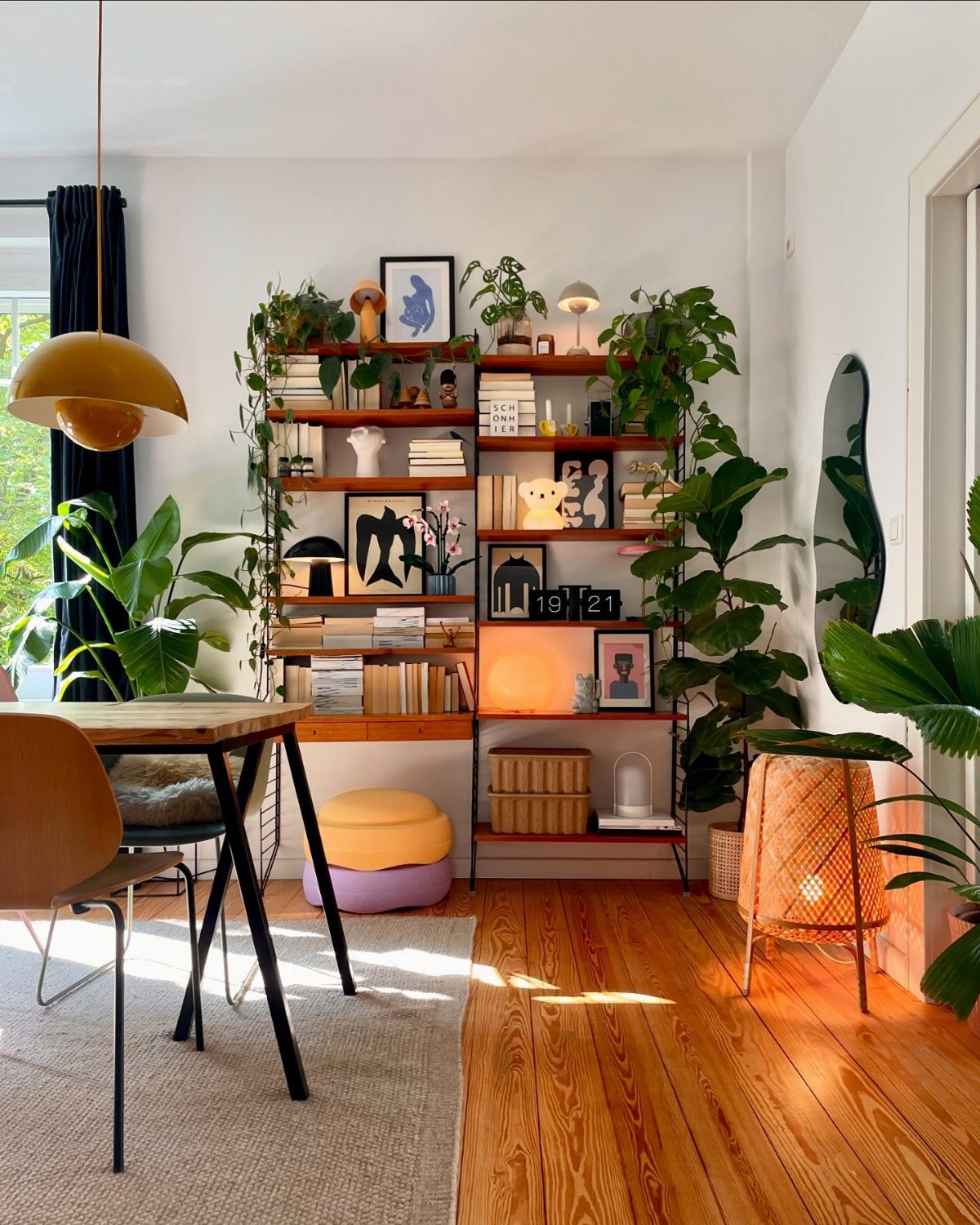
A tall open shelving unit works best when books, plants and art share the space instead of books alone. Mixing them breaks up the rows and keeps the unit from looking like a library wall.
Leave a few gaps on purpose.
Empty wood reads as calm, and it gives you room to swap things in later. In a sunny room, wood shelves also pair well with leafy plants.
5. Floor-to-Ceiling Windows
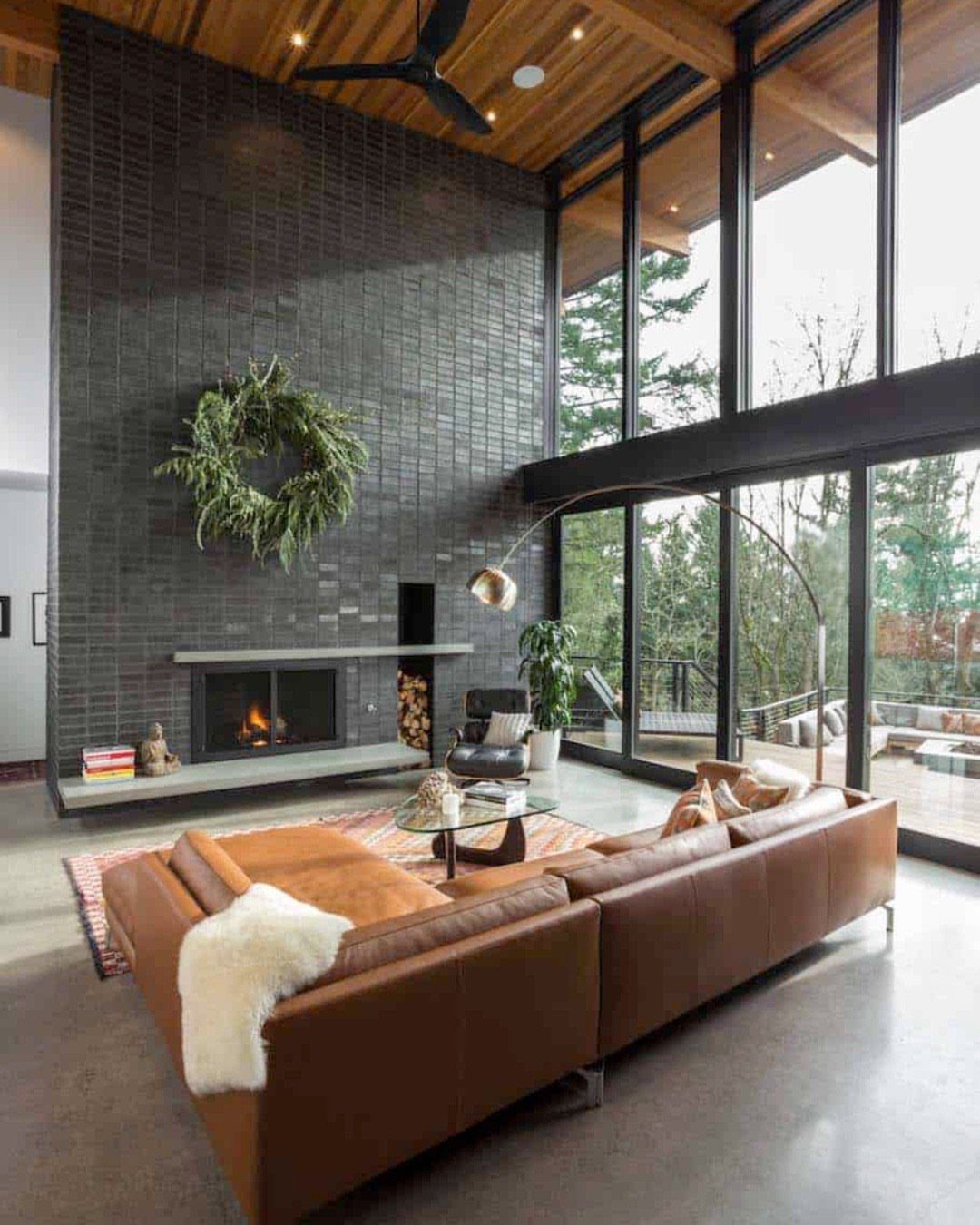
Floor-to-ceiling glass turns the view into the main decor, so the furniture can stay simple. Dark furniture and a tiled fireplace wall balance floor-to-ceiling glass when the view outside is busy.
Renters can’t add glass, but they can copy the effect.
Pull curtains fully clear of the window, keep sills empty, and arrange seating to face the outdoors. Dark, grounded furniture balances all that brightness.
6. Plants with Strong Shapes
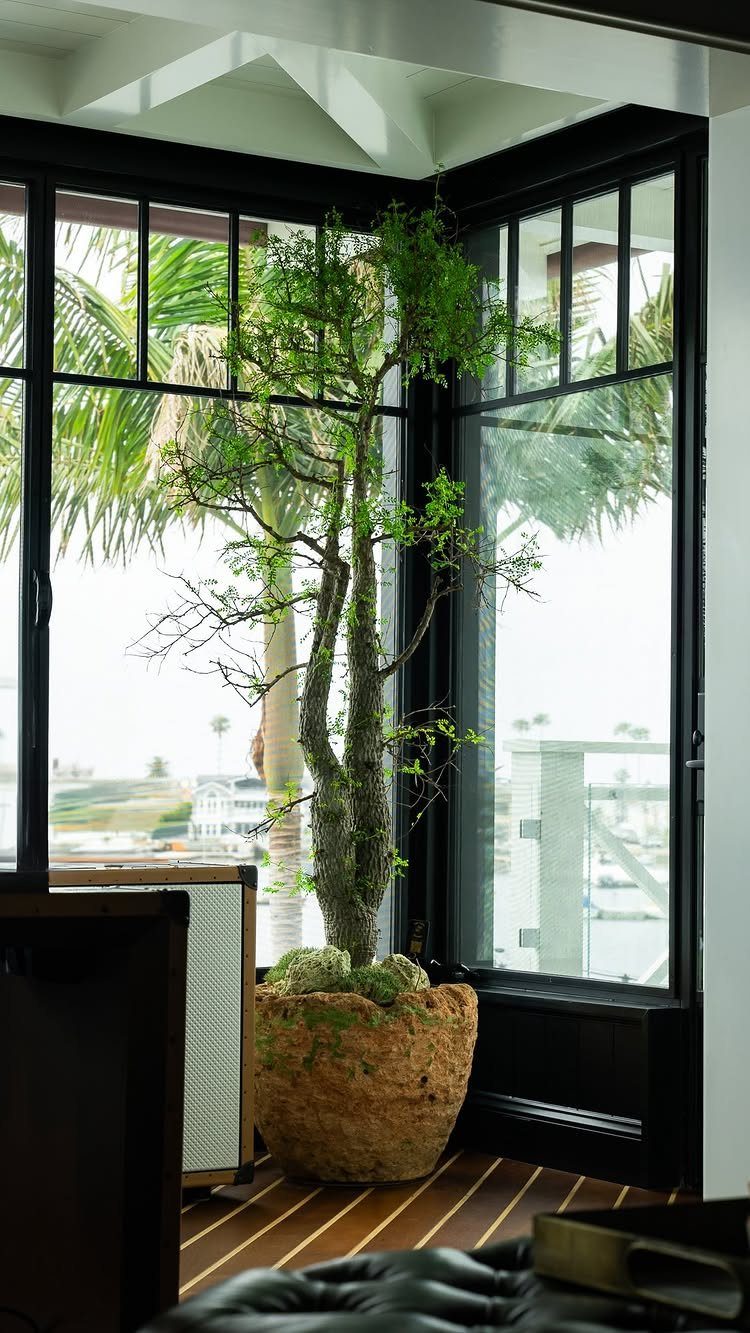
One tall plant with a strong shape reads better than a collection of small ones. Beside black window frames and wood floors, its strong outline reads almost like a piece of art.
Pick a plant with a clear upright shape, then give it room. Crowding it with others hides the silhouette.
I like a pot with some texture, since it adds interest without color. Place it near a window so it gets light.
7. Pops of Color
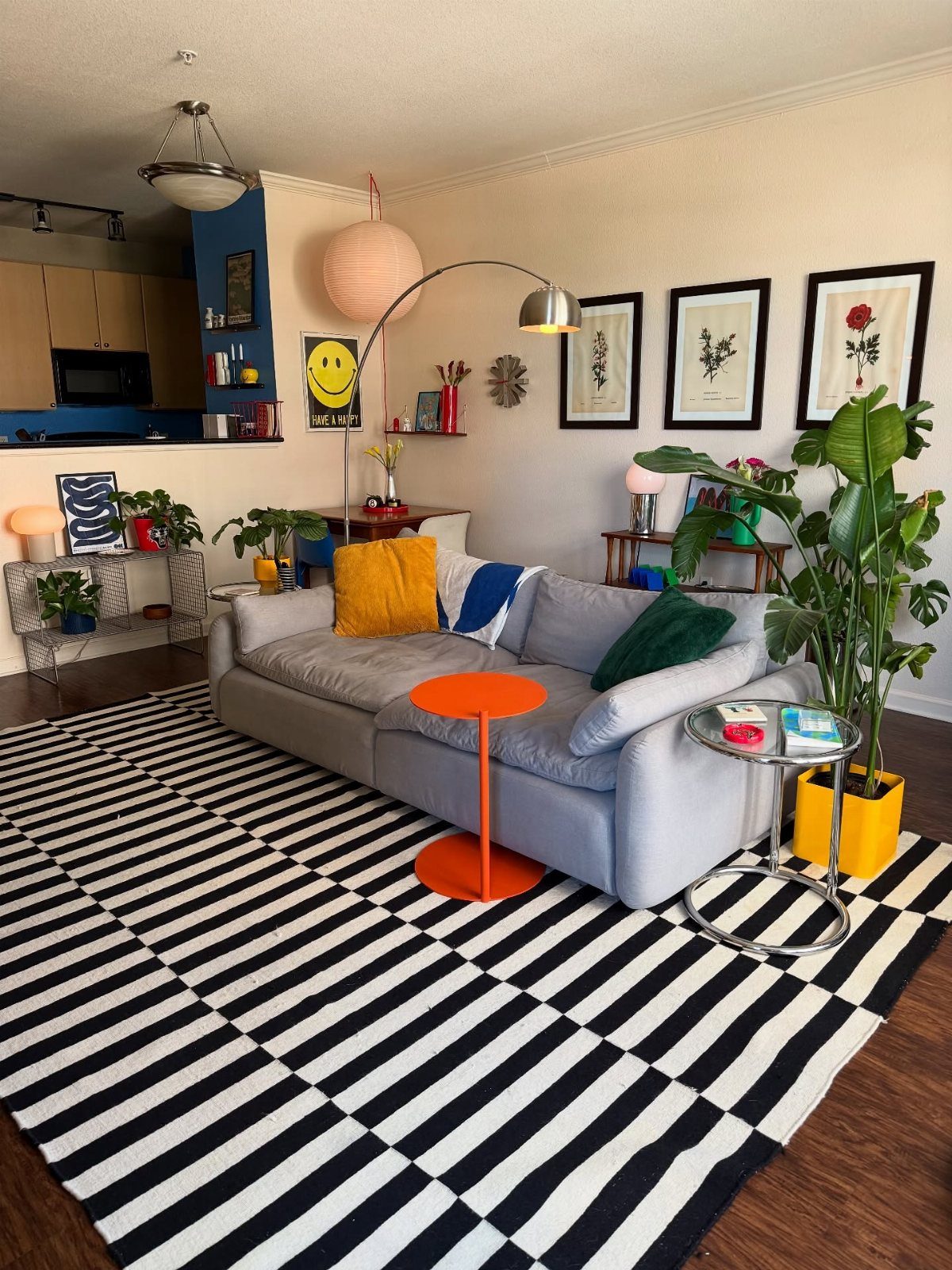
A grey sofa is the easiest base for color, because every pillow, table and rug you add reads clearly against it. Orange on a side table and stripes on the rug do the loudest work here.
I would limit the palette and repeat each color at least twice, so the room looks planned. Pillows and a small table are cheap to swap, which suits a rental.
8. Curved Sofas and Accent Chairs
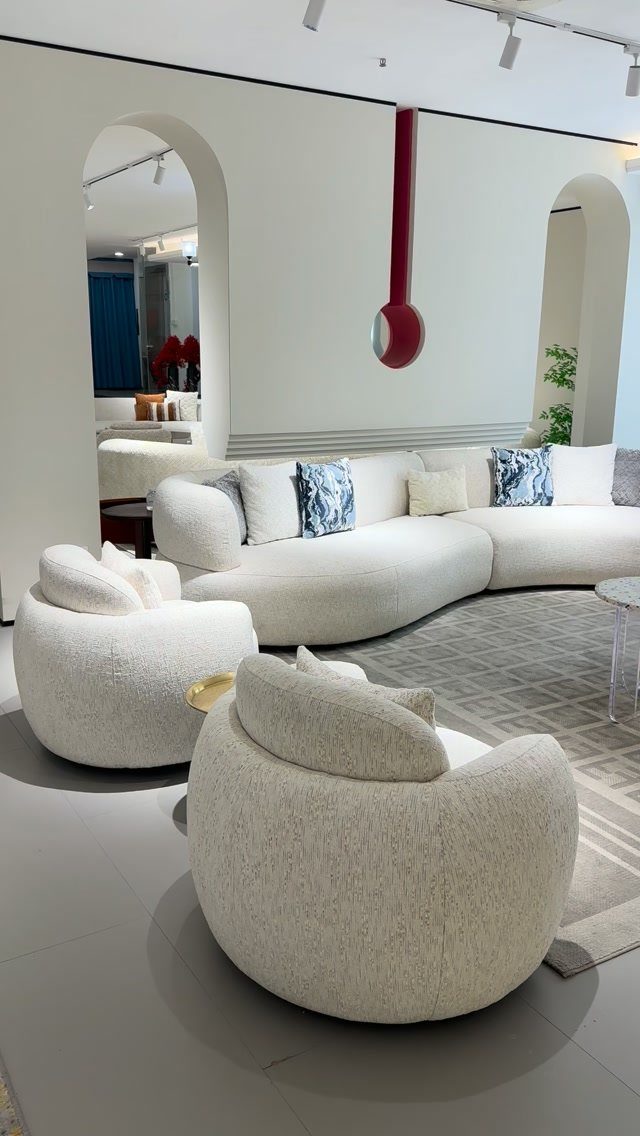
Rounded seating softens a room full of right angles, and arched doorways give the curves something to echo. A white curved sectional with two matching round-backed chairs makes one continuous shape.
Keep the upholstery the same color across all three pieces, then let one accent, like the red sculpture on the wall, carry the contrast.
Curves take more floor room than a straight sofa, so tape the outline on the floor first.
In this Palm Springs living room, you’ll find vintage Barcelona chairs, back-to-back sofas by William Haines, an Arco lamp by Achille Castiglioni and a floor lamp by Dragonette; the wall is sheathed in Venetian plaster, the ceiling is cedar and the floors are poured-in-place terrazzo.
9. Geometric Rugs
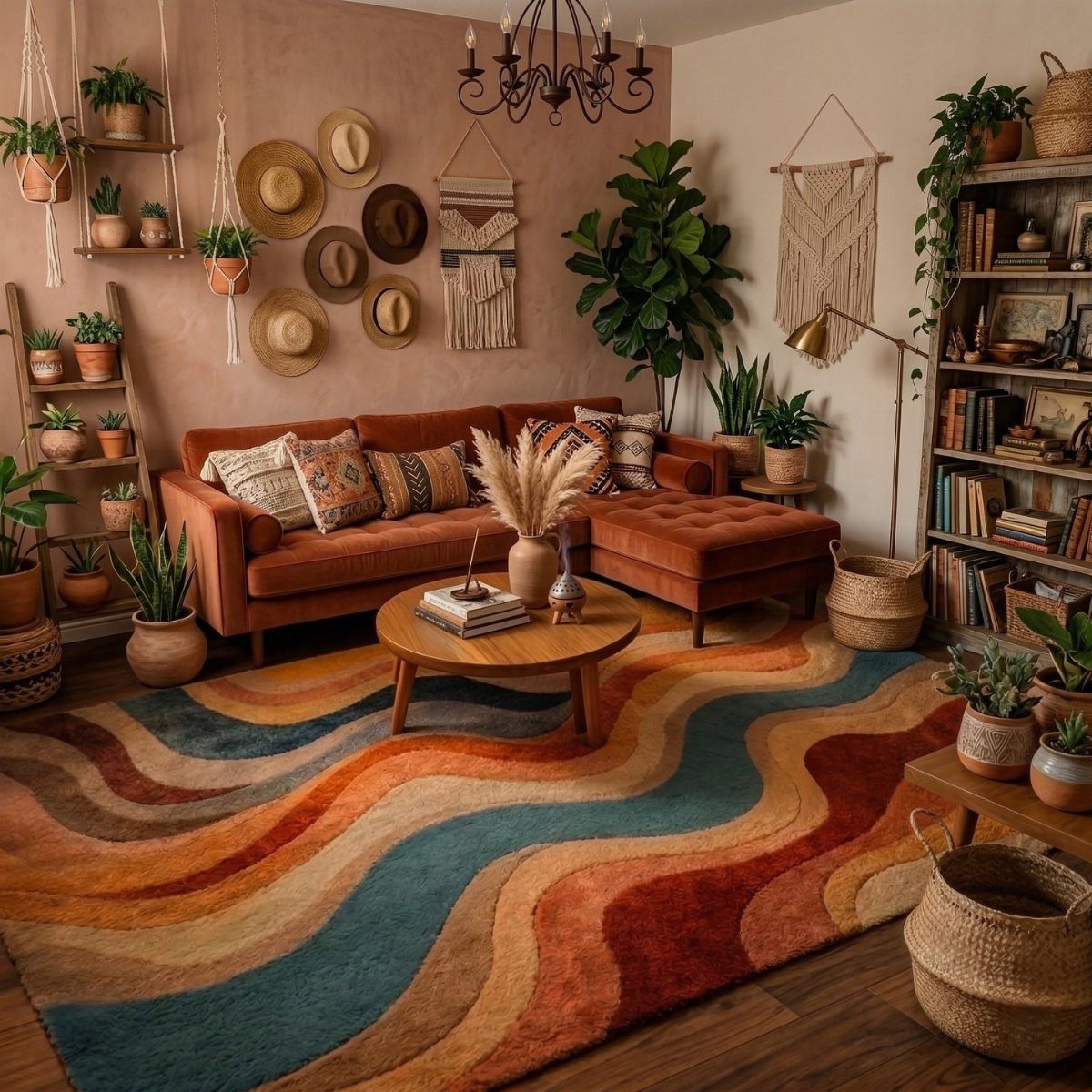
Against a solid terracotta sofa, it supplies the variety, so the sofa can stay plain.
Pull your pillow colors from the rug and the pieces will tie together. When the room already has plants, wall hangings and wood, I would keep the rug the only large pattern.
Leave the front legs of the sofa on the rug so the furniture feels anchored.
10. Vintage-Inspired Bar Cart
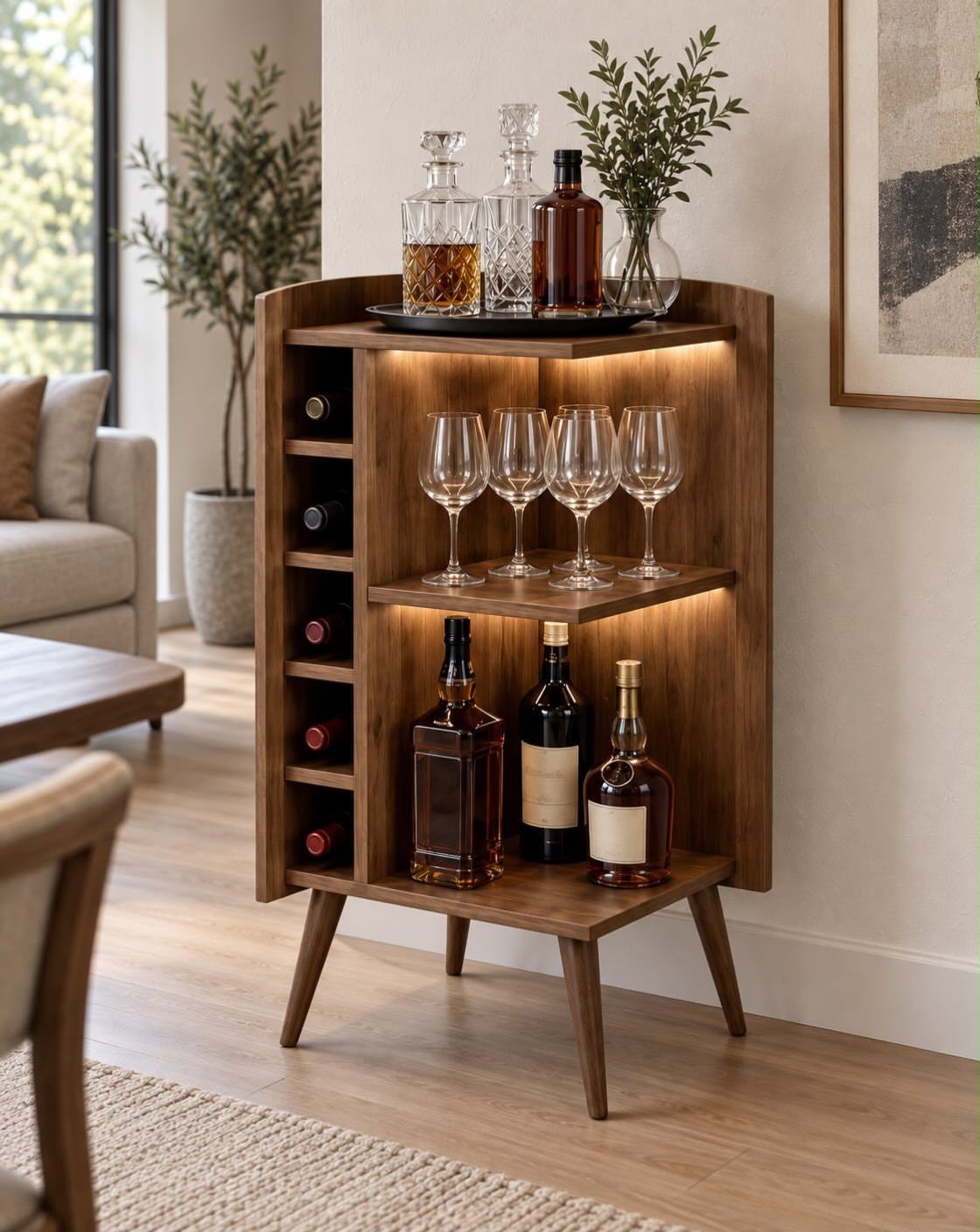
Lighting inside makes the glasses glow at night, and the wood suits a light floor.
Store the bottles you use most at hand height and keep the rest lower.
A cabinet like this saves you from setting up a loose cart with bottles scattered on top. Place it near an outlet if the lighting plugs in.
11. Statement Mirrors
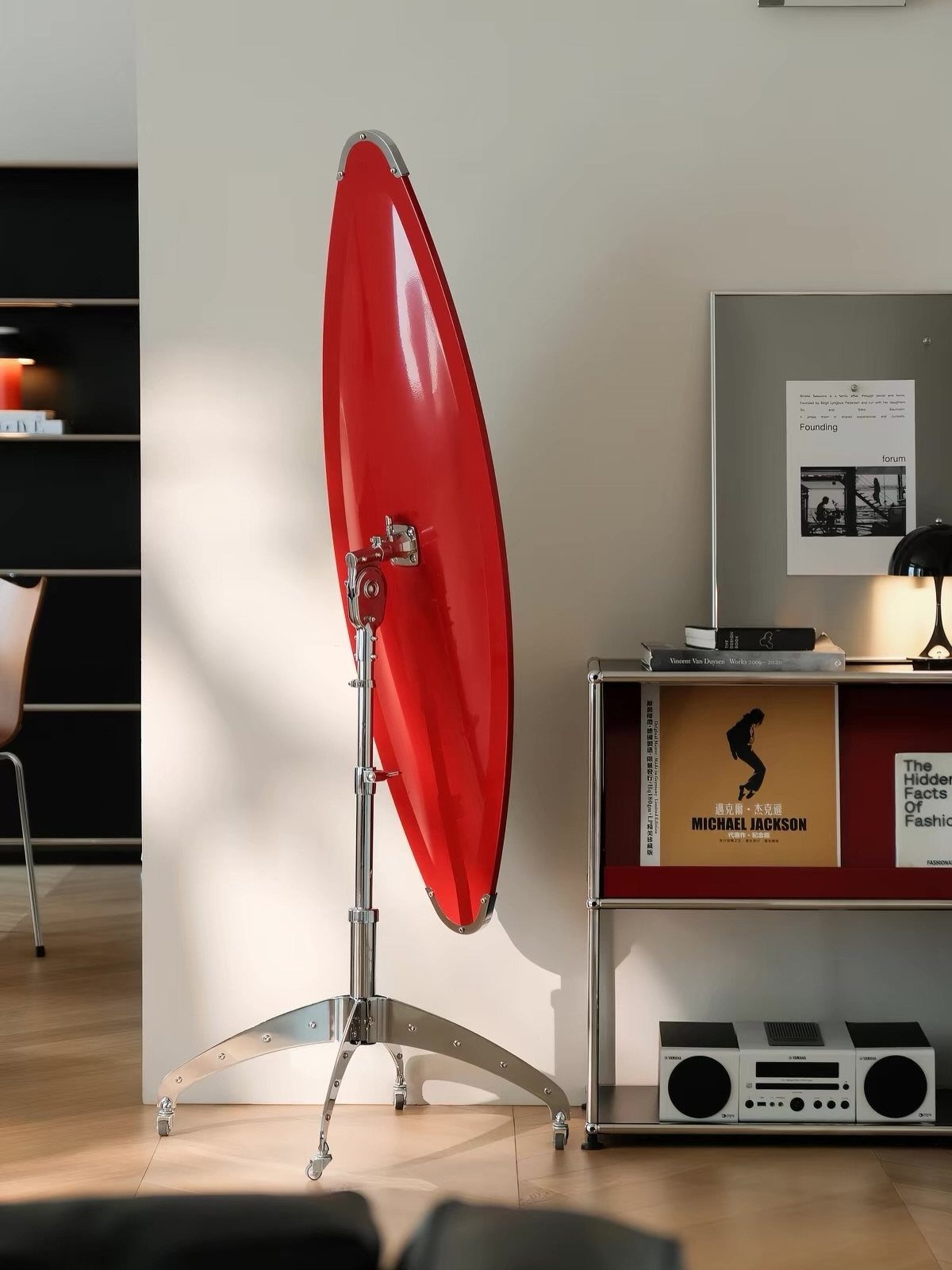
A large round mirror on a chrome tripod stand works as a floor piece, so no drilling is needed. That makes it a good fit for renters, and you can move it whenever the room changes.
Red is a bold choice, and I like it for that. Set it beside a metal shelf, where the chrome repeats, and keep the nearby surfaces tidy so the mirror stays the focus.
12. Few Meaningful Decorative Items
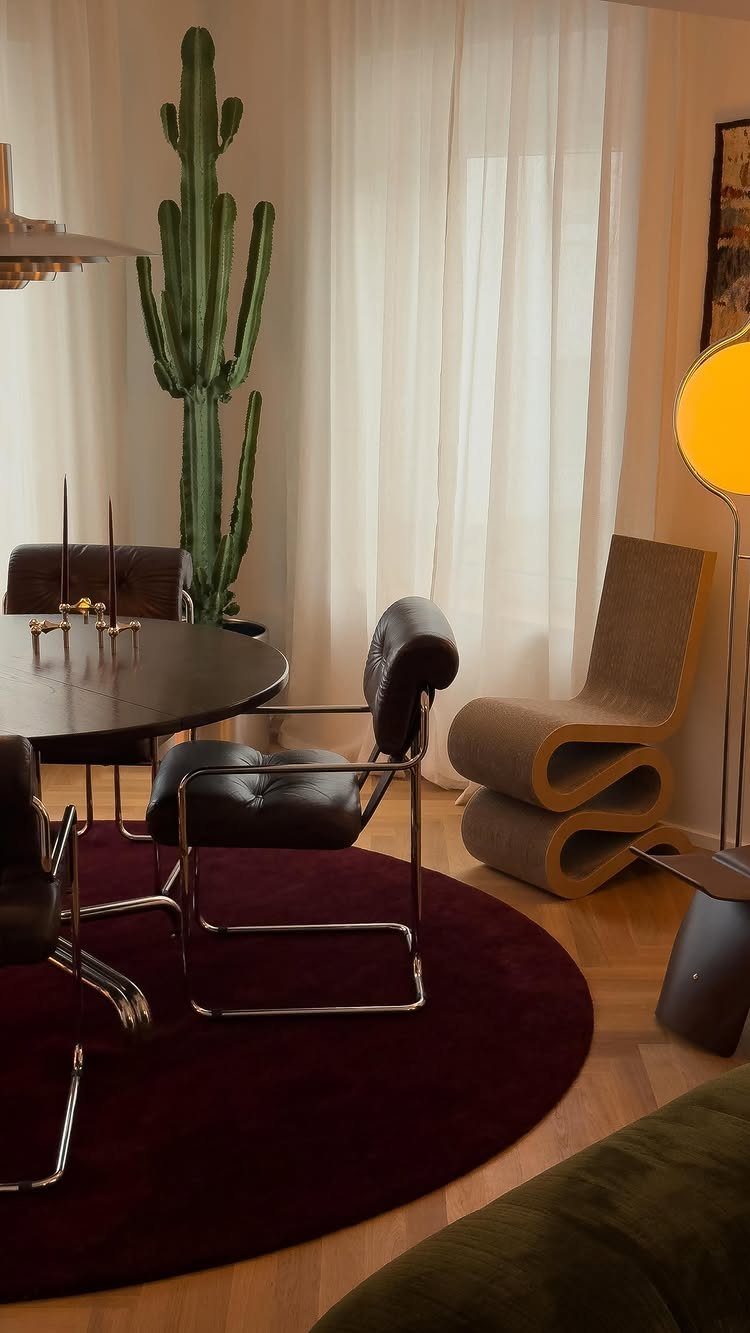
Each piece has a strong shape, so adding more would only crowd them.
Choose objects you actually care about, then give each one open floor around it.
Black leather chairs and white curtains supply the calm backdrop. If a shelf or table looks bare, I would leave it bare.
13. Low Credenza
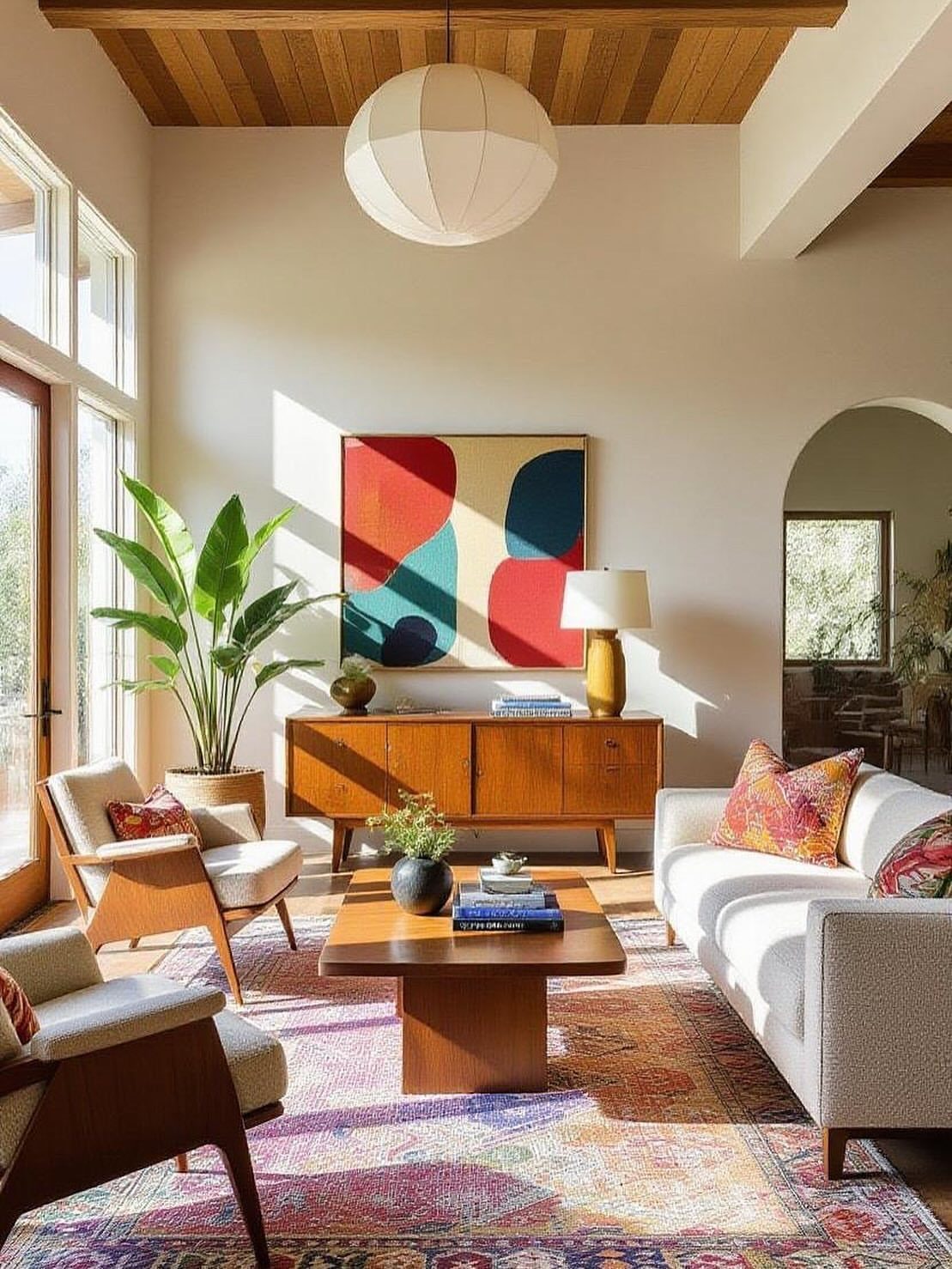
A low credenza keeps the sightline open, so the art above it and the pendant light overhead get the attention. Its long, horizontal shape also grounds a room of rounded chairs and a patterned rug.
Pick warm wood, as in this room, and leave the top mostly clear.
One or two objects are enough when the art is already colorful. If the credenza sits behind the sofa, keep it shorter than the sofa back so the 2 lines don’t fight.
14. Bold Abstract Art Pieces
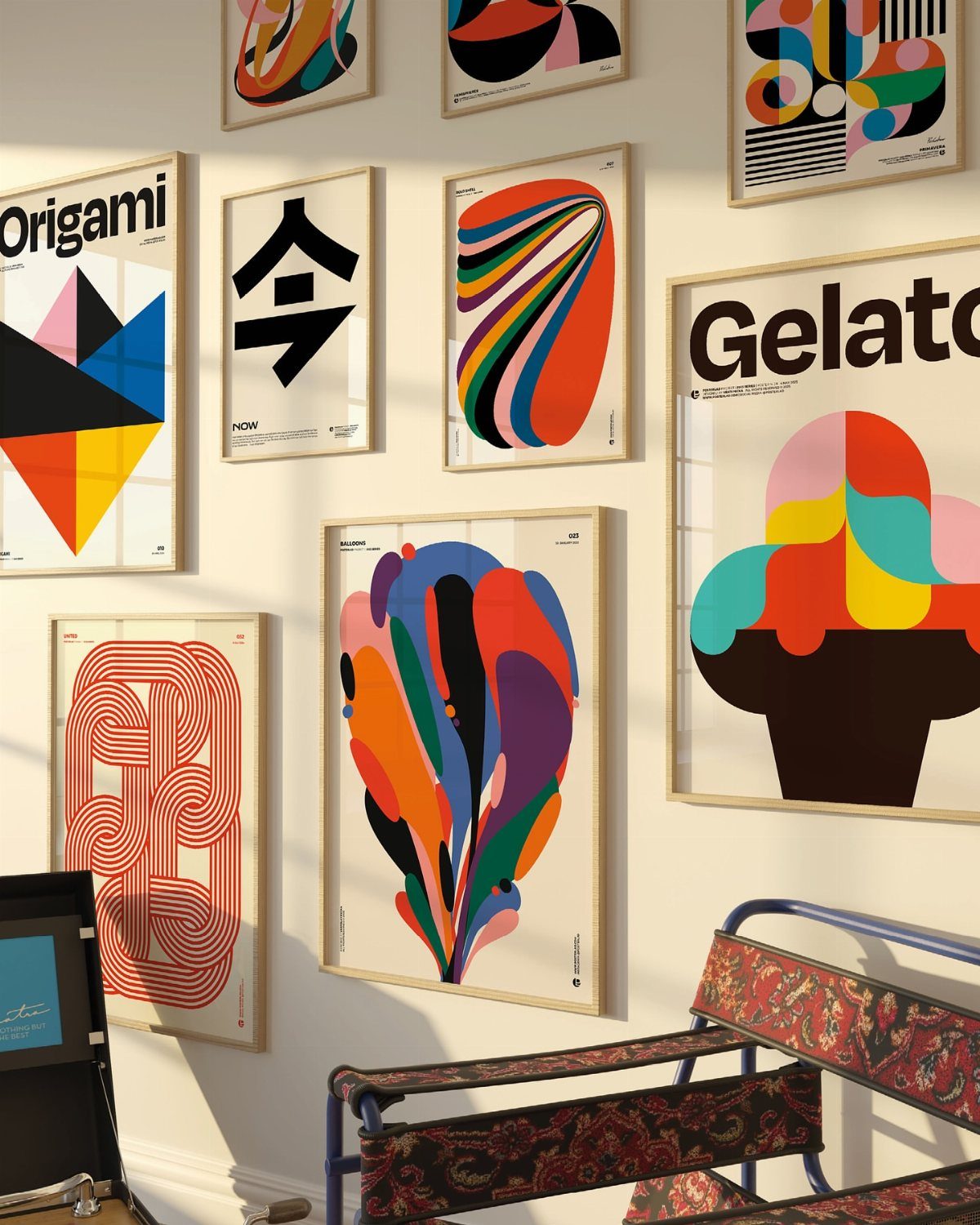
Several small abstract prints in bold color can hold a wall by themselves, and a plain white wall lets them do it. Grouped over a patterned chair, they read as one piece rather than separate frames.
Keep the frames matching and the spacing even.
I would pull one color from the prints into the chair or a pillow so the corner looks planned. Prints cost less to replace when you move out.
15. Brick Fireplace with Exposed Beams
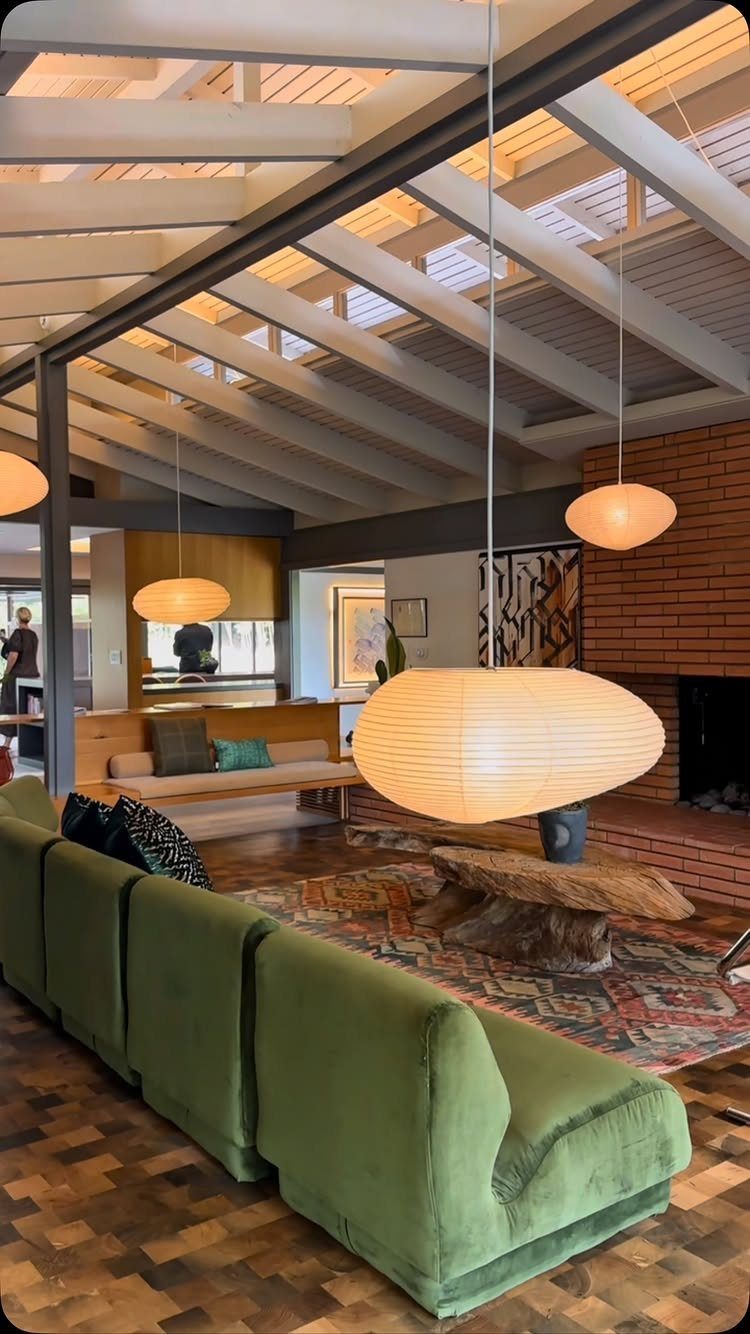
Exposed beams and a brick fireplace bring in texture overhead and at the wall, so the furniture can be soft and simple. A green velvet sectional stands out against all that wood and brick without any extra decor.
Beams and brick are structural, so a renter can’t add them.
16. Stained Glass Room Divider
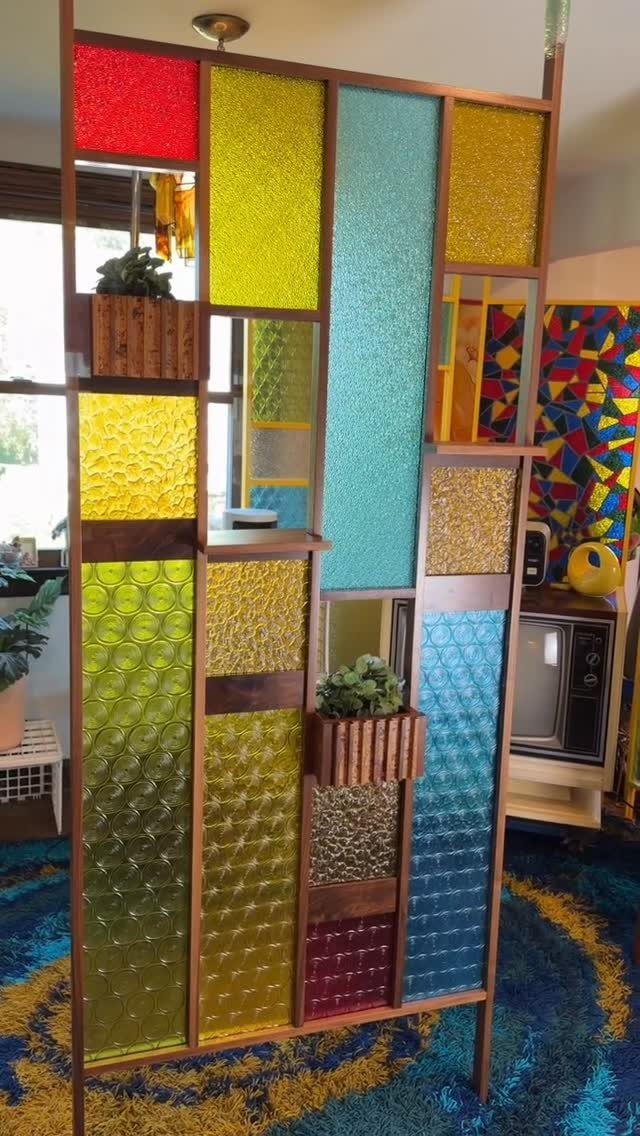
A dark wood divider with textured glass panels splits a room without blocking light. Built-in planters add greenery at floor level, so no extra plant stand is needed.
I like it beside a bold floor piece, like the blue shag rug here, because color then sits in 2 places.
Stand it where it separates seating from a walkway. Pieces like this are usually vintage finds, so measure your space first.
17. Round Wooden Coffee Table
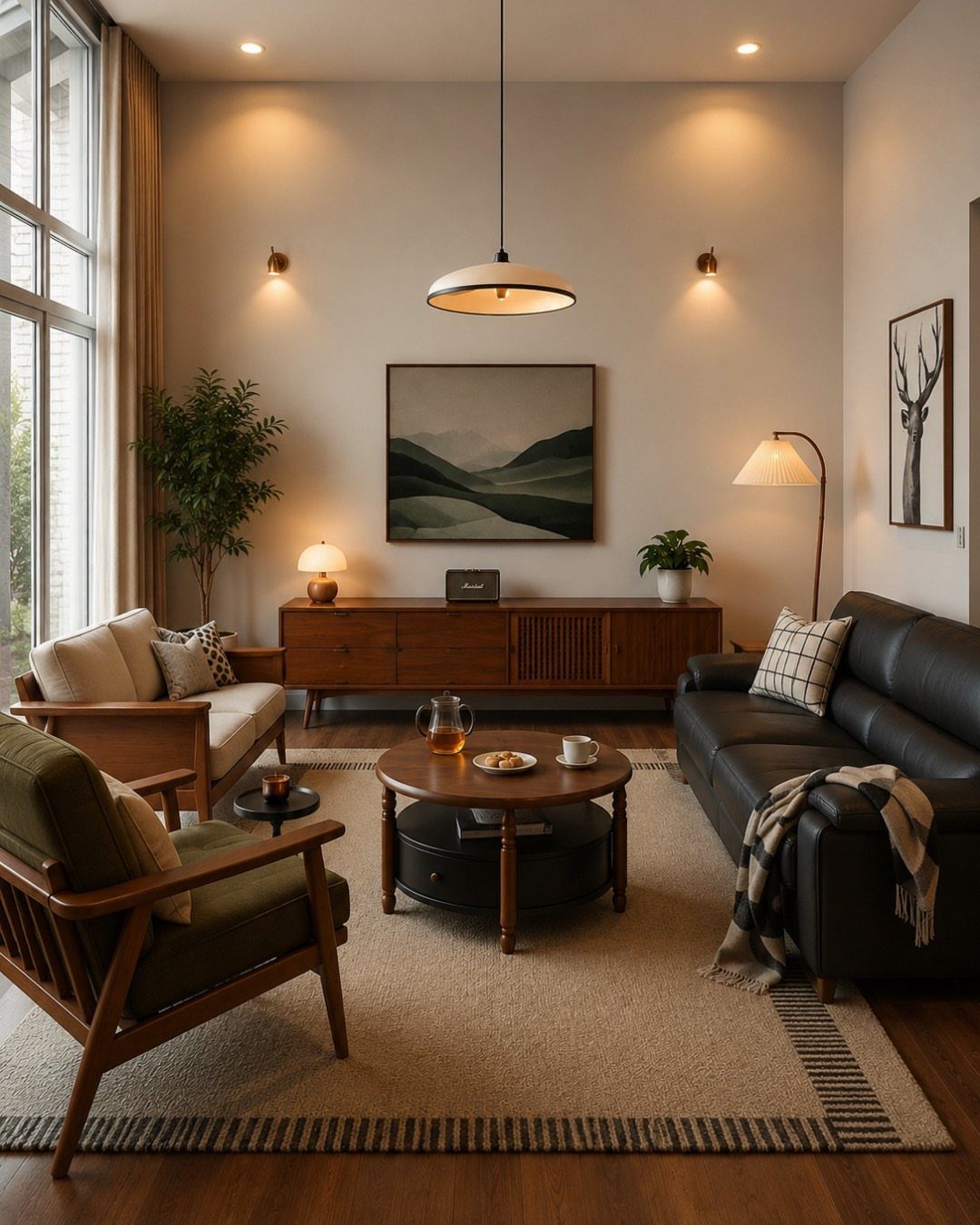
A round coffee table has no corners to bump, which helps in a room with several chairs around it. Warm wood on the table, chairs and sideboard looks consistent, and a black leather sofa gives it strong contrast.
Match the wood tones closely rather than mixing several.
Keep the top mostly empty, with a single bowl or a stack of books. I would choose round over rectangular here, since it eases the traffic path.
Budget Ideas for Getting Started
A thousand-dollar sofa is not the entry price for this look. Secondhand is the best place to begin, since estate sales, thrift stores and online marketplaces often turn up solid wood furniture for very little money.
Try new legs on the pieces you already own first, and hold off on buying anything new until you have.
A wood table you already own may only need a light sanding and a coat of wood oil to look good again.
Buy one or two iconic pieces, such as a lounge chair, and stop there. Too many of them and the room starts to look like a furniture showroom.
Mistakes to Avoid
Fill the room with period pieces from one decade and it starts to feel like a museum. Mix in modern pieces so the space still feels lived in.
Keep bold color to one or two shades. A third and fourth start to compete.
Comfort counts as much as shape. A handsome chair that nobody wants to sit in has failed at its job, so sit in it in the store or test the seat first, then decide whether to buy.
Watch the floor, too. This style relies on open floor and legs you can see, so if the legs disappear behind clutter, take a piece out of the room.
Minimalist Approach
Mid-century design values clean surfaces and open space.
Shelves and surfaces crowded with knick-knacks fight against the clean look this style needs.
A minimalist room only needs one or two retro pieces to carry the look. A sleek media unit in walnut does it well, especially when a brown area rug repeats the wood tone and spreads warmth across a pale floor.





