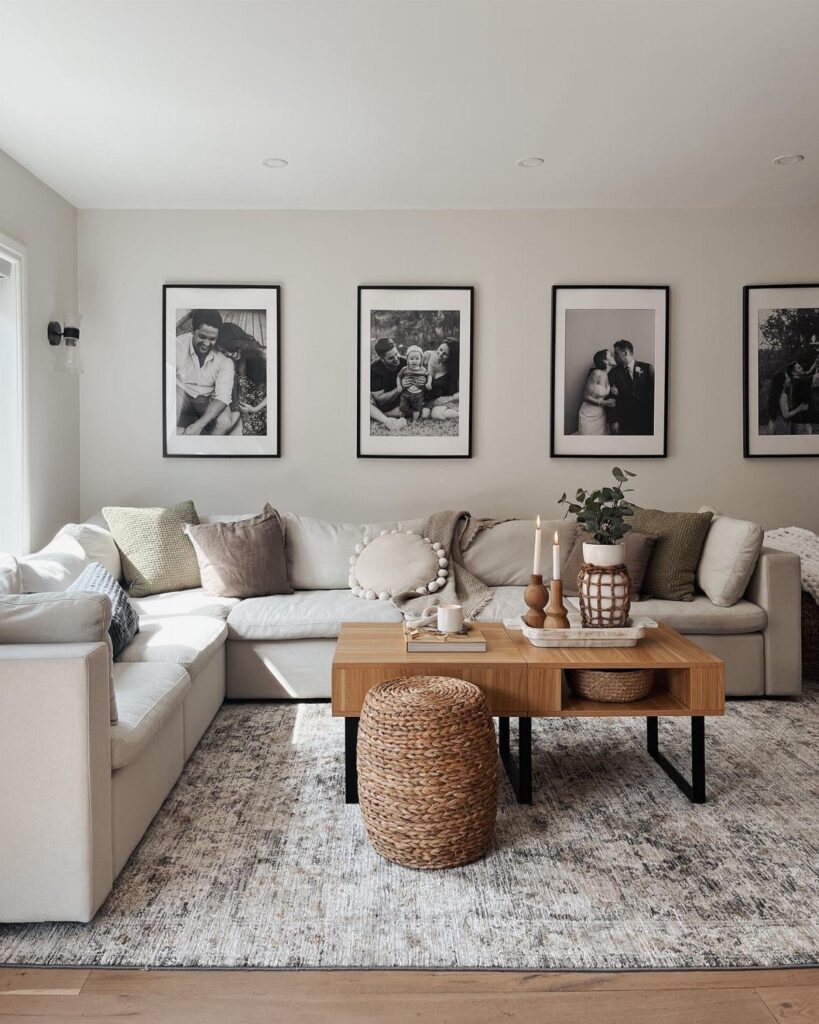
Room size and rug size decide which of these layouts is yours: front legs only suits a larger room, while a compact one does better with all furniture on or a smaller rug sitting in front of the seating.
1. Space Around the Rug
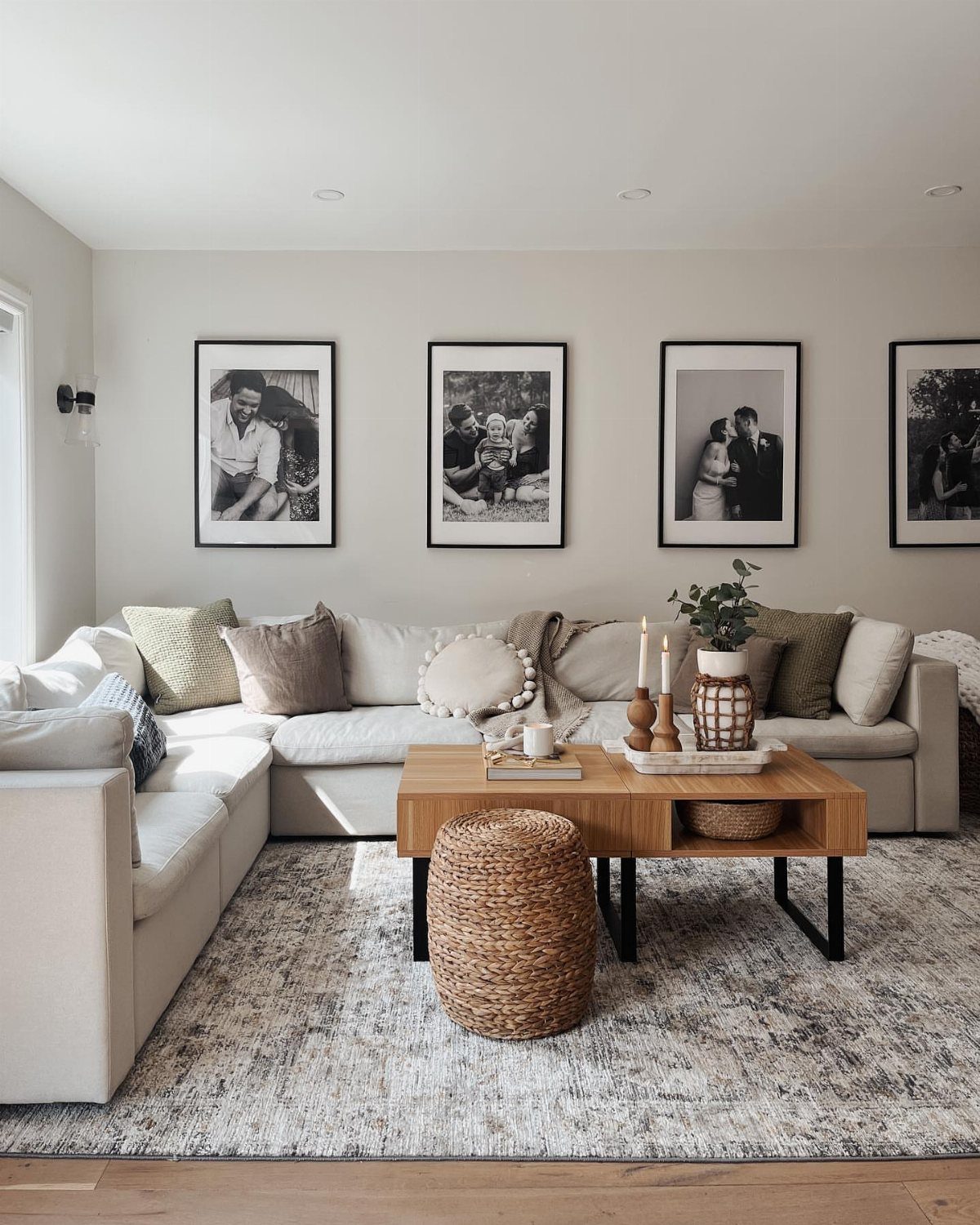
Hardwood showing around the edges of a rug makes a room look bigger, and I like that frame better than a rug pushed wall to wall.
A common rule of thumb is to leave some bare floor on each side, with less space suiting smaller rooms.
Measure before buying. Lay painter’s tape on the floor in the rug’s size and live with it for a day; the tape shows whether the border looks deliberate or cramped.
2. Center the Rug
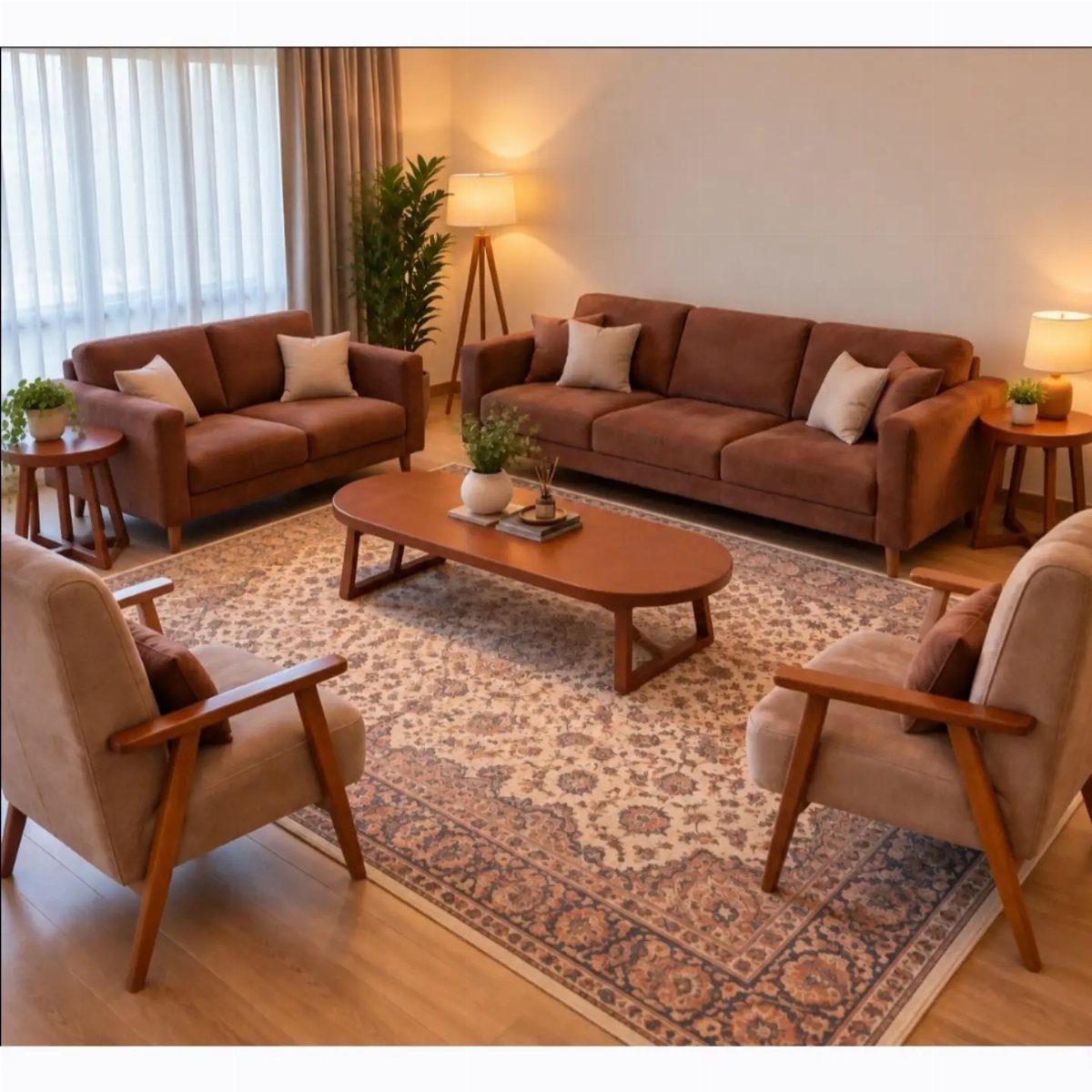
A coffee table sitting dead center on the rug gives the whole seating group an anchor. Two sofas and two armchairs all face that one point, so the rug should read as even on every side.
Measure from the table’s middle to each rug edge and adjust until the numbers match. A pattern helps hide small shifts, which matters on a budget when the rug is a few inches off the size you wanted.
3. Layer Rugs
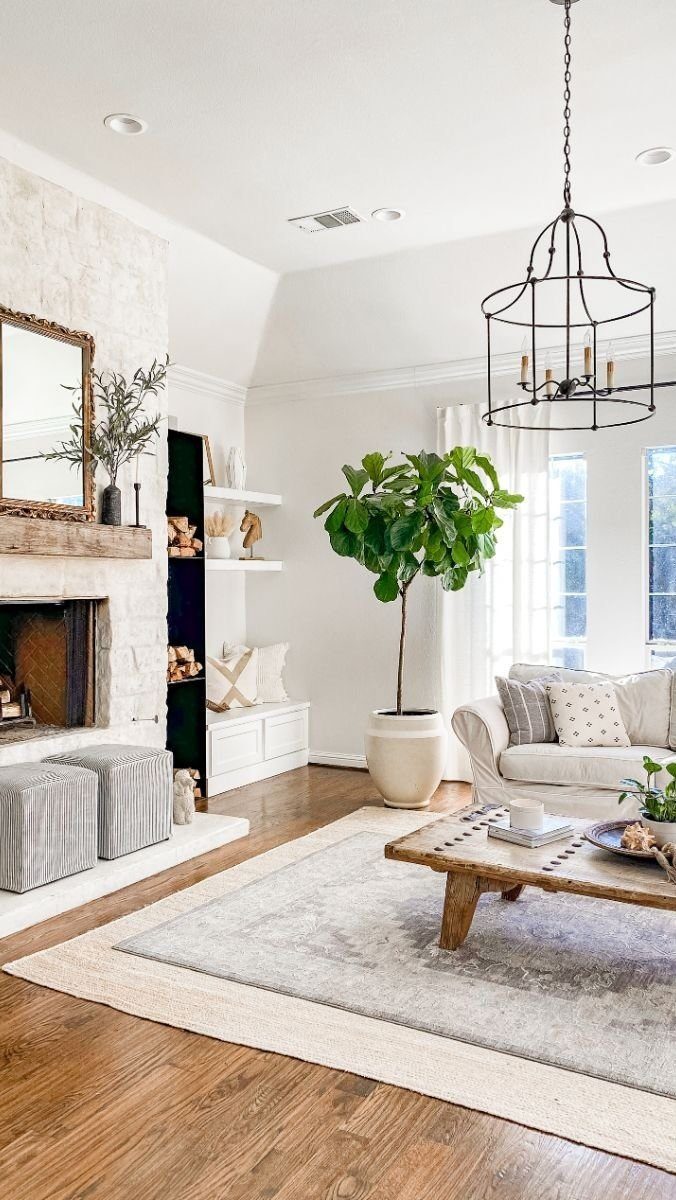
Stacking a small rug over a larger one adds texture without a big spend. A plain cream base is the cheap, flexible layer, and the smaller top rug carries the color or pattern.
Pick 2 different textures, such as a flat weave under something thicker, so the layers don’t blur together.
Offset the top rug slightly instead of centering it if you want a relaxed look. Rug pads help the layers stay put.
4. Sofa Off the Rug
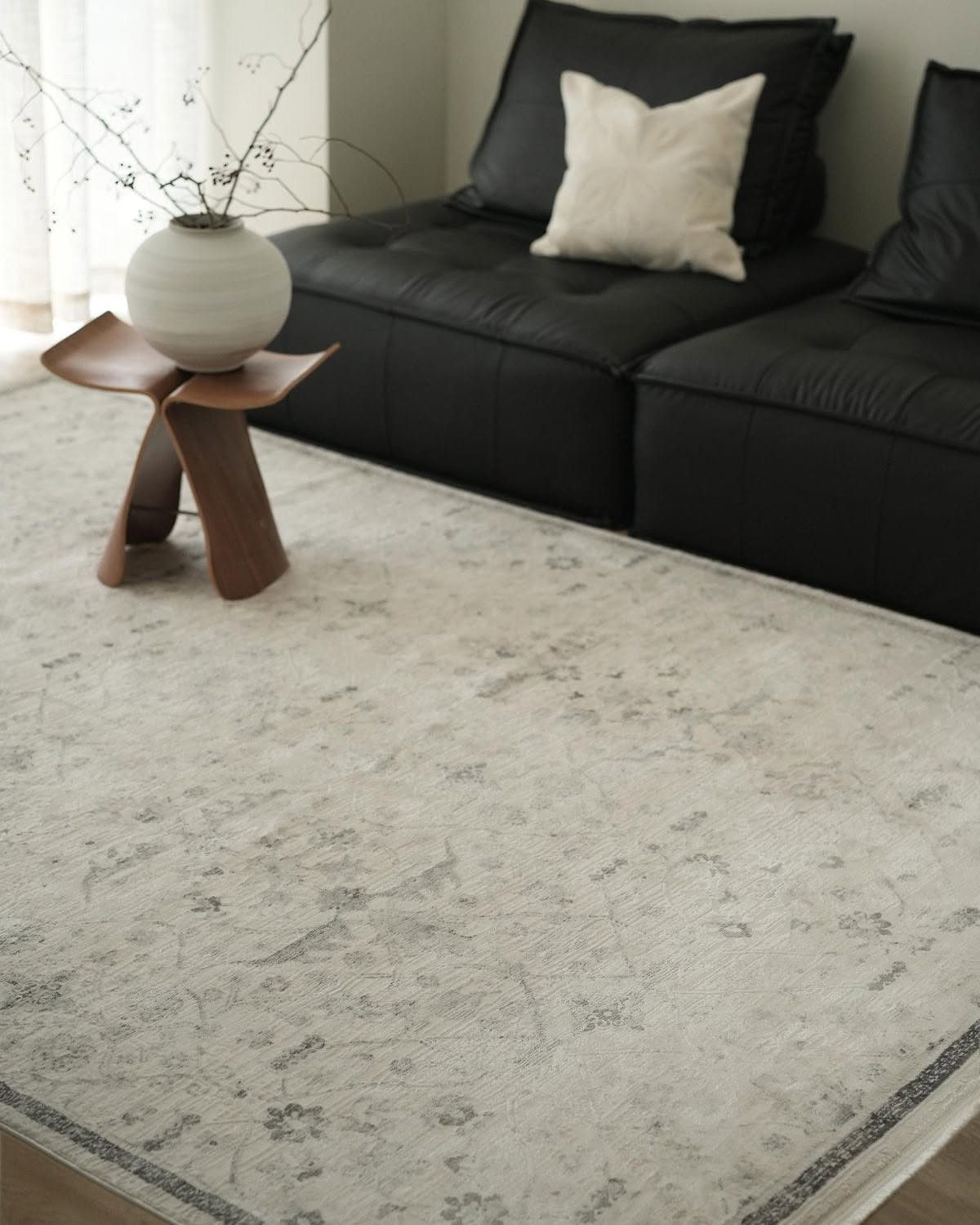
Keeping a modular sofa entirely off the rug means the rug works as a floor feature in front of the seating, not an anchor under it.
The setup suits a low black leather piece because nothing needs to straddle an edge.
Leave a modest gap between sofa and rug so it doesn’t look like a near miss. I’d choose a light pattern here; it lifts the dark sofa and keeps the floor from feeling heavy.
5. Define Open Concept Zones
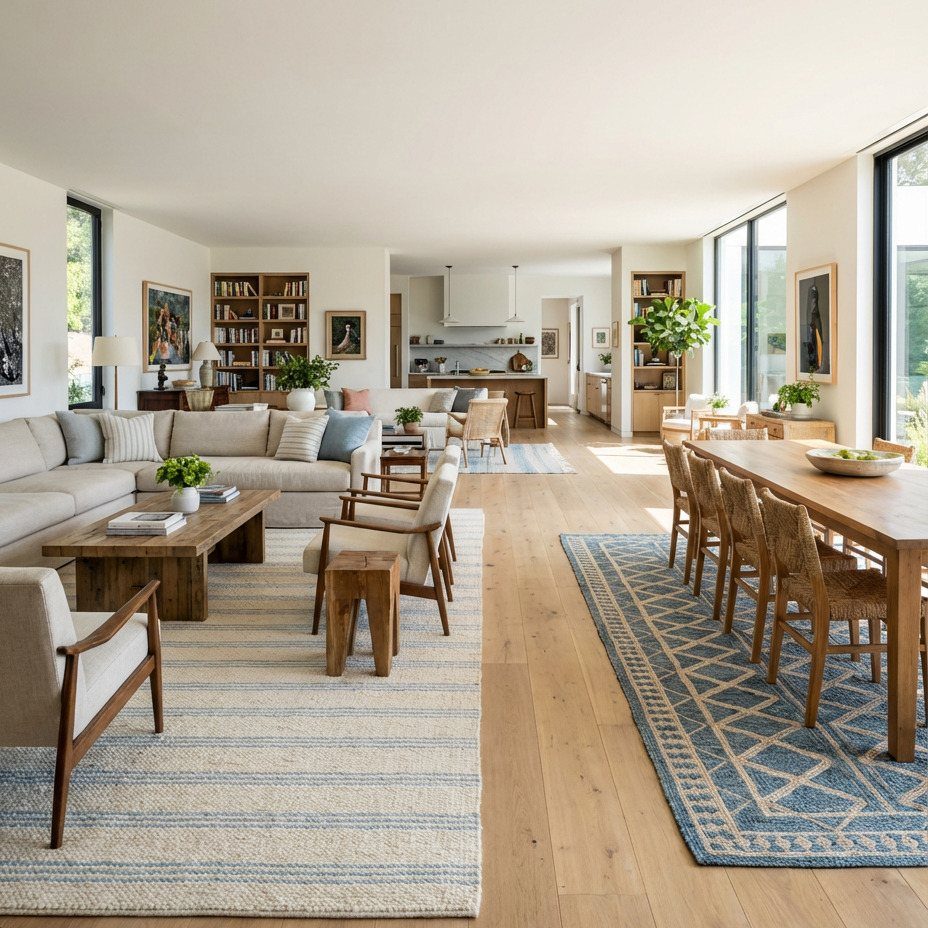
Two rugs can split one big open room into a living area and a dining area without a single wall. Matching the color family, as with 2 blues, keeps the pair looking planned instead of random.
Size each rug to its own zone: the sectional should sit on or at least touch its rug, and the dining rug should extend past the chairs so they stay on it when pulled out.
Vary the pattern scale a little, so the two don’t compete.
6. All Furniture on the Rug
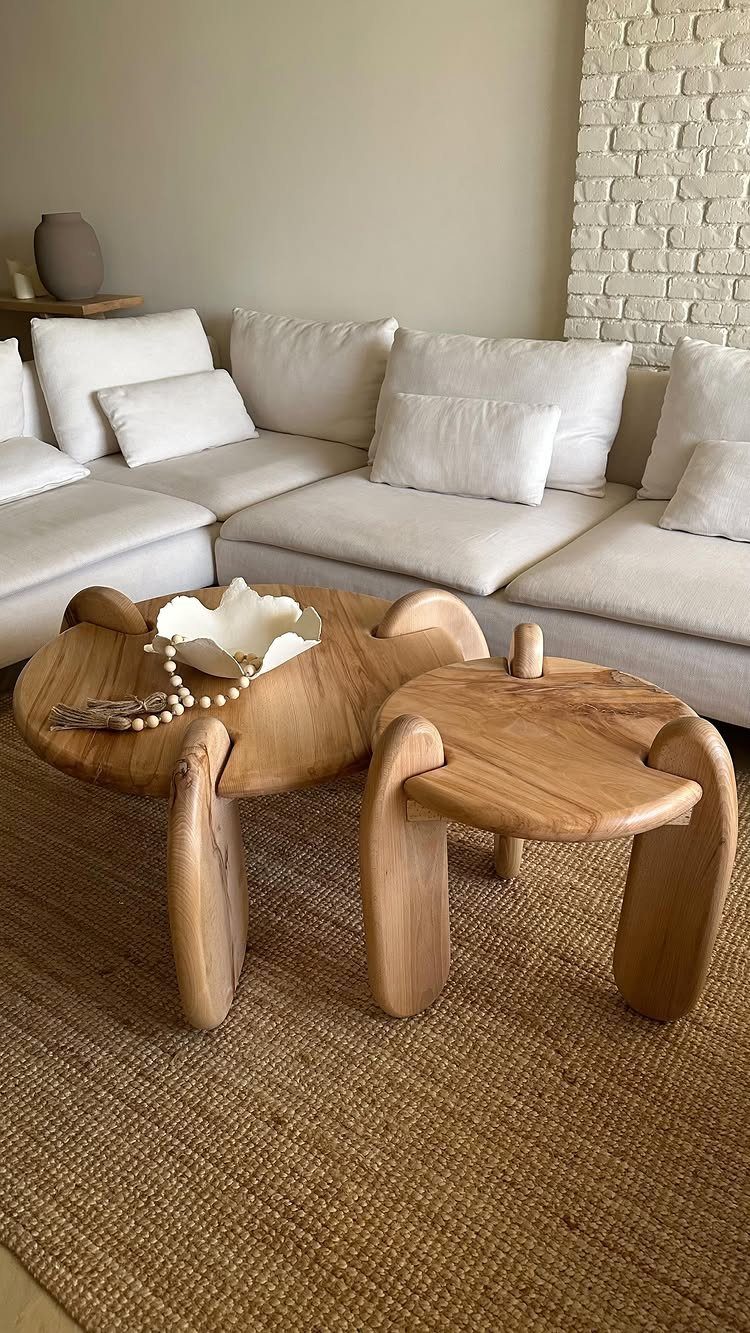
Putting every piece of furniture on the rug makes the biggest statement, and a large jute rug is how I’d do it. The natural fiber suits organic wood tables and a white sofa, and it grounds the whole group.
This layout needs a big rug, so check the size against the room first.
Measure the full footprint of the sofa and tables together, then add a few inches on each side. Jute is rough underfoot, which is the trade for the look.
7. Runner Rug in Living Room
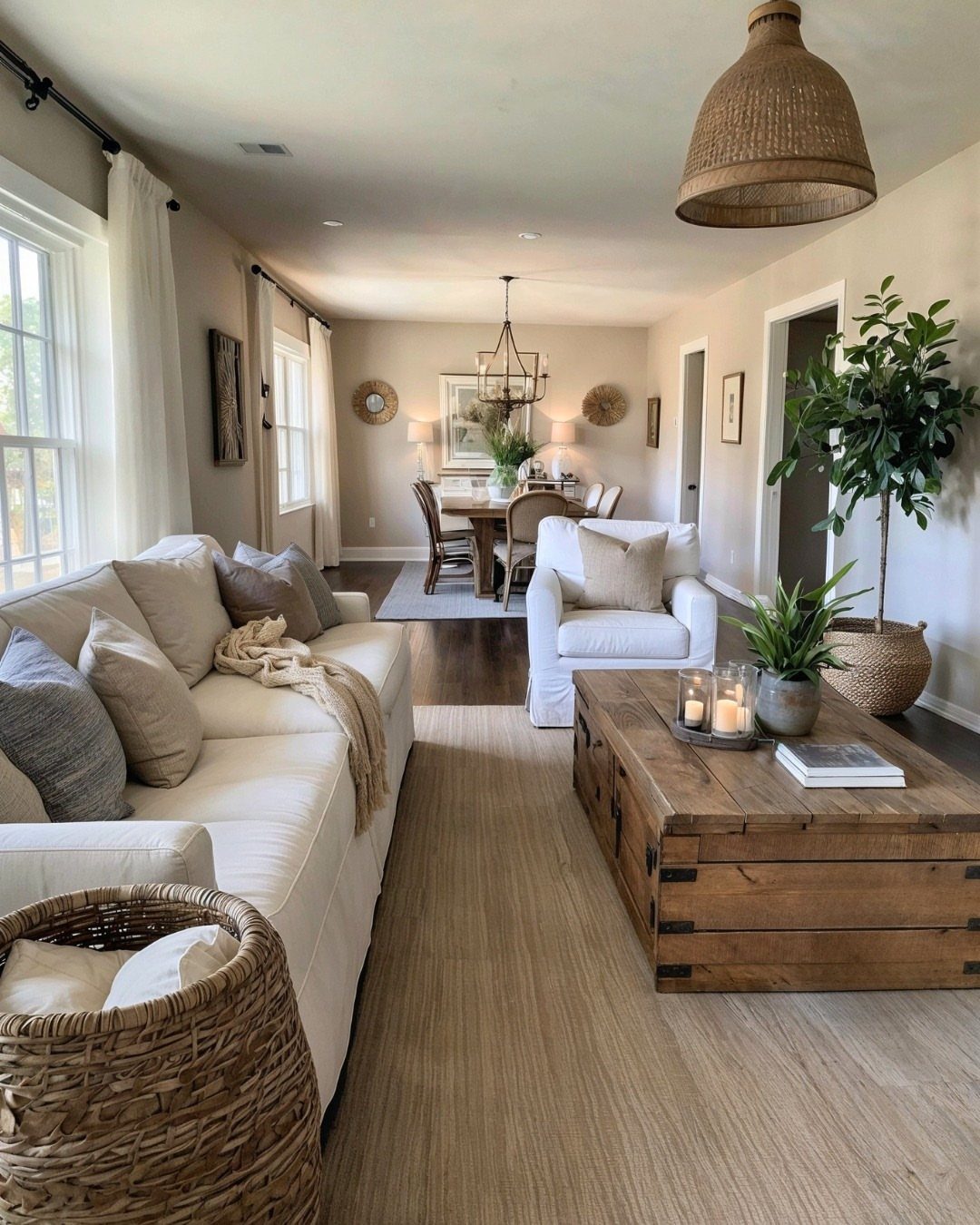
A runner laid between the sofa and coffee table turns the rug into a path, and a long beige one pulls the eye straight toward the dining area beyond.
It suits a narrow living room where a full-size rug would crowd the furniture, and it cuts the cost down by half or more.
Pick a length that runs most of the way between the sofa and table without touching either. Beige keeps the floor quiet against a white sofa and a wood table, so the furniture stays the focus.
A rug pad underneath matters here, because a long, thin rug curls and slides at the ends.
Rug Materials and Durability
Wool is the material I’d pick first for a busy living room. It’s soft underfoot, holds up under heavy foot traffic, resists stains and spills, and insulates well, so the room feels warmer.
Jute and synthetics also handle traffic and clean up easily. Polyester suits an entry or hallway, where the rug should run in the same direction people walk.
In a kitchen or workspace, I stick with flatweaves that sit tight to the floor. Crumbs and spills come out of it far more easily than they do from a thick pile.
Match the material to the way the room is used. A reading corner can take something softer, but a spot where people cross all day needs the tougher fiber.
Common Rug Mistakes
Proportion errors are the ones that make a good rug look wrong. Four show up at every budget level.
A rug that’s too small for the room is the most common. When you’re stuck between two sizes, size up; the larger one reads right more often than not.
The third is furniture that hovers at the edge with nothing anchored. At the very least, the front legs of each piece should touch it, unless you’re using a smaller accent rug in front of the seating.
The fourth is skipping the rug pad. A decent pad stops the rug from shifting and keeps the floor from taking damage.
Furniture Arrangement Considerations
Place the rug for how you use the room, not for the center of the floor. Map out the traffic path, where seating actually goes, and how far the coffee table sits from the sofa.
You have three setups to choose from, and the best one depends on rug size and room size.
A medium rug can take only the sofa’s front legs, which pulls armchairs closer. It feels relaxed and works best in larger rooms.
A smaller rug can sit in front of the seating with the furniture around it. In a compact room, that keeps things open and gives a statement coffee table a stage.
Frequently Asked Questions
What is the rule for rugs in a living room?
Anchor the seating: ideally every piece sits fully on the rug, but you can also keep the sofa off entirely and center a smaller rug in front of it, or have just the front legs touch.
Furniture hovering at the edge with nothing on the rug is the layout to avoid. A rug that stops at the coffee table chops the room into pieces and makes the whole space read smaller than it is.
What is the 2/3 rule for living rooms?
The rule puts the rug under roughly 65% of your seating footprint, which leaves enough floor visible at the edges to frame the furniture without floating it.
In practice, that means the rug reaches under at least the front legs of the sofa and chairs instead of sitting as a small island.
Should my area rug be lighter or darker than my couch?
Go for contrast, whichever direction it runs.
A pale rug lifts a dark sofa off the floor; a dark rug anchors a light one and keeps the room from feeling washed out. Avoid matching them too closely, because they blend into one flat block of color.





