Shelf walls in this list run from a single plywood slab to a cluster of hexagons or a corner stack lit from within, and styling them sits on one choice: leave space between objects or fill every inch.
If you hang a stack, center the whole group at 57 to 60 inches, not the first shelf.
1. Empty Space on Shelves
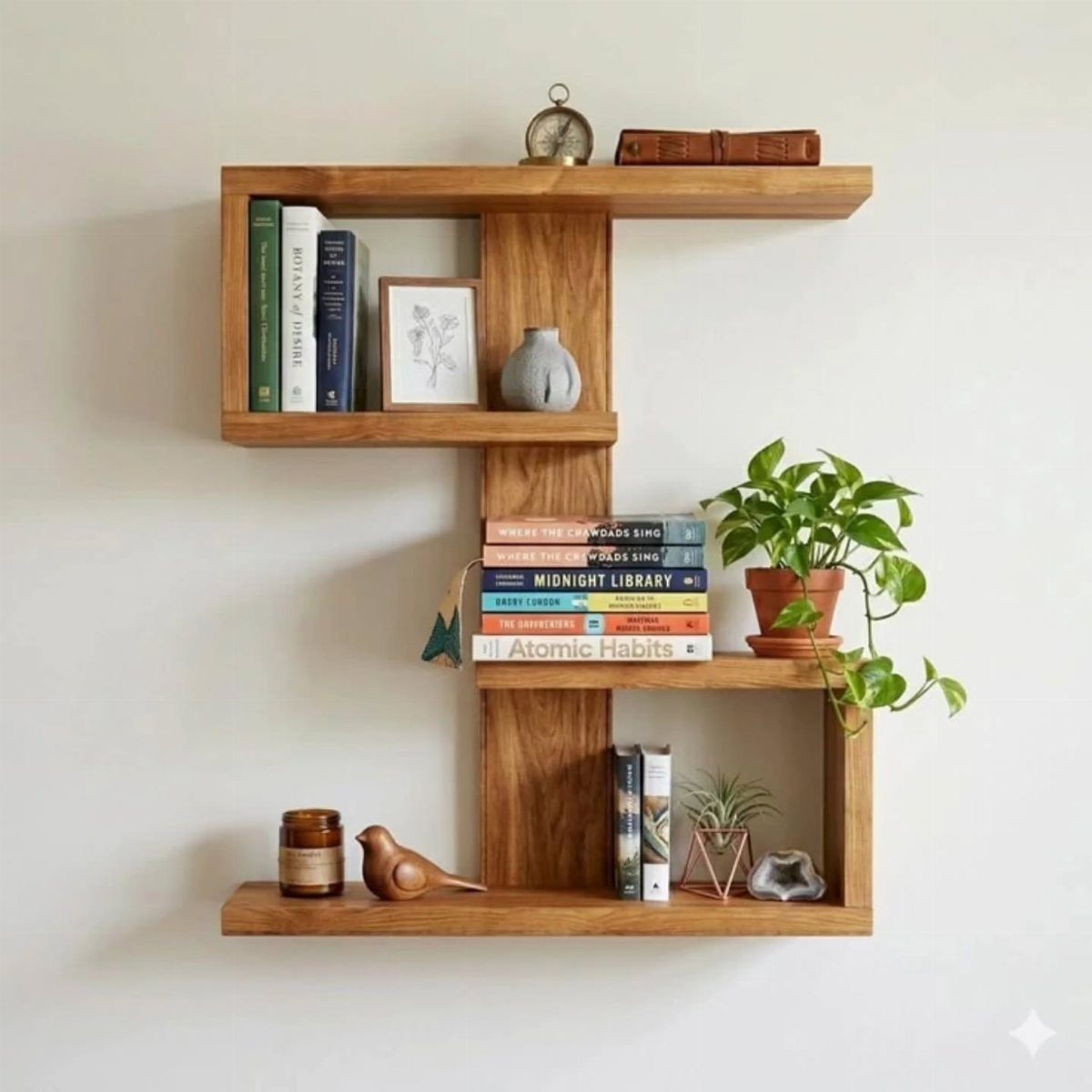
Blank wood between objects does as much work as the objects. A shelf with a few books, one plant and a single decorative piece reads as calm against a plain white wall, while a fully packed one reads as storage.
I would stop one item sooner than feels natural. Leave a gap at one end of the shelf; books lean or stack in a small group instead of marching edge to edge.
Empty space also makes dusting and swapping things out much easier.
2. Small Plants, Books, and Ceramics
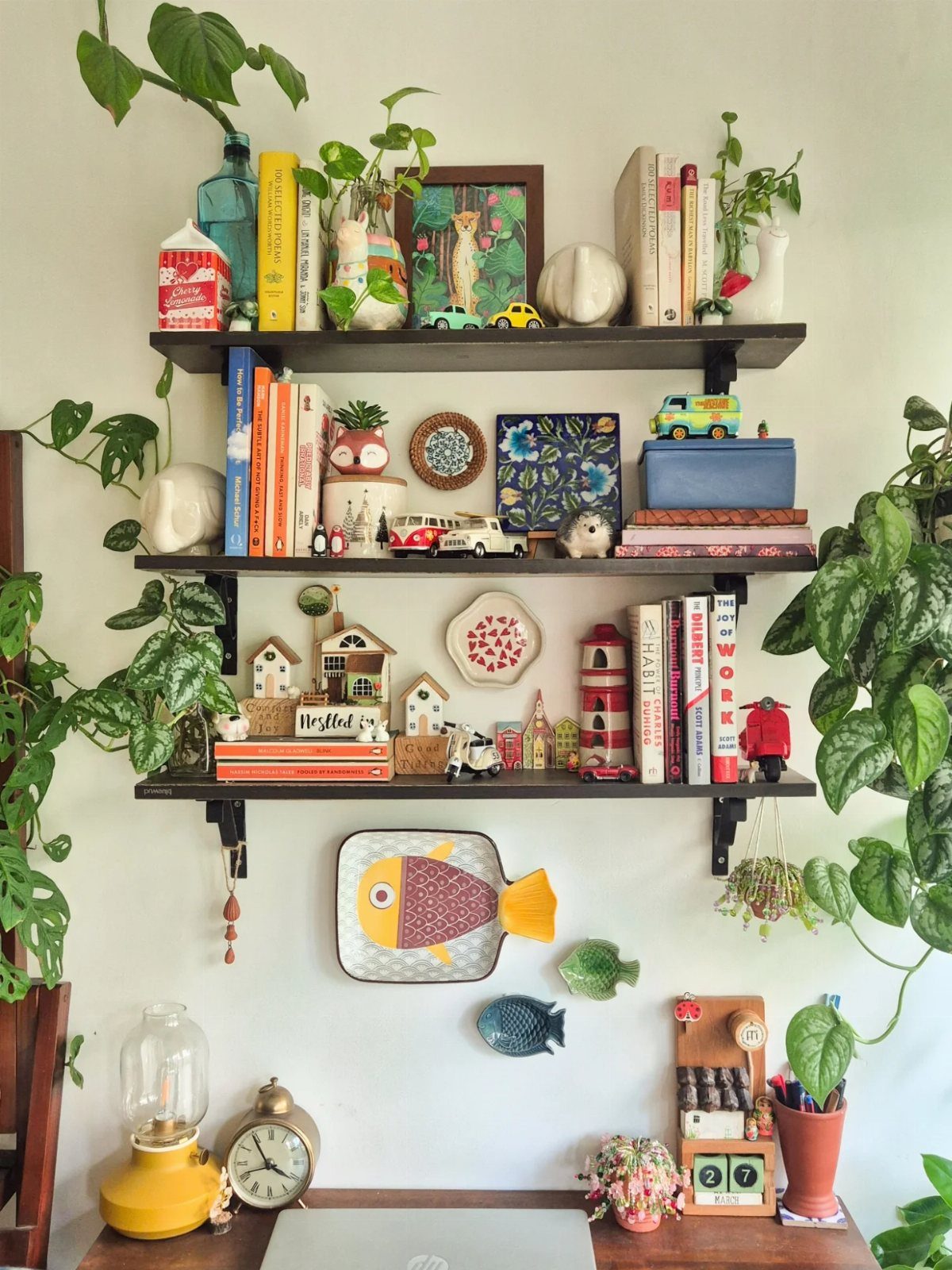
Black shelves make colorful spines, small potted plants and ceramic figurines stand out, and that contrast is why this mix works on a white wall. Keep the pieces small so 3 shelves can hold a lot without looking heavy.
I like mixing the three on each shelf rather than sorting them: a short book stack, a plant beside it, a figurine on top.
Then hang something round or quirky below, like a clock or a pair of plates, to pull the eye down the wall.
3. Floating Wall Shelves
A floating shelf has no visible brackets, so the wood itself becomes the line on the wall.
Check the wall before you buy. Find the studs with a cheap stud finder, or use rated wall anchors where the shelf can’t reach one, because hidden mounting hardware carries all the weight.
For a weekend job, a level and a drill are the main tools. Keep the load light on anything wrapping a corner.
4. Thick, Solid Plywood Shelves
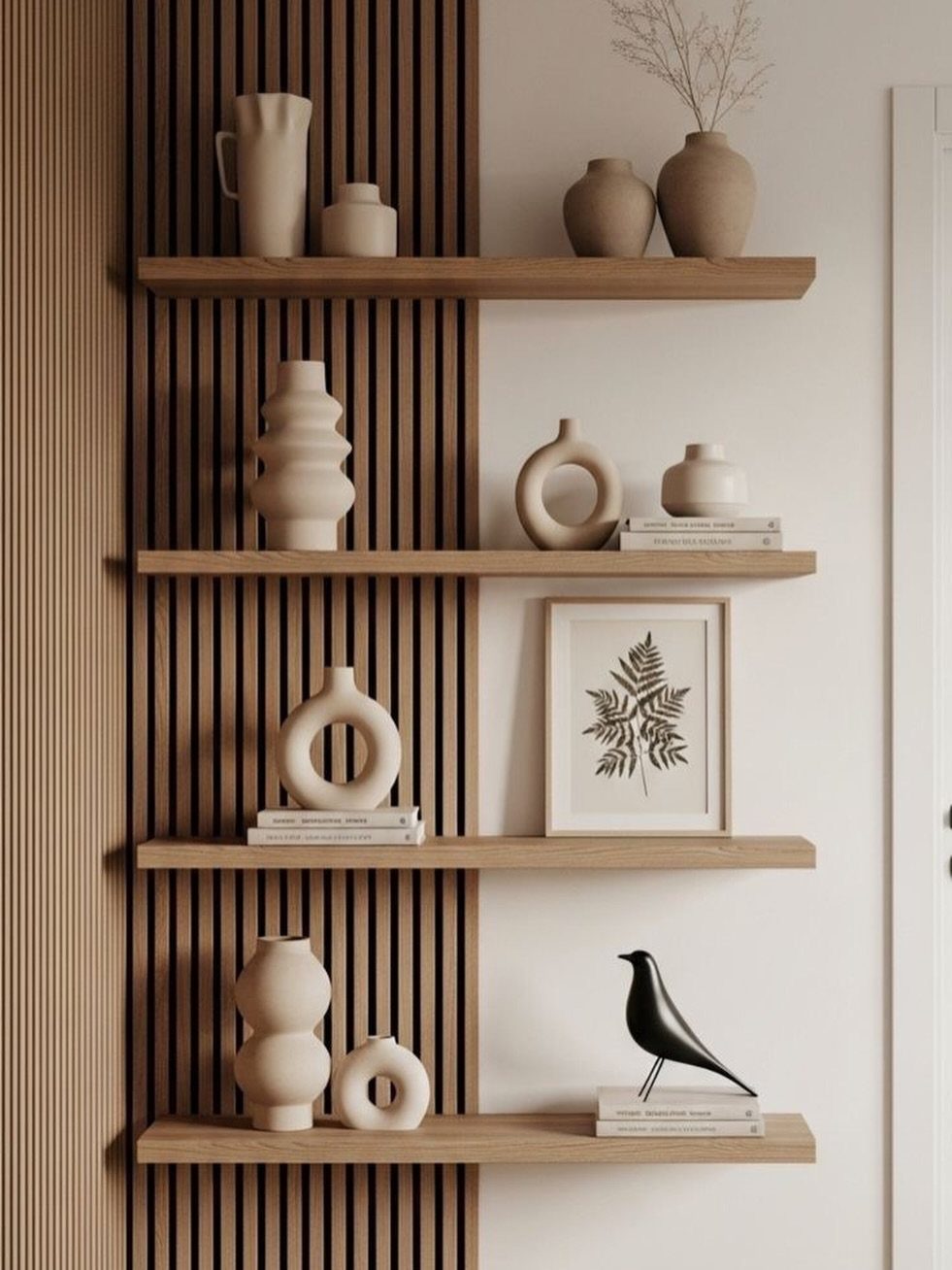
Thickness is the whole look here. A chunky, solid plywood shelf reads as a deliberate slab, and against a slatted wood wall it adds depth without needing more color.
The heavy edge does the visual work, so the styling can stay quiet.
Plywood is a budget-friendly way to get this look, and a sanded, sealed edge looks cleaner than a raw one.
5. Hexagonal Honeycomb Wall Shelves
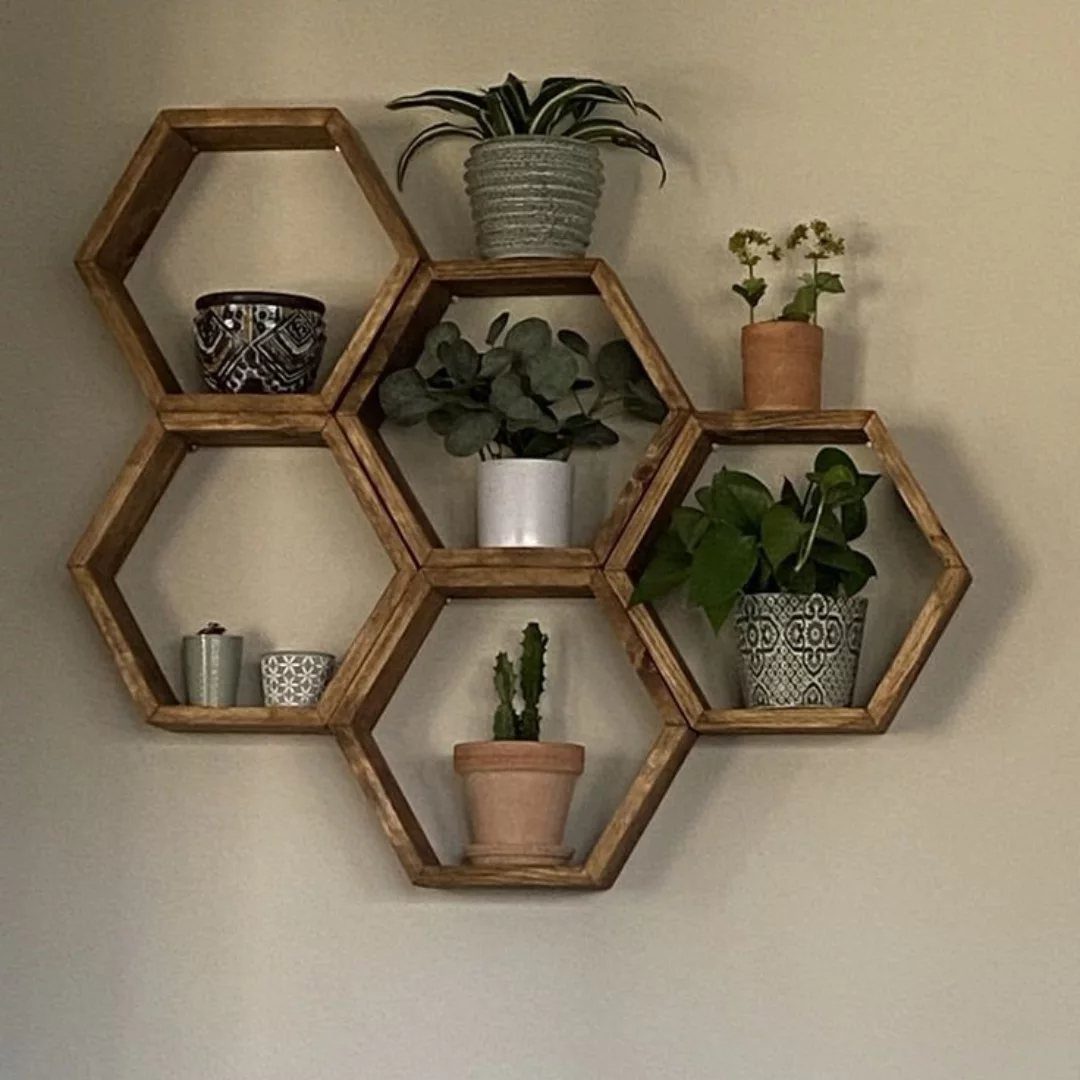
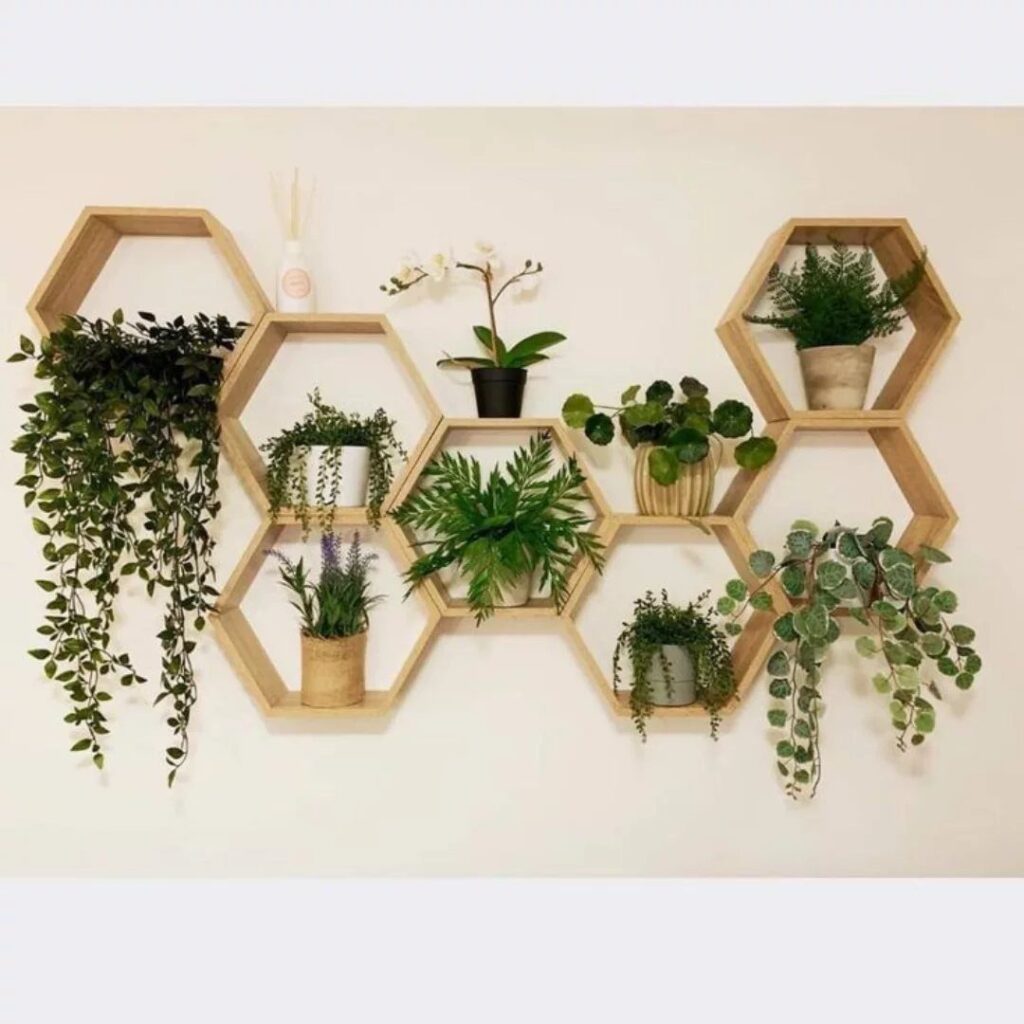
Hexagons fit together like honeycomb, so a cluster turns a plain beige wall into a pattern. Each cell holds one small potted plant or a decorative bowl.
Plan the layout on the floor first, or trace paper templates and tape them to the wall. Fit matters: the shelves should touch edge to edge, and one crooked cell throws off the whole group.
Wood keeps the look warm. Stick to small pots, since the cells are shallow, and mix in a bowl or two so it isn’t all green.
6. Illuminated Corner Wall Shelves
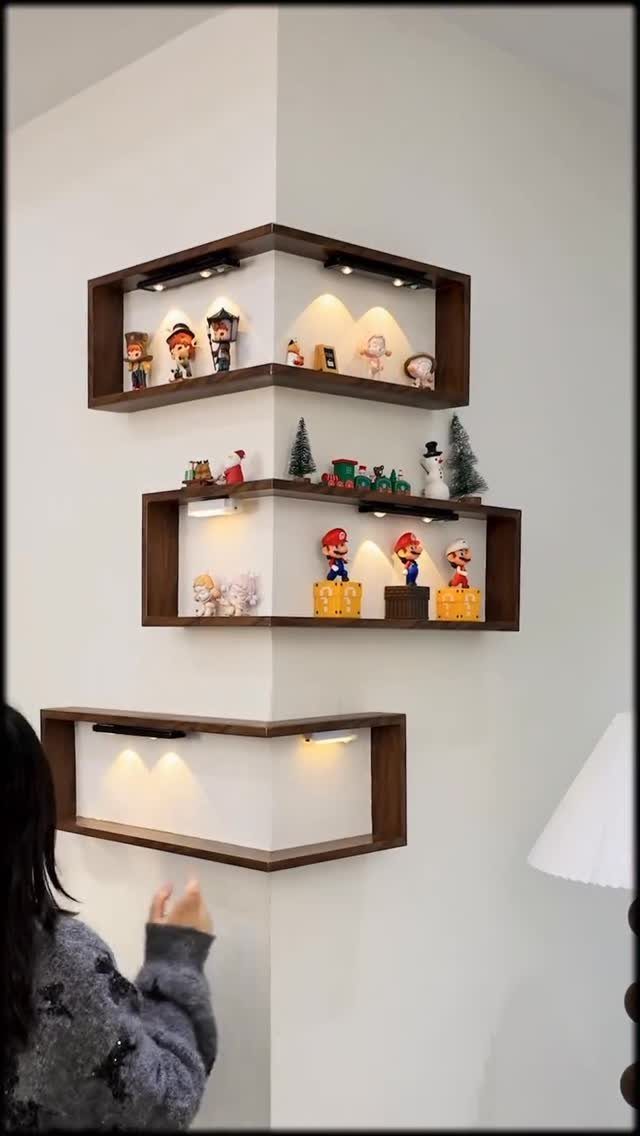
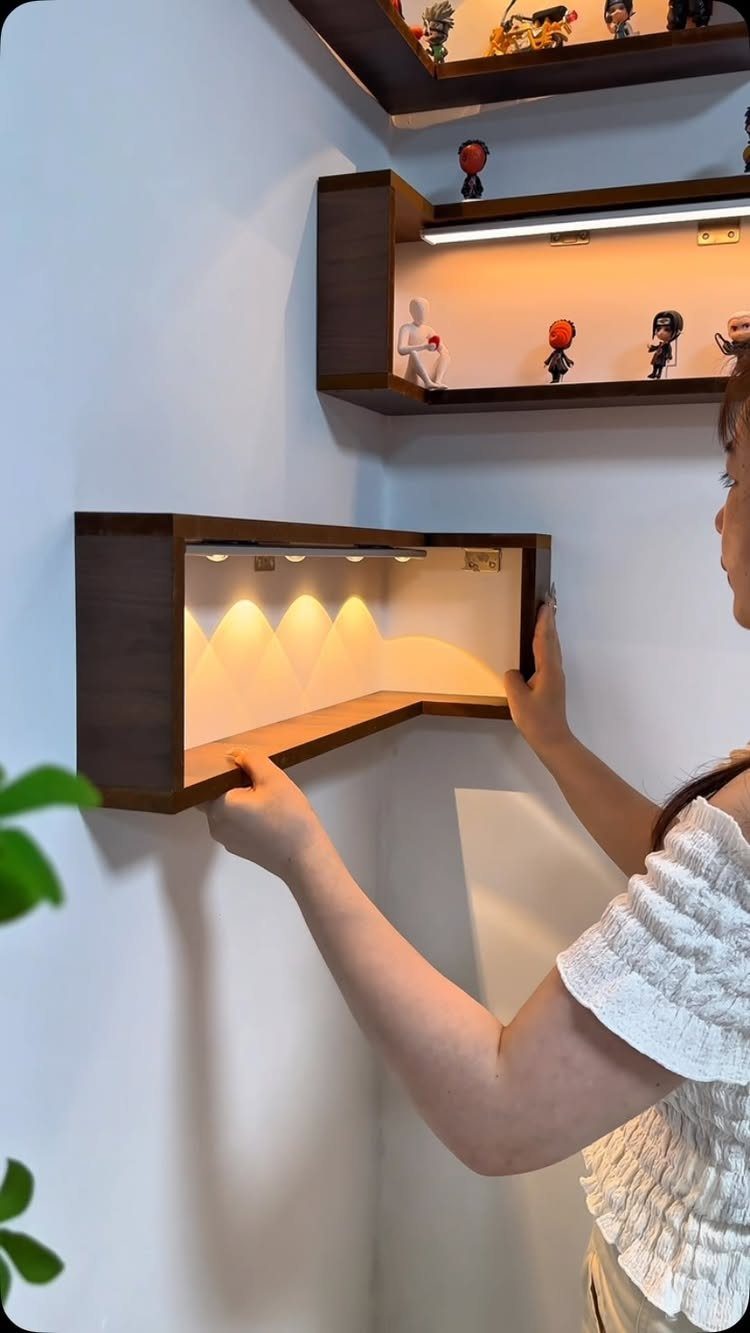
Warm LED light turns corner shelves into a glowing display. Three L-shaped wooden shelves stacked on a white wall each light a small figurine from within.
Warm light flatters wood and keeps the white wall from feeling cold. I would pick built-in lighting over clip-on lamps, because no cords hang down the wall.
Keep the figurines small and leave space around each one, so the light has something to fall on. Corners are often wasted, and this uses one.
Shelf Placement Tips
Galleries hang art at that height because your eye lands there naturally, without looking up or down, and the same logic holds for shelves.
Stacking several shelves changes the math slightly. Center the whole group at 57 to 60 inches, not the first shelf.
Styling Techniques
Group objects in 3s or 5s, which look more natural than 2s or 4s.
Other things that work well:
- Trailing plants like pothos work well on upper shelves
- Books stacked horizontally
- Framed photos leaned against the wall instead of hung
- Candles that stay unlit, for mass and surface interest
Frequently Asked Questions
Should wall shelves match the rest of my living room furniture?
They should sit near your other finishes without copying them exactly.
When everything matches, the room looks staged instead of lived in. Pick one detail that ties them in: a wood tone close to your coffee table, or paint that matches your baseboards.
How do I arrange multiple wall shelves without it looking cluttered?
Stagger them at different heights and slide them left or right of each other instead of lining them up in a grid. Mixing shelf lengths and styles helps too, since the layout should feel balanced without being mirrored.





