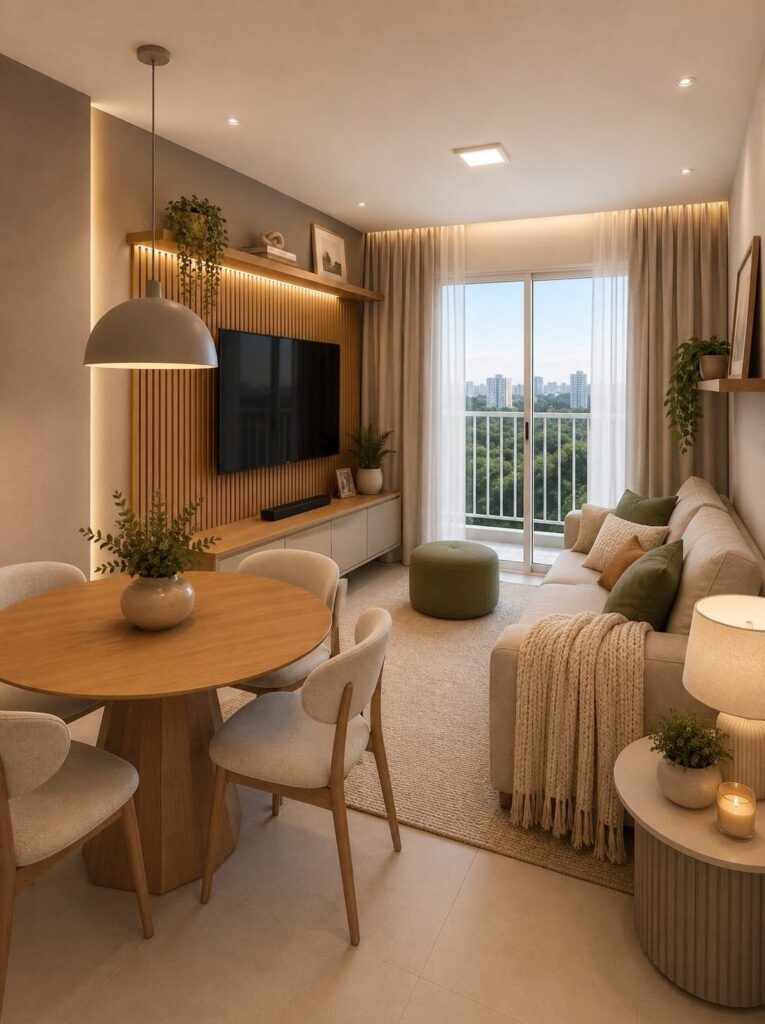
The ideas here run from a weekend of paint to a glass partition or floating console, and what decides which one fits is how much floor you can spare.
If walkways are already tight, go for pieces that clear the floor or use the wall: a floating TV console, exposed legs, corner shelves.
If the floor has room, a large rug or a curved sectional can anchor it. Renters can lean on paint, rugs and shelves that mount with brackets, while a floating console or sideboard goes into studs, not drywall alone.
1. Light Colors on Walls and Furniture
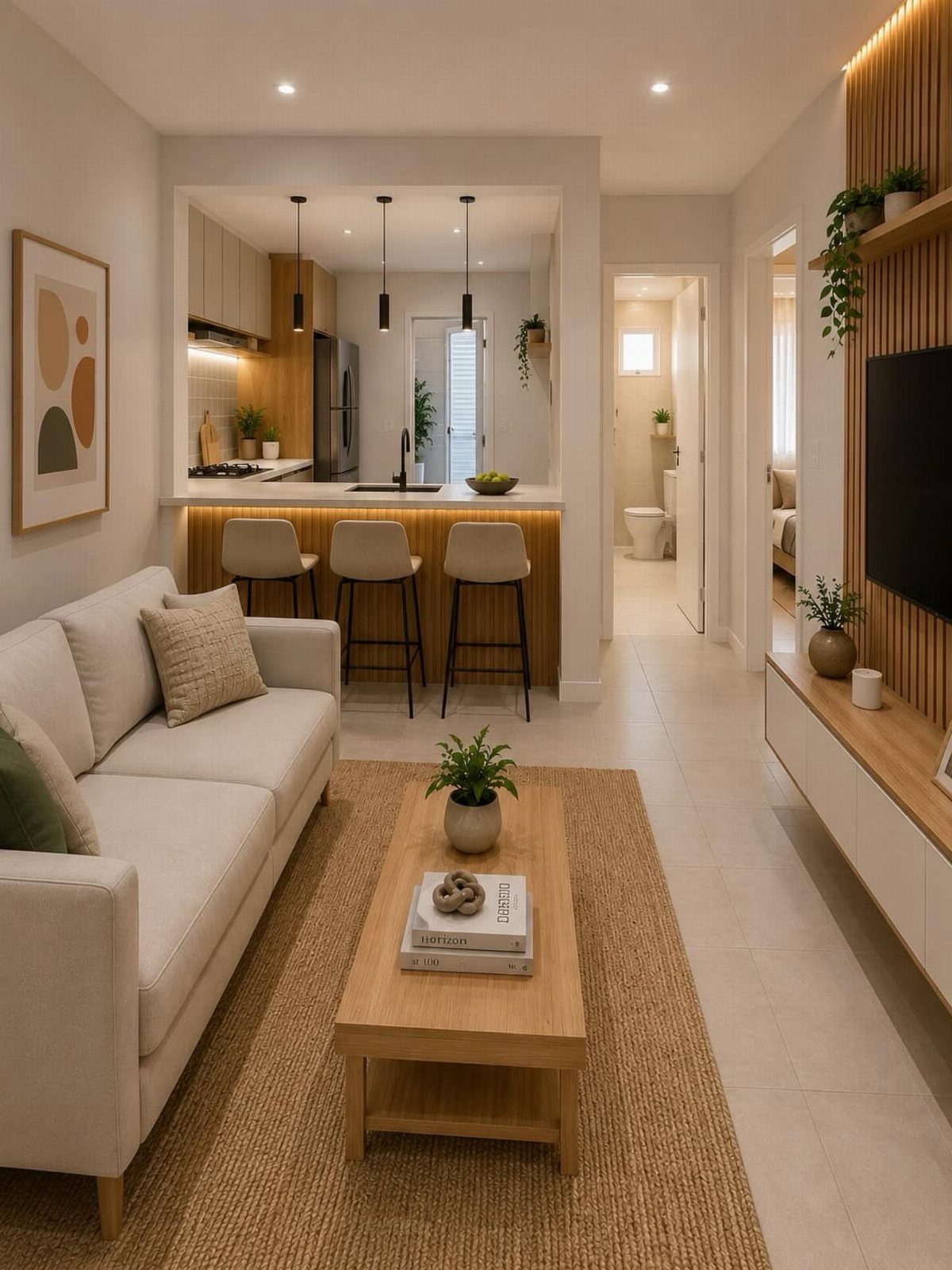
Pale walls and a pale sofa blur the edges of a room, so the space reads as bigger than its footprint. Soft white or warm beige works best because it bounces daylight around instead of swallowing it.
Keep the big pieces light and let the smaller ones carry contrast. A wooden coffee table, like the one here, adds warmth so the room doesn’t feel flat.
Paint is the cheapest version for a renter, and a weekend covers it.
2. Low-Profile Furniture
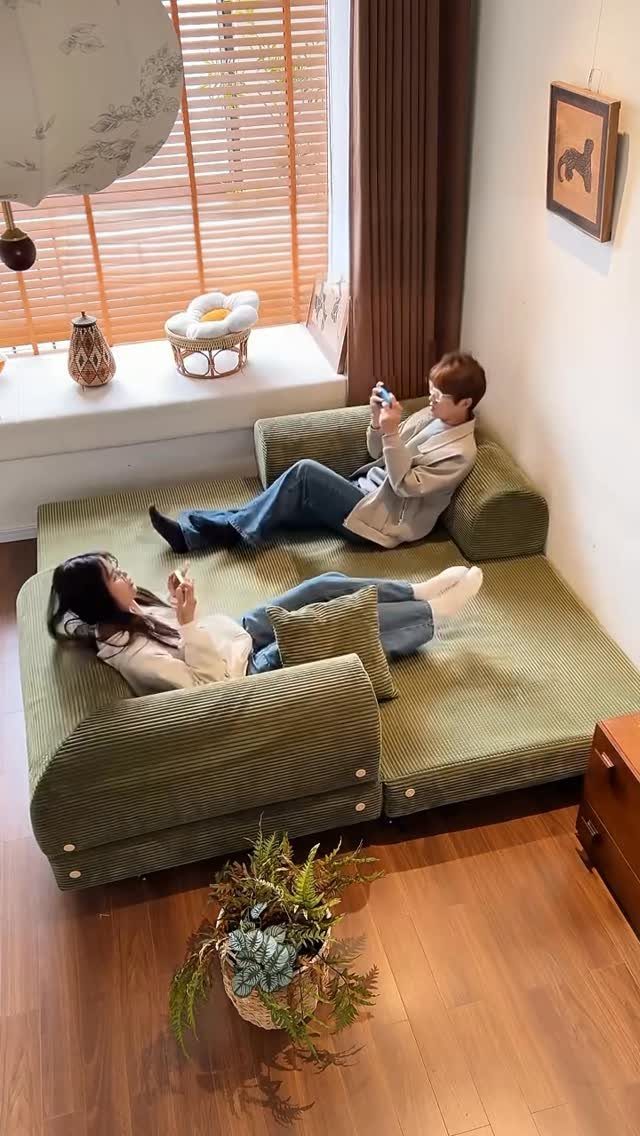
Floor sofas and low platform styles do this best.
Corduroy is a good fabric choice here: it’s soft, a little textured, and keeps a low piece from looking stark.
Expect to sit differently, though. Getting up from a seat this low takes more effort, so I’d pick it for lounging rooms rather than for guests of every age.
3. Large Area Rug
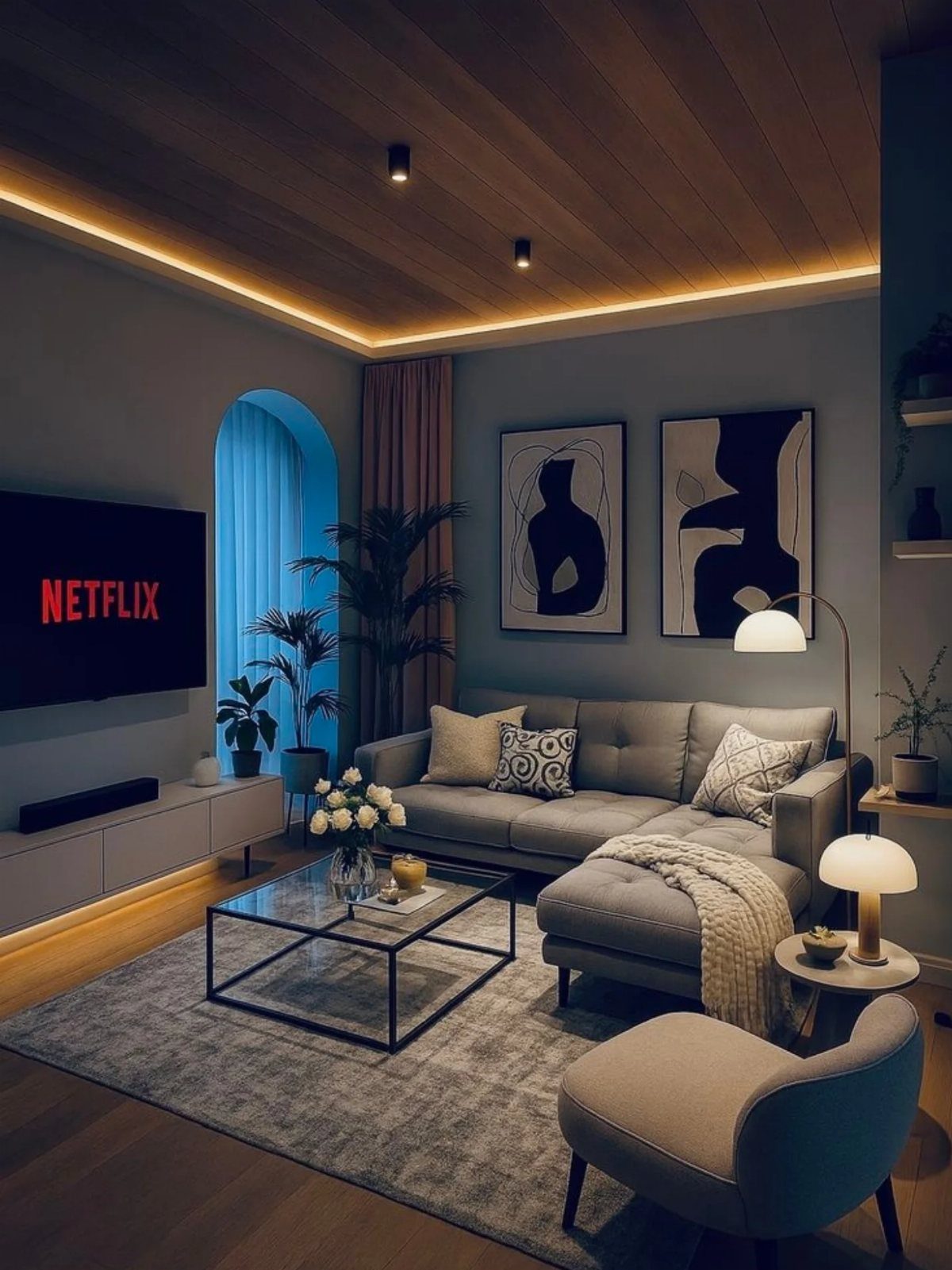
Go bigger on the rug than feels sensible.
A large one, with at least the front legs of the sofa and chairs resting on it, ties the seating into one zone and makes the room read as a single, deliberate space.
A small rug floating in the middle chops the floor into pieces and shrinks everything. Measure your seating area first, then tape the rug’s outline on the floor to see if the size actually works.
Low pile also stops a coffee table from rocking on uneven texture.
4. Storage Ottoman
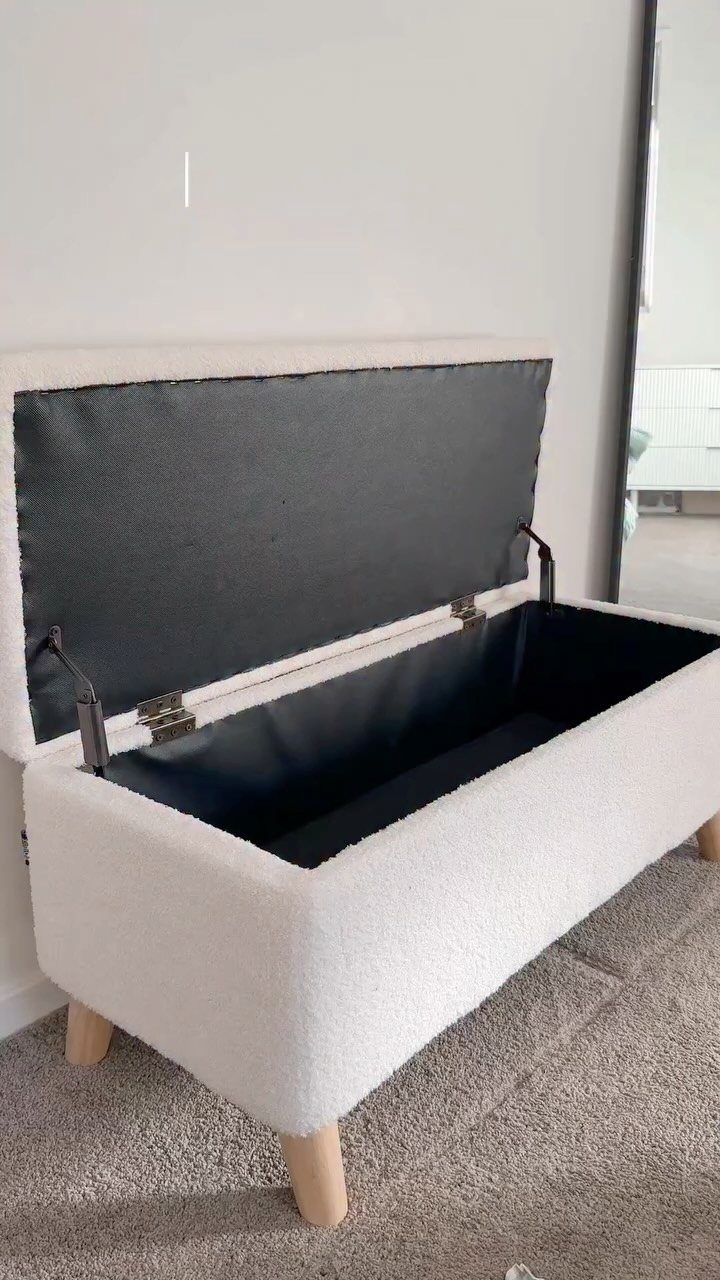
Of all the storage pieces for a small living room, an ottoman with a lift-off or hinged lid does the most work.
It holds throw blankets, remotes, or board games inside, and it still serves as a footrest or extra seat.
A bouclé cover like this one feels soft and looks good, but pale fabric shows dirt. A black or dark lining hides wear inside.
Check that the lid opens fully where you plan to put it, so a wall or sofa doesn’t block it.
5. Add Personal Touches
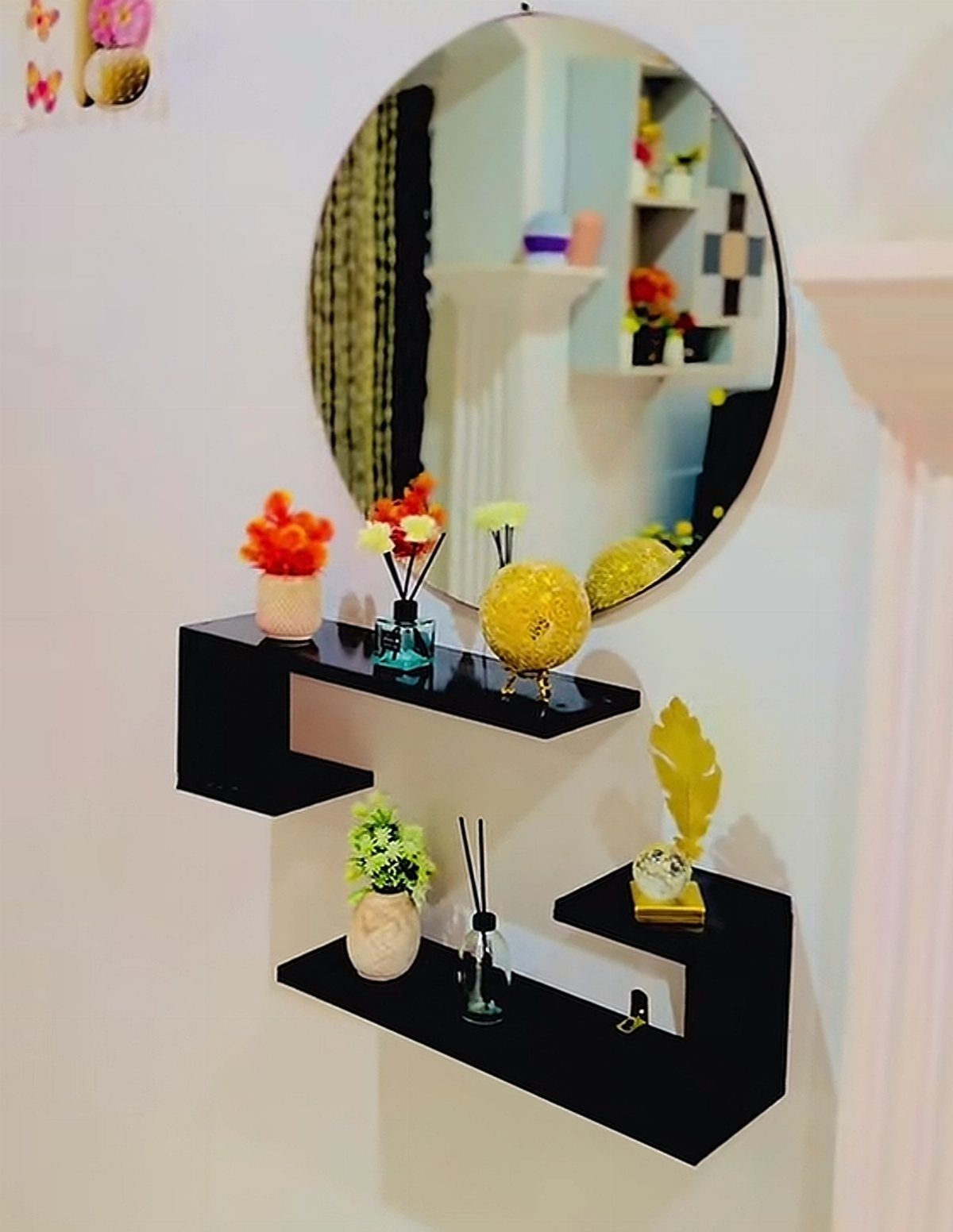
Small rooms start looking generic fast, and a few chosen objects fix that. A shelf with small vases, fresh or faux flowers, and one metallic accent says more about you than any matching set.
Keep the display tight, with items at different heights so the group has shape. A round mirror above adds depth without taking floor space.
Pick pieces you actually like rather than what’s trending. Thrift stores and flea markets are good sources for budget-friendly finds.
6. Gallery Wall
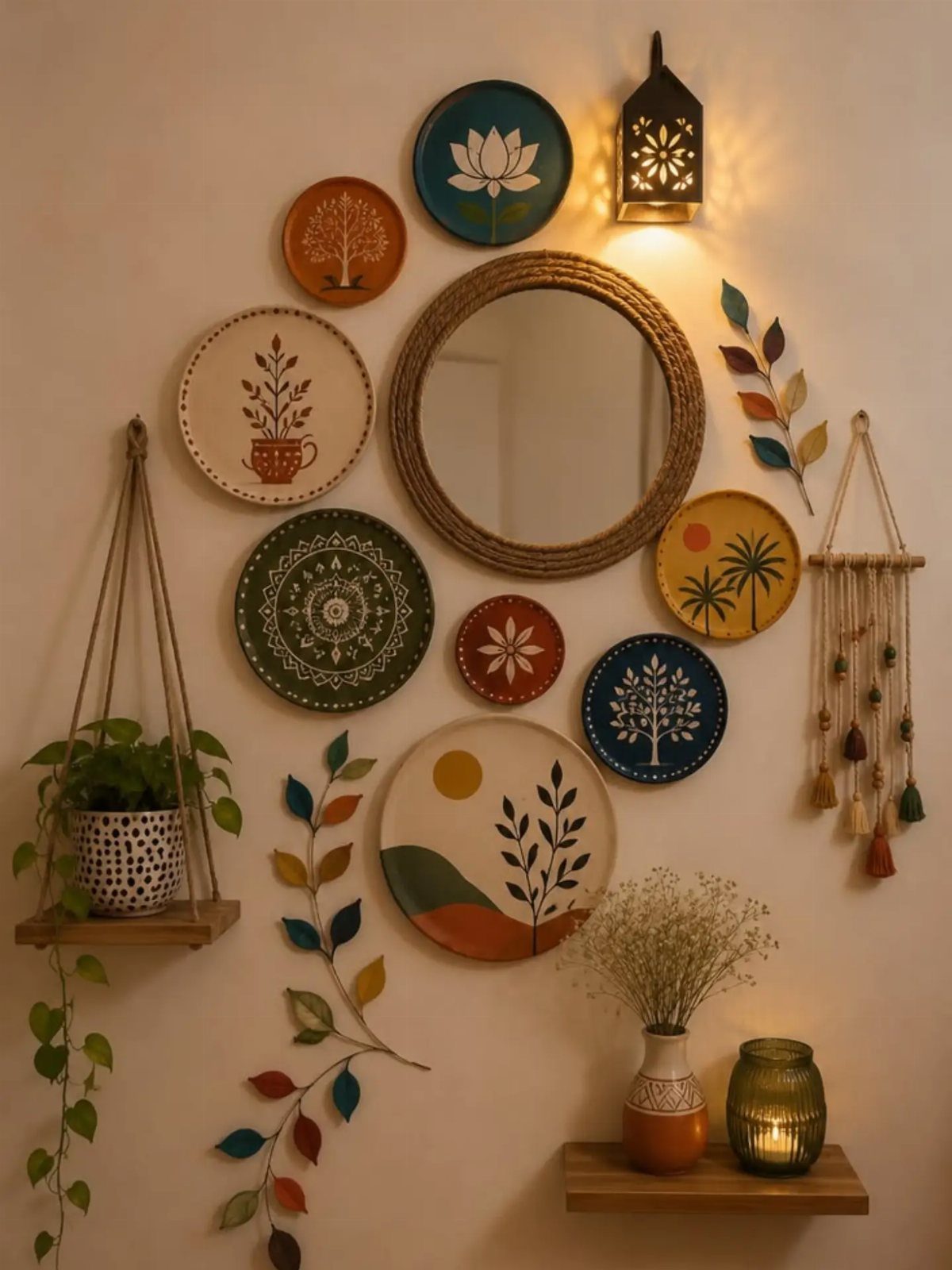
Mix objects instead of hanging only framed prints. Painted plates, a round mirror, a wall lamp, a trailing plant and a tiny shelf can all share one wall and give it depth.
Lay everything on the floor first and shuffle until the arrangement feels balanced, then trace each piece onto paper and tape the templates to the wall before drilling. Keep gaps between pieces fairly even.
A wall lamp doubles as a light source, which frees up table space.
7. Curved Furniture
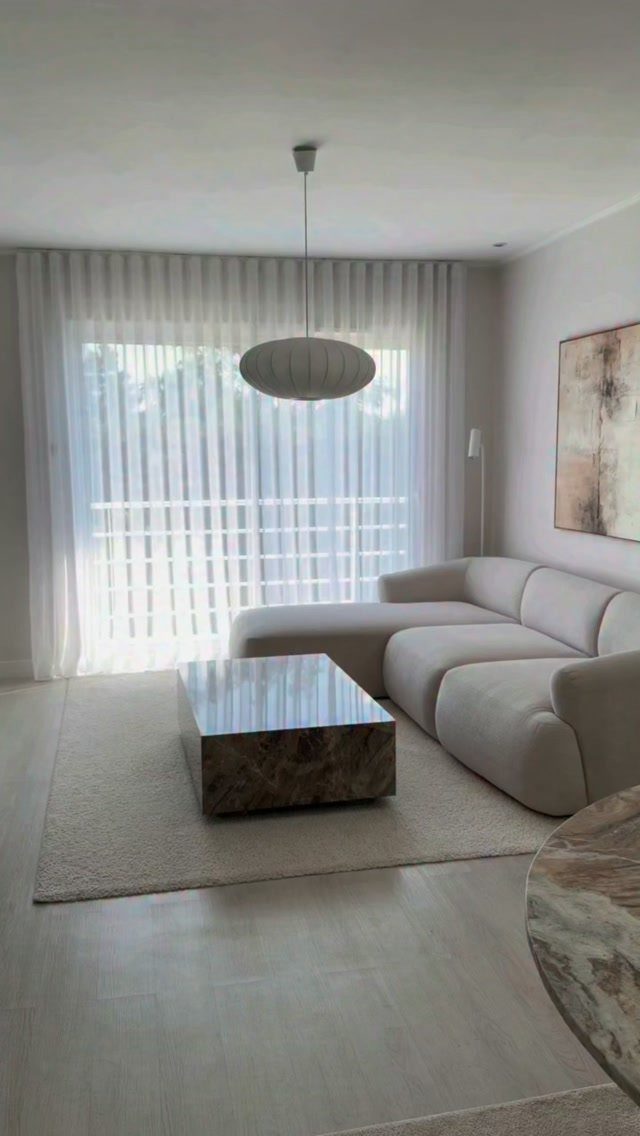
Straight lines dominate most small rooms, so one curved piece breaks the boxiness. A rounded sectional like this one has no sharp corners to bump into, which matters when walkways are tight.
Pair it with a coffee table in a different shape, and keep the rug neutral so the curve stays the focus.
Measure before buying. A curved back takes up more wall than the seat length suggests, so tape the outline on the floor first.
8. Furniture with Exposed Legs
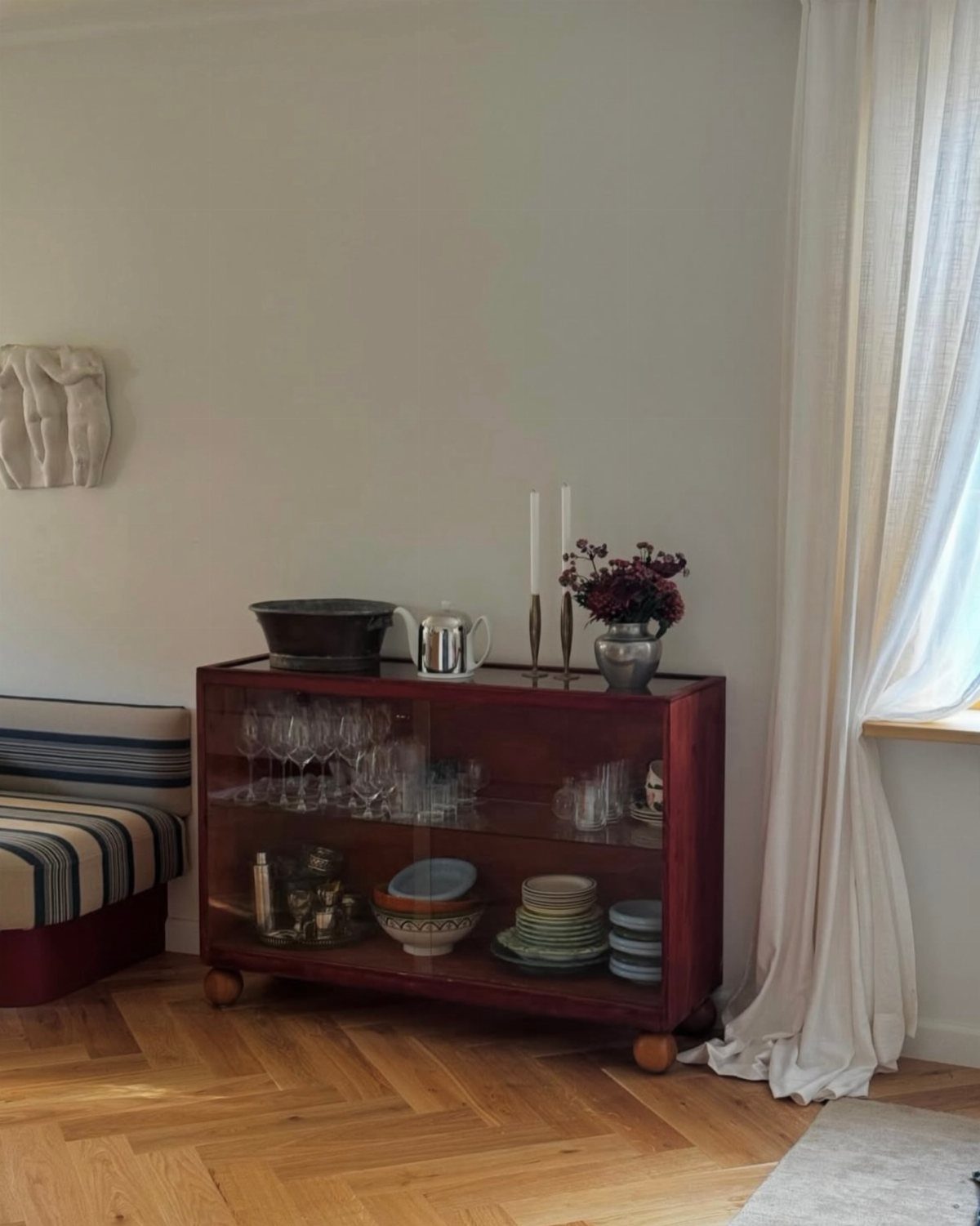
A sideboard on exposed legs shows the floor underneath it, and that strip of visible floor makes a room feel less crowded. Rounded ball feet in dark wood add a little character without extra bulk.
A low console or open-frame shelf on slim legs can hold glassware or a short stack of books without the visual weight of a closed cabinet, and the floor stays visible underneath, which makes a small room read bigger.
I’d choose legs over a solid base for any storage piece in a small room. Just remember that dust collects underneath, so plan on sweeping there.
9. Glass Partition Room Divider
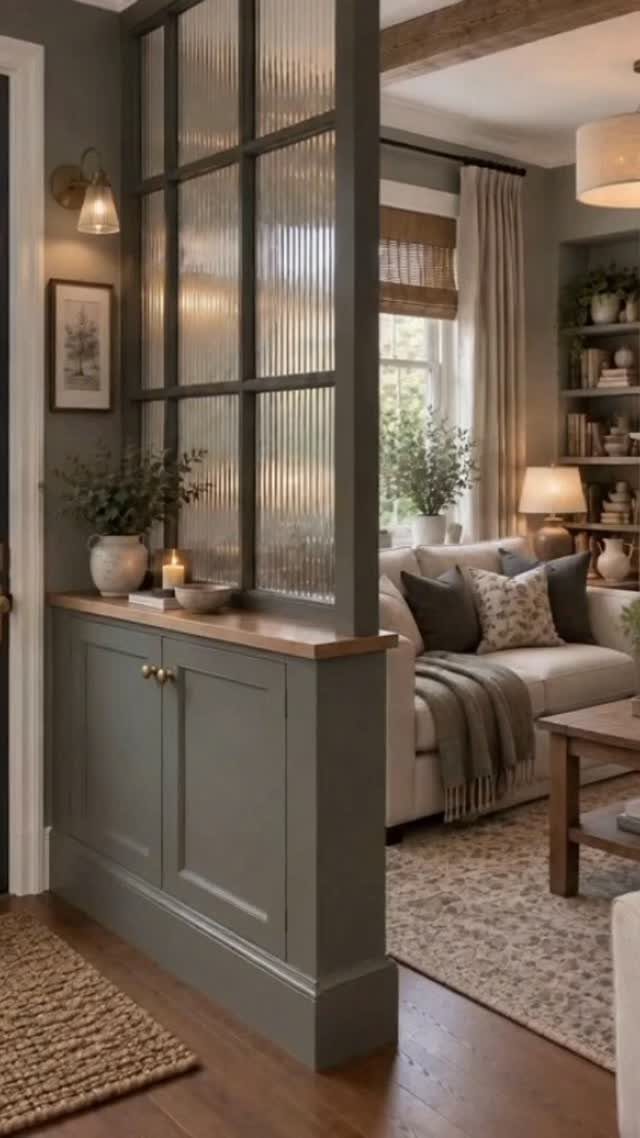
Fluted glass lets light pass through while blurring what’s behind it, so a partition can mark off a living area without closing it in. Set on top of a built-in cabinet, it also gives the hallway side some storage.
Choose this when a doorway opens straight onto the sofa and you want a bit of separation.
Expect a custom job, which costs more than a weekend DIY. Fluted glass film on a plain pane is the cheaper version to try.
10. Corner Floating Shelves
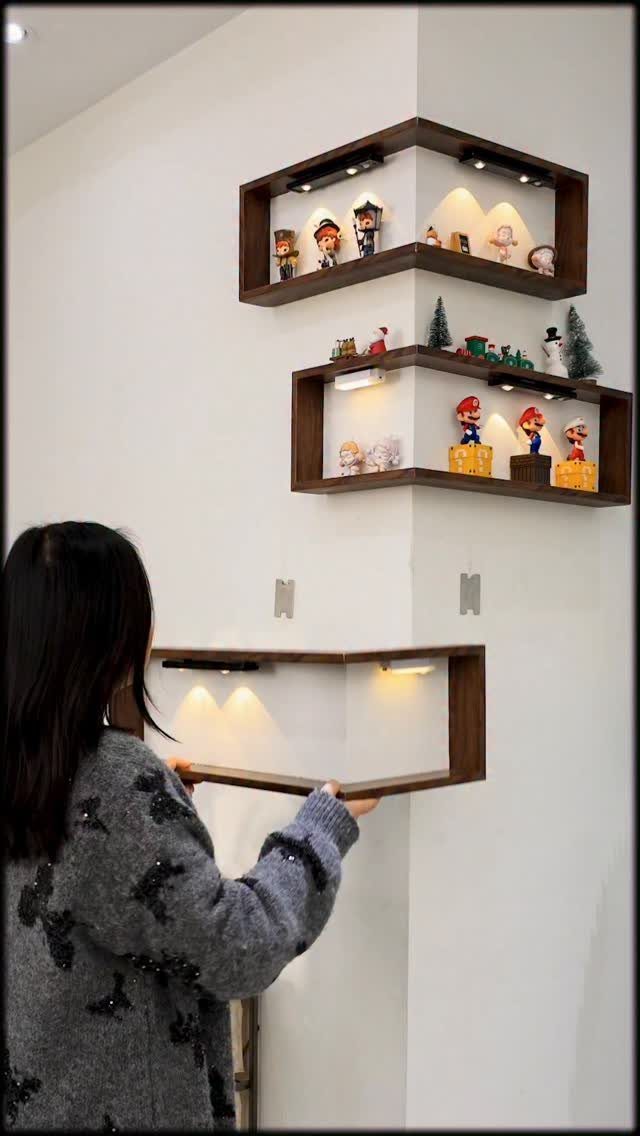
L-shaped shelves use the dead corner, which most rooms waste. Wooden ones hold small figurines or plants at eye level and keep the floor clear.
Find the studs or use proper wall anchors, and mark a level line with a pencil before drilling. Stack two or three at staggered heights rather than one long row.
Built-in lights, like those on this set, add a soft glow, but check where the cord will run first. Keep the load light.
11. Mirror Above Floating Shelf
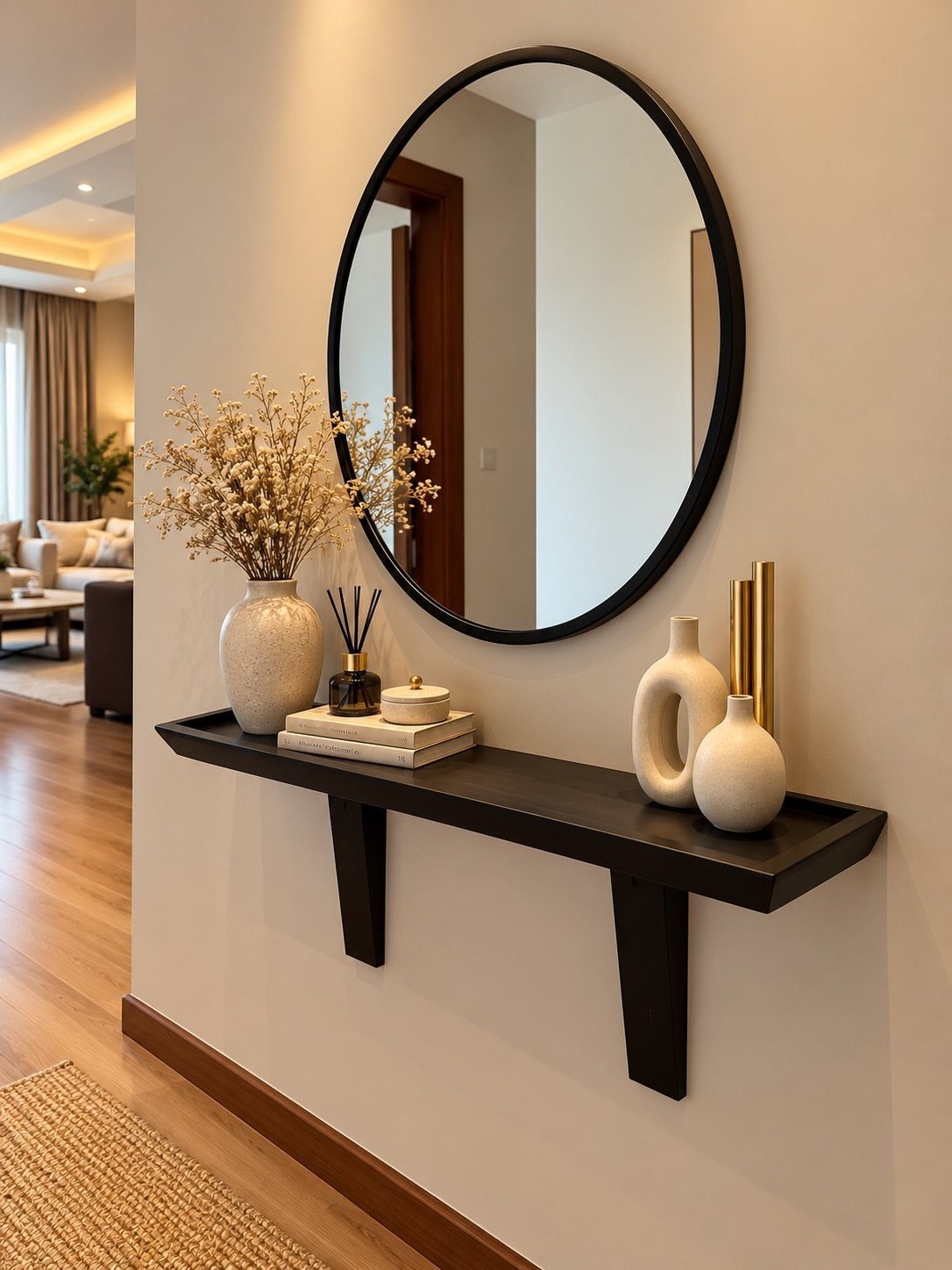
Hang a round mirror directly above a slim floating shelf and the pair reads as one tidy unit. A black frame gives crisp definition against a pale wall, and the mirror pushes light and depth back into the room.
Put a few vases, dried flowers and a couple of books on the shelf, and keep the mirror centered over them.
A hallway or the wall by the entry suits this well, since it takes up almost no floor space. Anchor the mirror to the wall properly, as it’s heavier than it looks.
12. Tuck Ottomans Under Console Table
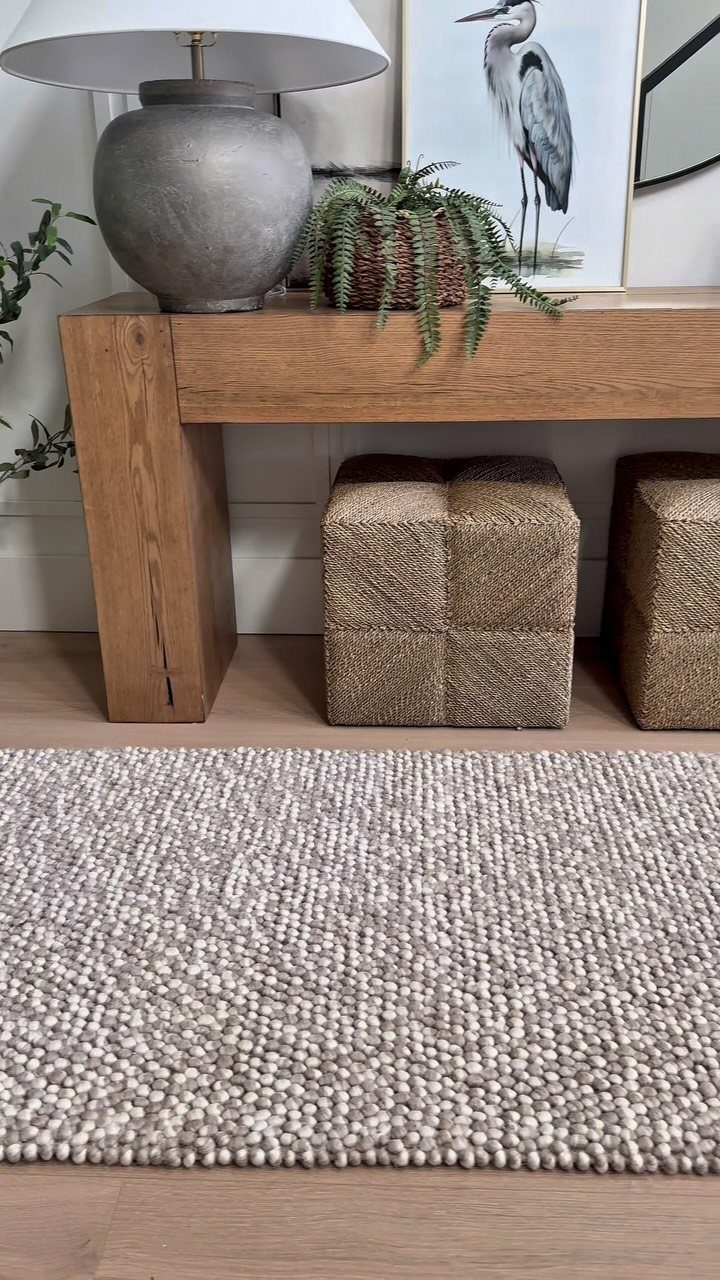
A console table with 2 cube ottomans underneath gives you extra seats that vanish when nobody needs them.
Check the clearance first: the ottomans must slide under the tabletop, so measure the gap and buy cubes a little shorter.
I like this more than a pair of chairs, since cubes can also serve as footrests. Pull them out for guests and tuck them back afterward.
13. Floating TV Console
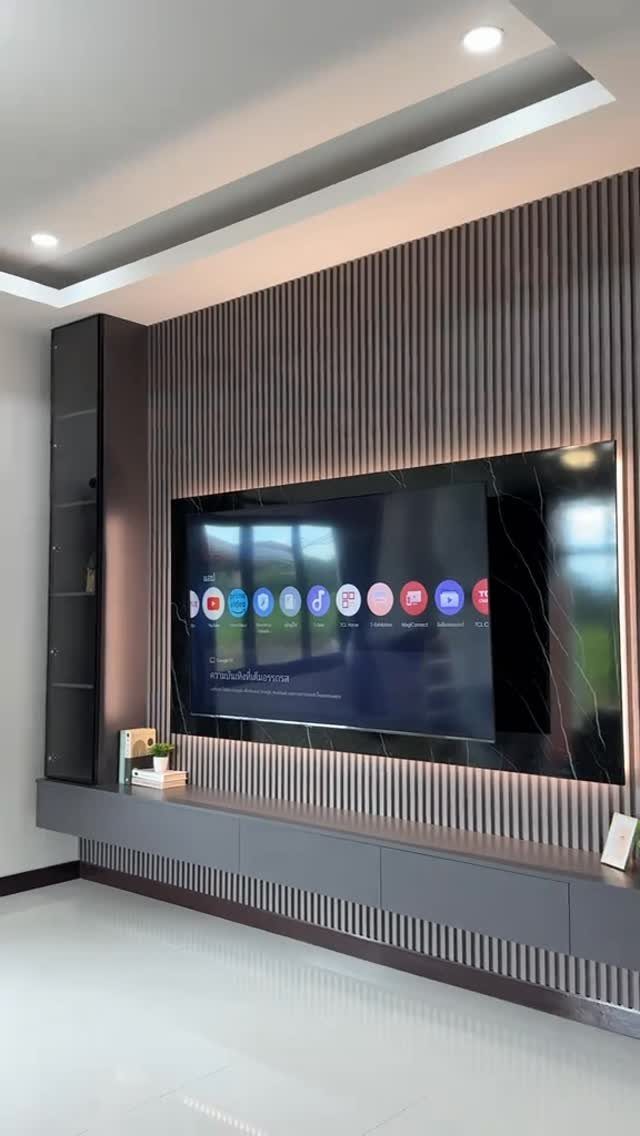
Mounting the cabinet to the wall leaves the floor clear beneath the TV, and in a small room that strip of open floor makes the whole wall feel lighter.
A dark slatted backdrop gives the screen a frame, so the TV looks planned rather than stuck on. Anchor the cabinet into studs, not drywall alone, since a media unit with electronics weighs a lot.
Run the cables behind the slats or through a cord cover so nothing dangles.
14. Open-Concept Living Dining Combo
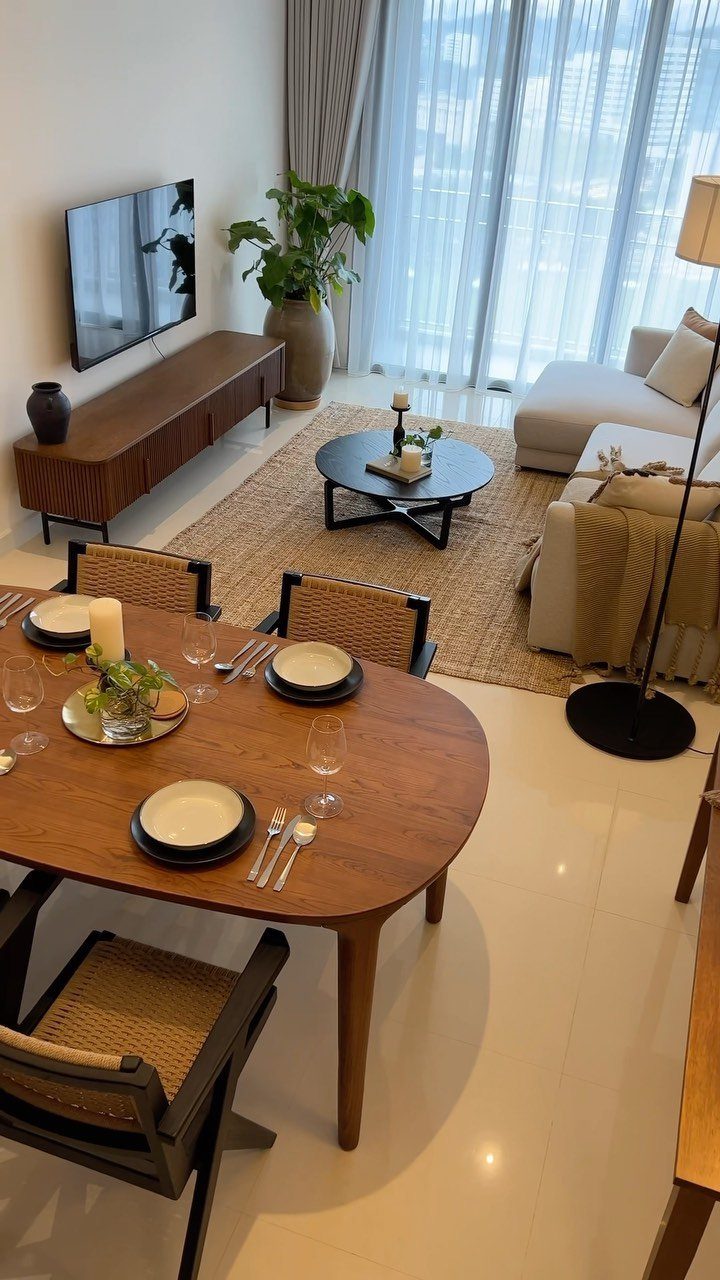
An oval dining table suits a shared room better than a rectangle, because it has no corners to snag hips when you walk past. Pair it with a round coffee table and the two zones share one softer, curved language.
Keep the wood tones and the neutral palette consistent across both areas, so the room reads as one space instead of two crowded ones.
Place the table where the dining zone ends and the sofa begins. Leave a clear walking path between them.
15. Small Sectional Sofa Setup
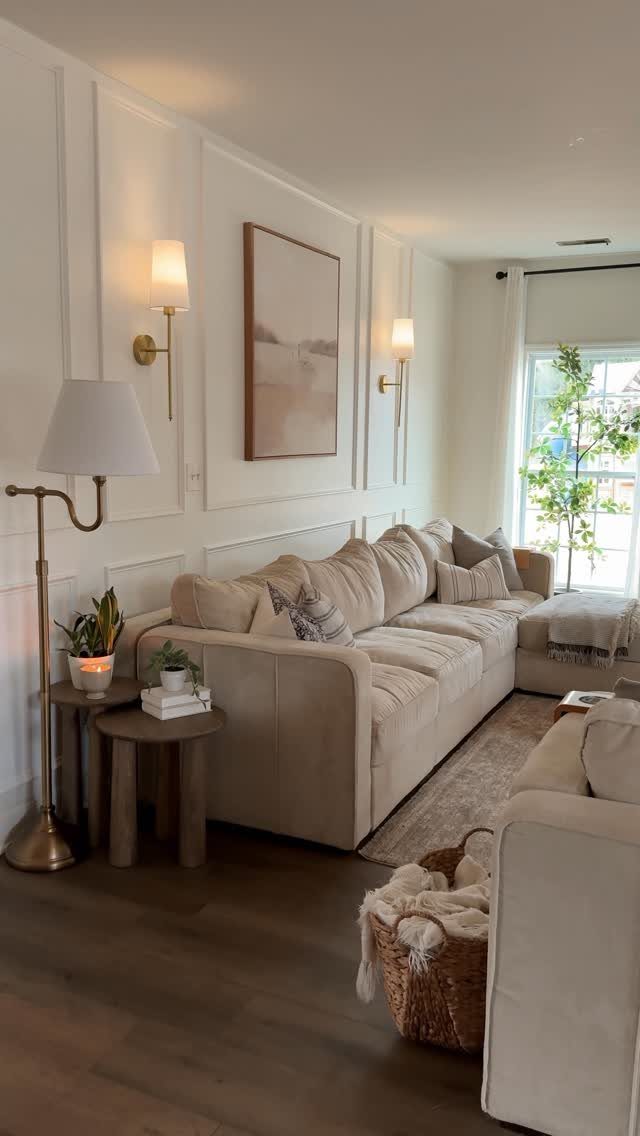
A sectional in beige can seat more people than a sofa and two chairs while taking up one corner, which is why I like it for tight rooms. Soft neutral upholstery against white paneled walls keeps the bulk from dominating.
Choose a compact size and measure the walls it will sit against before ordering. Tape the outline on the floor, as with any big piece.
Wall sconces free up surface space you’d otherwise lose to table lamps.
16. Indoor Plants as Decor
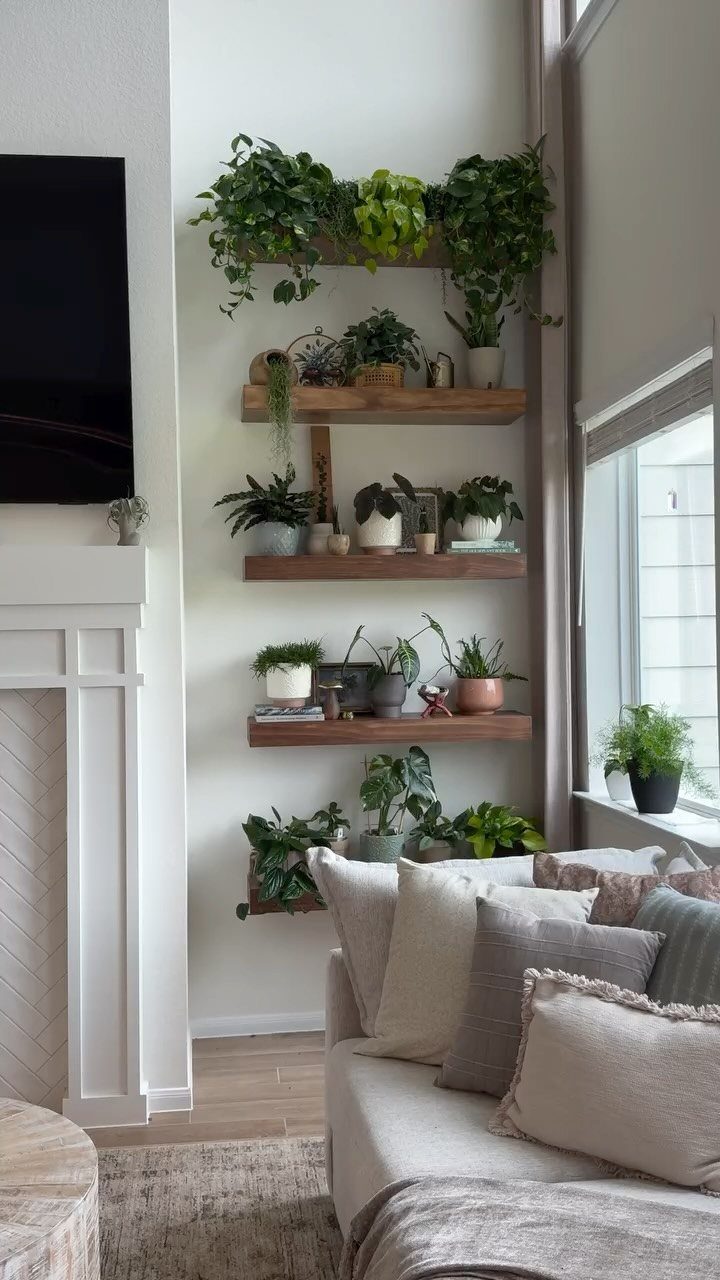
Floating shelves stacked in a corner let you stack plants vertically instead of claiming floor space. Plants at different heights look fuller than a single row, so mix trailing ones with upright pots.
Pick plants that match your light, and check that each shelf is anchored well, since wet soil and ceramic pots are heavy.
Put saucers under the pots to protect the wood from water.
A shelf wall like this costs far less than a large floor planter and is easy to do in a weekend.
17. Cane-Door Sideboard for Storage
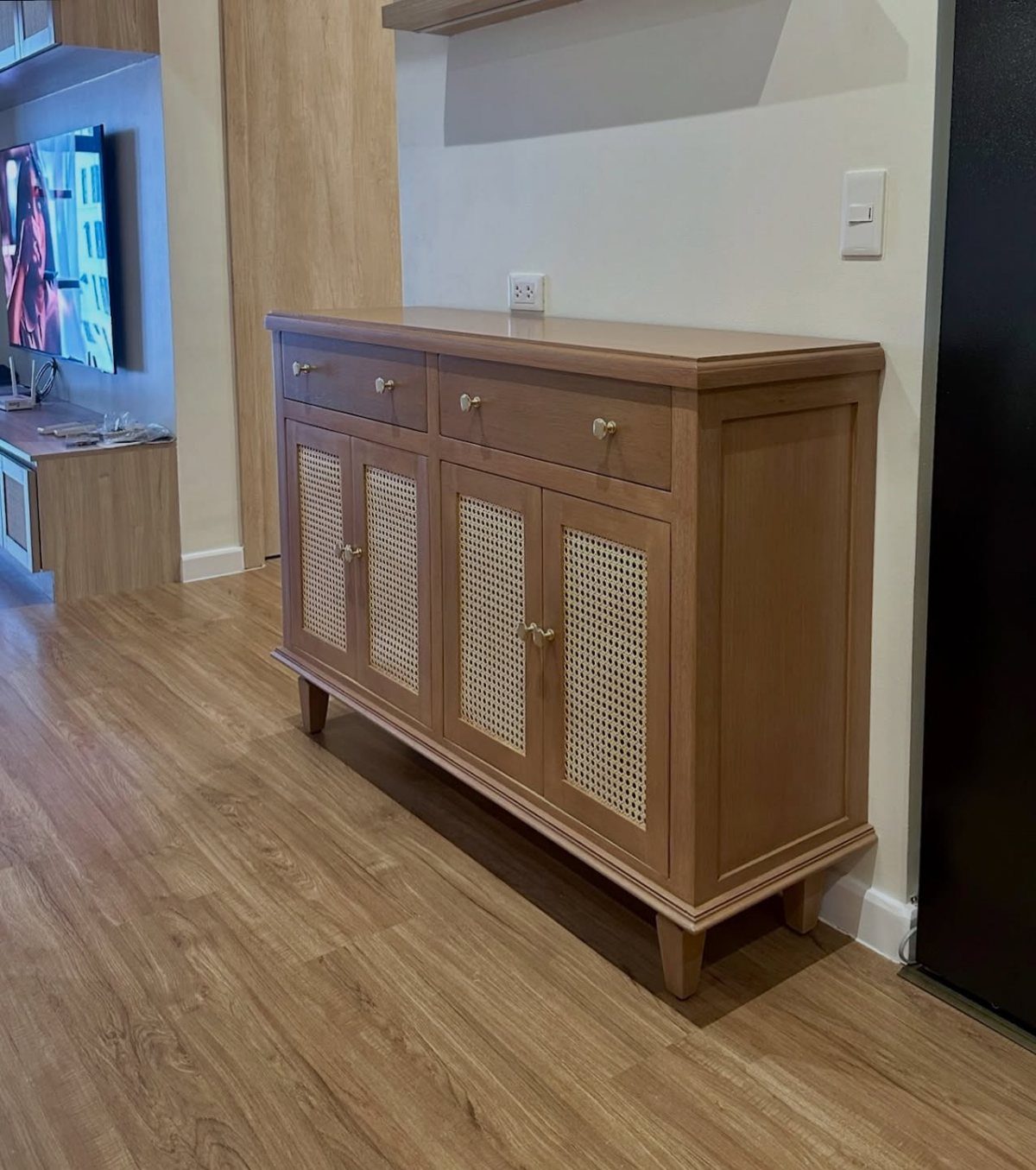
Cane doors hide clutter but look lighter than solid panels, so a sideboard like this closes off storage without turning into a heavy block. Light wood keeps it calm against a white wall.
Use the closed doors for cables, games and extra throws, and the drawers for small items. Set it low enough that the TV can sit nearby without crowding it.
Cane can snag, so I’d think twice about it in a room with a cat or a toddler.
Maximizing Space
Pull the sofa against a wall first, then see what floor is left. Large pieces on the perimeter keep the middle open, and a clear path through the room matters more than any single piece of furniture.
Zone the room with what you already own. A rug, a lamp placement or the angle of a chair can mark off a seat area, a reading spot or a desk corner without a single wall.
Corners are the most underused space. A chair, a small table or a corner shelf there puts every inch to work.
Pick pieces that do 2 jobs: a media console that also holds a laptop, or a sofa that folds out for a guest. Two jobs in one footprint beats two pieces.
Pair one substantial piece with lighter furniture so the room reads as composed, not packed.
Small living rooms are often treated as spaces to disguise, strip back and simplify until they lose the intimacy that makes them special. But scale can be an asset – furniture sits in easy conversation and creates a sense of a room gathered cosily around you.
Lighting Tips
Layer 3 kinds of light: overhead for general brightness, task lighting for reading or working, and accent lighting for warmth. A single ceiling fixture alone makes a small room look flat and harsh.
Choose sources that don’t eat floor or surface area.
More is not better. Too many bulky lamps crowd the room, so settle on a few and place them at different heights.
Keep daylight working for you, too. Leave the window clear of heavy furniture so the natural light reaches deep into the room.
Texture adds depth without clutter: layer pillows, a rug and a throw, and the lighting will read warmer against them.
Decluttering Advice
In a small living room, a few stray items show immediately.
Use a simple rule: if you haven’t touched something in a year, store it or donate it.
Give everyday items a home. Storage boxes hold magazines, newspapers, chargers and electronics so they stay out of sight but easy to grab.
Cables count as clutter, too. Visible cords make a room look busier than it is, so use a cable management solution to bundle and hide them.
A tidy room feels larger and calmer, and it’s easier to find what you need when you reach for it.
Frequently Asked Questions
How do I make a small living room look bigger?
Paint the walls a soft white or warm beige and keep the biggest pieces pale, since light colors bounce daylight around instead of absorbing it.
Then add a large rug, a round mirror, and furniture on slim legs so some floor stays visible. Clearing clutter and hiding cords helps just as much.
What’s the best furniture layout for a small living room?
Push the sofa and other large pieces against the walls first, then see what floor is left. Tape the outlines on the floor first.





