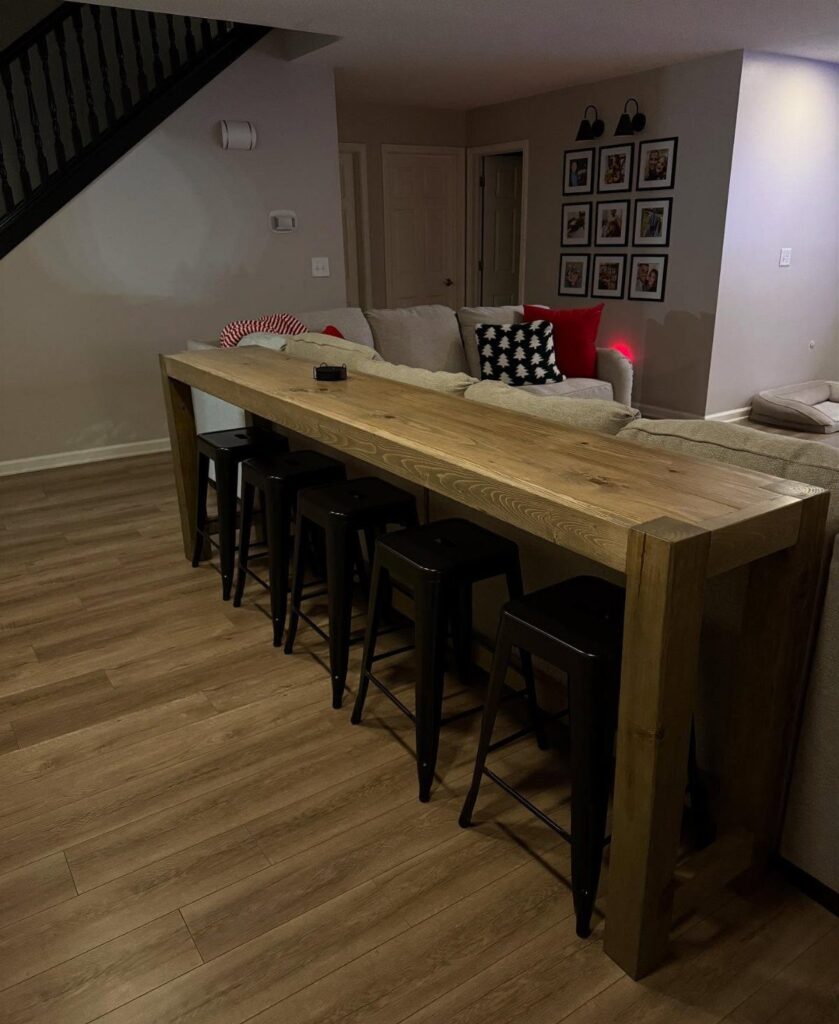
Sofa back height decides how tall the table can go: a back of about 28–36 inches is typical, and the table sits level with it or slightly below.
The ideas range from budget flat-pack consoles to live-edge wood and real marble, and from a plain surface for a lamp to a full bar with stools or ottomans tucked underneath.
1. Console Table Behind the Sofa
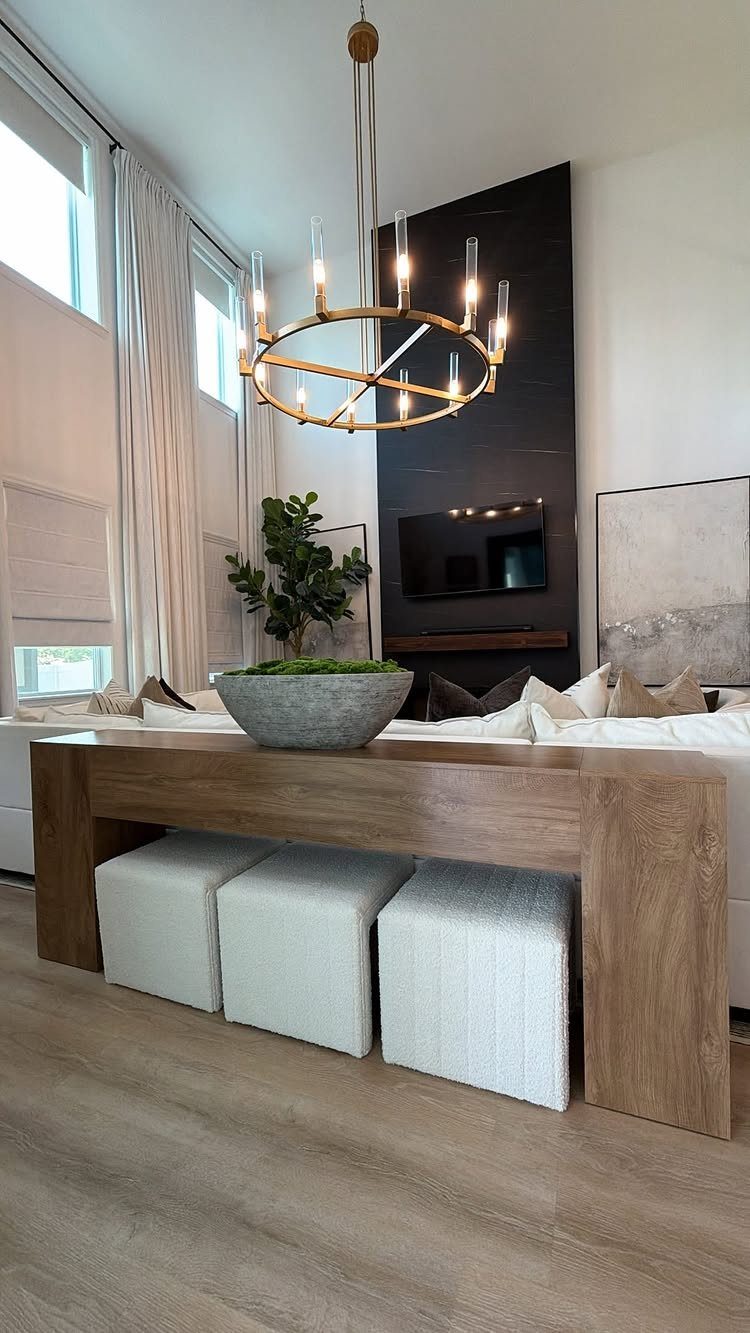
Sizing decides whether a console behind the sofa works. Keep the table no taller than the sofa back, and no longer than the sofa itself, so it reads as part of the seating instead of a barrier.
Ottomans that tuck underneath put the floor space to use. Pick ones that clear the tabletop’s lower edge, so they slide out for extra seats without scraping.
I’d pick a table slightly narrower than the sofa. A few inches of sofa showing on each side looks intentional, while a table that overhangs looks like a mistake.
2. Table with Exposed Pipe Legs
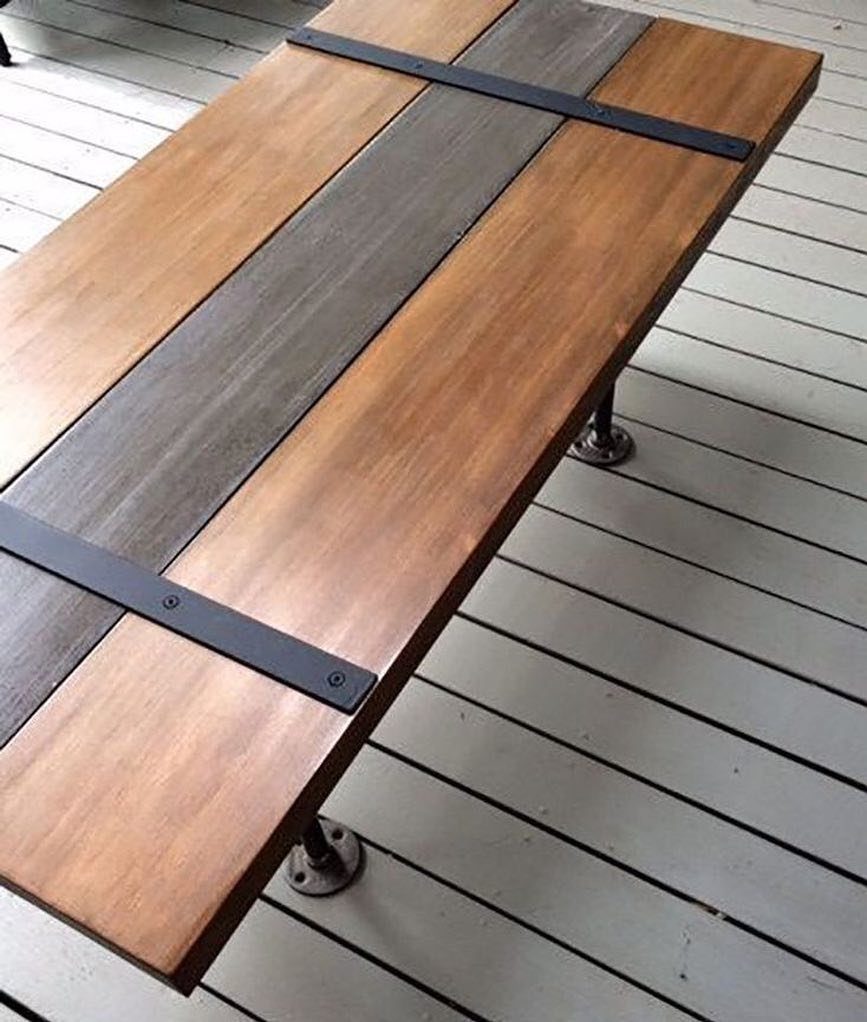
Pipe legs make a heavy tabletop feel lighter, because you see through them to the floor behind. That matters in a living room where the table sits right at your shoulders as you walk past the sofa.
Because the legs are open, the look suits a plain, thick top. Wood with a flat finish pairs best with black pipe, and the metal can match any black bands or hardware on the table.
Check the floor before buying. Metal feet can scratch, so stick felt pads under each one.
3. Light Wood Table with Stools
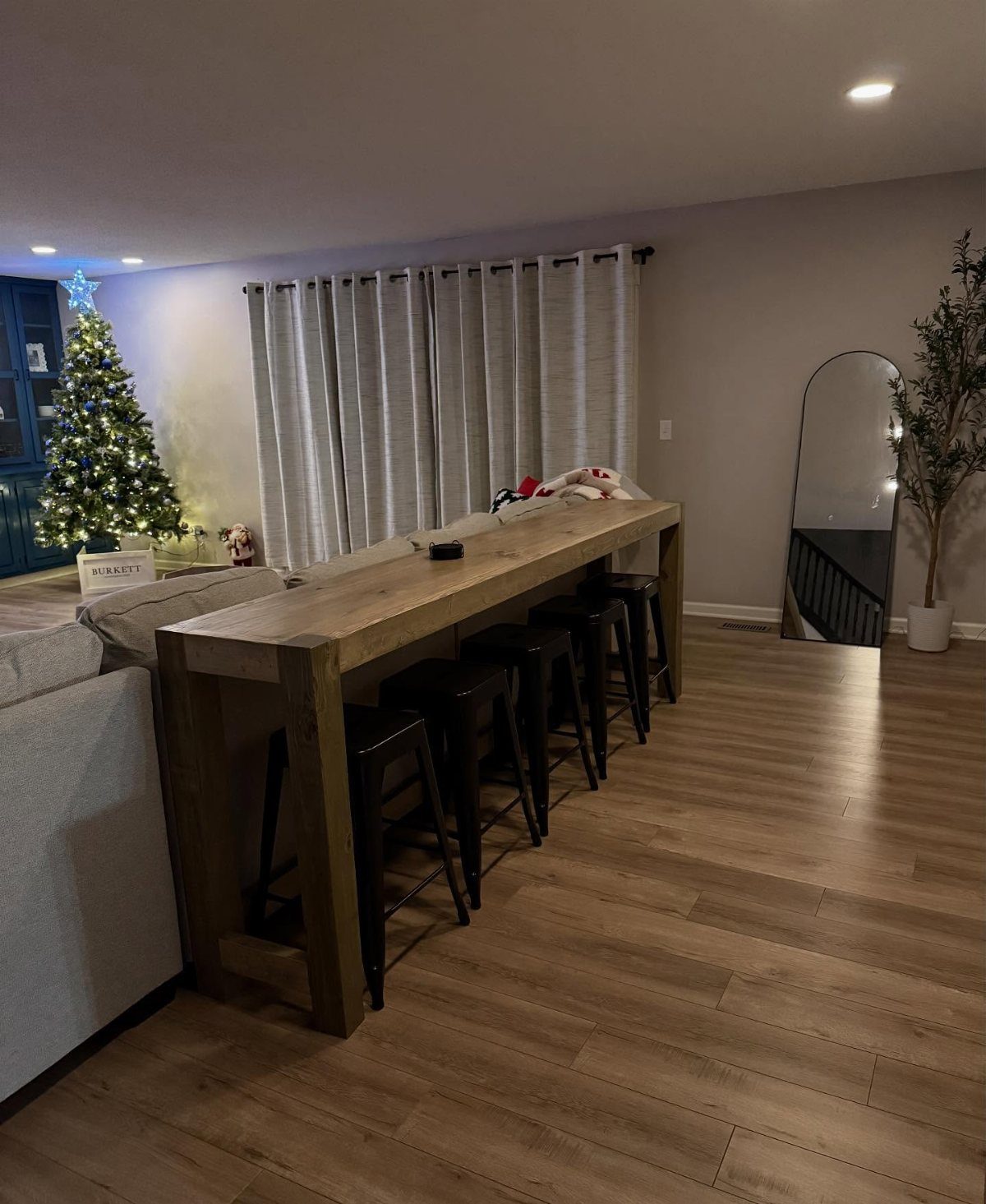
Light wood keeps a long table from swallowing the room. Set it directly behind the sofa and the pale grain reads as a bright strip rather than a dark wall.
Black stools give the pairing some contrast, and they are my pick over matching wood, which can blur into the tabletop. Push the stools fully under the table when nobody is sitting so the walkway behind them stays clear.
Measure the sofa’s length first and buy a table close to it. A long, even line looks planned.
4. Dark Wood Table with Stools
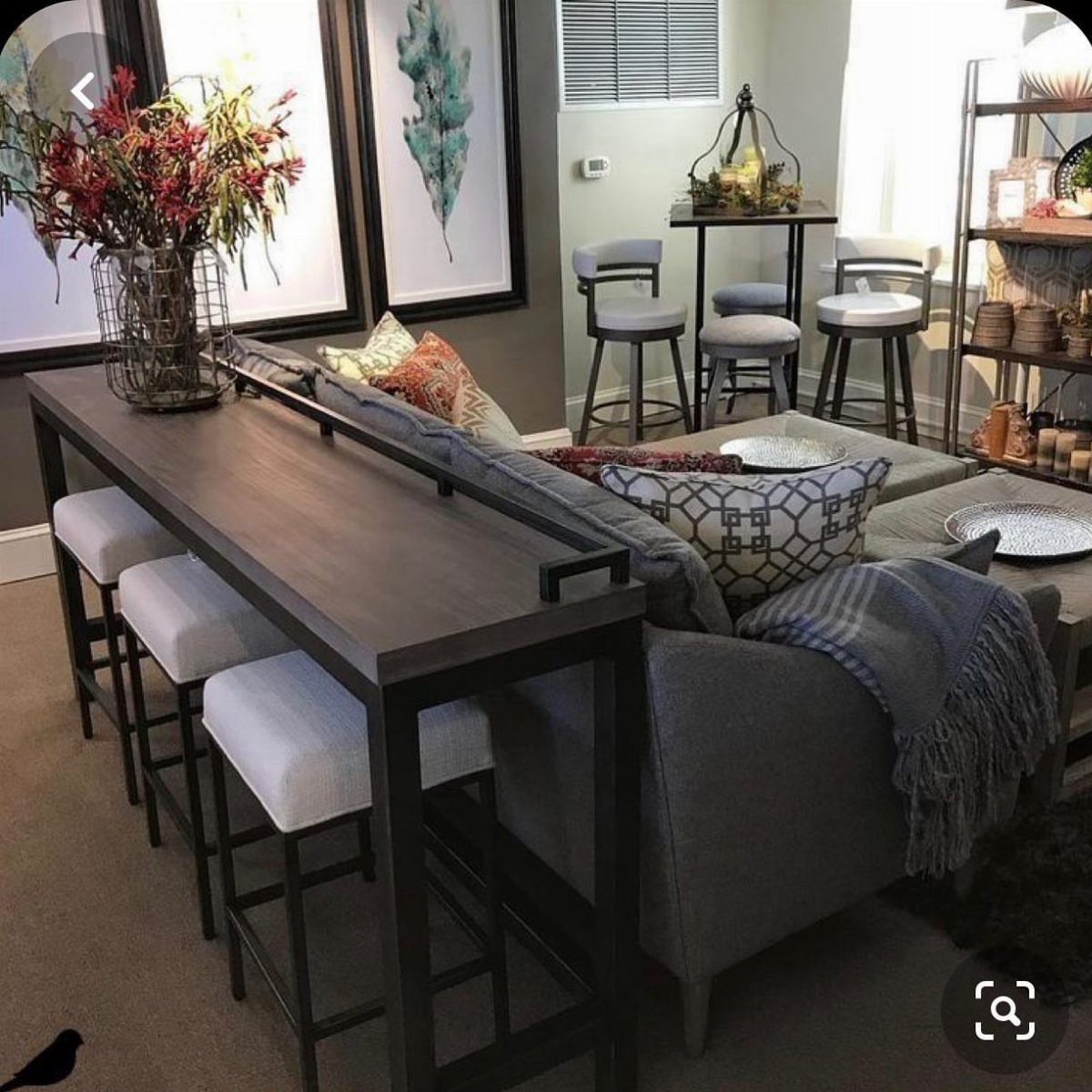
Dark wood anchors a sectional the way a headboard anchors a bed. The table runs along the back and gives the L-shape a firm edge.
Upholstered stools are the comfortable choice here. White seats stand out against the dark top, though they will show scuffs, so a wipeable cover is a reasonable trade for easy cleanup.
Keep the table at bar height and the stool seats beneath the edge, so they tuck in and clear the walkway. Choose a table about as long as the straight run of the sectional’s back.
5. Narrow Black Bar Table
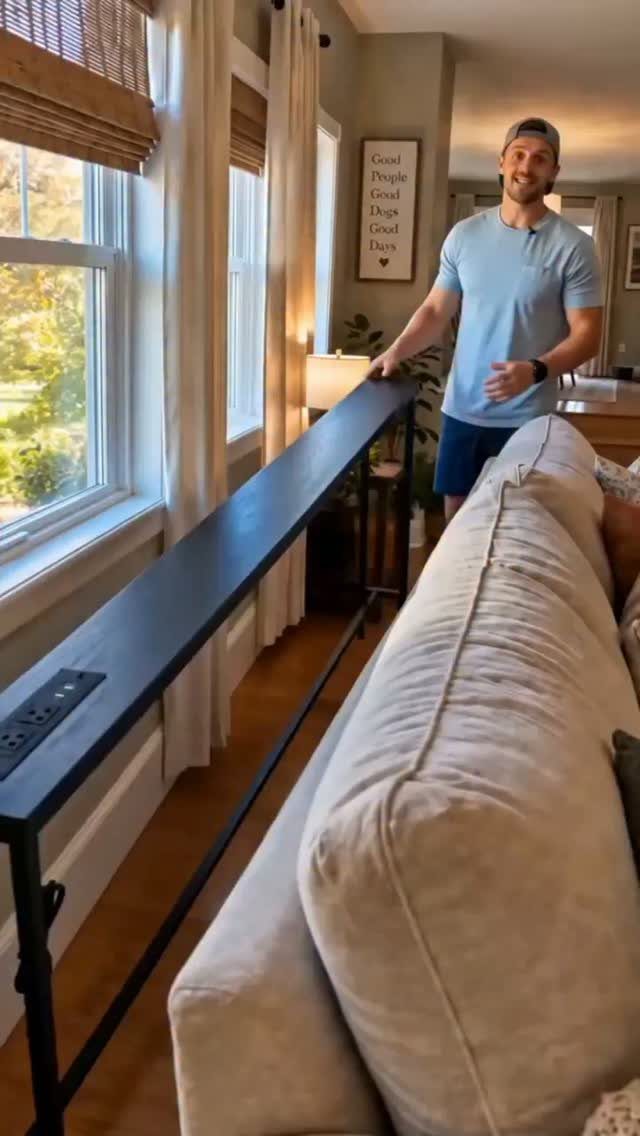
A narrow black table behind a beige couch is the cleanest way to add a drink ledge without eating the room. Black gives strong contrast against a neutral sofa, and a slim top leaves walking space behind it.
Narrow also suits tight living rooms, where a deep table would crowd the path. A ledge wide enough for a few glasses and a small lamp or plant is plenty.
I’d keep the styling sparse: one or two objects, nothing more. Black shows dust quickly, so a quick wipe now and then helps.
6. Live-Edge Wood Bar Table
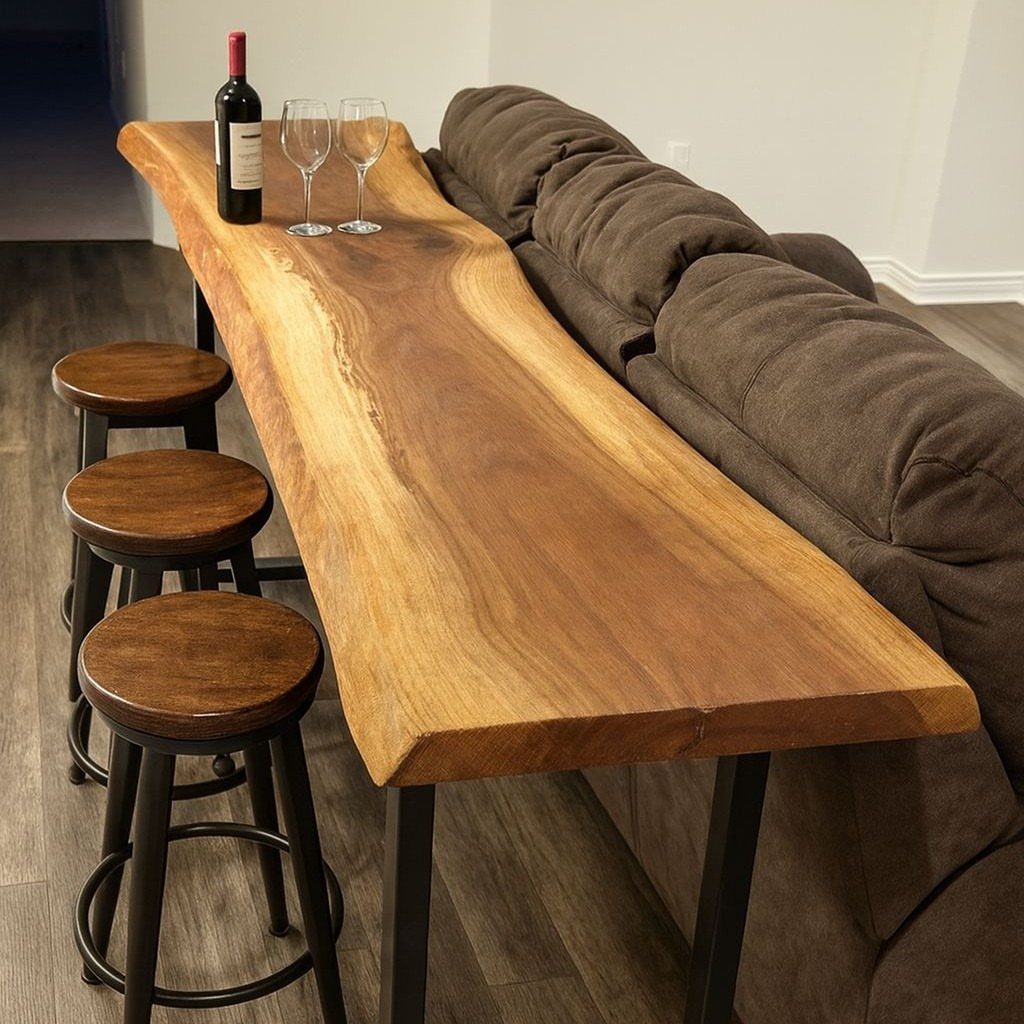
Live-edge wood brings an uneven, natural outline into a room full of straight lines, and it looks best next to a plain fabric sofa. The curved edge is the feature, so leave the top mostly bare.
A bottle and 2 glasses are enough to make it a drink spot. Match the stools to the wood tone so the set looks like one piece.
Live-edge tables tend to cost more than basic ones, so budget accordingly. A plain top with a rounded edge gives a similar feel for less.
7. Bar Table with Ottomans Underneath
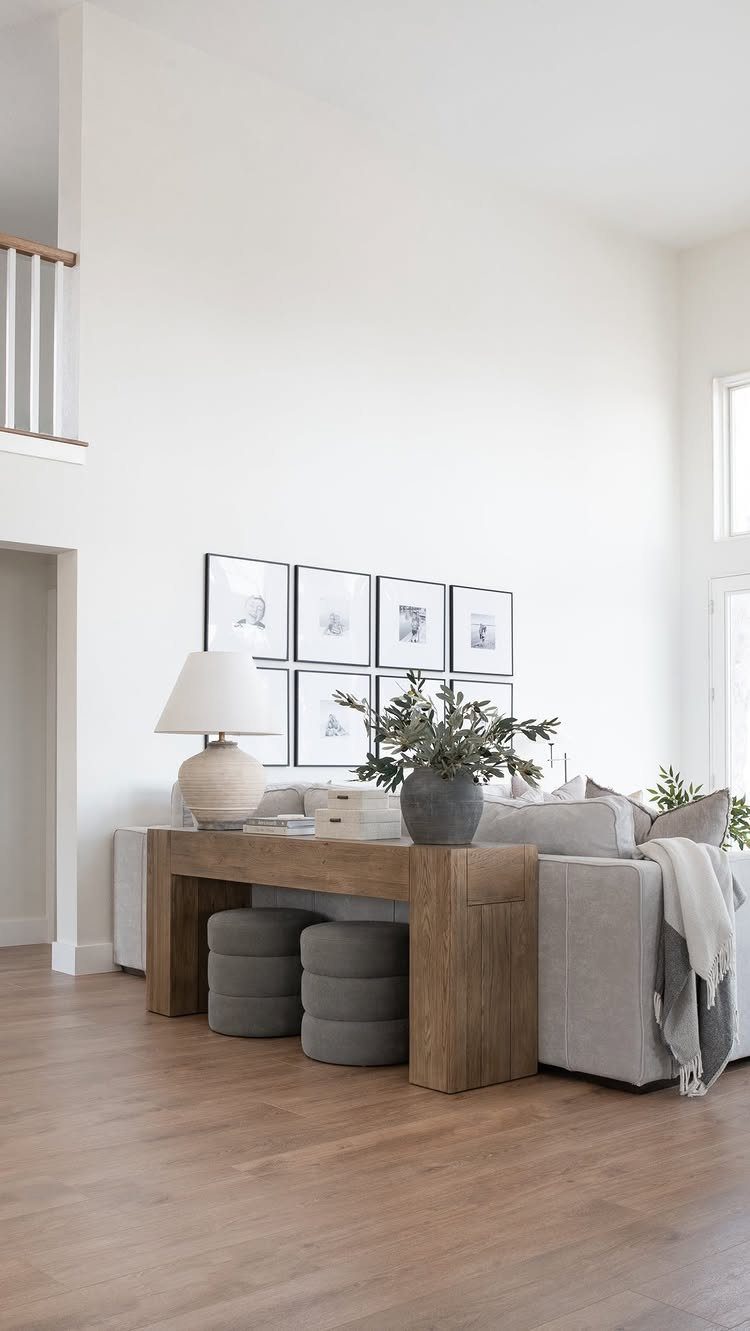
Cylindrical ottomans are the right shape for this job: no corners to catch on the table legs, and they slide out without a fuss.
Compact ones under a slender wooden top turn a plain drink ledge into extra seating for when the sofa fills up.
Measure the gap between the floor and the underside of the tabletop before you shop, and pick ottomans that sit a little below it.
Grey ones that match the sofa fade into the background, which keeps a narrow table from looking cluttered.
I’d stop at one lamp and one plant on top. The ottomans already add visual weight below.
8. Round Marble Bar Table
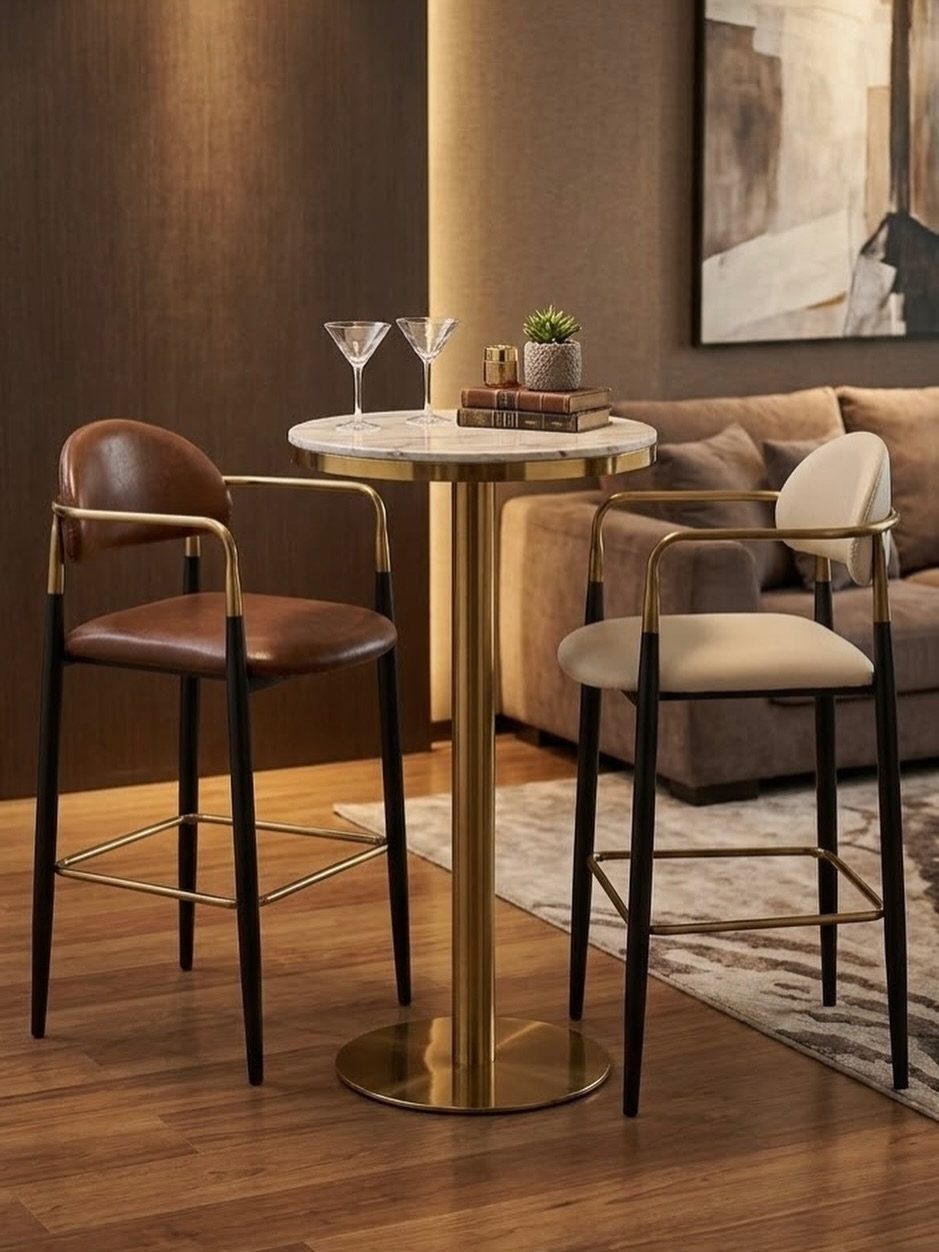
A round top with a single pedestal base is the friendliest bar table for a tight living room, because nothing sticks out at the corners and there are no legs to bump at the ends.
Marble over a brass-toned base reads as a small, deliberate piece of furniture rather than a leftover shelf.
2 stools fit a compact round top, and a tan sofa gives the white stone a warm backdrop. Choose stools with a footrest ring or a low back, since a bare seat gets tiring quickly.
Real marble costs more than wood or glass. A marble-look surface gives the same pale, veined feel for less, and it’s what I’d try first on a tight budget.
Benefits of a Console Table
A console behind the sofa draws a line in an open floor plan without putting up a wall. The room gets an edge, and the back of the sofa stops facing the kitchen or entry.
Storage is the quiet benefit.
A lamp or two on top gives you light right behind the sofa. The top gives you a place for a drink, your keys or whatever you’re reading.
Seasonal styling is easy too, since the top works like a small mantel. Swap a few objects through the year and the room feels updated for almost nothing.
Sofa Table Sizing Guide
Sofa backs commonly run about 28–36 inches, so write down your number instead of guessing.
A short sofa calls for a narrow table with less sitting on it. Crowding a small surface makes it look cramped fast.
Extra-long tables are hard to find and usually carry a high price. If your sofa is long, that is the moment to think about alternatives to a single piece.
Budget-Friendly Options
A good table behind the couch doesn’t need a big budget, especially in a small room. Plenty of affordable consoles hold up fine.
Price often reflects convenience. Fully assembled pieces cost more, while flat-pack tables usually go together in a few steps, so assembling it yourself is an easy way to save.
Quality is uneven at every price, so check the listed materials instead of assuming a higher tag means better build.
For a large sofa, two smaller tables with a gap between them can cost less than one extra-long table. Buy a matching pair and line them up along the back.
Shop for consoles made for behind-the-couch use. Their narrow depth fits the space, and they come ready to use.
Frequently Asked Questions
Why should I put a table behind my sofa?
In an open layout, the table draws a line between zones so the sofa’s back isn’t staring at the kitchen.
It also holds drinks, mail or a reading stack, and often a lamp when the nearest outlet sits too far from the sofa.
The surface acts like a mantel, and changing out a few pieces each season refreshes what you see without spending anything.
What are good materials for a behind-the-couch table?
Wood is the safest pick: light wood keeps a long table from feeling heavy, and dark wood gives a sectional a firm edge.
Black metal pipe legs make a thick wooden top look lighter, and marble or a marble-look top suits a small round table.
Genuine marble and live-edge slabs run high, but a printed marble surface or a rounded wood edge delivers a close look at a fraction of the cost.
No matter what it’s made from, read the materials list carefully, since build quality varies at every level.
How big should a table behind a couch be?
Match the height to the sofa back or go slightly lower, and stop the length at or before the sofa’s ends. Most sofa backs land between 28 and 36 inches, but pull out the tape measure instead of assuming.
A table a few inches shorter than the sofa on each end reads as planned, not accidental. A short sofa calls for a narrow table with less on top.





