The ideas here run from light walls and curved furniture to dark paint, wooden slat dividers, and floating consoles, so the cost and effort vary a lot, and the choice comes down to whether you rent or own.
Renters can use what leans, plugs in or swaps out: a full-length mirror, a rug, pillows and throws.
Owners can drill into studs for wall-mounted shelves or a floating console, and can commit to paint in light tones or dark colors.
1. Layered Lighting
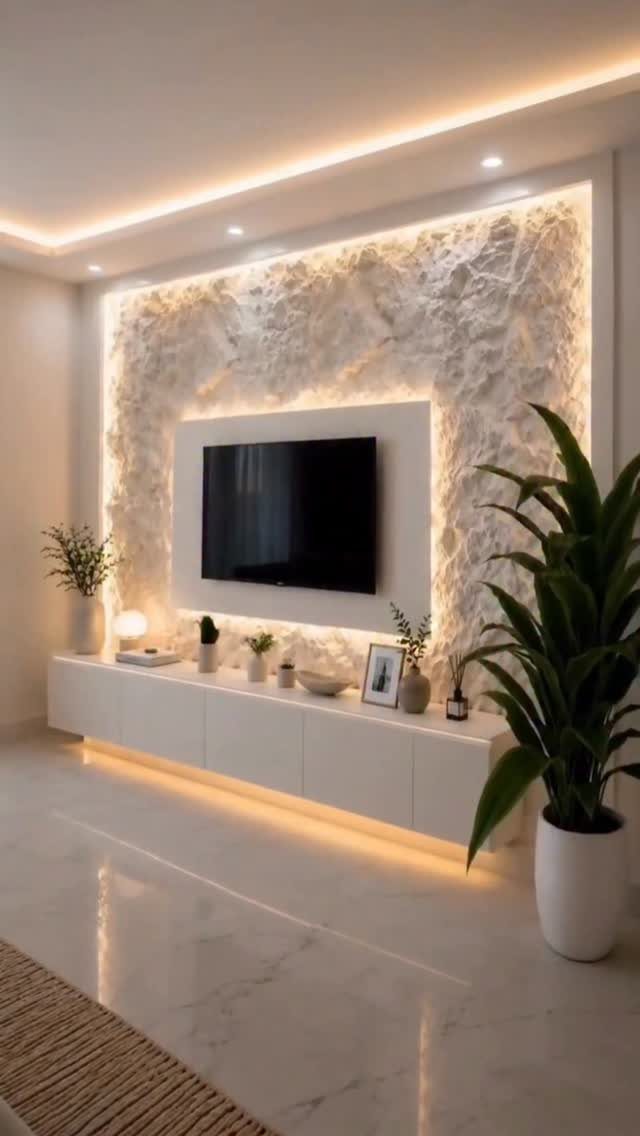
A strip of warm LED under a floating console does a job the ceiling light can’t: it washes the wall and lifts the whole piece off the floor.
Pair it with a lamp or two at seat height and a dimmer on the overhead, and the room gets three light levels instead of one.
Keep the bulbs and strips in the same warm white so the layers blend. Mixed color temperatures make a small room look patchy.
Plug-in LED strips suit renters, since nothing needs wiring.
2. Light Tones on Walls and Furniture
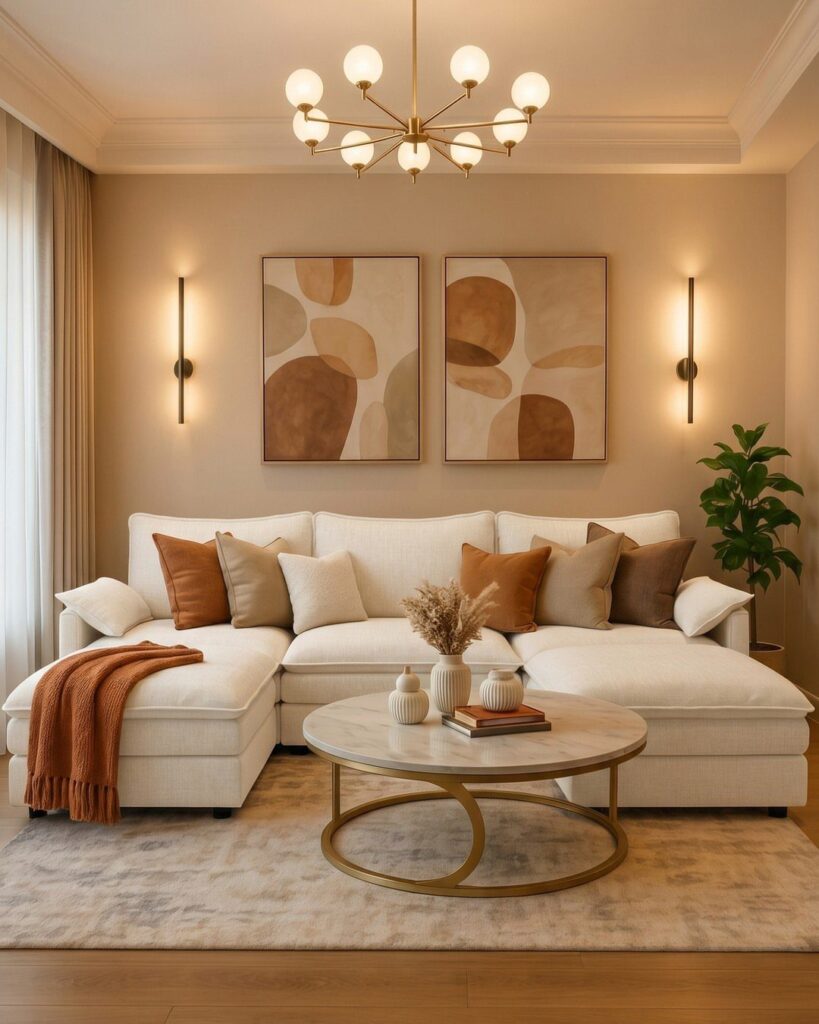
Beige walls and a white sectional keep a small room reading as one calm block, so the eye travels farther before it hits an edge. I’d choose a warm beige over stark white, which can look cold and flat.
Texture does the work color no longer does. A metal fixture, a stone top or a frame on the wall gives neutrals something to hold the eye.
Test paint swatches on 2 walls and check them morning and evening before buying a gallon.
3. Essential Furniture and Decor
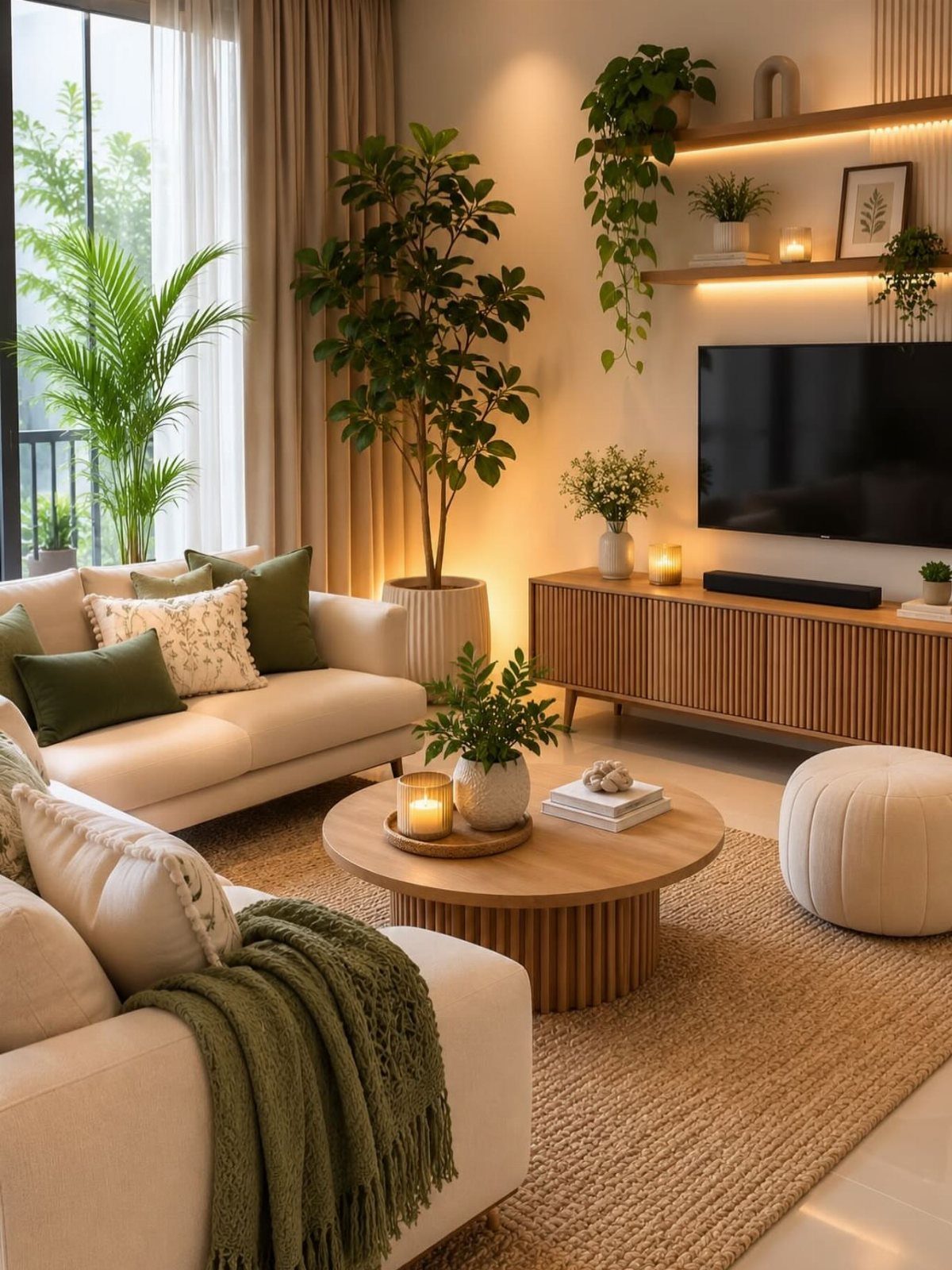
2 sofas, a round coffee table and a TV stand: that is about all a small room needs to function. Fewer pieces leave walking paths clear.
A round wooden table has no corners to bump, which matters in tight rooms. Choose cream upholstery and a jute rug so the layout stays light and warm.
Plants fill the gaps without taking floor space, so I’d add them last. Before buying anything, tape each piece’s footprint on the floor and live with it for a day.
4. Big Rugs
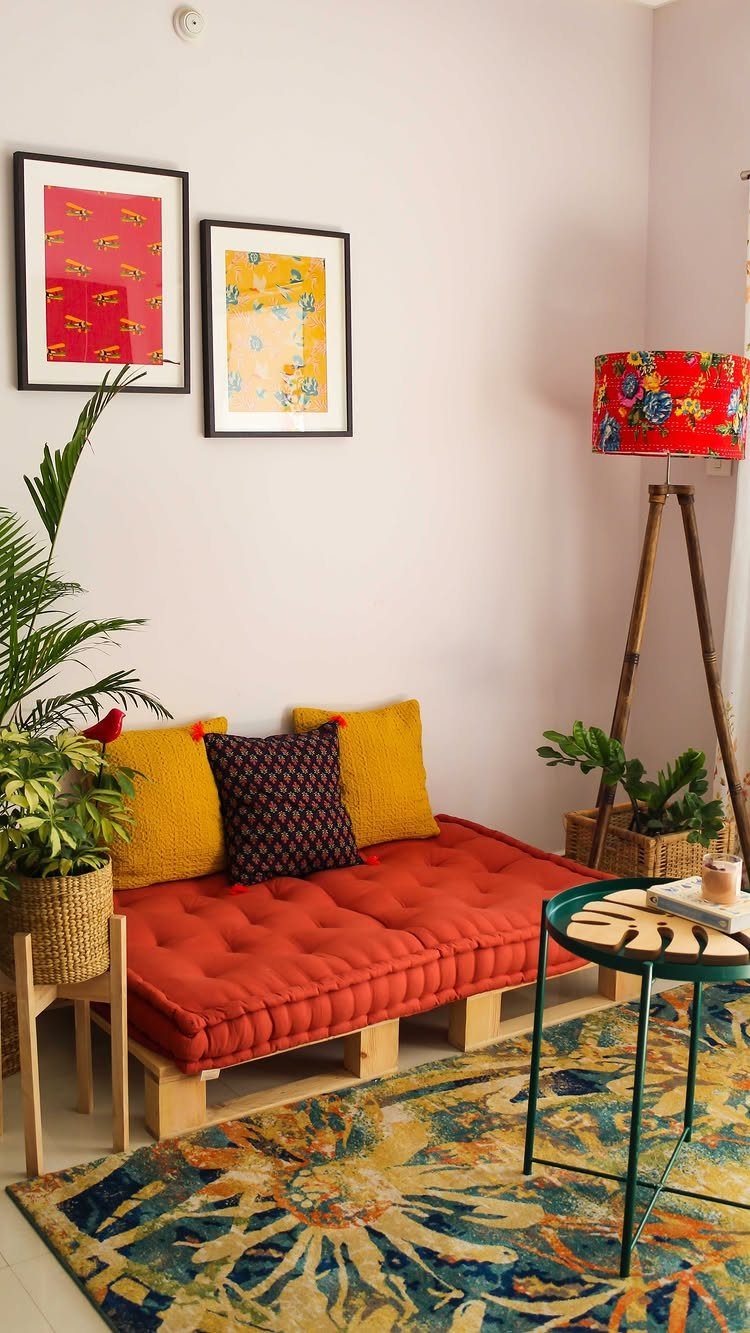
Rugs shrink a room when they’re too small, because a postage-stamp rug chops the floor into pieces. A larger, patterned one pulls a floor sofa, side table and lamp into a single zone.
Choose a pattern with several colors, as in the red, yellow and green here, so pillows and accents have something to echo. Busy patterns also hide spills on a low seating setup.
Let the rug run under the front of the seating, not float in the middle.
5. Wall-mounted Shelves and Cabinets
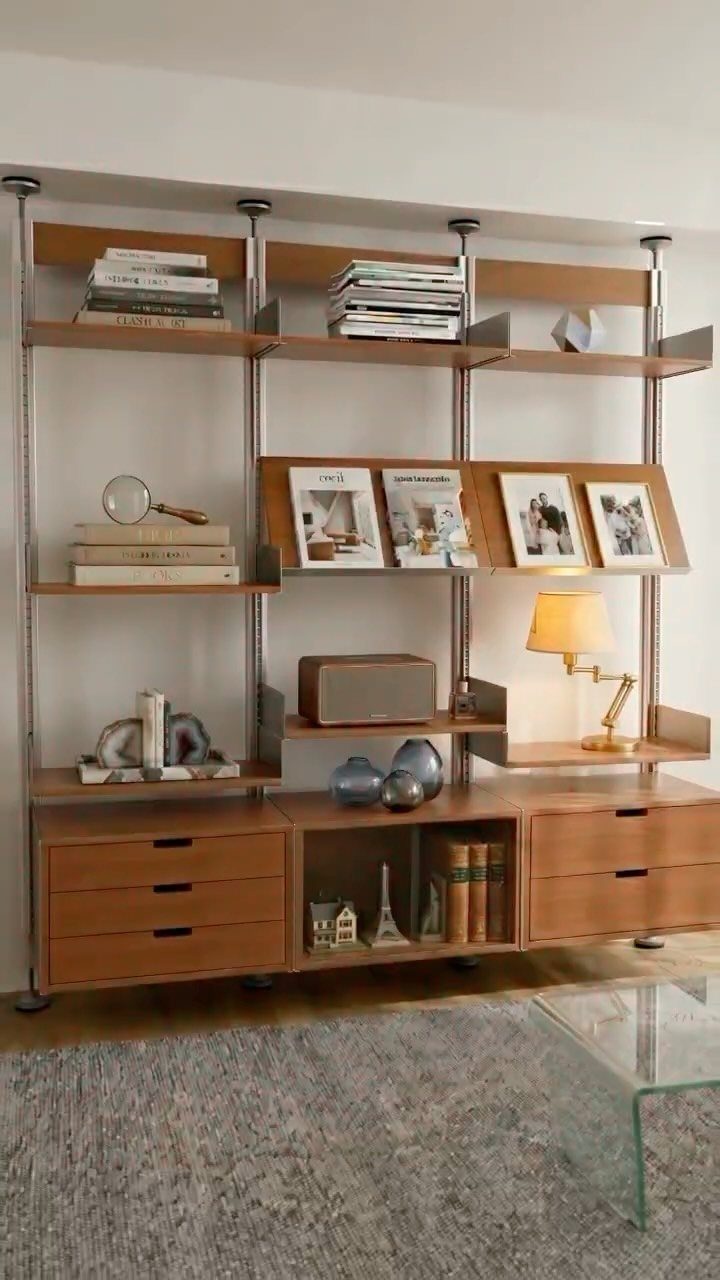
Mounting storage on the wall clears the floor and makes a room read larger than the same cabinet would sitting on its feet.
A modular wooden system lets you mix closed cabinets for clutter with open shelves for books, photos and a lamp.
Anchor into studs, not just drywall, and use the hardware rated for the load.
Buy modular and you can add a piece later, without redoing the wall.
6. Large Artwork on the Wall
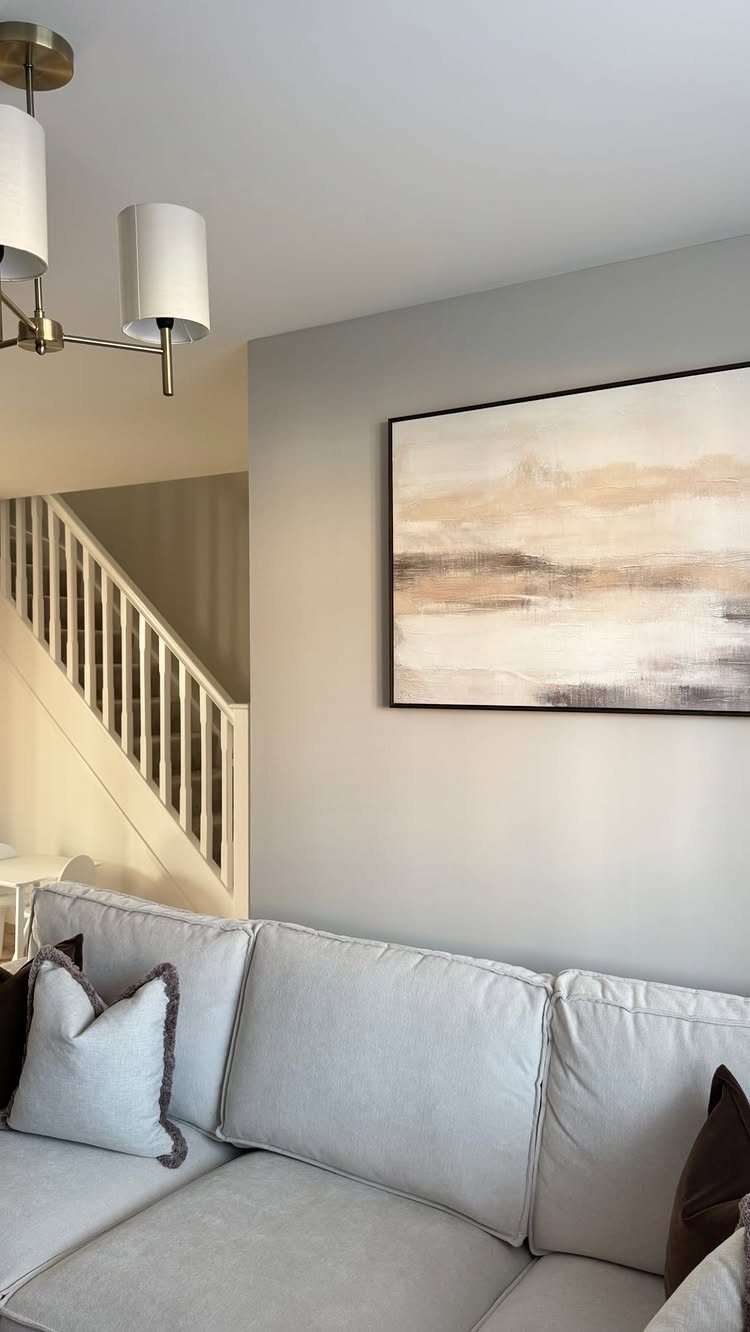
One oversized painting beats a cluster of small frames in a compact room. A single large piece reads as one calm shape, where several little ones look busy.
Stay in the wall’s own range of tones, as a neutral abstract on gray does, and the art deepens the room without crowding it. Hang it so the bottom edge sits a few inches above the sofa back.
Cut a paper template to size and tape it up before you drill.
7. Curved Furniture
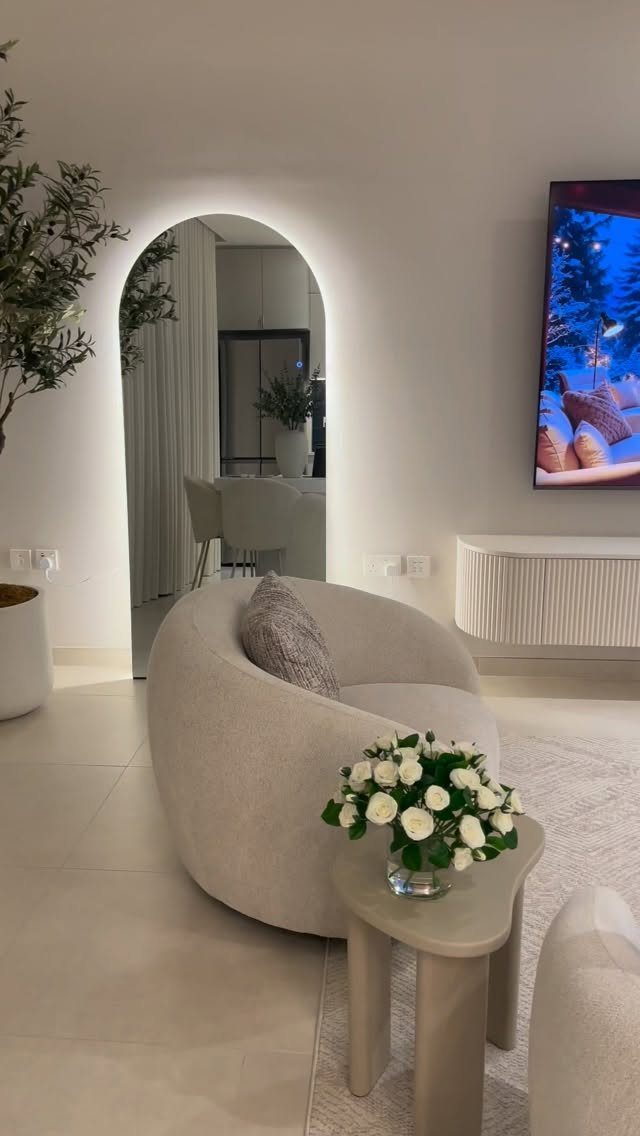
A rounded armchair and a curved side table remove the corners that catch hips and shins in a tight room. Traffic slides around them, which helps most when the chair sits close to a doorway.
I’d pick one curved statement piece, like the cream chair here, and let the rest stay simple. Too many curves at once make the layout feel soft and shapeless.
Pair it with a small table of similar roundness so the shapes read as a set.
8. Dark Colors on Walls
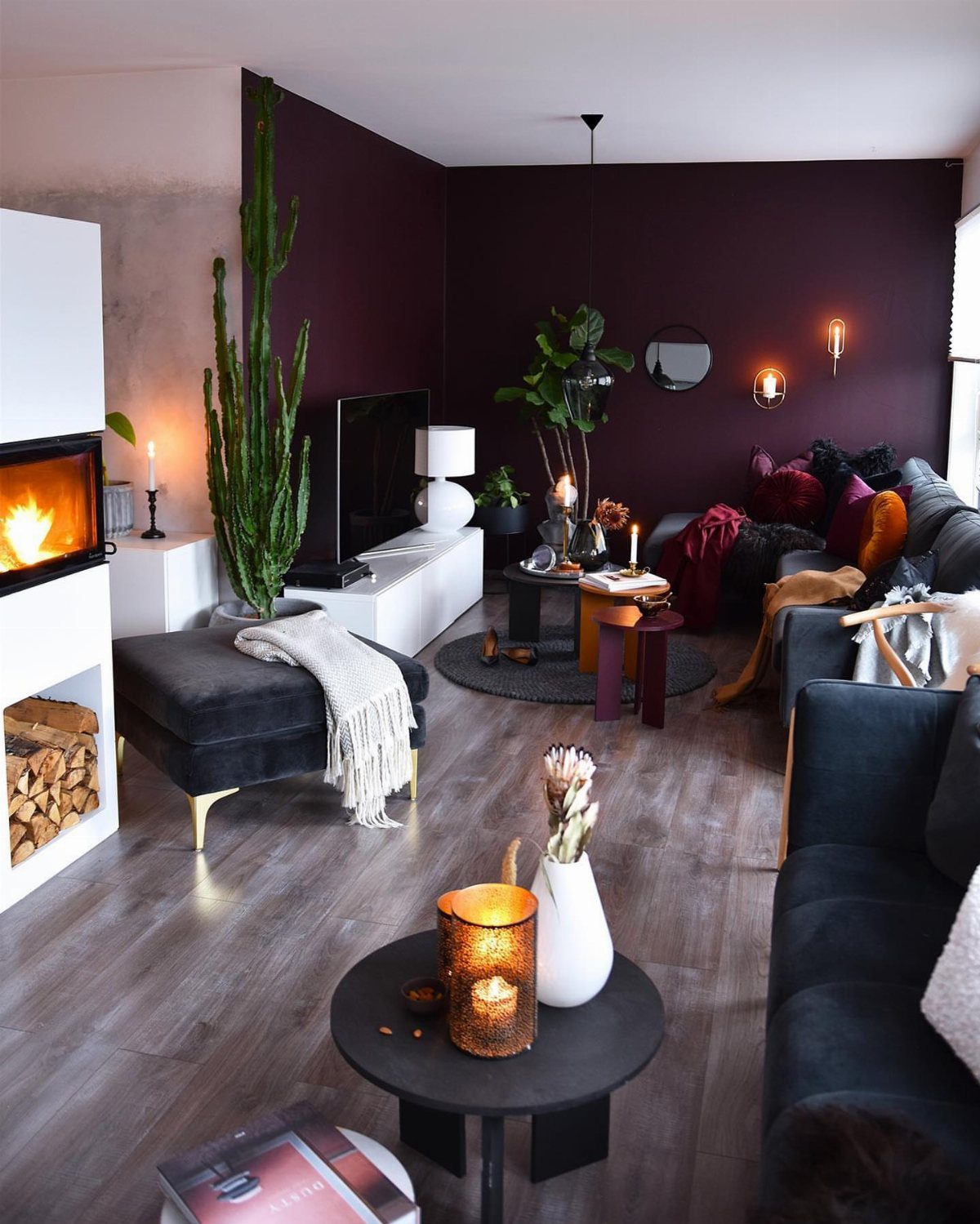
Deep purple walls with a grey velvet sofa make a small room feel enclosed in a good way, like a cocoon, instead of a box trying to look bigger.
Dark paint hides where the walls end, so depth takes over from size.
Velvet suits it because the nap catches light and keeps the dark tones from going flat. Candles and a fireplace glow add warm points of light.
Paint one wall first if you’re unsure, and judge it at night.
9. Use Plants for Freshness
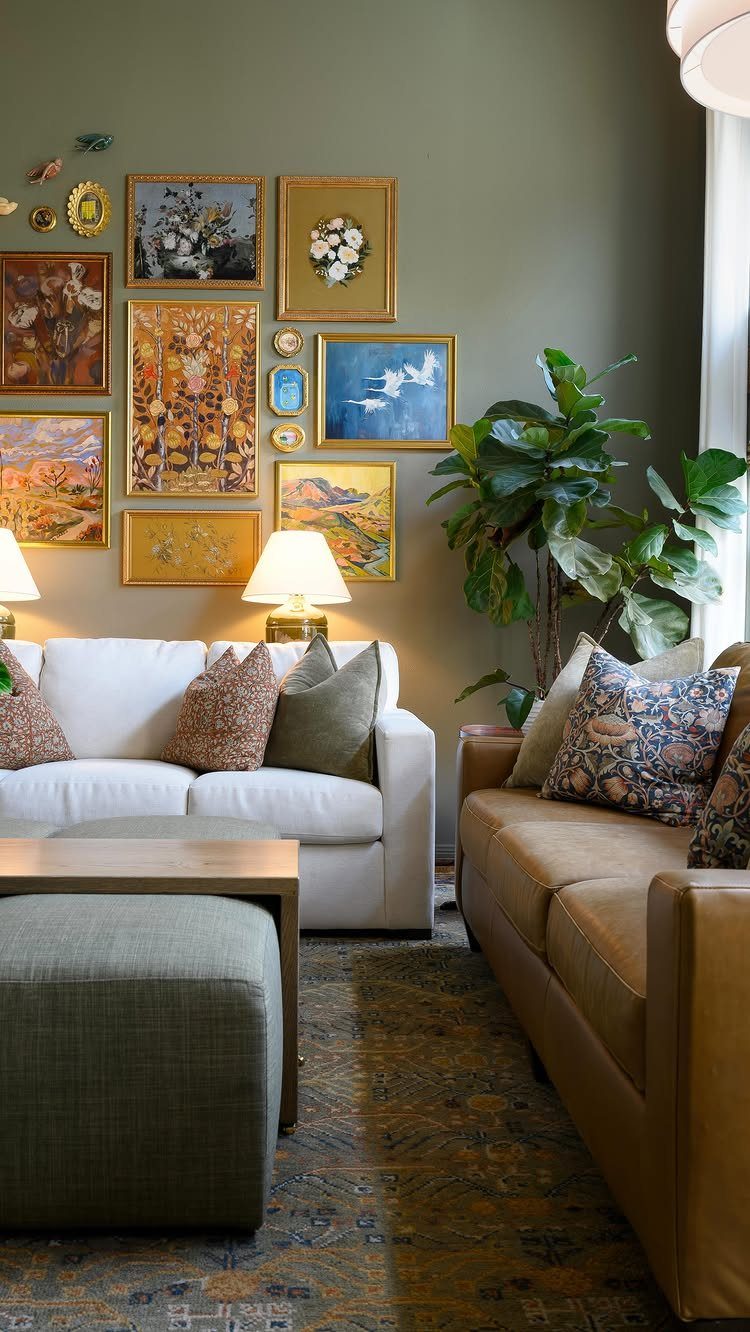
A tall fiddle-leaf fig beside a sofa adds height and a leafy texture that no cushion can match. Its big, glossy leaves soften a gallery wall and a mix of white and leather seating.
One large plant beats a collection of small pots in a compact room, because a single shape looks calm. Put it in a corner or beside the sofa arm, where it fills empty vertical space without crowding the walkway.
I’d buy the pot first and size the plant to it.
10. C-shaped Side Table
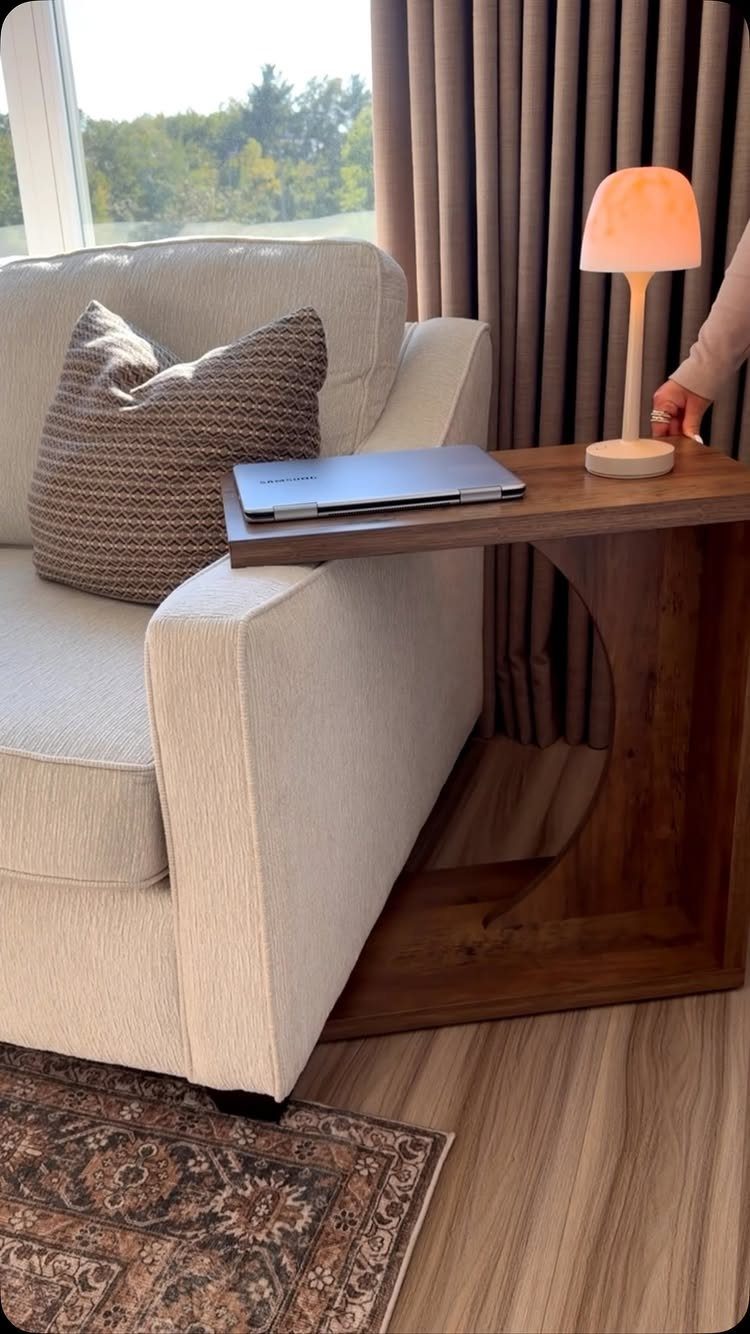
A C-shaped side table slides its base under an armchair, so the top sits right over your lap. That puts a laptop and a lamp within reach without a table taking up floor space beside the chair.
Wood warms up a light chair, and the open C shape means no legs in the way of your feet. Measure the gap under the seat before buying, since the base has to clear it.
Pick one with a top big enough for a laptop.
11. Full-length Leaning Mirror
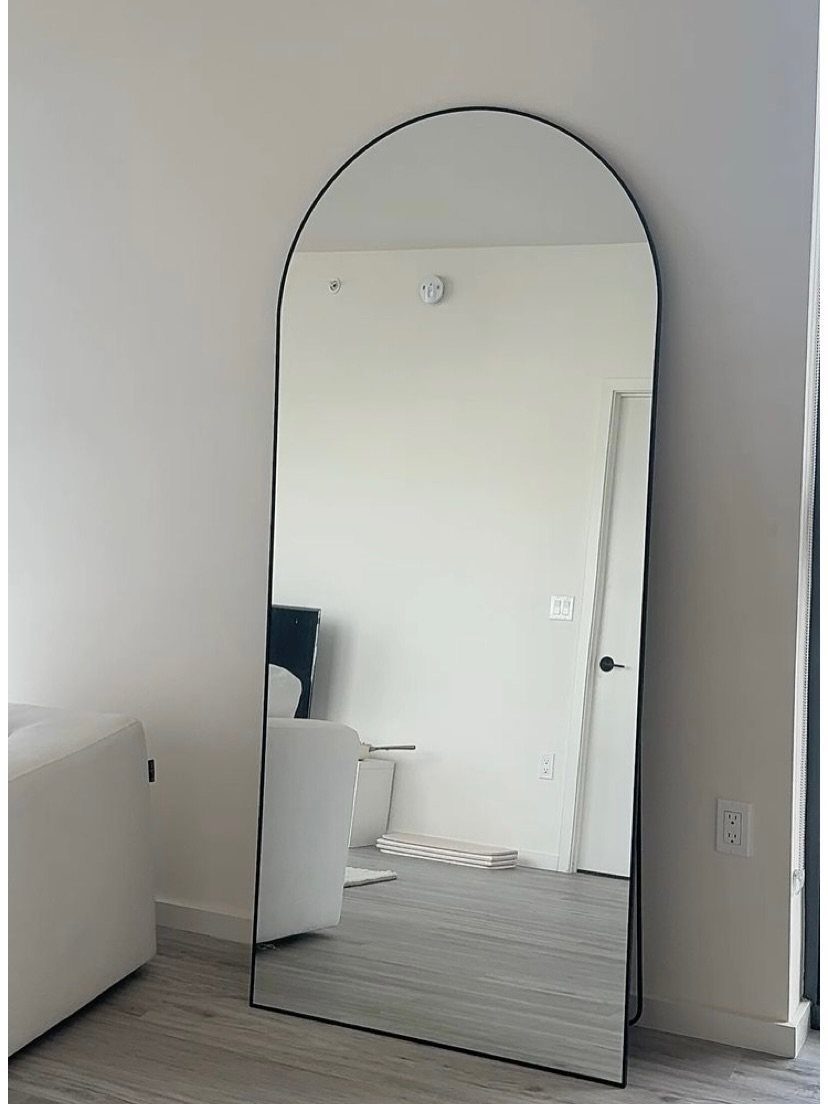
A tall arched mirror with a thin black frame leans against the wall and bounces light back into the room, so a white sofa and pale floor seem to continue past the wall.
The slim frame keeps it from feeling heavy.
Place it across from a window or lamp so it catches real light. Leaning needs no drilling, which suits renters.
I’d put a felt pad or rug grip under the bottom edge so it doesn’t slip.
12. Wooden Slat Room Divider
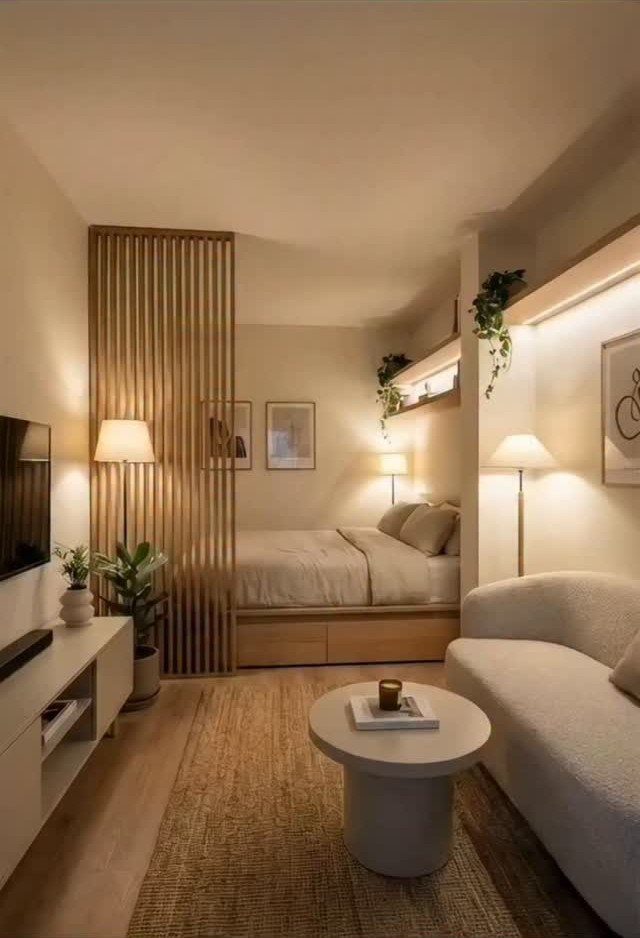
In a studio, a wooden slat divider splits the sleeping area from the sofa while letting light through the gaps. A solid wall would shut off half the room; slats keep it open.
Set the divider behind the sofa so the sofa’s back forms the boundary. Warm wood also adds a texture that white furniture lacks.
I’d choose slats with wide gaps for light, and close ones for more privacy.
13. Floating Fireplace Media Console
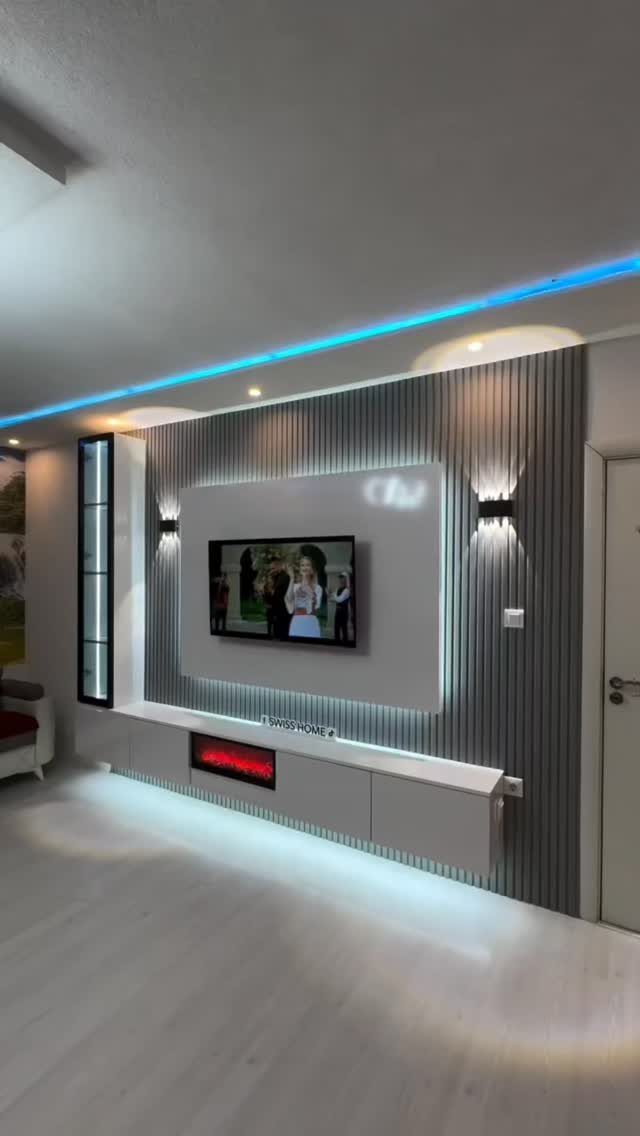
A floating console with the fireplace built in gives a wall a focal point and keeps the floor open underneath.
Hung low under a wall-mounted TV, the white cabinet and the flame read as one piece, which looks tidier than a TV stand, a heater and a cable tangle spread across the room.
Mount the console into studs, since it carries the weight of the fireplace unit. Run the TV cables behind the wall, or hide them in a channel, so nothing dangles between the screen and the console.
I’d pick white against a darker wall so the shape stands out.
14. Vibrant Color Accents
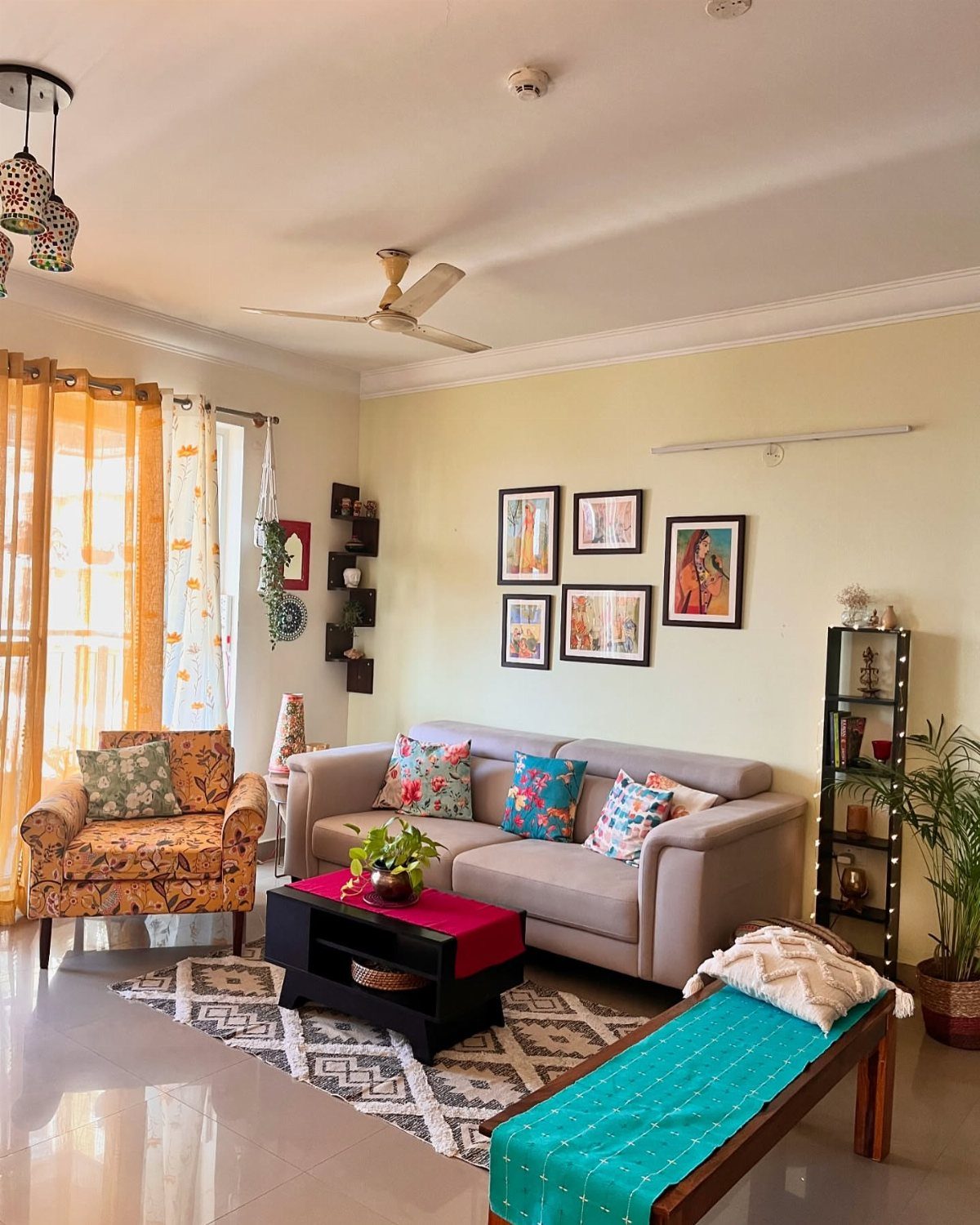
Yellow walls set the mood in a small room, and then the accents can be loud without feeling random.
A turquoise bench, a red runner and a patterned armchair each bring a different color, so the room reads as bold instead of cluttered.
Keep the big pieces calm, like a grey sofa, and put the color in things that are cheap to swap: pillows, a runner, a throw.
A few dollars of fabric changes the whole room, and a renter can undo it in minutes.
Limit the accent colors so the room reads as one idea instead of a sample book.
Importance of Flow and Function
Start with the paths, not the furniture.
Before anything is bought, decide where people walk: from the door to the sofa, and from the sofa to the window. Then arrange the pieces around those lines instead of squeezing the lines in afterward.
A rug helps here by marking out the seating area, so the room reads as one defined zone with clear walkways around it.
Furniture with slender legs lets you see the floor underneath, and that makes a room feel airier. Glass or transparent pieces, like a coffee table, cut visual weight further and let light pass through.
Shelves that attach to the wall leave the floor clear and still hold what needs storing.
Maximizing Natural Light
Look at where daylight lands first, then place the seat you use most there. The sofa gets the prime spot near light when it handles most of what happens in the room.
Pieces you reach for once a week can sit farther from the window.
Keep heavy, dark furniture away from windows, since it blocks the light you are trying to use.
2 more moves help in a tight room.
Wall-mounted light fixtures replace floor and table lamps, which frees surface space without losing ambience. Poufs and stools can serve as extra seats and tuck under a coffee table or console when not needed.
Editing Decor
Choose clean-lined furniture and a neutral palette, then let one or two statement pieces define the room. A sculptural floor lamp is a good example: it has character without taking over the layout.
Size matters as much as style. An oversized sofa looks off the moment someone walks in, and pieces that are too large eat the circulation space people need to move around.
Smaller accents suit a small room.
Vertical hidden storage keeps clutter out of sight, so the surfaces you leave bare stay bare.
If your living room is cramped, there’s still no reason to sacrifice style. With a focus on creativity and well-curated furnishings, you can design a space that truly speaks to your design aesthetic.
Frequently Asked Questions
How to set up a small living room?
Start with the walking paths, not the furniture. A rug marks out the seating zone, slender-legged or glass pieces keep the floor visible, and wall-mounted shelves free up floor space.
What are some creative ideas for a condo living room?
Put color in cheap, swappable pieces: pillows, a runner, a throw, or a bench in a bold shade, and keep the big pieces like the sofa calm.
A large patterned rug, one oversized painting, or a leaning mirror all add personality without drilling or committing. Pick one or two accent colors and carry them through so the room feels cohesive, not scattered.





