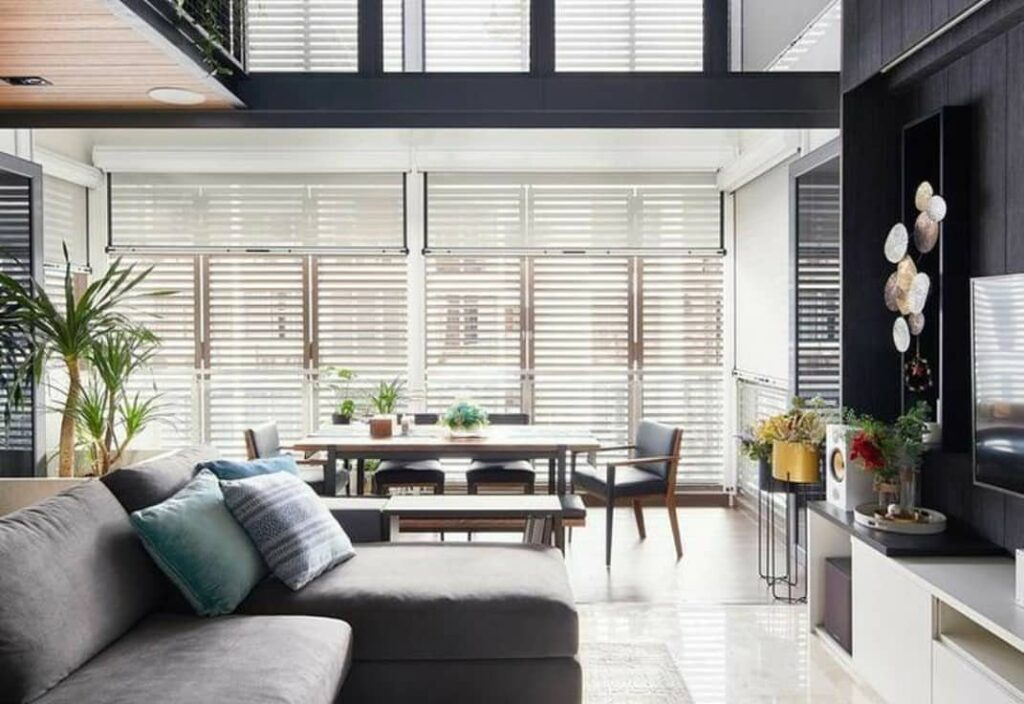
Some of these land in a weekend with a screwdriver and fabric, others ask for a drill or paint or permanent millwork, and I sort them so you know which fits what you can do in the room you have.
A few pillows or a rug is one afternoon, an accent wall or new lighting is a weekend, and custom built-ins are the far end if you want them and the room is yours to alter.
Nearly every section gives a renter-friendly version of the same look, like brick-look panels in place of real brick.
1. Modern Minimalism Living Room
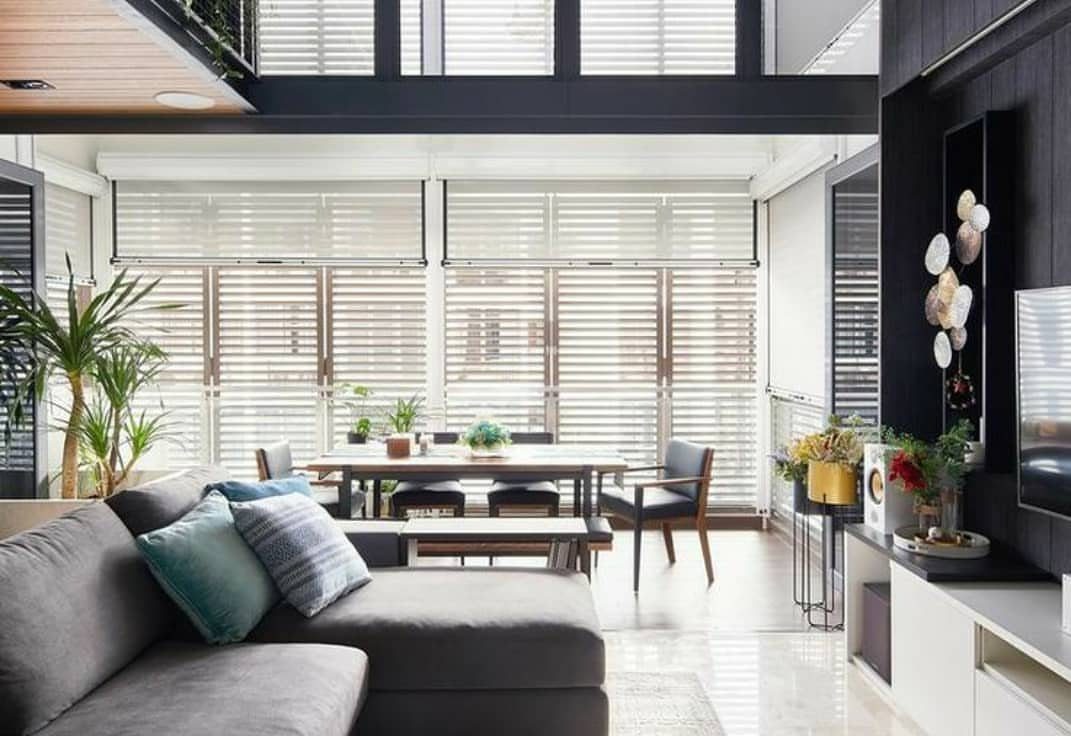
Keeping the sofa and table in a similar quiet palette lets the large windows carry the brightness.
White blinds keep the glass clean-lined rather than fussy. For a budget version, spend on the sectional first and leave the rest simple, since one solid piece anchors the whole space.
2. Rustic Living Room
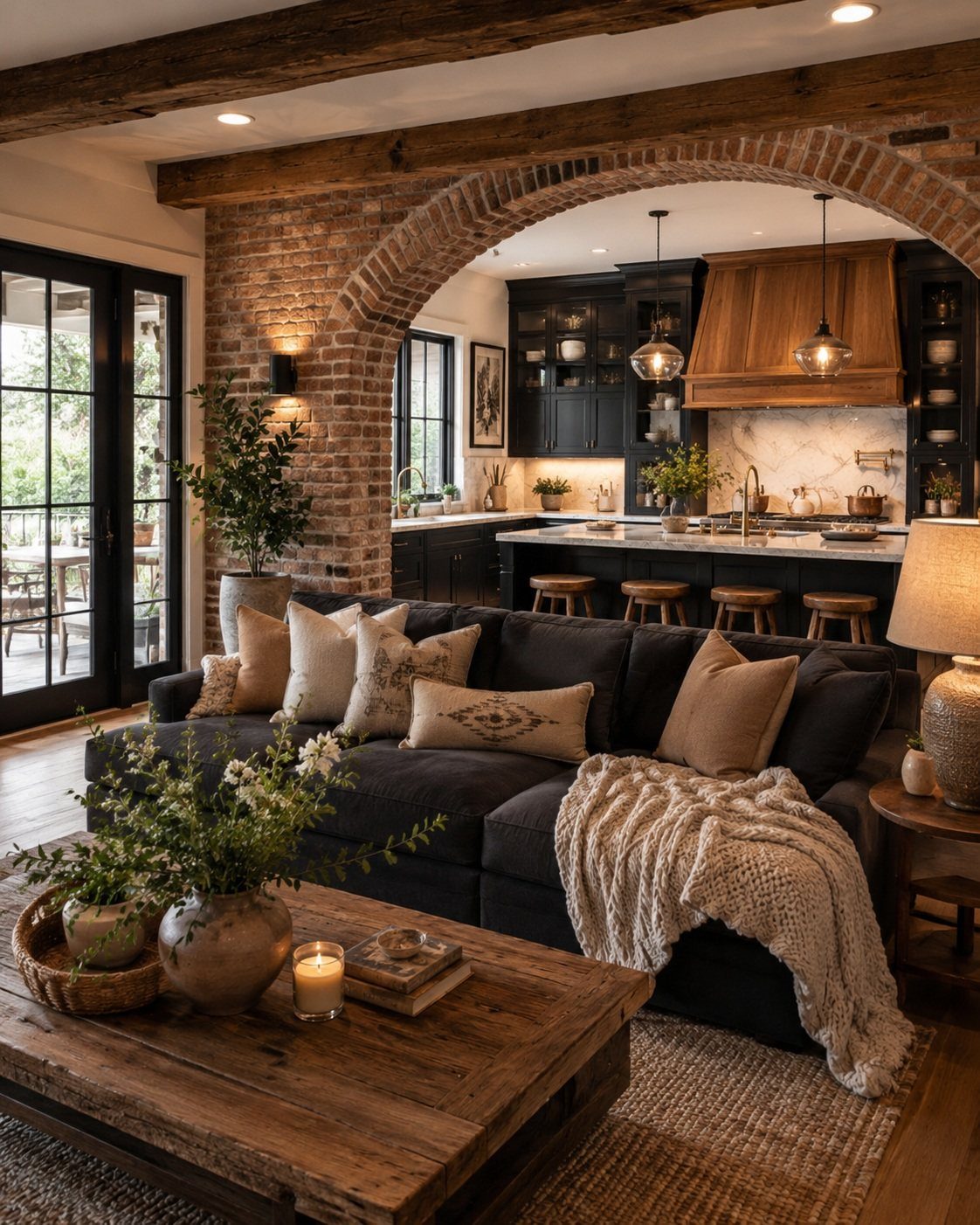
Brick, beams and a dark sofa do most of the work in a rustic room, so the furniture can stay plain. A wooden coffee table fits right in, and its grain warms up all that dark grey.
Renters rarely get an exposed brick archway, but I’d chase the same mix with wood and one deep, solid-colored sofa. Skip matching sets; a single wood piece in front of the sofa is enough.
3. Eclectic Living Room
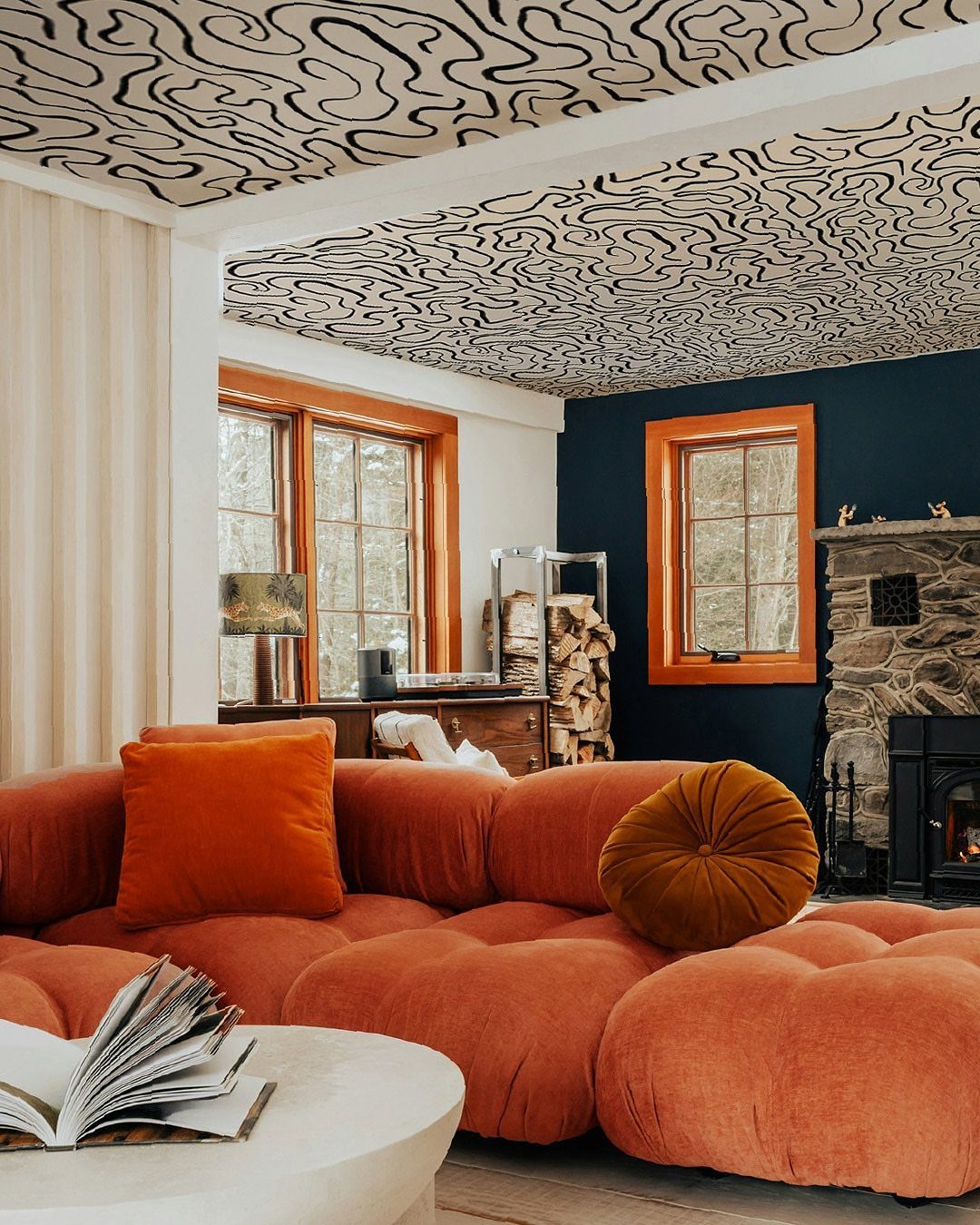
A plush modular sofa in a bold color gives the eye one place to land.
For a renter’s version, paint one wall deep blue and bring warmth with the sofa. Modular pieces also rearrange easily, which helps in an awkward room.
4. Industrial Living Room
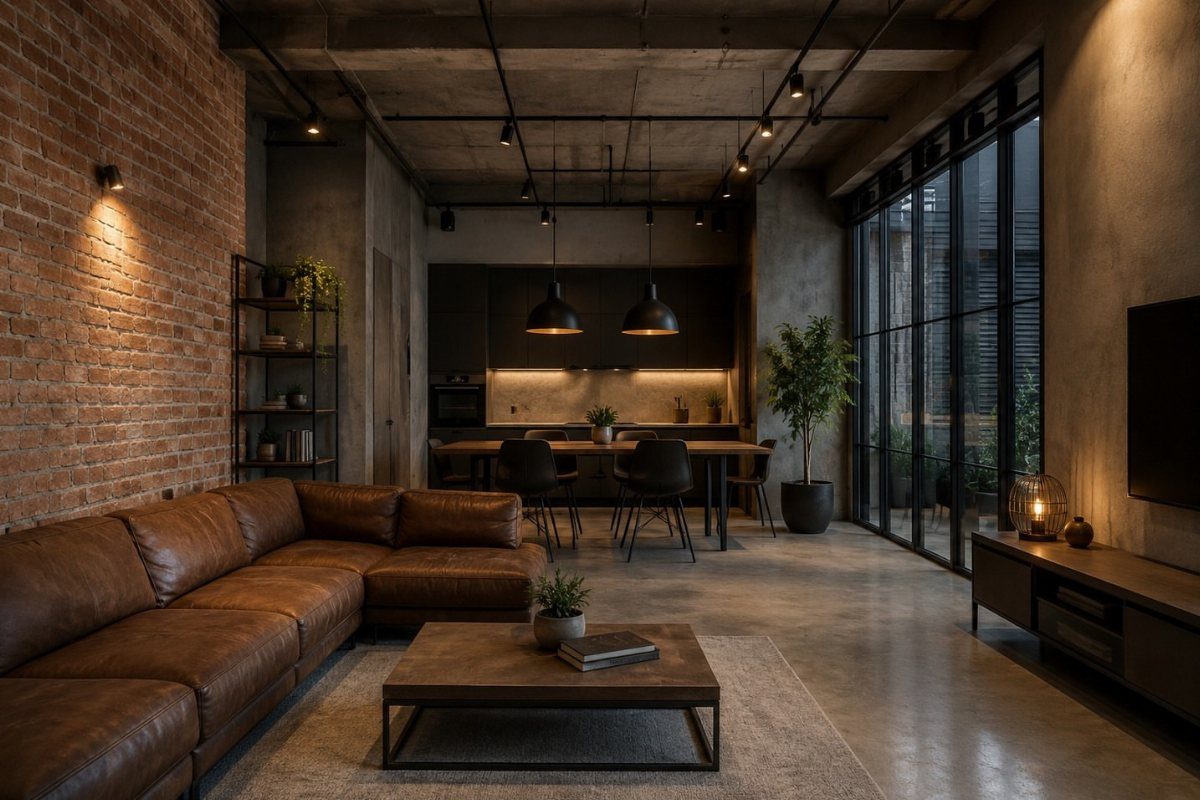
Black metal against brick and concrete gives an industrial room its edge, and a brown leather sectional softens it. Leather sits well here because it ages into the raw materials rather than fighting them.
If you can’t have brick, keep the black metal in lamp bases, frames and shelving. Those cost little and take an afternoon to swap in.
5. Transitional Designs
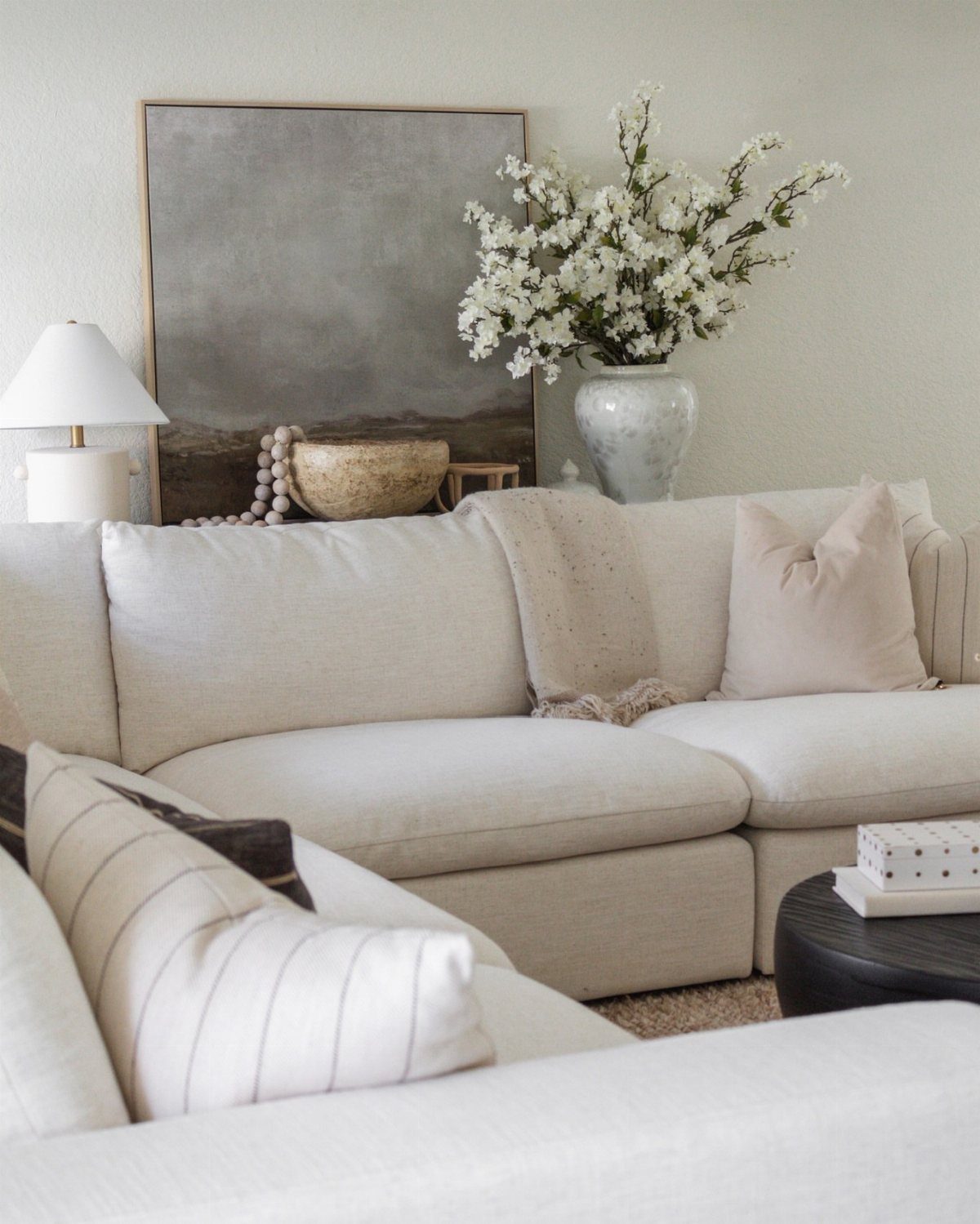
Transitional means one foot in each camp: a classic cream sectional with plump pillows, then a bold abstract painting to bring it forward. Neutral fabric lets the art do the talking.
I like adding a wooden bowl and fresh white flowers on a side table, small natural touches that soften modern lines. Buy the sofa in a safe tone and change the mood with art and accessories.
6. Powdery Pink Living Room
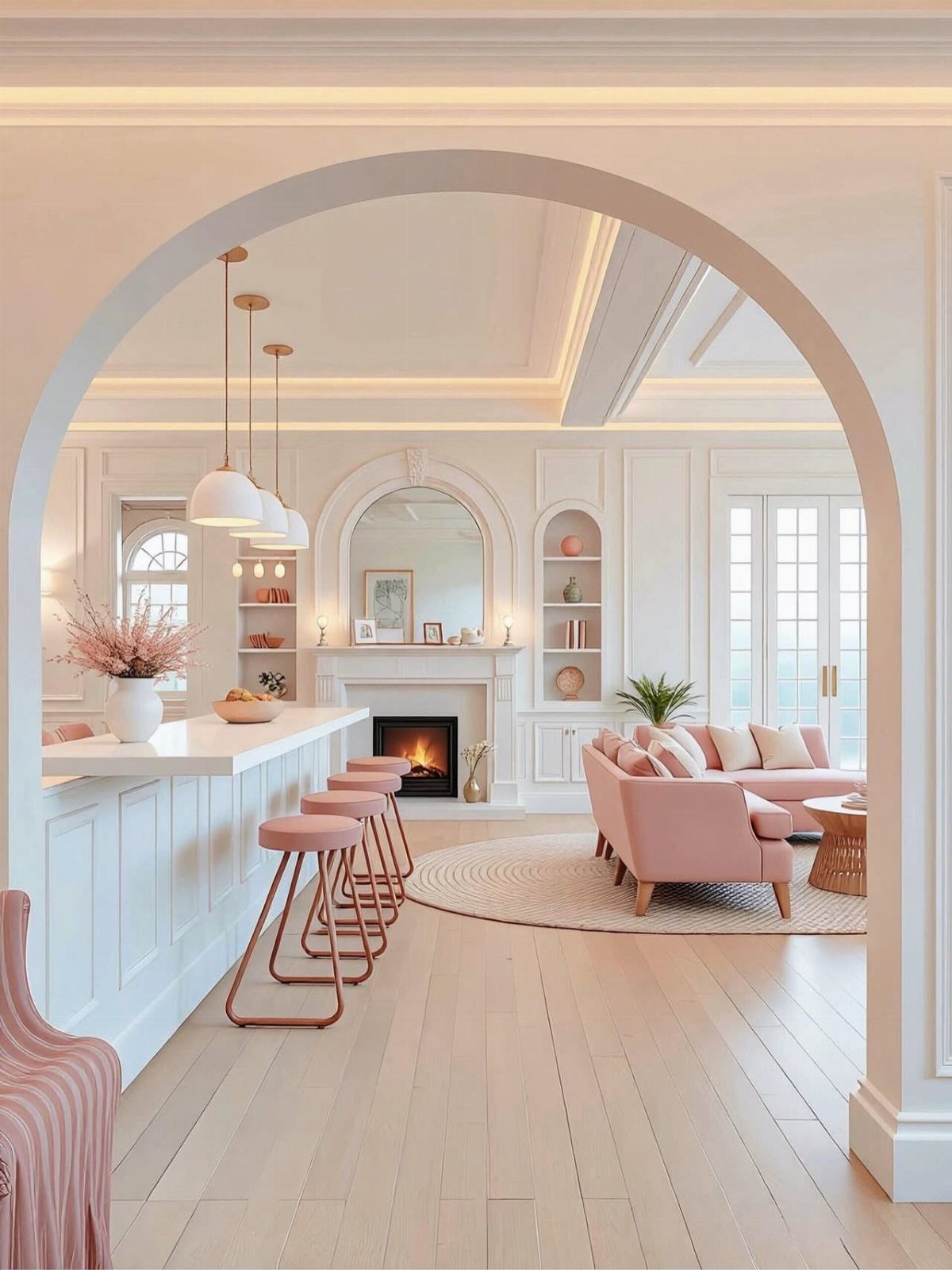
Pink performs when it is soft and everything around it stays quiet. A powdery pink sofa against white walls and a white fireplace reads calm instead of sweet.
Repeating the shade in a pair of bar stools ties the room together without adding another color. If a pink sofa feels like too much, start with pillows or a single chair and keep the rest muted neutrals.
7. Coastal Living Room
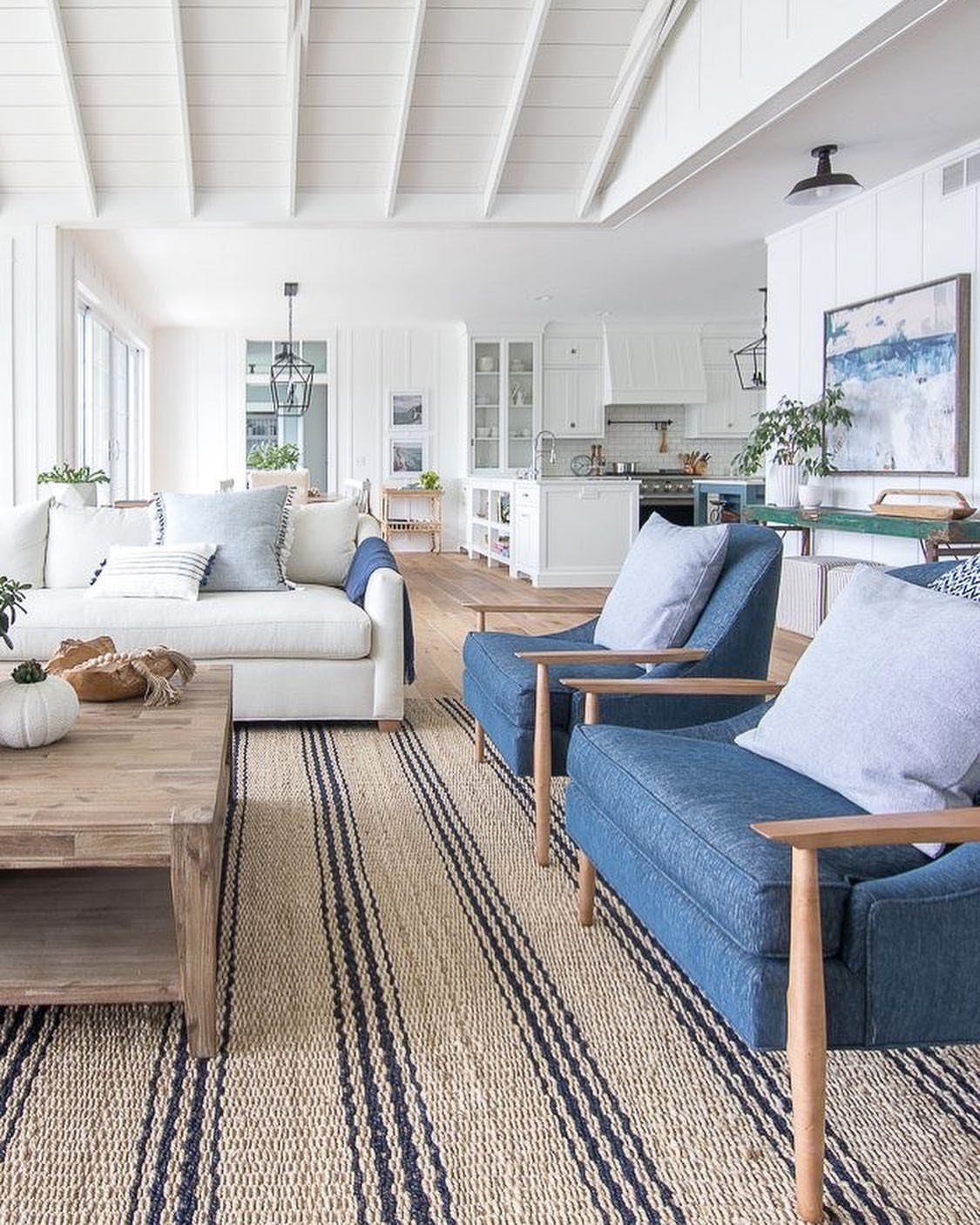
Blue armchairs facing a white sofa give a coastal room its color, no seashells required. A striped jute rug adds the sandy texture underneath.
For a budget version, keep walls and sofa white and bring the blue in through 2 chairs or a few pillows. A wooden coffee table keeps all that white from feeling cold.
8. Maximalist Living Room
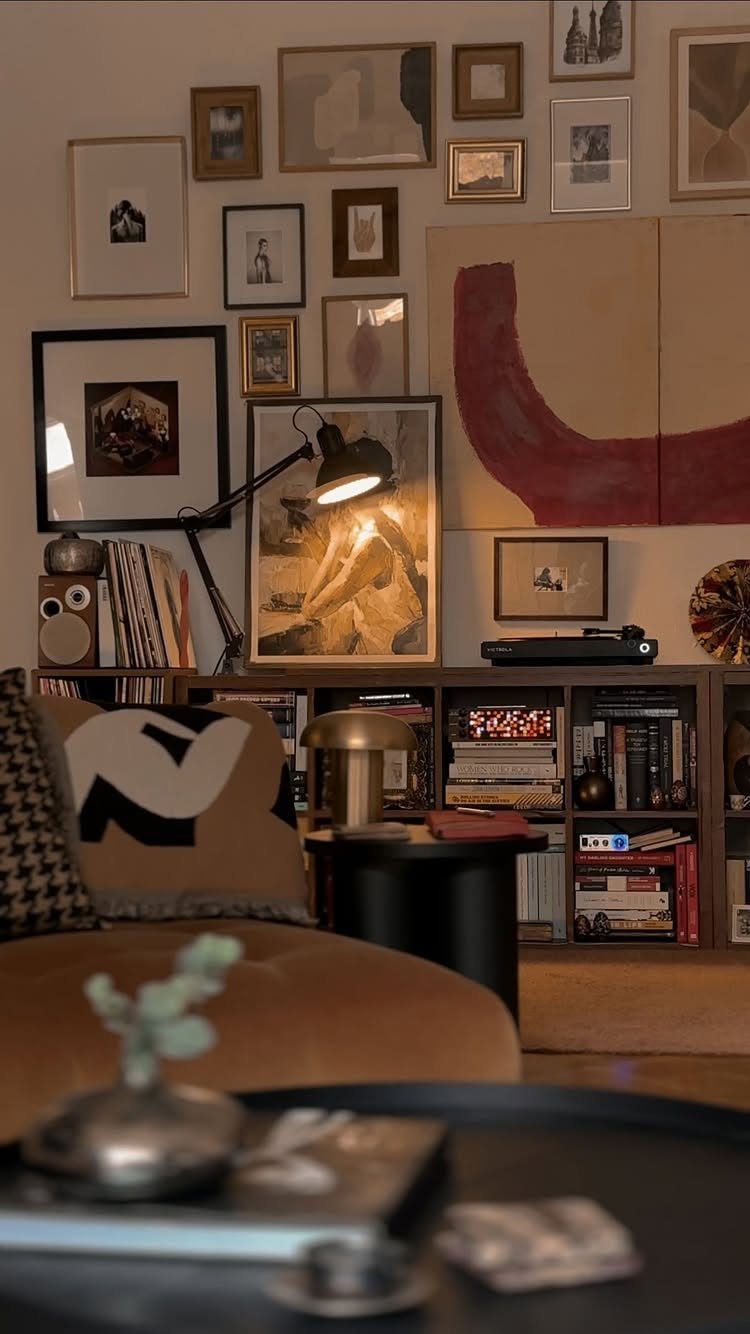
Maximalism needs one thing to be dense. Here it is the gallery wall, packed with mismatched paintings, while the brown sofa stays calm in front of it.
Start the wall with the largest piece and fill outward, keeping gaps tight and even. Shelves stacked with books and a record player add layers for little money, and secondhand frames keep the cost low.
9. Accent Walls
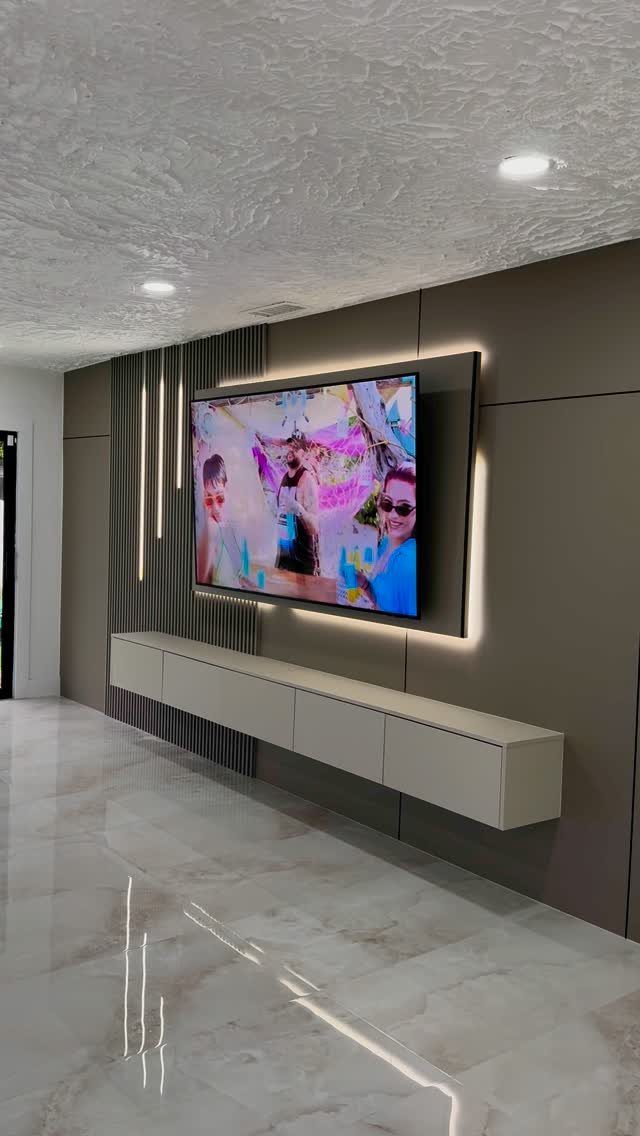
Vertical slats on a brown wall turn a plain TV wall into the room’s focal point. Wood-look paneling reads richer than paint alone, and a floating white console keeps the bottom of the wall light.
Renters can fake it with peel-and-stick slat panels. Backlighting behind the screen is a cheap add-on that gives the wall a glow at night.
10. Textured Wall Finishes
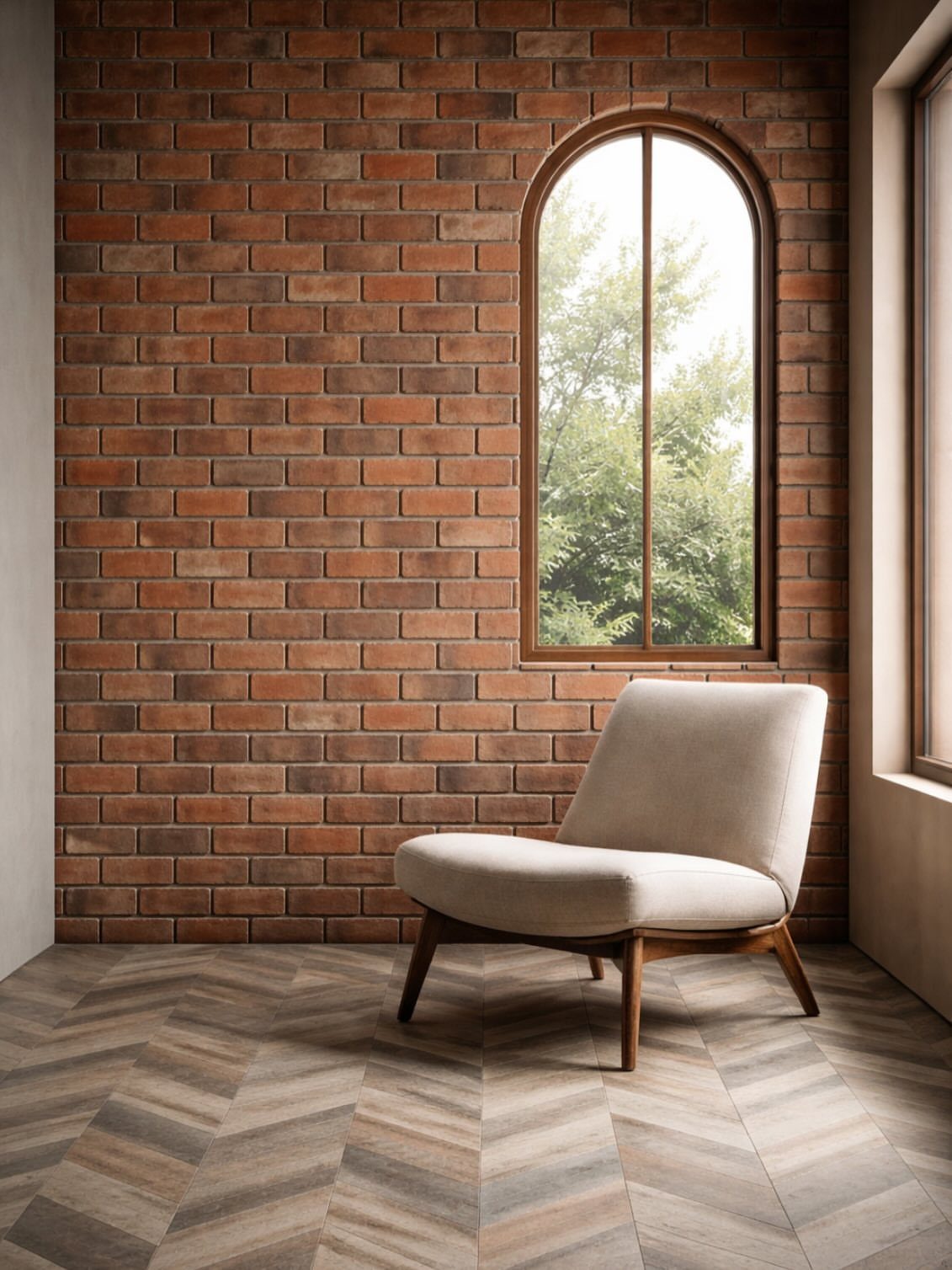
Red brick brings depth that paint cannot match, and it pairs well with a pale, modern lounge chair that lets the wall stay the star.
Real brick is rarely an option in a rental. Brick-look panels or thin veneer give a similar effect over a weekend, and a herringbone floor adds a second pattern, so keep furniture simple.
11. Cozy Seating Arrangement
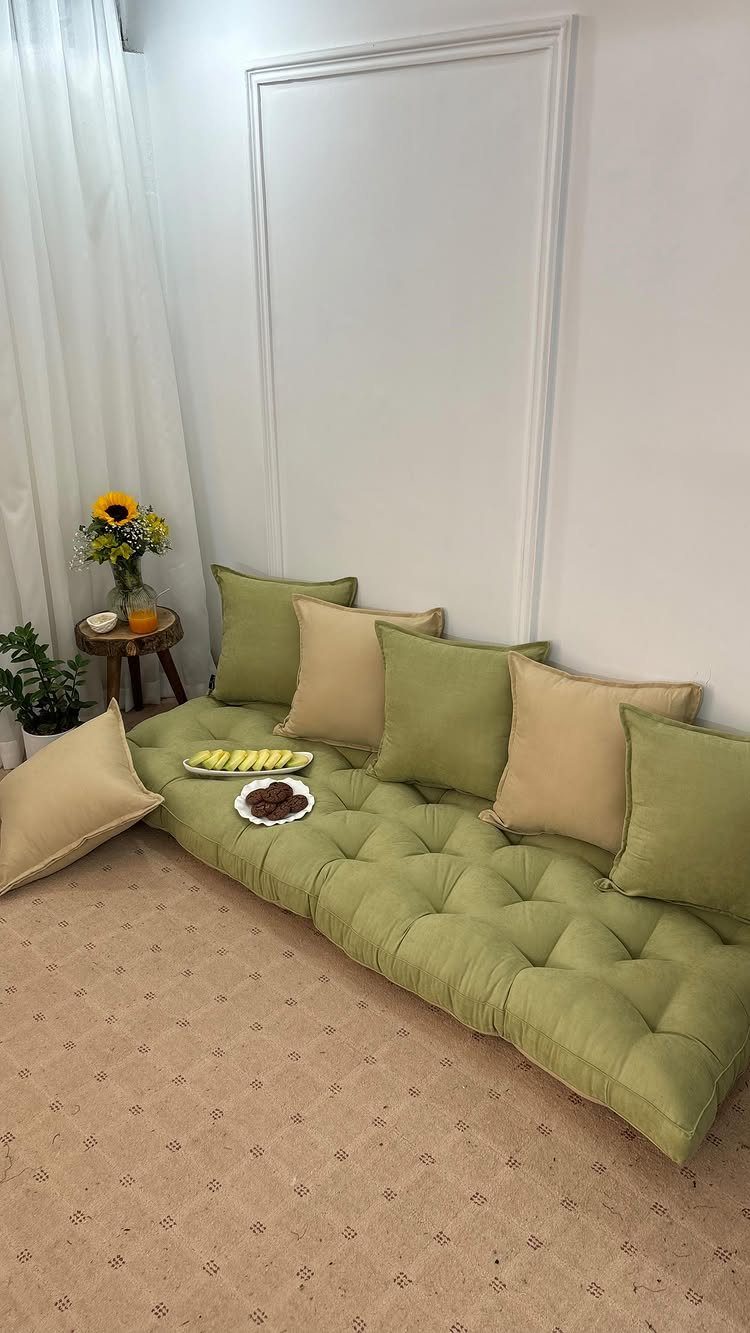
A tufted floor mattress in green is seating that doubles as a lounge, and a pile of beige and green pillows makes it comfortable enough to eat on.
I like this for small rooms because it tucks away or moves in seconds. Keep a small side table beside it, and stay with 2 colors so the pile looks planned.
12. Wall-Mounted TVs
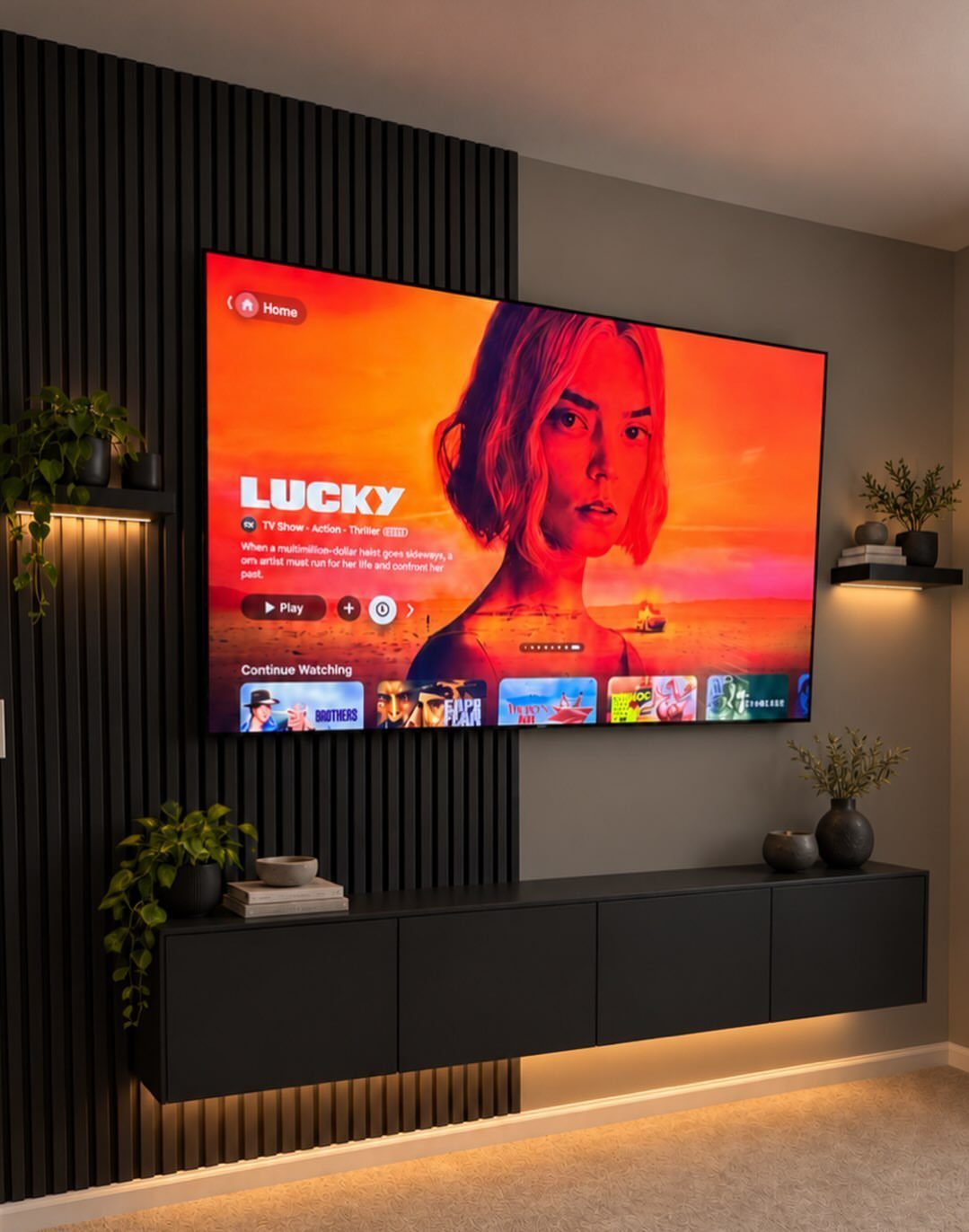
A TV mounted on a black slatted wall disappears into the design instead of sitting on a stand.
Below it, a floating black cabinet hides cables and media gear, and warm under-cabinet lighting softens the screen’s glare in a dark room.
Paint the wall black or add slat panels, then keep the cabinet in the same tone. A few plants on top break up the dark block.
13. Layered Lighting
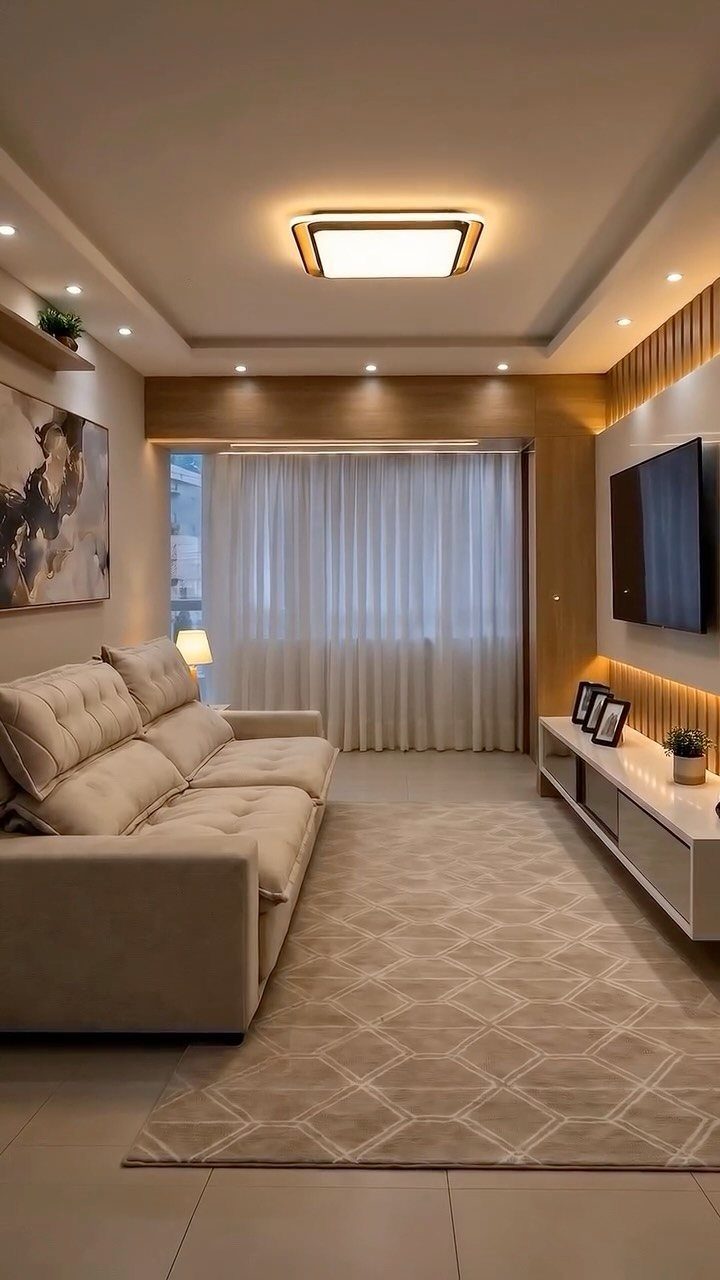
3 types of light placed around the room keep a living room from feeling flat after dark: ambient light from overhead, task light where you need it, and accent light on what you want noticed.
A ceiling fixture covers the general glow, recessed spotlights add focus, and LED strips behind the TV unit cut the contrast between a bright screen and a dark wall.
I’d put each layer on its own switch or dimmer so the room can shift from movie night to a bright cleanup.
Renters can skip the wiring and use plug-in LED strips behind the TV, which take minutes to stick on.
14. Accent Pillows
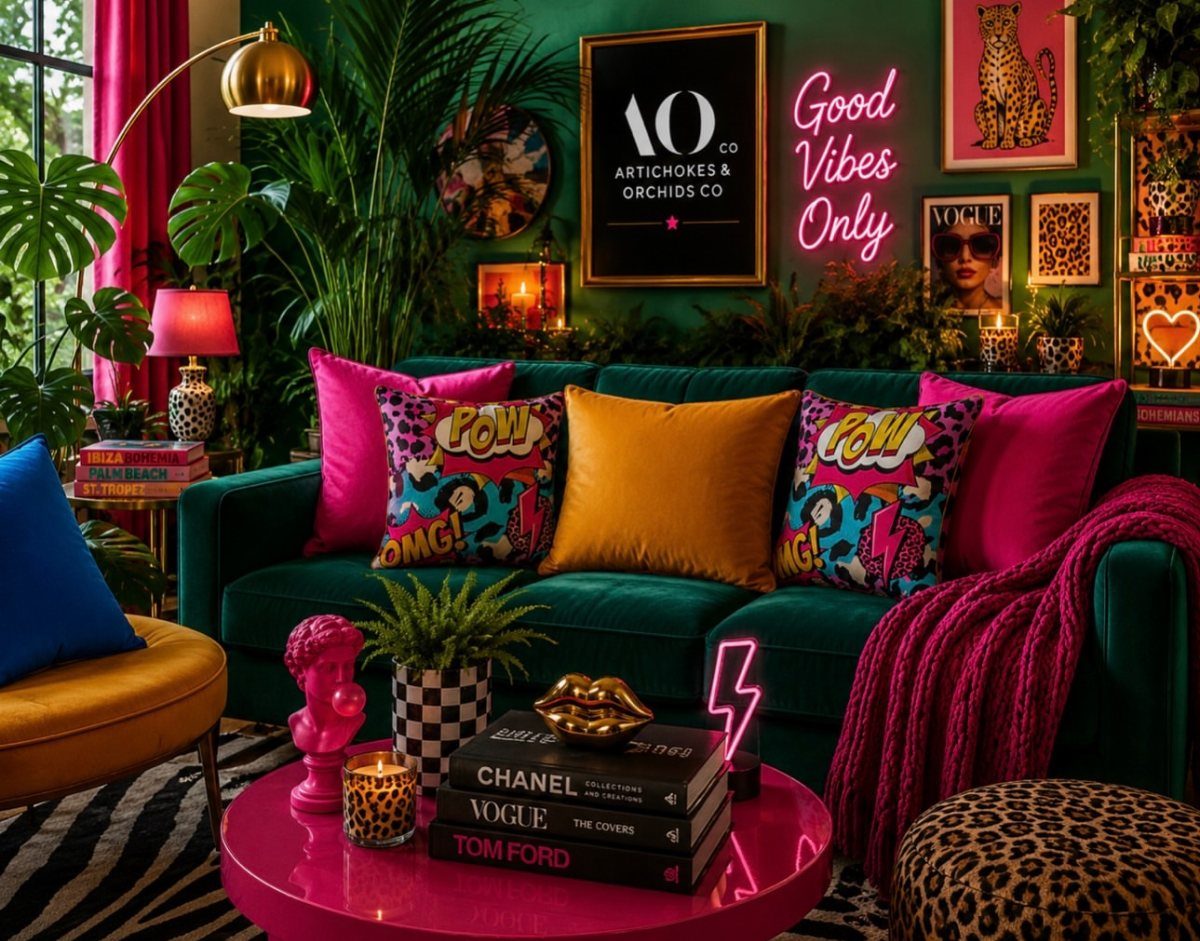
Pillows are the fastest way to change a sofa’s personality without spending much, and a green velvet one takes pattern well. Pop-art prints and pink accents stand out against it, and the pink repeats in the coffee table.
Pick one color already in the room and repeat it in two or three pillows, then add one wild print for fun.
Pillow covers cost little and swap in seconds, so you can try bold ones without committing to the sofa.
15. Layered Rugs
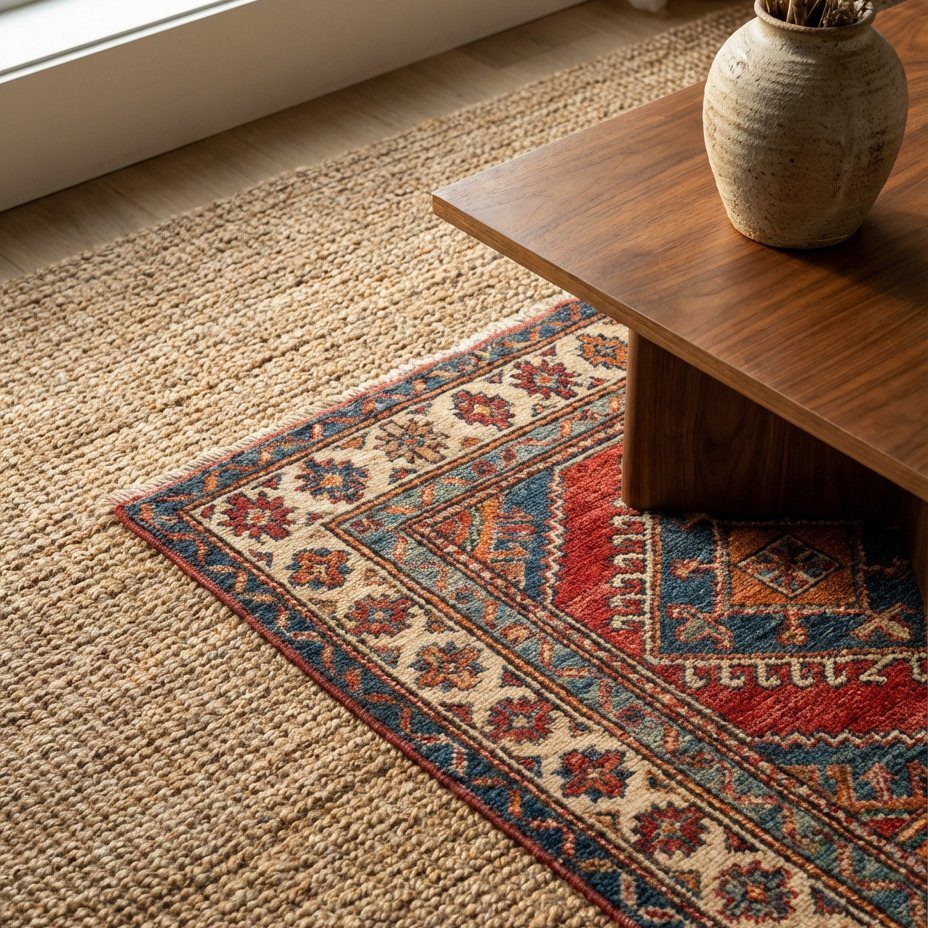
A patterned rug laid over a larger jute rug adds depth without fighting for attention. Natural fiber underneath keeps the bold piece from feeling loud.
Choose a base rug big enough to sit under the whole seating area, then lay the smaller one so a wide band of jute shows on every side. Layering also lets you reuse a small rug you already own.
16. Smart Living Room Lighting
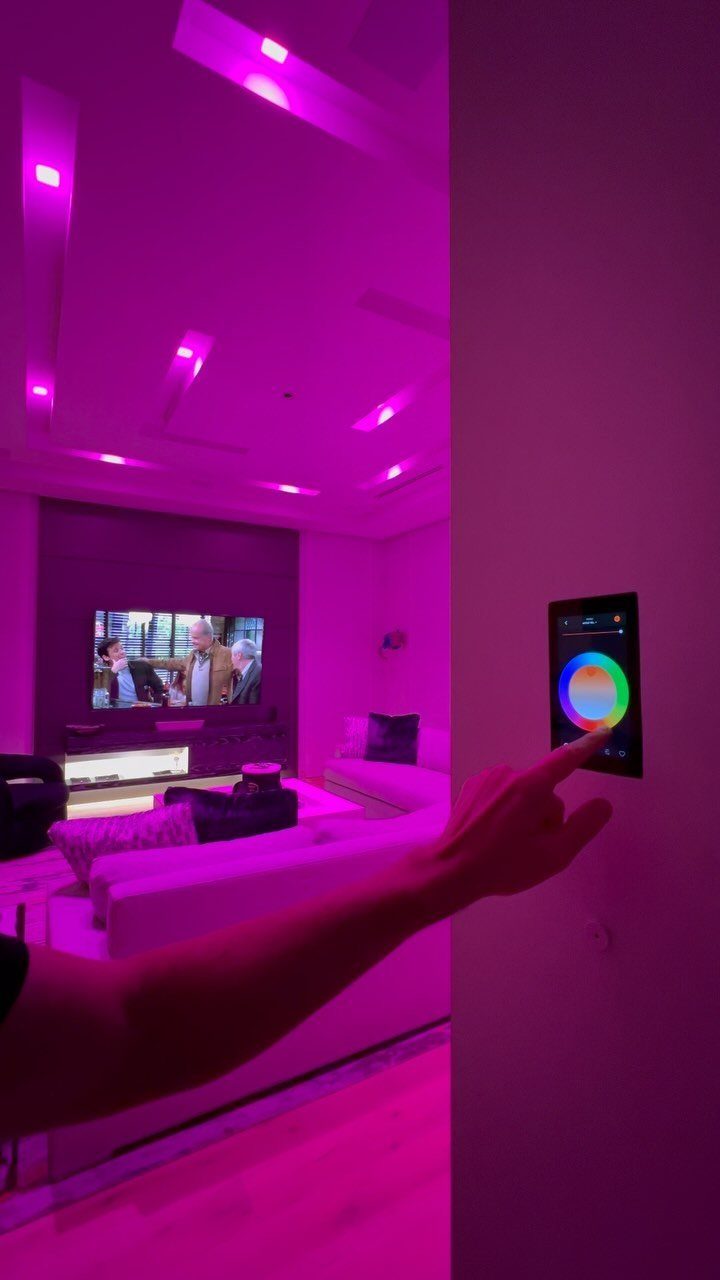
Smart lighting lets one panel, or a phone app, change the color of a whole room. A white sofa is a good partner because it picks up the purple glow cleanly, whatever shade you choose.
I’d start with a few smart bulbs or a color-changing LED strip, since they work with the lamps you have and need no electrician. A wall panel looks tidy, but it costs more and suits owners better than renters.
17. Vibrant Couch
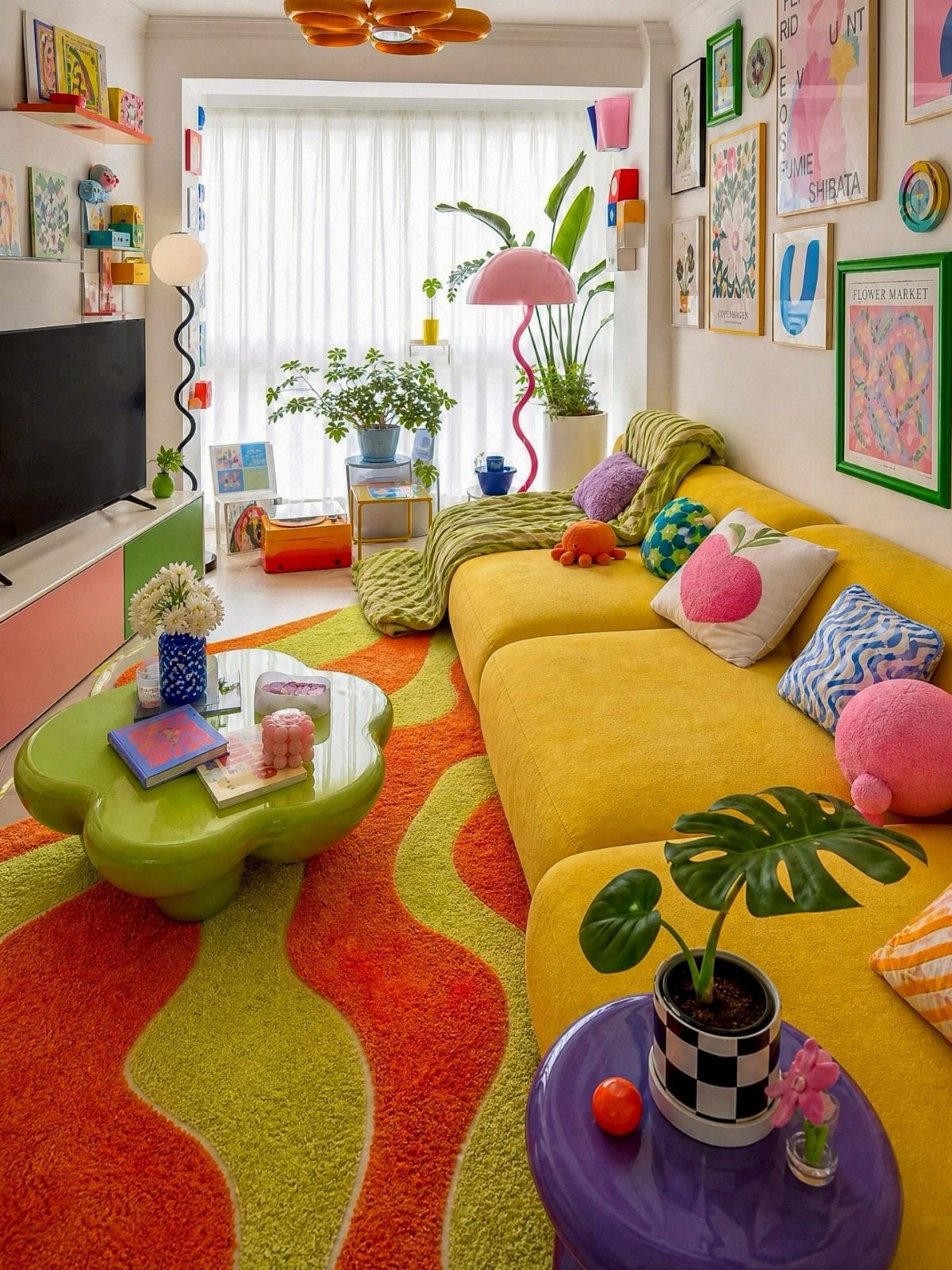
A bright yellow modular couch can anchor a colorful room if everything else has a job. The orange rug and green coffee table work because each takes a different color, so neither one competes with the sofa.
If a whole yellow couch feels like a big bet, start with a smaller piece or yellow pillows.
18. Natural Wood and Stone Materials
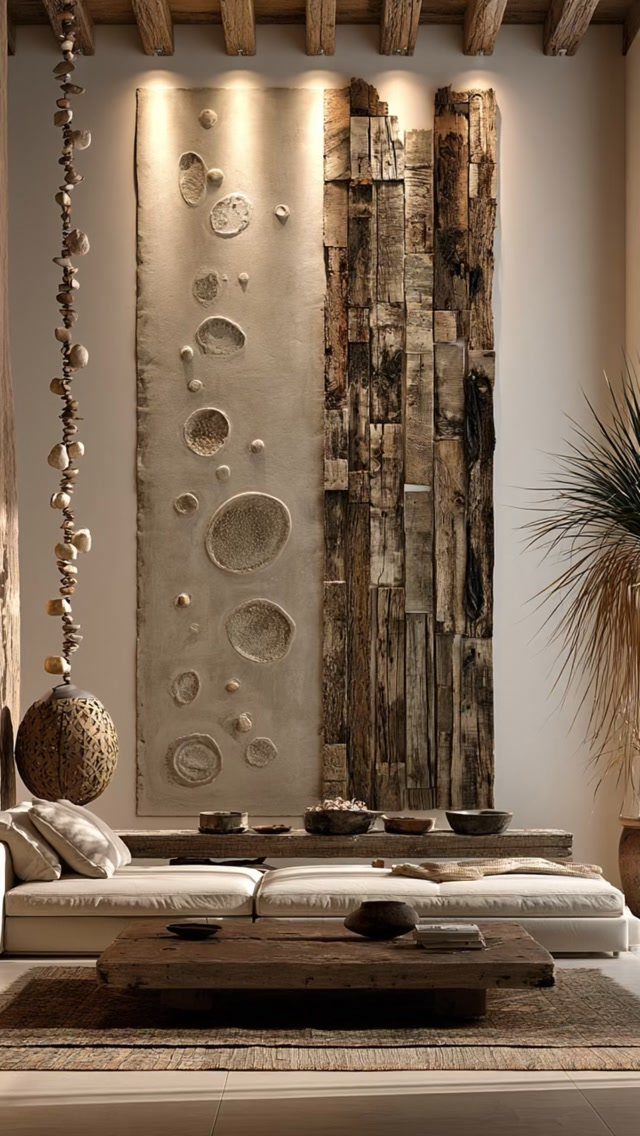
A large stone and wood wall piece gives a living room texture without any paint. Paired with a low wooden coffee table and white seating, the natural materials carry the room and the furniture stays calm.
Real stone is heavy and permanent, so renters should look at lightweight stone-look panels or a wood wall hanging instead. Keep the sofa white or pale so the materials stand out, and add one small accent like a hanging shell.
19. Custom-Built Furniture
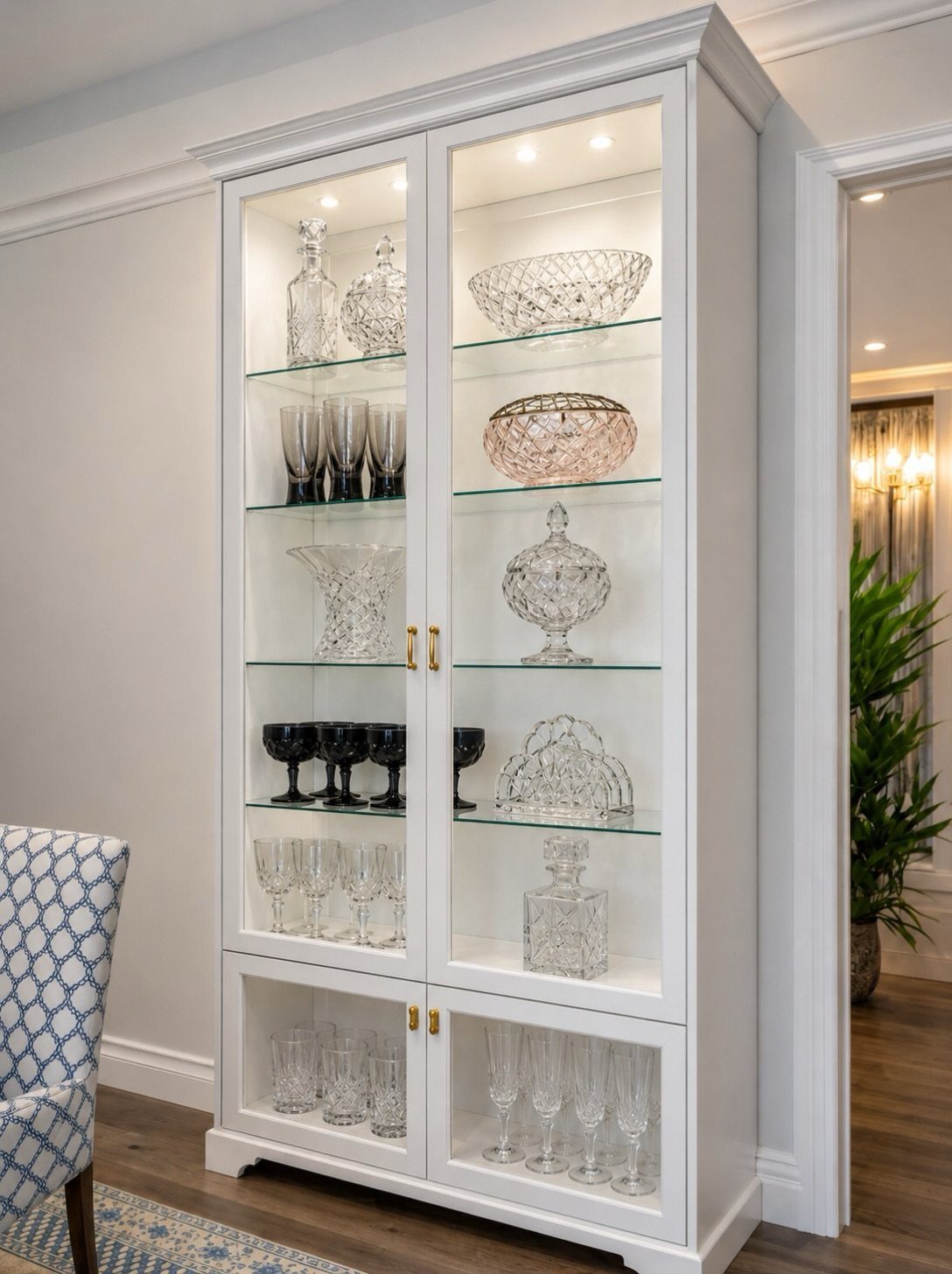
White paint keeps the cabinet quiet, so the glassware gets the attention and the patterned chair beside it still stands out.
Custom work costs more than a shelf from a store, so I’d save it for one wall where the cabinet will fill the space.
Renters can get a similar look from a freestanding glass-front cabinet in white, plus a battery puck light or plug-in LED strip inside. Keep the shelves half empty so each piece reads clearly.
Best Living Room Colors
Start with the room’s size and how you use it. Soft, pale shades make a small room feel larger, while a deeper tone makes it feel cozy.
Warm neutrals are the safest base because they stay timeless, and muted greens work the same way in a traditional room. Muted greens also suit a living room that gets little direct light.
If you want the room to read minimal, paint the walls and trim the same soft color so your eye travels the perimeter without stopping.
A deep shade works best in a small dose. Use it on one feature wall or in a reading nook, where a darker color makes the corner feel snug instead of heavy.
If you rent, test a paint sample on the wall for a few days before you commit, and check it in morning and evening light.
Choosing Furniture
Comfort comes before style. A piece you don’t feel at ease with is not worth adding, however current it looks, so buy the furniture you will actually sit in.
Neutrals with clean-lined furniture land you in transitional territory: enough visual interest to hold attention, low enough risk that most clients sign off without hesitation.
One bright accent chair or pillow set tips the same room modern without repainting or replacing the sofa.
Velvet and a thick-pile rug add enough texture to keep a modern room from feeling cold. Blue needs warmth next to it, and orange or rust tones do that job without much effort.
Modular and freestanding furniture pieces can be reshuffled as your needs change, which is useful in a living room you may outgrow or move out of.
But in reality, modern living rooms can deftly bridge the gap between the welcoming and well appointed. In fact, “modernity has a streamlined tone that balances historic forms with a fresh sensibility,” ELLE DECOR A-List designer Augusta Hoffman adds.
Frequently Asked Questions
What is the 3-5-7 rule in decorating?
It’s a grouping guide: arrange 3, 5, or 7 items together rather than even numbers, and the room feels balanced.
Odd-numbered clusters tend to look more intentional than pairs. Grouping in threes is the easiest place to start, such as 3 similar paintings hung together.
What are the best interior design ideas for a living room?
Modern minimalism, rustic, and eclectic rooms are strong starting points, along with bold colors and layered textures.
A rustic room pairs a dark sofa with wood, and an eclectic one gives a bold modular sofa a single deep-blue wall behind it. Layered rugs and lighting at low, mid, and overhead heights add depth in any of them.
Is there an app that will design my living room?
Yes, several apps and online services offer virtual design help matched to your style and budget.
Some let you see the room in 3D and swap products around before you buy. For a weekend project on a small budget, a free layout app is usually enough to check that furniture fits.





