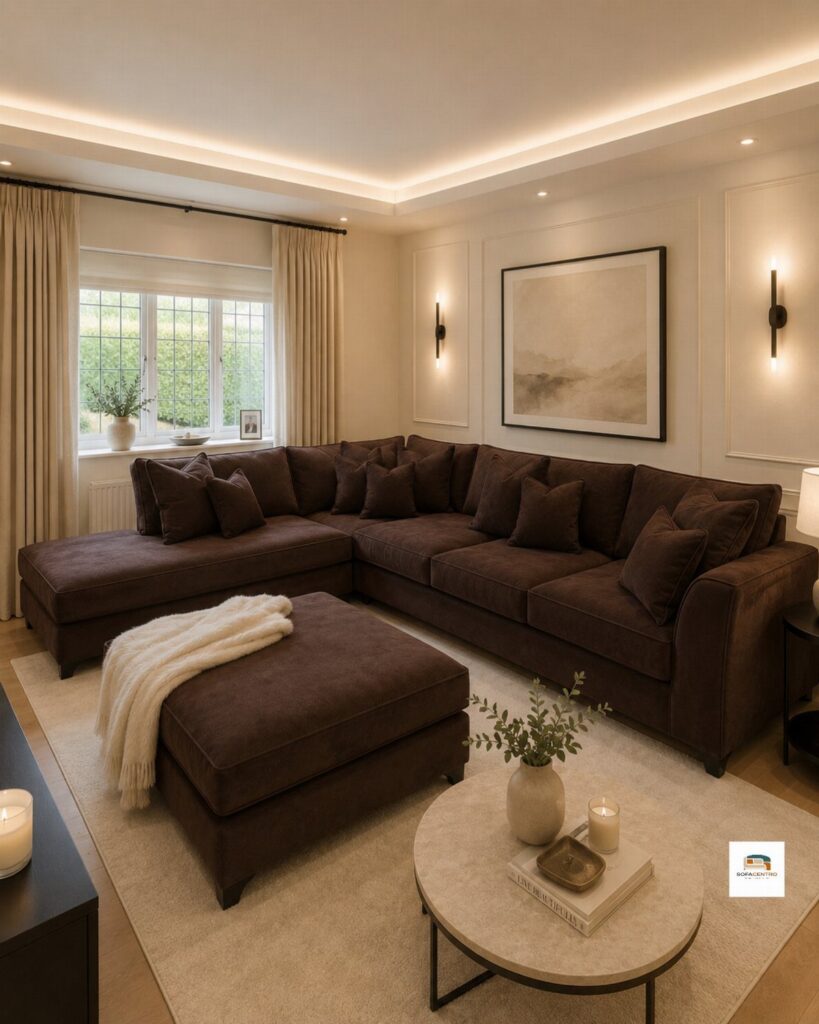
A brown sofa needs contrast, and most of the rooms here add it through color: olive green, burnt orange, deep brown walls, or the inverse, cream and white.
The ideas here run from a deep brown accent wall and oversized art, to patterned rugs and cushions you swap in minutes, to brass accents and a console table that needs no nails.
Most of them rely on one narrow palette, such as burnt orange pillows repeated in a geometric rug.
1. Olive Green and Wooden Furniture
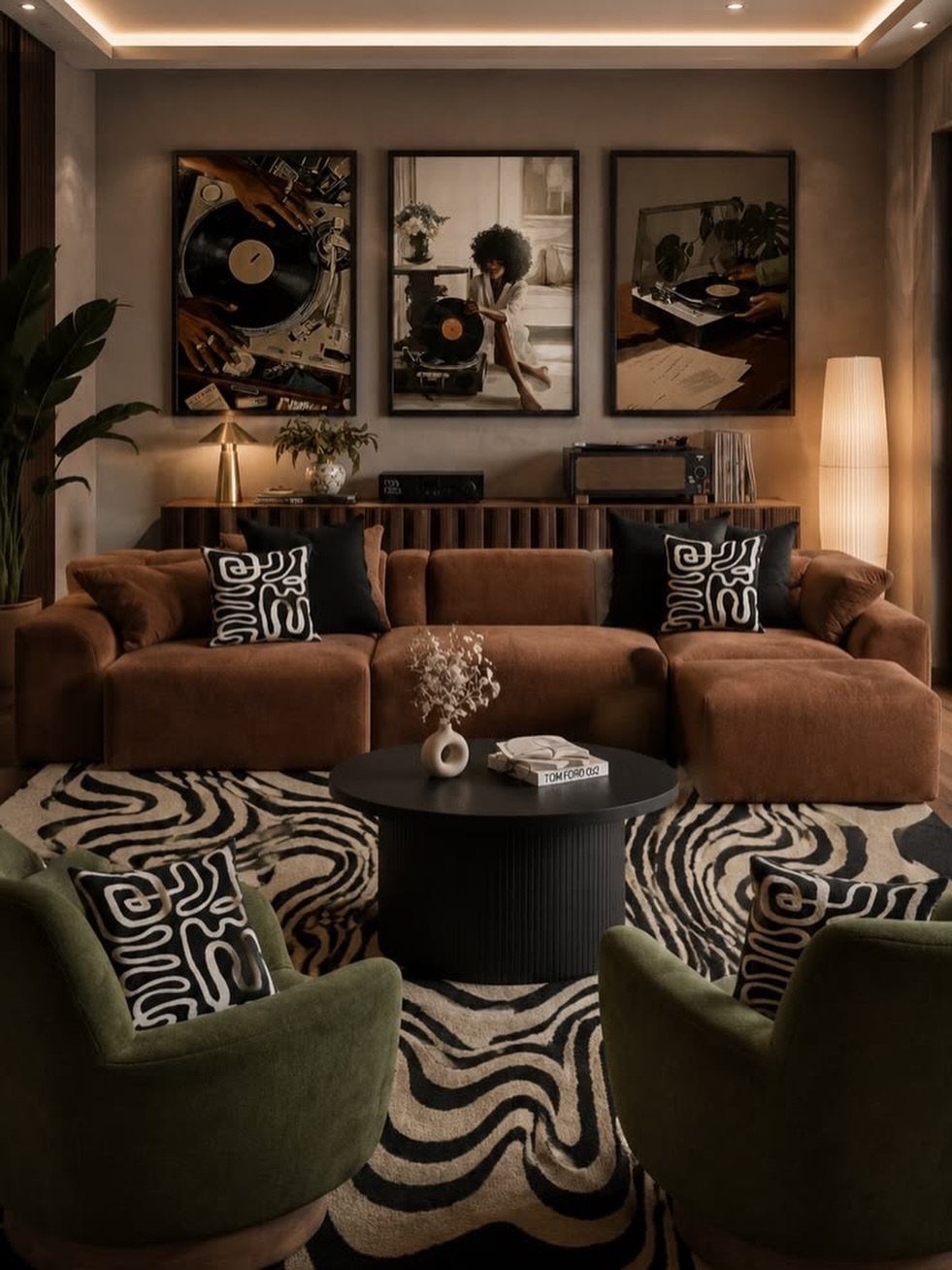
2 olive armchairs facing a brown sofa make a calm pairing, because green and brown both sit in the earthy, low-contrast range. The black coffee table keeps it from going muddy.
I would copy the balance more than the exact pieces: one brown anchor, two matching accent chairs, one dark neutral in the middle. A patterned rug ties the colors together, so pick one that repeats at least one of them.
Grey walls let the olive read clearly. Warm white walls would soften it.
2. Warm Lighting Sources
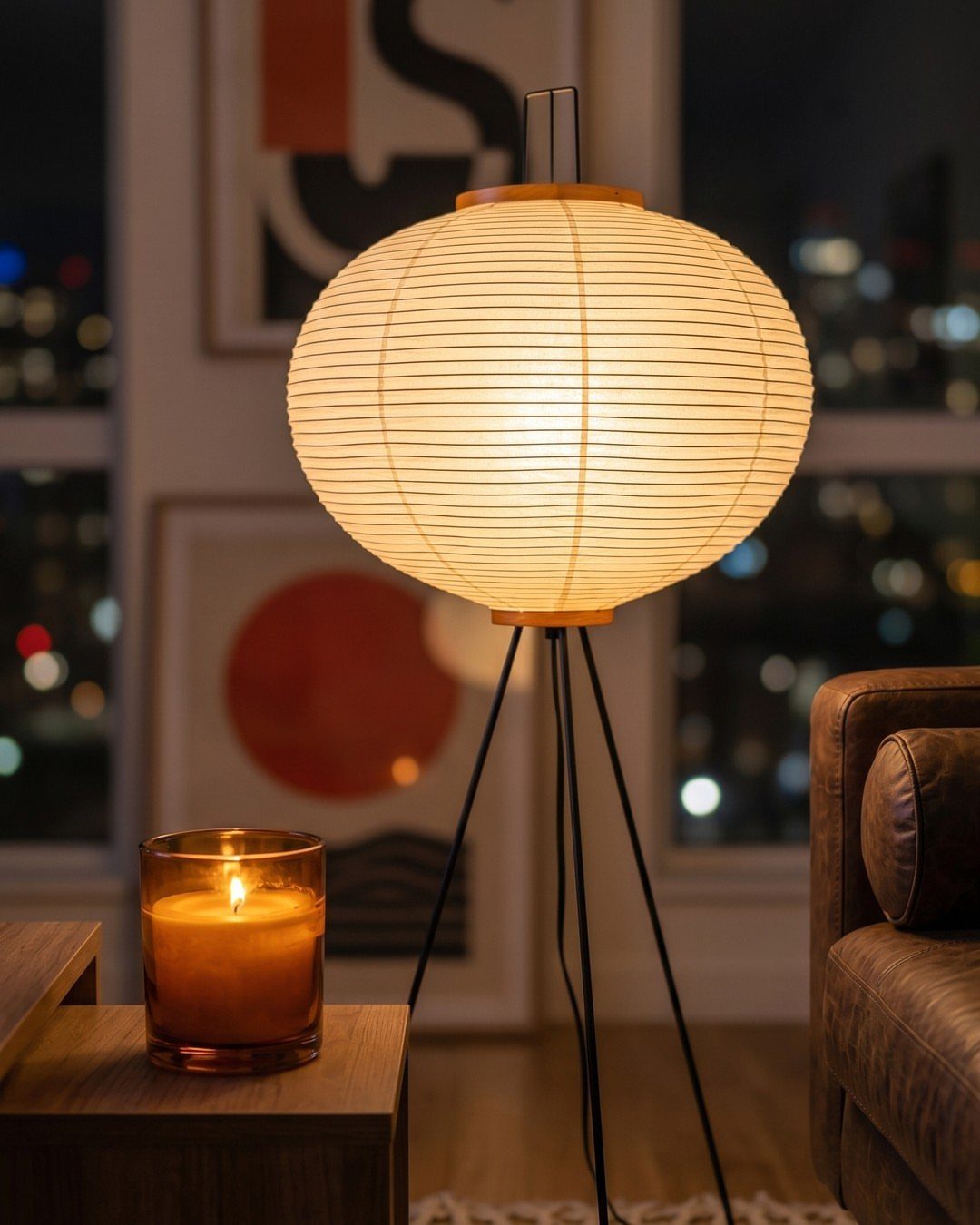
A paper lantern floor lamp beside a brown leather sofa gives off a diffused glow that leather handles well, since the surface picks up light softly instead of glaring.
Paper shades spread light in all directions, so one lamp can cover a corner.
Add a candle in a glass jar on a nearby surface for a second, lower source. Keep the overhead light off in the evening and let these two do the work.
Both are cheap and need no wiring, which suits renters.
3. Patterned Rugs, Curtains, and Cushions
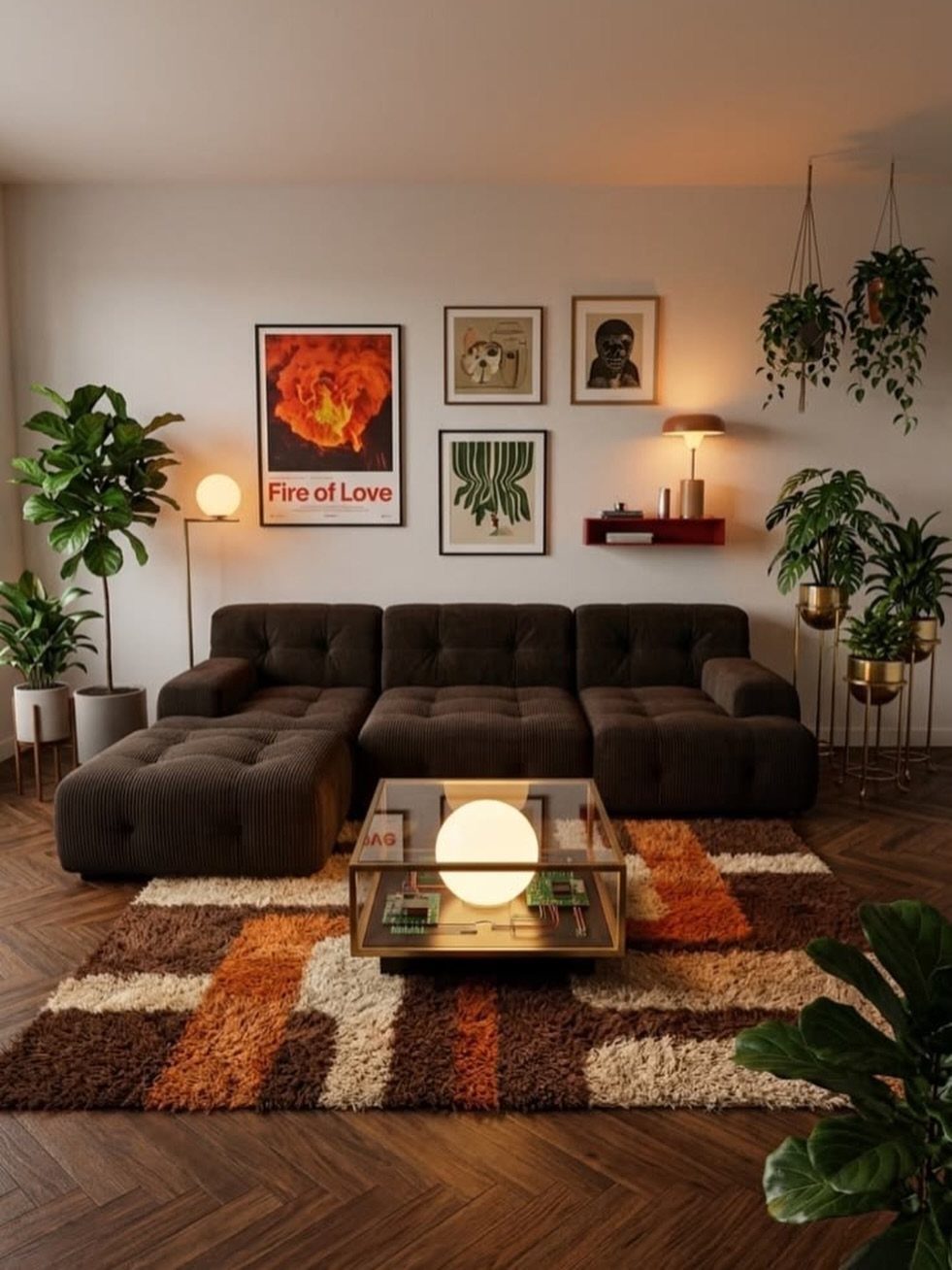
Pattern works on a brown sofa when the palette stays narrow. A brown and orange shag rug under a dark modular sofa shows it: the rug borrows the sofa’s color, so the pattern feels intentional rather than busy.
Carry the same 2 colors into curtains and cushions, and vary the scale of each print. One large, one small, one plain is an easy rule.
A glass coffee table helps here, because it lets the rug show instead of adding another surface to compete with it.
4. Gold, Brass
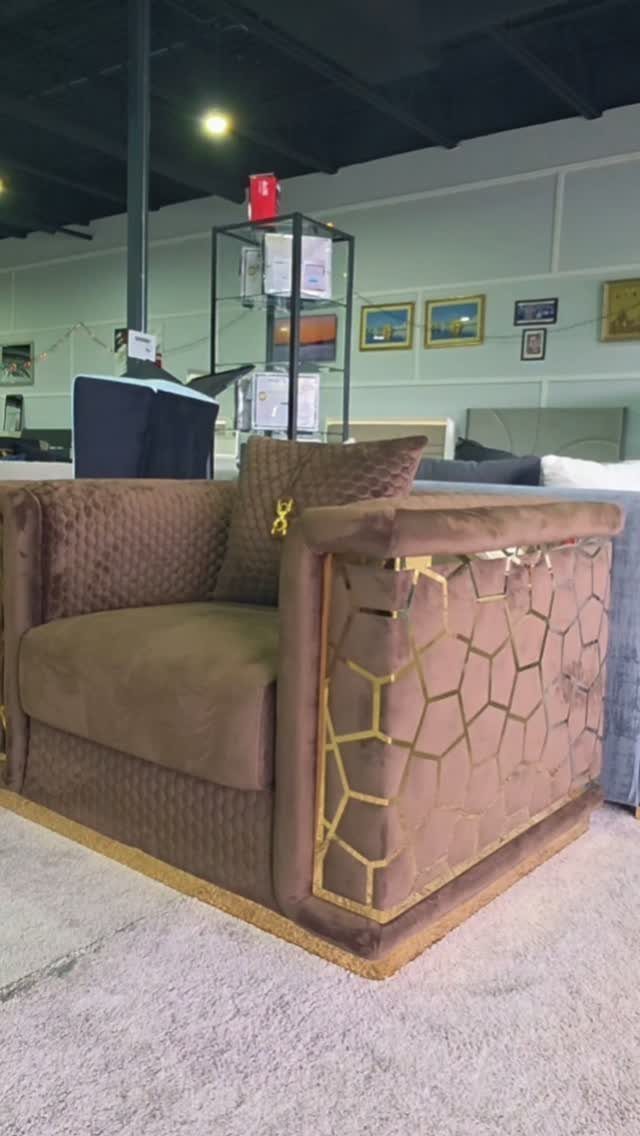
Gold on brown velvet is a small-dose idea. A honeycomb-patterned metal detail on a chair arm adds shine without needing a full set of brass pieces.
Brown velvet catches light and deepens in tone, and metallic accents sharpen that. If you can’t buy a new chair, repeat the effect with a brass lamp base, a frame, or a tray.
Stick to one finish. Mixing gold with chrome muddies the warmth that makes the pairing work.
5. Gallery Wall Behind the Sofa
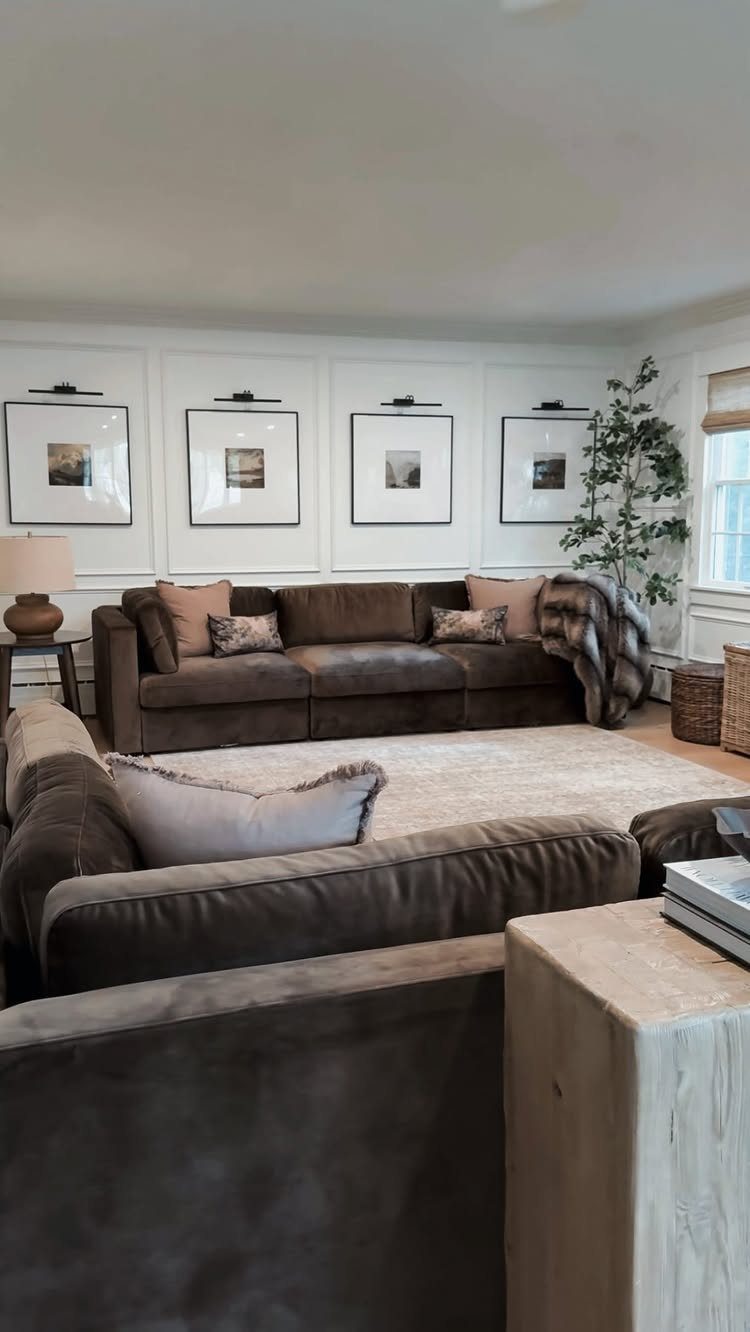
Hanging 4 framed pictures above a brown sectional, each with its own picture light, turns a blank white wall into the focal point. Lights make the art read in the evening and keep the dark sofa from swallowing the wall.
Keep the frames in a tight group and leave a modest gap above the sofa back so the two feel connected. Cut paper templates and tape them up first; that saves patching nail holes.
Look for plug-in or battery lights if you rent.
6. Knitted Throws and Velvet Cushions
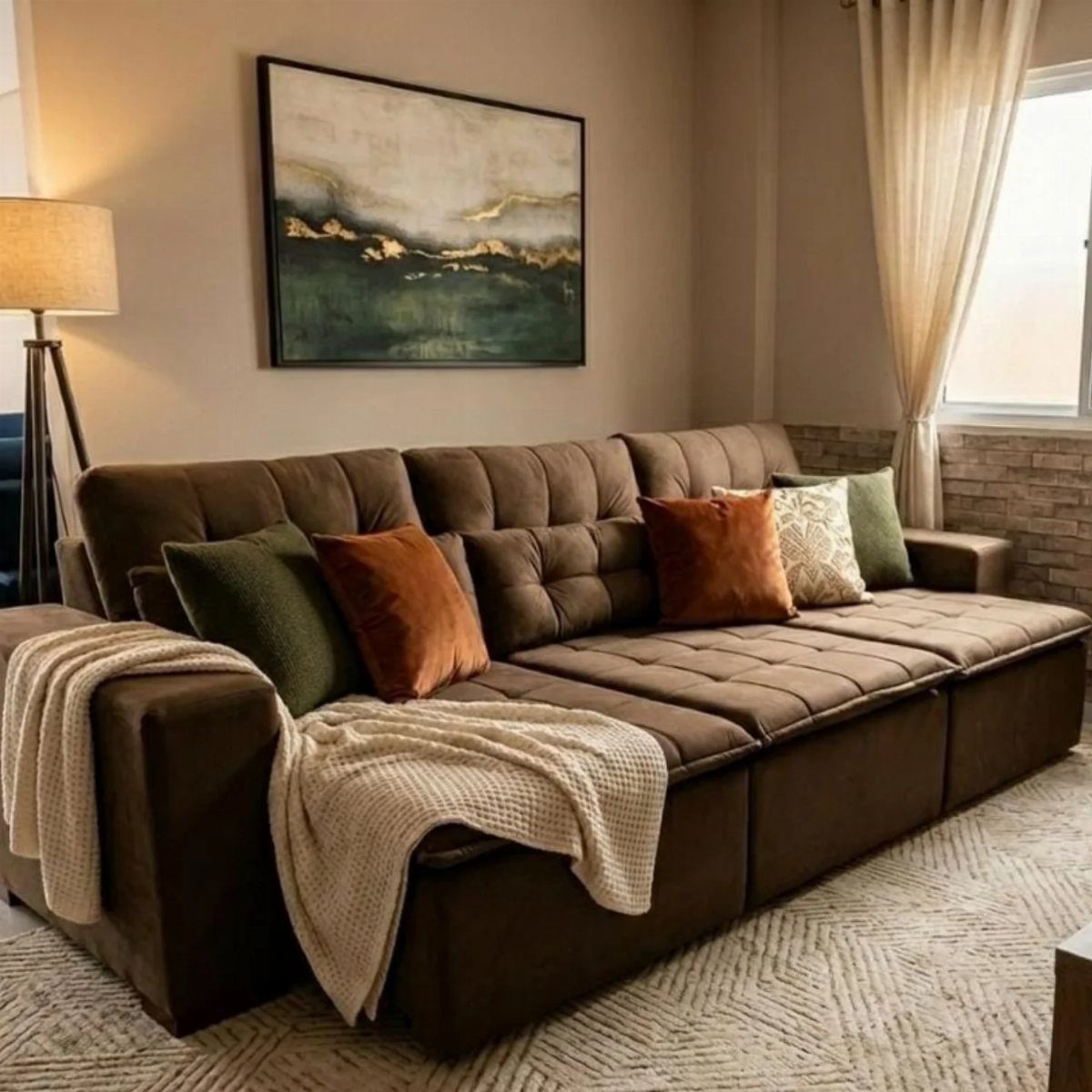
Layering textures costs less than anything else if you want a brown sectional to feel finished. Velvet cushions in rust and green sit well on brown, and a cream knitted throw lightens the whole seat.
Mix two or three cushion colors, not five, and let the throw be the pale one. Drape it over an arm or a corner rather than folding it flat.
A floor lamp at the end of the sectional makes the velvet glow at night.
7. Soft Brown Fabric and Blocky Shapes
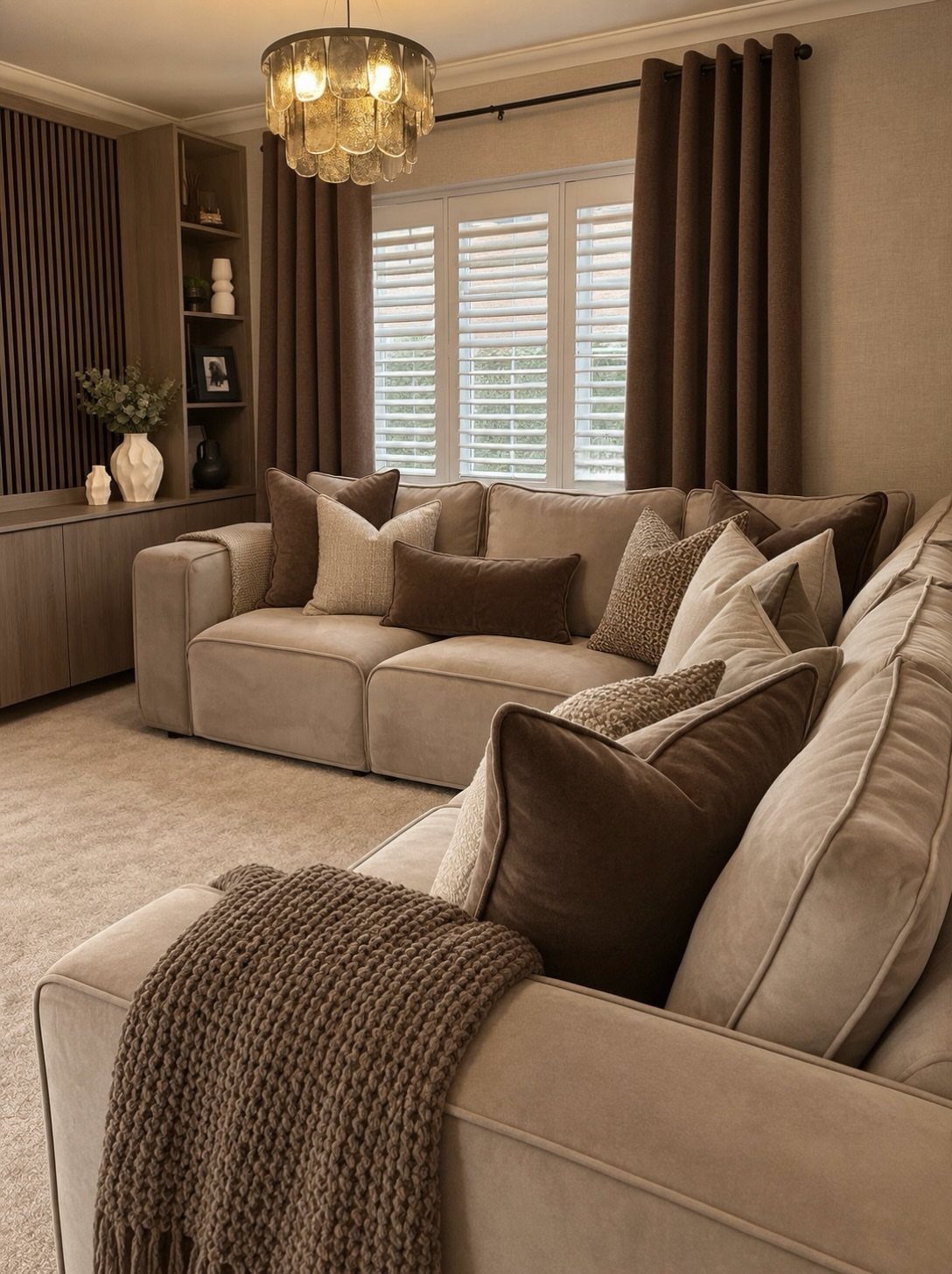
A light brown sectional with square arms and a deep seat reads as calm because nothing on it competes. Soft fabric and straight edges do the work, so the pillows can stay in the same brown family without looking flat.
Keep the curtains close to the sofa’s tone and let a knit throw add the texture. Brown on brown on cream works when the shades differ by a step or two, not when they match exactly.
A gold chandelier overhead gives the muted palette one bright spot.
8. Deep Brown Wall and Oversized Art
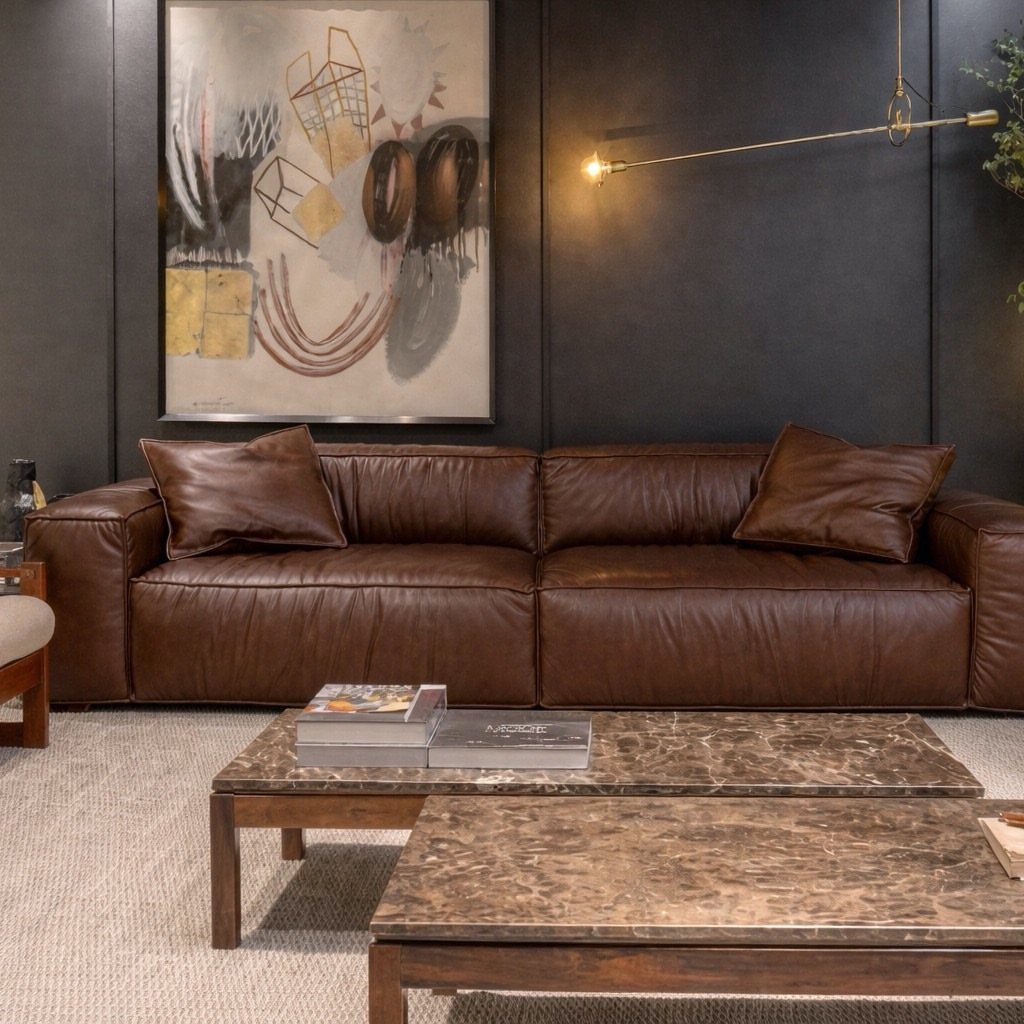
Painting the wall behind a brown leather sofa deep brown wraps the space rather than shrinking it, and the sofa stops being a dark block against a pale wall.
It is a bold move, but a can of paint is among the cheapest ways to get it.
Then hang one oversized abstract piece instead of several small ones; a big canvas holds its own against a dark wall. A gold wall lamp beside it lights the art at night.
Marble coffee tables add a pale, cool surface in front of all that brown.
9. Stacked Greenery and a Graphic Rug
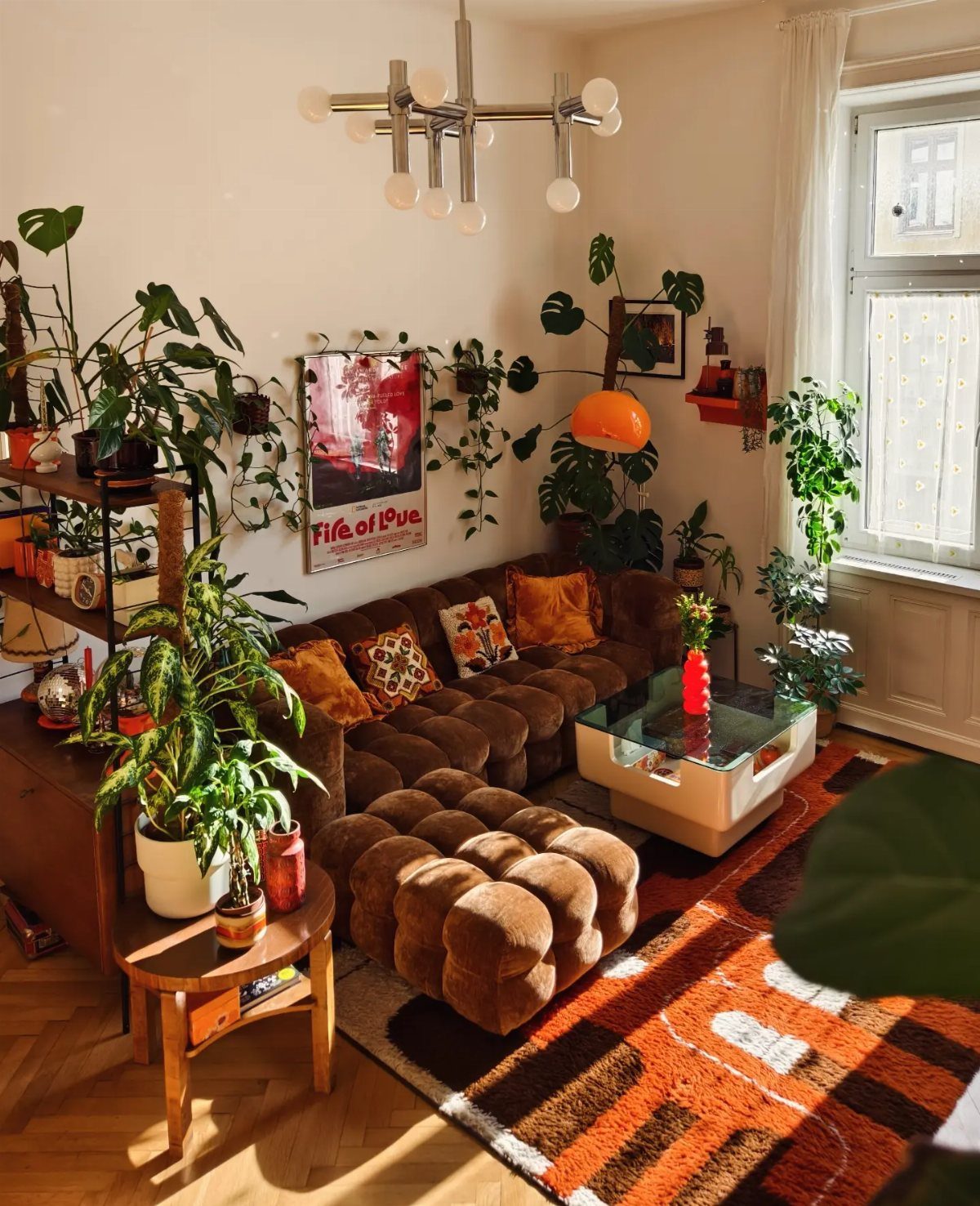
Plants grouped in tiers, some on the floor and some stacked higher, bring leafy texture to a brown tufted sofa, and green sits easily beside brown. Mixing pot sizes and leaf shapes keeps the cluster from looking like a row.
An orange graphic rug underneath supplies the pattern, so I would keep the other fabrics plain. Put the tallest plants near the sofa end and the smaller ones lower, where they will not block the poster.
A framed poster on the wall finishes the corner.
10. Cream Cushions and Beige Rug
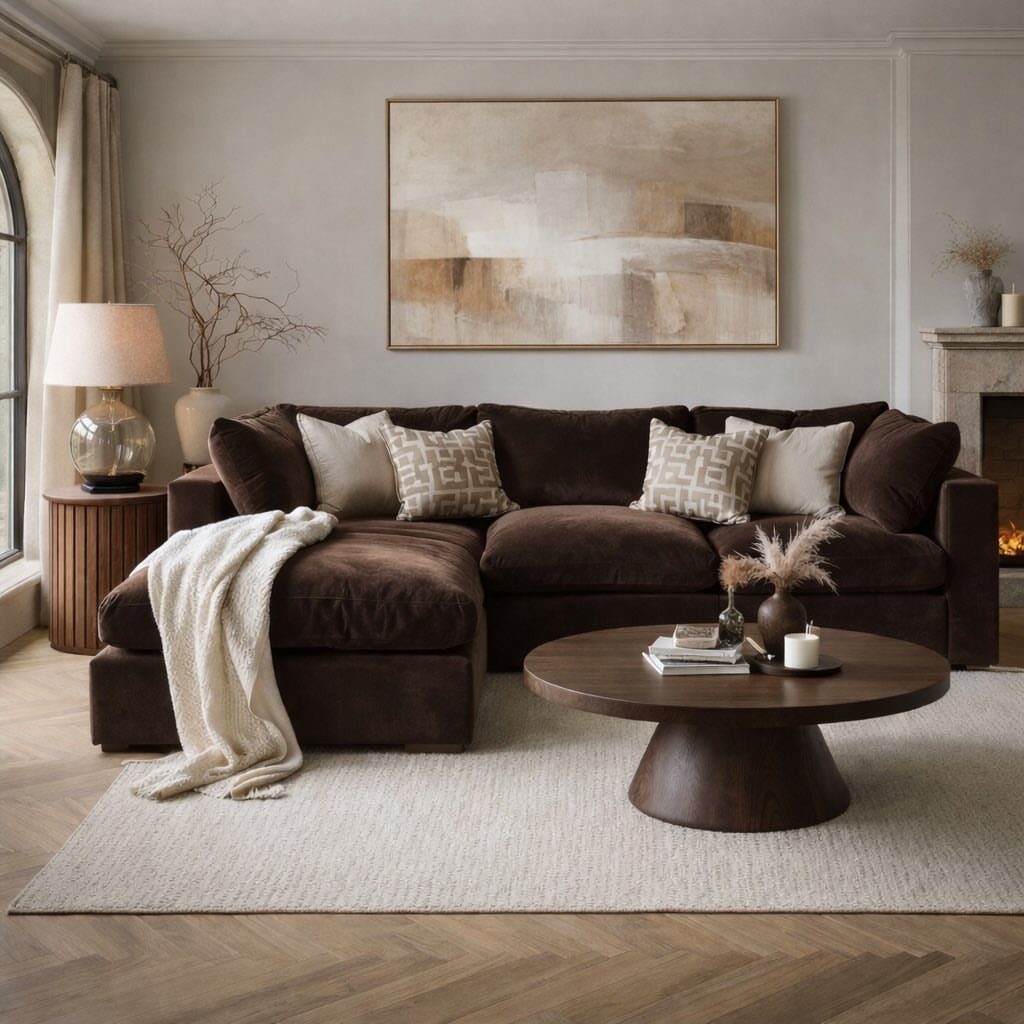
Cream cushions and a white throw lighten a brown sectional without hiding it, and a plush beige rug extends the same pale tone across the floor.
The 3 layers step from dark to light, which is why the room feels settled.
Choose a rug with a thick pile; it gives the seating area a soft base. Keep the throw loosely draped so it reads as texture.
A round wooden coffee table suits the sectional’s corners, since nobody bumps into it. Add abstract art in similar neutrals.
11. Round Wood Coffee Table Setup
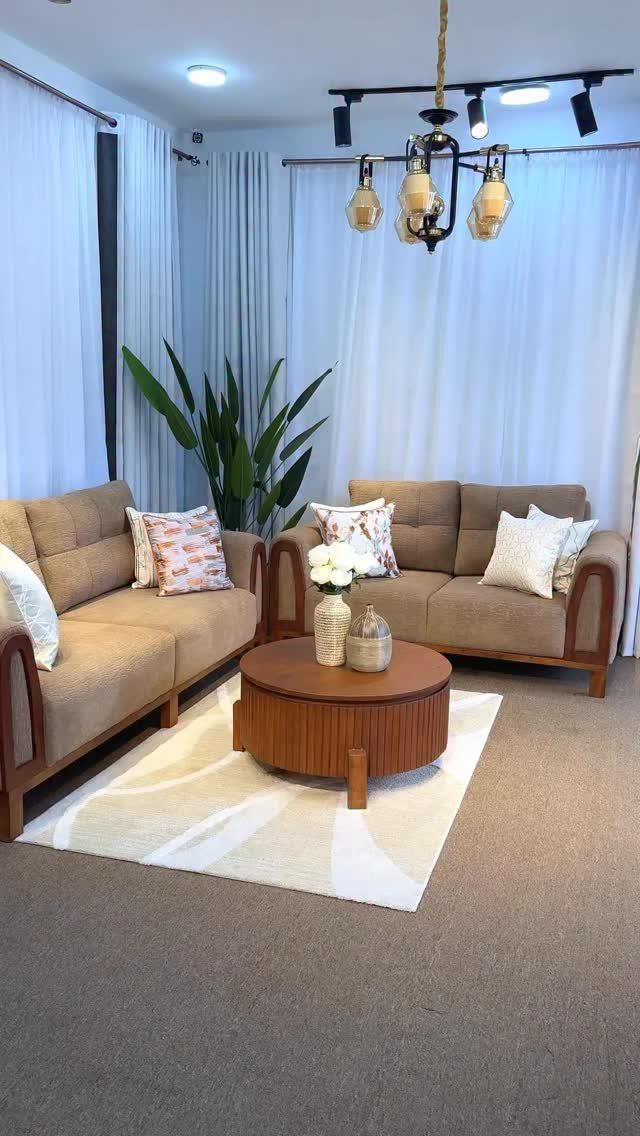
Two brown fabric sofas facing each other with a round wooden coffee table between them make a conversation setup that works in a square room.
A round table has no corners to catch knees, which helps when the sofas sit close.
Lay a light rug under the whole group so the dark sofas have a pale base. Keep the front legs of both sofas on the rug.
I prefer this layout to a single sofa against the wall.
12. Burnt Orange Accents
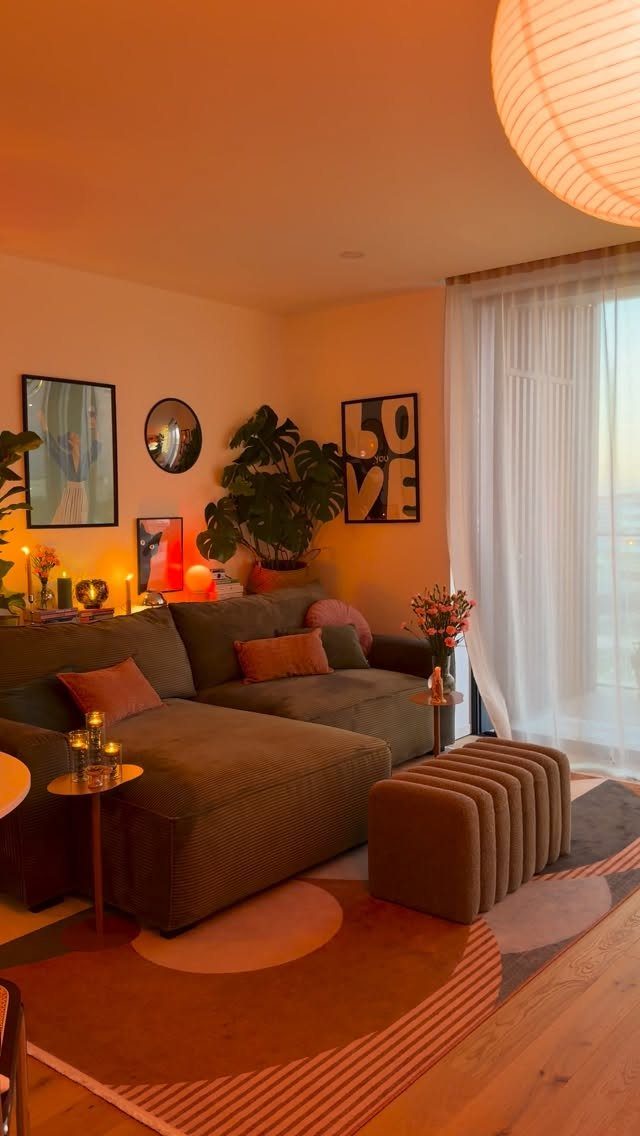
Burnt orange pillows on a brown sectional sit in the same warm family, so the contrast is gentle. Repeating that orange in a geometric rug ties the floor to the seating, which makes the color look planned.
Use 2–3 pillows in the orange and let the rug carry the pattern. A round paper lamp adds soft light and keeps the corner airy.
Pillow covers are the cheap part of this idea, and swapping them takes minutes. If the orange feels too loud, change the covers before the rug.
13. Console Table Behind Sofa
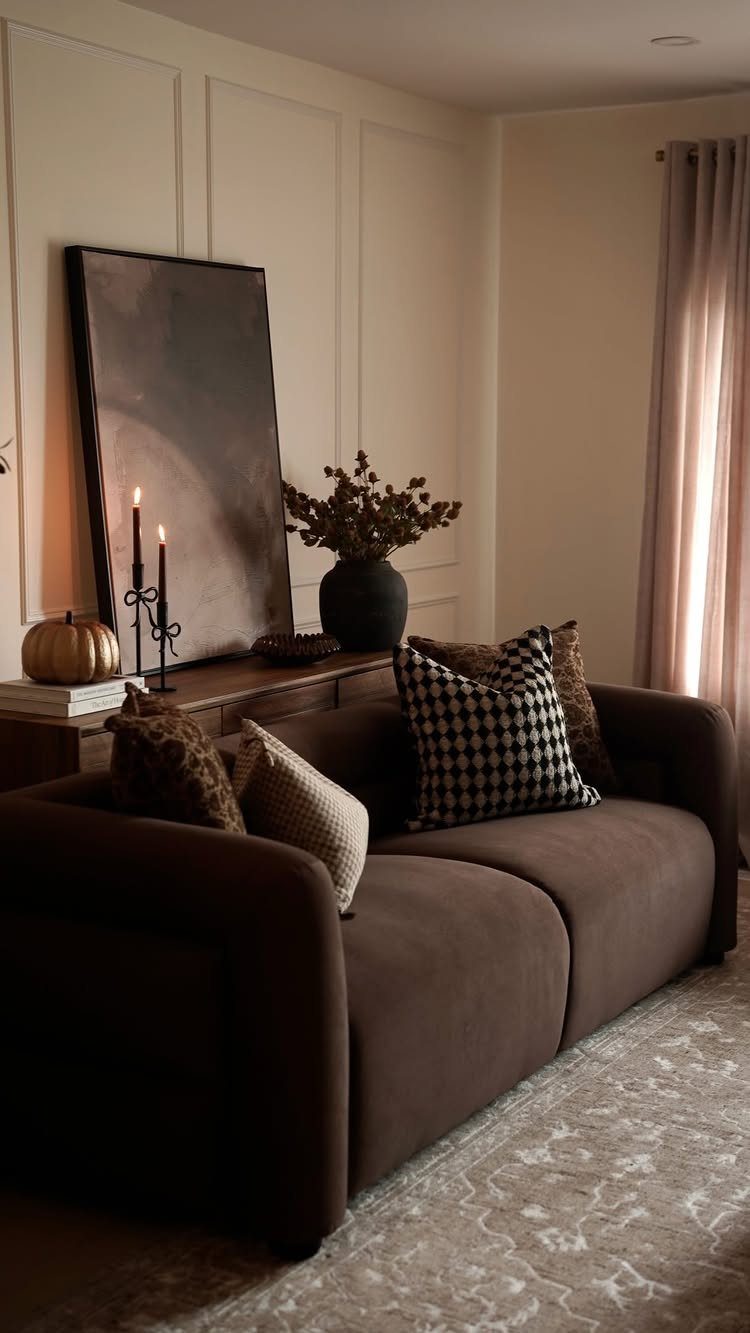
A console table pushed against the wall behind a brown sofa gives a paneled wall something to stand on. Leaning art, a vase and candles sit on top, and none of it needs a nail.
Keep the table a little lower than the sofa back so the objects read as a layer, not a wall.
Lean the largest frame at the back and set the candles in front of it, with the vase off to one side.
Leaning art is easy to swap, which suits renters.
14. Dark Modular Sofa and Mirrors
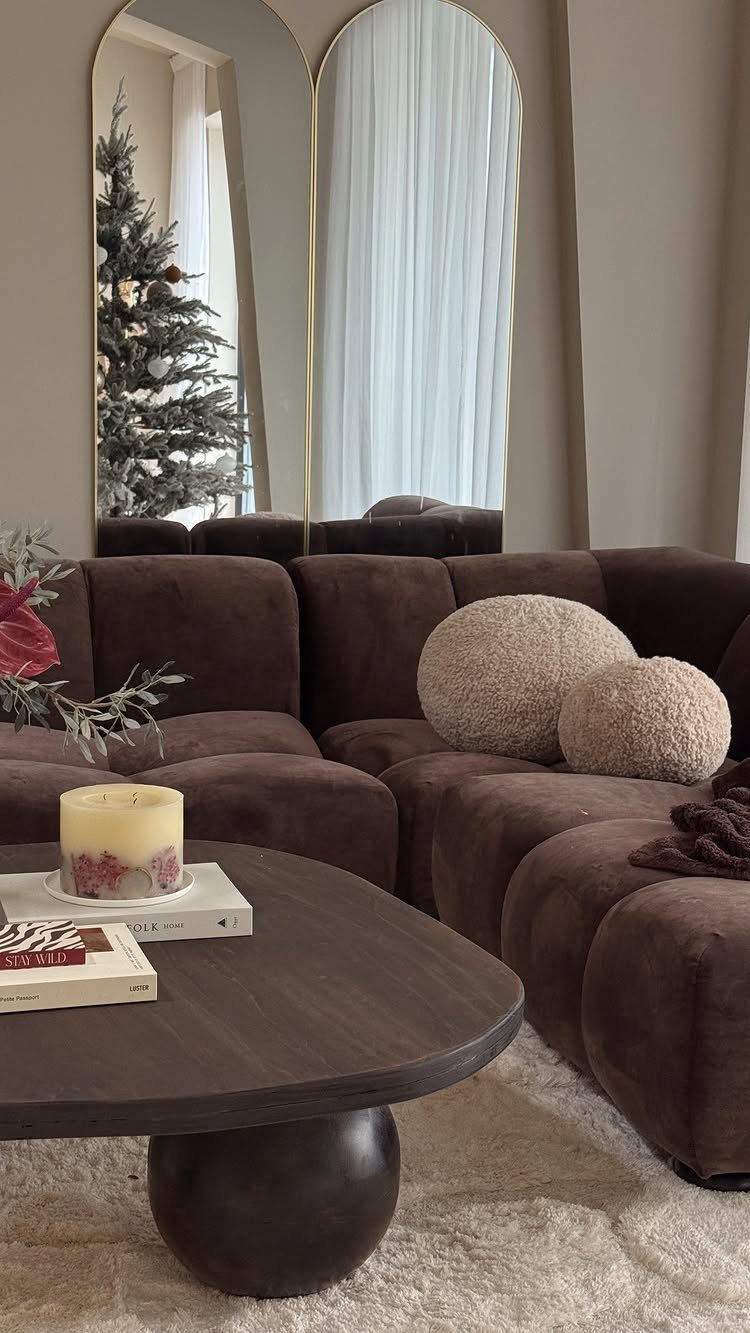
Big arched mirrors on the floor beside a brown modular sofa double the room’s light and depth, and they cost less than wall-mounted pieces because you only lean them. Two side by side read as one grand feature.
A white shag rug gives the dark sofa and the dark round coffee table a pale base. Keep the table’s styling small: a few books and one candle are enough.
Lean the mirrors at a slight angle so they don’t catch the sofa’s bulk head-on.
15. White Rug and Marble Accents
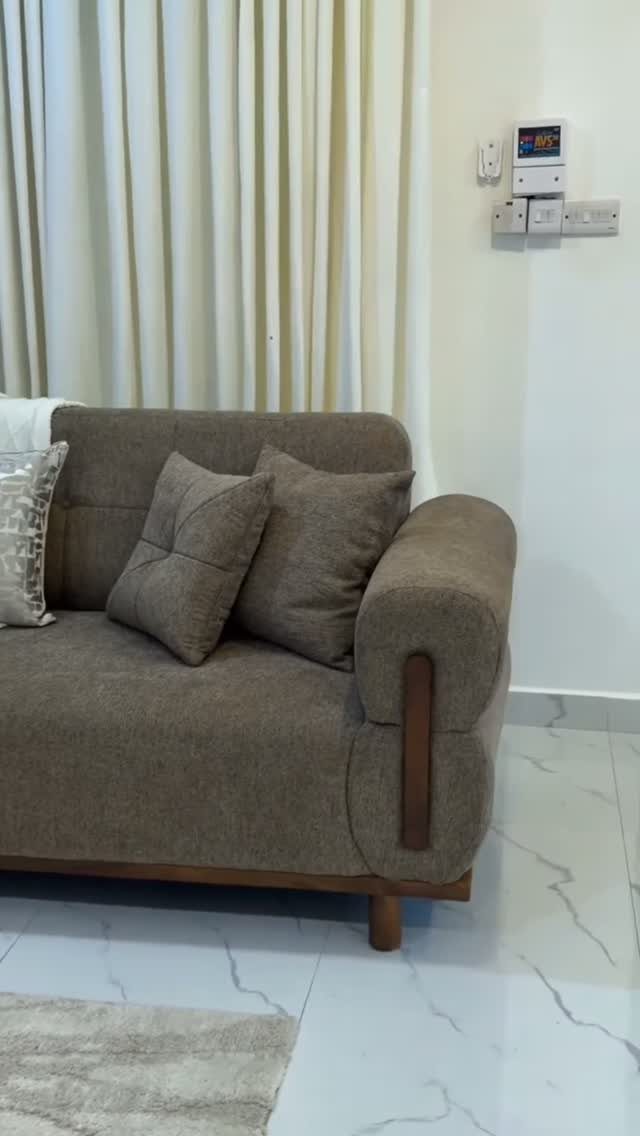
White marble floors and white curtains already supply the pale half of a brown sofa pairing, so the sofa can carry the room with just a few pillows.
Pick pillows in tones close to the sofa’s brown rather than adding new colors.
A small white rug marks the seating area on a hard, cool floor. I would go larger than the one here, so at least the front sofa legs sit on it.
Hang the curtains high and let them fall to the floor.
Best Colors for Brown Sofas
Warm white, soft beige, and light greige are the safest picks for a brown sofa, since each one brightens the room without clashing. Olive green and deep blue both add contrast while keeping the room warm.
A dark sofa does best when the walls and rug stay lighter. That single change shifts the mood of a room more than any accessory will.
Crisp white walls make a dark brown sofa stand out sharply.
Soft gray walls are a quieter option, and a gray rug ties them together. Since gray and white read cool, black or metal accents keep the contrast from feeling stark.
Styling Tips for Brown Sofas
Brown sofas are having a moment again, and how you style them separates dated from deliberate.
Warm, cozy, layered rooms have replaced the all-gray look, so the sofa is not the problem. Old styling is.
Pale walls, straight-edged furniture, and one or two current pieces make a brown sofa look like a choice instead of a holdover.
For a natural, grounded feel, put wooden furniture beside it.
Then bring in earthy tones such as olive green, beige, and rust. A wicker basket for blankets adds texture and costs little.
Using Rugs with Brown Sofas
Cream, beige, or a low-key pattern anchors a brown sofa without adding visual noise. A lighter rug is the fastest fix when your sofa runs dark.
If you want pattern, geometric and floral designs both work with a modern brown sofa.
Frequently Asked Questions
Can a brown couch work in a small living room?
Yes, as long as you control what surrounds it.
Light walls and a rug that extends past the sofa legs by 6–12 inches hold the room together without closing it in. A coffee table under 48 inches and one arc lamp in the corner leave floor space open.
What type of rug looks best with a brown sofa?
A cream, beige, or low-key patterned rug is the best match. Pattern pulls a room together when the rug shares one color with the walls or the pillows, and a high pile feels better under bare feet.





