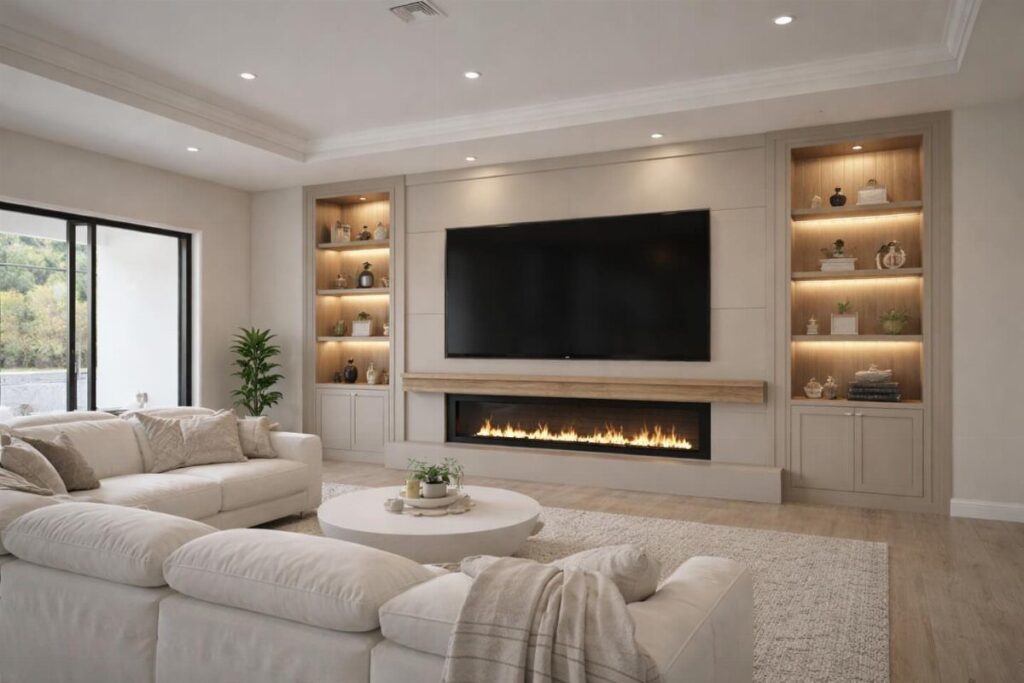
Whether the shelves are built in or freestanding is the first thing that decides your list, because renters can’t count on permanence while owners get the resale value, and a unit fitted tightly to the wall gets a renter most of the look.
The ideas here run from floating shelves with warm under-shelf lighting to floor-to-ceiling library shelving, and how much weight the wall has to carry sets the depth and spacing. Books, electronics and decor each ask for something different.
1. Floor-to-Ceiling Library Shelving
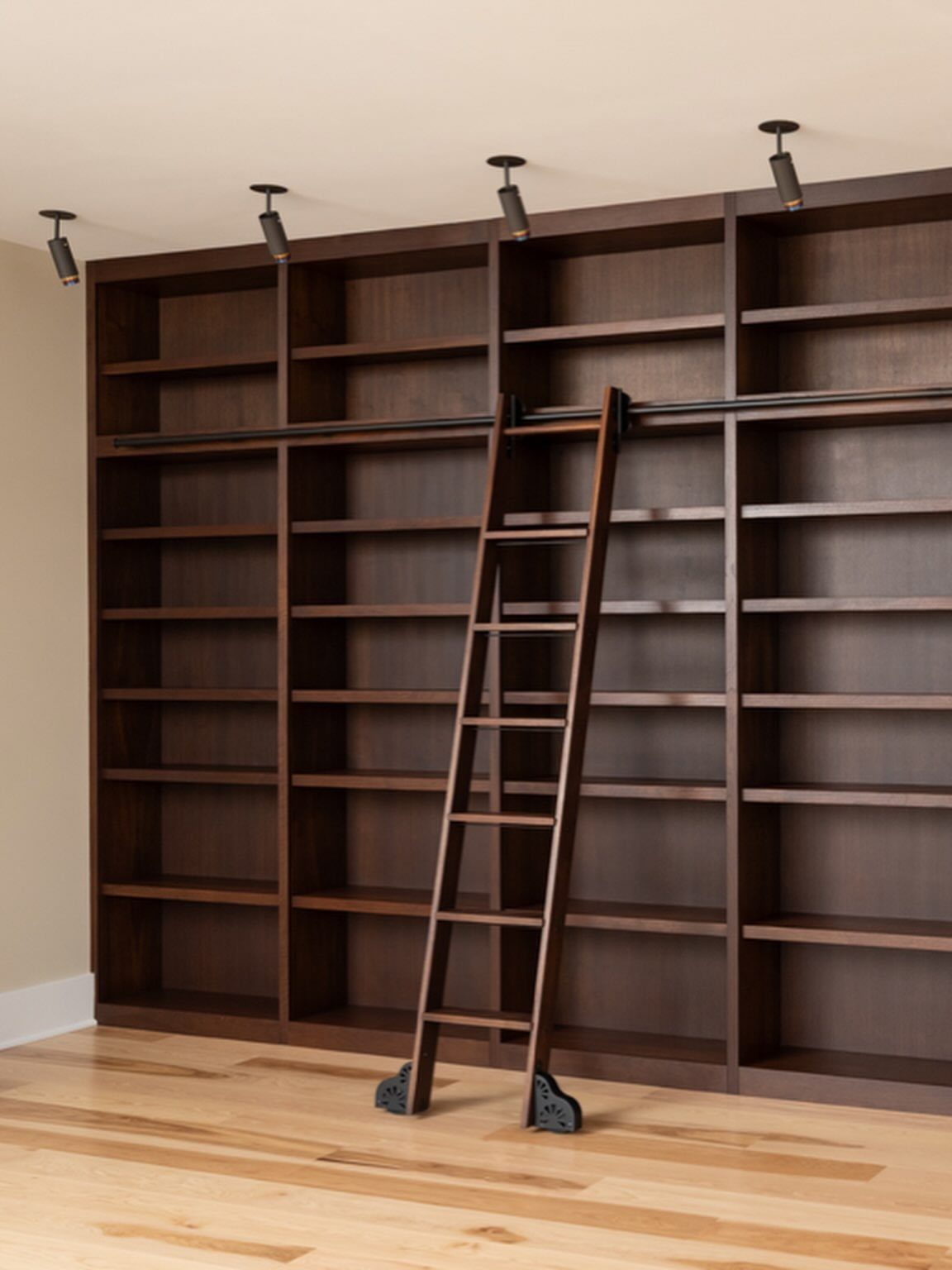
A rolling ladder is what turns tall dark shelving into a library. Without it, the top rows are decoration you can’t reach.
Dark wood works with light floors because the contrast keeps the wall from disappearing into the floor. I’d keep the books you read most on the lower rows and use the ladder to reach the ones you pull less often.
Ceiling spotlights, like the ones in this room, light the books without adding a single fixture to the shelves.
2. Floating Shelves with Integrated Lighting
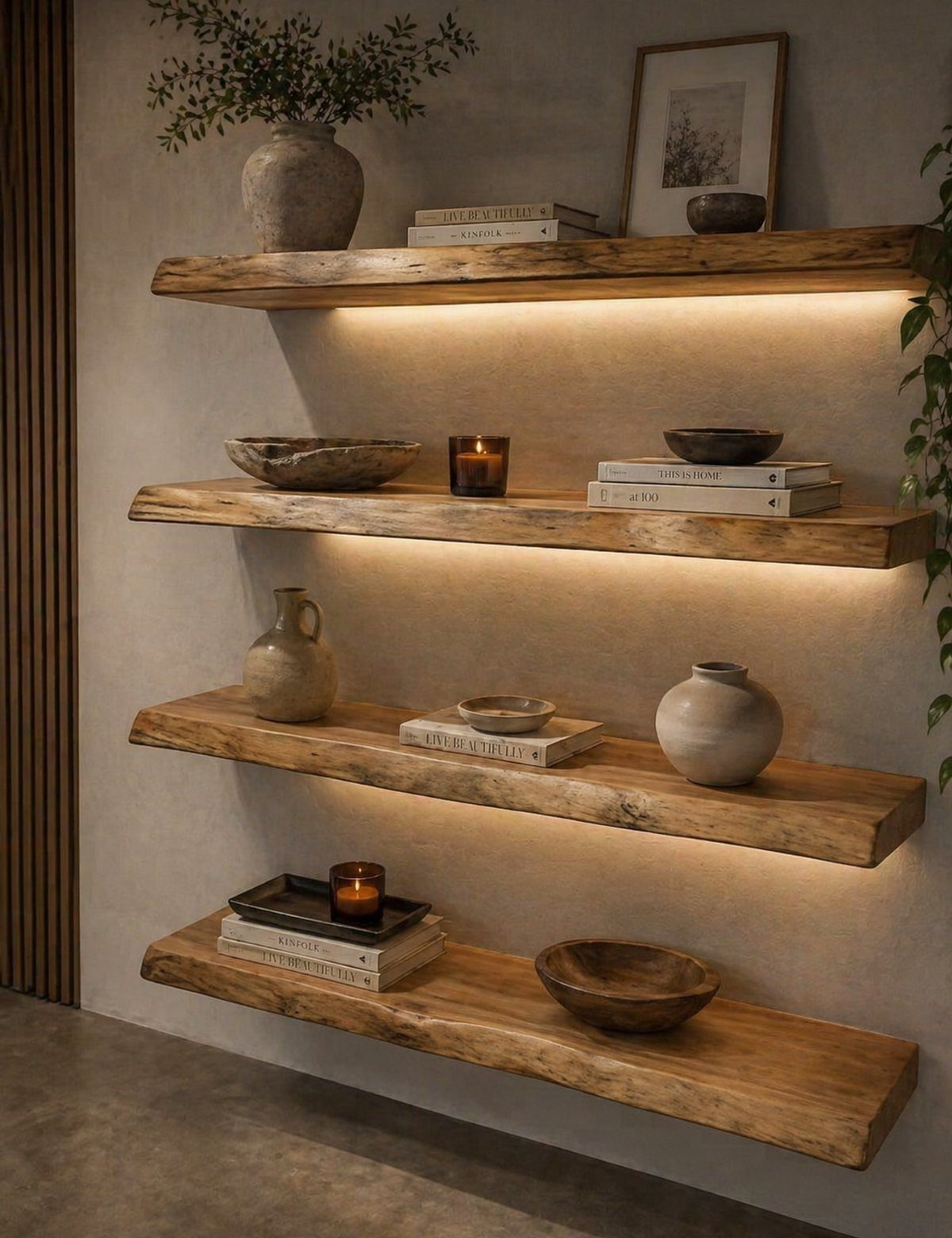
Warm light tucked under each shelf makes a few ceramics and books look intentional after dark. Live-edge wood is a good match because the uneven grain catches that glow.
A clean stack reads better against a neutral wall than crowded shelves do. Leave real gaps between objects so the light has room to land.
Plan where the power will come from before you hang anything, since a visible cord undoes the streamlined look.
3. Built-In Alcove Shelving
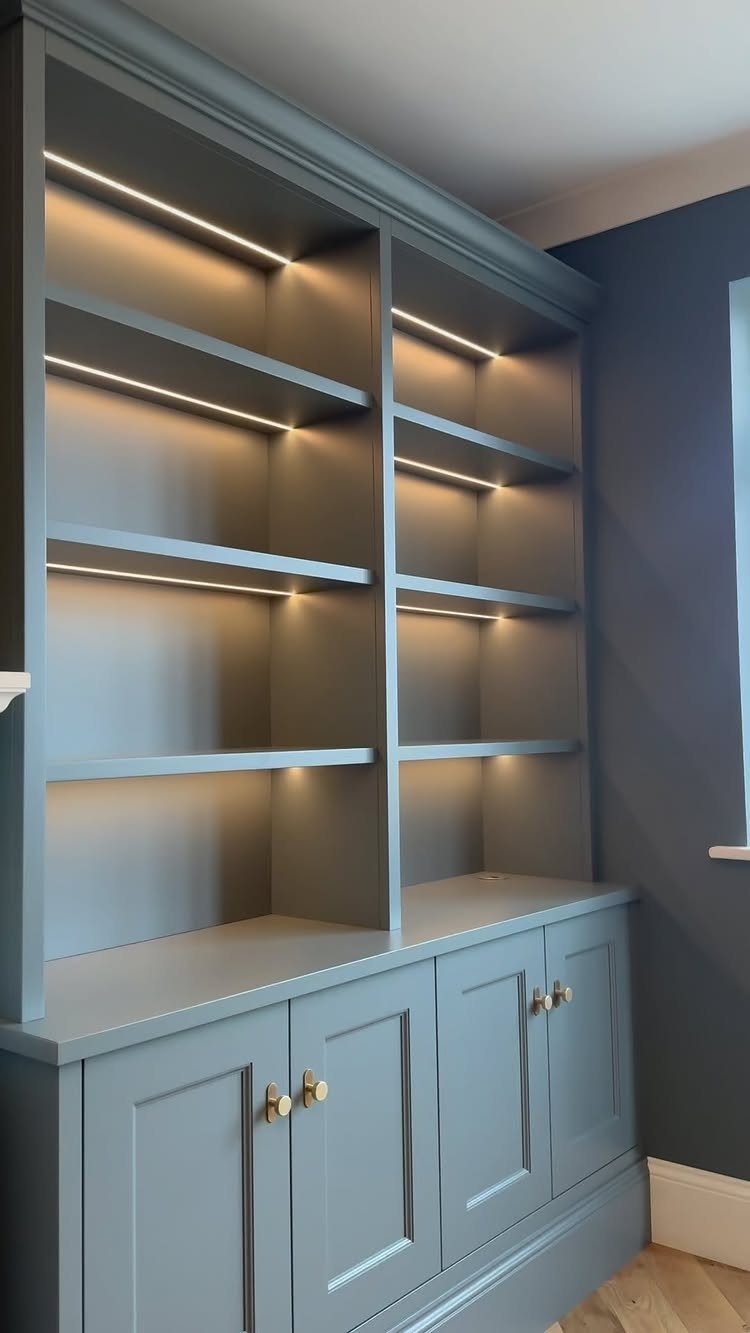
A narrow recess beside a chimney or wall jog is often dead space, and shelving fills it exactly.
Painting the whole unit a blue-grey, wall color included, makes it feel built in rather than furniture. Lighting built into the shelves adds depth to a slim opening.
Measure the recess at the top, middle and bottom, since walls are rarely square.
4. Built-In Window Seat with Shelves
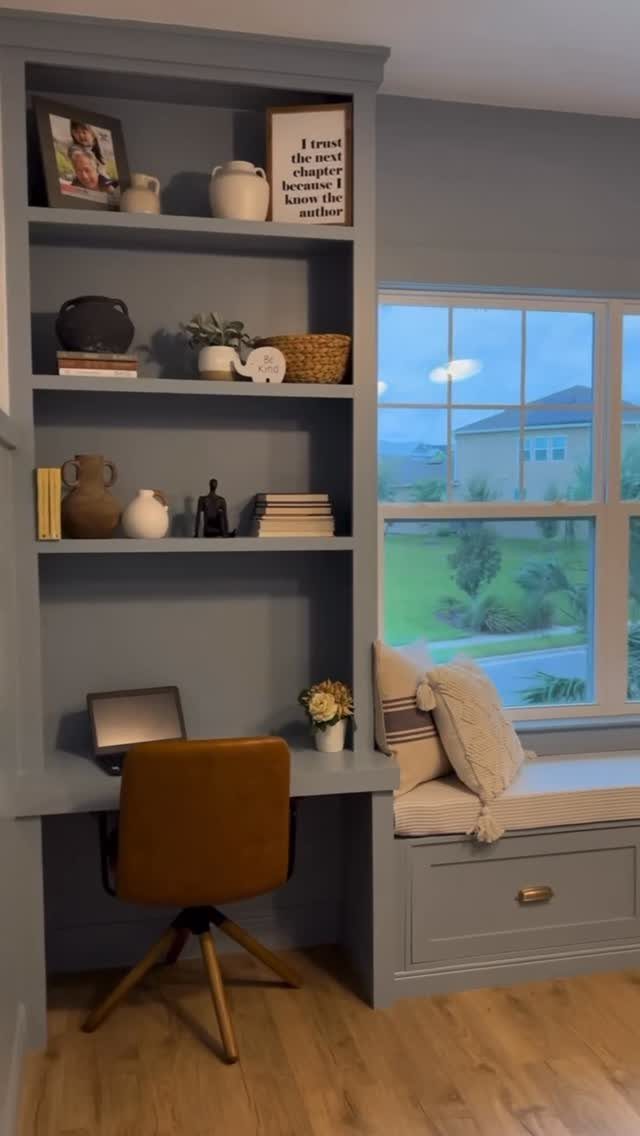
Window seat storage earns its place in a living room because it gives you somewhere to sit and somewhere to put things, in the same footprint.
A desk at one end, as in this grey unit, adds a work spot without needing a separate room.
Cushions make the seat. I’d go thick and removable so the covers can be washed.
5. Under-Stair Shelving
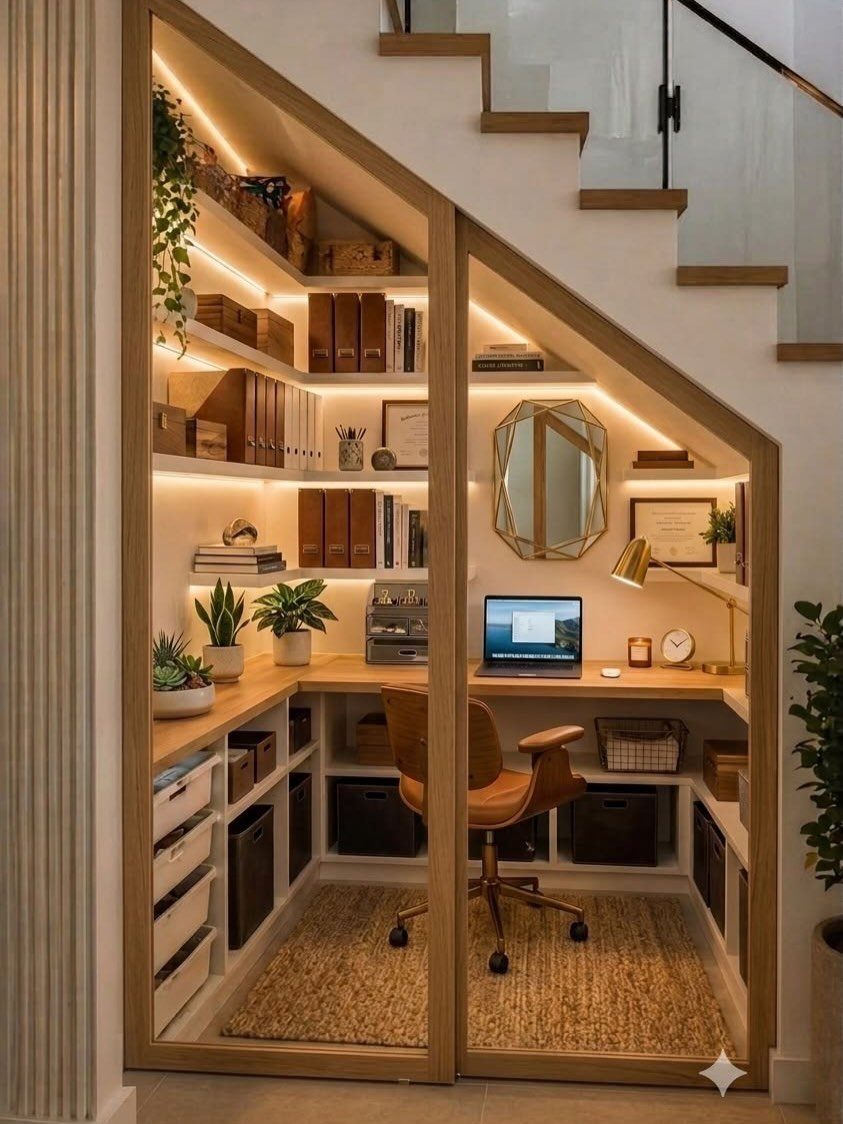
Space under a staircase usually collects coats and boxes, yet it fits a desk and shelves well. The slanted ceiling suits low items, so put the desk at the tallest end where you can sit upright.
Warm integrated lighting matters here, because a cavity under stairs gets little daylight. Wood shelving keeps it feeling like a furnished nook rather than a closet.
I’d pick a compact chair, like a leather one, that tucks fully under the desk.
6. Built-In Corner Shelving
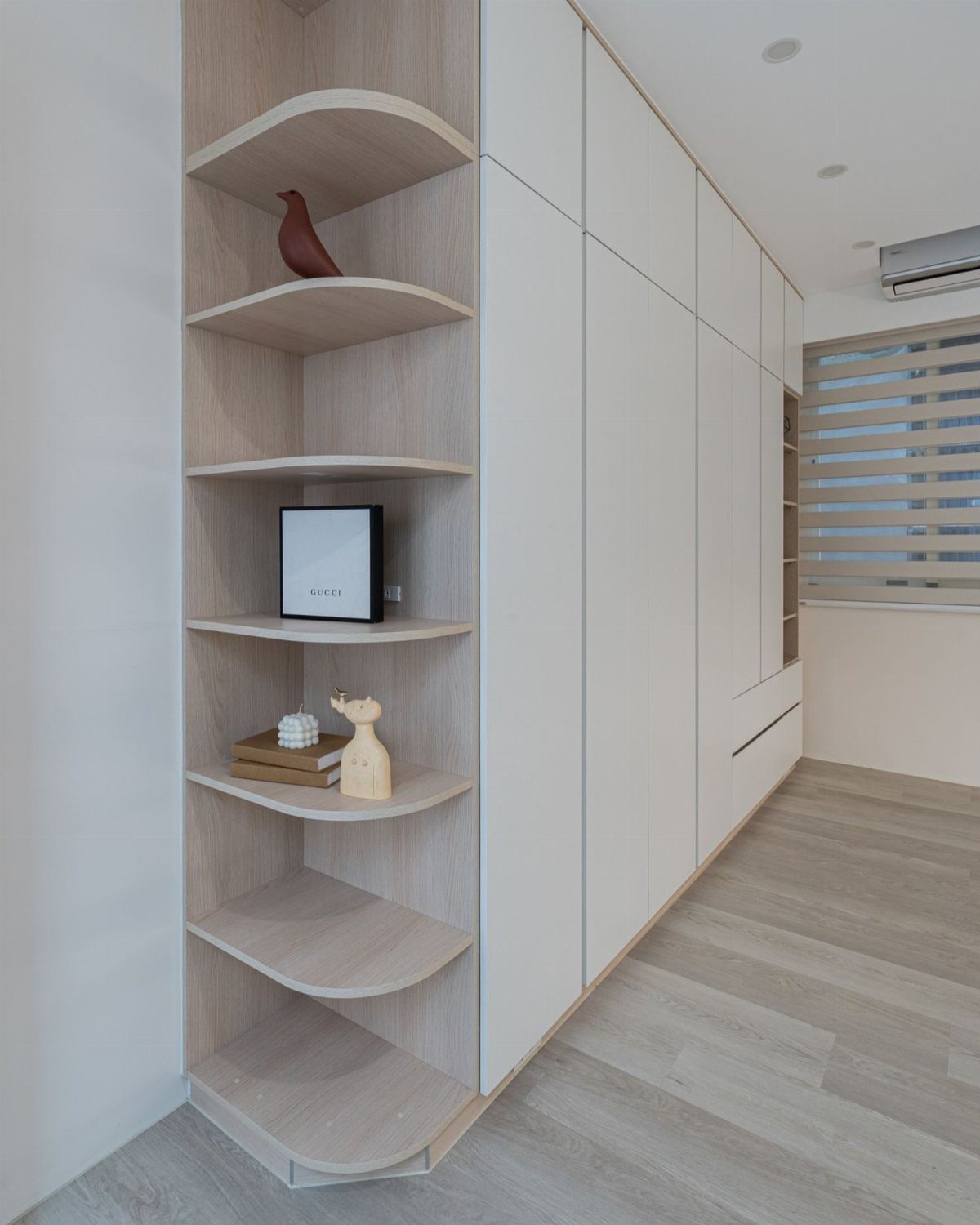
Corners are awkward for ordinary furniture, and curved shelves soften them instead of squaring them off. Light wood works well against white cabinetry, so the shelves stand out as a feature without clashing.
Keep the shelf contents small, as in a handful of decor items and a single box. Curves fit chunky books badly, so save the bulky stacks for straight shelves elsewhere.
Custom curved work costs more than flat boards, so I’d use it in one corner only.
7. Sculptural Niche Shelving
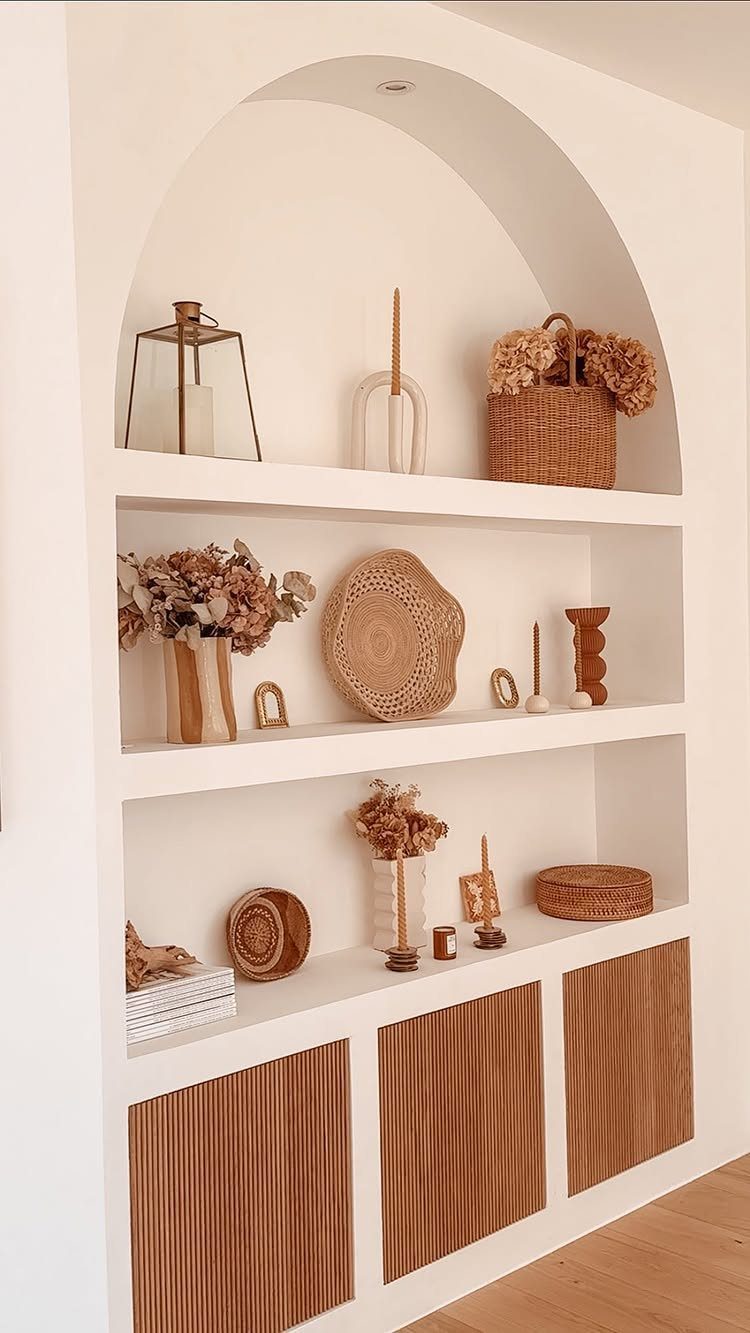
Arched niches give a flat wall a few small stages, and each one asks for a different object. Baskets, vases and a sculpture read best when every shelf gets its own height and texture.
I’d keep the shelves themselves sparse, one or two pieces per level, so the curve of the arch stays visible.
Painting the unit the same white as the wall makes the niches look carved out of it.
8. Open Shelves and Closed Cabinets
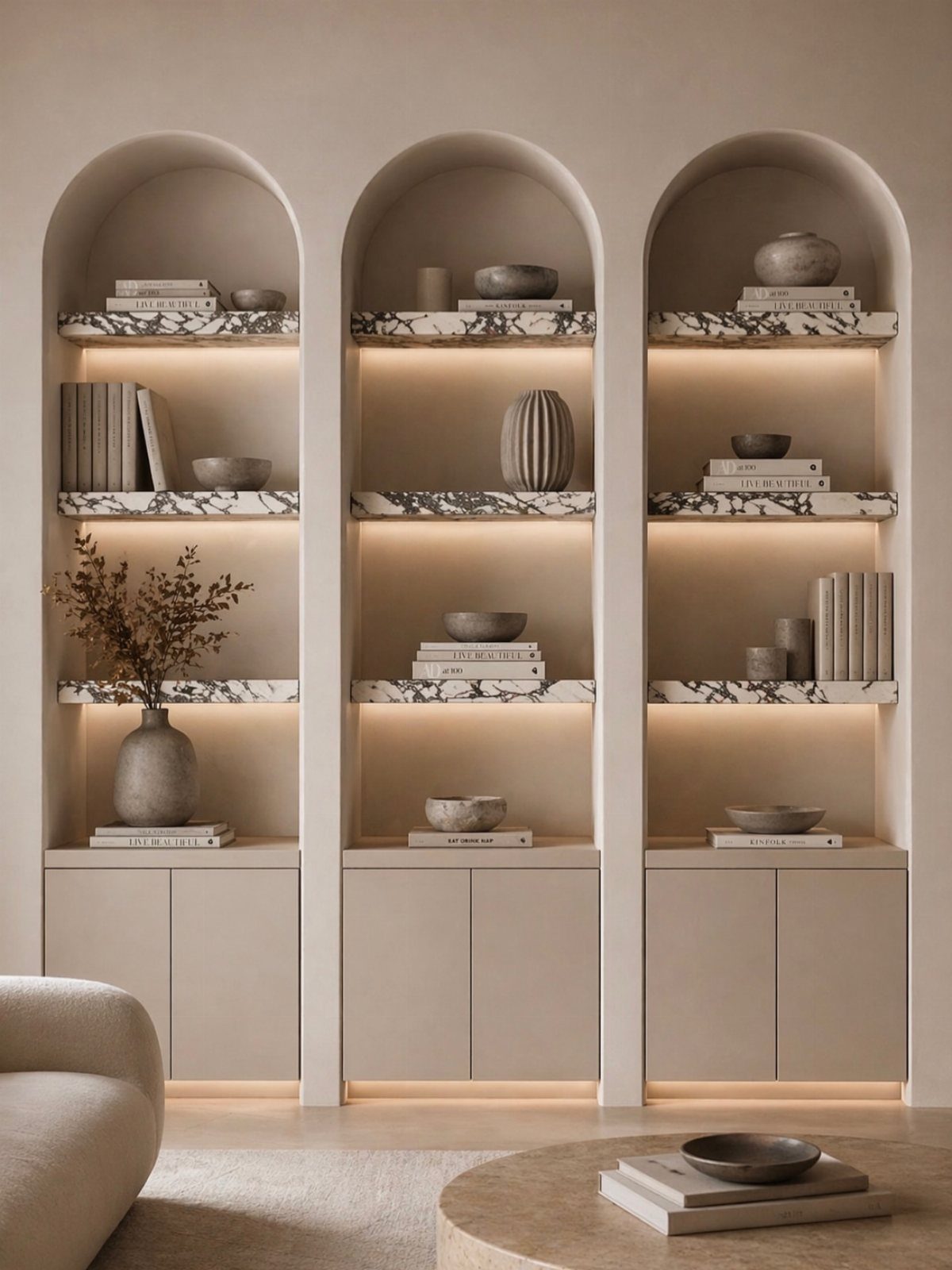
Marble shelves and closed cabinets split the job in two: what you want seen goes up, what you don’t goes below. Open niches suit a few vases and books with good spines, while the cabinets take remotes, chargers and throws.
Lighting inside each arch makes the display work after dark. I’d choose warm bulbs so the neutral palette doesn’t turn cold.
Keep the cabinet fronts plain. With 3 arches above, a busy door would compete.
9. Doorway Flanking Built-In Shelves
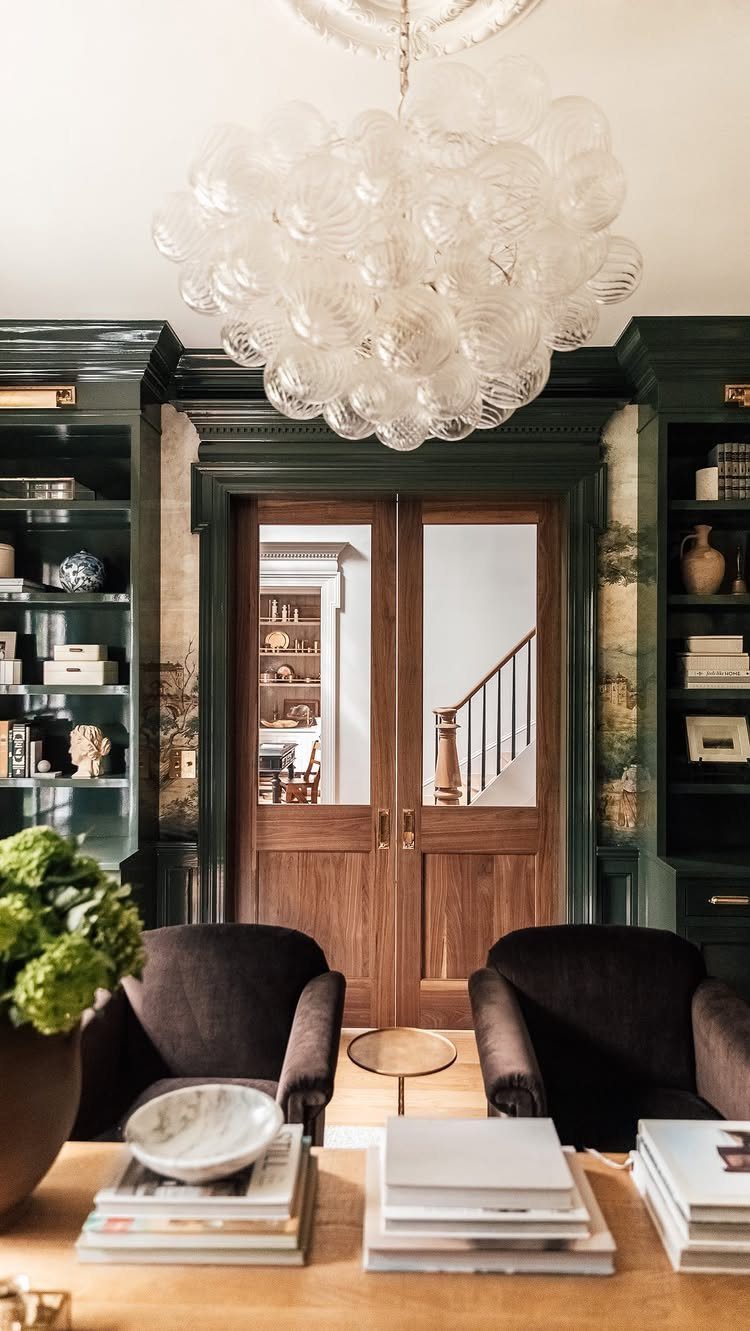
Shelves on both sides of a doorway turn a plain entry into a framed one. Dark green is a strong choice because wooden doors stand out against it instead of blending in.
Keep the 2 sides matching in height and spacing, since the doors are the center and any mismatch shows. I’d fill the shelves mostly with books, then add a few objects at eye level.
Shelves this deep in color suit a room with enough daylight, or the wall can feel heavy.
10. Built-In Fireplace Surround Shelving
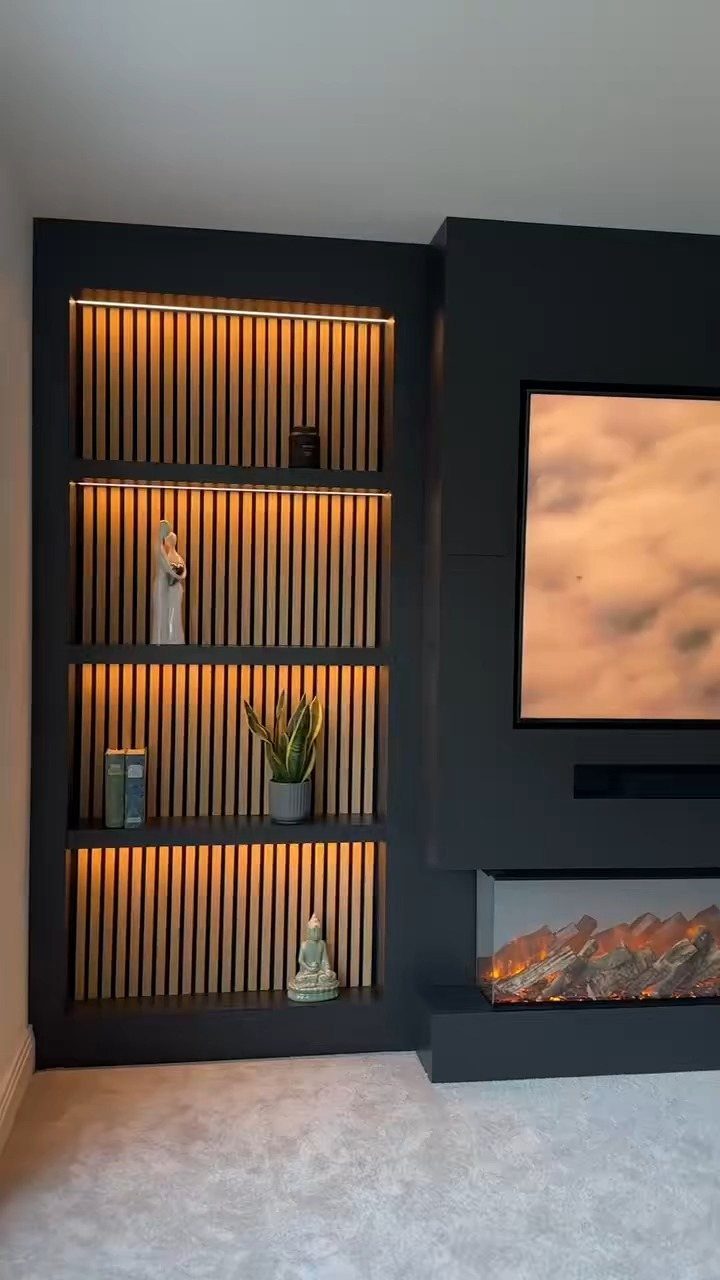
Slatted shelves beside a fireplace and TV soften all that hardware. Vertical slats give the unit texture, and dark grey keeps it from competing with the screen.
LED lighting built into the shelves adds a glow that makes the TV wall feel less like a black rectangle. I’d run the lights on a dimmer so they can match the evening mood.
Put a few objects on the shelves, not many. The slats and lights are the decoration here.
11. Built-In Shelves with Integrated Desk
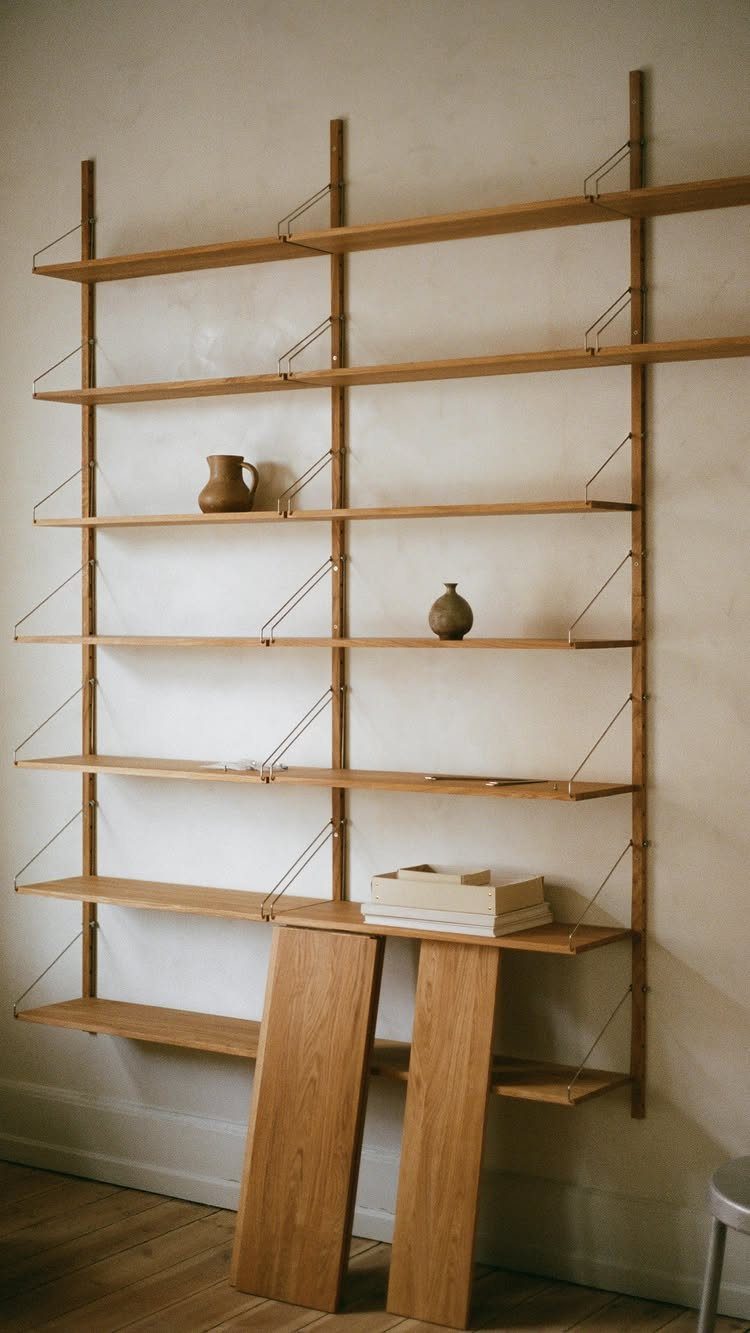
A deeper shelf held up by 2 angled legs makes a small desk with no extra furniture. The rest of the wall system stays shelving, so the desk reads as one continuous design.
I’d choose wood for the whole thing, legs included, so it reads as one piece. Keep the desk shelf clear of objects, and use the shelves above it for books and supplies you reach for daily.
It suits a laptop and a notebook, not a full workstation. Pick a slim stool or chair that tucks underneath.
12. Shelving Unit as Room Divider
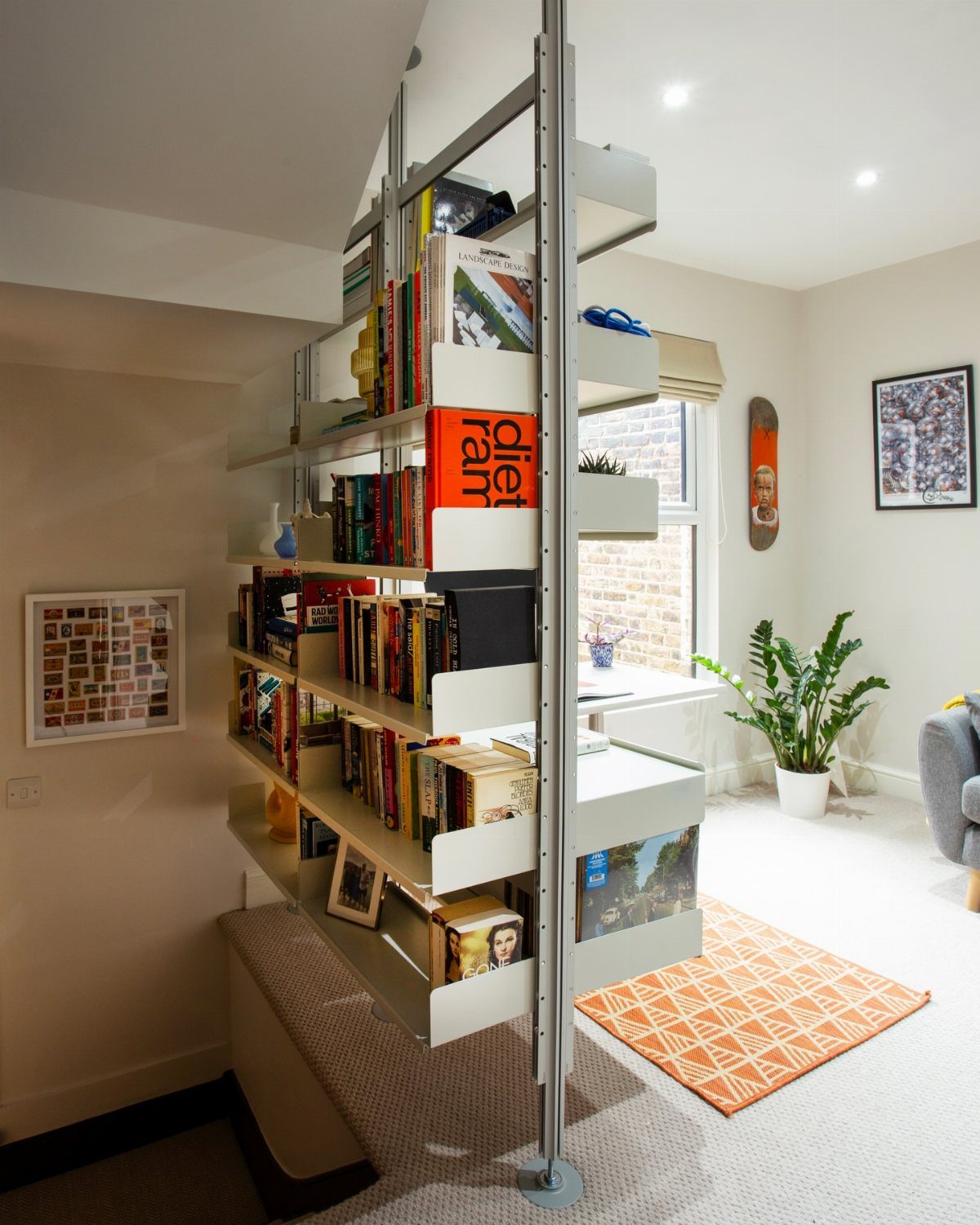
A tall open shelving unit divides a room without closing it off, so light passes through and the living area still feels connected to the space behind it. Books on both sides make the divider useful from either direction.
Place it where it separates the seating from the other zone, and I’d leave a rug under the sofa side so the boundary is clear. A plant on one shelf softens the metal frame.
Fill the shelves unevenly, with gaps, or the divider turns into a solid wall.
13. Built-In Shelving with Wine Storage
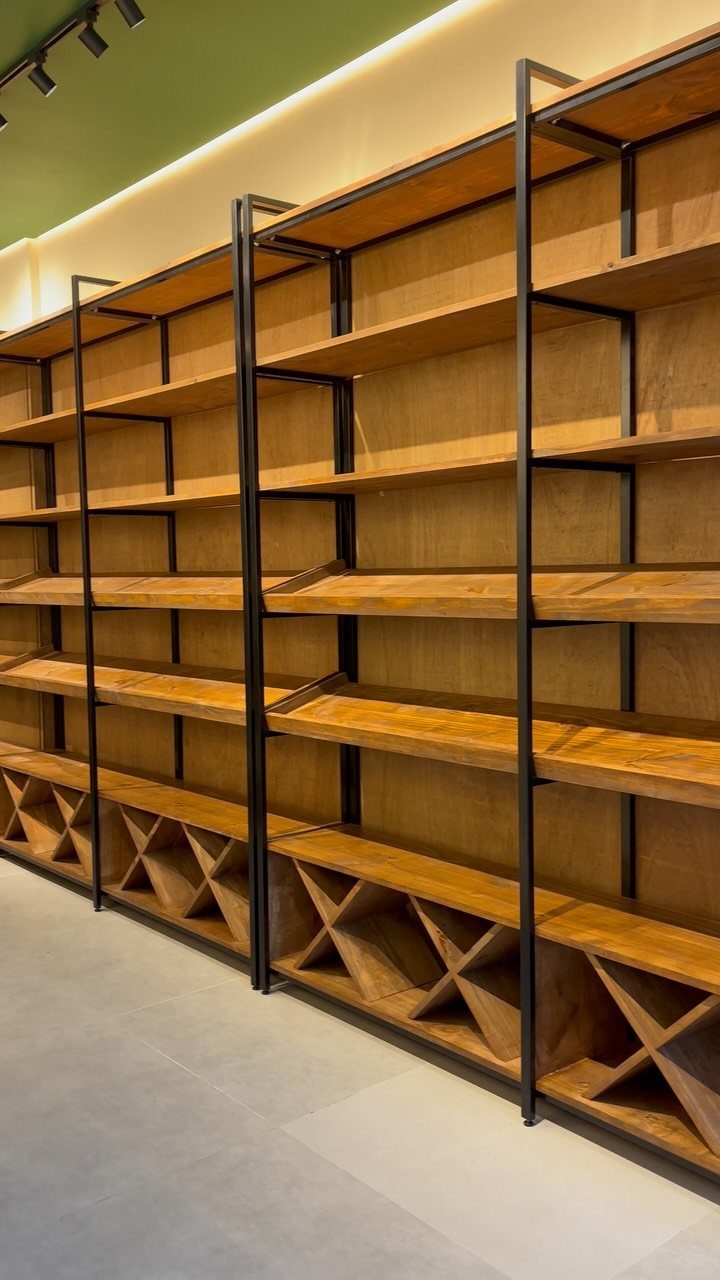
Wine racks set into the base of a shelving wall keep bottles low and the display above them. X-shaped compartments hold bottles on their sides, and each cell takes one or two bottles without much fuss.
Black metal supports against wood give the wall a firmer, more industrial look than all-wood shelves. I’d put the racks at the bottom because bottles are heavy, and the weight sits best near the floor.
Keep the upper tiers for books and a few objects, so the racks stay the one obvious feature.
14. Layering and Grouping
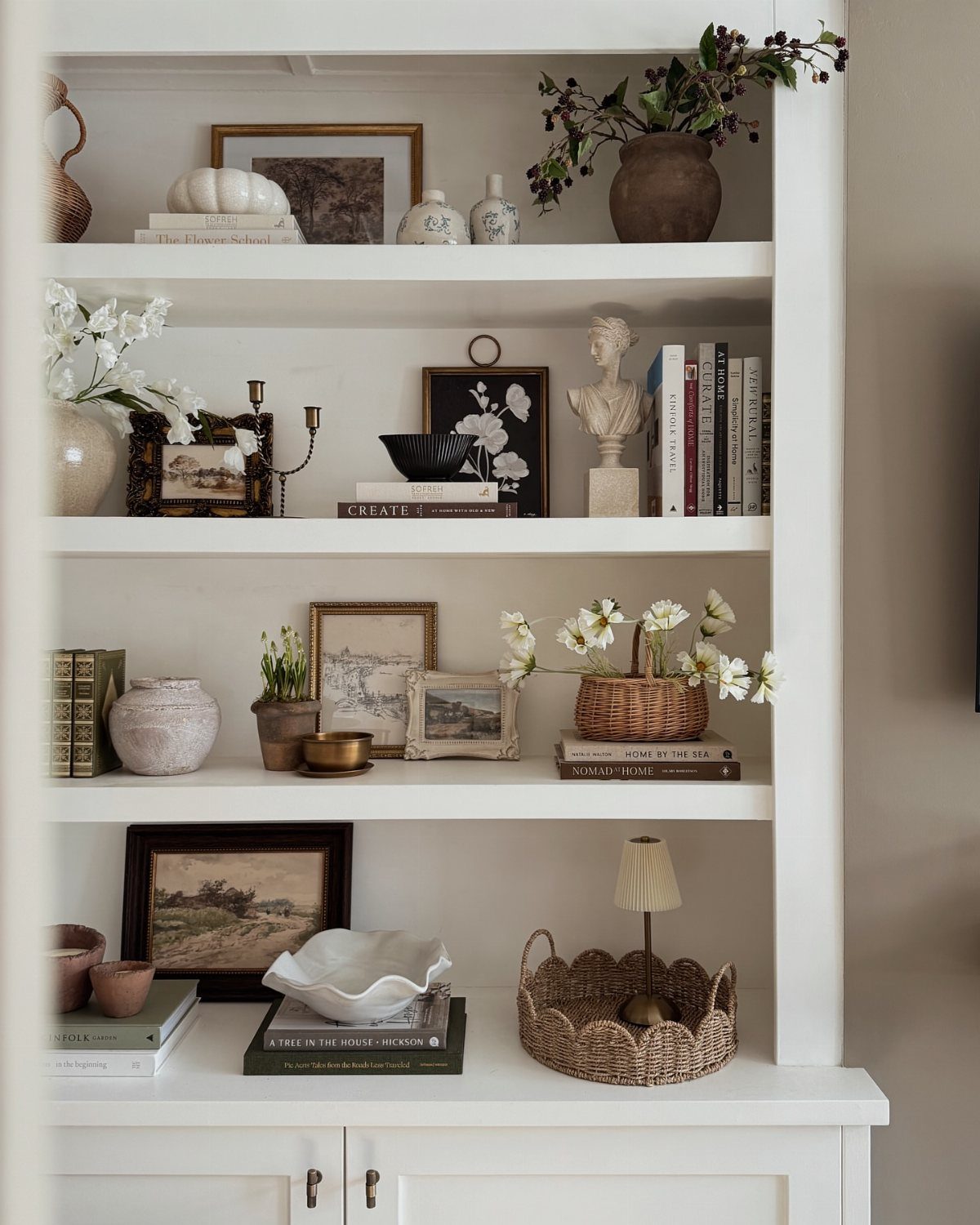
Depth on a shelf comes from layering: a framed print leaning behind, a stack of books in front of it, a vase or a bust at the front.
Overlapping pieces at different heights read as a composed display instead of a row of separate items.
Group objects in odd counts, like 3, and let the largest piece anchor each cluster. White shelves suit this because the pottery, art and book spines carry all the color.
I’d lean the art rather than hang it, so you can swap pieces in minutes.
Leave a few shelf sections half empty, or the layers turn to clutter.
Benefits of Built-In Shelving
Built-ins earn their cost by replacing furniture. A single wall unit can hold the TV, the books, the family heirlooms and the remotes, so you skip a separate media console and a bookcase or two.
They also add value.
A built-in is permanent, and future buyers tend to see it as a feature of the house. If you rent, that doesn’t apply, so a freestanding unit fitted tightly to the wall gets you most of the look.
Customizing is where the real gain sits. You choose the depth, the shelf spacing and where the drawers go, so the storage matches what you own instead of what a store happened to stock.
Corners are a good place to use that freedom, since the vertical space there usually goes unused.
Styling Tips for Built-Ins
Decide what the shelves must hold before you style anything. Books, electronics and decor each need different depths and heights, and that choice shapes everything after it.
Mix open and closed storage. Put art, photos and plants on the open shelves, and use the cabinets or drawers below for board games, toys, remotes and chargers.
Then pick a direction.
A minimal approach suits clean, modern lines. Heirlooms, travel souvenirs and favorite reads belong in a space that should feel like yours.
Treat the styling as ongoing, not finished.
Swap items with the seasons, rotate books forward, and add one new piece as your home changes. A shelf that never changes tends to go unnoticed.
DIY Built-In Bookshelf Steps
Begin with a loose sense of the look you’re after. A rough plan keeps the result intentional, since built-ins become what the eye goes to first in a living room.
Decide early whether you want mostly open space or shelves that look full. That answer affects how many shelves you build and how much you need to buy to fill them.
Then list what the unit has to store: books, electronics or decor. Your list sets the layout and size before you cut a single board.
Plan a mix of open shelves above and closed cabinets or drawers below, so everyday clutter has a hiding place.
Last, settle the details, such as materials and finish, before you start. Choosing them together keeps the whole wall looking like one design.
Next up, determine how much of your wall space you want to dedicate to bookshelves, says Jerome Bertuglia, owner of Prime Homes in West Hartford, Connecticut, who has over 30 years of experience designing custom built-in bookshelves and home libraries.
Frequently Asked Questions
How to make bookcases look like built-ins?
Add molding and paint the whole unit one color, wall included, so it reads like the room’s own architecture instead of a piece of furniture. Fit it tightly to the wall and style it to match the room around it.
What are some examples of shelves that look like built-ins?
Floating shelves hung in a series between walls or above a credenza give the look without custom carpentry. Premade wood shelves in various lengths work if custom is out of reach.
Is it cheaper to buy or build bookshelves?
I can’t give you a reliable price comparison, since costs depend on your materials and size.





