Which of these 10 living room ideas fits depends on what you’re allowed to change: a renter can use a dimmable LED strip behind the TV, removable hooks for a gallery wall, or a single painted wall that can be painted back, while an owner can take on slatted wood panels or a dark fireplace wall.
The span runs from a tray in brass or gold to a full wall of color, and the cheapest versions cost a gallon of paint and a weekend.
Pick the idea that fits the room you’re working with and what you want it to do.
1. Luminous Blue
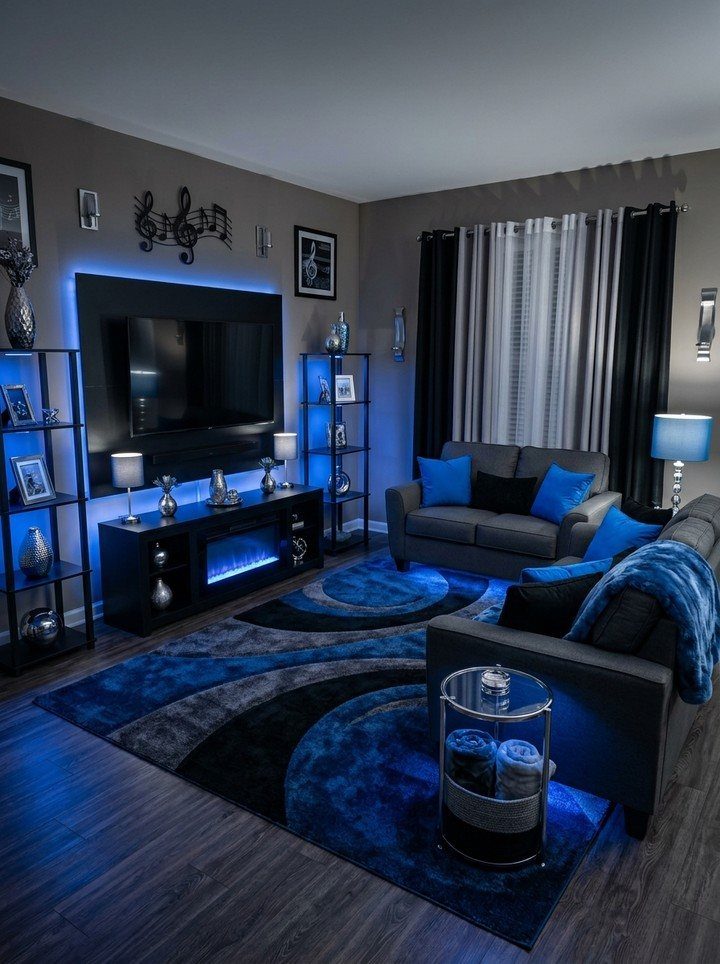
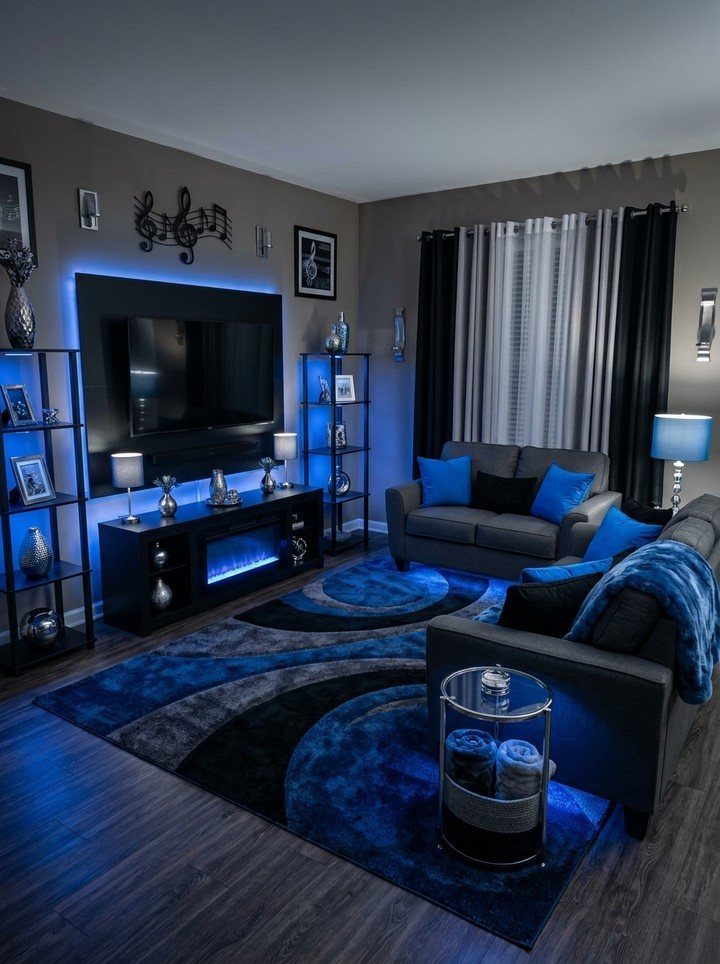
Blue works best in a living room when it comes from a few places at once.
The rug carries the pattern, the grey sofas stay quiet, and the LED strip behind the TV and under the console adds a glow that paint can’t.
Strip lighting is the cheap, renter-friendly piece of this look. Pick a dimmable one, so the blue can drop to a soft wash for evening and not turn the room into a screen.
2. Meadowland Green
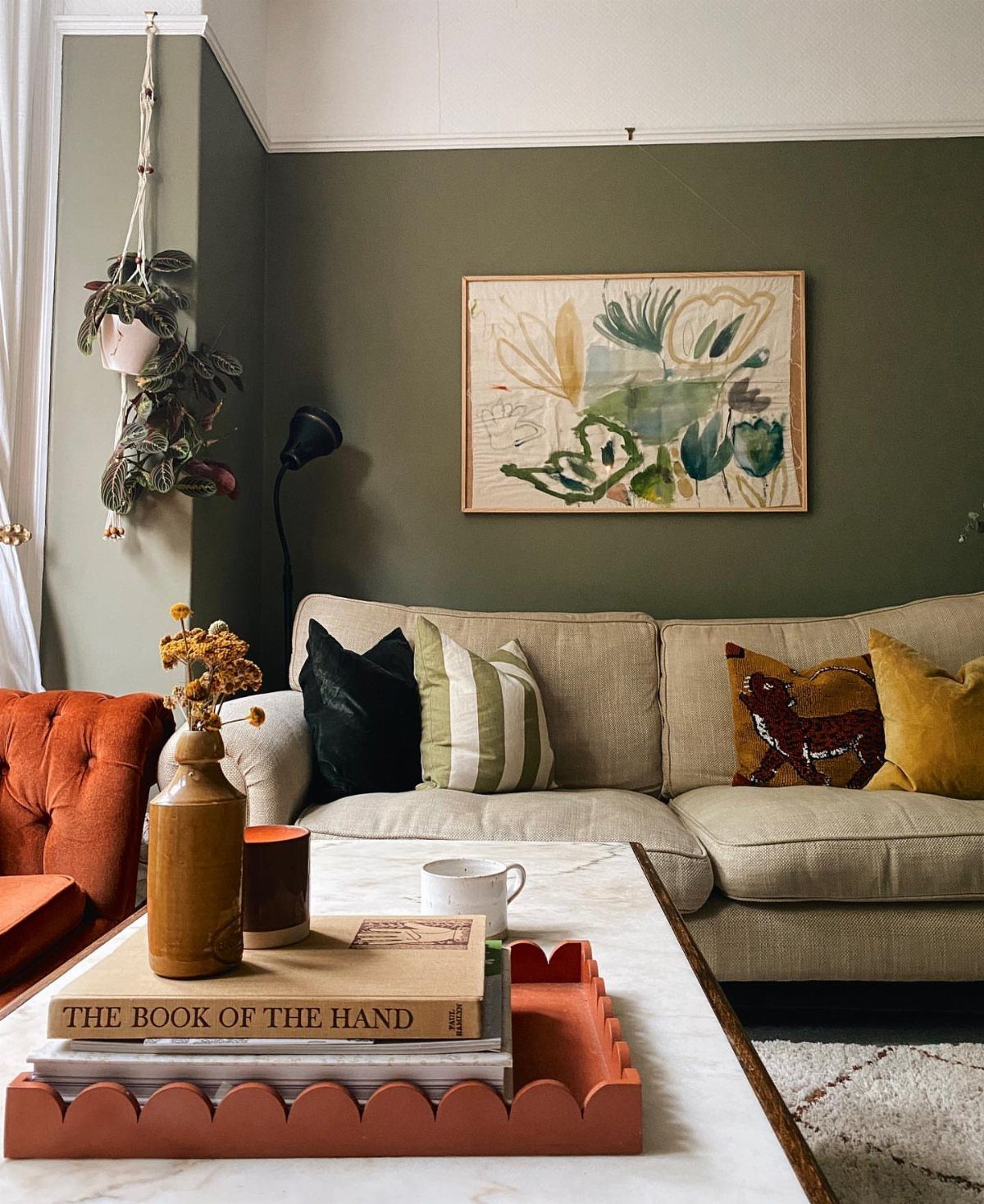
A single mid-green wall behind a beige sofa calms a room faster than most décor swaps.
Green sits close to a neutral, so it plays well with the marble coffee table and the warm terracotta tray without any extra effort.
Paint only the wall the sofa sits against. One wall keeps the cost to a gallon and a weekend, and a renter can paint it back.
I like keeping the rest pale. Let the green do the talking, and let books and small objects supply the detail.
3. Clay
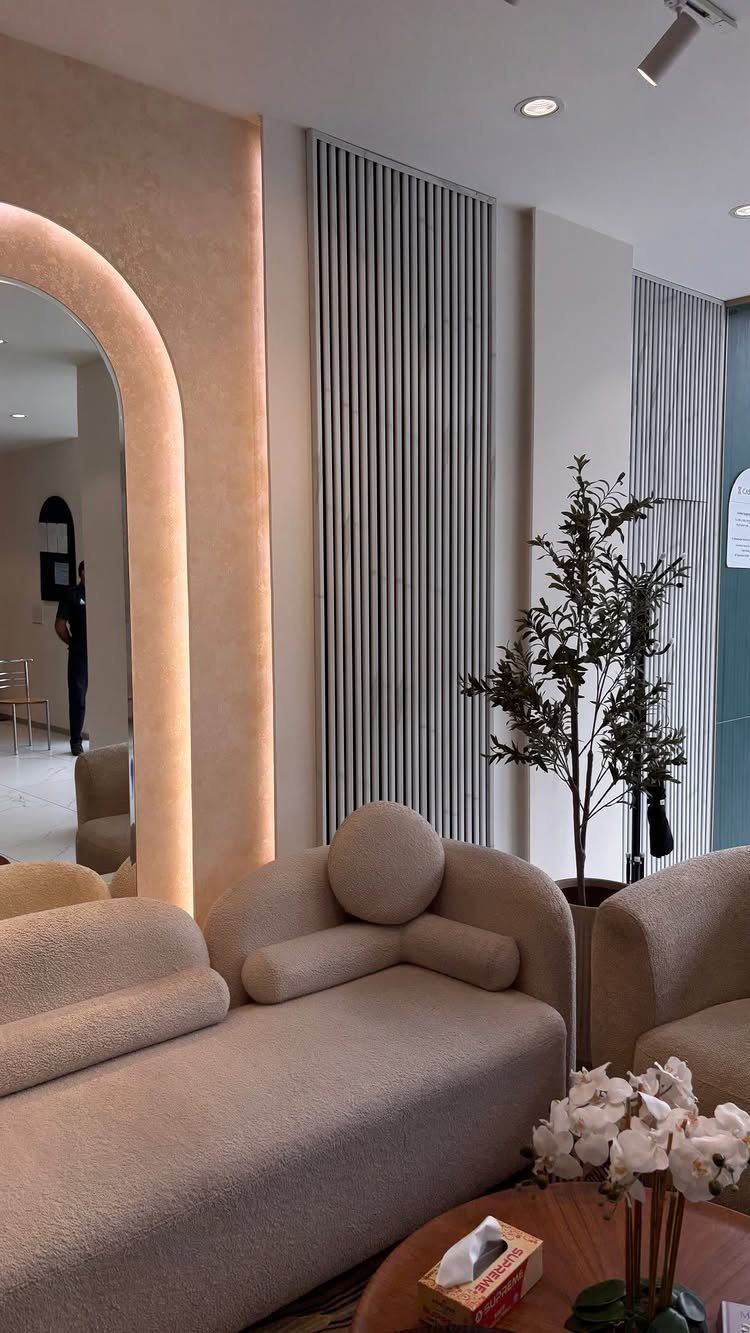
Clay is a neutral with a blush in it: pinkish-tan walls that read warm instead of stark white or gray. Against a curved beige bouclé sofa, the 2 tones melt together, and the room feels soft from every angle.
Slatted wood panels add texture so the color doesn’t go flat, and an arched mirror repeats the sofa’s curve. If panels are out of budget, the mirror alone does a lot.
Test a sample patch first and check it morning and evening. Pink-leaning shades shift a lot with the light.
4. Deep Neutrals
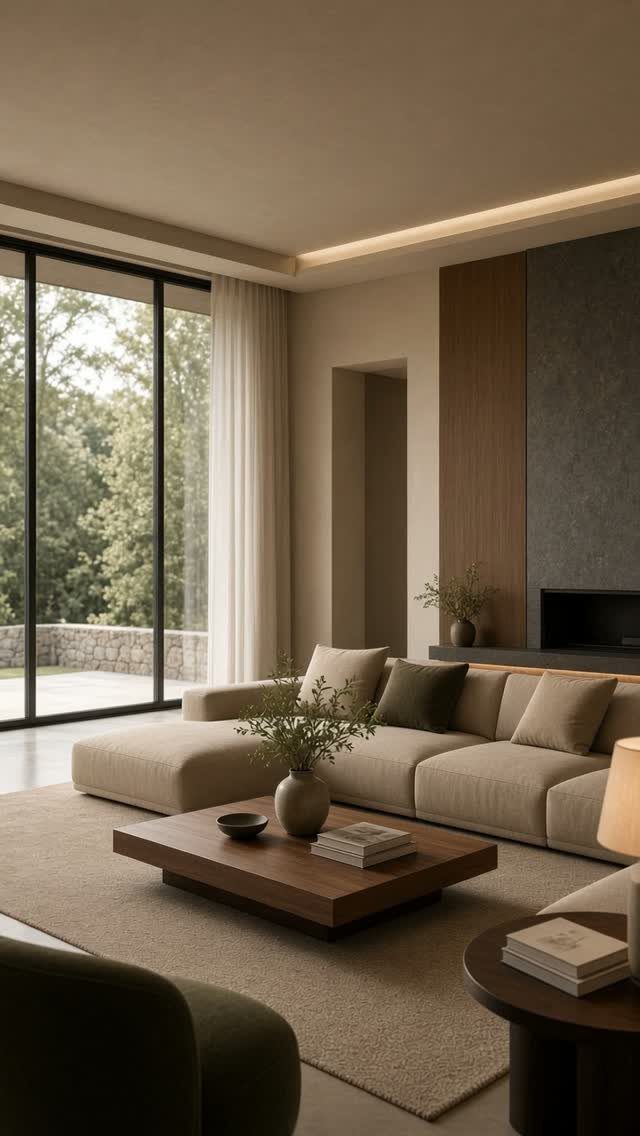
Deep neutrals swap the usual white and cream for heavier shades: a grey fireplace wall, a dark wood coffee table, a beige sectional that stays warm against both.
Together they feel grounded, and large windows with greenery outside add the only bright color needed.
My pick is to go dark on one feature, like the fireplace wall, and keep the rest lighter. A whole room of dark tones needs good daylight to avoid feeling closed in.
Wood is the easy way in. A dark coffee table adds depth without a paint can.
5. Layered Textiles
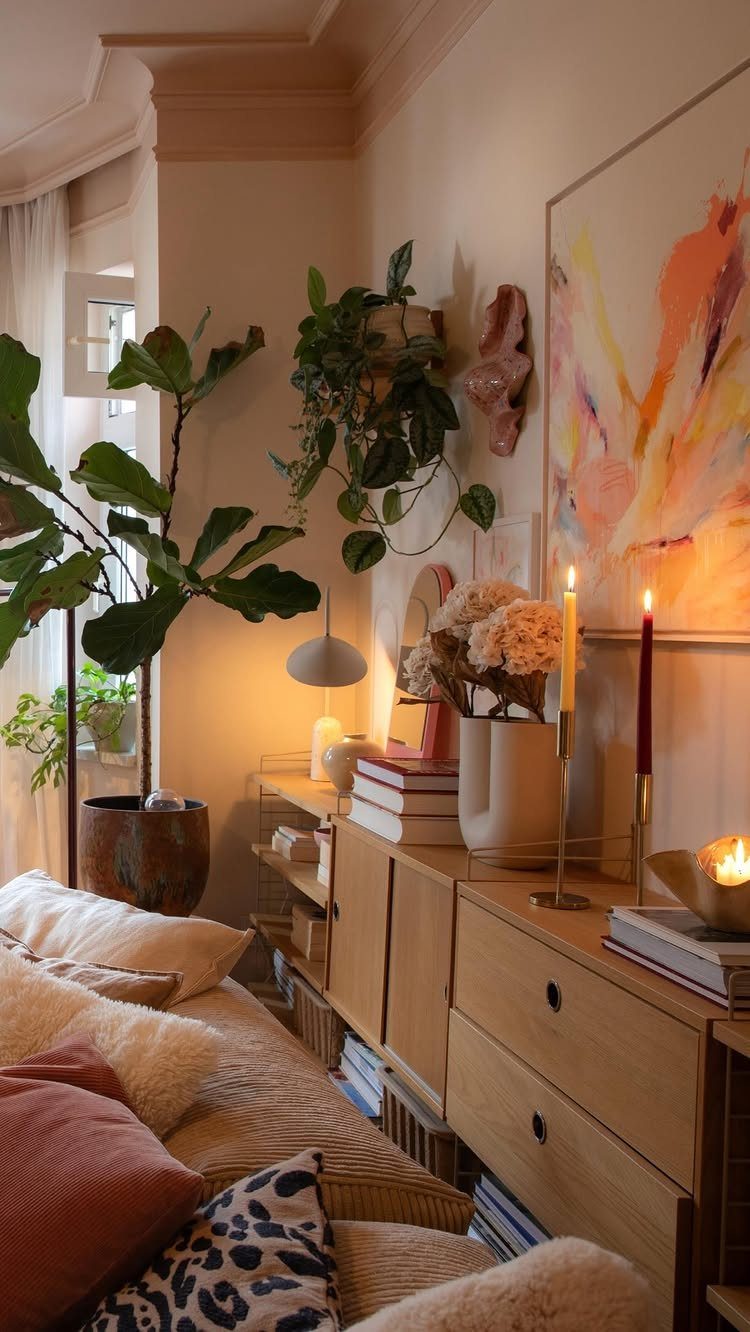
Keep the palette to two or three colors and change the texture instead: nubby next to smooth, a pattern beside a solid. Vary the sizes too, so the pile doesn’t look lined up.
Odd numbers look more casual than pairs, and a sofa reads fuller with an odd count than an even one.
6. Sculptural Furniture Pieces
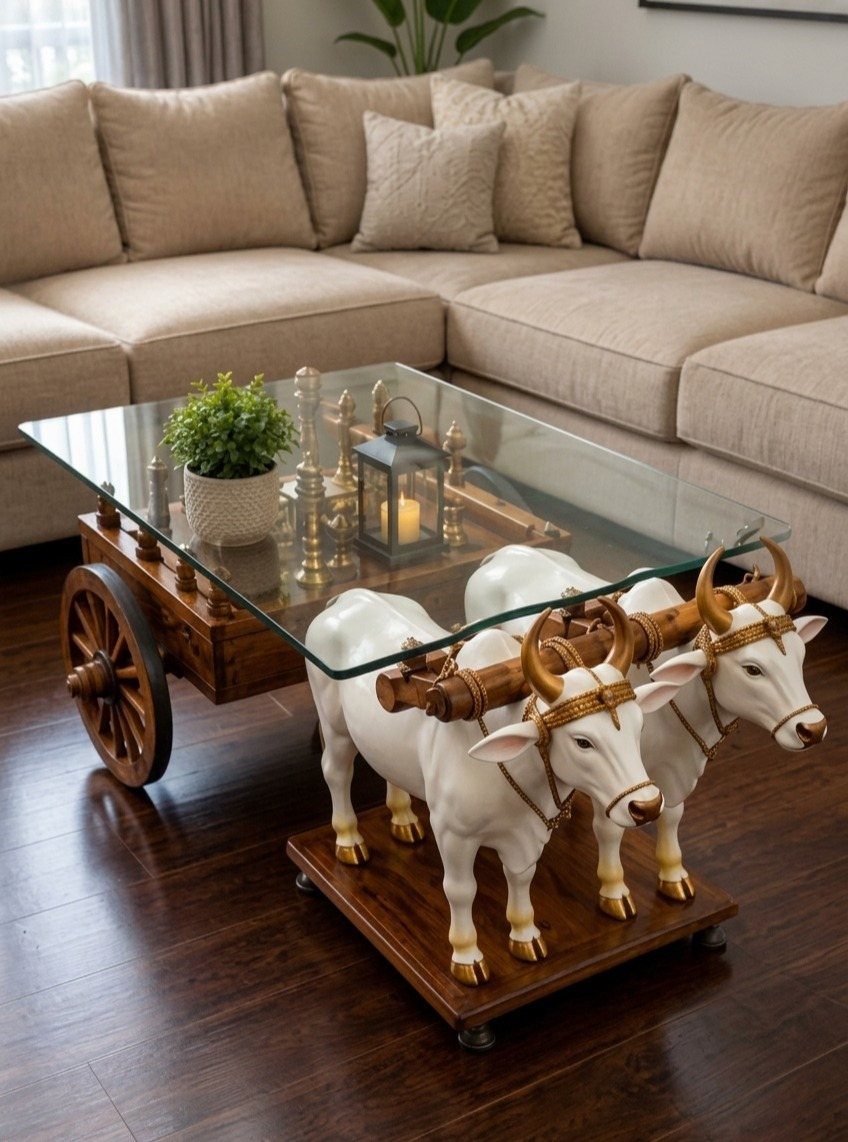
The glass top keeps it light, so the sculpture stays visible instead of hiding under a slab.
This kind of piece needs calm around it, like the plain beige sectional here. One statement item per room is my rule; two will compete.
Secondhand shops and antique sellers are the budget route. Look for a sculptural base that can take a custom glass top.
7. Reading Corners
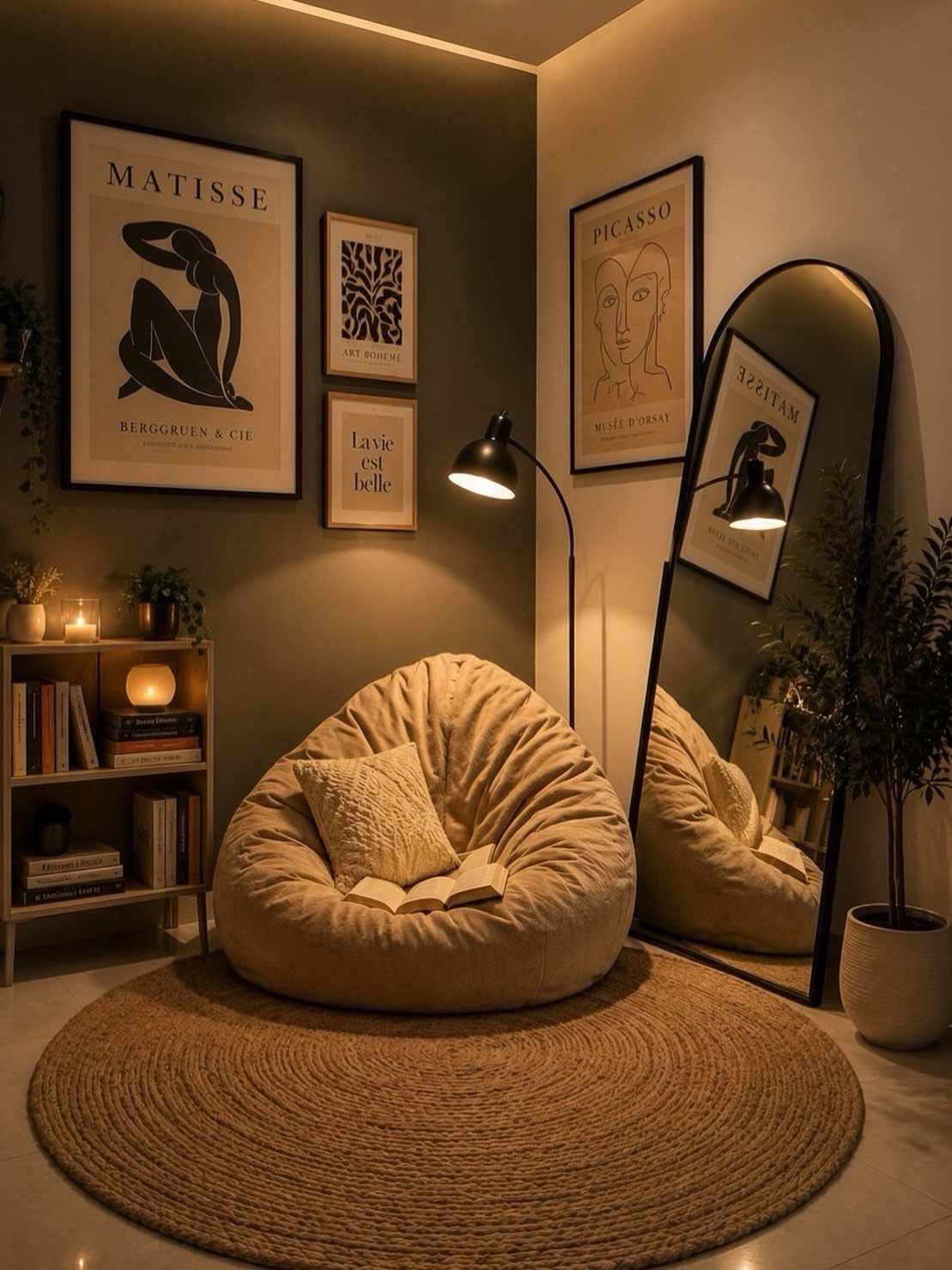
A beanbag, a floor lamp and a small shelf will make a reading corner in a tight spot, with no building required. The round jute rug marks the spot, so the corner reads as its own room.
Put the lamp behind or beside the chair, never in front, so light falls over your shoulder onto the page. A warm bulb keeps the glow dim and soft for evenings.
I like a mirror here, since it bounces that light back into the nook.
8. Eclectic Jewel Tone Palettes
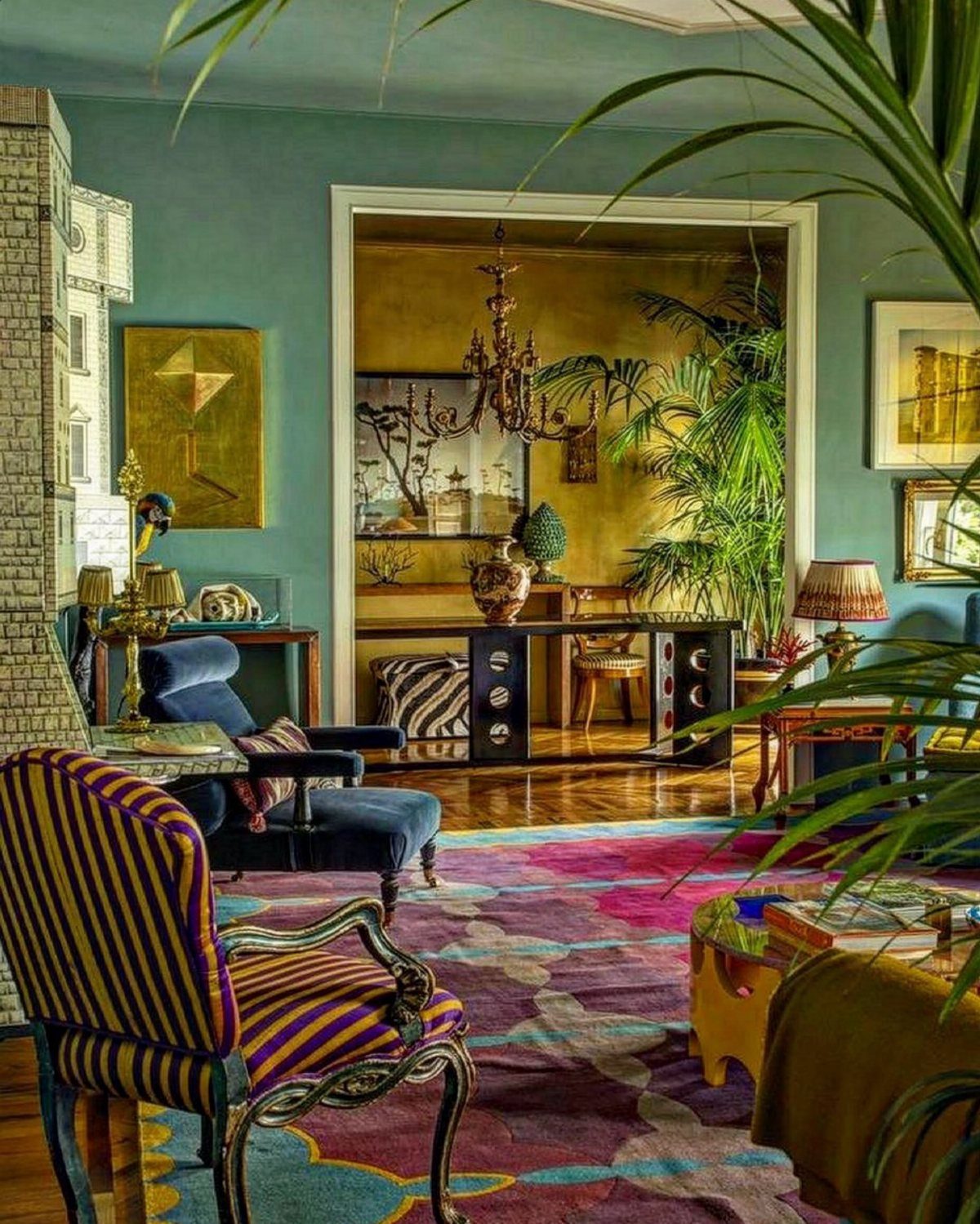
Teal walls can take more color than most people expect, as long as the other pieces share the same depth.
Jewel tones are rich, so a purple and yellow striped armchair, a blue velvet chair and a patterned rug sit together without clashing.
Start with whichever piece anchors the room, the wall or the rug, and pull everything else from it. Pattern goes on one large piece and the rest stay solid, so the room reads as collected, not chaotic.
Reupholstering costs more than most buyers expect.
9. Rust Sofa with Metallic Accents
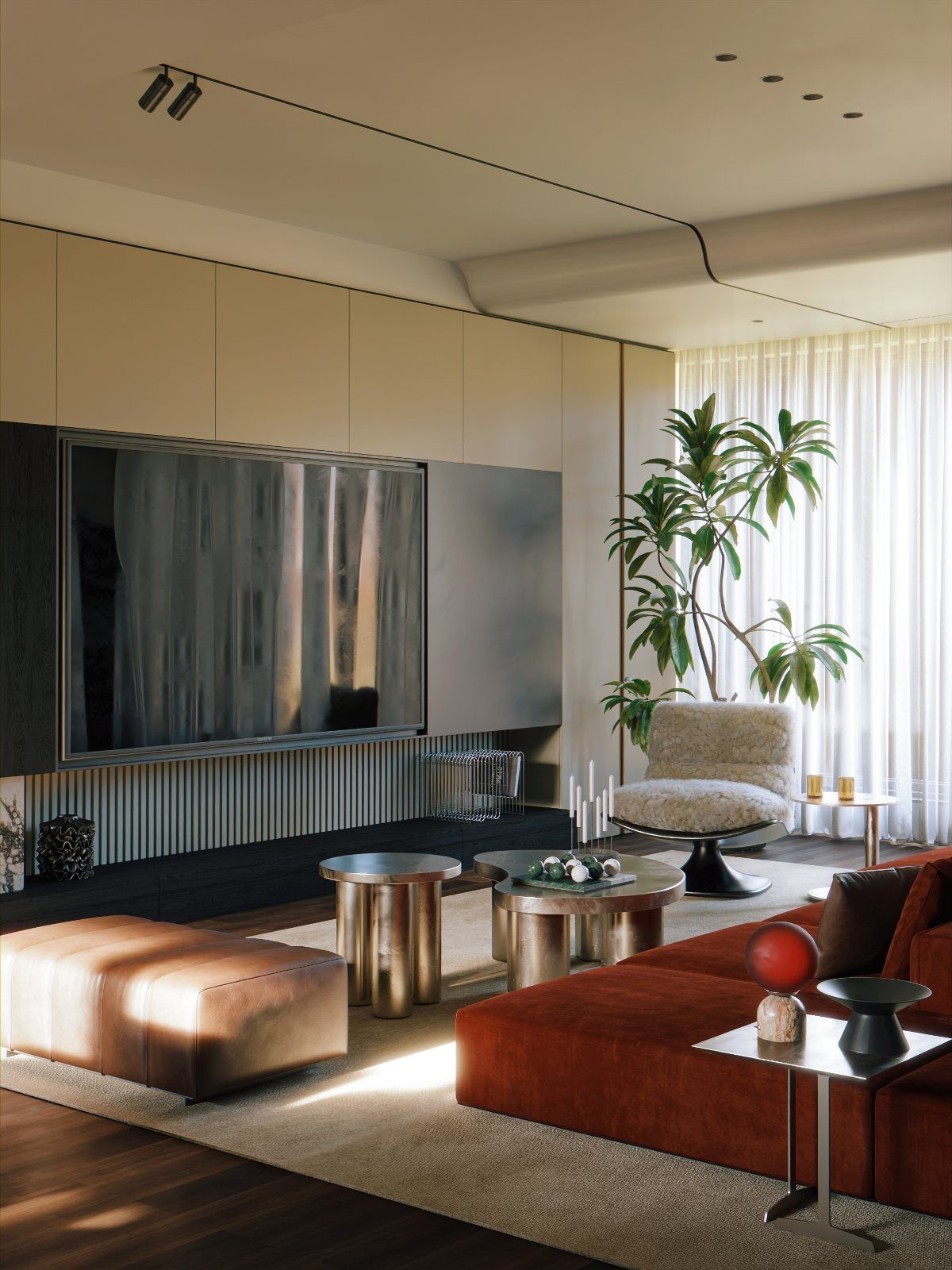
Rust is a sofa color that wants metal beside it. Gold coffee tables pick up the orange in the upholstery and throw light back at it, which keeps a big sectional from looking heavy.
Keep the walls plain and the rest of the furniture pale, like the white fuzzy chair, so the rust stays the one loud thing. A plant adds green, the natural partner to rust.
Track lighting suits the look and is easy to aim at the tables. Brass or gold finishes cost less in small pieces, so try a tray before buying tables.
10. Colorful Accents on Dark Walls
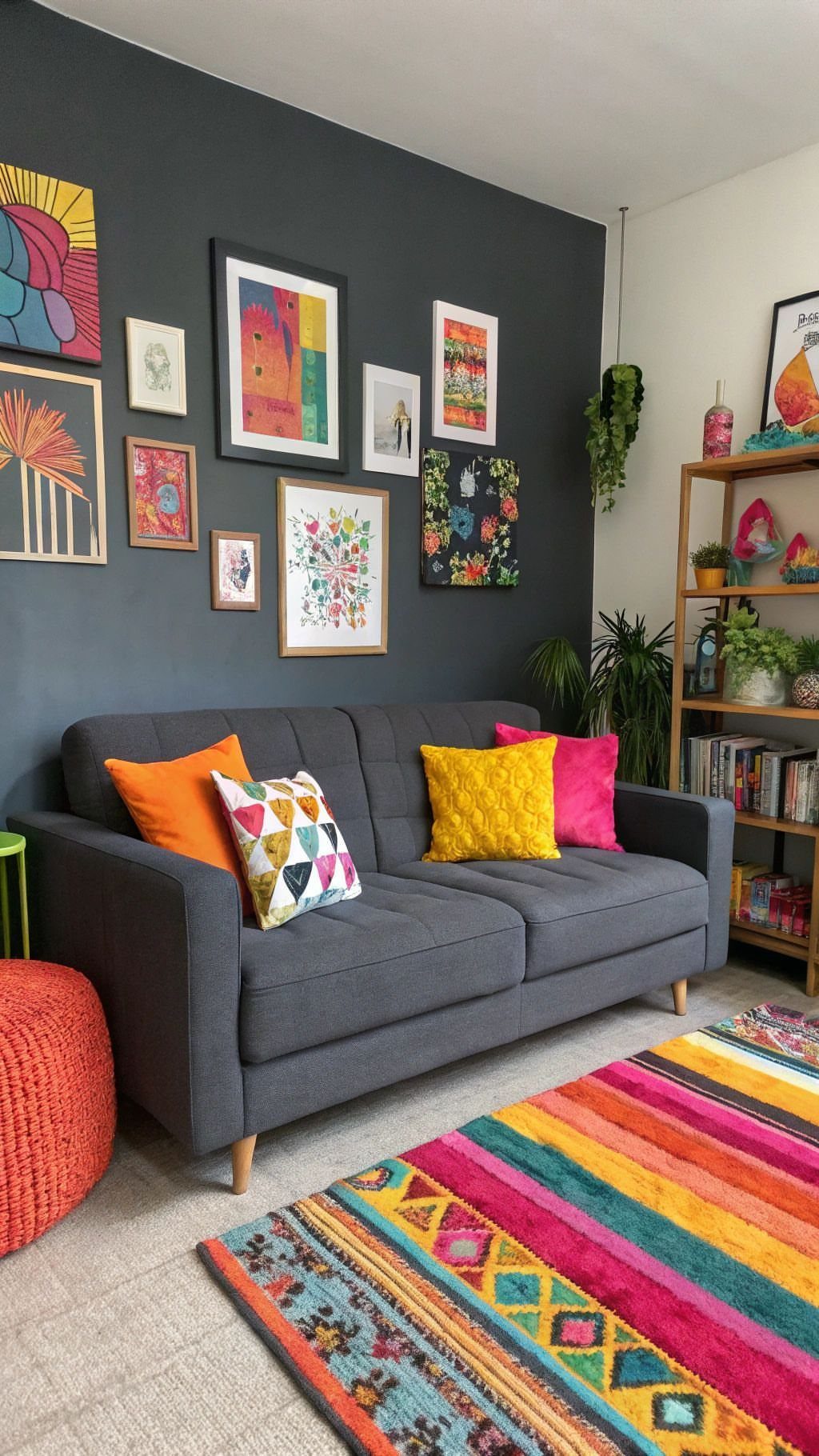
A dark grey wall makes art look brighter than it does on white. Hang the frames in a tight gallery arrangement, and keep the gaps between them even so the cluster reads as one shape above a grey sofa.
Color then comes from things you can swap: pillows and a multi-colored striped rug. I would pick the rug first and pull the pillow colors from it.
Grey on grey stays calm, so the accents can be bold. Paint the wall in a weekend, and a renter can use removable hooks for the frames.
Creating Personal Spaces
Minimalism isn’t going away, but it’s loosening. A room built from one matching set now reads as a showroom, and more people want a space that looks collected over time.
Start with one piece that has real character: a vintage cabinet, an unusual chair, a sculptural table. A single distinctive item can set the personality of the whole room, and the rest can stay simple around it.
Then add things that mean something to you, like artwork, objects from your travels, or secondhand finds. Mix them with newer furniture so nothing feels lifted from a catalog.
Even a forgotten alcove can become a favorite spot with a lamp and a chair.
Importance of Comfort
If you step into the room and don’t want to sit, something is off.
Think of the room as a place to unwind, not a set of furniture. Hotels and spas get this right by creating small, intimate zones for conversation and rest.
Lighting does a lot of that work. Use several low sources, such as a lamp, a sconce or a shaded bulb, instead of one overhead fixture.
Then check how each piece is used.
Sit in the sofa, rest your feet on the table, reach for the lamp switch. A piece that sets a mood but fails those small tests won’t last in a room you live in daily.
Mixing Old and New
Eras can share a room now. A modernist chair works beside Art Deco touches, and vintage lighting looks good next to contemporary sculpture.
Borrow the spirit of an old piece rather than copying it. One genuine vintage lamp or table does more than a full set of reproductions.
If your home has traditional details, like trim, a mantel or an older fireplace, let new pieces sit against them. The contrast makes both look better.
Keep the mix from turning random by repeating a color or material across old and new.
An uneven wall takes paint or wallpaper better than you’d think, and an alcove that breaks up the floor plan gives you a reading corner or a place to tuck a narrow console.
Frequently Asked Questions
What are the lighting trends for 2027?
Lighting is doing more of the work of setting a mood.
Instead of one ceiling fixture doing all the work, the trend is to spread light around the room with a table lamp, a wall sconce and a shaded bulb, all sitting below eye level.
Track heads swivel, so they also work for spotlighting brass, chrome or a mirror frame.
What are the different types of living room styles?
The styles that show up most are organic modern, coastal and transitional, plus a growing mix of old and new.
Eclectic rooms layer jewel tones or one vintage piece with simple furniture, while deep neutral rooms use heavier shades like grey and dark wood. Minimalism is loosening, so rooms that look collected over time now beat a single matching set.
What are some creative ways to decorate a small living room with a TV?
Use color accents and layered textures, and keep the palette to two or three colors. Pillows and a striped rug can carry the color, and nubby fabrics next to smooth ones add depth without taking floor space.
Because a dark screen in a dim room tires the eyes, I like a dimmable strip taped behind the TV to soften the contrast after sunset.





